Arab

Morocco becomes first Arab nation in FIFA’s top five men’s rankings | Football

Morocco becomes the only Arab country, and first African nation since Nigeria in 1994, to be ranked fifth in the world.

Morocco have become the first Arab country to enter FIFA’s top five men’s team rankings after moving up by two places from their previous best position of number seven.

The two-time World Cup quarterfinalists leapt ahead of Brazil and Portugal on points on Sunday, following their strong performance in recent continental football matches.

Morocco are also the first African and Arab country to reach back-to-back quarterfinals at the World Cup, where the continent’s top-ranked nation was knocked out by France in consecutive tournaments.

The Atlas Lions’ 2026 finish did not improve or match their semifinal run at the 2022 World Cup in Qatar, where they surpassed all expectations to become Africa and the Arab world’s first semifinalists and the darlings of the tournament.

Following the World Cup in North America, Mohamed Ouhabi’s team have maintained a 100 percent record in the current round of qualifying matches for the Africa Cup of Nations (AFCON) 2027.

Morocco thumped Niger 5-0 in their latest qualification match on Friday, as the star-studded lineup shone in front of a raucous home crowd in Rabat.

AFCON’s defending champions lead Group A by nine points.

However, their AFCON title is contentious and is subject to a hearing at the Court of Arbitration for Sport (CAS) following an appeal by losing finalists Senegal.

Senegal were stripped of this year’s AFCON title and Morocco were declared champions by the Confederation of African Football (CAF), despite Senegal beating the hosts ⁠⁠⁠⁠1-0 after extra time in January’s final in Rabat.

Senegal walked off the pitch for 14 minutes ‌‌‌‌after a penalty was awarded against them late in regulation time, with several players returning to the dressing room in protest before they resumed play.

Morocco missed the spot kick, sending the match into extra time, where Senegal scored the winner to secure victory.

However, they were stripped of the title two months later after CAF’s Appeal Board ruled that Senegal had forfeited the match by walking off the pitch, overturning the result and awarding a 3-0 victory to ⁠⁠⁠⁠Morocco.

The controversial 2025 title was the northwestern African side’s second AFCON title since 1976.

Morocco is one of the cohost nations for the FIFA World Cup 2030.
Source link

Palestinian voter turnout exposes Israel’s attitude towards Arab citizens | Israel Election 2026

Former Palestinian Liberation Organisation official Xavier Abu Eid says the strong Palestinian turnout has exposed how Arab citizens are treated within Israel’s democracy, as allegations surrounding their vote emerge and Benjamin Netanyahu seeks to remain in power.

Source link

Balad leader blasts ‘racist’ exclusion of Arab parties in Israel | Israel Election 2026 News

The leader of Israel’s Balad party has condemned the country’s main political leaders for refusing to form a coalition with Arab parties, even after a record showing in polls could make them kingmakers for the next parliament after no clear winner emerged.

Sami Abu Shehadeh told Al Jazeera that Palestinian citizens of Israel, who make up about a fifth of the population, are being treated as illegitimate partners despite their turnout.

Recommended Stories

list of 3 itemsend of list

“This is racism,” he said. “We are a legitimate elected leadership of the national minority. The vast majority of our people decided that we are their leadership.”

Arab parties are on course to win a record 19 seats, giving them potentially decisive leverage over the main political blocs. With 85 percent of the vote counted, Israel’s Central Elections Committee has Prime Minister Benjamin Netanyahu’s bloc ahead with at least 53 seats, and the opposition bloc led by Gadi Eisenkot on 48.

Both are short of the 61 needed to govern. Netanyahu says Israelis chose a strong right-wing government, while Eisenkot says they voted for change.

Abu Shehadeh, who leads Balad, one of the Joint List’s three parties, was not a candidate.

Israel’s elections committee voted to disqualify him at the request of far-right Security Minister Itamar Ben-Gvir, who accused him of supporting the October 7, 2023 Hamas attack due to an article issued the following day in which Abu Shehadeh called it an “important historical event”.

Abu Shehadeh subsequently told the Supreme Court he did not support “armed struggle” but acknowledged that a paragraph in the article had been incorrectly worded. He said his intention was to call for moving the conflict towards a political process.

He withdrew in October after a majority of the Supreme Court panel appeared willing to approve the disqualification. He rejects the grounds and said the court had made clear that Israel has “two different judicial systems, one for the Jews and one for the Arabs”.

“We are very proud of the Arab Palestinian minority in Israel that went in this very high percentage of voting,” he told Al Jazeera. The community’s first promise to voters, he said, was to prevent “this gang of criminals” from returning to power, naming Netanyahu and far-right ministers Bezalel Smotrich and Ben-Gvir. “So our first promise, we can keep it from now .”

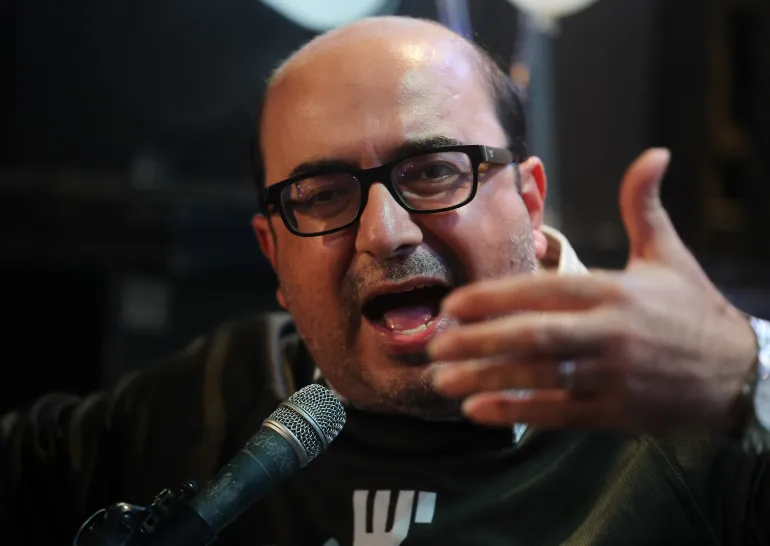
Balad chairman Sami Abu Shehadeh speaks as Israel's Joint List of Arab Parties holds a press conference to launch its election campaign in Hebrew, following his disqualification from running in the upcoming Israeli election, in Tel Aviv, Israel, October 5, 2026. REUTERS/Ammar Awad
Balad chairman Sami Abu Shehadeh speaks at a news conference [File: Ammar Awad/Reuters]

Numbers point to Arab parties but opposition bloc resistant

Al Jazeera’s Nour Odeh, reporting from Ramallah in the occupied West Bank, said Netanyahu “has scared off everybody from talking to the Palestinian Israeli parties”, leaving him best placed to “call the shots”. She said that Eisenkot and his allies have indicated that they want a Zionist government and “do not want to form a government” with the Arab parties, leaving them few options.

Danny Ayalon, a former Israeli ambassador to the United States, told Al Jazeera that turnout among Palestinian citizens of Israel came in “really unprecedented numbers” and that the parties “are going to have some significant clout”.

Mathematically, he said, Eisenkot’s bloc could join forces with the two Arab parties and pass the threshold, though it would take “political wizardry”. Yousef Jabareen, who leads the Joint List, has said his alliance’s “hands are extended” to oust Netanyahu.

Abu Shehadeh set out what Palestinian citizens want from the next government.

“We are against genocide and we are against apartheid. We want to promote a different political alternative, one which is based on the values of freedom, justice and equality for both people who are living between the river and the sea.”

Of Netanyahu, he said: “Our problem … is that he is a war criminal.”

A UN commission said in a report published on Monday that Israel has continued to commit genocide in Gaza after last October’s US-brokered ceasefire in the enclave.

The Hague-based International Criminal Court issued an arrest warrant for Netanyahu in 2024 for war crimes during the Gaza war.

Source link

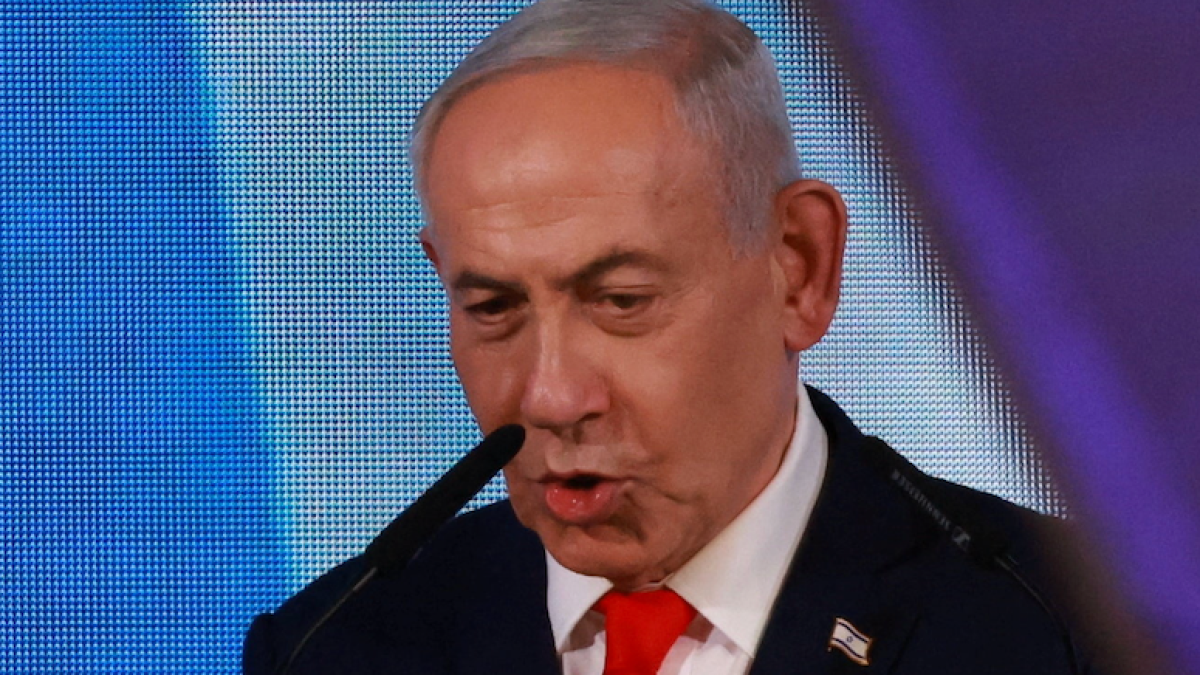
Netanyahu: Coalition with Arab parties would be ‘shameful’ | Benjamin Netanyahu

Israeli Prime Minister Benjamin Netanyahu has called the prospect of working with Arab parties to form a government ‘a disgrace and a shame’. But exit polls show neither his party nor the opposition are projected to secure the 61 Knesset seats needed for a majority.

Source link

Arab parties could win 18 seats in Israeli elections, exit polls suggest | Israel Election 2026 News

Record-breaking voter turnout in Palestinian-Israeli communities around 80 percent, early indications show.

Israel’s Arab parties are projected to win 18 seats in the Israeli parliament, exit polls indicate, after voting among Palestinian citizens of Israel surged to their highest levels in decades.

Exit polling data from Tuesday’s vote suggested that the leading Arab-led parties, the Joint List and Ra’am, are set to hold a record number of seats in the 120-member Knesset. Updated exit polling indicated that the opposition bloc led by former Israeli military chief of staff Gadi Eisenkot’s Yashar party and the bloc led by Prime Minister Benjamin Netanyahu’s Likud party were tied at 51 seats each.

Recommended Stories

list of 3 itemsend of list

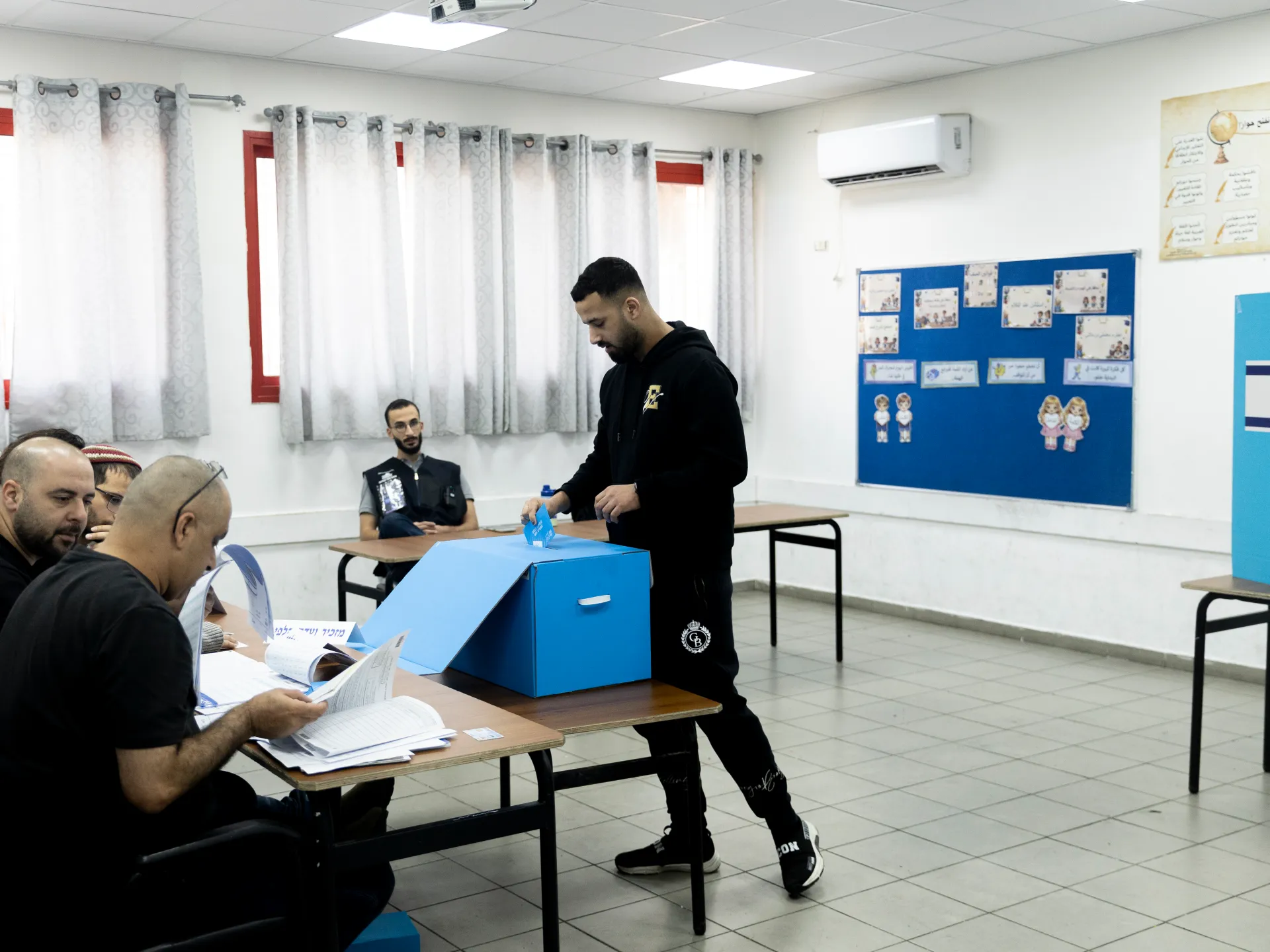
Early indications put voter turnout among Palestinian citizens of Israel at around 80 percent, historic numbers that break 1999 records, Israel’s Channel 12 reported on Tuesday.

The leader of Ra’am, or the United Arab List, Mansour Abbas, said he hopes the final election results will allow the anti-Netanyahu bloc, including his party, to win the 61 seats required to form a government.

“With the numbers we have now, there is no government,” Abbas told Israel’s Channel 12.

Abbas, whose Ra’am party currently holds five seats in the Knesset and joined the coalition that governed Israel from 2021 to 2022, added that both main blocs reached out to his party before and after the election.

‘Arabs can’t be kept outside’

Speaking to Al Jazeera, Alon Pinkas, a former Israeli ambassador, said creating a government might prove difficult for parties such as Eisenkot’s – which earlier exit polls had put narrowly ahead – because they promised not to form coalitions with Arab parties during the campaign.

“There’s a price to pay,” Pinkas said, because the “Arabs can’t be kept outside and only being considered and co-opted when you need their votes”.

He added that the Arab-led lists will make demands that a Jewish-led coalition government may not support.

Netanyahu and his far-right coalition made last-ditch efforts on Tuesday to get their supporters to the polls, warning of surging voter turnout among Palestinian citizens of Israel, a tactic Arab politicians denounced as racist and inflammatory.

Cars flying Netanyahu’s Likud party flags drove through Jerusalem blaring the Islamic call to prayer and urging supporters to cast their ballots because “Arabs are voting”, witnesses said.

In social media posts, the embattled prime minister highlighted long queues at polling stations in Arab communities and published an image that he said showed Arab voters, including women wearing the niqab, a veil that covers the lower half of the face, waiting to vote.

“If we don’t wake up now, we’ll find ourselves with a government of Mansour Abbas and Ahmad Tibi,” he said, referring to two leading Palestinian members of the Knesset.

Overall voter turnout was also historic, reaching its highest level since 1999 with 77.7 percent casting ballots in Tuesday’s election, the Central Elections Committee reported. Palestinian citizens of Israel make up about 21 percent of the country’s population of 10 million and have traditionally voted at lower rates than Jewish Israelis.

‘Existential moment’

Al Jazeera’s Nour Odeh, reporting from Ramallah in the occupied West Bank, called the election “an existential moment for Palestinian-Israelis”.

She noted the record turnout among what has emerged as a key voting bloc, which drew “even [voters] who would usually boycott elections, who didn’t believe it would amount to any kind of influence, that it would change their reality, that it would alter the systemic discrimination that they face”.

The Knesset has passed more than 100 laws discriminating against Palestinian citizens of Israel, who also face discrimination in receiving state funds, Odeh said.

Source link