airport

‘I went to airport Wetherspoons at 4am and couldn’t believe what I saw’

One Australian traveller was left stunned when she turned up to Gatwick airport at 4am and look over at the Wetherspoons pub there. Her video has now gone viral online

Most of us have bagged ourselves an early flight to try and save on fees before. However, that does involve getting up at the crack of dawn to make it to the airport on time. Luckily, most major airports usually have somewhere open to get a coffee, grab and snack or have the ‘airport beer‘ many Brits enjoy before heading on your flight – no matter what the time.

One of the most popular places for many Brits to head to before they catch their flight is Wetherspoons if there’s one there. Most of us know that airports can be expensive, so the budget pub brand is the perfect place to have a breakfast, meal or drink that isn’t going to break the bank.

However, one Australian traveller was left stunned when she turned up to Gatwick Airport and saw that the Wetherspoons there was completely packed – despite it being 4am.

The travel influencer, Kiaya, who boasts 14,900 followers online on her @kiaya.travels account, shared a video the showed people queuing to get into the pub. Another take from inside then showed the inside which was rammed with people, with some already enjoying an alcoholic beverage.

Overlay text read, ‘Every table full at 4am in the airport, oh to be British.’

The caption for the post, which was shared on the official Wetherspoon Instagram account, wrote: “Nothing like a ‘Spoons breakfast before my flight!”

Content cannot be displayed without consent

People were loving the post, as it went viral and racked up more than 122,000 likes.

One person exclaimed: “Nothing slaps harder than a pre-flight ‘Spoons breakfast and a pint to be honest,” while another added: “What more could you want a 4am! I’m here for it.”

A third chimed in: “We love Wetherspoons,” while another branded it their “favourite spot”.

Wetherspoon pubs at Gatwick Airport are typically open between 3AM and 5AM and close between 9PM and 11PM daily. There is one branch in the North Terminal (after security) and two in the South Terminal (one before and one after security).

Despite a pre-flight pint being a tradition amongst many Brits, travel insiders previously shared why it might not be the best idea. Chatting with experts at global travel booking giant Omio, flight attendant Dashiell Horowitz of Air Transat gave his advice to anyone planning to board a plane.

He recommended eating a big meal to ‘make sure you’re tired and get some rest on the flight’, however, he wasn’t as keen on airport beers.

Dashiell said: “There isn’t much I would avoid if flying as a passenger except for anything that you know will upset your stomach!

“The one thing I would truly avoid is any alcohol before a flight. Most people don’t know it affects you twice as much whilst in the air, so you’re more likely to feel the effects than on the ground.”


Source link

Major UK airport set for May bank holiday weekend travel chaos as staff to walk out

ONE of the UK’s busiest airports is set for travel chaos over the May bank holiday weekend due to strike action.

Around 100 workers at London Stansted Airport – the UK’s fourth busiest airport – will walk out between May 3 and 6.

Aerial view of Stansted Airport in Essex, UK, showing runways, buildings, roads, and parked aircraft and cars.
Staff at London Stansted Airport are set to walk out between May 3 and 6 Credit: Alamy

The walkout, which has been called by Unite the Union, will mainly involve staff who help passengers with disabilities at the airport and onto their flights.

Action was called after staff rejected a “substandard” pay offer.

Delays are expected as a result of the strike, as it will take longer to board passengers who need help to get to their flights.

Last year the airport handled 2.74 million passengers across May, with thousands travelling across both May bank holiday weekends.

Read more on travel inspo

TAKING OFF

I’ve visited 50 countries & this much-loathed budget airline is the world’s best


BARGAIN HOL

Travel companies reveal their CHEAPEST spots this summer, with hols from £189pp

Many budget airlines fly from the airport including Ryanair and popular European destinations include Rome, Barcelona, Amsterdam, Alicante and Ibiza.

As a result of the strike action, families and travellers heading off for the long weekend might experience delays in getting to their destinations.

Unite general secretary Sharon Graham said: “ABM staff do a vital job for passengers at the airport, yet they are struggling with low pay while their employer makes huge profits.

“This situation is unacceptable and workers at ABM continue to have Unite’s full support.”

Unite regional officer Steve Edwards added: “Workers at ABM are increasingly given bigger workloads and deserve pay that reflects this.

“Their employer can afford to come back with an offer workers would accept and could end this dispute easily by doing so. But until then, Unite members will strike until their voices are heard.”

A previous strike was planned for April 17 to 20 but was called off.

Sun Travel has contacted London Stansted Airport for comment.

Stansted Airport also recently hiked its drop-off parking charges by almost 50 per cent.

In March, the fee to use the express drop-off (up to 15 minutes) at the airport rose from £7 to £10.

The fee for longer stays of up to 30 minutes also rose from £25 to £28.

The changes made Stansted Airport the second most expensive airport for drop-off fees in the UK, only beaten by Gatwick Airport where the fee is £10 for 10 minutes.

Flight compensation rules

A look at your rights if a flight is delayed or cancelled, when your entitled to compensation and if your travel insurance can cover the costs.

What are my rights if my flight is cancelled or delayed?

Under UK law, airlines have to provide compensation if your flight arrives at its destination more than three hours late.

If you’re flying to or from the UK, your airline must let you choose a refund or an alternative flight.

You will be able to get your money back for the part of your ticket that you haven’t used yet.

So if you booked a return flight and the outbound leg is cancelled, you can get the full cost of the return ticket refunded.

But if travelling is essential, then your airline has to find you an alternative flight. This could even be with another airline.

When am I not entitled to compensation?

The airline doesn’t have to give you a refund if the flight was cancelled due to reasons beyond their control, such as extreme weather.

Disruptions caused by things like extreme weather, airport or air traffic control employee strikes or other ‘extraordinary circumstances’ are not eligible for compensation.

Some airlines may stretch the definition of “extraordinary circumstances” but you can challenge them through the aviation regulator the Civil Aviation Authority (CAA).

Will my insurance cover me if my flight is cancelled?

If you can’t claim compensation directly through the airline, your travel insurance may refund you.

Policies vary so you should check the small print, but a delay of eight to 12 hours will normally mean you qualify for some money from your insurer.

Remember to get written confirmation of your delay from the airport as your insurer will need proof.

If your flight is cancelled entirely, you’re unlikely to be covered by your insurance.

In other flight news, Ryanair is axing thousands of flights from European airport this summer.

Plus, four major European airlines are set to scrap free hand luggage onboard.

Passengers waiting to board a Ryanair plane at Stansted Airport, England, UK.
As a result, flights could be delayed Credit: Alamy

Source link

Passport holders urged to change 1 phone setting or ‘risk delays at airport’

Passport holders have been urged to change a key phone setting before they arrive at airports to travel. Failing to do so could see them facing delays in queues

We all love jetting off abroad at this time of year, but sometimes making simple mistakes at the airport can lead to risking delays in queues. While many people worry about their clothing, and what they have packed in their cases, something they should actually be paying more attention to is their mobile phones.

Little you may know, using a certain setting can actually lead to people spending more time in queues at security, and delaying their travel journey. Nobody wants to have to face lengthy queues when they start their holiday so an expert has shared some key travel tips to help passport holders out.

It’s not the only advice of its kind to be shared recently either. Previously, tourists were also advised to take passport action before travelling to reduce the risk of problems at the airport.

You may not realise, but a dim screen is one of the most common reasons boarding passes fail to scan at the gate. Experts say a few simple phone tweaks before you leave home can save serious stress on travel day, and the changes take seconds to complete.

According to William Thackray, IT expert at AGT Computer Services, a dim screen is one of the most frequent and easily avoidable causes of delay at airport security and boarding gates.

He said: “Scanners need a clear, bright image to read a barcode or QR code reliably. In bright airport lighting, a screen that’s sitting at its default brightness – or that’s been dimmed to save battery – can cause a failed scan.

“It sounds trivial, but it holds up the queue and it’s completely avoidable.”

What you need to do

Before you leave the house, drag your screen brightness to maximum. On an iPhone, swipe down from the top right corner to access the Control Centre and pull the brightness slider to the top. For Android, swipe down from the top of the screen and do the same.

While you’re at it, William recommends a few other quick changes that can make the whole airport experience smoother. To begin, he said it’s a good idea to screenshot your boarding pass.

Don’t rely on an app that needs a signal or a Wi-Fi connection to load. A screenshot lives on your phone and opens instantly.

He said it’s also a good idea to turn off auto-lock. If your screen goes dark mid-queue, you’ll be unlocking your phone and re-opening your boarding pass with a line of people behind you.

Go to Settings > Display and bump your screen timeout up to at least two to three minutes before you travel. This could make a big difference.

You should also make sure your phone is fully charged. It sounds obvious, but some airports – especially when travelling to the US – can ask you to power up your device at security.

A dead phone can mean real delays, or worse, having your device taken for additional screening. William added: “None of these things take more than a minute to sort before you leave the house.

“But, on a busy travel day, that one minute of prep can be the difference between breezing through and being that person holding everyone up.”

Source link

TUI issues airport security warning for Brits travelling over May half term

There have been some major changes in how Brits travel abroad, and TUI has issued a warning that could impact holidaymakers when going through airport security

British holidaymakers jetting off abroad have been warned of airport changes ahead of the May half-term.

During the May half-term, thousands of Brits are expected to jet abroad for a sun-soaked getaway, with airports expected to be busier than usual. Airlines advise travellers to arrive at the airport in plenty of time to check in any bags, go through security, and find their gate.

This is particularly important following the full rollout of the European Union’s (EU) new Entry/Exit System (EES), which has caused lengthy border control queues, delays and even missed flights at European and UK airports. On top of this, TUI has warned holidaymakers about changes to airport security at some UK airports, which have new restrictions in place.

READ MORE: EasyJet warning for passengers flying from London and Manchester that could impact travel plansREAD MORE: Pet owners warned new EU travel rule could see your dog banned from going abroad

In a travel alert to passengers earlier this month, TUI said: “While UK airports are installing new scanners to prepare for changes in security restrictions, at this time you should still follow current guidelines as not all airports have changed and destination airports still have these restrictions in place for your flight home.”

The airline went on to provide information on some of the major UK airports that have implemented changes, including Aberdeen, Birmingham, Newcastle, Leeds Bradford, London Southend, and London City.

TUI also advised customers to visit its airport security page on its website or the information page for the UK airport they’re departing from to find relevant details. As airports can have different security measures in place, including the 100ml liquid allowance, it’s vital to check any restrictions before heading to the airport.

Earlier this year, a number of airports ditched the 100ml liquid rule, including Belfast International, Belfast City, Birmingham, Bristol, Edinburgh, London Gatwick, and London Heathrow. The major change allows holidaymakers to carry more through security.

Another change for Brits heading abroad followed the introduction of the EU’s new Entry/Exit System (EES) earlier this month. And in a bid to help customers prepare for their next travel trip and avoid any disruptions, TUI issued a travel alert.

The airline advised passengers: “At some airports, you might still find longer queues, particularly at busy travel periods. We know this isn’t the travel experience you want before, or after your holiday – and it’s certainly not the one we want for you – so please know we’re doing all we can to support.

“To help your journey run as smoothly as possible, please allow a little extra time when passing through border control. Keep any essential medication in your hand luggage in case of delays, and when departing the EU, head straight to passport control after dropping your bags to avoid hold‑ups. Bringing some extra water for comfort is also a good idea.”

Do you have a travel story to share? Email webtravel@reachplc.com

Source link

Major European airport opens new £3.6billion terminal after 11 years

An image collage containing 3 images, Image 1 shows Illustration of the New Frankfurt Germany Airport Terminal 3, Image 2 shows Illustration of the New Frankfurt Germany Airport Terminal 3, showing a spacious interior with a curved, textured ceiling, multiple levels, and people walking, sitting, and conversing, Image 3 shows Illustration of the baggage claim area at the New Frankfurt Germany Airport Terminal 3

ONE of Europe’s biggest airport hubs has opened its huge new third terminal – more than a DECADE after works started.

Frankfurt Airport, the busiest in Germany and 6th busiest in Europe, is often used as a stopover airport for long-haul flights.

Frankfurt’s new Terminal 3 has now opened Credit: Frankfurt Airport
The new terminal started works back in 2015 Credit: Frankfurt Airport
It is being compared to a mini city inside Credit: Frankfurt Airport

And its new Terminal 3 has now opened.

Having started works back in 2015, the new terminal is the airport’s biggest project to date.

Costing €4billion (£3.6billion), inside is a main terminal and three concourses adding to Terminal 1 and 2.

Inside are more than 60 shops and restaurants, we well as new automated bag drop areas and improved CT scanners at security.

ISLE GO

World’s largest island opens new airport with weekly flights to untouched spot


LINE UP

9 Europe airports where Brits face huge queues & missed flights in new travel rules

Designed by German architect Christoph Mäckler he said he wants to make the terminal feel like a “city in its own right”.

He added: “These days airports have become a destination in their own right. In fact, they typically receive more visitors than many city centres.

“This makes it even more important for airports to also perform some of the same functions as cities. We’re making this happen in Terminal 3.”

Around 57 airlines will move to the new terminal from Terminal 2, which includes Qatar Airways and Cathay Pacific.

There will also be a shuttle between the terminals, taking less than 10 minutes.

Initially it will welcome up to 19million passengers, although this will eventually increase to 25million by June with the opening of the fourth phase.

Frankfurt Airport welcomed 63.2million passengers last year.

Brits can currently fly to Frankfurt with British Airways for £69, whereas Ryanair’s £15 flights go to the smaller Frankfurt-Hahn Airport.

And Condor Airlines launched a new flight route to Frankfurt from London Gatwick this month, the first UK route for the airline.

If you want to explore the city, it even has its own “mini Manhattan,” thanks to its skyscraper financial district.

CNN Travel previously said: “Frankfurt looks and feels more like a modern American city than any other metropolis when people visit Germany.”

Here is another new airport that has recently had a makeover in Europe.

Inside will be more than 60 restaurants and shops Credit: Frankfurt Airport
It will eventually welcome up to 25million passengers Credit: Frankfurt Airport

Source link

All-night trains linking to major UK airport and city centre are launching next month

ALL-NIGHT train services to a major UK airport will begin next month.

The roll out of a new rail timetable will connect travellers to the UK’s third busiest airport all through the night.

Aerial view of Terminal 2 at Manchester Airport with three jets parked at the gates.
Manchester is one of the nation’s busiest airports Credit: Alamy

Eight overnight trains will go between Manchester Airport and Manchester Piccadilly.

Beginning from May 17, night trains are expected to run roughly every hour between the city and the airport.

The TransPennine Express (TPE) services are being put in place as part of a timetable shakeup.

It’s hoped it will better connect passengers making journeys to and from Manchester Airport in the late night and early morning.

CHECKED OUT

Ryanair to introduce much stricter baggage and check in rules


BARKING MAD

Brits face steep £350 costs in new rules for travelling to Europe with pets

Andrew McClements, customer experience and transformation director at TPE, said, “We’re pleased to be introducing services that give customers more choice, added flexibility, and an improved overall experience when travelling with us.”

Other changes to the TPE timetable will see an update to 08.05am weekday services between Leeds and Manchester Piccadilly come into place.

The regular service will begin to call at Dewsbury.

This is to help commuters and students with early morning commutes and to better connect them to the city.

TPE is also urging customers to check their usual routes to see if they have been impacted by the timetable changes.

It said, “Although most of our services are unchanged, we encourage customers to take a moment to check any journeys they make regularly.”

The interior and train platforms of Manchester Piccadilly train station in Manchester, UK.
The airport train service will run through the night Credit: Alamy Stock Photo

Source link

Holidaymakers urged to leave these popular items at home or risk airport delays

A skincare expert has shared which beauty products are likely to cause problems at airport security due to hand luggage liquid rules – and how to avoid any hold-ups

With summer getaways fast approaching, countless holidaymakers are gearing up to travel overseas. As skincare continues to surge in popularity, many will be packing their creams and serums – yet skincare specialists are cautioning that transporting these products can prove more complicated than anticipated.

Experts at Landys Chemist have outlined the key ways skincare items can cause issues at airport security.

Skincare specialist Rhysa Phommachanh explained: “Many travellers are now packing full skincare routines in their hand luggage, but it can be confusing knowing which products are allowed. As a general rule, if a product can be spread, rubbed, or sprayed, it will usually fall under airport liquid restrictions.”

For instance, numerous skincare products nowadays appear as jellies, balms and sticks.

All of these are classified as liquids by airport security, as are sheet masks and eye patches.

Failing to adhere to airport security regulations could result in travel disruptions or having your belongings seized.

To conserve luggage space, travellers sometimes transfer larger items into smaller containers to meet requirements.

Nevertheless, these unidentified containers can prompt queries at security and trigger manual inspections, which can prove time-consuming.

It’s also probable that any pressurised containers such as facial mists, setting sprays or spray sunscreens will require manual examination and slow down security lines.

It is crucial to familiarise yourself with the regulations at each airport you pass through, as updated liquid rules are gradually being introduced across the country.

Restrictions may vary from one airport to another, so ensure you are fully aware of the specific guidelines before you board your flight.

When it comes to skincare, a minimalist approach often yields the best results.

As reported by the Express, Rhysa said: “A more simplified approach tends to work best for long-haul travel.

“Basic essentials such as lip balm, a lightweight moisturiser, or a facial mist are usually more than enough to maintain hydration without overwhelming the skin barrier.”

Source link

I avoided the dreaded EES airport chaos in Spain

FROM flight cancellations caused by the Iran war to massive airport queues caused by new travel entry rules – going on holiday has never been so stressful.

Even myself – who travels abroad every month – approached the airport with trepidation this week.

I managed to avoid the huge queues on a trip to Spain
There’s been massive queues across Europe in recent weeks Credit: Alamy
With none of the e-gates open, I managed to still get to the front of the queue

My latest trip took me to the city of Bilbao, following the launch of new TUI city breaks to the Spanish city.

But before I could be excited for cheap wine and pinxtos, I was ready to be stuck in the airport for hours on end.

The new European rules – called the Entry/Exit System or EES – have resulted in massive problems especially at busy airports.

More than 80 passengers missed their Ryanair flight because of huge airport queues in Marseille, while over 100 people were left stranded when an easyJet flight to Manchester left without them.

‘APPY DAYS

New travel app to prevent huge airport queues as passengers wait up to 5 HOURS


TRAVEL ADVICE

Holiday warning for Brits as Foreign Office says ‘expect long airport queues’

The Sun’s Travel Reporter Alice Penwill was even stuck in queues for more than three hours at Lanzarote.

This is because of the requirement of biometric checks from all Brits which includes fingerprint scanning, and is a much slower process than passport stamping.

So after arriving late into Bilbao on a Friday, it’s safe to say I was prepared.

My first chaos-avoiding trick? Book a seat as close to the front as possible.

This will mean you can get off the plane as quickly as possible, meaning you can be at the front of the queue.

I was in row 5 out of 36, so was easily one of the first off the plane.

But this doesn’t always work depending on the airline and airport.

This is because many of them don’t have direct access to the airport via jet-bridge and instead offer the dreaded bus service to taxi you to the building.

Thankfully, there is a way to make sure you are still at the front of the queue even if you pile on.

The best way is to go to the very first bus, and go to the front doors.

Then, rather than piling to the back of the bus for a seat, stay in the middle of the doors on either side.

This means that you will be delivered directly to the airport security entrance and, no matter what side the doors open, you will be at the front.

Both of these tricks allowed me to be fewer than 10 people back when trying to get through airport security.

This still saw me waiting around 25 minutes and, frustratingly, unable to use the empty e-gates and instead stuck in the one-man security queue.

Not only that, but each person was taking at least 1-2 minutes due to the slow machines – so you can imagine how many hours that will take if there are more than 100 passengers on a flight.

But, it was reassuring when I saw how long the queue was behind me, and meant I avoided the majority of the queue.

The new EES rules explained

All non-EU nationals – which includes Brits – are required to register their details on their first visit to a Schengen area country.

This will be done by using specific EES machines which will be at airports, ferry terminals and the Eurostar terminals.

The machines will log your fingerprints, facial images and scan your passport as well.

Once you have registered (such as taking fingerprints and a photo), it is valid for three years, or until your passport expires if it is earlier than this.

EES does not cost anything and is free for all travellers.

I would also suggest that if concerned, fly to a smaller airport where there are fewer UK flights.

Bilbao only welcomes 1.6million tourists a year compared to Barcelona‘s 16million or Madrid’s 11million.

This means far fewer passengers travelling through the airport at any one time.

It is also worth avoiding arriving at the same time as other UK flights which you can easily see from airport departure boards.

This is because it is mainly Brits needing to do these checks, not other Europeans, so if there are lots of flights landing at the same time, this will see hundreds more passengers all queueing at the same time.

Airports which have been hit by the chaos recently have included Schipol Airport in Amsterdam, being a major hub, as well as Milan Airport in Italy and Lisbon and Faro Airport in Portugal.

Or – avoid it entirely by travelling to destinations which aren’t following the ne EES rules.

Greece became the first EU country to confirm that Brits are exempt from the rules in a bid to avoid the massive queues.

This means your trip to somewhere like Athens or Crete should be a much easier experience at the airport.

Safe to say I was ready for some Spanish wine…

Source link

‘I’m a travel expert – 3 key checks to make under new EU rules before going to the airport’

The European Union’s (EU) Entry/Exit System (EES) has caused major travel disruptions across European airports, and a travel expert has issued three key checks every traveller should do

A travel expert said there are three key checks every holidaymaker should make before heading to the airport, following the new EU rules.

As of April 10, 2025, the European Union’s (EU) Entry/Exit System (EES) was fully implemented across European airports. It requires all Brits travelling to the Schengen area to “create a digital record” and register their biometric details, such as fingerprints and a photograph.

The new digital border system has replaced manual passport stamping, and after the initial registration, the EES remains valid for three years. While it’s only needed for the first arrival at the airport border in the Schengen area, it’s caused major travel chaos as thousands of British holidaymakers register with the new system, leading to significant queues and delays of up to four hours across European airports.

READ MORE: TUI travel update statements for all holidaymakers ‘due to travel’READ MORE: Latest Jet2 rules for flying with children and babies

Adam Edinburgh, Head of Travel and New Products at Post Office Insurance, told the Mirror: “Passengers may be impacted by facing longer queues initially due to biometric data collection, a process expected to take several minutes per person.

“Passengers should be encouraged to plan contingency options if travelling on a tight schedule (alternative routes or transport), as any teething problems or incomplete information could cause delays to miss flights, ferries, or connections.”

The travel expert also outlined three vital checks that Brits should do before heading to the airport, in a bid to make their journey as smooth as possible following the rollout of the EES. He advised:

  1. “Check your passport expiry date (must be valid for at least 3 months after your trip for EU countries)
  2. “Know your entry airport’s EES setup (expect biometric checks)
  3. “Keep essential travel documents easily accessible, including passports, travel insurance, accommodation confirmation, and proof of onward or return travel.”

Explaining exactly how the EES works, Adam said: “Travellers entering for the first time will undergo biometric registration at border kiosks or e-gates. This includes the system capturing a facial image, fingerprints (if visa-exempt), passport details, and entry/exit information.

“For subsequent visits, the process will be faster due to the data already being stored. It’s important to note that no pre-registration is required – registration happens at the border during your first entry. “

Countries in the Schengen area include: Austria, Belgium, Bulgaria, Croatia, Czechia, Denmark, Estonia, Finland, France, Germany, Greece, Hungary, Iceland, Italy, Latvia, Liechtenstein, Lithuania, Luxembourg, Malta, Netherlands, Norway, Poland, Portugal, Romania, Slovakia, Slovenia, Spain, Sweden, and Switzerland. The EES system is not required for travel into the Republic of Ireland and Cyprus, as they are not within the Schengen area, and Greece has relaxed its EU requirements for Brits, ditching the need for biometric details.

For travel insurance before your next trip, visit the Post Office website. Or visit the government website for more information on the new EES system.

Do you have a travel story to share? Email webtravel@reachplc.com

Source link

One of Europe’s barely visited countries reveals plans for huge £871million airport makeover

A SMALL European country without the crowds has revealed huge plans to overhaul its airport.

Luxembourg Airport is getting a huge £871million makeover that will eventually accommodate 10million passengers a year.

Luxembourg Airport has revealed plans for a £871million upgrade Credit: lux-Airport
Terminal A will be expanded and Terminal B will be rebuilt Credit: lux-Airport

Follow The Sun’s award-winning travel team on Instagram and Tiktok for top holiday tips and inspiration @thesuntravel.

Works at Terminal A will focus on extending the current terminal to the airport’s tram stop and creating a new, modern security area with the latest technology by 2028.

There will also be an improved check-in area and bag drop-off area by 2028, to help passengers to move through the airport quicker.

By 2032, the disused underground station at the airport will be transformed into a baggage sorting area too.

Read more on travel inspo

CHEAP BREAKS

UK’s best 100 cheap stays – our pick of the top hotels, holiday parks and pubs


TRIP UP

The Sun’s travel experts reveal their best EVER holidays & how you can do them too

On the other hand, Terminal B will be completely redeveloped.

It will be transformed into a two-storey building with six new boarding gates, which passengers will have to hop on shuttle buses to get to.

The airport as a whole will get a number of other upgrades as well, such as the air traffic control tower as well as a new business aviation centre and VIP lounge set to open in 2029.

Aircraft parking across the airport will also increase from 27 spaces to 53, with additional boarding bridges too.

The airport hopes that the development will help the airport to handle up to double the amount of passengers it currently does (5.2million) to 10million passengers a year, by 2050.

A huge project is also going on around the airport that will see over 44 acres transformed into new offices, shops, restaurants and even a VIP terminal.

Dubbed the ‘Airport City’, travellers will be able to shop and dine at places including Starbucks and Oberweis restaurant in an area with a “unique metropolitan feel”.

The Airport City will even have a new hotel with the Skypark Business Centre North Hotel having over 200 rooms.

Then at Skypark Business Centre South, there will be a shopping centre and direct access to the terminal.

There is also another project at the airport to create an ‘Airport City’ with shops and restaurants Credit: lux-Airport

Luxembourg is surrounded by Belgium, France and Germany and tends to be a lesser-visited country in Europe.

In total, around one million people visit the country each year, whereas around 19million visit Belgium, over 100million visit France and over 37million visit Germany.

If heading to the capital, Luxembourg City, you will find a UNESCO listed medieval old town sat at the edge of steep cliffs.

The country as a whole is a great destination for keen hikers too with over 3,000 miles of trails through Ardennes forests and vineyards.

A major plus of visiting the country is that public transport is free across Luxembourg for everyone.

Luxembourg was also named one of the best places in the world for quality of life, last year.

Despite being home to just under 700,000 people, the Numbeo Quality of Life index placed the country top across a number of categories including the cost of living and house price to income ratio.

The country was also named among the happiest countries in the world last year, according to the World Happiness Report 2025.

The report recognised the country’s strong economy, as well as its social support network, with residents claiming that they have a good personal freedom.

You can fly direct to Luxembourg from the UK from London City, London Heathrow and London Stansted airports.

A one-way flight from these airports in May costs from £15 per person and only takes an hour.

In other airport news, Ryanair threatens to axe all flights to European country due to ‘massive passport queues’.

Plus, flights are now costing families hundreds extra due to ongoing Iran war – with even more airlines hiking prices.

Projects are set to finish between 2028 and 2032 Credit: lux-Airport


Source link

World’s largest island opens new airport with weekly flights to ‘Arctic Riviera of the North’

A NEW airport has opened on the world’s largest island giving travellers direct access to an area dubbed the “Riviera of the North”.

The new hub is expected to boost tourism in one of the Arctic’s most remote regions.

Small red airplane being refueled by a yellow tanker truck on an airport tarmac with snow-covered mountains in the background.
Qaqortoq in Greenland is popular with visitors looking to try kayaking and whale-watching Credit: carstenbrandt

Visitors can now travel by air to Qaqortoq in Greenland to visit an area famous for kayaking and whale-watching.

Anne Nivika Grødem, director of Visit Greenland, said: “South Greenland offers a rare combination of powerful nature and a living culture shaped over generations.

“Improved access allows us to welcome visitors with greater intention – encouraging travel with curiosity [and offering] more meaningful experiences for our guests.”

Greenland’s prime minister Jens-Frederik Nielsen travelled on the new airport’s first flight.

SKI TRAGEDY

Four feared dead after horror avalanche traps skiers as rescue op launched


GREEN MACHINE

US begins secret talks for new bases in Greenland after Trump invasion threat

While more than 30,000 passengers disembark from cruise ships at Qaqortoq every year, less than 2,000 tourists on average stay overnight each year.

Before the opening of the airport, travellers looking to visit Qaqortoq would have to travel two days on a ferry or arrive by helicopter.

The town is 300 miles from the capital, Nuuk.

Air Greenland is to operate two daily 75-minute direct flights between Nuuk and Qaqortoq year-round.

This is expected to rise 17 weekly services in summer, while Icelandair plans to run four weekly summer flights to and from Keflavík, starting from June 2.

In recent years, Greenland has been working to boost visitor numbers.

Earlier this year US President Donald Trump’s threats to invade Greenland resulted in a 46% increase in foreign guests – most of them Americans.

Aerial view of Qaqortoq, Greenland, with colorful houses, apartment buildings, a sports field, and a fjord.
The town is 300 miles from the capital, Nuuk Credit: Posnov

Source link

TUI, easyJet, Jet2 and BA update on how early to get to airport with EU rules chaos

As the European Union’s (EU) new Entry/Exit System (EES) is fully introduced, airlines have issued advice on what time Brits should arrive at the airport to avoid disruptions

Airlines including TUI, easyJet and Jet2 have issued updates and travel advice amid the rollout of the European Union’s (EU) new Entry/Exit System (EES), urging travellers to arrive at the airport as ‘early as possible’.

Brits heading abroad have been hit with major travel disruptions following the rollout of the European Union’s (EU) new Entry/Exit System (EES). There have been reports of lengthy border control queues at European and UK airports, along with missed flights, as thousands of holidaymakers pass through the new digital border system for the first time.

The EES, which was fully implemented on Friday, 10 April, requires all Brits travelling to the Schengen area to “create a digital record” and register their biometric details, such as fingerprints and a photograph. It is required for their first arrival at the airport border in the Schengen area, and after the initial registration, the EES remains valid for three years.

READ MORE: Travel expert’s passport warning as Brits risk £160 fee or being denied boardingREAD MORE: 5 travel changes Brits should be aware of before summer

The government noted that the EES “may take each passenger extra time to complete, so be prepared to wait longer than usual at the border.” Yet, travellers have reported gruelling delays of up to three hours and missed flights, and airlines have issued key advice to passengers as they grapple with the new digital border system.

TUI

In a travel alert on the EES, TUI advised passengers: “At some airports, you might still find longer queues, particularly at busy travel periods. We know this isn’t the travel experience you want before, or after your holiday – and it’s certainly not the one we want for you – so please know we’re doing all we can to support.

“To help your journey run as smoothly as possible, please allow a little extra time when passing through border control. Keep any essential medication in your hand luggage in case of delays, and when departing the EU, head straight to passport control after dropping your bags to avoid hold‑ups. Bringing some extra water for comfort is also a good idea.”

easyJet

In an “important update” released earlier this month, easyJet warned: “Airports across Europe may experience longer queues at passport control whilst the new European Entry /Exit System (EES) border checks are being completed.

“This will mean you may need to have your biometrics taken, including your face and fingerprints scanned.” They advised passengers to plan their travel to and through the airport as they may “experience longer queues”.

Travellers who need to drop off their bags should “go there as soon as it opens”, and then make their way through “security as early as possible”. They further cautioned that there could be additional checks at passport control before the gate, and that passengers should go to the gate or boarding area “as soon as it’s announced”.

easyJet added that travellers should ensure they have all the correct documents required for travel, although Brits do not need to do anything before arriving at the border for the EES. They further warned that there could be “longer queues” at their arrival airport.

Jet2

On expected delays from the EES, and how it could impact holidaymakers, Jet2 said: “There may be longer wait times at Border Control at some EU Airports, especially at busy times. Once you start your EES registration, it should take around 1-2 minutes per person to complete.

“There may be longer wait times than usual when you arrive in destination and before your flight back to the UK. Unfortunately, this is outside of our control. But remember, there’s nothing you can prep before you travel.”

Meanwhile, in response to a traveller following delays at Faro Airport, Jet2 advised on X: “We kindly recommend customers arrive to the airport as early as possible, to allow plenty of time to make it through.”

For travel back into the UK, Jet2 said: “You’ll also need to pass through EES when leaving the EU in the same way you do on arrival. Depending on how busy the airport is, this may result in longer wait times at passport control before boarding your flight to the UK. After checking in for your flight, please head straight to security and passport control in order to arrive at your gate in plenty of time.”

British Airways

On general information about the new digital system, British Airways explained on their website: “You should allow extra time to register your biometric details, such as fingerprints and a photo, the first time you enter the EU. There is no cost for EES registration, and your digital record will last three years before you need to register again.”

In response to a question on X about arrival times at the airport, a member of British Airways said: “Hi there. We ask customers travelling on our European short-haul flights to be there two hours prior to departure. It would be three hours if you’re travelling on a long-haul flight and one if you’re travelling on a domestic flight within the UK.”

For more information on the new EES system, visit the government website.

Do you have a travel story to share? Email webtravel@reachplc.com

Source link

‘I’m cabin crew – £4.95 airport parking hack could help you save money’

A flight attendant has revealed the best way to save money ahead of a holiday abroad, and it could cost just £4.99 and save travellers £100 if they are ‘proactive’

A flight attendant has revealed a savvy £4.99 hack for holidaymakers that could help them cut costs on their next getaway.

We’re always on the lookout for ways to save some extra cash, whether that’s a packing tip to avoid paying for luggage, being flexible with our travel dates to secure the best price, or flying from a different airport. One sure way to save money is how you get to the airport, with parking prices astronomical at some airport hubs, which can reach as much as £132 for a week’s stay or £8 for every five minutes at a drop-off area.

In a bid to avoid these unwanted charges, some travellers opt to be dropped off at the airport, while others book their parking months in advance or a car park farther from the airport to secure a lower price. However, Wizz Air cabin crew member Adam Hodge, 35, has outlined a vital hack for getting to the airport, and it could cost just £4.99.

READ MORE: ‘I’m cabin crew – Europe has the best Maldives dupe just three hours from the UK’READ MORE: ‘I’m cabin crew – there’s a major downside to seats with extra legroom’

Speaking exclusively to the Mirror, Adam, who is based at Luton Airport, revealed: “You can get some really cheap deals on the trains and the bus.

“In Luton, for example, there’s now going to be two coach operators, National Express and FlixBus, so it means there’s going to be even more affordable options to get from the centre of London or the surrounding area, such as Cambridge, Milton Keynes and as far as Gatwick.

“If you book in advance, you can get a ticket, with FlixBus for example, for as little as £4.99.

“For National Express, if you have a coach pass, you can get fares from as little as £10 one-way, to and from the centre of London, Gatwick or one of the connecting airports.”

But that’s not the only affordable option. Adam highlighted: “At Luton Airport, there are also two train operators, Thames Link and East Midlands Railway.

“On East Midlands Railway, you can get a fare to St Pancras from Luton Airport Parkway or Luton for as little as £4.95, if you book and plan in advance. It has to be the specified train at the specified time, but if you’re flexible and want to save some money, you can get some really cheap fares if you book ahead.”

He added: “It’s about being proactive and saving a bit of money, especially with the cost of living crisis. And I think it’s actually very savvy and fashionable to be seen saving money, and being more money-conscious.”

While Adam mentioned Luton Airport, most UK airports also offer similar bus and coach services, so it’s well worth checking in advance to plan your route and secure the best price. And with some prices starting as low as £4.99, it’s a no-brainer.

Having travelled to around 30 countries, with Prague and Tirana being his personal favourites,

Away from airport travel, Adam has a wealth of other knowledge and advice, having visited around 30 countries, with Prague and Tirana being his personal favourites. One piece of advice is about what he packs, and there’s one item he never travels without.

“I had been looking at this item for a while, and I wasn’t sure at first, but now I have them, I’ve got them in all my suitcases, my crew bag and cabin bag,” Adam told the Mirror.

He revealed: “They are suitcase packing cubes, and are like little pouches. The worst thing is when you open a suitcase, and everything falls out, but with the packing cubes, everything is organised.

“For example, you have your electricals, your tops, trousers and shoes, they fit everything in organised cases, and you can actually fit more in, so it’s a really good hack. They don’t take up any space, so when they’re empty, they just lie flat, and they’re not bulky.”

To check out Adam’s public transport recommendations to the airport, visit the National Express or FlixBus websites. Or for more information about Wizz Air flights or to book your next trip, visit their website.

Do you have a travel story to share? Email webtravel@reachplc.com

Source link

Every airport offering free Jet2 service making 6am flights ‘easier’

Save stress and time if your holiday is due to start in the early hours of the morning

People can start their holiday quicker than others when flying with Jet2 and taking advantage of a little-known service that lets families skip the queues. Planning this ahead of time can make early morning flights feel “a whole lot easier”.

On its website, Jet2 claims the Twilight Check-in service can be used by any passengers booked to fly on a service due to leave the airport before midday. Later flights in the afternoon or evening cannot benefit from this perk.

A spokesperson said: “Your morning flight is about to get a whole lot easier. With our free Twilight Check-in service, you can drop your bags off at your UK departure airport between 4.30pm and 9pm the evening before your morning flight.

“Thanks to Twilight Check-in, when you arrive at departures the next day, your luggage is already sorted. If you live near the airport or are staying at a nearby hotel, it’ll make your morning a little easier.”

Flights leaving before midday are extremely common at UK airports. People tend to opt for these early departures to make the most of their holiday time rather than leaving the UK later.

The following UK airports offer the free Jet2 Twilight Service:

  • Birmingham
  • Bristol
  • East Midlands
  • Edinburgh
  • Glasgow International
  • Leeds Bradford
  • Liverpool
  • London Gatwick
  • London Luton
  • London Stansted
  • Manchester
  • Newcastle

The process of pre-checking luggage the night before can save time and hassle on the morning of the trip. Jet2 claims that people don’t need to book this service specifically in advance, but people do need to check in online “no later than 24 hours before their flight”.

Some UK airports offer discounted or free limited-time parking to customers who use Twilight Check-in. The Jet2 website lists 10 that offer this for customers, but stresses that travellers should check for themselves using the Airport Information page on its website.

People who want to use this service will need to remember to bring their boarding passes and passports along with bags (excluding hand luggage). After completing everything, get some rest and, on the day of the flight, Jet2 claims people can simply “bypass check-in and head to security”.

It only takes one person from your group to check in and drop off bags for up to six people travelling on the same booking reference. For full details of how the free service works, click here.

Source link

Spain airport delays update as one group hit with longest waits over April ‘change’

Many passengers are facing waits of up to three hours at Spanish airports due to the new controls

Travellers in Spain are experiencing significant delays at airports. And experts are warning that one particular group is bearing the brunt of new border controls, according to a Spanish travel organisation.

There have been widespread reports of waiting times of up to three hours. New regulations have been introduced, with some passengers in particular facing very long waits.

Spanish media reports indicate waiting times of up to three hours at Palma airport alone, with similar delays reported in France, Greece, Italy and beyond. Travel group Aviba is now calling for urgent measures to prevent chaos this coming summer.

Pedro Fiol, president of the travel association, is demanding immediate action to avert disruption this summer, and has revealed he has been pushing for such measures for months, according to Ultimata Hora. The new system has only just been introduced, having fully launched on April 10, following a trial period that began late last year.

The EU’s new Entry/Exit System (EES) initially began operations on 12 October 2025, with a phased rollout across 29 European countries. Now it is fully in place.

The system replaces passport stamping with digitally recorded entries, exits or refusals of entry of non-EU nationals arriving for short stays. Travellers’ facial images, fingerprints and personal data from the travel document will also be recorded.

Mr Fiol said: “The implementation of the new European Border and Security System (EES) is already beginning to be felt at the Balearic airports, especially at Son Sant Joan, the main gateway to Mallorca, where we are still operating with a hybrid model. At certain times, it is causing some slowdowns in the controls, particularly for non-EU passengers.”

He warned that “we are facing a structural change in how borders are managed across Europe: biometric registration is replacing manual passport stamping, and this means more time for the passenger’s first contact with their destination.” In his view, so far “the experience has been inconsistent: some days the operation runs relatively smoothly, while others, according to agencies and tour operators, can take more than two hours from the moment the plane lands until the traveller collects their luggage, and even nearly three hours in some specific cases.”

Ultima Hora reports that the National Police have acknowledged the delays, though they say they have seen no evidence of prolonged hold-ups. Sources close to the security forces have told Spanish media that additional staff have been deployed during peak hours in a bid to ease any difficulties that may occur during periods of heavy passenger congestion at checkpoints.

Travellers passing through airports in countries including France, Germany, Belgium, Italy, Spain and Greece are facing waits of several hours at border controls, according to the Airports Council International (ACI). Olivier Jankovec, the director of the ACI European division, told the Financial Times: “This situation, in the coming weeks and certainly over the peak summer months, is going to be simply unmanageable.

“We are seeing those queueing times now, at peak times, when traffic is just starting to build up.” A spokesperson for the European Commission told the Guardian: “What we can see from the first days of full operation is that the system is working very well. In the overwhelming majority of member states there are no issues.”

The commission said that the average registration of a passenger was 70 seconds, although the ACI has claimed that it can take up to five minutes. The spokesperson said there were a “few member states where technical issues have been detected” but that they “are being addressed”.

They said: “It is up to member states to ensure the proper implementation of the EES on the ground.” Luke Fitzpatrick, from independent travel agency Perfect Getaways, told the BBC this week that travellers should plan ahead to make border checks as smooth as possible.

“It’s about being as prepared as you can be,” Fitzpatrick told BBC Radio Merseyside. “There is a lot of uncertainty at the moment as people are getting used to the new system.”

While he said the advice was to arrive at the airport “at least three hours early”, he said it could be more difficult for people booked on a package holiday. “If you’re on a shared transfer back, everyone’s coming together at the same time,” he said.

EES changes and the impact on transfer and pick-ups

Pedro Fiol told Ultima Hora that “this situation is forcing a restructuring of transfer and pick-up operations at destinations to better co-ordinate exact times, avoid additional downtime, and guarantee the smoothest possible service.” Given this situation, he says that “travel agencies are concerned that if resources are not properly allocated at airports with such high tourist pressure as those in the Balearic Islands, significant queues and a negative first experience for visitors are possible.”

What do Brit tourists need to do with EES rules?

The govuk website states that “if you are travelling to a country in the Schengen area for a short stay using a UK passport, you may be required to register your biometric details, such as fingerprints and a photo, when you arrive. You do not need to take any action before you arrive at the border, and there is no cost for EES registration.

“EES registration is replacing the current system of manually stamping passports when visitors arrive in the EU. EES may take each passenger extra time to complete so be prepared to wait longer than usual at the border.”

The countries in the Schengen area are: Austria, Belgium, Bulgaria, Croatia, Czechia, Denmark, Estonia, Finland, France, Germany, Greece, Hungary, Iceland, Italy, Latvia, Liechtenstein, Lithuania, Luxembourg, Malta, Netherlands, Norway, Poland, Portugal, Romania, Slovakia, Slovenia, Spain, Sweden, and Switzerland.

Source link

Closed UK airport reveals latest in being able to reopen as part of huge £193million project

AN AIRPORT in the north of the country has taken one step closer to welcoming back passengers.

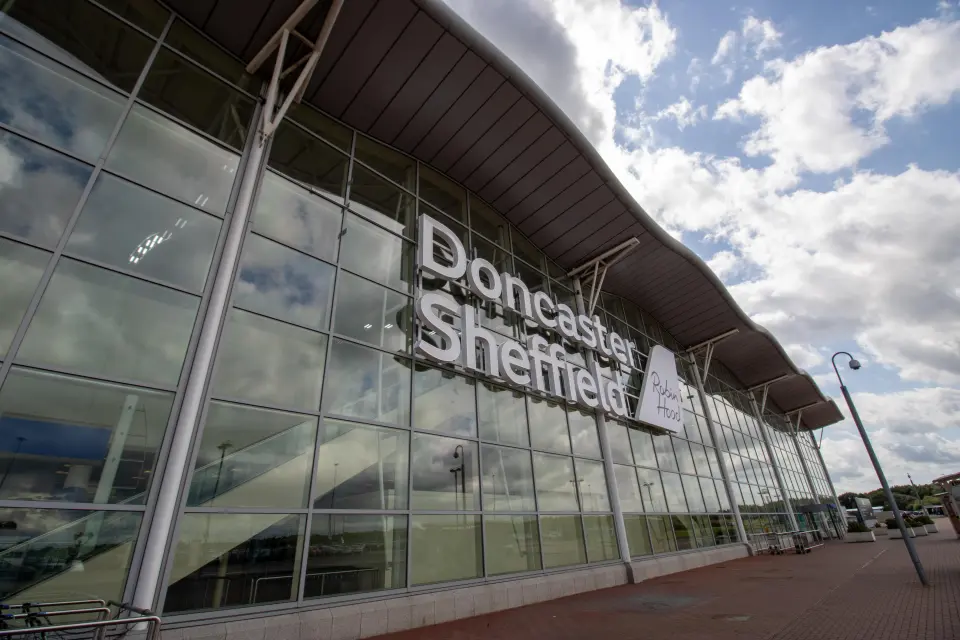
Doncaster Sheffield Airport closed in 2022 after operating for 17 years, but has been recently backed by the government to reopen.

Doncaster Sheffield could reopen four years after its closure Credit: Alamy
Airlines like Wizz Air operated out of the airport Credit: Getty

Now, the regional airport has taken another step closer to welcoming flights as it is launching a search for an operational partner.

Operator Fly Doncaster is looking for a Fixed Based Operator to have a permanent place within the airport.

This type of organisation would provide services that include aircraft handling, fuelling, and parking.

What this means is that private flights could return to the airport before the end of 2026 – with plans for passengers flights much later.

GREAT ESCAPES

Ten European city or beach holidays for under £100pp INCLUDING flight & hotel


SHORE WINS

How to bag yourself a stunning British seaside holiday break for just £49

Simon Hinchley, Executive Director for Airport Operations at Fly Doncaster said: “As we work towards reopening Doncaster Sheffield Airport, our focus is firmly on building a safe, efficient and operationally robust airport that is ready to serve a broad range of users from day one.”

In early 2025, the UK government revealed that £30million was being put towards its reopening.

More recently, a report for City of Doncaster Council’s cabinet announced that the cost of reopening the airport had risen to £193million.

Fly Doncaster said that when the airport reopens, it could see as many as four million passengers through its doors.

There has also been talks of a rail link to and from the airport that could have connections with the Lincoln Line and East Coast Mainline.

Prior to its closure, airlines like FlyBe, Wizz Air and TUI operated flights from Doncaster Sheffield.

As of yet, no airline has confirmed it will open base, but Doncaster East and Isle of Axholme Labour MP Lee Pitcher said last year that he was in talks with both Ryanair and TUI.

In July 2025, he told local media: “Yesterday, I chaired the latest meeting of the DSA Action Group, where we sat down with TUI’s UK & Ireland commercial director.

“It was a productive discussion, and we’ll continue to work with TUI, other key stakeholders, and push the Government to keep Doncaster Sheffield Airport firmly on the agenda.

The airport is expected to be operational with passenger flights for summer 2028.

The airport closed back in 2022 Credit: Alamy

Another airport that is in talks to reopen is Manston Airport, in Kent which once offered flights from the UK to Europe.

Passenger services stopped when KLM pulled out of the airport in 2014.

The current plan is to reopen the airport for cargo planes which is scheduled for 2029.

There have been talks to start commercial flights once again, but this could take longer to start.

Tony Freudmann – the public face of the site’s owners, RiverOak Strategic Partners told Kent Online: “We need, by the time we open, to have enough advance commitment from cargo operators to see that it is going to work.

“At that point, if we get the right approach from passenger carriers, wanting us to build a passenger terminal and base some aircraft here, we’ll go with that.”

Here’s more on airports as chaos sweeps Europe with new travel rules that have resulted in three hour queues and passengers missing their flights.

And this Spanish airport is set to close for over a month with all flights cancelled and thousands of Brits set to be impacted.

Doncaster Sheffield Airport has taken one step closer to opening Credit: Alamy

Source link

Unexpected item most people take on holiday could get you stopped at airport security

This harmless item isn’t banned by any airline, and many people pack it in their hand luggage, but the shape of it can trigger warning signs at airport security and see you getting held up in the queue

Airport security is one of the worst parts of flying, so once you’ve finally got to the front of the queue, you don’t want anything to delay your progress any further.

Once you put that bag on the conveyor belt, you want it to come through quickly so that you can get on with more important tasks, such as perusing the duty free shop. Nobody enjoys that sense of dread when your bag is stuck in the scanner, or even worse, sent off to the lane of shame to be examined by hand.

But many travellers don’t realise that an innocuous item could be the thing that’s halting their progress through the scanners as it’s shape can raise the suspicions of airport staff.

If you’re off on holiday somewhere with bad WiFi, or simply want something fun to do in the evening, you might be planning on bringing a deck of playing cards, UNO, or other card game.

Trading cards such as Pokémon have also had a huge revival in recent years, and some people even travel with a set of tarot cards so they can do readings on holiday. But packing any set of cards, whether collectible or mystical, can cause a security issue.

A spokesperson for the Transportation Security Administration (TSA), who deal with airport security in the United States, told Travel and Leisure that they recommend people still place their cards in their carry on bag, especially if they’re valuable items like collectible trading cards.

Ian Cava from the TSA explained that it was the shape of the cards that can trigger additional checks, and it can make it seem like there’s something hidden inside. “Trading and playing cards can sometimes trigger additional screening because of the way they are packed and their density.

“When items are stacked tightly together, like decks, binders, or graded slabs, the X-ray image can make it difficult for officers to confirm there are no prohibited items concealed in or around them.”

Ian’s recommendation is that travellers should remove the cards from their hand luggage and place it in the tray next to the bag, alongside items like their mobile phone. “This helps speed up the process and reduces the likelihood of delays,” he claimed.

But if the cards still don’t show clearly on the scanner, don’t be alarmed if the airport security staff need to carry out a physical inspection. Travellers with large and bulky card collections should ensure they leave additional time for security screening.

READ MORE: UK seaside town with ‘timeless charm’ and almost no crowds is ‘best in spring’READ MORE: World’s ‘best theme park’ 2 hours from the UK has Europe’s highest free-fall ride

A pack of cards isn’t the only thing that can see you held up at security. There are a number of personal items banned from hand luggage that could cause you issues. Many items are banned due to being sharp and potentially dangerous, but even innocuous items such as corkscrews could potentially be confiscated.

Have a story you want to share? Email us at webtravel@reachplc.com

Source link

Ryanair check-in warning for Brits who risk paying extra £55 per person at the airport

It’s crucial to be well prepared before heading to the airport on holiday, and there’s one mistake to avoid, otherwise face forking out an extra £55 per person at the airport

There’s a common check-in mistake that could see Brits charged an extra £55 per person at the airport.

There’s a lot to think about when it comes to jetting off abroad; from finding the right sun-soaked destination, the most affordable flights, suitable accommodation, and a desirable itinerary. Inbetween the planning and excitement, there are also some vital pre-holiday preparations that are needed.

Whether that’s obtaining travel insurance, securing a visa, checking passport validity, arranging a lift or taxi to the airport, packing the suitcases, or booking a dog or house sitter. But during any pre-trip planning, there’s a key task that holidaymakers can miss, and it will cost extra with Ryanair.

READ MORE: Tenerife tourist goes on holiday to catch tan but comes home with something elseREAD MORE: UK’s little-known new passport rule that left Brit woman stranded in Spain

While travellers will have their flight details to hand, often via the airline app or an email, some forget to check in online. For holidaymakers flying with Ryanair, they will be charged £55 per person to check in at the airport, when they could have checked in online for free.

For a family of four, this could see them fork out a whopping £220 before their getaway even begins. It’s a mistake and an extra cost that can easily be avoided by checking into their flight when it opens online.

Ryanair passengers with a pre-reserved seat, which are usually at an extra cost, can check in online up to 60 days before their scheduled departure. Meanwhile, those without a reserved seat, which is free, can check in online 24 hours before their flight, and can often choose a seat for free if one is available.
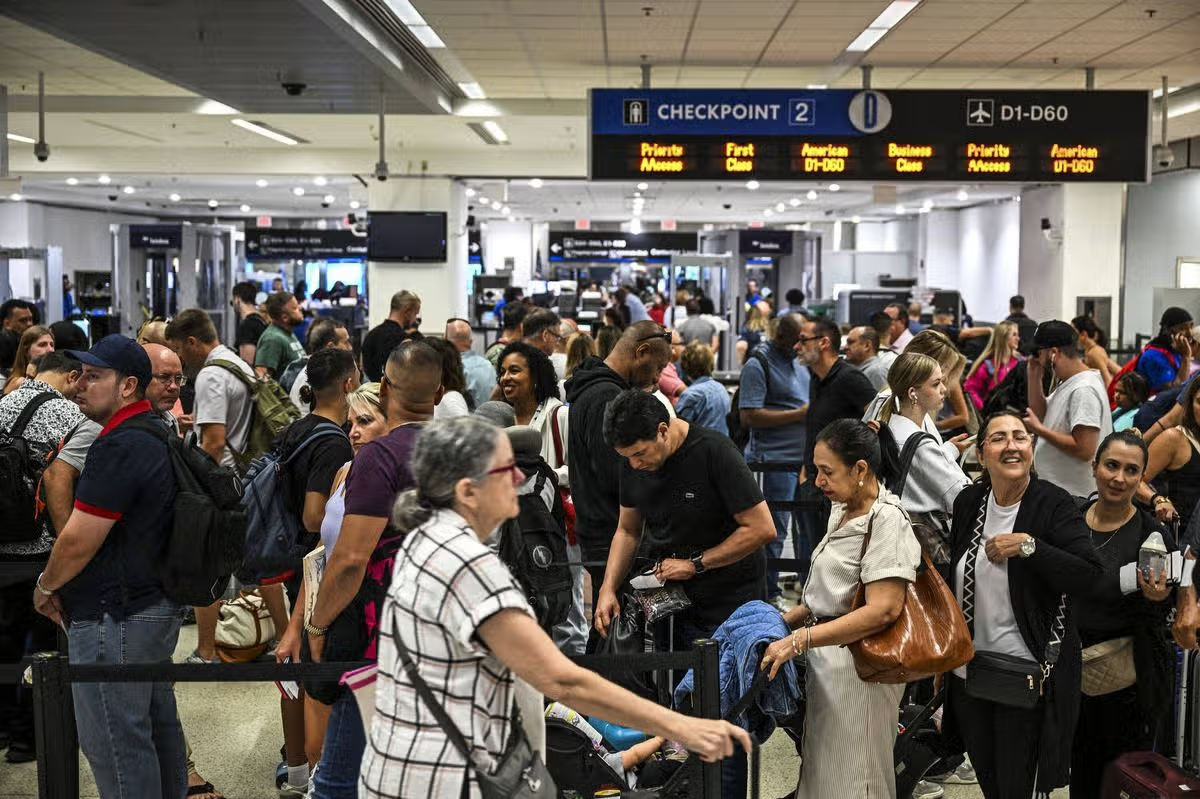
To check in online with Ryanair, travellers must have a valid travel document, such as a passport or National Identity Card. The airline confirmed that they “do not accept a driver’s license or birth certificates for travel to any location” and advised that there are different rules for various destinations, so Brits should check these before travelling.

For anyone who doesn’t check in online, Ryanair warned: “If you do not check in online up to 2 hours before your scheduled departure time, you may check in at the airport up to 40 minutes before departure, but you will be charged an airport check-in fee.”

They added: “We urge all passengers to check in online before arriving at the airport so these fees can be avoided.”

In further information about checking in at the airport, Ryanair stated: “You will have to pay an airport check-in fee per passenger to cover the extra cost of the airport check-in service. Please see our Table of Fees.”

On the Ryanair website, they further outlined: “If you checked in but cannot present your boarding pass on the app when you arrive at the airport, you will receive a free of charge boarding pass.”

They also added: “Please note: All passengers departing from a Moroccan airport must check-in online as normal and then collect a free of charge boarding pass at the airport check-in desk.”

For more information or to check Ryanair’s details, visit their website.

Do you have a travel story to share? Email webtravel@reachplc.com

Source link