ANOTHER family missed their flights home and were forced to spend nearly £2,000 due to massive airport queues abroad.
Matthew Wilson, his wife and their son were travelling home to Manchester from Milan back in April.
The Wilsons missed their flights home after long queues at EESCredit: Getty
They were returning to the UK after a nine-night holiday when they got stuck huge passport queues due to the new European entry rules.
Talking to the iPaper, Matthew said that despite easily getting through security, they were then stuck in another queues for 90 minutes, in which they only moved about 10m in that time.
Sign up for the Travel newsletter
Thank you!
Frustratingly, he family were then told by ground staff that their luggage had been removed from the plane as the flight was going to depart while they still stuck in the queue.
They were then forced to wait three hours before easyJet, who the family were flying with, offered the family a flight back home – but this was six days later than the original flight.
Rather than waiting, Matthew spent £1,969 on new flights from Barcelona, taxis, food and accommodation.
This was on top of the money they had already paid on the flight they missed which had cost £377.
Not only that, but their travel insurance provider also said they were unable to recuperate his costs.
Matthew said: “It was very stressful – we will think twice before travelling in Europe again.”
The family then spent £2,000 to get home after the delaysCredit: AlamyThe operator of Milan Airport apologised saying EES ‘requires longer processing time’Credit: Getty
The airport operator apologised, adding that EES “requires more complex operations than before and longer processing times”.
Not only that, but it said that on the day the Wilsons were due to fly home (April 12), there were malfunctions at the automatic gates due to issues connecting to the border systems.
This resulted in “particularly long waiting times” as passengers had to be manually checked at passport control.
The flight to Manchester had been held for nearly an hour “but it had to then depart due to crew reaching their safety regulated operating hours”, explained easyJet.
There have been warnings over wait times because of EES – and it’s only set to get worse.
Rafael Schvartzman – the vice-president forEuropeat the International AirTransportAssociation (Iata) – warnedqueue timescould stretch to as much as six hours this summer.
Mr Schvartzman said: “What we are seeing is a very hard risk of really challenging times or waiting times, talking about expectations of three, four, five, six hours which is unacceptable.
“We know for a fact there are many cases where people have lost flights or their connectivity.”
The EU’s Entry/Exit System (EES) has sparked massive airport queues across Europe – with people complaining that they’ve had to wait hours to enter countries after landing
08:24, 19 Jul 2026Updated 08:51, 19 Jul 2026
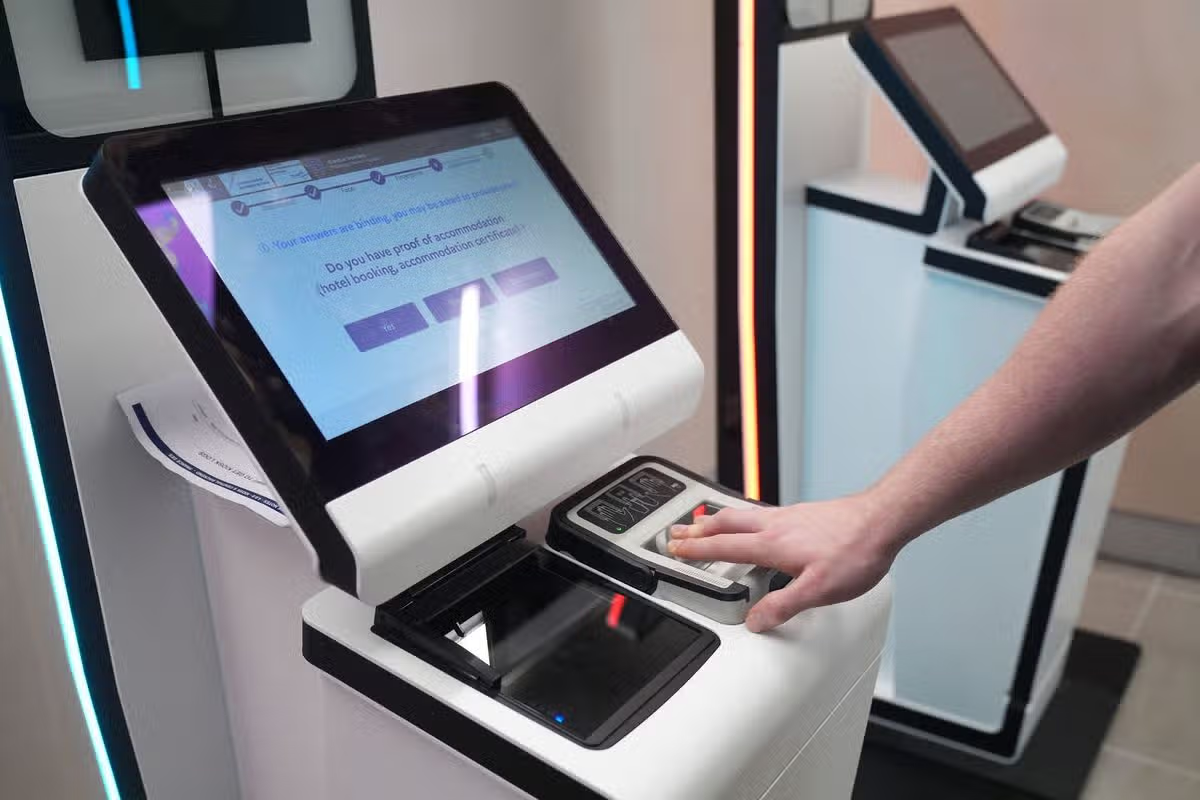
EES kiosks have extended airport wait times across the EU(Image: PA)
Brits looking forward to a European getaway this summer have been issued a major travel warning by an airport boss after the EU implemented its new border system.
Officials implemented the new passport control system, named the Entry/Exit System (EES), on October 12 last year, requiring British citizens travelling to the Schengen area to register biometric details – including fingerprints and a photo – on arrival. The arrangements have caused massive pileup queues in airports across the area, and the system itself is reportedly plagued with bugs.
A boss at one of the busiest airports in the EU, located in one of the most visited cities on the continent, has warned that the system has nearly tripled the amount of time it is taking Brits to travel through passport control.
Ivan Bassato, the Chief Aviation Officer at Rome’s Fiumicino airport, told the BBC that large numbers of passengers are using the €12 million (£10.2 million) self-service “kiosks”. While recent updates to the system have “improved things significantly” with the e-gates, issues remain for UK nationals, who are now taking much longer to get through the border.
He said the average time has extended from seven to 20 minutes, and the process is still taking much longer than it would have before the EES rollout.
Mr Bassato said: “We are not at the point where you have the same quality of the process [as] before the EES.” The official added that the airport was “absolutely not okay with” waits lasting between one to two hours, urging: “I think that we need to fix urgently certain aspects of the system.”
The Foreign, Commonwealth and Development Office (FCDO) has previously warned Brits travelling into the Schengen area that they should be “prepared to wait” as the EES is implemented, especially if it is their first visit.
The Government’s portal advises: “On your first visit to the Schengen area, you may be asked to create a digital record at the port or airport on arrival. You may be asked to submit your fingerprints and have your photo taken at dedicated booths. You don’t need to provide any information before travelling to a Schengen area country.
“The checks may take slightly longer than previously, so be prepared to wait during busy times.” Brits travelling into Rome have encountered lengthening wait times lasting hours.
Speaking to the BBC, Carl, who had travelled to the Italian capital with his family, said he was bowled over by the amount of time it took to enter the country. He said: “It was two hours queuing, from getting off the plane to getting through with children. I knew it was going to be bad, but not as bad as that.”
One traveller entering from outside the EU said in a post on Reddit that, on entry to Fiumicino, they encountered a non-EU immigration line that wrapped through duty free.
They wrote: “Flight was at 11:15 today. Arrived at FCO at 8:45. Checking in and security was a breeze. Immigration line was extremely long for non-EU passports. Wrapped through duty free into the domestic terminal. The line finally moved enough that was I was on gate side of duty free at 9:30. Made it through immigration around 9:55.
“Worth noting that we had fast pass in security and priority check in for bags. Much more time needed if we didn’t.” The European Commission has insisted that disruption in EU airports is limited, and that member states would receive continued EES support.
DONCASTER Sheffield Airport has taken a big step forward towards its reopening.
Approval has been given by the Civil Aviation Authority (CAA) to move forward with a crucial stage in order for the airport to welcome back passengers.
Doncaster Sheffield Airport has taken a step towards its reopeningCredit: City Of Doncaster / Mayor Ros Jones
The CAA has said that the hub can go ahead with its public consultation on the Airspace Change Proposal (ACP).
Locals and stakeholders get to state their opinion about its reopening – a necessary step in the process.
Christian Foster, Director for FlyDoncaster Ltd, operators of Doncaster Sheffield Airport said: “A reopening project of this scale includes a number of important milestones, but being able to go out to public consultation around our airspace is one that is absolutely crucial.
“We want to hear the views of people from across Doncaster and beyond, so that they can have a meaningful say about the airspace connected to this airport.
“As a community asset, it’s vital that we engage with those who live and work nearby to us and ensure we listen to the views of local people.”
Doncaster Sheffield Airport closed back in 2022 but could reopen to passengers in as little as two years’ time.
The regional airport in the north of England provided a gateway toEuropefor those living in and around Doncaster up until four years ago, after it was deemed ‘not financially viable’, and closed.
Christian Foster, Director of FlyDoncaster – the company set up to manage the airport – told us: “It does feel like the world has changed post-Covid, whereas people were focused two weeks inSpainorGreece, nowadays we’re seeing a lot of people keen to take city breaks.”
When talking of where he would like to fly, he said: “We’d love to fly to places like Croatia, and other destinations that are a bit more quirky like Azerbaijan.
“We’re keen to look at emerging places to visit as well, likeIndia.“
Machines that scan our luggage could raise an alarm over this packet
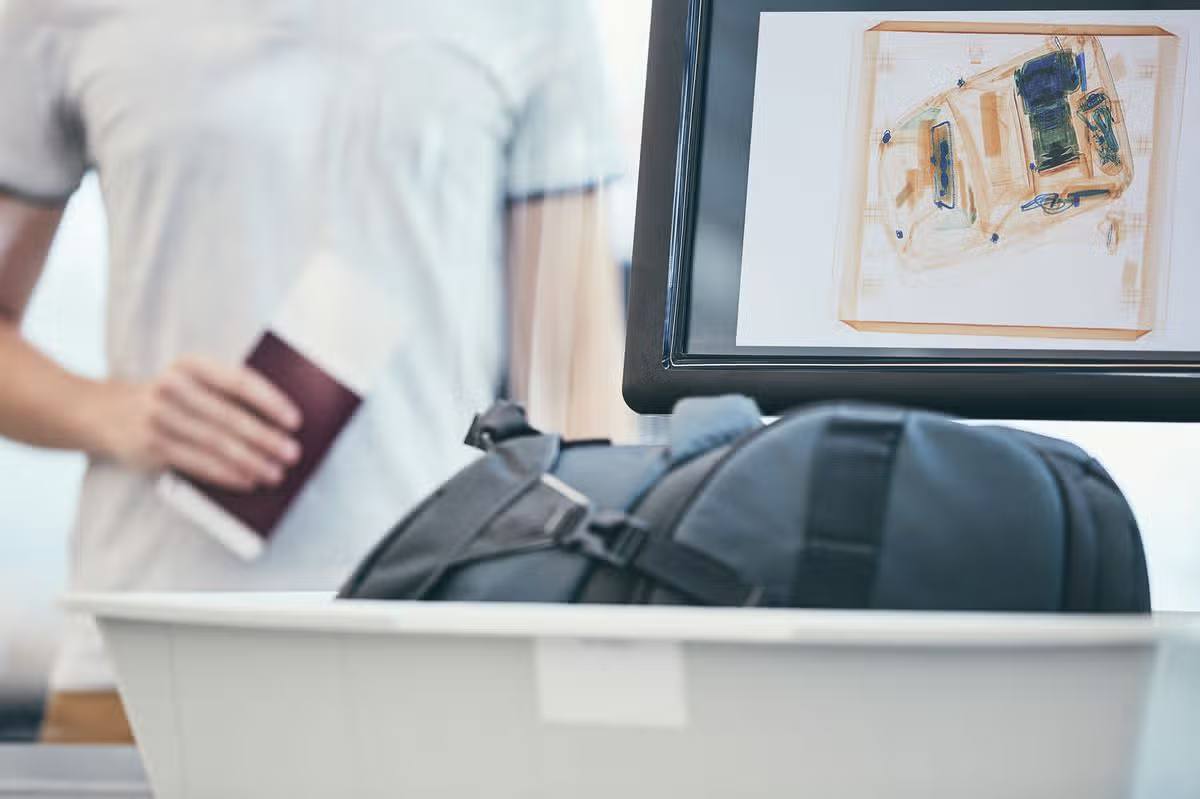
The common item could be flagged as suspicious by airport scanners(Image: Getty)
If you have a long flight ahead or fancy some screen-free entertainment, bringing a pack of playing cards can seem like a good idea to beat boredom. But they can cause a security issue at airports, which could mean you’re held up while items are checked.
Many items are banned for being sharp and potentially dangerous, but even innocuous items such as corkscrews could be confiscated. But, some seemingly harmless items could also raise an alarm with security staff and require further checks.
The Transportation Security Administration (TSA), which oversees airport security in America, told Travel and Leisure that any deck of cards, from classic playing cards to games to collectables like Pokémon, could trigger a security red flag if they are picked up by scanners that notice the suspicious look of the otherwise innocent item.
Ian Cava from the TSA explained that the shape of the cards can trigger additional checks and make them appear as if there’s something hidden inside. He said: “When items are stacked tightly together, like decks, binders, or graded slabs, the X-ray image can make it difficult for officers to confirm there are no prohibited items concealed in or around them.”
Even family-friendly games like UNO have a strong chance of triggering alerts. A standard UNO deck has 112 cards, making it twice as thick as a regular 52-card deck. The X-ray operators cannot see through the thick stack, so they must check it for hidden contraband.
Although the advice comes from the TSA, people travelling from UK airports can also follow the guidance, as the security processes are quite similar. For an X-ray scanner, a tightly packed deck appears as an organic solid block that could be flagged as a potential explosive, electronic device, or dense liquid, all of which require further checks.
A standard bag search usually takes up to 15 minutes once your bag reaches the inspection table. However, during peak travel times, the queue of bags waiting to be manually checked can back up, significantly extending your wait.
Many UK airports are currently upgrading to advanced 3D scanners. If your security lane uses these newer machines, you often do not need to take anything out of your bag, drastically reducing false alerts. Because the rollout is not happening all at once across every UK airport, some lanes still use older X-ray machines that strictly require manual checks for dense items like cards and games.
Tips to get through security faster with playing cards:
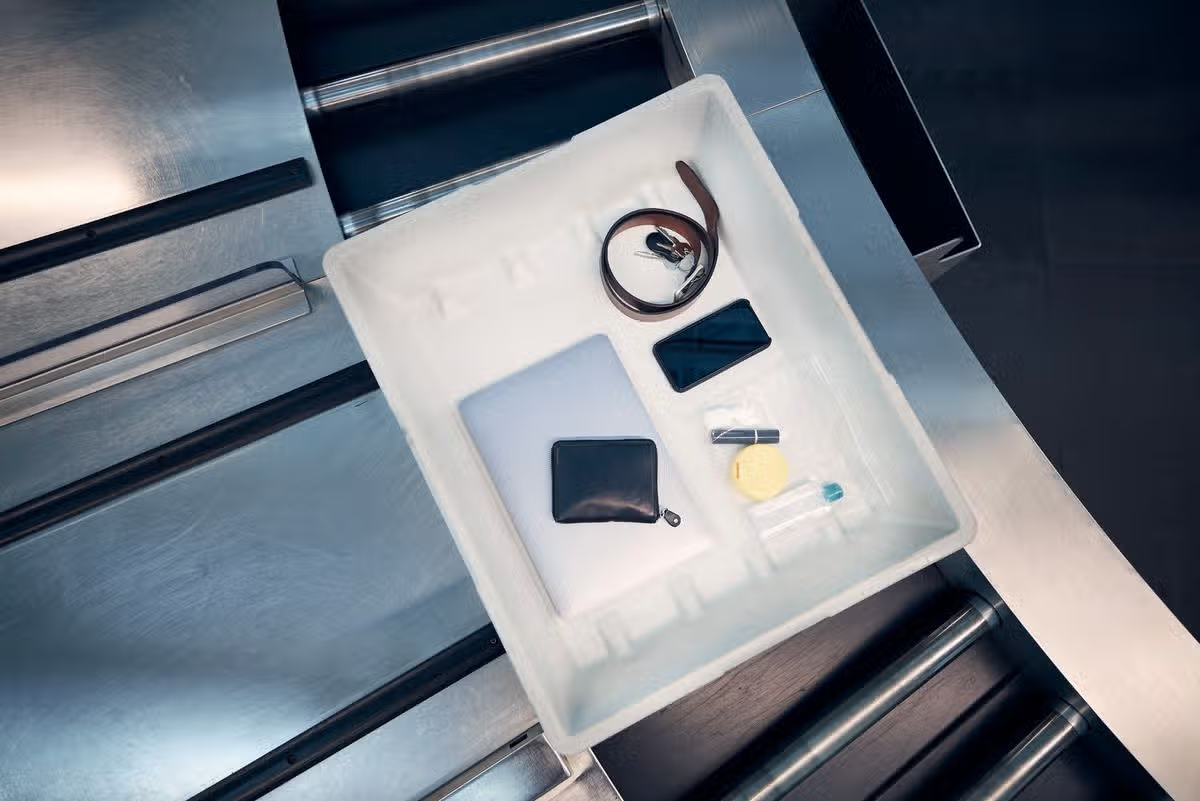
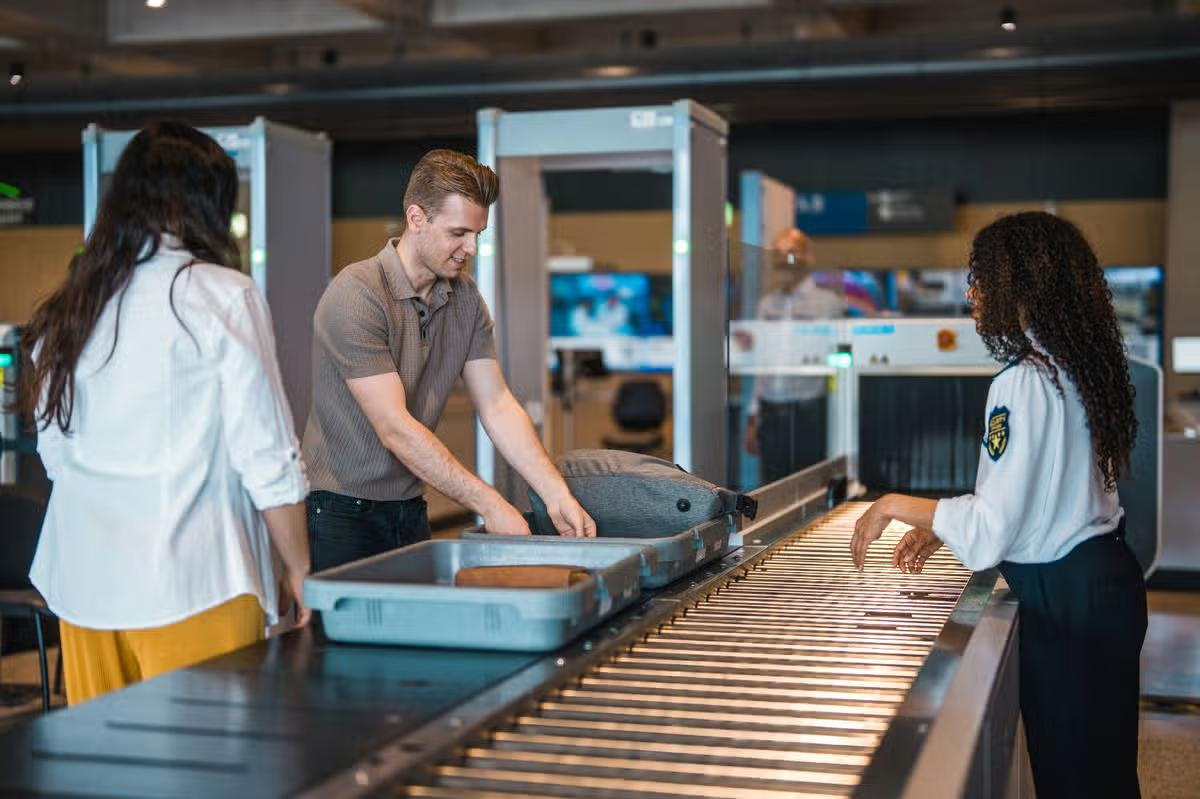
To avoid delays, treat playing cards like anything else you’d take out of your bag. Place the card box in a tray to be checked rather than waiting for the security alert to be triggered.
People can also avoid issues by not packing cards in metal tins or carry cases – typically provided or bought for collectables. Use a cardboard or plastic case because metal tins are harder to scan.
Putting any of your board games and cards in hold luggage is the safest way to avoid security delays, as they don’t go through manual bag checks that require you to wait. While this completely eliminates the risk of your hand luggage being pulled aside for a card or game check, passengers risk having their items bent, crushed, or lost if the airline misplaces their suitcase.
An informal advisor to Los Angeles Mayor Karen Bass handled communications for her office for free while simultaneously working on a three-year contract with Los Angeles World Airports worth nearly $600,000.
Yusef Robb, who runs the firm tk/Communications, was an unpaid spokesperson and advisor for Bass from February through the beginning of June.
On June 19, Robb began working for Lineage Logistics, whose cold food storage facility in Boyle Heights burned for more than a week last month. He continued to serve as an unpaid, unofficial advisor to the mayor, though no longer as a spokesperson, until The Times and other outlets reported on his work for Lineage on Saturday.
Robb said the airport contract was unrelated to his work for the mayor. But a legal expert said the arrangement raises questions about whether his free labor was a gift to the mayor and whether working for the city and private clients creates conflicts of interest.
“This was done through a transparent and public competitive bidding process,” Robb said in an email to The Times. “I provide communications support and training.”
The Bass administration said Robb’s unpaid assistance was “for the benefit of the city. It’s not a gift.”
In 2024, Robb signed the contract with Los Angeles World Airports, or LAWA — the city department that operates Los Angeles International Airport and the Van Nuys Airport — for $450,000 over three years.
He won the contract, which involved “executive media training” as well as “crisis communications,” over 10 other firms. It was updated in April to include additional work for $137,500.
A report from LAWA in support of the contract update said that “executive management at LAWA have benefited from successful, professional media training as well as support for LAWA crisis communications and response.”
Because tk/Communications has subcontracted to at least two other companies, Robb said his firm has earned no more than $315,000 over the three-year contract.
“There is no connection between the work Mr. Robb performs for LAWA and the assistance he provides for Mayor Bass’ Office,” said a spokesperson for Bass’ office. Bass is running for reelection against City Councilmember Nithya Raman.
The LAWA contract was Robb’s second with the city during the Bass administration. The city paid a total of $75,000 in 2022 and 2023 to Robb’s firm to provide “various communications services related to the start-up of the administration,” according to a contract.
Tk/Communications has worked for government agencies as well as political campaigns and private businesses, including the Los Angeles Department of Transportation, the Los Angeles Unified School District and the music and entertainment company AEG, according to the company’s website.
“We develop powerful narratives and engagement to accelerate and amplify our clients’ messages, whether they’re grounded in an investment proposal or a political campaign,” the website states. “We author and tell stories that build deep connections and lasting relationships that deliver more than you asked for.”
Robb has worked in and around City Hall for decades. He was a press aide in Mayor Jim Hahn’s administration, then worked for Eric Garcetti when Garcetti was a city council member and then mayor. He left Garcetti’s office in 2015.
Robb said he has provided “unpaid help to all sorts of people and businesses, to advance criminal justice reform, organize community movements, or just to find the right words.”
“I feel it’s important to help the city if I can,” he said.
Jessica Levinson, a professor at Loyola Law School and former president of the city’s Ethics Commission, said the airport contract shows how valuable Robb’s labor is, raising the question of whether he is providing a gift to Bass by working for her for free.
Another concern for the public, Levinson said, is that Robb is working for Bass at the same time that he has other clients and could potentially use his position at City Hall to advance those clients’ interests. His work for Bass could also make him more desirable for clients who believe he has the mayor’s ear, she said.
“What we’re worried about is undue influence, preferential access and backroom deals that benefit certain people, as opposed to the public,” said Levinson. “We don’t want public officials serving two masters.”
Still, Levinson said she does not believe that Bass has violated any laws by using Robb pro bono.
“This is an unusual setup,” she said. “That does not mean it’s illegal.”
Fifteen destinations in particular are facing major airport delays as the EU’s new digital passport checks are causing ‘slow processing times and excessive queues,’ Ryanair warned
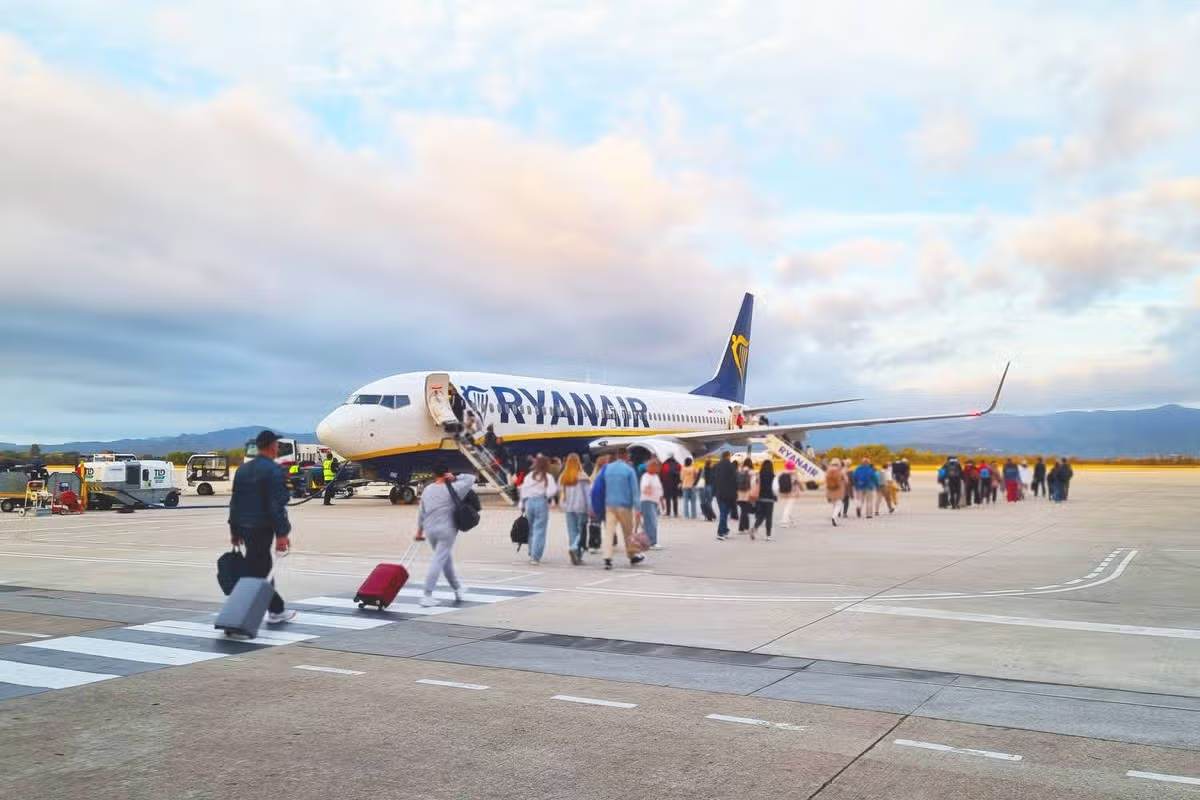
Ryanair has listed the destinations facing the worst delays (stock image)(Image: Dmitri Zelenevski via Getty Images)
Ryanair has warned UK families to prepare for lengthy passport queues and airport delays due to the EU‘s new automated border control system.
The budget airline said the new Entry/Exit System (EES) – which replaces physical passport stamps with a digital record for travellers – has continued to cause disruption months after becoming fully operational on April 10.
Fifteen destinations in particular are now facing significant delays due to “slow processing times and excessive passport control queues on both arrivals and departures,” Ryanair warned.
The airline added: “With schools now breaking for summer and passenger volumes reaching peak levels, the failed EES rollout is going to cause unnecessary delays and long queues for UK families.
“Months after EES went live, many airports still do not have fully functioning self-service kiosks in place, while border staffing levels and infrastructure remain inadequate to process peak passenger volumes.
“The result is avoidable delays, longer queues and unnecessary stress for UK passengers travelling during the busiest holiday period of the year.”
Ryanair has warned UK travellers going to and from non-Schengen destinations, or transiting through affected European airports, to be prepared for extended waits at passport control.
The new EES checks may require passengers to complete passport scanning, fingerprint capture and facial image verification.
Ryanair says it is supporting calls from EU Member States to urgently extend the current EES flexibilities into early 2027.
This will allow airports more time to fix malfunctioning kiosks, increase staff numbers and make sure the system is running smoothly before full enforcement is introduced, the airline said.
Ryanair’s Chief Operations Officer, Neal McMahon, said: “Families heading away for a well-earned summer holiday should be thinking about suitcases, suncream and sangria, not standing in passport queues for hours.
“The reality is that the EES system isn’t working properly and families are paying the price for a system that does not work months after launch. Passengers should not be the testing ground for unfished border infrastructure.
“We support calls from EU Member States to urgently extend the EES flexibilities. This will give airports and border authorities the time to improve the infrastructure, fix the broken devices and hire more staff so that families can travel through Europe without disruption.”
Ryanair identified 15 places where passengers have faced “recurring EES hotspots where passengers are experiencing significant delays due to slow processing times and excessive passport control queues on both arrivals and departures”.
People should check their specific airport before travelling this summer
Different UK airports might have different rules in place this summer (stock image)(Image: Getty Images)
Airports in the UK have slightly different rules that could catch some travellers out this summer if they do not check them before packing. Certain airports have been upgraded to help relax a major security rule, while others have yet to make any changes.
The 100ml liquid-limit security rule means passengers can only bring liquids in containers of 100ml or less in hand luggage. The rule was put in place back in 2006 when police foiled a major terrorist plot, which prevented a group that planned to smuggle liquid explosives on board a flight leaving London that was bound for North America.
At the time, standard airport security X-ray machines were designed to detect metal weapons (such as guns and knives) and solid explosives, with no way to distinguish between a simple bottle of water and volatile liquids. For years, the rule has remained in place for the vast majority of airports.
But in 2022, the Government confirmed plans to relax the rules. As technology has advanced, some airports are relaxing the rules in 2026.
Certain UK airports featuring new 3D security scanners now allow passengers to carry liquids, gels, and aerosols in individual containers that can hold up to two litres (2000ml). These airports allow you to leave liquids in your hand luggage without needing clear plastic bags.
Content cannot be displayed without consent
As of July 15, 2026, the following airports have fully upgraded their systems to include new scanners that officially allow passengers to carry liquids in containers up to two litres in their hand luggage:
London Heathrow (All Terminals)
London Gatwick
Birmingham
Bristol
Edinburgh
Belfast International
Belfast City
Teesside International
Even at these hubs, reusable metal, insulated, or double-walled vacuum bottles must be empty when passing through security. You can refill them once you are inside the departure lounge.
Every other UK airport has yet to follow suit with the change, and still follows the commonly known limit of 100ml. But even with the same cap on liquids, certain airports have different ways of letting items through security.
For example. certain airports remain the same as last summer, where passengers need to use 100ml containers and place them in a clear, resealable plastic bag for scanning. These airports include:
London Stansted
London Luton
Glasgow International
East Midlands
Liverpool John Lennon
Cardiff
But, certain airports have relaxed the rules slightly. Although the strict limit on the amount of liquids is still in place, passengers can keep their liquids and electronics inside their bags for processing at these airports:
London City
Manchester
Newcastle
Leeds Bradford
Aberdeen
Southend
Why aren’t all airports changing at once?
The UK Government’s original goal was a blanket lifting of the 100ml rule, but issues arose, meaning the change had to be implemented gradually. To prevent massive security bottlenecks during the peak summer rush, the Department of Transport has largely frozen rule changes at airports that haven’t yet reached 100% compliance.
Major remaining hubs, such as Stansted, Luton, and Manchester, are continually updating their lanes behind the scenes. Gradual transitions to the “in-bag” rules are expected to resume late autumn/winter 2026 as travel volume drops.
People have been reminded to think before they start maxxing out their luggage limit, as their return journey could be what catches them out. Even if you fly out of a 2L-friendly airport like Heathrow, most international destinations still enforce the strict 100ml rule, so if you buy full-sized toiletries in the UK, you may have to check them into hold luggage on the way back or throw any leftovers away before coming home.
It might seem harmless at first glance, but it could lead to unnecessary delays
Reduce the risk of being stopped by airport security(Image: Getty Images)
Packing for a holiday can feel like navigating a minefield, with a long list of rules on what can and can’t go in your luggage. While some banned items are obvious, others seem completely innocent at first glance – yet bringing them to the airport could still result in officials delaying your journey.
There is one everyday item that is allowed by all major airlines, including Ryanair, Jet2, TUI, easyJet and British Airways, but could still attract attention during security screening if officers are unable to identify it clearly on the scanner. To avoid unnecessary delays or having to unpack your luggage at the checkpoint, travellers are advised to pack toiletries in a way that makes them easy to inspect.
A simple bar of soap – buyable at Sainsbury’s for 35p, for example – might seem like one of the most harmless items you could take on holiday. However, it is not the soap itself that can cause concern – it is the way a solid item may appear when passing through security scanners.
Airport security staff do not routinely search luggage simply because it contains a bar of soap. However, dense items can sometimes make X-ray images harder to interpret, particularly when they are packed alongside electronics, cables or other bulky belongings. If officers cannot clearly identify an item, they may carry out additional checks before allowing passengers through.
The government information website GOV.UK says: “Airport security staff will not let anything through that they consider dangerous – even if it’s normally allowed in hand luggage.” While soap clearly is not dangerous, if a bar of soap raises an alert on the scanner, they are legally required to stop the passenger and inspect it.
The US Transport Security Agency (TSA), for instance, says passengers are often asked to separate dense items because they can “clutter bags and obstruct clear images on the X-ray machine.” When a solid block of soap, cheese, or other dense organic material blocks the scanner’s view or mimics a threat signature, protocol requires a physical bag search or chemical swab testing to clear the item.
According to GOV.UK, solid bars of soap are permitted in both hand luggage and checked baggage. Security officers can still manually inspect any item they are unable to identify clearly during the screening process, regardless of whether it is allowed.
To reduce the chances of your bag being opened, experts recommend keeping dense items easy to access and, if requested, placing them in a separate tray during screening. Avoid storing them inside thick metal tins or rigid plastic cases alongside items such as power banks, charging cables and other electronics, as this can make X-ray images harder to interpret.
It’s also important not to confuse solid soap with liquid toiletries. While bars of soap are exempt from liquid restrictions, liquid soaps, shower gels and similar products carried in hand luggage must normally be in containers holding no more than 100ml, unless you’re travelling through an airport that has introduced next-generation security scanners permitting larger liquids.
The rules apply regardless of which airline you’re flying with, as baggage screening is carried out by the airport rather than carriers such as Ryanair, Jet2, TUI, easyJet or British Airways. A manual inspection is simply a precaution and does not mean you’ve broken any rules or packed a prohibited item.
Taking a few moments to think about how you pack everyday toiletries could help make your journey through security a little smoother. Although a 35p bar of soap is perfectly legal to travel with, storing it sensibly could help avoid unnecessary delays before your holiday even begins.
Weekly insights and analysis on the latest developments in military technology, strategy, and foreign policy.
For several months, Israel’s Ben Gurion Airport was so packed with U.S. Air Force aerial refueling tankers deployed for the fight against Iran that officials in Jerusalem complained about the toll that presence was taking on airport operations. The issue came to a head on Tuesday, when Israel’s Transportation Minister placed a limit on how many of these jets can land at Ben Gurion Airport. The move comes despite an increase in fighting between the U.S. and Iran and with several Arab nations coming under fire from the Islamic Republic. Tuesday afternoon, U.S. Central Command (CENTCOM) announced a new round of strikes against Iranian targets as the naval blockade on that nation’s ports is being restored.
While an anonymously sourced Israeli news story stated that U.S. and Israeli officials are irate about this decision, three experts we spoke with suggest that despite ratcheted-up kinetic actions, the restrictions on tanker operations at Ben Gurion will be more of an inconvenience to U.S. forces than a major problem.
At issue is the tension faced by a very busy international airport operating at the peak of summer travel season, while also having to host dozens of American tankers deployed for high-tempo combat operations that are currently not happening.
“Hundreds of thousands of plane tickets were bought by Israelis to fly and enjoy their summer vacation,” Miri Regev said earlier on Tuesday. “We promised that we will enable commercial flights and we will not cancel a single ticket because of American refueling planes.”
“Therefore I have given instructions that we will not allow any U.S. refueling tankers to land at Ben Gurion Airport beyond the agreed number of 20 planes, and the remaining planes will land at Air Force bases.”
Israeli Transportation Minister Miri Regev responds to the US delaying plans to relocate military refueling aircraft that have been in Ben Gurion international airport pic.twitter.com/h6Hp0gnIVk
As we reported in the past, the U.S. Air Force began sending tankers to Ben Gurion in the lead-up to the U.S.-Israeli war on Iran that began Feb. 28.
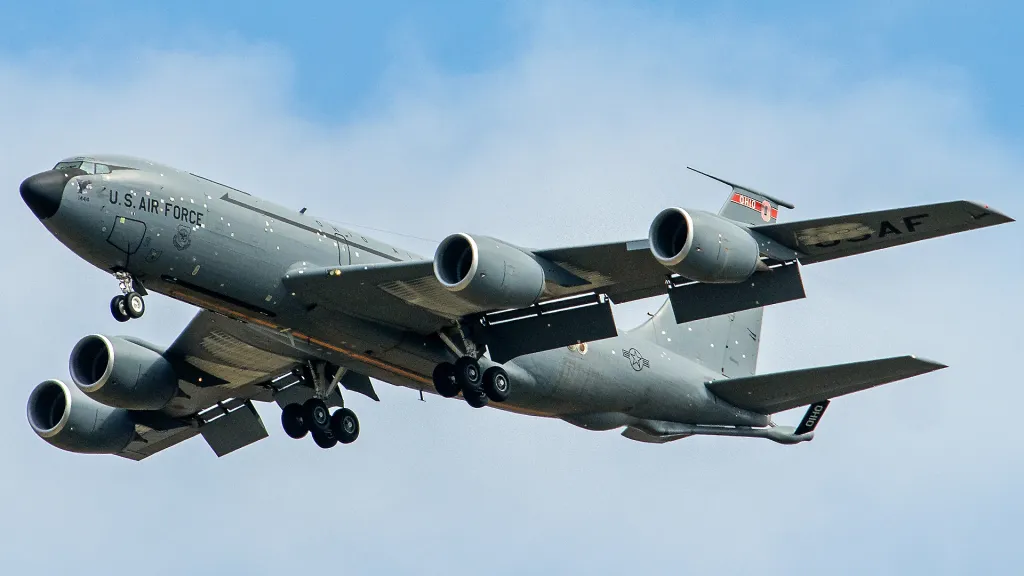
Nine KC-46 Pegasus and five KC-135 Stratotanker aerial refueling jets arrived at Ben Gurion in the days before hostilities began. The number of U.S. Air Force tankers, as well as the service’s cargo jets, at the airport has grown tremendously since then.
“A fleet of about 75 U.S. refuelers and cargo planes had parked at Ben Gurion Airport for many months, as part of the US military buildup in the region prior to the war,” the Times of Israel reported on Tuesday. “Following the partial removal of the tankers in recent weeks, more than 30 US refueling planes are estimated to be stationed at Ben Gurion Airport, crowding out civilian aircraft and creating a shortage of parking spaces.”
In our previous reporting, we noted that dozens of U.S. Air Force refueling aircraft deployed to Ben Gurion Airport had been expected to stay in Israel at least until the end of this year, though those plans now appear to be in flux.
Satellite imagery indicates the US has withdrawn 32 of the roughly 60–72 aerial refueling tankers it had stationed at Israel’s Ben Gurion Airport, leaving about 32 as of early July 2026.
Meanwhile, there are alternatives for the dozen or so KC-135s and KC-46s that now need a new home. The Air Force can operate tankers from several other bases in Israel as well as across the region. However, bases closer to Iran have come under dense Iranian fire and five tankers were reportedly damaged in an Iranian long-range strike on Prince Sultan Air Base in Saudi Arabia in March. Operating far forward during war time, such as at the traditional hub for these operations, Al Udeid Air Base in Qatar, isn’t possible due to the extreme risk posed by Iranian standoff weapons. Other bases, like Muwaffaq Salti Air Base in Jordan is already packed with aircraft with little room for dozens of tankers.
A KC-135 Stratotanker, riddled with shrapnel from an Iranian attack, lands at Mildenhall Air Base in the U.K. in May. (Aviation photographer Andrew McKelvey)
As we noted earlier in this piece, the tanker limit reportedly upset U.S. and Israeli officials alike.
“Senior officials at U.S. Central Command have contacted the IDF’s top brass and Israel’s defense establishment in recent hours following the Transportation Ministry’s decision Tuesday not to allow additional American refueling aircraft to land at Ben-Gurion Airport,” according to Israel’s Ynet news outlet. “According to sources familiar with the details, the Americans were angered by the decision and made clear that it directly harms the operational needs of U.S. forces operating in the region amid the escalation with Iran. They said the refueling aircraft are a vital component of the regional deterrence and defense array.”
TWZ cannot independently confirm Ynet‘s reporting. Earlier in the day, Navy Capt. Tim Hawkins, CENTCOM’s spokesman, told us that the command “will continue working with our Israeli partners to best position U.S. aircraft to support operations.”
Hawkins declined to elaborate.
“Israel is a strong military ally, and we appreciate the warm hospitality for American forces as we work shoulder to shoulder in promoting regional security and stability,” Hawkins stated.
Meanwhile, as we have noted in earlier reporting, the U.S. has already returned F-22 Raptors that were flying out of Ovda Air Base in Israel back to the United States. Other aircraft, such as A-10s and F-15Es, have also returned home from or have been replaced in the CENTCOM region. So clearly there is a lot of shifting of aviation assets taking place even amid current operations.
Ten F-22 Raptors arrived at RAF Fairford on July 10 from Ovda Air Base in Israel, where they took part in Operation Epic Fury. (@Saint1Mil) (@Saint1Mil)
A former senior U.S. Air Force leader acknowledged the tensions inherent in operating military aircraft for combat operations out of a civilian airport. However, Ben Gurion is considered one of the most important airfields in the region, the former official told us.
Ben Gurion’s location, situated just to the southeast of Tel Aviv, roughly in the center of the country, is a big factor, both in terms of geography and Israel’s vaunted integrated air defense system (IADS), the former leader added.
Ben Gurion Airport. (Google Earth)
Still, he suggested that the new limits at Ben Gurion don’t automatically mean a restriction in U.S. air operations against Iran or in support of partner forces.
Given the existing options in the region, CENTCOM and the Air Force will be looking at what runway, ramp space, and equipment availability there is elsewhere.
“Flow control is something we’re always concerned about during combat operations,” he explained, adding that planners will consider distance to where the tankers have to orbit, proximity to potential threats, and the capacity to launch sorties.
“They really work in advance to create the best mix of protection, survivability, and an operational envelope,” the former senior leader noted.
U.S. Air Force F-16 Fighting Falcon aircraft maneuver after receiving fuel from a KC-135 Stratotanker in the U.S. Central Command area of responsibility May 23, 2026. (U.S. Air Force photo by Tech Sgt Tiffany A. Emery) Tech. Sgt. Tiffany Emery
Retired Air Force Col. Troy Pananon, who once commanded Mildenhall Air Base, a tanker installation in the U.K., surmised that the Ben Gurion restrictions will have limited effects.
“I would say the base has an impact on the overall plan, but it doesn’t limit the ability to execute,” said Pananon, who was quick to point out he has no inside information about current operations. “Tanker planners can and should modify the plan to ensure there is enough fuel airborne in the AOR to accommodate the requirements for the receivers servicing the designated targets for the day. In other words, if they are limited in capacity at base A, they can or will supplement from base B, or adjust loiter times or targets.”
“Air campaigns by nature are a fluid event and stresses the importance of planners, leadership and C2 [command and control,” he added.
A U.S. Air Force KC-135 Stratotanker refueling aircraft taxis at a base in the Middle East, April 30, 2026. (U.S. Air Force photo by Master Sgt. James Cason) Master Sgt. James Cason
Israel is carrying out a balancing act when it comes to Ben Gurion, a high-ranking IDF official told us.
The airport “is effectively Israel’s only major international civilian airport,” he noted. “Haifa and Ramon handle only a very small fraction of Israel’s civilian air traffic. Operationally, Ben Gurion can accommodate roughly 20 U.S. Air Force refueling tankers. Beyond that number, the impact on civilian aviation becomes significant.”
However, “at the same time, Ben Gurion is arguably the safest airport in the region for U.S. aircraft,” the IDF official pointed out. “That is why discussions are currently focused on finding the right balance between parking tankers at Ben Gurion and dispersing them among Israeli Air Force bases. In my view, this is fundamentally an operational, economic and civil aviation issue, not a political one.”
U.S. Air Force Boeing KC-135 Stratotanker aerial refuelling aircrafts are seen on the tarmac at Ben Gurion Airport in Tel Aviv. (Photo by Gil Cohen-Magen/picture alliance via Getty Images) picture alliance
The issue of U.S. Air Force tankers at Ben Gurion interfering with civil aviation is not new.
“The presence of the aircraft—not the U.S. military—is causing significant operational difficulties at Ben Gurion Airport, as they are parked almost everywhere possible at the airport,” Israel’s N12 News reported on X back in May.
בישראל התקבלו מסרים מהאמריקנים שלפיהם עשרות מטוסי התדלוק המוצבים בנמל התעופה בן גוריון צפויים להישאר בארץ לפחות עד סוף השנה האזרחית. נוכחות המטוסים שלא הצבא האמריקני מעוררת קשיים משמעותיים בתפעולו של נתב”ג, שכן הם חונים כמעט בכל מקום אפשרי בנמל@Dean_Fisher_
How long the limitations at Ben Gurion last remains an open question, especially should Israel find itself at war again with Iran.
As we pointed out in previous reporting, the KC-46s and KC-135s now at Ben Gurion alone are a tanker force far larger than what the Israeli Air Force (IAF) has in its inventory today. Each KC-46 also carries more fuel to offload to receivers than a KC-707 or a KC-135. During Epic Fury, when both the U.S. and Israel were attacking Iran, U.S. tankers gassed up IAF jets.
One of the IAF’s KC-707s seen refueling an F-15. (IAF)
All this being said, in a time of war, these restrictions would be quickly lifted and civilian flights would decline. While moving aircraft around to other bases and still providing the majority of the refueling capacity available before the tankers’ exodus from Tel Aviv will certainly be possible, sortie rates and durations for receiver aircraft could still suffer in a sudden crisis. Seeing as these are tankers, their availability and proximity to their ‘customers’ has downstream effects. It comes down to how much gas is available in the sky at any given time versus the needs of the air operation. Luckily, America’s tanker crews and planners are masters at juggling their assets to make sure any changes in basing has a minimal impact on commanders’ needs.
The Israeli Transportation Minister’s decision comes as the prospects for a diplomatic settlement of the tensions between the U.S. and Iran seem dimmer than at any point since a ceasefire was agreed to on April 8.
As we noted earlier in this piece, CENTCOM forces “began launching an additional round of strikes on Iran to continue degrading Iranian capabilities used to attack commercial shipping in the Strait of Hormuz,” the command stated on X. “The strikes are taking place as American forces prepare to resume the naval blockade against Iranian ports and coastal areas. The blockade goes into effect at 4 p.m. ET.”
At 3 p.m. ET today, U.S. Central Command forces began launching an additional round of strikes against Iran to continue degrading Iranian capabilities used to attack commercial shipping in the Strait of Hormuz. The strikes are taking place as American forces prepare to resume the…
Meanwhile, Israeli Prime Minister Benjamin Netanyahu “warned Iran on Tuesday against launching future attacks on Israel, saying Tehran would face a far harsher response than in previous confrontations,” the Jerusalem Post reported on Tuesday.
“Do not count on it being quiet if you attack us,” Netanyahu said while speaking at the Negev Conference in Dimona. “Do not count on a rerun; this will be a different event, much more powerful.”
Prime Minister Netanyahu, today, at the Negev Conference in Dimona – in a message to Iran’s leaders: “We are prepared for any scenario. I can tell you only one thing, and I will say this to the leaders of Iran: Do not count on it being quiet if you attack us. Do not count on a… pic.twitter.com/tbgRd7PNon
— Prime Minister of Israel (@IsraeliPM) July 14, 2026
Given all this, it does not appear there will be much of a reduction in the need for U.S. Air Force aerial refueling tankers in the Middle East. However, where they will be based remains in flux.
Overlooking one item in particular could ignite some travel disruption which is not ideal for holidaymakers
Packing this could land you in some serious trouble(Image: Getty Images)
Packing for a holiday often means working your way through a seemingly never-ending checklist. From remembering your passport and boarding pass to making sure you’ve packed enough clothes, there’s also the important task of checking your bags for items that could cause problems before you even board your flight.
The warning applies to anyone flying with major airlines, including Ryanair, Jet2, TUI, easyJet and British Airways, among others. While each carrier has its own baggage policies, dangerous goods rules are governed by international aviation regulations and enforced during airport security checks.
Non-safety matches, for example, can cost as little as 60p in supermarkets, but packing them could end up costing you precious holiday time. Although they may seem harmless, they are classed as dangerous goods and are prohibited in both hand luggage and checked baggage under aviation safety rules.
This could spell bad news for anyone heading off on a camping holiday, planning to light birthday candles abroad or travelling with matches tucked away in a backpack without giving them a second thought. Even if they were packed by mistake, finding them during screening could trigger additional inspections and slow your journey through the terminal.
According to the UK Civil Aviation Authority, non-safety matches are not permitted on commercial flights because they present a fire risk. If they’re discovered during baggage screening, they may be confiscated and your luggage could be held back while officers carry out further checks.
Depending on when they’re found, this could mean anything from a manual bag search at the checkpoint to checked luggage being removed from the aircraft before departure. While procedures vary between airports, prohibited items are routinely removed to ensure flights comply with aviation safety rules.
There is, however, one important exception. The Civil Aviation Authority says passengers are generally allowed to carry one small packet of safety matches on their person for personal use, but they must not be packed inside either hand luggage or checked baggage. “Strike anywhere” matches and all non-safety matches remain prohibited.
Before travelling, it’s worth taking a few moments to check coat pockets, backpacks and suitcases for forgotten items.
A 60p box of matches might seem insignificant, but packing the wrong type could leave you facing unnecessary delays before your holiday has even begun.
There will also be new shops at the airport, as well as a VIP lounge for non-Schengen departures.
Several areas outside the airport will see improvements as well, including car parking and new taxi and bus drop-off zones.
If you don’t plan on driving to and from the airport, then this too will become easier with a new rail link that would have an underground station.
The train will link onto a nearby commuter line and is expected to be built between now and 2030.
There will be a new area dedicated for non-Schengen departuresCredit: GettyInside, there will also be the latest technology as well as new shopsCredit: WERNER WILMES/Wikipedia
The first phase will start in 2027 and is expected to be completed by 2031.
The second phase will then take place in the mid-2030s.
The upgrade was first announced last year.
The project comes as the airport handled nearly 20million passengers last year, with it expected to pass that number this year, with Brits making up one of the largest groups of tourists.
A pilot’s wife has shared some handy airport security tips for anyone asked to remove their shoes – and it’s all about being prepared with a few simple travel essentials
No one wants to get mucky feet when walking through airport security(Image: interstid via Getty Images)
Being asked to remove your shoes at the airport is a fairly routine occurrence. The extra checks largely stem from an incident in 2001, when a passenger attempted to conceal explosives in his shoes while boarding a flight.
While it remains an important safety measure – making it far easier for airport security to check footwear for items that could be smuggled through – it can be rather tiresome for those of us simply heading off on a well-earned holiday.
There’s no denying it feels a bit awkward padding through security in just your socks or bare feet. Not only is it uncomfortable, but it can also leave your feet dirty, given the sheer number of people passing through the area.
Fortunately, a pilot’s wife named Laurie has some handy advice to share. The travel expert, based in Houston in the US, regularly posts useful content on her popular Instagram page.
She has put forward two top tips for when you find yourself faced with this security request. So here’s what you need to do to prepare yourself:
1. Clean your feet with an antibacterial wipe
Most travellers don’t have access to showers at the airport – and trying to use a sink might attract some rather odd looks from fellow passengers.
However, that doesn’t mean you can’t freshen up. Packing antibacterial wipes in your hand luggage could prove to be a real game-changer.
You can swiftly clean your feet if you’re required to walk through security barefoot, taking just a matter of seconds without holding up your journey.
Even better, antibacterial wipes serve other purposes too. Many passengers like to wipe down surfaces on the plane to avoid picking up any unwanted germs.
We recommend giving aeroplane windows a swift wipe if you’re planning to rest against them.
Other commonly touched surfaces – such as TV screens, remote controls or tray tables – may also require a quick clean. So don’t forget to pack those wipes!
2. Pack an extra pair of socks
Content cannot be displayed without consent
Even when wearing socks, the thought of treading over a grimy floor can be quite unpleasant. It’s also less than ideal if you’re going to be travelling in the same socks all day, meaning they’ll stay dirty throughout.
Travel expert Laurie shares two tips for handling this situation effectively. She recommends: “Wear a pair of ratty old socks through the [security] line and toss them when done.”
If chucking them isn’t possible, Laurie suggests bringing along a spare pair with a small plastic bag. You can then change into clean socks, pop the dirty ones into the bag, and wash them once you’ve reached your destination.
Laurie’s advice has proved popular online, racking up over 1,100 likes since being posted, with many voicing their gratitude.
One user commented: “Always the best tips!”. Meanwhile, another agreed: “Very good tips.”
An airport has revealed an easy trick for a shorter wait at airport security
People could save time using the airport-approved tip (stock photo)(Image: Getty)
Holidaymakers can cut down the time they spend waiting at airport security using a little-known trick. The travel hack was shared by Manchester Airport, and it could be perfect for families ahead of the busy summer holidays.
According to Manchester Airport, there’s an easy way to reduce your queue time if you’re allowed to choose which lane to wait in. Posting tips for passengers online, the travel hub shared an ‘Ultimate Airport Guide’ on its website. There are various tips, covering everything from the best shoes to wear and how to decorate suitcases for maximum visibility.
In the ‘at the airport’ section of the guide, there’s a hack that could help passengers fly through security using ‘reverse psychology.’ Manchester Airport said: “If given the choice of security lanes, pick the left. Most passengers are right handed and will subconsciously prefer the right, making the left a little quieter.”
The airport added that customers can also pay to upgrade to FastTrack for a faster experience. “For just a few pounds, you can purchase FastTrack tickets to use the priority lane and avoid the queues before Security on your way out and Passport Control on your way in.” Many airports offer a similar experience, allowing passengers to pay to use FastTrack.
Elsewhere, London Stansted Airport offers the same security advice for passengers. The airport retierates: “If given the choice of security lanes, pick the left.”
The tip could be especially helpful when many passengers are travelling at the same time, such as during the school summer holidays. However, it’s worth noting that passengers don’t always get to choose their lane.
Nonetheless, they can help speed up the process by avoiding accessories that are difficult to remove. This makes the process faster for everyone.
Offering advice online, London Stansted Airport said: “To prepare your outfit for security, wear shoes that you can take off and put on easily. Avoid fiddley belts or fastenings in your clothes and excess jewellery. Try and keep your pockets empty of non-essentials.”
Despite this, passengers might still want to pack a few layers for later in their journey. The airport recommends packing items such as jumpers, which are easy to take on and off when the temperature changes.
The travel advice said: “Temperatures aboard flights can vary so wearing a few removable layers is advised. An extra jumper can always be used as a pillow if nothing else.”
A VERY famous boy band star has been spotted casually shopping at duty free in the airport — but would you have spotted him?
The Irish hunk, 32, was standing at the counter purchasing his goods when he turned around and caught the fan filming him on their phone.
A very famous boy bander has been spotted casually shopping at duty free in the airport — but would you have spotted him?Credit: tiktok/@de_nice_onesA fan shared a video of Niall Horan shopping at the airportCredit: tiktok/@de_nice_ones
Niall is a former member of the huge boy band One DirectionCredit: SplashThe singers met as contestants on The X Factor where they were formed into world-famous boyband One DirectionCredit: AlamyNiall recently spoke about the pain he’s living with after Liam Payne’s early death.Credit: SplashNiall recently opened up on the possibility of a One Direction reunionCredit: Getty
Fans flocked to the comment section confirming his identity, with one penning: “Yeah that’s definitely Niall.”
A second added: “I get literally second hand embarrassment here Help.”
“This is definitely Niall,” a third wrote, as Another commented: “HAHAHAHAHA oh my God I would hide anywhere.”
“The boys are very good at noticing cameras!!!” noted a fifth.
“I’m glad of that, it means my last memory of him was happy,” he told The Times.
“It still feels surreal. On day one I was, like, ‘Nah, it didn’t happen.’ Our friendship was a bond that was there for ever even if we hadn’t seen each other for a while and it’s wild that one day, like the flick of a switch, he’s gone.”
Niall also said he has stayed in contact with Liam’s family.
Several major airlines including Ryanair, TUI, easyJet, British Airways and Jet2 ban this item
Make sure you don’t pack this item(Image: Greggory DiSalvo via Getty Images)
Preparing for a summer getaway can seem like an endless to-do list, particularly if you’re jetting off for a birthday, wedding or other special event. However, one budget-friendly item many holidaymakers pop into their suitcase could wind up being seized before they even step onto the aircraft.
Multiple major airlines, including Ryanair, TUI, easyJet, British Airways and Jet2, ban passengers from bringing party poppers. Leaving them behind could spare you needless hassle and hold-ups at the airport.
The item in question is party poppers, and despite appearing innocent, they are forbidden on most commercial flights. They may only set you back a few pence at around £2 for a pack of 20, but they must never be packed in either hand luggage or checked baggage, and doing so could lead to your bags being inspected, with the items likely seized.
This ban exists because party poppers contain a small explosive charge used to create the popping effect. Although the quantity is minuscule, aviation safety regulations classify them as explosive articles and forbid them from being transported on aircraft.
The UK Civil Aviation Authority (CAA) includes party poppers among the dangerous goods that passengers must not carry in either cabin baggage or hold luggage. The regulations also extend to other novelty explosives, including sparklers, fireworks and flares.
If security personnel find banned items during checks, they may confiscate them from your baggage before departure. Depending on the situation, travellers could also experience hold-ups while bags are inspected or further security procedures are undertaken.
Airport security regulations can differ marginally between nations and carriers, but dangerous goods rules are extensively implemented throughout the aviation sector. Passengers are therefore urged to verify both their airline’s luggage policy and official government advice prior to flying.
Party poppers are frequently packed by mistake following birthdays, weddings or other celebrations, especially when families are travelling with youngsters. While they might appear like a harmless addition to your suitcase, they are handled in the same manner as other banned explosive items under aviation safety regulations.
The government also reminds travellers that security personnel have the ultimate say on whether an item is allowed through screening. Even where an object seems innocent, it can still be confiscated if it is deemed a safety hazard or violates airport security rules.
Inspecting your baggage before heading to the airport could help prevent needless delays, extra security checks and the frustration of having belongings seized before your relaxing holiday away even gets underway.
GEORGIA Toffolo has revealed her millionaire husband “thought he was gonna go to jail” after border control confronted him at the airport.
The couple got into a bit of a palaver on the way to their lavish holiday in Lake Como, Italy.
Georgia and her husband James Watt were filming a TikTok in the airport security roomCredit: TiktokJames and Georgia were off on holiday to Lake Como at the time of the incidentCredit: TiktokFans could see the leg of the boarder control officer who confronted James – they were wearing black trainers and dark-blue trousersBeer tycoon James and Made In Chelsea star Georgia got engaged in 2024Credit: Facebook
Designs for the Polish terminal byFoster + Partners(behind projects such as Crossrail Place Canary Wharf and other major airports) and and Buro Happold were accepted in late-2025.
Sign up for the Travel newsletter
Thank you!
Now, Budimex has been contracted to start the work on its foundations which will start in September of this year.
This initial work is expected to be completed in 2027 at the cost of £28.6million.
The entire project is expected to be built for £27billion.
It’s been said that the ‘infrastructure will make it the most modern airport in Central Europe‘.
Port Polska is scheduled to open in 2032 with two runways and capacity for more than 300,000 flights each year.
It will have just one passenger terminal which will cover 450,000m2.
This means it will be almost three times the size of nearby Warsaw Chopin Airport’s passenger terminal.
The terminal at Port Polska will be across three levels.
The airport will have just one terminal but it will be across three levelsCredit: UnknownWhen fully operational Port Polska will see 60million passengers pass throughCredit: CPK/Foster+Partners
Level two will be where travellers will find the ticket and baggage check-in, security control, arrivals and departures for the Schengen zone.
Level one will be where most of the arrivals and departures for the Non-Schengen zone, transfer centres and passport control.
Level zero will have coach gates for both Schengen and non-Schengen zones, baggage reclaim and an arrivals hall.
Initially, it will have two runways, but there are plans to expand with a third runway in thefuture, and even a fourth.
The project includes plans for over a thousand miles of new high-speed railway.
According to the schedule, the airport’s railway station will be completed by 2029.
Expansion plans could see more runways built in the futureCredit: CPK/Foster+Partners The airport is now called Port Polska rather than CPKCredit: Unknown
In its first stage, Port Polska Airport is expected to handle up to 11,000 passengers per hour, and up to 34million per year.
By 2040, the airport could see over 60million passengers per year.
In comparison, 84.5million passengers travel through London Heathrow Airport each year.
In December last year, Polish Prime Minister Donald Tusk said the name had been changed: “We won’t be using a name that our predecessors discredited.
“Everyone who lands there, everyone who uses this airport, everyone who shops there should know: yes—this is the heart of Europe, yes—this is Port Polska.”
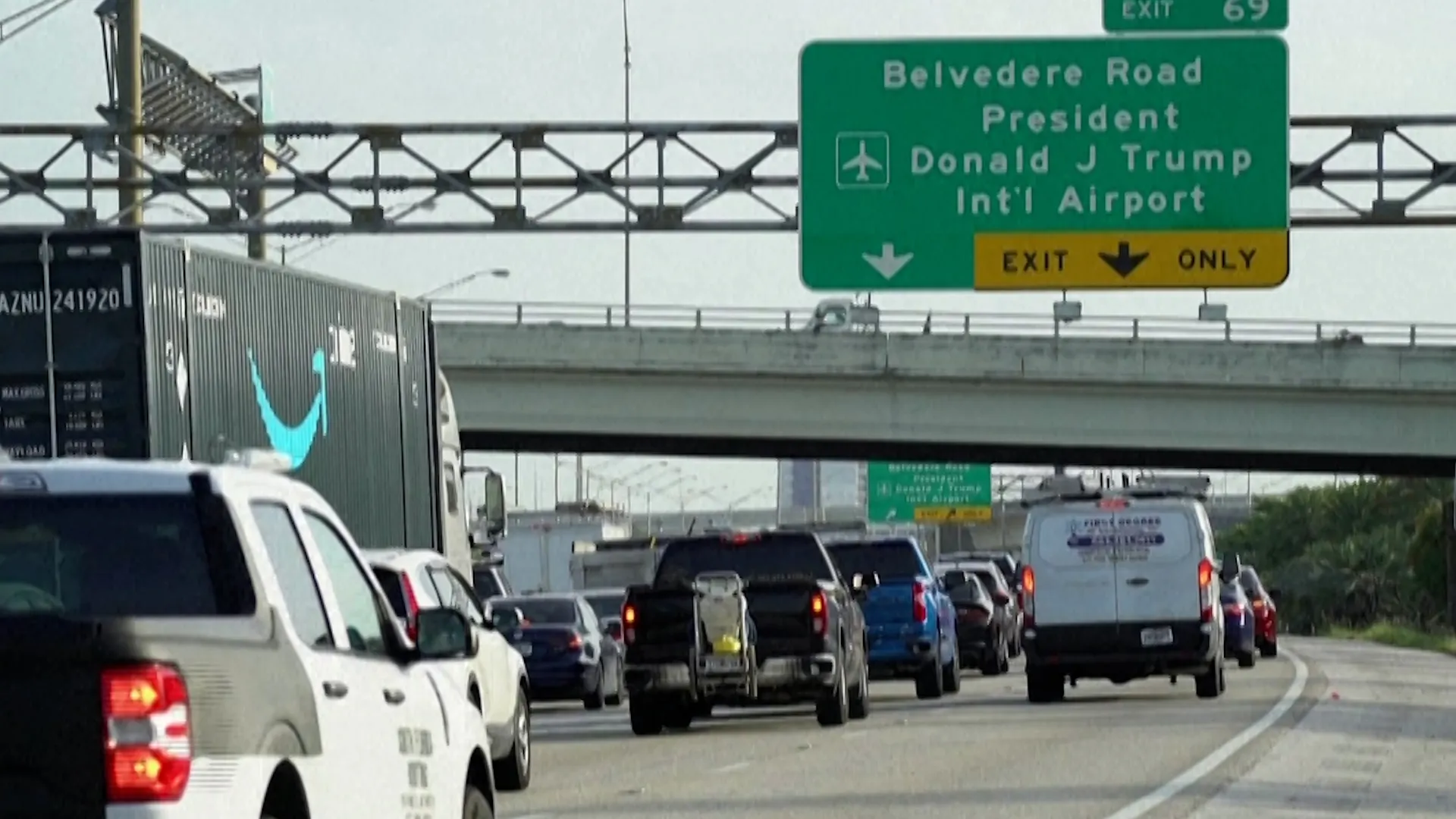
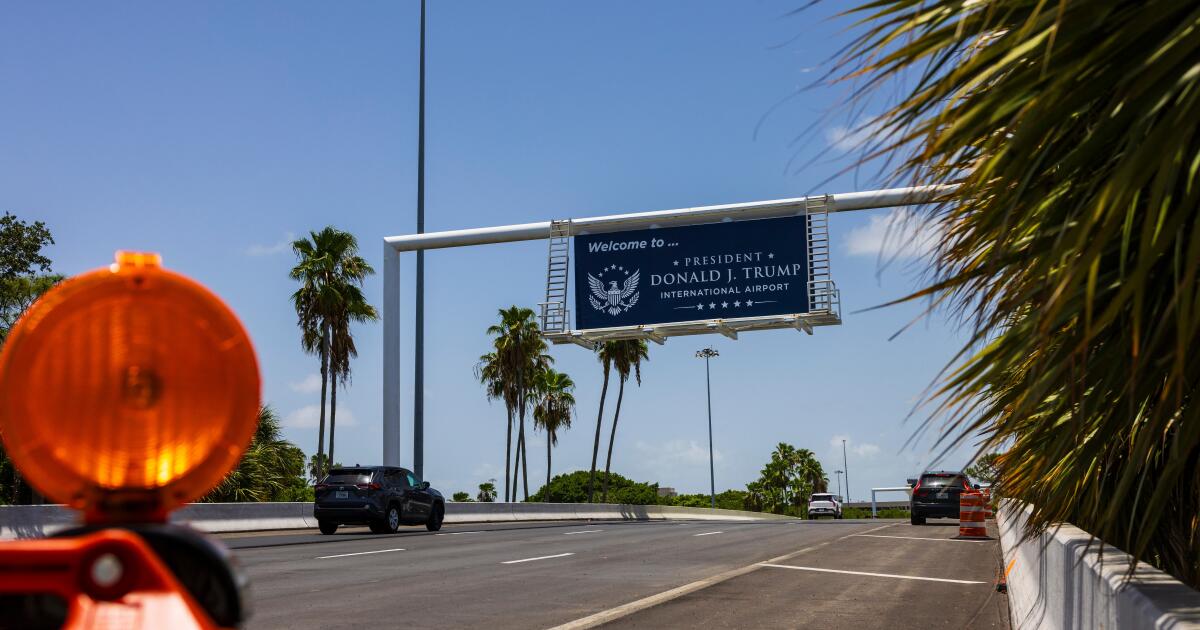
Palm Beach International Airport has officially been renamed President Donald J. Trump International Airport, with new signage installed throughout the terminal. The move has prompted mixed reactions, with supporters welcoming the tribute while critics argued it was ‘in poor taste.’
WEST PALM BEACH, Fla. — A South Florida airport officially changed its name Thursday to the President Donald J. Trump International Airport.
Signs for the Palm Beach International Airport have been removed as new signage goes up.
“Because an entire airport transformation doesn’t happen overnight, you’ll notice a combination of both our classic look and our new brand elements coexisting while traveling through the terminal over the next several weeks,” airport officials said in a Facebook post.
“Trump Force One,” a Boeing 757 owned by the Trump Organization, was the first plane to arrive at the airport under its new name, shortly after 5 a.m. The president’s son, Eric Trump, was one of the passengers. The Trump family regularly uses the West Palm Beach airport when they visit President Trump’s Mar-a-Lago home in nearby Palm Beach. A stretch of road from the airport to Trump’s estate was renamed Donald J. Trump Boulevard earlier this year.
“There is no person who has done more for Florida and our country, and no one more deserving of this incredible honor,” Eric Trump posted on X. “As a son, and someone who flies out of this airport nearly every day, I will forever be proud to see the initials ‘DJT’ on my boarding pass.”
Although the name change took effect Thursday, the three-letter airport code will change from PBI to DJT on Aug. 18.
Florida Gov. Ron DeSantis signed legislation earlier this year that made the name change possible. Changing the airport’s name is expected to cost as much as $5.5 million for new signs, branding and other updates.
Keegan Collett, who was departing the airport Thursday morning on his way to Cincinnati, said he was surprised to see the new name. He said he doesn’t think Trump deserves to have an airport named after him but isn’t necessarily bothered by it.
“At the end of the day, it’s just the name of an airport,” Collett said. “There’s bigger things. I feel like it’s just more of a distraction. Why even worry about it?”
In Dandridge, Tenn., Thursday morning, Treasury Secretary Scott Bessent, U.S. Sens. Marsha Blackburn and Bill Hagerty and Rep. Tim Burchett attended a ceremony to rename the I-40 Bridge in East Tennessee to the Donald J. Trump Bridge.
Bessent said ahead of the ceremony that “no one is more deserving” of the honor than Trump.
Trump received 82% of the vote in Jefferson County, where Dandridge is located, in the 2024 election.
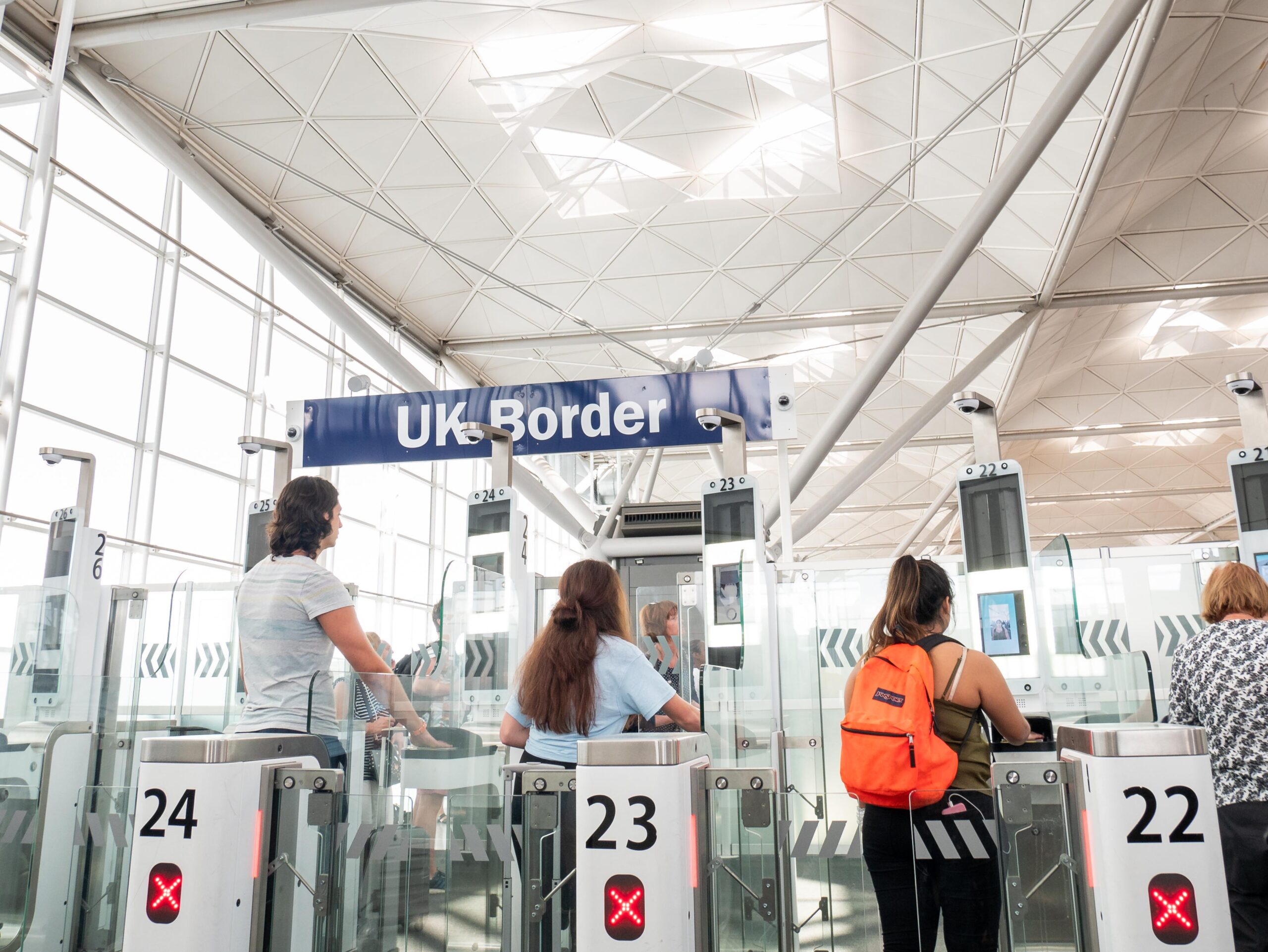
UK airports will now allow younger passengers to use the eGates, in a huge boost for families travelling this summer holidays.
From today, passengers aged eight and nine will be able to use the faster eGates at airports across the country.
Sign up for the Travel newsletter
Thank you!
New rules mean kids the age of eight will now be allowed to use eGates in the UKCredit: Alamy
Previous rules only allowed kids who were the age of 10 or over to use the eGates, meaning families had to wait in much longer queues at passport control.
The only other rule is that kids must be at least 120cm tall, so they can still access the screens.
The new rules are predicted to affect 1.5million kids.
There are more than 290 eGates at UK airports and ports, plus juxtaposed ports (where UK border checks take place in Europe).
This means borders like the Eurostar at London St Pancras and Eurotunnel in Folkestone.
Minister Alex Norris, Minister for Border Security and Asylum said: ”Today’s change will make journeys easier for families with small children and reduce the hassle of travelling home after a holiday.
“It will also free up more time for tourists to enjoy our fantastic country this summer and in the years ahead.”
Karen Dee, Chief Executive of AirportsUK, the trade body for UK airports, added: “This is a welcome development as it will give more families the ability to take advantage of this technology, speeding up the border process and reducing waiting times for many.”
It’s not just Brits the new rules affect either.
Non-British residents including those from the US, Australia and Japan, along with non-Schengen countries in Europe will be able to use the eGates too.
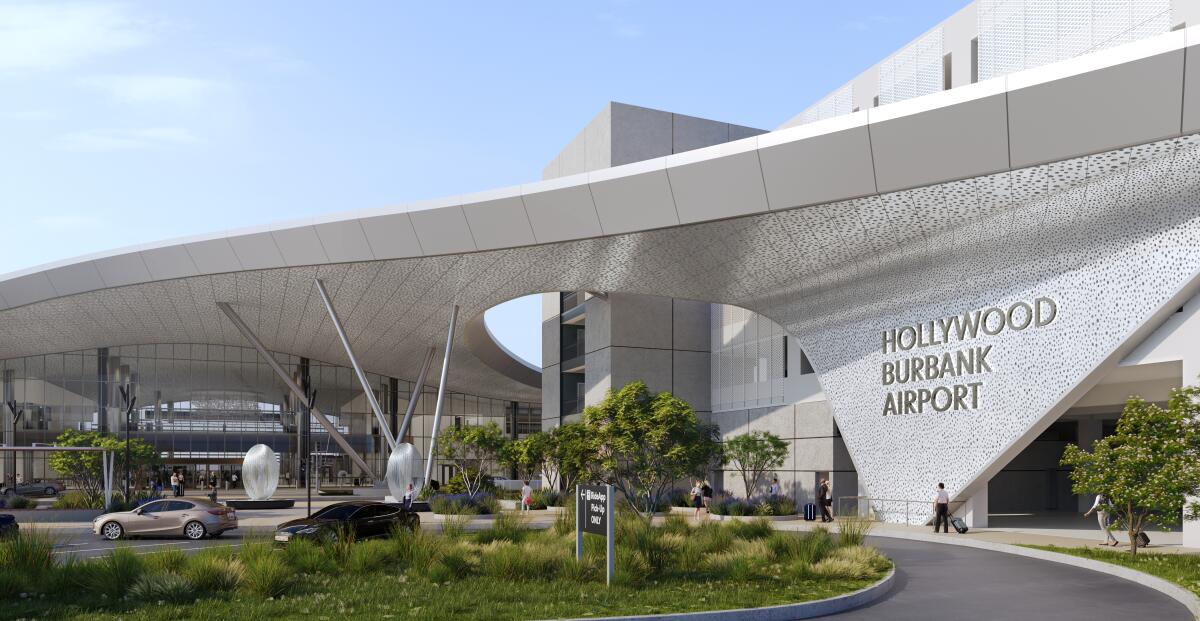
The Hollywood Burbank Airport is due to replace its two terminals with a larger new terminal on Oct. 13. The $1.3-billion project will include 14 gates — the same number the airport has now. But the new structure will be a single terminal that’s about 50% larger than the airport’s current two-terminal layout.
In moving to a 355,000-square-foot terminal, officials say, the airport can give passengers more room and better technology while meeting safety and accessibility standards.
A rendering shows how Hollywood Burbank Airport is designed to look when its new terminal opens in October.
(Hollywood Burbank Airport)
The airport, built in 1930 and run by the Burbank-Glendale-Pasadena Airport Authority, is favored by many local travelers as a simpler, faster alternative to Los Angeles International Airport. The Burbank airport’s site in the San Fernando Valley, however, has often put its leaders at odds with residents of surrounding suburban neighborhoods.
As it stands, the aged Burbank facility doesn’t meet current state seismic standards or Federal Aviation Administration design standards — which has prompted repeated safety warnings. Its nine resident airlines fly to about 30 nonstop destinations. The airport reported about 6.2 million arriving and departing passengers in 2025.
Airport officials say the new design increases the distance between the terminal and the nearest runway, currently as little as 257 feet, soon to be about 880 feet, bringing the airport into compliance with FAA standards.
Meanwhile at LAX, which reported 73.7 million passengers in 2025, the opening of a long-awaited SkyLink automated people mover (an electric train linking terminals to rail service and rental cars) has been delayed by technical and legal issues. In a June 15 report, the SkyLink contractor estimated that its public opening would need to wait until Oct. 6 or later. Asked for a revised timetable, an LAX spokesperson gave no dates, saying only that the airport is focused on “exhaustive testing of all tracks, signaling systems, and vehicles” to ensure safety and dependability.
A rendering shows how Hollywood Burbank Airport is expected to look after a new terminal opens in October.
(Hollywood Burbank Airport)
In Burbank, voters approved the airport terminal replacement project in 2016. Construction began in 2024. At the entrance, travelers will encounter a pair of 16-foot-tall sculptures, “The Two Electras,” by Cliff Garten; inside, a ceiling grid artwork by Glenn Kaino.
The new space is just north of the existing terminal, which is to be demolished. The new entrance will be at Winona Avenue and Hollywood Way. Airport officials say the change will not affect the number of flights or the airport’s operating hours, which are 7 a.m. to 10 p.m.
In the new terminal, airport officials say, the walk from the entrance to the farthest gate will be 1,285 feet, down from 1,600 feet now, with wider corridors and sidewalks and access to power plugs for devices from every seat. Baggage claim carousels will move from outdoors to indoors.
A July 7 photo shows work in progress at Hollywood Burbank Airport, where a new terminal is scheduled to open in October.
(Hollywood Burbank Airport)
The airport project, known as Elevate BUR, has been overseen by the project management company Jacobs. The Design-Build portion of the project is led by Holder, Pankow, TEC, Joint Venture. Corgan provided architectural services in association with CannonDesign.
As it does now, the airport will supply shuttle bus service between the new terminal and Burbank Airport-South Train Station (which connects with Amtrak’s Pacific Surfliner) and the Burbank Airport-North Station at San Fernando Road and Hollywood Way.
Another thing that won’t change: Passengers will continue to walk across the tarmac from terminal to stairs to planes, rather than using the enclosed jetways common in other airports, especially larger ones. It’s something travelers say they appreciate about the airport.
“The second I step onto the tarmac at Burbank, I start acting like I’m boarding a private jet,” wrote one Threads user. “And you’ll never convince me otherwise.”
Some other changes travelers can expect in Burbank:
The new terminal’s 14 food service units are tentatively set to include a Flavor Town, Spring Chicken, Farm Table Bistro, Jones Coffee, Perry’s Joint, Poquito Mas, West Coast Smash Burger, Diane’s Pizzeria, Massis Kebab, Starbucks, Border Grill, Jet Tila’s Asian Table, Santa Canela bakery and a bar with picture-window views of the runways and Verdugo mountains.
The Grand Hall of the soon-to-open terminal at Hollywood Burbank Airport awaits finishing touches on July 7.
(Hollywood Burbank Airport)
A new parking structure next to the new terminal will hold 2,007 parking spots, including 400 valet spots. (The airport’s total number of parking spaces will remain the same at 6,637.)
The distance between the new terminal and the airport’s existing rental car facility and bus stop (Regional Intermodal Transit Center) will be slightly less than a mile by shuttle bus.
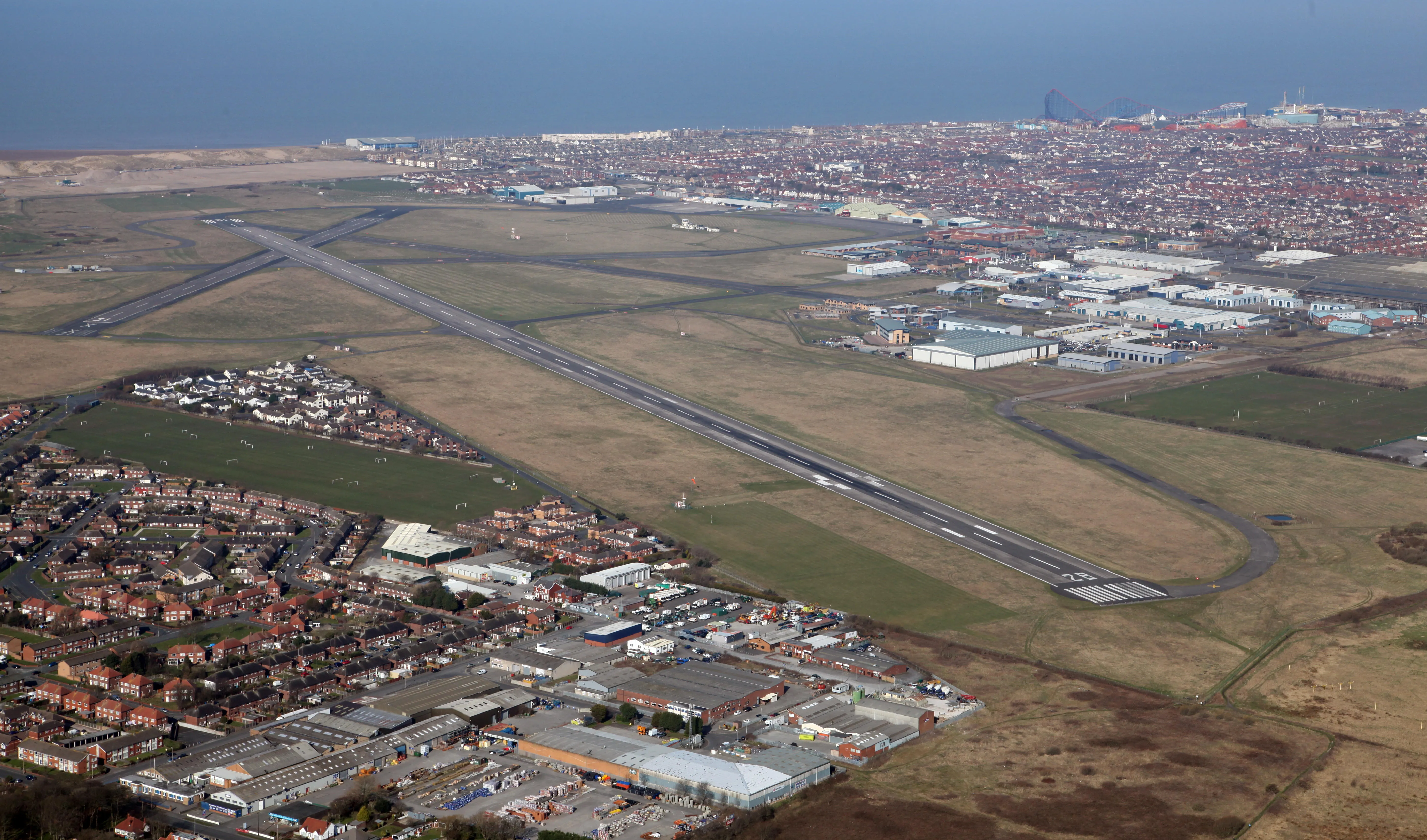
A SMALL airport in the UK could relaunch flights that would take Brits right to the beach.
Blackpool Airport once offered passenger flights to places in Europe such as Spain.
Sign up for the Travel newsletter
Thank you!
Blackpool Airport could get new regional routes – 12 years after passenger flights were axedCredit: Alamy
However, these ended back in 2014 when the airport went into administration.
Now, the airport remains open as a training centre, such as for pilots and helicopter operations.
But there could be hope for relaunching passenger flights from it in the next few years.
Sadly, none of the major airlines have said they would want to launch flights, Blackpool South MP Chris Webb said, which include previously operating ones like Jet2.
He told local media: “I have spoken with all the airlines and they don’t have any interest in flying from Blackpool again.”
Despite this, an anonymous London businessman has suggested the launch of a small-scale airline which would connect London to Blackpool.
If it went ahead this could launch as quickly as two years – and connect the main city to one of the UK’s most iconic beach resorts.
However Mr Webb said a lot of things would have to change first, including “better facilities, bigger passenger lounge and a better building”.
He added: “But it would certainly be viable, if handled correctly.
“Blackpool is one of the biggest tourism destinations in the UK, it is crying out for a properly run airport.”
Airlines like Jet2 have expressed no interest in returningCredit: AlamyBut a new small airline based in London could connect the airport to the cityCredit: Alamy
It isn’t the only airport hoping to relaunch passenger flights in Britain.