The nominated Oscar shorts come in three categories — and a lot of subjects, styles and temperaments. It’s further proof that an award dictated by length needn’t be bound by anything else.
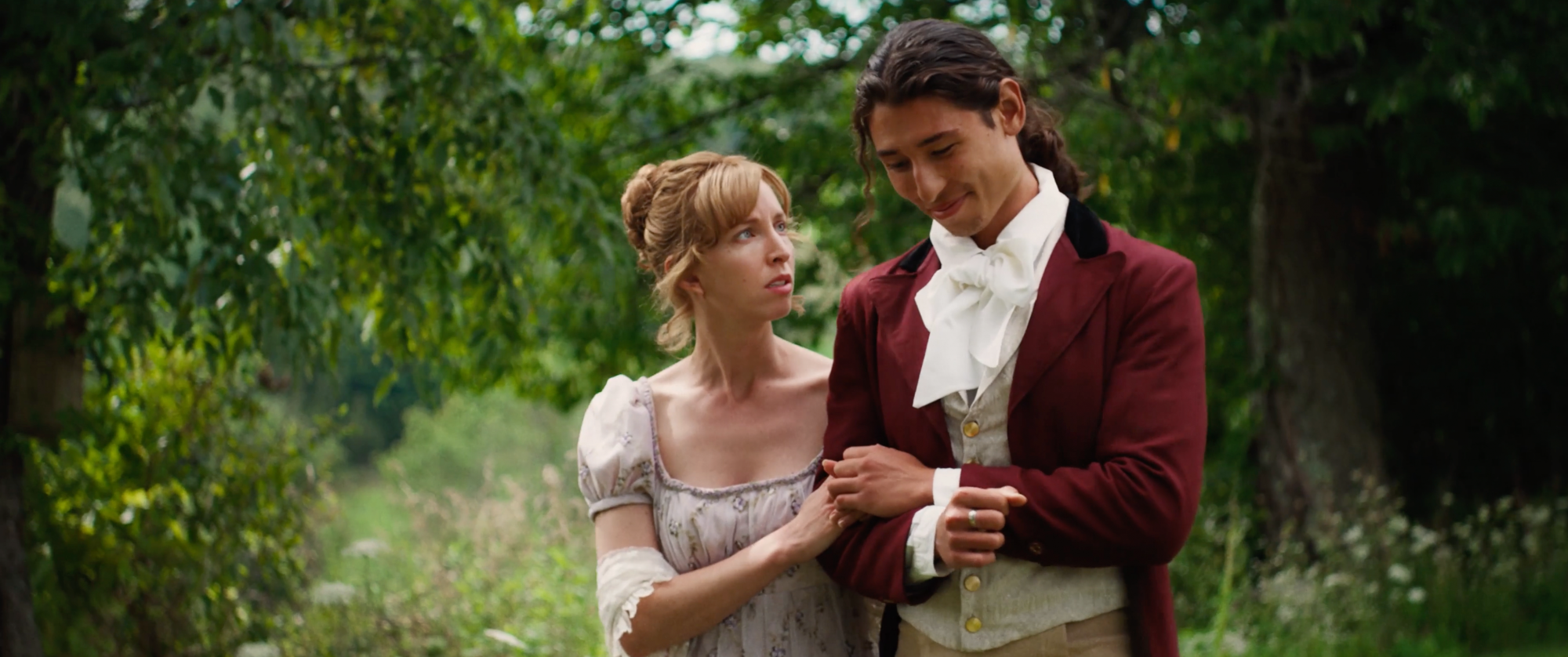
In the live-action category, a mixed bag of approaches — some inspired by classic literature — are burnished by inspired performances. Lee Knight’s “A Friend of Dorothy” may be a tad on the nose about the cultural and emotional impact of a lonely London widow on a closeted teenaged boy. But leads Miriam Margolyes and Alistair Nwachukwu practically shimmer with humor and warmth. “Jane Austen’s Period Drama,” a loving tweak of the writer’s oeuvre from Steve Pinder and Julia Aks (who also stars), is essentially a one-joke calling card to make feature comedies and it should do the job. Its cast is exactly the sprightly ensemble needed to land its what-if laughs.
Two others just miss the mark in terms of bringing their tensions to powerful resolutions yet benefit from who the camera adores. Meyer Levinson-Blount’s “Butcher’s Stain,” centered on a flimsy accusation against a friendly Palestinian butcher in an Israeli market, undercuts its gripping story with lackadaisical filmmaking and an unnecessary subplot, but lead Omar Sameer is commanding. The black-and-white future shock “Two People Exchanging Saliva,” directed by Natalie Musteata and Alexandre Singh, is an uneven Euro-art bath of unrealized intimacy and casual violence — kissing is punishable by death, slapping is currency — but is given exquisite tautness by the elegant, unrequited swooniness of stars Zar Amir and Luana Bajrami.

A scene from “Jane Austen’s Period Drama,” nominated in the live-action short category.
(Roadside Attractions)
Then there’s my favorite, Sam A. Davis’ likely winner “The Singers,” from Ivan Turgenev’s short story, which pays off handsomely in bites of soulful warbling that briefly turn a barroom’s den of anesthesia into a temple of feeling.
Most of this year’s documentary nominees deal with the grimmest of tragedies, as in “All the Empty Rooms” and “Children No More: Were and Are Gone,” which address the remembrance of children brutally killed. The former film, from Joshua Seftel, follows CBS correspondent Steve Hartman and photographer Lou Bopp on an essay project into the bedrooms of kids gunned down in school shootings, their private worlds heartbreakingly preserved by their families. The latter short, directed by Hilla Medalia, witnesses Tel Aviv’s silent vigils for Gaza’s children, protests marked by posters with beaming faces, and sometimes met with open scorn. These are dutiful, sobering acts of mourning — Seftel’s is the probable awardee. You may wish they were more than that, however, considering the issues (guns, war, political intransigence) that created the devastation.
Combat is what drove award-winning photojournalist Brent Renaud, killed in Ukraine in 2022. But his brother Craig’s memorializing of him, “Armed Only With a Camera,” is oddly uninvolving, more an excerpted flipbook of Brent’s far-flung assignments than a meaningful portrait of excelling at a dangerous job. A more affecting real-world dispatch (and my pick, if I could vote) is “The Devil Is Busy,” directed by Christalyn Hampton and dual nominee Geeta Gandbhir, also up for the feature “The Perfect Neighbor.” It observes a day in the operation of a carefully guarded, female-run Georgia abortion clinic as if it were a newly medieval world’s last chance healthcare outpost, getting by on grit, compassion and prayer. You certainly won’t forget security head Tracii, the clinic’s heavyhearted knight and guide.

A scene from “Perfectly a Strangeness,” nominated in the documentary short category.
(Roadside Attractions)
Your chaser is Alison McAlpine’s appealing, aptly titled “Perfectly a Strangeness,” sans humans, but starring three donkeys in an unnamed desert happening upon a cluster of hilltop observatories. The whir of science meets the wonder of nature and this charming, gorgeously shot ode to discovery (both on Earth and out there) makes one hope the motion picture academy sees fit to recognize more imaginative nonfiction works going forward.
Animation, of course, thrives on the thrill of conjured worlds, like the one in Konstantin Bronzit’s wordless (but not soundless) desert island farce “The Three Sisters.” It owes nothing to Chekhov — though there are seagulls — but much to a classically Russian sense of humor and a Chaplinesque ingenuity. Elsewhere, you can watch the overly cute Christian homily “Forevergreen,” from Nathan Engelhardt and Jeremy Spears, about a nurturing tree, a restless bear and the dangerous allure of potato chips. The message gets muddled but this eco-conscious journey is charming.
It’s tough to predict a winner when the entrants are this strong, but John Kelly’s “Retirement Plan” feasts on wry relatability, as Domhnall Gleeson narrates a paunchy middle-aged man’s ambitious post-career goals, while the cascade of deadpan funny, thickly-lined and mundanely hued images stress a more poignant, finite reality. In its all-too-human view of life, this is, entertainingly, whatever the opposite of a cloying graduation speech is.

A scene from “Retirement Plan,” nominated in the animated short category.
(Roadside Attractions)
The spindly aged-doll puppetry in the stop-motion gem “The Girl Who Cried Pearls” marks a sly fable of need, greed and destiny, centered on a wealthy grandfather’s Dickensian fashioning of his poverty-stricken childhood in early 19th century Montreal. Filmmakers Chris Lavis and Maciek Szczerbowski find an enchanting balance between storybook allure and adult trickery. Maybe this one steals it?
Whichever the case, the animation that moved me the most is “Butterfly,” from Florence Miailhe, imagining the last, memory-laden swim of Jewish French-Algerian athlete Alfred Nakache, who competed in the Olympics before and after the Holocaust. In the cocooning fluidity of an ocean-borne day, rendered with thick-brushed painterliness and splashes of sound, we travel across flashes of community, injustice, achievement, love and despair. The visual, thematic constant, though, is water as a haven and a poetic life force that feeds renewal.
‘2026 Oscar Nominated Short Films’
Not rated
Running time: Animation program: 1 hour, 19 minutes; live-action program: 1 hour, 53 minutes; documentary program: 2 hours, 33 minutes
Playing: Opens Friday, Feb. 20 in limited release