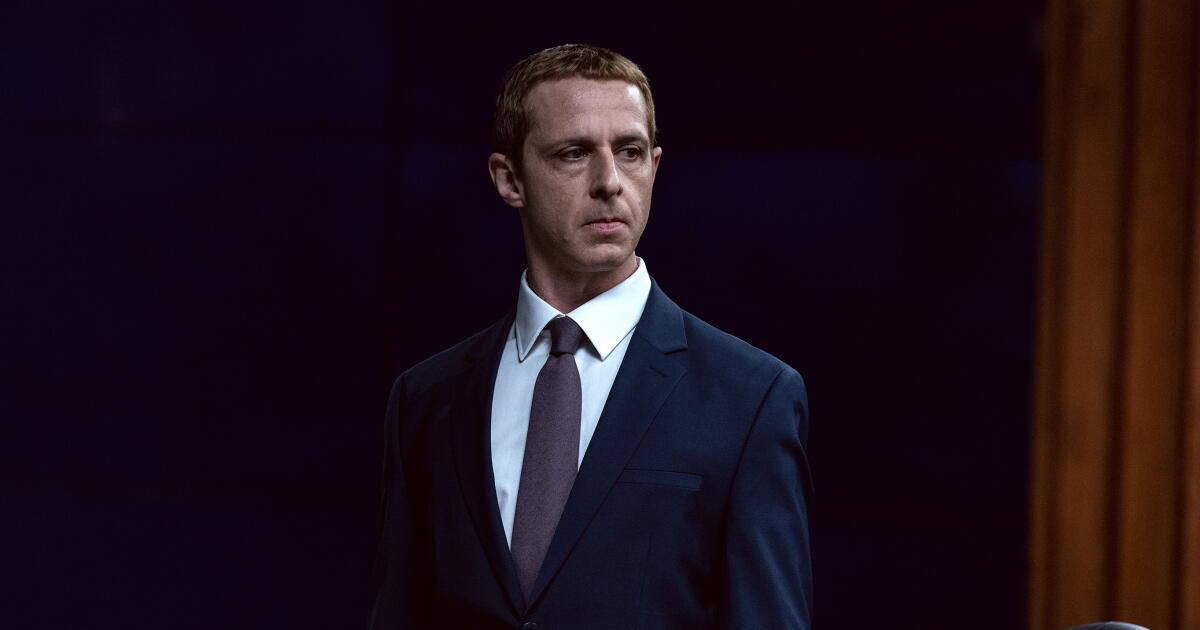
When Victor Marx was 3 years old, he was forced into a voodoo ritual involving a beheaded cat. At age 7, he killed a man.
Or so Marx says.
But he was not just a precocious child.
As an adult running a “high-risk” Christian ministry, Marx says he rescued 45,000 women and children from captivity and abuse. As a civilian, he supposedly called in a U.S. military airstrike that killed 70 ISIS fighters. He’s exorcised demons — and can do so over the telephone, he says, if need be.
True or, most likely, false, those woolly claims and epic tales of derring-do aren’t the weirdest thing about Marx.
A political newcomer, Marx eked out his victory in a three-way race by less than 2,500 votes out of more than 520,000 cast. (It took almost nine days to declare a winner, but surely you knew that already, given the national outcry over how long it took Colorado to count its ballots. Oh, wait. Never mind.)
Although slender, Marx’s victory delivered a strong statement: about the grave condition of mainstream Republicanism; about the increasing embrace of oddity and extremism by a deeply disaffected slice of the American electorate; about the unsettled and unsettling nature of today’s politics.
“It’s almost cult-like,” Dick Wadhams, a former Colorado GOP chairman, said of Marx’s support. “You talk to some of these people, and there is no doubt in their mind he will be governor, because God has decided that he’s going to be governor.”
There’s fat chance of that. (Please don’t smite me.)
Colorado has elected only one Republican governor in the last 55 years, and that was back in 2002. It’s been 10 years since a Republican won any statewide office. The Democratic nominee, Atty. Gen. Phil Weiser, is as close to a November shoo-in — after stomping U.S. Sen. Michael Bennet in the primary — as it gets.
But Marx, 61, a former Marine and expert in martial arts, is nothing if not swaggering. His role model is, of course, the political disrupter and fabulist-in-chief currently occupying the White House.
Like President Trump, Marx relies heavily on personal charisma, a strong social media presence and the purposeful shunning of campaign norms which, to the politically alienated, speaks to his independence from the establishment and offers a welcome break from the same old, same old.
He casts himself as a problem-solver and negotiator par excellence. He skimps on policy and skipped most of the preprimary debates; at the one he did attend, Marx brought his dog, a Dutch shepherd, onstage. In lieu of a closing statement, Marx prayed.
When asked, he hasn’t backed off his fantastical claims. But Marx hasn’t done a very good job substantiating them.
As a young boy growing up in Louisiana, he says, his abusive stepfather — the one who supposedly involved him in a satanic feline decapitation — drove him to rural Mississippi, where Marx shot and killed a man. Police told Colorado Public Radio they had no record of any unsolved homicides from that time.
“I don’t think that’s important,” Marx replied. “It’s actually kind of — it’s an odd question to me.”
Actually, it’s not.
(Conceding the Republican race, state Sen. Barbara Kirkmeyer — the runner-up — conspicuously declined to endorse Marx, urging voters to “choose the path that is best for Colorado” in November. “For the record,” she added. “I still haven’t killed anyone.”)
In many ways, Marx is a mainstream conservative Republican. He founded All Things Possible Ministries, a Christian nonprofit that tends to refugees and other victims of trauma. His focus on law and order, tax relief, small government and deregulation are all standard GOP fare.
But his florid tales of youthful homicide, telephonic exorcisms, personally intercepting human smugglers on the U.S.-Mexico border — well, not so much.
Most voters will probably have a hard time getting past those autobiographical extravagances, which could spell trouble — depressed GOP turnout, guilt by association — for other Colorado Republicans, including freshman Rep. Gabe Evans, who’s fighting to hang onto a closely fought congressional seat in the north-central part of the state.
“The Colorado Republican Party right now is impotent and irrelevant,” said Wadhams, who fought unsuccessfully against its takeover by Trump-worshiping zealots. “The ironic twist to this story is that polling has shown over the past several months that voters are getting restless about what they see as the decline of Colorado in terms of education, energy, roads and transportation.”
Just last week, the annual Colorado Health Foundation issued its annual Pulse Poll, a dour report card on the state of the state that found three-quarters of respondents were concerned they may not be able to live there in the future.
But don’t expect Democrats to lose their sovereignty anytime soon.
That’s what happens when a party and its voters stop seriously competing and instead indulge their passions and fever dreams. You get candidates, and political caricatures, like Victor Marx.
It pains me to say that most of us are missing the point when it comes to President Trump’s rambling election fraud speech. Which is exactly what he wants.
Within minutes of its airing Thursday night, the internet and pundits were abuzz debating whether voting machines were secure and whether the federal government has a right, or even a duty, to oversee voter rolls (it has neither). Long posts were written condemning voter identification efforts, and more posts written attacking those condemnations.
This, friends, is exactly what the speech was meant to accomplish — myopic bickering.
To be specific, myopic bickering about the past, as a dark future creeps ever closer — like, say, Nov. 3.
The question is will we allow Trump to sow just enough doubt in the minds of average Americans that what comes next seems inevitable and even necessary?
Trump falsely claimed that he was revealing “an election system so broken and so vulnerable that no one can possibly defend it.”
“This cannot be allowed to continue,” he said.
Those are ominous words, ones we should take seriously.
“This is a very sad thing to be able to say about the president of the United States, but I think it’s quite clear,” said Mindy Romero, director of the Center for Inclusive Democracy, a nonpartisan research facility. “This is about a certain set of political goals, and using this misinformation to achieve those political goals.”
Trump knows that the midterms present a threat to his power and he, and those around him, have been working for years to create a strategy to invalidate our election results just in case they don’t fall in his direction. Whether the overall outcome favors Democrats or Republicans in the midterms, the wins and losses are going to be close, giving him the chance to attack Democratic wins.
On Jan. 6, 2021, Trump learned from the unlikely teacher Mike Pence the difficult lesson that plans work only when people are in place to implement them. As vice president, Pence, you may recall, refused to stop the election certification process that legally, rightfully, fairly allowed Joe Biden to take office.
Since then, Trump has purged dissenters from top roles, instead putting in flat-out sycophants, election deniers and conspiracy theorists — more than one of whom has been associated with the racist Great Replacement theory that Democrats are secretly helping Black and brown people to illegally cross the border in exchange for these folks illegally voting for Democrats, thereby replacing the “true” America of conservative white people.
So the apparatchiks are in place, Soviet-style. There will be no Penceian savior on the inside this time around.
More than one election expert I have spoken to in recent months fear that because there is no one left on the inside to object, we could see post-election turmoil like this: Republicans lose one or both houses of Congress. Trump calls fraud. The Department of Justice or outside lawyers, or both, sue to overturn results. Congress, the Republican one still in place, refuses to seat newly elected Democrats until the court cases are resolved.
A constitutional crisis is at hand. Democrats say they were elected. Republicans won’t let them serve. No one is clear who is in Congress and who isn’t. In effect, the body is frozen and it’s legitimacy undermined. Into that vacuum, Trump pushes his already great power even further.
As movie-terrible as that sounds, that internal structure is in place and this scenario is far less impossible or even improbable than we could hope.
“What we’re talking about is just misinformation and what could be used as a justification for potentially interfering with seating of elected officials,” Romero said. “Particularly Congress.”
Now, with the internal stuff squared away, Trump’s focus is neutralizing outside dissent. That’s you and me, and that’s what this speech was about. Sowing doubt, tossing seeds of chaos into the soil to see what grows. Letting us know it’s coming, so we as Americans have time to bicker, argue, and tear away at our trust in elections so that by the time we vote, we expect the worst to happen.
“Unfortunately, there are some members of the public that are going to believe what they’re being told and when they hear election results, question it,” said Chad Dunn, legal director of the UCLA Voting Rights Project. “This kind of communication misleads Americans and does a disservice to our democracy.”
Dunn told me he’s “as worried as I’ve been in my life” about the next election.
Trump’s far right is wasting no time on this effort. After Trump’s speech, the Department of Homeland Security sent out a letter to California and three other states claiming California has more than 190,000 non-citizens registered to vote, and demanding the state “confirm their intentions to collaborate with DHS in order to ensure free, fair, and honest elections.”
This is a misleading, erroneous count and does not include the obvious fact that there is no evidence that undocumented people actually voted in any California election in any noticeable numbers.
But it creates that chaos and doubt. California isn’t going to share its voter rolls willingly with the federal government because elections — according to the Constitution — are state affairs. And there is no evidence that the federal government has a better way of vetting citizenship than California does. So it becomes one more point of bickering.
But what Dunn, Romero and other honest elections experts want Americans to know is that our elections are free and fair and all is not lost. Far from it.
The answer to the propaganda and lies is to remain aware of it, remain above it. Spread truth and refute falsehoods.
Dunn said that Americans should demand that any voter fraud be taken to the courts — where it belongs, and where we can determine the validity of the evidence.
“If you’re concerned about this, if you’re inclined to believe the president, demand proof, demand resolution in court at trial with the the showing of evidence,” he said. “And reserve judgment until you see that.”
Romero has her own advice — never underestimate the power of the vote.
“Show up and to participate,” she said. “Regardless of how [you’re] going to vote — Democrat, Republican, otherwise — just to show up and participate.”
Because in the end, we only lose democracy if we willingly let it go.
Bestselling author Jessica Knoll’s protagonists mostly follow a specific pattern: They are women who have learned Not. To. Flinch.
On the Shelf
Helpless
By Jessica Knoll Scribner: 320 pages, $28
If you buy books linked on our site, The Times may earn a commission from Bookshop.org, whose fees support independent bookstores.
And, apparently, neither does Knoll. Talking over Zoom about her fourth novel, the erotic thriller “Helpless,” which is out this month, the author is blunt about the challenges it took to complete the book. “It takes a lot of skill to write good sex,” Knoll says. “I relied a lot on feedback from my editor and from my book agents saying ‘this is hot; this is not.’”
Knoll has written romantic scenes before, but “Helpless” needed to be enthralling and economic enough not to get her kicked off of Target’s bookshelves. In the end, the author says, “I went by what felt good and natural for these characters and maybe a little bit of the really unfiltered talk you have with your girlfriends after a couple martinis or are on a girls trip.”
Knoll’s successful career as a novelist rests on her knack for creating provocative page-turners that depict the absolute worst things one person could do to another — but in such a sensational, tongue-prickling-sour-candy kind of way that her books come off as devilishly evil beach reads. Since her debut bestseller, 2015’s “Luckiest Girl Alive,” — a master class in braided narration between a Machiavellian magazine editor and her younger self who endured so much emotional and physical trauma that it’s no wonder she grew up to be extremely calculating — to 2018’s reality TV-set “The Favorite Sister” and 2023’s “Bright Young Women,” a response to the public’s obsession with immortalizing serial killers while also not knowing the name of a single one of their victims. Knoll’s books are not only stories about women who do not care if you like them but also ones where disastrous results await the women who do follow our cultural conditioning to be agreeable to men.
Her “Helpless” heroine is not so different from a lot of her previous main characters: Type A overachievers with cutting inner monologues that let the reader know they’re always one step ahead in the social Darwinism that is female relationships. This time, she’s named Faye Heron, an Emmy-winning Hollywood multi-hyph who found cachet while working on one of those edgy premium dramedies that probably aired on HBO. Faye, and her husband/producing partner, have parlayed this notoriety into indie, cool-kid projects that are just commercial enough that some of the target audiences’ boomer parents may also watch.
When Faye’s beloved college professor dies suddenly and she’s asked to speak at a memorial ceremony, nostalgia and flattery make her drop everything and hightail it back to the leafy northeastern college town. The place is a time capsule with sketchy internet service, drunken frat boys, and — most crucially — Faye’s college boyfriend Henry, who is now married with two kids and still lives in the area. The clothing references and song choices are popcorn for those old enough to remember the aughts but young enough to party during them. The Elsa Peretti-designed Tiffany & Co. heart necklace that was the it-girl accessory of the time, and now is one that Gen Zers are fishing out of the bottoms of their parents’ jewelry boxes, factors significantly into the plot.
Although the story eventually spirals into other tropes of the Knoll-niverse — kidnappings, cover-ups, affairs, the laissez-faire security that only old money affords — Faye stands out because she wants to be told what to do. In a secure and mutually consenting relationship, of course. And preferably after she’s told her partner what she wants.
“Helpless” was influenced by the 1995 Susanna Moore thriller “In the Cut” as well as Sarah J. Maas’ currently uber-popular romantasy series “A Court of Thorns and Roses,” both of which discuss power imbalances and smart women who become enamored with dangerous lovers.
Knoll has always been open about creating work that’s commercial. She famously wrote a 2018 New York Times opinion piece, titled “I Want to Be Rich and I’m Not Sorry,” that discussed her need to rank in money with an almost Scrooge McDuck fervor: “Success, for me, is synonymous with making money,” she writes. “I want to write books, but I really want to sell books. I want advances that make my husband gasp and fat royalty checks twice a year. I want movie studios to pay me for option rights and I want the screenwriting comp to boot.”
(Evelyn Freja / For The Times)
During our Zoom, with the background carefully faded behind her wavy blond bob, she promises that she doesn’t just copy and paste her subjects and settings from what sells.
“I’m just always looking on what the spin is; like, what the timely take is on something that happens to capture my attention,” she continues, citing a habit she credits to her early career working in women’s magazines like Cosmopolitan and Self. She adds that “I just happen to be interested in, like, really dark s—.”
“Helpless,” Knoll stresses, is a work of fiction; even though fans may be looking to draw comparisons to her life since “Luckiest Girl” was heavily influenced by her own career and childhood. Like the book’s Faye, Knoll went to a private liberal arts college. She’s spent time in the Adirondacks with the wealthy families who vacation in bare-basics cabins on the land they own. And she has dealt with her share of studio executives. Unlike Faye, Knoll is happily married to her husband, financial technology executive Greg Cortese. They share a young daughter. Last year, the family moved back to New York after some time in Los Angeles.
She does relate to Faye’s wealth dynamics. Her “Helpless” heroine grew up middle class but now has reached the “made it” level of nervous cockiness that happens when you combine new money and fame; the dream of so many who move to L.A. Henry, Faye’s ex, and his family are so comfortable in their generational wealth that he was raised to wear the same, now-bleach-stained, chambray button-down he had in college than buy a new one because clothes aren’t sound investments.
Knoll says she doesn’t want “things to feel didactic,” but concedes that class divides offer a treasure trove of stories.
“I just find myself going back to, again and again, this idea of someone who is the outsider because they don’t have the pedigree of their peers, but however many years later they’ve accomplished something and they think that they’re on more equal footing with these people from their past,” Knoll says. “Then something happens that brings them back into this environment where maybe they felt less-than years ago. They think that they’re going to go back and be like, ‘well, I’ll show you now because I’ve made it’ and those feelings of inferiority are still there.”
As she’s grown older and her career has become more stable, Knoll says she doesn’t think about success and fame the same way she did when she wrote her viral opinion piece or gave interviews where she talked about money and her own financial security. She says now that her priority is “the longevity of the career.”
Like her heroines, no one tells Knoll what to do. Unless she gives the OK.
Friedlander is a pop culture and entertainment journalist based in Los Angeles who hates coffee but loves Coke Zero.
Can you tell the story of America in 10 movies? Maybe so — at least a version of it — if you stick to moments of serious national friction and those rare instances when a filmmaker meets the mood with a true vision. If you want tearjerkers about red, white and blue triumph, this is not your list (although the Space Race drama “The Right Stuff” always does the trick). Meanwhile, our current state of disunity and division will find its own expressions in time; start with “Civil War,” though it’s a bit too soon. Instead, we thought about historical pivot points and built a list of classics, along with a few alternatives for each title.
The Great Depression
Henry Fonda, left, in the 1940 film “The Grapes of Wrath,” directed by John Ford.
(20th Century-Fox)
‘The Grapes of Wrath’ (1940)
America is a broken place in John Ford’s poetically charged adaptation of the Steinbeck novel: a downbeat landscape of Oklahoma dust storms, long shadows and the teetering sight of a car turned into a truck transporting a family westward. This will always be one of those essential movies about a particular national dream — not just a myth — of emerging from economic catastrophe and being reborn in the promised land of California. Ford, with the instincts of a showman, foregrounded hope on the horizon via inspired performances by Henry Fonda and Jane Darwell’s pragmatic Ma Joad getting the final word (“We keep a’coming…”). But there is still so much darkness in “The Grapes of Wrath,” especially in its scenes of John Qualen’s Muley Graves, crumpled on the ground, suddenly a squatter on his own piece of land. He’s no match for the bulldozers. As long as the idea remains that property gets its purpose from those tending it, working it, nourishing it and dying on it, the film will never become a relic. Its binding values of labor and community remain relevant, even if today’s Hollywood rarely speaks to them. — Joshua Rothkopf
See also: “Modern Times,” “Sullivan’s Travels,” “Bonnie and Clyde”
Postwar optimism
Michael Hall, from left, Teresa Wright, Myrna Loy and Fredric March in the 1946 movie “The Best Years of Our Lives.”
(Samuel Goldwyn Productions)
‘The Best Years of Our Lives’ (1946)
World War II ended with ticker-tape parades and soaring expectations. William Wyler’s sweeping drama arrived just as America was beginning to reckon with what coming home actually meant. Harold Russell, a real-life veteran who lost both hands during the war, plays a sailor struggling to imagine a future with the woman he loves. Dana Andrews is a decorated bombardier who returns to the same soda fountain job he held before the war, discovering that military heroism doesn’t necessarily translate into peacetime opportunity. The movie became one of the biggest hits of 1946 because it understood a challenge facing millions of Americans: The war had given the country a common purpose but peace meant each person had to find their own. Yet for all its honesty about that dislocation, the film remains remarkably hopeful. Its faith that people can rebuild their lives and start over feels almost radical today. Seen from the distance of eight decades, it feels like a dispatch from a country that had just survived a catastrophe and still believed its best days lay ahead. — Josh Rottenberg
See also: “It’s a Wonderful Life,” “Miracle on 34th Street,” “Giant”
Capitalism, unchecked
Daniel Day-Lewis in the 2007 movie “There Will Be Blood,” directed by Paul Thomas Anderson.
(Paramount Vantage)
‘There Will Be Blood’ (2007)
“I drink your milkshake — I drink it up!” Oil man Daniel Plainview’s deranged metaphor, allegedly taken from congressional transcripts from the 1920s Teapot Dome scandal in which Interior Secretary Albert Fall defended the practice of directional oil drilling, a.k.a. drainage, became a catchphrase when “There Will Be Blood” arrived in 2007. Elon Musk probably has a T-shirt in the back of a drawer emblazoned with the line. It epitomizes the American ethos of extracting resources that belong to someone else and then brutally bragging about the beatdown. Paul Thomas Anderson’s movie is part history lesson, part horror film, which, when it comes to chronicling the American experience, feels like the perfect blend. The oil man’s exploits take place more than a century ago, but seem particularly relevant now with Musk newly minted as the world’s first trillionaire and income inequality rapidly widening. Plainview confesses, “I have a competition in me. I want no one else to succeed.” It neatly sums up the endgame in which we find ourselves — and his vanquishing of the preacher Eli speaks to what we worship in the United States. He’s finished and sometimes it feels like we are too. — Glenn Whipp
See also: “The Wolf of Wall Street,” “WALL-E,” “Sorry to Bother You”
Post-Vietnam/Watergate cynicism
‘Nashville’ (1975)
Ronee Blakley in the 1975 movie “Nashville,” directed by Robert Altman.
(Paramount Pictures)
Could one movie capture the breadth of emotions around this year’s 250th anniversary celebrations as well as Robert Altman did the bicentennial? As the country was still reeling from the assassinations and discord of the 1960s, the despair of Vietnam and the scandals of Nixon and Watergate, there was a soul-baring uncertainty to what it even meant to be an American. With 24 main characters interwoven around the town of Nashville, home of country music and intersecting political undercurrents, the film tries to make sense of the chaos. While the conspiracy thrillers of the 1970s are seen as the most direct response to the moral malaise of the moment, Altman finds an unexpected way to gild his innate skepticism with a light filigree of hope, a complex quilt of characters capturing the contradictions inherent in the American identity. And yet as cynical and beaten-down as the film’s viewpoint can often be, there is still a spark of decency and perseverance. That is the America that Altman celebrates, even as he lets no one off the hook. Few films capture the hum of life in all its maddening beauty quite like this one. — Mark Olsen
See also: “Blow Out,” “The Conversation,” “The Parallax View”
‘Network’ (1976)
Robert Duvall, Faye Dunaway and William Holden in the 1976 movie “Network,” directed by Sidney Lumet.
(MGM Studios / Getty Images)
Much has been made over the years about how prescient this film was, as if screenwriter Paddy Chayefsky and director Sidney Lumet saw the constrictive dangers of corporate consolidation in the distance and came back to warn us. But if these rumbling premonitions have remained true across multiple eras of an ever-evolving media landscape, have we really learned anything? Perhaps we really do live in a “demented slaughterhouse of a world,” as the unhinged newsman Howard Beale says in one of his apocalyptic broadcasts, and have all along. Maybe what “Network” nails most of all is apathy: that even the most righteously committed can have their heads turned from their true goals and then struggle to get back on track. What may be most shocking rewatching the film today is the suspicion that some current media figures see the maneuverings of villainous executives played by Robert Duvall and Faye Dunaway and somehow think that they were the heroes of the story all along. Not even Lumet or Chayefsky would have predicted that. — Mark Olsen
See also: “Broadcast News,” “The Insider,” “Nightcrawler”
Gentrification and racial tensions
Spike Lee, left, and Danny Aiello in the 1989 movie “Do the Right Thing.”
(Universal Pictures)
‘Do the Right Thing’ (1989)
Spike Lee’s masterpiece was met with hand-wringing when it arrived in theaters 37 summers ago, with white critics fretting how “urban audiences” would react to its shocking ending of brutality and angry protest. “If some audiences go wild, [Lee] is partly responsible,” critic David Denby wrote in New York Magazine. Nobody rioted. “Do the Right Thing” made some people uncomfortable because it told truths from a Black perspective that they did not want to accept. That unwillingness to have hard conversations and learn from them remains evident today as we prepare to celebrate our nation’s 250th birthday without an honest reckoning of the anguish that lies beneath the storybook version of America’s founding. The paradox is that Lee’s movie is itself that conversation, its characters engaging in a series of arguments, evenhanded and empathetic, about how race affects the lives we lead in America. Until our country engages in that dialogue, nothing will change. For a moment, the Black Lives Matter movement signaled a willingness to grapple with the past. But the pendulum swung and we’re back to days of “Driving Miss Daisy” denial. But “Do the Right Thing” remains with us, its urgency and relevance undiminished, waiting for an America open to listen and live up to its idealized aspirations. — Glenn Whipp
See also: “Get Out,” “12 Years a Slave,” “Fruitvale Station”
The rise of the yuppies
Roddy Piper, left, and Keith David in the 1988 movie “They Live,” directed by John Carpenter.
(Universal Pictures)
‘They Live’ (1988)
“I believe in America,” the guy says, but we’re not in the private office of some all-powerful Corleone. Rather, this is a working man in a plaid shirt and denim. As the sun sets on his sad L.A. tent city (inspired by the real-life Justiceville), he only wants what everyone else wants: a hard day’s work for fair pay and the chance to get ahead. “It’ll come,” he says, serenely. He doesn’t know he’s in a John Carpenter movie — Roddy Piper was never put to better on-screen use — and that those keeping him down are, in fact, aliens hypnotizing us into an unseeing stupor as they carve up the world’s resources. Released at the tail end of Reaganomics, Carpenter’s most politically forward thriller now feels like a decoder ring for ’80s-era greed, detachment, complacency and ruthlessness. Carpenter meant us to to see his bug-eyed space invaders as yuppies. He also intended us to question whether we were selling each other out, just to join the “human power elite” for a tiny piece of pie. “They Live” looms just on the other side of appreciated. Many genre films say what our more prestigious dramas can’t about the creeping forces that are changing America; this one still feels like it’s getting away with murder. — Joshua Rothkopf
See also: “American Psycho,” “Invasion of the Body Snatchers,” “After Hours”
’80s women in the workplace
Harrison Ford, left, Melanie Griffith and Sigourney Weaver in the 1988 movie “Working Girl.”
(20th Century Fox)
‘Working Girl’ (1988)
Mike Nichols’ zeitgeisty hit opens on a shot of the Statue of Liberty hoisting her torch like a paycheck. Down by her green toes, Melanie Griffith’s Staten Island secretary Tess McGill ferries to Manhattan to type memos for important men. Tess has a job, not a career. But 1988 was the first year that female undergraduates outnumbered men on college campuses. Even without a degree, Tess is ambitious to climb the corporate ladder — once she swaps out her practical white sneakers for a pair of pumps. The script by Kevin Wade throws up hurdles of sexism and class snobbery, never sugarcoating how Tess’ male co-workers treat her like a blow-up doll. (Critics dismissed Griffith, too, until this performance earned her an Oscar nomination.) Yet note how her Ivy League-educated boss Katharine (Sigourney Weaver) isn’t immune to harassment either; she’s just mastered how to parry her colleagues’ advances. Fantastic as it is, “Working Girl’s” core flaw is that Tess can’t snag her seat at the conference table until she yanks Katharine out of it. Weaver said that when she showed the script to real-life working girls on Wall Street, they asked, “This awful secretary steals your man, wears your clothes, takes your office — who’s going to sympathize with her?” Millions did and still do. — Amy Nicholson
See also: “9 to 5,” “Baby Boom,” “Silkwood”
Digital alienation
Justin Timberlake, left, and Jesse Eisenberg in the 2010 movie “The Social Network,” directed by David Fincher.
(Merrick Morton / Columbia TriStar )
‘The Social Network’ (2010)
In 2010, Apple introduced the iPad, Instagram launched its app and Silicon Valley still looked to many tech-besotted Americans like a force for progress. At a moment when technology companies were promising to bring people closer together, David Fincher’s acerbic drama about the founding of Facebook had a darker theory about why people wanted to connect in the first place. Aaron Sorkin’s screenplay traces Facebook’s creation back to a very old human desire: getting noticed by the people who matter. Instead of celebrating innovation, the movie unfolds through lawsuits and broken friendships. At Harvard, Jesse Eisenberg’s Mark Zuckerberg fixates on the exclusive final clubs that won’t quite accept him. It’s a surprisingly sour approach for a Facebook origin story. Years before social media became a political battleground, Fincher was focused on something more basic — the fear that everyone else had been invited to a party you couldn’t get into. The movie ends with Zuckerberg alone at a computer, refreshing the Facebook page of the woman who dumped him and waiting for her to accept his friend request. More than 15 years later, it’s still hard to think of a better image for the loneliness and insecurity lurking beneath our connected lives. — Josh Rottenberg
See also: “Her,” “Eighth Grade,” “Ingrid Goes West”
Post-9/11 anxieties
A scene from the 2004 movie “Team America: World Police,” directed by Trey Parker.
(Melinda Sue Gordon / Paramount Pictures)
‘Team America: World Police’ (2004)
To add drama to the ennui over the 2000 U.S. presidential campaign, “South Park” creators Trey Parker and Matt Stone pledged to immediately produce a silly sitcom about the winner. “That’s My Bush!” ran for eight episodes in the spring of 2001, with plans to spin off into a feature called “George W. Bush and the Secret of the Glass Tiger.” But the Sept. 11 attacks changed everything, including the work of satirists. Parker and Stone pivoted to “Team America: World Police,” a bomb-throwing comedy about our country’s napalm-strength combination of naiveté and swagger. To prevent an attack hailed as “9/11 times a thousand,” a squadron of puppet commandos blows up the planet themselves. The dark joke is these marionettes aren’t behaving much differently than the action heroes who have shaped the national id — it’s a through-the-looking-glass lens into our Hollywoodized view of the globe, down to the Parisian streets made of cobblestone croissants. At once straight-faced, sacrilegious and scatological, “Team America” needed nine tries to eke past the MPAA. Yet in divided times, it was a unifier. The political spectrum from Kim Jong Il to Alec Baldwin got equally savaged and the film’s eff-yeah patriotic theme song (“Rock and roll! The internet! Slavery!”) could even be heard blaring from real-life tanks in Fallujah. — Amy Nicholson
See also: “Eddington,” “Idiocracy,” “Harold & Kumar Escape From Guantanamo Bay”
You turned 250 on Saturday and, honestly, you don’t look a day over 249. (Ha ha.)
Seriously, it’s perfectly understandable why there’s more gray on your scalp and deeper worry lines on your face. This last year has been another challenging one, to say the least. (And we thought the one cataloged 12 months ago in this space was rough.)
The country is caught up in an unpopular, on-again, off-again war with Iran that was recklessly launched by President Trump with far more swagger than foresight. In an utterly predictable move, Iran choked off the the Strait of Hormuz, a vital passageway for the world’s oil, sending gasoline prices skyrocketing. Though they’ve fallen since the announcement of a shaky ceasefire agreement, the cost of filling up is still significantly higher than a year ago.
The ground beef served up at many July 4 cookouts costs 75 cents a pound more than it did a year ago. A package of hamburger buns is up 15 cents. The price of hot dogs and other picnic staples have also increased, along with just about every other item at the grocery store.
Chew that over with your corn on the cob. (Up roughly 2.5% from July 2025.)
Meanwhile, Trump enriched himself to the tune of $2.2 billion during his first year in office alone. Treating the U.S. treasury like his personal cash cow, the president has lavished hundreds of millions of taxpayer dollars on vanity projects such as a personally kitted out Air Force One — a “gift” from Qatar that Trump plans to keep after retirement — and a gilded White House ballroom, rising where the demolished East Wing used to stand. Plans are underway for a grand, marble arch in Washington celebrating, well, you know who.
But, heck, if it’s any consolation on this star-spangled holiday weekend, the country has been through worse. Much worse. And you, America, have not only survived but in many ways grown stronger by surmounting obstacles, facing down your flaws and overcoming some knee-buckling, soul-crushing challenges.
But it’s worth noting that earlier court majorities held that Black Americans — “beings of an inferior order,” in the words of the wretched Dred Scott decision — could be denied citizenship, that racial segregation was constitutional and that compulsory sterilization based on eugenics was perfectly fine from a legal standpoint.
That ugly, sordid history won’t necessarily make anyone feel better about the current state of affairs, nor should it. But it does offer some perspective and, with it, hope.
This weekend is best celebrated honoring the country’s many good things and the bright, shining place that America aspires to be, with liberty and justice for all. So chin up! Have another slice of birthday cake, America, and don’t worry about the calories — you really do look terrific for 250!
Going forward it’s up to us, your citizens, to keep working toward that more perfect union mentioned in the preamble to the Constitution. Whatever ails you, America, the remedy resides with we the people and the power we hold, particularly at the ballot box.
Not even Shinnecock Hills and its strongest test of the week in the U.S. Open could match the toughness of Wyndham Clark on Saturday.
Clark had a collection of par saves around the turn as Scottie Scheffler was making a move and poured it on with a fairway metal to get within four feet for eagle on the par-five 16th for an even-par 70 that gave him a six-shot lead.
No one has lost more than a five-shot lead in 125 previous editions of golf’s toughest test. Greg Norman in the 1996 Masters is the only player to lose a six-shot lead in any major.
Shinnecock Hills did its part, even after the strongest wind subsided. Only two players broke par in the third round — Emiliano Grillo in 30 mph wind before the leaders teed off, and Scheffler with a 69.
Clark nearly joined them. After all his great saves, he missed a five-foot par putt on the final hole and finished at seven-under 203, the lowest 54-hole score ever at Shinnecock Hills.
Now he has one more round to add another U.S. Open title to the one he captured at Los Angeles Country Club in 2023. At his side will be Scheffler, the No. 1 player in the world, trying to turn Sunday into a most magical day.
Scottie Scheffler watches his shot on the first hole during the third round of the U.S. Open on Saturday at Shinnecock Hills Golf Club.
(David J. Phillip / Associated Press)
At stake for Scheffler is a chance — a long shot at that — to complete the career Grand Slam, on Father’s Day, which happens to be his 30th birthday.
“There’s a lot of stuff going on,” Scheffler said with a smile in his interview with NBC. “A special day. The tournament means a lot to me. Going to go out there and try to do my best and execute. I’ve been fighting like heck all week to stay in this tournament.”
Scheffler, who fell nine shots behind with a pair of bogeys at the start, shot 32 on the back nine by chipping in from 65 feet on the 14th for the start of three straight birdies. His one big lament was missing a 4-foot birdie putt on the final hole.
He moved into the last group when Shinnecock Hills did a number on everyone else.
Sam Stevens, who closed within two shots of Clark on the front, started the back nine with three straight bogeys and closed with six straight pars for a 72. Tom Kim dropped two shots at the wrong time and shot 72. Sahith Theegala had one birdie, one bogey and 16 pars for a 70. That usually works at any U.S. Open, particularly this one.
All of them were at one-under 209, leaving only five players under par.
RALEIGH, N.C. — Andrei Svechnikov scored twice and Sebastian Aho added a second-period goal in a breakout game for Carolina’s top-line performers, helping the Hurricanes beat the Vegas Golden Knights 4-2 on Thursday night to move one victory away from the Stanley Cup.
Captain Jordan Staal added his fifth goal in the series on a night when Carolina overcame multiple hiccups from these playoffs, from a shaky power play to being outplayed in the second period of this series.
And there had been the waiting game for Aho and Svechnikov — two roster mainstays in an eight-year postseason run — to find a better offensive groove.
It all came together in Game 5, with Svechnikov’s short putaway at the post on the power play giving Carolina a 4-1 lead midway through the third period. And unlike most multi-goal leads in what has been a wild and thrilling series, this one held up, with Brandon Bussi finishing with 22 saves in his second career postseason start.
That gave the Hurricanes a 3-2 lead in the best-of-seven series. Game 6 is Sunday night in Las Vegas, with the Hurricanes playing for the chance to hoist the Stanley Cup for the first time since coach Rod Brind’Amour captained them to the title in 2006.
It has been a tough series for Vegas goaltender Carter Hart.
(Karl B DeBlaker / AP)
Pavel Dorofeyev scored twice for Vegas, finding the net for the first time since Game 1 of the Western Conference Final sweep of Presidents’ Trophy winner Colorado. Carter Hart entered this one as the first goaltender in Stanley Cup Final history to give up at least four goals in each of the first four games, then did it again to continue a difficult series while finishing with 20 saves.
Vegas had twice before been in a 2-2 series in these playoffs, in the first round against Utah and the second round against the Ducks. Both times, the Golden Knights won Game 5 and then closed out the series in Game 6.
This time, they’ll have to win on home ice to force the series back to Carolina for a Game 7 on Wednesday night. And they’ll have to take two in a row against a Hurricanes team that hasn’t suffered consecutive losses since mid-January.
Vegas played much of the night without center William Karlsson, who was being checked out on the bench for an apparent upper-body injury. Karlsson skated to the tunnel midway through the second period and didn’t return.
Tim Ream is the only player on the American World Cup team who was alive the last time the tournament was played in the U.S. But he was only 5, so the memories are kind of sketchy.
“I remember bits and pieces of 1994,” he said.
Still, it’s fallen on Ream, as both the captain and the oldest man on the roster, to prepare the team for what they’re about to experience when the U.S. opens play Friday at SoFi Stadium.
“I’ve tried to tell guys and tried to convey the message that this is a once-in-a-career [opportunity] and with that comes more expectation, more pressure,” he said. “But at the same time we have to enjoy it.
“It’s about just opening your eyes and taking everything in because this is unique, this is completely different from anything that any of us as players has experienced.”
Only 22 men in history have suited up for a home World Cup game on U.S. soil. Players including Alexi Lalas, Eric Wynalda, Cobi Jones and Marcelo Balboa parlayed that fame into broadcasting careers. Others have become coaches. Fifteen of them were inducted into the National Soccer Hall of Fame.
Ream, who played in the last World Cup in Qatar, said it’s difficult to compare the experience of that tournament with this one — especially since this one hasn’t started yet.
“It’s not our first rodeo, but it’s our first one on U.S. soil,” he said. “So it’s kind of our first rodeo in a way. It’s exciting.
“So take it in, enjoy it, embrace everything that it is. Because it’s so unique, it’s so special. And it’s not something that we will ever get to do again.”
Midfielder Cristian Roldan was also at the last World Cup, although he didn’t appear in a game. He says the energy is different this time around.
“You feel it when you’re there. You’re kind of isolated, you’re alone,” said Roldan, one of 13 players on this team who were also on the team in Qatar, half a world away. “But it’s different here. You see how many media members are here. You see how many people we’ve seen in training over the last few weeks. You feel that energy, you feel that support.
“Now it’s about translating that energy, that support, that pressure into something good.”
Goalkeeper Matt Turner agreed.
“This one, obviously, it’s a lot more tangible,” he told reporters Tuesday. “You guys are all here, right, real close to us. We have 5,000 fans for training yesterday. It’s very different. In Qatar, you’re in a lot more of a bubble.
“But us players, the ones that had the [World Cup] experiences, I think we’ve done a really good job of keeping that boundary.”
What’s lacking this time, Turner said, was the pressure of a qualifying campaign to bring the team together. Because the U.S. is one of the three host countries — alongside Mexico and Canada — it was assured a spot in 48-team field when it won the right to stage the tournament eight years ago. As a result it hasn’t played a competitive game in more than 11 months.
“The intensity of those games, the environments that you have to dip into and get results, you find out a lot about the players and find out a lot about the team,” he said. “This time around, it’s been different. We’ve had a lot of different looks, a lot of different players getting a chance to prove themselves and show themselves.
“It’s not anything bad or good. I just think it was a little bit different.”
Striker Folarin Balogun, one of 13 World Cup newbies on the U.S. team, said he doesn’t expect the gravity of the experience to hit him until he lines up for Friday’s opening game with Paraguay.
“It’s probably going to start to go more real to me when I’m preparing to go on to the pitch,” he said, sitting behind a table next to Ream. “I’m hearing the fans shouting and screaming, so I definitely think it’ll be real to me the closer I get.
“But you know, this is the first opportunity for me to play in the World Cup so I don’t really have any expectations.”
Balogun then looked over at a frowning Ream, who had just finished urging his teammates to be sure to stop and smell the flowers along this World Cup journey.
“Just trying to stay present, stay in the moment,” Balogun hastened to add. “You know, enjoying the experience. I think it can be a really memorable World Cup.”
Verdugo Hills, the fourth-place finisher in the Valley Mission League with a 10-18 record entering the City Section Division I playoffs, completed a remarkable turnaround on Saturday, winning its fourth consecutive playoff game to take home the Division I title with a 3-1 victory over Taft at Dodger Stadium.
No one was picking the Dons in this one. They had used their two best pitchers in a 10-inning semifinal win over top-seeded Sylmar. But coach Angel Espindola had a plan.
“I’ve got tricks up my sleeve,” he said.
Anthony Velasquez threw a complete-game one-hitter while relying on his defense to make the routine plays and deal with six walks and only one strikeout. At the plate, the hero was first baseman Cutlor Fannon. He had an RBI double in the first inning and an RBI single in the seventh.
But there was drama in the bottom of the seventh inning. The Toreadors’ Victor Jara represented the tying run at the plate with two outs. He hit probably the hardest ball of the day to deep left field.
Moises Rodriguez of Verdugo Hills caught the final out in left for 3-1 win at Dodger Stadium to win Di City title. pic.twitter.com/2UNU6Xrxs1
“The last one scared me,” Velasquez said as he watched left fielder Moises Rodriguez stick out his glove running to catch it and start a victory celebration.
Rodriguez said he “felt all my emotions running through me” as he chased down the fly ball.
“It was surreal,” he said.
Verdugo Hills pitcher Anthony Velasquez threw a complete game in 3-1 win over Taft at Dodger Stadium.
(Craig Weston / For The Times)
Espindola’s best coaching moment came in the bottom of the sixth inning. Taft drew consecutive walks from Velasquez with one out. Espindola went to the mound for a pitcher conference.
“Relax,” is what he told Velasquez.
Then Taft hit into an inning-ending double play.
Verdugo Hills’ fielders more than handled the Dodger Stadium environment. Catcher Miguel Wong threw out a runner trying to steal second. Outfielders Rodriguez, Jack Iafrate and Jessie Olmos combined to catch seven fly balls. And third baseman D’Angelo Duran and shortstop Ethan Sanchez were flawless on ground balls.
As for what happened in the playoffs, Rodriguez said, “We changed our perspective to playing baseball instead of doing baseball. It was let’s have fun.”