



For Dodgers’ Hyeseong Kim, opportunity knocks at second base
p]:text-cms-story-body-color-text clearfix”>
PHOENIX — With Tommy Edman opening the season on the injured list, Hyeseong Kim is a prime candidate to see an uptick in playing time at second base for the Dodgers in the coming season. On Tuesday, he further solidified his case.
With teammate Yoshinobu Yamamoto throwing a live batting practice session on the backfields at Camelback Ranch, Kim took the World Series MVP on an unexpected ride. On the 16th pitch of Yamamoto’s live batting practice, Kim crushed an opposite-field home run, dazzling the hundreds of Dodgers fans gathered to watch the team ready itself for its first slate of exhibition games that begin Saturday.
Kim’s home run came after watching Yamamoto walk Teoscar Hernández, induce a ground ball from Andy Pages, and strike out newcomer Kyle Tucker looking. However, Kim wasn’t finished quite yet.
Yamamoto took a short break, as Shohei Ohtani threw a round of batting practice himself. After Ohtani got his work in, Yamamoto returned to the mound, with Kim waiting for him in the batter’s box.
On the fifth pitch of his second at-bat versus Yamamoto, Kim ripped a base hit to right field. Yamamoto would see eight at bats on the day, logging 30 pitches. He allowed three hits, two of which came from Kim.
Kim said he tweaked his swing last year after coming over from the KBO on a three-year, $12.5 million contract, and is continuing to progress and feel more comfortable with the adjustments he’s made.
“The swing changes we made last year, I would say I felt about 70% comfortable with,” Kim said through an interpreter on Monday. “And then, this offseason and spring training, we were able to recognize some of the other stuff that we needed to work on, so I’m working very hard to make those changes again this year.”
As a rookie, he batted .280 with a .314 on base percentage, .699 OPS, three home runs and 17 RBI across 71 games. He began the season in Triple-A, before earning a promotion in May. A left shoulder injury would land him on the IL, limiting his time in his first big league season — though he was healthy enough to be on the team’s postseason roster primarily as a late-inning defensive replacement, playing second base when the Dodgers closed out their Game 7 World Series victory.
Kim also mixed in 17 games in the outfield to provide depth behind Pages last season, and he knew his outfield defense would be an offseason priority.
“I was aware that I needed to work on my center field and outfield defense,” Kim said. “Even without the front office telling me, I knew that it was something I needed to work on, so I was going to work on it regardless.”
As he prepped for the coming season, Kim focused on his nutrition, upping his protein intake and adding some weight.
“I noticed that I lost a little bit of weight throughout the season and I wanted to make sure that I was gaining my weight back before the season started,” Kim said. “So, I made sure to intake my proteins and my meals so that I was able to gain 2-3 kilograms this offseason.”
With the news that Edman is still on the mend from offseason ankle surgery, Kim stands to benefit in terms of playing time but he says he’s not getting ahead of himself.
“I’m using this time — the offseason and spring training — to just get better,” Kim said. “Whether I play more or not, it doesn’t really affect me much. I’m just trying to get better every day.”

Police: DNA found on a glove near Nancy Guthrie’s home finds no match

1 of 6 | An image released by the FBI shows a person of interest in the kidnapping of Nancy Guthrie, mother of Today Show host Savannah Guthrie. On Tuesday, police said the DNA found on a glove nearby Guthrie’s home did not find a match in the federal database. Image courtesy of the FBI | License Photo
Feb. 17 (UPI) — The DNA on a glove found Nancy Guthrie’s home was not a match to anyone in the federal DNA database, police said Tuesday.
Guthrie, 84, is the mother of Today show host Savannah Guthrie. She has been missing from her home since Jan. 31 and was reported missing after she failed to show up the next morning to watch a live stream of a church service at a friend’s house.
“We’re hopeful that we’re always getting closer, but the news now, I think, is we had heard this morning that, of course, the DNA on the glove that was found two miles away was submitted for CODIS. And I just heard that CODIS had no hits,” Pima County Sheriff Chris Nanos told KARE 11 News.
The glove DNA was sent through the Combined DNA Index System, which is managed by the FBI. CODIS is a national DNA database that has more than 19 million profiles of offenders.
“There is additional DNA evidence that was found at the residence, and that is also being analyzed,” Nanos said.
There were about 16 gloves found near Guthrie’s home, and most of the gloves belonged to searchers who discarded them while in the area.
Investigators are also reviewing evidence taken via two search warrants from last week, CNN reported the sheriff said. All those detained for questioning have been released, Nanos said.
Police are “canvassing businesses and showing the doorbell video released by the FBI to determine whether the suspect appears familiar,” the sheriff’s department said in response to questions about gun shops.
On Monday, police confirmed that no members of Guthrie’s family are suspects and that the family have been “100 percent cooperative” in the investigation.
“Not one single person in the family is a suspect,” Nanos said. “Effective today, you guys need to knock it off. Quit. People are hurting — they are victims.”
He added that police took their phones and computers, and processed their vehicles and homes.

Colombia to resume peace talks with ECG after temporary suspension | Conflict News
Colombia’s largest criminal group paused talks after President Gustavo Petro pledged to target its leader, Chiquito Malo.
Colombia’s government has announced it will resume peace talks with the powerful Gulf Clan, also known as the Gaitanist Self-Defence Forces (ECG), after the criminal group expressed concern about a recent deal with the United States.
Tuesday’s announcement addresses a temporary suspension the Gulf Clan announced earlier this month, in the wake of a meeting between Colombian President Gustavo Petro and his US counterpart, Donald Trump.
Recommended Stories
list of 3 itemsend of list
Faced with US pressure to crack down on drug cartels, Petro agreed to prioritise three “kingpins” his government considered “high-level targets”.
One of those targets was the leader of the Gulf Clan, Jobanis de Jesus Avila Villadiego, known as Chiquito Malo.
The Gulf Clan responded by pausing talks with the Petro government until it received clarity on the scope of the government’s actions.
In a joint statement on Tuesday, the two parties said they had “overcome” any hurdles to the talks.
They also explained that the ongoing talks would be mediated by the Catholic Church and the governments of Qatar, Spain, Norway and Switzerland.
The Gulf Clan is one of several armed groups that have jostled for control of territory as part of Colombia’s six-decade-long internal conflict, which has pitted criminal groups, left-wing rebels, government forces and right-wing paramilitaries against each other.
With approximately 9,000 fighters, the Gulf Clan is considered one of the country’s largest cartels. The US designated it a “foreign terrorist organisation” in December.
Trump has pushed the Petro government to take more aggressive action against drug trafficking overall. In January, he even threatened to attack Colombia, saying that Petro needed to “watch his a**”.
But relations between the two leaders have warmed in recent weeks, particularly since Petro’s visit to the White House on February 3.
Previously, Colombian governments had taken a more militarised approach to addressing the country’s internal conflict. Colombia has long been considered a top ally in the US’s worldwide “war on drugs”.
But upon taking office in 2022, Petro sought to take a different approach, bringing armed groups and criminal networks to the table for negotiations under a programme called “Total Peace”.
The peace talks, however, have faced a series of setbacks, particularly in the wake of new bursts of violence.
In January, for example, Petro granted himself emergency powers following an outbreak of violence near the border with Venezuela between various armed groups, including the National Liberation Army (ELN).
That violence resulted in the suspension of peace talks with the ELN.
Petro, the country’s first left-wing president, has also faced pressure from the right to assure justice is carried out on behalf of the victims of drug trafficking.
His government has repeatedly rejected allegations that it has not done enough to stem drug trafficking in Colombia, which has historically been the world’s largest producer of cocaine.
Petro has pointed to historic drug busts, including one in November that resulted in the seizure of 14 tonnes of cocaine, as evidence of his government’s efficacy.
Criminal networks and other groups have long jostled to gain control of drug-trafficking routes.
Those clashes saw a spike after a peace deal with the Revolutionary Armed Forces of Colombia (FARC), a leftist rebel group that agreed to disarm in 2016.
The group’s dissolution left a power vacuum that other drug-trafficking organisations have sought to fill.
How to address Colombia’s ongoing internal conflict is set to be a major election issue in May, when the country chooses a new president. Petro is limited by law to a single consecutive term and will therefore not be on the ballot.

Robert Duvall's legacy in 10 essential films
From “The Godfather,” “Apocalypse Now” and “Network” to “Widows,” these films capture the flinty grace of the Oscar winner, a combustible screen presence.
Source link
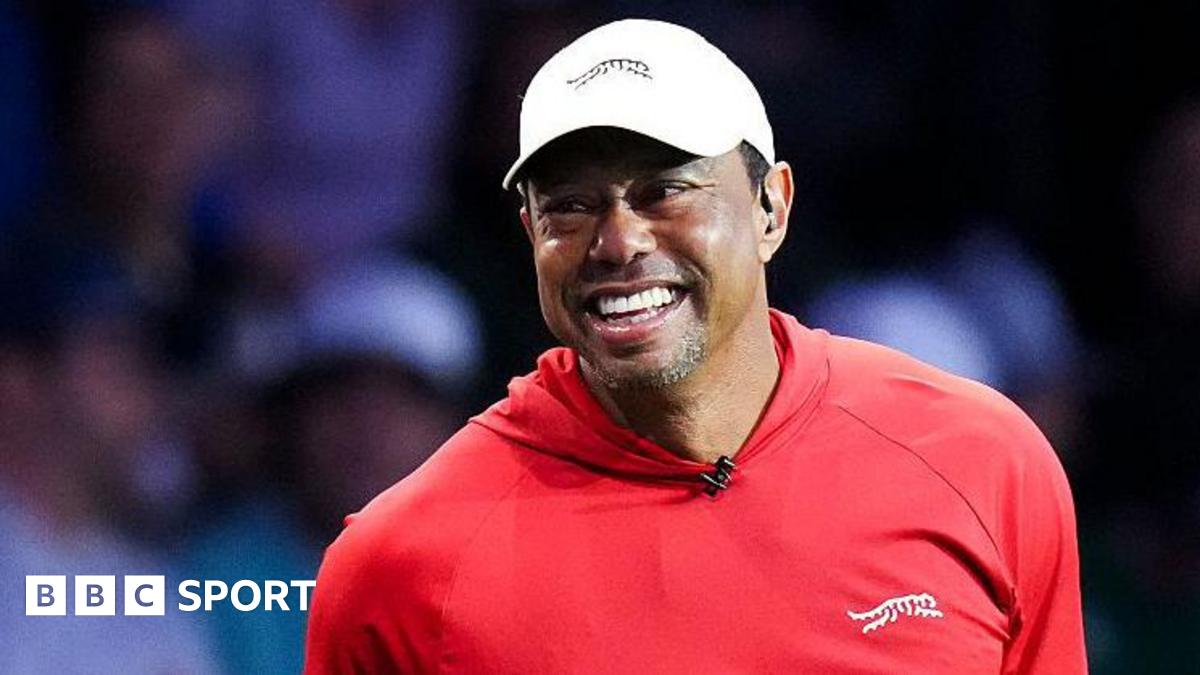
Tiger Woods: 2026 Masters ‘not off the table’ but no timetable for return
Tiger Woods says competing at this year’s Masters is “not off the table” but the 15-time major champion still has no timetable for his return.
Woods, who turned 50 on 30 December, underwent surgery in October to replace a disc in his back.
It was the latest in a series of operations and injuries that have kept the American sidelined since missing the cut at The Open in July 2024.
“It’s just one of those things where it’s each and every day, I keep trying, I keep progressing,” said Woods.
“I keep working on it, trying to get stronger, trying to get more endurance in this body and trying to get it at a level at which I can play at the highest level again.”
Speaking at the Riviera Country Club near Los Angeles, where he hosts this week’s Genesis Invitational, Woods said he has progressed from chipping and putting practice and is now “able to” hit full shots.
“Not well every day, but I can hit them,” he said.
“As far as the disc replacement, it’s just sore. It takes time. My body has been through a lot.”
Woods claimed his fifth Masters title in 2019, ending an 11-year major championship drought, and added that he had not ruled out competing at Augusta from 9-12 April.
He suffered severe leg injuries in a 2021 car crash before undergoing a back operation in September 2024 and suffering a ruptured Achilles tendon last March.
“I’ve had a fused back and now a disc replacement, so it’s challenging,” said the 50-year-old. “Now I’ve entered a new decade so that number is starting to sink in and has us thinking about the opportunity to be able to play in a cart [on the Champions Tour].”

Palantir moves HQ to Miami after recent Denver protests

Palantir co-founder and Chief Executive Officer Alex Karp is among those who announced the tech firm has moved its headquarters to Miami on Tuesday. Photo by Gian Ehrenzeller/EPA
Feb. 17 (UPI) — Artificial intelligence and software analytics firm Palantir Technologies Inc. has moved its headquarters from Denver to Miami, company officials announced on Tuesday.
The announcement was made on social media and says only that Palantir has moved its headquarters to Miami without providing other information.
The tech firm has many government contracts, including with federal immigration law enforcement agencies and the military, which recently triggered protests and vandalism at Palantir’s Denver headquarters.
Palantir co-founder and Chief Executive Officer Alex Karp recently described it as a “completely anti-woke” firm that seeks employees who share its values, according to the Denver Gazette.
Palantir accepted a $30 million contract to create the ImmigrationOS app that enables Immigration and Customs Enforcement to support self-deportation, and the U.S. Army awarded the tech firm an up-to-$10 billion contract to provide data and software tools over the next decade.
Palantir also is among the corporate donors that contributed $300 million to build a ballroom on the site of the former East Wing of the White House.
Palantir’s co-founders established the tech firm in Palo Alto, Calif., in 2003 and in 2020 moved its headquarters to Denver.
The move to Miami follows that of many other tech firms and positions the coastal city as a rival to California’s Silicon Valley.
Florida’s tax-friendly business environment has helped the state to lure many tech billionaires from California, where lawmakers are wrangling over a proposed 5% wealth tax on residents who have a net worth of $1 billion or more.
Palantir co-founder Peter Thiel has relocated to Miami ahead of the tech firm’s headquarters move, and Karp in 2020 said the tech firm does not share the same values as many others in Silicon Valley’s tech community.
Meta Platforms Chief Executive Officer Mark Zuckerberg also is among wealthy big-tech bosses who have moved from California to Florida, and many tech firms have established hubs in Miami.

Final Pieces Moving Into Place For Potential Attack On Iran
A large wave of American airpower is heading toward the Middle East to bolster forces already there as U.S. President Donald Trump considers an attack against Iran. Online flight trackers are showing F-22 Raptors, F-16 Fighting Falcons, E-3 Sentry radar planes and a U-2 Dragon Lady spy plane either in transit across the Atlantic or newly arrived in Europe. In addition, a seventh Arleigh Burke class guided missile destroyer, the USS Pinckney, has recently deployed to the U.S. Central Command Area of Responsibility (AOR) as well, a U.S. Navy official told us.
While we don’t know whether Trump will decide to attack Iran, these are exactly the movements we’ve been expecting, but so far not seeing, in advance of a sustained operation, both defensive and offensive. The U.S. aircraft heading east represents the most intense phase of a force plus-up that began after Trump started threatening Iran over its harsh treatment of anti-regime protesters. Taken together, the force now assembling in the Middle East, combined with the Israel Air Force’s capabilities, including hundreds of fighter aircraft, as well as USAF ‘global airpower’ bomber flights, would be enough for a major operation that could last weeks not days. We will likely see additional assets deploy in the coming days.

This intensifying buildup comes against the backdrop of another round of peace negotiations between Washington and Tehran that wrapped up Tuesday morning Eastern Time with future discussions being planned. You can read more about that later in this story.
Online flight tracking data shows that at least a dozen F-22s have left Langley Air Force Base in Virginia at about 5 a.m. Eastern, heading east. Their first destination is most likely Lakenheath Air Base in the U.K., a major transit hub for aircraft moving between the U.S. and Middle East. However, we don’t know that for sure and CENTCOM has declined to talk about aircraft, ship and troop movements.
F-22s are primarily America’s most capable air-to-air fighter, but they can also be used to destroy enemy air defenses and strike other ground targets. Raptors helped protect B-2A Spirit stealth bombers during last June’s Operation Midnight Hammer attack on Iranian nuclear facilities. It should be noted that four days before Midnight Hammer, F-22s made a similar transit across the Atlantic and took part in the mission.
At least 36 F-16s appear to be on the move toward the Middle East as well. This reportedly includes 12 each from Aviano Air Base in Italy, Spangdahlem Air Base in Germany and McEntire Joint National Guard Base (JNGB) in South Carolina. As with the Raptors, these jets could be used in a defensive air-to-air role against drones and missiles or in an air-to-ground role. There are a limited number of USAF F-16s already in theater.
Two E-3 Sentry Airborne Warning And Control Systems (AWACS) jets landed at Mildenhall Air Base in the U.K. shortly after 10:30 a.m. local time (about 5:30 a.m. Eastern), aviation photographer Stewart Jack told us. With look-down radar and its advanced communications suite, as well as passive sensors, these jets would play a critical role managing the allied air battle and tracking Iranian threats, especially drones and cruise missiles.

There is also at least one U-2 Dragon Lady spy plane on the way to the region as well. As we have previously noted, the U-2 can provide high-altitude surveillance in addition to serving as a communications link between F-22s and F-35 Lighting II stealth fighters.
Yesterday, 18 F-35A Lightning II stealth fighters left Lakenheath Air Base in the U.K. headed for Muwaffaq Salti, in central Jordan, which has become a central hub for U.S. tactical jets and other aircraft. As we have explained in the past, these types of jets played a key role in Midnight Hammer, suppressing and destroying Iranian air defenses. They were also the first tactical aircraft in and the last ones out.
These movements follow previous flights of F-35A Lighting II stealth fighters, F-15E Strike Eagles, E/A-18G Growler electronic warfare jets and other aircraft to Muwaffaq Salti, where they joined tactical aircraft, including Strike Eagles, Growlers, and A-10 Thunderbolt II close support jets, already deployed. MQ-9 Reapers and special operations MC-130s and other U.S. assets are also hosted there. The Jordanian base is becoming increasingly crowded, raising questions about where additional aircraft could go. All these assets are deploying to Muwaffaq Salti despite statements from Amman that it would not allow its airspace to be used for any attack against Iran.
Taking these assets out of the fight, or not allowing overflights by other aircraft, reduces the U.S. and allies’ ability to strike targets in Iran. It is unlikely to factor into the possibility of defending against the large number of missiles and drones Iran could fire in retaliation for any attack.
There is also the possibility that Jordan issued its statement for consumption by a home audience wary of war with Iran, especially if that means fighting on the side of the Israelis. It’s also possible that messaging is intended to keep them from being struck by Iran in a massive retaliatory strike, but U.S. access to basing and airspace may be clandestinely allowed, even if to a limited degree. We just don’t know.
On the sea, with the addition of the Pinckney, the Navy now has 12 surface combatants in the area, including the Abraham Lincoln Carrier Strike Group (CSG) and its three Arleigh Burke class escorts, three independently deployed Arleigh Burke class ships in the CENTCOM region and two in the Mediterranean, and three Littoral Combat Ships (LCS) also now in the CENTCOM area. There are also nuclear submarines there, with at least one accompanying each CSG, as well as likely guided missile submarines (SSGN), but the Navy does not disclose the location of those boats.

In addition, the Gerald R. Ford CSG is now in the 6th Fleet region, a Navy official told us. The carrier and its three Arleigh Burke escorts were ordered by Trump to head to the Middle East from the Caribbean, where it took part in the mission to capture Venezuelan dictator Nicolas Maduro. There are also more than 30,000 U.S. troops in bases across the Middle East.
Having two carriers, with F/A-18E-F Super Hornets and EA-18G Growlers, and one with F-35Cs, all escorted by Aegis-equipped, missile carrying Arleigh Burkes add a significant amount of mobile firepower that gives U.S. planners increased flexibility.

As the U.S. boosts its assets, the Iranian Islamic Revolutionary Guard Corps (IRGC) has closed off the Strait of Hormuz for a live-fire exercise, state media reported. It marks the first time Iran has shut parts of the Strait since Trump threatened Iran with military action in January.
Dubbed “Smart Control of the Strait of Hormuz,” the drills began Monday and include firing anti-ship cruise missiles at targets and IRGC naval drone and submarine units carrying out operations originating from the three Iranian islands, according to Iranian media.
“The armed drones used in the exercise—capable of engaging both air and sea targets—are among the IRGC Navy’s newest strategic platforms and are deployed in significant numbers, though their names and technical specifications remain classified,” the official Iranian FARS News outlet claimed.
An official from CENTCOM, which had previously warned against Iranian actions in the Strait, declined comment on Tuesday.
You can read more about how Iran could shut down the Strait, a stragetically important chokepoint through which about 20% of the world’s crude oil passes, in our analysis of the possibility here.
In a speech Tuesday morning, Iran’s Supreme leader Ayatollah Ali Sayed Khamenei issued a threat against U.S. warships.
“We constantly hear that they have sent a warship towards Iran,” Khamenei said. “A warship is certainly a dangerous weapon, but even more dangerous is the weapon capable of sinking it.”
The Iranian leader offered no details about what weapon.
Meanwhile, as both sides rattle sabers, the indirect negotiations in Switzerland, moderated by Oman, ended on Tuesday with an agreement on a “set of guiding principles,” according to Iran’s foreign minister. Abbas Araghchi said both sides had agreed to exchange drafts on a potential deal. However, Araghchi “was as positive as he was vague, providing little clarity on what had been discussed or when the next round of discussions might be held,” The New York Times noted.
“American officials did not immediately comment publicly on the talks, but one U.S. official, speaking on the condition of anonymity to discuss private negotiations, said the two sides had made progress,” the publication added. “The official said the Iranians would provide more detailed proposals in the next two weeks to address some of the gaps between the United States and Iran, but did not provide any specifics.”
“We now have a clear path ahead, which in my view is positive,” he said.
Araghchi told Iranian state television that the talks had been “more constructive” and had made “good progress” compared with a previous round of negotiations in Oman this month.
Still, there remains a wide gap between Washington and Tehran. Trump does not want Iran to have nuclear weapons or the capacity to build them while Araghchi “has emphasized that Iran’s right to use peaceful nuclear energy is inherent, non-negotiable, and legally binding,” according to the official Iranian IRNA news outlet.
In an interview with Fox News on Tuesday, U.S. Ambassador to NATO Matt Whitaker said the Trump administration is willing to negotiate, but noted what Trump told reporters aboard Air Force One on Monday that “it would be a very bad day for Iran” if it decides not to reach an agreement.
Though these talks may be progressing to another round, remember that three days before Midnight Hammer, the White House said Trump would decide “within two weeks” about whether to strike or keep negotiating.
While Trump’s ultimate intentions toward Iran remain a mystery, this latest influx of U.S. air and sea power gives him greater options, and above all else, far more credibility that an attack could do massive damage to the Iranian regime, which could factor heavily in negotiations.
The bottomline here is that we are finally seeing the exact force mix coalesce that would be expected of a major air campaign against Iran, especially if Israel intends to play a central role with all its assets already in the region.
Contact the author: howard@thewarzone.com
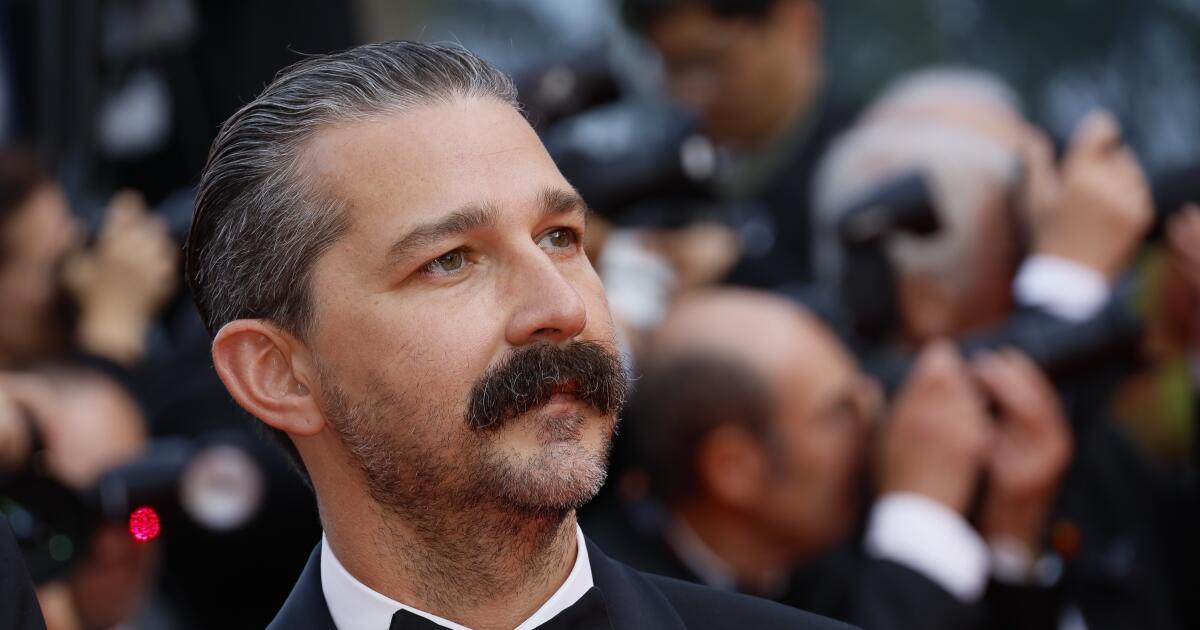
Shia LaBeouf arrested in New Orleans for alleged Mardi Gras brawl
Shia LaBeouf’s Mardi Gras celebrations in New Orleans allegedly took a violent turn Tuesday morning, landing him in the hospital and facing charges of battery.
The New Orleans Police Department confirmed that officers arrested the “Megalopolis” and “Honey Boy” actor, 39, at 12:45 a.m. in the city’s famed French Quarter. He was charged with two counts of simple battery for allegedly assaulting two men.
A representative for the “Transformers” star did not immediately respond to a request for comment.
Police arrived at a business on the 1400 block of Royal Street, responding to a reported assault, officials said. The two men alleged they were assaulted by LaBeouf. The former “Even Stevens” child star was “causing a disturbance” at the business, prompting staff to remove him from the premises, police said. LaBeouf allegedly struck one of the victims and “used his closed fists on the victim several times.”
Police say LaBeouf left the business but returned “acting even more aggressive.” According to the incident report, an unspecified number of people tried to subdue LaBeouf and eventually let him go “in hope that he would leave.” Instead, he allegedly began assaulting the same man as before, hitting his upper body with closed fists. The actor is accused of punching the second man in the nose.
Investigators say people held LaBeouf down again until officials arrived. The actor was transported and treated for unknown injuries and was arrested and charged upon his release. TMZ published bystander video of multiple men standing over LaBeouf as he lies shirtless on a street. The video shows one man punching LaBeouf as he tries to get to his feet. Other bystanders can be heard telling both the man hitting and LaBeouf to “chill.” The video ends with two men holding LaBeouf down.
TMZ also published video of LaBeouf sitting shirtless in the trunk of a police vehicle and video of LaBeouf walking through the French Quarter on Monday.
Los Angeles native LaBeouf has a history of violent and disorderly behavior that shadowed his efforts to move past his Disney Channel days in the early aughts. Following his comeback in the form of filmmaker Alma Har’el’s “Honey Boy,” LaBeouf was sued in 2020 by his ex-girlfriend, musician FKA twigs, for assault, sexual battery and emotional abuse. The lawsuit also alleged LaBeouf abused another former girlfriend. He denied her allegations.
“I am not in the position to defend any of my actions. I owe these women the opportunity to air their statements publicly and accept accountability for those things I have done,” he told the New York Times amid the lawsuit.
The exes settled the lawsuit 2025.
LaBeouf is married to Mia Goth, the horror star known for films including “Frankenstein,” “Infinity Pool” and Ti West’s “X” trilogy.

Winter Olympics 2026: GB curlers on brink of early exit after Canada defeat
Mouat’s rink have an excellent record against Brad Jacobs’ team, and beat them in the last four of the worlds last spring.
But the Canadians knew they could improve their own chances – and inflict a little revenge – and they started strongly, opening a 3-1 lead after three ends.
The British team are considered the world’s best, though, and righted themselves. Capitalising on a slight drop off by their opponents, they took two themselves in the fourth and another two in the six to lead with four to play.
However, the clank of granite went against them in the seventh, an unfortunate bounce leaving Canada the chance of three, which they gladly took.
Mouat and his team needed to respond. They couldn’t. Instead, they gave up a steal to leave themselves with a three-point deficit with two ends to play.
It was a deficit that they could not overcome. And now, their aspirations of upgrading their silver medal from Beijing are no longer in their own hands.
GB’s women are also in a perilous position, and also must beat the United States on Wednesday (08:05), as well as Japan later in the day (18:05) and Italy on Thursday (13:05) if they are to scrape into the last four.

Spain is investigating unsavory AI content on social media ‘giants’

Spanish officials on Tuesday announced they are launching an inquiry into potential criminal violations by X, Meta and TikTok over respective users’ creation and distribution of AI-generated child sex abuse materials. Photo by Fazry Ismail/EPA
Feb. 17 (UPI) — Spanish authorities plan to investigate social media giants X, Meta and TikTok over the distribution of child sex abuse materials on their respective social media platforms, the government announced Tuesday.
Spanish Prime Minister Pedro Sanchez said there is a pending investigation by state prosecutors into the alleged spread of artificial intelligence-generated material.
“These platforms are jeopardizing the mental health, dignity and rights of our sons and daughters,” Sanchez said in a translated post on X.
“The state cannot allow this,” he said. “The impunity of the giants must end.”
The Spanish government said it is looking at options for holding tech firms accountable for “potential criminal liability of increasingly widespread practices in the digital environment, such as the generation and dissemination of sexual content and child sexual abuse through deepfakes and the manipulation of real images to create others with explicit sexual content, thereby undermining the dignity of the victims,” as reported by The Guardian.
A recently produced report suggested that social media platforms enable the creation and rapid distribution of offensive content that enables their makers to elude detection and potential criminal prosecution.
Meanwhile, the respective social media sites profit from such activities, officials said.
Sanchez said Spain’s Council of Ministers will invoke Article 8 of the Organic Statute of the Public Ministry to ask it to investigate the alleged crimes that the three tech firms might be committing via the creation and distribution of AI-generated child sexual abuse materials using their respective AI tools.
The Spanish probe into the social media giants arose after French authorities raided X’s offices in Paris over similar accusations, but X officials there have denied any wrongdoing.
X recently added Grok AI, which is the creation of Elon Musk’s xAI artificial intelligence company. Musk also owns X.
TikTok offers AI tools, while Meta AI is integrated into Meta’s Facebook, Instagram, Messenger and WhatsApp platforms.
The issue raises the matter of free speech laws in the European Union and the United States.
Ireland’s Data Protection Commission is among European regulatory bodies leading the European Commission’s inquiry into X over the use of the Grok AI tool to generate deepfake and sexualized images of real people, including children.
The investigation is to determine if X is complying with European laws regarding personal data and how algorithms might protect lawbreakers.

US judge says wrongfully deported Kilmar Abrego Garcia can’t be re-detained | Courts News
Judge states Trump administration has made ‘one empty threat after another’ to deport Salvadoran national to Africa.
Published On 17 Feb 2026
A United States federal judge has ruled that the administration of US President Donald Trump cannot re-detain Kilmar Abrego Garcia, a Salvadoran national who was wrongfully deported last year and who the federal government has sought to deport again.
US District Judge Paula Xinis stated on Tuesday that a 90-day detention period had passed without the administration presenting a workable plan to deport Abrego Garcia, whose lawyers say he is being punished because his wrongful detention embarrassed the government.
Recommended Stories
list of 3 itemsend of list
Xinis said that the government “made one empty threat after another to remove him to countries in Africa with no real chance of success”.
“From this, the court easily concludes that there is no ‘good reason to believe’ removal is likely in the reasonably foreseeable future,” he added.
The ruling is a victory for Abrego Garcia, who has been fighting his attempted deportation by US immigration authorities who have tried to send him to African nations such as Uganda, Eswatini, Ghana, and Liberia. Abrego Garcia was released from an immigration detention facility in December.
His wrongful deportation to El Salvador, where he was held in a prison known for poor conditions and widespread abuse, became an early flashpoint in the Trump administration’s push to deport non-citizens from the US, often with few efforts to abide by due process requirements. The Trump administration had also accused Abrego Garcia of being a member of the criminal group MS-13, without offering any evidence.
His mistaken deportation prompted widespread anger and calls for the Trump administration to bring him back to the US. After initially stating that it had no authority to do so, the Trump administration brought Abrego Garcia back to the US in June following a court order mandating his return. It has since charged him with human smuggling, an allegation that he denies.

What happened to Miss J from America’s Next Top Model?
Need to know
Former America’s Next Top Model judge Miss J has opened up about her health in a new Netflix documentary.

Miss J speaks out in Reality Check: Inside America’s Next Top Model(Image: Courtesy of Netflix)
Inside America’s Next Top Model star Miss J’s heartbreaking health battle
- Former America’s Next Top Model judge J. Alexander, known as Miss J, has revealed devastating health struggles in Netflix‘s new documentary Reality Check: Inside America’s Next Top Model.
- The beloved catwalk coach suffered a stroke on December 27, 2022, leaving her in a coma for five weeks. “I woke up, I didn’t know where I was other than in the hospital. I spent five weeks in a coma. I couldn’t walk and I couldn’t talk,” she explained.
- Miss J broke down in tears after waking from the coma, admitting: “It was emotional, I cried. I’m not ashamed to say that I cried.” Former co-stars Nigel Barker and Jay Manuel visited the star in hospital during his recovery. Nigel described the visit as “really upsetting and horrifying and scary”.
- Whilst Miss J has regained his speech, she still cannot walk and made a heartbreaking admission: “I miss being the queen of the runway. I’m the person who taught models how to walk. And now I can’t walk.”
- Despite his struggles, Miss J remains determined, saying: “I’m determined to walk. I’m sure you’re gonna see me again, I’m sure. It’s not over for me yet.” Notably, former boss Tyra Banks has yet to visit Miss J, though she has sent a text expressing eagerness to see her old friend.
READ THE FULL STORY: Next Top Model judge Miss J shares devastating health update ‘I can’t walk’

Stephen Colbert calls out CBS for barring interview with Democratic candidate
The Federal Communications Commission‘s stronger enforcement of its “equal time” rules is already affecting late-night TV.
During Stephen Colbert’s Monday night monologue on “The Late Show With Stephen Colbert,” he carried on per usual, introducing the Late Show Band and his guest Jennifer Garner. He then posed the question, “You know who is not one of my guests tonight?”
The late-night host was meant to have Texas state representative James Talarico on the show. But he said on air that he was “told in no uncertain terms by our network’s lawyers, who called us directly, that we could not have him on the broadcast.”
He continued on to explain the FCC’s new guidance for equal time rules under its Chairman Brendan Carr. The rules require broadcasters who feature political candidates to provide the same time to their rivals, if requested. Typically, news content, daytime and late-night talk shows have been excluded from these regulations, as it’s been an informal tradition for presidential candidates to make their rounds on various late-night shows.
But the FCC under Carr, who has made no secret of his intention to carry out an agenda that is aligned with President Trump’s wishes, has questioned whether late-night and daytime talk shows deserve an exemption from the equal-time rules for broadcast stations using the public airwaves. Many legal and media experts have said a stricter application of the rule would be hard to enforce and could stifle free speech
“Let’s just call this what it is. Donald Trump’s administration wants to silence anyone who says anything bad about Trump on TV, because all Trump does is watch TV,” said Colbert Monday night.
Earlier this year, ABC’s “The View” featured Talarico, as well as his main rival and fellow Democrat Jasmine Crockett. Talarico is currently facing off with Crockett and Ahmad Hassan in the Democratic primary for one of Texas’ two seats in the U.S. Senate. The FCC is also reportedly investigating his appearance on “The View.”
Experts consider the equal time rule to be antiquated, designed for a time when consumers were limited to a handful of TV channels and a dozen radio stations if they lived in a big city. The emergence of cable, podcasts and streaming audio and video platforms — none of which are subject to FCC restrictions in terms of content — have greatly diminished traditional broadcast media’s dominance in the marketplace. Carr has previously suggested that if TV hosts want to include political candidates in their programming, they can do it — just not on broadcast TV.
Colbert said he was taking Carr’s “advice” and revealed that his entire interview with Talarico was instead uploaded on YouTube. During the interview, Talarico calls out the Republican Party for initially running against “cancel culture.”
“Now they are trying to control what we watch, what we say, what we read. And this is the most dangerous kind of cancel culture, the kind that comes from the top,” said Talarico. “They went after ‘The View’ because I went on there. They went after Jimmy Kimmel for telling a joke they didn’t like. They went after you for telling the truth about Paramount’s bribe to Donald Trump.”
“The Late Show with Stephen Colbert” is leaving the air come May, signaling the end of CBS’s longstanding relationship with the late-night talk show. Its cancellation was a “purely financial decision,” according to CBS. But it also came at a time when Paramount Global, which owns CBS, was seeking regulatory approval from the Trump administration to sell itself to Skydance Media. The merger was finalized in August.
L.A. Times staff writer Stephen Battaglio contributed to this report.

Qatar Open: Carlos Alcaraz beats Arthur Rinderknech in ‘difficult’ first match since Australian Open triumph
The second round of the Dubai Tennis Championships was hit by fitness issues again as four players, including fifth seed Mirra Andreeva, advanced because of player withdrawals.
Andreeva went through when opponent Daria Kasatkina pulled out before the tie, while ninth seed Belinda Bencic was also handed a walkover when Sara Bejlek withdrew prior to the match.
Paula Badosa retired after losing the first set 6-4 against sixth seed Elina Svitolina, while Ella Seidel withdrew after dropping the first set 6-0 to Jaqueline Cristian.
The withdrawals follow nine dropouts in the first round, which saw seven lucky losers from qualifying fill the main draw.
Meanwhile, the Women’s Tennis Association (WTA) has announced it is launching “the Tour Architecture Council” to oversee improvements to the women’s game.
In a statement, WTA chair Valerie Camillo says the council has been set up because the “current calendar does not feel sustainable for players given the physical, professional and personal pressures of competing at the highest level”.
Chaired by American world number five Jessica Pegula, the council is set to “develop meaningful improvements to the calendar, commitments and other core elements of the Tour framework”.
Potential changes to the Tour “can be implemented as soon as the 2027 season”.
The council is made up of a number of players, including former world number one Victoria Azarenka, as well as tournament directors and WTA Tour chiefs.
“This is a chance to focus on specific parts of the Tour structure and see what can be addressed in the short-term, while continuing the conversation on longer-term improvements in a dedicated, focused way,” said Pegula.
“The WTA has the opportunity and standing to bring a group like this together and I’m grateful they’re using that power to advance real change for 2027.”

European Commission to investigate online retailer Shein

The European Commission has announced an investigation into online retailer Shein. File Photo by Hannibal Hanschke/EPA
Feb. 17 (UPI) — The European Commission announced Tuesday that it has opened formal proceedings against online retailer Shein “for its addictive design, the lack of transparency of recommender systems, as well as the sale of illegal products, including child sexual abuse material.”
The Commission said in a press release it was specifically investigating: the systems Shein has to limit the sale of illegal products in the European Union; risks linked to the addictive design of the service and the systems to mitigate those risks; and transparency of the recommender systems that it uses to propose content and products to users.
Under the Digital Services Act, Shein must disclose the parameters used in its recommender systems and it must provide users with at least one easily accessible option that is not based on profiling for each recommender system, the release said. The EU said it found that Shein only explained its recommender “in a very general manner.”
“In the EU, illegal products are prohibited — whether they are on a store shelf or on an online marketplace,” Henna Virkkunen, executive vice president for Tech Sovereignty, Security and Democracy, in a statement. “The Digital Services Act keeps shoppers safe, protects their wellbeing and empowers them with information about the algorithms they are interacting with. We will assess whether Shein is respecting these rules and their responsibility.”
If the investigation finds that Shein has broken EU law, Brussels can impose interim measures, accept binding commitments from Shein or give a non-compliance decision that could lead to large fines, EuroNews reported.
Shein released a statement saying it always “cooperates fully” with the Commission and the Coimisiún na Meán, the Digital Services Coordinator for Ireland involved in the investigation.
“Over the last few months, we have continued to invest significantly in measures to strengthen our compliance with the DSA. These include comprehensive systemic-risk assessments and mitigation frameworks, enhanced protections for younger users, and ongoing work to design our services in ways that promote a safe and trusted user experience,” Shein said in the statement. “Protecting minors and reducing the risk of harmful content and behaviors are central to how we develop and operate our platform. We share the authorities’ objective of ensuring a safe and trusted online environment and will continue to engage constructively.”
The retailer has recently come under fire in France because, in November, it was found to be selling weapons and sex dolls designed to look like young children. Around the same time, Shein opened its first brick-and-mortar shop in Paris to protests for its sale of the dolls and its environmental impact.
Singapore-based Shein issued a statement on Nov. 4 saying it had removed the dolls and permanently banned “all seller accounts linked to illegal or non-compliant sex-doll products.”
A Shein spokesperson said in December that the platform would not reopen in France right away. It was doing an internal audit to find weaknesses in its marketplace operations.

Police assessing Stansted Airport private flights over Epstein ties
Essex Police says it is assessing information in relation to private flights into and out of the airport.
Source link
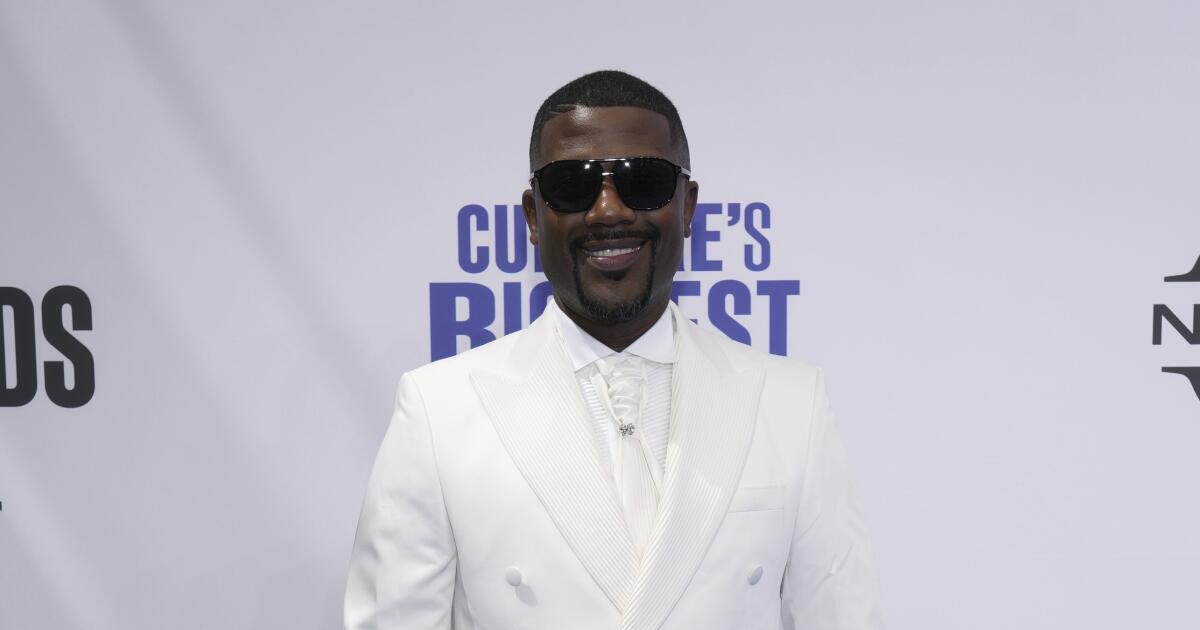
There may be a reason for Ray J’s ‘bloody’ eyes in concert
Bed rest can go pound sand: Ray J gave his all on stage on Friday night, it seems, with fan videos showing his eyes appearing to bleed as he worked the crowd.
The singer also doffed the top of his orange jumpsuit to reveal some sort of medical port or device inserted on the upper left side of his chest.
The “Love & Hip-Hop: Hollywood” star, who is singer-actor Brandy’s brother, was performing in Shreveport, La.
In the first clip, red liquid — which many assumed was blood — ran down one of the R&B singer’s cheeks like tears as he handed out long-stemmed red roses to people in the audience. Another clip showed him singing into a mic while climbing down from the stage after shedding the top part of his jumpsuit.
“Hey, y’all, we perfectly fine. Ain’t nobody sick. Look at me, I’m fine,” he says in a later clip, which takes place off stage. The 45-year-old appears to be annoyed, saying that people have been laughing at him because he’s sick.
“He loves the camera. He loves the attention,” Tommy Nard II of Nard Multimedia Group, who was behind the scenes that night, told Shreveport news station KTAL separately. “It’s all theatrical … I seen him literally put on the fake blood and go out there.”
A concertgoer told KTAL that it was “very concerning to see blood, what appeared to be blood, coming from his eyes.”
Ray J told TMZ in late January that he was under doctor’s orders to stay on bed rest and avoid drugs and alcohol. He said he was on eight medications related to his heart, which he said had been damaged because of his excessive drug and alcohol use.
“I thought I could handle all the alcohol, I could handle all the Adderall,” he said in a video livestream in late January.
Doctors told Ray J — real name William Ray Norwood Jr. — that he should prepare for the chance that he might need a pacemaker or defibrillator soon, the singer told the celebrity site. He expected to get an update when he went back in two weeks for a checkup.
Two weeks was up over the weekend.
Ray J told followers in a video posted Jan. 25 that he wanted to “thank everyone for praying for me.”
“I was in the hospital,” he said. “My heart is only beating like 25%, but as long as I stay focused and stay on the right path, then everything will be all right.” In a video, he said the right side of his heart was “like, black. It’s like done.”
Ray J said elsewhere that his heart was beating at 60%. The number likely refers to his heart’s ejection fraction, which measures the volume of blood coming out of the heart’s left ventricle or being drawn into the right ventricle when the heart beats. Right-sided heart failure is far less common, according to WebMD.
A representative for Ray J did not respond immediately Tuesday to The Times’ request for comment.
However, in an Instagram story posted Monday, Ray J put up this quote: “‘If you want to know who your real friends & family are, lose your job, get sick, or go through hard times. You’ll see clearly.”

I stayed at the budget hotel on the edge of the Cotswolds
THE Holiday Inn in Oxford might not be the fanciest, but it is one of the most affordable for visiting the historic city.
Here is everything you need to know including room rates and how to get there.

What is the hotel like?
The hotel is a bright, modern 220-room hotel just a short detour off the M40 motorway.
The terrace bar is a great suntrap, perfect for enjoying a gin and tonic or a pint of Stella while topping up your tan.
There’s also a spacious lobby bar inside, a decent sized gym and other amenities like a Starbucks and Waitrose within a minute’s walk.
What are the rooms like?
They have huge walk-in showers, robes and slippers (a nice touch in a value hotel), and big TVs with Netflix and other subscription services built-in.
Read more on hotel reviews


Ask for one of the recently refurbished rooms if you can.
We were on the ground floor but slept soundly with no road noise, despite the easy road links in the area.
Room rates start from £76 per night, or £92 with breakfast.
What is there to eat and drink at the hotel?
While it is a 15-minute drive into Oxford city centre, the hotel restaurant serves up big portions at decent prices.
Fish and chips, curries, pizza and burgers are among the options. Save room for a triple chocolate brownie or Belgian waffle for dessert.
Breakfast is available until 11am on weekends, so you can enjoy a lie-in before your full English.
What else is there to do?
The hotel sits in between the city centre of Oxford and the Cotswolds with its rolling hills and charming villages.
Gorgeous landmark Blenheim Palace is only a 10-minute drive away or spend a day exploring Oxford’s famous university buildings and visiting a pub on the banks of the Thames.
Discount designer shopping complex Bicester Village is another good local draw – also a 15-minute drive away.
If the hotel family friendly?
Family rooms that sleep four and connecting rooms are available, as well as cots on request.
Is it accessible?
The hotel has wheelchair accessible rooms, which include accessible door locks as well as bathrooms with grab bars, tall toilets and adequate clear turning space.


Airee stars as Nepal chase down 170 to beat Scotland
Scotland’s T20 World Cup campaign finishes on a low note as Nepal chase down 170 in a thrilling contest at the Wankhede Stadium to claim their first victory on this stage since 2014.
Source link
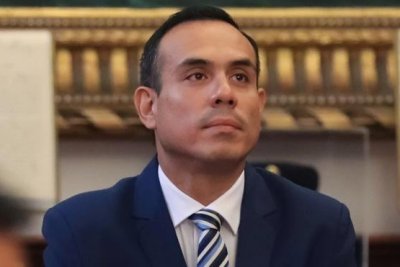
Peru’s Congress weighs removal of interim President Jose Jeri

Peru’s interim president, Jose Jeri, appears before the Congressional Oversight and Accountability Committee in Lima, Peru, in January. Jeri denounced a plot against him and a clear intention to destabilize the country, after a series of videos were revealed showing semi-clandestine meetings and encounters he had with a Chinese businessman, as well as visits to the Government Palace by another businessman of the same nationality who was under house arrest. Photo by Paolo Aguilar/EPA
Feb. 17 (UPI) — Peru’s Congress convened Tuesday in an extraordinary session to debate seven censure motions against interim President Jose Jeri — a move that could remove him from office less than two months before general elections and deepen the country’s ongoing political instability.
Jeri, who also serves as head of Congress, would automatically lose the presidency if lawmakers vote to oust him from that parliamentary post. He has denounced what he calls a plot against him and an intention by enemies to destabilize the country.
Jeri assumed the presidency in October after the removal of Dina Boluarte. However, investigations into Jeri’s conduct and declining public support have weakened his political standing, according to local newspaper La Republica.
According to local media reports, the current crisis escalated after reports that the president held unregistered meetings, not listed on his official agenda, with two controversial Chinese businessmen.
One reportedly holds multimillion-dollar state contracts and has been linked to construction firms accused of securing public works through bribes. The other has faced legal proceedings for trafficking illegal timber from the Amazon region.
Prosecutors have also opened a preliminary investigation into alleged influence peddling involving the hiring of nine young women in public institutions after meetings with Jeri at the presidential palace.
Those allegations enabled opposition lawmakers to gather 78 signatures to present a censure motion against him as congressional president — a step that would automatically remove him from the presidency.
Under congressional rules, a simple majority is required to approve the censure motion, RPP Noticias reported.
Peru has experienced marked political volatility over the past decade. Six recent presidents have faced removal proceedings or imprisonment, reflecting a pattern of institutional instability.
Analysts often cite the repeated use of constitutional mechanisms such as presidential vacancy on grounds of “moral incapacity” and censure votes against congressional leadership, factors that have made the presidency unusually fragile.
Political calculations ahead of Tuesday’s vote suggest limited support for the 39-year-old president. Most political blocs have expressed opposition to him continuing in office, with the exception of Fuerza Popular, the party associated with right-wing presidential candidate Keiko Fujimori.
Peru’s fragmented Congress includes about a dozen political blocs whose members frequently split during votes, leading analysts to caution that the outcome remains uncertain.
Jeri’s party, Somos Peru, is expected to attempt a procedural delay by requesting a constitutional review on whether a censure motion applies to an interim president. According to El Comercio newspaper, the Constitutional Commission could take about two weeks to issue an opinion, which might give Jeri time to secure additional political backing.
If Jeri is removed, Congress would elect a successor from among its members. That person would become Peru’s eighth president in a decade and oversee the transition toward general elections scheduled for April.

Displaced Children in Nigeria’s Capital Dream of Education
Ali Juwon’s future shattered at the same time his father’s leg did. The year was 2012, and the 9-year-old, hand in hand with his mother, was fleeing his home in Borno State, northeastern Nigeria. Boko Haram members had stormed their community in Gwoza, killing neighbours and burning buildings Ali had known his entire life.
As he and his mother ran, a familiar voice cried behind them. Both turned to see that Ali’s father had crashed to the ground, crushing his leg in the process. Yet, with all the odds stacked against them, the three managed to make it out with their lives.
The family travelled for half a day to Nigeria’s federal capital, Abuja, and sought refuge in the Durumi IDP camp like many survivors at the time.
The camp, with the flurry of Borno survivors, was overcrowded, but Ali’s mother promised him it would not be home, only a resting place before they could find their footing again. Over 14 years later, the Juwon family continue to reside there.
Ali, now 23, explained how the situation derailed his life, “Before fleeing, my father had a business and was able to afford all my needs. Since he broke his leg, he hasn’t been able to work, and because we couldn’t get him properly treated, his leg never healed well. He hasn’t walked since the fall. Suddenly, all the luxuries we could afford before have vanished.”
Being the only child in his family, Ali took it upon himself to care for his parents. The only thing he needed was a decent education that would lead to a business or accounting degree. He planned to join whatever lucrative fields these courses would thrust him into and use his money to get himself and his parents a place away from the camp.
But Ali quickly learnt that he was no longer in Borno, dependent on his well-to-do father. His education now rested in the hands of IDP leaders, non-profit donors, government promises, and his own hustle. As the years wore on, he learnt that even with seemingly more helpers, his chances of finishing school had dimmed significantly.
In the Durumi IDP camp, displacement does not end with fleeing violence. For many, it continues in the classroom. While primary education is often supported by NGOs or private donors, secondary school is where the system collapses.
According to camp leaders, the girls in the camp are often married off after their basic education ends, as secondary education is no longer attainable without sustained government intervention. Hundreds of displaced boys, on the other hand, are forced to choose between survival and schooling, a gap that is reshaping their futures and deepening Nigeria’s long-term social and economic vulnerabilities.
No way past secondary school
“In primary school, things were okay. NGOs sponsored my schooling, but once I got to secondary school, that was where the real problem began. No one sponsored secondary schooling for us,” Ali explained.
Liyatu Yusuf, the woman leader of the Durumi camp, finds the schooling situation distressing.
“We had certain sponsors who do everything for these children. Usually, it’s from an individual with a good heart. We used to do their secondary school education in the camp as well, but due to a lack of teachers and overcrowding, we had to stop it.”
According to her, over 1,000 students occupy the less spacious class, forcing them to have seven different sessions in just one class. But that’s not just the problem. There is a lack of teachers, too.
“The teachers we have are university volunteers. They would come three times in a week, but then refuse to come the next week because no one was paying them or giving them transport money,” Liyatu said.

Liyatu says the children never receive government sponsorship, and that many of the people who help the children through primary school are good-natured individuals or NGOs. Despite record education budgets announced in Abuja, camp leaders say they have not seen much implementation, especially for the displaced children like those in Durumi.
In a 2025 press release by the Presidential State House Villa, Nigeria’s Vice President, Kashim Shettima, called for collaboration between the government and the private sector to invest in education, as the burden of educating children cannot fall entirely on the government’s shoulders. But in the Durumi IDP camp, help has come mainly from the camp leaders and individual sponsors.
So, with no one to help him through secondary school, Ali did what several boys in the camp chose to do: work and fund his education in tandem. This way, he would be able to pay for school with the money he made and leave some for his unemployed parents.
But this was not an easy route, and soon the stress of paying for so much caught up with the boys. Salim Aliyu, for example, now runs a small provision shop near Durumi, as his education ended in Senior Secondary (SS) 1.
“I’m 25 now,” he said. “I stopped at SS1 because it was too expensive. Transport alone was about ₦1,000 every day. How much was I earning to pay that?”
At the time, Salim did menial jobs, sweeping houses and cleaning compounds to survive. Eventually, the numbers stopped adding up. “One day, I realised I couldn’t continue. I just had to leave school.” His story is common in the camp. For many boys, the challenge is not only tuition fees but the impossible balance between earning and learning.
Sulieman Nobo repeated SS3 three times after running out of money repeatedly. By his final attempt, anxiety had overtaken ambition. “In junior secondary school, I learned a lot,” he said. “But in senior secondary, I was focused on passing, not learning. I didn’t have time to retain anything.”
School ended by mid-afternoon. Work began soon after. By nightfall, he was too exhausted to revise his notes. Despite the strain, Sulieman managed above-average grades. Others were not as fortunate.
“I was funding my education myself,” Usman Selman, another young man in the camp, told HumAngle. “My school fees were ₦20,000 a year, so I had to work. But the stress became too much.”
The dual burden affected his concentration. “No matter how hard I tried to listen in class, the only thing on my mind was money.” For some, the pressure pushed them out entirely. Aliyu Usman began paying his own fees at 15. By 17, even ₦3,000 per semester proved unsustainable.
“I was tailoring while in school,” he said. “But I couldn’t cope with fees and transport. I dropped out in SS2. Now I do laundry. It feeds my family.” He paused before adding, “If I could go back to school, I would. But I know in my heart I can’t.”
Salim, now financially stable enough to run his shop, no longer sees school as essential.
“Even if I had the chance, I wouldn’t go back,” he said. “Everything I need for business, I learned here. And after school, where is the job? Unless you already have money, there’s nothing waiting.”
For the few who make it through secondary school, graduation does not guarantee anything. Umar borrowed ₦87,000 to register for the West African Examinations Council (WAEC) exam, one the final secondary school tests that qualify one for further education in the university and other higher insitututions. It took him half a year to repay the debt. In those six months, he was forced to cut back on food. “After all that, I still didn’t get a job,” he said. “If university graduates are struggling, who am I with only a WAEC certificate?”
The repeated disappointments take a toll. According to Liyatu, who coordinates the camp, more than half of the 1,000 boys there are currently out of school and unemployed. “If they even register for WAEC, we are lucky,” she said. “Most cannot finish secondary school. When they see there’s no support, they lose hope.” She worries about the ripple effects.
“With no school and sometimes no work, small arguments turn into fights. I saw boys punch each other over ₦200. I don’t excuse it, but I understand the frustration.”
Humanitarian worker Mohammed Abubakar, who has spent over a decade in Nigeria’s humanitarian sector, says prolonged educational exclusion carries broader consequences. “When young people are cut off from opportunity, their productivity drops,” he said. “They become more vulnerable to exploitation and manipulation.” He cautions that marginalisation, not ignorance alone, creates risk. “If society neglects them, others will step in, sometimes with harmful intentions. That is how cycles of insecurity and poverty sustain themselves.”
Beyond security, he points to economic cost. “When you underinvest in education, your population becomes less competitive. It affects productivity, innovation, even GDP. The impact goes far beyond one camp.”
Yet, despite the barriers, many of the boys continue to dream. Sulieman plans to register for JAMB, hoping for a scholarship. If that fails, he wants to join the armed forces.
“My dream is simple,” he said. “To live a better life and take my parents out of this camp.”
Umar still hopes to study computer engineering. Aliyu once imagined becoming a doctor. Sadiqi Shauku, 18, who left school in SS2, says he would return “if someone helped.” And Ali Juwon, still carrying the weight of his family’s survival, has not let go. “If there is anyone who can help me continue my education, I will continue,” he said. “I want to study something that will help me start a business or work in government. I want to be a better man.”
For now, he survives on friends’ support and periodic food distributions. Hope remains, but evidence of escape is scarce.
“Since I started primary school, I have never seen anyone gather enough money to leave this camp,” Sulieman said. “I believe in my future. But no one has gotten out.”

‘Tell Me Lies’: Grace Van Patten and Jackson White on the finale
This article contains spoilers from the Season 3 finale of “Tell Me Lies.”
“Tell Me Lies” ended with the hard truth.
Based on the book by Carola Lovering, the Hulu series centers on the toxic and manipulative on-again, off-again relationship between college students Lucy Albright and Stephen DeMarco — portrayed by real-life couple Grace Van Patten and Jackson White — whose distressing bond causes a ripple effect of chaos and turmoil for their friend group that stretches across eight years.
It all culminated in Tuesday’s Season 3 finale, which brought explosive revelations, the return of old habits and final fractures to the friend group. But what about its central pair?
Across the show’s two timelines, Stephen’s admission to Yale Law School was revoked and his engagement blew up — but is that enough retribution for the most-hated fictional millennial man with a buzz cut after all the emotional and mental abuse he inflicted? Meanwhile, Lucy’s life is upended when she is expelled from school; but years later, and not without making another questionable choice, she is finally free from his torment. For good. Hours before the finale dropped, creator Meaghan Oppenheimer announced the series would not return for another season.
Over two separate video interviews from New York — Oppenheimer from her home; Van Patten and White, later in the day, from a hotel room — The Times caught up with the trio to discuss bringing the dark and twisted saga to an end, why Stephen wasn’t dealt more severe punishment and the love story between Bree and Wrigley. The conversations have been combined and edited for clarity and length.

Lucy (Grace Van Patten) and Stephen (Jackson White) in the series finale of “Tell Me Lies.”
(Ian Watson / Disney)
Before we dive into the finale, the other big news is the announcement that the show will not return for another season. Would you have wanted more or are three seasons enough?
Oppenheimer: This was definitely a very thoughtful, mutual decision that I came to with Hulu and 20th [Television,” which produces the show]. I went into this season wanting to write it with a sense of finality. I always felt like three seasons was sort of a perfect number for a smaller show like this. I always envisioned Lucy and Stephen’s worst, biggest breakup in college, and her public downfall culminating with the wedding weekend. But we went into this season not knowing for sure if there would be another one — and after seeing the amazing fan response and the numbers being so great, we definitely discussed “is there an organic way to keep it going?” I was definitely trying to make a very specific point with the way that Lucy and Stephen ended, which is that it was inevitable that he was going to hurt her, and that if she chooses him over her friends, she’s going to lose them. To keep going after that and force them back in each other’s lives, it would have felt like it was undermining the stakes of everything we set up.
Does it feel like the right time to be done with these characters?
Van Patten: It does. Of course, it’s bittersweet. But in terms of the story, it feels really right that it’s ending here, and we’ve had a beginning, a middle and an end.
White: I like the way that goes out.
Will you be glad to not be the most hated fictional man on TV?
White: I’m stoked. I’m stoked. I really am. I’m really excited to not trigger people like that. It’s a strange burden, like an odd social burden.
Van Patten: Because it’s out of love, but what they’re saying is so negative.
White: Yeah, it’s a compliment, but it’s mean. It’s kind of like how Stephen talks to the other characters.


Grace Van Patten as Lucy Albright in the final moments of the “Tell Me Lies” series finale. (Ian Watson/Disney) (Ian Watson/Disney)
Finales are challenging because they come with a lot of expectations from fans. Since you weren’t sure if the series might return, how did that shape how you wrapped this third season?
Oppenheimer: I had to go into it not worrying too much about what would happen in the future. When we found the [Season 3] ending in the writers room, we all were like, “Oh s—, that’s the ending to the story, not the ending of the season.”
Sometimes, when I see certain [fan] theories, I’m like, “What show are you watching?” I think people that were expecting a resolution to the Macy story, for instance, for him [Stephen] to get arrested — that’s so surprising to me … because I’m like, “I don’t feel like you’re watching the same show that I’m watching.” It’s one of the few things that we kept from the book. He doesn’t get justice for that. In reality, people get away with really bad things and that’s one of the scary truths of the show.
How did you and the writers decide on the moment that ends the series? Lucy choosing to ride off with Stephen after the wedding goes off the rails, only for him to leave her stranded at a gas station.
Oppenheimer: The show was going to end in one of three ways: Does she reject him? Does he reject her? Or do they end up together? I felt for a very long time that they should not end up together because this is a story about abuse. I don’t think this is a love story. It felt like staying true to what the show meant not having this overly positive, optimistic ending where she wins.
At the same time, the one thing we’ve learned about Stephen is that he will never let you go unless he’s the one making that decision. For Lucy to actually be free of him, he needed to be the one to walk away. It actually is the only way for her to really wake up and see it.
I will get images for scenes before I know what the actual scene is, and it’ll be almost more of like a symbolic image, or it’ll be a fable that I’ve heard before. But I said to the writers room, “I just want it to be her finally having the decision — Bree or him, friends or him — and her choosing him and then, it’s not this, but it’s as if he just drives away and leaves her by the side of the road.” And they were all like, “He could literally just drive away and leave her by the side of the road.” The idea of her being on this island alone, and the inevitability of it. And that’s why we have the whole —

Grace Van Patten on ending the series: “Of course, it’s bittersweet. But in terms of the story, it feels really right that it’s ending here, and we’ve had a beginning, a middle and an end.”
(Dutch Doscher / For The Times)
Allusion in the previous episode to the scorpion and frog fable?
Oppenheimer: Yes. The answer is, of course, he was going to hurt you because he’s Stephen. It’s in his nature. Also he’s not driving away, thrilled and happy. When he says, I’ve just blown up my entire life. If I hurt you, I’m hurting myself. It’s true. He would have more fun if he just learned to be nice and be with Lucy. But he can’t help it. His nature is to win and to wound and to get the last laugh.
White: That character is all about himself, and this is one final way to leave on the last laugh.
Van Patten: I find the ending to actually be a little bit helpful. I think there’s a lot of freedom and relief in that last moment when she realizes he left her.
There’s that almost wistful look that she has at the gas station, getting the coffees. Then there’s the one when she realizes she’s been stranded and all she can do is laugh. It’s quite the trajectory.
Van Patten: Every time Lucy has gone back to Stephen, she’s completely in denial. There’s a sense of hope, maybe it’s going to be different this time — also, he had just blown up every relationship she had at the wedding. We’re completely on an island together. There’s this hope of like, maybe we can be OK now, there are no more secrets left. The friend group isn’t together. There’s nothing being held over one another’s head. Then she’s hit with, “Oh, my God he did it again. Shame on me.” She totally could have cried, but she just decided to laugh instead because it is predictable. She actually saw it for the first time as definitive.

Jackson White on playing the hated character Stephen: “It’s a strange burden, like an odd social burden.”
(Dutch Doscher / For The Times)
How did you and the writers grapple with why Evan and Bree would invite Stephen to the wedding after everything that happened in college?
Oppenheimer: It’s one of the things that struck me in the book and scares me about a lot of young men in general (especially operating within groups) — the way guys tend to forgive other guys for what they do to girls. When Evan and Stephen leave things in senior year, they’re actually at a relatively good place with each other. Even though Evan knows that Bree knows the truth (about Lucy‘s one-night stand), he knows that Stephen still recognizes the worst parts of him, so he’s made a decision to keep him close in order to keep himself safe. Bree has a line where she says, “I begged Evan not to invite him.” So it’s not up to Bree, and like a lot of people do, she’s decided to accept that her fiancé has this friend she hates.
On social media, there are fans who say they won’t be satisfied if this show doesn’t end with Stephen dying. And there was the theory that characters were plotting their revenge on him to take place at the wedding. What do you make of that? Why not go that route?
Oppenheimer: When you’re writing anything based on fan expectations or giving them the happy ending all tied in a bow, I think you’re doing a disservice to the story. Different writers would do different things. I have to stay true to my taste. Hoping for all that, I get it. But I think that the way that we do it is with a laugh.
But why not go that route? It just didn’t feel realistic. Maybe I’m just very jaded, but as I look around the world — everyone after #MeToo was like, “Oh, did we cancel all the men?” It’s like, “No, we didn’t.” That is the reality of the world that we live in, especially now, with everything coming out about the Epstein files — it’s appalling. To me, it feels almost belittling to people who’ve been abused and been in these kind of things to say, “Oh, it all works out in the end.” But also, I will say, Stephen is not going to be happy. He’s miserable.
White: He was hardwired to hate. I think the character was designed to start hating. He’s started as a confusing character, and by the end, I think it’s pretty clear that he is one-sided and complicated, sure, but also unquestionably immoral. And there’s a lot of satisfaction in wanting to take that person out, especially if you’re projecting your own whatever onto this character. I totally understand the impulse to want to ice him. But that’s not the way the world works, and I think that’s why the ending is well done because [that’s] not always the case. You don’t get that satisfaction. You actually have to live with it for a long time. And I think the message is that it’ll keep happening over and over and over unless you fix it yourself. No one’s gonna save you. You have to heal yourself.
What about the outcome of the college timeline — in the end, Yale revokes its law school admission offer to Stephen after receiving a tip about behavior that goes against its code of conduct, namely the distribution of pornographic material, which we come to learn was Wrigley’s doing. And that’s one big loss for Stephen. What intrigued you about that? And was it always going to be Wrigley who did that?
Oppenheimer: We didn’t think, initially, that it was going to get reported. That was something that someone — I can’t remember who it was — said, “It really doesn’t feel fair for Diana not to get to go to Yale after everything she’s done to get past every obstacle to better her life.” Then when we were deciding who reports him, it was just very obvious that it needed to be Wrigley because it’s the last person Stephen expects. I thought it was really important to have a guy … it really devastates me the way that men choose other men over their female friends and turn a blind eye. I just wanted one boy to stand up against the other mean boys.
White: I think [having Yale revoke his admission] really messed him [Stephen] up. He is a survivor, though, he’s a shark. A lot of these people don’t face consequences. I think eventually they do. Everything does come around. I think the people who wish ill upon other people will get what’s coming to them. We’re just not going to see when. But in his lifetime, he will get his ass kicked in that way.

Grace Van Patten, left, on the set of “Tell Me Lies” with showrunner Meaghan Oppenheimer.
(Ian Watson / Disney)
To move on to Lucy, we learn what happened in the college timeline that led to her being largely estranged from the friend group. Grace, what stands out to you about playing her in that state of numbness to her life crashing down?
Van Patten: It’s been set up the past two seasons, in the present day, that the worst thing happened to Lucy in college, and we haven’t known what that thing was until this last episode. It’s the last piece of the puzzle for the audience to see what really ruined Lucy’s life. It was so tragic and heartbreaking because she is not computing anything. She’s completely reverting back to being a little girl and doesn’t know how to deal with getting in trouble, and she’s not taking in what’s what’s going on; she’s completely disassociating. I think if she allows herself to feel, then she would not be able to pick herself up off the floor. It’s self-protection and complete denial.

“It’s the last piece of the puzzle for the audience to see what really ruined Lucy’s life,” says Grace Van Patten of “Tell Me Lies.”
(Dutch Doscher / For The Times)
At what point did you both learn that it was Bree who released the tape with Lucy confessing to lying about being sexually assaulted by Chris — a lie she told to protect Pippa, his actual victim?
Van Patten: I forget if it was through reading or Meaghan just telling us before we got the scripts. I was definitely surprised by that because the first few episodes, they’re really emphasizing the closeness between Lucy and Bree and how they’ve developed this really tight-knit relationship, which made sense; they were bumping it up to make that feel like real betrayal. But I just see it as Bree getting even.
White: I really did like that. I liked playing that I genuinely didn’t do it.
Tell me more.
Van Patten: His first time!
White: Just because every single person will obviously think he did. We’ve just established him for three years as the guy who would do that. And to actually have it not be him is confusing, and it was very fun to play. I did not do this horrible thing — I’ve done a lot of other horrible things, but I didn’t do this.
I love the way you deliver the line, when it clicks for you that it was Bree — “Oh, my God, you released the tape, didn’t you?”
White: If the character’s putting pieces together, I like to try and put pieces together. It was just easy to act in that moment. That entire wedding sequence was very easy for everybody because it was well-crafted. We were all bringing it. We knew it was one of the big, important moments.
The cake got demolished.
White: Branden Cook [Evan] is amazing in that sequence.
Van Patten: He insisted that he do that stunt. He was like stretching beforehand.
White: He was chomping at the bit. Oh, he was ready.
Was the end goal to find a way to use ‘Toxic” by Britney Spears to score the climax?
Oppenheimer: I love it so much. It’s really funny because since Season 1, I was, “When are we gonna use ‘Toxic’?” It’s just so perfect for the show. We were editing that scene and we were throwing different songs in, and we’d actually tried this other song that worked really well — “I Gotta Feeling” [by the Black Eyed Peas]. But then I was like, “Should we just try ‘Toxic’?” And my editor, Jen, was like, “It’s literally now or never.” The way that the music lines up with Evan crashing into the cake. It timed out perfectly.

Wrigley (Spencer House) and Bree (Catherine Missal), during a break from the engagement party, have a conversation about their relationship that leads to sex. (Ian Watson / Disney)

The night of his wedding to Bree, Evan (Branden Cook) learns about her affair with Wrigley. (Danielle Blancher / Disney)
How did you arrive at some of the other big moments, like Bree and Wrigley. She goes through with the wedding, but their secret is out. What happens next for them? It’s also like, is this trauma bonding or … ?
Oppenheimer: I don’t think it’s trauma bonding. I think they’re soul mates, personally. Trauma bonding is a thing, but there’s also something very real about meeting someone in a moment of grief and it has just taken all of your outer layer off, and it has exposed the real you. I think that’s what they’re seeing when they connect at the beginning of Season 3; they’re the truest version of themselves. I knew that I wanted it to come out because Evan could not get away with this. Evan could not have the happy marriage to Bree. Lucy had a choice that she was making with the full knowledge of the choice, but Bree doesn’t know all the things that Evan did to her to completely destroy her relationship with her mom. It would have felt so unfair for that to work out. I always saw that exploding and coming to light. That smile at the end of the wedding, that tells you they’re going to make this work. I literally wrote it into the action line of the script. I said, “Their eyes meet across the room, and they smile. And you get the sense that in spite of it all” — I think I wrote “carnage” — “they’re gonna find a way to make it work.” And I think they do.
White: I like happy endings, just as a viewer. I like when things work out for characters that didn’t really do anything bad. I love Wrigley and Bree. It’s a great relationship.
Van Patten: I love that relationship. I feel like they deserve each other and like they’re the two with the most well-rounded moral compass. They feel right together. And so do Pippa and Diana. They’re the only ones who are leaving happy, in the end. They’re like, “Let’s get out of here. We do not belong here.” And they just walk off. They kind of leave unscathed when everyone else is in the fire?

Grace Van Patten and Jackson White of “Tell Me Lies.”
(Dutch Doscher / For The Times)
Do you wish, especially as a real-life couple, that’s what you could have played?
Van Patten: I thought it was the perfect ending for these characters. If they ended up together and figured things out, it would just be so unrealistic. Look what these people have done to each other for the past three seasons. They’re not going to be OK together.
I guess I mean the whole trajectory, having to play the fictional couple that’s so toxic as you’re starting a relationship.
White: Yeah, not a lot of blending between work and real life.
Van Patten: Thank God. It’s only a nice, warm feeling to know we’re nothing like them. But it’s just fun acting together. We have to do crazy things and say crazy things. It’s very, very separated for us.
What do you hope for your characters?
White: I don’t hope much for him. I’m trying to think if I know anybody like that or with those tendencies — I do. I do know people who have a lot of similarities, and I pray for them, and I hope they do well. I also hope they get what’s coming to them. Actually let me take it to back because if somebody has wronged me, then I wish them the best. But for somebody like him, he’s sort of beyond that, isn’t he? I don’t know how to answer that question. I don’t know what I would want for him.
Van Patten: I hope that final instance that we see in the last episode pushes her into a journey of self-analysis and her really trying to figure out why she looks for that type of thing in a relationship, and why she has been so drawn to that. Hopefully she does the work to change that and focus on the relationships that matter, that she should be paying more attention to. I hope it’s the beginning for her.
On a final note, I will say, I was relieved to see Stephen at least left behind Lucy’s purse.
White: That’s pretty funny.
Van Patten: I wish there was footage of him placing it there. Like, him hopping out of the car and carefully placing it. I always wondered if he parked in a place where he can see Lucy, just to see her reaction.