


Alexander Zverev wins French Open to claim first Grand Slam title | Tennis
Published On 7 Jun 2026
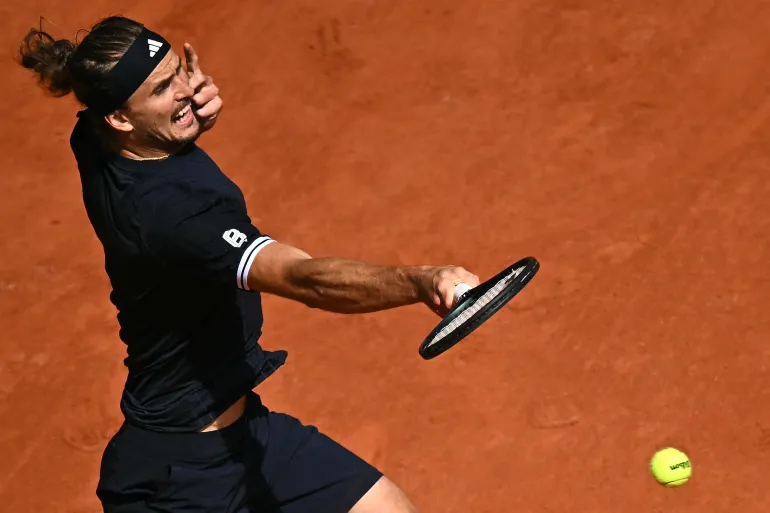
Alexander Zverev has finally secured his maiden Grand Slam title with a dramatic five-set victory over Italy’s Flavio Cobolli in the French Open final on Sunday.
The second seed became the first German man to win a major tournament since Boris Becker at the 1996 Australian Open with a 6-1, 4-6, 6-4, 6-7 (5/7), 6-1 victory after four hours and 16 minutes.
Recommended Stories
list of 4 itemsend of list
“This court is so special to me in so many ways… but now finally, it’s a happy end,” said Zverev, who suffered a season-ending ankle injury in the 2022 semifinal against Rafael Nadal on Court Philippe-Chatrier, where he was also edged out in five sets by Carlos Alcaraz in the 2024 final.
It was Zverev’s fourth Grand Slam final and second at Roland-Garros after some heartbreaking near misses in his career.
“We’ve been through losses, we’ve been losers at times as well in the most important moments,” he said during the trophy presentation, turning to his team.
“But at the end of the day, we’re Grand Slam champions now, and that’s what counts.”
Cobolli, the 10th seed, was bidding to become the first Italian man since Adriano Panatta to win the French Open in 50 years.
The 24-year-old had never even played a Slam semifinal before, let alone a final, after his last-four opponent Matteo Arnaldi withdrew from the tournament due to illness.
“It’s not easy for me to talk right now,” said Cobolli after receiving his runner-up trophy from Panatta, before addressing Zverev.
“I’m happy for you, but I’m also sad because I was close and I feel it. So now you’ve achieved your dream, let me win the next time.”
Both players appeared to struggle with nerves at various points in the match, especially Cobolli during an error-strewn first set.
But Zverev’s greater experience showed in a deciding set that was far tenser than the scoreline suggested, as he managed to get over the line.
The 29-year-old was handed a golden opportunity to break his Grand Slam duck by the injury-enforced absence of reigning champion Alcaraz and surprise early exits for Jannik Sinner and Novak Djokovic.
The world number three was not always in control, making 54 unforced errors, but did enough to finally shed the tag of being one of the best players to have never won a major.
Zverev had previously also lost in six Slam quarterfinals and seven semifinals, alongside his three final defeats.
The most agonising miss of all was his first major final, when he blew a two-set lead and failed to serve for the championship against Dominic Thiem at the 2020 US Open.
The now-retired Thiem was watching on from the stands at Roland-Garros as Zverev belatedly put the memories of that match to bed six years later.

Cobolli’s nervy start
Cobolli made a nervy start and appeared to be struggling to deal with the occasion as the first set quickly got away from him in 39 minutes and he made 16 unforced errors.
He managed to settle into the match with three successive holds of serve in the second set, and then made his move out of nowhere to break in the seventh game.
Zverev had been completely untroubled on serve previously, but produced a scrappy game featuring two double-faults and a wild forehand on break point before turning to gesticulate angrily towards his coaching staff.
Cobolli started to grow in confidence and served out the set to breathe life into the final.
A higher-quality third set disappeared from Cobolli’s grasp in the 10th game, though, as from 30-0 up, he lost four points in a row, including a poor forehand that flew well wide on set point.
The world number 14, who will climb into the top 10 for the first time next week, hit straight back with a break in the opening game of the fourth set.
He could not pull away in the set, though, as both players ended up being broken twice, including Cobolli when he served for it at 5-4.
But the Italian rallied himself to push it into a tie-break, which he took to force a decider with a blistering forehand winner on his second set point.
Following a delay before the start of the final act after Cobolli left the court, Zverev struck first blood with a break in the first game.
Cobolli’s hopes were finally all but extinguished when he missed a break-back point and then dropped serve again to slip 3-0 down.
Zverev staved off three more break points in the fourth game and eased to victory from there, falling to the clay in celebration after Cobolli shanked an overhead on his second championship point.

Lawsuit seeks to stop Trump’s planned White House UFC match | Donald Trump News
Legal challenge claims US president did not seek proper approval for fighting event to be held on his 80th birthday.

Published On 7 Jun 2026
A lawsuit is seeking to stop United States President Donald Trump from hosting an Ultimate Fighting Championship (UFC) match at the White House.
The lawsuit, lodged on behalf of two Virginia residents, is the first known legal challenge to the mixed martial arts event, which is set to be hosted on June 14.
Recommended Stories
list of 3 itemsend of list
The event will take place on Trump’s 80th birthday. It is also pegged to the 250th anniversary of the signing of the Declaration of Independence, which the US will commemorate on July 4 of this year.
The legal challenge filed on Saturday maintained that Trump did not receive proper authorisation to host the fight.
It argued that the event violated US National Park Service regulations prohibiting sporting events on federal parklands, that Congress did not consent to the construction of a towering arch overlooking the event space, and that no environmental review was conducted before the construction.
“This is fundamentally a private, commercial, corrupt use of our most sacred national monuments for private gain,” said Brendan Ballou, a lawyer for the plaintiffs. “And that is what is motivating this lawsuit.”
In a statement to the Associated Press, the White House dismissed the lawsuit as “obstructionist, baseless, and dilatory”.
The White House maintained the UFC fight was “no different than the various other White House-hosted events on the South Lawn and properly permitted events on the Ellipse and National Mall throughout the year”.
Crews have been erecting an octagon-shaped fighting cage on the South Lawn of the White House, with Trump saying the project will include a “5,000-seat arena right outside the front door of the White House”.
Attendance at the fight will be invite-only and closely monitored. The Military Times news site reported earlier this week that 1,200 service members given tickets to the event must meet certain waist-to-height ratio standards.
Public viewing areas will also be set up at the nearby Ellipse.
Trump has long been closely involved with both professional wrestling and UFC, with his casinos and event spaces hosting past events.
He regularly appeared as a version of himself in World Wrestling Entertainment (WWE) events throughout the 1990s and early 2000s. His current secretary of education, Linda McMahon, is a co-founder of the WWE.
Trump has more recently embraced UFC, which is currently owned by the same company, TKO Group Holdings, as the WWE.
UFC president Dana White has been a close ally of Trump’s.
Political analysts have credited Trump’s embrace of the sport with reaching disaffected male voters in the US, particularly during his 2024 election campaign.

Claire Danes’ ‘Beast in Me’ Emmy chances, by the numbers
Claire Danes’ performance in Netflix’s “The Beast in Me” appears like a lock for an Emmy nomination for lead actress in a limited series or TV movie. In typical fashion, Danes left it on all the floor in portraying a reclusive author who suspects her developer neighbor (Matthew Rhys) of misdeeds.
1995
The Golden Globes rarely get it as right as they did in awarding Danes the drama series best actress award, at 15, for ABC’s “My So-Called Life.”
19
The lifespan of the authentic teen drama that introduced viewers to Danes’ unique emotional translucence, counted in episodes.
1st
Danes also received an Emmy nomination for the series — the first of eight for acting so far.
16
She is the second-youngest Emmy nominee ever for lead actress in a drama series, between Melissa Sue Anderson (15, for “Little House on the Prairie”) and Kristy McNichol (17, for “Family”).
3
Danes won an Emmy for playing the real-life animal science professor in the HBO movie “Temple Grandin,” and two for playing complex CIA officer Carrie Mathison on Showtime’s “Homeland.”
31
Span of years between Danes’ first and 2026 nominations, if she receives one.
47
Danes’ Emmy longevity may not equal the likes of Carol Burnett, nominated in 2024 for “Palm Royale” 62 years after her first, but it’s mighty impressive for someone Danes’ age.
49
There’s even a contender in her category this year whose span between nominations would be longer than Danes’ lifetime: Sally Field, who appears in Netflix’s TV movie “Remarkably Bright Creatures.”

World Cup poses an unprecedented security challenge at a fraught moment
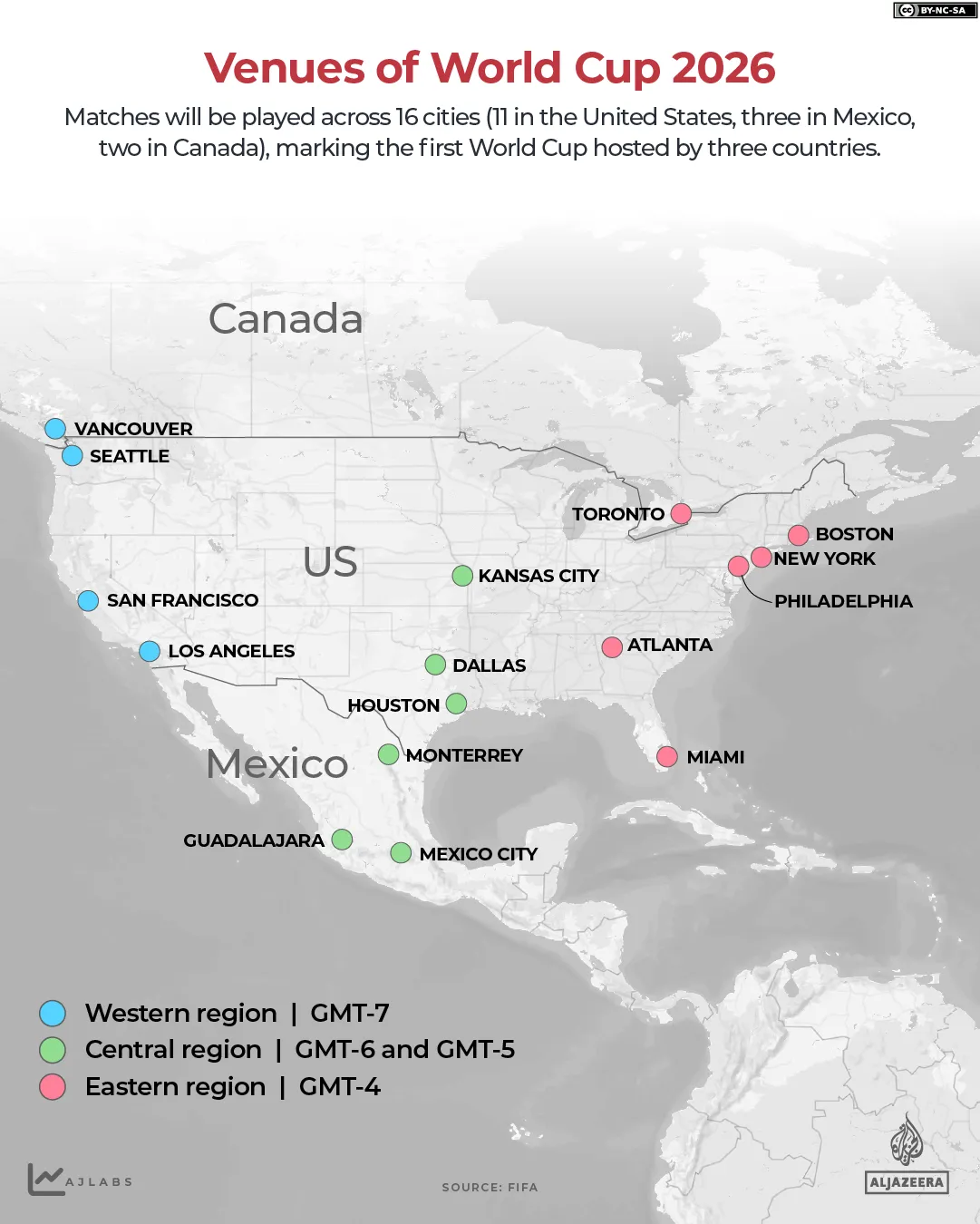
NEW YORK — The World Cup, a 48-team, 104-match behemoth kicking off this week in Los Angeles and across 15 other cities in the United States, Mexico and Canada, presents an unprecedented security challenge, with more countries, games and a larger footprint than ever before.
It also comes against the backdrop of the U.S. and Israel’s war with Iran, mounting political violence in President Trump’s orbit and growing fears of artificial intelligence-fueled disruptions, creating a complex threat environment for authorities.
Overseeing the sprawling security apparatus is a legion of federal agencies, state and local police departments and private entities. Their responsibilities range from securing stadiums and fan zones to escorting teams and protecting dignitaries.
Their tools include hunter drones that can shoot nets over objects in restricted airspace, bag-inspecting robot dogs, giant X-ray trucks and thousands of AI-powered cameras trained on public spaces soon to be thronged by fans.
In the U.S., it’s “78 Super Bowls over 39 days,” said Andrew Giuliani, executive director of Trump’s World Cup task force, which is overseeing the multiagency effort.
“There’s never been a summer like this in American history from a security angle,” said Giuliani, son of former New York City Mayor Rudolph W. Giuliani. “We’re as prepared as we can be.”
Collaborative effort
The tournament has the same high-level federal security designation as the Super Bowl, just below a presidential inauguration or a national political convention, ensuring federal, state and local coordination. It coincides with other major events linked to the 250th anniversary of America’s founding.
So far, Giuliani said, there are no credible threats.
The Department of Homeland Security, focused on Trump’s immigration enforcement crackdown and with a funding lapse only recently resolved, estimates that as many as 7 million people will visit the United States for the World Cup.
The U.S. Secret Service, under scrutiny after security breaches and attempts on Trump’s life, is in charge of protecting world leaders who show up to cheer on their countries. Trump has expressed interest in attending a match.
“I feel very comfortable where we’re at, and we feel like we have a zero-fail mission,” Homeland Security Secretary Markwayne Mullin told Congress last week, noting that the Secret Service was understaffed by about 860 agents. “But it’s going to be complicated.”
Officials have indicated they are confident they can keep Trump safe because they will be integrating his usual security into the robust World Cup plan on days he may watch a match.
The FBI has spent two years developing its security plan, incorporating lessons from other major events such as the Macy’s Thanksgiving Day Parade and New Year’s Eve ball drop in New York and testing them at smaller ones, including last weekend’s Israel Day parade in the city.
“We prepare for the worst day,” FBI Special Agent in Charge Amit Kachhia-Patel in New York told the Associated Press. “And that’s how we go into any single event.”
To help cover security costs, the Federal Emergency Management Agency has distributed $625 million to the 11 U.S. host cities. An additional $250 million is being directed toward tracking and neutralizing suspect drones.
The disbursement of those funds was held up by the department’s funding delay in Congress, which the Trump administration has argued hindered security planning.
Others involved in the planning effort said the federal government could have played a more hands-on role even before the partial shutdown.
John Cohen, a former senior Homeland Security official who has been briefing state leaders before the matches, said the government was largely absent from planning meetings last year and did not begin sharing threat intelligence with host regions until recently.
“With an event of this magnitude, one would expect the federal government would’ve played a more active role,” Cohen said. “It felt like a missed opportunity to showcase that collaboration.”
Evolving threats from drones and AI
In January, thousands of officials involved in World Cup security gathered for exercises simulating crowd surges, vehicle attacks and mass shootings.
A month later, the U.S. and Israel launched a war with Iran.
“The security picture fundamentally changed,” said Stefano Ritondale, chief intelligence officer at Artorias, a defense intelligence company not involved in the security preparations. “There’s a major difference in preparing for a lone-wolf radical who rams his car into a public place and a terrorist who is bankrolled by a foreign country we’re at war with.”
Among the greatest concerns are drones.
Since the last World Cup in Qatar in 2022, drones have become a prominent weapon in conflicts including Russia’s war in Ukraine and Hamas’ attack on Israel on Oct. 7, 2023.
“If there is one threat that keeps me up at night, it is from drones,” said New York City Police Commissioner Jessica Tisch, whose department is partnering with the FBI on drone mitigation.
Drones are prohibited over stadiums and fan zones, and Kachhia-Patel said the FBI has a “full suite of options” to thwart incursions. They include agents monitoring the sky and a “variety of means” to safely down the devices, he said without elaborating.
Before this year’s World Cup, the growing sophistication of AI videos was a particular concern, with officials warning that state actors can harness the technology to sow misinformation and panic.
On match days, the FBI will activate joint operations centers in each host city, bringing together local, state and federal law enforcement agencies to monitor and investigate threats.
“If there’s a video that shows an explosion going off at a site, and it’s AI-generated, we have people on the ground who can validate whether or not that’s true,” Kachhia-Patel said.
Opportunity for private tech
Some AI companies have pitched themselves to police departments in host cities, promising to comb through data and surveillance on game days to prevent threats, including unruly fan behavior.
“We know sports fanaticism around here in terms of the NFL and baseball to some extent, but nothing like international soccer,” said Jake Becchina, a police spokesperson in Kansas City, Mo., which is hosting six matches.
The department has contracted with Peregrine Technologies, which promises to sift through police data and publicly available information such as team practice locations and the country affiliation of popular bars, to get ahead of possible conflict.
In Dallas, a recent $120-million tech upgrade will give local police body cameras capable of real-time translations, helping law enforcement communicate with international visitors soon to descend on the region.
Several drone detection and mitigation companies are joining efforts to help federal agencies secure the skies.
One of those companies, Fortem, has claimed to have signed a multimillion-dollar contract with the Department of Homeland Security before the World Cup for an unusual drone mitigation strategy: quadcopters that can shoot nets at encroaching drones to trap them in midair. A Homeland Security spokesman declined to discuss the contract.
Just as the teams will aim to perform their best on the pitch, Giuliani said the security planning was a unique chance to “show off American exceptionalism.”
“If we do our job right,” Giuliani added, “nobody will be talking about security at the World Cup.”
Offenhartz, Sisak and Santana write for the Associated Press. Offenhartz and Sisak reported from New York, Santana from Washington. AP writer Alanna Durkin Richer in Washington contributed to this report.
OPEC to increase oil output amid continued closure of Strait of Hormuz
OPEC on Sunday announced that its member nations will increase oil production by nearly 200,000 barrels per day in July, despite the Strait of Hormuz remaining closed and it being very difficult to ship it anywhere out of the Middle East. Photo by Ismael Mohamad/UPI | License Photo
June 7 (UPI) — The Organization of the Petroleum Exporting Countries on Sunday agreed to increase production by nearly 200,000 barrels per day despite the Strait of Hormuz remaining closed, making it near-impossible to ship any of it.
Ordinarily, OPEC increasing oil production among the group of nations that comprise it would lower its cost, but experts have called the move largely symbolic because of the ongoing war in Iran, The New York Times and Wall Street Journal reported.
The Strait of Hormuz, which 20% of the world’s oil supply ordinarily would pass through daily, has been closed since early in the war as part of Iran’s effort to counter the war launched by the United States and Israel in February.
The OPEC members that agreed to the 188,000-barrel increase for July — the fourth month in a row that the group is increasing production — include Saudi Arabia, Russia, Iraq, Kuwait, Algeria, Kazakhstan and Oman.
The countries agreed to the increase as part of the group’s “commitment to support oil market stability” and said the latest production increase would also allow the participating nations to “accelerate their compensation,” OPEC said in a statement.
“The countries will continue to closely monitor and assess market conditions, and in their continuous efforts to support market stability, they reaffirmed the importance of a cautious approach,” the group said in the statement.
The Trump administration continues to negotiate an end to the war that would lead to the reopening of the Strait, in addition to working to limit Iran’s ability to build a nuclear weapon, amid a shaky weeks-long cease-fire.

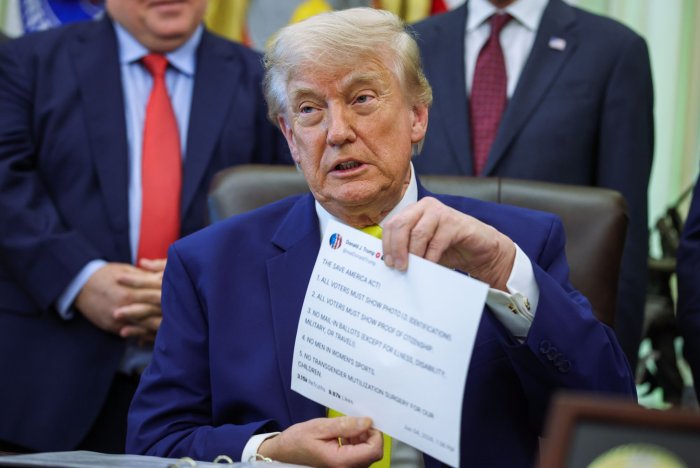
President Donald Trump discusses renovations to the Lincoln Reflecting Pool and makes an announcement on coal in the Oval Office at the White House on Thursday. Photo by Samuel Corum/UPI | License Photo

Eriksen conscious after collapsing in Denmark game
Christian Eriksen collapsed during Denmark’s friendly against Ukraine but is now conscious, says the Danish Football Association (DBU).
Source link

Tony Awards 2026: Full list of winners
The 79th Tony Awards return to Radio City Music Hall on Sunday to celebrate the best of Broadway. Pop-star Pink hosts the show for the first time, and while she hasn’t been on Broadway yet herself, her songs have been featured in the musicals “Moulin Rouge!” and “& Juliet.”
The broadcast airs air live beginning at 5 p.m. on CBS and Paramount+, but don’t sleep on the annual pre-show, “The Tony Awards: Act One,” where the first round of Tonys will be presented. It will stream live on free service Pluto TV starting at 3:35 p.m. and be hosted by Tony Award nominee Laura Benanti and actor Tituss Burgess.
Times staff writer Eloise Rollins-Fife wrote a complete guide on how to watch and everything you need to know.
Play
“The Balusters”
“Giant”
“Liberation”
“Little Bear Ridge Road”
Musical
“The Lost Boys”
“Schmigadoon!”
“Titaníque”
“Two Strangers (Carry a Cake Across New York)”
Revival of a play
Arthur Miller’s “Death of a Salesman”
Gina Gionfriddo, “Becky Shaw”
Duncan Macmillan and Jonny Donahoe, “Every Brilliant Thing”
“Fallen Angels”
Robert Icke, “Oedipus”
Revival of a musical
“Cats: The Jellicle Ball”
“Ragtime”
Richard O’Brien’s “The Rocky Horror Show”
Performance by an actress in a leading role in a musical
Sara Chase, “Schmigadoon!”
Stephanie Hsu, “The Rocky Horror Show”
Caissie Levy, “Ragtime”
Marla Mindelle, “Titaníque”
Christiani Pitts, “Two Strangers (Carry a Cake Across New York)”
Performance by an actor in a leading role in a musical
Nicholas Christopher, “Chess”
Luke Evans, “The Rocky Horror Show”
Joshua Henry, “Ragtime”
Sam Tutty, “Two Strangers (Carry a Cake Across New York)”
Brandon Uranowitz, “Ragtime”
Performance by an actress in a leading role in a play
Rose Byrne, “Fallen Angels”
Carrie Coon, “Bug”
Susannah Flood, “Liberation”
Lesley Manville, “Oedipus”
Kelli O’Hara, “Fallen Angels”
Performance by an actor in a leading role in a play
Will Harrison, “Punch”
Nathan Lane, “Death of a Salesman”
John Lithgow, “Giant”
Daniel Radcliffe, “Every Brilliant Thing”
Mark Strong, “Oedipus”
Book of a musical
David Hornsby and Chris Hoch, “The Lost Boys”
Cinco Paul, “Schmigadoon!”
Marla Mindelle, Constantine Rousouli and Tye Blue, “Titaníque”
Jim Barne and Kit Buchan, “Two Strangers (Carry a Cake Across New York)”
Original score
Music: Caroline Shaw, “Death of a Salesman”
Music: Steve Bargonetti, “Joe Turner’s Come and Gone”
Music and lyrics: The Rescues, “The Lost Boys”
Music and lyrics: Cinco Paul, “Schmigadoon!”
Music and lyrics: Jim Barne and Kit Buchan, “Two Strangers (Carry a Cake Across New York)”
Performance by an actor in a featured role in a play
Christopher Abbott, “Death of a Salesman”
Danny Burstein, “Marjorie Prime”
Brandon J. Dirden, “Waiting for Godot”
Alden Ehrenreich, “Becky Shaw”
Ruben Santiago-Hudson, “Joe Turner’s Come and Gone”
Richard Thomas, “The Balusters”
Performance by an actress in a featured role in a play
Betsy Aidem, “Liberation”
Marylouise Burke, “The Balusters”
Aya Cash, “Giant”
Laurie Metcalf, “Death of a Salesman”
June Squibb, “Marjorie Prime”
Performance by an actor in a featured role in a musical
Ali Louis Bourzgui, “The Lost Boys”
André De Shields, “Cats: The Jellicle Ball”
Bryce Pinkham, “Chess”
Ben Levi Ross, “Ragtime”
Layton Williams, “Titaníque”
Performance by an actress in a featured role in a musical
Shoshana Bean, “The Lost Boys”
Hannah Cruz, “Chess”
Rachel Dratch, “The Rocky Horror Show”
Ana Gasteyer, “Schmigadoon!”
Nichelle Lewis, “Ragtime”
Scenic design of a play
Hildegard Bechtler, “Oedipus”
Takeshi Kata, “Bug”
David Korins, “Dog Day Afternoon”
Chloe Lamford, “Death of a Salesman”
David Rockwell, “Fallen Angels”
Scenic design of a musical
dots, “The Rocky Horror Show”
Soutra Gilmour, “Two Strangers (Carry a Cake Across New York)”
Rachel Hauck, “Cats: The Jellicle Ball”
Dane Laffrey, “The Lost Boys”
Scott Pask, “Schmigadoon!”
Costume design of a play
Brenda Abbandandolo, “Dog Day Afternoon”
Qween Jean, “Liberation”
Jeff Mahshie, “Fallen Angels”
Emilio Sosa, “The Balusters”
Paul Tazewell, “Joe Turner’s Come and Gone”
Costume design of a musical
Linda Cho, “Ragtime”
Linda Cho, “Schmigadoon!”
Qween Jean, “Cats: The Jellicle Ball”
Ryan Park, “The Lost Boys”
David I. Reynoso, “The Rocky Horror Show”
Lighting design of a play
Isabella Byrd, “Dog Day Afternoon”
Natasha Chivers, “Oedipus”
Stacey Derosier, “Joe Turner’s Come and Gone”
Heather Gilbert, “Bug”
Heather Gilbert, “The Fear of 13”
Jack Knowles, “Death of a Salesman”
Lighting design of a musical
Kevin Adams, “Chess”
Jane Cox, “The Rocky Horror Show”
Donald Holder, “Schmigadoon!”
Adam Honoré, “Cats: The Jellicle Ball”
Adam Honoré and Donald Holder with 59 Studio, “Ragtime”
Jen Schriever and Michael Arden, “The Lost Boys”
Sound design of a play
Justin Ellington, “Joe Turner’s Come and Gone”
Tom Gibbons, “Oedipus”
Lee Kinney, “The Fear of 13”
Josh Schmidt, “Bug”
Mikaal Sulaiman, “Death of a Salesman”
Sound design of a musical
Kai Harada, “Cats: The Jellicle Ball”
Kai Harada, “Ragtime”
Adam Fisher, “The Lost Boys”
Brian Ronan, “The Rocky Horror Show”
Walter Trarbach, “Schmigadoon!”
Direction of a play
Nicholas Hytner, “Giant”
Robert Icke, “Oedipus”
Kenny Leon, “The Balusters”
Joe Mantello, “Death of A Salesman”
Whitney White, “Liberation”
Direction of a musical
Michael Arden, “The Lost Boys”
Lear deBessonet, “Ragtime”
Christopher Gattelli, “Schmigadoon!”
Tim Jackson, “Two Strangers (Carry a Cake Across New York)”
Zhailon Levingston and Bill Rauch, “Cats: The Jellicle Ball”
Choreography
Christopher Gattelli, “Schmigadoon!”
Ellenore Scott, “Ragtime”
Ani Taj, “The Rocky Horror Show”
Omari Wiles and Arturo Lyons, “Cats: The Jellicle Ball”
Lauren Yalango-Grant and Christopher Cree Grant, “The Lost Boys”
Orchestrations
Doug Besterman and Mike Morris, “Schmigadoon!”
Ethan Popp, Kyler England, Adrianne “AG” Gonzalez and Gabriel Mann, “The Lost Boys”
Lux Pyramid, “Two Strangers (Carry a Cake Across New York)”
Brian Usifer, “Chess”
Andrew Lloyd Webber, David Wilson, Trevor Holder and Doug Schadt, “Cats: The Jellicle Ball”

Iran’s soccer team arrives in Mexico for training ahead of World Cup matches in L.A.
TIJUANA — Iran’s soccer team arrived in Mexico on Sunday morning for training ahead of the World Cup, before its first two group matches at SoFi Stadium in Inglewood later this month.
Ehsan Hajsafi was the first player to exit the plane with markings for German charter airline USC, which arrived at about 5:05 a.m. He led the team, dressed in blue blazers over white T-shirts, through a brief security check with Mexican officials and dogs before boarding a bus.
The bus stopped briefly at the entrance to the Tijuana airport, where around 20 or so Iran fans waved flags.
The team’s participation in the World Cup, jointly hosted by the United States, Mexico and Canada, has been complicated by the Iran war. Problems with processing visas earlier led Iran to move its training base from Tucson to Tijuana.
The team has been training in the Turkish city of Antalya. It flew directly to Mexico on a private jet from the Mediterranean city’s airport.
Some members of their entourage were reportedly still without U.S. visas, according to Iranian state television Saturday. Those include the Iranian Football Federation’s secretary-general, Hedayat Mombeini, and its vice president, Mehdi Mohammad Nabi.
Iran plays its first two games at SoFi Stadium in Inglewood against New Zealand on June 15 and Belgium on June 21, then heads to Seattle to face Egypt on June 26. Iran and the U.S. could meet in the Round of 32 on July 3 in Arlington, Texas, if both teams finish second in their groups.
In March, President Trump discouraged Iran from participating in the tournament, saying he didn’t think it was “appropriate” and raising concerns over players’ “life and safety.” A day later, Iran’s national team countered, saying “no one can exclude” it from playing.
Iran finalized its team on Monday, including 17 home-based players whose clubs haven’t played since February because of the war. Star forward Sardar Azmoun was dropped in March, reportedly because of a social media post that angered Iranian authorities during the war.
Iran’s sports minister said in March that it would “not be possible” for the team to participate in the World Cup, but the Islamic Republic’s soccer federation said in May that it was moving ahead with a team. The federation had insisted that all players and staff be granted visas, including those who had military service in the Islamic Revolutionary Guard Corps.
Bolivia’s legislature passes law allowing use of troops against protesters | Protests News
New law grants president power to use military to clear roadblocks set up amid weeks of anti-government demonstrations.
Published On 7 Jun 2026
Bolivia’s legislature has passed a law granting President Rodrigo Paz the authority to use the military to clear roadblocks set up by antigovernment protesters.
The legislation passed in Bolivia’s Chamber of Deputies on Sunday following an overnight debate. It had previously been approved by the Senate and was expected to be signed into law by Paz.
Recommended Stories
list of 3 itemsend of list
“This law is hereby passed,” announced Roberto Castro, President of the Chamber of Deputies.
The military has so far only been used in support roles for anti-riot police during weeks of demonstrations calling for Paz, the centre-right leader backed by the US, to step down.
About 100 roadblocks have been set up across the country in recent weeks. Authorities have said the road blockades have led to food and medicine shortages.
On Saturday, dozens of riot police backed by military vehicles fired tear gas as they attempted to clear a road in the town of San Julian.
Protesters threw stones and burned tyres to try to halt the police advance, said an AFP reporter at the scene.
The new law would allow soldiers to use force against protesters, and also grants them a “presumption of legality” in conflict situations. That means their actions will be deemed lawful unless proven otherwise.
It comes after Bolivia’s legislature voted last month to repeal a 2020 law that restricts the use of the military to crack down on protests.
Farmers, miners and transportation unions have been among those leading the protests. The demonstrations come amid widespread unrest over rising inflation, low wages and Paz’s move to abolish fuel subsidies.
Paz, who was elected last year, has charted a course as a pro-business leader, vowing to guide the country through an ongoing economic crisis.
He has received the backing of the US, with the administration of the US President Donald Trump’s so-called “Shield of the Americas” regional coalition vowing support during protests..
“We stand with Paz’s democratic government as it fights back against attempts to drag Bolivia backwards through cynical efforts to prevent the delivery of food, medicine and other vital supplies to the Bolivian people through fake road blockades,” said the alliance members, who have vowed to take a militaristic response to crime in Latin America
Italian activists from Gaza humanitarian aid flotilla say Israel tortured them – Middle East Monitor
Italians who took part in a humanitarian aid flotilla for Gaza said Wednesday that when the Israeli army attacked them last month in the Mediterranean in violation of international law, they abducted some activists, and subjected them to ill-treatment amounting to torture, Anadolu reports.
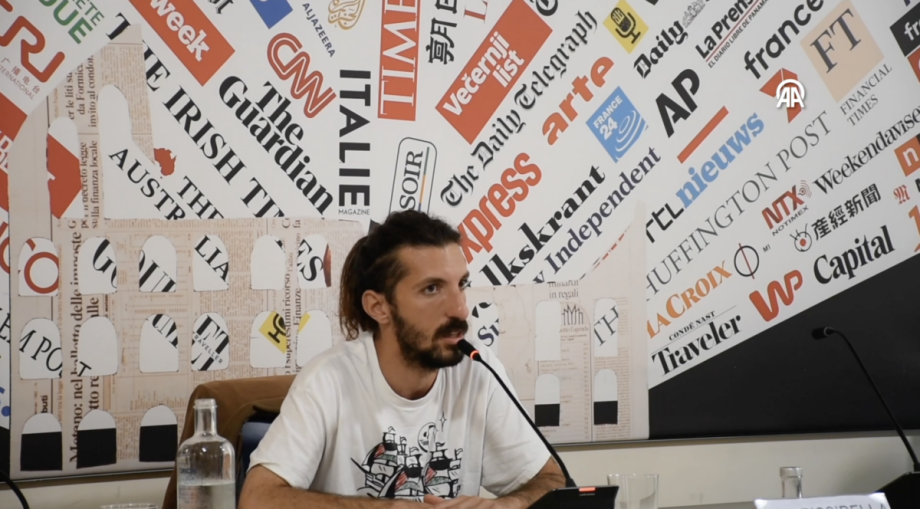
“This time, the Israeli army responded to the flotilla much more violently” than in past humanitarian efforts, Antonio La Piccirella, who took part in the Global Sumud Flotilla’s 2026 Spring Mission, told a press conference in Rome.
“There were two attacks, one of them off the coast of Europe. In the attack between Italy and Greece, they abducted two of our members, further violating international law. The other intervention was carried out in broad daylight and lasted for one-and-a-half days.”
La Piccirella said Israel last year allocated $180 million to anti-flotilla propaganda in order to fight them and build up a sense of “impunity,” and that this year they spent far more, some $760 million.
This propaganda was carried out through disinformation and aimed to create communities sympathetic to Israel in Europe and the US, he said.
Emphasizing that they would continue to take action in the future, La Piccirella said: “We are concerned with actions against the naval blockade of Palestine (and promoting) humanitarian aid, and international law.
“The international situation is constantly changing, and so is our strategy. So we repeat that we will definitely continue to do something,” he said.
– Forced to kneel and be humiliated
Italian journalist Alessandro Mantovani, who also took part in the spring mission, stressed that after being detained he was not even allowed to say that he was a journalist.
“From the very beginning, we were beaten and forced into humiliating positions. When we were taken to their military ships, we were pushed down face-first onto the deck, tied up, then forced to kneel and kept in the same extremely uncomfortable position for hours. When we were brought to the ship that we all called the prison ship, we were systematically beaten,” he said.
The face-down positions he described fit video footage posted online by Israeli National Security Minister Itamar Ben-Gvir, in which the activists were forced to kneel and were subjected to abusive language, mistreatment which drew fierce criticism from numerous countries.
Mantovani said he still has problems with his jaw because of the blows he received and that his jaw may have been dislocated.
The Italian journalist said the Israeli army treated Turkish activists especially badly.
“I think I can say that the Turks were treated even worse than the others; torture also has a geopolitical dimension,” he said.
Turkish leaders have been at the international forefront of condemning Israel’s genocide in Gaza as well as the famine and near-starvation of its populace due to a long-standing blockade of food, medicine, and other humanitarian supplies. The blockade was due to be relaxed in recent months, but many rights groups and international observers say the situation has improved little if at all.
Mantovani pointed out that the Global Sumud Flotilla was detained at night during its first voyage last year, while during this latest voyage it was detained in broad daylight.
He stressed that the Israeli army was not ashamed to show that it attacked unarmed people with weapons.

‘Scary Movie’ laughs its way to a first-place finish at the box office
With the Wayans brothers firmly back in the driver’s seat, horror parody “Scary Movie” muscled its way past He-Man for the top spot at the box office this weekend.
The reboot of the 2000s-era franchise — or “rebootiquel,” as the movie calls itself — brought in $55 million in the U.S. and Canada for a worldwide total of $105.5 million, according to studio estimates. The movie, which had a production budget of $30 million, beat studio expectations and marks the return of the Wayans brothers to “Scary Movie.”
The franchise was developed by Marlon Wayans, Shawn Wayans and Keenen Ivory Wayans. But after 2001’s “Scary Movie 2,” the Wayans got in a pay dispute with former Miramax executives Bob and Harvey Weinstein. The Wayans have said the Weinsteins did not tell them that 2003’s “Scary Movie 3” would be made without them. The franchise then continued with fourth and fifth installments.
After former MGM film executive Jonathan Glickman was named chief executive of Miramax in 2024, he reached out to Marlon Wayans to see if he’d be interested in reviving “Scary Movie.”
“Always dreamt of having this moment again,” Wayans said, while thanking Glickman and executive producer Marc Weinstock during a short speech at the movie’s premiere. “I thank you guys for having the vision to go, there’s only one way to do the next ‘Scary Movie,’ and that’s to bring the Wayans family back.”
Miramax led the production and financing of the film, while Paramount Pictures was the distributor.
Amazon MGM Studios’ “Masters of the Universe” came in second at the domestic box office with $29.3 million, in Mattel Studios’ first film in theaters since the 2023 smash hit “Barbie.” Globally, the movie made $54 million.
The action adventure movie had a production budget of about $170 million and aimed to reintroduce the ‘80s-era action hero “He-Man” to a new audience, while also driving the nostalgia of adults who played with the franchise toys or watched the original film and series. The movie is part of Mattel Inc.’s strategy to continue extending its toy brands into the entertainment arena.
Mattel Chief Executive Ynon Kreiz said last week that “Masters of the Universe” didn’t need to match the success of “Barbie” “to have a meaningful economic impact on the company.”
A24’s runaway hit “Backrooms” came in third at the box office this weekend, continuing its strong performance with a haul of $25.9 million. Focus Features’ “Obsession” ($25.6 million) and another YouTube-native property, “The Amazing Digital Circus: The Last Act,” ($12.7 million) rounded out the top five at the box office, according to Comscore data.

Credit markets shrug off geopolitical turmoil as investors seek yield, SocGen says
Credit markets shrug off geopolitical turmoil as investors seek yield, SocGen says
Source link

The Times’ softball player of the year: Liliana Escobar of JSerra
When her team needed her the most, JSerra High pitcher Liliana Escobar delivered a gritty 12-strikeout effort in the Southern Section Division 1 finals against La Mirada, leading the Lions to a 3-2 win and their first CIF title.
Her ability to rise to the occasion time and again while playing in the highest division is why Escobar is The Times’ high school softball player of the year, and no one is more proud of the senior than JSerra head coach Katie Stith.
“Liliana’s one of the best players I’ve ever coached,” Stith said. “She’s talented, of course, but what stands out is the type of teammate she is. She’s so wise for her age and always made it a point to look out for the team. She wanted to win for them.”
Escobar did her fair share of winning in her prep career. She had 14 victories as a junior was selected the Division 2 player of the year after posting a 1.20 earned-run average while striking out 239 batters in 140 innings. This spring she improved to 18-5 and gave up only 26 earned runs with 264 strikeouts and 47 walks in 153 innings pitched. She signed with the University of Florida on Nov. 12, one month after committing to one of the most successful SEC programs.
“What she’s accomplished the last two years is just incredible,” Stith said of Escobar, who plays travel ball for the OC Batbusters. “After battling an injury and having to sit out her sophomore season she could’ve let that defeat her, but she fought hard to be at her best.”
Escobar recorded 10 or more strikeouts 15 times this season and outdueled Orange Lutheran ace Rylee Silva twice in Trinity League action, but perhaps her most impressive performance was a three-hit shutout with 14 strikeouts in the CIF-SS Division 1 semifinals against defending champion Norco — her second win in three outings versus the Cougars this spring.
She threw a five-hitter in the Lions’ playoff opener against Yucaipa and lasted all eight innings with 10 strikeouts in a 5-4 triumph over Ayala in the second round. She struck out 10 again and gave up only three hits in a 1-0 quarterfinal victory over Garden Grove Pacifica.
“Liliana becomes so courageous and competitive when she gets in the circle,” Stith added. “She believes in herself and executes every pitch, trusting the coaches every step of the way. I’m grateful for the time I got to spend coaching her and the example she set for those to follow. This is just the beginning for her. … I think she’ll do great things for the Gators.”
Kimi Antonelli wins delayed Monaco Grand Prix to extend F1 lead | Motorsports News
Antonelli takes his fifth Grand Prix win in a row in race interrupted by crashes after asphalt breaks apart.
Published On 7 Jun 2026
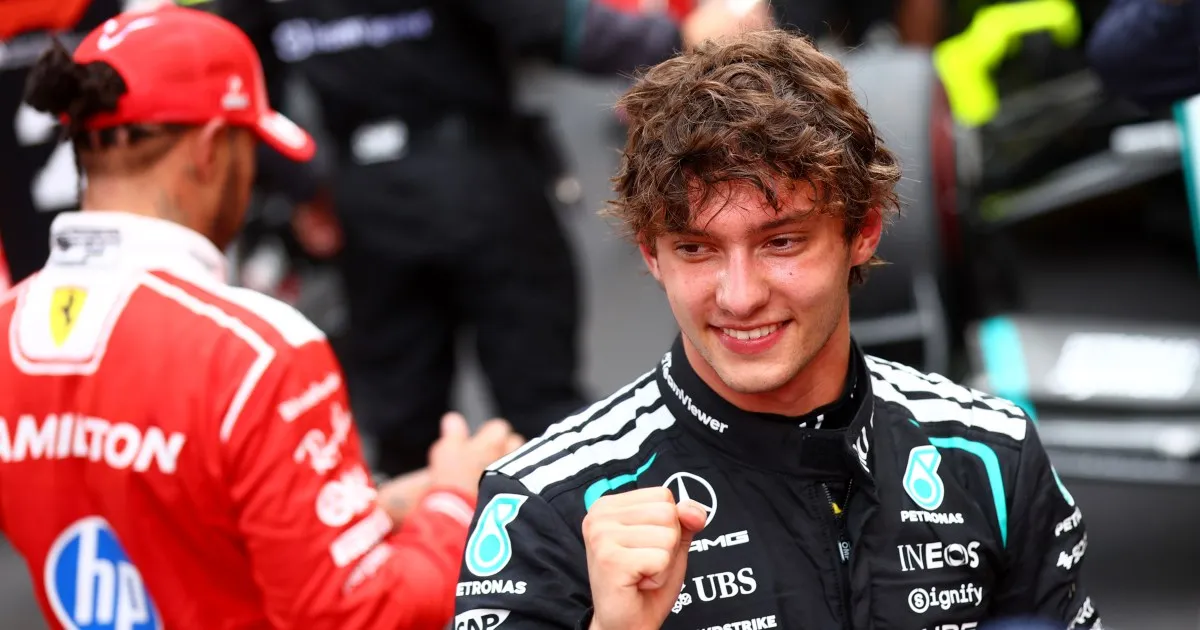
Formula One championship leader Kimi Antonelli stayed ice-cool to win a chaotic Monaco Grand Prix and extend his run of victories this season to five.
The 19-year-old Italian built a commanding lead on Sunday after starting from pole in his Mercedes but that evaporated after a late red flag to inspect a crumbling surface at the final corner following a crash that took out Ferrari’s Charles Leclerc.
Recommended Stories
list of 4 itemsend of list
After a delay of about 40 minutes while repairs were carried out, the race resumed with a standing start but Antonelli remained unfazed as he became the youngest-ever winner of the iconic race.
Ferrari’s Lewis Hamilton was runner-up for the second successive Grand Prix with Red Bull’s Isack Hadjar provisionally third, although he was one of a number of drivers under investigation for a variety of infringements.
Hamilton, who equalled the late Ayrton Senna’s eight Monaco podiums, moved above Antonelli’s teammate George Russell into second place in the standings, 66 points behind Antonelli.
“It’s been an incredible weekend and an incredible race,” said Antonelli, who was not even born the last time an Italian won the Monaco Grand Prix – Jarno Trulli in 2004.
“We had incredible pace and it all came so natural and that gave me the confidence to push.”
A year after finishing last on his F1 debut at Monaco, Antonelli showed incredible poise to shrug off the red flag drama that meant he effectively had to win two races.
“I wasn’t super keen on re-starting but once the notification came out I just gathered my emotions and re-focused again. Once I got away and was P1 into the first corner I could enjoy the last few laps.”

The Life Cycle Festivities in Venezuela (I)
Venezuelan communities have wrested several festivities away from the Church. (Venezuelanalysis)
Black amber, all painted, white foam…
The rain sings, summer is over.
White foam… May flower.“Flor de Mayo”, Otilio Galíndez
The Chakana path,
It is up and down, inside and out…
Water is synonymous with life, and rain is perhaps the metaphor through which Mother Earth conveys the importance of preserving, nurturing, and multiplying life on this planet. For the peoples of the South, May is a turning point. It brings the rainfall, and thus abundance is renewed. The wet season begins in these torrid regions of exuberant contrasts and excessive beauty. Everything sprouts, blooms, and matures.
In May, the night sky in the South allows us to behold the zenith of a constellation that holds immense value in the ancestral worldview of our peoples: the Southern Cross. This fixed constellation consists of Alpha Crucis, Gamma Crucis, Beta Crucis, Delta Crucis, and a fifth star, Epsilon Crucis, which, although not part of the main points, serves to distinguish it from the “False Cross.”
Our Andean ancestry, which exerts a deep influence on all the Indigenous peoples of Abya Yala, identifies this constellation by the name Chakana, which can be translated as a ladder or bridge between the earthly and spiritual worlds. It means complementarity, harmony, and purpose, as well as a path for returning to the core. The Chakana is the organizational center of the Andean world and its entire sphere of influence, which is why it is the focus of numerous and diverse rituals, ceremonies, offerings, and festivals throughout these territories.
From the moment of their arrival, the Spanish conquistadors were struck by the symbolic power, veneration, and cultural identity of the peoples of Abya Yala with the Chakana. This is why they suppressed all traditional knowledge and ritual symbols, imposing their Eurocentric worldview in the clearest demonstration of colonial epistemicide. Temples, codices, and sages were demolished, burned, tortured, and martyred in the name of Christianity, which came to replace the Southern Cross, a symbol of knowledge and life, with the Catholic Cross, as a condensed symbol of pain, domination, sacrifice, death, and the promise of resurrection.
In Venezuela, a series of daytime and nighttime ritual activities persist, drawing young people and adults alike, in cities and rural areas alike. Afro-Venezuelan peoples especially cherish these traditions. The celebrations of the Cruz de Mayo, San Isidro, San Pascual Bailón, Corpus Christi, San Antonio, San Juan, and San Pedro, among others, escape the Catholic liturgical calendar that continues to try to assimilate them. They are celebrations framed within those exuberant contrasts of excessive beauty that cause everything to sprout, bloom, and mature. These are the days in which the Venezuelan people celebrate the cycle of life and for which they have created music, dances, drinks, foods, costumes, and poetry that have transcended both the Catholic Church and its Inquisition as well as civil and military power, in a testament to the most committed re-existence.
Lighting the altar candles
Wakes (“velorios”) are community gatherings organized to honor the deceased, a saint, the Virgin Mary, the Baby Jesus, or the Cross. These gatherings are held to fulfill a vow or out of devotion, and they feature prayers, drinks, food, poetry, singing, and dancing.
The velorio is a popular tradition that goes beyond the institutional framework of the Catholic Church. In fact, as early as the Synodal Constitutions of the Bishopric of Venezuela and Santiago de León de Caracas of 1687, published by Bishop Diego de Baños y Sotomayor, these activities, which “attract large crowds” and in which “many indecencies and offenses against God are committed,” were prohibited under penalty of “Major Excommunication.” Certainly, the Church seized on these practices of profane worship of the madero (the wood) to imbue them with Christian meaning.
At the center of the velorio dedicated to the Cruz de Mayo (“May Cross”) stands an altar with a main cross and two smaller ones. These are crosses without the image of Christ, “dressed” with cloth, paper, and multicolored flowers. The altar and its surroundings are also decorated in harmony with the crosses, and the offerings of candles, fruits, food, and drinks are arranged in such a way as to celebrate the abundance of a countryside that turns green again at this time of year.
The church’s calendar states that May 3 marks the celebration of “The Finding of the Cross.” Therefore, on the night of May 2, vigils begin in all the eastern states, as well as in Guárico, Lara, Cojedes, Aragua, Yaracuy, Carabobo, Barinas, Apure, Portuguesa, Miranda, Falcón, and in the city of Caracas. People give thanks for health and the fertility of the land. In the central coastal region, where Afro-Venezuelan communities are present, sirenas and fulías are sung. In the llanos, three-voice tonos are performed. In the east, the rhythms include galerones, malagueñas, fulías, jotas, and punto y llanto. The decimistas (poets) make offerings in a circular formation and vie for the spotlight as the musicians and singers perform.
Dancing up and down in a cross
The Dancing Devils of Corpus Christi dance by forming a cross on the ground, to which they add new crosses with every turn, spiral, backward step, and leap. Each movement has a specific meaning and timing because the goal is to maintain order between the upper and lower realms, between complementary forces that must harmonize. Or, put more simply, to ensure that good prevails over evil.
The Incarnation of Christ in the Eucharist is a movable feast that occurs nine Thursdays after Holy Thursday. There are references to its celebration dating back to the third century in the Roman Empire. In 1350, it began to be celebrated in Barcelona with processions that reenacted the Devil’s defeat by the power of the Cross. In Venezuela –specifically in Ocumare de La Costa –there is evidence of Dancing Devils dating back to 1621, and although masked devils were present in many places, this practice survived only in the central region as a magical-religious ritual in the states of Aragua, Carabobo, Cojedes, Guárico, Miranda, and La Guaira.
The people, embodying the Devil, do not view the Evil One as a figure but as a concept. He is simply a force opposed to God. A revelrous, playful, and imperfect being. However, the promesero, dressed in colorful pants and a shirt, wearing masks of different sizes, shapes, and shades, which bear no resemblance to the European portrayal of the devil, protects himself with prayers, scapulars, bells, whips, and crosses that he carries as part of his attire. But his greatest protection is the insistent sign of the Cross he traces with the movements of his foot and the hand holding a maraca.
The cuatro or the caja (snare drum) are the instruments that accompany this celebration, depending on the community. Only in the town of Chuao are both used, though at different times. There is no singing, and the rhythms are performed with different beats that vary in intensity and speed. There are eleven Afro-Venezuelan lay brotherhoods or cofradías recognized as Intangible Cultural Heritage of Humanity by UNESCO, and each has a distinct musical identity linked to its spiritual environment.
Beating the drums
Pipas, quitiplás, culos ‘e puya, minas, curbatas, cumacos, and maracas are the essential instruments with which the Venezuelan people celebrate the arrival of San Juan (John the Baptist), the most popular Catholic festival in seventeenth-century Spain that was brought over to preserve the identity of the conquistadors while simultaneously subjugating the Indigenous peoples and later the kidnapped and enslaved African peoples. Coinciding with the second cocoa harvest in these territories, the birth of John the Baptist, exactly six months after Jesus, became the figure of greatest devotion on the major slave-owning plantations along our country’s northern coast.
San Juan is regarded by the people as a saint who charges for his miracles. He’s drinker of aguardiente, a dancer, and a reveler, which is why there is both a popular celebration and an institutional, Catholic one. It must be remembered that Black people were barred from entering the church until well into the nineteenth century. Today, depending on the town and the priest, drums may or may not be allowed inside the church. In any case, the popular celebration of San Juan involves dancing, singing, drumming, drinks, and food –all meant to reclaim a freedom that was historically limited to an extreme. For this reason, it was a celebration that was persecuted and punished with excommunication during the colonial period, as we saw in the above mentioned Synodal Constitutions.
The San Juan festival cycle begins on June 1 with the “Repique de San Juan.” Families, communities, and various organizations meet in advance to plan and assign responsibilities. It is a colorful celebration reflected in the participants’ attire, flags, and scarves. Women’s participation is essential, particularly in the singing that takes place during the sirenas, the sangueo, and the golpes. These songs accompany the individual dancing of those carrying the flags and the saint in the sangueo, which is part of a group dance, but also the dancing of individual couples and, to a lesser extent, of linked couples.
The songs to San Juan are, above all, responsorial, alternating between soloist and choir, often improvised. Each drum has its own “tonada” or way of singing it, and in each locality, even if the same drum is used, the way of playing it and the style of singing this or that beat may vary. They follow the African tradition of three-drum ensembles –interdependent and complementary –where polyrhythm is enhanced by the timbral qualities of each drum, with the lowest-pitched one taking the “lead,” providing the beats and embellishments. “The Saint is in the drum,” it is said, affirming the enduring relevance of the worldview of the Indigenous peoples of West Africa.
¡Arriba negro!
With this call, a singer signals to his partner that it is their turn to sing, because in the bella, the galerón, and the seis figureao, consecutive duets of singers in two different voices (a third apart) take turns. Meanwhile, in the yiyivamos, the juruminga, the perrendenga, and the poco a poco, one singer improvises verses and a chorus responds. The so-called Sones de Negros are made up of seven songs. However, it all begins with La Salve, a solemn song in which permission and a blessing are sought from the saint to begin the dance; once this is finished, the battle ensues, sung in two-part harmony and “danced” by two men with traditional stick-fighting.
The dance in the bella and galerón consists of male-female couples who participate one after another in a free-form manner. The seis figureao features a choreographed dance by three couples performing intricate, intertwined movements and turns. In the yiyivamos, juruminga, perrendenga, and poco a poco, independent couples dance, executing figures and movements as directed by the singer. San Antonio presides over an altar beautifully adorned with flowers, fruits, candles, clubs, crosses, bread, and other foods. Musicians and singers stand facing the altar, and each time the dancers enter the circle, they bow to the saint as a sign of respect and gratitude.
The Baile de Negros or Sones de Negros may have originated in the vicinity of El Tocuyo, in the fertile valley irrigated by the Tocuyo river, where the sugarcane-producing slave plantations were located. Its characteristic sound comes from an ensemble of stringed instruments related to the Baroque and Renaissance guitar, known as the cinco, medio cinco, requinto, and cuatro. The master or most experienced player plays the cinco. The timbral variety of the instruments and the ornamentation of the requinto give this instrumental ensemble an unmistakable texture.
In front of the saint stands the Tamunango or Tambor de Negro, a fundamental instrument constructed from a long, hollowed-out log, sized so that one musician can sit on it and play with their hands on its single head, while another strikes the wooden body with the drumsticks. The rest of the musicians are arranged around this instrument. A double-headed drum, a tambourine, and maracas complete this celebration, which is most popular in the states of Lara, Falcón, Yaracuy, and Portuguesa. Throughout June, with a focus on the 13th, these communities organize this traditional dance in homes, squares, streets, and fields -a celebration that cannot end without a sancocho (wood fire, community-prepared stew) soup) and a glass of cocuy de penca (agave-derived drink).
Stomp on the boss!
The San Pedro festival is perhaps one of the most complex. Certainly, it is part of the cycle of life celebrations, featuring music, dance, food, and drink specially prepared as an offering to the saint. But as a kind of narrative that highlights Peter’s benevolence, there is the story of the enslaved María Ignacia, who, desperate over her daughter Rosa Ignacia’s illness, offered the deity an annual celebration. Once the miracle was fulfilled, María Ignacia danced until the last day of her life, and on her deathbed asked her husband to keep the promise. That is why a man in drag, carrying a rag doll in his arms, reenacts today the promise that María Ignacia’s husband made to his wife.
The cuatro and maracas are the accompanying instruments, and there may be many of them providing harmonic and rhythmic support to a soloist, which are answered by a chorus from the audience. The latter either joins in or simply watches this parranda as it winds its way through the streets of Guatire and Guarenas (outskirts of Caracas), starting from the church and making strategic stops at the homes of the revelers, the headquarters of the cofradías, and other points of interest.
Although there is no dramatized performance, during the procession there are characters in costume with carefully assigned roles, performing specific actions to convey the story of the miracle that was granted.
It is a distinctly joyful celebration. In the lyrics, music, and dance, there is a feeling of gratitude for favors received. This festive nature does not mean a loss of conscience. The Parranda de San Pedro carries a very powerful symbolic weight that recalls the use of irony and theatrics as a tool of clandestine insurgency, allowing people to denounce oppression and express their own identity as human dignity. When they sing: “With the cotiza [sandal], stomp the earth / turn it to dust without mercy…” and suddenly switch earth (“terrón”) for “boss” (“patrón”), it becomes perfectly clear what they are talking about.
The candles remain lit in the collective memory altar and the music continues to sound. After following the path of the Southern Cross and the beats of existence, the Chakana route has another stop. In the upcoming delivery of this column, we will go deep into the heart of these festivities in their wonderful displays of cyclicity, complementarity, and interconnectedness.
Fabiola José is a Venezuelan singer. She has performed in countries across South America, Africa, Europe, and Asia. Her singles and albums are available on all digital platforms. She hosted and produced “Cantante y Sonante” for Radio Nacional de Venezuela. In 2018–2019, she created a series of videos for social media, published on her YouTube channel #HechoEnCasa. She holds a bachelor’s degree in Music from IUDEM, Caracas (2005); specialized under Maestro Tom Krause in Spain (2007); and an M.A. in Arts and Cultures of the South from UNEARTE, Venezuela (2020).
Fidel Barbarito is a Venezuelan musician and researcher, with a bachelor’s and master’s degrees in music and history, respectively. He teaches in the undergraduate and graduate programs at the National Experimental University of the Arts (UNEARTE). Together with Fabiola José, he promotes several musical projects aimed at disseminating traditional folk repertoires, integrating them with contemporary compositions inspired by these sounds. Joropo llanero. Parranda de reexistencia is one of his published essays.
The views expressed in this article are the authors’ own and do not necessarily reflect those of the Venezuelanalysis editorial staff.

Helen Flanagan wows in skimpy corset dress as she puts bitter rows with ex Scott behind her
HELEN Flanagan has shrugged off any over-sharing memoir doubts – and dazzled in a sexy corset.
The former Coronation Street actress posted a video on social media flashing the flesh in a frilly black and cream number.
The soap star wore her long hair half-up half-down in curls, with flat colour-coordinated sandals.
The 35-year-old model wrote alongside the footage: “Can’t not wear flights I’d die,” she added with a laughing emoji.
Posing in the mirror of a swanky venue, she flashed her toned pins in the revealing getup.
It comes after the former Rosie Webster actress admitted she may have revealed a little too much in her recent autobiography.

After penning the explosive tell-all book – Head & Heart: Break-ups, Breakdowns and Being Rosie – the reality TV star spoke about the reason for opening up.
She admitted she was ‘maybe too honest’ in the book but had no regrets in sharing her mental health journey.
The panto star – who has just appeared on Celebrity Ex On The Beach – recently told celeb interviewer Lewis Nicholls her mindset for a future relationship.
“My next relationship I have I think will be my husband, because I won’t be wasting my time, really.”
On keeping it to herself, she predicted: “I think it will be the real thing. I will choose to protect it and I will keep that private.
“I will probably say who that person is, but I will want to protect it. I will want to keep it private.
“I’ll want to keep it really special, because I kind of feel like everybody’s always got something to say.”
The single mum has just moved out of her former family home she shared with ex Scott Sinclair.
Helen parted ways from her long-term fiancé in 2022 after 13 years together.
The model shares three children with footballer Scott – Matilda, 10, and Delilah, seven, and five-year-old son Charlie.
Earlier this year, Helen was forced out of her £1million family home by Scott as they never married and the house near Bolton is solely in his name.
The Celebs Go Dating star previously slammed Scott for leaving her skint and having a lack of involvement in their kids’ lives.
Helen was recently busy working abroad as she filmed Celebrity Ex On The Beach.
However, the bombshell admitted she felt ‘old’ while filming the MTV dating show after her splits from exes Scott and Robbie Talbot.
She was voted off after just four episodes when her co-stars were forced to send someone home.
After her split from Scott, Helen was linked to David Haye in 2023.
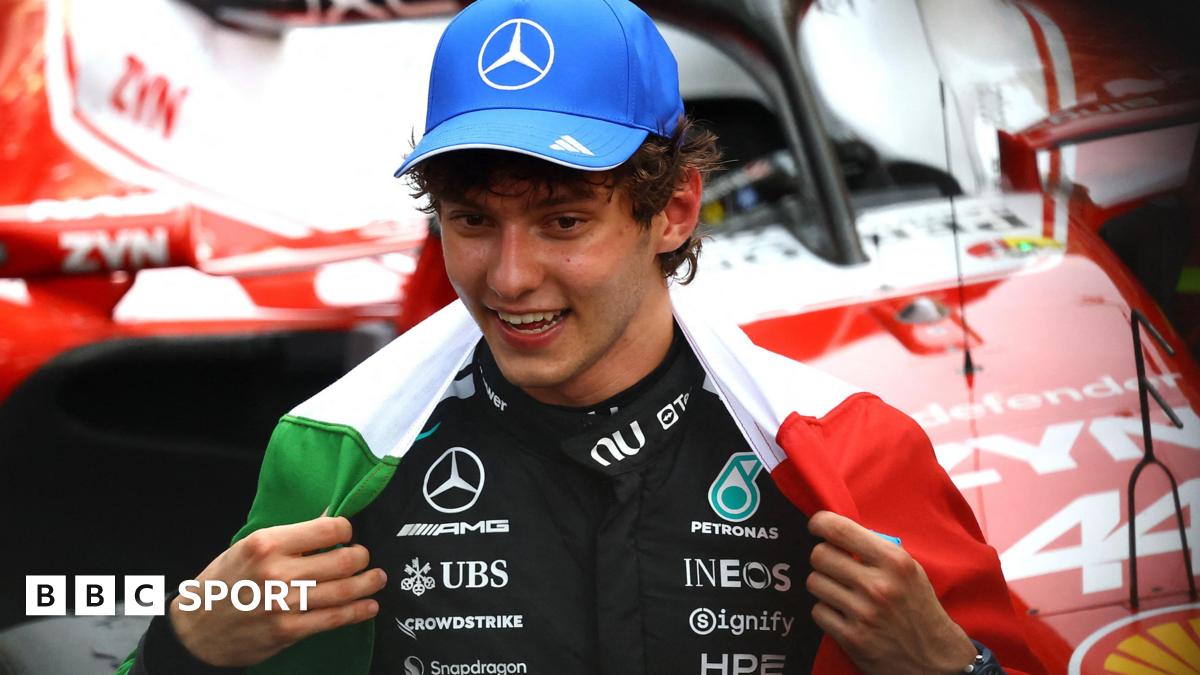
Monaco Grand Prix result: Kimi Antonelli wins chaotic race from Lewis Hamilton
Before long, what had been a soporific race turned into a surreal one.
First, Stroll crashed his Aston Martin at the final corner, causing a first safety car.
As the cars prepared to get going again, Leclerc crashed at the same place in the same way even before the race had restarted.
That led to a red flag as officials took a look at the track surface at the crumbling final corner, known as Antony Noghes.
And that meant another restart that Antonelli had to negotiate, this time with the fast-starting Ferrari alongside him.
But again he was perfect and the race surrendered to him.
Hadjar drove an excellent race battling power-unit problems and was helped by a masterstroke from Red Bull in not stopping under the first safety car, which gained him positions on Russell and Piastri.
Racing Bulls had a good day with Arvid Lindblad taking the best result of his rookie season with sixth place behind team-mate Liam Lawson.
Gasly was seventh ahead of the Williams of Alex Albon and Esteban Ocon’s Haas.
And Sergio Perez took 10th for what could be the first point for the new Cadillac team, although he faces an investigation for being incorrectly positioned on the restart after the red flag.
If he is penalised, the final point will mark the first of the season for Aston Martin, for whom Fernando Alonso finished 11th.
And there may be questions as to why so many drivers – more than a quarter of the grid – ended up speeding in the pit lane.
Iran’s World Cup squad lands in Mexico amid US visa row | World Cup 2026 News
Published On 7 Jun 2026
Iran’s World Cup squad has landed in Tijuana, Mexico ahead of the World Cup – amid a diplomatic row with cohosts United States, which is at war with Tehran and has refused visas for several members of the Iranian delegation.
The squad touched down shortly after 5am (1200 GMT) in the Mexican city, across the border from San Diego in California, after an overnight flight from Turkiye, where they have been training for the past three weeks.
The Iranian football federation negotiated at the last minute to move the team’s base camp from Arizona to Mexico, due in part to uncertainty over whether they would be granted visas to enter the US.
The US awarded visas to all the players on Friday, just 10 days before their first match, but several members of the support squad were not given visas, including “key managerial and administrative members,” according to the federation.
The dispute comes days before the tournament kicks off on Thursday, when Mexico play South Africa in Mexico City.
Iran will be based in the city throughout the tournament, despite playing their entire group stage on the US West Coast.
When they do play in the US, it will be the first World Cup to see a host nation receive the team of a country it is at war with.
‘Hold the US accountable’
Iran’s team spent nearly three weeks at a training camp in Antalya, using their time in Turkiye to apply for visas for the three host nations.
On the eve of their departure for Mexico, the players received their US visas, Washington’s envoy to Turkiye, Tom Barrack, said on X late on Friday.
But Iran’s embassy to Turkiye said 15 administrative and management staff had been denied visas.
“You have now escalated the deliberate and discriminatory treatment against Iran’s national football team to its highest level,” the embassy posted on X on Saturday, calling for world football’s governing body FIFA “to hold the US accountable for violations of its rules”.
Adding to the tensions, Iran’s ambassador to Mexico said on Saturday that the squad had been notified that under their visa conditions the team must enter and leave US soil on the same day as their matches.
“We can enter in the morning and we must leave the same day,” Iran’s envoy Abolfazl Pasandideh told reporters.
That appeared to contradict what the team’s spokesman Amir Mahdi Alavi told state TV earlier.
“The visas issued for the national team are multiple-entry visas, and the national team will arrive at the match venue one day before the first game and, for the following games, two days prior to each match,” Alavi said.
FIFA rules for World Cups stipulate that a team’s coach must give a news conference on the eve of the match at the venue where the game will be played.

‘Political interference’
Iran’s Football Federation – whose chief Mehdi Taj was reportedly among those denied a visa – has described the decision as “political interference in sport in its worst form”.
In response, a US administration official confirmed that “the visas necessary for Iran to compete in the World Cup, including for athletes and necessary support staff, have been issued.”
Without directly addressing the matter of those whose visas were refused, the official added: “We will not allow the Iranian team to abuse this system to sneak terrorists into the United States under false pretences.”
In April, US Secretary of State Marco Rubio said any problem would not be with the Iranian players but “some of the other people (they) would want to bring with them,” suggesting some had ties to the Islamic Revolutionary Guard Corps, which is on the US blacklist of “terrorist” groups.
Iran are in Group G and will play New Zealand and Belgium in Los Angeles on June 15 and 21, followed by Egypt in Seattle on June 26.

Does Israel really think it can get rid of Hezbollah in Lebanon? | TV Shows
It’s hard to assume that ‘anything positive’ for Lebanon can come from its talks with Israel, argues analyst Imad Harb.
Despite brokering a ceasefire on paper, the United States is not standing in the way of Israel’s war on Lebanon, argues Imad Harb, senior fellow at the Arab Center Washington DC.
Harb tells host Steve Clemons that Hezbollah is an excuse for Israel to conduct a land grab in Lebanon, similar to what it’s doing in Gaza, the West Bank and Syria.
Pushing the Lebanese government to disarm Hezbollah “means civil war in Lebanon”, especially if Israel is allowed to occupy large swaths of Lebanese territory, says Harb.
Published On 7 Jun 2026

‘This is where you’ll see the truth about Lee’ says Katie Price ahead of The Sun’s explosive sit-down interview TONIGHT
IT’S the story the whole nation is talking about – and The Sun’s Clemmie Moodie has the inside scoop after joining Katie Price in Dubai to find out the truth about husband Lee Andrews.
Conman Lee, 43, is serving time in the notorious Al Awir prison in the United Arab Emirates city, where he is being held for fraud. (Not “spying” as he has apparently suggested).


Clemmie and Katie, 48, have embarked upon an extraordinary international trek looking for “the world’s most hated man” – and tonight, she bares her soul to The Sun in her only sit-down interview since the firestorm started.
And Katie confesses that if she doesn’t get the answers she wants from her husband, she is prepared to turn the tables in explosive fashion.
In the hour-long interview, Katie shares her sensational side of the story after initially being led to believe that Lee had been kidnapped before – following three weeks of zero contact – learning of his incarceration.
She’s someone who has lived every possible high and low, both personally and professionally, in the glare of the public eye.


But even she warns readers of her latest tell-all: “You don’t want to miss it.
“This is where you’ll see the truth.”
Katie flew out to Dubai last Monday and has visited Al Awir Central Prison several times, though her only contact with her Lee has been via the phone.
She opens up to Clemmie about Lee’s infamous flight ban – after he humiliated her by forcing her to do a live TV interview without him – and about the concerns from loved-ones and fans alike over her marriage.
And, in a shock turn of events, Katie will tell all after being confronted with some damning news about the man she loves.
You can read and watch Clemmie’s interview with Katie tonight at 7pm right here on The Sun.

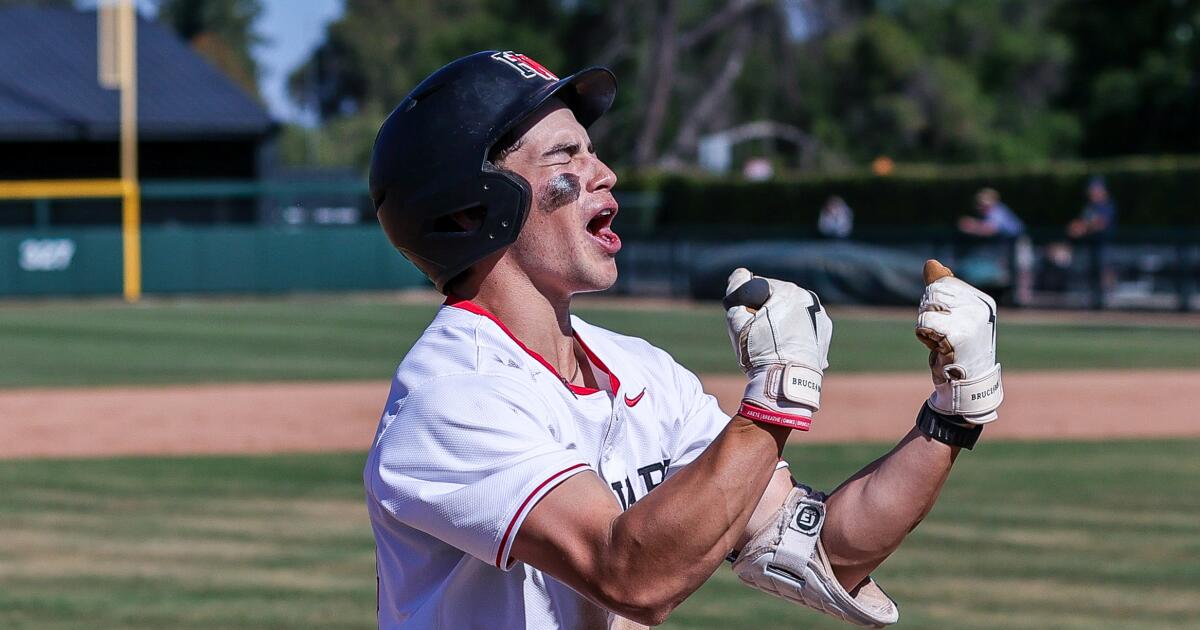
The Times’ baseball player of the year: James Tronstein of Harvard-Westlake
Last summer, James Tronstein of Harvard-Westlake was struggling at the plate. Then came shocking news before his senior year: He didn’t make the list of 40 finalists for the U18 national baseball team despite winning gold medals for the U15 team.
“He was pressing,” coach Jared Halpert said. “He had really good at-bats but wasn’t getting results. Credit goes to his maturity, ‘How do I get better?’”
His mental adjustment on how to react to failure, combined with a conditioning program that led him to lose 10 pounds and become faster and stronger, created a spring environment sending him into rarefied air.
The 6-foot, 170-pounder batted .531 with 52 hits and 10 home runs while making the transition from center fielder to shortstop. Everyone associated with the program now calls him the best hitter in school history.
For an individual performance that separated him from all others, Tronstein has been selected The Times’ player of the year for the 2026 season. The Vanderbilt commit and possible high draft pick has been a four-year varsity starter. He also was named the Gatorade state player of the year.
One of the lessons Tronstein said he learned is that “baseball is a game of failure. How am I going to handle that and set myself up for success?”
“He started evaluating situations,” Halpert said.
He also became a vocal leader, having been taken under the wings by former stars Bryce Rainer, Tommy Bridges and Miguel Villegas. His fire during games and his support of teammates came through loud and clear
He credited Halpert for teaching him about baseball and life.
“Coach Halpert has a huge impact on my life,” Tronstein said. “He’s made me into the man I am today.”
Tronstein helped Harvard-Westlake win the Mission League title and reach the Southern Section Division 1 semifinals before losing 3-1 to eventual champion St. John Bosco.