


Trump orders Pentagon, federal agencies to release files on UFOs and aliens | Donald Trump News
US president’s announcement comes amid a surge of interest following comments on aliens by ex-President Barack Obama.
Published On 20 Feb 2026
United States President Donald Trump said he is directing federal agencies, including the defence department, to begin “identifying and releasing” government records related to unidentified flying objects (UFOs) and alien life forms.
Trump did not specify whether classified documents would be released to the public, but added that the files should include “any and all other information connected to these highly complex, but extremely interesting and important, matters”.
Recommended Stories
list of 3 itemsend of list
“Based on the tremendous interest shown, I will be directing the Secretary of War, and other relevant Departments and Agencies, to begin the process of identifying and releasing Government files related to alien and extraterrestrial life, unidentified aerial phenomena (UAP), and unidentified flying objects (UFOs),” Trump said late on Thursday in a post on his Truth Social platform.
The move appears to stem from a surge in public attention following recent comments by former US President Barack Obama, who suggested in a podcast interview that aliens are “real”, but that he had not personally seen one, and none were being kept in secret government facilities.
On Sunday, Obama released a statement on Instagram, clarifying what he meant by his comments, which have since gone viral.
“Since it’s gotten attention let me clarify. Statistically, the universe is so vast that the odds are good there’s life out there,” he said.
“But the distances between solar systems are so great that the chances we’ve been visited by aliens is low, and I saw no evidence during my presidency that extraterrestrials have made contact with us. Really!”
Earlier on Thursday, Trump had criticised Obama for his remarks regarding aliens, telling reporters that Obama “was not supposed to be doing that” and implying that the former president’s comments bordered on classified information.
“He made a big mistake,” Trump said of Obama.
No evidence has yet been produced of intelligent life beyond Earth, and the Pentagon in 2024 released a report stating that it had no proof that UFOs were alien technology, most being spy planes, satellites and weather balloons.
Nevertheless, messages of support poured in swiftly on social media and from Capitol Hill following Trump’s announcement to release all documents.
“Thank you POTUS!” wrote Republican Congresswoman Anna Paulina Luna, who chairs a congressional task force on unidentified aerial phenomena.
“As the Chairwoman of the Task Force that investigates these subjects, we are incredibly grateful for you doing this! I look forward to going through all the footage, photos, and reports with the public!” she wrote.
Democratic Senator John Fetterman also voiced support during an appearance on Fox News, calling Trump’s decision “fantastic” and saying that “America and the world deserve this”.
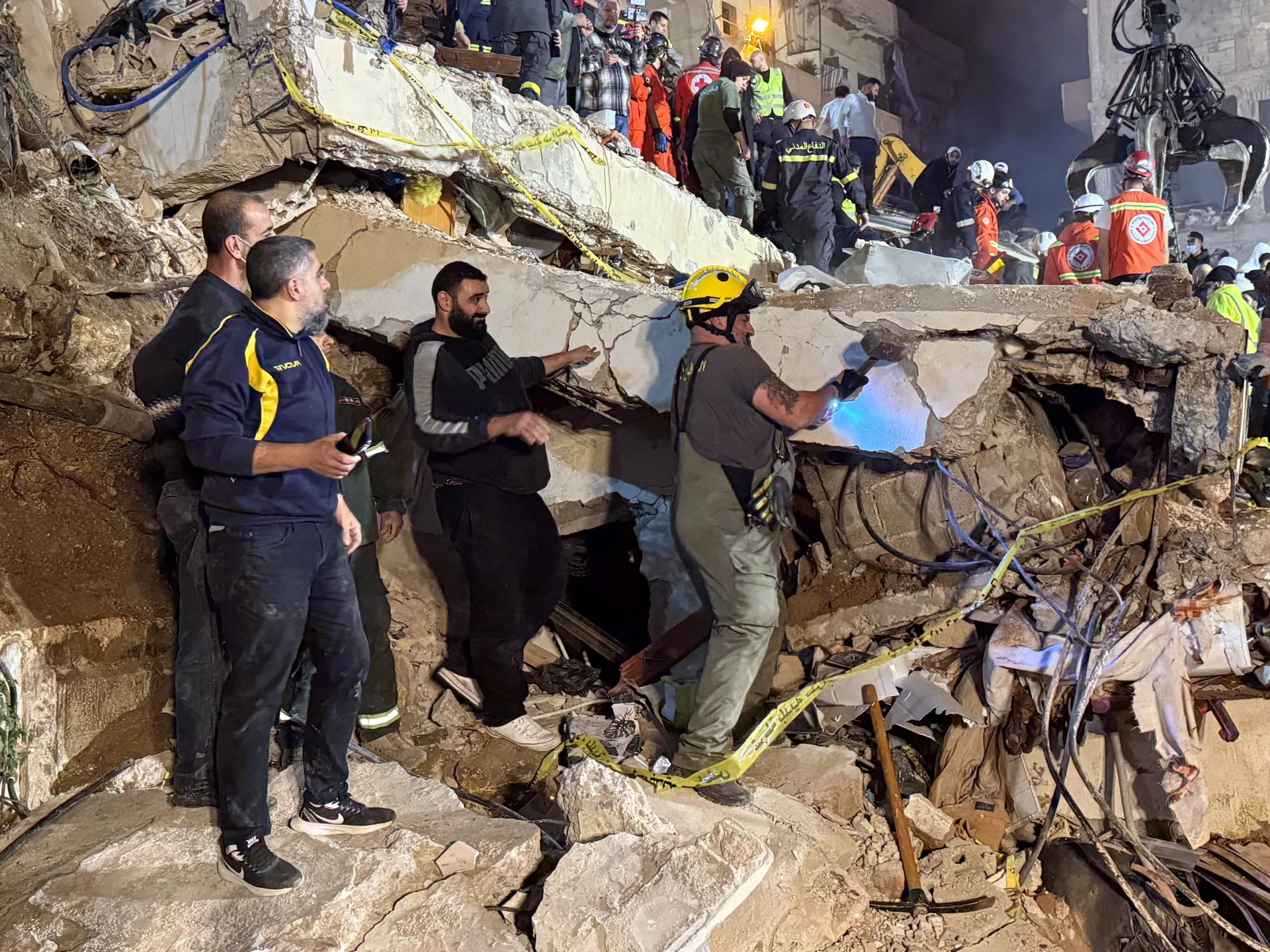
Deadly tower collapse has locals in Lebanon’s Tripoli asking: Are we next? | Infrastructure
Tripoli, Lebanon – Hossam Hazrouni points underneath a concrete staircase to the exposed foundation of the building where he lives.
“Inside, there, look,” the 65-year-old says. “The interior pillars are all broken. It’s covered in water. Everything inside is wet.”
Recommended Stories
list of 3 itemsend of list
A few metres away lies a pile of smashed concrete blocks and twisted metal. It is the rubble of a building that collapsed on February 8, killing at least 15 people.
In Tripoli, collapsed buildings are fast becoming common. This is the fourth building to collapse this winter alone. Today, hundreds of buildings are at risk of collapse due to a lethal combination of ageing infrastructure, unregulated construction, Lebanon’s 2019 economic crisis, the 2023 earthquake that fractured much of the local infrastructure’s foundation, and a relatively heavy rain season.
Locals like Hazrouni are afraid their buildings will be next.
“They told us that you should evacuate and you shouldn’t stay, but how are we supposed to leave when we are in a bad situation?” he asked, raising his palms to the sky. “Where are we supposed to go?”
Collapsing structures
In the 1950s, Tripoli, Lebanon’s second-largest city and the largest in the country’s north, was a hub for trade and shipping in the region. But in the intervening years, its status has fallen to become one of the poorest cities on the Mediterranean Sea.
It is also a city of massive disparity. Multiple billionaires live in Tripoli, including the former Prime Minister Najib Mikati and former Minister of Finance Mohammad Safadi, while about 45 percent of the city’s population lives in poverty, according to a 2024 World Bank report.
Over the years, most of Tripoli’s middle- and upper-class residents have moved to the southern edge of the city, leaving behind its impoverished classes to inhabit the decaying old city. Many of the poor know their concrete buildings are ageing and in poor condition, but have little means to fix them.
“The first problem is that the structures are old,” Fayssal al-Baccar, an engineer, told Al Jazeera from a restaurant in southern Tripoli. Al-Baccar is also the founder of the Tripoli Emergency Fund, a private initiative started in response to the collapsing building issue that has been fundraising to help the city.
“The lifespan of concrete is between 50 to 80 years,” al-Baccar explained, and in many of the buildings in central Tripoli, that lifespan is coming to an end. On a sheet of white paper with a blue pen, he drew a model of a building’s foundation.
“Through time, the pH [level] of the concrete will become more and more acidic,” he said, sketching lines around the base of his drawn wall. “Then it will corrode the steel – the steel will self-destruct – and the building will collapse.”
The issue has been exacerbated by a few incidents in particular. When a 2023 earthquake devastated northern Syria and southern Turkiye, it was widely felt in Tripoli as well. Local officials say that it damaged much of the infrastructural foundations of older buildings, many of which have had irregular or unregulated floors added to them, making them weaker. The area has also suffered from neglect and a lack of infrastructure for years, even before the 2019 economic and banking crisis.
Lastly, there is the issue of water damage. This year, Lebanon has received more rainfall than in the last couple of years. And in the days leading up to the collapsed building on February 8, it rained multiple times. “Water is infiltrating into the concrete and is also making the steel worse,” al-Baccar said.
That is why al-Baccar has recruited whom he described as some of the city’s “best and most successful” to help fill governmental gaps.
One of those people is Sarah al-Charif, the Tripoli Emergency Fund’s spokesperson and fundraising committee member. She is also the Lebanon director for Ruwwad Al Tanmeya, a nonprofit focused on youth and disenfranchised communities, and was appointed vice president of Tripoli’s Port Authority last year.
“You’re talking about areas where most, if not all, of the buildings are old and dilapidated, some of which are actually on the verge of collapse,” al-Charif said from her office at Ruwwad Al Tanmeya’s office in Bab al-Tabbaneh, less than a kilometre (0.62 miles) away from where the building collapsed on February 8.
“The fact that the problem is so big reflects decades of accumulated neglect by a state that hasn’t fulfilled its obligations towards this city,” she said.
Al-Charif said she doesn’t hold the current government – which took office a year ago – responsible, but that historically, “people who were in positions of power didn’t do anything, they weren’t fulfilling their duties”.
“There’s also a part that falls on the landlord, a part that falls on the tenant, and a part that falls on the merchants who are the builders. Maybe they’re using substandard materials,” she said. “So everyone has to take their share of the responsibility.”
Historical neglect
Standing on the street, Wissam Kafrouni, 70, points to the top floor of a building just a few doors down from the structure that collapsed on February 8. A crack runs zig-zagging down the building’s side, in the pattern of descending stairs. His nephew rents the top-floor apartment, he says, but the landlord is claiming that repairs are the responsibility of the tenant.
Locals in this neighbourhood say that many officials have visited the site in recent days, including Prime Minister Nawaf Salam. They also say that they’ve been told for years that the local municipality has plans to fix the infrastructure, but that little has come about from it.
The local government has known about the issue for years, but until now, little has been done. Deputy Mayor Khaled Kabbara is part of a new municipal government elected in 2025.
“The issue of cracked buildings is a very old issue in the city of Tripoli, and unfortunately, it has not been dealt with in previous periods,” he told Al Jazeera from Tripoli’s municipality headquarters. But this new municipal government that was elected in 2025, he said, has “raised its voice”.
Kabbara also said that Tripoli has been historically ignored by Beirut “since independence” in the 1940s, but that the current government was working with the local government to find solutions.
“Honestly, this is the first time that we feel that someone is listening and there is someone who is working with us,” he said.
A group of engineers are currently inspecting buildings around the city to decide if damaged buildings can be repaired or must be evacuated and demolished. Evacuation warnings have been issued for 114 buildings, though that number is expected to rise substantially.
Families that evacuate should receive a one-year shelter allowance to secure alternative housing. Religious institutions have opened their doors to evacuees, while Turkiye has also promised to donate about 100 prefabricated houses.
A call centre has also been set up for residents to report suspected issues with their buildings. The hotline has so far received reports on approximately 650 different buildings, Kabbara said.
One of the buildings previously reported to the call centre was the building that collapsed on February 8. Locals had heard a creaking sound coming from the building.
Kabbara acknowledged that the report was received and that the residents were afraid. However, he said, the engineers had not inspected it before it collapsed because nothing in the report indicated it needed an urgent inspection.
What comes next?
Back in Bab al-Tabbaneh, numerous locals expressed frustration and fear. They said many officials and associations have visited the site, but few have delivered on promises to help them.
“We’ve been told there is a plan to fix the infrastructure since the Siniora government,” Samir Rajab, 56, said, referring to Fouad Siniora, the prime minister of Lebanon from 2005 to 2009. “But nothing happens.”
Next to the destroyed building site, Mustapha al-Abed, 54, repaired a broken washing machine out of a small workshop. He said his work was not very fruitful lately, as poverty forced many in this area with broken appliances to wash their laundry by hand.
He looked over at the site where the building had gone down just days earlier. “The problem is not here any more. These people are already dead,” he said. He then pointed across the street to a bustling neighbourhood, where people were doing their Ramadan shopping.
“The problem is all the other buildings.”

Brandi Glanville face disfigurement caused by ruptured breast implants
Brandi Glanville finally has some answers about what caused her mysterious facial issues — her breast implants.
The “Real Housewives of Beverly Hills” alum is “taking care of the face now that [she’s] figured out what was wrong,” Glanville told TMZ on Wednesday. The outlet caught up with her as she was leaving a doctor’s office where she had been treated with “lasers and different things.”
Last week, InTouch reported that Glanville had surgery to remove her breast implants earlier this month. According to the outlet, she got her implants in 2007 after the birth of her son Jake. Glanville was told her left implant had a “slow leak,” while her right implant was “completely ruptured.”
“I had silicone all over my lymph nodes,” the reality TV star told TMZ. “That’s what caused the infection in my face. … [I]t couldn’t get out because my lymph nodes were all clogged.”
Glanville had been struggling for the last few years with a mysterious ailment that caused recurring facial swelling, speech impairment and the loss of teeth, leaving her reluctant to go out in public. In 2024, she revealed that, after she’d spent more than $70,000 on treatments, doctors were still stumped by what could be causing her facial disfigurement, though some suggested it could be because of a parasite. Glanville even tried using Nair, the hair-removal product, to fight the parasite.
Glanville told TMZ that she had been shocked to learn that her breast implants had been the cause of her facial disfigurement. She said she had visited 21 doctors over the years trying to investigate her condition, to no avail. She only learned that her nearly 20-year-old breast implants were damaged after having them examined with a sonogram.
“I learned a really, really hard lesson,” said Glanville, advising people to make sure to get their implants checked after 10 years even if they feel fine.
“I’m not saying don’t [get implants],” she added. “Just do it and make sure you stay on top of it. [And] you really have to be vigilant about [getting] sonograms. Ask you doctor.”
Glanville appeared to be in good spirits now that she is on the road to recovery. She plans on getting her teeth fixed next.
Despite doctor’s orders, “I can’t rest,” she said. “I’ve been home for three years.”

F1 pre-season testing: Stefano Domenicali calls for calm in face of criticism of new rules
F1’s bosses agreed at a meeting of the F1 Commission rules-making body on Wednesday they would assess data from this final test at a further meeting to decide whether action needed to be taken in the short term.
Concern arises from the fact the new engine rules have tripled the power provided by the electrical part of the engine but left the batteries more or less the same size as last year, and removed one of the devices used to recover energy.
This had led to cars that are energy starved and forced the teams to find new ways to harvest sufficient electrical energy to produce the best performance. The rules governing energy recovery are also highly complex.
That in turn has required drivers to perform behaviours that have been described as “counter-intuitive” to optimise lap time.
These include not going flat out put of the final corner before a qualifying lap, lifting and coasting on a qualifying lap, and even not accelerating at full power at the end of a lap because it was more advantageous to use the energy elsewhere.
However, drivers have generally been positive on the handling characteristics of the new cars, and a number of top drivers all told BBC Sport they are still driving to the limit of grip, and driver ability will still be as crucial as ever.
Domenicali said: “Don’t be worried about the energy management. We’re going to solve that. If we need to solve it, by the way.”
He has spent his time in Bahrain having a series of discussions with individual drivers about the sport, including Verstappen.
And he added: “Max wants and does care about Formula 1 more than anyone else. He has a way of putting the point that he wants to say in a certain way.
“Max will be part of the future of Formula 1 and of course it’s very important that we listen to him and all the top drivers that are very important in this sport.”
Domenicali also said F1 was looking at introducing new sporting elements on Fridays, expanding on the approach that led to sprint-race weekends, which feature two qualifying sessions rather than one, and a shorter race on the Saturday in addition to the grand prix on Sunday.
He has already previously said F1 is considering increasing the number of sprint events beyond the current six.
Domenicali added: “Feedback from the fans, from the people attending the track, the promoter, [is] that people want to see action, real action during the three days.
“People want to see already on Friday something that is sporting – qualifying, points, whatever it is.
“So, it is true that there is the trend to go in the direction of, even if it is not a sprint every weekend.”
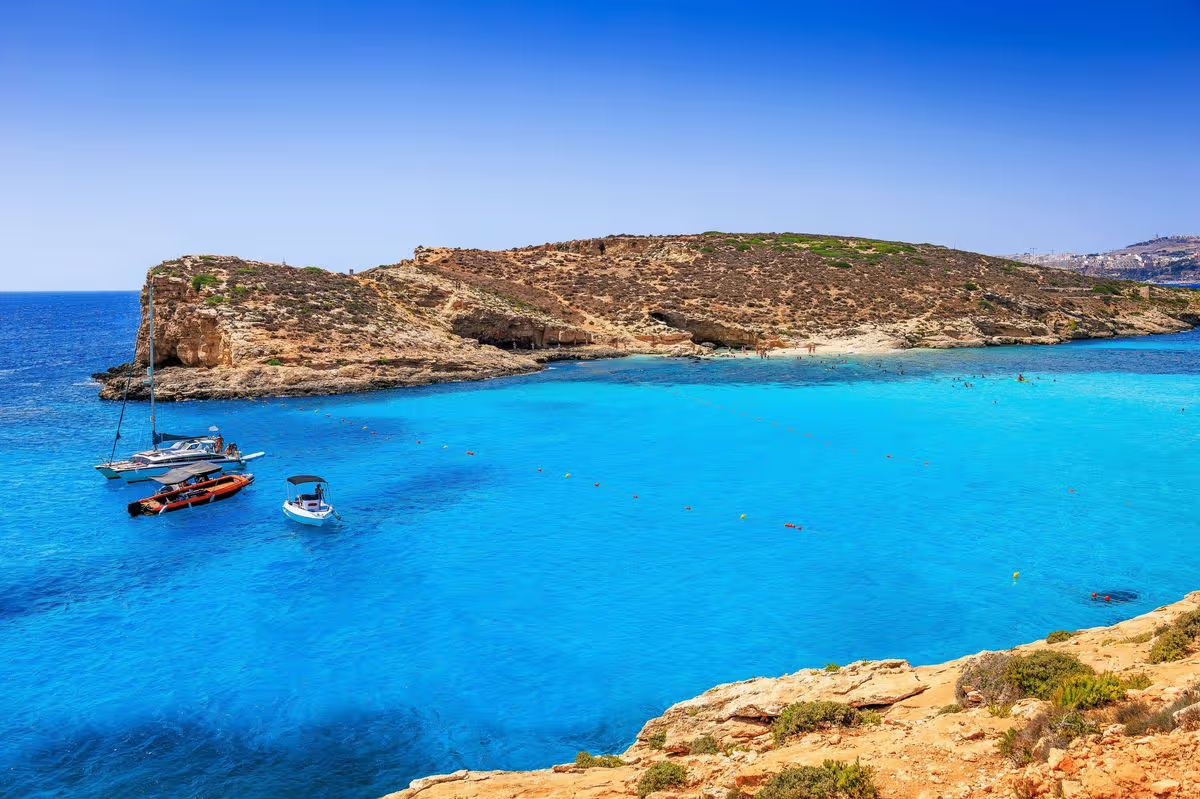
Stunning island is abandoned tropical paradise with £35 flights and £2.60 pints
It’s a blissful (and affordable) sanctuary for those yearning to avoid the swarming hordes and tourist mayhem of other popular European sunshine hotspots.

There’s something for every type of traveller on this breathtaking island(Image: Getty)
A breathtaking island boasting a fascinating history and spectacular scenery is being championed as a ‘deserted paradise’ – ideal for UK residents seeking a peaceful retreat in February or March to flee the miserable winter weather (and heaving masses at other popular holiday hotspots).
Having established itself as the ‘sister island’ to another well-known destination, this European holiday gem is genuinely distinctive and celebrated for its untouched appeal.
Spanning merely 3.5 square kilometres, this obscure island within the Maltese Archipelago is practically uninhabited, with just two permanent residents living there.
In that sense, it’s genuinely a ‘deserted paradise’ – a perfect escape for those yearning to avoid the bustling crowds and tourist mayhem of other European sunshine destinations.
February and March bring average temperatures between 16C and 18C to this secluded island, making it a perfect spot for those wanting to bask in the winter sunshine without getting burnt, reports the Express.
Amazon cabin bag meets Ryanair requirements for less than £15
This article contains affiliate links, we will receive a commission on any sales we generate from it. Learn more
Travellers keen to beat the bag charges without breaking the budget have made an Amazon travel bag a bestseller. Rated 4.7 stars out of 5 from almost 3,000 reviews, the Xkdoai bag comes in six colours with prices from £14.99, saving 29% on the usual price.
Regarded as a sanctuary for swimmers, snorkellers, walkers and photographers – visitors are known to journey from across the globe simply to savour a taste of life in this deserted paradise.
Comino, renowned for its absolutely stunning Blue Lagoon, is a treasure hiding in plain sight just begging to be discovered. With no towns – and therefore no vehicles – experiencing Comino is genuinely an adventure unlike any other.
A dramatic limestone terrain, impossibly blue crystalline waters, secluded bays and breathtaking vistas are merely some of the features that set this tiny European isle apart from the crowd.
Delivering both excitement and serenity, Comino boasts a captivating landscape, ideal for those seeking to immerse themselves in nature – all whilst keeping costs pleasantly manageable.
Getting to Comino from the UK is remarkably simple – visitors can fly into Malta International Airport, which serves as the sole major commercial aviation hub in the Maltese islands.
At the time of writing, a one-way ticket from London Stansted Airport to Malta on February 26 would cost holidaymakers just £35, including one complimentary cabin bag.
From there, travellers on mainland Malta can hop aboard one of the regular ferries departing from Ċirkewwa ferry terminal, which will transport you to Comino in approximately 35 minutes.
Meanwhile, those already on Malta’s sister island of Gozo can complete the brief journey to Comino from Mġarr Harbour in a swift 15 minutes using water taxis or compact ferries.
If the balmy weather and budget-friendly flights weren’t enticing enough – Comino, despite being largely uninhabited, provides reasonably priced drinks.
While the island itself doesn’t offer a huge amount of food and drink options – a small price to pay for absolute tranquillity – the few available spots (food and drink kiosks near popular snorkelling and hiking areas) are known to sell pints ranging from £2.60 to £4.
However, holidaymakers seeking a wider variety of culinary choices need not worry, as Comino’s neighbouring sister islands, Malta and Gozo, have plenty to offer.
An island steeped in history
As of 2026, the island is inhabited by just one family, the globally recognised Vella family, who hold the distinction of being the last people on Comino within the Maltese archipelago.
Despite its diminutive size, Comino has a rich and complex history that belies its physical dimensions. The sun-drenched island was once a favoured hideout for pirates during the medieval period, owing to its numerous sea caves.
In 1618, the Knights of St. John fortified the island by constructing the still-standing Santa Marija Tower, which served as both a guard station and a signalling point between the Maltese islands.
The island’s name, Comino, derives from ‘kemmuna’, meaning cumin, a spice that was once harvested extensively on the island. Historically, the island has also functioned as a quarantine station during the Napoleonic era and was renowned for being a game reserve abundant with wild boar and hares.
Today, Comino is celebrated for its pristine landscapes and historical sites, drawing day-trippers from Malta and Gozo seeking the perfect natural retreat steeped in peace and quiet.
Things to do in Comino
Despite its modest size, Comino boasts an impressively diverse range of activities and attractions, guaranteeing something to captivate every visitor who arrives on its compact coastline.
The island’s crowning glory – and arguably that of the entire Maltese archipelago – is the world-famous Blue Lagoon, which lives up to its reputation as a jewel in Comino’s crown, luring visitors to its strikingly white sands and sparkling turquoise waters throughout the year.
Nestled between Comino and the tiny islet of Cominotto, it’s an idyllic destination for snorkellers and swimmers, offering unparalleled glimpses of the exotic marine life inhabiting this shallow bay.
By contrast, Santa Marija Bay sits on Comino’s more peaceful side, presenting a tranquil beach and gentle waters – minus the throngs of tourists found at the Blue Lagoon.
The Santa Marija Caves also rank among Comino’s must-see attractions, showcasing a complex system of sea caves and striking underwater rock formations that delight snorkellers and divers alike.
History enthusiasts and hiking aficionados can make the journey up to the iconic Santa Marija Tower, or St Mary’s Tower, the magnificent 17th-century stone fortress constructed by the Knights of St John. Cinema lovers might recognise this famous tower as the Château d’If from The Count of Monte Cristo.
The whole of Comino can be traversed on foot in roughly three hours, establishing it as a prime destination for walkers as they navigate thyme-bordered wilderness trails, catching glimpses of exotic migratory birds, remarkable lizards and stunning coastal vistas.
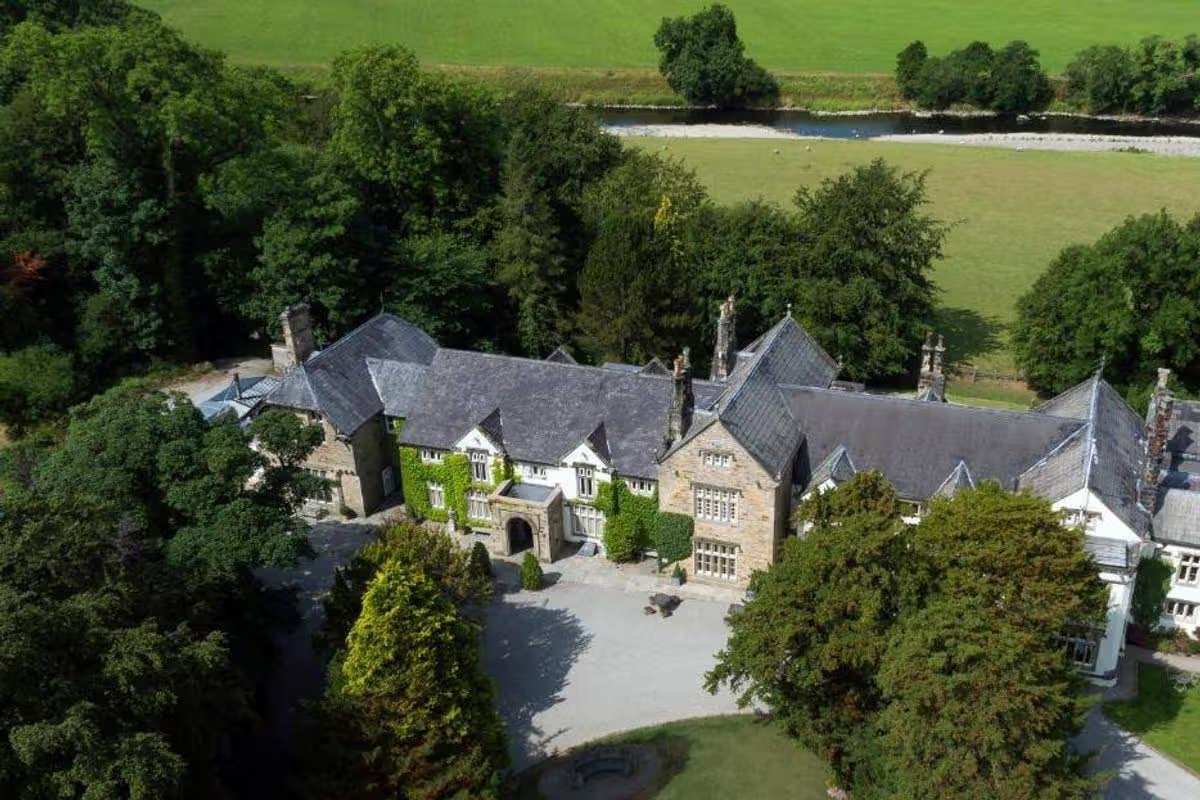
Beautiful English village is foodie paradise with scenic views
Breathtaking countryside views make this village feel like you’ve stepped onto a film set – and foodies will love the Michelin Guide-listed restaurant in this tiny hamlet

The hamlet has extraordinary places to visit
For such a tiny hamlet, this stunning Lancashire village packs a mighty punch. Located roughly three miles from the thriving market town of Clitheroe, this charming village is enveloped by spectacular countryside vistas across Lancashire’s renowned Ribble Valley, transporting visitors into what feels like a scene from a picturesque film.
Its remarkable location cannot be overstated – nestled at the meeting point of two significant Lancashire waterways: the River Ribble and River Hodder. Indeed, the village derives its name from Old English, reflecting its position as a settlement at the “mythe”, meaning “confluence” or “junction” of two streams.
Great Mitton, alongside its neighbouring village (officially a civil parish) Little Mitton, occupies fewer than 2,000 acres within the Forest of Bowland, establishing it as the smallest township in the Forest, reports Lancs Live.
Best Lancashire holiday cottage deals
This article contains affiliate links, we will receive a commission on any sales we generate from it. Learn more

Lancashire is known for its wide open skies, stunning landscapes and lively coastal resorts. Sykes Cottages has a wide range of self catering accommodation across the county from £42 a night.
Gorgeous riverside panoramas, undulating countryside landscapes, and exceptional award-winning cuisine – what more could you desire from this idyllic hamlet?
Things to do in Mitton
Housed within a magnificently restored 19th-century building, The Three Fishes now operates as a farm-to-fork restaurant at the heart of Great Mitton and has been described as “outstanding” by customers who have experienced the venue.
Led by Michelin-starred chef Nigel Haworth, The Three Fishes has garnered numerous accolades throughout the years and maintains an impressive 4.4 rating out of five on Tripadvisor.
Diners consistently sing the praises of both the cuisine and service at this establishment. So impressive is the offering that it has secured a coveted spot on the Michelin Guide restaurant list since 2022, with inspectors deeming it “worthy of a place”.
One Tripadvisor reviewer gushes about The Three Fishes: “Everything about this place is total perfection. Everything. The staff, the service, the atmosphere, the surrounding area, the layout. And, of course, the food is as good as anything I’ve ever experienced. Difficult to imagine how this place could be improved.”
Another jewel in Mitton’s crown, lovingly restored to its former glory, is the magnificent 15th-century manor house, Mitton Hall, which stands majestically on the banks of the River Ribble in the heart of Little Mitton.
Serving dual purposes as both a sought-after wedding venue and a country house hotel, it offers sumptuous accommodation in the scenic Ribble Valley and is adored by locals and tourists in equal measure.
Staying on the Little Mitton side of the river, there’s the celebrated Aspinall Arms, which greets guests with a roaring fire during winter months and a delightful riverside terrace garden come summer – ideal for enjoying a refreshing pint alongside delectable contemporary dishes drawing inspiration from British classics and “exotic global influences”.
This 19th-century coaching inn boasts views of the beloved All Hallows Church and Mitton Hall, making it a favourite haunt for ramblers, cyclists and their four-legged companions.
One delighted guest remarked about the Aspinall Arms: “We’ve been to the Aspinall Arms twice now, both times following a hike in the Ribble Valley. The first visit we just had drinks, but were really impressed with the pub and its outdoor area. Immaculately maintained, the beer garden is substantial in size and offers some beautiful river views!
“On our second visit, we again intended just to pop in for a riverside view drink in the sunshine, but having perused the menu decided to have a meal also! Considering we only popped in for a drink, we ended up spending three hours in the Aspinall Arms and had a great time.”
Another must-see attraction in the picturesque hamlet of Great Mitton is All Hallows Church, formerly called the Church of St Michael. Constructed during the 13th century, the building underwent significant modifications and extensions throughout the 15th and 16th centuries.
All Hallows Church contains the burial sites of the renowned Shireburne of Stonyhurst family and has held Grade I listed status from English Heritage since 1954. The church also boasts the magnificent Shireburn Chapel and is thoroughly worth exploring.
Edisford Bridge, a Grade II listed structure dating back to medieval times, represents another essential sight in Mitton. Constructed from sandstone and incorporating four arches with cutwaters, Edisford Bridge has earned recognition as a scheduled monument.
Another bridge of note (and scheduled monument) is the Grade II Listed Old Bridge, which dates from 1562. Now no longer in use, it’s constructed from sandstone and spans the River Hodder.
The Mitton Bridge represents another striking landmark, probably built during the 19th century and likewise fashioned from sandstone with Grade II listed status.
Ensure our latest headlines always appear at the top of your Google Search by making us a Preferred Source. Click here to activate or add us as your Preferred Source in your Google search settings.

PPP tensions flare after Yoon life sentence

People Power Party leader Jang Dong-hyuk (Right), speaks with floor leader Song Eon-seok (Left) during a Supreme Council meeting at the National Assembly in Seoul on Thursday. Photo by Asia Today
Feb. 19 (Asia Today) — Internal divisions resurfaced within the conservative People Power Party on Thursday after former President Yoon Suk Yeol was sentenced to life in prison in a first-instance ruling on charges of leading an insurrection.
Younger lawmakers within the party called for an apology and a clear break from Yoon, while party leader Jang Dong-hyuk refrained from issuing an immediate statement.
The party said it plans to announce an official position as early as Friday after gathering views from within the leadership and rank-and-file members. Chief spokesperson Choi Bo-yoon said a consolidated statement is likely to be released after further deliberation.
Some party members interpreted Jang’s silence as a strategic move aimed at broadening the party’s appeal to centrist voters. In a television interview the previous day, Jang said “transition is more important than severance,” a remark seen by some as signaling a shift toward focusing on economic and livelihood issues rather than internal factional conflict.
However, several figures urged the leadership to distance the party from what they described as “Yoon Again” supporters.
Seoul Mayor Oh Se-hoon said he felt “devastated” by the court’s ruling as a member of the party that produced the former president and argued that cutting ties with Yoon is an unavoidable step for the conservative movement.
Lawmakers affiliated with the reform-minded group Alternative and Future also called for an official declaration of separation from pro-Yoon factions, warning that continued alignment with far-right elements could harm the party’s future.
The group urged the leadership to demonstrate “new leadership that unites rather than divides,” as the party weighs its response to the unprecedented life sentence handed to a former president.
— Reported by Asia Today; translated by UPI
© Asia Today. Unauthorized reproduction or redistribution prohibited.
Original Korean report: https://www.asiatoday.co.kr/kn/view.php?key=20260220010005937
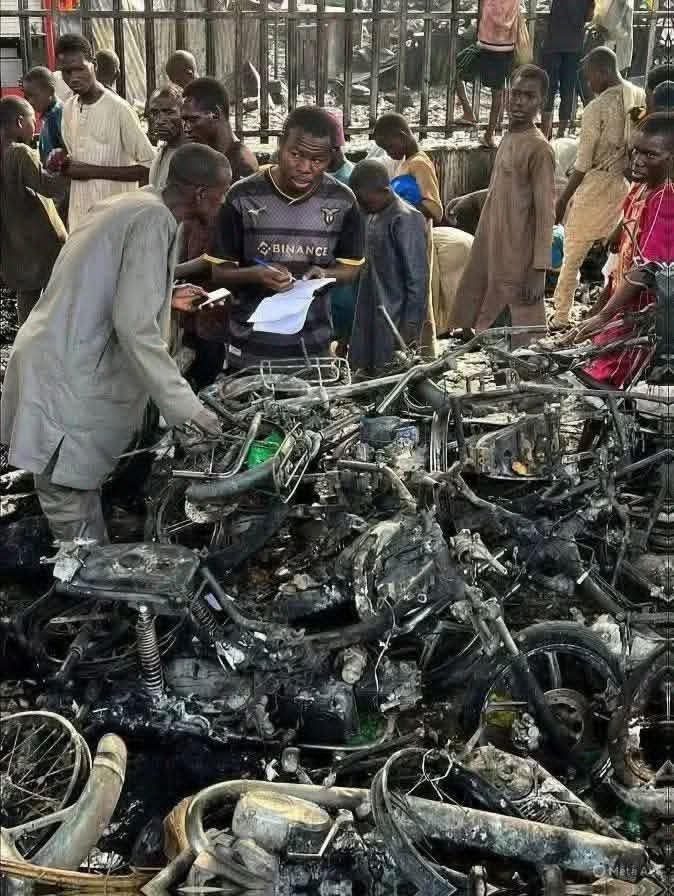
The Singa Market Fire in Kano That Left Dreams in Ashes
How do you comfort a man who has just watched years of his life turn to smoke?
Sulaiman Mustapha remained seated inside the mosque after the dawn prayer, long after others had left. He put both hands on his head as if trying to hold his brain in place. He could not speak. No wailing. No outburst. Just the stillness of a man whose world had collapsed overnight. Those around him tried to console him, but the words sounded distant, almost irrelevant.
Less than a month ago, Sulaiman bought a new motorcycle to make his trips to Singa Market in Kano, North West Nigeria, easier. For him, it was not just a bike. It was a milestone. For years, he had gone to the market with his brother as a worker, running errands for established traders. With time, he began handling purchases. Then he began trading in small quantities for himself. The profits were modest but steady.
The motorcycle symbolised a shift. It meant he would no longer spend heavily on transport. It meant more capital for his small shop. It meant growth. Then, in a matter of hours, fire erased that growth. Now it was metal frames and ash.

On Saturday, Feb. 15, around 4 p.m., a fire broke out at Gidan Glass, a plaza at Singa Market. Witnesses say the fire spread quickly, leaping from shop to shop before traders could salvage much. It burned for two days. By the time it was contained, dozens of shops had been reduced to charred frames.
Sulaiman and his brother’s shop was among them.
When he sat in the mosque that morning, he was mourning years of hard work — the savings, the small profits he reinvested, and his mother’s inheritance. “After his grandfather died, the inheritance was shared,” his close friend, Abba Abubakar, told HumAngle. “His mother gave him her portion to grow the business.”
Now, everything is gone.
The fire that tore through Singa Market is the latest in a long line of infernos that have become almost routine in Kano markets. Within 48 hours, early estimates placed losses in billions of naira. But beyond the figures lies a deeper story: how recurring fires, weak emergency infrastructure, and structural neglect continue to threaten the livelihoods of thousands of small-scale traders who form the backbone of the city’s informal economy.
Sulaiman’s story is that of hundreds of traders whose stalls were destroyed. In markets like Singa, capital is built slowly from daily turnover and rarely backed by insurance. Many traders rely on family contributions, cooperative loans, or personal savings. A single disruption can undo a decade of effort.
For small-scale traders, the market is their safety net. It funds school fees, hospital bills, rent, and other family obligations. When the market burns, the consequences ripple far beyond the charred stalls.
By Monday afternoon, some traders had returned to sift through ashes, hoping to salvage metal frames or partially burned goods. Others simply stood in clusters, calculating debts they still owed suppliers.
There are still unanswered questions about what triggered the fire and whether preventive measures were in place. For now, what remains visible is the human toll.
The full extent of the damage and how traders will rebuild is still unfolding.
But how did it start?

Between sparks and sorrow
Around 3 p.m. that Saturday, Abba Abubakar noticed thick black smoke rising into the sky. The sight unsettled him immediately. Some weeks earlier, he had seen a similar column of smoke before a fire gutted Gidan Mazaf at the same Singa Market.
“But this one was very close,” he told HumAngle.
Abba is not a trader at Singa. He sells wrappers and garments at Abubakar Rimi Market, popularly known as Sabon Gari, just across the road. His fear was instinctive. Fires are not unfamiliar in that commercial district. When smoke appears, traders do not wait for confirmation. They imagine the worst.
“We rushed out of our shops and later realised it was solar panels burning on top of Gidan Glass,” he said. “By the time we got there, it had already consumed part of the upper floor, and the fire was raging.”
From another part of the neighbourhood, Muttaka Musa, who works in one of the affected stores, also saw the smoke. He had been at a nearby plaza known as Gidan Gwaggo Laraba when he looked up and saw the sky darken.
“Immediately I got there, the fire had already finished one of our stores and had started catching the other,” he said. Muttaka said people had been warned when the fire first broke out. But warnings in markets often compete with denial. No one expected the flames would escalate to that scale.

Auwal Ibrahim Gaya lost two shops in the blaze. He was performing the afternoon Asr prayer when he received the call. “When they told me the fire had started, I was at the mosque,” he said. “I rushed there, and when I saw it, I began reciting prayers. I said Allah is testing us, and we accept His decree.”
Faith, in moments like this, becomes both refuge and resignation.
As the fire intensified and traders failed to contain it, emergency services were called. But by then, the scene had drawn large crowds. Onlookers filled the narrow access roads, making it difficult for fire trucks to reach the core of the market.
One firefighter, who asked not to be named because he was not authorised to speak to the press, told HumAngle that “almost all the fire service trucks we have in Kano were mobilised. But the fire kept spreading from the top. It was moving across the upper structures, so it was difficult to control. If there had been a helicopter, it could have quenched it from above.”
An investigation by HumAngle found that the Nigerian Federal Fire Service does not currently operate firefighting helicopters. Announcements about acquiring one circulated between 2021 and 2024, but the purchase never materialised. The National Emergency Management Agency (NEMA), which previously had access to such support, is also reported to have non-functional aerial equipment.
As a result, even with the presence of the Federal Fire Service, NEMA officials, the Kano State Emergency Agency, and the state governor, Abba Kabir Yusuf, at the scene, the fire burned for two days before it was finally largely subdued.

What causes market fires in Kano?
Market fires are not new in Kano. Almost every year, a section of the city’s commercial heart goes up in flames. Sometimes it is a cluster of stalls. Sometimes an entire block. The pattern has become disturbingly familiar. Traders rebuild. Business resumes. Then another fire breaks out.
In the two months of 2026 alone, at least five fire incidents have been recorded within the Kano metropolis. Four occurred in markets: Kofar Ruwa yan Katako, Gidan Mazaf Singa, Gidan Glass Singa, and near Abbatuwa cemetery. One affected a filling station along Madobi Road. For a city whose economy leans heavily on trade, these events are structural tremors.
A 2021 study by Sulaiman Yunus, an urban risk and disaster management researcher at Bayero University, Kano, documented 366 fire incidents between 1974 and 2017. On average, that translates to at least eight outbreaks annually in markets alone. The data suggests a chronic vulnerability embedded within Kano’s commercial architecture.
But what explains this cycle? Why do the fires persist, despite decades of losses?
Sulaiman found that outbreaks are most frequent in highly concentrated, densely built, older commercial hubs. Large central markets such as Kantin Kwari Market, Kasuwar Kurmi, and Sabon Gari Market were identified as particularly vulnerable.
These markets evolved long before modern urban planning standards. Stalls are packed tightly together. Extensions are added informally. Electrical wiring snakes across wooden beams and zinc roofs. Access routes are narrow, often clogged with traders, buyers, and transporters. When fire breaks out, it meets fuel.
The study notes that most affected markets lack functional fire hydrants and emergency suppression facilities. In many cases, traders rely on buckets of water or improvised extinguishers in the crucial first minutes. By the time fire trucks arrive, flames have often climbed to rooftops and leapt across adjoining structures.
Temporal analysis in Sulaiman’s study shows a clear seasonal pattern. Fire outbreaks peak during the dry season, particularly between November and March. The Harmattan months record the highest incidence rate because the air is drier and the winds harsher. Materials that might otherwise resist ignition become combustible.
Yet climate alone does not ignite markets.
The research found that electrical faults and power surges account for the majority of recorded incidents. Illegal connections and overloaded circuits were identified as primary ignition sources. In markets where dozens of traders tap into a single supply line to power freezers, grinding machines, bulbs, and charging points, the system is often stretched beyond capacity. Electricity, meant to enable commerce, becomes the spark that destroys it.
The Singa Market fire fits within this broader history. Its scale may be exceptional, but its underlying conditions are not. The questions raised in its aftermath echo those of previous disasters: Were safety standards enforced? Were electrical systems inspected? Were access routes kept clear?
For now, attention has shifted to relief. The Federal Government has approved a ₦5 billion intervention fund for traders, while the Progressive Governors’ Forum also donated ₦3 billion, signalling recognition of the magnitude of the loss. But compensation, even when fully disbursed, rarely mirrors destruction. For small-scale traders, relief funds often dissipate before reaching the lowest tiers. Many operate without formal registration, insurance, or documented inventories. Their losses exist in memory, not in audited balance sheets. A bag of rice here. Ten kegs of oil there. A motorcycle bought less than a month ago.
Billions of naira in pledges may soften the blow at a macro level. Yet, for the petty trader who relied on daily turnover to survive, recovery is measured not in billions but in whether he can reopen with even a fraction of his former stock.
In Kano’s markets, fire is no longer an anomaly but a recurring chapter in the city’s commercial story. Each outbreak exposes the same structural weaknesses. Each investigation repeats familiar findings.
And each time, traders return to rebuild in the same crowded corridors, under the same fragile wiring, hoping that this season’s wind will be kinder than the last

Grey’s Anatomy & Euphoria star dies after brave battle with ALS as his family pays tribute
ERIC Dane has died aged 53 after a brave battle with ALS.
The Grey’s Anatomy and Euphoria actor passed away with his wife, Rebecca Gayheart, and daughters Billie and Georgia by his side, his rep said in a statement on Thursday, February 19.
“With heavy hearts, we share that Eric Dane passed on Thursday afternoon following a courageous battle with ALS,” the statement began.
“He spent his final days surrounded by dear friends, his devoted wife, and his two beautiful daughters, Billie and Georgia, who were the center of his world.
“Throughout his journey with ALS, Eric became a passionate advocate for awareness and research, determined to make a difference for others facing the same fight.
“He will be deeply missed, and lovingly remembered always. Eric adored his fans and is forever grateful for the outpouring of love and support he’s received.

“The family has asked for privacy as they navigate this impossible time.”
SCARY DIAGNOSIS
Eric had been battling ALS, a fatal neurodegenerative disease also known as amyotrophic lateral sclerosis or Lou Gehrig’s disease, since early 2024, when he first began experiencing symptoms.
The star announced his diagnosis in April 2025, which quickly progressed to near full paralysis in the months before his death.
Eric had to bow out of multiple public appearances due to his worsening condition.
Most read in Entertainment
In January 2026, he withdrew from the ALS Network’s Champions for Cures and Cares gala just hours before the event began.
The TV star also missed his scheduled appearance at the Primetime Emmy Awards in September 2025 because of complications from the disease.
In December 2025, Eric shared an update on his health during a virtual panel for IAMALS.org.
At this point, the father of two had lost mobility in his arms, had noticeable changes in his speech, and was confined to a wheelchair.
“I have no reason to be in a good spirit at any time, on any given day,” an emotional Eric shared.
“I don’t think anybody would blame me if I went upstairs in my bedroom, crawled under the sheets, and spent the next two weeks crying.”
Despite his drastic health decline, Eric vowed to continue acting and that he wouldn’t give up fighting.
“I’m not about to concede my purpose for some disease. I just am not capable of doing that.
“I’m fairly limited in what I can do physically as an actor, but I still have my brain, and I still have my speech, so I’m willing to do just about anything.”
BRAVE FIGHT
In November 2025, Eric starred in an episode of the NBC medical drama Brilliant Minds, playing a firefighter living with ALS.
“The hardest thing for me to do was separate myself from the character because it was something that was so fresh and it was something that was so real to me,” Eric told the Daily Mail about the role.
“I’ve never played a character who’s going through something, and something that I’m dealing with in real time, in real life as well,” he continued.
“So, it was hard, and there were moments where it was very difficult for me to get the lines out.
“But overall, I was really grateful for the experience. I found it to be a bit cathartic.”
Eric is also reprising his role as Cal Jacobs in the third season of Euphoria, which will premiere on HBO in April, after a four-year hiatus.
In late January, Eric received praise from his Grey’s Anatomy co-star, Patrick Dempsey, for his bravery since his brutal diagnosis.
“I do try to stay in touch and see how he’s doing. I think he’s been incredibly courageous in the face of this horrible disease,” Patrick told Parade in an interview.
He also said that he tried to get Eric on his new crime thriller series, Memory of a Killer, but his condition made it “virtually impossible.”
Eric is survived by his two children, Billie Beatrice, 16, and Georgia Geraldine 14, whom he shares with Rebecca.
The couple separated in 2018, but called off their long divorce once Eric received his diagnosis.
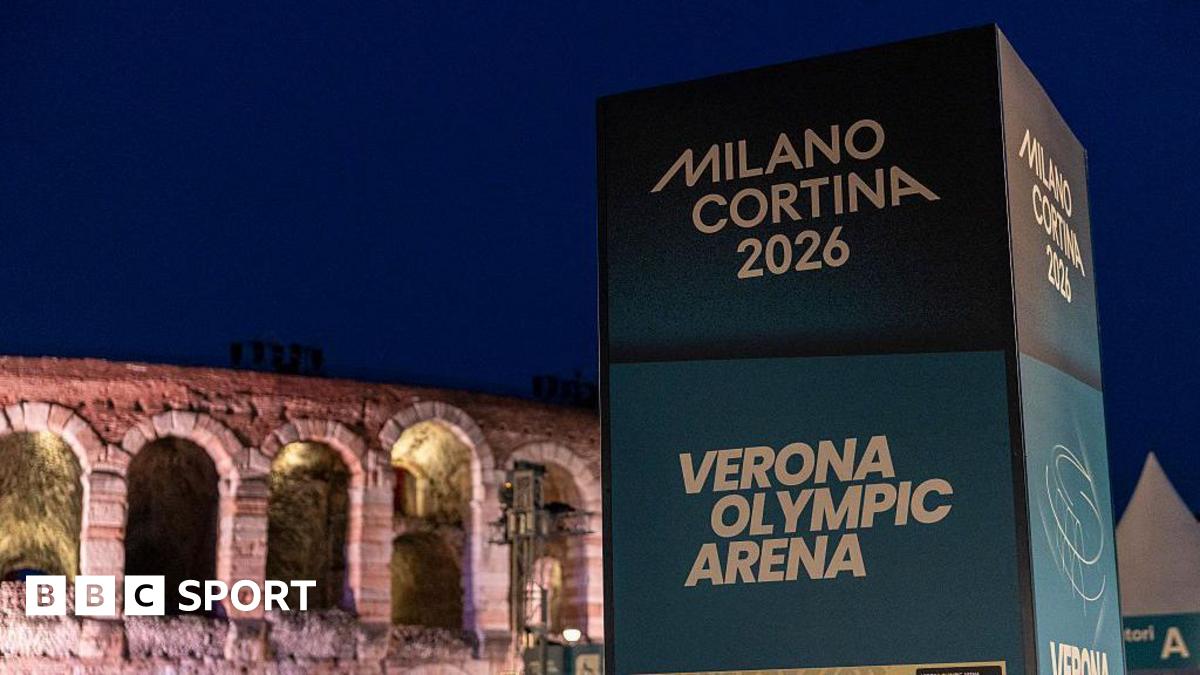
Ukraine Paralympians to boycott opening ceremony
Ukraine’s Winter Paralympics team will boycott the event’s opening ceremony next month after Russian and Belarusian athletes were invited to compete under their national flags.
On Tuesday, it was announced six Russian and four Belarusian athletes will take part in alpine skiing, cross-country skiing and snowboarding at the Milan-Cortina Games, which start on 6 March.
Both countries had previously been suspended from Paralympic competition after Russia’s invasion of Ukraine in 2022, with Belarus an ally of Russia.
In September, the International Paralympic Committee (IPC) lifted its ban on athletes from the two countries competing at the Games.
However, the IPC does not govern the six sports contested at the Paralympics and despite the individual bodies, including the International Ski and Snowboard Federation (FIS), refusing to lift their own bans, Russia and Belarus won an appeal to the Court of Arbitration of Sport against FIS.
As a result, athletes have been able to return to FIS competitions and the 10 Paralympians have been awarded bipartite commission invitations to compete in Italy.
Following an announcement that Ukrainian officials would avoid the entire competition, the country’s National Paralympic Committee now says team members will miss the opening ceremony.
The organisation has also made a “demand that the Ukrainian flag not be used”.
The team will still compete in the Games and “fight for the sporting victories of Ukrainian athletes”.
Earlier this week in its response to criticism over the decision to allow the Russian and Belarussian athletes to compete, the IPC said it was a “democratic organisation and the decision to lift the partial suspension of NPCs Belarus and Russia was taken by IPC member organisations at the 2025 General Assembly”.
Indonesia, Morocco, Kosovo among 5 countries to send troops under Gaza plan | Gaza News
Kazakhstan and Kosovo have also pledged to participate, while Egypt and Jordan will provide training for police officers.
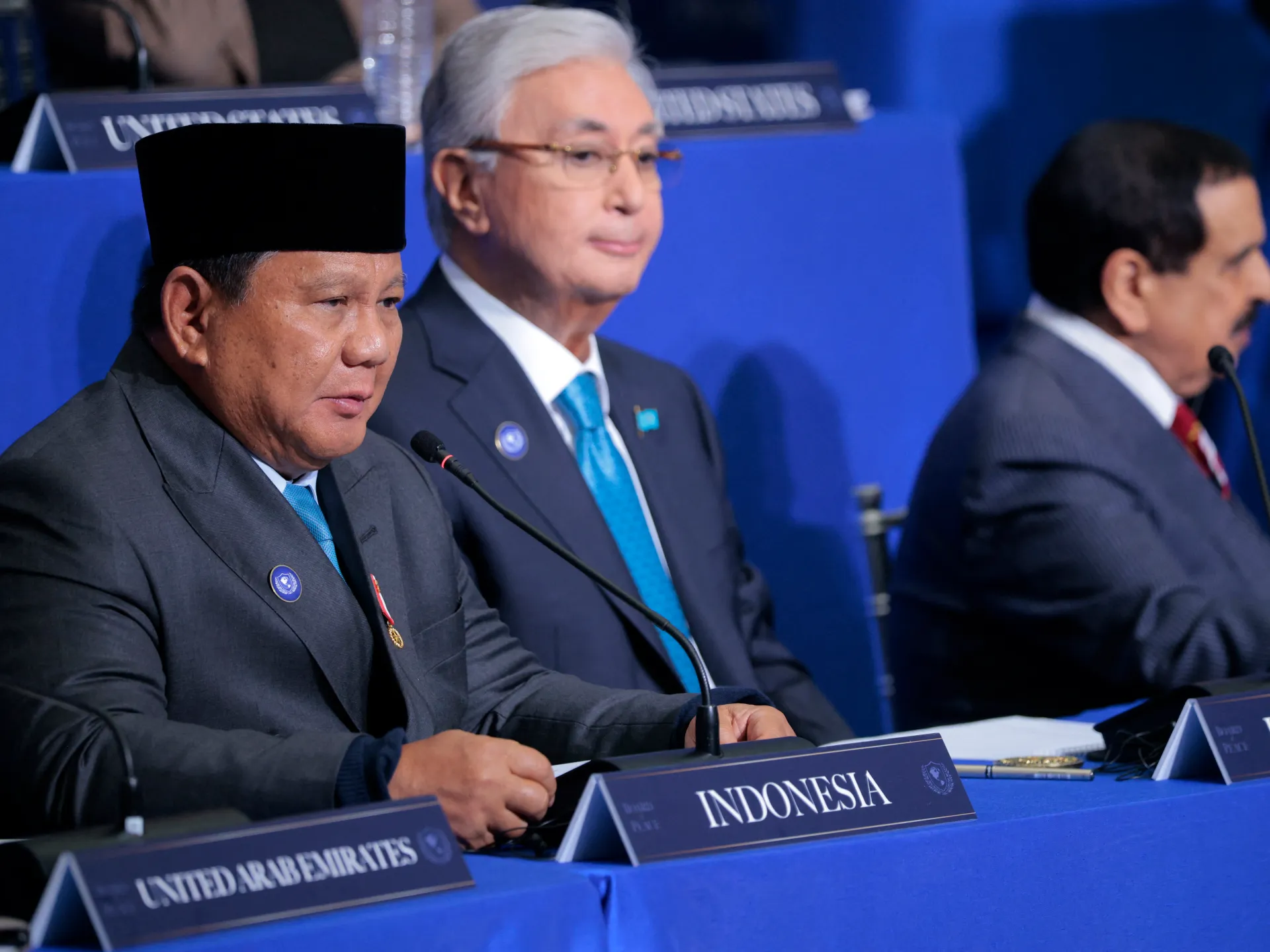
Indonesia, Morocco, Kazakhstan, Kosovo and Albania have pledged to send troops to Gaza, the commander of a newly created International Stabilization Force (ISF) has said during a meeting of United States President Donald Trump’s so-called Board of Peace.
US Army General Jasper Jeffers, who has been appointed as the head of a future Gaza stabilisation force by Trump’s board, said on Thursday that the Indonesian contingent to the mission has “accepted the position of deputy commander”.
Recommended Stories
list of 4 itemsend of list
“With these first steps, we will help bring the security that Gaza needs,” Jeffers said during a meeting of the board in Washington, DC.
Indonesian President Prabowo Subianto, who was among several world leaders participating in the meeting, said his country would contribute up to 8,000 personnel to the planned force “to make this peace work” in the war-torn Palestinian territory, where Israel’s genocide has killed at least 72,000 people.
Kazakhstan’s President Kassym-Jomart Tokayev said his country will also send an unspecified number of troops, including medical units, to Gaza, while Morocco’s Foreign Minister Nasser Bourita said that his country is ready to deploy police officers to Gaza.
Albania, whose prime minister recently made a two-day official visit to Israel, has also said it will contribute troops, while neighbouring countries Egypt and Jordan have said they will participate by training police officers.
Indonesia, which was one of the first countries to commit to sending troops, has sought to reassure potential critics that its participation is intended to ensure international law is upheld in Gaza, amid Israel’s genocidal onslaught.
‘Indonesian troops will not be involved in combat operations’
Indonesia’s foreign minister met with both United Nations chief Antonio Guterres and Palestinian ambassador to the UN Riyad Mansour in New York on Wednesday, in advance of President Subianto’s participation in the Board of Peace meeting.
“Indonesia’s mandate [on troop deployment] is humanitarian in nature with a focus on protecting civilians, humanitarian and health assistance, reconstruction as well as training and strengthening the capacity of the Palestinian Police,” Indonesia’s Ministry of Foreign Affairs said in a recent statement, according to the Jakarta Post newspaper.
“Indonesian troops will not be involved in combat operations or any action leading to direct confrontation with any armed group,” the ministry said, responding to questions raised over its future role in Gaza by Amnesty International.
The head of Amnesty International Indonesia, Usman Hamid, has voiced concerns that Indonesia risked violating international law through its participation in the Board of Peace and the planned stabilisation force for Gaza.
Hamid warned that Indonesia’s deployment of troops to Gaza “means putting Indonesia at risk of participating in a mechanism that will strengthen violations of International Humanitarian Law”.
“The Peace Council does not include members from the most disadvantaged Palestinians, but instead includes members from Israel, which has for nearly eight decades carried out an illegal occupation and apartheid against the Palestinian people, even committing genocide in Gaza,” Hamid wrote last week in an open letter to the speaker of the People’s Representative Council of the Republic of Indonesia.
Palestinians have also voiced concerns that Trump’s Board of Peace will only further entrench Israel’s illegal occupation of the Gaza Strip, as Israeli forces continue to carve out more “buffer zones” and restrict the entry of food and other aid, months into a so-called “ceasefire” with Hamas, during which almost 600 Palestinians have been killed in Israeli attacks.
The Gaza stabilisation force differs from other peacekeeping forces deployed by multilateral organisations such as the UN or the African Union.
In neighbouring Lebanon, more than 10,000 peacekeepers from 47 countries continue to participate in the United Nations Interim Force in Lebanon (UNIFIL), which was created in 1978.
Indonesia, along with Italy, is one of the largest contributors of troops to UNIFIL, which has repeatedly come under fire from Israeli forces, despite a fragile ceasefire between Israel and Hezbollah.
Major road crash leaves 18 dead, 3 injured in northeast Egypt | Transport News
Road accidents, often linked to speeding, claim thousands of lives each year in Egypt.
Published On 20 Feb 2026
A collision between a truck and a passenger pick-up in Egypt’s northeastern Port Said province has left 18 people dead, mostly fishermen, and three others injured, according to reports.
The crash at approximately 12:30pm local time (10:30 GMT) on Thursday occurred on the 30 June Axis highway, to the south of Port Said, according to Egypt’s state-run Al-Ahram newspaper.
Recommended Stories
list of 3 itemsend of list
Survivors of the collision are being treated in hospital, and public prosecutors have launched an investigation into the circumstances of the accident, according to Al-Ahram.
Images from the scene of the accident posted online showed the aftermath of the crash, with a pick-up truck crushed between two large cargo trucks and debris scattered across the road, The Associated Press (AP) news agency reports.
AP said the pick-up truck was transporting fishermen to work at fish farms in the coastal Port Said area.
Attending the inaugural meeting of United States President Donald Trump’s Board of Peace in Washington, DC, on Thursday, Egyptian Prime Minister Mostafa Madbouly sent his condolences to the victims of the collision and ordered that financial assistance be provided to relatives of the deceased and injured.
Madbouly said in a statement posted on Facebook that he was following up on the incident through reports from the governor of Port Said province.
Deadly road accidents are common on Egypt’s roads and claim thousands of lives each year in crashes often involving microbuses and heavy trucks. Speeding, poor road conditions, and lax enforcement of traffic laws have been cited as contributing factors in collisions.
In June last year, a truck collided with a minibus, killing 19 people, most of them teenage girls, according to local officials.

Eric Dane dead: ‘Grey’s Anatomy’ star dies of ALS
Actor Eric Dane, best known for wooing “Grey’s Anatomy” audiences as plastic surgeon Dr. Mark “McSteamy” Sloan, has died following a public battle with ALS.
A TV star whose career spanned from “Saved by the Bell” to “Euphoria” and beyond, Dane died Thursday, his publicist announced in a statement. He was 53.
“With heavy hearts, we share that Eric Dane passed on Thursday afternoon following a courageous battle with ALS. He spent his final days surrounded by dear friends, his devoted wife, and his two beautiful daughters, Billie and Georgia, who were the center of his world,” the statement reads. “Throughout his journey with ALS, Eric became a passionate advocate for awareness and research, determined to make a difference for others facing the same fight. He will be deeply missed, and lovingly remembered always. Eric adored his fans and is forever grateful for the outpouring of love and support he’s received. The family has asked for privacy as they navigate this impossible time.”
Dane publicized his ALS diagnosis in April 2025. A former competitive swimmer and water polo player, he said ALS — also known as amyotrophic lateral sclerosis or Lou Gehrig’s disease — initially caused the right side of his body to stop working. Prior to his death, the actor channeled his personal experiences with the condition to portray a firefighter living with ALS on TV and advocated for legislation related to the condition.
In Shonda Rhimes’ “Grey’s Anatomy,” Dane’s Sloan was a welcome addition to Seattle Grace Hospital’s staff of heartthrobs who couldn’t seem to keep their gloved hands off each other amid shifts of wild and dramatic cases. He first appeared in Season 2 of “Grey’s Anatomy” in 2006. Sloan, within minutes of his arrival, takes a punch to the face from Patrick Dempsey’s Dr. Derek Shepherd and introduces himself to Ellen Pompeo’s Meredith Grey as one of the fellow “dirty mistresses” who broke up Shepherd’s marriage to ex-wife Dr. Addison Montgomery (Kate Walsh).
Dane had initially agreed to appear in only one episode of the long-running ABC drama, but remained a fixture — and eye candy for fans — for more than 130 episodes until 2012. Nicknamed “McSteamy” for his looks, Sloan pursued relationships with Drs. Lexie Grey (Chyler Leigh), Callie Torres (Sara Ramirez) and Teddy Altman (Kim Raver) over the course of Dane’s tenure. His character was killed off early in Season 9 after a devastating Season 8 plane crash that also claimed the life of Leigh’s Lexie.
In 2021, Dane returned to “Grey’s Anatomy” for a cameo in Meredith’s COVID-19-induced dreams.
Prior to breaking out with “Grey’s,” Dane played minor roles in series including “Saved by the Bell, “Roseanne,” “Gideon’s Crossing” and “Charmed.” Dane followed up his “Grey’s Anatomy” tenure with appearances on the ABC spinoff “Private Practice,” a leading role in TNT’s “The Last Ship” and a stint as a secretive real estate developer and dad in HBO’s teen drama “Euphoria.”
He also appeared in several movies following “Grey’s Anatomy,” including “X-Men: The Last Stand,” “Marley & Me,” “Burlesque” and Garry Marshall’s “Valentine’s Day,” which reunited him with co-star Dempsey.
Dane did not plan to be an actor until he unexpectedly landed a role in his high school’s production of Arthur Miller’s “All My Sons,” but he “fell in love with it,” he told the Gulf Times in 2014.
“I was like this is the greatest feeling ever,” he added.
Eric William Dane was born Nov. 9, 1972, in San Francisco. His father, a Navy man-turned-architect, died of a gunshot wound when the actor was 7, leaving his mother to raise her two children with assistance from her parents.
Dane attended Sequoia High School and San Mateo High School but dropped out prior to graduation to pursue acting in Los Angeles.
He partied often in his 20s and first entered rehab at age 26. Amid his “Grey’s Anatomy” fame, Dane struggled with addition to painkillers and prescription medicine. He relapsed in 2007 during the Writer’s Guild of America strike, he recalled in 2024.

Eric Dane and Rebecca Gayheart bring their daughters to the March 2015 world premiere of “Cinderella” in L.A.
(Richard Shotwell / Invision / Associated Press)
“If you take the whole eight years I was on ‘Grey’s Anatomy,’ I was f— up longer than I was sober and that was when things started going sideways for me,” he said at the time. Notably, he entered rehab again in 2011 to address issues with prescription drugs he had been prescribed for a sports injury.
Dane also spoke openly about his struggles with depression, which reached a head in 2017 amid production on his series “The Last Ship.” During a 2017 “Today” appearance, Dane explained that he was taking medication to manage the disorder, which he said hit him “like a truck.”
“I had to take some time off,” he said at the time. “I went away, I took care of it, and I’m feeling great.”
Dane married “Loving” actor and model Rebecca Gayheart in 2004 in Las Vegas the same day he proposed to her. Infamously, their relationship was subject to scrutiny when in 2009 leaked video showed the spouses in the nude and intoxicated lounging in a bathtub with actor Kari Ann Peniche. Marty Singer, attorney for the spouses at the time, dismissed the controversy.
However, the couple separated in 2017 and Gayheart filed to divorce Dane in 2018, but the split was never finalized. Then in March 2025, right before he went public with his ALS, she filed a request to dismiss the original petition.
In Dane’s role after revealing his diagnosis, he appeared in an episode of the NBC medical drama “Brilliant Minds” as a heroic firefighter struggling to tell his family he has ALS. The episode aired in late November; Gayheart revealed in a late December New York magazine essay that the actor was receiving 24/7 nursing care and she was covering most of the caregivers’ missed shifts.
“We haven’t lived in the same home for eight years; he’s dated other people, I’ve dated someone,” Gayheart wrote in the essay, which discussed Dane’s diagnosis and how it had affected the family. “It’s a very complicated relationship, one that’s confusing for people. Our love may not be romantic, but it’s a familial love. Eric knows that I am always going to want the best for him. That I’m going to do my best to do right by him. And I know he would do the same for me.
“So whatever I can do or however I can show up to make this journey better for him or easier for him, I want to do that,” she continued. “And I want to model that for my girls: That’s what you do. That’s the right thing to do.”
Dane is survived by daughters Billie, 15, and Georgia, 14, whom he shares with Gayheart.
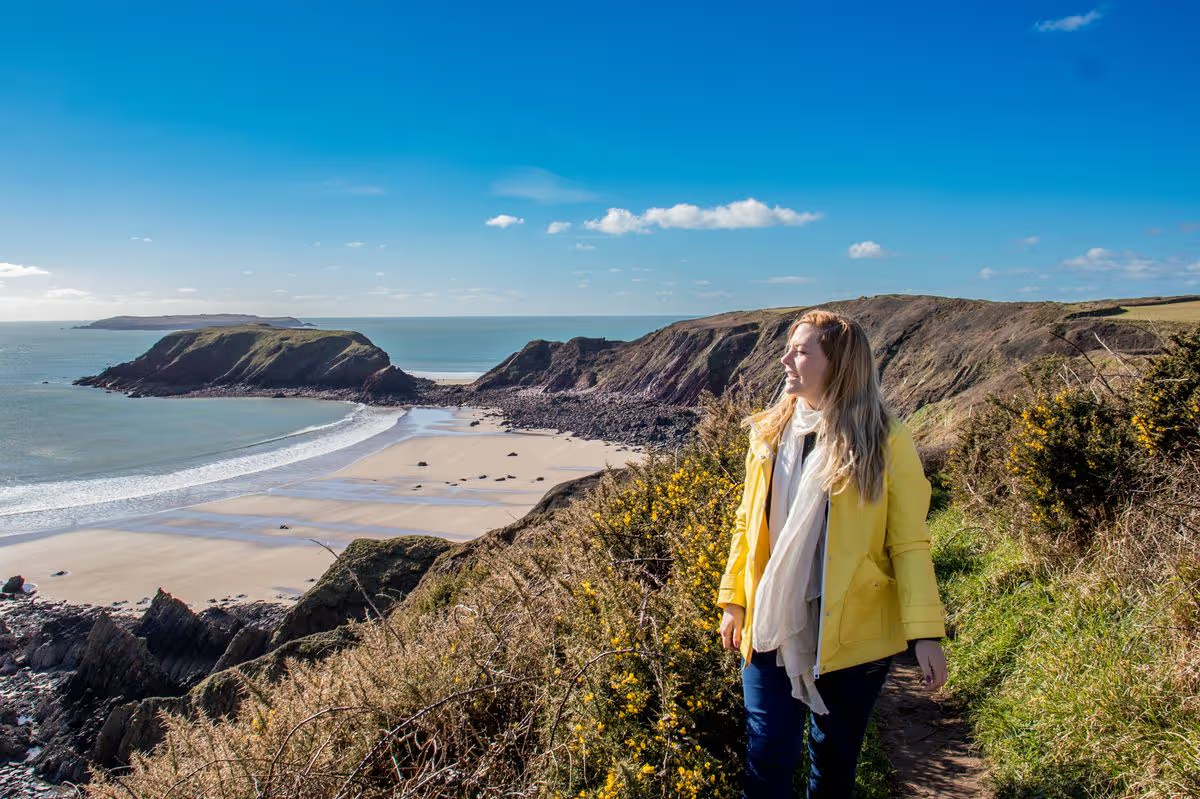
The under-rated seaside town that’s a perfect alternative to the UK’s ‘best’
Where can you go if you want a lovely coastal alternative? My suggestion would be one of my favourite, underrated spots in Wales.

I visited an under-rated seaside town that’s far less-crowded than its famous neighbour(Image: Portia Jones)
As many of us will well know, popular UK seaside destinations can be very crowded during half-terms and summer holidays as the masses descend for a break by the sea. But where can you go if you want a lovely coastal alternative?
I’ve got a suggestion and it’s one of my favourite spots — and hugely under-rated. Once synonymous with heavy industry and commercial docks, Milford Haven is now making waves as an exciting destination for tourism. Dominating the estuary, this historic harbour town in south-west Wales has had a striking transformation thanks to a multi-million-pound regeneration project that has turned its waterfront into a bustling hub of food, fun and on-the-water living.
It’s a lovely alternative to busy Tenby if you’re looking for a new location for a family break or a couple’s escape. At the heart of the town’s impressive revival is Milford Waterfront, a stylishly redeveloped marina that’s fast earning a name for itself – and is becoming somewhere worth travelling to in its own right.
Formed by a ria, or drowned valley, the Milford waterway is known for being one of the deepest natural harbours in the world and is still Wales’ largest fishing port and home to the local inshore fleet. Today, it’s still a fishing port but is now a mixed-use space for locals and tourists featuring berths, floating accommodation, shops and restaurants.
From a 17th-century Quaker whaling town and shipbuilding outpost to a modern marina, Milford Haven has become one of my go-to weekend break spots. Here, you’ll find independent bars, locally owned shops, gallery spaces, and an increasingly sophisticated dining scene that’s starting to rival Tenby in both quality and character.
Where to stay in Milford Haven
One of the most striking additions to Milford’s astonishing facelift is the Tŷ Milford Waterfront hotel, which opened in 2022. It’s managed and operated by the team responsible for the iconic five-star Celtic Manor Resort and forms part of The Celtic Collection’s expanding portfolio and the Tŷ Hotels family in partnership with the Port of Milford Haven.
Tŷ Milford is one of Pembrokeshire’s largest hotels, with 100 bedrooms and a gorgeous glass-fronted restaurant, and it’s my favourite place to stay in the area.
Since opening, the hotel has garnered positive reviews and was crowned Hotel of the Year at the Visit Pembrokeshire – Trade Croeso Awards in 2024. Ensure our latest news and sport headlines always appear at the top of your Google Search by making us a Preferred Source. Click here to activate or add us as Preferred Source in your Google search settings
Despite its four-star status and stylish interiors, it’s surprisingly affordable with advance purchase rooms starting from £104. You can also bag great deals on sites like Booking.com and Holiday Cottages.
The Dulse restaurant and bar is a real highlight, serving some of the best seafood in Pembrokeshire. This stylish restaurant is named after Pembrokeshire’s edible, versatile seaweed, which grows abundantly along the rocky coastline. Definitely order the Tenby Harbwr Beer Battered Haddock, it’s divine.
I would also highly recommend the Luxury Glamping Cabins on the marina, where you can stay on the water from £80 per cabin.
Things to do in the town
Step outside your accommodation and you’ll find plenty to do here. The boat-filled marina offers plenty of bars, independent shops, and cafes to explore. History and heritage are also thoughtfully displayed through walking trails and the volunteer-run Milford Haven Museum. The museum tells the story of Milford Haven and its proud maritime heritage.
Inside, you can explore exhibits and collections that cover the Nantucket Quaker Whalers, the fishing industry, and the nautical town’s crucial role in meeting the world’s energy demands.
Wander further along the waterfront, and you’ll find boutique shopping, cafes, seafood restaurants, and even a chocolate shop.
The port also hosts a busy calendar of events, including its popular summer campaign, which features a fish festival, a beer festival, and a street food festival. Children’s activities and seasonal events, such as fireworks displays and Santa visits, also take place throughout the year.
Where to eat and drink in Milford Haven
Some of the foodie offerings in the marina include artisan chocolates from Dilly’s Chocolates, ice cream from Scoop Parlour and sweets from Scott’s. For lush seafood, try the seared scallops, prawns or pan-fried hake fillet at Martha’s Vineyard, a family-run bar and restaurant with glorious views over the Milford Haven Waterway.
There are several cafes along the Waterfront that serve breakfast and lunch, including the Spinnaker Café, Foam and the traditional Crow’s Nest Café, where you can get a proper fry-up or bacon bap.
Further along the waterfront, you’ll find dinner and drinks at quayside restaurant Coco’s, housed in the Grade II-listed ‘Sail Loft’ building. Pembrokeshire produce features where possible on their menu, and local tipples are also available at this upscale venue.
Activities around the town
Looking for something more active? At Milford Beach Activity Centre, you can experience stand-up paddleboarding and kayaking from the Hot Water Slip and explore the historic Milford Haven Waterway shorelines.
This local business operates out of a blue shipping container overlooking Milford Beach and offers guided tours, stand-up paddleboard rentals, and kayak hire.
Go on a guided tour of the estuary with their experienced guides to better understand the area’s history, including the Vikings that settled here, the Welsh fishing industry, the town’s military connection, and past industries.
Milford Haven is also a fantastic base for exploring the Pembrokeshire coast year-round.
A short drive from Milford Haven, Broad Haven Beach is a wide, sandy expanse perfect for a relaxing day by the sea. In the summer season, this family-friendly beach offers excellent facilities, including lifeguards, making it safe for swimming and sunbathing. On colder days, it’s still lovely to bring a flask of hot chocolate and have a bracing walk along the shoreline.
Marloes Sands is another great shout for dramatic cliffs, golden sands, and crystal-clear waters.
Surrounded by cliffs, accessible only on foot and only when the tide allows, the effort of getting to this remote Welsh beach is well worth it, with unspoiled sands, rocky outcrops and a sea with the most vibrant shades of blue.
At low tide, the sand stretches out forever, revealing rock pools teeming with tiny crabs and sea anemones.
To reach the beach, you’ll need to park at the National Trust car park, about a half-mile away, and walk down. It’s a bit of a stomp, especially if you’re carrying beach gear, but you’re rewarded straight away with sweeping views of the coastline and distant glimpses of Skokholm and Skomer islands, both rich in birdlife.
If you want to make the most of your visit, lace up your walking boots and do the Marloes Peninsula coastal circuit. The National Trust has listed a brilliant circular walk that takes you across farmland, along the Wales Coast Path and through the remains of Iron Age forts.
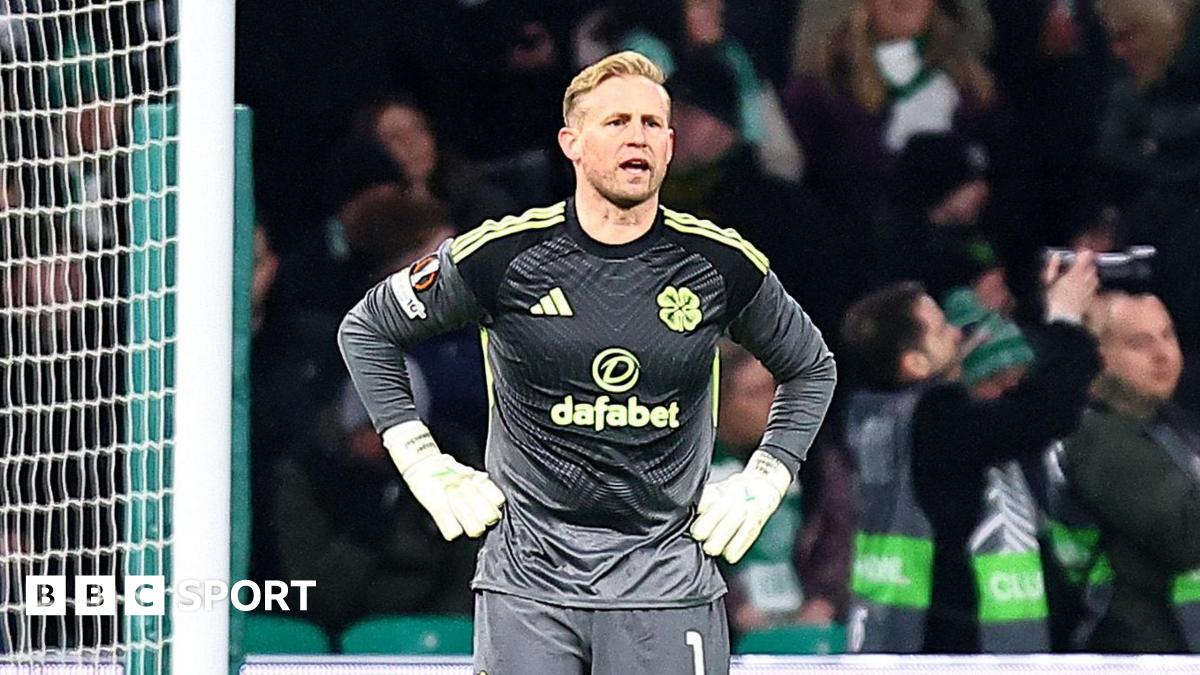
Kasper Schmeichel: Keeper in spotlight after night of gloom for Celtic
With fans protesting against the club’s board at the start of the game and later ironically cheering Schmeichel making a save, the atmosphere at Parkhead was far from harmonious.
“It’s bitterly disappointing,” former Celtic captain and manager Neil Lennon said of the jeers directed at Schmeichel.
“He had a bad night but it still doesn’t warrant that kind of treatment.”
Thursday night was the latest in a string of perceived errors made by Schmeichel, following Joe Hugill’s looping header for Kilmarnock last weekend and Jonathan Rowe’s effort for Bologna last month.
Perhaps unsurprisingly, Celtic closed ranks around their embattled goalkeeper post-match.
“It’s a tough evening for us,” interim manager Martin O’Neill said. “On paper, 4-1 looks pretty poor.
“We were masters of our own downfall in many respects, conceded some poor goals.
“Kasper [Schmeichel] has made some great saves while I’ve been here. This is a collective, there’s no doubt about that.
“We played Feyenoord in a game we probably had to win and he made an unbelievable save, otherwise we wouldn’t be here playing tonight.
“I will think about all sorts of things [before the next game], but Kasper has done really well since I’ve arrived at the football club, in both spells.”
Captain Callum McGregor added: “Everyone makes mistakes.
“Kasper has been amazing since he’s come to the club. He’ll dust that down. We win as a team and lose as a team.
“There’s no blame, he’s made so many big saves for us. He’ll bounce back for sure.”
Russia-Ukraine war: List of key events, day 1,457 | Russia-Ukraine war News
These are the key developments from day 1,457 of Russia’s war on Ukraine.

Published On 20 Feb 2026
Here is where things stand on Friday, February 20:
Fighting
- Russian forces launched 448 attacks on 34 settlements in Ukraine’s front-line Zaporizhia region in a single day, injuring a six-year-old child and damaging homes, cars and other infrastructure, regional governor Ivan Fedorov wrote on the Telegram app.
- Russian drone, missile and artillery attacks on Ukraine’s Kherson region injured five people and damaged homes, including seven high-rise buildings, the local military administration said on Telegram.
- Russian attacks also continued in Ukraine’s Dnipropetrovsk and Sumy regions, but local officials there noted that “fortunately, no people were injured”. According to the Kyiv Independent news outlet, overnight was “unusually quiet” following weeks of “heavy fire” in the two regions.
- A man was killed by shrapnel from a Ukrainian drone attack on Sevastopol, in Russian-occupied Crimea, Governor Mikhail Razvozhayev said on Telegram.
- A Ukrainian drone attack caused a fire at an oil depot in Velikiye Luki in Russia’s Pskov region, local official Mikhail Vedernikov said, according to Russia’s state TASS news agency.
- Russian forces shot down 301 Ukrainian drones, 10 missiles and two guided bombs in a 24-hour period, Russia’s Ministry of Defence said, according to TASS.
Peace process
- United States President Donald Trump’s Board of Peace held its first meeting in Washington, DC, without Belarus participating, despite Trump extending an invitation to the Russian ally.
- Belarus’s Ministry of Foreign Affairs said in a statement that its delegation to the meeting did not receive the necessary visas to enter the US “despite carrying out all the required procedures”.
- The Foreign Ministry questioned, “What kind of peace and what kind of sequence of steps are we talking about if the organisers cannot even complete basic formalities for us to take part?”
-
France’s Ministry of Foreign Affairs spokesperson Pascal Confavreux expressed surprise to see the European Commission had sent a commissioner to participate in Trump’s meeting, noting that it “does not have a mandate from the [European] Council to go and participate”.
- Confavreux also said France would not take part in Trump’s initiative until the Board of Peace returned its focus to Gaza in line with a United Nations Security Council resolution.
- Several European Union member states have said they will not participate in the peace board after Trump extended an invitation to Russian President Vladimir Putin, who launched the invasion of Ukraine in 2022 and is subject to an arrest warrant by the International Criminal Court.
Regional Security
- Dutch intelligence services AIVD and MIVD said on Thursday that European countries, including the Netherlands, were facing increased hybrid threats from Russia, including cyberattacks, sabotage, influence campaigns and disinformation.
Energy
- Ukraine’s Russian-held Zaporizhzhia nuclear power plant is operating on its sole remaining main power line after losing its only backup power line more than a week ago, head of the International Atomic Energy Agency, Rafael Grossi, said in a statement.
- Hungary is considering halting power and gas exports to Ukraine and will take such steps unless Ukraine resumes the flow of crude oil shipments via the Druzhba pipeline, Prime Minister Viktor Orban’s chief of staff told a briefing.
- The Druzhba pipeline, parts of which run through Ukraine, is crucial for the transfer of Russian crude oil to Hungary and Slovakia. Oil flows have reportedly halted since an attack on the pipeline in January, which Kyiv has blamed on Russia.
- France’s Minister of the Economy, Finance and Industry Roland Lescure said his country would provide 71 million euros ($83.5m) in additional funding for Ukraine for services including energy, health and clearing land mines.
Politics and diplomacy
- The head of Russia’s FSB security service accused Telegram messaging app founder Pavel Durov of condoning criminal activity on the platform, in an escalation of Moscow’s rhetoric as it moved to restrict the service that is used by many Russians and Ukrainians to communicate about the war.
-
Dismissing a Russian government allegation that foreign intelligence services are able to see messages sent by Russian soldiers on Telegram, the popular platform said it had not found any breaches of its encryption codes and called Russia’s claims a “deliberate fabrication”, according to the Reuters news agency.
Military aid
- Sweden announced a 12.9 billion crown ($1.42bn) military aid package for Ukraine that will include air defences, drones, long-range missiles and ammunition.

US pays about $160m towards nearly $4bn in UN dues | Donald Trump News
The United Nations announced that the United States has paid approximately $160m towards its nearly $4bn in outstanding dues.
The payment goes towards the UN’s regular operating budget, according to spokesman Stephane Dujarric.
Recommended Stories
list of 3 itemsend of list
But the shortfall comes as the administration of US President Donald Trump has openly questioned its commitment to the UN and has slashed money earmarked for the international body.
Still, on Thursday, Trump appeared to endorse funding the UN during the inaugural meeting of his Board of Peace in Washington, DC.
“We’re going to help them money-wise, and we’re going to make sure the United Nations is viable,” Trump said. “And I think it’s going to eventually live up to its potential. That will be a big day.”
The UN has indicated that the US owes about $2.196bn to its regular budget, including $767m for the current year. Another $1.8bn is owed for the UN’s peacekeeping operations.
A financial crisis
For years, the UN has faced a financial crisis, with a growing shortfall of contributions. Each of the organisation’s 193 member states is required to contribute, based on its economic ability.
Poorer countries could be asked to contribute as little as 0.001 percent of the UN’s regular budget. Wealthier countries could reach the maximum contribution amount of 22 percent.
But unpaid dues have already forced the UN to slash its spending and reduce its services.
In a stark warning last month, United Nations Secretary-General Antonio Guterres cautioned that the international body faces an “imminent financial collapse” unless its financial rules are overhauled or all 193 member nations pay their dues.
Guterres revealed that the UN’s regular operating budget could be depleted as early as July, a scenario that would severely jeopardise its global operations.
The US is the largest donor to the UN, as the world’s largest economy. But it currently owes billions in unpaid dues.
UN officials have stated that the US accounts for approximately 95 percent of the arrears to the organisation’s regular budget.
‘Empty words’
Since returning to the White House for a second term in January 2025, Trump has elevated concerns that US dues might go unpaid.
The Republican leader has repeatedly criticised the UN as ineffective, even articulating that sentiment at September’s UN General Assembly.
“What is the purpose of the United Nations?” Trump asked the assembly. “All they seem to do is write a really strongly worded letter and then never follow that letter up. It’s empty words.”
Throughout his second term so far, he has cut foreign aid spending and withdrawn from international commitments. In January, for instance, his government pulled out of 31 UN programmes, including its democracy fund and a body that works on maternal and child health.
But on Thursday, at his Board of Peace meeting, Trump appeared to take a warmer stance towards the UN, saying he planned to work “very closely” with the organisation.
“Someday, I won’t be here. The United Nations will be,” he said, seeming to endorse its longevity.
Trump also acknowledged the organisation’s financial distress: “They need help, and they need help money-wise.” He did not mention the US arrears.
While the Board of Peace establishment was meant to oversee the Gaza ceasefire, many see it as an attempt by Trump to rival the UN Security Council’s role in preventing and ending conflicts around the world.
Critics have described the board, which Trump chairs, as a “parallel system” that risks undermining the UN’s authority and operations.
Trump himself appeared to position his Board of Peace as an oversight body for the UN in Thursday’s remarks.
The Board of Peace, he said, “is going to almost be looking over the United Nations and making sure it runs properly”.
How ‘The Pitt’ portrayed a rape kit exam with the help of experts
The following article contains spoilers for Episode 7, “1:00 P.M.,” of “The Pitt” Season 2.
The education begins almost immediately. A young woman who has just experienced a sexual assault is in triage, and “The Pitt’s” Dr. Robby (Noah Wyle) enlists Dr. Al-Hashimi (Sepideh Moafi) to assist charge nurse Dana Evans (Katherine LaNasa) with the patient.
“We can call for a SANE,” another nurse suggests when Dana says she’ll be occupied.
“On a holiday? Could be hours,” responds Dana, a veteran who knows better, as the Fourth of July shift enters afternoon hours. “We’re not going to make this patient wait. And since I’m the only SANE on staff …”
A what? The quick reference sets in motion what “The Pitt” aims to shed light on: a sexual assault forensic exam, also known as a rape kit exam. The episode delves into the confidential medical procedure to collect DNA and evidence and gives one of the most detailed depictions of the process for television.
But before cameras venture into the room with the patient, Dana gives recent nursing school graduate Emma (Laëtitia Hollard) — and the audience — an overview. A SANE is a sexual assault nurse; they perform forensic exams, collect evidence and hand it over to the police, if a report is made. They also provide resources, support and may even testify in court.
The storyline serves a dual purpose, according to Kirsten Pierre-Geyfman, who co-wrote the episode with the show’s creator, R. Scott Gemmill. “We wanted to highlight the very important and incredible work of a SANE, especially in the department setting,” she says. “And we also wanted to see the bravery it takes for a survivor to come forward, let alone do a rape kit … It’s not an easy decision for somebody to make, and it’s not an easy process for somebody to go through.”
To help construct a realistic and sensitive portrayal of the exam process, “The Pitt’s” writing team and actors worked with a number of consultants, including the UCLA Health Rape Treatment Center and Pittsburgh Action Against Rape (PAAR).
“I wanted people to understand the extent of the exam, I think that’s a misconception among a lot of people,” said Dr. Kathleen Sekula, a SANE at Duquesne University in Pittsburgh who also consulted the show’s team.

Ilana (Tina Ivlev) arrives at the ER in Episode 7 of “The Pitt.”
(HBO)
The case in Episode 7, “1:00 P.M.,” involves a visibly shaken young woman, Ilana, played by Tina Ivlev. The writing team knew they wanted to detail the process, not the trauma, Pierre-Geyfman said, so the information about what Ilana experienced is minimal: She was at a barbecue with friends when she was assaulted by a male friend.
“The thing that struck me was the fact the other shows might focus on what happened and then dive into that,” Ivlev said. “What I loved about this, the minute she starts talking about it, they cut [away]. There’s so much underneath it. I wanted it to be similar to real life when you have a traumatic situation happen — sometimes you can be hyperfocused on certain details, then other things are cloudy. Her head is spinning. She’s in shock.”
As with many of “The Pitt’s” cases, the story serves to bolster the emotional arc of the show’s healthcare providers, in this case Dana, who assists with the exam from start to finish as the department’s certified SANE nurse. Last season, she was brutally punched in the face by a disgruntled patient while taking a smoke break. That violent attack left her rattled and contemplating an exit from the job, but after taking a few weeks off, she ultimately returned to work — though the assault’s lingering impact has sharpened her edges.
“With Dana’s arc and her own assault last season, she’s definitely calcified a little this season,” Pierre-Geyfman said. “She’s trying to create a little bit of distance between her and her patients, and is really trying to prioritize her nurse’s safety. You see her struggle a little bit with that with this patient. She’s wanting to do more for her.”
On screen, the assessment begins with Dr. Al-Hashimi checking to see if Ilana has any injuries that need immediate attention and getting an intake of prescription medications and any known allergies to medications. Securing two triage rooms to complete the exam as a way to ensure privacy in the busy emergency department, Dana, with help from Emma, begins the evidence collection while carefully outlining the process to Ilana. For starters, once Dana opens the kit, Ilana cannot leave the room but is free to take a break as needed.
To avoid contamination, Dana puts on a face shield and opens the kit, which is a rectangle-shaped box that contains items like paper bags to store evidence and swabs for collecting biological samples. The first step requires Ilana to change into a robe, undressing on top of pads placed on the floor so each item of clothing can be packaged into separate bags and collected as evidence. She’ll be given new clothes, Dana assures her. Dana raises a large piece of cloth to give Ilana privacy as she completes the process.
Eventually Dr. Al-Hashimi returns to examine Ilana, checking for any pain on her body or need for X-rays or imaging — she notes two areas of bruising to be documented by Dana with photos. Dana seals the camera’s memory card in an evidence envelope. Next, with the lights off, Dana runs a black light over Ilana’s body. Dana relays that if there’s a part of Ilana’s skin that glows, she’ll swab it with a wet, then dry, cotton swab. Dana next swabs Ilana’s mouth — the inside of her cheek and along the gum line — and her finger nails. At various points, Dana is careful to assess Ilana’s comfort with each step and uses statements like “This will not define you,” while Ilana shows signs of stress about the length of the process.

Emma (Laëtitia Hollard) assists Dana (Katherine LaNasa), who leads the exam as the SANE (sexual assault nurse) on duty.
(HBO)
At one juncture, an advocate from Pittsburgh Action Against Rape, otherwise known as PAAR, arrives to further detail the resources and assistance they can offer, a service that’s available regardless of whether a patient decides not to complete the rape kit exam. Throughout the process, Ilana is assured that she can complete the exam even if she’s vacillating on whether to file a police report — that decision can be made at a later time and none of it goes on her permanent medical record. But when the exam pivots to external and internal vaginal collection, Ilana panics once she’s instructed to place her feet in stirrups to get into position. Dana suggests a break.
“I don’t want a break, I want to stop,” Ilana proclaims. “He’s my friend. He knows all my friends. It was just a dumb — he was drunk. He didn’t mean — it didn’t mean anything.”
It brings a pause to the process, which will carry over into Episode 8. In trying to show the scope of the exam, the medical drama takes liberties in its completion time. Sekula said it’s rare for an exam to be completed in under three to four hours.
Not all nurses are certified to be a SANE, and certification requirements vary by state, according to Sekula. It’s a role that requires extreme attention to detail and thoroughness, as their work bridges the healthcare and legal systems. While preparing for the episode, Hollard said she marveled at the precise protocols involved and the support that’s provided.
“On a technical level, it’s so meticulous,” Hollard said. “There’s so many parts, so many envelopes. You have to take these swabs and they can’t touch each other. And the legality of it all — the way this kit is happening is how they would do it with PAAR in Pittsburgh, but that’s not the same way they do it in California, or [the way] they do it in different states.”
While “The Pitt” is frequently recognized for its hyperrealistic medical procedures, the episode’s director, Uta Briesewitz, knew she wanted to film the exam in a way that mirrored the sensitivity healthcare professionals strive to exhibit, with shots that weren’t invasive or fixated on Ilana’s body. For example, when Ilana is undressing, the camera is fixed on Dana being mindful to give her privacy even in their close proximity — an out of focus glimpse of Ilana’s bare backside comes only when getting a reaction of Emma taking in the weight of the moment. Later, when the blue light is being run down Ilana’s body, her hospital gown is carefully place to avoid exposure. In addition to a SANE consultant being on set to assist with queries about the process, there was also an intimacy coordinator to help with the comfort level of filming the scenes.

“On a technical level, it’s so meticulous,” said Laëtitia Hollard of the process. “There’s so many parts, so many envelopes. You have to take these swabs and they can’t touch each other.”
(HBO)
“It was a very sensitive line because women can get re-traumatized,” Briesewitz said. “I remember one of our more detailed conversations with our SANE nurse was about when Dana had to look with the black light for bodily fluid. How do we make sure she would not miss anything but, at the same time, give the victim the feeling that they’re still protected? It was super helpful to have our SANE advisor on set to say the way she would do it. ‘One arm comes out of the sleeve, then I hold up her gown this way, and I would do it like that …’”
LaNasa found her time at the UCLA Health Rape Treatment Center crucial to chart both her character’s ease in the room and her sensitivity to the task at hand: “I went back a second time because I knew I was going to have to use the kit … I wanted it to look like I had used the kit many times and I knew what I was doing.”
Reflecting on the case as a mirror to her character’s journey, LaNasa pointed out that Dana never pressed charges against Doug Driscoll, the man who assaulted her.
“It’s different in this situation,” LaNasa acknowledged. “I thought it was great information that we got out of this, which is that you can go and do a rape kit, you can have the evidence collected, and you don’t have to decide on that day when you’re traumatized if you want to press charges or not. I think that part of Dana’s hypervigilance is probably because there was no justice for her. I think why she’s cracked this season is because she didn’t take care of herself. She’s reeling from that. She let him beat her up. At the same time, she doesn’t want Tina’s character to feel any pressure, but I think she wants it for her. She wants her to have the ability to change her mind later.”
“We’re going to hear Dana, later in the season, refer back to this process that these people have to go through, in defense of a sexual assault victim,” LaNasa teased. “It’s big on her mind. She’s been doing it quite a while.”

American Alysa Liu rides wave of joy to Olympic gold medal
MILAN — She flipped her hair. She shrugged. She dusted her hands off.
Alysa Liu makes winning an Olympic gold medal look easy.
The 20-year-old became the first U.S. woman to win the Olympic singles title since 2002, electrifying the crowd at Milano Ice Skating Arena with her “MacArthur Park” program Thursday and overtaking Japanese rivals Kaori Sakamoto and Ami Nakai, who won second and third, respectively.
Liu scored a monster 150.20 points in her free skate, the highest mark for a women’s free skate all season in international competition to win by a total of 1.89 points. Her choreographer Massimo Scali’s jaw dropped when he heard the score read in Italian. A beat later when the screen caught up to the public address announcement in the stadium, Liu nodded confidently and cracked a subtle smirk.

American gold medalist Alysa Liu hugs Japanese bronze medalist Ami Nakai after their final scores were revealed at the Winter Olympics on Thursday in Milan.
(Jamie Squire / Getty Images)
She doesn’t care about the scores.
Liu, who grew up in Oakland, has floated through her second Olympics as if she had not a single care in the world. A two-year retirement during which she climbed Mt. Everest, got her driver’s license and started college at UCLA made skating feel inconsequential. Now so unbothered, Liu spent part of her six-minute warmup cheering on teammate Amber Glenn in the leader’s chair. Minutes before taking the ice, Liu snapped a selfie with her coaches. She gives her coaches a high-five right before taking her starting position.
“She’s not like us,” her coach Phillip Diguglielmo said. “The rest of us here would be like, ‘Oh my God, I’m nervous. Oh, I can’t do this. I have a million voices in my head.’ She has one voice in her head, and it says, ‘I got this.’”
The only emotions Liu felt during her program were “calm, happy and confident.” When she sees the faces in the crowd smile, Liu said she can’t help but smile, too. And there was a lot of smiling. Her Donna Summer disco program had fans clapping within the first minute. Diguglielmo and Scali held their hands overhead to join the roar. Liu’s pre-program message to the crowd on the video board was “Y’all better turn up!”
Liu, who won the 2025 world championship with the same crowd-pleasing program, returned to the sport in 2024 with the sole objective of sharing her art. She wanted to make as many programs as possible. Winning never seemed to matter. With the gold medal hanging around her neck, Liu stopped short of saying she even wanted it. She surely didn’t need it, she said.
“What I needed was the stage,” Liu said. “And I got that.”
Once Liu processed the final scores, she rose to her feet and turned toward Nakai, clapping for the 17-year-old. Nakai, skating in her first Olympics, was shocked. She held up three fingers to Liu, asking if she had finished on the podium. Overjoyed, they hugged. Liu picked Nakai, who had entered the free skate in first place, up off the ground.
Sakamoto was less than a point ahead of Liu entering Thursday’s free skate, but small mistakes from the three-time world champion, in addition to Liu’s strong technique and infectious energy made Liu the first U.S. woman to win the Olympic gold medal since Sarah Hughes in 2002. The United States’ 20-year drought without a medal — since Sasha Cohen took silver in 2006 — was the country’s longest.
Liu held her palms up in disbelief after finishing the program of her life that put her in the lead with two competitors remaining. She leaned into the camera and pointed to the piercing on the inside of her upper lip. She did it herself.
With blond horizontal stripes dyed in her dark brown hair, bold black eyeliner and the smiley lip piercing, Liu has cut an alternative path to the top of a sport that long valued a specific kind of femininity. But the slick back bun, classical music and balletic dress was not Liu’s brand.
Her brand is joy.
And now as just the second figure skater in history to win two Olympic gold medals at the same Olympic Games — joining U.S. star Nathan Chen — Liu has the stage, and the attention, to display her joy for the next generation of athletes.
“People will be able to see how she approaches the sport now versus before and see how much more successful it is now in a healthy way,” Glenn said. “And I’m hoping people can really learn from that.”
Glenn got redemption after the short program, putting up a season’s best 147.52 during her free skate that vaulted her from 13th to fifth with a 214.91 total score. The only blemish was when Glenn put one hand down on her final jump — the same triple loop that cost her in her short program. But as she held one leg behind her during a spiral in her last sequence, Glenn smiled as she looked into the crowd. After the program, she whipped her fist through the air triumphantly.
The performance put a positive punctuation mark on Glenn’s winding Olympic journey. She has faced intense scrutiny at the Games. The same pressure that consumed Glenn and teammate Ilia Malinin could not even touch Liu’s glowing aura.
When asked Thursday if she felt any “Olympic pressure,” Liu smiled.
“You would have to explain what Olympic pressure is,” she said.
Then she bounced away, the gold medal around her neck blending perfectly with her gold dress.

North Korea’s Kim Jong Un launches key party congress held every 5 years | Kim Jong Un News
Kim focuses on improving economic activity in opening speech at Ninth Congress of the Workers’ Party of Korea.
North Korea has kicked off a rare party congress of the ruling Workers’ Party, held once every five years, that will see the leadership in Pyongyang set major policy goals in defence, diplomacy and the economy, state media reports.
The Korean Central News Agency (KCNA) said on Friday that the Ninth Congress of the Workers’ Party of Korea (WPK) was under way, marking the start of the country’s most consequential political event since 2021.
Recommended Stories
list of 4 itemsend of list
“The Ninth Congress of the WPK opened with splendour in Pyongyang, the capital city of the revolution,” KCNA said, reporting that the high-level meeting started on Thursday and observers say it is expected to run for several days.
South Korea’s official Yonhap News Agency said the gathering will be closely followed for any signs regarding North Korea’s development of nuclear weapons or overtures towards the administrations in Seoul and the United States, which the North considers its chief foes.
Yonhap reports that North Korea’s leader, Kim Jong Un, made no mention of relations with either South Korea or the US in his opening speech to the congress on Thursday and, instead, focused on boosting the country’s economy.
“Ahead of our party are heavy and urgent tasks of advancing economic development and improving people’s livelihoods, and transforming all aspects of social life in the country as quickly as possible,” Kim said, according to KCNA.
While the true state of North Korea’s often struggling economy is hard to gauge, The Associated Press news agency reports that outside experts suggest the country has seen a gradual recovery in economic activity, helped by a post-COVID boost in trade with China and the export of weapons to help Russia in its war against Ukraine.
Several thousand North Korean troops have fought on Moscow’s side against Ukraine, and Pyongyang is believed to have exported large amounts of ammunition to help the Russian invasion of its neighbour.

North Korea’s ‘biggest enemy’
South Korea’s spy agency said last week it was monitoring the congress for any sign that Kim will officially designate his teenage daughter, Kim Ju Ae, as his potential successor, formalising her position as heir apparent in a fourth-generation succession of the Kim family as North Korea’s leaders.
At the previous party congress five years ago, Kim declared that the US was his nation’s “biggest enemy”, the AFP news agency reports, and there is deep interest in whether the North Korean leader will soften his rhetoric – or double down – at this year’s congress, particularly amid the US presidency of Donald Trump.
Trump – who met Kim in 2019 when he briefly stepped foot into North Korea to shake Kim’s hand and pose for photos – said during a tour of Asia late last year that he was “100 percent” open to meeting Kim again.
So far, Kim has demurred on Trump’s overtures to meet again.
Observers of North Korean politics are reported to be scouring satellite imagery for any signs of the vast military parades that have accompanied previous congress meetings in Pyongyang.
Such parades will be closely watched for signs of a shift in North Korea’s weapons capabilities, as the country has used previous processions to show off its newest and most advanced weapons.
Kim held a ceremony on Thursday to unveil the deployment of 50 new launch vehicles for nuclear-capable short-range missiles as the congress kicked off.
According to Yonhap, the congress brings together some 5,000 party representatives from across the country, including 200 senior officials from the WPK’s headquarters. More than 4,700 officials from regional and industrial sectors are also in attendance.


I stayed at the beautiful unassuming market town that paved the way for holidays
The unassuming market town in a corner of Herefordshire where Gloucestershire meets Wales was the inspiration behind Britain’s first ever travel guide
Ross-on-Wye – the birthplace of UK tourism
It’s an unassuming market town, nestled in the crook where Herefordshire meets Gloucestershire on the Welsh border.
I’d never have guessed that Ross-On-Wye is the birthplace of British tourism, and THE holiday destination of the late 18th and early 19th century. Nevertheless, given there is some suggestion we are experiencing a revival of romanticism (think Wuthering Heights and Bridgerton rather than the latest rom-com), it wouldn’t surprise me if there’s a surge of soul-seekers retracing the steps of their forbears across the UK’s most beloved natural spaces.
And what better way to explore Ross-on-Wye for myself than from the Hope & Anchor. Located right on the edge of the River Wye, it was just outside this inn that the boats would set off on their tour. So it seemed like the perfect place for my toddler and I to stop for the night as part of a trip organised by Visit Herefordshire.
READ MORE: ‘I was floored by UK village that starred in Hamnet – it’s even more beautiful in real life’READ MORE: Beautiful and underrated beach in UK’s sunniest place added to list of world’s best
Before we checked in for the night, we set off to explore a town peculiarly located on the northern edge of the Forest of Dean, less than 10 miles from the Welsh border, and six miles from Gloucestershire.
Stepping onto the streets of Ross-on-Wye, it doesn’t take a great imagination to be transported through time and see what inspired the Reverend William Gilpin to write Britain’s first ever travel guide. Published in 1782, Observations on the River Wye centres on a boat tour he took down the River Wye from Ross-on-Wye to Chepstow. The words of the pioneer of the “picturesque” adventure were so captivating that mimicking his journey soon became the fashionable thing to do – especially during the Napoleonic Wars, when taking part in the Grand Tour across continental Europe became impossible.
As market towns go, Ross-on-Wye is a fairly well-sized one, with a population of around 11,000 according to the 2021 census. However, 250 years after it was first made famous, it still carries an old-world charm, littered with stunning black-and-white timber-framed buildings and cute little independent shops where you can while away the afternoon browsing.
After working up an appetite, taking in the street scenes surrounding the prominent Market House building in the town centre, we trekked towards the High Street looking for Truffles Deli, which Visit Herefordshire had suggested we nab a quick bite from. Unfortunately, the highly-rated eatery promising delicious sandwiches, soups and cakes is closed on Sundays. Instead we followed directions on a chalkboard pointing us towards Maggie’s Place a few doors down.
Cosy and inviting, incense wafted through the interior as we stepped inside, admiring the open beams and brickwork. The café – which also welcomes four-legged friends – has only been open a number of months, and the owners have just started introducing a more expansive menu, including sandwiches and cakes.
“We’re trying to be completely locally sourced”, the owner tells me, saying the ham in the mouth-watering sandwich I bite into is from the delicatessen around the corner. He says they are working on bringing in crisps made nearby, and the bread has been locally made too.
And if the taste is anything to go by, lunch is terribly under-priced. I cannot get enough of the garlic spread in my ham sandwich, offering a smooth and creamy edge. I’m secretly grateful that my toddler is only interested in the packet of crisps I bought to share.
But the thing that impressed me most about Maggie’s is the coffee. I’m not exactly a coffee snob – my mornings start with instant – but if I’m buying a coffee, I do have certain standards. The owner serves me a Café Au Lait – his version of a flat white – and it’s the first coffee I have bought out in at least two years that I haven’t had to add sugar to. Rich, smooth, and bitter without the burn, I’ve finished it all too quickly.
After lunch, we take a wander up the hill towards The Royal Hotel. Some 200 years ago, this is where we would be staying before embarking on our boat trip as per Gilpin’s guidebook. And it’s easy to see why – the massive historic inn stands proudly above the town, boasting commanding views of the River Wye set to take your breath away.
Built on the foundations of a 13th-century Bishop’s Palace, the Greene King hotel has 42 bedrooms and can host weddings. But for now, we just admire the views before heading around the corner to The Prospect.
Nestled in the pleasure garden at the back of the graveyard of St Mary’s Church, the Prospect was laid out around 1700 by John Kyrle – also known as the ‘Man of Ross’. From here, you can see the famous horseshoe bend in the Wye and as far west as the Black Mountains.
Settling in for the night
If you look directly down from The Prospect, you can see the Hope & Anchor, just a small car park’s width from the water’s edge. Recent rainfall has seen the River Wye swell, pushing against its banks and saturating the paths and borders.
We check into our room for the night, a stunning ensuite with an impressive chandelier-type lighting, which captivates my little girl even more than the cartoons on the television. A little love seat adds a romantic touch to the room, which has gorgeous views of the river. I’d love to come back in the warmer months. After settling in, we wander downstairs to the dining room.
While it appears to be a cosy, neat, and rather unassuming little pub, there is nothing ordinary about what you put in your mouth at the Hope & Anchor. Even the wine I ordered for myself as a little holiday treat far exceeded expectations. I asked for a medium glass of red wine – and instead experienced a blast of rich, powerful flavours echoing with plum and black fruits with a woody finish (Vina Cerrada Rioja, £5.5 a small glass).
I ordered from the specials menu to start – whipped camembert brulee (£8) served on a bed of fig chutney, toasted sourdough and topped with hazelnut and apple. If you’re a fan of Camembert, this is not something to be missed. The tartness of the chutney offset the creamy richness of the cheese, topped with the satisfying crunch of the hazelnuts and apple sprinkled on top. The chutney lent an earthy flavour, and the whipped texture of the camembert offered a delightful change to both its cold and melted states.
This was followed by the garlic-and-thyme-roasted supreme of chicken (£19.50). Out of the kitchen came a massive, steaming plate of a roast dinner, served with garlic and rosemary roast potatoes, braised red cabbage puree, glazed parsnips, roasted heritage carrots, herb and apricot stuffing, seasonal greens, Yorkshire pudding and red wine gravy. I even had a generous bowl of cauliflower cheese on the side.
Now, as everyone knows, the true test of a roast dinner is in its potatoes. After all, no one can ever beat your mum’s, right? Although the Hope & Anchor certainly has given her a run for her money. Rather than the rubbery roasties we regularly forgive pubs for, these were perfectly crispy on the outside, and steaming and fluffy on the inside, representing the gold standard all roast potatoes aim for.
Partnered with beautifully sweet roasted vegetables, offset with the leafy seasonal greens, and one of the biggest Yorkshire puddings I’ve ever seen on a plate, there was no way I was going to finish the meal. The cauliflower cheese also made the perfect addition, not too cheesy, not too creamy, but just perfectly balanced and toasted on top. I couldn’t resist a second helping despite my groaning stomach.
Even the chicken nuggets and chips served with baked beans to my daughter were artistry on a plate. Succulent and juicy chunks of battered chicken served with crisp, hand-cut chips, I regretted not having room to help her finish them.
But what made the meal so truly special is how well we were looked after and attended to. From the forgiving fellow guests who stole smiles from my little girl to the attentive staff, it was a warm and welcoming atmosphere. I was particularly taken with the way staff overlooked the fact that my little gremlin left most of her meal and was more taken with licking tomato ketchup off a spoon. But then again, she is two, and clearly has no taste.
Gilpin’s footsteps
After a restful night, we popped into the neighbouring café for breakfast, eager to stock up for what I hoped would be another active morning. The Pavilion, which is also part of the Hope & Anchor, is a bright, welcome space with a chic, timeless interior.
It was the perfect setting to tuck into my eggs Royale for breakfast – and yes, the yolk was delightfully gooey with a delicious crunch from the toasted muffin.
We then made our way to the river’s edge, determined to follow in Gilpin’s footsteps despite the swollen Wye and saturated paths. I downloaded the Museum Without Walls App – Ross-on-Wye’s virtual museum, which uses AR (augmented reality) to impose pictures showing what a particular location would look like in days gone by. I point the app at the sign just outside the Hope & Anchor, and in an instant I can see the boats from days gone by preparing to set sail down the Wye towards Chepstow.
With determination, we set off, with every intention to at least reach where Wilton Bridge crosses the river some half a mile away, despite my daughter’s insistence on making friends with a couple of rather tame swans, and an alarming game of chase which took her frighteningly close to the swollen banks of the fast-flowing river.
Unfortunately, the path was simply too waterlogged to get even that far. Instead, we turned on our heels, considering taking a stop in the popular Riverside Inn in Wye Street as part of our return. This was the only downside of our trip – but one which sadly could not be helped.
Hopefully, next time, my companion will have long enough legs to make the journey on her own feet, too, perhaps when the weather is slightly less boggy.
What you need to know
- The Hope & Anchor offers lunch and dinner options as well as overnight stays, while next door, The Pavilion restaurant and bar offers breakfast and cocktail masterclasses. There is also The Hut on the river’s edge, serving cakes, hot drinks and ice creams for those on the go. A one-night stay at the Hope & Anchor costs from £90 based on two sharing on a Bed and Breakfast basis. Find out more or book your visit here.
- Find out more about Ross-on-Wye on the Visit Herefordshire website.
- Follow Gilpin’s Wye Boat Tour by downloading the Museum Without Walls App here
- Maggie’s Place at 24 High Street is open 10.30am-4.30pm Monday to Wednesday, Friday and Saturday, and from 12.30pm to 4.30pm on Sundays. Find out more here.
- The Royal Hotel is open all year round with breakfast served between 7am and 11am Monday to Friday and 8am to 12pm on weekends. You can also eat in the evening until 9pm. It’s also dog-friendly. Find out more here.
Ensure our latest lifestyle and travel stories always appear at the top of your Google Search by making us a Preferred Source. Click here to activate or add us as your Preferred Source in your Google search settings.

Live Nation sees strong ticket sales as monopoly lawsuit looms
The entertainment giant’s revenue surged last year as 159 million fans attended its concerts.
Source link