MILAN — When she skated, Tara Lipinski was always nervous. But it was different before the free skate of the 1998 Olympics. The teenager cried that morning. She called her parents after the six-minute warmup and said she couldn’t do it. Her legs were physically shaking in her beginning pose. She didn’t know what to do.
“When you go to the Olympics, there’s no training for that,” said Lipinski, now an analyst for NBC. “You don’t know what it’s going to feel like ‘til you’re actually feeling it.”
The awe-inspiring dream that often starts as a child can quickly turn into a nightmare for athletes who get blinded by the bright Olympic spotlight. While Lipinski realized her dream, becoming Olympic champion in Nagano, she knows the suffocating feeling of competing under the Olympic rings.
She knows the stress that devoured Ilia Malinin on Friday in Milan.
Malinin’s meltdown from favorite to eighth place underscored the unpredictability of the Olympic stage. The 21-year-old dubbed “the Quad God” was supposed to unleash the first quadruple axel in Olympic history. The four-and-a-half twisting jump he successfully executed when he was 17 has been the talk of the Olympic cycle.
Battling nerves and the conditioning needed for a long Olympic competition, he didn’t use it during the team competition or his individual short program. The free skate would be the last opportunity. It felt like the perfect coronation for the soon-to-be Olympic champion.
Then he bailed midair.
“I think that, for me, I would be like, ‘Oh, man, I just missed what everyone was waiting for,’” Lipinski said. “You go through that minute of being rattled and you have to come back to [the program]. … The next jump [he] wasn’t able to completely reset and shake it off. And then once that next mistake happened — and for Ilia, who doesn’t make mistakes — I think that was probably very difficult for him.”
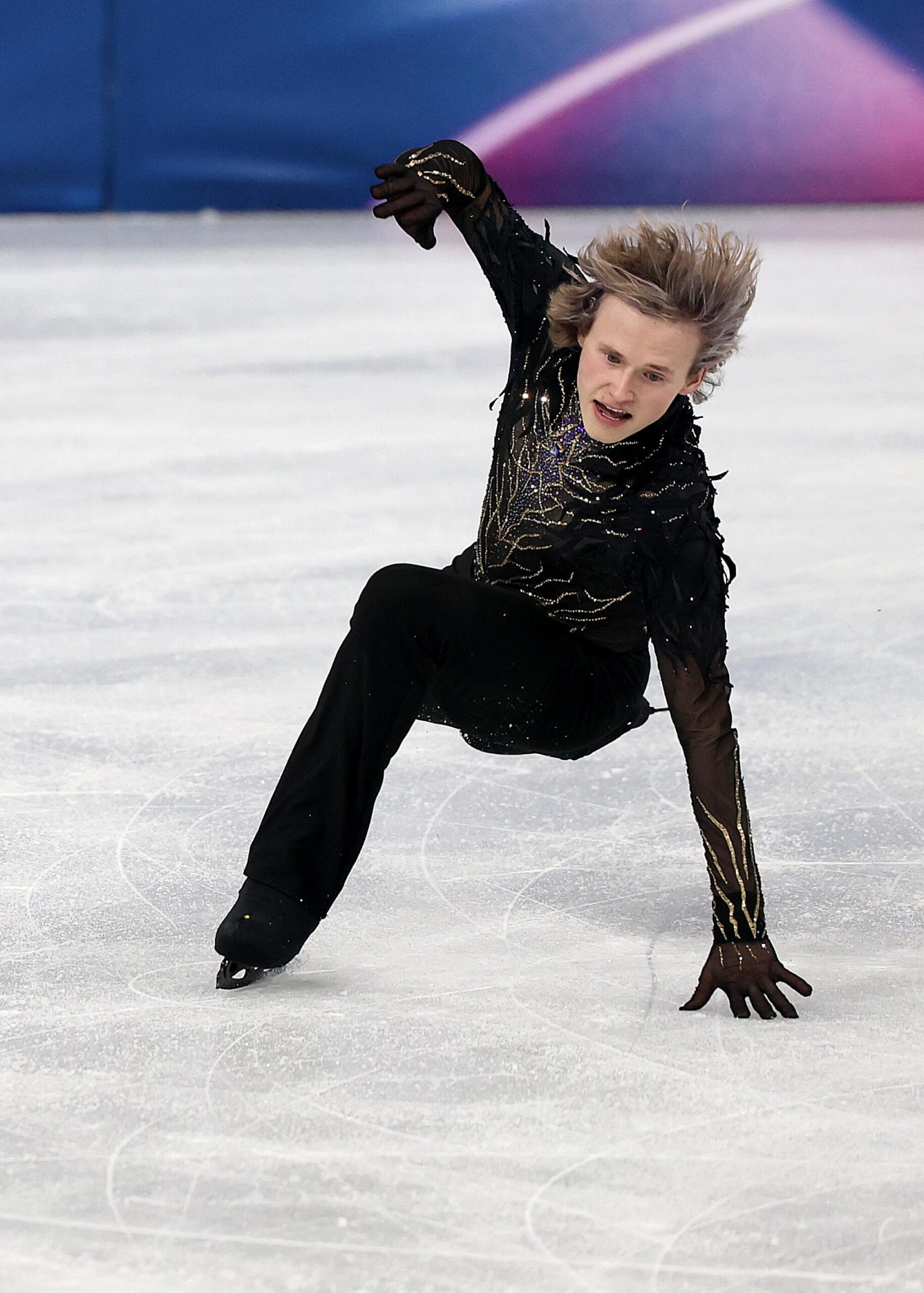
The standing-room-only crowd gasped when Malinin gave up on the quad axel. Fans grew more uneasy when he fell two jumps later. They tried to urge him on as the mistakes piled up. Instead of joyful encouragement, the clapping felt like desperation in the arena.

Ilia Malinin falls during his free skate at the Milan-Cortina Games on Friday.
(Robert Gauthier / Los Angeles Times)
Eight years ago, when Nathan Chen bent under the Olympic pressure in Pyeongchang, the crowd’s gasps each time he stumbled through his short program only made one of the hardest moments of his career even more difficult.
“That just hurts you to your gut,” Chen said in a video for Yahoo Sports. “You get up and mentally you have to refresh … but also the energy just changes in the arena. You can tell there’s tension now.”
Chen, then 18 years old in his Olympic debut, bounced back in a fearless free skate that moved him into fifth overall. He became almost unbeatable for the next Olympic cycle. At the Beijing Games, he set the world record for the short program, exorcised the demons from 2018 and became the United States’ first Olympic gold medalist in men’s singles in 12 years.
Malinin was a contender to be at those Games four years ago. He finished second in the 2022 U.S. championships, but was left off the Olympic team in a controversial decision. Then just 17, he was only in his first full season of senior competition.
But Malinin was already poised to be the future of the sport. Simply going to the Games as an understudy to Chen’s leading role would have been valuable experience.
Instead, U.S. Figure Skating selected third-place finisher Vincent Zhou and fourth-place Jason Brown.
Sitting with his coaches while waiting for his score Friday, a frustrated Malinin said if he had been sent to Beijing, he “wouldn’t have skated like that.”
“It’s not easy,” he said as cameras zoomed into his face.
He shrugged. He reset.
“It’s done,” he said.
“I think if I went to ’22 then I would have had more experience and know how to handle this Olympic environment,” a composed Malinin said in the mixed zone interview area. “But also, I don’t know what the next stages of my life would look like if I went there. So now all I can do is just regroup from this and really just take in the information that happened and just figure out how to manage in the future.”
Malinin has said he wants to skate for three Olympic cycles. The first attempt ended in shattering disappointment. That could only make the comeback sweeter.
“He will dominate the sport for years to come,” Lipinski said. “This was a huge, obviously, heartbreak for him, but we will see him rise again.”