Talks will focus on the €1 billion daily deficit and rare earth export restrictions.
Published On 7 Oct 20267 Oct 2026
European Trade Commissioner Maros Sefcovic has arrived in Beijing for talks on the European Union’s (EU) growing trade deficit with China.
Sefcovic will meet Chinese Commerce Minister Wang Wentao on Thursday and Friday after months of discussions over the EU’s trade deficit of more than €1bn ($1.12bn) daily, as well as Chinese curbs on exports of rare earths and other critical minerals.
Recommended Stories
list of 3 itemsend of list
Meanwhile, Chinese companies are increasingly challenging Europe’s top car brands. China rejected the EU request for voluntary curbs on Chinese hybrid car exports as the two sides enter negotiations, the Financial Times reported on Wednesday. The European Commission now hopes to get Beijing to accept a unilateral EU measure to cap hybrid imports instead, the outlet said, citing two diplomats briefed on the plan.
The two days of discussions come just as a majority of EU lawmakers called for a more assertive trade policy towards Beijing in a non-binding resolution on Wednesday. China vowed a “resolute response” to safeguard its industries if the European Union goes ahead with restrictions against Chinese companies or products, according to its commerce ministry.
Germany and France propose rapid EU measure
French President Emmanuel Macron and German Chancellor Friedrich Merz, leaders of the bloc’s two biggest powers, on Tuesday urged the EU to prepare a “credible instrument” that could be quickly activated to strike back against countries that harm the bloc economically.
The new measure would not target any specific country. German officials said the EU needed a tool as powerful as the Section 301 tariffs imposed by the United States or China’s restrictions on critical-mineral exports.
The proposed weapon – to be discussed at an EU leaders’ summit next week – would give the European Commission the power to respond to a trade aggression within days.
China responded to the letter by urging Paris and Berlin to steer clear of “protectionist” measures.
“We hope that France and Germany, as major economies in the world, will uphold openness, cooperation and free trade,” the commerce ministry said in a statement.
“They should avoid going down the wrong path in the wrong way, only to ultimately suffer the consequences themselves.”
G20 finance leaders, except China’s, agreed in September to act against “non-market” distortions that exacerbate imbalances. Beijing says that hyping up issues such as economic imbalances and overcapacity is a form of protectionism designed to exert pressure on and restrict China.
Ongoing trade talks
EU and Chinese officials have been discussing trade imbalances since June. Sefcovic said he wanted “tangible results by October” as well as some form of commitment that can be put to EU leaders meeting in Brussels.
Trade relations with China top the summit’s agenda next week, as ballooning debt has prompted auditors to warn about the next seven-year EU budget and has spurred protests in France.
European Commission President Ursula von der Leyen told the European Parliament last month that the trade imbalance had reached a tipping point and that Europe would use every tool at its disposal to rebalance the relationship.
United States President Donald Trump has increased the pressure on US Senate Republicans to make Daylight Saving Time permanent, singling out one of the body’s members for stalling legislation to end the twice-a-year changing of clocks.
In a social media post on Saturday, Trump blasted US Senator Tom Cotton for “holding up” the Sunshine Protection Act, which Trump has personally opted to call the “No More Changing of Clocks Act”.
Recommended Stories
list of 3 itemsend of list
“For some reason, Tom is stopping the Bill and, in the Senate, it’s very easy to do, it only takes one!” Trump wrote on his Truth Social account about the Arkansas Republican. “It should pass overwhelmingly, in a Bipartisan fashion”.
“Nobody wants to spend their precious time running all over the place, turning Clocks back twice a year and, having sunshine in the afternoon is better than early in the morning!” he added.
Trump went even further, publishing what he claimed was Cotton’s phone number as he implored Arkansas residents to pressure him. The move echoed a moment during the 2016 Republican presidential primaries, when then-candidate Trump gave out US Senator Lindsey Graham’s number after the former rival criticised him.
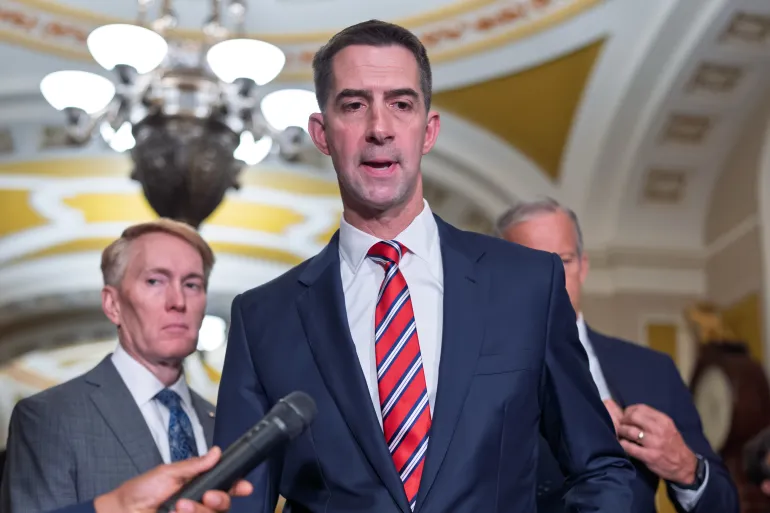
US Senator Tom Cotton speaks to reporters at the US Capitol in Washington [File: J. Scott Applewhite/AP Photo]
Al Jazeera called the number listed in Trump’s post, but an automated message stated the voicemail box was full. Cotton’s spokesperson and the White House did not respond to requests for comment.
The president has routinely pushed Senate Republicans to pass legislation mandating year-round daylight saving, which would end Americans’ decades-long practice of changing their clocks twice a year to increase daylight hours. On Friday, Trump urged the US Senate to approve the bill, which passed the US House in July by a 308-117 vote.
Cotton has previously opposed the bill, arguing in a US Senate floor speech last year that farmers, construction workers, commuters and children heading to school would begin their days in the dark during the winter.
Trump disputed that argument in a separate post on Saturday, saying the bill “would be a very nice and easy WIN for the Republican Party”.
“If Tom Cotton were putting Arkansas first, he would give them an extra hour of daylight and, more importantly, they wouldn’t have to run all over their houses, farms, workplaces, and everywhere else, twice a year, having to change their Clocks, and often forgetting to do so”, Trump wrote.
Trump, an avid golfer, also highlighted what he considered to be another selling point of the bill: the North American Professional Golfers’ Association (PGA) tour.
“The PGA TOUR, as an example, needs more Daylight in the afternoon in order to finish their Tournaments”, he wrote in a post, which included a letter from PGA Tour CEO Brian Rolapp supporting the bill. “Likewise, regular Golfers, Tennis Players, Hunters and, perhaps more importantly, Farmers who want more Daylight to play or work.”
The US president, who spent part of Saturday at his golf club in Sterling, Virginia, indicated in a subsequent post that he had received personal feedback on the proposal: “I don’t know about anyone else, but a table full of very distinguished people just told me that they HATE, immediately after a mandatory time change, going home at night – and it’s DARK. It’s depressing!”
In 1974, the US Congress briefly adopted year-round daylight saving time in response to the country’s energy crisis. But Congress repealed the law less than a year later over safety concerns as children commuted to school before sunrise.
US senators left Washington this week and have no set plans to return until after the November 3 midterm elections.
Some members, such as Senator John Kennedy, weren’t optimistic that Senate Republican Leader John Thune would bring the bill up for a vote before polling day.
“It’s dead as disco,” the Louisiana Republican told Reuters this week of Trump’s push to make daylight saving time permanent. “My sense is it would have trouble passing … I don’t think the leader is going to bring it up.”
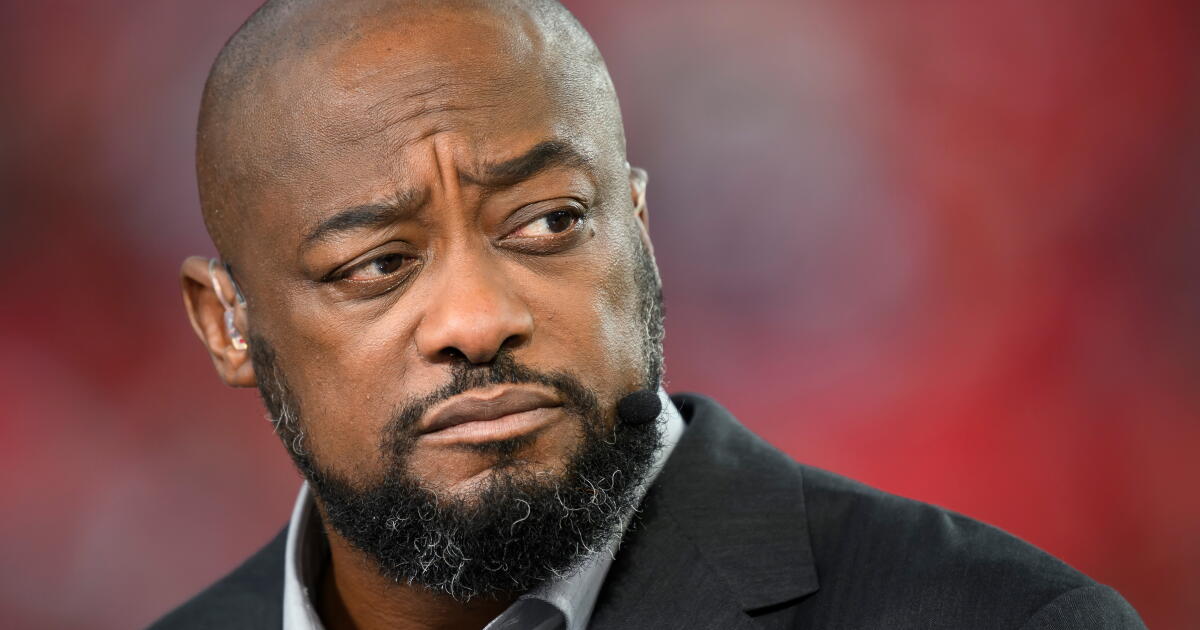
Mike Tomlin’s YouTube video detailing his labor of love of more than a decade is well on its way to a million views in less than 24 hours. His tweet about it has accumulated more than 20 million views.
No, it’s not a deep dive into Tomlin’s 19 years as head coach of the Pittsburgh Steelers, a reign that produced a Super Bowl title, zero losing seasons and a 193-114-2 overall record.
It’s about his obsession with “Minecraft,” the immensely popular video sandbox game that takes place in a world of 3D cubes representing raw materials such as wood, ores, stone and dirt. Players craft elaborate structures and — certainly in Tomlin’s case — full-blown cities.
At least one of Tomlin’s former players is astonished that he was able to construct a sprawling “Minecraft” community in the limited spare time enjoyed by an NFL head coach.
“we were tryna to win super bowls and coach T was on minecraft building cities,” former Steelers running back Le’Veon Bell wrote on X, adding a crying emoji.
Countless adults were introduced to the game by taking their kids to “A Minecraft Movie,” the 2025 film starring Jack Black, Jason Mamoa, Sebastian Hansen and Emma Myers that brought in a worldwide box office total of nearly $1 billion.
Tomlin got an earlier start, watching his middle school-age sons spending weekends playing the game in 2014, the same year the Steelers went 11-5 to begin a four-year streak of double-figure wins. His sons, Dino and Mayce, eventually outgrew the game, but Tomlin’s interest increased.
“At different times over the course of a 12-month calendar, I would have different levels of fixation on this, but it’s been a project that’s been ongoing for 12-plus years,” he said on the 19-minute video titled “Rooftops, Penthouses, and Urban Living.”
Tomlin said he preferred playing in creative mode, as opposed to survival, hardcore or adventure modes. He also said getting his mind off of football was good for his mental health.
“I kind of remember when I was building communities, neighborhoods, buildings, etc.,” he said. “But more than anything, it was therapeutic for me, some mindless entertainment. I’m not a big TV watcher. [“Minecraft”] allowed me to detach from the realities and pressures of life.”
The realities and pressures of coaching in the NFL include a 24/7 work mentality. Watching film and diagramming plays deep into the night. Sleeping on a cot in the team facility.
The attention to detail he brought to his day job was evident in his “Minecraft” creations.
“I was always really conscious of appropriate amenities,” Tomlin said. “You’ll find, you know, an appropriate number of public restrooms and stuff throughout all my public facilities. Not anything over the top in terms of detail: sink areas, stalls, etc. It was important that I represented that.”
Tomlin’s younger son, Mayce, a 24-year-old Columbia graduate, is having a kick on social media posting reactions to his father’s “Minecraft” reveal.
“Bro I used to come home sometimes and my PlayStation would just be gone. And I wasn’t in trouble😭😭😭” Mayce wrote on X.
Tomlin retired from coaching after the 2025 season and now works as an NFL studio analyst for NBC Sports on the pregame show “Football Night in America.” Presumably he has more time to devote to “Minecraft.”
“I like to build, I’ve always had an interest in architecture and so forth,” he said. “So I started doing this creative city. It was a means of spending time with [my children]. They participated. All over this city, all my kids have got buildings.
“Over the course of time, they got disinterested in the game. They were going to high school and off to college, and their participation became less and less over the years. My participation probably at times increased.”
The Dodgers did not need Tarik Skubal to win the National League West. They traded for him to help them win a third consecutive World Series.
Their legacy is at stake. So is his.
That could be hyperbole. Skubal turns 30 next month, already the winner of two Cy Young awards, one of them unanimously. He could sign the largest contract of any pitcher in major league history this fall. His career might be only at its halfway point, and already we can say he’ll be remembered as a star.
So I asked him if his career would feel somehow empty if he did not win a World Series. No one in Anaheim thinks any less of Mike Trout, and no one in San Diego thinks any less of Tony Gwynn, because neither Hall of Famer won a World Series.
Skubal thought about it. Yes, he said, his career would feel diminished without a championship.
“I think winning is the most important thing, so I think that’s fair to say,” Skubal told me.
“If I retire and I don’t have one, that will definitely be something that I don’t know when I will live it down.”
The Dodgers imported him for five or six starts in October, the first of them this weekend. I wasn’t sure of the right noun to use to capture his feelings: Excitement? Pressure? Responsibility?
“I think all of those things,” he said.
How so?
“I’ve grown to appreciate expectations from teammates, from fans, from organizations,” he said. “I’ve come to appreciate pressure. Early on in my career, there wasn’t much of that. It was more just kind of finding my footing, which I’m grateful for. It helped me learn a lot about myself.
“Having the expectation of being a team that is going to win the World Series, and me being a part of that, is something that I’ve come to really appreciate. I’ve come to appreciate all that stuff. As much as they can be looked at as negative things, or stress-inducing things, I’ve come to really appreciate those things, because I haven’t had that for my entire career.”
As soon as the Dodgers traded for Skubal two months ago, he was delighted to receive a text message from a pitcher who wore the weight of expectations throughout his career.
“Honestly,” Skubal said, “I wanted to get a jersey from him.”
The Dodgers’ Tarik Skubal pitched seven scoreless innings in his final start of the regular season last week against the San Francisco Giants.
(Thearon W. Henderson / Getty Images)
They talked pitching too, of course, and stayed in touch. When the Dodgers landed Skubal, Kershaw’s welcome text led to him sharing advice not just about the team itself but about navigating the notorious L.A. roads to Dodger Stadium, and various neighborhoods that Skubal, his wife and two young boys might enjoy.
For Kershaw, the postseason was a widely publicized menace throughout the previous decade. In 2019, after he inherited a two-run lead in the deciding game of the division series, Kewshaw gave up home runs to Anthony Rendon and Juan Soto.
After the game, Kershaw said, “Everything people say is true right now about the postseason.”
In 2024, the Tigers were five innings from the American League Championship Series, leading 1-0 in the deciding game of the division series, with Skubal on the mound. Three singles, a hit batter and a grand slam later, the Tigers trailed for good.
“I felt pretty responsible for the season ending,” Skubal said.
Kershaw earned his redemption in 2020, winning both of his World Series starts as the Dodgers won their first championship since 1988. That title lifted the postseason burden off Kershaw, and I wondered whether Skubal might feel the same way if he leads these Dodgers to a parade.
Skubal rejected the premise.
“I don’t really buy into that narrative with Kersh, the postseason struggles,” Skubal said.
Kershaw’s 41 postseason appearances include four starts on short rest and nine relief outings. In 2013, he pitched a combined 259 innings between the regular season and playoffs. In 2015, that number was 246 innings.
“It takes a superhuman to be held to the standard he was being held to, in the biggest of moments,” Skubal said. “I think he was great. He did everything he could for his team. He wore it out there sometimes. Chasing box scores and stuff is kind of unfair to judge guys on, because I’m sure he was pitching through some stuff and grinding through some stuff.
“But he had to do it, because he was Clayton Kershaw.”
Kershaw’s postseason earned-run average: 4.62. For Skubal, in six postseason appearances, all of them starts: 2.04. In that one five-run inning, he gave up more runs than he has in the other 38-2/3 innings of his postseason career.
After he gave up those five runs, he returned for one more inning and retired the side in order.
“That moment solidified who I thought I am, in terms of how I responded to that failure, how I responded to that adversity,” he said. “It’s weird to say and it’s probably weird to portray, and I don’t know how many people it’s going to resonate with, but that’s what I feel.”
Right time, right place: If Skubal wants to win a World Series, where else would he rather be?
“For him?” pitcher Blake Snell said. “There’s no better time for anybody than right now.”
The Dodgers acquired infielder Tommy Edman from the St. Louis Cardinals at the 2024 trade deadline. For Edman, that’s two Octobers and two parades.
“In St. Louis, I think we were hovering around .500,” Edman said. “I found myself traded here and I was like, ‘OK, all of a sudden I’m on the team with the best record in baseball right now, going for a ring just about every single year.’
“That’s the expectation we have here. There’s definitely a level of excitement.”
“There’s also a difference between being on a team like the Tigers — and nothing against that organization — where the goal really isn’t to win the World Series. It’s the hope,” Roberts said. “But being here and seeing the standard that we have and it’s like: ‘I’m here to win the World Series. This team has the best chance to win the World Series, and I get to be a part of it.’
“So I fully see him, now that he is completely immersed into our culture, where the first month was trying to feel his way: ‘Where do I fit in? I’m this hired gun.’ And now it’s like he’s one of the guys.”
Skubal insists that he has not really thought about his free agency, that his focus is on the here and now, and on each start as it comes. That means this month could be his last in Dodger blue, and that means this really might be his best chance to win a World Series.
“I don’t really know if I like the verbiage of that, thinking I must win this year,” he said. “I don’t think that’s fair.”
Ireland are due to play Israel in the Nations League in Hungary on Sunday, but boycott pressure mounts on and off-field.
Published On 26 Sep 202626 Sep 2026
The Ireland team’s news conference and training session the day before its first Nations League game against Israel have been delayed as pressure to boycott the matches grows.
Journalists in Debrecen, Hungary – where Israel’s “home” game is to be played Sunday – were left waiting Saturday after being told the news conference was being pushed back until after training. That was 15 minutes before it was supposed to begin.
Training was also significantly delayed, however, with Irish broadcaster RTE reporting the players were still in their hotel more than two hours after the training session was supposed to begin.
RTE reported that some players had decided they did not want to play the games.
“And if they stay to their stated ambition that they have to be all in it together, if one or more want to be out, maybe they will all be out,” reporter Tony O’Donoghue told RTE Radio 1.
The team has been coming under increasing pressure in Ireland, where affinity with Palestinians is strong, to boycott the two games – the first on Sunday and the second, Ireland’s “home” game, in Backa Topola, Serbia, on October 4.
Ireland midfielder Jason Knight said after Thursday’s 1-0 loss in Kosovo that the players were in a difficult situation and that he didn’t think the matches should be going ahead.
Ireland coach Heimir Hallgrimsson previously said “we’re not playing with genocide, we’re playing against genocide. We’re playing against Israel, we’re not playing with Israel” – drawing a furious reaction from the Israeli football federation, which accused the Icelandic coach of “stupidity, ignorance and hypocrisy”.
The Football Association of Ireland (FAI) had resisted calls to boycott the matches, arguing the team could be hit by punishing sanctions by UEFA. Ireland is cohosting the 2028 European Championship with England, Wales and Scotland.
More than 160 Irish sportspeople signed an open letter urging the FAI to reconsider its decision to go ahead with the fixtures.
There were protesters outside the team hotel in Dublin last week calling on the players to boycott the games. The SIPTU trade union displayed a huge poster in central Dublin beside the River Liffey asking the players to “Go with your conscience!” and “Don’t play with genocide” beside an image of a blood-splattered ball.
Former Ireland coach Brian Kerr said the FAI had “lost the respect of the Irish people” for going ahead with the games.
“The Irish people and the soccer-going public don’t want the games to be played,” Kerr said. “I think they’ve made their opinions clear over the last year. The FAI back in November actually went to UEFA and requested that Israel be put out of the tournament on principle. And yet they went against that principle.”
A stunning new poll showing Los Angeles City Councilmember Nithya Raman gaining a double-digit lead over incumbent Karen Bass in the mayor’s race is increasing pressure on Bass and her allies to go sharply negative against her opponent and to seek support from conservative and undecided voters to narrow the gap.
The poll, conducted by the UC Berkeley Institute of Governmental Studies and co-sponsored by The Times, showed Bass trailing Raman by 11 percentage points — with 28% of likely voters saying they supported the mayor while 39% said they would vote for Raman. The remaining 33% were undecided, an unusually high number this close to the Nov. 3 election.
“The bottom line is this is a huge shot in the arm politically for Raman — and it’s not a good day for the mayor,” said Zev Yaroslavsky, a former L.A. City Council member who now runs the Los Angeles Initiative at the UCLA Luskin School of Public Affairs.
Dan Schnur, a former Republican political consultant, said the poll could have instant negative effects for the mayor’s fundraising ability as potential supporters might now view Raman as the favorite in the race.
“The most immediate tangible result of a poll like this is that Bass’ greatest advantage was her fundraising and it now becomes much more challenging to raise money,” he said.
Bass, appearing Wednesday at a news conference in Hollywood, said she’s seen multiple polls that show a tight race. She said that Raman is “absolutely not” the front-runner in the race.
Mayor Karen Bass speaks at Vermont/Santa Monica Metro Center on Wednesday, touting progress on construction of affordable housing.
(Kayla Bartkowski / Los Angeles Times)
The mayor said she is working to highlight the city’s progress in making rent more affordable, pointing to newly released numbers that show that more than 10,000 units of housing with restricted rents have been built since she took office in December 2022.
“The No. 1 issue to Angelenos continues to be lack of affordability, and our primary way of addressing that from the city is housing,” she said. “So we are absolutely addressing affordability.”
Others in the Bass camp seemed more anxious about the poll results.
“It put a pit in stomachs,” said one supporter close to the Bass campaign who requested anonymity to speak candidly about the poll. “But there is still an outside chance for Bass. It’s not total doomsday.”
The supporter said that the Bass campaign truly doesn’t believe Raman’s lead is that big, but that the poll was still “not good news,” especially for fundraising.
Mike Bonin, a progressive former L.A. City Council member who now runs the Pat Brown Institute at Cal State Los Angeles, said Bass needs to focus on winning over voters who chose former reality television personality Spencer Pratt in the primary election in June. Many of those voters are now on the fence.
Pratt received 26% of the vote in the primary, and most of the voters who cast ballots for him — 63% — say they still haven’t decided whom to vote for in the runoff, the poll found. Among the Pratt voters who have decided, 22% favored Bass compared with 16% for Raman.
Bonin said he expects Bass and her allies to attack Raman’s progressive views in order to reach Pratt voters. Raman is a member of the Democratic Socialists of America and opposed raises for Los Angeles Police Department officers that had been championed by Bass.
“The nature of the attacks will try to reach the Pratt voters particularly since they are the largest bloc of undecideds and they skew conservative,” Bonin said.
The Los Angeles Police Protective League, the union representing LAPD officers, is already airing campaign ads critical of Raman over her opposition to a law barring homeless encampments next to schools. In the coming days, the group will also roll out commercials highlighting Raman’s ties to the DSA, which has endorsed her mayoral bid, said union spokesman Tom Saggau.
“Our own poll told us that the Pratt folks were very much undecided, and that when they heard more about Nithya’s record, and her co-governing with DSA, they moved off of her,” he said, adding that his group still views the race as a dead heat.
Raman, not surprisingly, cheered the poll results.
“This poll reflects the momentum we’re seeing on the ground. Angelenos are ready for change and want to see a City That Works,” Raman said in a post on Instagram.
Raman campaign officials said the poll probably will help their fundraising efforts, which they said had already been gaining momentum over the last few weeks. And Schnur, the former GOP political consultant, said the wide lead allows Raman to spend more time touting her own credentials instead of disparaging Bass.
“For the most part Raman has the front-runner’s luxury of putting out a positive message and reinforcing her own credentials,” Schnur said.
Estevan Montemayor, who is running the pro-Raman Estamos con Nithya independent expenditure group, said his group’s role will be to inform voters about Raman’s positives while the Bass campaign attacks.
“They’re gonna come after Nithya and we’re gonna be here to tell her success story,” he said.
Bass supporter Stuart Waldman, chief executive of the Los Angeles County Business Federation, said the large number of undecided voters this close to the Nov. 3 election is worrying but also leaves an opening for Bass to gain ground.
“Any swing in any direction could make a big change,” Waldman said. “We have no idea who’s going to vote. … Usually by this point in time, everything has tightened up.”
Councilmember Nithya Raman, lower right, campaigns at a Latinos Con Raman rally at La Cita Bar in downtown Los Angeles.
(Genaro Molina / Los Angeles Times)
In courting those undecided voters, however, Bass is burdened by high unfavorability numbers, according to the Berkeley IGS/L.A. Times poll.
The mayor had 63% unfavorable ratings, the poll found, with 28% favorable and 9% having no opinion. By comparison, 40% had a favorable view of Raman, according to the poll, while 39% said they had an unfavorable view of her and 21% had no opinion.
Mike Murphy, a Republican political consultant, said that Bass needs to accept responsibility on core issues upsetting Angelenos about her tenure, such as homelessness and the 2025 Palisades fire, which killed 12 people and destroyed thousands of homes. In a recent interview with The Times, Bass said her biggest mistake as mayor was being in Ghana when the fire began amid high wind warnings.
“You have to say, ‘I hear you,’” he said. “Voters don’t think Karen gets that they are mad about things that happened during her term.”
Then, Murphy said, he believes Bass needs to attack Raman as being more establishment than Bass.
Murphy noted that Bass has frequently attacked Raman for being “at City Hall longer than I have,” which he called a powerful message to voters who are considering Raman because they want change. Raman was elected in 2020 and Bass in 2022.
Other polls taken in the campaign have shown a closer race than the Berkeley IGS/L.A. Times poll.
In an early August poll commissioned by an independent expenditure group supporting Bass, the mayor had the edge, 41% to 35%, with 24% undecided.
Mayor Karen Bass greets community members after speaking at Vermont/Santa Monica Metro Center.
(Kayla Bartkowski / Los Angeles Times)
The Bass campaign cited some of those polls when responding to the Berkeley IGS/L.A. Times poll Wednesday, calling it an “outlier poll” and accusing the pollsters of getting it wrong.
“In the primary … they got it wrong and undercounted Karen Bass’ support,” campaign spokesperson Alex Stack said in a news release.
Stack added that polls conducted online, like the Berkeley IGS/L.A. Times poll, “systematically [undercount] working-class families, seniors, and non-English speaking communities who regularly turn out on Election Day.”
Mark DiCamillo, the director of the Berkeley IGS Poll, defended the methodology, saying he has spent 45 years polling in California and eight years running the Berkeley IGS Poll.
“What would you expect from a campaign down by double digits? They attack the poll,” he said.
That’s the question everyone is trying to figure out, as the 32-page agreement is parsed, with pundits pouring over minutiae of cable streaming and tax credits. I’ll leave that to the business experts, but I’m here to give you a big picture of politics, power and possibilities — and one short but unsatisfying answer about whether this deal is good for the Golden State: Yes and no.
I’ll start with this: Did California win is the wrong question. There was always something bigger at play here that was lost behind the fear of further decimation to an industry so central and crucial to the state. The question the lawsuit asked is, “Do we live in an America where government institutions are so broken that power makes its own rules?”
The settlement might not give the entertainment industry all it hoped for but it was “a fight worth fighting,” said George Hay, a professor at Cornell Law School and a former attorney with the U.S. Department of Justice’s Antitrust Division, because it sought to answer that question in favor of consumers, and showed that states like California can and will step up to fill a dangerous void.
Under the Trump administration, the U.S. Department of Justice hasn’t so much abdicated its responsibility to enforce antitrust laws — it has embraced an oligarchic ethos that seems happy to feed the American economy into the mouths of behemoths, allowing companies such as Paramount free reign to gobble up whatever lies in their paths like an old-school Pac-Man.
Our president personally invests in industries he’s supposed to regulate (I’m looking at you, Silicon Valley). Corporations dump money into elections that average people can never hope to match. The free press is under increasing attack with multiple outlets banned from the White House — including CNN, which Paramount hopes to own along with CBS and whose editorial independence is at least addressed in this settlement, albeit weakly.
States, even powerful states such as New York and California, don’t have the muscle or money of the federal apparatus, and were never meant to play the role of national enforcer on issues such as these.
The fact that Bonta and the 11 other states involved in the antitrust litigation pulled together not just a credible, but effective team is a victory for all American consumers, and a message to other Pac-Man companies out there that even if federal regulation is on life support, there are still rules.
The states “showed that they could quickly and effectively put together a formidable litigation team, and achieve significant initial success. That’s a big deal. That that changes the role of the states for a long time into the future,” said William Kovacic. He’s a law professor at George Washington University and a former chair of the Federal Trade Commission, so like Hay, he knows a bit about antitrust enforcement.
“This has a ripple effect that goes through the entire federal enforcement system because they showed they could do something that was very difficult,” Kovacic said. “That’s a big institutional win for the states.”
To hear Bonta describe it, California is absolutely a winner in its own right, though, and this will be “very good” for the state. Which to be fair, is exactly what any decent politician would say.
“It will be good for consumers, good for prices, good for jobs, good for choice, quality, competition,” Bonta told me Monday afternoon.
Kovacic is a bit more measured, calling it a “modest win.”
The deal has many parts, but it covers a five-year period in which the new Paramount mega-studio must release between 30 to 32 films each year, many in theaters and some independent. It also has to keep open and running both the Paramount and Warner Bros. lots, a not-insignificant source of L.A. jobs — and maybe one of the most visible wins for the city.
The new company also must spend at least $1.5 billion over the five years on production in the U.S., and increase that figure if there are certain, uncapped federal or state tax credits available to them.
In California, where the budget deficit is in the billions, creating uncapped credits may be a hard sell, but Bonta told me he’s making it a priority in the next legislative session and will push the next governor — likely Xavier Becerra, who once held his job — to back them.
“I think we’re going to get it in California,” he said. It’s somewhat important because the settlement doesn’t specifically address production in California — and tax credits from other states have been drawing production away for years.
We’ll see how successful Bonta is on that endeavor — he hasn’t always gotten what he wants from governors.
Much has been made about the recent threats from Paramount Skydance Chief Executive David Ellison to move business operations out of California. That pressure has been cited as one of the factors pushing the state to settle, and it probably was — but not just because of Ellison.
Gov. Gavin Newsom made it clear that he preferred a settlement to a drawn-out court case, especially after that threat.
You may recall our governor has presidential aspirations, and is in a long-running battle with Trump over whether California is a wasteland for business beset by fraud and regulation, or a utopia of economic activity fueling the world’s fourth largest economy. Paramount reupping its threat to leave, or even worse, decamping for someplace such as Nashville, is not a great look.
So this case, which was never going to be a slam-dunk to win in court and which could easily have run into 2028 if it proceeded, was never a winning issue for Newsom.
Newsom Monday called the deal “a practical path forward,” which it definitely is — for him.
Hay, of Cornell, said it was a “big blow” when the governor failed to back Bonta and go all-in on litigation.
“Once [Newsom] once came out on the other side, it made things really, really difficult,” Hay said.
So there was pressure on Bonta to make a deal even from his friends, though Bonta told me that “what you call pressure was just noise to me. I never felt pressured in this process.”
But of course, nearly everything that happens in politics and litigation is about pressure — who has the power to apply it and who has the power to withstand it. Bonta, to his credit, applied pressure where Paramount never expected it.
“If I were in California, I’d be proud of the attorney general. At the end of the day, he got the best he could,” Hay said. “I’m glad they were there when the government bailed out because it made Paramount tow the line, and maybe that’s all that we could hope for.”
The Paramount settlement is more about possible than perfect, but it proved that states — and consumers — are not powerless, and every brawl that proves that is, as Hay said, a fight worth fighting.
Volkswagen, Europe’s largest automaker, is no longer among the eurozone’s blue chips.
ADVERTISEMENT
ADVERTISEMENT
Index provider Stoxx confirmed the change in its annual review at the start of September, and it came into force before trading began on Monday, with Finnish telecoms group Nokia returning to the index and French utility Engie joining.
Dutch information-services group Wolters Kluwer was also dropped.
The removal is mechanical rather than a judgement, as the index is weighted by free-float market value, and Volkswagen’s shrinking valuation no longer cleared the threshold.
However, the consequences are real, as funds that track the benchmark must now sell their Volkswagen holdings, adding to pressure on a stock already under strain. Stellantis suffered the same fate last year.
Volkswagen shares have fallen almost 30% since the start of the year and are down over 6% since last Monday’s open, trading at roughly €76 at the time of writing.
A profit warning to match
The timing could hardly have been worse.
On Friday, Volkswagen flagged around €10 billion in one-off charges and cut its operating margin forecast for 2026 to no more than 1%, down from a previous range of 4% to 5.5%. Analysts had expected 4.1%.
More than €6 billion of the charges stem from a writedown at Porsche, in which Volkswagen holds a 75.4% stake, after the sports car maker lowered its medium-term expectations.
Porsche has been hit hard by American tariffs and weak Chinese demand for foreign luxury brands, and managed a margin of just 1.1% last year.
A further €2 billion or more covers expanded early retirement schemes, impairments in China and the planned sale of Volkswagen Osnabrück GmbH, a wholly owned subsidiary and automotive manufacturing plant located in the northwest German city of Osnabrück.
The company warned of “further deterioration in the market environment, especially in China, as well as an accelerated shift in demand in favour of battery-electric vehicles.”
The warning came two weeks after it agreed its largest-ever restructuring, doubling planned job cuts to 100,000 and halving its model line-up.
However, not everyone reads the numbers as a collapse.
Stripping out the one-off items, Volkswagen puts its underlying margin at around 4%, and it kept its cash flow and liquidity forecasts unchanged.
Deutsche Bank, which rates the shares a buy with a €115 price target, said it believes “the headline significantly overstates the deterioration in the underlying business.”
The bank does not expect the pain to end there as it wrote that “additional restructuring charges simply confirm that the transformation process is very expensive and complex […] we expect more to follow over the coming months.”
Volkswagen’s third-quarter results are due on 29 October.
Singer Ed Sheeran speaks on stage as he addresses a controversy over Macklemore being pulled from the tourCredit: ReutersPro-Palestinian protesters gather neared Sheeran’s Philadelphia showCredit: ReutersThe singer-songwriter broke down on stage, saying he didn’t know if the tour was going to be able to continueCredit: PASheeran’s gig was protested after the controversyCredit: Getty
Protesters mounted a demo outside his Philadelphia gig at the Lincoln Financial Field.
Sheeran said he had questioned whether he “wanted to be an artist at all” after the huge row.
Sign up for the Showbiz newsletter
Thank you!
The singer-songwriter said onstage last night: “I’ve had to take, and make, difficult decisions, and I am making mistakes and I’m so, so sorry for them.
“I don’t want to disappoint fans, and I’ve never wanted to be an activist musician, but this has put me in the middle of an important and passionate argument about freedom of speech and the most complex political issue on the planet.”
US rapper, singer, dancer and DJ, Benjamin Haggerty, known as Macklemore was pulled from Sheeran’s Loop tour afterCredit: AFPAfter Macklemore was scrapped when he expressed pro-Palestine views, a whole wave of other bands dropped out in solidarityCredit: Redferns
He said he had tried not to be a “political commentator” because he wanted his music to be about “unity”.
But after days of increased pressure threatening the future of his US tour Loop, the singer admitted onstage: “I cannot hide how I feel about it anymore.”
“What is happening in Gaza is catastrophic and unjustifiable and disproportionate.
“My heart has been broken by the scale of devastation and loss of civilians’ lives, children’s lives.
“And the systemic injustice we are seeing unfold in the West Bank cannot be overlooked.”
The controversy started when US rapper Macklemore was banned by Gillette Stadium owner Robert Kraft from performing at the venue at a gig planned for later this month.
Kraft said he would not “provide a platform for hate speech” after the rapper spoke out about Palestine onstage.
The singer-songwriter said he had tried not to be a ‘political commentator’ because he wanted his music to be about ‘unity’Credit: Getty
Getting cancelled for literally saying nothing
BY Jeremy Clarkson
IT’S always difficult to predict who’s going to get cancelled next.
A penniless author writes a series of books that children adore and then, one day, she casually mentions that men shouldn’t be allowed to use women’s lavatories.
And that was that.
We were all instructed by a braying mob to burn her books — and even the actors and actresses she’d propelled to fame in the Harry Potter films were quick to denounce her.
She was done. Finished. Cancelled.
So who would be next? Moira Stuart? Judi Dench? Nicholas Lyndhurst?
He literally said nothing at all and, for that, his fans are trying to offload tickets for his forthcoming tour, his support acts have all walked and, from what I hear, even his band is refusing to play with him.
They want him to sound off on Palestine, and because he’s not really that sort of person, the keyboard warriors have sent him to Coventry.
It’s bullying. There’s no other word for it.
But when Macklemore was pulled from the tour, several other support acts quit in solidarity – including Sheeran’s own band.
Other acts who dropped out included Grammy award-winning musician Finneas, Irish singer Aaron Rowe and Danish singer Lukas Graham.
Thousands then cancelled tickets and the musician was unsure if he’d be able to carry on with performances at all.
Emotional Sheeran last night thanked fans for still coming out to his gig, saying: “This concert is still a place where everyone is welcome and everyone here can stand beside people that have opposing views, and everyone can stand beside people that they don’t agree with on everything, but they can all agree on singing these songs.”
He ended the gig by saying: “The world is a scary place right now. America is a scary place right now. This gives hope.”
After losing his warm-up acts, Sheeran’s concert start time was pushed back from 5.30pm local time to 8pm.
The tour began in Auckland, New Zealand, in January and is set to finish in Mexico City in December after 16 more dates across America.
Sherman Oaks Notre Dame High has been known for years as the school for kickers, with the likes of kicking guru Chris Sailer and NFL kickers Nick Folk and Kai Forbath among a long list of standouts.
Notre Dame coach Evan Yabu has been keeping a secret weapon hidden for two years. Charles Szares made a 49-yard field goal for the freshman team in 2024. He was the backup on varsity last season, getting to do one kickoff.
This season as a junior, he has burst onto the scene as a varsity starter. After four games, he is perfect on PATs (23 for 23), perfect on field goals (six for six) and on Friday he was perfect on kicking the ball into the end zone (eight for eight on touchbacks). He also punts.
“I’m not kidding — this is the best kicker/punter I’ve seen,” Yabu said.
Szares has been playing soccer all his life and continues to play for a club team and Notre Dame football.
He started kicking by accident in eighth grade. He was a receiver and a youth football coach saw him fooling around kicking at a flag football game.
“You want to join the team?” the coach asked.
Said Szares: “I’ve had a love and passion ever since.”
Szares knows about Notre Dame’s kicking tradition from looking at the alumni board of top football players in the gym. And Sailer trains him. “He’s outstanding,” Sailer said.
He still hasn’t gotten the opportunity to try a possible game-winning field goal this season, though he made a 45-yard field goal on Friday in a win over Oaks Christian.
“I handle pressure pretty well,” he said. “I’m more confident under pressure oddly.”
He also thanks his long snapper, John Henry Mason, and holder, Levi Gonzaga.
And just remember, he has two seasons to go after the Notre Dame kicking records.
This is a daily look at the positive happenings in high school sports. To submit any news, please email eric.sondheimer@latimes.com.