I can’t remember when my terror of waves began in earnest. Maybe it was a singular incident that triggered it, like that monster wave in Biarritz, France, almost 20 years ago that body-slammed me on to the seabed, taking all the skin off my chin.
More likely is that my transition from fearless to frightened had been more of a slow creep, and a perfectly rational one when you consider the danger of riptides, hidden rocks, sharks and concussion. But for me, I feel it goes deeper. Almost inevitably my job will have had something to do with this. Nearly two decades of working as a journalist reporting on the very worst things that human beings can do to other human beings in a wide array of contexts has definitely eroded my sense that I can keep myself – and others – safe from harm in a dangerous world.
In recent years, I have found that any bit of sea with waves above waist-height makes it a no-go zone for me, even though I’m a good swimmer and love being in water. On holiday I’m often left fretting on the shoreline, while my family joyfully rides the waves without me.
This makes me very sad. So when I recently found myself about to change jobs for the first time in 14 years, I decided that I needed a circuit break and that this circuit break should be a week-long trauma surfing retreat in Morocco. Here, I figured, I could process some of the emotionally shredding content I’d exposed myself to while, hopefully, finally facing up to my fear of waves.
The company behind the retreat I signed up to is Resurface. Founded by psychologist Josh Dickson, who specialises in trauma, recovery and personal growth, the idea is to provide a holistic experience by combining morning yoga and surf lessons with afternoon group therapy work.
In a call before the retreat, Josh said his intention is to create a “flow” state, where the body and the mind are able to work together towards healing and renewal, bolstered by the sunshine, cold water and a disconnection from the rigours of our everyday lives.
Surfing is not just excellent physical exercise, it requires the surfer to be immersed in nature, concentrating fully on what they’re doing moment to moment. It also triggers an array of helpful hormones – endorphins, dopamine and serotonin for mood boosts, and adrenaline and norepinephrine for thrills and focus. All of these help to create the perfect set up for therapeutic work.
I had initially booked on to one of Resurface’s first Reset retreats, designed to promote resilience and prevent burnout. Yet for various complicated reasons, I instead ended up on its first EMDR (eye movement, desensitisation and reprocessing) group retreat.
Developed in the 1980s by US psychologist Francine Shapiro, the basic aim of EMDR is to help reduce distressing emotions connected to particular memories or past traumas that the body might be holding on to.
The theory is that traumatic events are not neurologically processed in the same way as healthy memories, and so they can resurface and intrude. EMDR therapy uses bilateral stimulation – for example, rapidly moving your eyes from one point to another or tapping your body left then right at the same time as concentrating on a traumatic event. This, the theory goes, allows the brain to process and store the memory normally.
Obviously doing this in a group setting, among strangers, feels pretty intimate and exposing, so it was with some trepidation that I arrived in the small surf town of Tamraght, just north of Agadir, one sunny October afternoon to begin the retreat.
Tamraght is lovely. The quieter, more chilled sister of the flashier surf tourism hotspot Taghazout, a couple of miles to the north, its dusty streets are full of busy restaurants, ceramics and surf shops, and with a lovely seafront where you can hang out with the beach camels.
That night, at Riad dar Haven, our beautiful and welcoming home for the six days of the retreat, our cohort – an eclectic, multi-generational bunch – met for a dinner of chicken with green olives and lemons cooked by the resident chef.
The next morning, after a short introductory session with Josh featuring some fairly excruciating but fun ice-breaking exercises, we piled into the mini van and headed down to the beach where we struggled into wetsuits and divided into groups. Some of us had never surfed (myself included), others were more experienced.
Our teachers, led by local surf instructor Youness Arhbi, were excellent – patient, funny and obviously experienced at convincing first-timers with cement hips that we had a chance of standing up on our huge foam learner boards.
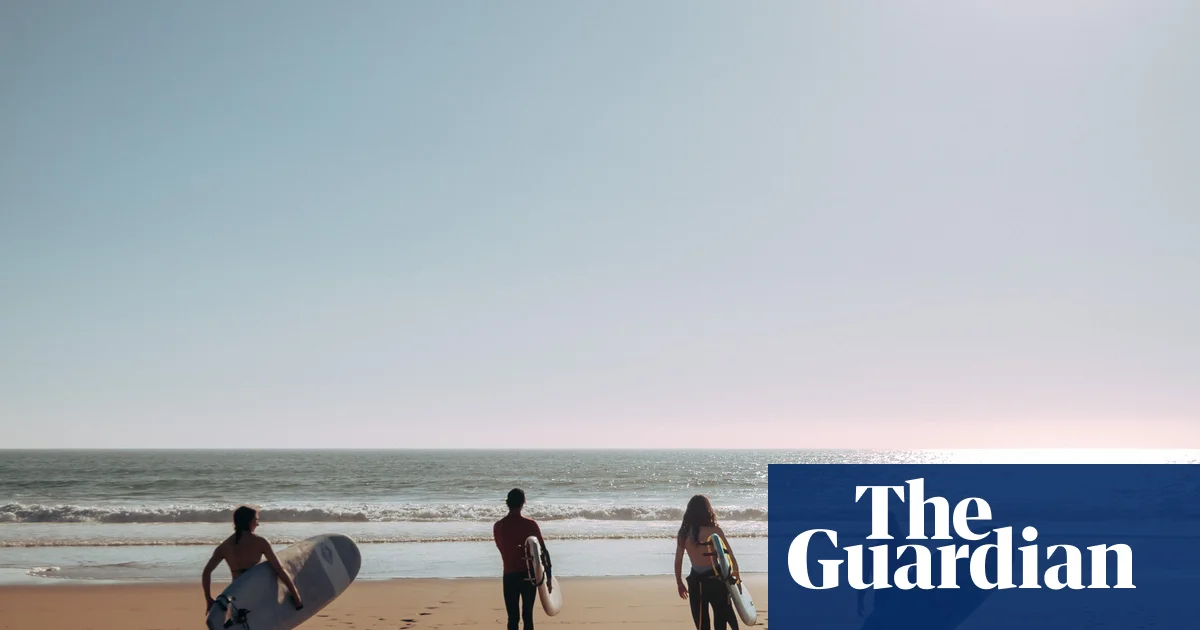
Every morning we travelled to different, beautiful beaches around Tamraght, where the waves were so tiny it was difficult for even me to be frightened. I found the experience of being in the cold, salt water for three or four hours at a stretch exhausting yet exhilarating. And, although I was definitely not a natural, the process of learning to catch a wave, nearly always failing and then paddling straight back out to try again, was a meditation in itself.
After the lessons, our group of 12 would all sit together on the beach, the sun on our faces, eating lunch and sharing the triumphs and frustrations of our surfing exploits. Then we would pile in the bus and head back to the riad where we would begin the afternoon’s therapy session.
At the beginning of the week, this part of the day felt pretty exposing, but Josh was thoughtful, confident and knowledgable in leading us through the process.
At first, I didn’t find EMDR particularly transformational, although it was interesting that what came up during the sessions was often not the memory or event I had decided to focus on at the beginning. However, as the week progressed, I was surprised to discover that these sessions became the most transformational thing about the retreat for me.
After years of slowly and corrosively losing faith in the world, I found real hope and connection in sharing with a group of people willing to face up to their own personal heartbreaks, traumas and pain. It was a balm that did more to restore my faith and hope in people than any amount of self-reflection could offer.
As for the surfing, I ended the week being almost as rubbish as when I started, but it didn’t really matter. On my last day, the waves had changed, and although they could not credibly be described as big, they were big enough for me to feel scared. Yet with our instructor’s encouragement – and a bit of cathartic sobbing on the beach when it all got too much – I persevered.
And just once, in the last half-hour of the lesson, I managed to clamber awkwardly to my feet and stand up. As I raised my arms in the air in triumph, I heard cheering from the beach and watched as the group rose to their feet and joined me in celebration.
The trip was provided by Resurface, which offers seven-night surf therapy retreats from £2,500pp, including accommodation, transfers, all meals, surf lessons, therapy sessions and activities; the next trips starts on 11 April