Israel opened its first national pavilion at Morocco’s Marrakech Air Show, joined by Israel’s top military contractors.
Published On 8 Oct 20268 Oct 2026
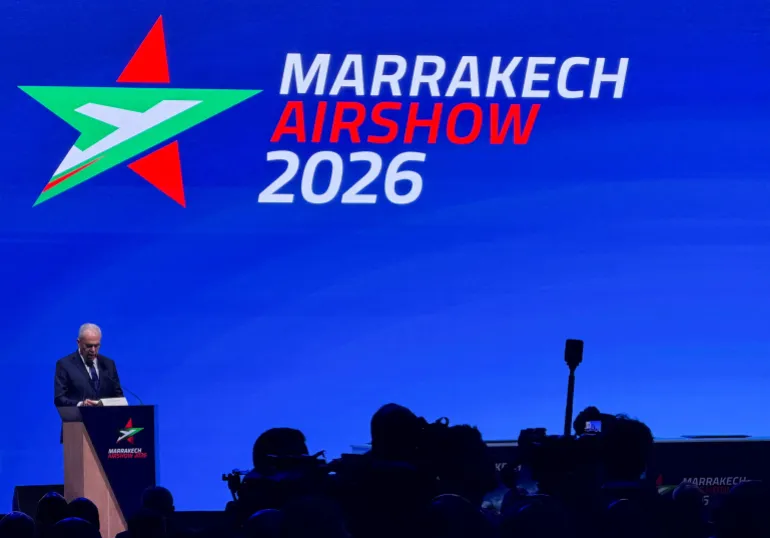
Israel’s Ministry of Defence says it is participating for the first time in a defence exhibition in Morocco, as it announced its first-ever national pavilion at the Marrakesh Air Show 2026.
“This marks Israel’s first official participation in the defence exhibition held in Morocco since the signing of the Abraham Accords”, Israel’s Defence Ministry said in a statement on Thursday.
The ministry said eight Israeli defence companies exhibited “advanced, combat-proven technologies at the show” in Marrakesh, which runs until Saturday.
Abdellatif Loudiyi, Morocco’s defence administration minister, speaks at the Marrakech Airshow in Marrakesh, Morocco, October 7, 2026 [Ahmed El Jechtimi/Reuters]
The Marrakech Air Show, taking place from October 7 to October 10 this year at the Marrakech Royal Moroccan Air Force Base, is organised every two years and is meant for civil and military aeronautics and space industries to highlight their latest offerings.
“Israel’s three major defence industries, Elbit Systems, IAI, and Rafael, also exhibited, presenting solutions across the air, land, sea, space, intelligence, cyber, and digital domains,” it said.
Munition exhibited by Israel’s Elbit Systems at the Marrakech Air Show in Marrakesh, Morocco, October 7, 2026 [Ahmed El Jechtimi/Reuters]
The announcement is the latest sign of increasing ties between the Arabic-speaking North African country and Israel, since the two established ties in 2020 as part of the US-backed Abraham Accords.
Last month, Israel and Morocco agreed to upgrade their diplomatic ties, including elevating their respective missions to embassies and appointing ambassadors to both countries.
The move followed a meeting between the two countries’ foreign ministers, hosted by the US ambassador to the United Nations, Mike Waltz, on the sidelines of the United Nations General Assembly in New York.
They also agreed to expand air travel, including by reinstating direct flights operated by carriers from both nations, and confirmed plans for high-level bilateral visits in the coming months.
Morocco is also one of the five countries that have pledged to send troops to Gaza, under the US-backed International Stabilization Force (ISF) as part of US President Donald Trump’s so-called Board of Peace.
SEARCHING for sun in November but don’t know where to find it? Here are five great options with temperatures well over 20C.
Whether you’re after short-haul breaks or lengthy holidays, check out these destinations where you’ll certainly get a healthy dose of vitamin D.
Thailand is a popular spot for autumn and winter sun thanks to its high temperaturesCredit: AlamyMorocco has bustling cities and some are on the coast if you fancy a beach breakCredit: Alamy Stock Photo
Morocco
For a bit of autumn sun that isn’t far or breaks the bank, Morocco is a solid option.
Brits can get there in less than three hours and the country basks in highs of 24C in November, while the UK average highs of between 10-12C.
Sign up for the Travel newsletter
Thank you!
Marrakesh is one of the most popular cities with Brits with vibrant markets, souks, palaces and pretty hotels.
Essaouira on the other hand sits on the Atlantic Coast and has sandy beaches if you fancy heading for a beach break.
Meanwhile, the city’s capital of Rabat is another coastal spot that’s considered an ‘understated seaside gem’ and has enormous royal palaces.
In November, return flights to Essaouira and Rabat can be as little as £28.
Holidays are affordable too for a quick break – two adults can check into Las Palmeras in Marrakesh for four-nights from £279pp or £34.87pppn.
This includes return flights to London Gatwick, a full board stay at the four-star hotel which has an outdoor swimmingpool, on-site restaurant and wellness area with treatments available.
Thailand
Bangkok has just been named the ‘world’s best city’Credit: Alamy
Thailand is a popular autumn and winter destination for Brits seeking some sun and it has highs of 34C in November.
There’s something for everyone from its bustling cities to beautiful coastlines and incredible islands.
Thailand’s capital, Bangkok was recently named the best city in the world by Conde Nast Traveller being praised for its “buzzy markets, glittering palaces and captivating religious sites unite – street food sellers dishing up tasty food between them all, of course.”
If getting out of your city and lazing about on a beautiful island is more your bag, it’s very easy to get from the mainland across to the likes of Phuket, and Koh Samui.
The likes of Eva Air and Thai Airways offer direct flights from London Heathrow to Bangkok in November from around £831.
If you opt for a stopover – these can be much cheaper with some dropping to almost half the price.
Air Arabia offers a roundtrip from London Gatwick to Bangkok International Airport from £484 with a two hour layover at Sharjah International Airport.
With Expedia, 10-day package holidays to Bangkok are around £800 – including direct return flights and accommodation, breaks to the neighbouring island of Koh Samui package breaks here with Expedia around £760.
Dubai, UAE
Dubai has luxury hotels, street food markets and enormous waterparksCredit: Alamy
Thanks to its hot desert climate and very little rainfall, Dubai is ideal for autumn sunshine.
From its luxury five-star hotels to beaches, incredible restaurants and shopping scene, Dubai is known for glitz and glamour.
However you can visit on a budget too as Deputy Travel Editor Kara Godfrey and Assistant Travel Editor Sophie Swietochowski when they visited the city.
They lots of tasty treats at the Grand Souk, like breads stuffed with cheese or Nutella for £1.22, or Iranian falooda — a sorbet-like dessert made of thin rice noodles and syrup — for £1.
When its time to cool off, head to one of Dubai’s many waterparks like Aquaventure World with day passes from £50 – but it is so huge, you’ll have to spent the day there.
With Thomas Cook, a 10-night stay for two starts from £720pp including return flights from London Gatwick departing on November 22.
The hotel has a swimming pool, beach volleyball set up, and bar a grill along with free shuttle buses to the theme parks – so there’s no need to hire a car.
Or if you’d rather a different holiday vibe, head to Boca Raton which Head of Sun Travel Lisa Minot called ‘Florida’s secret paradise‘.
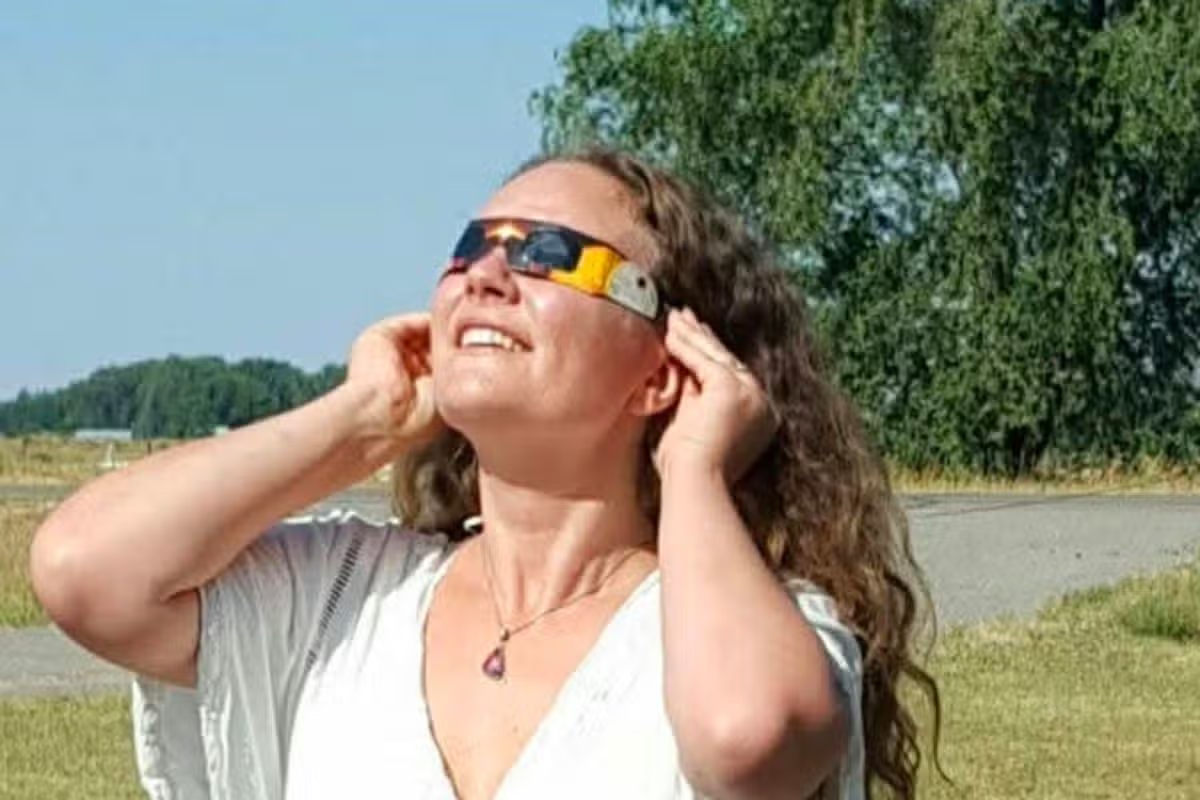
Sara Baeur, a chocolatier from Montana, USA, booked a place to stay in Northern Morocco for next year’s total solar eclipse, only to be contacted by the host who had an unwelcome message for her
Sara Bauer booked a place in Morocco for August next year(Image: Supplied)
A family was told they’d be locked out of a rental home if they turned up, despite paying £3,400 for the property.
Solar eclipse enthusiast Sara Bauer booked a place to stay in the Moroccan resort of Marwan for the first week of August 2027, desperate to see the astrological phenomenon from the best possible spot. The northern seaside town is a perfect place to catch the eclipse, which includes an incredible eight minutes of totality – about three times longer than this summer’s.
The Montana woman booked the beachfront property and started looking forward to what’s been dubbed ‘the eclipse of the century’. However, she claims she became alarmed after receiving a message from the host, demanding that she cancel the booking. If she didn’t, she was told her family would be locked out of the home, she alleges.
After Sara gave in and cancelled the booking, she saw the same property relisted for six times the price, she claims.
Do you have a story to share? Email webtravel@reachplc.com
After she was first contacted by the host, the chocolatier, who runs Chocolate Eclipse, told the Mirror: “The host of my Airbnb in Morocco is demanding that I cancel my reservation. He says he will be penalised badly if he cancels it. He said he’s selling the place before next year and didn’t realise at first that I had booked so far out. He says he will be penalised if he does the cancellation, but will if I refuse to cancel.”
Sara added: “He had said I wouldn’t have access even if I didn’t cancel.”
Concerned that she’d fly all the way to Morocco to find a locked house, Sara “caved” and accepted the cancellation request. The host told her that the property was being removed from the rental market for renovations. However, Sara later found the same property listed for the same week for £20,400 – six times more than she paid.
After being contacted by the Mirror, Airbnb deactivated the listing and penalised the host. An Airbnb spokesperson said: “Issues of this nature are rare, and where we determine misuse of our cancellation policy, hosts not only lose the income from the booking, but face consequences we apply, including fees of up to 50% of the booking cost, a block on rebooking their listing for the same dates, impact on search ranking and where warranted, suspension or deactivation of the account. Our initial handling of this report fell short of the standards we expect, and feedback will be provided to the agents. We have deactivated the listing, and have applied the relevant penalties in line with our policies on host cancellation. The guest has been offered rebooking support and a coupon as a gesture of goodwill, which has been positively received.”
Hosts who cancel Airbnb stays without a legitimate reason face a 50% fee on the reservation cost, calendar blocks that prevent them from accepting reservations during the affected dates, and potential consequences for their Superhost status and listing search ranking. Airbnb says cancellation rates have dropped 30% year over year since more deterrents were introduced in July 2023.
The huge demand for places to stay along the path of totality during next year’s solar eclipse has driven prices up sharply. Some property owners have resorted to canceling reservations in a bid to make hay while the sun shines.
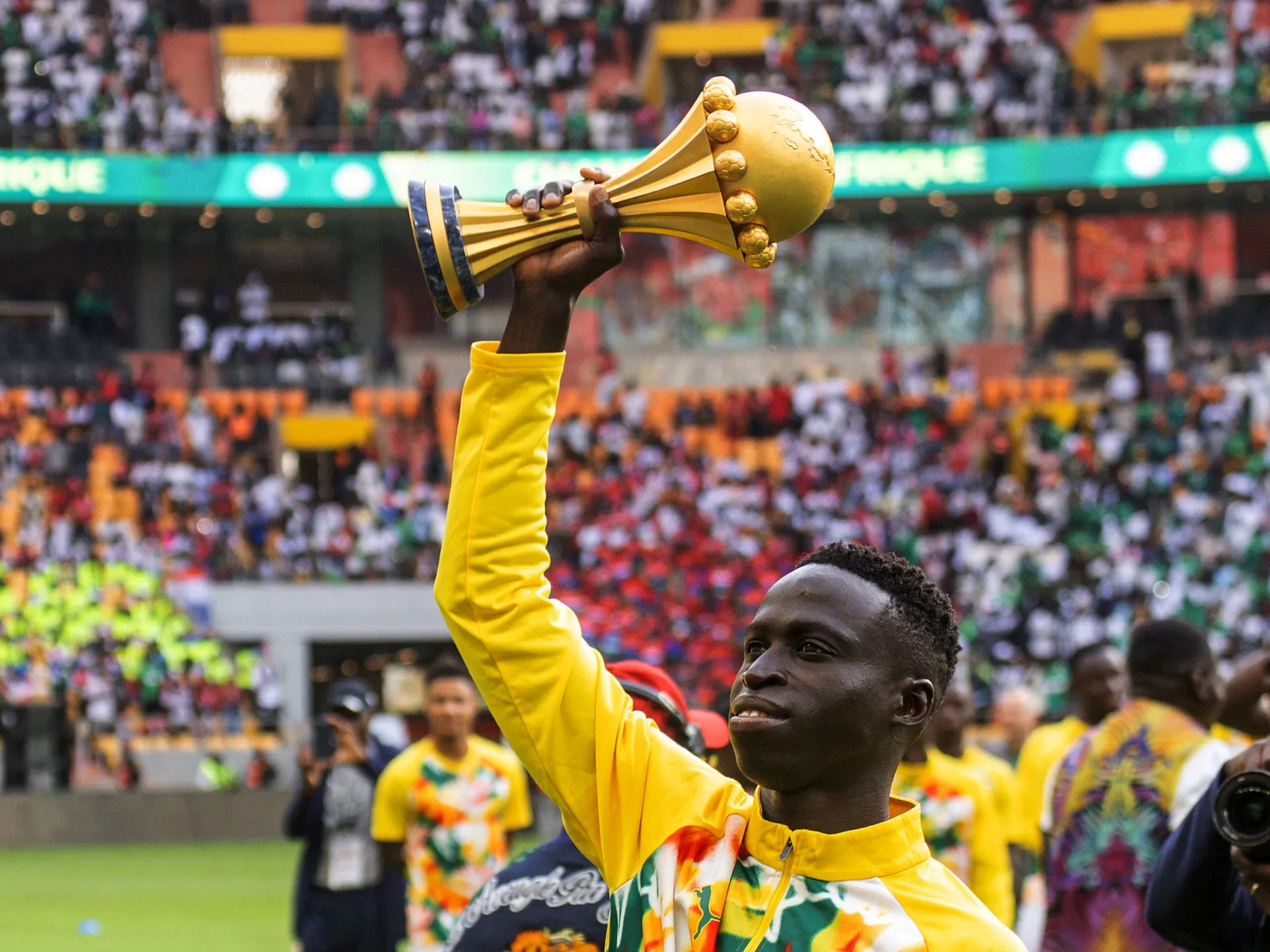
Court of Arbitration for Sport (CAS) hearing set to begin after Senegal stripped of Africa Cup of Nations title by CAF.
Published On 7 Oct 20267 Oct 2026
The long-running saga over the winner of this year’s Africa Cup of Nations (AFCON) title will move closer to resolution on Thursday when Senegal’s appeal, after being stripped of the title, is heard by the Court of Arbitration for Sport in Lausanne.
Senegal are contesting the Confederation of African Football’s decision to declare Morocco champions, despite Senegal beating the hosts 1-0 after extra time in January’s final in Rabat.
Recommended Stories
list of 4 itemsend of list
Senegal walked off the pitch for 14 minutes after a penalty was awarded against them late in regulation time, with several players returning to the dressing room in protest before they resumed play.
Morocco failed to convert the spot kick, sending the match into extra time, where Senegal scored the winner to secure victory.
However, they were stripped of the title two months later after CAF’s Appeal Board ruled that Senegal had forfeited the match by walking off the pitch, overturning the result and awarding a 3-0 victory to Morocco.
Senegal quickly followed with an appeal to CAS, which was lodged on March 25 but is only being heard on Thursday. Senegal want to be reinstated as winners, and a panel will listen to arguments from Senegal, Morocco and CAF.
“After the hearing, the panel will start its deliberations. At this stage, CAS cannot state when a final decision will be rendered but it will not be on the date of the hearing,” CAS said in a statement.
Three-man CAS panel to hear Senegal and CAF arguments
The panel will be presided over by French civil rights expert Gerald Simon, with assistance from Italian international law professor Luigi Fumagalli and Hamburg-based lawyer and professor of law at the University of Zurich, Ulrich Haas.
They are likely to hear arguments from Senegal that the Laws of the Game determine the referee’s decisions on incidents of play are final and cannot be challenged after the fact.
Also important is an interpretation of the articles of the tournament regulations on which CAF’s Appeals Board ruled in Morocco’s favour, which state that “if, for any reason whatsoever, a team refuses to play or leaves the ground before the regular end of the match without the authorisation of the referee, it shall be considered the loser and shall be eliminated for good from the current competition.”
Senegal’s lawyers are expected to argue that the articles must be interpreted strictly and that a temporary departure from the field cannot be equated with abandoning the match, while Morocco are expected to argue for an opposing interpretation, according to which a team that leaves the field without the referee’s authorisation must be considered the loser and definitively eliminated from the competition, even if its departure was not permanent.
The hearing takes place behind closed doors.
Qualification for AFCON 2027 has already begun, with Senegal drawing the opening game of Patrick Vieira’s tenure as coach with Mozambique on September 25, before winning 1-0 in Ethiopia on September 29.
Morocco have won both of their opening games, beating Gabon and Lesotho.
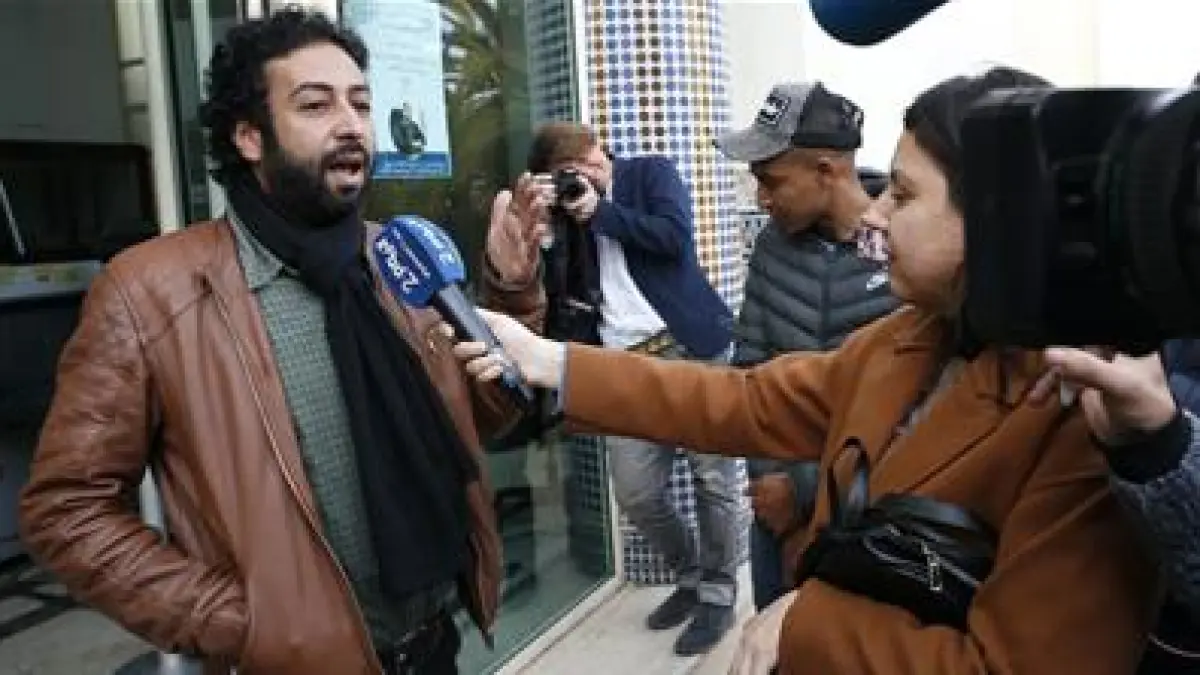
Rabat, Morocco – “I was surveilled not because of a specific article. I was investigating land dispossession in Morocco. I then learned I was a Pegasus target,” Omar Radi, a journalist and human rights defender, told Al Jazeera, referring to the mobile surveillance tool developed by Israeli company NSO Group.
The findings emerged in June 2020, when Amnesty International Security Lab examined his phone. Radi, now based in Germany, said he had spent two years, from 2018 to 2020, noticing signs including his phone’s battery draining quickly, its temperature rising and the network slowing down.
The physical surveillance, he said, was barely discreet.
“They came every day to get a daily report from the parking attendants in my street, the shops I used to go to, and my friends,” he said. “I would sometimes turn around and walk towards the people following me to take photographs, but they ran quickly and hid their faces.”
His case is among four detailed in a new Amnesty International report, We Start With the Verdict: Inside Morocco’s Surveillance Machine, produced with 14 media organisations and coordinated by the international network of journalists Forbidden Stories.
The other three are Fouad Abdelmoumni, a veteran activist; Abdessadak El Bouchattaoui, a human rights lawyer; and Hicham Mansouri, a journalist in exile who had been imprisoned in 2015 on charges of adultery and sexual exploitation, which Amnesty describes as trumped-up.
The report draws on interviews with a whistleblower using the pseudonym Safir, a former employee of Morocco’s General Directorate for Territorial Surveillance (DGST). Amnesty said it corroborated key parts of Safir’s testimony with independent sources, technical evidence and interviews with 10 people identified as surveillance targets, including Radi.
“The Amnesty report connected many dots as to what I was living and feeling while I was under tight surveillance,” Radi said.
“It explains the extraordinary aspect of my police interrogations and my trial, where many of my rights weren’t respected, because even the judicial police and the judges were under monitoring,” he added.
Amnesty identifies the DGST as the agency behind the deployment of Pegasus spyware in Morocco and documents what it describes as abuses of the spyware against activists and journalists between 2017 and 2021.
Morocco denies surveillance
Morocco has previously rejected Amnesty’s allegations that its authorities used Pegasus to target journalists, activists and other critics.
In statements issued in 2020 and 2022, Moroccan authorities challenged Amnesty to provide material evidence supporting its claims.
Amnesty said it wrote to Moroccan authorities four weeks before publishing its latest report and invited them to respond, but received no response.
Al Jazeera also sought comment from Moroccan officials but had not received a response at the time of publication.
Moroccan media have also challenged the latest report. Le360 cited arguments that the presence of a phone number in Pegasus targeting records does not, by itself, prove that a device was infected or establish who ordered an alleged attack.
The outlet also argued that Amnesty had not provided the conclusive technical and material evidence Moroccan authorities had demanded.
The report says Morocco’s Pegasus operations were fully active by October 2017, pointing to the case of human rights lawyer El Bouchattaoui, whose number was entered into the system in September 2017 and selected for targeting weeks before he received an infection link by text message.
Amnesty said its analysis of Pegasus records matched 103 Moroccan phone numbers to individuals identified as potential targets between September and December 2017. Of those, 65 were identifiable as civil society members, including 34 human rights defenders, 22 journalists and media workers, five lawyers and four academics.
According to Amnesty, Safir described a surveillance apparatus that combined digital and physical methods. Targeted individuals were secretly filmed and recorded in detention, offices, cars, cafes and even bedrooms, he said.
Phone shops, he added, were coopted to sell targets devices infected with spyware. Neighbours of human rights defenders, he said, were recruited as informants to file daily reports on their movements.
Safir also described the use of remote control systems (RCS) at internet cafes. Field agents would identify which cafe a target was visiting, he said, giving the DGST access to activity on machines it had already infected and allowing an operator to track calls, read messages, access photographs and record audio.
The report says similar tactics were used against activist Abdelmoumni, who was secretly filmed at home with his fiancee in 2021. Abdelmoumni said he believed the footage was captured through a hidden camera in an air-conditioning unit, based on the recording’s angle.
Safir described the episode as a “textbook case” of a DGST surveillance and cleanup operation designed to leave no trace.
Journalists describe pressure and intimidation
Taoufik Bouachrine, one of Morocco’s best-known journalists and host of the Talk on Politics podcast, was not named in Amnesty’s report but described a similar pattern.
“In Morocco, as in all Arab countries, inventive methods are used to silence journalists and deter them from investigative journalism, particularly when it concerns the unlawful exercise of power, financial corruption, and the intertwining of political authority and money,” he told Al Jazeera.
The first method, he said, is fabricating criminal cases against journalists, “often involving allegations of sexual misconduct in a conservative society that amount to a journalist’s moral execution”.
The second, he said, is a smear campaign run through armies of online trolls and operatives who target journalists and their families.
Bouachrine, 57, was arrested in 2018 on charges of rape and human trafficking and sentenced to 15 years in prison. He has denied the charges, saying his prosecution was tied to his journalism.
The United Nations Working Group on Arbitrary Detention found Bouachrine’s detention arbitrary and said he had been subjected to judicial harassment. The European Parliament adopted a resolution calling for his release, along with other journalists tried on similar charges.
He served more than six years before being released under a royal pardon. By then, Akhbar Al-Youm, the newspaper he founded, had already closed. Bouachrine said authorities had cut off its advertising revenue.
“This is another method of destroying investigative journalism,” he added, “turning off the advertising tap and leaving a newspaper to die slowly.”
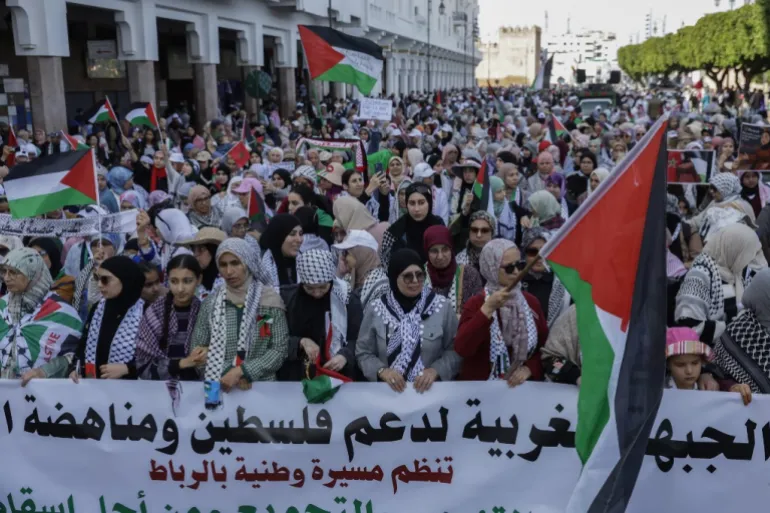
Pro-Palestine protests have spread across several Moroccan cities, with demonstrators demanding an end to diplomatic normalisation with Israel as Rabat deepens ties with Tel Aviv.
The latest mobilisation took place on September 27, at the end of three days of action called by the Moroccan Front for Supporting Palestine and Against Normalisation.
They followed a September 16 announcement that Morocco and Israel would elevate their diplomatic missions to full embassies and appoint ambassadors.
On September 25, the Moroccan Committee for Supporting the Nation’s Causes said it had organised 76 events in 45 cities under the slogan “Friday for Al-Aqsa and against normalisation”.
Moroccan media reported gatherings in cities including Rabat, Casablanca, Marrakesh, Tangier, Fez, Agadir, Oujda, Tetouan, Kenitra and Sale. The 76-event figure was the committee’s own count, with no independent national tally of participants.
In Rabat, protesters gathered outside Parliament, while a demonstration in Marrakesh developed into a march through several main streets, according to Lakome. Moroccan media also reported restrictions and arrests in some cities.
Restrictions and arrests
The mobilisation faced restrictions in some cities.
In Tangier, local authorities issued a decision banning a planned demonstration on September 27. Achkayen later reported that security forces dispersed hundreds of participants and that more than 12 people were detained, citing its own sources.
Lakome reported that authorities also prevented demonstrations in M’diq, while security forces surrounded a gathering in Agadir to prevent it from becoming a march.
Pro-Palestine protesters take part in a demonstration against Morocco’s diplomatic ties with Israel [Abdel Majid Bziouat/AFP]
The Moroccan Committee for Supporting the Nation’s Causes subsequently condemned what it described as bans, restrictions and arrests.
The response underscored another dimension of the dispute: Opposition to the relationship with Israel has remained visible on the streets, even as the government has continued to develop official ties.
A relationship under public pressure
Morocco restored diplomatic relations with Israel in December 2020 as part of the US-brokered Abraham Accords framework, alongside Washington’s recognition of Moroccan sovereignty over Western Sahara.
On September 16, Moroccan Foreign Minister Nasser Bourita and Israeli Foreign Minister Gideon Saar met in New York at a trilateral summit hosted by US Ambassador to the United Nations Mike Waltz.
The three countries confirmed plans to elevate the Moroccan and Israeli diplomatic missions to full embassies and exchange ambassadors.
Morocco and Israel also agreed to conclude agreements on investment protection and avoiding double taxation, expand direct flights and organise high-level reciprocal visits.
The move therefore goes beyond maintaining diplomatic relations established in 2020. It sets out a broader programme of institutional, economic and transport links between the two countries.
For opponents of the relationship, the embassy agreement represents another step in a policy they have rejected since 2020.
Public opinion and state policy
Morocco has maintained diplomatic relations with Israel while continuing to publicly support the Palestinian cause and the establishment of a Palestinian state.
For opponents of normalisation, however, the two positions are incompatible, particularly amid Israel’s genocidal war on Gaza.
“What has changed is the political context: Normalisation is being consolidated at a time when the war in Gaza has generated unprecedented public anger and intense images of Palestinian suffering,” Kathya K Berrada, senior programmes manager at the Arab Center for Research, told Al Jazeera.
“What we are seeing in Morocco is a growing disconnect between official diplomacy and public sentiment,” Moroccan activist Mouna Rahiani said, citing the latest Arab Opinion Index, which found that 89 percent of Moroccans surveyed opposed their country recognising Israel, while six percent supported it.
“While the state is moving towards deeper and more formal relations with Israel, Moroccans are still taking to the streets to say that Palestine cannot be treated as separate from our political and moral responsibilities,” she said.
The September agreement has brought an existing tension into sharper focus: public mobilisation against normalisation continues while the state pursues closer institutional ties with Israel.
Berrada said there was an important distinction between official policy and popular opinion, arguing that there is not enough reliable public data to establish how many Moroccans support or oppose normalisation.
Western Sahara adds another layer
The timing also matters for Morocco’s Western Sahara policy. The United Nations Security Council is due to consider the mandate of the UN Mission for the Referendum in Western Sahara (MINURSO) in October. Its current mandate runs until October 31, 2026.
The September 16 trilateral statement came against the backdrop of US recognition of Moroccan sovereignty over Western Sahara and Israel’s support for Morocco’s position on the territory.
For Rabat, the relationship with Israel sits within a wider foreign-policy framework in which ties with Washington and international support for its position on Western Sahara remain important.
For opponents of normalisation, however, that strategic calculation does not resolve their objection to closer ties with Israel, particularly while the Palestinian issue remains highly salient.
Ahmed, a Moroccan sociologist who asked to be identified by one name, said the September 16 move was “a continuation of the trilateral agreement of December 10, 2020”, but that Morocco should make the relationship “comprehensive, not selective or partial”.
The election changes the political backdrop
The protests came days after Morocco held parliamentary elections on September 23.
The final results gave the Authenticity and Modernity Party 97 of the 395 seats, followed by the National Rally of Independents with 66, the Istiqlal Party with 65 and the Party of Justice and Development (PJD) with 54.
The PJD had won 13 seats in 2021. Turnout was 38.08 percent, compared with 50.86 percent in 2021 and 42.27 percent in 2016, according to Morocco’s Ministry of Interior.
It was the PJD in power when Morocco restored relations with Israel in 2020. Then-Prime Minister Saadeddine el-Othmani signed the Morocco-US-Israel joint declaration that December.
The PJD has maintained that opposition to normalisation was a longstanding party position. The party subsequently reaffirmed its rejection of normalisation and relations with Israel, while el-Othmani defended the 2020 decision as a state-level decision.
On September 17, following the announcement of the planned diplomatic upgrade, the PJD’s general secretariat reiterated its opposition to normalisation and to relations and agreements with Israel.
After the election, the PJD’s national council unanimously decided to remain in parliamentary opposition and not participate in the next government.
Pro-Palestine protesters demonstrate against normalisation with Israel, as Morocco moves to deepen diplomatic ties with Tel Aviv [Mosa’ab Elshamy/AP]
The PJD’s position has illustrated the limits of using party politics to measure the effect of opposition to normalisation. The party opposed the policy while in government, yet its prime minister signed the 2020 declaration.
Its larger parliamentary presence in 2026 gives the issue a stronger political platform, but does not by itself alter Morocco’s foreign policy.
It has not been established that the Palestine issue or opposition to normalisation was a decisive factor in voting, and neither do the PJD’s gains demonstrate that its position on Israel directly drove its increased representation.
From the streets to politics?
The September demonstrations show that organisations opposed to normalisation retain the ability to mobilise across a wide geographic area. But their effect on government policy is less clear.
“There is an important distinction between state policy and popular opinion. Normalisation is an official state decision, but there is limited reliable public data allowing us to measure the level of popular support for it,” Berrada said.
Moroccan protesters display signs supporting Palestinians during a mobilisation against diplomatic ties with Israel [Abdel Majid Bziout/AFP]
“It would therefore be difficult to claim that either a majority or a minority of Moroccans endorse the policy.”
That distinction is important when assessing the significance of the protests. Demonstrations can show the strength and persistence of organised opposition, but they do not by themselves establish the views of the wider population or show that government policy will change.
The PJD now has a larger parliamentary presence than it did after the 2021 election, but it remains in opposition. It will be able to voice its opposition to normalisation in Parliament, but will not have a place in government.
At the same time, the September 16 agreement remains part of a broader Moroccan foreign-policy framework involving the United States, Israel and Western Sahara. The Security Council’s consideration of MINURSO in October will provide another diplomatic setting in which Morocco’s position on the territory is under discussion.
For now, the protests demonstrate that opposition to normalisation remains capable of sustained mobilisation, while the government continues to deepen the relationship. Whether that public opposition translates into sustained political pressure remains less clear.
Demonstrators are demanding early elections and accuse Pedro Sanchez’s government of negligence.
Published On 26 Sep 202626 Sep 2026
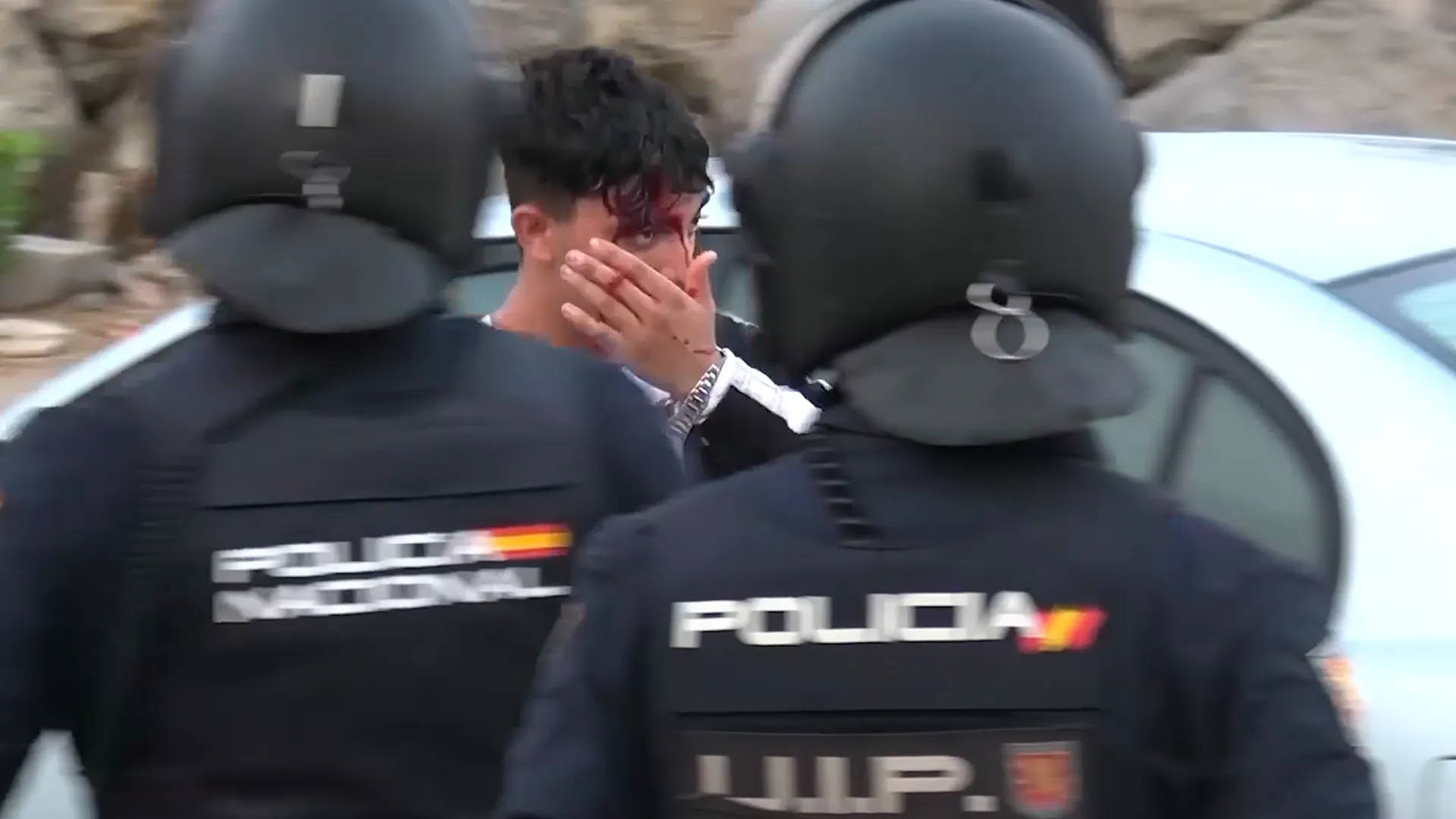
Thousands of people have rallied in the Spanish capital to protest the government’s policy on irregular migration and its handling of a recent migrant influx into the North African enclave of Ceuta.
Saturday’s protest in Madrid was organised by right-wing civil society group Sociedad Civil Espanola and backed by the mainstream conservative People’s Party (PP) and far-right Vox.
Recommended Stories
list of 3 itemsend of list
According to the government, 20,000 people attended, while protest organisers put the turnout at 180,000.
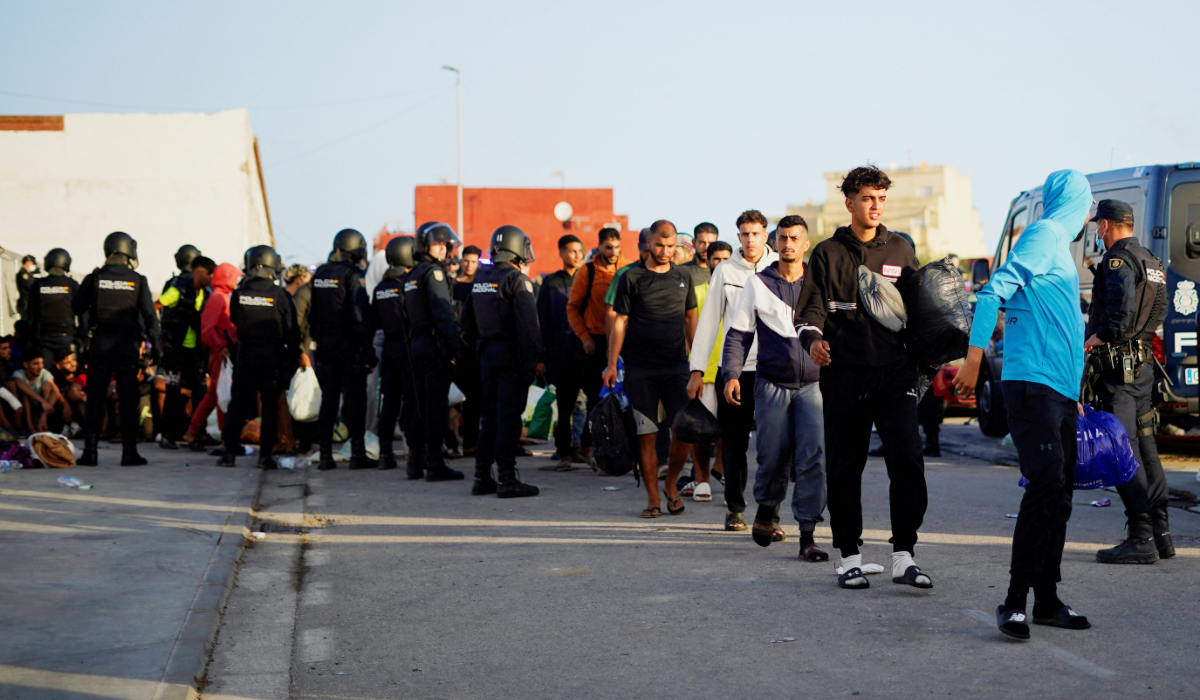
At the end of July, more than 70,000 migrants stormed into the autonomous Spanish city of Ceuta from neighbouring Morocco, before most of them were returned. However, thousands remain stranded.
Demonstrators accused Prime Minister Pedro Sanchez and his government of failing to protect the borders of Ceuta.
They are calling for an early election to be held by mid-November, with Vox demanding Sanchez be tried for treason. Spain’s next general election is not due until August 2027.
PP’s secretary-general Miguel Tellado said there was a “widespread feeling that the government has not acted responsibly; there has been a dereliction of duty, extreme negligence”.
“Spanish society has to take to the streets to ask the government to defend our territorial integrity,” he added.
The July 30 and 31 surge of people into Ceuta led to unprecedented scenes and the deaths of dozens of migrants.
Sanchez said on Tuesday that Moroccan border control failed to adequately handle the incident and that an investigation was still under way, adding that Rabat had been asked for answers.
The Spanish government estimates that between 6,000 and 10,000 stranded migrants remain in Ceuta.
Vox leader Santiago Abascal is demanding that everyone who arrived in late July be deported to their country of origin.
Abascal said Ceuta remained “invaded because Sanchez continues to be Morocco’s servant”.
Spanish newspaper El Pais reported on Saturday that the government is planning to approve a decree on Tuesday to accelerate the return of migrants from Ceuta to Morocco.
The protest is the second under the March for Dignity banner. That demonstration was held in late May before the incident in Ceuta and attracted 40,000 protesters, according to the government.
People in Ceuta face harsh living conditions, overcrowding, limited aid, and alleged abuse while awaiting decisions about their future.
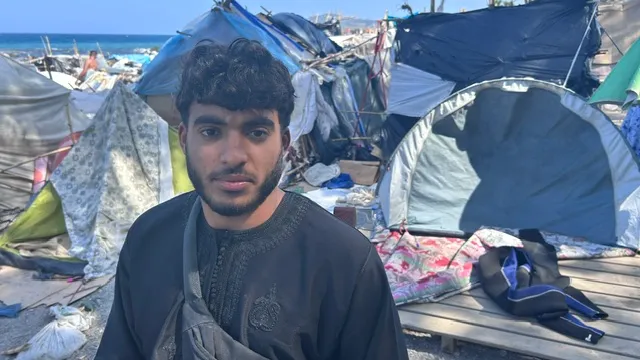
Ceuta, Spain – For more than a month, 21-year-old Anis Fadi, a university graduate and qualified accountant, has been sleeping in a makeshift shelter.
At the end of July, he crossed the border from Morocco to the Spanish enclave of Ceuta, on the North African coast, along with about 70,000 others.
Recommended Stories
list of 4 itemsend of list
At his migrant camp on Trampolin Beach, he queues for hours each day for food at a Red Cross centre.
“I don’t even have a tent,” he told Al Jazeera. “We make shelter with old pieces of wood, sticks from broken branches, and whatever else we find here.”
Anis Fadi, a 21-year-old graduate, believes Europe would offer him better employment opportunities than Morocco [Peter Smith/Al Jazeera]
When the wind blows, these makeshift shelters offer little protection, and soon the temperature will dip.
“There are a lot of people worse than me,” said Fadi.
The Spanish government estimates that between 6,000 and 10,000 who made the crossing remain stranded. Officials in Ceuta believe the figure is closer to 13,000 people.
Thousands of people remain stranded in Ceuta having crossed the border in July [Peter Smith/Al Jazeera]
About 5,000 – mostly women and children – have been given temporary accommodation by the authorities. The rest sleep outside.
Fadi said, as he waits for food in the heat, police officers with batons shout orders at the crowds.
“It’s a hard life here,” he said, but he does not regret leaving Morocco.
“Life was harder there for me. I didn’t see any future for myself.”
‘We are not criminals’
More than 100 people died in the crossing. Fadi said he swam for hours to reach Ceuta, believing it was a gateway to Europe, where he imagines a better life awaits.
He believes men like him who “have the skills … don’t have the chance”.
“We are not criminals,” he said, in response to the anti-migration rhetoric and protests that followed the crossing. “We just want to work.”
Right-wing European politicians have framed the Ceuta crossing as a threatening invasion.
Migrant children take toys at an industrial area in Ceuta, Spain, September 21, 2026 [Jon Nazca/Reuters]
In Spain, protests have erupted against the government’s handling of the crisis.
Ceuta is usually home to about 84,000 people. Its population almost doubled at the outset of this crisis. Though most have returned, the enclave has been struggling to cope with the pressure of hosting those who remain.
After a new temporary shelter opened up recently, offering space for about 1,700 people, it hit capacity within hours.
Claims of abuse
As humanitarian groups struggle to provide basic needs, Nolte Bauer, from Mission Lifeline International, said migrants also feel unsafe.
“Outside the official camps there is a lack of basic hygiene,” he said. “There is insufficient medical aid and the immediate danger of violence, especially at night.”
His organisation often receives reports of people being beaten.
Members of the Spanish NGO Medicos del Mundo (Doctors of the World) help injured migrants at an industrial area in Ceuta, Spain, September 21, 2026 [Jon Nazca/Reuters]
Several people interviewed by Al Jazeera said they had been abused by men in military or police uniforms. Some were wounded, with cuts to the head or bruising around the body.
“These are racist people, these soldiers,” one man who requested anonymity told Al Jazeera. “They found me sleeping and they started to hit me without any reason. They broke one of my hands; they wanted to break the other one. They also beat me on my knees.”
Some said they were afraid to go to hospital, fearing they could be deported, and instead sought help from aid groups. NGO volunteers told Al Jazeera they had treated wounded men.
People play with a ball surrounded by tents at the Trampolin Beach in Ceuta, Spain, September 19, 2026 [Jon Nazca/Reuters]
But Spanish authorities rejected any claims of abuse and discrimination, telling Al Jazeera that the police acts “with absolute respect for human rights”.
They say they are expanding accommodation and providing food and medical care while migrants are identified and their cases are processed.
The government has said the aim is to return to Morocco those who do not have a legal status to remain in Spain, while Ceuta’s leaders have repeatedly called on Madrid and Europe for more support.
Millions of voters went to polls in Morocco on Wednesday to determine the makeup of the House of Representatives, the parliament’s lower house.
Twenty-seven political parties are competing for 395 seats in the country’s 12th legislative election since independence in 1956.
Almost 16 million people are able to vote, with 55 percent residing in urban areas and 45 percent in rural regions, seeing a mix of concerns among voters.
Economic frustrations
While King Mohammed VI will maintain most executive powers, the new government will manage many public affairs for the coming years.
Once the votes are counted, the king will appoint the head of government from the leading party, but they will still need the support of 198 deputies – an absolute majority – to gain parliamentary confidence.
The election comes at a time of mounting challenges for the country, with the economic situation creating discontent and frustration, Mohammed Masbah, head of the Moroccan Institute for Policy Analysis, told Al Jazeera.
“The upcoming elections will have special importance because they come in a context tied to a social and economic crisis, especially high prices and the cost of living on one hand,” Masbah told Al Jazeera.
“On the other hand, there is a state of frustration among broad segments of society, especially the youth. The Gen Z protests last year, as well as the attempt to cross towards Ceuta a few weeks ago, demonstrate this crisis.”
The introduction of a new financial system designed to support candidates aged 35 could encourage more youth participation. But the nearly six million Moroccans residing overseas, many of them younger citizens, will have to appoint a proxy in Morocco to cast their vote.
There is also an upcoming key milestone for the country with the 2030 World Cup, which requires huge investments. What will remain in the minds of most voters is the state of the economy and inflation, which have impacted the living standards of many Moroccans.
“I believe the upcoming elections will produce a government majority whose primary function will be to address these imbalances, especially the economic ones related to the high cost of living in Morocco,” Masbah said.
“Regarding the issues that were raised and discussed by the majority of political parties, whether represented in the government or the opposition, they are the issue of employment and high prices.”
Two of the main parties competing in the election, the National Rally of Independents and the Authenticity and Modernity Party, have put these issues at the front of their campaigns in what has been a heated election.
“Of course, this is the main topic, but in the public debate, we also noticed conflicts, especially between the top two parties currently running the government,” Masbah said. “We noticed mudslinging and accusations of squandering funds and stealing candidates, which may increase voter alienation from voting today.”
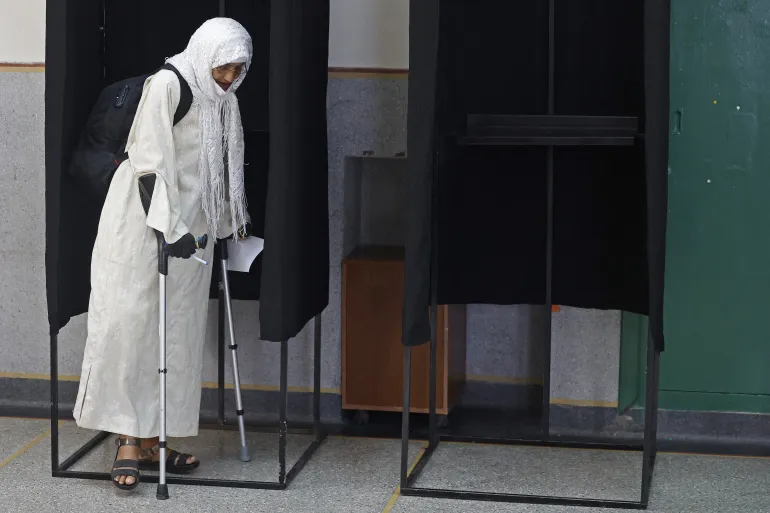
A woman prepares to cast her ballot to vote in Morocco’s legislative elections at a polling station inside a school at the Udayas neighbourhood, Rabat, on September 23, 2026 [AFP]
Despite the tense conditions, Morocco’s Public Prosecution has recorded a significant drop in election-related complaints compared with the 2021 vote.
But legal amendments that criminalise digital offences for the first time – including the dissemination of fake news and false allegations intended to defame candidates or voters – have been introduced. The digital space became the primary arena for violations this year, accounting for 22 complaints.
Masbah said that despite a mood of frustration in Morocco over the government’s inability to manage key economic and social issues, turnout is expected to remain steady, as it has been over the past 20 years, due to structural factors.
“Electoral and voting behaviour in Morocco is not primarily linked to electoral programmes and promises [of parties], as much as it is linked to the stable bloc formed by Moroccan deserts and villages, which relies primarily on a network of notables who have influence and the ability to win voters’ voices through utilitarian voting,” Masbah said.
“I expect that if there is a decline in the voting rate – and this is likely – it will not be catastrophic or a sharp decline, given the consideration I mentioned earlier, which is the focus on notables and traditional elites in winning over voters.”
With Wowcher you can buy a 4* holiday to Marrakesh including a hotel stay and return flights from £59pp from October 5-9.
Seville, Spain
One of the best things about Seville is that it’s less than three hours away from the UKCredit: Alamy Stock Photo
Under three hours away from the UK, Seville is Spain’s fourth-largest city with lots to offer from its tasty tapas and fabulous flamenco.
Not to mention in early October temperatures tend to sit around 26C on sunny days.
Top spots to see include Plaza de Espana – and pop by El Rinconcillo, the city’s oldest tapas bar where a huge glass of wine barely costs £3.
With loveholidays, book a stay at the Ilunion Alcora Sevilla which has sweeping views of the city, and a luxury swimmingpool.
A four-night stay between October 19-23 starts from £279pp with return flights to London Gatwick.
Sharm El Sheikh, Egypt
Dubbed to be super popular next year (so get ahead of the game), Sharm El Sheikh is in Egypt.
The resort city on the Red sea has world-class reefs, incredible beaches and average highs of 31C in October.
Sharm El Sheikh has world-class reefs and incredible beachesCredit: Getty
For Brits, it has lots to offer alongside its sunshine like all-inclusive hotels and waterparks.
With Wowcher, there’s an offer for a seven-night 4* all inclusive Sharm El Sheikh getaway with return flights – the hotel has a spa, sauna, gym, tennis courts and watersports.
Book a stay at the Sharm Club Beach Resort from £299pp
Antalya, Turkey
Antalya has bright blue seas and can be as high as 26C in OctoberCredit: Getty
If you’re seeking autumn sunshine, why not look in what has been called ‘paradise on earth‘?
To make it even better, the average flight time from the UK is around four and a half hours.
There’s a current offer with Wowcher for a 4* Antalya getaway in a sea view hotel stay with breakfast and return flights included.
Book a stay from 5-8 October from £159pp.
Limassol, Cyprus
In Limassol, the largest waterpark is Fasouri Watermania WaterparkCredit: Alamy
Five hours away from the UK is the city of Limassol in Cyprus which has daytime highs of 27C next month.
Some favourite sunbathing spots include Kourion Beach and Pissouri Beach which has been described as a “beautiful rustic pebble beach with pristine water.”
With loveholidays, you can book into the Troodos Hotel which is minutes from Mount Olympus and is surrounded by natural beauty.
A seven-night holiday between October 5-12 starts from £369pp.
Reggio Calabria, Italy
Head to southern Italy for warm weather and vineyard toursCredit: Getty
In just three hours, you could be basking in the Italian sunshine in Reggio Calabria with city with sun, beaches, mountains, waterparks and lots ofhistory.
Not to mention there are highs of 26C in October and Brits can fly directly to Reggio Calabria from London Stansted and return fares start from under £30.
As southern Italy is the perfect place for vineyards, there are even vineyard tours and wine tastings for £20.
You can book a getaway with loveholidays to La Bussola a hotel with huge swimming pools and plenty of space to sunbathe.
A seven-night break between October 4-11 starts from £270pp.
Tenerife, Canary Islands
Tenerife has golden sand beaches and a huge Thai-themed waterparkCredit: Getty
The Canary Islands are a safe option for autumn sunshine, and in October, the island of Tenerife has highs of 26C.
The island also has hundreds of beaches, coastal towns with bustling promenades and head up to Mount Teide National Park on the cable car.
Siam Park, an enormous Thai-themed waterpark is open throughout next month too.
It has high-speed slides, family zones, beaches and plenty of swimming pools.
With Wowcher, book an all-inclusive break to Tenerife from October 5-8 including return flights from £169pp.
Fuerteventura, Canary Islands
Fuerteventura is the sunniest Canary IslandCredit: Getty
Tenerife’s trusty neighbour, Fuerteventura has the same high temperatures – and can actually be cheaper.
On the second largest Canary Island, you can explore a number of beaches like Playa de Matorral, Corralejo and Playa Bajo de la Burra.
It’s easy to take a boat excursion out into the waters and go snorkelling to spot colourful fish and sometimes even stingrays.
Also make sure to check out Acua Water Park and hike on Corralejo Natural Park.
With Wowcher, book an all-inclusive break to Fuerteventura including return flights from £179pp.
Sousse, Tunisia
Sousse is a coastal city in Tunisia and lots of pretty beachesCredit: Corbis via Getty Images
It’s no secret that Tunisia is a top spot when it comes to staying sunny during autumn.
In October, daytime highs can reach 28C – perfect sunbathing weather.
Sousse in particular is known for its sandy beaches and modern marina with boutique shops and boat trips.
Tunisia is relatively cheap too with a pint of beer costing less than £2.
With loveholidays, book a seven-night break between October 9-16 to Riadh Palms which has an enormous swimming complex – prices start from £415pp.
Dubai, UAE
Dubai has highs of around 35C in October making it the ideal autumn getawayCredit: Stefan Tomic
In the UAE, Dubai offers all the delights of an autumn getaway from its many luxury hotels to its thrilling waterparks and exotic beach clubs.
You can do all this next month while enjoying highs of 35C – and Emirates offers direct flights to Dubai which get there in seven hours.
Don’t forget to hit the shops or head to the Grand Souk for tasty treats like stuffed breads.
Or try a Iranian falooda — a sorbet-like dessert made of thin rice noodles and syrup.
With Wowcher, book a break to Dubai (a four or seven night stay) including breakfast and return flights from £449pp.
In terms of the ongoing conflict in the Middle East, the FCDO no longer advises against travel to the UAE, but warns that “the situation in the Middle East remains unpredictable”.
Political parties in Morocco are intensifying campaign efforts before legislative elections on September 23, which will ultimately decide Morocco’s next government.
Twenty-seven political parties are competing for 395 seats in the House of Representatives and the vote comes at a crucial time for the country.
Recommended Stories
list of 4 itemsend of list
Rising living costs, pressure on public services, and high youth unemployment – currently at 37.3 percent for Moroccans aged 15 to 24 – are all issues being hotly debated.
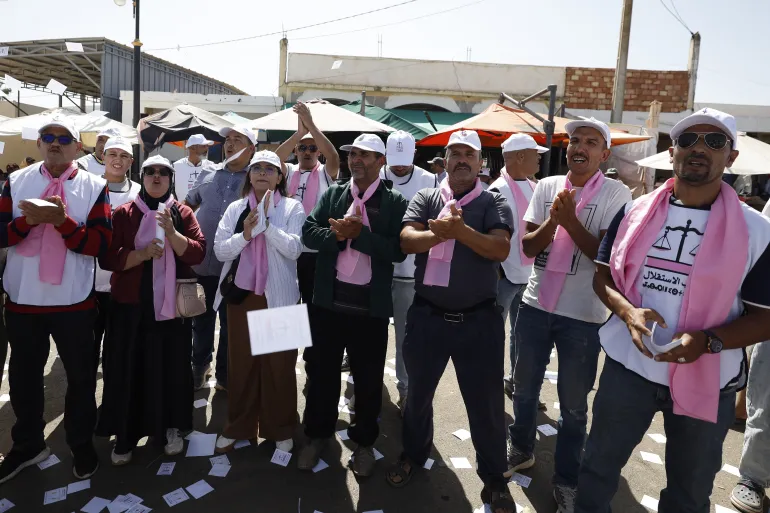
Party headquarters across Morocco and sites at packed city neighbourhoods and markets have been transformed into electioneering operation rooms. Campaign teams navigate crowded streets with loudspeakers, music, and leaflets to catch the attention of Morocco’s 15.8 million registered voters.
“We choose communication locations carefully; we start from a field map where we define the spaces where citizens meet naturally, then we divide the team according to tasks between direct communication and recording observations,” al-Wali al-Shtouki, campaign manager for the Justice and Development Party (PJD) in the Medina-Sidi Youssef Ben Ali district, told Al Jazeera.
“We also hold small meetings at the headquarters because they allow a calm and direct dialogue to understand what the citizen actually expects. What we hear in the field is what guides our daily work. After every tour or meeting, we collect observations and repeated questions and discuss them within the team, then we distinguish between local issues that need follow-up and those related to public policies and parliamentary work.”
Campaigners and supporters of the Istiqlal Party (PI) chant slogans during a rally at the weekly souk in the rural commune of Ait Ikkou, in the Khemisset region, on September 19, 2026, before Morocco’s legislative elections [AFP]
While physical headquarters serve as hubs for election campaigns, a party’s success ultimately relies on its roots within a community, Jawad al-Shafdi, head of the Moroccan Observatory for Political Participation, said.
“In the Moroccan case, the strength of the candidate, their local extension, their network of relationships, and their electoral record also play essential roles,” al-Shafdi told Al Jazeera.
“We may find a party with limited organisational presence in a specific district achieving a significant result thanks to a strong candidate, and vice versa. Winning votes is achieved through a more complex system that combines party organisation, candidate strength, local extension, networks of elected officials, direct and digital communication, in addition to the party’s image and political offering.
“Therefore, the true criterion is not the number of people who enter the headquarters, but its ability to convert organisational movement into electoral mobilisation, mobilisation into votes, and votes into seats.”
Digital, direct engagement
The competition has forced political groups to adopt multi-channel strategies that balance street-level outreach with digital campaigns to reach a broader audience.
Fatima al-Tamni, a candidate for the Left Alliance in the Ain Sebaa – Hay Mohammadi district in Casablanca, highlighted the necessity of direct engagement with voters rather than superficial campaign displays.
Campaigners for the Popular Movement (MP) hand out leaflets to merchants at the weekly souk in the rural commune of Ait Ikkou, in the Khemisset region, on September 19, 2026, before Morocco’s legislative elections [AFP]
She believes that party campaigns should serve as a space to listen to the concerns of the electorate and propose solutions, while building a strategic vision for transport, housing, pollution and other issues.
“We do not want to speak to the citizen from above, nor turn the campaign into a festival of pictures and slogans… We want to speak with them in clear language, and hear from them before we speak in their name,” she said. “[It] is not an end in itself, but the beginning of a new political relationship with citizens based on clarity, accountability, and fulfilling commitments.”
Youssef Ait Sidi Said, a political activist with the Progress and Socialism Party in the Chichaoua province, said campaigning remains an evolving process.
“For the party, this campaign is no longer just a specific period to introduce candidates and the electoral programme, but has become an opportunity for direct and continuous communication with the population and listening to their concerns and expectations,” Ait Sidi Said told Al Jazeera.
“Digital platforms allow reaching broad groups, especially youth, and grant them the possibility to interact, ask questions, and express their opinions. However, we do not consider that digitisation can replace direct communication. On the contrary, we see that each tool has its function.”
Ultimately, direct engagement with voters should remain the hallmark of party campaigns, he said.
“Field communication allows direct listening to the citizen, while digital platforms allow expanding the reach, interaction, and documenting activities,” Ait Sidi Said added.
Morocco’s Justice and Development Party (PJD) went from a decade of being the main political beneficiary of the country’s post-2011 reforms to suffering a dramatic electoral defeat in 2021.
The party won 107 of the 395 seats in Parliament in the November 2011 election, after protests that year called for political reform, greater accountability and a more responsive government. Its leader, Abdelilah Benkirane, became head of government.
Morocco’s 2011 constitutional changes expanded the formal powers of Parliament and government while retaining significant authority for the monarchy. The king appoints the head of government from the party that comes first in the House of Representatives, while he chairs the Council of Ministers, where strategic orientations of state policy are considered.
In the 2016 election, the PJD increased its seats to 125, but Benkirane spent months unable to form a governing coalition. In March 2017, King Mohammed VI ended his mandate and appointed Saadeddine Othmani to replace him. The PJD remained in government until its electoral collapse four years later.
In the September 2021 election, the party fell from 125 seats to just 13, losing 112. The National Rally of Independents (RNI) won 102 seats and became the largest party.
How much of the comeback rests on Benkirane?
Benkirane’s return raises another question: How much of the PJD’s comeback is being built around him?
A recent Al Jazeera Studies analysis describes Benkirane as a political “brand” whose long public career, media presence and direct communication style have created a personal profile that can function as electoral capital for the party.
It examines whether his visibility and personal appeal can help the PJD rebuild after its 2021 collapse.
Benkirane remains one of Morocco’s most recognisable political figures. But his return does not by itself show that the PJD has rebuilt its support.
The party lost 112 seats in 2021; its task now is to turn the attention generated by its leader into support for the party itself.
A broader programme
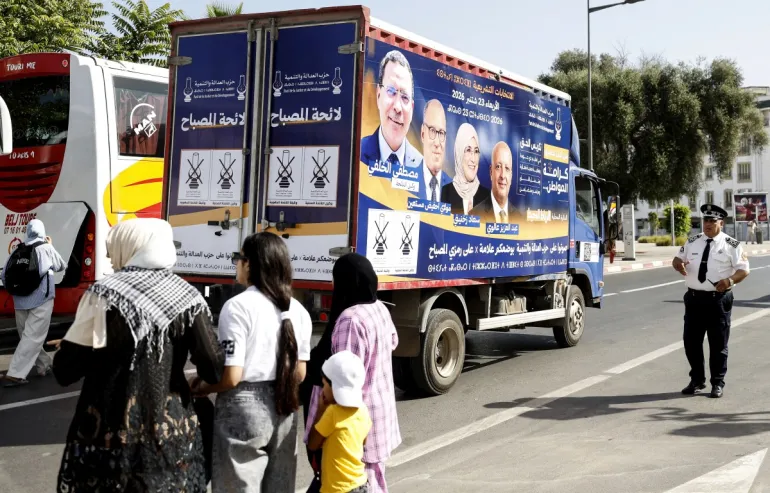
The PJD’s 2026 programme contains 467 measures across five broad areas: identity and family; political and institutional reform; public services and social protection; the economy and employment; and foreign policy.
It calls for greater transparency in public procurement, rules addressing conflicts of interest and illicit enrichment, and improvements to public services. It also highlights housing, social protection, food, water and energy sovereignty.
Its programme foregrounds practical issues such as prices, jobs, schools, hospitals and corruption.
The PJD is campaigning on public services, jobs, purchasing power and political reform as it seeks to rebuild after its 2021 electoral collapse [Abdel Majid Bziouat/AFP]
Saad al-Sabahi, 38, who works with the PJD’s regional secretariat in Casablanca-Settat, said the programme was developed through studies, consultation meetings and proposals submitted through an online platform.
“These commitments cover a range of sectors and areas affecting the lives of the Moroccan people,” he told Al Jazeera, pointing to political participation, fighting corruption, public education, healthcare, employment and economic sovereignty.
“These commitments, among others, form the basis of the agreement between the party and voters. We will work to fulfil and implement them with integrity and competence,” al-Sabahi said.
What changed after 2021?
The PJD says one of its main lessons from the 2021 defeat has been the need to reorganise internally and examine more critically its years in government.
“The party was able to overcome its crisis following its extraordinary and regular congresses, and after Secretary-General Abdelilah Benkirane took over the leadership,” al-Sabahi said. “The party also reorganised its internal affairs through communication and the renewal of its structures.”
The party’s own assessment of the 2021 defeat includes criticism of its political and organisational choices. It has also accused unnamed actors of undermining democratic choice and pointed to what it describes as electoral corruption and disinformation.
Those are the PJD’s explanations for the result, rather than independently established findings. But the scale of its losses forced the party to confront how far its record in government had separated it from parts of its former support base.
That matters particularly when it comes to younger voters.
Imane Traifi, 37, of the PJD Youth, said the party needed to create sustained opportunities for young people to take part in political life rather than treating them simply as voters during election campaigns.
“We are keen to ensure that young people move from being recipients to becoming participants, initiators and people who take on responsibility,” she told Al Jazeera.
The ghosts and crocodiles
However, a question for any future PJD government is not only what it would seek to change, but what it could change once in office.
Benkirane repeatedly referred to “ghosts and crocodiles” as a metaphor for powerful or hidden interests that he said had obstructed his government when it was in power.
The clearest example is the party’s position on Israel.
The PJD has campaigned against Morocco’s normalisation with Israel and continues to support the Palestinian cause. Its 2026 programme explicitly calls for opposition to normalisation. Yet Morocco restored diplomatic ties with Israel in 2020 while the PJD was in government and Saadeddine Othmani was head of government.
The PJD opposed the move, while Othmani later defended it as a state decision and said Morocco’s support for the Palestinian cause remained unchanged. The agreement went ahead in December 2020 as part of a US-brokered deal that included Washington’s recognition of Moroccan sovereignty over Western Sahara.
Six years later, the relationship has moved further. On September 16, Morocco and Israel agreed to elevate their diplomatic missions to embassy level and appoint ambassadors, while also expanding air travel and advancing economic and trade agreements.
The PJD reaffirmed its opposition to normalisation and cooperation with Israel the following day, describing its position as longstanding.
But it also leaves a question for the party’s return: If such forces were powerful enough to constrain the government then, what has changed?
Has the PJD developed a different understanding of the limits of government authority or will it find itself once again beset by “ghosts and crocodiles”?
The limits of government power
The PJD has made clear on several occasions that the change it seeks is from within Morocco’s existing political and constitutional system, rather than a challenge to the monarchy itself.
Benkirane has repeatedly reaffirmed his support for the monarchy while arguing that elected institutions should play their role in governing and improving the country.
That distinction is important to understanding the PJD’s return. Its opposition to policies such as normalisation with Israel sits alongside its acceptance of a constitutional and political framework in which the monarchy retains a central role in strategic state decisions.
Under the constitution, the king chairs the Council of Ministers, which considers the strategic orientations of state policy.
That applies not only to Israel but to other areas where major policy decisions remain closely tied to the monarchy.
For the PJD, rebuilding means more than recovering the seats it lost in 2021. It means showing what it learned from a decade in government, what it can deliver and how it would avoid the political costs of its collapse.
Al-Sabahi said the party wanted to regain what he described as the gains citizens had previously enjoyed.
“We will work to restore the gains that citizens previously enjoyed and to restore their dignity and rights,” he told Al Jazeera.
Yassine Elachiri, a member of the National Bureau of PJD Youth and the party’s National Council, said the relationship with younger Moroccans had to be built over time rather than during campaigns.
“Earning the trust of a new generation of young people cannot be reduced to electoral mobilisation or short-term campaigns in the run-up to voting day,” he said. “Rather, it is a cumulative process built on sustained engagement, guidance, training and creating opportunities for young people to participate actively in public affairs.”
“Our goal is not simply to reach young people at the moment of an election, but to build a lasting relationship with them based on trust, training and active participation,” Elachiri said.
Police in Ceuta used batons and fired shots into the air as they began moving migrants from beaches to a new camp. Nearly 10,000 remain in the Spanish territory weeks after a record influx saw more than 72,000 people cross from Morocco.
Real Madrid stars including Kylian Mbappe rolled up T-shirts showing support for Ceuta, but President trip ‘unrelated’.
Published On 18 Sep 202618 Sep 2026
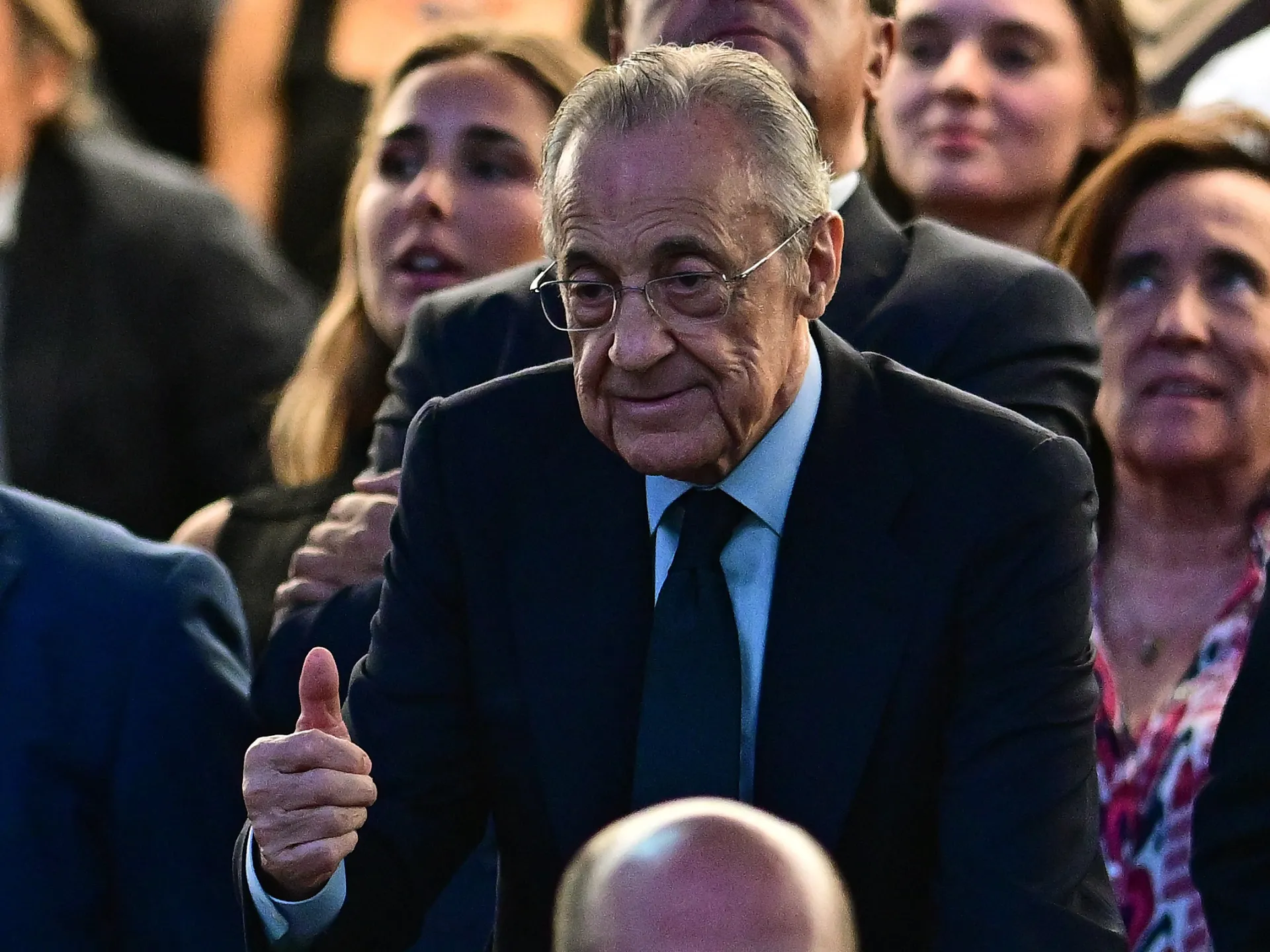
Real Madrid President Florentino Perez attended an event at Ceuta city hall on Friday in a visit to show solidarity with the Spanish territory, saying that it was not related to any recent developments.
On Tuesday, before Real’s La Liga match with Elche, Kylian Mbappe, Vinicius Jr and Ibrahima Konate obscured the message “We are all mackerels”, which appeared on T-shirts worn by the rest of the players. “Mackerels” is a nickname for people from Ceuta, and the shirts were designed to show support for them.
Recommended Stories
list of 4 itemsend of list
Mbappe said on Wednesday that he did not want to prioritise the suffering of one group over another. Real told the news agency Reuters that they respected their players’ freedom to make their own decisions, but noted that they had shown support for Ceuta a week earlier with a tifo during their Champions League match with Inter Milan.
Perez was accompanied by honorary Real Madrid President Jose Martinez Pirri, a native of Ceuta. They were welcomed by Regional President Juan Jesus Vivas.
“I want to emphasise, to avoid any doubts, that today’s event has been prepared over several weeks with the president of Ceuta, not due to any recent news,” Perez said at the city hall.
“And I also take this opportunity to convey all our support, all our affection, and our solidarity during these very difficult times to all Ceutans. It is our wish that normality resumes as soon as possible in Ceuta.”
In July, more than 70,000 irregular crossings into Ceuta from Morocco took place, causing disruption in the territory. Real Madrid’s show of solidarity is one of many gestures that have taken place across Spain since the mass crossings.
They also agreed to expand air travel and reinstate direct flights between both countries.
Published On 16 Sep 202616 Sep 2026
Israel and Morocco have agreed to upgrade their diplomatic ties, including elevating their respective missions to embassies and appointing ambassadors to both countries.
A meeting between the two countries’ foreign ministers was hosted by the United States ambassador to the United Nations, Mike Waltz, in New York on Wednesday.
Recommended Stories
list of 3 itemsend of list
Israeli Foreign Minister Gideon Saar and Moroccan Foreign Minister Nasser Bourita also agreed to advance economic and trade relations, including completing two agreements by the end of this year on investment protection and preventing double taxation.
“[The] establishment of full diplomatic, peaceful and friendly relations between Morocco and Israel is in the common interest of both countries and will advance the cause of peace,” the US mission to the UN said in a joint statement on behalf of all three countries.
The two sides also agreed to expand air travel, including by reinstating direct flights operated by carriers from both nations, and confirmed plans for high-level bilateral visits in the coming months.
The announcement comes just a day after the sixth anniversary of the Abraham Accords, an initiative spearheaded by US President Donald Trump during his first term in office. The United Arab Emirates, Bahrain, Morocco, Sudan and Kazakhstan have all joined the accords, which are aimed at normalising ties between Arab and Muslim-majority countries and Israel.
MADRID: The Spanish government on Sunday said more than 5,300 of the migrants who remained in Ceuta after July’s influx had returned to Morocco in a month, as it faces pressure to restore normality to the increasingly tense city.
The new figures come as criticism over the speed at which the migrants are being returned from the Spanish north African territory damages Socialist Prime Minister Pedro Sanchez before next year’s election.
More than 70,000 migrants entered Ceuta on July 30 and 31 in an unprecedented and deadly rush, with most returning to Morocco in the following hours.
The government has had to identify the thousands of migrants who have remained for weeks to check if they are entitled to asylum, while unaccompanied children cannot be summarily deported.
Angel Victor Torres, the minister tasked with leading the government’s response, said in a video posted to social media that 5,321 people had “voluntarily returned” to Morocco since August 10.
Ninety people had “given up” their request for international protection and “almost 1,000 people are being registered with the aim of being able to complete their return proceedings,” Torres added.
The minister did not say how many migrants remained in Ceuta after those returns, a figure that has consistently sparked controversy between the leftist government and the conservative-run city.
On Friday, Ceuta’s leader Juan Jesus Vivas, of the main opposition right-wing Popular Party, put their number at 13,000, but the government’s estimations have been significantly lower.
Locals have protested regularly as the migrants continue to camp on beaches and sleep in the streets, accusing the government of abandoning the overwhelmed city amid a humanitarian crisis.
The migration ministry announced on Sunday the creation of another 864 places in temporary migrant shelters, taking the total to around 4,300 and with a view to reaching 6,000 “in the near future.”
Doubts about what the government knew beforehand and the possible role of Morocco, with which Madrid has spent years trying to improve relations, have also increased the political fallout for Sanchez.
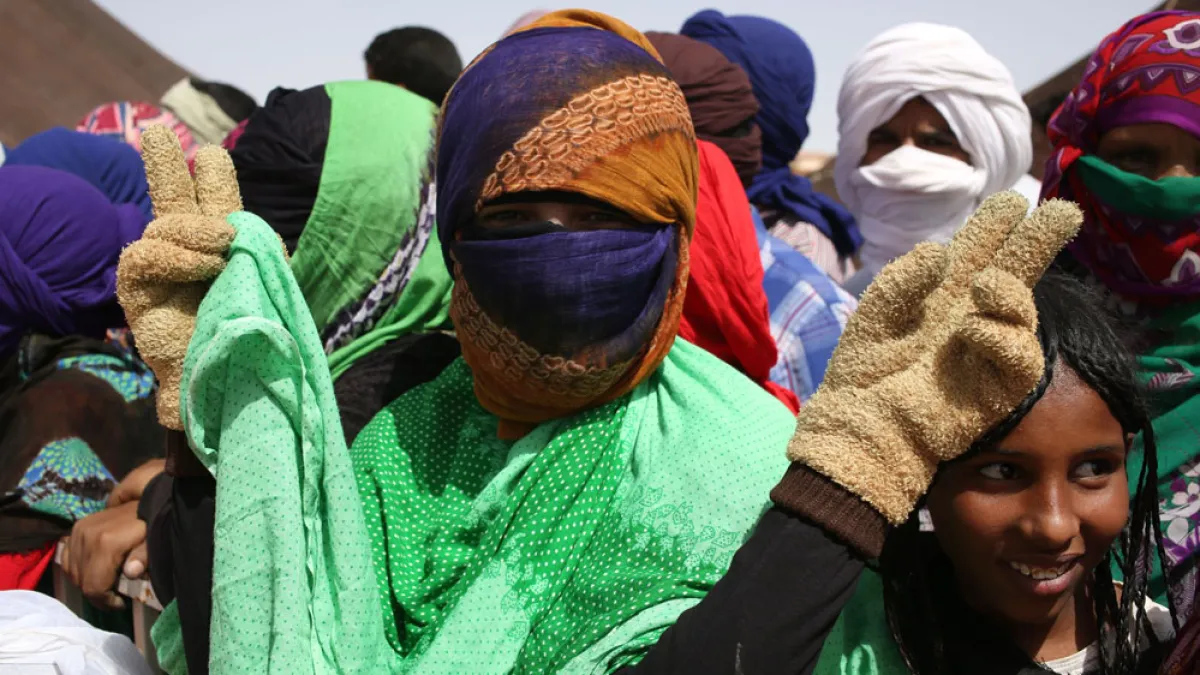
Spain’s Congress has approved a bill that would open a special route to Spanish citizenship for Sahrawis born in Western Sahara while the disputed territory was under Spanish occupation.
The bill passed by 168 votes to 31, with 145 abstentions. It must still go through the Senate before it can become law.
So what exactly would the measure do, and why is Morocco watching it closely?
What does the bill do?
The proposed law would allow people born in Western Sahara before September 29, 1977, to apply for Spanish nationality through a special procedure without having to meet the normal residency requirements. First-degree descendants would also be covered.
It would also shorten the duration of the residence requirement for eligible Sahrawis legally living in Spain. Instead of the usual 10 years, they would be able to apply after two years.
Supporters describe the measure as a way of addressing what they see as a historical injustice.
Spain was the colonial power in Western Sahara until it ended its administration of the territory in 1976. The territory has remained disputed ever since, with Morocco considering it part of its sovereignty, while the separatist Polisario Front seeks independence.
Why does Morocco care?
The law would not change the territorial status of Western Sahara. It would not recognise an independent Sahrawi state, nor would Spanish citizenship give its holders sovereignty over the territory.
The concern in Rabat is instead about the relationship the law could create between Spain and people with direct links to Western Sahara.
Reuters has reported that between 70,000 and 110,000 people could eventually qualify, although estimates vary. Anyone who obtains Spanish nationality would also become a European Union citizen and acquire the rights that come with that status.
Potential beneficiaries could include eligible Sahrawis living in Western Sahara as well as members of the Sahrawi refugee population around Tindouf in Algeria, where the Polisario Front is based.
For Morocco, that could mean a larger community of Spanish and EU citizens with personal or family ties to an issue at the centre of its relationship with Madrid.
Why is the timing important?
The bill comes after a significant change in Spain’s policy towards Western Sahara.
In 2022, Prime Minister Pedro Sanchez’s government backed Morocco’s autonomy proposal for the territory, describing it as the most serious, realistic and credible basis for resolving the dispute.
That decision helped repair relations between Madrid and Rabat after a major diplomatic crisis. Since then, the two countries have strengthened cooperation on migration, security, trade and other areas.
The new citizenship measure does not formally change Spain’s support for the autonomy proposal. Madrid can argue that supporting autonomy as a political solution is one matter, while dealing with the consequences of its former colonial rule is another.
But the two issues are difficult to separate completely from Morocco’s perspective because both concern Western Sahara.
What is the debate inside Spain?
The bill has also divided Spain’s political parties.
The governing Socialist Party and its allies in Sumar supported it. The conservative People’s Party abstained, while Vox voted against it.
The disagreement has centred partly on how Spain should address the legacy of its former rule in Western Sahara and on the legal route proposed for granting nationality.
The debate is important to the Moroccan side because it shows that the measure is not simply a technical change to Spanish nationality law. It has also become part of a discussion inside Spain about its colonial past and its relationship with Western Sahara.
Moroccan and international media have also focused on the measure. While Moroccan media have highlighted its potential implications for Spain’s policy towards Western Sahara and its relations with Rabat, Reuters has reported that the move could further strain relations between Spain and Morocco.
Does the bill recognise the Polisario?
No. The proposed nationality route does not recognise the Polisario Front or an independent Sahrawi state.
Nor does acquiring Spanish citizenship indicate support for the Polisario. Nationality is a legal status, and Sahrawis hold different political positions.
The connection to the Polisario is nevertheless relevant because many Sahrawi refugees live around Tindouf, where the Polisario has its headquarters and administers the refugee camps.
If eligible people from those communities acquire Spanish nationality, they would become Spanish and EU citizens while retaining their existing personal and political identities.
Why is Spain referring to its colonial past?
Spain was the colonial power in Western Sahara until it ended its administration of the territory in 1976.
Supporters of the bill argue that people born in the territory during Spanish rule were left in a difficult legal position after Spain withdrew. They therefore present the measure as a way of addressing what they consider a historical wrong.
Spain has used historical ties in nationality policy before.
In 2015, it introduced a procedure allowing Sephardic Jews who could establish their Sephardic origin and a special connection with Spain to apply for Spanish nationality. The measure was linked to the expulsion of Jews from Spain beginning in 1492.
That precedent is relevant to the Moroccan debate because Spain has previously used historical ties to establish a special route to nationality.
And what about Ceuta and Melilla?
This is where the issue becomes particularly sensitive for Morocco.
Morocco considers Ceuta and Melilla an integral part of its territory and sovereignty. The two cities are located on Morocco’s northern coast in North Africa and are under Spanish administration.
Spain rejects Morocco’s claim and considers the cities Spanish territory. Successive Spanish governments have maintained that their sovereignty over Ceuta and Melilla is not negotiable.
The Moroccan argument here could be about how historical ties are treated.
If Spain can draw on its historical and colonial relationship with Western Sahara to create a special nationality route for Sahrawis, and has previously used historical ties with Sephardic Jews, whose connection to Spain dates back more than five centuries, Morocco could ask why its own historical and geographical relationship with Ceuta and Melilla should be considered irrelevant when it makes its claim to sovereignty over the two cities.
For eight centuries, Muslim dynasties, including the Almoravids and Almohads, ruled parts of the Iberian Peninsula.
Morocco’s potential argument is therefore narrower: if historical ties can help establish present-day legal rights, then history and geography can also form part of the case it makes about two cities located on the North African coast.
What would the law change for Morocco?
In territorial terms, very little.
The citizenship measure would not change who controls Western Sahara, determine the territory’s final status or alter the United Nations-led political process. Nor does it, in itself, change Spain’s official position in support of Morocco’s autonomy proposal.
Its significance lies mainly in the relationship between Spain and Morocco. The measure brings Spain’s colonial history in Western Sahara into a broader domestic political debate, raising questions about how that history should be addressed and what its growing political significance could mean for the delicate relationship between Madrid and Rabat.







![Pro-Palestine protesters demonstrate against normalisation with Israel, as Morocco moves to deepen diplomatic ties with Tel Aviv [Mosa'ab Elshamy/AP]](https://i0.wp.com/occasionaldigest.com/wp-content/uploads/2026/09/AP24280440675597-1728311115.jpg?w=640&ssl=1)
![Moroccan protesters display signs supporting Palestinians during a mobilisation against diplomatic ties with Israel [Abdel Majid BZIOUAT / AFP]](https://i0.wp.com/occasionaldigest.com/wp-content/uploads/2026/09/000_A8BU6GK-1776617989.jpg?w=640&ssl=1)



![A woman prepares to cast her ballot to vote in Morocco’s legislative elections at a polling station inside a school at the Udayas neighbourhood, Rabat, on September 23, 2026 [AFP]](https://i0.wp.com/www.aljazeera.com/wp-content/uploads/2026/09/afp_6ab3c71f1ac5-1790166815.jpg?w=640&ssl=1)



![Campaigners and supporters of the Istiqlal Party (PI) chant slogans during a rally at the weekly souk in the rural commune of Ait Ikkou, in the Khemisset region, on September 19, 2026, before Morocco’s legislative elections [AFP]](https://i0.wp.com/occasionaldigest.com/wp-content/uploads/2026/09/afp_6ab11af2690d-1789991666.jpg?w=640&ssl=1)
![Campaigners for the Popular Movement (MP) hand out leaflets to merchants at the weekly souk in the rural commune of Ait Ikkou, in the Khemisset region, on September 19, 2026, before Morocco’s legislative elections [AFP]](https://i0.wp.com/occasionaldigest.com/wp-content/uploads/2026/09/afp_6ab11b21c12e-1789991713.jpg?w=640&ssl=1)
![The PJD is campaigning on public services, jobs, purchasing power and political reform as it seeks to rebuild after its 2021 electoral collapse [Abdel Majid BZIOUAT / AFP]](https://i0.wp.com/occasionaldigest.com/wp-content/uploads/2026/09/AFP__20260912__C84F3GR__v1__MidRes__MoroccoPoliticsElection-1789565328.jpg?w=640&ssl=1)