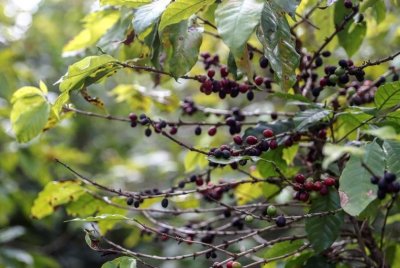

This year’s projected coffee crop would be the third-largest in the country’s history, behind only 2018 and 2020, according to the National Supply Co. File Photo by Sebastiao Moreira/EPA
Dec. 4 (UPI) — Brazil, the world’s largest coffee producer, expects to harvest 56.5 million 132-pound bags in 2025, a 4.3% increase from the previous year, the government said.
Although 2025 is considered a “negative biennium” — when coffee plants typically yield less — the projected crop would be the third-largest in the country’s history, behind only 2018 and 2020, according to the National Supply Co.
The gain is driven by higher average productivity, which offsets a slight reduction in cultivated area. The planted area fell 1.2% to about 4.5 million acres.
Most of the growth comes from Robusta coffee, whose output is expected to reach a record 20.8 million bags, more than 42% higher than in 2024. The increase was driven by favorable weather and higher yields.
As the world’s largest producer of Arabica coffee, Brazil has begun to replace part of its Arabica acreage with Robusta because the variety is more resistant to increasingly frequent droughts, higher temperatures and losses in traditional coffee-growing regions.
According to official data, Arabica production will fall nearly 10% this year, with an estimated 35.7 million bags.
The decline is explained by the crop’s natural low-yield cycle, a reduction in planted area and a lack of rain during key stages of growth.
Minas Gerais, the country’s top producing state, recorded a drop of more than 9%, while São Paulo also reported a sharp decline. Only a few regions, such as the Cerrado and parts of Bahia, managed to increase.
In foreign trade, Brazil exported 17% less coffee between January and October compared with the same period last year, but still posted record revenue.
According to Brazil’s Ministry of Development, Industry and Foreign Trade, exports reached $12.9 billion in the first 10 months of the year, surpassing the total value shipped in 2024 because of higher international prices.
Globally, prices show no sign of a major decline even as world production is expected to increase.
According to an analysis by the U.S. Department of Agriculture, significant price reductions are not expected because global inventories are at their lowest level in 25 years, estimated at 21.8 million 132-pound bags, which keeps pressure on supply and supports coffee prices in international markets.