Brazil

Brazilian ex-intelligence chief detained by US immigration authorities | Crime News

Brazilian media reports that Alexandre Ramagem fled the country after being convicted for involvement in a coup plot.

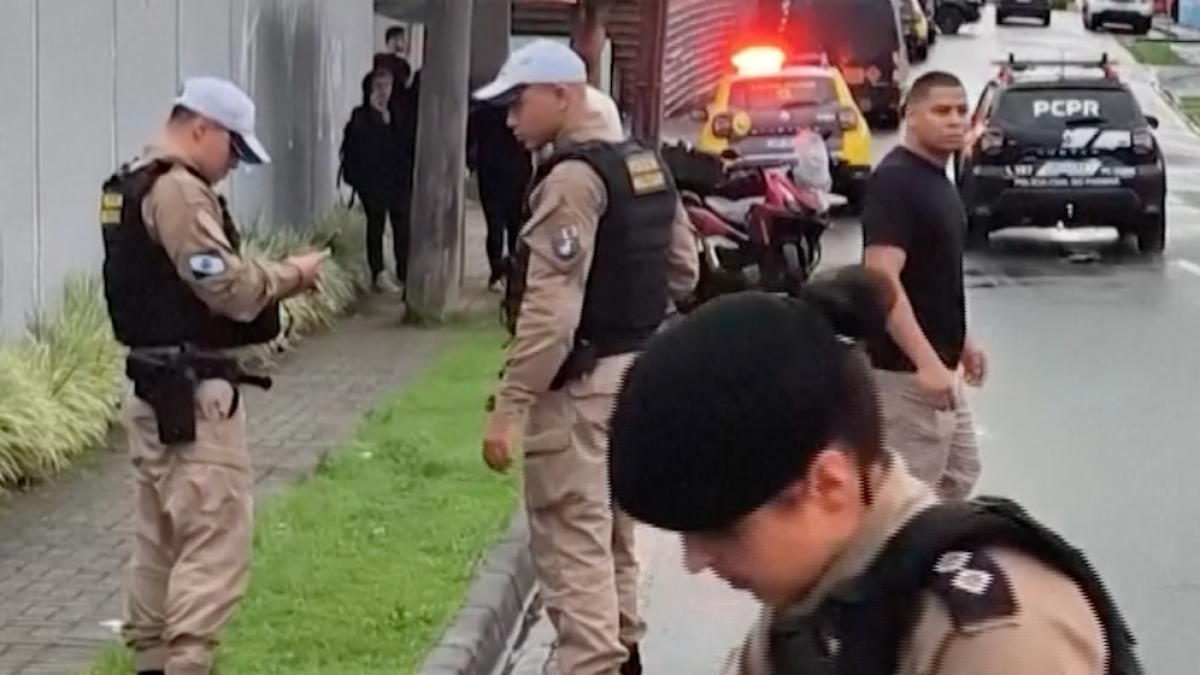
Brazilian media have reported that the country’s former intelligence chief, Alexandre Ramagem, has been detained by immigration authorities in the United States, where he had fled after being convicted in connection with a coup plot on behalf of former right-wing President Jair Bolsonaro.

CNN Brazil reported that Ramagem was arrested by US Immigration and Customs Enforcement (ICE) on Monday, citing Brazilian Federal Police and the Ministry of Justice and Public Security. The Brazilian outlet Globo reported that the arrest took place in Florida.

Recommended Stories

list of 3 itemsend of list

The Brazilian government has sought the extradition of Ramagem, who was sentenced to 16 years in prison for his involvement in efforts to keep Bolsonaro in power after he lost the country’s 2022 election to leftist challenger Luiz Inacio Lula da Silva.

Reports state that Ramagem fled Brazil in September, illegally crossing the border into Guyana before taking a plane to the US.

Globo reported that the Brazilian embassy in Washington, DC filed documentation with the US Department of State seeking his extradition on December 30, 2025.

Paulo Figueiredo, a political ally of Bolsonaro who lives in the US, said the detention was not related to Brazil’s extradition request.

“Ramagem was not arrested, but detained following a police approach in Orlando, initially for a minor traffic infraction and, subsequently, referred to ICE – a common procedure in Florida,” Figueiredo said in a social media post.

He added that Ramagem has a pending asylum application and is optimistic that he will be released “as soon as possible” rather than deported.

Al Jazeera is not able to verify the reason for Ramagem’s arrest by US authorities.

Bolsonaro himself is currently serving a 27-year prison sentence after being convicted in September.

His trial was depicted by Bolsonaro’s allies as a political witch hunt, and sparked the ire of US President Donald Trump, who placed large tariffs on Brazil and called for the trial to be thrown out. Trump later relaxed some of those tariffs following improved relations with President Lula.

Source link

Neymar has to prove his fitness for Brazil’s World Cup squad: Ancelotti | World Cup 2026 News

Brazil’s coach says Neymar could be in contention for the squad if he attains full fitness in the next two months.

Brazil coach Carlo ‌‌Ancelotti has left open the possibility of Neymar Jr earning a ⁠⁠place in his ⁠⁠26-man squad for the FIFA World Cup, saying the forward has two months to prove he has the required ⁠⁠qualities.

Ancelotti has consistently maintained that Neymar will be in contention if he is fully fit, but the attacker was excluded from Brazil’s ⁠⁠squad for last month’s warm-up matches against France and Croatia.

Recommended Stories

list of 4 itemsend of list

Neymar, Brazil’s all-time leading scorer with 79 goals, has not played for the national team since suffering a serious knee injury in October 2023 and has struggled ‌‌to maintain a consistent run of matches since returning to Santos last year.

Brazil’s 2-1 defeat to France in Boston prompted fans to chant Neymar’s name, but Ancelotti dismissed the reaction at the time, saying attention should focus on the players selected.

However, the Italian has suggested that the Santos forward remains part of his ⁠⁠thinking as Brazil assess their options in the run-up to ⁠⁠the World Cup, which runs from June 11 to 19 July in the United States, Canada and Mexico.

“He’s a great talent, and it’s normal that people think he can help us ⁠⁠win the next World Cup,” Ancelotti said in an interview with French newspaper L’Equipe.

“He’s currently being ⁠⁠evaluated by the CBF [Brazilian Football Confederation], by ⁠⁠me, and he still has two months to show that he has the qualities to play in the next World Cup.

“After his knee injury, Neymar has made a good comeback; ‌‌he’s scoring goals. He needs to continue in this direction and improve his fitness. He’s on the right track.”

Brazil are in Group C ‌‌alongside ‌‌Morocco, Haiti and Scotland in the World Cup and will begin their campaign on June 13 in New Jersey.

Source link

Brazil, United States deepen cooperation to combat organized crime

An aerial photograph of cargo containers in the port of Santos in Sao Paulo, Brazil and the United States have reached an agreement to better track illegal shipments. File Photo by Isaac Fontana/EPA

April 10 (UPI) — The government of Brazil on Friday announced an agreement with the United States to combat transnational crime — a move that will integrate intelligence sharing and joint operations to target organized criminal networks.

The initiative was presented by Brazil’s finance ministry, where Minister Darío Durigan said the agreement between Brazil’s Federal Revenue Service and U.S. Customs and Border Protection will enable the exchange of cargo data, particularly on shipments leaving the United States for Brazil.

The focus will be on intercepting illegal goods, such as weapons and narcotics.

The announcement comes as Washington considers designating Brazil-based criminal groups Primeiro Comando da Capital and Comando Vermelho as terrorist organizations, according to outlet G1 O’Globo.

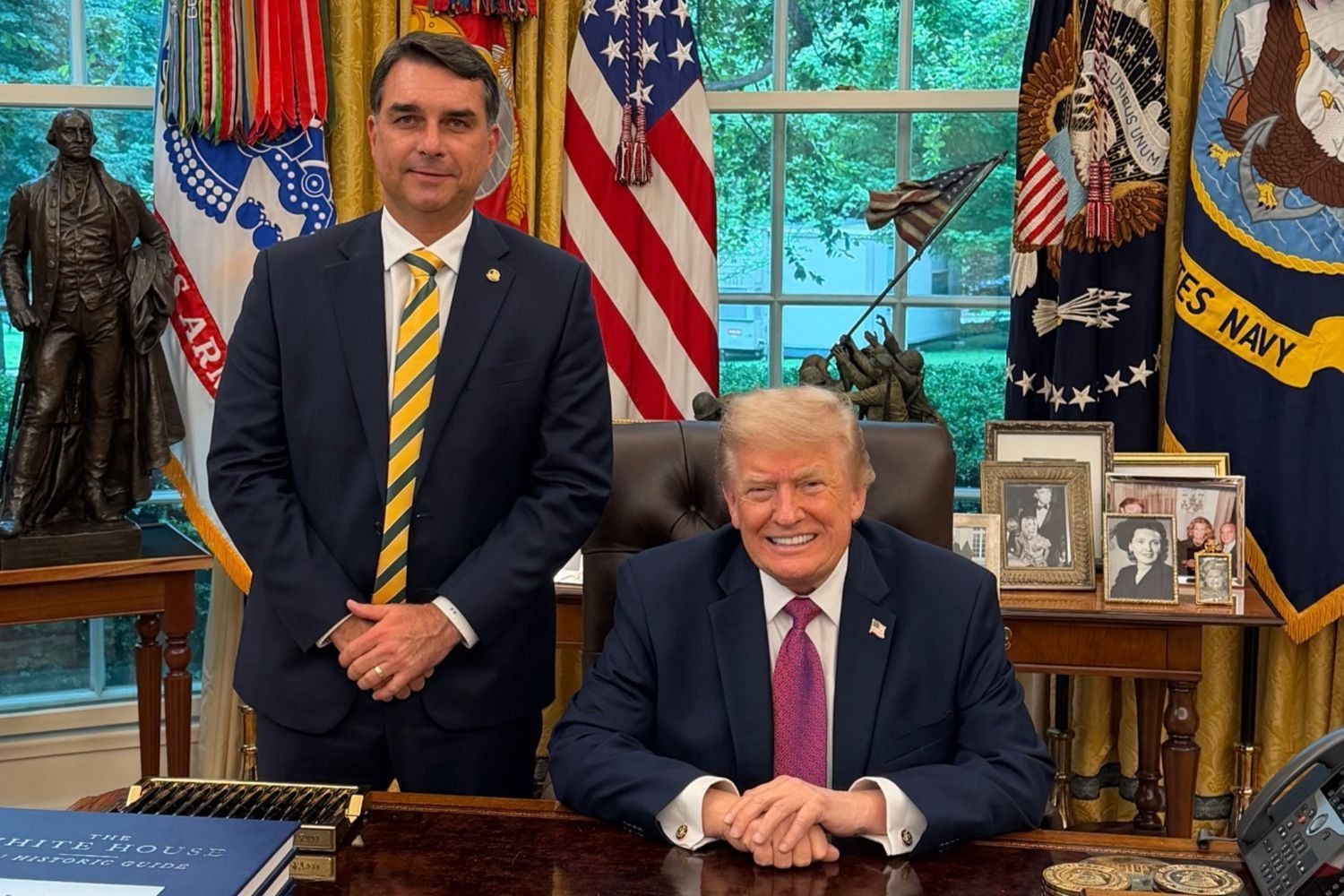
The effort gained traction after Eduardo Bolsonaro and Flávio Bolsonaro, sons of former President Jair Bolsonaro, urged members of the administration of Donald Trump to take action, The New York Times reported. U.S. officials have not publicly confirmed any such designation.

Brazilian authorities also highlighted the rollout of the DESARMA program, a system designed to allow real-time information sharing when customs officials identify shipments linked to firearms, ammunition, explosives and other sensitive materials.

Officials said the tool enables authorities to trace the origin of illicit goods and map criminal networks involved in the international arms trade.

Recent records show the system has expanded the ability to detect, connect and track illicit weapons flows, with early results already benefiting both countries.

U.S.-provided intelligence has helped uncover sophisticated smuggling methods, including rifle components hidden inside airsoft equipment and drugs concealed in packages labeled as common goods such as pet food sent through postal services.

Over the past 12 months, authorities identified 35 incidents involving the seizure of 1,168 items, weighing about 550 kilograms, primarily shipped from Florida using fraudulent declarations and concealment techniques.

Brazil’s tax revenue secretary, ​Robinson Barreirinhas, said ‌more than 1,100 weapons ​were seized ​over the past 12 ⁠months arriving from ​the United States, ​and that in the first quarter alone, authorities ​have seized more ​than 1.5 tons of ‌drugs.

Brazil’s finance ministry said consolidating this data into a structured database has improved identification of patterns, links between senders and recipients, and recurring trafficking routes. This, in turn, has strengthened information-sharing with U.S. authorities to support enforcement action at the source and dismantle criminal networks.

The ministry added that the cooperation is part of ongoing dialogue between President Luiz Inácio Lula da Silva and Trump, and forms part of a broader bilateral agenda focused on combating transnational organized crime.

Source link

Estevao: Brazil assistant Davide Ancelotti tips Chelsea winger to be tournament’s surprise

One player who will carry Brazil’s World Cup hopes on his shoulders is Vinicius Jr.

The forward has eight goals in 47 appearances for Brazil and has been influential for Real Madrid again this campaign with 11 goals in La Liga and five more in the Champions League.

“Vinicius is a football star because of his talent,” Ancelotti said.

“He’s one of the most talented players in the world, so he carries this weight because everyone expects him to win the game alone and the expectations on him are higher than any other player – maybe only Kylian Mbappe right now.”

The 25-year-old has also had to deal with discrimination since moving to Spain, where he has faced 20 incidents of alleged abuse in eight years.

The latest incident came in Real Madrid’s Champions League knockout phase play-off tie at Benfica in February, following which the Brazilian winger said “racists are cowards”.

“Having a manager like my father is really good – in being close to the stars,” the Brazil assistant said.

“We just focused on what he [Vinicius] could improve and he has room for improvement. Even if he’s one of the best, maybe personal opinion, the best player in the world, but everyone has room for improvement.

“So we focus on that because we have a manager who is a specialist in making stars not feel alone and he always did that with stars like Didier Drogba, Zlatan Ibrahimovic, Cristiano Ronaldo and Robert Lewandowski.”

Ancelotti, 36, held discussions to take charge of Scottish side Rangers last season before taking up his first managerial role at Brazilian side Botafago – only to be sacked five months later in December 2025.

The Italian, however, has continued to work with his father, who was named Brazil boss in May 2025 after four years at Real Madrid, where he won three Champions League titles and two La Liga titles over two spells.

Five-time World Cup winners Brazil have not lifted the trophy since their last triumph in 2002 but Ancelotti believes the Selecao “will be ready for the World Cup”.

“It will be difficult because it will be after a really long season,” said Ancelotti.

“There are players that will reach the World Cup with more than 60 games and this is not good. It will be not good for the show or the people that are watching.

“So we will take care of the players physically. It will be important because the weather will be so hot. It will be a competition that will be decided by small details.

“But I can say that we have a really competitive team that can play football that could be efficient in a competition like that. So we are positive.”

Brazil will face Morocco in their World Cup opener on 13 June in New Jersey before taking on Scotland and Haiti in Group C.

Source link

Tight Brazil election raises concerns over U.S. influence, minerals

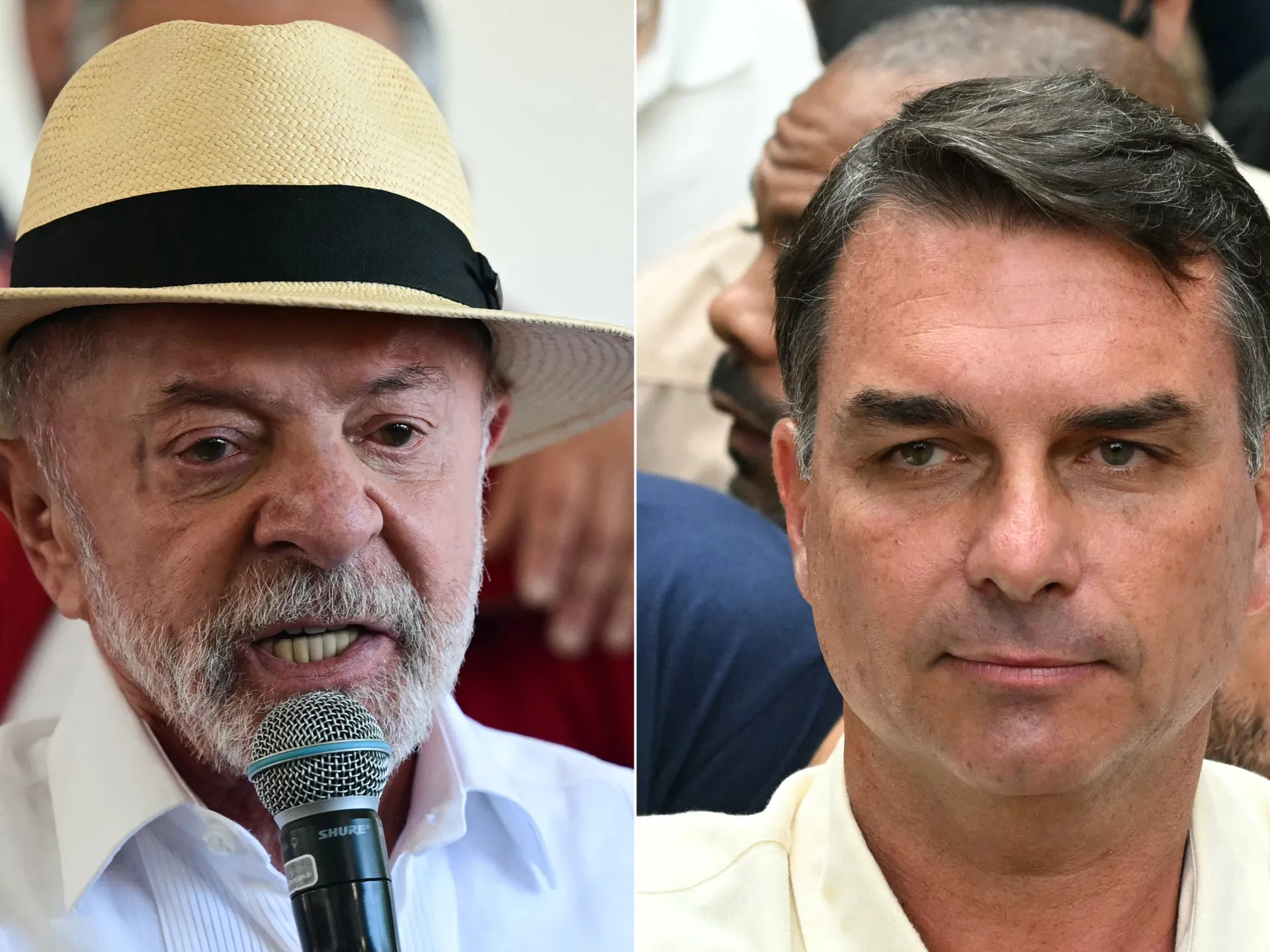
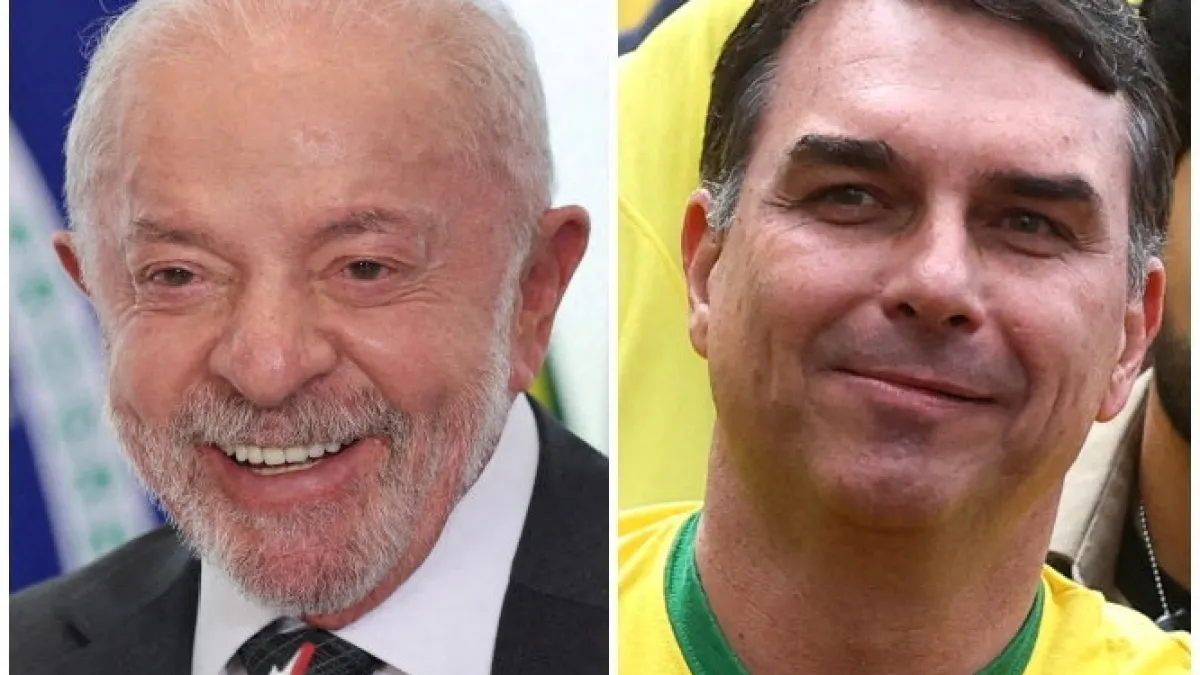
April 8 (UPI) — Brazil is heading toward a highly competitive presidential election, with a statistical tie between President Luiz Inácio Lula da Silva and Sen. Flávio Bolsonaro, amid concerns over possible U.S. influence and geopolitical tensions tied to critical minerals.

A poll by consulting firm IDEIA, conducted April 3-7 with 1,500 respondents, shows Lula with 45.5% support in a runoff scenario, compared with 45.8% for Bolsonaro, a difference within the 2.5 percentage point margin of error.

The survey points to an open race six months ahead of the October presidential vote.

IDEIA said the electorate remains unstable. About 51.4% of respondents said they could change their vote before the election and the survey introduced an unusual geopolitical dimension. Some 9.1% identified foreign influence as one of the main threats to Brazil’s democracy.

In addition, 52% said elections should be decided exclusively by Brazilians, while 28% said seeking international support is legitimate.

The scenario comes amid rising political tensions over the role of external actors in the campaign, particularly the United States, and Brazil’s strategic position in sectors such as critical minerals.

Tensions intensified after Bolsonaro took part in the Conservative Political Action Conference held in Texas on March 28.

During his speech, Bolsonaro said he expects to win the election but conditioned that outcome on institutional guarantees.

“I will win because it is the will of my people. But for that will to be preserved, we need free and fair elections,” he said in English before a conservative audience.

The senator said these conditions depend on greater transparency in vote counting and protections for free expression on social media.

“This is a major challenge. If our people can express themselves freely on social media and if votes are counted correctly, we will win,” he said.

Bolsonaro also called on the United States and the “free world” to closely monitor Brazil’s electoral process. He urged them to track freedom of expression and apply diplomatic pressure on institutions to ensure “elections based on values of liberty and transparency.”

At the same time, he rejected what he described as foreign interference in past elections, referring to the administration of Joe Biden, while maintaining the need for international oversight.

In that context, the senator presented himself as a political continuation of former President Jair Bolsonaro, describing himself as “Bolsonaro 2.0,” and positioned Brazil as a strategic U.S. ally in countering China.

“Brazil will be the battlefield where the future of the hemisphere will be decided,” he said.

He added that the country could play a key role in reducing U.S. dependence on China for critical minerals, particularly rare earth elements.

“The United States still depends on China for about 70% of its rare earth imports, while China controls about 70% of global mining and more than 90% of processing,” he said.

“Without these components, U.S. technological innovation becomes impossible and the production of advanced military systems falls into the hands of adversaries.”

The remarks drew reactions from the ruling coalition. Rep. Lindbergh Farias of the Workers’ Party said he had asked the Prosecutor General’s Office to assess possible liability by the senator.

Farias said Bolsonaro may have received a “confidential” report and shared it with U.S. authorities, an allegation not supported by public evidence.

“This has a name: betrayal of sovereignty,” he wrote on the social media platform X. “Those who act like this do not defend Brazil. They work against it. Brazilian sovereignty is not negotiable.”

The Prosecutor General’s Office has not said whether it will open an investigation.


Source link

Colombia’s Petro asks Brazil to extend Pix payment system

Colombian President Gustavo Petro called for regional integration of the Pix system, and he criticized international financial control mechanisms, particularly the U.S. Office of Foreign Assets Control, for enforcing economic sanctions. Photo by Mauricio Duenas Castaneda/EPA

April 6 (UPI) — Colombian President Gustavo Petro asked Brazil to extend its instant payment system Pix to Colombia and questioned U.S. financial sanctions in a message posted on X, amid Washington investigations into the Brazilian system.

In his post, Petro called for regional integration of the Pix system and criticized international financial control mechanisms, particularly the Office of Foreign Assets Control, the U.S. Treasury agency responsible for enforcing economic sanctions.

“I ask Brazil to extend the Pix system to Colombia and hopefully stop considering the OFAC list, which no longer works,” Petro wrote Saturday.

The message comes after the U.S. government last week published the 2026 National Trade Estimate Report on Foreign Trade Barriers, which mentions the Pix system.

The report includes concerns from U.S. companies that the system, operated by Brazil’s central bank, may have regulatory advantages over foreign private competitors such as Visa and Mastercard.

Pix has gained popularity for allowing fast and free transfers, which has generated tensions over its impact on the traditional financial system.

In the same message, Petro criticized the international sanctions system. “OFAC only serves to persecute political opposition and domesticate them around the world. It is an aberrant system of political control,” he said.

He also contended that drug trafficking has managed to evade these mechanisms.

“Drug trafficking mocks it, and they stay in Dubai, where they buy residency for about $4,000 and live in luxury,” he added.

The message also included references to international politics and armed conflicts. Petro said that “no war is good” and said he had asked U.S. President Donald Trump to stop ongoing conflicts.

“His circle wants blood and leads him to make mistakes all the time,” he wrote.

Petro also criticized Israeli Prime Minister Benjamin Netanyahu, whom he accused of committing crimes against humanity in Gaza and Iran, and called for him to be tried.

Petro added that the homicide rate in Colombia has decreased, adding he hopes the trend is not temporary.

So far, the Brazilian government has not publicly responded to the request.


Source link

Oscar: Former Chelsea and Brazil midfielder retires because of heart issue

Former Chelsea and Brazil midfielder Oscar has retired after being diagnosed with a heart condition.

The 34-year-old was treated in hospital in November after he became unwell during physical testing at Brazilian club Sao Paulo’s training centre.

It was determined he had experienced a case of vasovagal syncope, which is a common type of fainting caused by a sudden drop in blood pressure and heart rate.

Oscar, who won 48 caps for his country, has now cancelled his Sao Paulo contract, which had two years left to run.

“I wanted to do more for Sao Paulo, I wanted to play more. I think I had both the footballing ability and the age to play more, but unfortunately this happened,” Oscar said in an announcement posted on social media., external

“Now I’m going to retire and continue supporting Sao Paulo, continuing my life as a fan. I’m ending my career here at Sao Paulo, a career that has taken me to many places, practically all over the world.

“I’d like to thank everyone for their constant support, all the Sao Paulo fans who have backed me since my return and during this difficult time I’m going through.”

Oscar signed for Chelsea in July 2012, winning the Europa League in his first season and a Premier League and League Cup double in 2014-15.

He departed for Chinese Super League side Shanghai Port in January 2017, having scored 38 goals in 203 games, leaving a Chelsea squad that went on to seal another Premier League title in May.

He won three Chinese Super League titles with Shanghai Port, before returning to Sao Paulo, the club where he started his career, on a three-year deal in January 2025.


Source link

Mbappe nets for 10-man France in win against Brazil in World Cup warm-up | World Cup 2026 News

France beat Brazil 2-1 in a friendly in the United States, in what was a potential dress rehearsal for World Cup 2026 final.

France forward Kylian Mbappe showed no ill effects of his left knee injury when he broke free for a goal to give France an early lead on its way to a 2-1 victory over Brazil in a World Cup tuneup between two of the world’s top teams.

With a crowd of 66,215 heavily favouring Brazil, Mbappe and Hugo Ekitike gave France a 2-0 lead on Thursday on the same pitch where they will play their final group stage game of this summer’s World Cup, against Norway and Erling Haaland. Bremer cut the deficit to 2-1 in the 78th minute.

Recommended Stories

list of 4 itemsend of list

The friendly went off without any evident hiccups despite the simmering feud between the town of Foxborough and World Cup organisers over almost $8m in security costs. The sides reached an agreement two weeks ago in which the organising committee promised to make the payment in advance, and the town approved the necessary entertainment licence.

That was expected to be the last remaining obstacle to the world’s biggest sporting event arriving in this 20,000-person suburb tucked between Boston and Providence, Rhode Island, that swells to three times its size for New England Patriots games. To accommodate FIFA requirements, a grass field has replaced the artificial turf that had been used for the NFL’s Patriots and the New England Revolution of Major League Soccer.

The crowd was the second-largest to watch a football match at Gillette Stadium, behind only a 2007 friendly between Brazil and Mexico. It was speckled with fans in Brazilian yellow kits, with just a few French flags waving to celebrate Mbappe’s goal. (The media dining room was more neutral, with madeleines, macarons and eclairs alongside Brazilian brigadeiro, pudim and mousse de maracuja.)

Also in the house were Coach Joe Mazzulla and players from the NBA’s Boston Celtics, with forward Jayson Tatum taking part in the pregame coin toss alongside Massachusetts Governor Maura Healey.

A former Paris Saint-Germain and current Real Madrid star, Mbappe sprained his left knee in December but played through January before missing almost a month. He was used as a substitute in Real Madrid’s last two matches but started on Thursday.

Mbappe said on Monday that his injury was “truly behind me”. (Reports that said the team examined the wrong knee were false, Mbappe said at a news conference in Foxborough on Wednesday.)

And he showed it in the 32nd minute when Ousmane Dembele delivered a through ball that left no one between Mbappe and the goalkeeper. The 2018 World Cup champion and 2022 Golden Boot winner tapped it ahead once before chipping it over the keeper to make it 1-0.

France took a 2-0 lead in the 65th minute when Ekitike, Liverpool’s top scorer this season, converted on a pass from Michael Olise in the penalty area. Mbappe left for a substitute immediately afterwards.

After France’s Dayot Upamecano was sent off in the 55th minute for taking down a player with a clear path to the goal, a card that was upgraded from yellow to red on video review, Brazil cut the deficit to 2-1 when Bremer redirected a cross from Luiz Henrique past France keeper Mike Maignan.

The game also featured a mid-half “cooling break” that enabled players to rest and hydrate – even though the temperature in early spring New England was in the mid-60s (15 degrees Celsius).

After a heatwave during last year’s Club World Cup, FIFA announced that all games in the 2026 World Cup would include the break, regardless of the temperature on the pitch.

Should France and Brazil both win their groups at the World Cup, then the first time they can meet at the tournament will be in the final itself.

Source link

Brazil vs France: When and where is the match? Will Mbappe, Vinicius play? | Football News

French and Brazilian stars in focus as former world champions meet in a glamour friendly in Boston, US, before the World Cup.

Brazil and France will be among the leading contenders for FIFA World Cup glory later this year, and the two heavyweight teams continue their preparations for the tournament by facing off in a glamour friendly in the United States on Thursday.

With fewer than three months until kickoff, the countries ranked fifth and third respectively in the world rankings are in the US, familiarising themselves with what lies in store for them this June-July.

Recommended Stories

list of 4 itemsend of list

When and where is the Brazil vs France friendly match?

The former world champions go head-to-head on Thursday at 20:00 GMT at the Gillette Stadium near Boston, Massachusetts.

The home of the National Football League (NFL) side New England Patriots is the venue for the first meeting of these teams in exactly 11 years, since Brazil came from behind to win 3-1 in a friendly at the Stadium of France in March 2015 with goals from Oscar, Neymar and Luiz Gustavo.

How is Brazil’s form ahead of the match?

Brazil laboured their way through South American World Cup qualifying with six defeats in 18 games as they finished fifth. Now they are hoping the appointment of Carlo Ancelotti as coach will give them a genuine chance of winning a record-extending sixth World Cup, and first since 2002.

After this match, they will head to Orlando, Florida, for the next friendly on March 31 against Croatia, the team that ousted them from the 2022 World Cup in the quarterfinals.

Will Brazil miss Neymar?

Neymar is now 34 and has not played for his country since October 2023, but his absence from the squad has still been one of the main talking points coming into these matches.

“It is a physical issue, not technical. With the ball, he is great, but he needs to improve physically,” Ancelotti said after being asked about the absence of the former Barcelona and Paris Saint-Germain superstar, now at Santos.

“Because in my eyes and those of my staff, he is not at 100 percent. So he needs to keep working to get back to 100 percent.”

Who will be the key players for Brazil?

In the meantime, Brazil’s main man is Real Madrid forward Vinicius Junior, while others likely to have key roles at the World Cup, such as goalkeeper Alisson Becker, centre-back Gabriel Magalhaes and midfielder Bruno Guimaraes, are missing here.

Despite a glittering club career that includes two Champions League triumphs and three La Liga titles, Vinicius has scored eight goals in 45 appearances for the five-time world champions and is determined to turn promise into international silverware with his second World Cup on the horizon.

“I feel more at ease, I’m happier; ⁠and when I’m happier, everyone around me is ⁠happier and more confident too,” Vinicius told reporters.

“I hope that everything I do for Real, I can go on to do ⁠here with the Brazilian national team. That’s my biggest goal. It’s where I’ve always dreamed of being, ⁠and I want to bring great pride ⁠to our country and a lot of joy to our entire nation.”

Among other players to feature is Rayan, the uncapped 19-year-old who earned his place after impressing in the Premier League for Bournemouth since arriving from Vasco da Gama in January.

Will Mbappe start for France?

The main focus for France, as ever, is Kylian Mbappe, and the national team captain was eager to feature on this trip after overcoming a knee injury to return for Real Madrid just last week.

There had been mounting fears in France that the 27-year-old’s fitness could become a real issue, but he said missing the World Cup or the end of the club season was never a concern.

“It is behind me. I was following a protocol, and I wanted to start playing again gradually. I hope to be able to play during this international break and to start being decisive again,” he said on Monday.

What happened in the last Brazil-France match?

The last competitive meeting of the teams came at the 2006 World Cup, when France beat Brazil 1-0 in the quarterfinals, thanks to a Thierry Henry goal and a masterful performance by Zidane.

Will Brazil and France meet in the World Cup?

If both win their groups at the upcoming World Cup as expected, they would not meet each other until the final.

Getting that far is the aim for these sides, and Thursday’s game will be a good gauge of where both stand as the competition approaches.

Source link

Latin American presidents criticise US actions | US-Israel war on Iran

NewsFeed

Latin American leaders met at the 10th Community of Latin American and Caribbean States (CELAC) Summit in Bogota on Saturday where Colombian President Gustavo Petro called for an immediate Middle East ceasefire to prevent a global economic crisis and ‘potential world war’.

Source link

‘They want to colonise us’: Brazil’s Lula warns of foreign interference | Politics News

Brazilian President Luiz Inacio Lula da Silva has criticised what he called the return of a colonial approach towards developing nations during a summit in Colombia.

But while Lula did not mention United States President Donald Trump in his remarks, he gestured at actions undertaken by the Trump administration, including the January 3 abduction of Venezuelan leader Nicolas Maduro and the fuel blockade in Cuba.

Recommended Stories

list of 3 itemsend of list

“It’s not possible for someone to think that they own other countries,” Lula said, in an apparent reference to US policy.

“What are they doing with Cuba now? What did they do with Venezuela? Is that democratic?”

Lula delivered his remarks at Saturday’s summit for the Community of Latin American and Caribbean States (CELAC), which featured a high-level forum with delegates from Africa.

He told delegates that their countries had already experienced being plundered for gold, silver, diamonds and minerals.

“After taking everything we had, now they want to own the critical minerals and rare earths that we have,” Lula said, without specifying who “they” might be. “They want to colonise us again.”

The left-wing Brazilian president also criticised the ongoing war launched by the US and Israel against Iran.

He drew a parallel between that conflict, which began on February 28, and the US-led Iraq war, which began in 2003 on the pretext of eliminating “weapons of mass destruction”.

“Iran has been invaded under the pretext that Iran was building a nuclear bomb,” Lula said, before pivoting to the US campaign in Iraq, which resulted in the overthrow of Iraqi leader Saddam Hussein.

“Where are Saddam Hussein’s chemical weapons?” Lula asked. “Where are they? Who found them?”

A history of intervention

Washington’s history of intervention in Latin America goes back more than 200 years to when then-President James Monroe claimed the hemisphere as part of the US sphere of influence.

While large-scale, overt US involvement in the region mostly petered out after the Cold War, Trump has rekindled the legacy.

Since assuming office last year, Trump has launched boat strikes against alleged drug traffickers in the Caribbean, ordered a naval blockade on Venezuelan oil exports, and gotten involved in electoral politics in Honduras and Argentina.

Trump imposed a 50 percent tariff on Brazilian goods last year, citing the trial against the country’s former president, Jair Bolsonaro, as a motive. The US has also shown keen interest in Brazil’s rare earth deposits.

Then, on January 3, US forces abducted and imprisoned Venezuelan leader Nicolas Maduro, flying him to New York to face drug and weapons charges.

While such actions have thrilled right-wing leaders across the continent, they have raised fears among left-wing politicians, who have voiced grave concerns over what they see as US bullying.

“We cannot allow anyone to interfere and violate the territorial integrity of each country,” Lula said Saturday.

Frustration with the UN

Lula, who has said he will run for a fourth, nonconsecutive term in Brazil’s upcoming October elections, also criticised the United Nations for its inability to stop multiple conflicts around the world.

“What we are witnessing is the total and absolute failure of the United Nations,” he said, pointing to the situations in Gaza, Ukraine and Iran.

He called, once again, for reform of the UN Security Council, which is mandated with ensuring international peace and security. But it has failed to stop major conflicts because of the veto power of its five permanent members: China, France, Russia, the United Kingdom and the United States.

There have been decades of efforts to reform the Security Council. But they have all been unsuccessful.

Colombian President Gustavo Petro, whom the US Drug Enforcement Administration has designated a “priority target”, echoed Lula’s condemnation of the UN.

The body “is acting in impotence, and that is not what it was created for. It was created after World War II precisely to prevent wars. And yet, what we have today is war,” Petro said at the summit.

But the world needs the UN to provide climate solutions and curb global warming, Petro said.

“The more serious humanity’s problems become, the fewer tools we have for collective action. And that path leads only to barbarism.”

Relatively few presidents and prime ministers from Latin America and the Caribbean attended the summit in Colombia, a sign of the continent’s deep divisions.

Those present included the presidents of Brazil, Uruguay, Burundi and Colombia, as well as the prime ministers of Guyana and Saint Vincent and the Grenadines, along with deputy ministers, foreign ministers and ambassadors.

Source link

Brazil: Brentford’s Igor Thiago and Bournemouth’s Rayan receive first call-ups

Brentford striker Igor Thiago and Bournemouth winger Rayan have received first call-ups to the Brazil squad for their friendlies with France and Croatia later this month.

Thiago is the second-highest scorer in the Premier League season with 19, trailing only Manchester City’s Erling Haaland with 22, with his goals powering Brentford to seventh place in the table.

The 24-year-old joined the West London side for a club-record fee of £30m in July 2024 from Club Brugge, but failed to score in his first season with the club as injury restricted him to eight appearances.

“Really proud of what he’s done to get to this point. He’s been here for nearly two years and I’ve seen that journey closely and I know about his overall journey to get to Europe and the Premier League,” said Brentford head coach Keith Andrews, after Monday’s 2-2 draw with Wolves, in which Thiago scored.

“Everybody has played a little part in this. We should all be very proud of Thiago’s dream coming true.

“It has been a dream and a huge ambition for him. When he pulls on that iconic jersey it will be a special moment for Thiago and his family and we will feel a sense of pride.”

Rayan, 19, joined Bournemouth in January for £24.7m from Vasco de Gama and has scored two Premier League goals.

Brazil face France on 26 March in Boston before playing Croatia in Orlando on 31 March, with the fixtures their last matches before Ancelotti names his World Cup selection.

Former Norwich attacker Gabriel Sara has also been selected for the first time, but the party is missing legendary forward Neymar, who is not fit.

“I haven’t called him up because he’s not 100 per cent,” coach Carlo Ancelotti said of the 34-year-old, who has not played for his national side since October 2023.

“But for the final [World Cup] squad, that’s another story.”

Sara, 26, left Championship Norwich for Galatasaray in July 2024 and won the Turkish Super League in his first season with the club.

Flamengo centre-back Leo Pereira, 30, is the fourth new name in the line-up, while striker Endrick has been recalled after making the last of his 14 international appearances a year ago.

The 19-year-old joined Lyon on loan from Real Madrid for the second half of this season, and scored a hat-trick against Metz in his second appearance for the club.

Five-time winners Brazil start their World Cup campaign against Morocco in New Jersey on 13 June, and will also face Haiti and Scotland in Group C.

Source link

World’s longest bus ride branded ‘absolute hell’ as passengers in seats for over 100 hours

It has been branded ‘brutal’ and ‘absolute hell’

The world’s longest bus journey spans 4,000 miles and has racked up a negative reputation. It takes over 100 hours to travel the route, which is roughly six days.

The journey connects the Pacific and Atlantic oceans as it goes from Lima in Peru to Rio de Janeiro in Brazil. It is made possible thanks to the Trans-Oceanic Highway.

The legendary Transoceánica holds the title of being the longest regularly scheduled, direct commercial bus route in the world.

It runs weekly by the Brazilian bus company and passes through coastal cities, savannas, wetlands, rainforests and the Andes Mountains.

The bus departs on Thursdays at 1pm and promises to be a ride passengers won’t forget. There are 44 regular seats and 12 sleeping berths on board. There’s also a toilet, small sink, water dispenser and Wi-Fi.

However, there are no showers on board. To be able to wash, passengers use facilities during the three scheduled stops per day at roadside stations.

The bus is driven by two alternating drivers, with one resting in a sleeping cabin while the other drives. According to Check My Bus, the ticket price is approximately R$1,300, which is around £186.

From the bus, passengers are able to see world-famous sites including the Amazon Basin, Andes Mountains, Christ the Redeemer and Machu Picchu.

Starting in Rio de Janeiro, the bus makes its way through São Paulo, Mato Grosso do Sul, Mato Grosso, Rondônia and Acre, until it reaches the border with Peru.

It then goes through the Peruvian Amazon, crosses the Andes and takes the Transoceanic Highway to Lima, the capital of Peru.

Despite the stunning scenery, some passengers have found the journey very tricky.

YouTuber Noel Phillips travelled the route and branded it “gruelling” and “absolute hell”. He said that on the bus, personal space was a non-existent concept.

In a video documenting the trip, Noel said: “Nobody has [headphones]; everyone just plays everything on full blast. And when they can’t hear it above everybody else’s, they just turn theirs up so in the end you just have 15 phones playing different things at 55,000 decibels.”

Noel admitted that by the time he reached Brazil, the journey felt repetitive. He faced a number of delays on his journey as well as a lack of heating on the bus.

Source link

Trump adviser banned by Lula from visiting Brazil

March 13 (UPI) — A State Department official was barred Friday from going to Brazil because of a proposed visit to jailed former Brazilian President Jair Bolsonaro, who is in prison for plotting a coup four years ago.

The official, Darren Beattie, was approved for a visa to attend a critical minerals summit next week, but his visa was pulled because the meeting with Bolsonaro was determined to be outside his diplomatic authorization, Brazil’s Supreme Court ruled Thursday, Bloomberg and The Guardian reported.

After the ruling, current Brazilian President Luiz Inacio Lula da Silva ordered his government to revoke Beattie’s visa entirely, at least partially because U.S. President Donald Trump denied Brazilian health minister Alexandre Padilha a visa and revoked visas held by his wife and daughter.

“That American guy who said he was coming here to visit Bolsonaro, he’s been barred from visiting and I have forbidden him from to Brazil so long as they don’t free up the visa of my health minister, which has been blocked,” Lula said Friday.

Bolsonaro is serving a 27-year prison sentence after he was convicted for plotting a coup after losing the 2022 election to Lula.

The charges were based on Bolsonaro’s supporters storming government buildings in January 2023 — a plan that had started in 2021, before the 2022 election — in an effort to prevent Lula from taking office.

Brazilian Foreign Minister Mauro Vieira said that although Beattie’s visa application included the minerals summit and meetings with other Brazilian officials, he only asked for the other meetings after asking for the Bolsonaro visit.

Trump and many within his administration, including Beattie, have been critical of the Brazilian Supreme Court and the country’s officials for jailing Bolsonaro on the coup charges.

“It should be noted that a visit by a foreign state official to a former president in an election year may constitute undue interference in the internal affairs of the Brazilian state, Vieira told the Supreme Court.

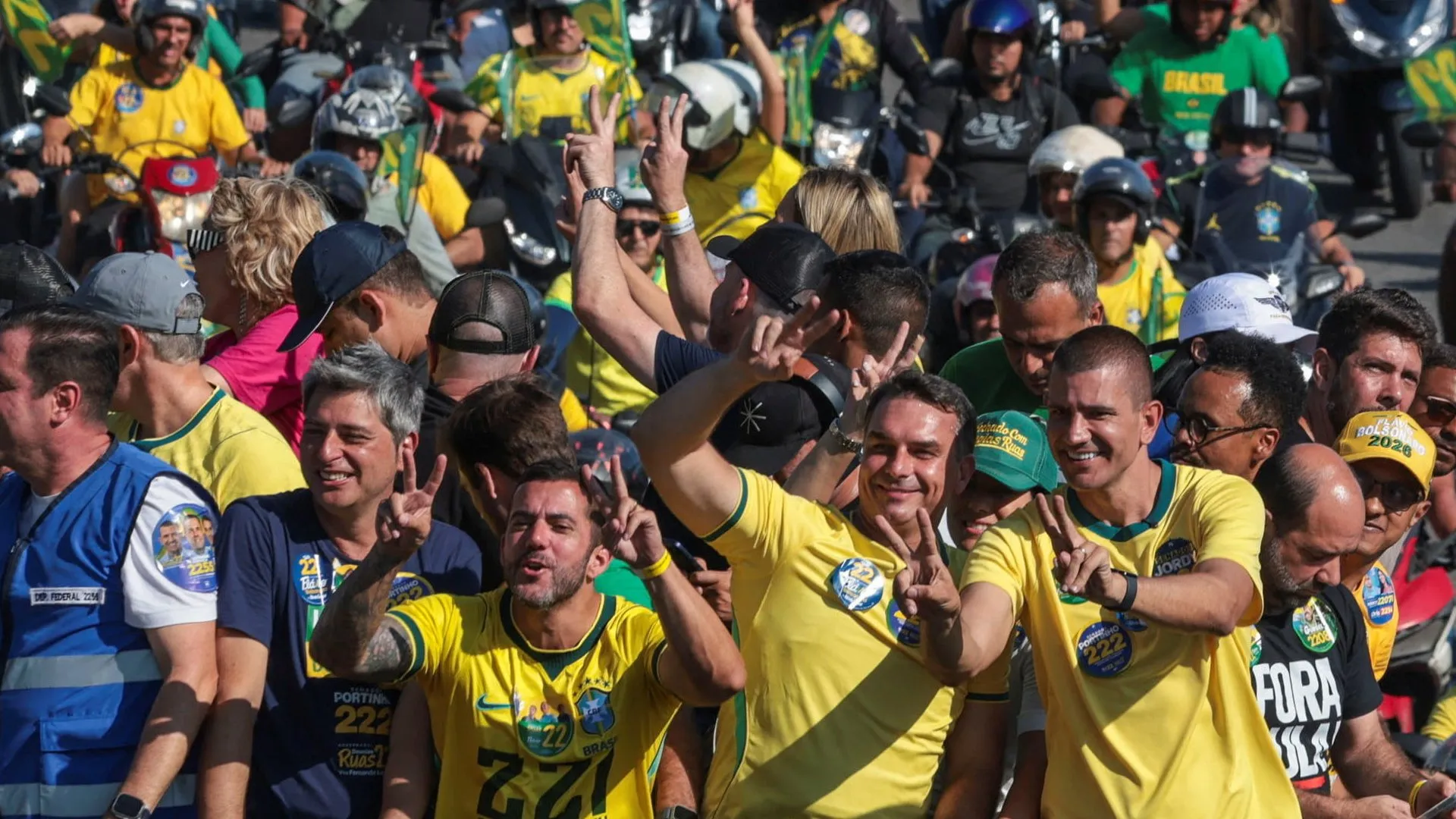
Lula and Flavio Bolsonaro, who is the son of the former president, are currently locked in a close race for Brazil’s presidency after a poll found them tied for the first time with 41% of participants, which would lead to a runoff election.

The Brazilian presidential election is scheduled for Oct. 4, and a runoff would be Oct. 25.

President Donald Trump speaks during an event celebrating Women’s History Month in the East Room of the White House on Thursday. Photo by Bonnie Cash/UPI | License Photo

Source link

Brazil pulls visa of Trump adviser who asked to visit Bolsonaro in prison | Politics News

Brazilian President Luiz Inacio Lula da Silva says Darren Beattie was ‘prohibited from visiting’ Bolsonaro in prison.

The government of Brazil has revoked the visa of Darren Beattie, a far-right adviser to United States President Donald Trump who had planned to visit ex-President Jair Bolsonaro in his prison cell in Brasilia.

Brazilian President Luiz Inacio Lula da Silva confirmed on Friday that Beattie’s visa has been pulled. He equated it to the US pulling visas from Brazilian officials in Washington, DC.

Recommended Stories

list of 3 itemsend of list

Among them was Brazilian Health Minister Alexandre Padilha, whose US visa was revoked last year.

“That American guy who said he was coming here to visit Jair Bolsonaro was prohibited from visiting, and I forbade him from coming to Brazil until they release the visa for my health minister,” Lula said during an event in Rio de Janeiro.

Separately, Brazilian officials told news services, including the AFP, that Beattie had lied about the purpose of the visit on his visa request.

Bolsonaro is a far-right ally of President Trump, and he is currently serving a 27-year sentence for his role in a coup plot after Brazil’s 2022 election.

Friday’s decision shows the continued tension between the Brazilian and US governments, even as Trump and Lula have enjoyed warming relations.

Last August, Trump placed Brazil under heavy tariffs — some of the highest in the world — in protest against Bolsonaro’s prosecution. He demanded that the country’s legal system drop the case against Bolsonaro and accused Brazil of persecuting right-wing voices.

After Trump met Lula at the United Nations General Assembly in September and again at a summit for the Association of Southeast Asian Nations (ASEAN) in October, relations between the two leaders improved.

Lula also reached out by telephone in October in a bid to ease the cumulative 50-percent tariffs on certain Brazilian products. On November 20, Trump responded by issuing an executive order “modifying the scope of tariffs” on Brazilian exports like beef and coffee.

But speculation has remained high that Trump could again intervene in the country’s domestic politics to boost the prospects of the Brazilian right.

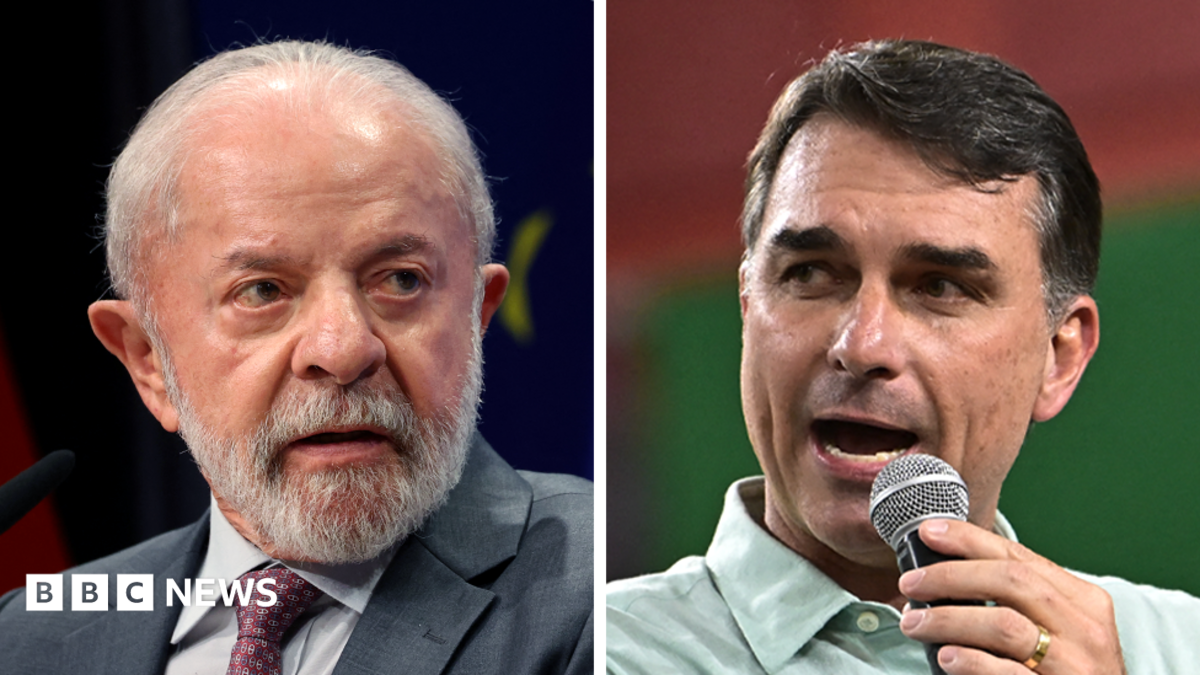
Brazil is set to hold a new presidential election in October, where Lula is facing off against Bolsonaro’s eldest son, Flavio.

Lawyers for the imprisoned Bolsonaro had asked the Brazilian Supreme Court to approve a visitation request from Beattie this week, but the court rejected that request on Thursday.

Beattie, a strong critic of Lula’s government, was fired during Trump’s first term in office following reports that he had attended a white nationalist conference.

Bolsonaro, meanwhile, was placed in intensive care on Friday, with hospital officials saying the 70-year-old had a “high fever, a drop in oxygen saturation, sweating and chills” linked to pneumonia.

Source link

Lula, Flávio Bolsonaro tied in Brazil presidential runoff poll

Brazilian President Luiz Inácio Lula da Silva (pictured) and right-wing Sen. Flávio Bolsonaro are each polling 41% in a potential runoff election. Photo by Sebastiao Moreira/EPA

March 12 (UPI) — Brazilian President Luiz Inácio Lula da Silva and right-wing Sen. Flávio Bolsonaro are tied for the first time for a potential runoff after the Oct. 4 presidential election, according to a poll released Wednesday. A runoff would be Oct. 25.

The survey found each candidate with 41% support in a hypothetical second round.

Bolsonaro, a member of the Liberal Party and son of former President Jair Bolsonaro, leads among voters who identify as independent, a shift that could give him an edge.

Among independents, Bolsonaro gained 6 percentage points and would lead Lula 32% to 27% in a runoff scenario. Another 36% said they would not vote and 5% were undecided.

The gap between the two candidates has narrowed steadily, from 10 points in December to seven in January, five in February and zero in March, according to the survey conducted by polling firm Quaest and commissioned by Genial Investimentos.

Similar trends have appeared in other recent polls. A Datafolha survey published Saturday showed Lula with 46% support compared with 43% for Bolsonaro.

Quaest tested first- and second-round scenarios with eight potential candidates. In first-round simulations, Lula leads in two scenarios and is statistically tied with Bolsonaro in five others. Lula’s support ranges between 36% and 39%, while Bolsonaro’s support ranges between 30% and 35%.

Felipe Nunes, Quaest’s director, said Bolsonaro’s gradual rise began after his father publicly named him as a potential candidate in December.

“Flávio has managed to consolidate Bolsonaro’s electorate. He has grown among right-wing voters and improved his performance among independent voters,” Nunes said, according to news website O Globo.

The poll also showed worsening public assessments of the government and the economy.

Both Lula and Bolsonaro face high rejection rates, with 56% of respondents saying they would not vote for Lula and 55% saying the same about Bolsonaro.

“The shift over time is striking. In December, Lula had much greater potential and lower rejection. Now, both have similar levels,” Nunes said.

The survey found 48% of Brazilians believe the economy has worsened over the past 12 months, while 24% say it has improved. In February, negative perceptions stood at 43%.

Source link

As U.S. democracy is in peril, these Brazilian films offer perspective

When Brazilian journalist Tatiana Merlino watched “The Secret Agent” — one of this year’s Oscar nominees for best picture — it felt like seeing scattered scenes from her own life.

As the movie follows Marcelo (played by Wagner Moura) — a professor fleeing from a vindictive businessman during Brazil’s military dictatorship (1964-1985), the story skims through old audio tapes and newspapers, reviewed by a researcher looking into how he died. Like her, Merlino also dug into the past to piece together how her uncle, Luiz Eduardo Merlino, a communist activist, was killed by the right-wing regime in 1971. Though it was initially reported as a suicide, the family soon found his corpse with torture marks in a morgue.

“It became necessary to fight for memory, truth, and justice, because these crimes committed by dictatorship agents weren’t punished at that time, and have not been to this day,” says the 49-year-old journalist, who first saw “The Secret Agent” in São Paulo, and made a career from investigating human rights abuses.

“When a country does not come to terms with its past,” she adds, “its ghosts resurface.”

Recent dictatorship-themed movies like “The Secret Agent” and “I’m Still Here,” which won the Oscar for best international film in 2025, were instant blockbusters back home in Brazil. While both films honor those who, like Merlino, still seek justice for the regime victims, their popularity also got boosted by the country’s zeitgeist.

To many Brazilians, these movies served as reminders of what could have been had former far-right President Jair Bolsonaro, himself a retired Army captain and a dictatorship nostalgic, succeeded in his 2022 attempt at a coup d’etat.

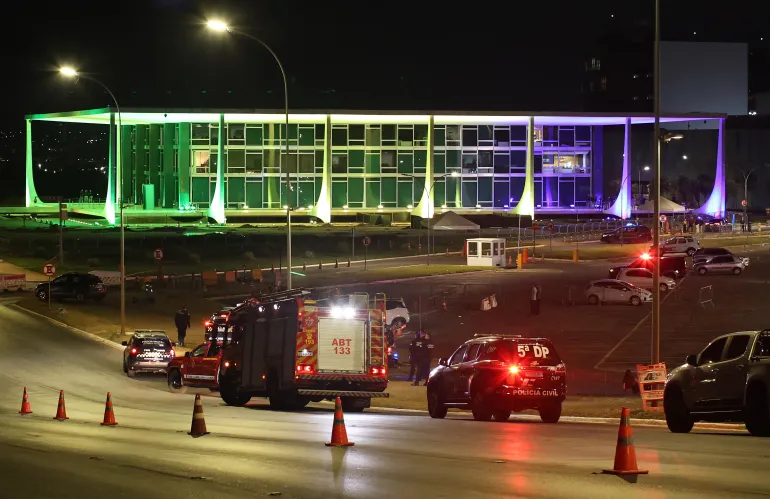
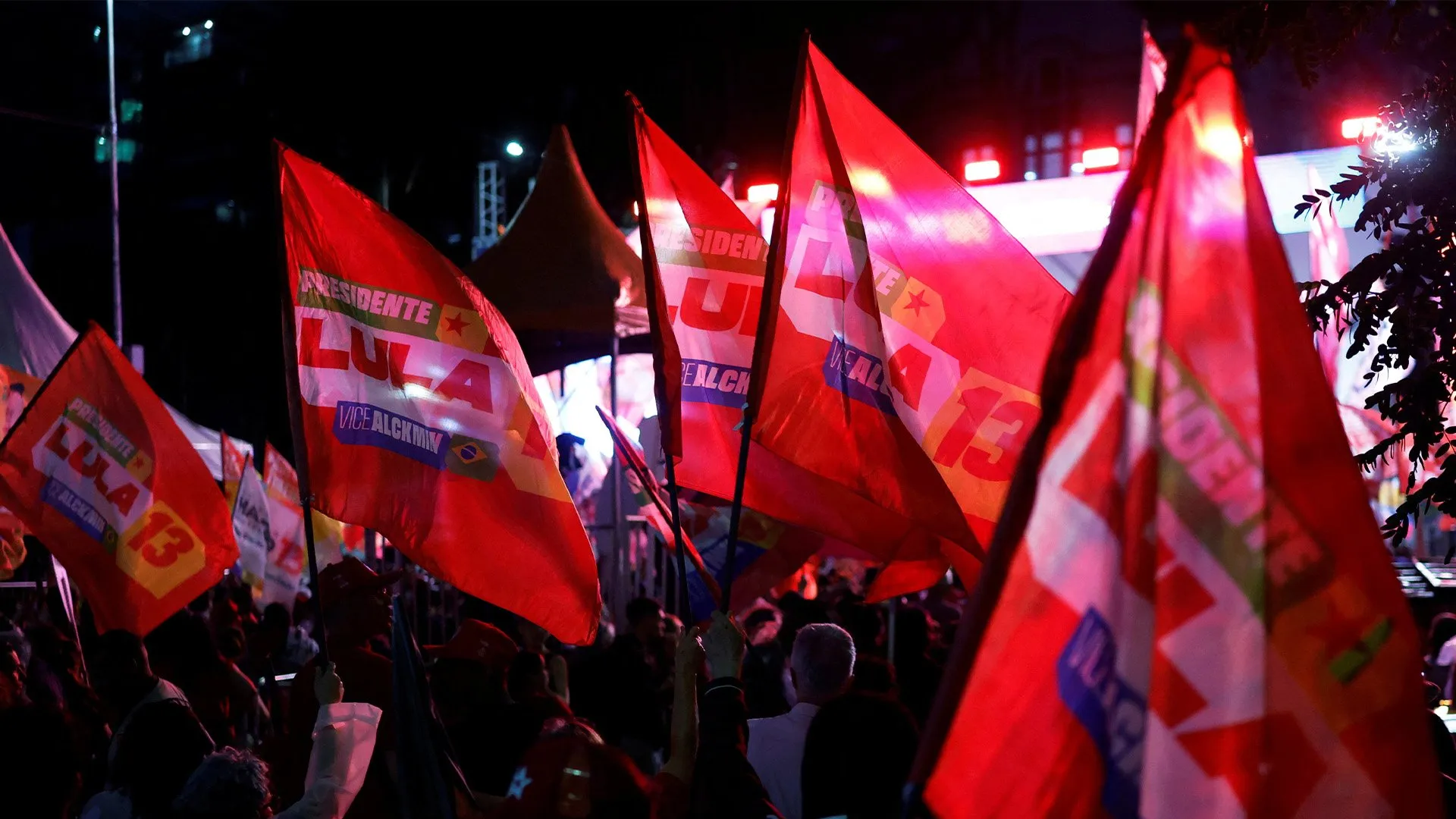
On Jan. 8, 2023, encouraged by Bolsonaro, hundreds of vandals stormed into the Three Powers Plaza, a square in the country’s capital, Brasília, that gathers the congress, the supreme court and the presidential palace. Neither he nor the vandals accepted the 2022 election — won by the veteran leftist Luiz Inácio Lula da Silva, better known as “Lula.”

The uprising followed the same blueprint as the pro-Trump rioters behind the Jan. 6 insurrection in the United States. Although President Trump himself was federally prosecuted for election obstruction, the case was dismissed after his reelection in 2024.

Unlike the U.S., however, Brazil has charged, judged and arrested the conspirators — including Bolsonaro and members of his staff who participated in the coup plot.

“Bolsonaro doesn’t come from Mars,” said “The Secret Agent” star Wagner Moura to the L.A. Times in February. “He’s deeply grounded in the history of the country.”

In 1964, a U.S.-backed coup enacted a violent, 21-year autocracy run by the military, whose effects still resonate today, says Alessandra Gasparotto, a professor at the Federal University of Pelotas (UFPEL).

“It was a dictatorship that worked from a perspective of building certain legitimacy, keeping the congress functioning, but of course, after purging dissent,” explains the Brazilian historian.

“I’m Still Here,” for example, dramatizes the real-life quest of Eunice Paiva, a housewife whose husband Rubens Paiva, a former leftist congressman who had his tenure revoked after the coup, then disappeared in the hands of the military in 1971. To this day, his body still hasn’t been recovered.

In 2014, Bolsonaro, then just a congressman, spit on a bust of Paiva erected to honor his memory during the coup’s 50th anniversary in Congress.

“The cinema of all countries has the role of preserving memory, so if you take a look at the Holocaust, the American Civil War, or World War II movies, it has this role of almost an ally of history,” says writer Marcelo Rubens Paiva, son of Rubens Paiva and author of the book from which “I’m Still Here” is based. “There’s an old saying: History is the narrative of winners, while art is of the defeated.”

In the case of Brazil, the militaries who led the repressive apparatus of the dictatorship got away with torture and murder through a 1979 amnesty law. It was initially enacted to pardon alleged “political crimes” committed by the regime opposition and allow a transition to democracy — but it was also used to pardon the dictatorship’s human rights violations. Then, in the late 1980s, the military oversaw a slow, gradual shift to democracy, stepping down from power only in 1985.

“This new republic had more continuity than novelty, since many politicians who were central to the dictatorship moved to central roles in the democratic government,” explains Gasparotto. “That’s why they built this pact [to forgive the regime’s crimes].”

For that reason, these movies still feel contemporary. “The Secret Agent,” for example, blends past and future through the records analyzed by a researcher, while “I’m Still Here” highlights Eunice Paiva’s post-regime fight for the recognition of Rubens Paiva’s death; without any corpse to officialize his death, he was just deemed disappeared.

When Merlino watched the movie, for example, Eunice reminded her of her grandmother, Iracema Merlino.

“I’m the third generation of my family fighting for memory, truth and justice,” says Merlino. “It started with my grandmother, who passed away, then it was handed to my mother, who’s now very ill, then to me.”

Nowadays, she awaits trial for the third lawsuit attempt of the family to hold her uncle’s torturer, Col. Carlos Alberto Brilhante Ustra, accountable — the two other cases against the accused were dismissed over the years.

Since Ustra’s death in 2015, the Merlino family is now suing his estate for reparations. Yet he still remains a hero to some; in 2016, while Bolsonaro was still a congressman, he shouted a dedication to the memory of the torturer during the voting of the impeachment of Brazil’s former President Dilma Rousseff — herself one of the victims of Ustra in the 1970s, but among the few who survived.

“These films make connections with the present because understanding the past is important for understanding today’s contradictions,” says Marcelo Rubens Paiva. “What happened before interferes in the conflicts a country lives in today.”

So if authoritarians like Bolsonaro don’t come out of the blue, the same goes for other autocratic leaders, like President Trump.

Although founded on democratic principles, the U.S. itself has a long, muddled history with the concept. The authoritarian turn the country is reckoning with is part of a long legacy of inequality that stemmed from the 246-year institution of slavery. Following its abolishment in 1865 came a near-centurylong period of tension marked by racial segregation that we now refer to as “Jim Crow.”

“With some exceptions, the South was governed by a then-segregationist Democrat party — with [rampant] electoral fraud, authoritarianism, use of local police for political repression, and no chance for opposition, even [by] moderates,” says Arthur Avila, a history professor at the Federal University of Rio Grande do Sul (UFRGS) in Brazil.

Although the Civil Rights Act of 1964 and the Voting Rights Act of 1965 ended segregation and granted voting rights to people of all races — signed by then-President Lyndon B. Johnson, a Southern Democrat who broke away from the party’s history to spearhead progressive domestic policy — the decades that followed were ridden with manipulations of the electoral system. For example gerrymandering, or the practice of manipulating electoral district boundaries to favor one political party, is an ongoing, albeit controversial tactic among both Democrats and Republicans.

President Trump himself was federally prosecuted for election obstruction. The indictment alleged that, upon losing the 2020 election, Trump conspired to overturn the results and manipulate the public by spreading false claims of election fraud on social media. It argued that this, in turn, stoked a mob of his supporters into leading the deadly Jan. 6 attacks on the Capitol; but the case was dismissed upon his reelection in 2024.

In the lead-up to the midterm elections in November, Trump has pushed for federal control over elections, restrictions on mail-in voting and the addition of citizenship documents to vote, despite an existing federal law that already prohibits noncitizens from voting in U.S. elections. (He tried implementing the latter through an executive order in 2025, but it was permanently blocked by a federal court; a voter ID bill called the “SAVE America Act” is currently stalling in the Senate.)

“There’s a strong local authoritarian tradition in the U.S. that Trump himself feeds from,” says Avila.

Besides that, according to Avila, the country faces a growing “de-democratization” process from within. This shows in the rising control and dismantling of institutions by reactionary sectors — including efforts to block professional, educational and athletic programs promoting DEI, or diversity, equity and inclusion — from what many critics and scholars have cited as lingering resentment from desegregation, he says.

“We may see it as a slow authoritarian turn in North American politics that didn’t overturn the democratic regime yet,” Arthur considers. “But if this process goes on, and that’s a conjecture, in the next decade the U.S. may become a state of exception that keeps democratic appearances but has been stripped of any democracy’s substance whatsoever.”

As movies such as “The Secret Agent and “I’m Still Here” remind us, a great deal of maintaining a democracy has to do with keeping a good memory.

Source link