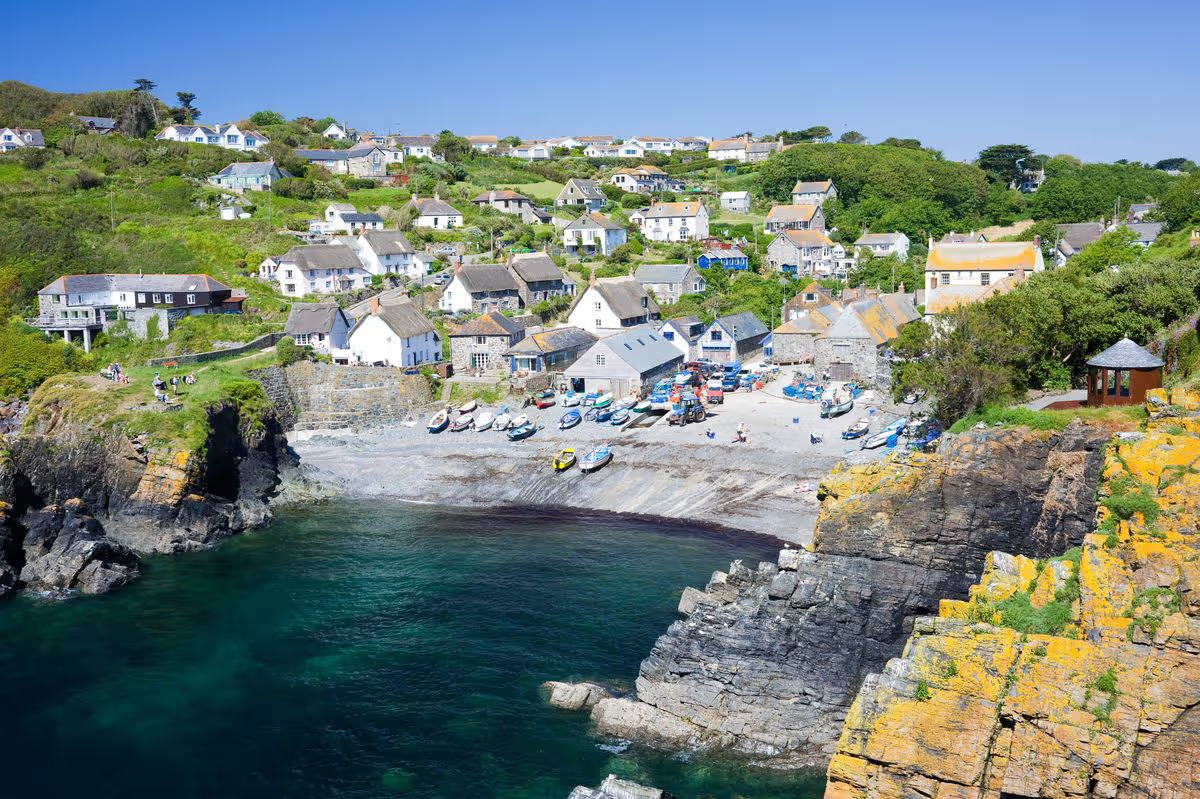
A charming fishing village on the coast of one of the UK’s most beautiful regions is the epitome of rural tranquillity – and it’s a true hidden gem

It’s an outstanding gem hiding in plain sight(Image: David Clapp via Getty Images)
Whilst Cornwall’s reputation for harbouring breathtaking villages is well established, with each seemingly more enchanting than the next, one particular hidden treasure manages to shine even amongst the county’s most impressive offerings. This delightful fishing village, nestled within the Lizard Peninsula between The Lizard and Coverack, is a picture-perfect hamlet cradled by a stunning shingle cove, with roots stretching back to medieval times when it consisted of little more than a handful of fish cellars.
Celebrated for its charming and historic character, the village appears “lost in time” – a quintessential fishing settlement where little has altered through the decades. It features picturesque clusters of thatched cottages and a modest yet impressive fleet of colourful and vibrant fishing boats that are hauled up onto its shingle beach and remain in active use.
Save on the best holiday cottages in Cornwall

Famous for its rugged coastline, golden beaches, picture-perfect villages and rich maritime heritage, Cornwall is one of the most-visited corner of the UK. Sykes Cottages has a large number of holiday homes to choose from, with prices from £36 per night.
History of this coastal treasure
The village’s name derives from the Cornish term for “a thicket” and literally means “battle of trees”, most probably owing to the densely wooded valley in which it sits.
Originally known as Porthcaswydh, which later evolved into Por Cadjwydh, this gorgeous fishing hamlet is now called Cadgwith, reports the Express.
Developing from its modest fish cellar beginnings, the 16th century witnessed Cadgwith welcoming permanent residents, whilst fishing continued to be the primary occupation for those who lived there.
Homes, cellars, lofts, and capstan houses were gradually constructed using local stone and cob walls, whilst the distinctive thatched rooftops were erected along the shoreline and hillsides of the valley, lending Cadgwith its unmistakable “Cornish fishing village” charm.
Breathtaking scenery and terrain
Nestled within the Cornwall Area of Outstanding Natural Beauty (AONB), rebranded in 2023 as National Landscapes, Cadgwith boasts two beaches divided by a headland known as The Todden, which visitors are free to explore on foot.
The shingle beach, the larger of the pair, sits to the north-east and is widely recognised as Cadgwith Cove – a bustling hub where local fishermen are known to ply their trade.
The second beach, a blend of sizeable boulders and sand, lies to the south-west and goes by the name of Little Cove or Little Beach – an unspoilt retreat beloved by residents and holidaymakers alike for swimming, snorkelling, rock pooling, and diving.
Such is the breathtaking beauty of Cadgwith’s coastal scenery that it served as a backdrop for the 2003 film Ladies in Lavender, starring Dame Judi Dench and Dame Maggie Smith. More recently, it was revealed that HBO’s upcoming Harry Potter TV series will be shooting scenes at Cadgwith Beach and its beloved local watering hole, Cadgwith Cove Inn, in October 2025.
What to see and do in this coastal gem
No trip to this stunning Cornish hamlet would be complete without a visit to the much-loved Cadgwith Cove Inn. This charming 300 year old watering hole exudes a wonderfully warm and welcoming ambience, regularly hosting folk music evenings featuring the renowned Cadgwith Singers, making it the ideal spot for weary travellers seeking a wholesome Cornish meal and a refreshing pint.
Dishing up the freshest seafood – hardly surprising given its coastal location – this cherished establishment has garnered glowing praise on Tripadvisor. One delighted regular commented: “Cadgwith has a special magic about it, and its heart is the Cadgwith Cove Inn. I guess you’d call us regulars – we try to get here a couple of times every year, and have done for the last six years or so. If only it could be more often! Cadgwith has a special ability to make the troubles of life melt away when you drive down the hill into the village, and the Inn is truly special at the heart of that magic.
“Fridays see the Cadgwith Singers do their things with their sea shanties, and it is truly the best start to a week down here. But any day of the week this place has a special blend of people and place which is truly unique. The beer is great, and the food is better. What more could you ask for?”
Another essential stop in Cadgwith is The Old Cellars Restaurant, hailed as “a true Cornish treasure” positioned directly on the village’s fishing beach. This family-run café also offers alcoholic beverages and has earned its reputation for outstanding seafood offerings, particularly prawn sandwiches, locally sourced crab, fresh lobster, and hot paninis.
Boasting a delightful cobbled courtyard with breathtaking sea vistas, The Old Cellars Restaurant has become a local favourite. One reviewer says of the joint: “What an absolutely beautiful little gem in a stunning village, we had a traditional cream tea and it was delicious, lovely courtyard seating and friendly and welcoming staff, well worth a visit.”
During the summer season, Cadgwith draws plenty of visitors, with its swimming beach providing the perfect location for a cooling plunge whilst the fishing beach offers an excellent vantage point to observe fishermen in action as they land their daily haul. It’s important to note that whilst dogs are welcome throughout most of the year, four-legged friends are prohibited from Little Cove between July 1 and August 31 from 10am to 6pm.
The South West Coast Path winds through Cadgwith, and just a short distance north of the hamlet lies The Devil’s Frying Pan – a massive 100-metre deep crater in the cliffs created when a sea cave’s roof caved in, leaving behind the breathtaking rocky arch jutting into the ocean. Whilst this dramatic coastal spectacle alone justifies a journey to Cadgwith, the village is fortunately packed with numerous other attractions.
Ensure our latest headlines always appear at the top of your Google Search by making us a Preferred Source. Click here to activate or add us as your Preferred Source in your Google search settings.