WITH Halloween fast approaching, our Spotlight on column focuses on Londonderry, Northern Ireland.
The city is home to Europe’s biggest Halloween festival – now in its 40th year.
To celebrate, the city is launching a year-round Derry Samhain Experience and a permanent Halloween mural.
Here are some other top tips from us, including where to stay and some hidden gems.
Sign up for the Travel newsletter
Thank you!
MUST SEE/DO
From October 28 to November 1, The Awakening The Walled City Trail fills the city centre with light installations, street theatre, fire performers and live music, while the Little Horrors programme keeps younger children busy.
On Halloween night the Carnival Parade sets off at 7pm, followed by fireworks over the River Foyle.
Pack a costume, as locals take dressing up seriously.
The trail, parade and fireworks are all free, but if you plan to visit make sure you book a bed as soon as possible.
BEST VIEW
Derry‘s 17th-century walls, built between 1613 and 1618 to protect English and Scottish settlers, are the only fully preserved city walls in Ireland.
They have never been breached, not even during the 105-day siege of 1689.
The mile-long loop takes you past seven gates and 24 restored cannons, including Roaring Meg, stamped “Fishmongers, London, 1642” after the livery company that paid for it.
From the ramparts you can look down over the Bogside, where murals and Free Derry Corner tell the story of the Troubles.
schoolchildren and teachers dressed as orange pumpkins parade down shipquay street Halloween Derry IrelandCredit: Alamy
HIDDEN GEM
The Dickensian-style Derry Craft Village in the heart of the city is a reconstruction of an 18th-century street and 19th-century square, home to more than 70 local makers.
It was built by the Inner City Trust, a charity set up in 1976 to rebuild the city centre during the Troubles. Its cafes are good for a coffee or a bite.
Derry Girls fans should then pop next door to the Tower Museum, home of the Derry Girls Experience.
RATED RESTAURANT
Browns Bonds Hill, on the east bank of the River Foyle, serves modern dishes made with local, seasonal produce.
Opened in 2009 by chef patron Ian Orr, Michelin‘s inspectors single it out for its good value.
For something more casual, sister restaurant Browns in Town is across the river on Strand Road and serves classic burgers, steak sandwiches and pasta.
Derry Girls mural, Derry Londonderry, IrelandCredit: AlamyDerry City, Londonderry, Co Derry, Northern IrelandCredit: Alamy
BEST BAR
Peadar O’Donnell’s on Waterloo Street has live traditional Irish music every night, in a pub done up like an old-fashioned grocer’s and hung with flags.
It’s a top spot to pull up a stool and sink a pint of Guinness. If it’s too busy, try the Gweedore Bar, under the same roof with an equally buzzy atmosphere.
HOTEL PICK
The Walled City Hotel opened last autumn with 40 rooms in a 1920s former Bank of Ireland building on Strand Road, a two-minute walk from the Guildhall.
Its vaulted ceilings now look down on a bar and restaurant. Rooms cost from £102 per night. See walledcityhotel.com.
Bad Gastein is a relatively unknown gem. The Austrian state it sits in, Salzburg, offers free local transport (the guest mobility ticket) if you are staying in the state, so you can travel to the resort via train for nothing. The slopes are directly next to the station, too.
Rob Owen
Family fun in the French Alps
Puy-Saint-Vincent. Photograph: Santiago Urquijo/Getty Images
Puy-Saint-Vincent in France is a wonderful, small, child-friendly resort. Our grandchildren learned to ski each morning with great instructors on the gentle slopes under amazing azure skies. Three generations then made memories of a lifetime, skiing the wide quiet slopes together each afternoon. We enjoyed dog sleds and cosy hot chocolate in the slopeside cafes. A wonderful trip.
Barbara
Profile
Readers’ tips: send a tip for a chance to win a £200 voucher for a Coolstays break
Show
Guardian Travel readers’ tips
Every week we ask our readers for recommendations from their travels. A selection of tips will be featured online and may appear in print. To enter the latest competition visit the readers’ tips homepage
–
A historic railway and superb skiing in Norway
A ski lift in Gausta. Photograph: Alf Jacob Nilsen/Alamy
Gausta, Norway, is such fun. Stay at Gaustablikk,the hotel built by Kirk Douglas’s stuntman, a wonderfully quirky piece of local history. Explore Vemork, the historic heavy-water plant where British and Norwegian resistance fighters carried out their daring sabotage during the second world war. For families, the on-piste skiing is friendly and accessible; while the cross-country trails are simply stunning. Then there’s the real adventure: an old US military train climbs Gaustatoppen, opening up spectacular off-piste skiing with views and terrain that rival much of mainland Europe. It’s a brilliant mix of history, skiing, scenery and adventure, and somehow remains a wonderfully under-the-radar destination.
Fiona
Markets and gluhwein in the Austrian Tirol
St Johann in Tirol, Austria. Photograph: Animaflora/Getty Images
As a family of four, we loved St Johann in Tirol. It’s a comfortable Austrian village with Christmas markets, picturesque churches and gorgeous frozen valley walks – with little marmosets and weasels to look out for along the river. Wherever you stay, you can walk to a gondola. It’s really near to Salzburg airport, too. In Austria, kids get all-day lessons, which is a big bonus. Parents can just kick back or wander around and have a gluhwein or two. Prices were very reasonable in the Christmas holidays.
Nick
A locals’ favourite on the Italian border
Monte Lussari village. Photograph: Jacques Decro/Getty Images
Tarvisio-Monte Lussari on the Italian-Slovenian border covers 24km (15 miles) of skiable terrain interconnected across two main sectors: the historic and stunning Monte Lussari pilgrimage peak and the Priesnig area. Used by local people and those in the know, it offers sufficient ski runs and good value ski passes and restaurants, and is much cheaper than neighbouring resorts in Austria.
Neil
Magic in the air at La Rosière, France
Family-friendly La Rosière. Photograph: Real Image/Alamy
Stay in the attractive resort of La Rosière in France, in the foothills of the Mont Blanc region. Enjoy the short forest walk to the village, with wind chimes and magic in the air, for an après-ski drink and a cheese fondue in a local tavern with the kids.
About 50km (30 miles) from Ålesund, Strandafjellet has excellent pistes, but also some of the best off-piste skiing in Norway. Strap on a pair of randonnée skis and you can use the lifts to access spectacular backcountry skiing in the Sunnmøre Alps. The views down to the fjord make this truly special. Pistes are illuminated for evening skiing.
Graham
A charming village in Les Trois Vallées
Saint-Martin-de-Bellevile in the French Alps. Photograph: Delpixart/Getty Images
Saint-Martin-de-Belleville, in the French Alps (Les Trois Vallées), is low at about 1,500 metres, so go mid-season. The single run ends smack in the centre of the village, which has retained its historical features along with small, friendly bars and places to eat. Plus, it gives access to the whole of the Trois Vallées ski area – absolutely amazing from one small but beautiful village. There are plenty of choices for accommodation, both expensive and cheap.
Russell Walker
Queue-free skiing for all in Italy’s Dolomites
Christmas time in Brunico. Photograph: Nicola Simeoni/Alamy
Brunico is tucked away in the Dolomites, just a 90-minute transfer from Innsbruck. I had a great week at the beginning of March. Unlike bigger resorts, queues were nonexistent here. There are runs for beginners through to experts. Great snow and plenty of opportunities to use it.
Ian B
Winning tip: Bavarian charm and quiet slopes
A restaurant in Oberstdorf, Germany. Photograph: Harry Laub/Getty Images
Oberstdorf in Germany continues to be my go-to for a quiet and restorative ski week away. There are 130km (80 miles) of pistes for all levels, stacks of Bavarian restaurants, a wide variety of mountain huts, plenty of hotels for all budgets and family sizes, and the novelty of skiing into and out of Austria daily. Neuschwanstein Castle is a short hop away for a day off. Unbeatable value.
The tupelo trees turn bright red, and one variety changes colour around ten days ahead of the rest.
By the water, swamp cypresses glow amber.
You can even arrive by steam on the Bluebell Railway, whose station is a 15-minute walk away.
Cost: £19 adults, £9.50 children — National Trust members free.
RICHMOND PARK, LONDON
BELLOWING stags are the soundtrack in October, when the red deer rut reaches its peak.
Head for the Isabella Plantation, a woodland garden where Japanese maples flare crimson and winged spindle bushes turn rosy scarlet.
Entry is free, but keep one eye on the leaves and the other on the stags, keeping at least 50m away.
Cost: Free entry and parking.
WESTONBIRT, THE NATIONAL ARBORETUM, GLOUCS
Enjoy the many varieties of trees at the National Arboretum in GloucestershireCredit: Getty
NEARLY 300 varieties of Japanese maple grow here, setting the Acer Glade ablaze.
A new trail through Silk Wood this year is themed around nine Japanese ideas about the seasons. Book ahead.
Cost: £19 weekdays or £22 weekends, children £5.
BLICKLING ESTATE, NORFOLK
BEECH, oak, lime and sweet chestnut are mirrored in the lake in front of this Jacobean mansion.
Follow the two-mile Lake Walk, then head into the Great Wood, where the beeches glow amber and a pyramid-shaped mausoleum stands among the trees.
Cost: Free entry to parkland — parking £5, NT members free.
CANNOCK CHASE, STAFFS
NOT every tree that turns gold is a broadleaf.
Larches are conifers that drop their needles in winter, and here they blaze yellow against the dark pines.
Follow the Sherbrook Valley trail to the stepping stones, with beeches adding copper along the way.
Cost: Free entry — parking from £1.20.
SHERWOOD FOREST, NOTTS
Pay your respects to the Major Oak, the giant at Sherwood Forests heartCredit: Getty
ROBIN Hood’s old stomping ground is at its best when the oaks turn russet.
Pay your respects to the Major Oak, the giant at its heart thought to be up to 1,200 years old.
Sadly, the ailing tree died this year after suffering drought and heatwaves, but it still stands as a monument.
Oaks turn late, so there’s still plenty of time.
Cost: Free entry — parking £7, RSPB members free.
HARDCASTLE CRAGS, WEST YORKS
BEECH, oak and birch cling to the sides of this steep valley, near Hebden Bridge, above the tumbling Hebden Water.
Follow the riverside path to Gibson Mill, a cotton mill built around 1800, then grab a drink from its Weaving Shed Cafe and sit out by the millpond, hemmed in by trees.
Cost: Free entry — parking £5–£8, NT members free.
LOUGHRIGG TARN AND ELTERWATER, CUMBRIA
FOR the classic Lake District postcard view, walk the easy four-mile loop from Elterwater village via Skelwith Bridge to Loughrigg Tarn.
On a still day, the Langdale Pikes, the craggy peaks at the head of the valley, are reflected in the water, framed by turning woodland.
Cost: Free entry — paid parking, NT members free.
ALLEN BANKS AND STAWARD GORGE, NORTHUMBERLAND
KEEP an eye out for elusive red squirrels in this deep gorge carved by the River Allen.
Most of its beeches were planted in the 19th century, and they spill copper and gold colours down the valley sides.
The riverside path then leads to medieval ruins and a Victorian summer house.
Cost: Free entry — parking £3–£5, NT members free.
COED Y BRENIN, SNOWDONIA
PISTYLL Cain plunges into a dark pool deep within the 9.000-acre King’s Forest.
You can reach it via a 2.2-mile walk beside the River Mawddach, leaving conifers behind for broadleaf woods and the ruins of old gold mines.
Cost: Free entry and parking at Tyddyn Gwladys.
LOCH AN EILEIN, CAIRNGORMS
A RUINED 13th-century castle on an island steals the show here.
In autumn, the birch, rowan and aspen of the ancient Rothiemurchus Forest flare gold against the dark Scots pines.
The flat 3.5-mile loop is easy for kids. Scotland turns first, so don’t hang about.
Cost: Free entry — parking £5 per car.
TOLLYMORE FOREST PARK, CO DOWN
Tollymore forest park is stunning in autumnCredit: Alamy
GAME Of Thrones fans will recognise this forest at the foot of the Mourne Mountains, which was used as a filming location.
Walk the River Trail along the River Shimna, crossing stepping stones and some of its 16 bridges beneath beech and oak.
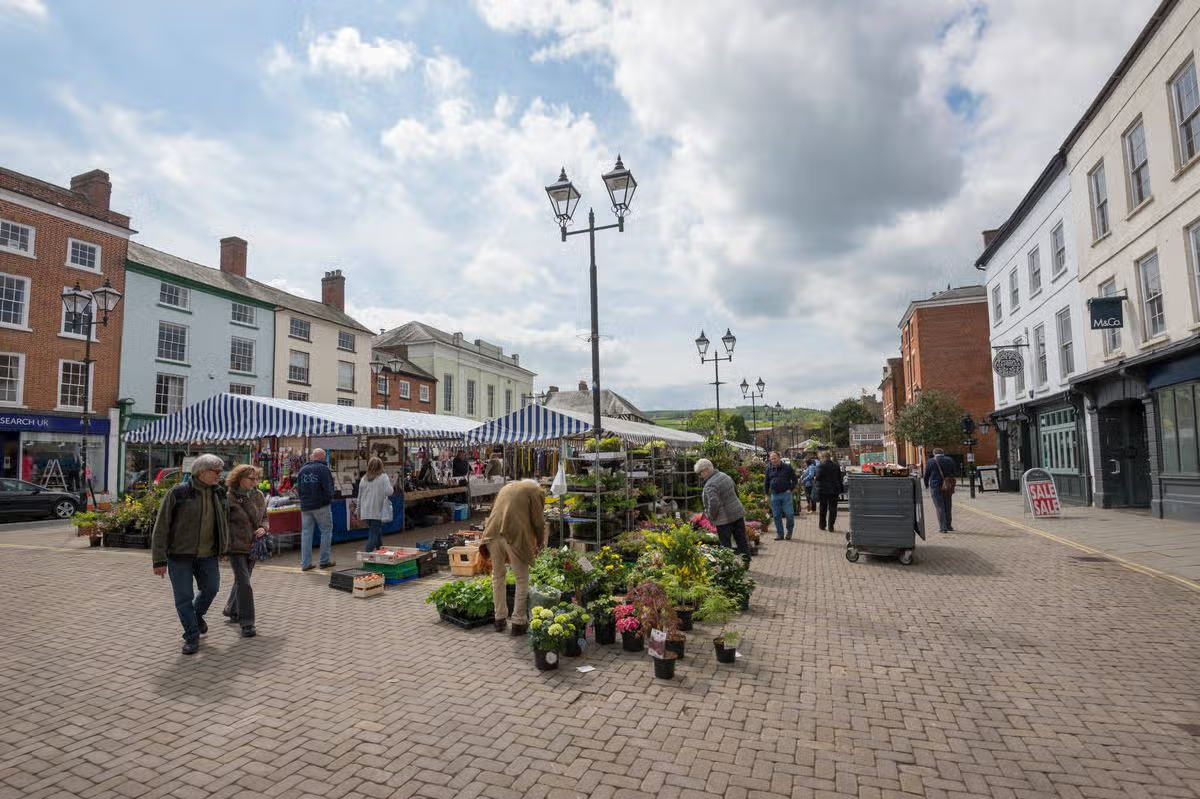
The spot is famed for its cobbled streets, Norman castle and stunning architecture
The town has plenty of shops, cafes and restaurants to visit(Image: Photos by R A Kearton via Getty Images)
Long hailed by poet John Betjeman as “the loveliest town in England,” Ludlow has also earned a global reputation as a premier food and drink destination. With over 500 listed buildings and a skyline dominated by a Norman castle, Ludlow effortlessly blends ancient, storybook charm with a modern appeal.
Winding cobblestone streets lead visitors to delis, bakeries, welcoming pubs and acclaimed restaurants.
Frequently dubbed the “food and drink capital of the Marches”, Ludlow’s thriving hospitality scene is fuelled by its impressive variety of locally sourced produce. In 2024, a Which? Travel survey of more than 9,000 people asked respondents to rate the food and drink in their favourite inland towns and villages.
Ensure our latest travel stories always appear at the top of your Google Search by making us a Preferred Source. Click here to activate or add us as a Preferred Source in your Google search settings
As Which? Travel put it, “Instead of a handful of high-end eateries, there’s a culture of local produce as well as numerous pubs and cafes, served by people who care about the food.”
This ethos is reflected on every plate, with an emphasis on fresh, locally sourced ingredients and menus that change with the seasons.
TripAdvisor currently ranks Old Downton Lodge as Ludlow’s finest restaurant, while waterside favourite CSONS is another beloved choice for relaxed, quality dining, along with Kin Kitchen and The French Pantry for café and bistro-style fare. Pub lovers are spoilt for choice with options including The Queens and The Boot Inn, both of which are highly rated on TripAdvisor.
Experts from Ludlow Distillery note that the town’s food and drink scene benefits greatly from a thriving network of local producers, ranging from artisan cheesemakers and bakers to craft brewers and distillers.
They stated: “The strength of this offering is best seen (and tasted) by a visit to the Local to Ludlow Market in the Castle Square (where growers and makers based within 30 miles of the town sell a range of high-quality and carefully selected produce), and the award-winning Broad Bean fine food delicatessen on Broad Street.”
The town proudly champions ‘Slow Food’, a global grassroots movement with thousands of members worldwide that brings together a love of good food with a commitment to community values.
In recent years, the movement in Ludlow has gone from strength to strength.
Slow Food Ludlow Marches offers activities throughout the year, including visits, talks, demonstrations, meals and Taste Workshops at Ludlow Food Festival in September.
Ludlow Food Festival ranks among the town’s most celebrated annual events, regularly drawing around 15,000 visitors to Ludlow Castle over three days.
Both locals and visitors alike can look forward to the Winter Festival at Ludlow Castle. Taking place between 27 and 29 November 2026, the event showcases local entertainment, mulled wine, and much-loved highlights from the Ludlow Food Festival.
Head along on the second or fourth Thursday of the month to discover the Ludlow Local Produce Market, a vibrant showcase of food and drink made within a 30-mile radius.
The stalls champion sustainability and seasonality, turning an ordinary shopping trip into a thoroughly enjoyable afternoon out.
Outside of Shropshire, Wells was named runner-up for inland dining by Which? Travel.
Other destinations receiving recognition include Lavenham in Suffolk, Llangollen in Denbighshire, Stamford in Lincolnshire, and Cartmel in Cumbria. Each offers its own distinctive flavour of a foodie escape.
This picturesque town attracts thousands of visitors every autumn for its stunning foliage — but residents are fighting back against a surge of influencers with calls to restore peace and safety to their quiet community
16:27, 15 Oct 2026Updated 16:27, 15 Oct 2026
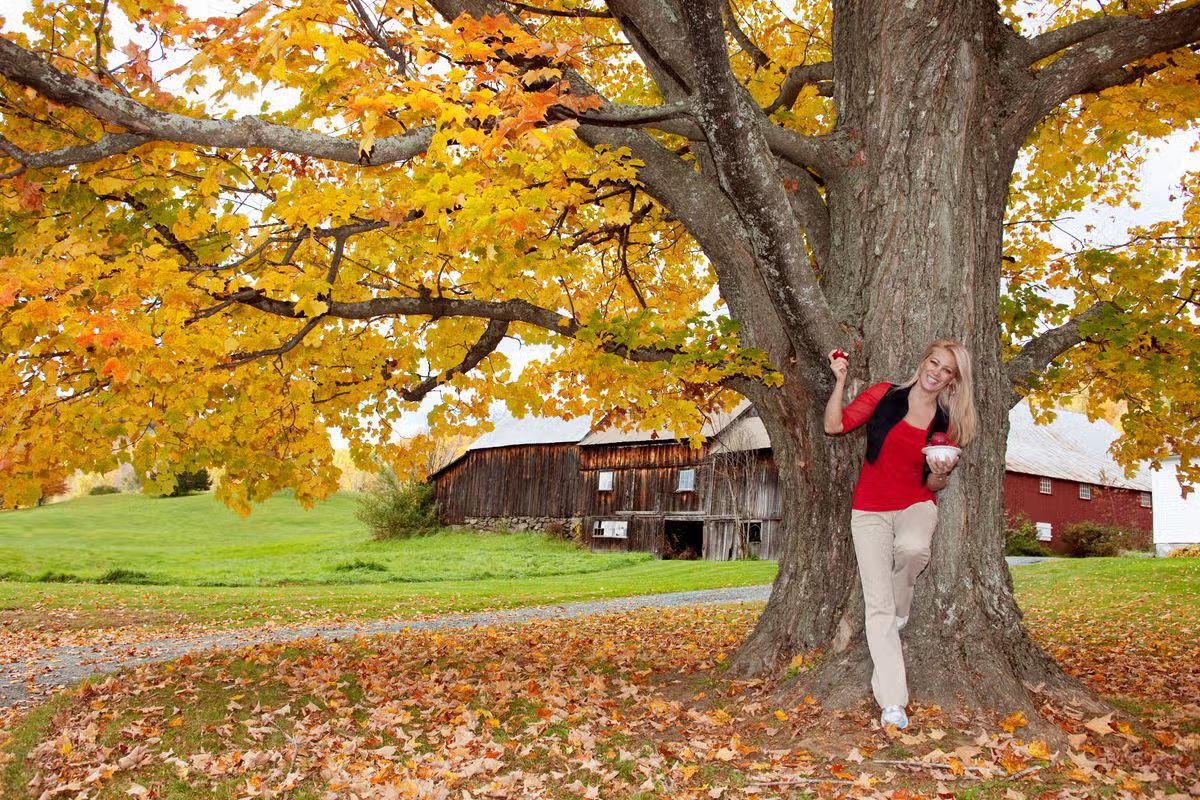
People flock to this town every year for the amazing autumn colours – but not everyone is happy about it (file image)(Image: Getty Images)
Autumn is one of the most beautiful times of year, as trees turn from green to a stunning red, brown, orange, and gold. Getting out to see the seasonal colours is one of the most enjoyable things to do at this time of year – as long as you wrap up warm – and you can get some incredible pictures and video for social media while you’re at it.
But people living in one town which has become world-famous for its spectacular autumn displays have become so fed up of people flocking to their quiet community that they’re putting measures in place to ban influencers entirely. Pomfret in Vermont, in the north-eastern United States, is a peaceful, tranquil community, home of only slightly more than 900 people.
But in recent years it has become a hive of activity every autumn as crowds of people attracted by beautiful pictures of the autumn colours – known to some as ‘leaf-peepers’ – come by to see for themselves. And this has become a real problem for some residents.
‘Rude’ social media influencers
Some have said they have experienced visitors being rude, disrespectful, or downright selfish in their pursuit of the perfect snap or video, with little regard for those around them. According to news.com.au, local farmer Cathy Emmons said she and her husband Bill had witnessed one visitor wander onto private property and set up a portable changing booth, before emerging in different outfits for her selfies.
She has also witnessed tourists brazenly wandering onto her farm and stealing her tomatoes, while another resident described a drone hovering just a few feet above his head as he dined outdoors with his family. In a separate incident, a visitor parked unlawfully in a local’s driveway and used her garden shed as a toilet.
Problems on the roads
The picturesque Sleepy Hollow Farm on Cloudland Road is one of the most popular locations. But the road is not equipped to deal with the amount of traffic it is experiencing, and concerns have been expressed about visitors blocking lanes as they pull over to take photos.
Various measures have been introduced in an attempt to tackle the problem – but with limited success. In 2023, local officials shut the road to non-residents during the peak foliage season, from the middle of September to the middle of October, reports the Express.
The measure has been repeated in subsequent years, and will once again be enforced from Saturday, September 26, to Tuesday, October 13 this year. In a notice confirming the plans, issued in August, the Town of Pomfret Selectboard acknowledged the measures “cannot fully address the significant issues created by fall foliage traffic”.
It went on to say: “We also appreciate these steps may inconvenience area residents, their guests and others. Nonetheless, we believe these actions will significantly improve safety and quality of life for residents most severely affected by increased foliage season traffic, as they did the last several years.”
Fundraiser for road closure
Last year locals established a fundraising page called ‘Save Cloudland Road’, designed to raise sufficient funds to cover road closures and traffic enforcement to tackle the flood of visitors. A message on the page reads: “Over the past several years, Cloudland Road (and the small roads leading to Cloudland Road) have experienced an unprecedented surge in Instagram and TikTok-fueled tourist ‘influencers’.
“During fall foliage season, crowds commonly surge to hundreds of people at one time, and tour bus companies have even joined the fracas. Cloudland and surrounding roads can become impassable during the fall, and poorly behaved tourists have damaged roads, had accidents, required towing out of ditches, trampled gardens, parked in driveways, and verbally assaulted residents.”
The page pleads with people in the community to band together to raise enough money – estimated to be more than $12,000, or around £9,000 – to pay for signs and sheriff deputies to man temporary closures. It says the measures are needed “to bring peace, safety, and civility back to the families who live here”.
Ensure our latest headlines always appear at the top of your Google Search by making us a Preferred Source. Click here to activate or add us as Preferred Source in your Google search settings
Both Puglia and the Amalfi Coast are ideal if your idea of a holiday involves spending your days wandering around pretty coastal towns, stopping for seafood and taking a dip in the Mediterranean
“I recently travelled around southern Puglia, which sits east of Amalfi across Italy, and I found myself constantly comparing the two”(Image: Supplied)
There is a reason the Amalfi Coast is one of Italy’s most famous holiday destinations. The combination of dramatic cliffs, turquoise water, colourful villages and incredible Italian food makes it almost impossible not to fall in love with it. But there is also a downside to being somewhere that beautiful and well-known: everyone else wants to visit, too.
I recently travelled around southern Puglia, which sits east of Amalfi across Italy, and I found myself constantly comparing the two. Both regions have a lot in common: they’re hot, beautiful and have an unmistakable Mediterranean atmosphere.
But one thing in particular sets them apart. Instead of huge crowds filling every viewpoint, I found myself in Puglia walking through quiet streets where locals were still going about their everyday lives. The region isn’t exactly a secret, with places such as Alberobello firmly on the tourist trail, but it’s still much easier to escape the crowds there.
So how else do the regions match up?
Do you have a travel story to share? Email webtravel@reachplc.com
Landscape and towns
The biggest similarity between Puglia and the Amalfi Coast is, unsurprisingly, the sea. Both destinations are ideal if your idea of a holiday involves spending your days wandering around pretty coastal towns, stopping for seafood and taking a dip in the Mediterranean.
The Amalfi Coast is famous for its steep cliffs, with towns seemingly built into the mountainsides above the sea. Puglia, meanwhile, is generally much flatter. I didn’t mind losing the cliffside views as Puglia’s flatness made exploring much easier. You don’t have to spend your day navigating steep roads and packed coastal viewpoints.
Otranto is a perfect case in point. Located on the Adriatic coast, the easternmost city in Italy has scenery you might expect on the Amalfi Coast, but with a much quieter atmosphere. This fortified old town is packed with tiny streets, historic buildings and restaurants, while the seafront opens out onto bright blue water.
I never felt overwhelmed by tourists there. I could simply wander around without having to constantly dodge people or wait for a gap to take a photograph. Greek and Byzantine influences have shaped the town, as did a brutal massacre in 1480 when Ottoman forces killed hundreds of residents who refused to renounce their Christian faith. The event is still remembered at Otranto Cathedral, where the remains of the 800 martyrs are kept.
Travel a little further south and you’ll reach Alberobello, the most touristy town in Southern Puglia. Alberobello is probably the most famous destination in Puglia, thanks to its extraordinary trulli: small whitewashed stone houses with distinctive conical roofs.
There are more than 1,400 trulli in the town, and the area has UNESCO World Heritage status. It is incredibly pretty, but also extremely touristy. The main streets are packed with souvenir shops, restaurants and visitors taking photographs, so if you’re expecting to discover a completely hidden Italian village, you might be disappointed.
But I found an easy way around this. Cross the town’s valley into Rione Aia Piccola and the atmosphere changes almost immediately. This is a residential area where people still live in traditional dry-stone huts, called trulli, and the streets are noticeably quieter.
The contrast summed up my experience of Puglia: even in the places that are undeniably touristy, there’s another side to discover if you’re willing to walk a little further.
Which is cheaper?
One of the biggest advantages Puglia has over the Amalfi Coast is the price. The star-studded West Coast has a reputation for being expensive, particularly in famous towns such as Positano, Amalfi and Ravello, where accommodation and restaurants can quickly add up.
Puglia isn’t necessarily a budget destination, particularly in peak summer, but I found it much easier to eat well without spending a fortune. Otranto was particularly affordable, with filling paninis and seafood dishes for around €12 or less. On the Amalfi Coast, finding a bargain is nearly impossible. You find yourself paying a premium simply for a location and view.
The food
This is an area where Puglia and the Amalfi Coast have plenty in common. Both regions make excellent use of fresh seafood, vegetables, olive oil and wine, but they have their own specialities.
In Puglia, olive oil is everywhere, used liberally along with tomatoes, almonds, fresh root vegetables and local cheeses. One of the region’s most famous foods is orecchiette, the small ear-shaped pasta traditionally served with broccoli rabe, while burrata is another staple.
I also kept coming across focaccia barese, a soft bread topped with tomatoes and olives, as well as panzerotti, fried pockets of dough usually filled with tomato and mozzarella. Along the coast, seafood naturally features heavily, with octopus, mussels and other freshly caught fish appearing on menus.
The Amalfi Coast has its own distinctive flavours. Lemons are perhaps the biggest one. The region is famous for its large Amalfi lemons, which are used in everything from desserts and drinks to savoury dishes, while delizia al limone and limoncello are two of the most recognisable treats.
Seafood is also central to the Amalfi Coast, with dishes such as seafood scialatielli, a type of fresh pasta, and totani e patate, squid cooked with potatoes.
Which Italian destination is better?
It’s not that Puglia has made me fall out of love with the Amalfi Coast. The destination is spectacular, and there is a reason millions of people want to see those famous cliffs and colourful villages for themselves.
But after travelling around Puglia, I found myself wondering whether it might actually be the better choice for a traveller who wants a quieter, more authentic experience. If you want dramatic cliffside scenery, glamorous restaurants and famous Instagram views, Amalfi is hard to beat. But if you’re after beautiful beaches, historic coastal towns, incredible Italian food and somewhere less crowded, I’d seriously consider Puglia.
The price includes return flights from London Gatwick or Heathrow to Brindisi, accommodation at a four-star all-inclusive resort, all coach travel, and guided tours and excursions. You can find out more and book on greatrail.com.
The UK is getting colder, but elsewhere in Europe the October sun is still shining and a warm weather holiday is not out of the question.
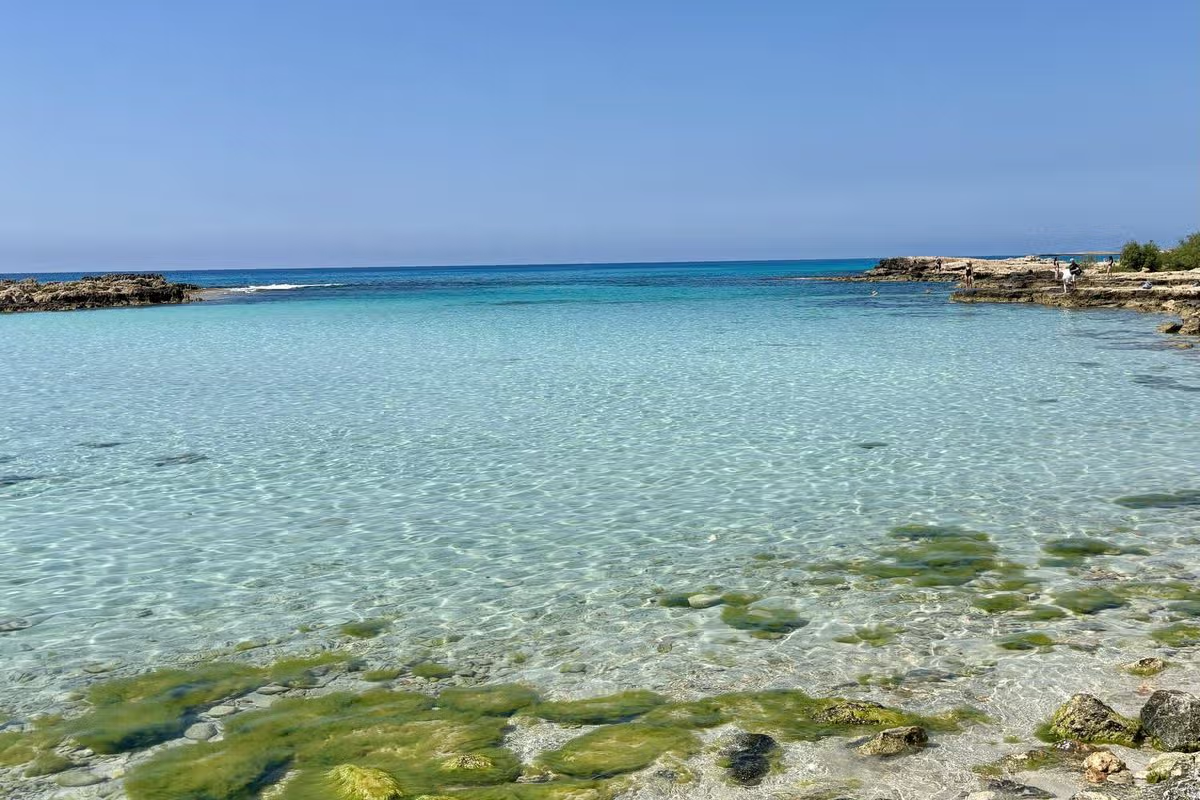
This beach is known for it’s gorgeous clear waters(Image: Getty)
The UK may be getting chillier, but across Europe the sun is still blazing and a beach getaway remains firmly on the cards. If you’re not quite ready to bid farewell to sun and sand, there’s one destination just four and a half hours from the UK where temperatures are still hitting a pleasant 23C.
Better still, it won’t cost you a fortune. That destination is Cyprus, the Mediterranean island paradise. According to research by airport transfer firm hoppa, this gem ranks as the ultimate choice for an autumn escape in the sunshine.
The warmest location is Nissi Beach, nestled on the south-eastern coastline in the resort town of Ayia Napa.
While it’s renowned as a lively party hotspot, there’s far more to discover beyond the buzzing nightlife.
The beach is celebrated for its dazzling turquoise waters and its small offshore island, which visitors can reach by simply wading through the shallow sea.
That island is Nissi itself, the namesake of the beach, and those who venture to its summit are rewarded with spectacular sweeping views across the entire bay.
The beach proudly holds Blue Flag status, with ample sun loungers and parasols available to rent, alongside opportunities to hire jet skis or pedalos for those seeking a dose of adventure.
One holidaymaker took to TripAdvisor to share their thoughts, writing: “Probably one of the most popular beaches in Cyprus-and for good reason.
“Crystal-clear water, beautiful soft sand, and that creamy, turquoise texture that makes you feel like you’re in paradise. Add the amazing atmosphere and beautiful people, and you have the perfect beach experience.”
A second visitor added: “Nissi Beach easily has the most amazing water I have ever swum in!
“Despite being extremely busy, its natural beauty makes it an absolute must-visit.”
While the beach can get extremely crowded during peak summer, visiting during the shoulder season means far fewer tourists to contend with, allowing you to soak up the stunning surroundings in relative peace.
What’s more, according to hoppa, the average nightly rate for a three-star hotel in Ayia Napa comes in at just £79, making it a brilliantly affordable choice for a late burst of October sunshine.
This beautiful seaside town has gorgeous coastal walks and plenty to see
09:57, 13 Oct 2026Updated 09:59, 13 Oct 2026
This article contains affiliate links, we will receive a commission on any sales we generate from it. Learn more
This gorgeous spot is perfect for autumn(Image: Tom Meaker via Getty Images)
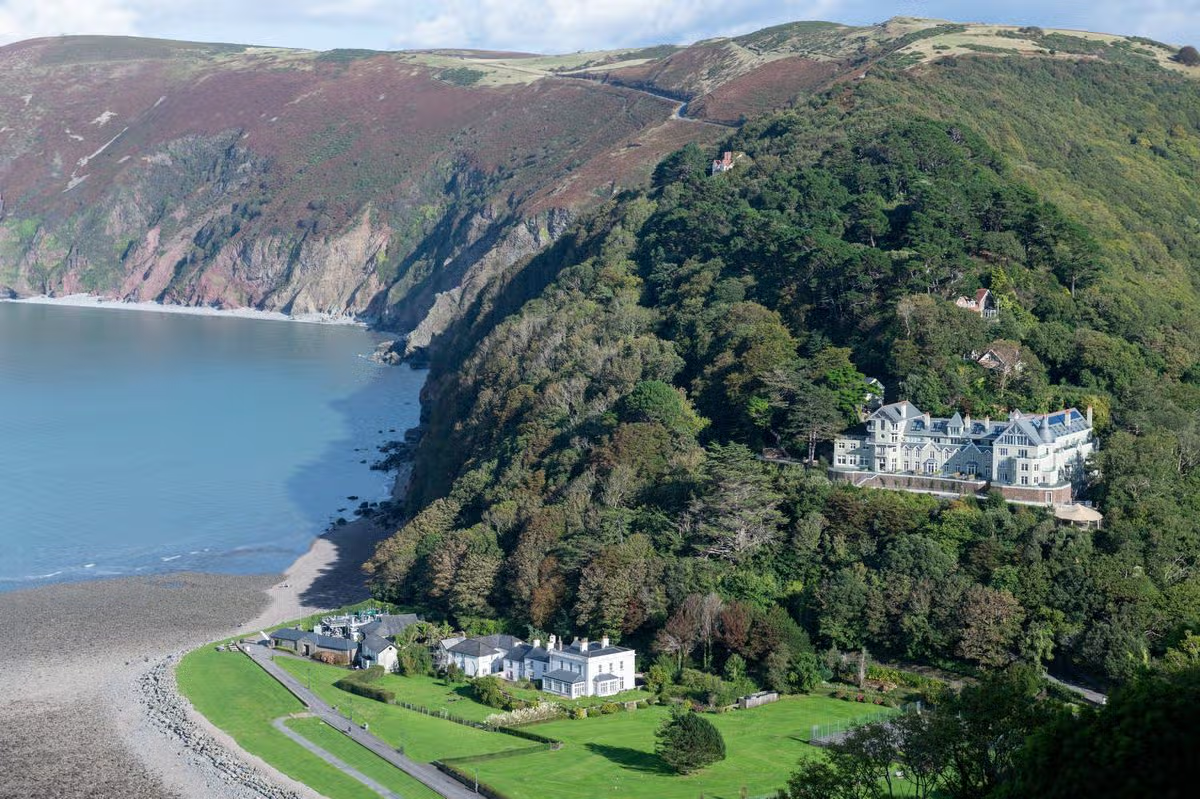
As the summer throngs start to thin out, late August and September offer an ideal opportunity to discover Devon’s coastline, with less crowded beaches, gentler temperatures and beautiful walks just waiting to be enjoyed. A delightful seaside town nestled between steep hills and the Bristol Channel has been crowned Devon’s finest seaside destination by Which?, placing it squarely on the map for an idyllic West Country escape.
Lynmouth is the sort of spot that appears almost impossibly picturesque, with its lovely riverside location, striking coastline and classic village appeal. Perched on the fringes of Exmoor National Park, it’s encircled by breathtaking scenery and is frequently dubbed “Little Switzerland”.
The region is a paradise for ramblers, with the South West Coast Path and Tarka Trail winding through the village and providing numerous routes to discover. Tourists can trace the River Lyn upstream to Watersmeet, a striking wooded gorge looked after by the National Trust, complete with riverside paths and a tea garden.
Among Lynmouth’s standout features is the renowned Lynton and Lynmouth Cliff Railway, which has linked the twin villages since 1890. The 260-metre railway holds the title of the world’s highest and steepest water-powered railway, with travellers enjoying panoramic coastal vistas as they journey between the two settlements.
Those looking to transform their visit into a romantic getaway, River View is a second-floor flat positioned directly alongside the river in Lynmouth. The property boasts a furnished balcony with views over the bay, and on a clear day, guests might even glimpse the Welsh coastline in the distance.
Within, the flat provides a cosy open-plan lounge and kitchen space kitted out with everything required for an uncomplicated self-catering break. A king-size master bedroom with an en-suite shower room delivers a peaceful retreat in which to relax after a day discovering the coastline.
The balcony proves a particularly beautiful location for a morning cuppa or an evening tipple, with vistas across the river and the neighbouring village. There’s also no need to fret about preparing every meal, with numerous cafes and eateries nearby for breakfast, lunch or dinner.
For a different setting, Ilfracombe sits less than 20 miles away, celebrated for its selection of restaurants and historic harbour. Guests can also catch sight of Damien Hirst’s eye-catching ‘Verity’ statue positioned at the harbour entrance before returning to the tranquil environment of Lynmouth.
For even more striking scenery, holidaymakers can make the 1.5-mile trip to the Valley of Rocks, where soaring cliffs and distinctive rock formations form one of Exmoor’s most spectacular landscapes. The area is also home to intrepid goats and some of the highest sea cliffs in Britain, making it a memorable spot for a coastal walk.
If a large group gathering is in the pipeline, the area is additionally home to Lynhurst, a spacious, impressive property just a brief stroll from the historic village of Lynton. Nestled within stunning gardens and natural woodland, it boasts a games room with a slate pool table and dart board, alongside an outdoor table tennis table for abundant entertainment.
Visitors who have previously enjoyed a stay at River View have posted glowing reviews online. One guest said: “Lovely apartment. Perfectly situated with everything we needed. A real ‘home from home’. We love Lynmouth and will be back.”
Another added: “A wonderful location for walkers as several spectacular river and coastal walks from the door. Great for visitors with dogs, close to the promenade for walks and meeting lots of other dogs.”
A more in-depth review explained: “A small but well-equipped and comfortable flat with beautiful views over the river to the sea. Good location to explore the area. Luckily found a temporary parking spot initially on Riverside Road in order to unpack, as the flat entrance is on a pedestrianised street.
“Parking permit was £25 for the week at the nearby Upper Lyndale car park. Tesco delivered groceries without difficulty. Walks locally and some National Trust properties made it a very enjoyable week in a lovely location.”
One guest pointed out, however, that “the two flights of steep stairs would need to be taken into consideration by anybody perhaps not a 100% fit”, while another revelled in the scenery, commenting: “We had the door open all the time and could listen to the water and the wildlife, which we really enjoyed.”
ONE coastal road in Wales which is nicknamed Millionaire’s Row has been compared to the Hamptons in New York.
The houses on the rocky headland have epic sea views – but it’s also right next to one of the cheapest seaside towns where you can book a room for less than £20.
Marine Drive on Great Orme is nicknamed ‘Millionaire’s Row’ and the ‘Hamptons of Wales’Credit: AlamyThe road is minutes away from Llandudno which is one of the country’s cheapest coastal spotsCredit: Alamy
Marine Drive on Great Orme, which is a headland on the north coast of Wales, and it’s considered one of the country’s most expensive streets.
Currently, a home called Plas Craig is on sale for £2.5million – perched high up on the cliff the five-bedroom house has incredible views of the coastline.
Sign up for the Travel newsletter
Thank you!
The Hamptons is a celebrity hotspot where stars like Beyonce and Jay-Z, and Sarah Jessica Parker and Matthew Broderick own homes.
While Great Orme isn’t home to any celebrities (that we know of) it was recently visited by Sigourney Weaver and Miles Teller to film a new movie called The Gorge.
A DREAMY cottage in the highlands is a perfect destination to escape for a retreat.
It can also be a base for an action-packed family adventure break – with dolphin spotting among the highlights. Janice Hopper reveals all…
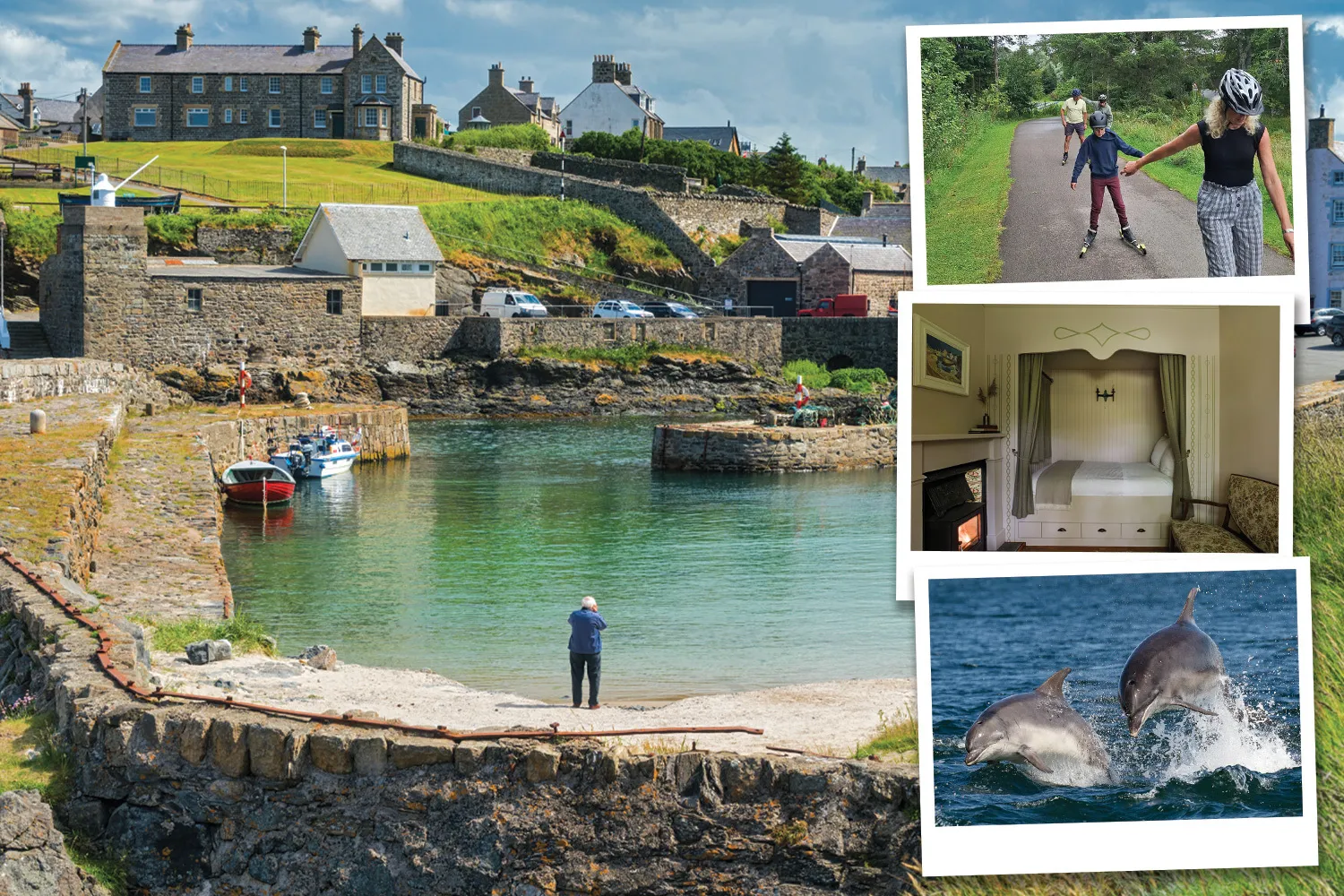
Janice and her family seen roller-skiingCredit: Supplied by Janice HopperPortsoy Harbour is a historic location famous for being rich in salmonCredit: Getty Images
With our feet strapped into boots atop skis with wheels, coach Logan advises us to glide just like him.
Our wobbly attempts at roller-skiing aren’t great, so we soon move on to cross-country skiing on the dry-slope matting instead, where my husband Eamon and our sons Samuel, 12, and Joseph, 11, and I do actually glide.
Sign up for the Travel newsletter
Thank you!
We’ve booked a family session at Huntly Nordic And Outdoor Centre, which ends with us all flinging ourselves, whooping and screaming, down a slope on rubber rings.
It’s a fun way to experience the Scottish hills. Three-hour activity sessions cost £18.15 per adult, £12.15 per child (Livelifeaberdeenshire.org.uk).
After all the exhilaration, it’s time to check into our two-bedroom cottage on the elegant Mayen Estate.
With a classy colour palette, the cosiest stove and a beautiful ”box bed” in the master, plus a fire pit and hot tub in the garden, Butlers Cottage is a gorgeous hideaway.
We task the boys with rolling out dough and sprinkling on the cheese and salami from our pre-ordered pizza kit, from £21, before popping it in the outdoor pizza oven as the sun starts to wane.
The next morning, we wake to the sound of Highland cows nearby, before taking a peaceful riverside stroll along the Deveron and exploring Mayen’s stunning two-acre Walled Gardens, open exclusively to holiday guests for £20 per cottage.
Our two-bed cottage is located on the elegant Mayen Estate, with it’s stunning two-acre Walled GardenCredit: Garden at Mayen Estate – Supplied by PRTry to spot the bay’s resident 200 bottlenose dolphins and the chance to listen to recordings of their callsCredit: Getty Images
It’s August, so everything is in full bloom as we wander through walkways of lavender, white lilies and glorious glasshouses.
Huntly is also home to a cinema, castle, shortbread factory and swimming pool, but we head to scenic Greenmyres Lochan for Canadian canoeing and standup paddleboarding, £28 per person for an hour and a half.
After peeling off our wetsuits, we reward ourselves with a Sunday roast at The Bank Cafe & Restaurant.
Here, choose your carvery meat and three sides, such as sticky red cabbage and macaroni cheese, for just £15, or seven sides for £21 (Thebankrestauranthuntly.com).
Buttery orange biscuits from Dean’s Shortbread, £2.49 (Deans.co.uk) and Irn Bru ice cream, £3 a scoop, from long-standing Rizza’s wrap up our day nicely (Rizzas.co.uk).
While Butlers Cottage is set amid rolling hills, the golden sands of Banff Bay are only half an hour away.
After wandering along the shoreline, we warm up with hot chocolate, £4.50, and a dainty Victoria sponge tower, £3.40, at Annie’s Cakery (Facebook.com/anniescakery7).
Butlers Cottage is a gorgeous hideaway and a perfect hub for a lazy or action-packed retreatCredit: Clare LouA beautiful ‘box bed’ in the cottage’s master bedroomCredit: Supplied by PR
Housed in the town’s former railway station, AKA The Platform, there’s a lovely homeware and fashion shop, too (Theplatform-macduff.co.uk).
Also close by is Portsoy, famous for its salmon. After learning more about the local catch at the free Salmon Bothy museum (Salmonbothy.org), we buy flavoursome smoked fillets, £4 each, from Messrs J Smith at the historic harbour to cook later, before hitting Spey Bay’s free Scottish Dolphin Centre, half an hour away (Dolphincentre.whales.org).
There are binoculars for trying to spot the bay’s resident 200 bottlenose dolphins and the chance to listen to recordings of their calls.
The local dolphins are considered the world’s “chubbiest”, thanks to their extra layers for keeping warm in the chilly waters.
We’re alright though, we have a hot tub to return to. . .
The stove is a feature of the cosy cottage – adding character to the holiday letCredit: Supplied by PR
The best big city in the US has been crowned for the tenth consecutive year – and it’s not where you might think
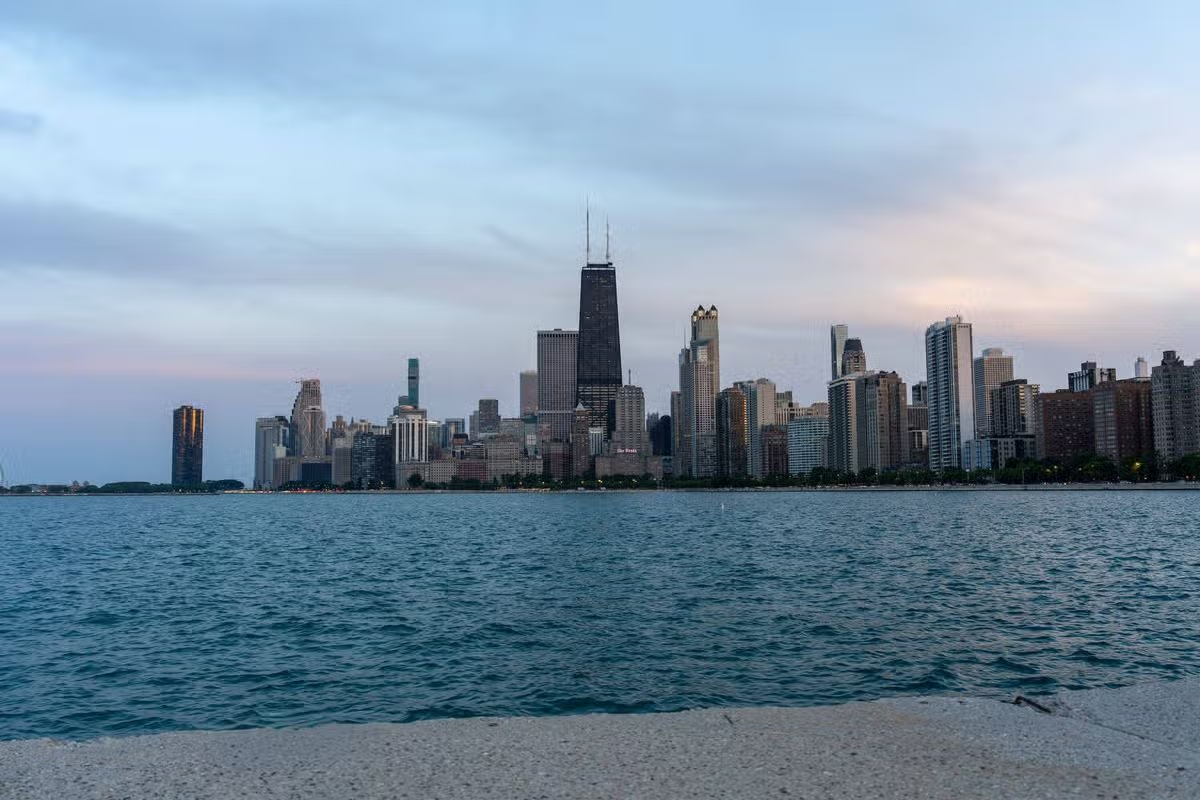
This city is the best big city to visit in the US(Image: Getty)
The finest major city in the US has been crowned for the tenth year in a row – and it might surprise you. When considering American cities, New York typically comes to mind first.
However, according to a Condé Nast Traveler’s survey of over 800,000 respondents, Chicago takes the top spot. It’s the first and only city to claim the accolade for 10 consecutive years, initially securing the honour in 2017.
Since then, the city has experienced a decade of evolution that has seen it triumph time and time again.
Kristen Reynolds, President and CEO of Choose Chicago said: “This historic recognition belongs to the entire city of Chicago.
“From the hospitality professionals who welcome guests each day to the chefs, artists, musicians, entrepreneurs, and cultural leaders who create remarkable, only-in-Chicago experiences, it takes an entire city to sustain this standard for a decade.
“We do not stay at the top by standing still. Chicago is always evolving, always creating, and always giving visitors new reasons to come back”.
According to Condé Nast Traveler it’s “no wonder” the city has triumphed once more.
The article reads: “A world-class destination known for its impressive architecture, first-rate museums, brilliant chefs, and massive brewing scene, it’ll take several repeat visits to get through your list of must-dos.”
Mayor Brandon Johnson added: “This historic recognition reflects the creativity of our residents, the strength of our neighborhoods, and the excellence of the local institutions and businesses that welcome visitors from around the world.
For 10 consecutive years, travellers have recognised what Chicagoans already know: there is no place quite like our city.
“This remarkable milestone is a testament to everything Chicago has to offer and one our entire city can celebrate with pride.”
While Chicago claimed the top spot, New York failed to even crack the top three.
The Big Apple landed in fourth place, trailing behind Boston in third and San Francisco in second.
On the set of CBS’ legacy soap opera “The Bold and the Beautiful” at the Sunset Las Palmas Studios in Hollywood, two actors were caught in a fiery exchange.
“Do you want to know where Jack was last night?” actor Skyla Lynne asked with a sly grin. “He was with me.”
From behind a monitor displaying a vertically oriented feed, the director interjected: “Could you pause a bit more in between those lines? We might want to do an episode break there.”
The scene wasn’t for an episode of the famous soap opera. It was part of the 40-episode second season of “Hollywood Starlet,” a new microdrama series from “The Bold and the Beautiful” head writer Bradley Bell and his son Oliver.
“I’ve been doing soap operas my whole life, and it felt like there’s been a buzz about microdramas, and it really felt like a natural extension to the stories that we do,” Bradley Bell said. “[On soap operas] we build two cliffhangers usually on Fridays to keep the viewers over the weekend. Here, you do it every couple of minutes. It’s like speeding up the dance routine, but it’s really right in our lane of soap operas.”
Microdramas are the scrollable, cliffhanger-heavy stories built for phone screens. They are giving audiences a new way into the kind of stories that once belonged to traditional soap operas and telenovelas. The so-called vertical format originated in China a few years ago and has drawn a growing global audience thanks to its short, addictive nature. Hollywood names, including Issa Rae and Kevin Hart, are joining in.
Now, Bell is moving into the space. The 16-time Emmy winner and his son Oliver recently launched a production company called Red Flair Entertainment to capitalize on the format.
“Hollywood Starlet,” their first production, premiered Sept. 3 on aTwist, a new vertical series app founded by industry veterans Jana Winograde, former president of Showtime; Susan Rovner, former president of Warner Bros. Television; and Lloyd Braun, former chairman of WME.
Oliver Bell, founder of Red Flair Entertainment, is producing the micro series, “Hollywood Starlet,” being filmed at Sunset Las Palmas Studios in Los Angeles.
(Genaro Molina/Los Angeles Times)
Bradley Bell says it was Oliver who hatched the idea.
“I saw this unique format and was fascinated by it,” Oliver Bell said. “I noticed some areas that we could quite easily improve on.”
Microdramas first came across Oliver’s social media feed around a year and a half ago when he was still in college. The 24-year-old said he quickly “fell down a rabbit hole” and became so obsessed with the format that he wrote his dissertation at the University of St Andrews in Scotland on soap operas and microdramas.
After he graduated in December, he and his father founded Red Flair Entertainment and started to develop “Hollywood Starlet,” with Oliver serving as an executive producer and his father as a producer.
The series — which costs about $175,000 to $220,000 a season to produce — is being financed by aTwist. Red Flair has a backend deal, allowing it to share in subscription revenue the show generates for the platform.
After filming two seasons of “Hollywood Starlet,” Red Flair plans several more vertical series across many different genres, like horror and romance, the Bells said.
Oliver grew up visiting sets and eavesdropping on writing meetings from under his father’s desk. The family’s storytelling line runs back to his grandparents, William Bell and Lee Phillip Bell, who created “The Young and the Restless” and “The Bold and the Beautiful.” Oliver says he’s carrying on that legacy in a very Gen Z way.
“In a way, microdramas are just the natural evolution of the soap opera,” Oliver Bell said. “You could kind of trace the legacy through that and the modernization of serialized TV.”
His father, who was working on episode 9,911 of “The Bold and the Beautiful” while speaking with The Times, said the short-form stories can reach younger viewers who might be daunted by the soap’s decades of history.
“It’s like cracking open a book, and it’s hard for people to get into it to learn the history,” he said. “So having smaller, bite-sized pieces is appealing to us.”
“The Bold and the Beautiful” has aired continuously for 39 years, but it’s now one of American TV’s last soap operas. Until the 1980s, 10 to 12 soaps typically aired at once, said Elana Levine, a media professor at the University of Wisconsin-Milwaukee who studies the genre. Today, five remain: four on broadcast TV and one, “Days of Our Lives,” is on streaming only.
“It makes sense to take this storytelling form that has been super popular and enduring in the U.S. and find a way to translate that into the mobile devices that we carry around us all of the time,” Levine said.
While soap operas historically targeted a mostly female audience, microdramas reach a much broader audience, said Michael Berry, director of UCLA’s Center for Chinese Studies, who has studied the rise of vertical series.
“It gives us essentially the main beats that we would get from a soap opera format, but it’s happening in a much more compact and addictive way,” he added.
Cameramen prepare for a scene on the set of the micro series, “Hollywood Starlet,” being filmed at Sunset Las Palmas Studios in Los Angeles.
(Genaro Molina/Los Angeles Times)
Lou Trabbie, the soap’s production designer, had never heard of a microdrama before working on “Hollywood Starlet.”
“It’s all going in a different direction. You just adapt and move forward, and that’s what we see here,” Trabbie, who’s worked in the industry for 38 years, explained. “It’s really great to see how these are done with smaller crews. I feel like this is where the business is going.”
“Hollywood Starlet” shoots on the same Sunset Las Palmas soundstage as “The Bold and the Beautiful,” filming during the soap’s monthly dark week.
The first season, 45 short episodes, was shot in six days at the start of summer with a non-union cast and crew of 45. Less than a week after its release, much of the same crew was back to start working on season two.
Oliver Bell said the series used non-union crew due to “budgetary restrictions.”
Excluding China, vertical video is expected to generate $150 billion globally in revenue this year, according to consulting firm Owl & Co. Most of that comes from TikTok, YouTube Shorts and Instagram Reels.
Sunset Las Palmas Studios, where “La La Land” and the first two seasons of “I Love Lucy” were filmed, dedicated an entire sound stage in June to standing sets for vertical series. The sets include a courtroom, a bar/restaurant, an apartment, an office and a hospital.
Paxton Fuller, left, executive producer of “Hollywood Starlet,” walks with Sean Griffin, Vice President of Sales and Business Development, for Las Palmas Studios, through a courtroom set on the stage meant specifically for microdramas.
(Genaro Molina/Los Angeles Times)
Still, the Bells don’t think microdramas will replace soap operas. The two formats, they argue, can “coexist.”
“Coming into someone’s living room or bedroom, soap operas were almost like an extension of their family that they can count on for years and decades with the same actors. The same families that have watched since day one,” Bradley Bell said. “It’s a different type of viewer for microdramas.”
Oliver Bell added: “We’re trying to grab the scroller’s attention, not necessarily ‘The Bold and the Beautiful’ viewer … Microdramas are unavoidable through social media. [It’s] conditioning our brains and how we process media.”
The spot is particularly loved for paddling thanks to its shallow waters and that it has lifeguards in the summer season.
There are parking and toilets close to the beach.
14. Rhossili Bay, Gower Peninsula, Wales
Rhossili Bay in Wales, followed closely behindCredit: Getty
Over in Wales, scoring a slightly higher 74.73, the three-mile- long Rhossili Bay beach often sits on Wales’ top 10 beaches list.
It has even previously been described as the ‘supermodel of British Beaches’ by The Independent.
The beach is ideal for having a picnic or heading into the water for a surf.
You can also visit Worms Head, where you may see seals basking in the water below.
13. Luskentyre Beach, Isle of Harris, Outer Hebrides
Luskentyre Beach scored 75.56 overallCredit: Andrew Barr
Scoring 75.56, Luskentyre Beach on the Isle of Harris in Scotland came in at 13th place.
Luskentyre Beach features rolling dunes, turquoise waters and miles of white shell sand.
What makes the spot even more special is that it is often visited by free-roaming white Highland ponies.
There is a small car park not too far from the beach.
12. Bournemouth Beach, Dorset, England
Bournemouth Beach is loved by families and has lifeguards based at the beach between April and SeptemberCredit: Getty
Bournemouth Beach managed to score slightly higher, securing 75.83 out of 100.
The beach is a great family-friendly spot as it is known as one of the safest beaches in the UK, with lifeguards based at the beach between April and September.
Between April and the end of October there is also a land train that runs along the promenade.
For a small charge, you can hop on it between Bournemouth Pier and either Boscombe Pier or Branksome Chine.
11. Barafundle Bay, Pembrokeshire, Wales
According to Visit Pembrokeshire, Barafundle Bay is often compared to a Caribbean beachCredit: Getty
This golden beach is backed by dunes covered with long grass and pine trees.
According to Visit Pembrokeshire, it is even often compared to a Caribbean beach.
It is worth noting though that the beach has no facilities and is a half- mile walk over cliffs from the closest car park.
10. Woolacombe Beach, North Devon, England
Woolacombe Beach was the only beach in Devon to feature on the listCredit: Getty
Taking 10th place with a score of 78.48 is Woolacombe Beach in North Devon.
Often ranked among the best beaches in the UK, Woolacombe Beach stretches for three miles and is known for its golden sand and great surfing conditions.
It is great for a family day out as well, with large car parks close to the beach, public toilets, shops and restaurants.
Travel Reporter Cyann Fielding, who has visited the beach several times, said: “Woolacombe Beach is so big you will always find a spot in the sun to relax but make sure to go for a swim too as the water has shallow entry making it ideal for paddling with the little ones.”
9. Durdle Door Beach, Dorset, England
The famous Durdle Door Beach came in ninth placeCredit: Getty
Scoring 80, Durdle Door Beach – home to the famous landmark – came in at ninth.
The beach sits on the Jurassic Coast which is made of natural limestone.
Along the shingle beach you will find limestone caves too, though you cannot enter them.
It is also worth noting that there is a steep 15-to-20-minute walk from the car park to the beach including more than 140 steps.
8. Porthmeor Beach, St Ives, Cornwall, England
Porthmeor beach is ideal for surfing as well as swimmingCredit: Getty
The pale yellow, soft- sand beach is backed by the picturesque buildings.
The beach is ideal for surfing as well as a swim when the wind is calmer – and there are several rock pools ideal for the little ones wanting to investigate.
Porthcurno Beach came in seventh place with a score of 83.11Credit: Getty
Another Cornish beach – Porthcurno Beach – came in seventh place with a score of 83.11.
Boasting soft white sand, the beach is ideal for families with little kids as there is a stream down one side of the beach ideal for splashing and paddling in.
Thanks to a towering headland around the beach, it is quite sheltered from the wind too.
From the beach, you can also head off on a walk to other coves or even to Treryn Dinas – a headland home to a fort dating back to the Iron Age.
6. Newborough Beach, Anglesey, Wales
Newborough Beach stretches for 3.5 milesCredit: Alamy
Just missing out on the top five with a score of 83.33 is Newborough Beach in Wales.
This golden beach stretches for 3.5 miles and is backed by Newborough Forest.
The beach is also known for its connections to Llanddwyn Island – a tidal island with a striking lighthouse.
You can walk to the island at low tide and see views across the sea.
5. West Wittering Beach, West Sussex, England
West Wittering in West Sussex is a much-loved spot for windsurfing, kitesurfing and stand-up paddleboardingCredit: Getty
The family-friendly beach stretches between Penally and Castle Beach with views of Caldey and St Margaret’s Islands.
The beach is also popular with gentler watersports, thanks to calm waters.
There is also a car park and a cafe at the beach.
3. Perranporth Beach, St Agnes, Cornwall, England
Perranporth Beach in Cornwall secured third placeCredit: Getty
Scoring 93.33, Perranporth Beach in Cornwall came in third place.
This Cornish gem is loved for both swimming and surfing, as well as snorkelling.
And it is accessible, making it great for visiting with little ones.
When the tide heads out, you can walk to Ligger Point which is around two miles.
2.Camusdarach Beach, West Highlands, Scotland
A Scottish spot with clear waters came in second placeCredit: Getty
Coming in second place and just missing out on the top spot is Camusdarach beach in Scotland with a score of 95.13.
Camusdarach Beach boasts white shell sand and also has crystal- clear turquoise waters.
From the beach you are also able to see the islands of Rum, Eigg, Muck, and Skye.
From the car park, it is only a three-to-five minute walk to the beach.
1. Llanddwyn Beach, Anglesey, Wales
Llanddwyn Beach, located in Anglesey, North wales came out on topCredit: Getty
The 3.5-mile beach that then came out on top as the best in the country is Llanddwyn Beach in Wales, scoring 96.67.
With views over Eryri National Park, Llanddwyn Beach has large sand dunes and soft sand.
At the western end of the beach is a tidal peninsula with Twr Mawr lighthouse, old pilots’ cottages and the ruins of a 16th- century church.
At low tide you can cross to the island and explore the buildings.
Though if you want to spend your time on the beach, there is still plenty to see and do with the spot being a prime location for windsurfing and kitesurfing.
The cancellations were due to airport fees, Ryanair said, as well as environment taxes in Europe.
Sign up for the Travel newsletter
Thank you!
The removal of Ryanair flights – which also included a number of routes from the UK – has left just British Airways operating flights, along with European airlines TAP and Azores Airlines.
And new figures have found that the loss of Ryanair passengers has seen a drop in tourists of 100,000 already.
According to the Regional Statistics Service of the Azores (SREA), passengers arriving at the island airport dropped by 103,766 between April and August.
And there are fears this could increase even more, with projections of up to “391,000 overnight stays” lost a year.
They are often called Europe’s HawaiiCredit: Getty
Brits wanting to fly to the island from the UK can now only fly with British Airways, which runes flights from London Heathrow between April and October.
Otherwise alternative routes are to fly to Portugal with a connecting flight from Lisbon or Faro.
One shop worker called it ‘the friendliest town in England’
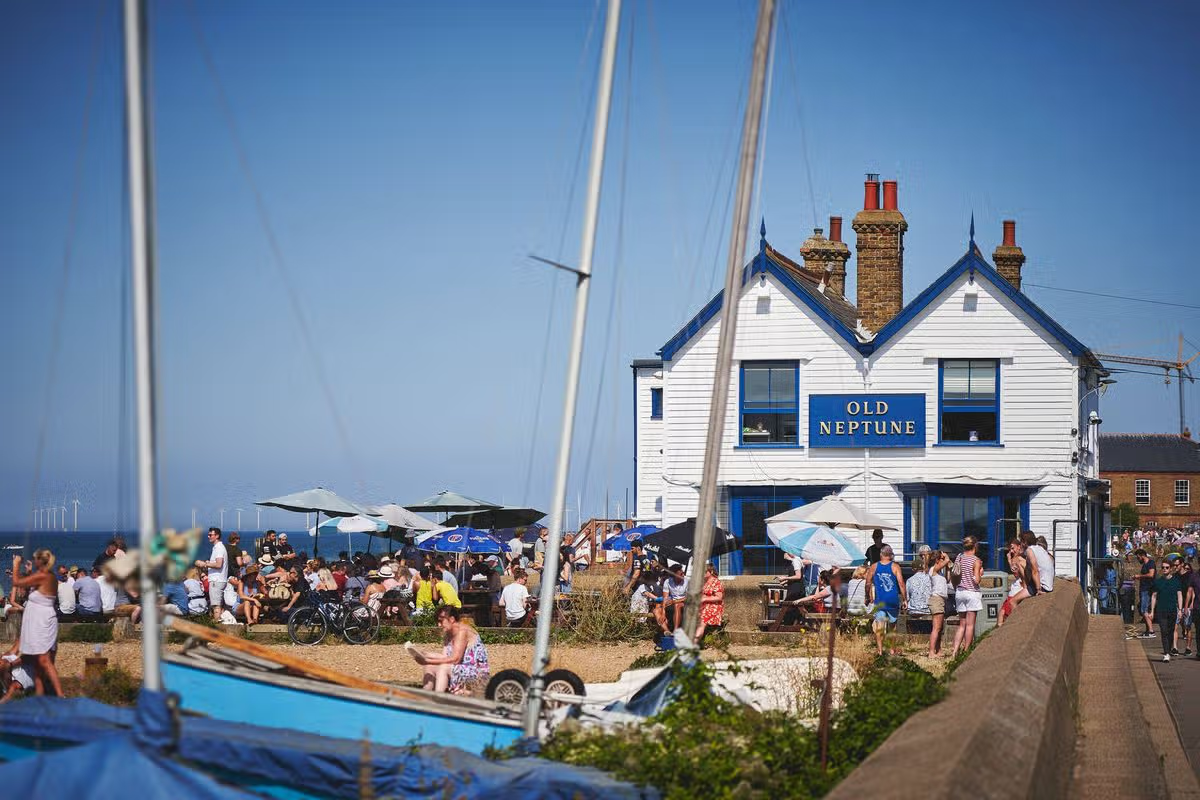
The town’s working harbour remains one of the main attractions(Image: Paolo Paradiso via Getty Images)
One charming UK seaside town is famous for its oysters, bustling harbour and colourful collection of independent shops. Oysters have long been at the heart of Whitstable’s identity, with the town’s seafood heritage dating back centuries.
Today, its working harbour remains one of the main attractions, with fishing boats, seafood stalls, a market and waterside places to eat. But there’s much more to Whitstable than its famous seafood.
The town is a haven for independent shopping, with Harbour Street, the High Street and the surrounding streets lined with quirky boutiques, vintage stores, galleries, delis, bookshops and homeware shops.
Only a handful of national chains remain.
Just over an hour from London by train, the town has become a popular weekend retreat for city dwellers, reports the Express.
Visitors can spend the day browsing independent businesses before grabbing some fresh seafood and taking a stroll along the coast.
Wander down Harbour Street and the High Street, and you’ll encounter shopfronts brimming with character. Here, you can uncover a variety of distinctive treasures like the stunning Pearl Shop selling contemporary pearl jewellery and marine object d’arts, to George’s Whitstable, a fixture of the high street for 50 years and a true Aladdin’s Cave of treasures
You’ll also find award-winning British artisan cheeses at The Cheese Box, unique gifts at Buttercup Independent Toy Shop, a beautiful selection of books at Harbour Books, Whitstable’s beloved independent bookstore, and sweet treats at HoneyKanes Bright & Beautiful Shop, all without stepping inside a single chain store. That reputation has only strengthened in recent years.
Whitstable flourishes on independence, creativity and community spirit.
This sentiment is echoed by Stewart McArthur, from Brisbane, Australia, who is on a gap year and working at The Wit! of Whitstable, a vibrant Harbour Street gift shop that recently moved up from a small harbour stall to a prime High Street location.
He said: “You can wander up and down the street and see anything you need – there are so many different style stores that you don’t really need Amazon here.
“This is quite a busy little town. It just seems to get a lot of people coming through, which helps the independent businesses.”
Tourists, he added, are absolutely crucial. “They really support a lot of the local businesses when they come through. It gets busy, but I wouldn’t say overwhelmed,” he said.
For Stewart, what sets Whitstable apart is its sense of community. “It’s the friendliest town in England, it’s just a nice, chill, relaxed place. It’s nice to have a conversation with anyone who comes by.”
That sense of community was perhaps best illustrated by the tale of Revival Food & Mood, a social enterprise café and wellbeing hub that lost its premises during the 2021 lockdown.
Rather than disappearing, it was rescued by a grassroots campaign championed by residents with backing ranging from local groups to household names like Suggs from Madness and celebrated potter Keith Brymer Jones.
Thanks to the town’s resolve, Revival ultimately secured funding through the government’s Community Ownership Fund and reopened in a restored heritage building on the High Street. It now operates not only as a café but also as a venue for music, social gatherings, and mental health support.
Vanessa Brolly, the front-of-house manager at Revival Food & Mood told the Express: “There was a lot of support from the community about making sure that they found a new home.”
The wellbeing hub café is supported by East Kent and Bexley Mind, and has been in Whitstable for roughly eight years, though only two at its current site, and provides a variety of dishes, drinks, and social events such as “Chatty Tuesday” and a regular “Sound Social” in partnership with a neighbouring record shop.
Ms Brolly said: “There’s definitely a very close-knit community feel here. For example, we’ve got the social sounds event on tonight and that’s being run by the record shop, which is about two doors down and they’ll come in and play the records. Everyone’s always looking to collaborate, which is nice.”
Step inside and you’re welcomed by quirky décor designed to brighten the spirits, featuring an indoor garden complete with a water fountain, snug booth seating, and a 1970s-inspired relaxation space kitted out with sofas, vinyl decks, lamps, and a mirror ball.
Ms Brolly noted that national chains such as Costa and Prezzo have shut their doors, yet believes this speaks to the strength of independent businesses rather than any ill-feeling towards big brands.
“If I were visiting, I wouldn’t go to Costa,” she said, emphasising that visitors come to Whitstable in search of unique, independent spots.”
She went on to say that funding initiatives, such as Canterbury Council’s levelling-up programme, could also help keep Whitstable’s flourishing independent scene alive, but ultimately, what makes the town truly special to her is straightforward. “Everyone supports each other.”
For her, the best thing about working at Revival is “being involved in the community and listening to good music.”
Mrs Sally Miller, owner of Anchors Aweigh Vintage, has run her seaside vintage shop for 13 years.
Having lived in neighbouring Tankerton for over 17 years, she’s witnessed first-hand how the high street has changed over time. Step inside and it’s impossible not to be captivated by its treasure trove of curiosities — a shop overflowing with history, character and one-of-a-kind finds that each seem to have a story of their own.
Mrs Miller told the Express: “You get more versatility now than you did. A lot of the locals moan about the idea that it’s all down to people from London. Actually, we probably have more people from Sheffield than from London, but that doesn’t occur to them. The world is a transient place now, isn’t it?”
“Some of the locals are like, ‘all these people!’ But you live in a nice place – people aren’t going to avoid it. When you talk about DFLs [Down From Londoners], it doesn’t really matter. It’s a transient place, a tourist destination. And because we do live in a nice place, people come. The more the merrier!”
Yet for Mrs Miller, the backbone of Whitstable’s businesses remains its local community: “We get a lot of repeat customers, a lot of local shoppers as well. They like popping in for buttons and little bits.”
What keeps independent shops thriving and sets Whitstable apart, she believes, is a winning combination of attentive service and a warm, welcoming atmosphere that fosters genuine conversation and connection with every customer who walks through the door.
“People like to talk, they like to stop. We give them the time of day – I’m sure we probably keep people in here longer than they should be,” she laughed.
“It’s the service. People still appreciate the service.”
That sense of camaraderie runs deep — if she doesn’t have something in stock, Ms Miller is more than happy to point customers in the direction of a fellow trader, as they all get along and know one another well.
She added: “We have a strong shop local culture. We’re really lucky. People here talk to you.”
Pearl Shop owner, jeweller and pearl specialist Bibi Southwell also revealed how the town’s heritage and community spirit shaped her business: “We first opened as a pop-up in August 2024, and the response was incredible – both locals and visitors really embraced us. That encouraged us to open permanently just a couple of months later in October. Whitstable’s longstanding history with oysters made The Pearl Shop feel like a natural addition to the town. With its coastal charm, creativity, and independent spirit, it was the perfect fit.
“My favourite thing is being able to be creative every day and sharing that with the community. There’s such warmth here, and we’re surrounded by other independent shopkeepers who all support each other.
“Whitstable draws people from all over thanks to its seaside character, oysters, and thriving independent scene. We see loyal locals who come back regularly as well as visitors who discover us while exploring the high street and both are equally important to us.”
She added: “Whitstable has an authenticity that you don’t find everywhere. The town celebrates creativity, uniqueness, and quality over mass-produced sameness. Visitors come here expecting to find something they won’t see on every other high street, and that gives independents like us the space to really thrive.”
On the subject of the recent closures of chains such as Costa, Ms Southwell said it underlines how people in Whitstable actively seek out independent businesses. Echoing views shared by others including Ms Brolly, she explains that visitors arrive wanting to soak up the distinctive character of the town, rather than the familiar chains they can find anywhere else.
“It shows that people in Whitstable actively choose independents. When you visit, you want to experience the character of the town, not the same coffee chain you’d find anywhere else. I think Whitstable is proving that high streets can survive, and even flourish, when they’re built around small, passionate businesses instead of big brands.”
While many traders are celebrating Whitstable’s flourishing independent scene, not everybody is persuaded it can last. One shop owner, speaking on condition of anonymity, offered a sobering reminder of the very real pressures bearing down on the town’s small businesses.
“They’ve let the harbour be rented out to everything you can imagine that we don’t need in a small seaside town, instead of seafood, for people to make money instead of seafood, which is what we actually need there,” they said. “I don’t want another glossy piece by someone from London saying this is the ‘new Camden’. That’s five years behind the times and it doesn’t help us. Until councils stop raiding towns that were built by small family businesses, we’re all going to die. The local councils couldn’t organise a p***-up in a brewery.”
The shopkeeper’s exasperation is plain to see: “Tourists come here expecting seafood, and instead they find crochet cushions and Thai curry. That’s not what this harbour was built for.”
They went on to say that the town’s weekend atmosphere has been put under strain: “Our weekends are dominated by traffic jams and alcohol. Families leave early, children can’t run around, and the council won’t close the smallest, most dangerous roads for safety. This place risks turning into a tourist attraction, rather than a real working town with shops and families.”
Despite this, the shopkeeper conceded that Whitstable retains its undeniable appeal. “The town will always be amazing – but there’s something not quite right about what goes on behind the scenes when small coastal towns are made popular.”
A spokesperson from Canterbury City Council told the Express: “We’re very pleased to hear such positivity about Whitstable, which only goes to reinforce our view that it’s one of the UK’s best seaside towns – a fantastic place to live and work in, and also wonderful for a visit or extended stay.
“Clearly it’s never possible to please everybody, but given the fact the negative comments have been made anonymously, it makes you wonder if the individual has been turned down for trading opportunities at the harbour and their views have been affected as a result.
“The criticism is also incorrect, because there is seafood readily available at the harbour. The harbour is visited by thousands and thousands of people each year and our commercial units along the south quay are very popular with local residents and visitors alike.
“The hugely popular Whitstable Rocks Oyster Festival takes place each September – this year from 12 to 14 September, see whitstablerocksoysterfestival.com – which brings lots of people in and is also run by a private business.
“At its heart, Whitstable remains a fishing town with an active harbour and plenty of businesses selling seafood. Shops selling a whole mix of other goods complement this offer, which leads to a great balance of traders overall.
“But don’t take our word for it – Daily Express readers should come and experience Whitstable for themselves!”.
The travel expert highlighted one spot as a stunning and affordable autumn city break destination
Simon called the European spot a “very exciting” destination to visit(Image: kolderal via Getty Images)
For many people mapping out an autumn escape, short-haul European city breaks promising late-season sunshine tend to top the wishlist. But as one of Britain’s most respected travel journalists, Simon Calder, suggests a more affordable and “very exciting” destination.
During an appearance on Holly Rubenstein’s podcast ‘The Travel Diaries,’ Simon shone a spotlight on everything from ancient cities in Algeria to Cape Verde and the Azores. Another unexpected destination on his radar was Tbilisi, the capital of Georgia. Tbilisi, the capital of Georgia, is becoming an increasingly popular choice for a city break, offering a mix of historic sights, delicious food, traditional wine, famous thermal baths and relatively affordable prices.
Why visit Tbilisi?
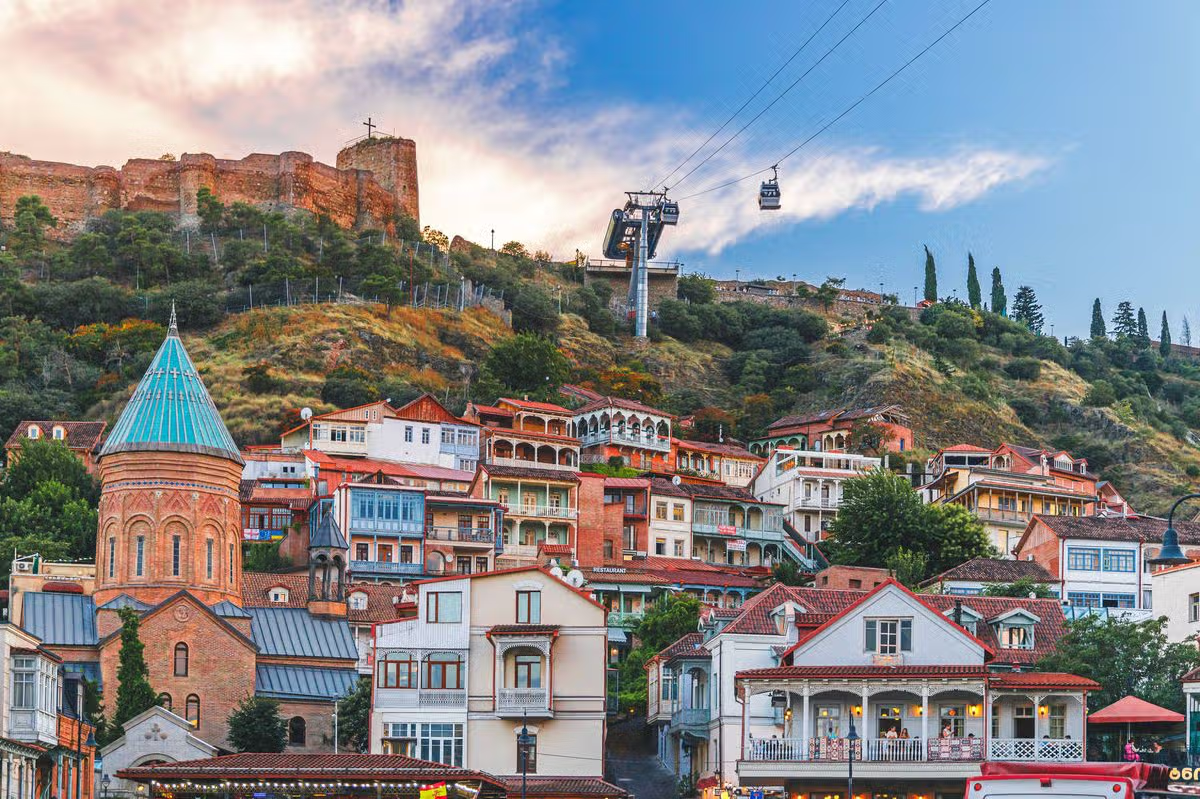
Tbilisi’s historic centre is packed with colourful wooden balconies, winding streets and beautiful churches, alongside architecture reflecting Georgian, Persian, Russian and European influences.
The city takes its name from its natural hot springs, and the Abanotubani district is home to traditional bathhouses where visitors can enjoy the famous sulphur-rich waters.
One of the must-visits in the city is a ride on the cable car towards Narikala Fortress offers impressive views across Tbilisi and the Mtkvari River. From the fortress, you can also glimpse the iconic “Mother of Georgia” statue.
Simon said: “It used to be the case that you couldn’t fly from Tbilisi in Georgia from the UK. And suddenly, within a couple of days, British Airways and easyJet launched flights to Tbilisi.”
The travel guru continued: “And that’s a very exciting part of the world. Central Asia, Uzbekistan, is very much getting back to being more mainstream as well. So much exciting stuff to do,” reports the Express.
What’s Tbilisi like in autumn?
Autumn can be an attractive time to visit Tbilisi. September is typically warm, while October brings cooler temperatures but can still offer pleasant days for exploring the city. Early autumn can also feel considerably warmer than the UK, making it an appealing option for travellers looking for a break from cooler weather.
Tbilisi comes into its own during autumn for a whole host of reasons. While temperatures back home in the UK begin to plummet, Georgia’s capital basks in a pleasant climate, with average highs of 19.5C in October.
This mild, sunny weather is perfectly suited to exploring on foot, and with very little rainfall to contend with, you can safely leave the waterproofs behind. Tbilisi has earned a reputation as a remarkably budget-friendly travel destination, especially for visitors from the UK and Western Europe.
While prices have risen slightly in recent years owing to increasing popularity, the city still offers exceptional value for money.
In the Georgian capital, a pint of local beer in a bar or pub will set you back around £1.75, while meals out typically cost between £8 and £15.
Tbilisi’s charm lies in its fusion of old and new. The city’s ancient heritage is prominently displayed in the delightful Old Town (Dzveli Tbilisi), where a maze of cobbled streets winds past traditional houses with characteristic wooden balconies.
You can explore this historic quarter and uncover the domed roofs of the renowned Sulfur Baths in the Abanotubani district.
For a modern architectural wonder, walk across the Bridge of Peace, a contemporary pedestrian crossing that illuminates with thousands of LED lights after nightfall.
Georgian cuisine is a standout feature of any visit, and Tbilisi is the ideal spot to sample it. From the warming comfort of khinkali (spiced meat or cheese dumplings) to the cheesy delight of khachapuri (bread with cheese), the local food is a hearty and flavoursome experience.
Wash it all down with a glass of locally produced wine from one of the oldest winemaking regions on the planet.
Travel Local reveals that Georgia is widely regarded as the birthplace of wine. Archaeological findings of winemaking activity stretch back more than 8,000 years, making it the oldest continuous winemaking tradition in the world.
Remarkably, the very word “wine” is thought to have originated from the Georgian term for it, ‘ghvino’.
Tbilisi boasts a fantastic selection of wine bars and tasting rooms throughout the city, but the most celebrated vineyards and wineries can be found in the Kakheti wine region, considered the heart of Georgian winemaking.
It’s a well-loved and straightforward day trip from Tbilisi, typically requiring around a 1.5 to two-hour drive to reach the region’s principal towns such as Sighnaghi or Telavi.
October is also a particularly vibrant time to visit the city, as it plays host to the Tbilisoba festival, a grand celebration of the city’s rich history and harvest season. The streets burst into life with music, folk dancing and food stalls, offering an unforgettable insight into Georgian culture.
The Grown-Up Getaways offer the chance to try jewellery making, pottery or painting, as well as explore some of the UK’s most beautiful beaches and countryside
This article contains affiliate links, we will receive a commission on any sales we generate from it. Learn more
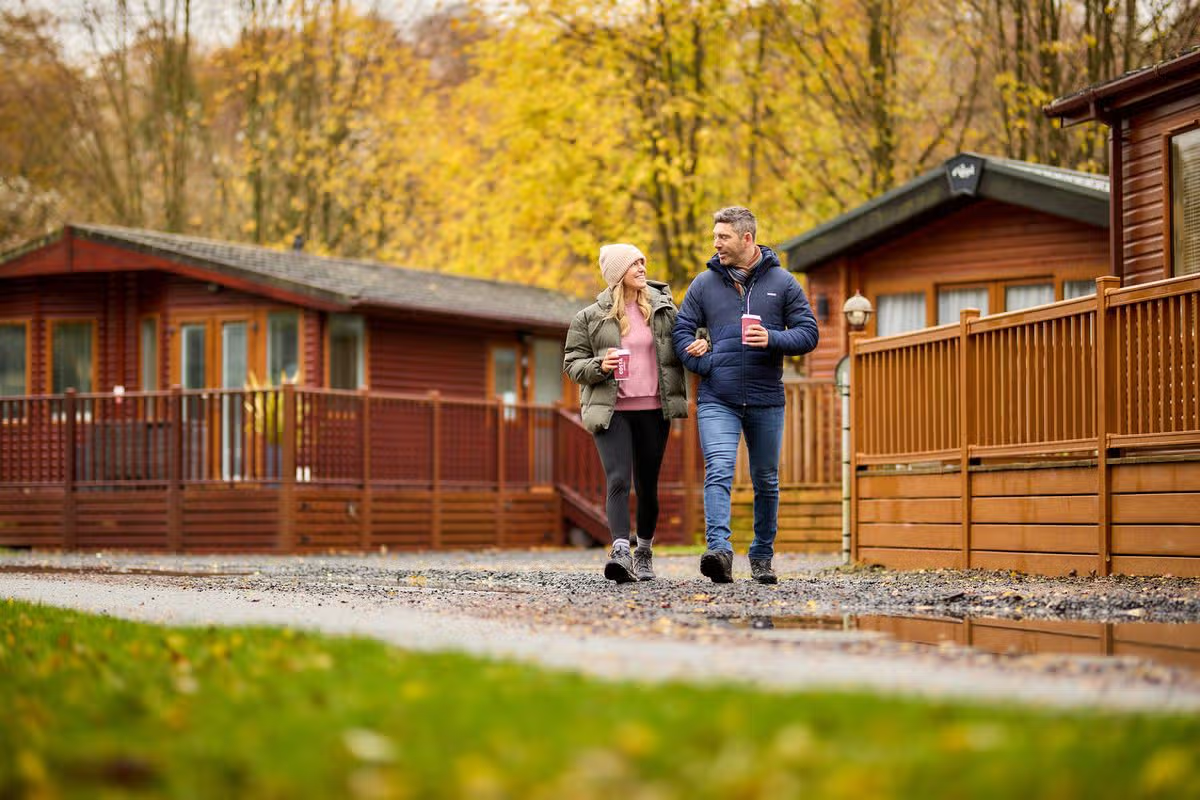
There are more than 40 Parkdean Resorts sites to choose from across the UK(Image: Parkdean Resorts)
There’s no time like the changing colours of autumn to explore what the rest of the UK has to offer before the biting winter weather sets in. And for those seeking a fuss-free getaway, one holiday park group is offering breaks from £99 for four nights with more than 40 picturesque locations to choose from.
Parkdean Resorts operates sites across Britain’s coast and countryside, from the beaches of Devon and Cornwall to quiet escapes in Northumberland and Scotland via the likes of the ever-popular Lake District and the Welsh seaside. While many may think of a holiday park break as being one for families with little ones in tow, Parkdean Resorts also offers Grown-Up Getaways – designed specifically for adults looking to enjoy a holiday at their own pace.
These breaks tailored to grown-ups offer a packed programme of activities outside of school holidays, so holidaymakers can start their day with yoga or swimming, while away the afternoon with board games, pool, darts or archery, and spend evenings enjoying a whodunnit murder mystery, karaoke, poker, bingo or a quiz. Other new activities at these Grown-Up Getaways include creative pursuits such as jewellery making, pottery, painting and mosaic art, while entertainment ranges from country nights to rock ‘n’ roll shows and performances full of hits from iconic musicals.
READ MORE:
There are various accommodation options to choose from too, from lodges and caravans to glamping pods, safari tents and cottages with hot tubs, while restaurants, bars, takeaway options and on-site supermarkets at each park provide plenty of places to eat and drink. Holidaymakers seeking a stress-free break can book all-inclusive packages at the majority of Parkdean Resorts sites across the UK too.
All-inclusive holidays are available on selected four-night Monday arrival stays at 45 parks, as well as on selected three-night weekend breaks at 14 parks across the UK, with packages starting from £100 per adult and £40 per child. These breaks include three restaurant meals a day, unlimited soft drinks and Costa Coffee, plus plenty of choice on dedicated kids’ menus.
Grown-Up Getaways offer activities for adults outside of school holidays, while all-inclusive packages are also available.
Another choice for UK holiday parks is Haven, which is inviting visitors to its Haunted Haven season this Halloween when its holiday parks will be offering activities and entertainment with a spooky twist. With more than 30 locations to choose from, prices for a Halloween-themed break start from £65 for four nights.
A different option is Forest Holidays, which can be found in 13 UK forests stretching from Deerpark in Cornwall right up to Strathyre in Stirling. Each lodge at these sites comes with a hot tub, with one to five-bedroom options available for couples’ retreats or family holidays.
Back at Parkdean Resorts, for holidaymakers seeking inspiration on where to go this autumn, the top-rated choice of the group’s destinations on TripAdvisor based on nearly 2,000 reviews is Falbarrow Holiday Park in the Lake District. Situated on Lake Windermere with direct access to the water’s edge, this site offers ample opportunity for water sports such as sailing, kayaking, and paddleboarding on England’s largest lake, although it is also not one of the sites where the all-inclusive offer is available.
Meanwhile, one Parkdean Resorts regular wrote in a five-star review on Trustpilot: “Great holiday park, friendly staff especially in the bar and restaurant. Being pet-friendly made it for us.”
Another customer said: “This place was superb, caravan was lovely and the lakes are great. I have already booked for next year. Been coming to Cornwall now for the last 10 years and been all over in caravan parks for holidays, but this place was best by far.”
And a third praised: “Lovely site. Swimming pool absolutely brilliant as were the child aqua jets and water skis. Very good value for money and the site is very nicely maintained. We got a late deal and it was an absolute bargain!”
One holidaymaker thought their accommodation could have been improved, feeding back: “I booked a three-bedroom lodge but was up graded to a four-bedroom. I feel I should have been given the choice of upgrade because I found it very big for two of us.”
A different reviewer commented: “Parkdean is a great option holiday for relaxing and doing your own thing. Has all the facilities you require to make it a great holiday.”
It was housed in a former 1920’s Art Deco building that used to serve as a cinema.
Sign up for the Travel newsletter
Thank you!
The picture house showed its last film in 1978 then opened as a bingo hall before JDWetherspoonssnapped it up in 1996.
But, new life is set to be breathed into the Grade II listed building as developers have revealed plans to transform it into a soft play, according to News Shopper.
Planning permission was approved back in January, with developers now working through a series of conditions to ensure the original features in the building are protected.
A multi-level play structure, party rooms, café facilities and an on-site manager’s flat is set to feature in the building.
Meanwhile, accessible toilets, buggy parking and areas for staff are also set to be built.
However, fans of the building need not worry as its original cinema entrance and distinct features will be protected.
No opening date has been confirmed for the soft play area, but works continue to be underway.
TRAIN stations are no longer just a place to get from A to B, but are now attractions in their own right.
And a new awards has named some of the most beautiful ones in the world.
The world’s most beautiful stations have been namedCredit: Hufton+CrowA European winner was Lyon Part-Dieu StationCredit: Romuald NICOLAS
The World’s Most Beautiful Stations were revealed by Prix Versailles, a prestigious architecture and design award,
Prix Versailles Secretary General Jérôme Gouadain said they “give us proof that 21st-century passenger stations can be the bridges to a more desirable future”.
Sign up for the Travel newsletter
Thank you!
While none in the UK made the list, there were three in Europe.
One was Colosseo – Fori Imperiali Station in Rome which only opened last year on the city’s metro line.
It was praised for turning “travel into an archaeological adventure” as well as its “unexpected view of the Colosseum“.
Another Italian train station on the list was Monte Sant’Angelo Station in Naples.
Said to be inspired by city’s Mount Vesuvius, Dante’s Inferno and volcanic terrain, the dark orange doughnut-like structure above ground was called a “sculpture that the public can enter”.
The final European entry was Lyon Part-Dieu Station in France.
Despite having opened in 1983, it recently underwent a huge update last year.
According to Prix Versailles: “This regional, national and international train station, one of Europe’s top stations in terms of the number of connecting passengers transiting through it, has doubled in size thanks to the architectural teams at AREP and L’AUC, with additional access points and pass-throughs to boot.”
The Colosseo – Fori Imperiali Station is right by the famous ColosseumCredit: Casalgrande PadanaMelbourne’s Town Hall Station was compared to a cathedralCredit: Prix Versailles./Jim StepehensonWestern Station in Riyadh was one of two to win in Saudi ArabiaCredit: Omrania
Outside of Europe, Melbourne‘s Town Hall Station also made the top seven list.
Also a new railway station having opened last year, it was praised for both its “eight imposing columns like trees whose branches hold up the canopy above” as well as its “cathedral-like feel”.
Over in the US, LAX/Metro Transit Center was the only American station to be named one of the world’ most beautiful and one of the most futuristic designs on the list,
Saudi Arabia had two stations in Riyadh to have made the list.