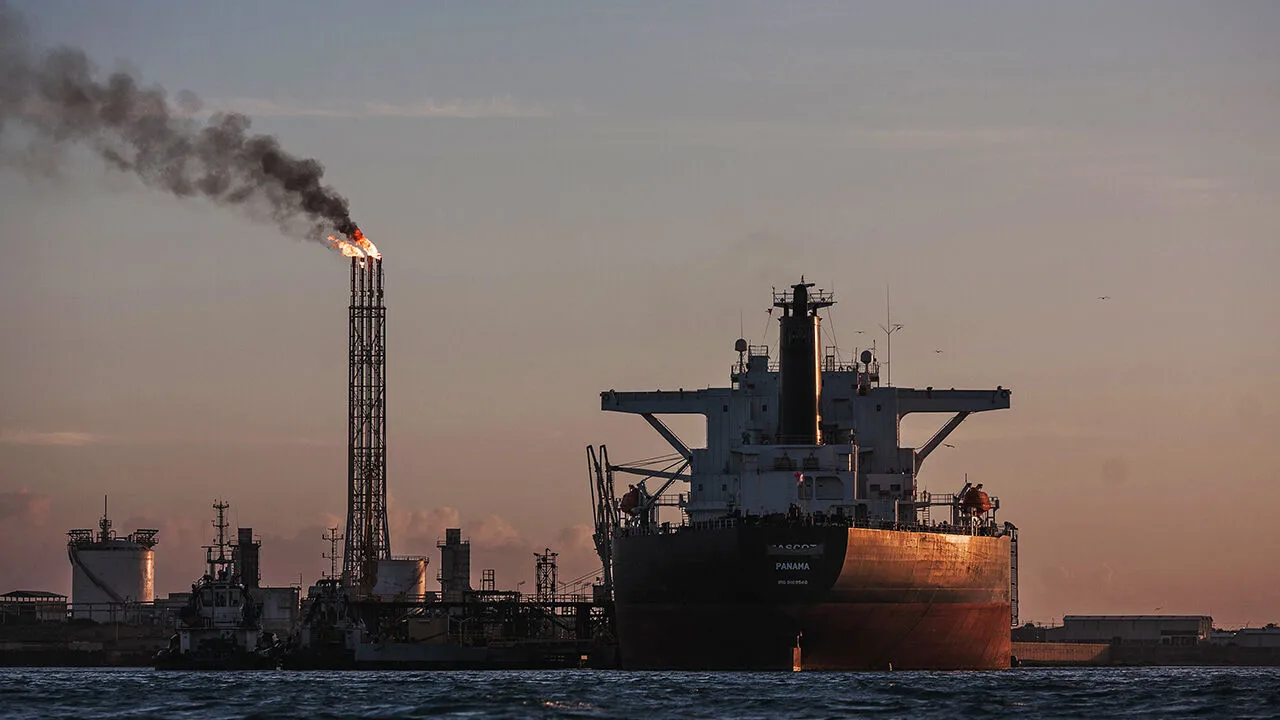
The proposed oil reform aims to improve conditions for foreign investors. (Adriana Loureiro)
Caracas, January 15, 2026 (venezuelanalysis.com) – Venezuela’s Acting President Delcy Rodríguez announced a “partial reform” of the country’s hydrocarbon legislation during the annual “Memoria y Cuenta” speech before the National Assembly on Thursday.
Rodríguez justified the reform with the need to attract investment for Venezuela’s oil industry.
“We have brought a draft of a bill that aims to incorporate the productive models of the Anti-Blockade Law into the Hydrocarbon Law,” she told deputies. “The new investments will be directed to areas where there was no prior investment or no infrastructure.”
The Acting President went on to vow that the government would prioritize social spending and infrastructure works with energy revenues, though she did not offer further details. The legislative project will now be discussed by the National Assembly before being brought up for a vote.
The 2001 Hydrocarbon Law was one of the major early projects in former President Hugo Chávez’s tenure. The legislation reasserted the Venezuelan state’s sovereignty over the oil industry, significantly raising royalties and taxes and mandating that state oil company PDVSA retain majority stakes in joint ventures. The law was a catalyst for the failed 2002 US-backed coup against Chávez.
Venezuela’s National Constituent Assembly (2017-2020) approved the Anti-Blockade Law in 2020 in an effort to skirt US-led economic sanctions. The bill spurred the creation of several business models favoring private investors, including concession-type deals in the oil industry whereby private partners collect a majority of the crude produced.
The oil reform announcement comes amid repeated claims by Washington to take control of Venezuelan crude dealings. Since the January 3 US military strikes and kidnapping of Venezuelan President Nicolás Maduro, the Trump administration has vowed to administer the OPEC member’s oil sales for an “indefinite” period.
On Wednesday, senior Trump officials unveiled the first sales worth US $500 million, with the funds deposited in accounts controlled by the US government. Multiple outlets reported that the main account holding the proceeds is located in Qatar.
One US official described Qatar as a “neutral location where money can flow freely with US approval and without risk of seizure.” On January 9, the White House issued an executive order to shield Venezuelan oil revenues administered by Washington from creditors looking to collect on debts owed by Venezuela.
Democrat politicians quoted by Semafor raised questions about the deal’s transparency and lack of accountability. For its part, the Trump administration has courted oil companies about investing in Venezuela, claiming that they will only “deal” with Washington rather than Venezuelan authorities.
The scope of US control over Venezuelan oil sales, as well as the mechanisms to return proceeds to Caracas, remains unclear, however. US Treasury Secretary Scott Bessent announced upcoming sanctions withdrawals or waivers to facilitate transactions.
Commodities traders Vitol and Trafigura have reportedly begun moving a combined 4.8 million barrels of Venezuelan crude to storage hubs in the Caribbean after receiving licenses from the US Treasury Department.
Economics outlet Bitácora Económica reported on Thursday, citing “unofficial sources,” that the Venezuelan Central Bank (BCV) had an account opened in the Qatar National Bank (QNB) where oil proceeds were deposited. According to the same report, the BCV will receive a license to five Venezuelan private banks that will offer US $330 million through foreign currency exchange tables. Healthcare and infrastructure imports will reportedly be given priority. US officials have claimed that only imports from US manufacturers will be allowed.
Venezuela’s Central Bank has been under US Treasury sanctions since 2019. Similarly, Washington has levied wide-reaching unilateral coercive measures against the oil industry, including financial sanctions, an export embargo, and secondary sanctions.
With its military operation and moves to wrest control of Venezuela’s oil sector, the Trump administration has also broadcast its intention to clamp down on bilateral Venezuelan deals with geopolitical rivals such as China. The US Navy has imposed a naval blockade and seized multiple tankers since December in an effort to strong-arm Caracas.
Washington’s unilateral actions saw two Chinese-flagged supertankers turn back amid trips to load Venezuelan oil. In recent years, China has been the main destination for Venezuelan crude and fuel oil exports, with shipments partly used to offset debt from longstanding oil-for-loan deals.
According to Bloomberg, Beijing has sought assurances from Venezuelan and US officials over its loans to the Caribbean nation. The Chinese government reiterated its condemnation of the January 3 US attacks and pledged to “take all necessary measures to protect its legitimate rights and interests in Venezuela.”