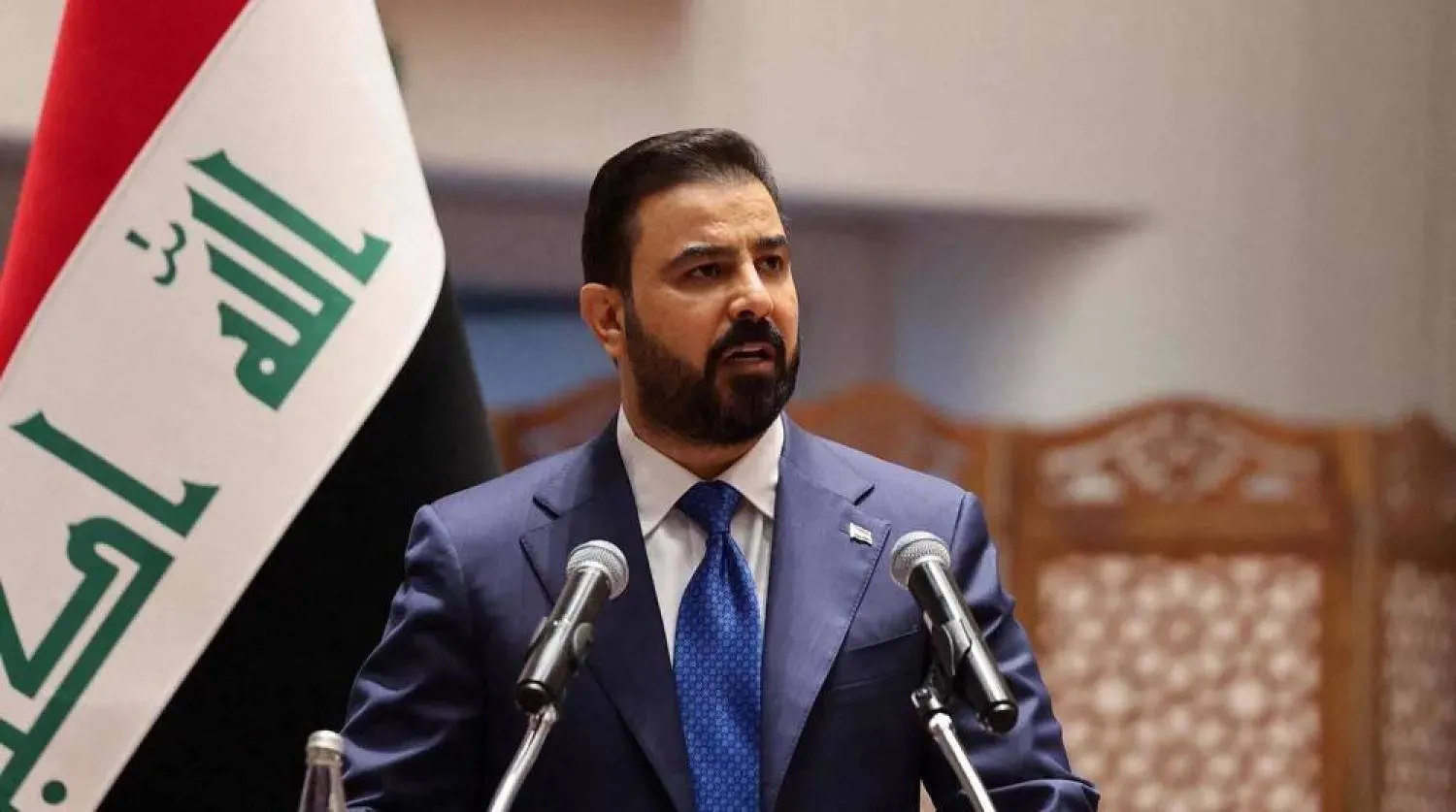

Iraq’s ruling coalition has been forced to abandon plans to create deputy prime minister posts amid disputes over bringing weapons under state control, while sources say political factions are moving to recalculate their shares of the remaining vacant ministries.
Since parliament has approved Prime Minister Ali al-Zaidi’s government on May 15, 2026, giving the green light to 14 out of 23 ministers, political disputes have prevented appointments to nine portfolios, most notably the interior and defense ministries.
A more complicated dispute involved attempts by forces within the Coordination Framework to create four deputy prime minister posts. Asa’ib Ahl al-Haq was among the leading proponents, with its leader, Qais al-Khazali, putting forward his brother Laith al-Khazali for one of the positions.
Reliable sources told Asharq Al-Awsat that Asa’ib Ahl al-Haq had sought the post after formally agreeing to the plan to bring weapons under state control, but US objections blocked the appointment.
The sources described a “test of strength” between al-Zaidi and Coordination Framework forces because of the overlap between completing the Cabinet and the weapons issue. Scrapping the deputy prime minister posts, they said, opens the door to bargaining and forces all sides to recalculate the points assigned to ministries.
Observers believe efforts to complete the Cabinet began to falter as some political forces backed away from the weapons plan.
Al-Zaidi had made bringing arms under state control a key pillar of his government program. Asa’ib Ahl al-Haq and other factions later joined the proposed settlement in hopes of easing international pressure.
Sources said the Coordination Framework’s latest meeting exposed sharp divisions between leaders opposed to creating deputy PM posts and others insisting on them, preventing the coalition from issuing a statement afterward.
Al-Zaidi has held a series of meetings with Coordination Framework leaders in recent days in an effort to reach agreement on completing his Cabinet, particularly after his government marked its first 100 days.
Figures close to the prime minister’s office said he urged ruling coalition leaders to continue supporting the government in resolving outstanding issues, including bringing weapons under state control, combating corruption and filling Cabinet vacancies, regardless of disputes over deputy prime minister posts.
Under Iraq’s informal power-sharing system, ministries are distributed among election-winning political forces according to points based on each party’s number of parliamentary seats.
Legal and legislative affairs researcher Saif al-Saadi told Asharq Al-Awsat that scrapping the deputy PM posts would increase the value of the remaining portfolios, with sovereign ministries potentially worth 15 to 20 points and service ministries 10 to 12.
Al-Saadi expected two or three ministries to be filled, while the rest could remain under acting ministers because of domestic and external factors. He said the United States opposes militia-linked figures taking senior government posts, while competition among Shiite political forces is delaying agreement on candidates for the vacant portfolios.