Disruption to fuel and fertiliser supplies due to the Strait of Hormuz closure will hit crop yields, UNDP chief warns.
Published On 23 Apr 202623 Apr 2026
The Iran war will push more than 30 million people back into poverty, with the knock-on effects of the conflict likely to increase food insecurity in the coming months, the United Nations has warned.
Disruption to fuel and fertiliser supplies due to the ongoing blocking of cargo vessels through the Strait of Hormuz has already lowered agricultural productivity and will hit crop yields later this year, the UN’s development chief said on Thursday.
Recommended Stories
list of 4 itemsend of list
“Even if the war would stop tomorrow, those effects, you already have them, and they will be pushing back more than 30 million people into poverty,” said Alexander De Croo, administrator of the United Nations Development Programme (UNDP).
He also warned of other fallouts of the United States-Israeli war on Iran, including energy shortages and falling remittances.
Much of the world’s fertiliser is produced in the Middle East, and one-third of global supplies passes through the Strait of Hormuz, where Iran and the US are jostling for control.
The UN’s Food and Agriculture Organization (FAO) last week warned that a prolonged crisis in the strait could lead to a global food “catastrophe”.
India, Bangladesh, Sri Lanka, Somalia, Sudan, Tanzania, Kenya, and Egypt are among the countries most at risk, according to the FAO.
“Food insecurity will be at its peak level in a few months – and there is not much that you can do about it,” De Croo said.
Straining humanitarian efforts
The knock-on effects of the Iran conflict have already wiped out 0.5 percent to 0.8 percent of global gross domestic product (GDP), according to De Croo, who noted, “Things that take decades to build up, it takes eight weeks of war to destroy them.”
De Croo, the former prime minister of Belgium, also warned that the Middle East crisis is straining humanitarian efforts in other parts of the world, with the sector already facing funding cuts.
The US-Israeli attacks on Iran, which began on February 28, have also choked up key humanitarian aid routes, delaying life-saving shipments to some of the world’s worst crises.
“We will have to say to certain people, really sorry, but we can’t help you,” De Croo said. “People who would be surviving on help will not have this, and will be pushed into even greater vulnerability.”
PUSAN, South Korea — After President Bush lauded South Korea’s troop contribution to Iraq’s reconstruction as a “gesture of friendship,” White House officials sought to downplay reports today about that country’s intention to draw down its forces.
Published reports quoted South Korean government sources as saying the country intended to reduce its contingent of about 3,600 troops by one-third. But a U.S. spokesman said Bush administration officials were “unaware of any such formal announcement.”
The reports could prove particularly embarrassing for the U.S. president because they surfaced while he was in the country to take part in an annual gathering of Pacific Rim leaders at which cooperation on Iraq promised to be a major discussion point.
Bush stood beside South Korean President Roh Moo-hyun on Thursday and thanked him for his country’s participation in the reconstruction, but there was no mention of a possible South Korean troop reduction.
“We’re bound by our love of freedom,” Bush said. “And those commitments by your government indicate how close we are in terms of promoting the values of freedom and democracy.”
A White House spokesman, Frederick Jones, said today that the topic of a South Korean troop reduction had not come up during the leaders’ private discussions.
“President Roh was very proud of the accomplishments of Korean forces,” Jones said.
White House counselor Dan Bartlett later said the administration had received “guidance” that the South Korean government’s official stance had not yet changed, and that the debate was continuing in the parliament.
“I think it’s premature to say this is any indication of what’s going one way or the other,” Bartlett said.
There was no official comment from South Korea’s Defense Ministry. But Defense Minister Yoon Kwang Ung told ruling party legislators in a closed session of the National Assembly that changed conditions in Iraq made the reduction of troops possible, the semiofficial Yonhap news agency said.
Members of the ruling Uri Party have in recent months called for a troop reduction, citing reports of similar moves by Britain, Australia and Japan.
The war in Iraq has been extremely unpopular in South Korea, and even advocates of the troop deployment here have maintained it was done only out of an obligation to a long military alliance with the United States.
Oh Young Shik, a spokesman for the ruling party, said that those South Korean troops brought home first would be doctors, nurses and construction workers.
Losing about 1,000 South Korean troops, which focus primarily on peacekeeping, would not be a setback from a military standpoint. But South Korea’s contingent is the third-largest in the coalition, behind the United States and Britain.
And coming as Japan is also set to consider its own drawdown of troops and with Congress growing increasingly wary of U.S. policy in Iraq, the announcement was the latest in a series of setbacks for the Bush administration’s effort to maintain support for the war.
This week, the Republican-led Senate rejected calls for a timetable of troop reductions but voted to require the administration to provide more detailed reports on Iraq.
The White House has stepped up its defense of Iraq policy, firing off a scathing statement Thursday accusing U.S. Rep. John P. Murtha (D-Pa.) of espousing views held by the “extreme liberal wing” of the Democratic Party because he called for U.S. troops to be withdrawn.
Bush kicked off his participation in the Asia-Pacific Economic Cooperation summit by sitting down for the fifth time this year with Russian President Vladimir V. Putin, another Iraq war critic.
The two were expected to discuss a proposed law in Russia that would force numerous nongovernmental organizations, including international heavyweights such as Human Rights Watch and the Ford Foundation, to face government examinations of their operations. Russian officials would ensure that the groups are not pursuing political activities funded by other countries.
Groups have warned that the law could force them to close their doors in Moscow, and the law underscores broader concerns on the part of the White House and human rights groups that Putin is rolling back post-Soviet democratic reforms.
The two leaders were also expected to discuss nuclear proliferation in North Korea and Iran. Russia is building a nuclear reactor in Iran, despite U.S. objections, and Putin has resisted calls by Bush to refer Iran to the United Nations Security Council.
However, Moscow does support efforts to eliminate North Korea’s nuclear arms programs and prevent Iran from acquiring atomic weapons.
Unlike at some of their past meetings, the two leaders did not take questions or offer details of their conversation.
“You going to say something to the press?” Bush asked as the two settled into their meeting in a hotel suite. Putin shook his head, and Bush said, “OK, me neither.”
Wallsten reported from Pusan and Demick from Seoul.
Move reflects regional alarm over attacks by pro-Iranian groups based in Iraq, which continue despite ceasefire.
Published On 13 Apr 202613 Apr 2026
Bahrain has summoned an Iraqi envoy over drone attacks launched at the kingdom and other states in the region, which persist despite the US-Iran ceasefire.
The summoning of the diplomat on Monday followed similar action by Saudi Arabia the previous day, signalling growing regional concern over the activities of pro-Iranian groups based in Iraq and complicating Baghdad’s efforts to rebuild ties with its Arab neighbours.
Recommended Stories
list of 4 itemsend of list
Bahrain’s Ministry of Foreign Affairs strongly condemned the “continued malicious drone attacks” launched from Iraq towards Bahrain and several Gulf Cooperation Council countries, the state news agency BNA reported.
The ministry said Abdullah bin Ali Al Khalifa, director general of bilateral relations, had delivered an official protest note during the meeting with the Iraqi charge d’affaires, Ahmed Ismail al-Karawi.
The diplomatic missive called on Baghdad to address “these threats and attacks urgently and responsibly”.
Launchpad
During the United States-Israel war on Iran, Iraq has become a staging ground for a secondary conflict as drones and missiles are launched by Iran-aligned armed groups repeatedly targeting the Gulf states and Jordan.
US interests in Iraq also have been targeted, particularly the embassy in Baghdad.
Last month, several Gulf countries and Jordan demanded in a joint statement that Baghdad act immediately to stop attacks from its territory by Iran-aligned groups.
The statement was signed by Bahrain, Jordan, Kuwait, Qatar, Saudi Arabia and the United Arab Emirates.
Baghdad has categorically rejected the use of its territory to target Gulf states or Jordan, adding that it is taking necessary measures “in accordance with the constitution and the law”.
The attacks are severely testing Iraq’s painstakingly rebuilt ties with its Arab neighbours, leading Baghdad to issue a statement in which it offered “full readiness” to receive any information or evidence regarding the attacks to address them “responsibly and swiftly”.
Iran-aligned groups in Iraq had announced their commitment to a two-week Iran-US ceasefire that has been in place since dawn on Wednesday, and said they were suspending their actions towards the Gulf countries.
However, just hours after the ceasefire was announced, several Gulf nations reported missile and drone attacks on their territories.
Video shows an explosion in the sky above Erbil, in the Kurdish region of northern Iraq, in a suspected drone interception following reports of an unidentified aircraft flying over the city. Earlier, Kuwait reported a drone attack. The IRGC insists Iran has not launched anything during the ceasefire.
The United States and Iran have agreed to a two-week ceasefire, with talks to finalise a peace deal set to begin in Pakistan’s Islamabad on Friday.
The truce, announced by US President Donald Trump on Tuesday, will see Iran reopen the Strait of Hormuz, a vital maritime corridor through which a fifth of the world’s oil supply passes.
Recommended Stories
list of 4 itemsend of list
Countries around the world have welcomed the development.
Here’s a roundup of the reaction:
Israel
Israeli Prime Minister Benjamin Netanyahu said on X that he supports Trump’s decision to suspend strikes on Iran, and the “US effort to ensure that Iran no longer poses a nuclear, missile and terror threat to America, Israel, Iran’s Arab neighbours and the world”.
Netanyahu said, however, that the ceasefire does “not include Lebanon“, where Israeli forces have launched a ground invasion and are fighting with the Iran-aligned Hezbollah.
Iraq
Iraq’s Ministry of Foreign Affairs welcomed the news of the ceasefire but said that both the US and Iran must commit to the deal to achieve a lasting resolution.
“As the ministry asserts its support for regional and international efforts to contain crises and prioritise the language of dialogue and diplomacy, it stresses the need for full commitment to the ceasefire and refraining from any escalations,” the ministry said.
Iraq has been drawn into the US-Israeli war on Iran, with Tehran-backed armed groups and US forces trading fire in an escalating cycle of violence.
Egypt
The Egyptian Ministry of Foreign Affairs said the ceasefire “represents a very important opportunity that must be seized to make room for negotiations, diplomacy, and constructive dialogue”.
The ministry said in a statement on Facebook that a truce must be built upon with a full commitment to “stopping military operations and respecting freedom of international navigation”.
The post also said that Egypt will continue efforts with Pakistan and Turkiye “to promote security and stability in the region”, and that the talks between the US and Iran “must take into account the legitimate security concerns” of Gulf nations.
United Nations
UN Secretary-General Antonio Guterres welcomed the announcement and called on all parties to abide by the terms of the ceasefire “in order to pave the way toward a lasting and comprehensive peace in the region”, according to his spokesperson.
Guterres underscored “that an end to hostilities is urgently needed to protect civilian lives and alleviate human suffering”, and thanked Pakistan and other nations involved in facilitating the truce.
Japan
Japan’s Chief Cabinet Secretary Minoru Kihara told reporters that Tokyo welcomes the news of a two-week ceasefire between the US and Iran as a “positive move” as it awaits a “final agreement”.
Minoru said the de-escalation of hostilities in the Middle East remains a top priority, according to the Kyodo News Agency.
Indonesia
Indonesia’s Foreign Ministry Yvonne Mewengkang said Jakarta welcomes a ceasefire deal and called on Iran and the US to respect the “sovereignty, territorial integrity and diplomacy” of each side, according to the Reuters news agency.
Mewengkang also called for a thorough investigation into the deaths of three Indonesian UN peacekeepers killed by explosions in Lebanon in late March amid fighting between Israeli forces and Hezbollah fighters.
Malaysia
Malaysia’s Ministry of Foreign Affairs said the ceasefire marks a “significant development [and] serves as a crucial step towards de-escalating tensions and restoring much-needed peace and stability” to the Middle East.
It also urged “all parties to fully respect and implement all terms of the ceasefire in good faith to prevent any return to hostilities”, while also avoiding any “provocative actions or unilateral measures that could negatively impact the fragile stability of the region or jeopardise global economic and energy security”.
Australia
Australian Prime Minister Anthony Albanese and Minister for Foreign Affairs Penny Wong issued a joint statement welcoming the news and expressing their hopes that the deal will lead to a long-lasting resolution.
“Iran’s de facto closure of the Strait of Hormuz, coupled with its attacks on commercial vessels, civilian infrastructure, and oil and gas facilities, is causing unprecedented energy supply shocks and impacting oil and fuel prices,” they said.
“We have been clear that the longer the war goes on, the more significant the impact on the global economy will be, and the greater the human cost.”
Albanese and Wong thanked Pakistan, Egypt, Turkiye, and Saudi Arabia for their work as negotiators.
New Zealand
New Zealand Minister of Foreign Affairs Winston Peters said his government welcomes the news of a ceasefire, although many concerns remain.
“While this is encouraging news, there remains significant important work to be done in the coming days to secure a lasting ceasefire”, as the war has had “wide-ranging impacts and disruptions” on the Middle East and beyond, he wrote in a post on X.
Peters praised countries like Pakistan, Turkiye, and Egypt for their work negotiating a deal.
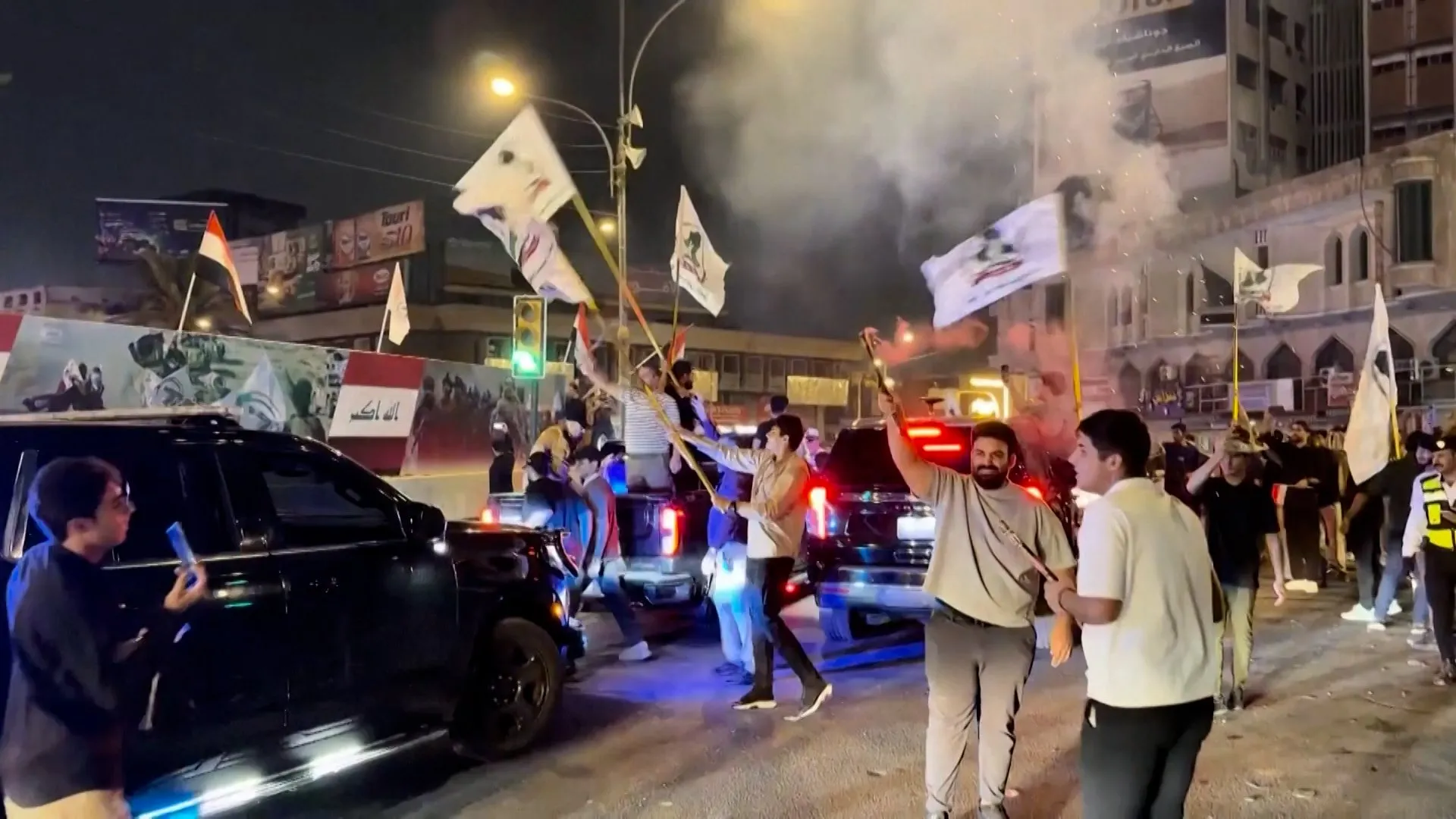
Celebrations have erupted in Iraq’s capital, Baghdad, following the announcement of a two-week ceasefire between Iran and the United States. Iraq had been pulled into the war with pro-Iran armed groups and US forces carrying out attacks on each other.
As the US threatens to launch a ground invasion of Iran, many questions remain about its goals and geographical span. Some scenarios suggest a focus on some of the islands in the Gulf, others – joining forces with local insurgent groups.
Early on in the war, Washington seemed to toy with the idea of supporting opposition groups from Iran’s large Kurdish minority to launch a war by proxy.
According to reports in the Israeli media, initial efforts by Mossad to encourage attacks by Kurdish groups in Iran’s northwest failed due to “leaks, distrust”. Iran bolstered its defences in the area and put pressure on the authorities in Iraqi Kurdistan, where the Iranian Kurdish groups are based.
Last week, in an interview with Fox News, US President Donald Trump acknowledged that the US provided weapons to the Kurds.
Further action involving either Kurdish or other ethnic opposition groups may still be on the table as his administration seeks to put together an exit strategy from the war. Encouraging local insurgencies to weaken Tehran may seem like a good plan, but would it work?
Iran’s weak spots
Fomenting ethnic or religious tensions in the enemy camp is an old military tactic, which the US itself has used many times in the Middle East. Trump is likely looking for ways to gain leverage over the regime in Tehran and stretch its military capabilities. Iran’s internal fractures may seem to offer some opportunities for that.
In the past three decades, Tehran has failed to address the growing grievances of various minority populations in the country’s periphery. Sunni Arabs, Kurds and Balochis feel marginalised in the Shi’a majority state, while Arab and Kurdish Shia Muslims feel discriminated against by ethnic Persians.
This has led to various anti-government mobilisations, including armed ones over the past three decades.
Kurdish armed groups based in Iraq have operated for decades in northwestern Iran. Kurdish areas have also seen waves of mass protests, the most recent of which was in the autumn of 2022 following the death of a Kurdish woman at the hands of morality police in Tehran.
Other armed groups have also been active. In 2018, an attack on a military parade in the city of Ahvaz killed 29 people; an Arab separatist group claimed responsibility. In 2019, Baluchi rebels of the Jaish Al Adl group attacked a bus carrying members of the IRGC, killing at least 27. A raid by the same group on a police station in 2023 killed 11 security personnel. Then in 2024, the bombing of a mourner’s procession for the late General Qasem Sulaimani killed at least 90 people in the southeastern city of Kerman; ISIL claimed responsibility.
All of these incidents expose weaknesses in Iran’s periphery, which its enemies have long tried to exploit. If Trump decides to go down that path, he should take heed of the experiences of those who have tried to undermine the authorities in Tehran by fomenting ethno-religious insurgencies.
Past failures
Iraq’s president Saddam Hussein was one of them. When he decided to invade Iran in 1980, he saw an opportunity in the ethnic unrest among Kurds and Arabs the Islamic Republic had inherited from the monarchical regime. Saddam Hussein encouraged insurgencies among both minorities.
By the time Iraqi troops stormed onto Iranian territory, the Kurdish Democratic Party of Iran (KDP-I) had already launched a rebellion against the newly formed Islamic Republic in 1979. Iraq eventually provided arms and finances, enabling the KDP-I to take over some territory and hold it for months, but internal fighting and the brutal campaign Tehran launched through its Revolutionary Guards managed to suppress the rebellion by 1982-83.
Saddam also tried to get the Arabs in the south to revolt, some Iranian Arab separatist groups fought alongside Iraqi forces in the battle for the Iranian city of Khorramshahr in 1980. But the Sunni Arab community did not join in large numbers. Shi’a Arabs had no desire to participate in what they saw as a foreign invasion, launched by an Sunni-dominated Iraqi regime. As a result, Saddam never got the mass Arab uprising he wished for.
Twenty years later, US President George W Bush tried to use a similar playbook against Iran. He authorised the CIA and other intelligence outfits to carry out covert operations in Iran and funnel money and equipment to some opposition armed groups.
Like Saddam, Bush also failed to foment rebellions in Iran. This is not just because the Islamic Republic was able to handle security situations swifty and decisively, but also because efforts to incite uprisings never really got enough momentum. The reason for that is that parts of Iran’s minorities are well-integrated into the nation’s core and elite. Ethno-religious identities and socio-economic realities in Iran are too complex to feed into a simple black-and-white narrative about ethnic oppression by the Persian majority.
The likelihood of success today
More than a month into the war on Iran, it is by now clear that US and Israeli efforts to trigger a mass uprising in Iran by decapitating the regime have failed.
At this time, there is nothing to suggest that any efforts to foment ethnic insurgencies would be more successful. US-Israel support for separatist groups is unlikely to get anywhere further than localised acts of sabotage or small skirmishes.
This would not divert important military resources and attention away from the fight with the US and Israel, as Iran is fighting a techno-guerilla war, where its most valuable weapons are missiles and drones – not ground troops.
Furthermore, there is significant regional opposition to US support for separatist groups from major allies, including Pakistan and Turkiye. Islamabad has been dealing its own violent attacks carried out by Baluch separatists in the southwest of the country. Meanwhile, for Ankara, the issue of any support for Kurdish groups is highly sensitive given its own long history of unrest in the Kurdish regions of the country.
Iraq would also be reluctant to support such activities. The government in Baghdad, as well as the Kurdistan Regional Government, would not risk retaliation from Iran by allowing US-Israeli support for the Iranian Kurds to take place on Iraqi territory.
Inciting ethnic insurgencies may seem like a good strategy on paper, but in reality it would be another recipe for disaster for the Trump administration, which is already struggling with enough failures in its war on Iran.
The views expressed in this article are the author’s own and do not necessarily reflect Al Jazeera’s editorial stance.
Iraq’s head coach Graham Arnold couldn’t help but pause, smile and wave to the hundreds of Iraqi football fans gathered at Sydney airport to welcome back the Australian after he guided the Arab team to their first FIFA World Cup in 40 years.
Arnold was given a rapturous welcome as the jubilant Iraqis sang, danced to the beat of drums and tambourines, held aloft placards proclaiming their love for the coach and chanted his name as the 62-year-old walked out of the airport on Sunday night.
Recommended Stories
list of 4 itemsend of list
Fans waved Iraqi and Australian flags as they chanted “Arnie, Arnie, Arnie, oi, oi, oi” while Arnold spoke to local media following his return from Mexico, where his team won the intercontinental playoff final against Bolivia on Tuesday.
The 2-1 victory came during a tumultuous time in Iraq, engulfed in the Middle East conflict that left several players stranded in various parts of the region and threatened to sabotage their campaign for the playoff tournament.
However, Iraq overcame a logistical nightmare and strong South American opposition to mark their return to the global showpiece event for the first time since 1986.
The Lions of Mesopotamia also returned home to a hero’s welcome. Thousands of fans lined the streets in central Baghdad as the players, sitting atop a double-decker bus, celebrated with their compatriots on Saturday.
Arnold was not part of those celebrations but the Iraqi community in Australia ensured the coach didn’t feel left out.
“Crazy, crazy. I didn’t expect this here in Australia. Obviously in Iraq. But it’s incredible,” Arnold told Australian broadcaster SBS as he stood in front of the fans in the terminal.
“First, I want to apologise to everyone in Iraq that I couldn’t go back there to celebrate due to the airspace shutdown.
“Seeing this here is amazing. Thank you very much.
“I’m just very, very proud of the players and what they did, making many Iraqis happy is very important and that was the main thing.”
Reports in Australian media said local Iraqi football fans found out about Arnold’s return flight from Iraq’s Football Association (IFA) and decided to greet him at the airport.
Fans could be seen chanting “One, one, one, Arnold number one” as the coach took in the scenes around him.
Arnold, who formerly coached Australia, took charge of the Iraqi team in May and led them to three wins, three draws and two losses in their World Cup qualification campaign.
The results took Iraq to the fifth and final round of the Asian Football Confederation’s (AFC) qualification competition, where they beat the United Arab Emirates 3-2 on aggregate in November and secured a place in the FIFA playoff tournament.
Earlier in March, the former Australian international player urged FIFA to postpone Iraq’s playoff final fixture or find a way to ensure the players reached Mexico well ahead of the match as they grappled with the consequences of the US-Israeli war on Iran.
His plea was heard as FIFA arranged a charter flight for the Iraqi squad and support staff, who reached Mexico just over a week ahead of the March 31 final.
Following their win, Arnold was effusive in his praise of the Iraqi players who participated in the match while the war raged on.
“Everything that is going on in the Middle East made it a little bit harder,” Arnold said after the play-off final.
“I banned social media since the day we got here,” he added. “I did not want them to think of what is going on in the Middle East because they had to focus on the job we had here.”
Arnold said qualifying for the World Cup was a major privilege for the players. “Iraq has nothing to lose.”
Iraq will be placed in one of the toughest groups at the World Cup. Their opponents in Group I will be France, Norway and Senegal.
The Middle East team will face Norway in their opening game on June 16 in Boston. Their second fixture will be against 2018 champions France on June 22 in Philadelphia and their final group game against Senegal is four days later in Toronto, Canada.
Weekly insights and analysis on the latest developments in military technology, strategy, and foreign policy.
Videos have been going viral of A-10s doing strafing runs on targets in Iraq, largely focused on force protection of U.S. interests in the country. The threat from Iranian-aligned militias and other groups in Iraq has spiked since Operation Epic Fury began over four weeks ago. While seeing videos shot overseas of the Warthog using its GAU-8 30mm Avenger cannon is anything but new, the duration of some of the ‘trigger pulls’ shown certainly is.
One of these caught on camera appears to be roughly nine seconds long, with another being around six seconds long:
We reached out to various Warthog pilots to get commentary on what we are seeing with these prolonged strafing runs. They all have said the same thing, that it definitely isn’t normal or really trained for.
Dale Stark (@dalestartA10), a veteran A-10 pilot, told us that “it’s usually two to three seconds.” The A-10’s gun does its job by squirting out 3,900 rounds per minute, or roughly 65 rounds per second. It can technically deplete its 1,174 magazine drum in around 18 seconds of fire. But this is usually done in short bursts. The nine second gun run seen in the video above would have emptied half the drum. Accuracy also degrades during longer strings of fire. “Correct, bullet dispersion increases as the barrel heats up” from sustained firing, Stark told us.
Another A-10 pilot said the videos are indeed an outlier, and that they think doing such a long strafing run could only possibly make sense under very unique circumstances, such as dealing with a target dispersed over a large area, such as a group of troops, and with little time for subsequent strafing runs. Another former A-10 pilot said just the sound of the gun could be an intended effect to scare away potential attackers, but that isn’t a usual tactic.
Regardless, for ‘hog fans’ out there, seeing the A-10 in action during the swan song of its celebrated career is surely welcome, especially when some of the videos we are seeing showcase the aircraft’s most iconic feature in truly rare form.
The A-10’s activities during Operation Epic Fury also come as it appears that dozens more of the venerable attack jets are headed to the region to partake in the conflict. The timing is of special interest as a ground operation into Iranian territory could occur in the near future.
All of this comes as the USAF has demanded the A-10’s career comes to a close by the end of the decade, and has been pushing to retire the jets well before then, mainly due to concerns over the aircraft’s survivability. Still, its special capabilities are clearly in high demand, now apparently including extremely long-duration gun runs.
The rise is largely symbolic as some key members are unable to raise production amid the US-Israel war on Iran.
Published On 5 Apr 20265 Apr 2026
The Organization of the Petroleum Exporting Countries (OPEC) has agreed to increase oil output quotas by 206,000 barrels per day for May, a rise that is largely symbolic as some of its key members are unable to raise production due to the US-Israeli war on Iran.
The war has effectively blocked the Strait of Hormuz – the world’s most important oil route – since the end of February and cut exports from OPEC+ members Saudi Arabia, the United Arab Emirates (UAE), Kuwait and Iraq.
Recommended Stories
list of 3 itemsend of list
In a statement on Sunday, eight members of OPEC+, including Saudi Arabia, Russia, Iraq, the UAE, Kuwait, Kazakhstan, Algeria, and Oman, agreed to increase May quotas during a virtual meeting.
“The countries will continue to closely monitor and assess market conditions, and in their continuous efforts to support market stability,” the statement read.
“The eight countries also expressed concern regarding attacks on energy infrastructure, noting that restoring damaged energy assets to full capacity is both costly and takes a long time, thereby affecting overall supply availability,” it added.
While the quota increase represents less than two percent of the supply disrupted by the closure of the strait, OPEC+ sources told the Reuters news agency that the pledge had signalled readiness to raise output once the waterway reopens.
Crude prices have surged to a four-year high amid the war, close to $120 a barrel, leading to higher prices for transport fuels.
On Thursday, JPMorgan said oil prices could spike above $150, an all-time high, if oil flows through the Strait of Hormuz remain disrupted into mid-May.
May’s increase is the same as the eight members had agreed on for April at their last meeting on March 1. But amid the war, oil supply disruption on record is estimated to have removed as much as 12 to 15 million bpd or up to 15 percent of global supply.
(Al Jazeera)
With the strait still closed, Iran has allowed some countries in the region to use the waterway.
Iran has said Iraq was exempt from any transit restrictions through the strait, with shipping data on Sunday showing a tanker loaded with Iraqi crude passing through the waterway.
Oman’s Foreign Ministry announced on Sunday that deputy foreign minister-level talks were being held with Iran to discuss options to ensure the smooth transit of vessels through the Strait of Hormuz.
US President Donald Trump threatened to escalate attacks and target Iranian civilian infrastructure, including bridges and power plants, if the Strait of Hormuz is not reopened by Monday.
Tens of thousands of Iraqi Shia leader Muqtada Sadr’s supporters rallied across Baghdad and other cities on Saturday, protesting against the US-Israel war on Iran.
Iraq has been unwillingly drawn into the regional tension, suffering attacks targeting both US interests and pro-Iranian factions within its territory.
In Baghdad’s Tahrir Square, enormous crowds, including some women, filled the streets, brandishing Iraqi flags and shouting: “No, no to Israel” and “No, no to America”.
“What America and Israel are doing in their aggression against the countries of the region is not a war of a military nature, but a senseless war,” said Dhirgham Samir, a demonstrator in his 40s.
“Today’s demonstration is an expression of rejection of aggression, arrogance, and injustice throughout the world, not just in Iraq,” he told the AFP news agency, adding that “this is a senseless war, targeting civilians”.
The ongoing war has resulted in thousands of casualties throughout the region since it began.
Sadr had issued calls for peaceful demonstrations “to condemn the Zionist-American aggression and to establish peace in the region”.
Beneath Baghdad’s Freedom Monument, which honours Iraq’s independence declaration, protesters denounced what they characterised as US and Israeli meddling in regional matters.
“They violate the rights of all the peoples of the region first, and then the world,” Muslim leader Ali al-Fartousi told AFP. “Humanity must speak out against these people and stop them. The time has come for the entire world to stand united against global Zionist-American arrogance.”
Sadr commands a loyal following of millions within Iraq’s Shia majority and has consistently demonstrated his ability to mobilise large crowds. Though he has opposed various governments over the years, his influence extends into Iraqi ministries and official institutions through his representatives.
Tehran says Iraq will face no restrictions in waterway, praising country’s ‘struggle’ against the US.
Published On 5 Apr 20265 Apr 2026
Iran has announced that Iraqi ships are free to pass the Strait of Hormuz, the latest sign of Tehran easing its stranglehold on the critical conduit for global energy supplies.
Iraq will be exempt from all restrictions in the strait, with controls only applying to “enemy countries”, Iran’s Khatam al-Anbiya Central Headquarters said in a statement on Saturday.
Recommended Stories
list of 4 itemsend of list
“We hold profound respect for Iraq’s national sovereignty,” the military command said in the statement carried by the semi-official Tasnim News Agency.
“You are a nation that bears the scars of American occupation, and your struggle against the US is worthy of praise and admiration.”
Iran’s announcement came as US President Donald Trump reiterated his demands for Tehran to make a deal or relinquish control of the waterway, warning in a social media post that “all hell” would rain down within 48 hours otherwise.
Iran’s Khatam al-Anbiya Central Headquarters rejected Trump’s demand, calling his threat a “helpless, nervous, unbalanced and stupid action”.
Iran has effectively blockaded the strait, which usually carries about one-fifth of global oil and liquified natural gas supplies, since the US and Israel launched their war on the country on February 28.
While maritime traffic has ticked up in recent weeks under a de facto toll booth system imposed by Tehran, it is still down more than 90 percent from normal levels, according to ship tracking data.
According to Lloyd’s List Intelligence, there were 53 transits through the strait last week, up from 36 the previous week and the most since the war began.
The collapse of shipping in the waterway has thrown a wrench in global energy markets, pushing up fuel prices and prompting authorities in many countries to roll out emergency energy conservation measures.
Brent crude, the international benchmark, has hovered above $109 a barrel in recent days, with many analysts predicting prices to surge much higher if the waterway is not unblocked soon.
Iraq’s oil production, which provides most of Baghdad’s revenues, has been hit especially hard by the war.
Iraq’s oil ministry announced last month that production had fallen to 1.2 million barrels a day, down from 4.3 million barrels, amid declining crude shortage capacity due to the effective halt of exports through the strait.
Iraq was the world’s six-biggest oil producer in 2023, accounting for 4 percent of global supply, according to the US Energy Information Administration.
A breakdown of the teams and groups of the FIFA World Cup in Canada, Mexico and the US after the final playoffs.
Published On 1 Apr 20261 Apr 2026
Iraq’s qualification for the FIFA World Cup 2026 has completed the lineup of 48 nations for the tournament hosted by Canada, Mexico and the United States.
The Lions of Mesopotamia edged Bolivia 2-1 on Tuesday to win the second final of the FIFA Playoff tournament in Mexico. In the first final earlier, Democratic Republic of the Congo beat Jamaica 1-0.
Recommended Stories
list of 4 itemsend of list
In the other games, Turkiye, Bosnia and Herzegovina, Sweden and Czechia were the final four teams to complete the European quota of World Cup qualification.
Widely considered the most famous sporting event in the world, the 2026 FIFA World Cup will be its biggest ever. Forty-eight nations will play instead of the usual 32, with 104 matches in 16 venues across the three host nations.
Argentina will look to defend the trophy lifted by iconic captain, Lionel Messi at Qatar 2022. Cape Verde, Curacao, Jordan and Uzbekistan will make their debut.
The World Cup’s first game will be a throwback to 2010 when Mexico take on South Africa on June 11 in Mexico City in a replay of the tournament opener then. Football fans will hope the opening goal this year matches the screamer scored by Lawrence Tshabalala from the South African hosts then.
Mexico in group A – which includes South Korea and Czechia – will be one of the toughest of the 12 groups.
Team USA are alongside Australia, Paraguay and Turkiye.
Canada, too, face the challenging task of making it out of a group comprising Switzerland, Qatar and Bosnia.
Here’s a breakdown of the 48 teams in the 12 groups:
Residents living near Erbil’s international airport in northern Iraq, say falling drone debris has damaged vehicles and properties amid the escalating war on Iran.
Ex-paramilitary group, set up to fight ISIL, but now integrated in Iraqi forces, blames US and Israel.
Published On 28 Mar 202628 Mar 2026
Air strikes targeting Iraq’s Popular Mobilisation Forces (PMF) have killed three fighters and two Iraqi police, as the US-Israeli war on Iran continued to spill over Iraq’s eastern border.
An Iraqi security source told Al Jazeera that Saturday’s double-bombing of the PMF’s headquarters near northern Iraq’s Kirkuk Airport also wounded two other fighters and six Iraqi soldiers.
Recommended Stories
list of 3 itemsend of list
A statement from the ex-paramilitary coalition, which is now integrated into the regular Iraqi army, blamed the United States and Israel, saying that those killed had been “subjected to a treacherous Zionist-American” attack.
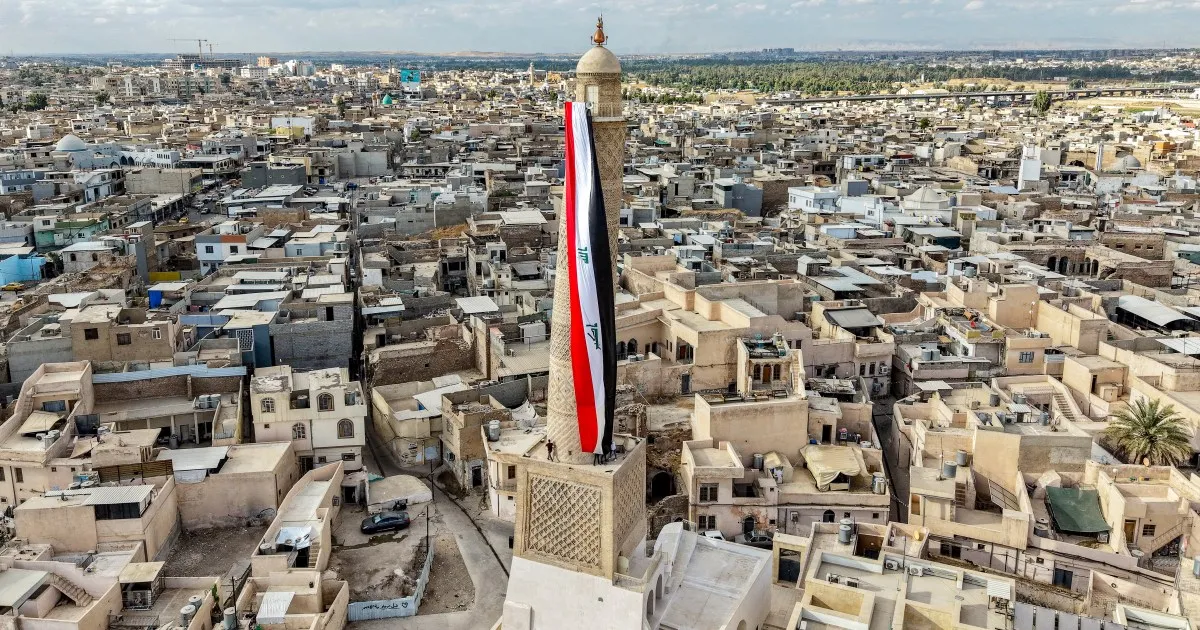
Separately, the Reuters news agency quoted security sources as saying that two members of the Iraqi police were killed in an air strike targeting the PMF in Mosul, about 105 miles (170km) northwest of Kirkuk.
Reporting from Baghdad, Al Jazeera’s Nicolas Haque said that Iraq was turning into an “expanding battleground” in the crisis, which began on February 28 with US-Israeli strikes on Iran and now threatens to engulf the region in a protracted conflict.
Since the war broke out, pro-Iran armed groups within the PMF, which was formed on the orders of Najaf-based Grand Ayatollah Ali Sistani in 2014 to fight ISIL (ISIS), have claimed responsibility for attacks on US interests in Iraq and beyond and have themselves been targeted.
Haque said the PMF takes its orders from Baghdad, but some factions are loyal to Tehran.
“That makes it very difficult for Baghdad to hold all of this together. Up until the war, the government successfully brought everybody around the table [and] was able to manage the different factions,” he said.
But as the war expands into Iraq, Baghdad has found itself “on a tightrope” between the US and Iran, said Haque.
“They can’t afford to turn their back on their biggest neighbour, Iran. Nor can they afford to turn their back on the United States,” he said, noting the economic and security ties between Baghdad and both countries.
Saturday also saw two drones targeting an airbase serving as a hub for US and coalition forces near Erbil airport in Iraq’s semi-autonomous Kurdish region. Haque said the US C-RAM air defence system was activated and intercepted the drones.
Iraq attacks ‘a worrying development’: Macron
In parallel, Kurdish news outlet Rudaw reported a drone attack on the house of Nechirvan Barzani, president of the Kurdish region, in the western town of Duhok.
Masrour Barzani, the prime minister of the Kurdistan Regional Government in northern Iraq, condemned “in the strongest terms” the assault.
“Once again, we call on the federal government to act on its responsibility, bring these outlaw criminals to justice, and curb the continued terrorist attacks carried out by these groups,” he said in a statement.
French President Emmanuel Macron said on X that he had spoken to Barzani, calling increased attacks in Iraq a “worrying development”.
In other developments, the Iraqi Ministry of Defence said on Saturday that a drone had crashed into the southern Majnoon oilfield “without detonating, causing no damage or injuries”.
Weekly insights and analysis on the latest developments in military technology, strategy, and foreign policy.
Short-range kamikaze drones operated by an Iran-backed militia appear to have successfully targeted a U.S. military Black Hawk helicopter and a critical air defense radar at an American base in Iraq. This is the first known example of a successful attack of this kind on a U.S. military aircraft. It’s also not the first time we have seen evidence of these kinds of drones zipping over the same installation in recent weeks.
The incidents underscore the reality of the threat posed by small drones in the Middle East, where a wide variety of nefarious players have already employed these systems for surveillance and attacks against U.S. forces on multiple occasions, for years now. It is also a preview of what the U.S. could end up facing on its own homefront as it grapples with constant and sometimes highly perplexing drone incursions over sensitive bases and facilities. Even since the war began, there have been very alarming drone incursions over one of America’s most important bases that houses nuclear weapons and B-52 bombers that carry them. You can read all about these developments here.
One of the videos that began circulating yesterday, filmed from a first-person view (FPV) drone, shows a pair of Black Hawk helicopters sitting in a compound, protected only by a low blast wall. The video feed cuts out just before detonation, on or close to the main rotor, but the assumption is that one of these helicopters (at least) was struck.
An Iranian-backed militia carried out a successful FPV drone strike on Camp Victory in Iraq yesterday, successfully hitting multiple targets.
The location has been identified as the Victory Base Complex (VBC), a cluster of U.S. military installations surrounding Baghdad International Airport close to the Iraqi capital.
As for the helicopter, this appears to be a medical evacuation (medevac) configured HH-60M, emphasized by the video editing, in which it seems the prominent identification panels marked with red crosses have been obscured.
Noticing they blurred out a portion of their attack video (green). I think they were trying to hide the fact they attacked a medevac helo. Note white mark circled in orange.
These are actually US Army HH-60M CASEVAC helicopters. Not UH-60s. Assigned to Charlie Company, 2nd Battalion (General Support), 4th Regiment, 4th Infantry Division Combat Aviation Brigade. https://t.co/OIjvcxagz6
Whether the helicopter was damaged or even destroyed by the drone is unclear at this point, but most significant is the fact that such a target was able to be engaged by a relatively simple, low-cost threat. The same goes for the second video, where the extent of the damage is much clearer.
The target in this case is a container-based AN/MPQ-64 Sentinel radar, a system used to alert and cue short-range air defense (SHORAD) weapons, including the National Advanced Surface-to-Air Missile System (NASAMS). The radar is in operating mode, its antenna clearly rotating.
A video showing a U.S. Army AN/MPQ-64 Sentinel radar in action with the 10th Combat Aviation Brigade:
Sentinel Radar
This footage includes the perspective from another drone, which confirms that the radar was hit, after which it is seen burning.
While it’s clear that more than one drone was in the vicinity of the radar during the attack, there have also been unconfirmed reports that the militia used some kind of swarming tactics, or at least multiple kamikaze drones to perpetrate this attack, with some degree of coordination.
Reportedly, the attacks on the Black Hawk and Sentinel radar occurred yesterday. In both cases, it is apparent that there is no degradation in the video feeds as they drop very low over the ground, even behind structures. This might be the result of the drones having been launched very close to their targets, or that they used fiber-optic control links. Both those scenarios are alarming, but a fiber-optic FPV drone would explain why passive sensor systems would not have detected them as they approached the base.
Wow, for the first time, fiber-optic drones have been spotted in use by the Azawad Liberation Front (FLA) in Mali, who are fighting against both the Malian Armed Forces and Russia’s Africa Corps/Wagner Group. The drones and training were likely provided by Ukraine, with previous… pic.twitter.com/OxemaEbWwO
The drone strikes are notable for a number of other reasons.
First, there is no sign of air defenses attempting to engage the incoming drones.
Of course, a response to the drones in the form of electronic warfare and cyber warfare, or other ‘soft-kill’ options, is a possibility. In regards to other counter-drone capabilities, there is no indication that the limited number of directed-energy weapons the U.S. has were deployed to this facility, while surface-to-air interceptors are not generally suitable for engaging such small drones. Other options would include gun-based systems, as well as drone-based systems, like the Coyote, and the laser-rocket-slinging VAMPIRE. On the other hand, we also know there is a chronic scarcity of many of these systems.
Video footage shows Block 2+ Coyote drones engaging drones in an undated demonstration:
Raytheon Missiles & Defense proves counter-UAS effectiveness against enemy drones
It should also be noted that, for all their relative simplicity and low cost, FPV drones are very hard to spot and target, especially when they are moving quickly at very low level. In many cases, they will evade detection by traditional radars, while even microwave radars, tailored for counter-drone work, can provide sporadic coverage at very low altitude.
The apparent vulnerability of the Victory Base Complex is all the more surprising since this is not the first time that the same installation has been targeted by FPV drones.
Earlier this month, videos emerged showing drones purportedly belonging to the Iran-backed Kataib Hezbollah group.
A screenshot from a video released by the Iran-backed Iraqi militia Kataib Hezbollah showing an FPV drone approaching a hardened shelter at the Victory Base Complex earlier this month. via X
There have been suggestions that all of these various videos may have been recorded during the same (complex) attack, although the latest footage appears to come from a separate attack on a different date.
Thirdly, the threat posed by drones of this kind, while proliferating significantly since the start of Russia’s full-scale invasion of Ukraine, has been recognized long before that.
Last year, we reported on how U.S. Defense Secretary Pete Hegseth had created a new task force specifically to counter the growing threats posed by small drones at home and abroad.
“There’s no doubt that the threats we face today from hostile drones grow by the day,” Hegseth stated at the time. “Emerging technologies — we see it in battlefields, in far-flung places, and we see it on our own border in small unmanned aerial systems. [These drones] target and bring harm on all warfighters, our people, our bases, and frankly, the sovereignty of our national airspace.”
Hegseth said the Pentagon “must focus on speed over process” when it came to new counter-drone efforts.
Soldiers from 2-130th Infantry Regiment hone their skills in a counter-drone training exercise at McGregor Range, New Mexico, last year. U.S. Army Staff Sgt. Raquel Birk
While there have been various regulatory barriers that have prevented the fielding of more robust drone defense of key installations and assets in the United States, this is not such a problem in Iraq, and especially in the course of a regional conflict.
It is notable, too, that there have been reports that some type of quadcopter-type drones may have been used for surveillance ahead of the Iranian strike on a U.S. logistics operations center in Kuwait on March 1. That attack led to the deaths of six U.S. service members, and more were wounded.
The incidents also underscore the very real risk faced by military infrastructure in the United States, a point that TWZhas repeatedly raised in the past. In particular, near-field attacks like these pose a huge threat and one that is hard to stop. Compared to a combat theater, something like this could be far more successful at home, where there are fewer defenses and more limited surveillance. As in Iraq, aircraft parked on the ground and radars are highly vulnerable, and the same threat even extends to traditional air defenses.
On June 1, the Security Service of Ukraine carried out a brilliant operation— on enemy territory, targeting only military objectives, specifically the equipment used to strike Ukraine. Russia suffered significant losses.
We have reached out to U.S. Central Command for more information about exactly what happened at the Victory Base Complex, and what kind of defensive measures are in place there.
As we wait for more details to emerge, to paint a fuller picture of these attacks on American assets in Iraq, it is clear that there are still questions to be asked about the resilience of the U.S. military in the face of kamikaze drones and similar threats.
As the United States-Israeli war on Iran enters its fourth week this weekend, pressure on oil and gas markets continues to mount due to severe disruption to shipping traffic through the Strait of Hormuz as well as attacks on and around key energy facilities in the Gulf.
In peacetime, 20 percent of the world’s oil and gas is shipped from producers in the Gulf through the Strait of Hormuz – the only route to the open ocean – including 20 million barrels of oil per day.
To bridge the shortage its closure has caused, countries in the Middle East are exploring alternative routes to get energy exports out.
In this explainer, we look at three major pipelines in the Middle East that producers may be pinning their hopes on, and whether they can fill the gap.
What has happened in the Strait of Hormuz?
On March 2 – two days after the US and Israel began strikes on Iran – Ebrahim Jabari, a senior adviser to the commander-in-chief of Iran’s Islamic Revolutionary Guard Corps (IRGC), announced that the strait was “closed”. If any vessels tried to pass through, he said, the IRGC and the navy would “set those ships ablaze”. Since then, traffic through the strait has plunged by more than 95 percent.
Iranian officials have most recently stated that the strait is not completely closed – except to ships belonging to the US, Israel and those who collaborate with them – but have also laid down new ground rules. Any vessel must secure Tehran’s approval to transit through the narrow waterway.
As a result, over the past fortnight, countries have been scrambling to do deals with Iran to secure safe passage and a few, mostly Indian, Pakistani and Chinese-flagged tankers have been allowed to pass.
On Thursday, Malaysian Prime Minister Anwar Ibrahim thanked Tehran for granting Malaysian vessels “early clearance” through the strait.
Meanwhile, about 2,000 ships flying the flags of other nations are stuck on either side of the strait.
(Al Jazeera)
Which oil pipelines could serve as alternate routes?
The only alternative to shipping oil is piping it across land or under the sea. Three oil pipelines could work as ways around the Strait of Hormuz, including:
Saudi Arabia’s East-West Pipeline
The East-West pipeline is also known as the Petroline and is operated by Saudi oil giant Aramco. Aramco is one of the world’s largest companies, with a market capitalisation exceeding $1.7 trillion and annual revenues of $480bn. The oil giant controls 12 percent of global oil production, with a capacity of more than 12 million bpd.
It is a 1,200km (745-mile) pipeline which runs from the Abqaiq oil processing centre close to the Gulf in Saudi Arabia to the Yanbu port on the Red Sea, on the other side of the country.
However, the pipeline does not have the capacity to fully make up for the Hormuz closure.
In 2024, about 20 million barrels per day (bpd) passed through the Strait of Hormuz, according to data from the United Nations. Crude oil and condensate made up 14 million bpd of this, while petroleum was the remaining 6 million bpd.
The East-West pipeline has the capacity of transporting up to 7 million bpd. On March 10, Aramco said about 5 million bpd could be made available for exports, while the rest could supply local refineries.
Since the US-Israeli war on Iran began at the end of February, Saudi Arabia has ramped up its oil flow through this pipeline. In January and February, an average of 770,000 bpd flowed through the pipeline, according to data from Kpler, a data and analytics company. By Tuesday this week, this had increased to an average of 2.9 million bpd.
However, using the Saudi pipeline still carries a risk.
The Houthis, an Iran-backed Yemeni armed group whose attacks on ships in the Red Sea caused global shipping chaos during Israel’s genocidal war in Gaza from 2023 to 2025, could target the Bab al-Mandeb Strait, which connects the Red Sea to the Gulf of Aden, and the Indian Ocean beyond.
An unnamed Houthi leader told the Reuters news agency that the Houthis remain ready to attack the Red Sea again in solidarity with Tehran, the agency reported on Thursday.
“We stand fully militarily ready with all options. As for other details having to do with determining zero hour they are left to leadership and we are monitoring and following up with the developments and will know when is the suitable time to move,” the Houthi leader said.
The Bab al-Mandeb is the southern outlet of the Red Sea, situated between Yemen on the Arabian Peninsula and Djibouti and Eritrea on the African coast.
It is one of the world’s most important routes for global seaborne commodity shipments, particularly crude oil and fuel from the Gulf bound for the Mediterranean via the Suez Canal or the SUMED pipeline on Egypt’s Red Sea coast, as well as commodities bound for Asia, including Russian oil.
The Bab al-Mandeb is 29km (18 miles) wide at its narrowest point, limiting traffic to two channels for inbound and outbound shipments.
Iran could open a new front in the Bab al-Mandeb Strait if attacks are carried out on Iranian territory or its islands, Iran’s semiofficial Tasnim cited an unnamed Iranian military source as saying on Wednesday.
(Al Jazeera)
UAE’s Abu Dhabi Crude Oil Pipeline
The Abu Dhabi Crude Oil Pipeline is also called the ADCOP or the Habshan-Fujairah pipeline.
The 380km pipeline runs from Habshan, an oil and gasfield in the southwestern area of Abu Dhabi, United Arab Emirates, to the port of Fujairah on the Gulf of Oman.
The pipeline, which became operational in 2012, has a capacity of about 1.5 million barrels per day (bpd). It is unclear how much is now being transported through the pipeline.
However, oil exports from Fujairah do appear to have risen in the past month despite the closure of the strait, averaging 1.62 million bpd in March compared with 1.17 million bpd in February, according to Kpler analyst Johannes Rauball, who spoke to Reuters.
Iraq-Turkiye Crude Oil Pipeline
The Iraq-Turkiye Crude Oil Pipeline, also called the Kirkuk-Ceyhan Pipeline, links Iraq to the Mediterranean coast of Turkiye.
The pipeline, which has the capacity of 1.6 million bpd, currently carries about 200,000bpd.
Iraq is among the top five global producers of oil and is the second largest within the Organization of the Petroleum Exporting Countries (OPEC), exceeding 4 million bpd.
Can these pipelines replace the Strait of Hormuz?
No. While these pipelines can take on some of the capacity of Hormuz, their combined capacity is only about 9 million bpd, compared with about 20 million bpd for the strait.
Additionally, these pipelines are land-based and within the range of Iranian missiles and drones, which makes them just as vulnerable to attacks and damage in the ongoing conflict as ships travelling through the strait. Throughout the war, energy infrastructure all over the Gulf has suffered strikes.
Are there other options?
Theoretically, oil can be transported on trucks, but this is costly, slow and inefficient.
A standard truck can carry anywhere between 100 to 700 barrels per day, depending on the number of trips. Hundreds of thousands of barrels would be needed to meet needs, requiring thousands of trucks, which could also be targeted in strikes.
Police source tells Al Jazeera the attack hits positions of the Iran-aligned PMF, which the US has increasingly targeted.
Published On 25 Mar 202625 Mar 2026
An aerial attack on a military base in western Iraq’s Anbar province has killed seven fighters and wounded 13, according to Iraq’s Ministry of Defence.
The strikes on Wednesday targeted the military healthcare clinic at the base in Habbaniyah, according to the ministry. It called the attack “a heinous crime” that violated “all international laws and norms”.
Recommended Stories
list of 3 itemsend of list
An Iraqi police source told Al Jazeera the attack targeted positions of the Iraqi military’s Popular Mobilisation Forces (PMF), a paramilitary force that includes some Iran-aligned brigades and reportedly shares the base with members of Iraq’s regular army.
“What we understand from the military here is that air strikes were carried out and then further strikes carried out on that same position,” said Al Jazeera’s Assed Baig, reporting from Baghdad. He said it appeared to be the first time the PMF was hit alongside the broader Iraqi military.
Iraq has denounced the attack as the country has been dragged into the United States-Israeli war on Iran. On Tuesday, Iraqi Prime Minister Mohammed Shia al-Sudani’s office said Baghdad would summon the Iranian and US ambassadors over the recent strikes.
‘Right to respond’
A security official quoted by the AFP news agency said the strike occurred at the same base that suffered a deadly attack the day before.
Tuesday’s strike, which the PMF blamed on the US, was the deadliest in Iraq since the start of the war on Iran on February 28, It killed 15 fighters, including a commander.
The attack prompted Iraq’s government to grant the PMF a “right to respond” to any attack against it, a position Baghdad reaffirmed on Wednesday.
“We reserve our full right to take all necessary measures to respond to this aggression within the established legal frameworks,” the Defence Ministry said.
Since the war began, pro-Iran armed groups have claimed responsibility for attacks on US interests in Iraq and across the region while strikes have also targeted these groups, including at government-linked positions.
The US Department of Defense has acknowledged that combat helicopters have carried out strikes against pro-Iran armed groups in Iraq during the current conflict.
Baig said the latest strikes demonstrate “an escalation in terms of the PMF being targeted”.
“Increasingly, Iraq is becoming a battlefield between Iraqi armed factions and the United States,” he said.
Video shows the aftermath of an airstrike in Iraq’s Anbar province on a headquarters of the pro-Iran Popular Mobilisation Forces, where at least ten people were killed during a commanders’ meeting.
Millions of people have rung in the ancient Persian New Year, Nowruz, as war grips the Middle East. The 3,000-year-old Zoroastrian-rooted celebration marks the beginning of spring in the northern hemisphere and is celebrated by 300 million people in Iran and Central Asia.