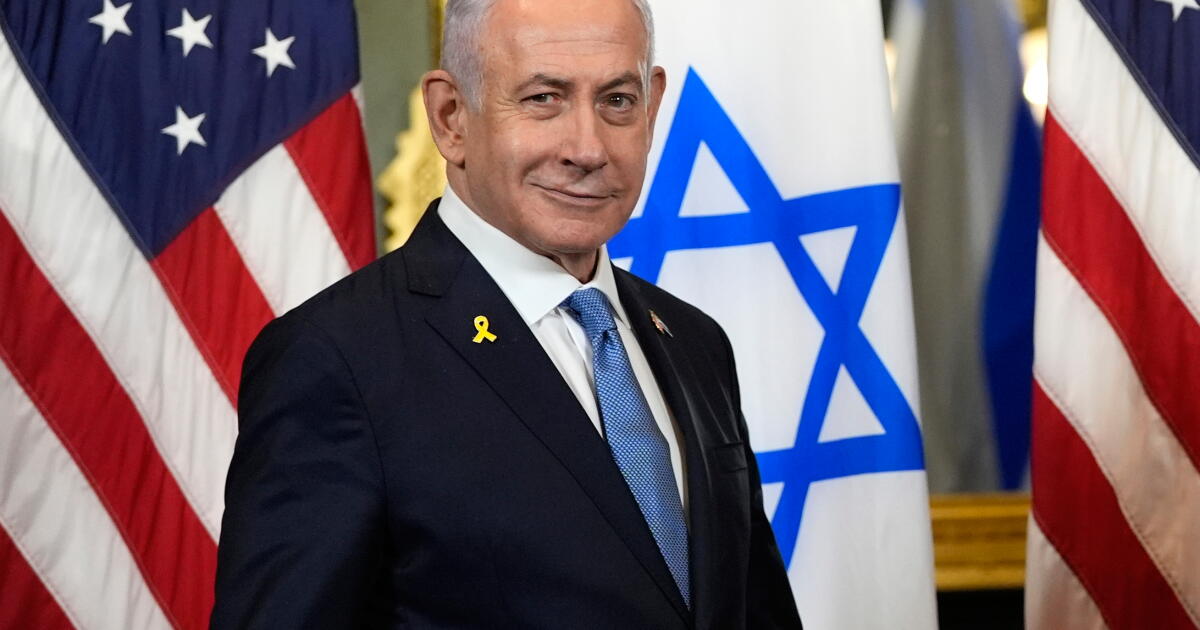
framework

In Lebanon, framework agreement signed with Israel spurs protest, criticism | Israel attacks Lebanon

Beirut, Lebanon – After the governments of Lebanon and Israel on Friday signed a United States-brokered framework agreement following months of direct negotiations, protesters took to the streets of the Lebanese capital to express their anger at the deal.

Many of the demonstrators waved flags of the Iran-backed group Hezbollah, which has been militarily confronting Israel’s ongoing invasion and occupation of large swaths of southern Lebanon.

Israel and Hezbollah have been fighting since October 2023, with varying levels of intensity, but the former has twice escalated the conflict – first in September 2024 and then nearly four months ago.

Some of the harshest critics of the framework, which does not force the Israeli army to withdraw from the areas it occupies, have been those most deeply impacted by Israel’s war, which has killed more than 4,200 people and forced hundreds of thousands from their homes since early March.

“After everything my family, my village, the south, and Dahiyeh have endured – the destruction, the displacement, the grief and the loss – it is incredibly difficult for me to accept an agreement with the same state that carried out the military actions that devastated our communities,” said Ali Zaytoun, a resident of Beirut’s southern suburbs, known as Dahiyeh.

Zaytoun, who runs a popular Instagram account called History of Dahieh, said he had been displaced multiple times due to Israeli attacks.

“Imagine someone destroys your home and your life, and then you’re expected to simply move on as if nothing happened,” said Zaytoun. “My protest is about remembering those who suffered, standing up for my community, and expressing that this agreement does not reflect the justice or respect that people who lived through this war deserve.”

A new Oslo?

The Israeli intensification on March 2 came after Hezbollah fired on Israel for the first time in more than a year following the killing of Iranian Supreme Leader Ali Khamenei in a joint US-Israeli air attack on Tehran two days earlier, and as a response to more than 10,000 Israeli violations of a ceasefire reached in November 2024.

On the same day, the Lebanese government declared Hezbollah’s military activities illegal and later tried – unsuccessfully – to expel the Iranian ambassador.

Its position was that Hezbollah’s actions invited Israel’s wrath in a war fought on behalf of Iran and not the people of Lebanon.

Hezbollah, however, continued fighting Israel in southern Lebanon, where the Israeli army has established what it calls a “security zone” that goes as deep as 10km (6.2 miles) into the country.

As attacks continued, Lebanon’s government entered the United States-brokered negotiations with Israel, despite Hezbollah’s objections.

The final text of the 14-point Washington agreement states Israel has no claim to Lebanese territory and that the Lebanese Armed Forces (LAF) will eventually be the authority in southern Lebanon, “pending the verified disarmament of” non-state armed groups such as Hezbollah.

Proponents point to Israel recognising Lebanon’s authority over its own territory, though critics say the framework relies too heavily on the US – Israel’s main military and diplomatic backer and a signatory to the deal – to enforce it.

“The United States is unlikely to act as a neutral mediator and will almost certainly align with Israeli positions whenever disputes arise over the interpretation or implementation of the agreement,” said Karim Emile Bitar, a professor of international relations at the Saint Joseph University of Beirut.

“This creates a fundamentally asymmetric negotiating environment in which Lebanon has little leverage and few effective guarantees.”

Hezbollah chief Naim Qassem declared the agreement “null and void”, calling it “humiliating, shameful, and a surrender of sovereignty”, while Hassan Fadlallah, a Hezbollah lawmaker, warned of “internal conflict” in Lebanon.

Parliament Speaker Nabih Berri called for calm but also declared that the deal was an attempt to incite strife.

Those who backed the government said it had originally little choice but to enter direct negotiations, given its limited leverage in a war where Israel has technological superiority and unwavering US support.

Lebanese Prime Minister Nawaf Salam wrote on social media after the agreement’s signing that it “aims to achieve Israel’s withdrawal from all Lebanese territories”, while President Joseph Aoun called it “a first step” towards restoring Lebanon’s sovereignty.

Still, the final terms of the deal were criticised by many analysts.

“This framework agreement essentially mirrors the reality of the military and political balance on the ground, which is decisively tilted in Israel’s favour,” said Bitar.

Bitar said the agreement was reminiscent of the Oslo Accords, a series of US-brokered agreements signed by the Palestine Liberation Organization (PLO) and Israel in the 1990s.

“We see a similar pattern here: Israeli negotiators seek recognition and get the other side to relinquish leverage while offering no binding timetable or reciprocal obligations,” he added.

On Saturday, Israeli Defence Minister Israel Katz insisted soldiers will remain in Lebanon until Hezbollah is disarmed.

US reliance

Days before the signing of the Washington framework, Iran and the US agreed on a memorandum of understanding (MoU) that aims to end the war launched by the US and Israel against Iran in late February.

The MoU declared, among other things, “the immediate and permanent termination of military operations on all fronts, including Lebanon”, between the two countries and their allies.

Lebanon’s inclusion in the MoU was reportedly an Iranian priority, while a “deconfliction cell” was formed to bolster the supposed ceasefire in the country.

Throughout the war and the period of negotiations, Lebanon’s government has tried to separate itself from Iran – but some said it may have gone too far in the other direction.

“We are seeing the confirmation of what Hezbollah has been warning all along. Not because Hezbollah got it right, but because the Lebanese state got it so wrong,” said Lebanese writer Elia Ayoub.

“I understand the need to not depend on Iran, but what we’ve instead done is become even more dependent on the US than we’ve previously been,” added Ayoub, the founder of the podcast The Fire These Times.

“And it’s the US that has been bankrolling Israel’s genocide in Palestine and war crimes in Lebanon,” Ayoub added.

Analysts also questioned whether the government would be able to implement the deal.

“It appears that the Lebanese side has come under significant US pressure to sign an agreement that is very likely to remain little more than ink on paper, and very unlikely to be implemented in any meaningful way,” said Bitar.

Karim Safieddine, a nonresident fellow with the Tahrir Institute for Middle East Policy, said the framework left the Lebanese government with “very little agency”.

“It’s Israel imposing a deal,” he added. “It’s very clear what this deal is. It’s just a surrender agreement.”

At the same time, some pointed to similarities to the 2024 ceasefire agreement, expressing doubt whether Israel will be incentivised to respect the framework.

“It’s one thing to sign a declaration of intent; it’s another thing to have it implemented, and I can see all kinds of problems emerging from this,” said Nicholas Blanford, a nonresident fellow at the Atlantic Council and author of a book on Hezbollah.

Last year, Israel repeatedly complained that LAF’s efforts to disarm Hezbollah were either too slow or ineffective. The US often sided with Israel despite diplomatic attempts from European and other officials encouraging it to support LAF.

In a call with his US counterpart, President Donald Trump, on Saturday, Aoun said Lebanon “would assume its responsibilities” in implementing the framework and expressed hope Washington would help ensure that commitments ‌are fulfilled, particularly by pressing Israel to pull out from the areas it occupies.

Point 9 of the agreement states Lebanon’s government commits to a “rigorous, performance-based program to enable the capacity of the LAF to assert full military and security control within Lebanon … to implement the disarmament of all non-state armed groups”.

This provision has some in Lebanon worried about potential confrontations between LAF and Hezbollah, but Blanford said the possibility of a large escalation is currently not likely.

“The Lebanese army and the government are unwilling to use force against Hezbollah,” he said. “Forcibly trying to disarm a group that is refusing to disarm is an act of war. And I think the Lebanese army and the Lebanese government would be extremely wary of that.”

Source link

US announces framework agreement between Israel and Lebanon | News

BREAKING,

US Secretary of State Marco Rubio has announced the deal after talks unfolded in Washington, DC.

United States Secretary of State Marco Rubio has announced a deal framework between Lebanon and Israel after negotiations in Washington, DC.

Details about the agreement remain scarce. But in his remarks on Friday, Rubio made clear that the deal was only the “first step” in further negotiations.

“It’s the beginning of the beginning,” Rubio said, surrounded by representatives from both Lebanon and Israel.

“There’s a lot of work ahead. We don’t in any way underestimate the difficulty of the task ahead, but we understand the importance of it, how vital it is.”

The two sides had gathered in Washington, DC, for three days of US-mediated talks this week, starting on Tuesday.


More details to come…

Source link

Oil prices fall, stocks rally as US, Iran sign framework to end war | Oil and Gas

Brent crude drops as much as 1.6 percent, while key stock indices in Japan, South Korea and Taiwan climb.

Oil prices have dropped following the United States and Iran’s signing of an interim peace agreement, resuming a slide interrupted by US President Donald Trump’s warning that he could restart his military campaign.

Brent crude fell as much as 1.6 percent on Thursday morning in Asia, returning the international benchmark to almost exactly where it was 24 hours previously.

Recommended Stories

list of 4 itemsend of list

Brent futures for delivery in August stood at $78.23 as of 04:00 GMT, only about 7 percent higher than before the US and Israel launched their war on Iran on February 28.

After several days of declines, Brent briefly spiked above $81 a barrel on Wednesday after Trump warned that the US could “go right back to dropping bombs” on Iran if it doesn’t “behave”.

Asian stock markets rallied on Thursday on renewed optimism for an end to nearly four months of disruption to global energy supply chains.

Japan’s benchmark Nikkei 225 and South Korea’s Kospi both hit all-time highs, gaining 1.8 percent and 1.4 percent, respectively.

Taiwan’s Taiex rose as much as 1.3 percent.

Hong Kong’s Hang Seng Index bucked the trend, dropping 1.7 percent.

US stock futures, which are traded outside of regular market hours and often foreshadow the next day’s performance, climbed, with those tied to the benchmark S&P 500 and the tech-heavy Nasdaq Composite climbing about 0.8 percent and 1.3 percent, respectively.

k
A man walks next to an electronic quotation board displaying the Nikkei 225 stock prices on the Tokyo Stock Exchange in Tokyo, Japan, on June 18, 2026 [Kazuhiro Nogi/AFP]

Pakistani Prime Minister Shehbaz Sharif, who mediated the negotiations between Washington and Tehran, said on Wednesday that the US-Iran memorandum of understanding (MoU) had entered into force with “immediate effect”.

Sharif said Iran would “instantly reopen” the Strait of Hormuz and the US would “immediately” lift its naval blockade of Iranian ports, though it was not immediately clear if the announcement had any effect on boosting maritime traffic in the critical waterway.

Shipping in the strait has been reduced to a fraction of peacetime levels due to the threat of Iranian missiles, drones and mines, as well as the US blockade.

While more than 500 vessels are estimated to be waiting to exit the Gulf through the strait, shipping companies have expressed concern about the lack of clarity on how to ensure the safety of their vessels and crews in the channel.

In a statement earlier this week, the Baltic and International Maritime Council (BIMCO), one of the world’s largest associations for shipowners, said the US and Iran had yet to provide information about “key aspects such as timings and safe routes”.

“Due to lack of details and a history of overly optimistic reassurances, we believe the security situation for the shipping industry remains volatile, and we still consider it very risky for ships to commence transits at this point,” Jakob Larsen, chief safety and security officer at BIMCO, said in a statement on Monday, responding to the initial announcement of the MoU.

“We advise shipowners to continue doing thorough risk assessments and appeal to all parties to put the safety of seafarers first.”

Source link

Israel and Lebanon agree on ceasefire framework in US-led talks | Donald Trump

NewsFeed

The US announced a ceasefire framework between Israel and Lebanon, which includes expanded Lebanese army control and a halt to Hezbollah attacks. Al Jazeera’s Manuel Rapalo explains how Hezbollah’s rejection of the talks leaves enforcement uncertain.

Source link

How realistic is Trump’s Iran framework? | Newsfeed

NewsFeed

As US President Donald Trump heads into the White House Situation Room to make a “final determination” on a potential peace deal with Iran, analyst Alex Scheers remains skeptical Tehran will accept Washington’s demands, saying “nothing concrete is in place” yet.

Scheers cautions that Trump’s Truth Social post should not be interpreted as a finalised deal, noting major gaps between political statements and actionable agreements. He points to disputes over sanctions, nuclear enrichment and Iran’s frozen assets estimated at $120 billion.

Source link

Trump’s drugmaker deals may save economy $529B over 10 years, White House says

White House economists estimate that President Trump’s deals with pharmaceutical companies to drop some of their U.S. prescription drug prices to what they charge in other countries could save $529 billion over the next 10 years.

The analysis obtained by the Associated Press includes the first economy-wide projections behind a policy at the core of Trump’s pitch to voters going into November’s midterm elections for control of the House and Senate. Democratic lawmakers have been doubtful about the savings claimed by Trump and these new numbers are likely to trigger additional questions about the data.

Cost-of-living issues are at the forefront of voters’ concerns and higher energy prices tied to the Iran war have deepened the public’s anxiety. Trump has tried in part to address affordability concerns by focusing on his efforts to cut deals with companies so that the cost of prescription drugs in the U.S. would no longer be dramatically higher than in other affluent nations.

“Now you have the lowest drug prices anywhere in the world,” Trump said at a Friday rally before a crowd of seniors in Florida. “And that alone should win us the midterms.”

The analysis was done by administration officials for the White House Council of Economic Advisers. They also estimated that federal and state governments could save a combined $64.3 billion on Medicaid during the next decade because of what Trump calls his “most favored nation” policy on drug prices.

Few of the details of the deals struck by the Trump administration and 17 leading pharmaceutical companies have been made public, making it hard to independently verify the projected savings. The White House analysis sought to estimate the prospective savings as more medications come onto the market and fall under Trump’s framework — with one model in the report tallying the possible savings at $733 billion over a decade.

Trump and his Department of Health and Human Services have touted his drug-pricing deals as transformative and urged Congress to codify their principles into law. Democratic lawmakers have challenged the administration’s claims of savings. Senate Finance Committee Ranking Member Ron Wyden, D-Ore., and 17 Senate Democrats in April proposed a measure requiring the administration to disclose the terms of the agreements signed by pharmaceutical companies.

“If these deals are so great, why is the Trump administration afraid of showing them to the public?” Wyden said when announcing the measure. Health Secretary Robert F. Kennedy Jr. said his team would share details that didn’t include proprietary information or trade secrets.

The White House said it has not shared the text of the agreements because they include highly sensitive data that could move financial markets.

The potential savings estimated by the Trump administration would be substantial as Americans spent $467 billion on prescription drugs in 2024, according to the most recent government data available. The analysis is premised on the idea that foreign countries would also pay more for their prescription drugs, which would diversify drugmakers’ sources of revenue and preserve their ability to innovate with new treatments.

Outside economists have caveated that any savings might not flow directly to patients, many of whom already pay discounted prices for their drugs through their insurance coverage.

The Congressional Budget Office in October 2024 estimated that a plan similar to what Trump ended up adopting could reduce prescription drug prices by more than 5%, though the decrease “would probably diminish over time as manufacturers adjusted to the new policy by altering prices or distribution of drugs in other countries.”

The scope of the savings claimed by the Trump administration are likely to intensify the scrutiny by Democrats, who counter that any price reductions would be offset by higher costs for prescription drugs not covered by the “most favored nation” framework. One of their main critiques is that pharmaceutical companies have increased their profit margins while working with the administration.

In April, staff working for Sen. Bernie Sanders, I-Vt., released an analysis that looked at 15 of the companies that have agreed to this drug-pricing plan and found that their combined profits jumped 66% over the past year to $177 billion. The report noted that the tax cuts Trump signed into law last year “exempted or delayed many of the most expensive drugs” from price negotiations with Medicare.

The Trump administration has countered that they consider Sanders’ critique to be flawed, saying that it’s based on the list prices for pharmaceutical drugs instead of the actual price that patients pay.

Boak writes for the Associated Press.

Source link