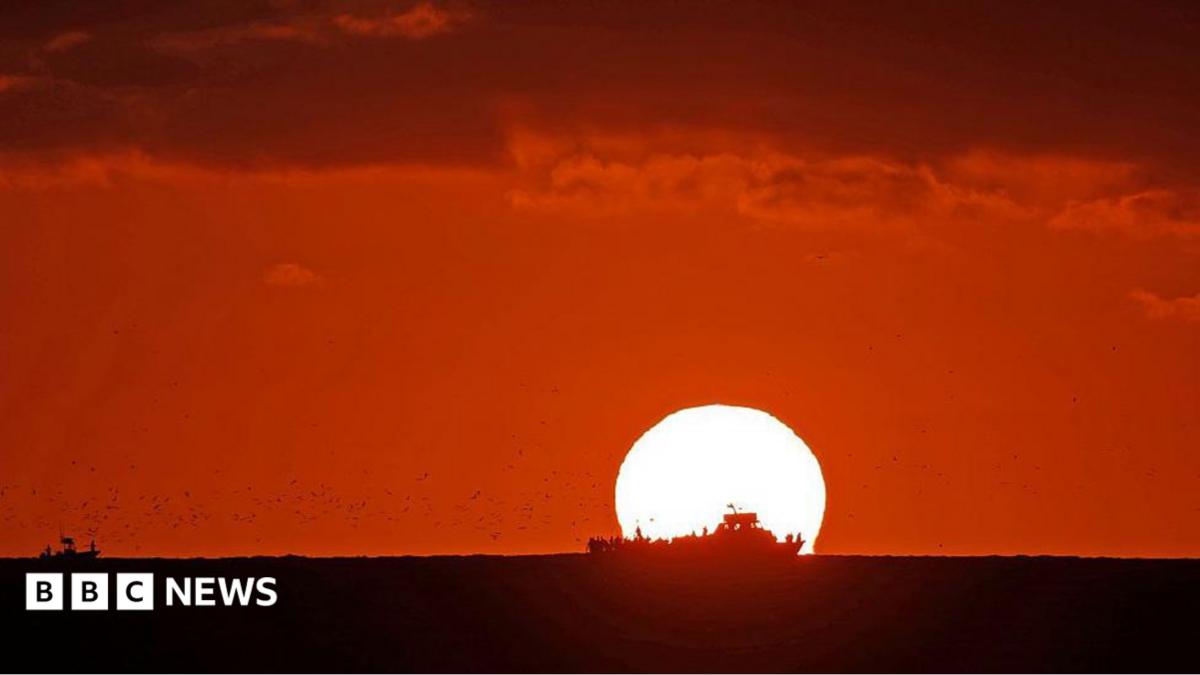
The waters far away from El Niño’s Pacific hunting ground are also extremely warm, including around the UK and Europe.
The western English Channel has seen almost continuous marine heatwave conditions for more than three years, peaking at 7C above normal in July, according to Prof Tim Smyth, director of science at Plymouth Marine Laboratory.
“This is unprecedented,” he added.
Scientists say such widespread warmth around the planet is a clear sign of the growing effect that human-caused climate change is having on the world’s seas.
The oceans take up more than 90% of the excess heat trapped by humanity’s greenhouse gas emissions, mainly from burning fossil fuels.
“The latest Copernicus data reinforce the troubling upward trend in ocean temperatures,” said Smyth.
Warmer seas help to fuel more extreme weather. They can provide storms with extra moisture and energy, and can intensify heatwaves on land in some coastal regions by reducing the cooling effect of sea breezes.
Warmer water also takes up more space, raising sea levels and bringing a greater risk of coastal flooding – while intense ocean heat can be devastating for sea habitats, such as coral reefs.
The increasing frequency of marine heatwaves is already “putting increasing pressure on marine ecosystems and the communities that depend on them”, Burgess said.