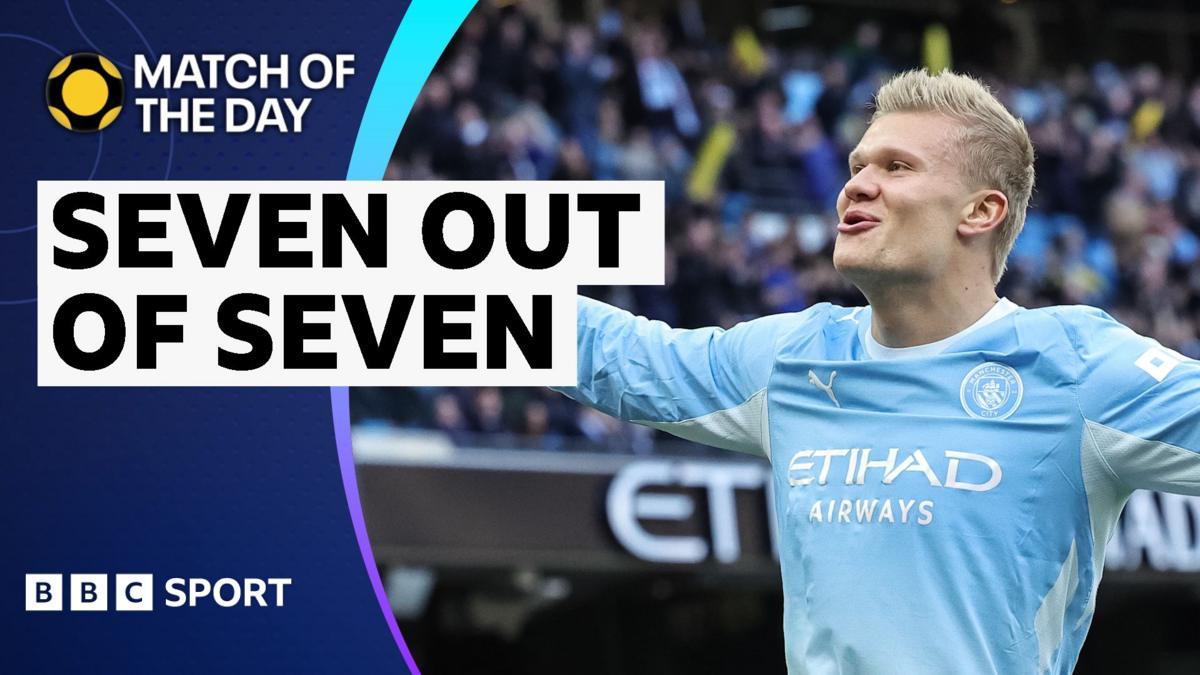
How 'dangerous' Man City maintained 100 per cent record
Match of the Day’s Joe Hart and Danny Murphy analyse how Manchester City made it seven wins from seven in the Premier League with a 3-2 victory against Ipswich.
Source link
Match of the Day’s Joe Hart and Danny Murphy analyse how Manchester City made it seven wins from seven in the Premier League with a 3-2 victory against Ipswich.
Source link
Data show a 42 percent drop in forest clearance from a year earlier, giving Lula a boost before the election run-off.

Published On 17 Oct 202617 Oct 2026
Deforestation in Brazil’s Amazon rainforest has fallen to its lowest level since records began in 1988, according to official figures that give a boost to President Luiz Inacio Lula da Silva days before a presidential run-off.
Brazil’s space research agency, Inpe, said on Friday that 3,335 square kilometres (1,288 square miles) of forest were cleared in the 12 months through July, about 42 percent less than the year before.
list of 3 itemsend of list
The previous record low was 4,571 sq km (1,765 sq miles) in 2011-12, while annual losses peaked at nearly 30,000 sq km (nearly 11,600 sq miles) in the mid-1990s, according to Inpe’s Prodes satellite programme, which measures from August to July because cloud cover is lower in mid-year.
“It’s an absolutely stratospheric drop…it’s like a dream,” Environment Minister Joao Paulo Capobianco said at a news conference in Brasilia.
Marcio Astrini of the climate advocacy group Observatorio do Clima called the figures “a historic achievement” and said they show that “with political will, it is possible to curb deforestation and greenhouse gas emissions”.
President Lula wrote on X: “Our goal is to achieve zero illegal deforestation by 2030.”
Lula took office in 2023 pledging to end illegal deforestation by 2030, after clearing soared to a 15-year high under his far-right predecessor, Jair Bolsonaro. The Amazon lost about 11,600 sq km (about 4,480 sq miles) a year on average during Bolsonaro’s 2019-2022 term, almost 60 percent more than in the previous four years.
Deforestation has fallen every year since 2022 and is down 71.2 percent over four years. The AFP news agency attributes the drop to greater monitoring and stiffer penalties for illegal logging.
Lula faces Bolsonaro’s eldest son, Senator Flavio Bolsonaro, in the election run-off on October 25, with polls showing them neck and neck.
Flavio pledged in his manifesto to strengthen environmental oversight in the Amazon, focus enforcement on organised crime rather than extractive workers and small farmers, and end “illegal deforestation” by 2029.
He has also praised his father, who is serving a 27-year sentence under house arrest for coup plotting, for opposing what he calls a “radical environmental agenda”.
Deforestation in the Cerrado savanna, south of the Amazon, also fell by about 24 percent, to 5,517 sq km (2,130 sq miles), the lowest since records began in 2001.

A string of mazy runs down Barcelona’s right flank, two goal assists within three minutes, and a player of the match award cap off yet another impressive night in European football; Lamine Yamal continues to rack up remarkable statistics and mesmerising performances eight weeks into the club football season.
While this isn’t Yamal’s breakthrough year by any means – the Spanish forward first burst onto the scene as a 16-year-old in the 2023-24 season – his consistency for both club and country in the past eight weeks has led to comparisons with some of the greatest prodigies of recent years.
list of 3 itemsend of list
Since returning from the FIFA World Cup as a champion, Yamal has enjoyed scintillating form with the Catalan side.
Across the eight match weeks in club football, the 19-year-old has scored eight goals and provided nine assists in his 10 matches in all competitions for Barcelona, bringing his total number of goal contributions to an impressive 17.
All-time Barcelona and Argentina great Lionel Messi had 14 goal contributions – eight goals and six assists – to his name in the 2008-09 season, when he won his first Ballon d’Or award as a 19-year-old.

Yamal has made no secret of his desire to win the award in 11 days, but he will face stiff competition from French star Kylian Mbappe and England captain Harry Kane.
Mbappe, who has broken goal-scoring records of his own, leads the attack at Real Madrid – Barcelona’s fiercest rivals and the undeniable kings of European football.
While Real have not won the Champions League since the 2023-24 season, which brought their record-extending 15th trophy, Mbappe helped them beat Italian giants Inter Milan in their first match last month.
Before joining Real in 2024, Mbappe was on a goal-scoring spree with French champions Paris Saint-Germain. He joined the club as an 18-year-old in 2017 and enjoyed great success a year later.
As a then-19-year-old, Mbappe scored 12 goals and made four assists in his first 10 games, bringing his goal contribution to 16 – one behind Yamal’s current record after the same number of matches.

While comparisons between Yamal’s overall career with Messi’s would be grossly unfair, the Spaniard is following in his club legend’s footsteps.
Both players enjoy the unique statistic of having scored braces in their first five La Liga games. Messi’s came as a 25-year-old in the 2012-13 season, while Yamal has achieved the same feat this season.
In April 2007, Messi scored his famous solo goal against Getafe, dribbling from his own half past five players as Camp Nou watched in awe.
Three months later, Lamine Yamal was born, and not long after, Messi was seen with baby Yamal in a photo that went viral this year.
The hype reached fever pitch during the World Cup as a young Messi bathed baby Yamal during a TV commercial. At first, many thought it was an AI-generated image, but it’s indeed real and dates back to 2007.
During a UNICEF fundraising shoot at Camp Nou stadium, a 20-year-old Messi met Yamal, who was only five months old at the time.
The two Barcelona stars faced off in the World Cup final on July 19, with the Argentinian walking away in tears as Yamal’s Spain lifted the trophy, but not before they exchanged a warm embrace.
Yamal later revealed what he said to Messi on the pitch in New York.
“I said thank you for everything you gave football,” Yamal told a British newspaper.
Before the final, much of the attention had centred on the battle between 39-year-old Messi and 19-year-old Yamal, with the match likened to a master vs apprentice clash.
Nineteen years on from that iconic photo, Yamal is already chasing Messi’s Barcelona milestones. Here’s how old each of them was when they played their 150th game for the club.

During the current season, Yamal’s incredible goal tally overshadows that of three other La Liga teams.
His seven individual goals in the league are more than what Valencia (six), Getafe (four) and Malaga (four) have managed as teams.
The forward’s form and skills are not lost on his manager, Hansi Flick.
The Barcelona boss heaped praise on his number 10 after the 4-1 win over Galatasaray in Istanbul.
“When you see the chances Lamine creates in every training session, it’s the same in matches. I have a lot of top-quality players. Everyone’s watching Lamine – that’s only natural.”
“It’s incredible to have players like that; he’s turned the game around for us.”
The immigration agency has rejected a report from a government watchdog, making suggestions for improved body camera policy.
Published On 14 Oct 202614 Oct 2026
Immigration and Customs Enforcement (ICE), a United States agency that has taken a central role in President Donald Trump’s mass deportation campaign, has rejected a government report calling for its agents to wear body cameras that automatically activate.
On Wednesday, the Government Accountability Office, a nonpartisan agency that provides research to Congress, released a report recommending an update to ICE guidelines for camera usage.
list of 3 itemsend of list
It suggested that “automated camera activation” would be helpful in situations where “unexpected and unplanned incidents, unrelated to sensitive operations, result in use of force by or against personnel”.
“Given the important role of body-worn cameras in law enforcement activities, we maintain that additional controls are needed to help ensure that ICE personnel capture footage in accordance with policy,” the report said.
Automatic activation, it added, would address difficulties ICE agents face in manually turning on their cameras during enforcement operations.
But ICE has rejected the recommendation for automatic activation, which could be triggered by an agent pulling a gun or turning on a car siren. The agency cited privacy concerns.
But the Trump administration faces public pressure to improve transparency during its immigration raids.
Agents from ICE and other agencies such as Customs and Border Protection (CBP) have faced accusations of excessive force and civil liberties violations.
In January, two US citizens – Renee Good and Alex Pretti – were shot to death in separate shootings in Minneapolis, Minnesota, during immigration operations.
The New York Times estimated in July that immigration agents had opened fire on at least 25 people since the start of Trump’s second term. A CBS News review updated this week counts at least 30 shootings, with nine people killed and 13 others wounded.
ICE has often blamed such incidents on aggression against its agents, and it has argued that its officers have opened fire to defend themselves from danger.
But in several cases, that rationale has come under scrutiny.
Critics argued that video footage in Good’s fatal shooting disproved government statements alleging that she had weaponised her vehicle against agents. Her car, according to observers, appeared to be turning away from agents, not towards them.
In another case, ICE agent Christian Castro was accused of making false statements about a shooting that resulted in injury to Julio Cesar Sosa-Celis, a Venezuelan man living in Minneapolis.
Castro faces federal charges for allegedly lying about being attacked with a snow shovel and broom before the shooting, after video footage contradicted his account. Castro pleaded not guilty last month.
More recently, on October 8, immigration agents shot a man named Oscar Belgal in New York City while his five-year-old son was in the backseat of his car. ICE stated that Belgal appeared to be “going towards officers” in his car when they opened fire.
On Tuesday, a judge rejected the government’s effort to have Belgal deported.
Activists say better recording procedures for body camera footage could help clarify what happened in such incidents.
But the Trump administration has largely refused to implement reforms to ICE protocol.
Earlier this year, Democrats in Congress delayed funding for the Department of Homeland Security, which oversees ICE, on the basis that significant changes needed to be made to reduce incidents of excessive force.
The department said on Wednesday that automatically recording cameras could result in “the unauthorised recording of sensitive interactions with informants or victims”.
The agency added that all ICE offices had received body cameras as of August 5, but that training in their use was still ongoing and would be finished “soon”.
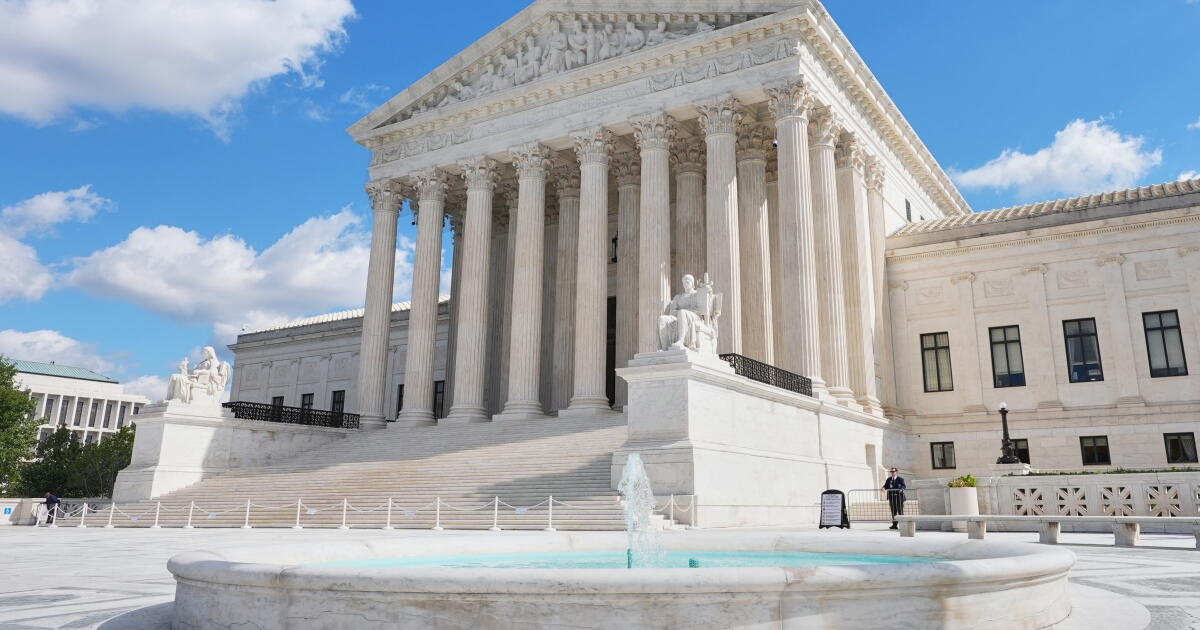
WASHINGTON — The Supreme Court agreed Tuesday to hear arguments in a watchdog’s lawsuit seeking public records about trillionaire Elon Musk’s Department of Government Efficiency.
The high court is intervening for a second time in Citizens for Responsibility and Ethics in Washington’s case, which seeks access to DOGE records from its operations in the early days of President Trump’s second term. The Trump administration asked the court to hear the case.
Last year, the high court reined in a district court’s order for the government to produce DOGE-related records to CREW. The high court’s conservative majority concluded in June 2025 that U.S. District Judge Christopher Cooper ruled too broadly in ordering documents to be turned over to the group.
CREW claims DOGE is a federal agency and therefore is subject to the Freedom of Information Act.
The Trump administration argues that DOGE is exempt from FOIA’s requirements as a presidential advisory body.
Cooper ruled in CREW’s favor and ordered expedited processing of the group’s records request. An appeals court panel also sided with CREW.
The Trump administration claims the panel ignored the Supreme Court’s direction to consider separation-of-powers concerns and intruded on the “autonomy and confidentiality” of presidential advisers.
“Subjecting advisory bodies to intrusive discovery triggers the very concerns that Congress sought to avoid by excluding presidential advisory bodies from FOIA’s reach,” Justice Department attorneys wrote.
The administration also says the appeals court impermissibly authorized the plaintiffs to take a sworn deposition of DOGE acting administrator Amy Gleason.
CREW says the appeals court fully complied with the Supreme Court’s previous order. The group also asserts that the public has a right to know how DOGE helped the administration carry out a sweeping overhaul of government operations in 2025.
“Undisputed facts in the public record — including the President’s statements — confirmed that (DOGE) was wielding enormous independent authority across the federal government,” its attorneys wrote.
Kunzelman writes for the Associated Press.
The basketball memorabilia ranks as the second-largest sale in history among game-worn sports jerseys.
By Reuters and The Associated Press
Published On 13 Oct 202613 Oct 2026
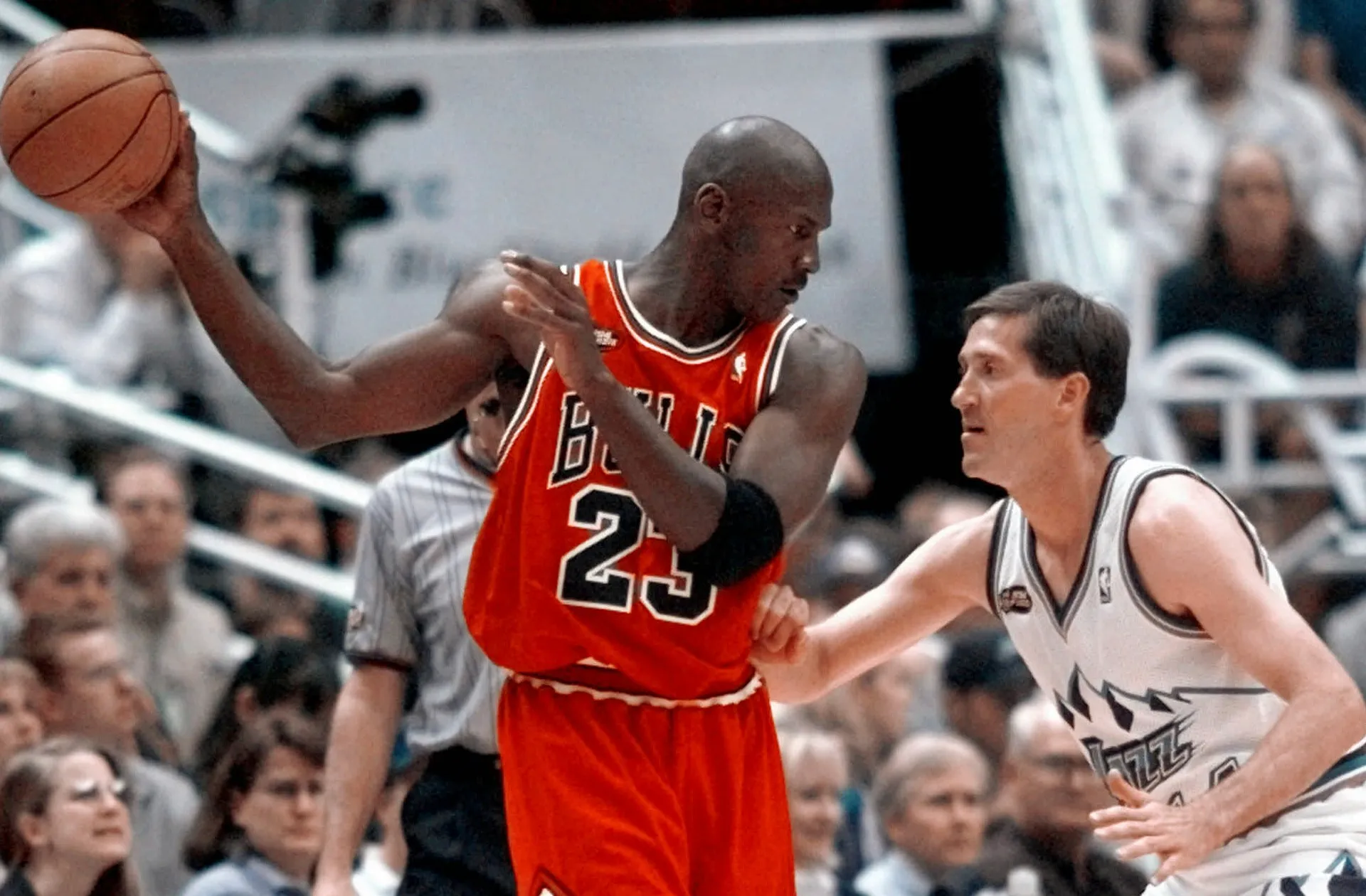
The jersey Michael Jordan wore during Game 2 of the “Last Dance” 1998 NBA Finals has sold for a record $14m.
Hunt Auctions announced on Monday that the game-worn, autographed Chicago Bulls jersey was bought by Miami real estate investor Ron Firman in a private sale.
It is the highest price ever paid for a piece of basketball memorabilia and, according to the auction house, the newly sold Jordan jersey ranks as the second-largest sale in history among game-worn sports jerseys.
The New York Yankees jersey worn by Babe Ruth in Game 3 of the 1932 World Series – during which Ruth called his shot before a home run – went for $24.12m in 2024.
Jordan and the Bulls defeated the Utah Jazz in six games to win the 1998 championship, the sixth and final title of his career in Chicago.
Game 2, played on June 5, 1998, in Salt Lake City, saw Chicago even the series 1-1, largely thanks to a dominant performance by its superstar guard.
Jordan put up 37 points, five rebounds, and three assists in a 93-88 victory. He would go on to collect his sixth and final Finals Most Valuable Player (MVP) award, two more than anyone else in NBA history, nine days later.
The wildly popular “Last Dance” documentary, released in 2020, was centred around that 1997-98 Bulls season.
“The record-setting price achieved for the related Michael Jordan jersey is yet another corroborative result as to the significance of Jordan within the industry and popular culture. This remarkable garment bore witness to one of Jordan’s most hallowed NBA Finals appearances as part of his ‘Last Dance’ season to complete his illustrious career,” David Hunt, president of Hunt Auctions, said in a statement.
“While Michael Jordan’s importance within the sports memorabilia marketplace has long been established, it has now escalated to an elite asset class more typically reserved for iconic works of art. We are very pleased to have been able to facilitate this historic sale which serves as another benchmark for our industry.”
This sale becomes at least the third time a Jordan jersey from that 1998 Finals has fetched at least $10m. A jersey from Game 1 was sold at auction for about $10.1m in 2022, and a jersey from Game 3 was auctioned last month for about $12.3m via an auction in September.
“Michael Jordan was an incredibly talented player who is admired around the world,” Firman said in a news release distributed by the auction house. “I’m very excited about the purchase.”
The jersey that Firman bought was originally bought from the Bulls by a private collector in 2003, Hunt said, adding that it “has remained within a succinct chain of custody, having only changed hands once from the original purchaser”.
Just about anything related to the 1998 Finals and Jordan’s final season with the Bulls has been the subject of huge interest in the collector space. In 2023, a pair of Air Jordan sneakers that he wore in Game 2 against the Jazz was sold by Sotheby’s for $2.2m, touted at the time as “a new world record for the most valuable sneakers ever sold”.
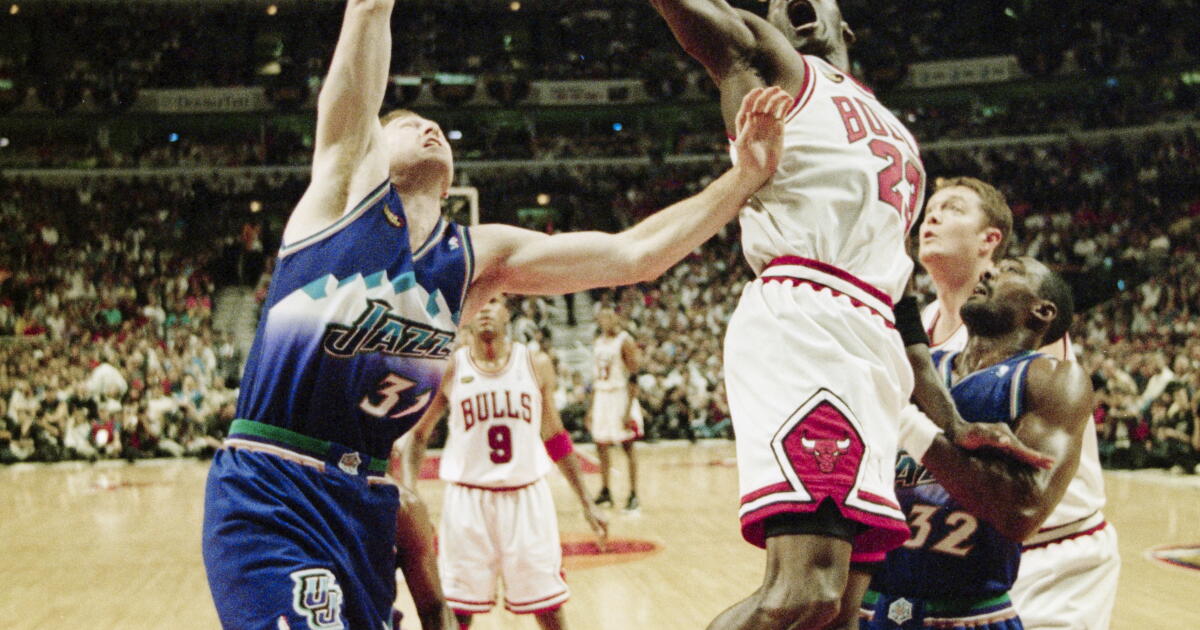
An autographed Chicago Bulls jersey worn by Michael Jordan during Game 2 of the 1998 NBA Finals was privately sold to a Miami real estate investor for $14 million, an auction house announced Monday. The price is believed to be the highest ever paid for basketball memorabilia.
A game-worn red road jersey was purchased by Ron Firman, according to Philadelphia-based Hunt Auctions. Jordan wore it June 5, 1998, while scoring 37 points in the Bulls’ victory over the Utah Jazz. The Bulls went on to win the series in six games, giving Jordan his sixth and final championship.
This is the third Jordan jersey from the 1998 Finals that has sold for more than $10 million. Jordan’s Game 3 white home jersey was auctioned in September for $12.26 million and his Game 1 red road jersey was sold at auction for $10.09 million in 2022.
“While Michael Jordan’s importance within the sports memorabilia marketplace has long been established, it has now escalated to an elite asset class more typically reserved for iconic works of art,” said David Hunt, president of Hunt Auctions, in a statement.
Firman’s X account describes him as a “Commercial Real Estate Co. Principal. Partner in private co. who’s trading is comparable to a hedge fund’s. Rare Vintage Sports Memorabilia Collector.”
His most recent post came Nov. 29, 2022, and features a signed photo of Joe DiMaggio belting a single in the seventh inning of the 42st consecutive game he recorded a hit in 1941, setting an American League record. DiMaggio extended the streak to 56 games, a Major League record that still stands.
Firman also recently set a record by spending $3 million for a 1951 Mickey Mantle first-generation photo used as the basis for Mantle’s celebrated 1952 Topps rookie card. Now Firman owns another piece of legendary memorabilia. The Bulls’ 1997-98 season was the subject of the “Last Dance” documentary series released in 2020.
“Michael Jordan was an incredibly talented player who is admired around the world,” Firman said in a statement distributed by Hunt Auctions. “I’m very excited about the purchase.”
The only game-worn jersey publicly to fetch more than $14 million was worn by Babe Ruth when he supposedly called his shot before hitting a home run against the Chicago Cubs at Wrigley Field in Game 3 of the 1932 World Series. That jersey sold for $24.12 million in 2024 at Heritage Auctions, setting a world record for the most expensive piece of sports memorabilia. It appreciated more than 25 times from the $940,000 it went for in 2005.
“In our opinion, and 36 years of market experience, Babe Ruth and Michael Jordan stand above all others in the history of American sports,” Hunt said. “The record-setting price achieved for the related Michael Jordan jersey is yet another corroborative result as to the significance of Jordan within the industry and popular culture.”
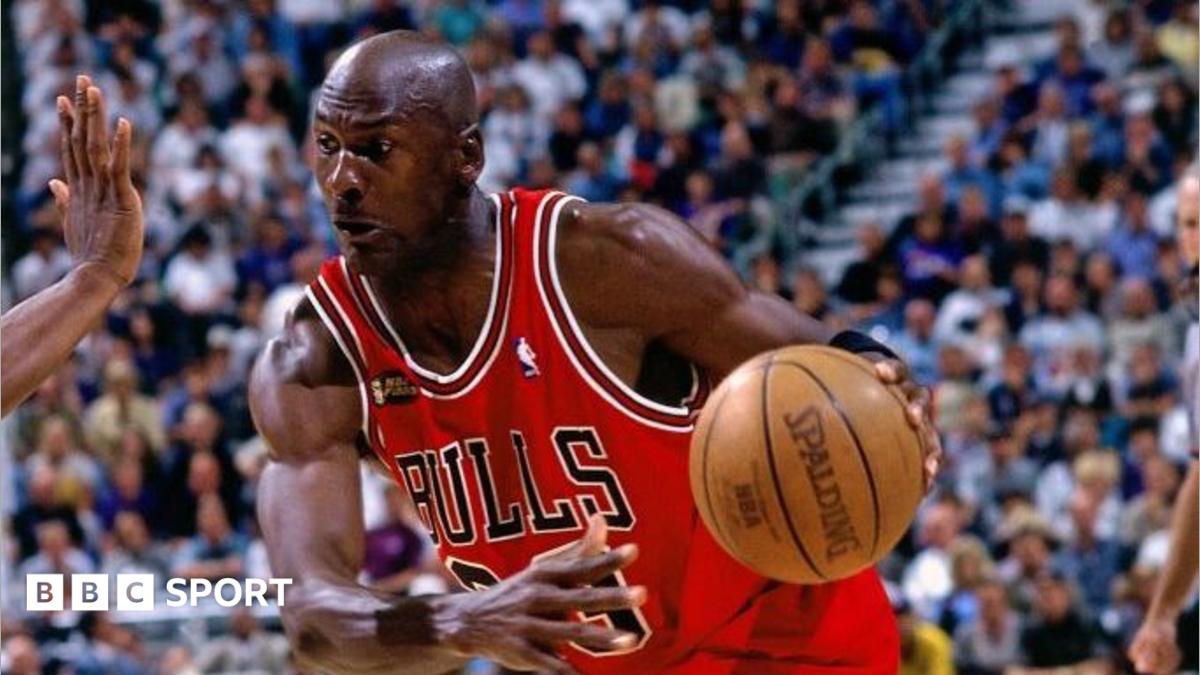
A Michael Jordan jersey from his ‘Last Dance’ season has sold for $14m (£10.6m), a record for a piece of basketball memorabilia.
Jordan wore the Chicago Bulls jersey during game two of the 1998 NBA Finals and has autographed it too.
He scored a game-high 37 points that evening before ending his last season with the Bulls with a 4-2 series win for his sixth and final NBA Championship. He was named the Finals’ Most Valuable Player in all six.
The only item of sports memorabilia that has cost more is the jersey worn by baseball legend Babe Ruth when he “called the shot” during the 1932 World Series, which was sold for $24.1m (£18.2m) in 2024.
The previous high for a basketball item was a card featuring Jordan and Kobe Bryant from 2007-08 which sold for $12.9m (£9.8m) last year.
The previous record for a piece of game-worn Jordan memorabilia was set just two weeks ago when his jersey from game three of the 1998 Finals, which is not autographed, sold via auction for $12.3m (£9.3m).
The latest purchase was made by Miami real estate investor Ron Firman in a private sale through Hunt Auctions.
David Hunt, president of Hunt Auctions, said in a statement: “While Michael Jordan’s importance within the sports memorabilia marketplace has long been established, it has now escalated to an elite asset class more typically reserved for iconic works of art.”
Smith moves to 223 career catches, a record for fielders, as Australia bowl out South Africa for 284 in reply to 390.
Published On 12 Oct 202612 Oct 2026
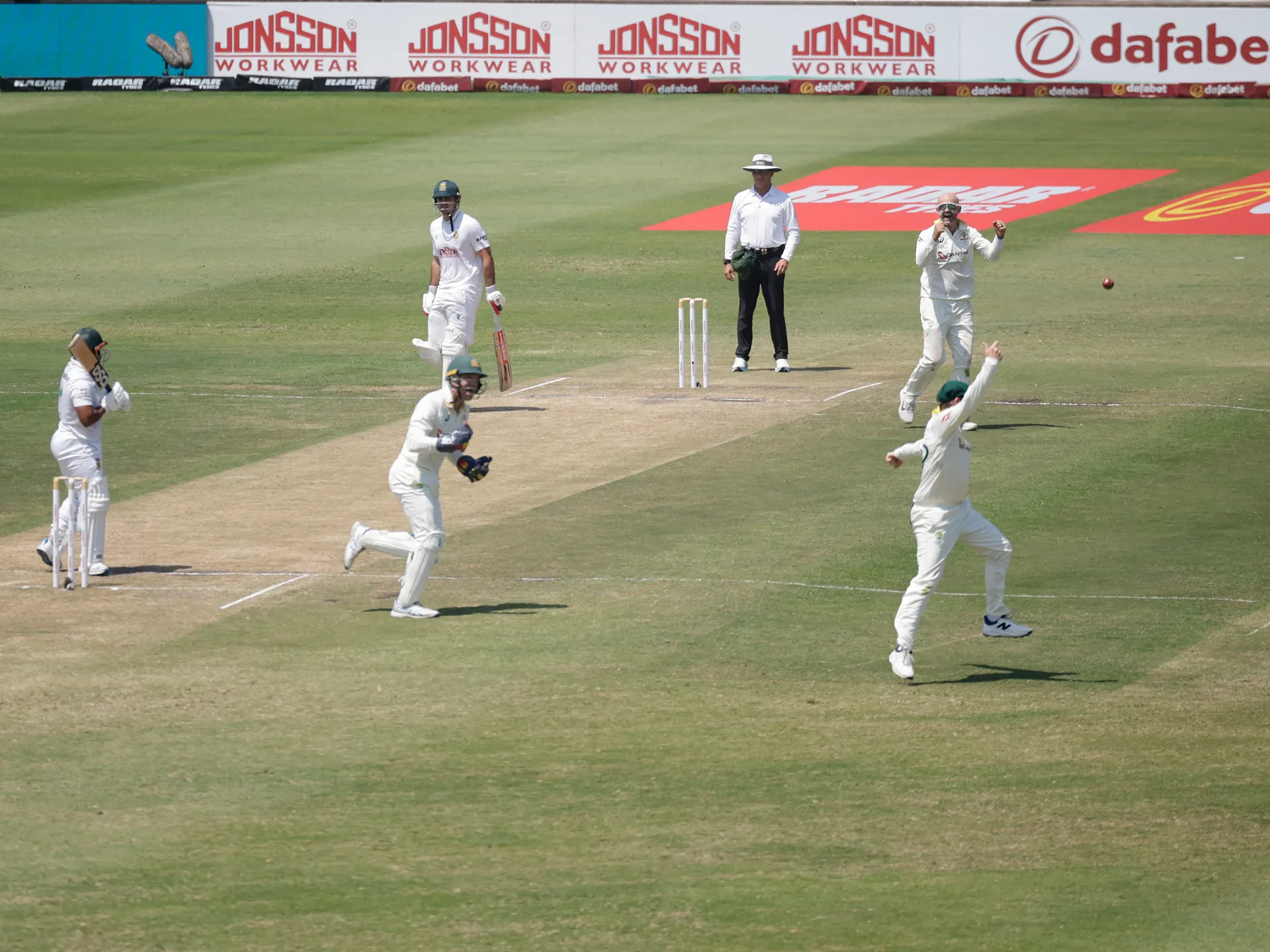
Steve Smith has broken the Test record for the most career catches by a fielder as Australia have played themselves into a strong position on the third day of the first Test against hosts South Africa.
Smith held four catches on Sunday, taking his total to 223, as South Africa were bowled out for 284 in reply to Australia’s first innings of 390 at Kingsmead Stadium in Durban.
Nic Maddinson (17 not out) and Travis Head (10 not out) added 33 runs off just 5.4 overs to stretch Australia’s overall lead to 139 before bad light ended play for the third day in a row.
Maddinson, who laboured to a 33-ball duck in the first innings, hit two fours off Marco Jansen in the first over of the second innings and added a six off Wiaan Mulder before play was called off.
Australia’s bowlers applied relentless pressure on an easy-paced pitch and a succession of South African batsmen contributed to their own dismissals by playing poor shots.
Six Protea batters reached 30, but David Bedingham’s 49 was the top score.
Australian captain Pat Cummins took three for 54, and Mitchell Starc, Josh Hazlewood and Nathan Lyon claimed two wickets each as Australia’s long-serving bowling quartet combined with customary efficiency.
Smith started the day on 219 catches, one behind Joe Root of England.
He equalled the record when he caught Temba Bavuma. Smith, playing in his 126th Test, broke the record when he lunged to his left from second slip to hold a sharp edge from Bedingham off Cummins.
Smith was in the action again with a spectacular catch to dismiss Verreynne, again anticipating well at slip as the South African wicketkeeper made good contact with a reverse sweep that Smith held in an outstretched right hand.
His fourth catch was from an edge to slip by last man Anrich Nortje off the bowling of Beau Webster.
Smith’s career haul of 223 catches exceeds the total of all but 11 specialist wicketkeepers.

Carlo Holse scored three goals in the first 21 minutes and had the second hat trick in club history to help St. Louis City beat the Galaxy 6-2 on Sunday night to extend their unbeaten streak across all competitions to 20 games and tie the MLS record.
St. Louis, which is 13-0-5 in its past 18 regular-season games, tied the mark set when the New York Red Bulls went unbeaten in an MLS-record 20 consecutive games across all competitions in 2016.
Rafael Navarro converted from the penalty spot in the 45th minute, scored again in the 53rd and added two assists for St. Louis (14-6-8). Lukas MacNaughton scored on a diving header in the seventh minute of first-half stoppage time and Roman Burki had five saves.
Holse opened the scoring in the second minute, added a goal in the seventh and skipped a shot inside the right post from the center of the area to make it 3-0 in the 21st minute to record the second-fastest hat trick in MLS history. Hany Mukhtar scored three goals for Nashville in the first 16 minutes of 5-1 win over Chicago on July 17, 2021.
The Galaxy’s Kyogo Furuhashi went off because of an apparent hamstring injury and was replaced in the 10th minute by João Klauss, whose goal in the 71st minute capped the scoring. Klauss, a 29-year-old midfielder in his first season with the Galaxy, had St. Louis City’s first hat trick in a 3-3 tie with the Galaxy on June 14, 2025.
Robert Taylor scored in the 31st minute for the Galaxy (9-11-9).
St. Louis beat the Galaxy 3-1 on July 22 at Dignity Health Sports Park.
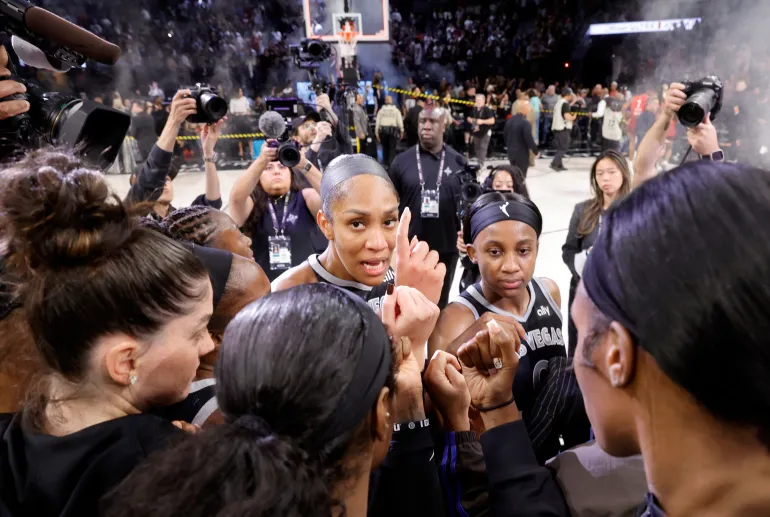
Former US Vice President Kamala Harris among those to hail Wilson as Las Vegas Aces centre continues record run.
Published On 9 Oct 20269 Oct 2026
A’ja Wilson fine-tunes her shooting touch after every practice. That extra work has defined her greatness since being drafted first overall in 2018.
On Thursday, she received a voice message from former Vice President Kamala Harris congratulating her on redefining greatness leaguewide after she was named the WNBA’s MVP for a third straight year and for the fifth time overall.
list of 4 itemsend of list
“Obviously, that is an honour,” Wilson said. “A woman of our history, and I’m so appreciative to be able to share that moment with her through the phone call and the message of her delivering that I won my fifth MVP.”
In addition to becoming the first player to three-peat, Wilson won the award in 2020 and 2022.
Commissioner Cathy Engelbert, Aces owner Mark Davis and team President Nikki Fargas accompanied Wilson’s mother, Eva, who presented her daughter with the trophy.
“Each one of these has not been taken lightly,” Wilson said while flanked by all five of her MVP trophies. “In my heart, they’ve always been so special. But this one here, I cried a little bit harder. This one here is just a little bit different. … When you dream as a young girl, you dream so big and you write your goals out, and you just never imagine that you were able to just check them off.
“And when you’re able to check them off – small wins, big wins – it truly means a lot. And so I think that’s why I cried a little bit harder on this one, because 15-year-old A’ja wasn’t sitting up here dreaming about being a five-time MVP. She wasn’t dreaming about being a three-time champion. She was dreaming about surviving this world.”
The 30-year-old Wilson once again led the league in scoring with an average of 26.2 points per game while shooting nearly 53 percent from the field. She averaged 9.4 rebounds per game, a career-best 3.2 assists and 1.9 blocks.

Wilson has the defending champion Aces back in the WNBA semifinals for the eighth consecutive season although Las Vegas is down 2-0 in the best-of-five series against Golden State. Game 3 is on Friday.
“This is great. I love it, not going to take for granted, shine her up, let’s do it,” Wilson said on Thursday. “But tomorrow, when it comes to hoisting it in front of the fans, I love the fans, … but I doubt I will be doing that. I’ll be warming up with my team. … Everyone in this room knows the competitor that I am. Everyone knows what my main focus is, and that is to get a game.”
Wilson received 65 first-place votes and nine second-place votes for a total of 713 points from a national panel of sportswriters and broadcasters. Minnesota’s Olivia Miles received six first-place votes and 40 second-place votes (442 points) while Indiana guards Kelsey Mitchell and Caitlin Clark followed with 287 and 212 points, respectively.
No WNBA player besides Wilson has more than three MVPs. Sheryl Swoopes, Lisa Leslie and Lauren Jackson each have a trio. On the NBA side, Kareem Abdul-Jabbar has six, and Michael Jordan and Bill Russell each have five.
“A’ja Wilson is one of one,” Fargas said. “She’s now standing in a category that no other WNBA player in the history of the league has accomplished. She’s in the conversations with the Michael Jordans and the Wayne Gretzkys of the world – where she belongs.”
By Anne M. PetersonAP Sports Writer
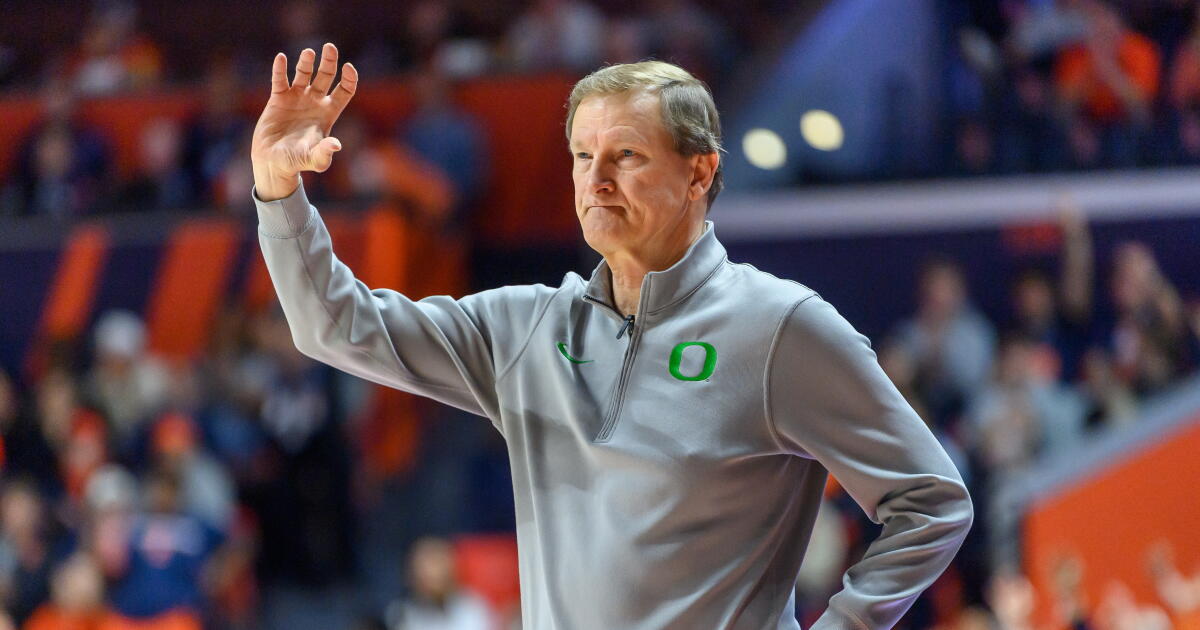
Longtime Oregon Ducks men’s basketball coach Dana Altman is retiring effective immediately, the school announced on Wednesday.
Altman, 68, took over ahead of the 2010-11 season and is the winningest coach in Oregon history with a 382-182 record. The Ducks made nine NCAA Tournament appearances over that span, including a Final Four berth in 2017.
Oregon also won four Pac-12 regular season titles and four Pac-12 tournament titles during his tenure.
Over the course of his 37-year career as a head coach, Altman’s record is 792-425. Before he came to Eugene, Altman was the head coach at Creighton for 16 years.
“I have had to make two really tough decisions in my coaching career,” said Altman. “The first was leaving Creighton, a place my family and I dearly loved, to come to Oregon. This is the second,” Altman said in a statement. “I’ve loved every minute of coaching here, and stepping away is difficult and truly painful. I love coaching, it’s what I know best and what I’ve been fortunate enough to do for almost five decades. I’m going to miss my coaches, my players and our incredible fans more than I can express. But I know this is the right thing to do at this time.”
Oregon will begin the national search for Altman’s successor after the season. Assistant coach Tony Stubblefield will coach the Ducks for the 2026-27 season.
The Ducks struggled last season, going 12-20, and the program lost nine players to the transfer portal and three to graduation in the offseason.
Stubblefield has spent two stints as an assistant to Altman at Oregon. He left to become head coach at DePaul from 2021-24 before returning to the Ducks.
“Winning 382 games over 16 years, including making nine NCAA Tournaments and a Final Four, is an incredible track record. But the record book tells only part of the story,” Oregon athletic director Rob Mullins said. “Dana and Reva have given so much of themselves to this university and to the young men who played for him, and we thank him for all his contributions to Oregon student-athletes, the game of basketball, and the University of Oregon.”
Peterson writes for the Associated Press.

S&P 500 hits a record; These $20B stocks still need 200% to break even
Source link
Published On 6 Oct 20266 Oct 2026
The United States Department of Justice has filed 40 new cases seeking to strip naturalised Americans of their citizenship over alleged crimes they have committed.
In a statement on Monday, federal prosecutors said they were targeting individuals accused of “serious offenses”, including money laundering, child sexual abuse, visa fraud and tax evasion.
list of 3 itemsend of list
The statement touted the 40 cases as the largest volume of denaturalisation petitions submitted in such a short period under President Donald Trump. The petitions were filed from late August through early October.
“Today’s announcement marks the largest denaturalization effort in modern history,” said Attorney General Todd Blanche.
“Under President Trump’s leadership, the Department of Justice will continue to employ the denaturalization process to maintain our national security and protect the American people.”
The 40 citizens targeted in Monday’s announcement include people from a range of countries, including Mexico, Pakistan, China and Sierra Leone.
They are accused of concealing criminal acts and other facts about themselves as they sought to obtain citizenship. Their criminal convictions largely came after they took their oaths of citizenship.
Two people on the list are also accused of engaging in espionage on behalf of China. Committing these crimes before they became citizens, the Department of Justice alleges, meant these individuals lacked “good moral character” and should have been denied citizenship.
The laws to denaturalise US citizens have been used for decades, but historically, they have been reserved for serious crimes.
After World War II, for instance, the US government moved to denaturalise dozens of citizens accused of concealing involvement in the Holocaust or engaging in war crimes.
Notable cases include that of Emma Goldman, a Lithuanian-born anarchist and women’s rights activist who was jailed in 1917 for her antiwar activities, before being denaturalised and deported to the Soviet Union.
But the practice has become much less frequent since the end of the Cold War.
Top officials in the Trump administration, however, have sought to expand denaturalisation as part of a push to conduct the largest deportation operation in US history.
Under US law, prosecutors can ask courts to strip citizenship from those born outside the country if they wilfully concealed a “material fact” during their citizenship application that would have otherwise disqualified them.
But Trump’s efforts to widen denaturalisation proceedings have received pushback from human rights groups, which argue they could leave people stateless.
Critics have also warned that Trump has sought to leverage denaturalisation against specific groups he perceives to be political rivals or enemies.
Last year, for instance, the Trump administration indicated it would seek to denaturalise large numbers of Somali Americans after allegations emerged in Minnesota of daycare fraud involving the Somali diaspora.
“Send them back from where they came, Somalia, perhaps the worst, and most corrupt, country on earth,” Trump wrote at the time.
Members of Trump’s Republican Party, notably Representative Andy Ogles, have also floated the possibility of yanking citizenship from New York City Mayor Zohran Mamdani, who was born in Uganda. Trump himself has falsely suggested Mamdani may be in the country illegally.
At one point, Trump even floated the idea of withdrawing citizenship from tech entrepreneur Elon Musk, a close ally and adviser to his second administration, after the two men had a falling-out in 2025.
Trump has also pushed to do away with birthright citizenship, which is granted to virtually all children born in the US. The few exceptions include the babies of diplomats and foreign military forces.
Birthright citizenship is protected under the US Constitution and cannot be taken away the way naturalised citizenship can.
In June, the US Supreme Court struck down Trump’s efforts to dismantle birthright citizenship, but legal battles continue after the president issued a second executive order also seeking to restrict how birthright citizenship is applied.
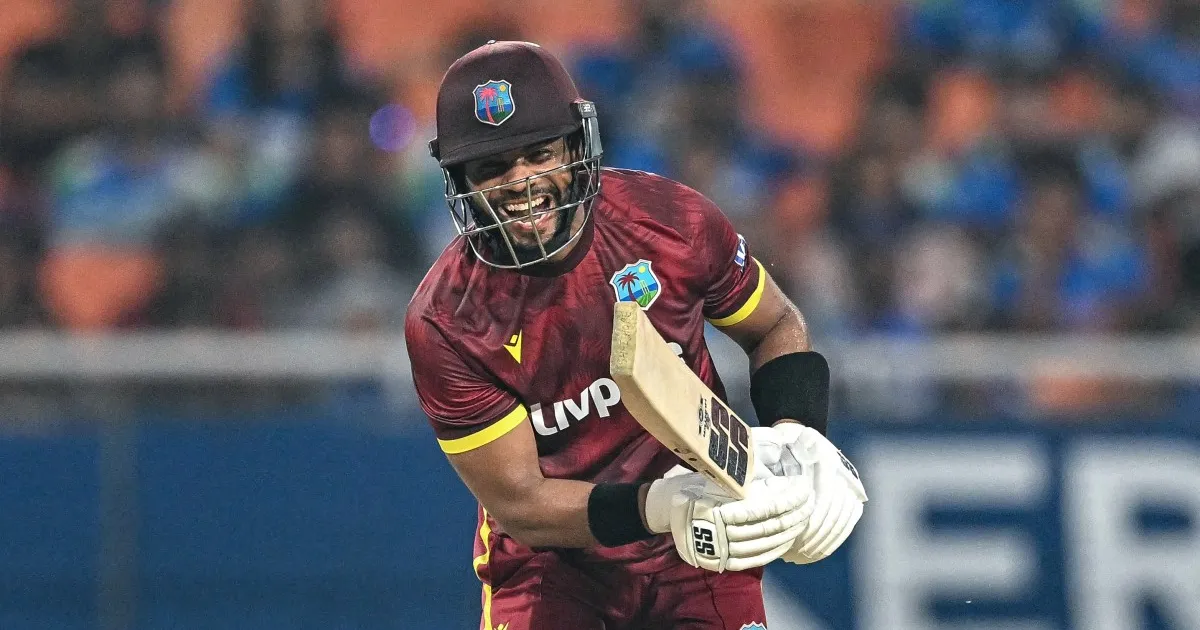
Shai Hope’s 162 leads the West Indies to a record cricket run chase as they beat India by five wickets in the third ODI.
Published On 4 Oct 20264 Oct 2026
Captain Shai Hope’s unbeaten 162 led West Indies to a record run-chase win against India in one-day international cricket in Chandigarh.
The West Indies achieved their highest ODI run chase on Saturday, reaching 352-5 and winning by five wickets with 10 balls to spare after India made 351-7, featuring Lokesh Rahul’s 129 not out.
list of 4 itemsend of list
India had already won the three-match series after eight-wicket wins in Thiruvananthapuram and Guwahati. But the West Indies, chasing for the first time in the series, overcame India for the first time since 2023.
Hope promoted himself to opening batter after Jewel Andrew reportedly injured a finger making a catch and had to go to hospital. After keeping wicket for all of India’s 50 overs in high humidity, he batted brilliantly to score his second successive hundred in the series but struggled in the last overs.
Fittingly, he hit the winning run.
“Felt something around the groin area but wanted to fight through till the end,” Hope said.
His second-highest ODI score, from 143 balls, included 17 boundaries and three sixes. Amir Jangoo added 67 off 56 and Keemo Paul 44 off 35.
“[Chasing is] always a lot easier in India, especially with the dew,” Hope said. “Glad we got over the line.”
Hope and Jangoo added 109 off 99 balls for the second wicket to defy an India bowling attack that recalled Mohammed Siraj and all-rounder Nitish Reddy and included debutant pacer Anshul Kamboj, who went wicketless.
Jangoo was run out in the 21st over, but Sherfane Rutherford (24) did not let the momentum slip. He added 56 with Hope, who reached 50 off 46 balls and 100 off 104 in his 21st ODI hundred and fifth against India.
Paul’s cameo included five fours as he added 65 off 61 balls with his skipper. Hope shifted gears after Paul was dismissed in the 41st over, caught off Gurnoor Brar.
Hope hit seven more fours and two sixes after his milestone, taking 62 off the last 39 balls faced to rush West Indies to victory.
India had to serve a slow over rate penalty for the last four overs, with an additional fielder inside the 30-yard circle, as Hope and Gudakesh Motie (19 not out) added 62 off 29 balls for the sixth wicket.
India won the toss again but skipper Shubman Gill was caught behind on 1 and Virat Kohli was bowled for a golden duck. Both fell to Jayden Seales.
Only 28 runs came in the first 10 overs, then Rohit Sharma and Rahul propelled the hosts.
Sharma resurrected the innings with 92 off 85 balls, adding 137 for the third wicket with Ruturaj Gaikwad.
Sharma took his time and was unlucky to miss a second consecutive hundred in the series; he was caught off Paul in the 25th over.
Four overs later, Gaikwad — 57 off 69 — was Seales’s third wicket.
That brought Rahul to the crease, and he led the charge past 350.
Rahul hit six sixes and 10 fours. He scored 50 off 41 balls and his second 50 off 39 balls. He enjoyed good partnerships with Naman Dhir and Brar and finished 129 not out off only 87 balls.
The teams begin a five-match Twenty20 series on Tuesday, starting in Lucknow, Uttar Pradesh.
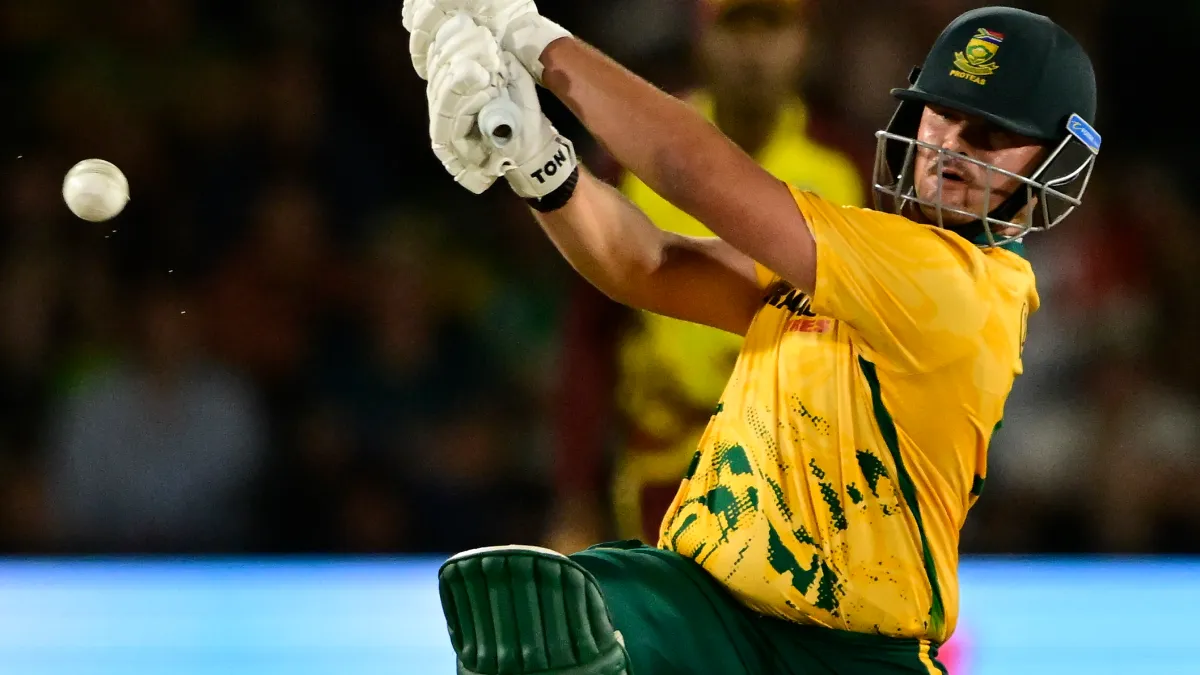
South African Lhuan-dre Pretorius hit 50 in 24 balls, needed 16 more to reach 100 and took another 18 to hit 150.
Published On 3 Oct 20263 Oct 2026
Lhuan-dre Pretorius hit 188 not out off 79 deliveries in Bloemfontein to break Chris Gayle’s record score in the T20 format.
Playing for the Titans against the Knights in the South African CSA Challenge, the 20-year-old left-hander opened the batting and hit 13 sixes and 14 fours in his innings to surpass Gayle’s 175 for Bengaluru in the Indian Premier League in 2013.
list of 4 itemsend of list
Pretorius reached 50 in 24 balls, needed 16 more to get to his century and took another 18 to hit 150.
Gayle scored his 175 off 66 balls, striking 17 sixes and 13 fours.
The 20-year-old has represented South Africa in all three international formats. He was making his first Titans appearance of the season after scoring 226 total runs, tied for most with Dewald Brevis, in a three-nation series in Namibia in September.
On Friday, he dominated the strike, facing the equivalent of more than 13 overs to tie Australians Aaron Finch and Marcus Stoinis for the most balls faced in a T20 innings.
The second-highest scorer was Sinethemba Qeshile with 14 as the Titans finished on 267-3.
They then bowled out the Knights for 143 to win by 124 runs.
The Titans total was the second-highest in the competition’s history, behind their 271 also against the Kings in 2022. In that match, Brevis hit 162, until Friday, a competition record. This time he made seven.
The Cricinfo website calculated that in 91 T20 games, Pretorius has a strike rate of 150.44.
CSA T20 Challenge, Bloemfontein
Titans 267-3 (20 overs): Pretorius 188* (79); Boast 1-46
Knights 143 (17.2 overs): Cloete 39 (25); Ferreira 3-16
Titans won by 124 runs
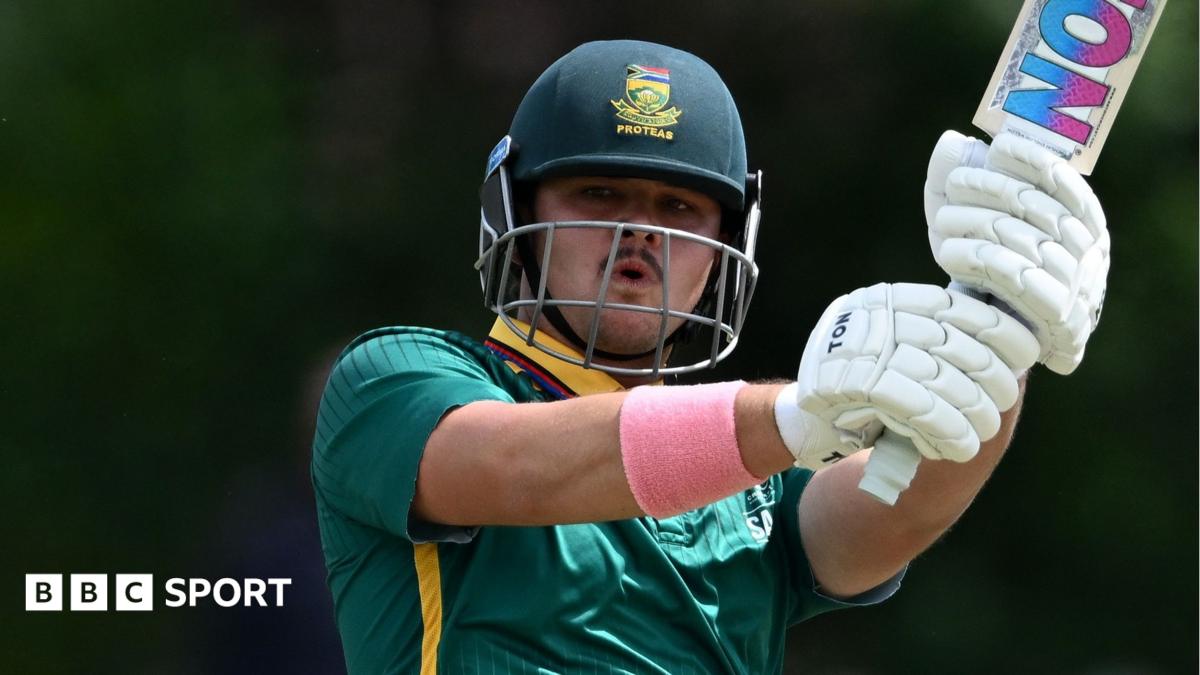
Lhuan-dre Pretorius has broken Chris Gayle’s record for the highest score in a men’s T20 match with an unbeaten 188 in a domestic fixture in South Africa.
The 20-year-old South African’s knock off 79 deliveries, including 13 sixes and 15 fours, helped Titans post 267-3 against Knights in the CSA T20 Challenge.
It eclipsed the 175 made by Gayle for Royal Challengers Bangalore (now Bengaluru) against Pune Warriors in the 2013 Indian Premier League.
Pretorius, who has played 17 T20s, three one-dayers and two Tests for South Africa, finished with a strike rate of 237.97.
He made his half-century off 24 balls but only required 16 more balls to get to three figures and then got to 150 off just 58 deliveries.
Titans then bowled out Knights for 143 to wrap up an emphatic 124-run victory at the Mangaung Oval in Bloemfontein.
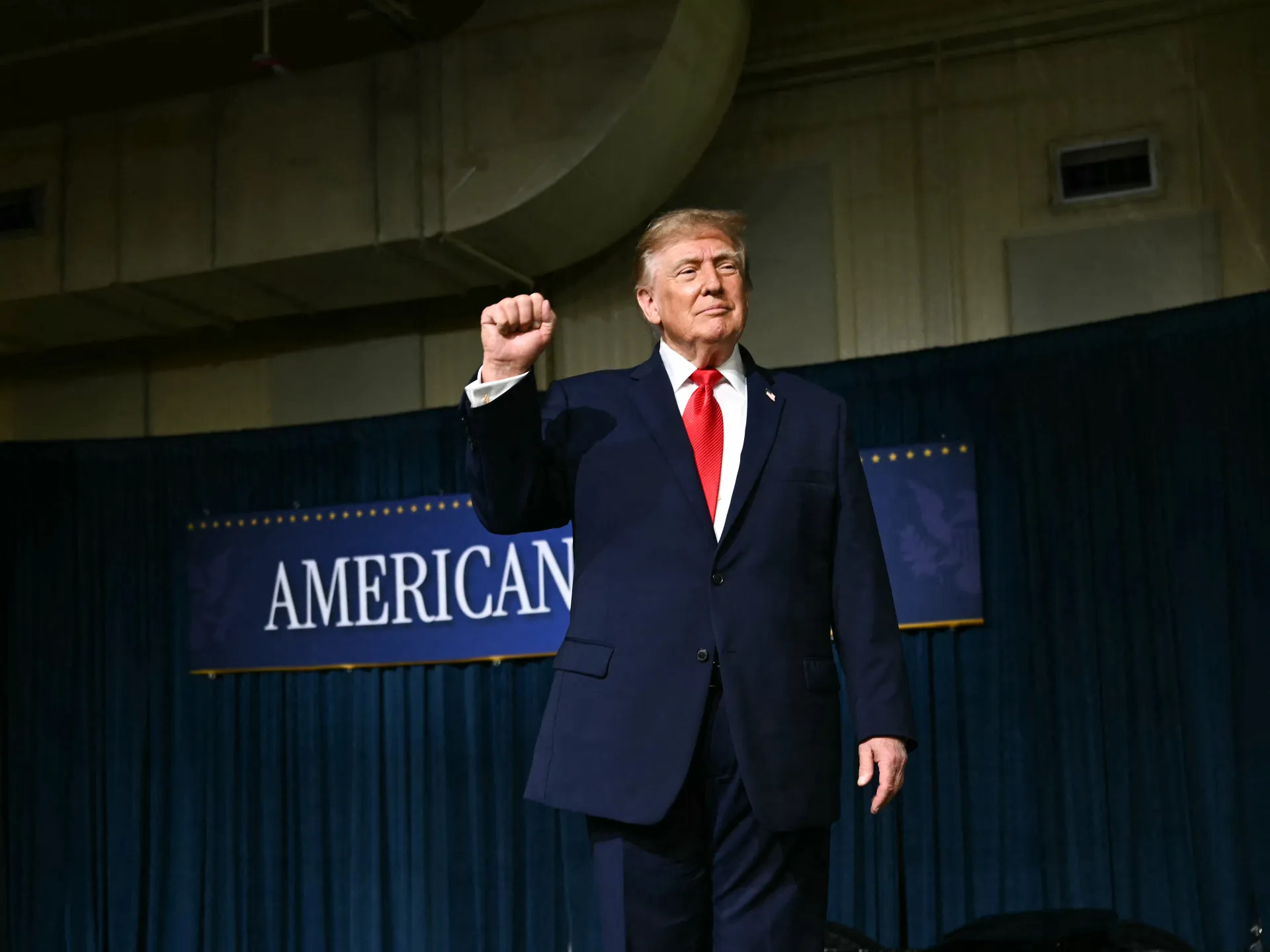
United States President Donald Trump has kicked off a 32-day campaign tour ahead of the November midterm elections that could see his Republican Party hurt by his handling of the war on Iran and the economy.
On Thursday, Trump travelled from Washington, DC, for back-to-back rallies in Texas and Oklahoma.
list of 3 itemsend of list
At his first stop in Denton, Texas, Trump sought to shift the narrative around his drooping approval ratings, offering a personal assessment of his administration’s performance.
“I give us an A+ on the government, on economics, on everything,” Trump told a crowd of supporters at the Peterbilt Motors Company, a truck manufacturer.
The president also blamed unfair media coverage for his growing unpopularity, arguing that his pre-election rally blitz was necessary to set the record straight.
“We’re doing an extremely poor job of promotion and an extremely great job of running the country,” Trump said.
But Trump’s poll numbers have raised concerns about Republican prospects ahead of the November 3 midterm election.
Trump himself is not on the ballot, but Republican candidates across the country are seeking to defend the right-wing party’s majorities in both chambers of Congress, as well as key state and local offices.
The economy and Trump’s war on Iran are expected to weigh heavily on the election outcome.
On Thursday, The Associated Press and the NORC Center for Public Affairs Research released new poll results showing that 71 percent of Americans disapprove of the war, which has driven up the price of fuel.
About half of survey respondents also said they were worried they would not be able to afford food and petrol. Only 26 percent approved of Trump’s handling of the economy.
Still, despite record low approval ratings, Trump has positioned himself as key to the Republican midterm strategy.
At a first-of-its-kind Republican midterm convention in September, Trump encouraged voters to consider his record while at the ballot box. “I’m asking you to pretend that I’m on the ballot,” he said.
During Thursday’s tour, he touted the impact of his tariff campaign, which he credited with creating thousands of manufacturing jobs.
“For decades, you were heartlessly betrayed by politicians, lousy politicians, who let foreign trade cheaters plunder your wages, loot your factories, close up your jobs,” Trump told Peterbilt workers. “They’d still be doing it if I wasn’t here, believe me.”
Trump’s tariffs, however, have been highly controversial, prompting a series of court challenges. Critics have argued that the sweeping import taxes surpass the president’s constitutional powers.
Trump also used his stump speech to ease concerns about the US-Israel war on Iran, which began on February 28. Both sides have declared victory, though a ceasefire remains elusive.
“Just as I promised, I’m ensuring that Iran will be very quickly ended. I will tell you the energy prices are going to be rapidly, rapidly coming down,” Trump said.
“We’ll win very easily right now,” he added. “I believe right after the election we’ll win, but maybe before the election.”
The war, however, resulted in Iran stopping commercial traffic through the Strait of Hormuz, a key waterway for the global fuel trade.
The price of diesel — the fuel the trucks built at the plant use — soared to record highs of more than $6 per gallon (3.8 litres) last week. Petrol prices have similarly skyrocketed.
Trump, however, has acknowledged that the stakes are high for his presidency in the upcoming midterms.
All 435 seats in the House of Representatives are up for grabs, as are 35 seats in the 100-member Senate.
Losing Republican control of either chamber could create roadblocks for Trump’s legislative agenda during the final two years of his second term.
But Trump has also expressed concern that he could be impeached for a third time, after two prior impeachments during his first presidency.
At Thursday’s second stop, in Durant, Oklahoma, the Republican leader repeated that fear. “Pretend I’m running, please,” he told the crowd. “If we don’t win, they’ll end up impeaching me.”
Many of the places Trump is scheduled to visit this month are perceived as reliably Republican voting districts. Following his stops in Texas and Oklahoma on Thursday, Trump will be heading to Alabama, Ohio and Nebraska in the coming days.
Still, some elections that ordinarily would be considered shoo-ins for Republicans have grown more competitive in recent months.
In Texas, for instance, no Democrat has won a statewide race since the 1990s. But this year, Republican Ken Paxton, the state’s attorney general, is struggling to win a Senate contest against Democrat James Talarico.
During both of Thursday’s stops, Trump sought to bolster Paxton’s prospects. At the Peterbilt factory, for instance, he called Paxton “the greatest attorney general in the United States of America”.
“We gotta get this guy elected,” Trump said, before pivoting to criticisms of Talarico, whom Republicans have sought to paint as out of touch with Texas’s large beef industry.
“He’s a vegan,” Trump said of Talarico, repeating an unsubstantiated rumour. “And vegans don’t do well in Texas.”
But leaked audio appeared to show Paxton lamenting the negative impact Trump had by holding the Republican midterm convention in Texas last month.
“It dropped our numbers. Everybody’s numbers dropped,” Paxton reportedly said.
Trump has nevertheless used his pre-election tour to highlight social issues he feels will help rally voters to the Republican cause.
On Thursday, he returned to familiar subjects like immigration and transgender rights, which he depicted as a part of the Democrats’ “radical” agenda.
“They want women in men’s sports. They want open borders. They want transgender mutilation for your children,” Trump said. “What the hell are you thinking about, you liberals?”
The president also used his Texas appearance to push back against critics of data centres, despite bipartisan concern.
Critics worry that the rapid growth of artificial intelligence (AI) has fuelled the proliferation of data centres, which require large amounts of electricity and water to process mass data quantities.
While Trump has dismissed fears about AI as largely unfounded, a poll last month found 53 percent of Americans are “extremely” or “very” concerned about the technology’s environmental impacts.
Even fellow Republicans in Texas are responding to public pressure about the growing number of data centres, more than 300 of which are operational, with hundreds more in progress.
In August, Governor Greg Abbott called for an audit of all data centres to map their water and electricity usage, and the following month, Paxton in his role as state attorney general launched an investigation into whether they were complying with water reporting requirements.
Trump nevertheless used his Texas rally to tout the expansion of such enterprises.
“It’s a huge thing. It’s bigger than the industrial revolution,” he said, dismissing the concerns as part of a “scam”. He then explained he had urged AI companies to “take care of the people”.
“They’re making a fortune for the communities,” he added.
Exports jump 83.5 percent to top $120bn for the first time amid ferocious semiconductor demand.

Published On 1 Oct 20261 Oct 2026
South Korea’s exports have surged to a monthly record amid explosive demand for chips used to power artificial intelligence.
Exports jumped 83.5 percent year-on-year to $120.9bn in September, eclipsing the previous monthly record of $102.25bn set in June, preliminary customs figures showed on Thursday.
list of 4 itemsend of list
Chip shipments accounted for nearly half of exports, soaring more than 260 percent to $60.3bn, according to data from the Korea Customs Service.
Total exports from January through September hit $814.5bn, exceeding those for all of 2025, when exports reached a record $709.7bn.
During the first nine months of the year, the country recorded a trade surplus of $49.85bn.
“This is a valuable achievement that once again demonstrates the strength of our industries and companies, and is thanks to the sweat and efforts of our entrepreneurs who have competed fiercely in the global market,” said Kim Jeong-kwan, South Korea’s minister for trade and industry, in a statement.
“While we expect to achieve $1 trillion in annual exports, the strengthening of global protectionism and tensions in the Middle East remain major variables affecting our exports,” Kim said.
South Korea’s economy has been running red-hot this year amid a global shortage of memory chips used in AI.
Asia’s fourth-largest economy is home to one of the world’s largest semiconductor industries, led by top memory chip makers SK Hynix and Samsung Electronics.
SK Hynix and Samsung Electronics together control roughly 80 percent of the global market for high-bandwidth memory and 60 percent of the market for dynamic random-access memory, according to Counterpoint Research.
South Korea’s nominal gross domestic product (GDP) growth hit a five-decade high in the April-June quarter, skyrocketing 26.4 percent year-on-year.
South Korea’s Ministry of Finance and Economy has forecast real GDP to grow 3 percent in 2026, which would be the strongest performance since 2017, excluding the outlier years of the COVID-19 pandemic.
The AI boom has also propelled the country’s stock market into the ranks of the best-performing bourses this year, with the benchmark Kospi rising nearly 60 percent.

Chinese divers were unstoppable as the country’s sizeable overall tally of gold medals swelled to 150.
Published On 30 Sep 202630 Sep 2026
China’s divers extended their remarkable Asian Games unbeaten record stretching back to 1974 as a top Japanese official apologised for “inconveniences” that have dogged the continent’s premier sporting event.
Chinese divers were unstoppable once more on Wednesday as the country’s sizeable overall tally of gold medals swelled to 150 with four days left.
Hosts Japan are a distant second with 50 golds, ahead of South Korea with 24.
Chen Yiwen and Lian Junjie each won gold in the final two diving events to give China a 14th consecutive clean sweep in the sport.
China has won every diving gold medal since their first Asian Games appearance 52 years ago.
“Girls are every bit as capable as boys. We are pushing ourselves to perform more difficult dives, too,” said Chen, a double Paris Olympics champion.
“We do not train any less than the boys,” she added.
In tennis, the Philippines’ Alexandra Eala stormed into the semifinals, cheered on by fans who had come from far and wide to see their hero in action.
The world number 18 and favourite for women’s singles gold had to work hard early on to beat Taiwan’s England-born Joanna Garland 7-5, 6-0 in her second outing in Nagoya.
The winner of the tournament qualifies for the 2028 Los Angeles Olympics.
“Representing my country and playing these types of games, SEA Games, Asian Games and hopefully the Olympics, they’re very close to my heart and a big part of my dreams,” said Eala.
She plays China’s Wang Xiyu, ranked 85, next.
Taiwan boxer Lin Yu-ting, the Olympic champion who found herself embroiled in a major gender row at Paris 2024, is guaranteed at least a silver medal.
Lin outclassed Sitora Turdibekova of Uzbekistan 5-0 in the women’s 60kg class to surge into the final, putting her one win from a second Asian Games gold.
The 30-year-old thanked the medical team afterwards for treating the cut to her nose she suffered in the quarterfinals.
In football, South Korea scored an 82nd-minute winner in a 2-1 victory over China in the men’s semifinals.
They will face Japan for gold after the hosts pulled through against Uzbekistan 9-8 on penalties, the game having ended 1-1 after 120 minutes.
Meanwhile, on Wednesday Nagoya’s mayor apologised to athletes for “inconveniences” at the games following a string of complaints.
The event has been marred by problems including a shortage of beds and issues with transport.
There are more than 17,000 athletes and officials, more than the Olympics, and countries have accused local organisers of mismanagement.
“We must offer our apologies to the athletes and others affected by these inconveniences,” said Mayor Ichiro Hirosawa, who is also acting chairman of the local organising committee.
“We must sincerely reflect on the mishandling that occurred,” he added.
Unlike past games, there is no athletes’ village, with participants instead sleeping in temporary wooden units, on a cruise ship and in hotels to save money.
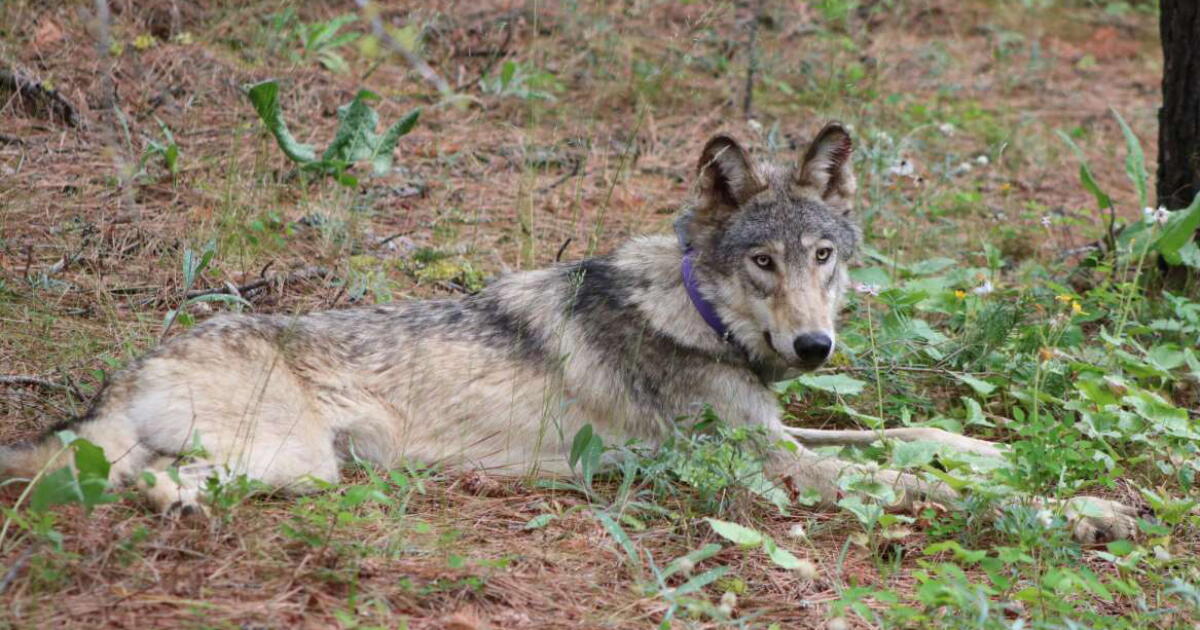
California is set to bring back a program aimed at reducing conflict between wild animals and people, as the state’s rebounding wolf population continues to cause concern among ranchers.
Newsom signed a bill restoring the program Tuesday ahead of a “fireside chat” focused on biodiversity and natural resources, during which he described growing up with a father who was dedicated to protecting mountain lions, condors and other wildlife.
Protecting nature is “a moral issue,” Newsom said, describing a “relationship we have to what’s above us, and … how that connects us to our Creator.”
The California Department of Fish and Wildlife once employed 13 specialists dedicated to resolving human-wildlife conflicts, but it let all but one of them go after funding ran dry in 2024. The loss came as such clashes are increasing, with climate change and urban sprawl bringing people closer to bears, mountain lions and other animals.
State Sen. Catherine Blakespear, author of Senate Bill 1135, said she’s seen it play out with sea lions around La Jolla Cove. This year, someone kicked one of the marine mammals, she said, and in general there have been no government staffers “to provide the guardrails.”
When the program ended, “we weren’t doing the education, and we didn’t have staff at the state that could help intervene or provide guidance,” Blakespear (D-Encinitas) told The Times. “It was a clear lack.”
The legislation also codifies a program to compensate ranchers when they lose livestock to wolves or suffer indirect harm. The program also provides money for nonlethal equipment to deter wolves, such as electric fences with bright flags.
Part of the law is rebranding, adding “coexistence” to both programs’ names.
The California Cattlemen’s Assn. and the California Farm Bureau shifted from opposing the bill to an “enthusiastic neutral,” said Kirk Wilbur, vice president of government affairs for the former trade group, noting his colleague coined the term.
Wilbur’s group was initially concerned about parts of the bill focused on livestock compensation, but he said they were amended in a way to avoid impeding how the program operates. However, the changes “didn’t quite get us to a support position because we didn’t necessarily view it as a significant improvement over the status quo.”
His group is in favor of the bill’s requirement to relaunch the Wildlife Coexistence Program, as it’s now called, saying it “does provide resources, for instance, for my members that are contending with mountain lion depredations of their livestock.”
The bill signing comes as California’s gray wolves had at least 42 pups this year — a record. The apex predators were extirpated in the state in the 1920s, beginning to naturally recolonize their native digs only 15 years ago.
“It’s a great sign for the conservation of the species that the population continues to reproduce, and that the number of individuals continues to reproduce,” said Axel Hunnicutt, gray wolf coordinator for the Department of Fish and Wildlife.
The animals’ success has delighted conservationists but frustrated some cattle ranchers, whose livelihood can become dinner for the endangered canids.
Hunnicutt spoke to The Times from Siskiyou County, where he was trying to get more GPS collars on wolves in the Whaleback pack, linked to 41 confirmed or probable livestock attacks this year, according to a recent report. That’s by far the most of any pack in the state.
Hunnicutt’s team consists of him and two other employees, along with temporary staffers. Collaring wolves in a pack that doesn’t already have the devices is challenging, he said. It involves setting up cameras, howling throughout the night to try to get the animals to respond and sometimes driving hundreds of miles looking for tracks.
Some members of the Whaleback pack are collared, providing a good starting point. While on the phone, he said he could see the tracks of two wolves on the road where he was walking.
Proponents of SB 1135 say it could lead to the expansion of Hunnicutt’s team or more resources for efforts such as collaring, which wildlife officials say helps reduce conflicts by enabling ranchers to know where wolves are.
However, the legislation does not guarantee funding for the programs it establishes.
Pamela Flick, California program director for Defenders of Wildlife, a co-sponsor of the bill, said advocates asked state leaders for $18 million in one-time funding for the human-wildlife coexistence program, followed by $15 million annually. They also asked for around $30 million for wolf compensation and management.
What they got this year is $6 million, with $2.5 million earmarked for compensation, according to Flick.
“It’s really a drop in the bucket when we’re talking about statewide human-wildlife conflicts,” she said. “So we will be advocating for additional funds in out years for sure.”
Despite being a lifelong Sunderland fan, Chandler admits basing his team on Kevin Keegan’s Newcastle – with entertainment even placed above winning.
“There was a standing joke in the team, two or three at the back? One time we chased a game with two at the back,” he says.
“The Premier League can be so boring; fans want to be entertained, that’s what we promised.”
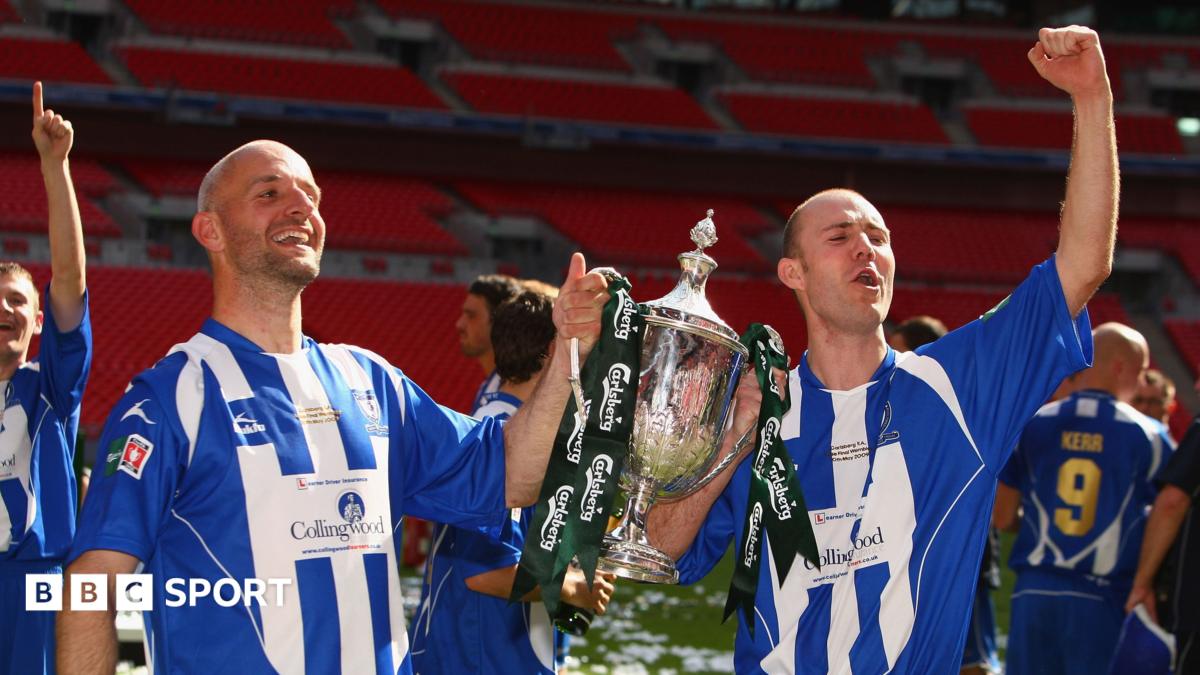
Chandler was already a Whitley Bay hero when he was appointed manager by chairman Paul McIlduff, having scored the winner in the 2002 FA Vase final against Tiptree United at Villa Park.
After a slow start as the then-35-year-old with no prior managerial experience found his bearings, Chandler built a talented team which became the envy of non-league football nationwide.
“We played good football. We had pace on the wing, fantastic midfielders, and strikers who were deadly,” says McIlduff, who has been Whitley Bay chairman since 2001.
“When we brought them in, it was about fitting the psychology of the dressing room. No-one thought they were better than anyone else, they played for each other.”
A growing influence in the side was the ‘Whitley Bay Maradona’.
Paul Robinson came through Newcastle United’s academy before a career spent across various non-league clubs in the north-east – including Whitley Bay from 2007 to 2013.
Like several other players and staff, he worked with Chandler both in his day job at software company Sage and at Hillheads Park.
“He was my manager at work and football, I was sick of him,” he tells BBC Sport. “But it helped get time off for matches.”
And it meant he also had an understanding boss if his mind drifted at work.
“Zoning out happened regularly, picturing scoring and winning, what the opposition would be like – hoping they were rubbish so we could have an easy stroll,” he says.
Perhaps Robinson’s greatest Whitley Bay moment came in the 2010 FA Vase semi-final second leg, when his last-minute diving header in the driving rain secured a 6-5 aggregate victory over Barwell, sparking a pitch invasion.
“Everyone goes to the finals, you were there, you could enjoy it,” says Robinson, who is now academy head at South Shields.
“But the rounds before were the bigger games. At home, we would get 2,000 or 3,000 at every game. You felt like a real player. You associate those memories with 90s FA Cup you never think it will happen in non-league.”
Chandler played in a 2-0 win over Preston in round two as they reached the FA Cup third round for the first and only time in the 1989-90 season, and they also progressed to round two the following campaign.
Those seasons of success – made The Bay a feared side for non-league clubs across England, and meant they were ready for the big games in a way most amateur sides are not.
“One quarter-final against Biggleswade [in 2009], they turned up in suits and ties,” says Robinson. “We thought, this is their day out, their cup final. We won 5-2.
“By the end, teams were turning up afraid of us. We had it won beforehand.”