WASHINGTON — The United States has launched a new military operation to ensure commercial shipping vessels can safely pass through the Strait of Hormuz, deploying scores of warships, fighter jets and drones to counter Iranian efforts that have threatened the narrow waterway that carries a fifth of the world’s oil.
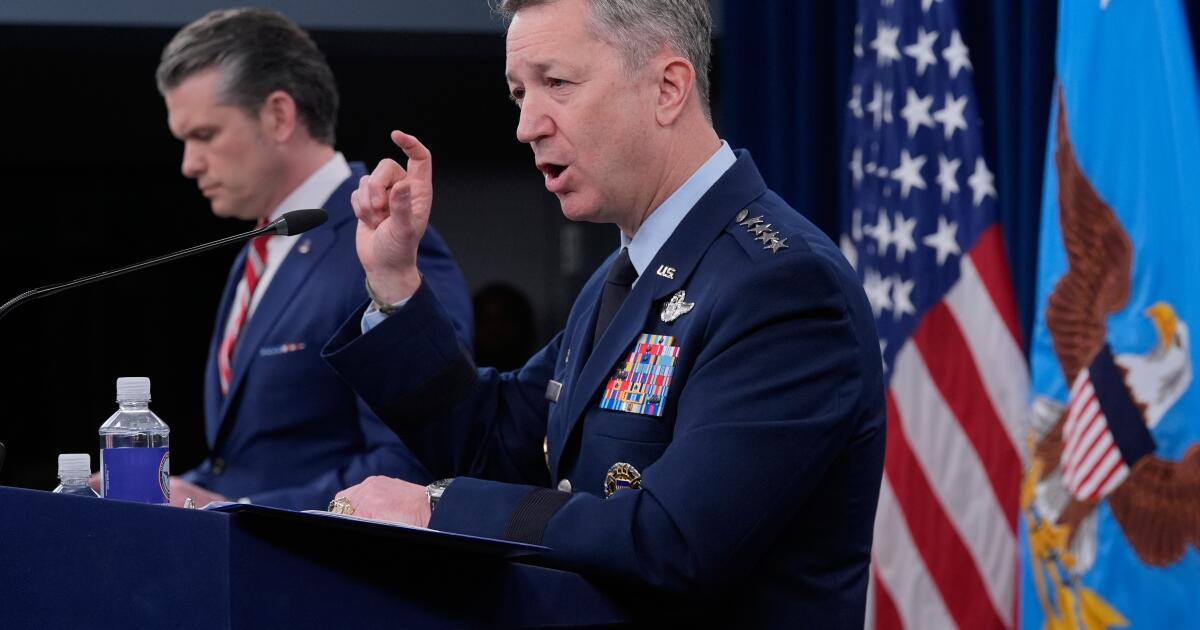
At a news conference Tuesday at the Pentagon, Defense Secretary Pete Hegseth said the new initiative — dubbed “Project Freedom” — is a temporary and defensive operation meant to resume the flow of traffic through the international waterway as hostilities have continued in the region.
“We are not looking for a fight, but Iran cannot be allowed to block innocent countries and their goods from an international waterway,” Hegseth said, while calling Iran’s tactics “international extortion.”
The operation comes nearly a month after the United States reached a fragile ceasefire deal with Iran, a truce that Hegseth said remains in effect even though Tehran has continued to attack U.S. forces and commercial vessels.
“The ceasefire is not over,” Hegseth said.
Gen. Dan Caine, the chairman of the Joint Chiefs of Staff, said that since the ceasefire took effect, Iran has fired at commercial vessels nine times, seized two container ships and attacked U.S. forces more than 10 times. All of these instances, he said, are “below the threshold of restarting major combat operations at this point.”
Those attacks have left more than 1,550 vessels trapped in the Arabian Gulf, unable to transit, disrupting global trade and pushing energy markets toward crisis, with fuel prices climbing and shipping costs surging.
The new U.S. mission was cast as separate from the broader military campaign over Iran’s nuclear weapons program. As negotiations to denuclearize Iran continue, Caine said commercial vessels wanting to cross the strait will now “see, hear and frankly feel the U.S. combat power around them, on the sea, in the skies and on the radio.”
Two U.S. commercial vessels, escorted by Navy destroyers, have already moved through the Strait, Hegseth said.
“We know the Iranians are embarrassed by this fact,” Hegseth said. “They said they control the strait, they do not.”
Hegseth called the operation a “direct gift from the United States to the world,” aimed at resuming traffic through one of the world’s most vital waterways.
“To what remains of Iran’s forces: if you attack American troops or innocent commercial shipping, you will face overwhelming and devastating American firepower,” Hegseth said. “The president has been very clear about this.”
On Tuesday evening local time, the UAE’s defense ministry said in a statement on X that the country’s defensive systems “are actively engaging with missiles and UAV threats and that “sounds heard across the across the country are the result of ongoing engaging operations.”
Tuesday’s barrage marks the second consecutive day of attacks targeting the UAE since the U.S.-Iran ceasefire took hold on April 8. On Monday, the UAE said it engaged a total of 12 ballistic missiles, three cruise missiles and four drones launched from Iran.
Times staff writer Nabih Bulos, in Beirut, contributed to this report.