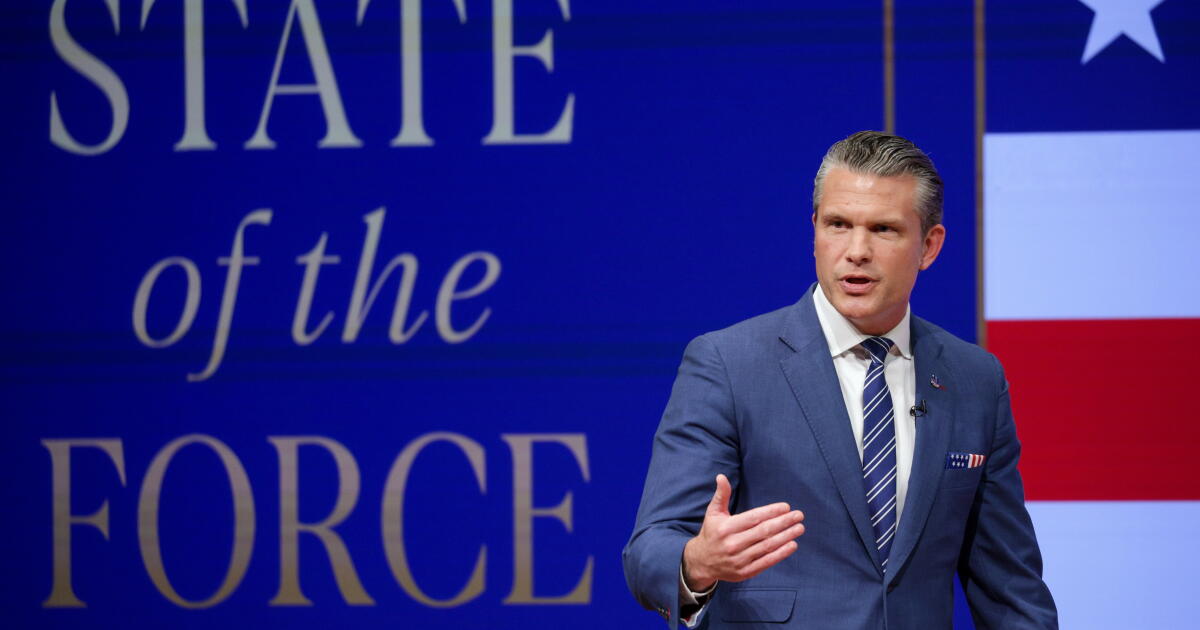
Hegseth

Iran ceasefire deal frays as attacks continue; peace terms are unclear

A day after the United States and Iran agreed to a two-week ceasefire, the truce showed signs of strain Wednesday as Iranian leaders accused Americans of violating the agreement and reports emerged that Tehran had moved to restrict traffic through the Strait of Hormuz.

The developments tested President Trump’s ability to parlay a fragile pause in fighting into a lasting peace deal with a country he has spent weeks threatening to destroy, and raised questions about whether the Trump administration had the diplomatic leverage to hold the deal together.

The White House sought to project confidence about the ceasefire, but the fragile deal grew shakier after Israel carried out its largest attack against Hezbollah in Lebanon since the conflict began. Iran said the strikes by the U.S. ally amounted to a breach of the ceasefire terms, even as Trump and Israeli Prime Minister Benajmin Netanyahu maintained that Lebanon was not subject to the agreement.

The big issue seems to be that the two sides can’t agree on what the agreement is,” said Michael Rubin, an expert on Iran at the American Enterprise Institute. At best, he said, the two sides had secured a “tactical pause.”

Iranian Foreign Minister Abbas Araghchi said the United States must choose between a ceasefire or “continued war via Israel.

“It cannot have both,” Araghchi wrote on X. “The world sees the massacres in Lebanon. The ball is in the U.S. court, and the world is watching whether it will act on its commitments.”

Whether Iran will draw a red line over Lebanon could become a key question. The Wednesday back-and-forth represented “threshold-testing” of Iran and whether it will be willing to reengage the United States in conflict over the issue, said Ross Harrison, senior fellow at the Middle East Institute.

The parties’ prospects for reaching an agreement — and what Trump’s options become for declaring success — will depend on how the ceasefire goes in the coming days, Harrison said.

“There’s some room here … if [the Iranians] see that negotiations are real and not a pretext for further attacks,” he said. “A lot of what the United States can get depends on what the United States is willing to give — not just in terms of the points of their plan, but also in terms of the signaling that they too have an interest in de-escalating.”

Reports that Iran had moved to restrict traffic through the Strait of Hormuz, a crucial waterway whose opening was central to the truce negotiations, further complicated the ceasefire.

“Any vessel trying to travel into the sea … will be targeted and destroyed,” the Iranian navy told shipping vessels, Fars News reported. The news agency is aligned with the Islamic Revolutionary Guard Corps.

At a news briefing Wednesday, White House Press Secretary Karoline Leavitt said Trump was aware of reports that the Strait of Hormuz had been closed, a move she called both “completely unacceptable” and “false.” She added that the president expects the waterway will be “reopened immediately, quickly and safely” during the ceasefire.

Leavitt sidestepped questions about who currently controls the oil route.

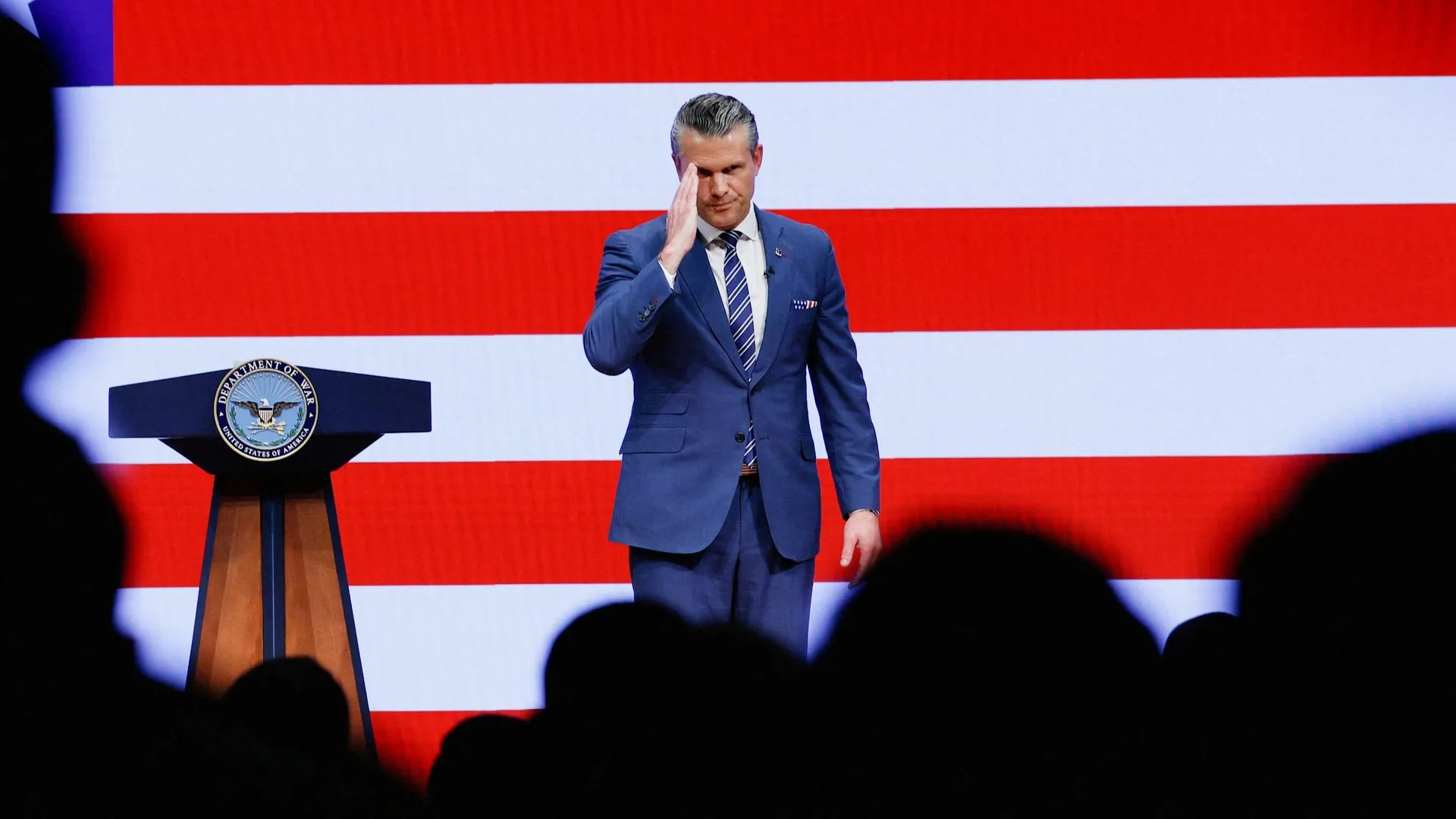
Earlier in the day, at a Pentagon briefing, Defense Secretary Pete Hegseth told reporters that “commerce will flow” through the strait, but did not say whether U.S. warships would be escorting vessels through the waterway. Joint Chiefs of Staff Chairman Gen. Dan Caine, who stood next to Hegseth, was asked whether the strait was open. He said: “I believe so.”

Hegseth emphasized that Iran should keep its end of the bargain or face the consequences.

He said the U.S. military plans to maintain a presence in the region to ensure Iranian compliance, saying American troops are ready to “go on offense and restart operations at a moment’s notice” if the truce broke down.

“We’ll be hanging around,” Hegseth said. “We are going to make sure Iran complies with this ceasefire and then ultimately comes to the table and makes a deal.”

The warning came as several Persian Gulf nations reported Iranian missile and drone attacks on their territories despite the ceasefire. Kuwait said its air defenses intercepted drones, while Bahrain reported that an Iranian attack has sparked a fire at one of its facilities.

Hegseth downplayed the continued Iranian attacks in the region, saying that “it takes time sometimes” for ceasefires to take hold, but advised Iran to “find a way to get a carrier pigeon to their troops in remote locations” and ensure compliance moving forward.

Israel, meanwhile, carried out its largest strike against Hezbollah since the militant group began launching rockets in solidarity with Iran last month. Lebanese health authorities said hundreds were killed and wounded in the Israeli strikes.

Trump and Israeli Prime Minister Benjamin Netanyahu have maintained that Lebanon is not subject to the ceasefire agreement. Leavitt reiterated that stance, telling reporters that “Lebanon was not part of the ceasefire” and that it had been relayed to all parties.

Asked whether Trump would want to add Lebanon to the agreement in the future, Leavitt said that the matter “will continue to be discussed but that “at this point in time they are not included.”

More than a dozen European heads of state called on “all sides” to cease fire, including in Lebanon. In a Wednesday statement, they urged the parties to move quickly in diplomatic talks.

“The goal must now be to negotiate a swift and lasting end to the war within the coming days,” they said in the statement, which was signed by French President Emmanuel Macron, Italian Prime Minister Giorgia Meloni and German Chancellor Friedrich Merz, along with Japanese Prime Minister Sanae Takaichi as well as other European leaders.

Pakistani Prime Minister Shehbaz Sharif, who helped broker the ceasefire, wrote on X that ceasefire violations had been reported at “a few places across the conflict zone” and urged all parties to exercise restraint. He did not detail the violations but said the attacks “undermine the spirit of the peace process.”

The situation in the Strait of Hormuz underscores how much remains uncertain about the agreement between the United States and Iran. The full terms of the ceasefire have not been publicly disclosed, and Trump wrote on his social media website that the “only group of meaningful ‘POINTS’ that are acceptable to the United States” will be discussed behind closed doors.

Trump also seemed to take issue with the 10-point peace plan that Iran publicly released Wednesday. He said that there are terms being floated by people who have “absolutely nothing to do” with the negotiations between the United States and Iran. He said that “in many cases, they are total Fraudsters, Charlatans, and WORSE.”

Leavitt declined to offer details about the working proposal being negotiated, saying the talks will take place privately. Both Leavitt and Hegseth, however, mentioned that the U.S. wants to ensure Iran does not have stockpiles of enriched uranium, the fissile material that is key in developing nuclear weapons.

“This is on the top of the priority list for the president and his negotiating team as they head into the next round of discussions,” Leavitt said.

Hegseth told reporters earlier in the day that Iran may “hand it over.” If they don’t, he said, “we will take it out, or if we have to do something else ourselves like we did [with] Midnight Hammer or something like that, we reserve that opportunity.” He was referring to the 12-day war against Iran in June.

Leavitt reiterated that administration officials “hope it will be through diplomacy,” but left open the possibility that the uranium could be retrieved through ground operations.

There is probably negotiating room over enrichment, said Harrison of the Middle East Institue, while Iran may be less flexible on the Strait of Hormuz. The United States needs a resolution more quickly than Iran, he added.

“Time is their friend, not a friend of Donald Trump’s,” Harrison said.

Source link

Inside the Pentagon, fears of a disrupted war effort after Army chief’s ouster

Merely two weeks had passed since the Iran war began when Gen. Randy George, the Army’s highest-ranking officer, began sounding an alarm.

Touring a weapons depot in North Carolina, George warned lawmakers present that the conflict’s vast and ever-growing list of targets was straining U.S. capacity — “depleting our stockpiles faster than we can replace them,” as one congressman recalled. Since assuming Army leadership, George had made it his mission to strengthen the nation’s industrial base in anticipation of precisely this moment, when the United States would be engaged in a major war with a formidable adversary.

On Thursday, in a brief phone call, Defense Secretary Pete Hegseth fired George. No reason was given, a U.S. official familiar with the matter told The Times.

The forced departure of George in the middle of a war created yet another blow to morale inside the Pentagon, where multiple officials expressed dismay over the state of the department’s leadership. Over the last year, Hegseth has fired five sitting members of the joint chiefs of staff, with only two holdovers remaining in their posts.

“Whenever you have a change in leadership, military or otherwise, there is bound to be some churn in information management,” one U.S. official said, granted anonymity to speak candidly. “So what you’re doing, in the middle of a war, as we are taking U.S. casualties, is you’re taking out the general in charge of making sure the right people and equipment are flowing into the Middle East.”

Inside the building, officials believe that Hegseth’s next target is Dan Driscoll, the Army secretary and an ally to President Trump. Driscoll has been seen by Hegseth’s aides as outshining the Defense secretary on prominent policy initiatives.

General Randy George, US Army chief of staff, speaks with soldiers during training exercises

Gen. Randy George, U.S. Army chief of staff, speaks with soldiers during training exercises at Lightning Academy at Schofield Barracks in Honolulu on Nov. 10, 2025.

(Christopher Lee/Bloomberg via Getty Images)

It is a purge that Republican lawmakers on Capitol Hill fear could have tangible, detrimental effects on the war effort. Sens. Roger Wicker of Mississippi, Tom Cotton of Arkansas and Joni Ernst of Iowa, all members of the Senate Armed Services Committee, have expressed private concerns over George’s firing, a second U.S. official said.

Forcing out Army leadership responsible for training and equipping its soldiers, and for ensuring weapons stockpiles continue to meet demand, risks bureaucratic chaos and despair in the ranks at a time when the Trump administration is openly considering a ground operation in Iran.

Others in the Pentagon have raised concern over the U.S. military stockpile, including Air Force Secretary Troy Meink, who last month warned at a defense conference that munitions shortages were a concern even before the war began.

“It was something that we were concerned about even before the operation,” Meink said. “It has just been the fact that we couldn’t see the threat evolving and what we’re facing. So we definitely have to improve on that.”

Trump has denied that the United States faces weapons shortages, even after meeting with the nation’s top contractors last month in a push for them to increase — and on some products, quadruple — their output.

“What interceptors we have for Iran is because of Randy George,” the first U.S. official countered. “He continued to work that problem set up through [Thursday]. It’s a problem set he was working in real time.”

Jerry McGinn, director of the Center for the Industrial Base at the Center for Strategic and International Studies, said U.S. forces have reached a stage in the war where they can pivot away from standoff weapons systems. With Iran’s air defenses largely degraded, they can instead rely on weapons such as laser-guided bombs, helping ease pressure on stockpiles.

But Iran’s downing of two U.S. aircraft on Friday suggests that longer-range weapons may still be necessary.

“When the stockpile is stressed, as it was after Ukraine and then now with Iran, any surge in need leads to a backlog as they try to replenish,” McGinn said.

“The three things they’ve been using a whole lot of are Tomahawks, [Terminal High Altitude Area Defense] and Patriots, and those inventories were already somewhat depleted after Midnight Hammer last summer,” McGinn added. “You can’t crank those out very fast.”

Beyond his role tending to the nation’s “magazine depth” — making sure the military isn’t firing more weapons than it is able to replenish — George also led the Pentagon’s effort to set up a joint task force last year aimed at speeding up the U.S. military’s ability to counter small unmanned aircraft systems, or drones.

The program has proved critical in the war effort. Tehran now relies heavily on its Shahed drones, with its missile production and launch capacity severely diminished.

Acknowledging the Pentagon expulsions, Iran’s embassy in South Africa posted photos on social media Friday x-ing out portraits of several top U.S. military officials fired in recent months.

“Regime change happened successfully,” the Iranians wrote.

Source link

Hegseth pushes out Army chief of staff

April 2 (UPI) — Secretary of Defense Pete Hegseth asked the Army chief of staff to step down from the position he has held for two years and retire immediately.

Gen. Randy George will be replaced by Gen. Christopher LaNeve, who is currently the Army’s vice chief of staff, as acting chief until an official replacement is confirmed by the Senate.

George, who had about one and a 1/2 years left in his four-year term as chief of staff, is the latest high ranking military leader to have been fired by Hegseth since his confirmation as Secretary of Defense.

The Army confirmed to CBS News and The Washington Post that Hegseth had asked George to retire immediately.

“General Randy A. George will be retiring from is position as the 41st Chief of Staff of the Army effective immediately,” Pentagon spokesperson Sean Parnell said in a statement posted on X.

“The Department of Defense is grateful for General George’s decades of service to our nation,” he said. “We wish him well in his retirement.”

George became the Army chief of staff in September 2023 after then-President Joe Biden nominated him for job, which usually carries a four-year term.

Last year, the chairman of the Joint Chiefs of staff, the head of the U.S. Navy, the commandant of the Coast Guard, the vice chief of staff for the Air Force, the head of the Defense Intelligence Agency and the Air Force chief of staff all were fired or told to retire.

The change at Army chief of staff comes days after Hegseth in a post on X lifted a suspension of the aircrew that flew an Apache helicopter past Kid Rock‘s estate last weekend.

“No punishment. No investigation. Carry on, patriots,” Hegseth said in the post.

The Apache crew was on a training mission, and the investigation was to look into why it was flown near Rock’s property and a nearby No Kings protest.

Rock, whose real name is Bob Ritchie, on Saturday posted a photo to his Instagram of the U.S. Army helicopter hovering near a pool as he waved to the pilots, which triggered the suspension and investigation.

President Donald Trump delivers a prime-time address to the nation from the Cross Hall in the White House on Wednesday. President Trump used the address to update the public on the month-long war in Iran. Pool photo by Alex Brandon/UPI | License Photo

Source link

Hegseth asks the Army’s top uniformed officer to step down while U.S. wages war against Iran

Defense Secretary Pete Hegseth has asked the Army’s top uniformed officer, Gen. Randy George, to step down, the Pentagon said Thursday, as the United States wages a war against Iran.

A Pentagon official, who spoke on condition of anonymity to discuss the sensitive matter, confirmed that George has been asked to take early retirement from the post of Army chief of staff, which he has held since August 2023.

The ouster of George is just the latest of more than a dozen firings of top generals and admirals by Hegseth since he first took office last year.

CBS News was first to report the ouster.

George is a graduate of West Point Military Academy and an infantry officer who served in the first Gulf War as well as Iraq and Afghanistan. He also served as Defense Secretary Lloyd Austin’s top military aide from 2021 to 2022, during the Biden administration, before taking on top leadership roles in the Army.

George survived the initial round of firings last February, which saw the removal of top military leaders, including Adm. Lisa Franchetti, the Navy’s top uniformed officer, and Gen. Jim Silfe, the No. 2 leader at the Air Force, by Hegseth. President Donald Trump also fired Gen. Charles “C.Q.” Brown, then the Chairman of the Joint Chiefs of Staff, at the same time.

Since then, more than a dozen other top military generals and admirals have either retired early or been removed from their posts.

Among these departures was George’s deputy, the Vice Chief of Staff of the Army, Gen. James Mingus, who was in the post for less than two years when Trump suddenly nominated Lt. Gen. Christopher LaNeve for the position. LaNeve was then serving as Hegseth’s top military aide, having been plucked for that post from commanding the Eighth Army in South Korea after less than a year in the job.

Toropin writes for the Associated Press.

Source link

A look at the U.K.’s Royal Navy, which has faced jibe after jibe from Trump and Hegseth

President Trump and his Defense Secretary Pete Hegseth have been damning of the U.K.’s naval capabilities. Their jibes may have stung in a country with a long and proud maritime history, but they do carry some substance.

The U.K. has been at the forefront of Trump’s ire since the onset of the Iran war on Feb. 28, when British Prime Minister Keir Starmer refused to grant the U.S. military access to British bases.

Though that decision has been partly reversed with the decision to permit the U.S. to use the bases, including that of Diego Garcia in the Indian Ocean, for so-called defensive purposes, Trump is adamant he was let down.

He has repeatedly lashed out at Starmer and branded the Royal Navy’s two new aircraft carriers as “toys.”

“You don’t even have a navy,” he told Britain’s Daily Telegraph in comments published Wednesday. “You’re too old and had aircraft carriers that didn’t work.”

The HMS Queen Elizabeth and the HMS Prince of Wales are the largest and most powerful vessels ever constructed for the Royal Navy, though smaller and less capable than the U.S. Navy’s main fleet carriers. However, they are widely considered to be highly capable, especially for coalition warfare, despite some technical issues that have afflicted them in their first years of service.

Hegseth, meanwhile, said sarcastically that the “big, bad Royal Navy” should get involved in making the Strait of Hormuz safe for commercial shipping.

For numerous reasons, the Royal Navy is not as big and bad as it used it to be when Britannia ruled the waves. But it’s not as feeble as Trump and Hegseth imply and is largely similar with the French navy, with which it is often compared.

“On the negative side, there is a grain of truth, with the Royal Navy being smaller than it has been in hundreds of years,” said Professor Kevin Rowlands, editor of the Royal United Services Institute Journal. “On the positive side, the Royal Navy would say that it’s entering its first period of growth since World War II, with more ships set to be built than in decades.”

Capabilities and preparedness

It’s not that long ago that Britain could muster a task force of 127 ships, including two aircraft carriers, to sail to the south Atlantic after Argentina’s invasion of the Falkland Islands, a British overseas territory. That 1982 campaign, which then-U. S. President Reagan was lukewarm about, marked the final hurrah of Britain’s naval pedigree.

Nothing on that scale, or even remotely, could be accomplished now. Since World War II, Britain’s combat-ready fleet has declined substantially, much of it linked to changing military and technological advances and the end of empire. But not all.

The number of vessels in the Royal Navy fleet, including aircraft carriers, destroyers frigates and submarines has fallen from 166 in 1975 to 66 in 2025, according to the Associated Press’ analysis of figures from the Ministry of Defense and the House of Commons Library.

Though the Royal Navy has two aircraft carriers at its command, there was a seven-year period in the 2010s when it had none. And the number of destroyers has halved to six while the frigate fleet has been slashed from 60 to just 11.

Diminished state

The Royal Navy faced criticism for the time it took to send the HMS Dragon destroyer to the Middle East after the war with Iran broke out. Though naval officials worked night and day to get it shipshape for a different mission than the one it was readying for, to many it symbolized the extent to which Britain’s military has been gutted since the fall of the Berlin Wall in 1989.

For much of the Cold War, Britain was spending between 4% and 8% of its annual national income on its military. After the Cold War, that proportion steadily dropped to a low of 1.9% of GDP in 2018, fuel to Trump’s fire.

Like other countries, Britain, largely under the Labour governments of Tony Blair and Gordon Brown, sought to use the so-called “peace dividend” following the collapse of the Soviet Union to divert money earmarked for defense to other priorities, such as health and education.

And the austerity measures imposed by the Conservative-led government in the wake of the global financial crisis of 2008-09 prevented any pickup in defense spending despite the clear signs of a resurgent Russia, especially after its annexation of Crimea and parts of eastern Ukraine.

No quick fix

In the wake of Russia’s full-blown invasion of Ukraine in 2022, and with another Middle East war underway, there’s a growing understanding across the political divide that the cuts have gone too far.

Following the Ukraine invasion, the Conservatives started to turn the military spending tide around. Since the Labour Party returned to power in 2024, Starmer is seeking to ramp up British defense spending, partly at the cost of cutting the country’s long-vaunted aid spending.

Starmer has promised to raise U.K. defense spending to 2.5% of gross domestic product by 2027, and the updated goal is now for it to rise to 3.5% of GDP by 2035, as part of a NATO agreement pushed by Trump. That, in plain terms, will mean tens of billions pounds more being spent — a lot more equipment for the armed forces.

The pressure is on for the government to speed that schedule up. But with the public finances further imperiled by the economic consequences of the Iran war, it’s not clear where any additional money will come.

The jibes will likely keep coming even though the critiques are unfair and far from the truth, said RUSI’s Rowlands, who was a captain in the Royal Navy.

“We are dealing with an administration that doesn’t do nuance,” he said.

Pylas writes for the Associated Press.
Source link

Trump says he expects U.S. to end role in Iran war within 3 weeks

President Trump said Tuesday that he expects the United States to end its involvement in the war with Iran within three weeks, declaring there probably will be “no reason” for American forces to stay in the region even as top defense officials maintain Tehran’s military capabilities have not been fully eliminated.

Trump told reporters during an Oval Office event that he is confident the U.S. objectives in the conflict will be largely achieved by then, whether Iran makes a “deal” with the United States or not.

“If they come to the table that will be good, but it doesn’t matter whether they come or not,” Trump said. “We’ve set them back. It will take 15 to 20 years to rebuild what we have done to them.”

Trump added that he believes the threats to the Strait of Hormuz, a key oil route, will be “all cleared up” by the time the U.S. leaves the region. But if issues remain, he said, that will not be a problem for the United States.

“That’s not for us,” he said. “That will be for whoever is using the strait.”

Trump’s comments came hours after Defense Secretary Pete Hegseth said that, a month into the war, Iran still has the ability to launch offensive missiles, despite ongoing U.S. and Israeli efforts to weaken Tehran’s military capabilities and weapons programs.

“Yes, they will shoot some missiles, but we will shoot them down,” Hegseth told reporters at a Pentagon briefing, acknowledging the remaining threat.

The comment, made during the first public briefing on the conflict in nearly two weeks, underscored that despite weeks of intensive U.S. military operations and repeated assertions by Trump that Iran’s military has been “obliterated,” the threats posed by Iranian forces have not been fully eliminated.

Gen. Dan Caine, the chairman of the Joint Chiefs of Staff, told reporters at the briefing that the U.S. military remains focused on “interdicting and destroying” Iran’s weapons warehouses and facilities.

“We’ve continued to do the work against Iran’s missile, drone and naval production facilities,” Caine said.

Although air and naval strikes have been the primary focus so far, U.S. officials have not ruled out the possibility of ground operations as thousands of American soldiers and Marines have begun arriving in the Middle East.

Hegseth said it is up to Trump to determine whether ground operations in Iran will become the next phase in the conflict, which the president has said he is open to ending through diplomatic talks.

Trump repeated over the weekend that Iran is “begging to make a deal” to end the war, but on Monday, the president threatened to target Iran’s power-generating plans and oil wells and even desalination plants if a “deal is not shortly reached.”

President Trump speaking Tuesday in the Oval Office.

President Trump speaking Tuesday in the Oval Office.

(Alex Brandon / Associated Press)

White House Press Secretary Karoline Leavitt told reporters Monday that the administration will “operate within the confines of the law,” when asked about Trump’s threat to target infrastructure that would potentially harm civilians.

Caine told reporters Tuesday that the U.S. would only “strike lawful targets” when asked about American military considerations for civilian targets.

“We are always thinking about those considerations and developing options to be able to mitigate those risks,” Caine said.

Since the start of the war, Iranian officials have condemned a series of U.S. military attacks that have hit schools, including a Feb. 28 strike at an elementary school that killed at least 175 people, many of them children.

As Trump issues a new wave of threats on key infrastructure, he has at the same time touted ongoing diplomatic talks with Iran and reportedly told aides he’s willing to end the war without resolving Iran’s de facto blockade of the Strait of Hormuz that has rattled global energy markets.

Americans have also felt the financial pinch because of the war when it comes to energy prices. Gasoline prices in the United States reached an average of $4 a gallon Tuesday, a price that Trump says Americans are willing to pay to endure because “they are also feeling a lot safer.”

“All I have to do is leave Iran, and I will be doing that very soon and, [prices] will come tumbling down,” Trump said.

Hegseth, for example, said those diplomatic talks are “very real,” but stressed that the military pressure will continue alongside those negotiations and that ground operations remain an option.

“Our adversary right now thinks there are 15 different ways we can come at them with boots on the ground. And guess what? There are,” Hegseth said. “If we needed to, we could execute those options on behalf of the president of the United States and this department, or maybe we don’t have to use them at all. Maybe negotiations will work.”

He said the goal was to remain “unpredictable.” Caine added that the presence of U.S. ground forces in the region can serve as a “pressure point” as diplomatic efforts continue.

As the hostilities continued in the region on Tuesday, the State Department warned American citizens in Saudi Arabia that U.S. officials were “tracking reports of threats against locations where American citizens gather.

“We advise U.S. citizens that hotels and other gathering points including U.S. businesses and U.S. educational institutions may be potential targets,” officials wrote in a new warning.

And in Rome, Pope Leo XIV told reporters that he hopes Trump is “looking for an offramp” to end the war in Iran and made an appeal to “decrease the amount of violence,” according to the Associated Press.

Meanwhile, Trump administration officials have faced challenges in securing support from some U.S. allies, an issue that Hegseth and the president have publicly pointed out.

On Tuesday, Trump complained that countries have “refused to get involved” in the war and efforts to reopen the Strait of Hormuz.

U.S. allies’ access to oil has been affected by Iran’s chokehold on the key waterway as a result of the joint operation launched by U.S. and Israel. But now, Trump wants those countries to deal with the strait.

“All of those countries that can’t get jet fuel because of the Strait of Hormuz, like the United Kingdom, which refused to get involved in the decapitation of Iran, I have a suggestion for you: Number 1, buy from the U.S., we have plenty, and Number 2, build up some delayed courage, go to the Strait, and just TAKE IT,” Trump wrote on his social media website.

Trump added that countries will have to “start learning how to fight” for themselves.

“The U.S.A. won’t be there to help you anymore, just like you weren’t there for us,” Trump wrote. “Iran has been, essentially, decimated. The hard part is done. Go get your own oil!”

In a separate post, Trump singled out France for barring Israeli military planes from flying over its airspace.

“The USA will REMEMBER!!!” Trump posted on his social media website.

On Tuesday, the Italian and U.K. governments reportedly restricted U.S. warplanes from landing in their military bases.

At the Pentagon, Hegseth acknowledged that the U.S. military has faced “roadblocks or hesitations” from U.S. allies when asking for assistance or use of their bases — and said the president is simply noting that “we don’t have much of an alliance.”

“A lot has been shown to the world about what our allies would be willing to do for the United States of America when we undertake an effort of this scope on behalf of the free world,” Hegseth said.

Source link

Hegseth lifts Army suspension of Kid Rock flyby pilots

March 31 (UPI) — Secretary of Defense Pete Hegseth announced Tuesday that helicopter pilots who conducted a flyby of musician Kid Rock‘s Nashville estate over the weekend would not be punished, an abrupt reversal of the U.S. Army’s decision to suspend the Apache helicopter crews amid review of their conduct.

“@USArmy pilots suspension LIFTED,” Hegseth said on X. “No punishment. No investigation.

“Carry on, patriots,” he said.

He also thanked Rock, whose real name is Robert James Ritchie, a vocal ally of President Donald Trump.

“You’re a disgrace,” Adam Kinzinger, a former Republican House of Representative from Illinois and a retired U.S. Air Force and Air National Guard officer, said in an expletive-laced statement responding to Hegseth’s announcement, in which he called the defense secretary an “unqualified clown.”

Rock published a pair of videos to social media on Saturday showing him cheering on a pair of Apache helicopters flying by and hovering near his Nashville estate, which he has called “The Southern White House.”

“This is a level of respect that [expletive] for brains Governor of California will never know,” Rock wrote in the caption to the videos. “God bless America and all those who have made the ultimate sacrifice to defend her.”

After the videos went viral, the U.S. Army announced Monday that it was conducting an administrative review of the incident.

Army spokesman Maj. Montrell Russell confirmed Tuesday that two Apache helicopters from the 101st Combat Aviation Brigade at Fort Campbell, Ky., located about 60 miles north of Nashville, had conducted a flight in the Nashville area that has attracted media and the public’s attention.

“The personnel involved have been suspended from flight duties while the Army reviews the circumstances surrounding the mission, including compliance with relevant [Federal Aviation Administration] regulations, aviation safety protocols and approval requirements,” Russell said in a statement.

Hegseth offered no explanation for the reversal, which came not long after Trump told reporters at the White House that he had not seen the video.

Asked what he thought of the crews’ suspension, Trump said, “Well, they probably shouldn’t have been doing it.”

“Yes, you’re not supposed to be playing games, right? I’d take a look at it,” he said.

“They like Kid Rock. I like Kid Rock. Maybe they were trying to defend him. I don’t know.”

Rock has long been a vocal supporter of Trump and has appeared at the White House and in a recent Health and Human Services Department promotional video where he is seen working out bare-chested with HHS Secretary Robert F. Kennedy.

He has also lashed out at Trump’s critics, notably California Gov. Gavin Newsom.

Source link

U.S. exempts oil, gas drilling in gulf from endangered species rules

The Trump administration on Tuesday exempted oil and gas drilling in the Gulf of Mexico from the Endangered Species Act after Defense Secretary Pete Hegseth said environmentalists’ lawsuits against the industry threatened to hobble domestic energy supplies as the U.S. wages war against Iran.

Critics said the move by the government’s Endangered Species Committee could doom a rare whale species and harm other marine life. Nicknamed the “God Squad” by groups that say it can decide a species’ fate, the committee comprises several Trump administration officials and is chaired by Interior Secretary Doug Burgum.

It met Tuesday for the first time in more than three decades amid global oil shocks and soaring energy prices brought on by the Iran war. The U.S. pumps more oil than any other nation, but that hasn’t insulated it from spiking prices: The national average for a gallon of gasoline topped $4 on Tuesday for the first time since 2022.

“Disruptions to Gulf oil production doesn’t hurt just us, it benefits our adversaries,” Hegseth told the committee. “We cannot allow our own rules to weaken our standing and strengthen those who wish to harm us. When development in the Gulf is chilled, we are prevented from producing the energy we need as a country and as a department.”

Environmental groups sought unsuccessfully to block Tuesday’s meeting and pledged to challenge the exemption. They say the exemption would speed the extinction of the rare Rice’s whale, which is found exclusively in the Gulf of Mexico. Government biologists say only about 50 of the animals remain.

“If Trump is successful here, he could be the first person in history to knowingly extirpate a species from the face of the Earth. That’s how precarious the condition of the Rice’s whale is,” said Patrick Parenteau, emeritus professor of law at Vermont Law School.

President Trump has made increased fossil fuel production a central focus of his second term. He wants to open new areas of the gulf off the Florida coast to drilling and has proposed sweeping rollbacks of environmental regulations disliked by industry.

Hegseth had notified Burgum on March 13 that an Endangered Species Act exemption for oil and gas drilling in the gulf was “necessary for reasons of national security.”

Hegseth told committee members Tuesday that Iran’s efforts to block shipping through the world’s busiest oil route, the Strait of Hormuz, underscored the national security imperative of having robust domestic oil production. He said the energy industry is under threat from pending litigation from environmental groups challenging government approvals for drilling.

Industry observers said the Endangered Species Act exemption could have significant implications for energy companies by streamlining approvals of new projects and impeding opponents’ ability to derail drilling plans.

“Serial litigation from activist groups targeting a lawful, well-regulated industry should not be allowed to indefinitely obstruct projects of clear national importance,” said Erik Milito with the National Ocean Industries Assn., which represents offshore developers.

The Gulf of Mexico is one of the nation’s top oil regions, producing 2 million barrels a day. It accounts for almost 15% of crude pumped annually in the U.S., plus a small share of domestic natural gas production.

But the gulf also has been the scene of environmental disasters such as BP’s Deepwater Horizon blowout in 2010, which killed 11 workers and spilled 134 million gallons of oil. A spill in the gulf earlier this month spread 373 miles, contaminating at least six species and polluting seven protected natural reserves.

The Trump administration in mid-March approved BP’s new $5-billion ultra-deepwater drilling project in the Gulf of Mexico.

A 2025 National Marine Fisheries Service analysis determined the gulf oil and gas program was likely to harm several species of whales, sea turtles and gulf sturgeon that face potential harm from ship strikes, oil spills and other impacts.

The Endangered Species Committee was established in 1978 as a way to exempt projects from the Endangered Species Act, which makes it illegal to harm or kill species on a protected list, if no alternative would provide the same economic benefits in a region or if it was in the nation’s best interest.

Before this week, the panel had convened just three times in its 53-year history and issued only two exemptions. The first was in 1979 to allow construction on a dam on the Platte River in Wyoming, home to the whooping crane. It last met in 1992, allowing logging in northern spotted owl habitats in Oregon. That exemption request was later withdrawn.

Its latest meeting follows a federal judge’s ruling on Monday that struck down attempts during Trump’s first term to weaken rules regarding endangered species.

The panel’s members include the secretaries of Agriculture, Interior and the Army, the chairperson of the Council of Economic Advisors, and the administrators of both the Environmental Protection Agency and the National Oceanic and Atmospheric Administration. They all voted in favor of Hegseth’s request for an exemption.

Brown writes for the Associated Press.

Source link

Pentagon calls report on Hegseth BlackRock defense fund bets before Iran war as ‘false and fabricated’

Mar 31, 2026, 12:20 AM ETGlobal X Defense Tech ETF (SHLD), IDEF, BLK Stock, , , , , , , By: Arundhati Sarkar, SA News Editor
South Korean Army Soldier Using Smartphones.

Im Yeongsik/iStock via Getty Images

A broker for U.S. Defense Secretary Pete Hegseth sought to make a large investment in major defense firms in the lead-up to the Iran war, according to the Financial Times. The Pentagon has dismissed the report.

The FT reported Tuesday that

Source link

Trump’s war rhetoric is coarse. It’s also heard differently, depending on the audience

In one of his latest missives on social media, President Trump complained that he wasn’t getting enough credit for “totally destroying the terrorist regime of Iran, militarily, economically, and otherwise.”

“We have unparalleled firepower, unlimited ammunition, and plenty of time,” he wrote of a war that has crippled the global supply of oil, sharply increased gas prices, cost U.S. taxpayers billions, left thousands dead and wounded, and so far defied Trump’s own “short term” timetable.

“Watch what happens to these deranged scumbags today,” Trump added. “They’ve been killing innocent people all over the world for 47 years, and now I, as the 47th President of the United States of America, am killing them. What a great honor it is to do so!”

Again and again in recent days, Trump and other top officials in his administration — notably Secretary of Defense Pete Hegseth — have projected confidence and power in Iran in a coarse and triumphant tone that is unprecedented for U.S. wartime presidents and their Cabinet members, according to experts in presidential rhetoric and propaganda.

They have consistently described the war in terms of how hard the U.S. is hitting Iran, rather than why it must do so. They’ve talked of destroying the Iranian navy and air force, wiping out its leadership and making the U.S. “more respected” globally than it has ever been, including by showing no mercy.

“This was never meant to be a fair fight, and it is not a fair fight. We are punching them while they’re down, which is exactly how it should be,” Hegseth said.

Missing is the solemnity of past wartime leaders facing dead U.S. soldiers, a recalcitrant enemy and a precarious tactical position, replaced by a message of U.S. mercilessness — of contempt for Iran rather than concern for its civilians or a focus on the American ideals that U.S. presidents have long tried to rally the world around, especially in times of war.

“At a time when people can see the effects of the war when they fill up their gas tank, and when there have been American casualties, the triumphalist tone is just not something a president normally does,” said Robert C. Rowland, a professor of rhetoric at the University of Kansas and author of the book “The Rhetoric of Donald Trump: Nationalist Populism and American Democracy.”

“Many presidents wouldn’t have that tone for personal moral reasons,” Rowland said, “but they also know that it can backfire when things don’t go well.”

James J. Kimble, a communication professor and propaganda historian at Seton Hall University, said U.S. presidents have “by and large” struck a respectful tone in wartime, though there are some exceptions. President Truman, justifying dropping atomic bombs on Japan, wrote that “when you have to deal with a beast, you have to treat him as a beast,” while the U.S. produced World War II posters designed to “demonize and dehumanize the German enemy,” he noted.

Still, Trump’s messaging — including his “expressing glee at the death of foreign combatants” — has been “much coarser,” Kimble said.

“It’s moving beyond the idea of defeating the enemy on the field of battle, and more into a kind of defeat as humiliation — intentional humiliation,” he said. “It’s schoolyard bullying, along with the physical violence.”

Asked about Trump’s rhetoric, Anna Kelly, a White House spokeswoman, said Trump “will always be proud to recognize the incredible accomplishments of our brave service members.”

“Under the decisive leadership of President Trump, America’s heroic war fighters are meeting or surpassing all of their goals under Operation Epic Fury,” she said. “The legacy media wants us to apologize for highlighting the United States military’s incredible success, but the White House will continue showcasing the many examples of Iran’s ballistic missiles, production facilities, and dreams of owning a nuclear weapon being destroyed in real time.”

Trump has built his political career around blunt rhetoric, and his messaging on Iran has drawn applause from his supporters. Polling has shown the public is heavily divided on the war — drawing far less public support than past wars, but broad support from Republicans.

White House Press Secretary Karoline Leavitt has accused the media of ignoring “clear” objectives that the president and others have set for the war effort, including wiping out Iran’s missile systems, preventing it from developing a nuclear weapon and stopping what Trump had a “feeling” was a coming attack on the U.S.

However, Trump and Hegseth have themselves strayed from that framework with their brash rhetoric, and their focus on the killing of Supreme Leader Ayatollah Ali Khamenei and other Iranian leaders.

Trump has dismissed reports that the U.S. bombed an Iranian school full of children by suggesting that Iran may actually have been responsible, despite reported findings by U.S. intelligence that it was an American attack.

Hegseth has added to concerns about careless U.S. bombing by expressing disdain for wartime rules designed to limit civilian casualties, calling them “stupid rules of engagement.”

“Our war fighters have maximum authorities granted personally by the president and yours truly,” Hegseth said. “Our rules of engagement are bold, precise and designed to unleash American power, not shackle it.”

The White House has also pushed out a wave of wartime propaganda on social media, often striking the same irreverent, bullish tone, experts noted.

One video interspersed movie clips of superheroes and soldiers with real footage of Iranian targets getting blown up, under the words, “JUSTICE THE AMERICAN WAY.” The clip drew condemnation, including from the actor Ben Stiller, who objected to the inclusion of footage from his film “Tropic Thunder,” saying, “War is not a movie.”

Hegseth’s bravado has also been caricatured on “Saturday Night Live,” which opened two weeks in a row with a satirical portrayal of him as angry, dimwitted and hyped up on the violence of war.

All of it has come against a backdrop of Islamophobic remarks from members of Congress on X, with Rep. Andy Ogles (R-Tenn.) writing that “Muslims don’t belong in American society” and Sen. Tommy Tuberville (R-Ala.) posting a picture of the 9/11 terrorist attack next to an image of New York City Mayor Zohran Mamdani, who is Muslim, and writing “the enemy is inside the gates.”

Certainly Iranian leaders have expressed similar contempt for the U.S. for years. Khamenei, killed at the start of the war, was known for stoking anti-American sentiment, speaking to crowds amid chants of “death to America.”

However, U.S. presidents have traditionally spoken with more reserve. They have slammed U.S. enemies, but often by drawing a contrast between them, the U.S. and the values the U.S. purports to defend globally. They have expressed confidence in past U.S. missions, but been wary of taking a celebratory or triumphant tone — especially at the start of a war, amid intense fighting, as American troops are still dying.

Not so with Trump, who on Wednesday said, “You never like to say too early you won. We won. We won … . In the first hour, it was over.”

He also said, “Over the past 11 days, our military has virtually destroyed Iran,” and “they don’t have anything.”

On Thursday, six U.S. service members were killed when a refueling aircraft crashed in Iraq. On Friday, the U.S. military announced it was sending 2,500 Marines and an additional U.S. warship to the conflict.

Kimble said there are several ways to view Trump’s war rhetoric. One is “through the lens of PSYOPS, or psychological operations” — or intentional messaging aimed at discouraging the enemy, akin to the U.S. dropping leaflets in World War II telling foreign combatants that they must surrender or die. In that view, Trump is speaking directly to the Iranians, trying to get them to “perceive victory as impossible.”

Another is to view Trump and Hegseth as projecting a tough image for their MAGA base, their Democratic rivals and any other nations they might be preparing to challenge, such as Cuba.

Rowland said Trump “always has to be the big dog in the room,” and his war messaging should be viewed in that context.

“A lot of the rhetoric is performative cruelty,” Rowland said. “It’s more about him coming across as dominant than it is about making a case that the war has been good for the U.S. and the region and the West and the world.”

Source link

Experts doubt Hegseth claim no need to ‘worry about’ Hormuz | US-Israel war on Iran

NewsFeed

“The US Navy at this point can’t even get anywhere close to the Strait of Hormuz without being attacked.” Experts are pouring cold water on Pete Hegseth’s claims that the US is working effectively to reopen the world’s most crucial shipping lane.

Source link

Hegseth says he’s eager for Paramount’s Ellison to take over CNN

In remarks that are likely to stoke concerns through the corridors of CNN, Secretary of Defense Pete Hegseth said Friday he is looking forward to Paramount’s ownership of the network.

“The sooner David Ellison takes over that network the better,” Hegseth said during a morning briefing.

Hegseth’s invoking the name of the Paramount Skydance chief executive — whose company will take control of CNN once its deal to merge with Warner Bros. Discovery is finalized — amplified the fear many have that the cable news channel will seek to appease the Trump administration.

The typically combative Hegseth made the remarks after blasting CNN’s reporting on the U.S. military action in Iran. CNN said the Trump administration underestimated the impact its attack would have on the Strait of Hormuz, echoing the claims of other media outlets. Oil tankers have been unable to get through the passage due to attacks by Iranian drones, escalating gas prices as a result.

“CNN doesn’t think we thought of that,” Hegseth said. “It’s a fundamentally unserious report.”

Paramount declined to comment on the remarks by Hegseth, a former Fox News host who has a lot of experience in bashing the mainstream media. A CNN representative said the network stands by its reporting.

Trump has a friendship with Ellison’s father, Larry, and the two have reportedly discussed changes to CNN once Paramount takes ownership. But it’s the rare time such expectations have been offered up publicly by a top member of the administration.

Trump, who has long expressed disdain for CNN, expressed his preference for Paramount to prevail over Netfilx in its pursuit of Warner Bros. Discovery so that CNN would be in the hands of the Ellisons.

In his last public statement about CNN, David Ellison said he wants to be in the “truth business” and insisted there would be no corporate interference in the network’s coverage.

“CNN is an incredible brand with an incredible team, and we absolutely believe in the independence that needs to be maintained, obviously, for those incredible journalists, and we want to support that going forward,” Ellison told CNBC on March 5.

Paramount has been forced to battle the perception of that its news organizations will tilt to the right under its stewardship. One of David Ellison’s first moves after his company Skydance Media took over CBS was installing Bari Weiss as editor in chief of the network’s news division despite having no experience in TV news. Ellison acquired Weiss’s the Free Press, a centrist digital news site that often targets excesses of the political left and is staunchly pro-Israel.

The acquisition and the appointment of Weiss were seen as a way to help smooth the regulatory approval of Skydance’s acquisition of Paramount last year. CBS News has been under intense scrutiny for signs that is shifting its coverage to please the administration.

A number of CBS News journalists unhappy over the division’s direction under Weiss have already departed. Scott MacFarlane, the Justice Department correspondent who announced his exit Monday, was said to be particularly unhappy over the network’s handling of the anniversary of the Jan. 6, 2021, attack on the U.S. Capitol by Trump supporters who wanted to overturn the 2020 election results.

Anderson Cooper also passed on signing a new deal with “60 Minutes,” where he has been a correspondent since 2007. But with the merger, the CNN anchor will still be a part of the company.

Weiss’ has had some early missteps. The Jan. 6 story was among several highly criticized segments during the first week of “CBS Evening News with Tony Dokoupil.” She delayed a “60 Minutes” segment on the government’s use of an El Salvador prison to detain undocumented migrants for more reporting, only to have it air with minor changes. The delay prompted charges that Weiss was trying to placate the White House, which CBS denied.

Notwithstanding the controversy, some insiders contend there has
not been a significant shift in how CBS News is covering most stories.

The network was among the first to report that the severity of injuries to U.S. service members from an Iranian drone attack in Kuwait were far more serious than the government initially said.

CBS News is also moving ahead with the hiring of Jeremy Adler, once a top advisor to former congresswoman and outspoken Trump nemesis Liz Cheney, to handle communications for Weiss, according to people familiar with the plan who were not authorized to speak publicly.

Axios — citing unnamed sources — reported that White House officials are angry about Adler joining the network, as Cheney was vice chairman of the committee that investigated the Jan. 6 insurrection.

Cheney, the daughter of former Vice President Dick Cheney and one of the most conservative members of Congress during her time, supported Trump’s opponent Kamala Harris in the 2020 election.

Adler was Cheney’s deputy chief of staff and senior communications advisor from 2019 to 2023. He also served as a regional press secretary on now-Secretary of State Marco Rubio’s 2016 presidential campaign.

Source link

6 U.S. airmen die in crash; Hegseth says Iran’s leader is ‘likely disfigured’

Six American airmen deployed to operations against Iran were killed after their refueling aircraft crashed in western Iraq, U.S. Central Command said Friday, bringing the U.S. death toll in the war to 13, as Defense Secretary Pete Hegseth announced the heaviest day of strikes yet.

The crash involved two aircraft in “friendly airspace,” the Pentagon said, adding that the other plane landed safely. The downed KC-135 refueling tanker is the fourth U.S. aircraft to crash during the war against Iran.

“American heroes, all of them,” Hegseth said at the Pentagon on Friday. “We will greet those heroes at Dover and their sacrifice will only recommit us to the resolve of this mission.”

Central Command said the incident is under investigation but was “not due to hostile or friendly fire.”

During the briefing, Hegseth described the Iranian leaders as “desperate” and “cowering” underground like rats. He said Iran’s Supreme Leader Ayatollah Mojtaba Khamenei “is wounded and likely disfigured,” but gave no intelligence to support the claim.

Khamenei has not been seen in public since he rose to leadership, but issued his first public statement Thursday vowing retaliation against U.S. and Israeli attacks, promising that Tehran will continue to choke off the world’s most crucial oil route — the Strait of Hormuz.

“Our revenge will be never ending, not only for the late supreme leader, but also for the blood of all of our martyrs,” he said.

The defense secretary said Friday would see Iran hammered with the heaviest round of air strikes yet seen in the two-week U.S.-Israeli operation that has razed buildings, complexes and factory lines all across Iran, killing at least 1,348 civilians, according to Iranian officials.

“No quarter, no mercy for our enemies,” Hegseth said.

And while Hegseth insisted that fighting will cease when the U.S. defeats Iran’s naval, missile, and nuclear weapons capabilities, President Trump’s public statements continue to sow doubt that the White House and Pentagon are aligned on the objectives of the mission.

Asked Friday by Fox News when the war might end, Trump said, “When I feel it — feel it in my bones.”

Iran’s blockade of the strait remains Tehran’s foremost leverage against its Western adversaries, and a serious political bane for Trump. The International Energy Agency warned Thursday that conflict has created “the largest supply disruption in the history of the global oil market,” which has sent oil prices surging 40% to $95 a barrel since Feb. 28.

Some 1,000 ships remain stranded in the Persian Gulf, many of them energy tankers that have been unable to carry oil and gas shipments from the Middle East to importers across the globe. Vessels that have attempted to traverse the embattled channel have been destroyed in Iranian attacks. Hegseth described Tehran’s strategy as “an act of desperation.”

The United Kingdom Maritime Trade Operations on Friday reported 20 incidents affecting vessels operating in and around the Arabian Gulf, Strait of Hormuz and Gulf of Oman in March.

Drone and missile attacks continue to assail gulf states, threatening to draw more players into the conflict. Thick black smoke was seen rising over Dubai’s skyline Friday after debris from an intercepted Iranian drone strike caused a fire and minor damage to a building within the Dubai International Financial Centre, according to the Dubai Media Office.

Europe has become increasingly involved, too. U.S. long-range bombers have begun flying offensive missions from British airbases, even as U.K. Prime Minister Keir Starmer explicitly permitted U.S. forces to use the bases “for defensive purposes only.” Starmer initially refused to cooperate in American hostilities in any capacity, but changed his approach after he drew criticism from Trump, who said, “He’s no Winston Churchill.”

The U.K., France, and Italy each deployed naval assets to the Eastern Mediterranean island of Cyprus, situated just 125 miles from Lebanon, after Iranian drone strikes hit U.K. bases. The island has emerged as a strategic — and exposed — nerve center in the U.S. offensive against Iran.

Meanwhile, Israel said Friday its strikes are “continuing and intensifying” in Lebanon and Iran. The Israel Defense Forces issued new evacuation orders in southern Lebanon on Thursday after overnight airstrikes in Beirut triggered retaliatory missile and drone attacks by the Iran-backed militant group Hezbollah.

Eight civilians were killed and nine others were wounded in attacks on the Lebanese city of Sidon on Friday, according to Lebanon’s Health Ministry. More than 100 children have been killed in the Israeli assault, the ministry said.

Source link

Hegseth on Strait of Hormuz: ‘Don’t need to worry about it’

March 13 (UPI) — Secretary of Defense Pete Hegseth downplayed the shutdown of the Strait of Hormuz during a press briefing Friday and claimed 15,000 Iranian targets have been struck.

Hegseth said the U.S. and Israeli air forces are flying over Iran and Tehran Friday, the 13th day of the operation. He claimed that Iran’s air defenses, navy and munitions supply have been defeated.

Iran’s missile volume was down by 90% and its one-way attack drones were down by 95% on Thursday, Hegseth said.

“Today as we speak we fly over the top of Iran and Tehran,” Hegseth said. “Fighters and bombers, all day picking targets as they choose.”

The defense secretary opened Friday’s briefing at the Pentagon, joined again by Gen. Dan Caine, saying that the United States is “decimating the radical Iranian regime’s military in a way the world has never seen before.”

“We said it would not be a fair fight and it has not been,” he said.

Caine lauded the use of the first precision-strike missiles used in combat by the United States, praising the troops that fired them. One of those soldiers was 20 years old and has only been in the U.S. Army for six months.

Caine’s comments on the precision of U.S. strikes come as the military is investigating a deadly strike on an elementary school for girls in Iran that took place on Feb. 28. The preliminary investigation has found that the United States is likely responsible for the attack that killed more than 170 people, most of them children.

“They’ve done all of this with the precision and determination that comes from relentless training and trust in each other and their weapons systems,” Caine said.

Hegseth said the United States is “dealing with” Iran’s attacks on vessels on the Strait of Hormuz, which has dramatically disrupted the oil trade.

“It’s something we’re dealing with, we have been dealing with it and don’t need to worry about it,” Hegseth said. “We’re on plan to defeat, destroy and disable all of their meaningful military capabilities on a pace the world has never seen before.”

Caine later said that there is some traffic moving through the strait.

As Iran’s military capabilities weaken, Hegseth said, more importantly, it does not possess the capability to build more weapons.

“Soon and very soon all of Iran’s defense companies will be destroyed,” Hegseth. “For example, as of two days ago, all of Iran’s ballistic missile production capacity, every company that builds every component of those missiles, has been functionally defeated, destroyed.”

As for Iran’s new supreme leader, Mojtaba Khamenei, Hegseth said he is “likely disfigured.” Khamenei was wounded during the initial strikes by the United States and Israel on Tehran on Feb. 28, which killed his father, former supreme leader Ali Khamenei.

President Donald Trump shared similar speculation about the new supreme leader on Fox News on Friday, saying he believes he is alive but “damaged.”

“I think he probably is,” Trump said. “I think he’s damaged but I think he’s probably alive in some form.”

President Donald Trump speaks during an event celebrating Women’s History Month in the East Room of the White House on Thursday. Photo by Bonnie Cash/UPI | License Photo

Source link