Weekly insights and analysis on the latest developments in military technology, strategy, and foreign policy.
As the clock ticks down on a shaky ceasefire that could end Wednesday, Pakistan is attempting to host last-ditch negotiations to stave-off a new round of fighting between the U.S. and Iran. Meanwhile, the Strait of Hormuz remains closed after being shut down again by Iran this weekend as negotiations for a peace deal took a nose-dive. The closure occurred around the same time Iran reportedly fired on several ships in the Strait on Saturday. A U.S. attack on and seizure of a cargo ship that was supposedly running the blockade in the Gulf of Oman on Sunday has also resulted in Iran making new threats of retaliation. All this represents a dramatic deterioration in U.S.-Iran relations compared to just a few days ago.
Pakistan has cordoned off parts of Islamabad in anticipation of the pending talks. However, it remains unclear if Iran will send a delegation to meet the U.S. negotiating party of Vice President JD Vance, envoy Steve Witkoff and Jared Kushner, President Donald Trump’s son-in-law. The meeting is tentatively set for Tuesday.
Authorities in Pakistan’s capital are preparing for the arrival of delegations from the U.S. and Iran ahead of a second round of talks.
U.S. President Donald Trump says negotiators will head to Pakistan on Monday, raising hopes of extending a fragile ceasefire set to expire by… pic.twitter.com/vrdWyiWR8h
U.S. President Donald Trump on Monday insisted the talks are still on despite Iranian suggestions otherwise.
“We’re supposed to have the talks,” Trump told The New York Post Monday morning in a brief interview, brushing aside doubts about whether negotiations would fall apart. “So I would assume at this point nobody’s playing games.”
Vice President JD Vance and the US delegation will land in Pakistan within hours, President Trump just told me — adding that he was willing to meet with senior Iranian leaders if a breakthrough is reached. https://t.co/AoYYJBBjJW
Trump’s comment to the New York Post came after Iranians claimed they would not take part in any new talks.
“So far, we have no plans to participate in the next round of negotiations,” Foreign Ministry spokesperson Esmaeil Baghaei told reporters on Monday. “The behavior of the United States does not indicate seriousness in pursuing a diplomatic process.”
Baghaei added that no decision has been made on how or when negotiations would resume. The Foreign Ministry spokesman also pushed back on Trump’s claims that Iran agreed to give up its highly enriched uranium (HEU).
“It is strictly off the agenda,” Baghaei proclaimed “Iran’s definitive stance is to keep all of its nuclear achievements on its own soil.”
Iran: Transfer of Nuclear Stockpiles Was Never on Negotiation Table
Iranian Foreign Ministry spokesman Esmaeil Baqaei said the exit or transfer of Iran’s nuclear stockpiles has never been a negotiation option. pic.twitter.com/ofudKc2lWa
A senior Iranian source told Reuters the continuation of the U.S. blockade on Iranian ports was undermining the prospect of peace talks, and that Tehran’s “defensive capabilities,” including its missile program, were not open to negotiation.
However, a Pakistani security source told the news outlet that Pakistan’s key mediator, Field Marshal Asim Munir, informed Trump that the blockade was an obstacle to talks, and that Trump had replied that he would consider the advice.
President Trump told Pakistan’s army chief Asim Munir that he would consider his advice on the US blockade of Iran ports as a hurdle to peace talks during a phone call, according to a Pakistani security source.
One big reason for confusion about Iran’s attendance at the Islamabad talks could be a growing schism between the Islamic Revolutionary Guard Corps and more moderate elements of Iran’s current leadership.
“There’s a power struggle underway in Iran—and even within the delegation that went to Islamabad for the first round of talks, which offered a sense of the country’s internal tensions,” according to The Economist.
“Their arguments were so ferocious that Pakistani mediators are reported to have spent as much time refereeing among the Iranians as engaging the Americans.”
There’s a power struggle underway in Iran—and even within the delegation that went to Islamabad for the first round of talks, which offered a sense of the country’s internal tensions.
“Their arguments were so ferocious that Pakistani mediators are reported to have spent as much…
One visible sign of this power struggle may have come Saturday, when several ships were reportedly struck by the IRGC in the Strait of Hormuz. The IRGC could have been acting independently, however we don’t know for sure. Thawed relations with the U.S. run counter to the IRGC’s core mission and beliefs, but also could spell degradation in their power within Iran. The idea that the IRGC could end up taking control over Iran, at least to a degree, is a possible outcome TWZ highlighted before the war broke out.
A US defense official claims Iran’s Islamic Revolutionary Guard Corps has conducted at least three attacks on commercial ships in the Strait of Hormuz since Saturday morning, Axios reporter Barak Ravid says in a post on X https://t.co/YCt716QcGN
Iran claims its reluctance to negotiate stems in large measurefrom U.S. Central Command’s interdiction of the Iranian-owned cargo ship M/V Touska on Sunday for what it says was a violation of the U.S. blockade on Iranian ports. CENTCOM said the Arleigh Burke class guided-missile destroyer USS Spruance intercepted the vessel on Sunday as it transited the north Arabian Sea at 17 knots enroute to Bandar Abbas, Iran.
“After Touska’s crew failed to comply with repeated warnings over a six-hour period, Spruance directed the vessel to evacuate its engine room,” CENTCOM stated. “Spruance disabled Touska’s propulsion by firing several rounds from the destroyer’s 5-inch MK 45 Gun into Touska’s engine room. U.S. Marines from the 31st Marine Expeditionary Unit later boarded the non-compliant vessel, which remains in U.S. custody.”
The containership seized by U.S. forces in the Gulf of Oman belongs to a subsidiary of a sanctioned Iranian state-owned group and was sailing to Iran after visiting China late last month https://t.co/n2QNSe4h3B
Early Monday morning, CENTCOM released a video of Marines fast-roping aboard the Touska. The video shows an MH-60R Seahawk helicopter taking off from the Spruance. It cuts to a scene of Marines repelling from a Seahawk onto the deck of the ship.
CENTCOM on Monday had no update on how long the ship would be held, what cargo was discovered on board or the fate of the crew.
U.S. Marines depart amphibious assault ship USS Tripoli (LHA 7) by helicopter and transit over the Arabian Sea to board and seize M/V Touska. The Marines rappelled onto the Iranian-flagged vessel, April 19, after guided-missile destroyer USS Spruance (DDG 111) disabled Touska’s… pic.twitter.com/mFxI5RzYCS
While the Navy used the Mk-45 to take down Houthi drones in 2024, it’s unclear when a 5-inch gun was last used against another vessel. We have reached out to the Navy for more details.
Trump broke the news of the interdiction on his Truth Social site, saying the Spruance stopped the cargo ship, which was under Treasury Department sanctions, “by blowing a hole in the engineroom.”
Calling the incident “piracy,” Iran threatened to strike back.
“Iran’s Khatam al-Anbiya Central Headquarters warned that the country’s armed forces will soon give a retaliatory response to the terrorist US forces’ latest act of piracy in the Sea of Oman,” according to Iran’s official Press TV media outlet.
As of 2 p.m. EDT Monday, that response had yet to be delivered, though Iranian media on Sunday claimed it launched drone strikes at U.S. Navy warships.
Hours before the Touska incident, Trump renewed his threats against critical Iranian infrastructure.
“If the deal isn’t done, the deal that we made, then I’m going to take out their bridges and their power plants,” Trump told Fox News on Sunday morning. “If they don’t sign this thing, the whole country is going to get blown up.”
“We’re preparing to hit them harder than any country has ever been hit before because you cannot let them have a nuclear weapon,” Trump added.
‘LAST CHANCE’: Iranians still haven’t agreed to attend peace talks with the U.S. on Tuesday.
President Trump tells @TreyYingst: “If the deal isn’t done, the deal that we made, then I’m going to take out their bridges and their power plants… If they don’t sign this thing, the… pic.twitter.com/Ech4JdFV2X
In a post on X, Iran’s Parliament Speaker Mohammad Bagher Ghalibaf said “Trump, by imposing a siege and violating the ceasefire, seeks to turn this negotiating table— in his own imagination— into a table of surrender or to justify renewed warmongering.”
“We do not accept negotiations under the shadow of threats, and in the past two weeks, we have prepared to reveal new cards on the battlefield,” he added.
ترامپ با اعمال محاصره و نقض آتشبس میخواهد تا به خیال خود این میز مذاکره را به میز تسلیم تبدیل کند یا جنگافروزی مجدد را موجّه سازد. مذاکره زیر سایهٔ تهدید را نمیپذیریم و در دو هفتهٔ اخیر برای رو کردن کارتهای جدید در میدان نبرد آماده شدهایم.
— محمدباقر قالیباف | MB Ghalibaf (@mb_ghalibaf) April 20, 2026
CENTCOM released news images of its forces patroling the Arabian Sea near the seized Iranian cargo ship Touska.
U.S. forces patrol the Arabian Sea near M/V Touska, April 20, as the Iranian-flagged vessel’s container cargo is searched after U.S. Marines boarded and seized the ship when it attempted to violate the U.S. naval blockade. pic.twitter.com/Czs127lK6p
A source close to the IRGC told Israel’s Channel 14 that“IRGC Commander Vahidi is taking a positive stance toward not continuing the negotiations. From his perspective, there is no need to rush into a deal. He believes Trump will eventually back down and does not believe his threats.”
BREAKING: A source close to the IRGC told Channel 14: “IRGC Commander Vahidi is taking a positive stance toward not continuing the negotiations. From his perspective, there is no need to rush into a deal. He believes Trump will eventually back down and does not believe his… pic.twitter.com/0531GYMrQh
— דרור בלאזאדה | Dror Balazada (@DBalazada) April 20, 2026
Iran has reopened the Imam Khomeini and Mehrabad airports in the capital, Tehran, according to Al Jazeera. The airports were shut after weeks of war with the US and Israel had brought air traffic to a halt.
“According to the ISNA news agency, the Civil Aviation Organization will also give the greenlight to reopen the airports of Urmia, Kermanshah, Abadan, Shiraz, Kerman, Rasht, Yazd, Zahedan, Gorgan and Birjand from Saturday,” the outlet reported.
Iran targeted the UAE with more than 2,800 missiles and drones, 90% of which were aimed at civilian infrastructure, according to the UAE’s embassy in the U.S.
Iran targeted the UAE with 2,800+ missiles and drones, 90% of which were aimed at civilian infrastructure. UAE Minister HE Reem Al Hashimy joined @ThisWeekABC to discuss what that means for the region and the world. pic.twitter.com/azMHOd8mzU
In another Truth Social post, Trump proclaimed the situation in the Middle East is going well and that the blockade is costing Iran a half-billion dollars a day.
Iranian President Masoud Pezeshkian said his country won’t give in to U.S. demands.
“Adherence to commitments is the logic that justifies any kind of dialogue. In addition to the deep historical distrust in Iran toward the background of the U.S. government’s behavior and performance, the non-constructive and contradictory approach of U.S. officials in recent days carries a bitter message: they seek Iran’s surrender,” he stated on X. “The people of Iran will not bow to coercion.”
پایبندی به تعهدات منطق موجه هر نوع گفتگوست. علاوه بر بیاعتمادی تاریخی عمیقی که در ایران نسبت به پیشینه رفتار و عملکرد دولت آمریکا وجود دارد، رویکرد غیرسازنده و متناقض مسئولین آمریکا در روزهای اخیر حاوی یک پیام تلخ است: آنها خواهان تسلیم ایرانند. مردم ایران زیر بار زور نمیروند. https://t.co/JCbZM63sdH
Meanwhile, “Hormuz transit drops to just three vessels, the lowest level since the blockade began,” according to the Windward maritime intelligence firm. “870 vessels remain in the Gulf, with continued caution and reduced movement. 7 VLCCs detected near Chabahar, indicating potential export shift east of Hormuz.”
“Iranian flows continue via deception, including dark activity and ship-to-ship transfers,” Windward added. Dark activity remains stable at 140 events despite reduced overall traffic.”
Vessel attacks from April 18 “continue to suppress transit confidence and movement,” the company posited.
Hormuz transit has collapsed to just 3 vessels today. U.S. enforcement has expanded beyond the Strait into the Gulf of Oman with the first confirmed interdiction of a sanctioned vessel. Meanwhile, 7 VLCCs near Chabahar signal a potential export shift.
The State Department will host a new round of ambassador-level talks between Israel and Lebanon, Reuters reported.
U.S. will host second round of ambassador-level Israel-Lebanon talks Thursday at State Department in Washington, State Department spokesperson says – @Reuters
Trump on Monday pushed back against assertions that he was goaded into war with Iran by Israel.
“Israel never talked me into the war with Iran, the results of Oct. 7th, added to my lifelong opinion that IRAN CAN NEVER HAVE A NUCLEAR WEAPON, did,” Trump stated on Truth Social. ”Just like the results in Venezuela, which the media doesn’t like talking about, the results in Iran will be amazing – And if Iran’s new leaders (Regime Change!) are smart, Iran can have a great and prosperous future!”
President Trump on Truth Social: Israel never talked me into the war with Iran, the results of Oct. 7th, added to my lifelong opinion that IRAN CAN NEVER HAVE A NUCLEAR WEAPON, did.
I watch and read the FAKE NEWS Pundits and Polls in total disbelief. 90% of what they say are… pic.twitter.com/sAE71rYS9i
— Donald J Trump Posts TruthSocial (@TruthTrumpPost) April 20, 2026
Since the U.S. imposed the blockade on April 13, it has turned away 27 ships trying to enter or exit Iranian ports, CENTCOM stated on X Monday morning.
Since the commencement of the blockade against ships entering or exiting Iranian ports and coastal areas, U.S. forces have directed 27 vessels to turn around or return to an Iranian port. pic.twitter.com/G8dl96wN4H
In the wake of the Touska incident, Hapag-Lloyd tells us they re-evaluating sailing through the area.
“We assess the new situation and the related risks very carefully,” a spokesperson told us. “We will only make the passage when we are convinced it’s safe enough to do so. Our top priority is the safety and security for our seafarers, the vessels and the cargo of our customers.”
The spokesperson added that “we have now 5 ships in the Persian Gulf, because the contract of one of our charter vessels expired.”
Chinese President Xi Jinping called for normal passage of ships through the Strait of Hormuz to be maintained, Reuters reported. His comments came during a phone call on Monday with Saudi Arabia’s Crown Prince Mohammed bin Salman held as Beijing steps up efforts to help end the Iran war.
China is the main customer for Iranian crude oil and derives much of its energy imports from the Middle East. The Iranian closure of the Strait and subsequent U.S. blockade on Iranian ports is having a negative impact in China.
China’s President Xi Jinping called for the normal passage of vessels through the Strait of Hormuz to be maintained in a phone call with Saudi Arabia’s Crown Prince Mohammed bin Salman, according to state news agency Xinhua.
UAE’s State Security Service exposed an Iranian-linked terror network and apprehended 27 suspects planning to “undermine national unity and destabilize the country by planning terrorist and sabotage attacks,” the Emirati State News Agency (WAM) reports.
The UAE’s State Security Service exposed an Iranian-linked terror network and apprehended 27 suspects planning to “undermine national unity and destabilize the country by planning terrorist and sabotage attacks,” the Emirati State News Agency (WAM) reports. pic.twitter.com/I9UKEDnnKe
— Ariel Oseran أريئل أوسيران (@ariel_oseran) April 20, 2026
When Trump learned that an F-15E was shot down over Iran, “he screamed at aides for hours,” according to The Wall Street Journal. “Trump demanded that the military go get them immediately. But the U.S. hadn’t been on the ground in Iran since the government overthrow that led to the hostage crisis, and they needed to figure out how to get into treacherous Iranian terrain and avoid Tehran’s own military.”
“Aides kept the president out of the room as they got minute-by-minute updates because they believed his impatience wouldn’t be helpful, instead updating him at meaningful moments,” the newspaper added, citing a senior administration official.
Report: Trump feared hostage crisis, lashed out after US jet downed in Iran
US officials kept Trump out of key rescue discussions, fearing his impatience could disrupt decisions, as one crew member remained trapped in Iran and a h…https://t.co/AXPeSAy9H0pic.twitter.com/B8pWOlnjHf
Lebanese Parliament Speaker Nabih Berri said the United States is making an effort to extend a 10-day ceasefire between Israel and Lebanon, Reuters reported on X, citing the pan-Arab Asharq al-Awsat media outlet.
Berri spoke to the newspaper after a meeting with the U.S. ambassador to Lebanon, Michel Issa.
(Reuters) – Lebanese Parliament Speaker Nabih Berri said the United States is making an effort to extend a 10-day ceasefire between Israel and Lebanon, the pan-Arab Asharq al-Awsat cited him as saying on Monday.
Berri spoke to the newspaper after a meeting with the U.S.…
Despite the ceasefire, Israel continues to strike Hezbollah targets in southern Lebanon.
“Overnight, the IDF struck a loaded and ready-to-fire launcher in the area of Qalaouiye in southern Lebanon, north of the Forward Defense Line, in order to prevent a direct threat to the communities of northern Israel,” the IDF stated on Telegram.
🎯STRUCK: A loaded and ready-to-fire launcher in the area of Qalaouiye in southern Lebanon, north of the Forward Defense Line, in order to prevent a direct threat to the communities of northern Israel.
US Central Command has published a video said to show a guided-missile destroyer firing at an Iranian-flagged cargo ship near the Strait of Hormuz. The USS Spruance fired several rounds into the Touska’s engine room for ‘violating the US blockade’, before marines boarded it.
The Strait of Hormuz is closed again, this time by Iran. Two ships have reported being fired on in the strait Saturday. File Photo by Divyakant Solanki/EPA
April 18 (UPI) — Just one day after the Strait of Hormuz was declared open, Iran has blocked the passage again, citing “breach of promise” by the United States, and has begun firing on commercial ships.
Iran accused the United States of “banditry and piracy under the guise of a so-called blockade.”
“Until the United States ends its interference with the full freedom of movement for vessels traveling to and from Iran, the status of the Strait of Hormuz will remain under intense control and in its previous state,” Iran’s semiofficial Fars media said on X.
But by Saturday morning, that had changed. President Donald Trump said the United States would continue blocking Iranian ships.
Gunboats fired on a tanker in the strait Saturday morning, CNN reported the United Kingdom Maritime Traffic Organization said.
The UKMTO said a tanker captain reported that it was “being approached by 2 [Islamic Revolutionary Guard Corps] gun boats,” about 20 nautical miles off the coast of Oman.
The captain said there had been no radio warning before the ship was fired on.
“Tanker and crew are reported safe,” UKMTO posted.
Just hours later, a container ship was hit by “unknown projectile which caused damage to some of the containers” about 25 nautical miles off the coast of Oman, CNN reported the UKMTO said. In the second event, the UKMTO did not say who was responsible for the attack. No fires or environmental damage have been reported.
Trump reported Saturday that talks between Iran and the United States were continuing but that “Iran got a little cute,” CNN reported.
“We have very good conversations going on,” Trump said. “They got a little cute, as they have been doing for 47 years.”
“They wanted to close up the strait again, as they’ve been doing for years. They can’t blackmail us,” the president said.
“We’re talking to them, and you know, we’re taking a tough stand. They killed a lot of people. A lot of our people have been killed,” Trump said.
On Friday, Trump told CBS News in a phone interview that Iran had “agreed to everything.”
He said that the United States would remove Iran’s enriched uranium but would not involve ground troops.
“No. No troops,” he said. “We’ll go down and get it with them, and then we’ll take it. We’ll be getting it together because by that time, we’ll have an agreement and there’s no need for fighting when there’s an agreement. Nice right? That’s better. We would have done it the other way if we had to.”
“Our people, together with the Iranians, are going to work together to go get it. And then we’ll take it to the United States,” he said.
But hours later, a spokesperson for Iran’s foreign ministry said in a statement, “Enriched uranium is as sacred to us as Iranian soil and will not be transferred anywhere under any circumstances. … Transferring uranium to the United States has not been an option.”
Top negotiator Mohammad Bagher Ghalibaf says US naval blockade of Iran’s ports is ‘a clumsy and ignorant decision’.
Published On 18 Apr 202618 Apr 2026
Iran’s Islamic Revolutionary Guard Corps Navy (IRGC) says the Strait of Hormuz is closed and that any ship that attempts to pass through the waterway will be targeted, a dramatic reversal less than 24 hours after the critical shipping lane was reopened.
In a statement carried by Iran’s Student News Agency, the IRGC navy said on Saturday the strait will be closed until the United States lifts its naval blockade on Iranian vessels and ports. It said the blockade was a violation of the ongoing ceasefire agreement in the US-Israel war on Iran.
Recommended Stories
list of 4 itemsend of list
“We warn that no vessel of any kind should move from its anchorage in the Persian Gulf and the Sea of Oman, and approaching the Strait of Hormuz will be considered cooperation with the enemy, and the offending vessel will be targeted,” it said.
Mohammad Bagher Ghalibaf, Iran’s parliament speaker and a senior negotiator in talks between Washington and Tehran on ending the war, said in a television interview that “the Strait of Hormuz is under the control of the Islamic Republic”.
“The Americans have been declaring a blockade for several days now. This is a clumsy and ignorant decision,” he added.
The reassertion of control came just hours after Iran had briefly reopened the strait, in line with a 10-day ceasefire between Israel and Lebanon. Oil prices dropped on global markets after Iranian Foreign Minister Abbas Araghchi said on Friday that the waterway was “completely open for all commercial vessels.”
More than a dozen commercial ships passed through the waterway before the IRGC reversed course.
Iranian gunboats reportedly fired on two commercial ships on Saturday, according to United Kingdom Maritime Trade Operations (UKMTO). India’s Ministry of External Affairs also said that two Indian-flagged ships were involved in a “shooting incident” in the strait.
Some merchant vessels in the region received radio messages from the IRGC Navy, warning that no ships were being allowed through the strait.
US President Donald Trump said Tehran could not blackmail Washington by closing the waterway and warned that he would put an end to the ceasefire if a deal before its expiry on Wednesday is not reached. Trump added that the naval blockade would “remain in full force”.
Iranian Supreme Leader Mojtaba Khamenei, meanwhile, said the navy was ready to inflict “new bitter defeats” on its enemies.
‘Two competing blockades’
Al Jazeera correspondent Zein Basravi said that Iran and the US are back where they were the previous day.
“Less than 24 hours ago, world leaders were praising what they thought was a breakthrough in this conflict, hoping Iran was signalling a confidence-building measure by opening the Strait of Hormuz, potentially leading to a ceasefire deal and a permanent end to the war,” he said.
“As disappointed as people may be, this isn’t entirely surprising. What we’re seeing now is a return to square one,” he added, saying there are now “two competing blockades in place”.
Al Jazeera’s Ali Hashem, reporting from Tehran, said Iran was using the strait to send a message.
“It’s clear that Iran is dealing with a situation in which they are not sure what’s on the table. So the Strait of Hormuz is once again the only space for engagement, even if it’s a negative engagement. And it’s the space where they are sending and conveying messages to the Americans, showing their leverage,” he said.
All this comes as the U.S. and Iran appear closer to reaching a deal to end the war, which we will discuss in greater detail later in this story. The temporary ceasefire between the two countries ends April 21.
“In line with the ceasefire in Lebanon, the passage for all commercial vessels through Strait of Hormuz is declared completely open for the remaining period of ceasefire, on the coordinated route as already announced by Ports and Maritime Organization of the Islamic Rep. of Iran,” Sayyed Abbas Araghchi, the Iranian Foreign Minister, stated on X Friday morning.
In line with the ceasefire in Lebanon, the passage for all commercial vessels through Strait of Hormuz is declared completely open for the remaining period of ceasefire, on the coordinated route as already announced by Ports and Maritime Organisation of the Islamic Rep. of Iran.
That route is a narrow five-mile stretch between the islands of Qeshem and Larak, roughly 15 miles from the Iranian shoreline.
In a post on his Truth Social site, U.S. President Donald Trump hailed the decision but said it did not change the ongoing blockade.
“THE STRAIT OF HORMUZ IS COMPLETELY OPEN AND READY FOR BUSINESS AND FULL PASSAGE, BUT THE NAVAL BLOCKADE WILL REMAIN IN FULL FORCE AND EFFECT AS IT PERTAINS TO IRAN, ONLY, UNTIL SUCH TIME AS OUR TRANSACTION WITH IRAN IS 100% COMPLETE,” Trump stated. “THIS PROCESS SHOULD GO VERY QUICKLY IN THAT MOST OF THE POINTS ARE ALREADY NEGOTIATED.”
Trump:
The Strait of Hormuz is completely open and ready for business and full passage, but the naval blockade will remain in full force and effect as it pertains to Iran only, until our transaction with Iran is 100% complete! pic.twitter.com/YMGS5BUGjD
The president added that “Iran has agreed to never close the Strait of Hormuz again. It will no longer be used as a weapon against the World!” However, there was no immediate response from Tehran.
Iran has agreed to never close the Strait of Hormuz again. It will no longer be used as a weapon against the World! President DONALD J. TRUMP
— Commentary Donald J. Trump Posts From Truth Social (@TrumpDailyPosts) April 17, 2026
Regarding any peace deals, Trump said on his Truth Social network that the “U.S.A. will get all Nuclear ‘Dust,’ created by our great B2 Bombers – No money will exchange hands in any way, shape, or form.”
This was a reference to the Operation Midnight Hammer attack on Iranian nuclear facilities last year. Iran is believed to have about 440.9 kg of uranium enriched up to 60% of the explosive uranium isotope, U-235 stored at these locations.
“This deal is in no way subject to Lebanon, either, but the USA will, separately, work with Lebanon, and deal with the Hezboolah situation in an appropriate manner. Israel will not be bombing Lebanon any longer,” Trump added.
“The U.S.A. will get all Nuclear “Dust,” created by our great B2 Bombers – No money will exchange hands in any way, shape, or form.” pic.twitter.com/vkRVe30AzT
It remains to be seen how this will play out. Iran’s state TV, citing a senior military official, highlighted that “only civilian vessels will be allowed to pass through the Strait of Hormuz via designated routes and with permission from the Islamic Revolutionary Guard Corps Navy.”
“The passage of military vessels through the strait remains prohibited,” it said.
Iran’s state TV, citing a senior military official, said “only civilian vessels will be allowed to pass through the Strait of Hormuz via designated routes and with permission from the Islamic Revolutionary Guard Corps Navy.”
— Iran International English (@IranIntl_En) April 17, 2026
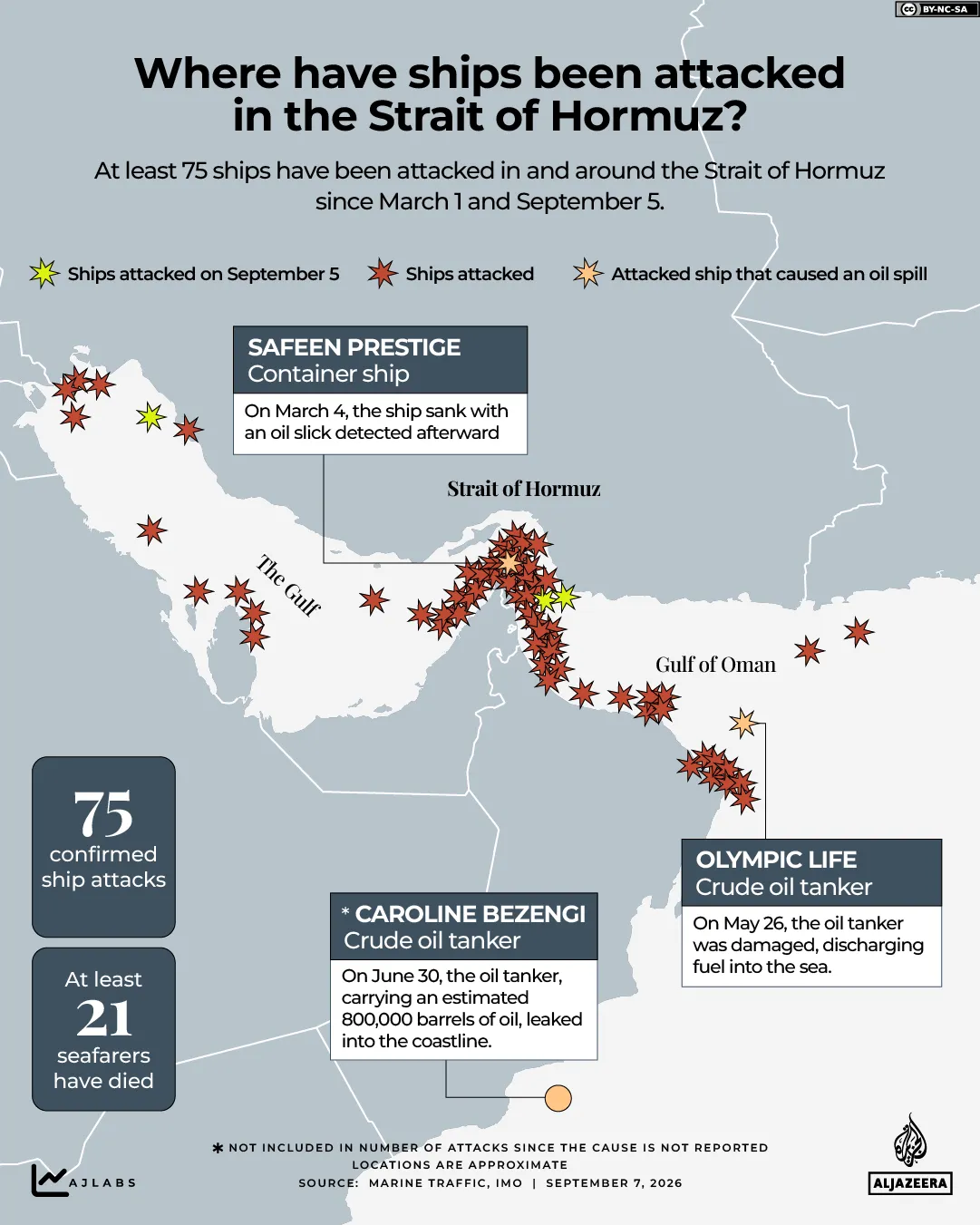
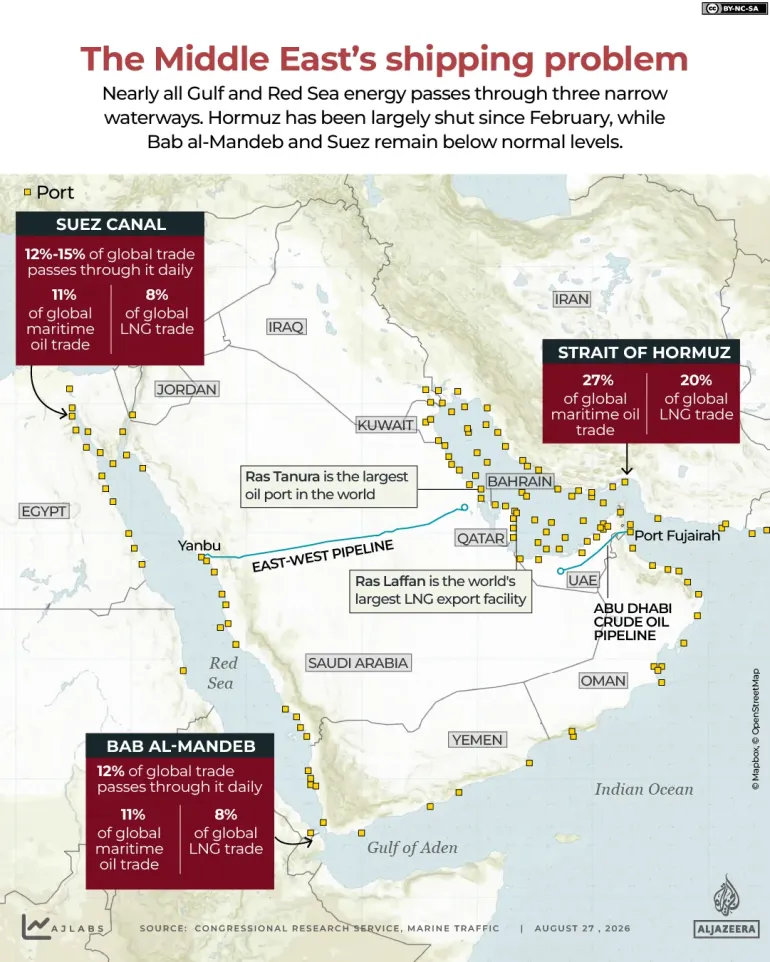
Despite the closure, ships have still transited the strategic body of water through which about a fifth of the world’s oil and gas exports pass. Ship traffic through the Strait actually “increased from last month’s unusually low levels, with crossings rising and activity extending across a broader mix of vessel types and cargoes,” according to the global trade intelligence firm Kpler.
Traffic gradually returns to Hormuz
Vessel traffic through the Strait of Hormuz has increased from last month’s unusually low levels, with crossings rising and activity extending across a broader mix of vessel types and cargoes. Movements are becoming more balanced in both… pic.twitter.com/FPjw0s3N9k
There is also still the issue of mines in the section of the Strait outside the Qeshem-Larak passage. Demining is one of the issues being discussed today in an international meeting being held in Paris, a French official told us. We’ll discuss this meeting in a little more detail later in this story.
Trump, however, claimed that “Iran, with the help of the U.S.A., has removed or is removing all sea mines!”
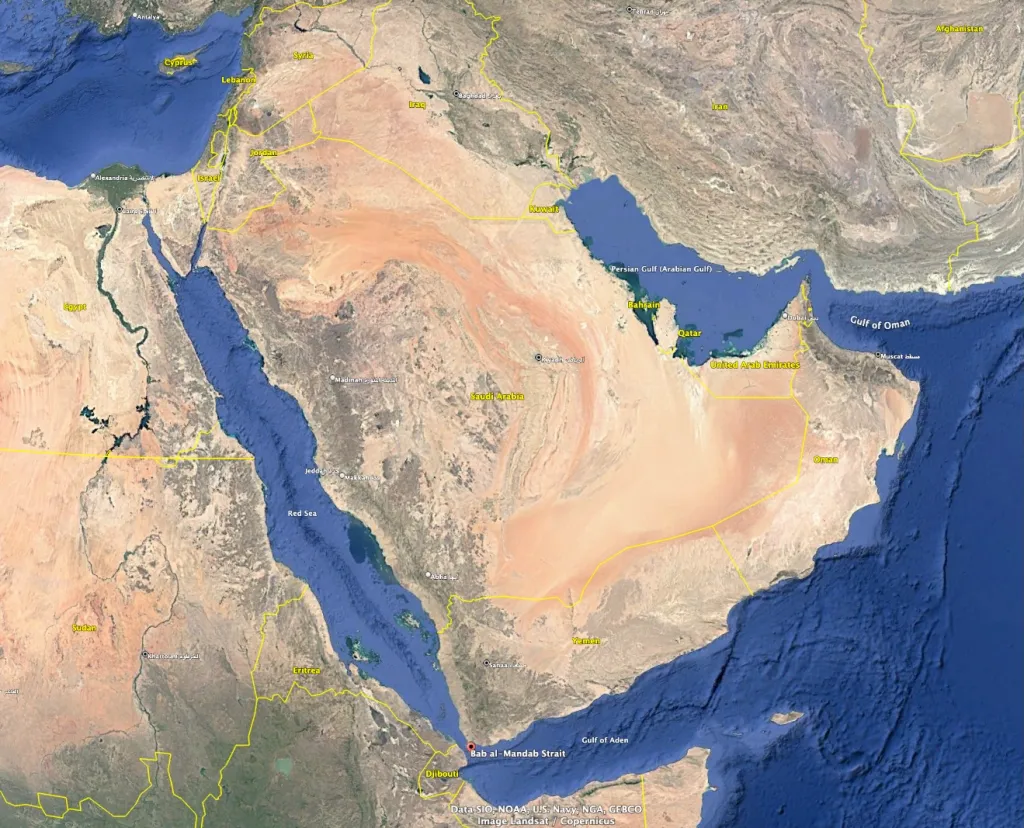
The Strait of Hormuz and Qeshem and Larak islands. (Google Earth)
We have reached out to shippers and maritime analysis and security firms to get a clearer picture of what this decision means from their perspectives.
“This is good news,” a spokesman for Hapag-Lloyd told us. “There are still some open questions on our end, but they might be resolved within the next 24 hours. Top priority for the passage is safety and security for the seafarers, the vessel and the cargo of our customers. If all open issues are cleared (i.e. insurance coverage, clear orders of Iranian government/military about the exact sea corridor to be used and the sequence of ships leaving) we would prefer to pass the strait as soon as possible. Our crisis committee is in session and will try to resolve all open items with the relevant parties within the next 24-36 hours.”
The reopening of the Strait “marks a turn for global shipping, as it allows over 750 vessels previously trapped in the Middle East Gulf to begin clearing approximately $17 billion in stranded energy and dry bulk cargoes,” Kpler told us. “As of April 17, 2026, there are 862 vessels currently operating within the Mideast Gulf. The core of the backlog is composed of approximately 187 laden tankers carrying roughly 172 million barrels of crude and refined products, along with a specialized cluster of 15 LNG vessels that remain almost entirely stalled following the collapse of recent ceasefire talks.”
The Strait reopening and a looming new round of peace talks appears to have provided a boost to the world economy.
“Oil prices are falling by more than 10%, and Wall Street is rallying toward another record after Iran said the Strait of Hormuz is fully open, which would allow oil tankers to exit the Persian Gulf again and carry crude to customers worldwide,” The Associated Press reported. “The S&P 500 rallied 0.7% as U.S. stocks sprinted toward the finish of a third straight week of big gains. The Dow Jones Industrial Average rose 1%, and the Nasdaq composite added 1%.”
Stocks “have rallied more than 11% since late March on hopes that the United States and Iran can avoid a worst-case scenario for the global economy,” the wire service added.
BREAKING: President Trump and Iran’s foreign minister say the Strait of Hormuz is now fully open. Crude oil prices tumble 10% after the announcements. https://t.co/d44au7X8UP
He insisted that doing so will not involve U.S. ground troops. But when asked who would retrieve it, he would only say “our people.”
“No. No troops,” he told the network. “We’ll go down and get it with them, and then we’ll take it. We’ll be getting it together because by that time, we’ll have an agreement and there’s no need for fighting when there’s an agreement. Nice right? That’s better. We would have done it the other way if we had to.”
The president said the material would then be brought to the U.S.
“Our people, together with the Iranians, are going to work together to go get it. And then we’ll take it to the United States,” he said.
NEWS President Trump tells me:
-No ground troops will be required to remove enriched uranium from Iran
-Iran has agreed to stop backing all proxy groups like Hezbollah and Hamas
-I asked if Iran has agreed to stop enriching uranium *forever.” He said, “They’ve agreed to…
Speaking to the White House press corps, Trump addressed questions about the peace process.
“We’ll see how it all turns out, but it should be good, some very good discussions, and hopefully that subject that you like to talk about will be very good,” he said. “And we’ve done a good job, but we’ll see … the talks are going on and going over the weekend, and a lot of good things are happening that includes Lebanon.”
Asked about differences with Iran on how all this is developing, Trump said: “If there are, I’m going to straighten it out. .. don’t think there’s too many significant differences.”
As for the blockade: “When the agreement is signed, the blockade ends,” he proclaimed.
Earlier on Friday, Iranian officials said they would close the Strait again if the blockade is not lifted.
“We’ve had some very good discussions… Talks are going on. It’ll go on over the weekend — and a lot of good things are happening,” says @POTUS in Arizona.
Trump told Axios that U.S. and Iranian negotiators will probably meet this weekend, and he expects them to hammer out a final deal to end the war. The deal should come “in a day or two,” Axios reporter Barak Ravid added on X.
UPDATE: 1:28 PM EDT –
Trump told Reuters on Friday that the U.S. will work with Iran to recover its enriched uranium and bring it back to the United States.
“We’re going to get it together. We’re going to go in with Iran, at a nice leisurely pace, and go down and start excavating with big machinery… We’ll bring it back to the United States,” Trump said during a phone interview.
The United States will work with Tehran to recover its enriched uranium and bring it back to the United States, President Donald Trump told Reuters on Friday.
“We’re going to get it together. We’re going to go in with Iran, at a nice leisurely pace, and go down and… pic.twitter.com/ZfwJTFrIbr
— Iran International English (@IranIntl_En) April 17, 2026
UPDATE: 1:17 PM EDT –
Seyyed Mohammad Mehdi Tabatabaei, a spokesperson for Iran’s president, pushed back on Trump’s claim that Iran promised never to close the Strait again.
“The Twitter rhetoric and baseless statements of the enemy are aimed at stripping the Iranian nation of their sense of pride for the great victories they have achieved through their resolute defense,” he stated on X. “The conditional and limited reopening of a portion of the Strait of Hormuz is solely an Iranian initiative, one that creates responsibility and serves to test the firm commitments of the opposing side. If they renege on their promises, they will face dire consequences.”
لفاظیهای توئیتری و اظهارات بیپایه دشمن، در جهت سلب احساس افتخار ملت ایران برای پیروزیهای بزرگی است که در دفاع مقتدرانه کسب کردهاند. بازگشایی مشروط و محدود بخشی از تنگه هرمز ، صرفا ابتکاری ایرانی، مسئولیتآفرین و برای آزمون تعهدات قطعی طرف مقابل است. بدعهدی کنند، بد میبینند.
Iran considers the continuation of the U.S. blockade on its ports a ceasefire violation and would close the Strait of Hormuz again if the blockade is not lifted, the IRGC-affiliated Fars News reported citing an informed source close to the Supreme National Security Council.
We’ve reached out to the White House for comment.
Iranian official to Fars:
If the maritime blockade continues, it will be considered a violation of the ceasefire, and the Strait of Hormuz transit route will be closed.
With new talks potentially set to be held in Pakistan over the weekend, the U.S. and Iran are negotiating over a three-page plan to end the war, Axios reported Friday morning. One of the key elements under discussion is “that the U.S. would release $20 billion in frozen Iranian funds in return for Iran giving up its stockpile of enriched uranium,” the outlet noted, citing two U.S. officials and two additional sources briefed on the talks.
The Memo of Understanding (MoU) also states the two sides are negotiating over a “voluntary” moratorium on nuclear enrichment by Iran. It also deals with the Strait of Hormuz, “though the sources said there are still significant gaps on that issue,” Axios posited.
It’s unclear if the MOU refers to Iran’s ballistic missiles and its support for regional proxies.
🚨 SCOOP: The U.S. and Iran are negotiating over a three-page plan to end the war, with one element under discussion being that the U.S. would release $20 billion in frozen Iranian funds in return for Iran giving up its stockpile of enriched uranium. https://t.co/w84Yd8JHgp
“Trump is directly talking to the Iranians,” U.S. Sen. Lindsey Graham (R-SC) told Fox News.
“He is negotiating himself,” Graham proffered. “He was on the phone with the Iranians a couple of days ago, and it got rather sporty—to the point that Trump loudly told Iran what would happen if they keep playing games. He actually lost his voice. I’d hate to be the Iranian on the receiving end of that.”
Senator Graham:
Trump is directly talking to the Iranians. He is negotiating himself.
He was on the phone with the Iranians a couple of days ago, and it got rather sporty—to the point that Trump loudly told Iran what would happen if they keep playing games.
Despite rising hopes that the war in Iran could soon end, the country’s deputy foreign minister on Friday rejected any call for a temporary ceasefire. Instead, Tehran is seeking a comprehensive end to conflict across the Middle East, Saeed Khatibzadeh told reporters today. That includes fighting between Israel and Hezbollah, currently paused on the first full day of a shaky 10-day ceasefire.
“We are not accepting any temporary ceasefire,” Khatibzadeh said on the sidelines of the Antalya Diplomacy Forum hosted by Turkey’s Foreign Affairs Ministry. Any end to the fighting must include all conflict zones “from Lebanon to the Red Sea,” he added, describing it as a “red line” for Iran.
The cycle of violence “should end here once and for all,” Khatibzadeh continued, according to Al Jazeera.
The Islamic Revolutionary Guard Corp (IRGC) said it is ready to resume fighting if needed.
The Army and the IRGC have their “finger on the trigger” and are “prepared to deliver a powerful, destructive, and regret-inducing response to any aggressive or criminal action by the US-Israeli enemy and their allies against the Iranian nation,” the IRGC said Friday.
As we noted earlier in this story, the leaders of nearly three dozen nations met – mostly virtually – at a conference in Paris today to discuss the future of the Strait of Hormuz.
Co-chaired by French President Emmanuel Macron and British Prime Minister Keir Starmer, the conference on the Initiative for Maritime Navigation in the Strait of Hormuz looked at ways of protecting shipping after the fighting ends.
Starmer said the U.K. and France will lead a multinational mission to “protect freedom of navigation” in the Strait as soon as conditions permit. He added that the mission would be “strictly peaceful and defensive,” with the aim of reassuring commercial shipping and supporting mine clearance efforts.
Starmer invited other countries to join, saying that roughly a dozen countries had committed to contributing assets.
Kaja Kallas, European Union High Representative for Foreign Affairs and Security Policy/Vice-President of the European Commission, said leaders also discussed ensuring that Iran imposes no tolls on passage through the Strait.
“Any pay-for-passage scheme will set a dangerous precedent for global maritime routes,” she stated on X. “Iran has to abandon any plan to levy transit fees. Europe will play its part in restoring the free flow of energy and trade, once a ceasefire takes hold.”
Kallas added that the EU’s Aspides naval mission is already operating in the Red Sea “and can be quickly strengthened to protect shipping across the region. This could be the fastest way to provide support.”
Yesterday, a spokesman for Aspides told us that there were no changes in its mission.
Under international law, transit through waterways like the Strait of Hormuz must remain open and free of charge. This is what leaders made clear in their call on reopening the Strait today.
Any pay-for-passage scheme will set a dangerous precedent for global maritime routes.… pic.twitter.com/Jeufv4hQou
A maritime agency reported that a tanker was fired on by gunboats in the Strait of Hormuz. The United Kingdom Maritime Trade Operations agency says it received a report of a tanker being fired upon by what it said were two gunboats linked to Iran’s Revolutionary Guard Corps. The vessel and its crew were reported safe.
Reports of Iranian gunboats opening fire on a tanker in strait, after Tehran said it is closing the waterway until the US lifts the blockade of its ports.
Published On 18 Apr 202618 Apr 2026
Iran says it has closed the Strait of Hormuz again, calling the decision a response to a continued blockade of its ports by the United States.
The Iranian military on Saturday said control of the strategic waterway, through which 20 percent of the global oil flows, has “returned to its previous state”, with reports saying Iranian gunboats fired at a merchant vessel as it attempted to cross.
Recommended Stories
list of 4 itemsend of list
The closure of the strait came hours after it was reopened, with more than a dozen commercial ships passing through the waterway, after a US-mediated 10-day ceasefire deal was reached between Israel and Lebanon.
The Islamic Revolutionary Guard Corps (IRGC) on Saturday said in a statement, cited by the Iranian media, that the ongoing US blockade of Iranian ports represented “acts of piracy and maritime theft”, adding that the control over Hormuz is “under the strict management and control of the armed forces”.
“Until the US restores full freedom of navigation for vessels travelling from Iran to their destinations and back, the status of the Strait of Hormuz will remain tightly controlled and in its previous condition,” it said.
By 10:30 GMT on Saturday, no fewer than eight oil and gas tankers had crossed the strait, but at least as many ships appeared to have turned back, having begun to exit the Gulf, the AFP news agency reported.
The toing and froing over the strait cast doubt on US President Donald Trump’s optimism the day before, that a peace deal to end the US-Israel war on Iran was “very close”.
Trump had celebrated the reopening of the strait on Friday, but warned the US attacks would resume until Iran agreed to a deal, which included its nuclear programme.
“Maybe I won’t extend it,” Trump told reporters on board Air Force One about the temporary ceasefire agreement in place. “So you’ll have a blockade, and unfortunately we’ll have to start dropping bombs again.”
Asked whether a potential deal could be made in this short timeframe, Trump said: “I think it’s going to happen.”
But Iran says no date has been agreed for another round of peace talks, accusing the US of “betraying” diplomacy in all negotiations.
The conflicting and changing reports about the strait and how much freedom ships have to transit through it have deterred many vessels from crossing, according to John-Paul Rodrigue, a maritime shipping specialist at Texas A&M University.
“Ships have been attempting transit since the announcement, but it looks like many of them are heading back because the situation is unclear,” Rodrigue told Al Jazeera. “There is contradictory information being issued by all parties.”
Reporting from Tehran, Al Jazeera’s Tohid Asadi said “uncertainty is the name of the game” as far as the Strait of Hormuz is concerned.
“Iran is looking for a comprehensive end to the war across the region, security assurances, sanctions relief, the unfreezing of frozen assets, regional relations – and on top of all of that – the nuclear dossier and Iran’s stockpile of highly enriched uranium,” he said.
“But right now, uncertainty is the name of the game. The fragile situation makes it hard to talk about the possibility of successful negotiations down the road.”
Michael Shoebridge, Director of Strategic Analysis Australia, says the US may be forced to end its blockade of Iran in order to see the full reopening of the Strait of Hormuz.
WASHINGTON — Upbeat claims from President Trump over an imminent peace deal to end the war with Iran were met with deep skepticism Friday across the Middle East, where Iranian and Israeli officials questioned the prospects for a lasting agreement that would satisfy all parties.
The outlines of an agreement began to emerge that would provide Iran with a major strategic victory — and a potential financial windfall — allowing the Islamic Republic to leverage its control over the Strait of Hormuz to exact significant concessions from the United States and its ally Israel as Trump presses for a swift end to the conflict.
In a series of social media posts and interviews with reporters, Trump announced that the strait was “fully open,” vowing Tehran would never again attempt to control it. But Iranian officials and state media said that conditions remained on passage through the waterway, including the imposition of tolls and coordination with the Islamic Revolutionary Guard Corps.
Iranian diplomats posted threats that its closure could resume at any time of their choosing, and warned that restrictions would return unless the United States agreed to lift a blockade of its ports. Trump had said Friday that the blockade would remain in place.
“The conditional and limited reopening of a portion of the Strait of Hormuz is solely an Iranian initiative, one that creates responsibility and serves to test the firm commitments of the opposing side,” said a top aide to Iran’s president, dismissing Trump’s statements on the contours of a deal as “baseless.”
“If they renege on their promises,” he added, “they will face dire consequences.”
In an overture to Iran, Trump said Israel would be “prohibited” from conducting additional military strikes in Lebanon, where the Israeli government of Prime Minister Benjamin Netanyahu seeks to prevent Hezbollah, an Iranian proxy militia, from rearming, a potential threat to communities in the Israeli north.
But in a speech delivered in Hebrew, Netanyahu would say only that Israel had agreed to a temporary ceasefire, while members of his Cabinet warned that Israel Defense Forces operations in southern Lebanon were not yet finished. A top ally of the prime minister at a right-wing Israeli news outlet warned that Trump was “surrendering” to Iran in the talks.
It was a day of public messaging from a president eager to end a war that has proved historically unpopular with the American public, and has driven a rise in gas prices that could weigh on his party entering this year’s midterm elections.
Yet, Republican allies of the president have begun warning him that an agreement skewed heavily in Tehran’s favor could carry political costs of its own.
Trump was forced to deny an Axios report Friday that his negotiating team had offered to release $20 billion in frozen Iranian assets in exchange for Tehran agreeing to hand over its fissile material, buried under rubble from a U.S. bombing raid last year.
That sum would amount to more than 10 times what President Obama released to Iran under a 2015 nuclear deal, called the Joint Comprehensive Plan of Action, that was the subject of fierce Republican criticism in the decade since.
“I have every confidence that President Trump will not allow Iran to be enriched by tens of billions of dollars for holding the world hostage and creating mayhem in the region,” said Sen. Lindsey Graham (R-S.C.), a strong supporter of the war. “No JCPOAs on President Trump’s watch.”
Still, Trump said in a round of interviews that a deal could be reached in a matter of days, ending less than two weeks of negotiations.
He claimed that Tehran had agreed to permanently end its enrichment of uranium — a development that, if true, would mark a dramatic reversal for the Islamic Republic from decades developing its nuclear program, and from just 10 days ago, when Iranian diplomats rejected a U.S. proposal of a 20-year pause on domestic enrichment in favor of a five-year moratorium.
He said Iran had agreed never to build nuclear weapons — a pledge Tehran has made repeatedly, including under the Nuclear Nonproliferation Treaty, in a religious decree from then-Supreme Leader Ayatollah Ali Khamenei, and in the 2015 agreement — while continuing nuclear activities viewed by the international community as exceeding civilian needs.
And he repeatedly stated that Iran had agreed to the removal of its enriched uranium from the country, either to the United States or to a third party. Iranian state media stated Friday afternoon that a proposal to remove the country’s highly enriched uranium had been “rejected.”
Iran’s agreement to allow safe passage for commercial vessels through the Strait of Hormuz is linked to a ceasefire in Lebanon that the Israeli Cabinet approved for only a 10-day period. Regardless of whether it holds or is extended, Israeli officials said their military would not retreat from its current positions in southern Lebanon — opening up Israeli forces to potential attack by Hezbollah militants unbound by a truce brokered by the Lebanese government.
The Lebanese people, Hezbollah officials said, have “the right to resist” Israeli occupation of their land. Whether the fighting resumes, the group added, “will be determined based on how developments unfold.”
An Iranian official threw cold water on the prospects of reaching a comprehensive peace deal in the coming days, telling Reuters that a temporary extension of the current ceasefire, set to expire Tuesday, would “create space for more talks on lifting sanctions on Iran and securing compensation for war damages.”
“In exchange, Iran will provide assurances to the international community about the peaceful nature of its nuclear program,” the official said, adding that “any other narrative about the ongoing talks is a misrepresentation of the situation.”
Trump told reporters Friday that the talks will continue through the weekend.
While Trump claimed there aren’t “too many significant differences” remaining, he said the United States would continue the blockade until negotiations are finalized and formalized.
“When the agreement is signed, the blockade ends,” the president told reporters in Phoenix.
Times staff writer Ana Ceballos contributed to this report.
Iran’s Foreign Minister Abbas Araghchi and United States President Donald Trump have said that the Strait of Hormuz is open to commercial vessels.
Araghchi declared on Friday that the strategic waterwat was “completely open” in line with the ceasefire between Israel and Lebanon that took effect the previous day.
Recommended Stories
list of 3 itemsend of list
Trump affirmed on social media that the strait was open, later claiming that Iran had agreed to “never close the Strait of Hormuz again”. However, he also posted that the US naval blockade on Iranian ports would “remain in full force”.
In parallel, France and the United Kingdom hosted a meeting in Paris involving about 40 countries, which agreed to play a role in restoring freedom of navigation in the Strait of Hormuz once the US-Israeli war on Iran stops.
The blocking of tankers from using the strait, through which about 20 percent of the world’s crude flows on a typical day, has led to a global surge in fuel prices.
World leaders have welcomed the news with cautious optimism amid mixed messages from the US and Iran:
United States
“The Strait of Hormuz is completely open and ready for business and full passage, but the naval blockade will remain in full force and effect as it pertains to Iran, only, until such time as our transaction with Iran is 100% complete,” Trump wrote on Truth Social.
Minutes later, he issued another post saying the US Navy’s blockade on Iranian ships and ports “will remain in full force” until Tehran reaches a deal with the US, including on its nuclear programme.
Later, Trump told the news agency AFP that a deal to end the war on Iran was “close”, saying there were “no sticking points” left between Washington and Tehran.
Iran
Foreign Minister Abbas Araghchi posted on X that the strait was “declared completely open” and would remain open for the remaining period of the 10-day Israel-Lebanon ceasefire, which took effect overnight Thursday into Friday.
Some Iranian state media reports later appeared to contradict Araghchi’s announcement, with a senior military official telling state media that only nonmilitary vessels would be allowed to transit with permission from the Iranian Islamic Revolutionary Guard Corps (IRGC) Navy.
The Fars news agency, which is close to the IRGC, noted a “strange silence from the Supreme National Security Council”, the de facto top decision-making body in the country, as the status of the new supreme leader, Mojtaba Khamenei, remains unknown.
United Kingdom
UK Prime Minister Keir Starmer cohosted a summit on a potential military mission to secure the Hormuz Strait with French President Emmanuel Macron in Paris on Friday, with about 30 to 40 countries participating in person or by video conference.
On the sidelines, Starmer cautiously welcomed news of the strait’s reopening but said it must become “both lasting and a workable proposal”.
He said the UK and France would lead a “strictly peaceful and defensive” multinational mission to protect freedom of navigation as soon as conditions allow.
France
Speaking after the gathering, Macron said, “We all demand the full, immediate and unconditional reopening of the Strait of Hormuz by all parties.”
“We all oppose any restrictions or system of agreements that would, in effect, amount to an attempt to privatise the strait – and, of course, any toll system,” he added.
Macron’s office said roles for members of the international coalition working to reopen the strait could include “intelligence, mine-clearing capabilities, military escorts [and] communication procedures with coastal states”.
Germany
Chancellor Friedrich Merz said Germany could contribute mine clearance and intelligence capabilities to the international mission, but would need parliamentary support and a ″secure legal basis″ such as a UN Security Council resolution.
He said he wanted US involvement in the international mission to secure shipping through the Strait of Hormuz. “We believe this would be desirable,″ he said.
Trump later appeared to rebuff his overtures, saying on social media that he had received a call from NATO, but declined its assistance in no uncertain terms.
Finland
Finnish President Alexander Stubb, who participated in the Paris summit, said on X, “We welcome Iran’s announcement on opening the Strait. Lasting solutions require diplomacy,”
United Nations
United Nations Secretary-General Antonio Guterres on Friday welcomed the opening of Strait of Hormuz by Iran and said it was “a step in the right direction”.
International Maritime Organisation
Arsenio Dominguez, secretary-general of the UN shipping agency said, “We are currently verifying the recent announcement related to the reopening of the Strait of Hormuz, in terms of its compliance with freedom of navigation for all merchant vessels and secure passage.”
Shipping companies
The Norwegian Shipowners’ Association said several things had to be clarified before any ships can transit the strait, including the presence of mines, Iranian conditions and practical implementation.
“If this represents a step towards an opening, it is a welcome development,” said Knut Arild Hareide, CEO of the association, which represents 130 companies with some 1,500 vessels.
A spokesperson for Germany’s Hapag-Lloyd Shipping Company said, “We are now beginning to assess the new situation and the risks involved … For the time being, therefore, we are still refraining from passing through the strait.”
In a statement, Denmark’s Maersk said: “We have noted the announcement. The safety of our crew, vessels and customers’ cargo remains our priority. Since the outbreak of the conflict, we have followed the guidance of our security partners in the region, and the recommendation so far has been to avoid transiting the Strait of Hormuz.
“Any decision to transit the strait will be based on risk assessments and close monitoring of the security situation, with the latest developments also included in the ongoing assessments.”
Markets
Oil prices plunged after Iran’s announcement that passage for commercial vessels would remain “completely open” for the duration of a 10-day ceasefire in Lebanon.
“This news is having an immediate impact on markets,” said Kathleen Brooks, research director at XTB. “This is the biggest development so far during the ceasefire, and it gives hope that the war will end soon, and supply chains will return to some normality.”
French President Emmanuel Macron said he welcomed the reopening of the Strait of Hormuz and the Lebanon ceasefire, as the US and Iran declared the key waterway open. His comments came as European leaders discuss a post-war Hormuz maritime force.
Iran says ‘passage for all commercial vessels through Strait of Hormuz’ open during the Israel-Lebanon ceasefire.
Published On 17 Apr 202617 Apr 2026
The Strait of Hormuz is “completely open” for all commercial vessels and will remain so during the Israel-Lebanon ceasefire, Iran’s foreign minister has said.
“In line with the ceasefire in Lebanon, the passage for all commercial vessels through Strait of Hormuz is declared completely open for the remaining period of ceasefire,” Abbas Araghchi said in a post on X on Friday.
Recommended Stories
list of 3 itemsend of list
A 10-day ceasefire was agreed between Israel and Lebanon late on Thursday.
The passage of vessels through the strait will be on the coordinated route as already announced by Ports and Maritime Organisation of Iran, Araghchi added.
United States President Donald Trump confirmed in a social media post that the strait was “completely open and ready for business and full passage”.
WASHINGTON — With a fragile ceasefire set to expire with Iran in a matter of days, President Trump is still deciding between diplomacy and a resumption of fighting that may ultimately hinge on his definition of victory.
Negotiations have continued over the last week between the warring sides over a potential agreement that would end the conflict and curtail Iran’s nuclear ambitions, with interlocutors from Pakistan passing messages that have kept talks alive. Tehran has floated an extension of the two-week ceasefire, set to expire Tuesday, that is under active consideration by the American side.
But the Islamic Republic has simultaneously vowed retaliation over a new U.S. blockade of Iranian ports that in effect cut off Tehran’s oil sales, which make up nearly 85% of the country’s export revenue. And the Trump administration is deploying up to 10,000 additional troops to the region, on top of the 50,000 already there, both reinforcing the blockade and threatening ground operations if diplomacy fails.
Conflicting messages from the Trump administration are designed to escalate pressure on Tehran ahead of the ceasefire deadline, potentially extracting concessions at the negotiating table.
But speaking with reporters, Trump has made it clear he is seeking a way to end the war for good.
“I think it’s close to over,” Trump told Fox Business Network’s “Mornings with Maria” on Wednesday. “I view it as very close to over. If I pulled up stakes right now, it would take them 20 years to rebuild that country. And we’re not finished. We’ll see what happens. I think they want to make a deal very badly.”
Negotiations toward that end have proved more challenging than the administration initially anticipated.
Trump has said he started the war in order to eliminate Iran’s nuclear infrastructure, degrade its ballistic missile and drone programs, and destroy its navy. But in talks, the Iranians have not relented on their right to enrich uranium, to maintain conventional defensive capabilities and to police traffic through the Strait of Hormuz, one of the world’s most vital waterways.
Tehran rejected a proposal by U.S. negotiators last week for a 20-year pause on Iran’s domestic enrichment of fissile material, with the Iranians countering with a five-year moratorium, one official said.
In his interview with Fox, Trump said the talks were going so well that an extension of the ceasefire might not be necessary. Yet, speaking with the New York Post, Trump suggested he wouldn’t settle for less than an indefinite cap on Iran’s nuclear work.
“I’ve been saying they can’t have nuclear weapons,” Trump said, “so I don’t like the 20 years.”
“I don’t want them to feel like they have a win,” he added.
The U.S. ceasefire with Iran was predicated on the resumption of free navigation through the Strait of Hormuz. But Iranian threats of a new toll system and warnings of drifting mines have limited traffic, prompting the Trump administration to announce a full blockade of the strait. Despite the U.S. threat, ships have continued transiting the passage this week, suggesting the U.S. blockade has focused more specifically on Iranian ports.
Amid the impasse, global oil prices remain stubbornly high — a concern for Republicans entering this year’s midterm election season. Trump told Fox that he expected prices to drop to prewar levels by the time of the vote in November.
“There’s gonna be a hit, but it’s going to recover, I think, fully,” Trump said. “I think that we will be somewhere around where we were — maybe even lower. And when this is over, I think the stock market is going to boom.”
A second round of high-level negotiations could take place in Islamabad, Pakistan, over the next several days, Karoline Leavitt, the White House press secretary, told reporters at a news briefing Wednesday.
Pakistani officials traveled to Tehran on Wednesday to deliver a message from the U.S. delegation, potentially laying the groundwork for new, in-person talks.
“He’s made his red lines in these negotiations very clear to the other side,” Leavitt said. “We feel good about the prospects of a deal.”
For the second time in two weeks, President Trump used that phrase in a post about the Israel-U.S. war against Iran.
Crowing about the alleged destruction of Iran’s planes, ships and bases in a Truth Social post Saturday, he emphasized his greatest victory in the monthlong campaign: “Most importantly, their longtime ‘Leaders’ are no longer with us, praise be to Allah!”
Making sense of anything Trump says in the heat of posting is a fool’s errand, but it’s also entirely necessary. Sane wash his words we must, because no matter how unhinged or infantile, the world’s safety, fortunes and future are inextricably tied to America’s next move, and therefore to his next move.
So what is Trump trying to communicate, or provoke, by using the Arabic word for God, as Muslims do? Let’s translate.
The first and most likely explanation: “Praise be to Allah” was meant to disparage his adversaries in the Islamic Republic of Iran. They are Muslim, they refer to God as “Allah,” therefore, he will turn their phrasing against them. Word bombs to accompany the deadly ones falling in Iran and Lebanon.
All leaders deploy tough talk in times of war, but Trump’s posts read more like the feverish ramblings of mad Col. Kurtz (Marlon Brando) in “Apocalypse Now” — “You’re an errand boy sent by grocery clerks to collect a bill” — than Winston Churchill’s galvanizing call to arms against the Nazis, “We shall fight on the beaches…”
Unlike the fictional Kurtz or the real Churchill, Trump has no military experience. He avoided the Vietnam War draft with four student deferments and one medical deferment for bone spurs. An area where he is experienced? Baiting foes. Antagonizing enemies, genuine or imagined, is a Trump specialty, be it from the Oval Office, on the campaign trail, or in the before times, as a reality TV personality.
Painting Muslims as the Other is nothing new for Trump, (unless they come bearing luxury airliners as gifts — then they’re friends). The same goes for others in his party. Since the U.S. and Israel attacked Iran on Feb. 28, Rep. Andy Ogles (R-Tenn.) posted that Muslims don’t belong in American society. Rep. Randy Fine (R-Fla.) wrote, “We need more Islamophobia, not less. Fear of Islam is rational.” And Sen. Tommy Tuberville (R-Ala.) reposted an image of the Twin Towers burning side by side with an image of New York City Mayor Zohran Mamdani, with his own caption: “The enemy is inside the gates.”
The president’s first usage of “Praise be to Allah” as a middle finger to Iran landed on a Christian holy day, Easter Sunday. He posted a demand that Iran open the Strait of Hormuz: “Open the F— Strait, you crazy b—, or you’ll be living in Hell – JUST WATCH! Praise be to Allah.” Hardly messaging that brings to mind Easter egg hunts on the White House lawn.
If the idea was to humiliate Iran into submission, it’s not working. Iran doesn’t appear to be backing down, even after Trump’s week-ago threat that a “whole civilization will die tonight” if it failed to meet his deadline to reopen the strait. The critical global shipping route is still closed. Trump didn’t appear all that interested in the art of the deal, either, even as Vice President JD Vance tried and failed to negotiate with Iranian leaders in Pakistan on Saturday. The president told reporters that he didn’t “care” what happens with Iran negotiations because “regardless what happens, we win.” He also said, “Whether we make a deal or not makes no difference to me.” He was seen later in Miami at an Ultimate Fighting Championship cage match with Secretary of State Marco Rubio.
Making the Allah references all the stranger were Trump’s other religious-themed posts this past weekend. One was a lengthy screed against Pope Leo XIV, whom Trump described as too liberal and “weak on crime.” It’s worth noting that more than half of American Catholics voted for Trump in the last election, and that his vice president is Catholic, as is the secretary of State and the first lady.
The other was a stand-alone, AI-generated image of himself as a Christ-like figure. It showed the 79-year-old clad in a white robe and papal-red cape, a divine light emanating from the palm of one hand while the other hand was placed on an ailing man. The post was deleted Monday morning after a sizable backlash.
“I did post it, and I thought it was me as a doctor, and had to do with Red Cross, as a Red Cross worker there, which we support,” Trump said, responding to a reporter Monday during a presser at the White House as DoorDash delivered an order from McDonald’s to promote the president’s “no tax on tips” policy.
There was no mention of Allah during that particular event.
CENTCOM contradicts reports on ships breaking blockade as Trump says US-Iran talks could resume in the next two days.
Published On 14 Apr 202614 Apr 2026
The Pentagon says no ships “made it past” the United States military blockade in the Strait of Hormuz in its first 24 hours and six merchant ships followed orders to turn around.
The statement on Tuesday from the US military’s Central Command (CENTCOM) was the first update since US President Donald Trump announced the blockade of the waterway after US-Iran talks over the weekend in Pakistan failed to yield an agreement on ending the war the US and Israel launched on February 28.
Recommended Stories
list of 3 itemsend of list
CENTCOM said the blockade applies only to vessels “entering and exiting Iranian ports” and other vessels remain free to transit the waterway.
It added: “US forces are supporting freedom of navigation for vessels transiting the Strait of Hormuz to and from non-Iranian ports.”
The Reuters news agency reported at least three vessels transited the strait during the first 24 hours of the blockade, citing shipping data. They included two tankers sanctioned by the US. The three ships were not heading to Iranian ports, according to Reuters.
However, the AFP news agency and several US media outlets, citing data from the maritime tracker Kpler, reported two ships had transited the waterway after leaving Iranian ports on Monday.
CENTCOM said 10,000 US sailors, Marines and airmen were involved in the operation, along with more than a dozen US warships and dozens of aircraft.
Military observers have widely said US forces have the capability to maintain the blockade for the foreseeable future but the continued pressure increases the likelihood of Iranian attacks. That in turn could see a two-week ceasefire that began on Wednesday collapse.
Meanwhile, any efforts to intercept vessels from strategic foes, including China, could create new escalations. The strategy is also likely to continue to roil global oil markets.
Iran has decried the US approach as “piracy” while Trump on Monday promised to “eliminate” any Iranian ships that seek to break the blockade.
Trump says more talks are possible
The update on Tuesday came as both sides signalled they would be open to further talks after failing to reach a breakthrough during 21 hours of negotiations between a US delegation led by Vice President JD Vance and an Iranian delegation led by parliamentary Speaker Mohammad Bagher Ghalibaf.
The talks were the highest-level face-to-face contact between the two countries since the 1979 Islamic revolution.
Key unresolved sticking points include control of the Strait of Hormuz, the future of Iran’s nuclear programme and whether the ceasefire extended to Israel’s ongoing invasion and bombardment of Lebanon.
In an interview with the New York Post newspaper on Tuesday, Trump said “something could be happening over the next two days” in Islamabad as he hailed Pakistani Field Marshal Asim Munir, who has been among the officials shepherding the negotiations.
Reporting from Tehran, Al Jazeera’s Ali Hashem said sources stated there are already messages being exchanged regarding what both sides consider to be “bridgeable issues”.
“Iran is open to talks, and it showed that from last week when it went to Islamabad. The main hurdle always is the mistrust, distrust between both sides,” Hashem said.
“For the Iranians, they’ve been repeating that they’re open. If the Americans want to fight, they’re going to fight. And if they want to talk, they can talk.”
A US move to block the strait has intensified a broader struggle over who controls access and under what terms.
Now, the United States is the one shutting the Strait of Hormuz, even as President Donald Trump was calling for it to reopen just a few days ago. He said ships entering or leaving Iranian ports would be stopped by the navy after talks between Tehran and Washington fell apart.
However, this is not just about a blockade. Iran is tightening its grip on the strait, demanding the right to impose tolls on ships passing through it.
The ripple effects could go beyond energy and trade flows, challenging the dominance of the US dollar in global shipping.
UK Prime Minister Kier Starmer has announced talks to be held this week and co-hosted with France, aiming at a diplomatic end to the war on Iran and securing safe passage in the Gulf shipping afterwards.
Britain has publicly distanced itself from Washington’s escalating strategy against Iran, with Prime Minister Keir Starmer making clear that the UK will not support any blockade in the Gulf.
Speaking after the United States announced sweeping restrictions on Iranian shipping, Starmer emphasized that Britain’s priority is not enforcement but de-escalation. He stressed the importance of keeping vital trade routes open rather than contributing to further disruption.
What Starmer Said
Starmer’s message was direct. The UK will not be drawn into the conflict and will not support a blockade of the Strait of Hormuz.
Instead, Britain is focused on ensuring the strait remains open. While confirming the presence of British minesweepers in the region, he made clear their role is defensive and aimed at maintaining safe passage, not enforcing restrictions.
Contrast with Washington
The stance puts London at odds with the approach taken by Donald Trump.
The U.S., through United States Central Command, has announced a broad blockade targeting Iranian maritime traffic. Trump has gone further, warning that vessels linked to Iranian payments could be intercepted and threatening force against any resistance.
While Washington frames the move as pressure on Tehran, Britain is signaling concern about the wider consequences.
Why the Strait Matters
The Strait of Hormuz remains one of the most critical energy routes in the world. A significant share of global oil supply passes through it, meaning even partial disruption can send shockwaves through markets.
For the UK, keeping this route open is not just a regional issue but a global economic priority.
Implications: Cracks in Western Unity
Britain’s refusal highlights a growing divide among Western allies on how to handle the Iran crisis.
The U.S. is pursuing a strategy of maximum pressure, while the UK is prioritizing stability and the prevention of further escalation. This divergence could complicate coordinated action and weaken the overall Western response.
Analysis: A Strategic Balancing Act
Starmer’s position reflects a careful calculation. Supporting the blockade risks entangling Britain in a wider conflict and worsening global economic strain. Opposing it, however, creates visible distance from a key ally.
By focusing on keeping the strait open, the UK is attempting to balance security concerns with economic stability, while avoiding direct confrontation.
Britain’s stance sends a clear signal. Even close allies are not fully aligned on how far to go against Iran.
As tensions rise, that lack of unity could shape the next phase of the crisis just as much as the actions taken in the Gulf itself.
Global investors are increasingly focused on the outlook for the Strait of Hormuz, as geopolitical tensions intensify following Washington’s indication that it may enforce a naval blockade targeting Iranian ports.
The narrow waterway—one of the world’s most critical energy and