Strait

U.S. Shoots Down Iranian Drones Launched At Strait Of Hormuz: Official (Updated)

In the latest flare-up of tension during a very shaky ‘ceasefire,’ “Iran has launched multiple drones towards the Strait of Hormuz,” a U.S. official told us. “U.S. forces have taken out at least four of them.”

The statement comes as unconfirmed reports are emerging online of explosions on Iran’s Kharg Island. The official, who spoke to us on condition of anonymity to discuss operational issues, declined comment about those claims.

Kharg Island, which has come under attack before during Epic Fury, is Iran’s main oil export facility. An attack on the oil infrastructure would represent a major escalation.

News of the U.S. takedown of the drones is the latest kinetic incident in the Strait and comes amid sputtering peace talks. As we wrote last week, the U.S. struck Iranian targets and Iran launched missiles and drones at Kuwait and Bahrain in an exchange that severely damaged Kuwait International Airport, killed several people and injured scores more.

You can see video and images of damage from the June 3 attack below.

Other exchanges have occurred around the strait, where U.S. Navy ships says vessels, including their own, were fired upon, which resulted in reprisal attacks on shore targets.

UPDATE: 6:56 PM EDT –

CENTCOM confirmed U.S. forces attacked Iranian facilities and shot down Iranian drones..

“Moments ago, CENTCOM forces shot down four Iranian one-way attack drones that were launched toward the Strait of Hormuz,” the command stated on X. “The attack drones posed an immediate threat to regional maritime traffic. U.S. forces subsequently struck Iranian coastal surveillance radar sites in Goruk and on Qeshm Island to defend against further attacks. American forces remain vigilant and postured to respond to unjustified Iranian aggression in self-defense.”

UPDATE: 10:40 PM EDT –

In a post on X, CENTCOM claimed that “U.S. forces intercepted multiple Iranian ballistic missiles and drones launched by Iran toward the Strait of Hormuz and Gulf neighbors, June 5. “

“Iran fired seven ballistic missiles toward Kuwait and Bahrain,” the command stated. “Initial assessments indicate six of the missiles launched by Iran were intercepted and a seventh did not reach its intended target. There are currently no reports of harm to U.S. personnel, and Iranian claims of damaging U.S. 5th fleet headquarters in Bahrain are false. CENTCOM forces remain vigilant and postured to continue responding to unwarranted Iranian aggression in self-defense.

The Iranian attack took place hours after the previously mentioned CENTCOM strikes on Iranian coastal targets.

The CENTCOM post included a video showing those strikes.

This is a developing story.

Contact the author: howard@twz.com

Howard is a Senior Staff Writer for The War Zone, and a former Senior Managing Editor for Military Times. Prior to this, he covered military affairs for the Tampa Bay Times as a Senior Writer. Howard’s work has appeared in various publications including Yahoo News, RealClearDefense, and Air Force Times.


Source link

House approves war powers resolution to halt military action against Iran

The House approved a war powers resolution Wednesday that would halt the U.S. military action against Iran, defying President Trump as a handful of Republicans joined with Democrats to end the three-month-long war that has reordered politics at home and abroad.

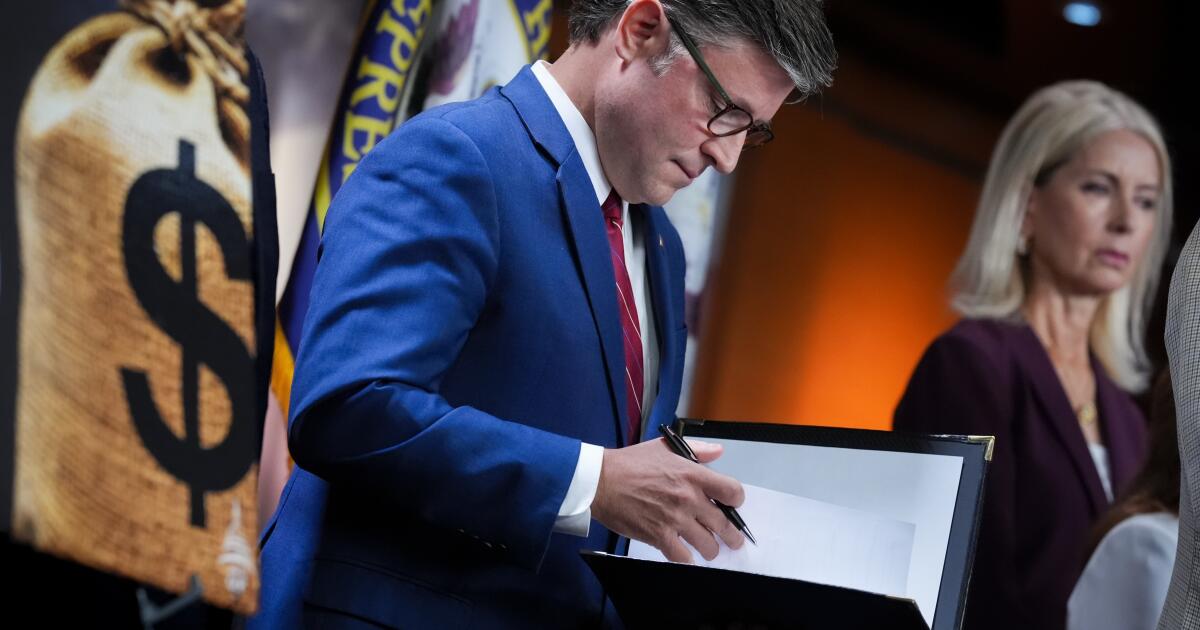
House Speaker Mike Johnson had tried to prevent an outcome that would show the mounting opposition to the war, abruptly shutting down floor action two weeks ago when the war powers resolution was on the verge of approval. But displeasure has only grown as the conflict drags on and as Trump struggles to negotiate a quick resolution.

The roll call Wednesday was 215-208, and cheers erupted in the House chamber.

“This reckless and costly war of choice needs to end today,” House Democratic Leader Hakeem Jeffries of New York said earlier in the week.

“All we need are a handful of Republicans to join us and we can end this reckless and costly war of choice — a war that has cost the American taxpayer over $100 billion — that’s extraordinary — and left our country in a weaker position relative to Iran.”

Opposition to war grows

It’s the fourth time the House has tried to curb the U.S. war against Iran, and the first time the House was able to pass the measure. The Senate advanced its own war powers resolution last month when a handful of GOP senators broke ranks with the Republican president in a rare show of political pushback from his party.

Each time Democrats have pushed forward the war powers resolution, the vote tallies have inched higher as political unease with the U.S. war swells. Trump had campaigned for the White House on a promise to end U.S. entanglements abroad and focus more on domestic issues, but the war has shifted attention back to the Middle East.

Johnson insisted Trump is “laser focused” on the domestic front, particularly ahead of the midterm elections that will determine control of Congress.

The speaker said he spent three hours at the White House with the president this week as Trump is calling on allies to help reopen the Strait of Hormuz for commerce, especially the flow of oil.

Since the U.S. joined Israel in launching the Feb. 28 strikes on Iran, Americans have seen gas prices spike at the pumps, adding to inflationary pressure on consumer spending.

Iran has been able to interrupt shipping through the Strait of Hormuz, a vital channel for a large segment of the world’s oil, natural gas and related products such as fertilizer.

“We’re working on that final piece,” said Johnson, R-La. “The entire world has an interest in the Strait of Hormuz being reopen for commerce. That what he’s working on.”

While a ceasefire in the conflict was declared in April, it remains uneasy and uncertain. Talks for a more durable end to the fighting have dragged, increasingly complicated by Israel’s broadening war with Iran-backed Hezbollah militants in Lebanon. Meanwhile, military strikes between the U.S and Iran continue to flare.

Congress exerts its war powers authority

The war powers resolution from the House would not immediately stop the war, but it would provide a symbolic if not legal step against further military action.

If approved, it would then go to the Senate, where four Republican senators last month joined Democrats in advancing a similar measure to curtail the U.S. campaign against Iran. The Senate has yet to take a final vote to approve or reject its own war powers resolution.

Secretary of State Marco Rubio warned Wednesday testifying at a House Foreign Affairs Committee hearing that the Iranians would think that the administration’s “hands are going to be tied” if Congress approved a war powers resolution. He said they would think ”we won’t be able to do anything to them, so why make a deal?”

It’s not the only action Congress is taking in the national security arena as Democrats, in the minority, work to peel off Republican support for measures beyond the war against Iran.

The House is also voting Wednesday on another Democratic-led effort that would authorize U.S. support for Ukraine’s military operations as it battles Russia and to help reconstruct the war-torn country. The House this week is also expected to consider a war powers resolution to block U.S. action in Lebanon.

While Congress has the authority under the Constitution to declare war, the president also has power as the commander in chief to engage in military action, creating a legal dispute over which branch of government has ultimate say in matters of war and peace.

Under the war powers act, the White House has a 60-day window to seek approval from Congress for military action. The administration, however, has indicated that because a ceasefire has been declared in the current conflict in Iran, the hostilities have ceased.

Mascaro writes for the Associated Press.

Source link

Marco Rubio: Iran must reopen Strait of Hormuz, discuss nuclear program

June 2 (UPI) — Secretary of State Marco Rubio told the Senate on Tuesday morning that Iran must reopen the Strait of Hormuz and commit to future talks on its nuclear program before the United States will make concessions.

He testified before the Senate Foreign Relations Committee before a scheduled afternoon meeting with a House panel on State Department spending. Both sessions were planned so that Rubio could defend the department’s nearly $36 million budget request for the 2027 fiscal year.

Rubio is also President Donald Trump‘s national security adviser.

The Washington Post reported that Rubio’s testimony with lawmakers has been mostly friendly. He served in the Senate for 14 years and in the House for 8, representing Florida.

Lawmakers from both sides of the aisle have expressed frustration with the cost and potential political fallout from the war with Iran.

“This war and the administration’s decision to blockade has now held the entire world economy, and the U.S. economy, hostage to the ability to negotiate an agreement with Iran,” said Sen. Chris Murphy, D-Conn, The Post reported.

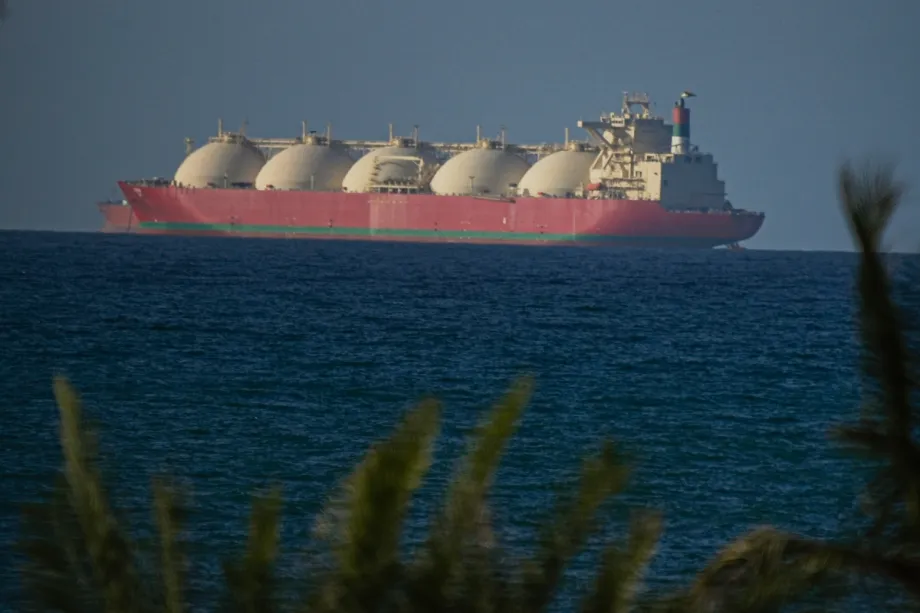
The Strait of Hormuz, which has been closed by Iran since late February, must reopen, Rubio stressed. The strait is a critical waterway for shipping of much of the world’s oil, gas and fertilizer. The closure has caused gas prices to rise, causing anxiety as Republicans fear losing House and Senate seats in November.

Rubio said Trump demands that Iran enter into negotiating “severe and long-term limitations” on its nuclear program, including disposing of enriched uranium, and those talks could take months.

But he said he’s optimistic that Iran is more willing to negotiate on nukes.

“They have agreed to negotiate aspects of their nuclear program that just a month ago, just a year ago, they were refusing to even mention,” The Guardian reported Rubio said. He warned that it’s “not a guarantee that ultimately it will lead to a deal that’s acceptable,” and Iran’s leadership instability has made the negotiations more difficult.

Rubio said Iran had intended to use its conventional weapons capabilities as a “shield” to protect its nuclear program, The Guardian reported.

“What they tried to do is, they were going to try to build a conventional shield and hide behind that conventional shield,” he said, explaining why Trump wanted to start the war.

He also admitted, after questioning by Sen. Ted Cruz, R-Texas, that another sticking point for Trump was that Iran stop supporting terrorist proxy groups. He said Trump is not willing to ease sanctions just for opening the strait.

Rubio said that Iranian Ayatollah Mojtaba Khamenei is believed to be alive.

“I would imagine, given what’s happened to multiple leaders in that system, being very public is probably not something that’s recommended for them internally,” he said. “But that said, I think there are indications out there that he is increasingly engaging at some level, although all of his communications have been in writing and through intermediaries.”

Along with Iran, lawmakers were expected to ask Rubio about the president’s comments about Cuba and Taiwan.

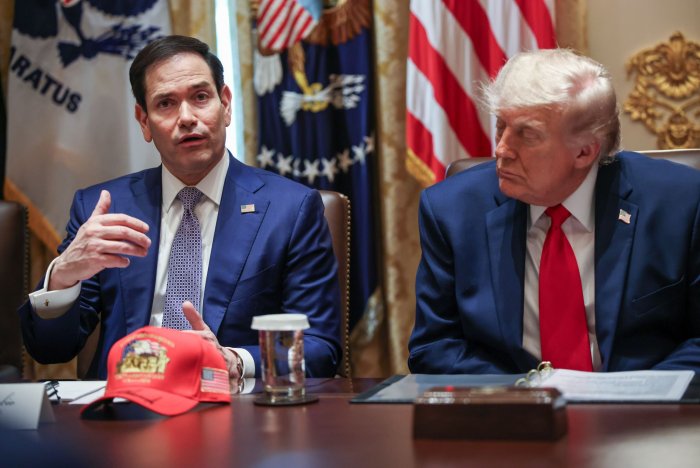
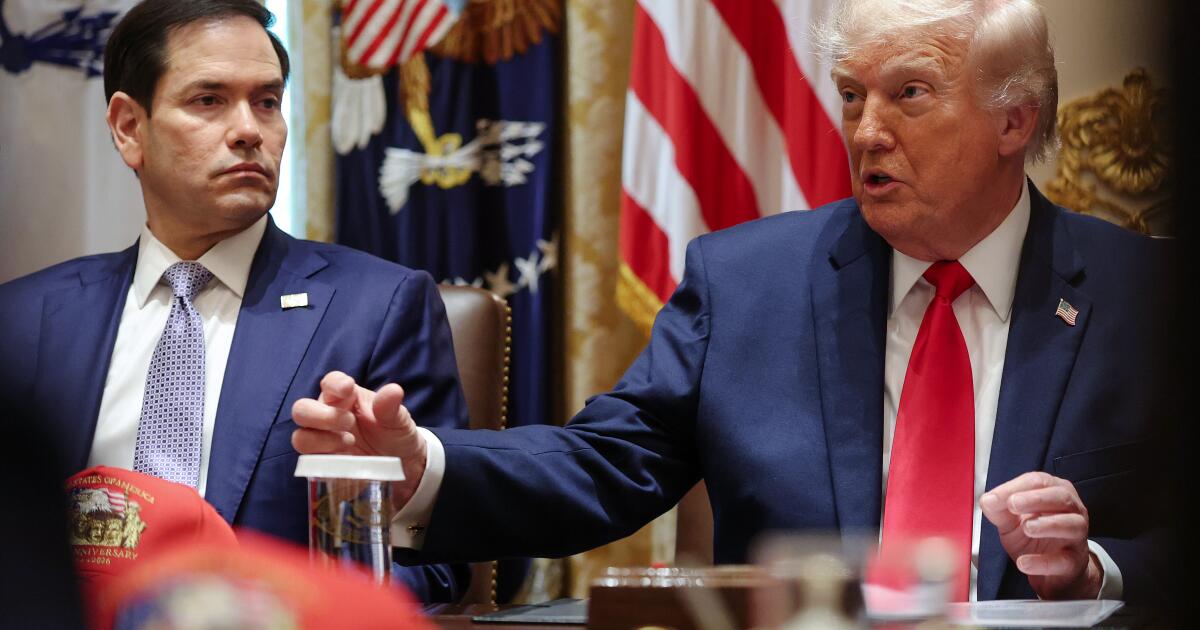
Secretary of State Marco Rubio and President Donald Trump participate in a Cabinet meeting in the Cabinet Room of the White House on Wednesday. Photo by Samuel Corum/UPI | License Photo

Source link

Another Day Of Uncertainty In The Strait After U.S. Claims Strikes On Iranian Minelayers

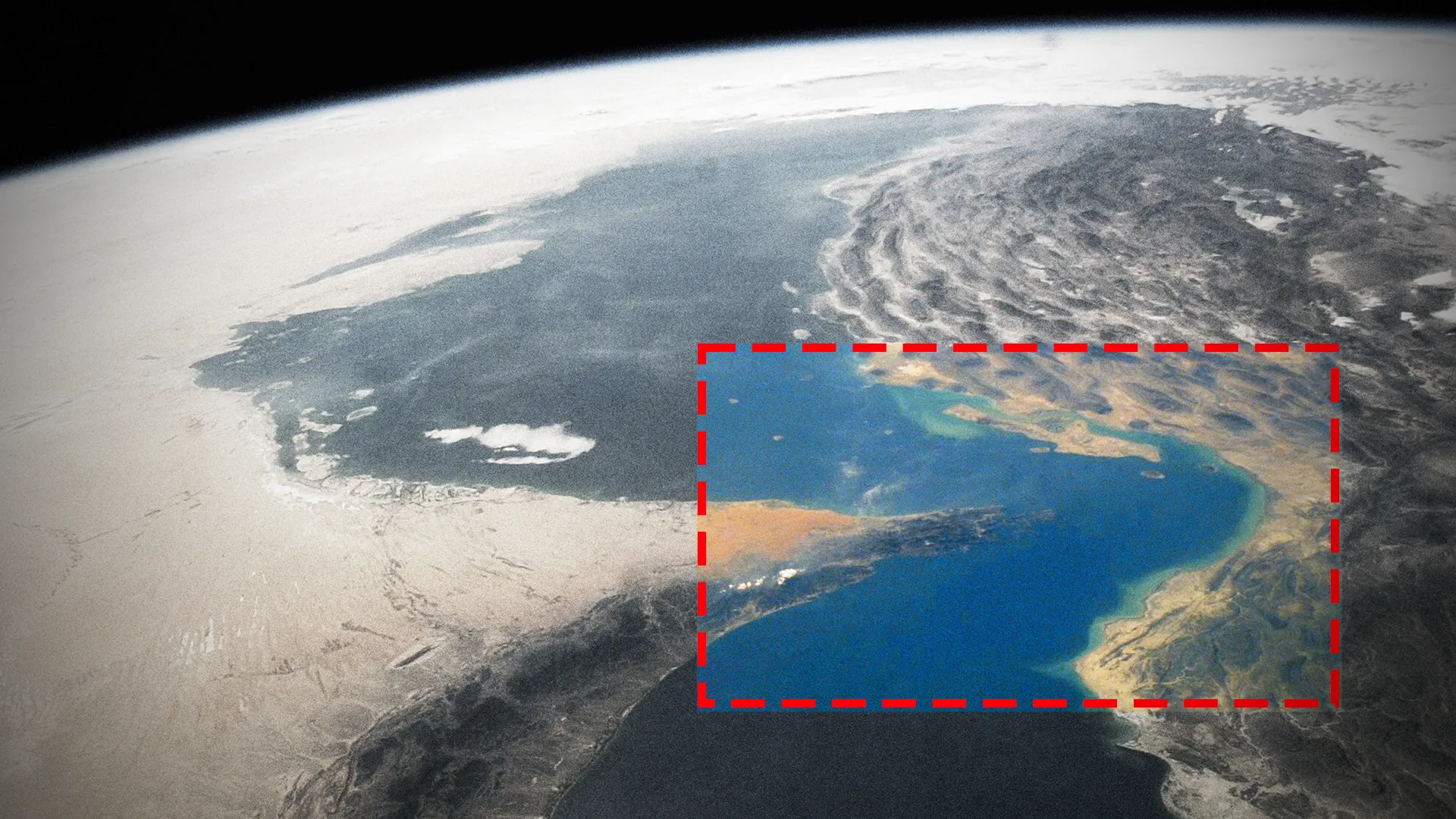
The most recent flare-up of hostilities between the U.S. and Iran yet again highlights that while the future of Tehran’s nuclear ambitions remains at the heart of peace negotiations, the status of the Strait of Hormuz is the key flashpoint. On Tuesday, Tehran vowed retaliation a day after U.S. forces struck several targets in southern Iran on and near the Strait. Exacerbating the problems, another vessel was reportedly attacked near the mouth of the vital waterway on Tuesday.

These incidents are complicating work toward a peace deal amid an increasingly fragile ceasefire. After the start of the war on Feb. 28, the strategic chokepoint was closed to most traffic by Iran, which is now letting some vessels through under a new fee system that the U.S. vehemently rejects. The closure is having global economic impacts.

“Undoubtedly, the Islamic Republic of Iran will not leave any act of mischief unanswered and will not hesitate in defending the country’s integrity,” the Iranian Foreign Ministry said in a statement on X in which it labeled the U.S. strikes on Monday “a gross violation of the ceasefire enacted on April 8. 

The ministry offered no specifics about what actions it could take.

🔴 وزارت خارجه: نقض آتش‌بس توسط آمریکا بی‌پاسخ نمی‌ماند. pic.twitter.com/XBuQsw8jLa

— خبرگزاری فارس (@FarsNews_Agency) May 26, 2026

Iranian Supreme Leader Ayatollah Mojtaba Khamenei issued a threat against U.S. allies in the region. Countries like Israel, the United Arab Emirates, Saudi Arabia, Bahrain, Jordan, Qatar, Oman and Iraq all house U.S. facilities, many of which have already come under attack during Epic Fury and even after the April 8 ceasefire.

“The hand of time does not turn back, and the nations and lands of the region will no longer serve as shields for American bases,” he stated on X. “America will no longer have a safe haven for mischief and the establishment of military bases in the region.”

عقربه‌ی زمان به عقب برنمی‌گردد و ملّت‌ها و سرزمین‌های منطقه، دیگر سپر پایگاه‌های امریکایی نخواهند بود. امریکا دیگر نقطه‌ی امنی برای شرارت و استقرار پایگاه نظامی در منطقه نخواهد داشت.

— رسانه رهبر انقلاب اسلامی (@Rahbarenghelab_) May 26, 2026

The statements were among many from Iran decrying the latest kinetic exchange with America. On Monday, U.S. Central Command (CENTCOM) told us it hit targets being used to endanger its personnel.

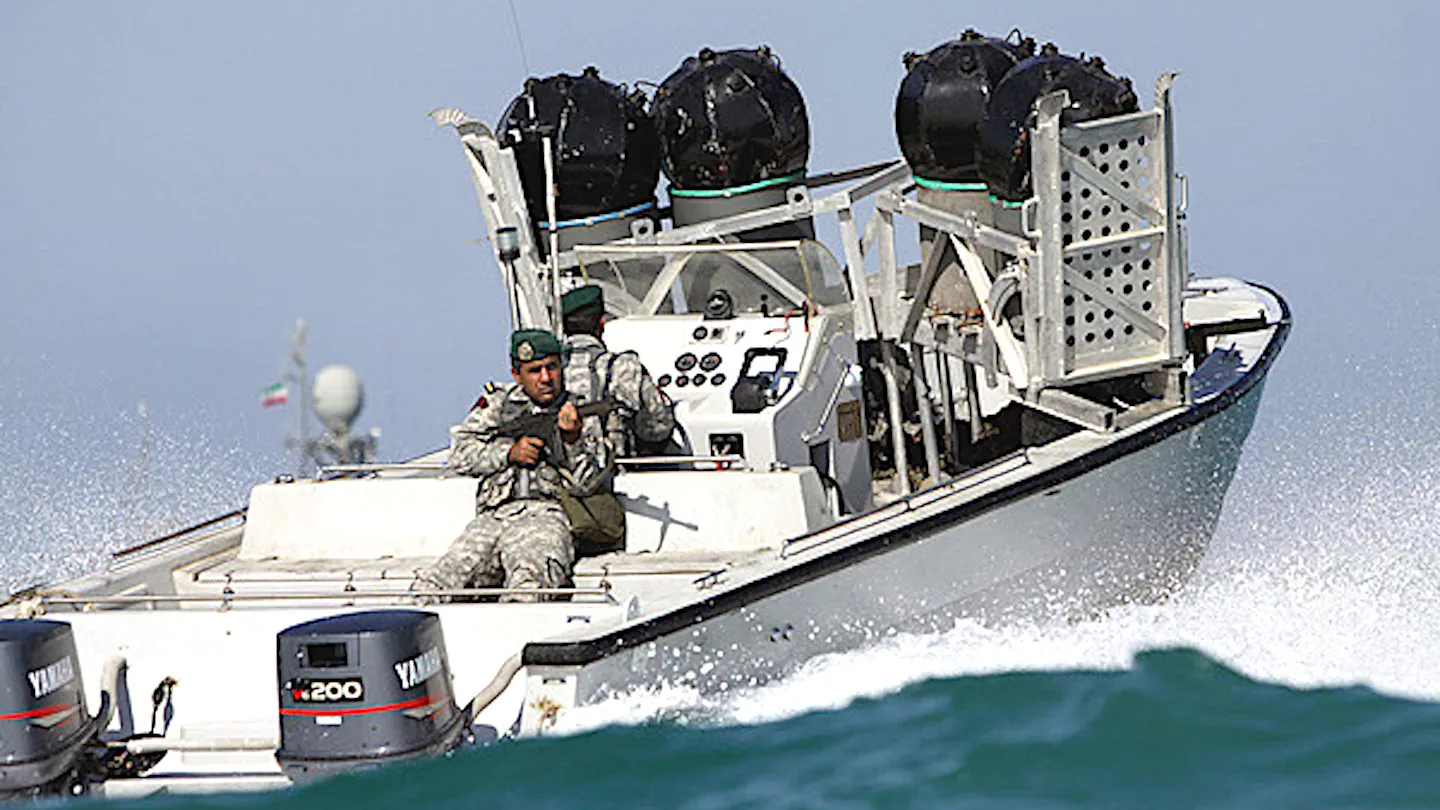
U.S. forces “conducted self-defense strikes in southern Iran… to protect our troops from threats posed by Iranian forces,” Navy Capt. Tim Hawkins, CENTCOM’s chief spokesman told TWZ Monday evening. “Targets included missile launch sites and Iranian boats attempting to emplace mines. U.S. Central Command continues to defend our forces while using restraint during the ongoing ceasefire.”

CENTCOM carried out the strikes after Iran deployed mine-laying boats in the Strait of Hormuz and flew attack drones near American ships, The New York Times reported on Tuesday.

The U.S. “observed Iranian forces taking several actions, including launching the drones and activity at missile launch sites,” the newspaper noted.

CENTCOM spox tells me U.S. forces conducted self-defense strikes in southern Iran today to protect our troops from threats posed by Iranian forces. Targets included missile launch sites and Iranian boats attempting to emplace mines….

— Howard Altman (@haltman) May 25, 2026

CENTCOM’s statement followed reports of explosions in the key southern Iranian city of Bandar Abbas, the epicenter of Iranian naval operations around the Strait of Hormuz. It was attacked repeatedly during Operation Epic Fury and again earlier this month after the ceasefire was in place.

🔴 Several explosions were heard in Bandar Abbas, Iran’s main southern port city near the Strait of Hormuz, the state-linked Fars news agency reports

🔴 The origin of the explosions remains unclear, according to the agency

🔴 Similar sounds were also reported near the coastal… pic.twitter.com/qXMronEPrc

— Al Arabiya English (@AlArabiya_Eng) May 25, 2026

Meanwhile, the United Kingdom Maritime Trade Operations (UKMTO) organization reported that the Olympic Life, a Marshal Islands-registered oil tanker, was attacked 60 nautical miles east of Muscat, Oman on Tuesday.

The maritime security firm Ambrey told us the ship was struck by an unknown projectile, which resulted in an explosion on the vessel’s port side along the waterline, creating a discharge of bunker fuel. There were no injuries reported and neither UKMTO nor Ambrey said who launched the projectile.

Amid these incidents, The Wall Street Journal, citing U.S. military officials, reported that the “U.S. Navy is quietly assisting vessel crossings through the Strait of Hormuz.”

The officials told the newspaper that a Greek supertanker laden with two million barrels of crude was guided by the U.S. Navy, as it crossed the waterway off the Omani coast. The ship was stuck in the Middle East Gulf since early March and is now heading to India to deliver its cargo.

However, CENTCOM denied the report, or that it was resuming Project Freedom, the short-lived effort to protect ships stuck in the Strait.

🚫CLAIM: Recent media reporting claims that the U.S. Navy has restarted escorting or assisting commercial vessels during transits through the Strait of Hormuz. FALSE.

✅TRUTH: Project Freedom has not resumed, and U.S. forces are not currently escorting commercial vessels through… pic.twitter.com/JD9cY5FUNN

— U.S. Central Command (@CENTCOM) May 26, 2026

Prior to yesterday’s actions by CENTCOM, both sides had indicated progress on a memorandum of understanding that could halt the war and restart shipping through the blockaded Strait of Hormuz, while giving negotiators 60 days to negotiate more complex issues. These include Iran’s nuclear program, its ballistic missile arsenal and support for proxies like Hezbollah in Lebanon, the Houthis in Yemen and several groups in Iraq.

On Tuesday, U.S. Secretary of State Marco Rubio said he remains hopeful that ongoing peace talks won’t be derailed. However, he also said that the matter of Iran charging fees for ships transiting the Strait was unacceptable.

“There were some talks going on in Qatar today, so we’ll see if we can make progress on – I think it’s a lot of talking back and forth going on about specific language in the initial document,” Rubio told reporters on Tuesday. “So it’ll take a few days.”

Pressed on whether yesterday’s U.S. strikes will affect the peace talks, the secretary said the status of the Strait is non-negotiable.

“Well, the Straits have to be open,” he explained. “They’re going to be open one way or the other. So they need to be open. What’s happening there is unlawful; it’s illegal. It’s unsustainable for the world; it’s unacceptable. I don’t know of any country in the world that doesn’t – the Russians are not in favor of a tolling system; the Chinese are not in favor of a tolling system. I mean, there’s no country in the world that’s in favor of a tolling system except the regime in Iran. So that’s not acceptable; that cannot happen. The Straits need to be open, unimpeded, without tolls. And obviously that needs to happen immediately as soon as anything’s agreed to.”

SECRETARY RUBIO: The straits have to be open. What’s happening there is illegal. It’s unsustainable for the world and it’s unacceptable. pic.twitter.com/5lQHIxjnNK

— Department of State (@StateDept) May 26, 2026

As we previously reported, Iran claims it is not imposing a toll, but instead a fee for environmental and other services. 

“A tolling system that simply charges ships to pass through the waterway would be illegal under international law, but charging fees for actual services rendered to vessels, such as waste disposal at a port, is allowed under certain circumstances,” The New  York Times recently noted.

Regardless, Rubio’s comments about the pace of negotiations pours cold water on any hopes of a quick resolution to the crisis. The renewed hostilities do nothing to move the needle forward either.

UPDATES

Though Iran has made ending the Israel-Hezbollah fight part of its negotiation stance, Israel’s military said its ground forces are moving further into Lebanon.

“As per the directive of myself, the Defense Minister and the IDF Chief of Staff, we are deepening our operation in Lebanon,” Israeli Prime Minister Benjamin Netanyahu announced. “The IDF is operating with large forces on the ground and seizing dominant terrain. We are fortifying the security zone to protect the communities of the north. Concurrently, we are leading a massive national effort to advance creative and innovative solutions against explosive drones. We back and praise our heroic commanders and soldiers. They are deep in the field. We are counting on you!”

Prime Minister Benjamin Netanyahu, today, at the start of the Security Cabinet meeting:
“As per the directive of myself, the Defense Minister and the IDF Chief of Staff, we are deepening our operation in Lebanon. The IDF is operating with large forces on the ground and seizing… pic.twitter.com/GBLuWgEbyl

— Prime Minister of Israel (@IsraeliPM) May 26, 2026

The Israeli Air Force on Tuesday released video it says shows attacks on Hezbollah infrastructure in Lebanon.

חיל-האוויר ממשיך לתקוף תשתיות של ארגון הטרור חיזבאללה בדרום לבנון: חוסלו מחבלים שקידמו מתווי טרור נגד כוחותינו והותקפו תשתיות מהן פעלו לשיגור רקטות pic.twitter.com/RhKLx3ojnC

— Israeli Air Force (@IAFsite) May 26, 2026

Netanyahu’s announcement about the increased push deeper into Lebanon comes a day after Trump demanded Arab nations seek peace with the Jewish state.

In a lengthy post on his social media platform on Monday, Trump demanded that Saudi Arabia, Qatar, Turkey, Egypt and Pakistan join Bahrain and the United Arab Emirates as members of the Abraham Accords, the 2020 peace and economic trade treaty with Israel created by Trump in his first term.

The American leader also said that while negotiations with Iran are “proceeding nicely,” he will resume attacking should no deal be reached. 

“During my discussions on Saturday with President Mohammed bin Salman Al Saud, of Saudi Arabia, Mohammed bin Zayed Al Nahyan, of The United Arab Emirates, Emir Tamim bin Hamad bin Khalifa Al Thani, Prime Minister Mohammed bin Abdulrahman bin Jassim bin Jaber Al Thani, and Minister Ali al-Thawadi, of Qatar, Field Marshal Syed Asim Munir Ahmed Shah, of Pakistan, President Recep Tayyip Erdoğan, of Türkiye, President Abdel Fattah El-Sisi, of Egypt, King Abdullah II, of Jordan, and King Hamad bin Isa Al Khalifa, of Bahrain, I stated that, after all the work done by the United States to try and pull this very complex puzzle together, it should be mandatory that all of these Countries, at a minimum, simultaneously, sign onto the Abraham Accords,” Trump proclaimed on Truth Social. “Those Countries discussed are Saudi Arabia, The United Arab Emirates (already a Member!), Qatar, Pakistan, Türkiye, Egypt, Jordan, and Bahrain (already a Member!). It may be possible that one or two have a reason for not doing so, and that will be accepted, but most should be ready, willing, and able to make this Settlement with Iran a far more Historic Event than it would, otherwise, be. The Abraham Accords have proven to be, for the Countries involved (The United Arab Emirates, Bahrain, Morocco, Sudan, and Kazakhstan), a Financial, Economic, and Social BOOM, even during this time of Conflict and War, with the current Members never even suggesting leaving, or taking so much as even a pause.”

Trump also suggested Tehran would be invited to join if a U.S.-Iran peace deal is inked.

“… Iran signs its Agreement with me, as President of the United States of America, it would be an Honor to have them also be part of this unparalleled World Coalition,” Trump posited. “The Middle East would be United, Powerful, and Economically Strong, like perhaps no other area, anywhere in the World! By copy of this TRUTH, I am asking my Representatives to begin, and successfully complete, the process of signing these Countries into the already Historic Abraham Accords.”

U.S. President Donald J. Trump posted a lengthy statement on his Truth Social app earlier on the ongoing negotiations. This most recent statement was centered around President Trump’s proposition to Arab leaders on the Abraham Accords. Per the president’s statement, negotiations… pic.twitter.com/Cj4nKWv8vE

— OSINTdefender (@sentdefender) May 25, 2026

Trump’s Truth Social post follows a phone call he had on Saturday with these leaders announcing that peace talks with Iran had resumed.

“Trump told the leaders that after the war with Iran ends he expects all of them who are still not part of the Abraham Accords or don’t have peace agreements with Israel to join and normalize relations with the Jewish state,” Axios reported, citing two U.S. officials. “The leaders, especially those of Saudi Arabia, Qatar and Pakistan who don’t have formal diplomatic relations with Israel, were surprised by Trump’s request.” 

“There was silence on the line, and Trump joked and asked if they are still there,” the outlet claimed one of the sources told it.

Given the long-standing enmity between Israel and countries like Saudi Arabia, Turkey and Pakistan, the likelihood of them joining the Abraham Accords is questionable. Even though Egypt and Jordan have peace treaties with Israel, the chances either of them sign on are unlikely as well. A major sticking point for all these countries is the ongoing situation in Gaza and the overall unresolved Palestinian-Israeli relations.

The idea that Iran would join the Abraham Accords seems even more far-fetched for obvious reasons.

Contact the author: howard@twz.com
Howard is a Senior Staff Writer for The War Zone, and a former Senior Managing Editor for Military Times. Prior to this, he covered military affairs for the Tampa Bay Times as a Senior Writer. Howard’s work has appeared in various publications including Yahoo News, RealClearDefense, and Air Force Times.


Source link

Iran reasserts control over Hormuz Strait as deal with US remains elusive | US-Israel war on Iran News

Iran has reasserted its control over the Strait of Hormuz, warning that foreign commercial and military vessels will be targeted, if they do not comply with regulations governing passage through the strategic waterway.

The announcement on Saturday came after the United States signalled that President Donald Trump was close to a decision on a potential deal with Iran, but Tehran denied an agreement had been reached.

Recommended Stories

list of 3 itemsend of list

“The management of the Strait of Hormuz is exercised with full authority by the Armed Forces of the Islamic Republic of Iran,” the operational headquarters of Iran’s armed forces, Khatam al-Anbiya Central Headquarters, said in a statement reported by Iranian media on Saturday.

“All ships, commercial vessels, and tankers are only required to travel through the designated routes and obtain permission from the Islamic Revolutionary Guard Corps [IRGC] Navy. Any violation of these regulations will seriously jeopardise the security of their traffic,” it added.

Iran also issued a warning to foreign military forces operating in the area, saying any attempt to interfere with maritime management or shipping movements would trigger a response.

On Friday, Trump met with advisers in the White House Situation Room and said a “final determination” on a possible deal with Iran would soon be made. But no statement followed the meeting.

US sources had told the AFP news agency the deal was waiting on Trump’s sign-off, but he made no decision after Friday’s meeting.

Iran’s Foreign Ministry spokesperson, Esmaeil Baghaei, said on Friday that while messages continue to be exchanged “no final agreement has been reached” on a deal with the US.

US ‘more than capable’ of restarting war

While attending a defence summit in Singapore on Saturday, Pentagon chief Pete Hegseth said that Washington was “more than capable” of restarting the war if a satisfactory deal is not reached.

US Central Command (CENTCOM) posted on social media that American forces “remain present and vigilant across the region”.

The efforts to reach a deal were thrown into question this week by US strikes on the Iranian port of Bandar Abbas, countered by retaliatory Iranian fire.

Iran’s IRNA state news agency said air defences shot down a drone “belonging to the US-Zionist aggressor enemy” on Saturday, citing a statement from the army.

Trump said his priorities in any deal include Iran agreeing to never develop nuclear weapons, and the reopening of the blockaded Strait of Hormuz.

“President Trump will only make a deal that is good for America and satisfies his red lines,” a White House official told AFP, adding: “Iran can never possess a nuclear weapon.”

Trump ‘betraying diplomacy’

Also on Saturday, Mohsen Rezaei, an adviser ⁠to Iran’s Supreme ⁠Leader, Mojtaba Khamenei, said in a social media post that Trump was “betraying diplomacy for ⁠the third time” by ⁠continuing the US naval blockade in the strait, and making what he described ‌as “excessive demands ‌in ‌negotiations”.

In a social media post on Friday, Trump said Tehran would remove mines from the strait and end its closure of the waterway with “no tolls”, while the US would lift its blockade.

Both countries would coordinate on removing and destroying Iran’s enriched uranium, he said, adding that “no money will be exchanged, until further notice”.

Iran’s Fars news agency, however, cited sources as saying Tehran was demanding “the immediate release of $12bn” in frozen assets before moving to the next phase of negotiations.

On the toll-free reopening of Hormuz, the sources said “no such clause appears in the text of the agreement”, while Trump’s comment on destroying Iran’s nuclear material “is fundamentally baseless”.

Iran’s ISNA news agency cited legislator Alireza Salimi as saying a plan “to implement Iran’s management and sovereignty over the Strait of Hormuz will soon be approved by parliament”.

Iran’s Tasnim news agency said the US blockade remains in place, and its ships “are receiving warnings from CENTCOM to stop and not cross the blockade line”.

Source link

US official says Washington, Tehran reach preliminary deal to reopen Strait of Hormuz: Reports – Middle East Monitor

The US and Iran have agreed in principle to a deal that would reopen the Strait of Hormuz, in exchange for Tehran’s commitment to dispose of its highly enriched uranium, a US official said, according to a report by The New York Times on Sunday.

The official said that the agreement has not yet been signed and remains subject to final approval by US President Donald Trump and Iran’s Supreme Leader Mojtaba Khamenei, a process that could take several days, noting that the method for disposing of Iran’s highly enriched uranium is still being negotiated.

The proposed deal does not address Iran’s missile stockpile nor include a moratorium on uranium enrichment, the official said, adding that these issues are expected to be handled in future rounds of talks.

According to a Fox News report on Sunday, the official suggested that the US could consider “significant accommodations” on sanctions relief if Iran agrees to make similar concessions regarding its enriched uranium stockpile.

READ: Iran ready to reassure world it is not pursuing nuclear weapons, president says

“Our plan is to deal with all of their stockpile of the enriched material,” the official said, adding that Washington sees Tehran making “serious accommodations” not previously seen in earlier negotiations, according to the report.

The official also rejected the idea of any “tolling” mechanism for the Strait of Hormuz, saying such an arrangement would not be acceptable and had not been proposed by either side, the report noted.

According to a separate CBS News report, the official said the administration views the emerging agreement as stronger than the 2015 nuclear deal reached under former US President Barack Obama, which allowed uranium enrichment up to certain levels.

As part of the agreement, the US would lift its blockade on vessels entering and leaving Iranian ports. The official said the US Central Command and Gulf partners would coordinate to ensure safe passage, stressing this should not be viewed as a toll system.

The official also said US Vice President JD Vance, Middle East Envoy Steve Witkoff, and Trump’s son-in-law Jared Kushner have been involved in the talks, adding that Washington is seeking to include all regional allies in the process, the report added.

READ: Trump says Iran talks ‘constructive’ but blockade will remain until final deal is reached

Source link

Trump holds Situation Room meeting to decide on Iran deal

A framework agreement to end the U.S. war with Iran is all but settled, pending sign-off from the presidents of the two warring sides, President Trump said Friday, projecting optimism that a deal could finally be at hand.

Yet doubt cast a shadow over the diplomatic process entering the weekend as Trump faced a politically fraught decision to enter an agreement that would invariably require significant concessions to Tehran.

The negotiations have faced severe headwinds in recent days, with both sides accusing the other of violating a fragile ceasefire that has largely stopped the fighting since April.

On his Truth Social site, Trump said he had summoned his top aides to the White House Situation Room to decide on the deal.

The agreement would see an end to the U.S. naval blockade on Iranian ports and the removal of Iranian mines from the Strait of Hormuz, an international waterway through which 20% of the world’s energy supply passes each day. The strait, Trump wrote, will reopen with “no tolls” for “unrestricted shipping traffic, in both directions.”

And “Iran must agree that they will never have a Nuclear Weapon or Bomb,” Trump wrote, noting that Iran’s stockpile of highly enriched uranium, the key ingredient for nuclear weapons, “will be unearthed by the United States (which, it is agreed, is the only Country, along with China, with the mechanical capability of doing so!), in close coordination and conjunction with the Islamic Republic of Iran, plus the International Atomic Energy Agency, and DESTROYED.”

“No money will be exchanged, until further notice,” he added.

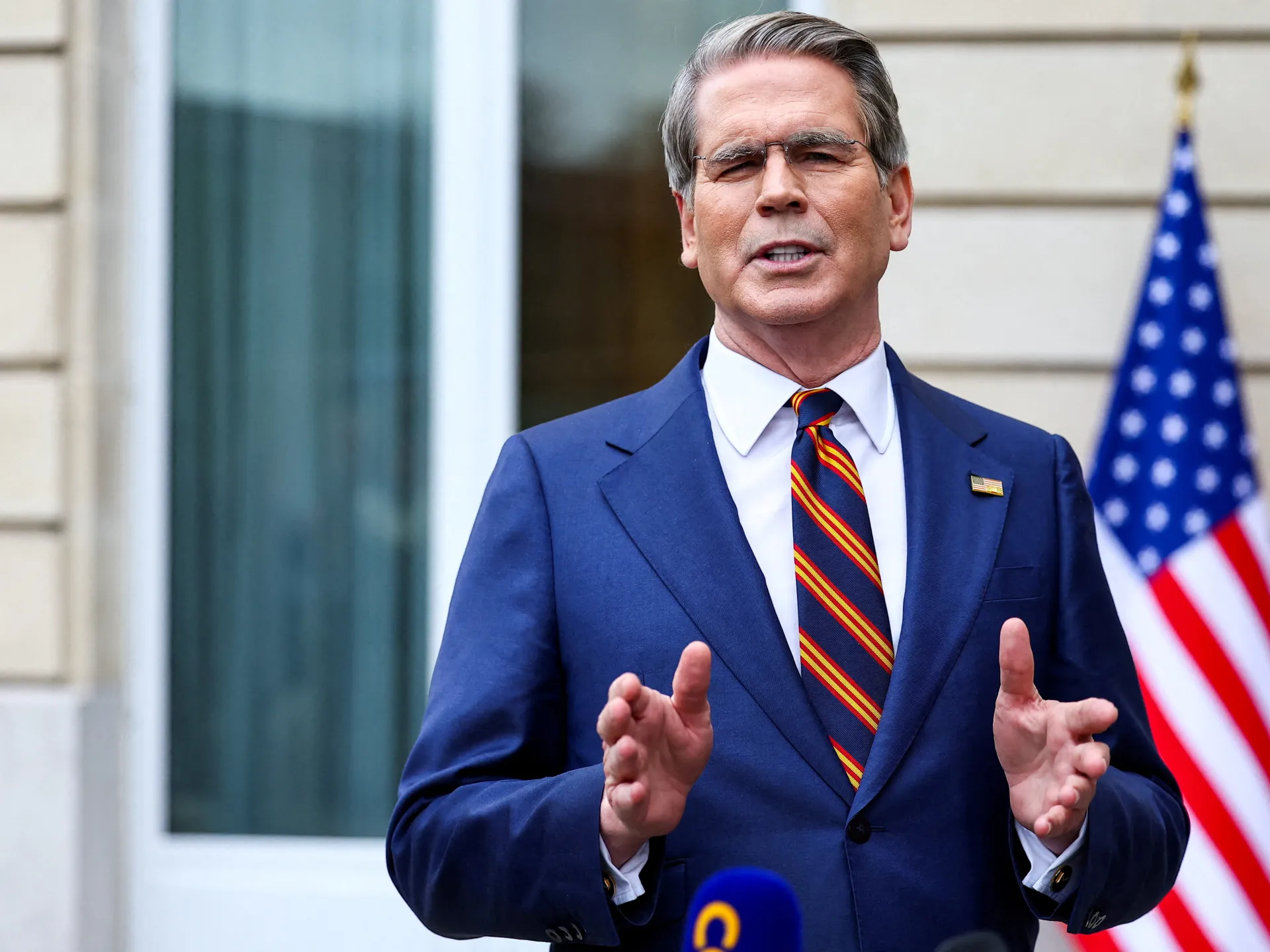
Treasury Secretary Scott Bessent also said the deal would require Iran to disavow the continuation of its domestic nuclear program — a diplomatic feat never before achieved throughout a quarter century of international negotiations over Iran’s nuclear work.

It is unclear whether Tehran would go that far. And Iran’s negotiators expressed defiance on Friday, stating that there was “no trust in guarantees or words” from the American side.

“No step will be taken before the other side acts first,” said Mohammad Bagher Ghalibaf, the speaker of Iran’s Parliament. “We do not gain concessions through dialogue, but through missiles.”

It remains unclear when the Trump administration would ease sanctions on Iran, how extensive that relief would be, or what form it would take — questions that fueled Republican criticism of the Obama-era nuclear deal more than a decade ago.

The working diplomatic document would formally extend the existing ceasefire for 60 days, allowing for a more detailed negotiation to take place over Iran’s nuclear program. But the truce as it currently stands is on perilous ground. Iran launched a ballistic missile on Thursday at Kuwait, a close U.S. ally, after American forces took “defensive” actions against Iranian missile launchers and mine laying boats it had launched in the strait.

The war has proven historically unpopular with the American public, and has seen oil prices soar since the U.S. military, in partnership with Israel, launched its first strikes against Iran in February.

Bessent said he is hopeful that oil prices would drop quickly once an agreement is signed. But industry analysts say the effects of the war on the oil market could last for months, if not years, with the stability of traffic through the Strait of Hormuz now in question for commercial shippers.

While oil has dropped to under $100 a barrel, markets appeared skittish on Friday over the prospects for a deal, with mixed messages appearing to emerge out of the region.

It is also unclear whether a U.S. agreement with Iran would in any way bind Israel’s hands in its military operations, either in Iran or in Lebanon, where an Iranian proxy militia, Hezbollah, has vowed to keep up the fight.

Israel has ramped up strikes against Hezbollah targets in recent days, jeopardizing a delicate ceasefire negotiated with the Lebanese government, a deal encouraged by the Trump administration in order to grease the wheels for its talks with Tehran.

Trump has been uncharacteristically silent on the prospects of an agreement in recent days, expressing cautious optimism in limited exchanges with reporters.

“It’s hard to say exactly when or if the president’s going to sign,” Vice President JD Vance, who has led the U.S. diplomatic team, told reporters, noting that “the nuclear stuff” is still subject to negotiation. “We’re going back and forth on a couple of language points.”

“I do think that we’ve made a lot of progress here,” Vance added. “Hopefully we’ll continue to make progress, and the president will be in a position where he can endorse the agreement. But obviously, that’s still TBD.”

Source link

US Treasury threatens Oman with sanctions over Hormuz Strait | Donald Trump News

A top US official says Oman should know that Washington ‘will aggressively target’ actors that facilitate tolls in waterway.

The United States has warned that it would “aggressively” impose sanctions on Oman if it helps Iran establish a tolling system in the Strait of Hormuz, intensifying President Donald Trump’s threats against the Gulf ally.

US Treasury Secretary Scott Bessent said on Thursday that Washington will “not tolerate” either country imposing fees on commercial ships in the strategic waterway.

Recommended Stories

list of 3 itemsend of list

“Oman, in particular, should know that the US Treasury will aggressively target any actors involved — directly or indirectly — in facilitating tolls for the Strait and any willing partners will be penalized,” Bessent said in a social media post.

“All nations should reject outright any efforts by Iran to disrupt the free flow of commerce. Tehran’s days of terrorizing the region and the world are over.”

The statement comes less than 24 hours after President Trump threatened to bomb Oman, a key US ally known for its neutrality and mediation efforts in regional crises, including the war between the US and Iran.

While Iran has suggested that the governments in Tehran and Muscat could jointly manage the Hormuz Strait, Oman has not said that it is seeking control over the waterway, parts of which flow through its territory.

It is not clear what is driving Washington’s recent posture toward Oman. It is highly unusual for the US to threaten sanctions and military action against a close security and economic partner.

Since the US and Israel started bombing Iran without direct provocation on February 28, Iran has closed the strait and claimed sovereignty over it.

Around 20 percent of the world’s oil flowed through Hormuz before the conflict, so the Iranian blockade has put a major strain on energy supplies, sending prices soaring.

The US and Iran have been indirectly negotiating to reach an agreement for a comprehensive end to the war, and control over the Hormuz Strait has emerged as a major point of disagreement.

Trump has stressed that the strait must be a free passageway.

When asked whether he would accept joint Iranian-Omani control over the strait in the short term, the US president told reporters on Wednesday: “Nobody is going to control it. It’s international waters, and Oman will behave just like everybody else, or we will have to blow them up.”

Ali Bagheri, deputy secretary of Iran’s Supreme National Security Council, said on Thursday that Tehran will not allow Hormuz to be a source of insecurity for the country.

“The powers that have used this passage against Iran’s security must be held accountable,” he was quoted as saying by Iran’s public television.

Bagheri added that Iran seeks to “establish a just order that negates hegemony and domination and strengthens trust and cooperation” in the region.

Source link

U.S. sanctions Iran’s new Hormuz authority amid strait talks

May 28 (UPI) — The U.S. Treasury announced late Wednesday that it has sanctioned an Iranian entity, newly created to oversee and manage the Strait of Hormuz, as the Trump administration seeks to force Tehran to relinquish control over the vital energy trade route.

The strait has been an issue of contention between the United States and Iran, which are locked in negotiations to end the war.

Iran restricted navigation of the strait after the United States and Israel attacked the country in late February, igniting the war. Washington responded by imposing a military blockade of Iran’s ports, cutting it off from maritime trade.

Since imposing the restrictions, Iran has been adamant about maintaining control of the route, through which about one-fifth of the world’s energy trade flows. The Trump administration has repeatedly threatened that there will be free navigation of the strait again, one way or another.

Earlier this month, Iran launched the Persian Gulf Strait Authority to manage the strait.

The Treasury sanctioned the PGSA on Wednesday, accusing it of being an attempt by Iran’s Islamic Revolutionary Guard Corps to monetize the international waterway.

Treasury Secretary Scott Bessent described the mechanism in a statement as the Iranian military’s “latest attempt to extort global maritime trade.”

Bessent said the Wednesday blacklisting was part of Economic Fury, the Treasury’s rebranding of President Donald Trump‘s maximum pressure campaign of sanctions and other trade measures from his first administration seeking to coerce a new nuclear weapons deal from Iran.

The United States has been tightening its financial vise on Iran since 2018 when Trump first imposed sanctions on Tehran after unilaterally withdrawing the United States from a multinational Obama-era nuclear accord aimed at preventing Iran from securing a nuclear weapon.

Trump reimposed the campaign following his return to the White House in early 2025. It was renamed following the start of the military operation Epic Fury that began Feb. 28.

Treasury officials said Wednesday that through the maximum pressure campaign, the Trump administration has denied Iran access to tens of billions of dollars’ worth of revenue.

The sanctions generally prohibit those named from accessing the U.S. financial system and bar U.S. persons and companies from doing business with them. They also expose foreign financial institutions that knowingly facilitate significant transactions for those sanctioned to potential secondary sanctions.

Sen. Tom Cotton, a Republican from Arkansas, had over the weekend called on Bessent to sanction the PGSA, stating the United States “must ensure every actor enabling the terrorist Iranian regime is held accountable.”

“I support the use of existing authorities to impose sanctions on the PGSA, its officers and any foreign entity that pays, processes or facilitates tolls to Iran for passage through the Strait of Hormuz,” he said in a statement.

Iran has rejected the notion that it is running a toll. Iranian Foreign Ministry Spokesperson Esmaeil Baqaei has said that Iran charges fees to cover costs associated with navigational services and environmental protection measures.

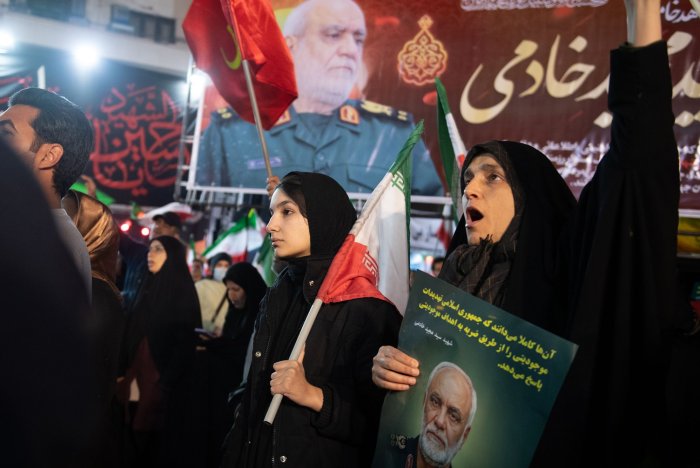
Iranians rally after a ceasefire announcement at Enqhelab Square, in Tehran on April 8, 2026. Photo by Behnam Tofighi/UPI | License Photo

Source link

Renewed U.S. strikes put Iran talks on verge of collapse

Precarious talks to end the war with Iran appeared close to collapse on Tuesday as renewed fighting across the region threatened to derail fragile progress toward a comprehensive settlement.

U.S. strikes against targets in southern Iran — the first since a ceasefire was declared in the war seven weeks ago — coupled with escalating attacks by Israel in Lebanon have undermined optimism that an agreement was within reach.

The attacks occurred just hours after U.S. and Iranian diplomats arrived in Qatar for peace talks. Iran’s top negotiators left Doha on Tuesday without comment. News of the strikes, and threats of retaliation by Tehran, sent global oil prices soaring back to more than $100 a barrel.

U.S. Central Command described Monday’s actions as “self-defense strikes” that were restrained and modest in scope, targeting missile launch sites and Iranian boats “attempting to emplace mines” in the Strait of Hormuz.

But the attack came as President Trump and Secretary of State Marco Rubio had been projecting confidence that a framework agreement to end the war could be reached within days. Under the proposed deal, Iran would restore the strait to its prewar status as a free and open international waterway, while both sides entered 60 days of negotiations over the removal of Iran’s nuclear stockpile.

Laying mines in the strait in the 11th hour of the negotiations could signal to the Trump administration that Iran is not serious about reopening traffic there. But the Iranians said Tuesday that renewed U.S. strikes suggest it is Washington that is unprepared to commit to peace.

Iran’s Foreign Mministry condemned what it called “aggressive actions” by the United States, describing them in a statement as a violation of the ceasefire agreement.

“The commission of these aggressive acts — occurring concurrently with the ongoing diplomatic track mediated by Pakistan — has once again exposed the hostile nature and perfidy of the ruling establishment in the United States,” the statement said.

Iran “will not leave any hostile act unanswered,” the ministry added.

Mojtaba Khamenei, Iran’s elusive supreme leader, declared in a scheduled speech that U.S. allies throughout the Middle East “will no longer serve as a shield” for the American military, suggesting retaliatory strikes against U.S. assets in the region could be imminent.

Prospects for a diplomatic breakthrough were already dim. Over the last week, U.S. and Iranian officials projected optimism while outlining seemingly incompatible visions of a deal.

Trump has repeatedly said Iran would not receive any sanctions relief until its stockpile of fissile material is removed and destroyed. But Iranian officials reiterated Tuesday that unfreezing the country’s overseas assets remains a precondition for continued negotiations.

And it is unclear whether Iran would agree to a peace deal with the United States that does not also restrict the actions of Israel, whose leader, Prime Minister Benjamin Netanyahu, has expressed deep skepticism about the diplomatic process.

Netanyahu said in recent days that Israel would not be bound by any nuclear pact, and that his government would continue military action against targets throughout the region — including in Lebanon — as it views necessary.

Israel’s continued assault on Lebanon nearly jeopardized the ceasefire between Iran and the United States before Trump brokered a separate, temporary halt to the fighting there. Since then, however, Israeli strikes have resumed, and Netanyahu vowed to intensify his campaign against Hezbollah, the Lebanese Shiite militant group.

“We are not removing our foot from the pedal,” Netanyahu said in a video address Monday. “On the contrary, I said to step on the pedal even more.”

Israel’s military ramped up its operations Tuesday, attacking what it said were more than 100 Hezbollah sites across southern and eastern Lebanon, while extending ground incursions deeper into Lebanese territory.

The overnight strikes struck weapons storage facilities, command centers, observation posts and infrastructure sites, according to an Israeli military statement.

Israeli media also reported that Israeli troops were operating beyond a 6.2-mile zone they occupy in southern Lebanon, in what many fear may be a prelude to a wider invasion.

Those fears were further stoked Tuesday by fresh Israeli evacuation orders for the entirety of Nabatiyeh, southern Lebanon’s second-largest city.

Hezbollah upped its campaign as well, peppering Israeli troops in southern Lebanon and areas of northern Israel with drones and rocket attacks, according to statements from the group. Hezbollah-affiliated media reported the group’s fighters clashing with Israeli troops to prevent their advance.

In recent weeks, Hezbollah has increasingly relied on fiber-optic drones — which are both low-cost and impervious to jamming — to harass Israeli positions.

On Sunday, an Israeli soldier was killed and another wounded when a Hezbollah kamikaze drone hit their armored personnel carrier, according to the Israeli military; 23 Israeli soldiers and a civilian defense contractor have been killed in the current conflagration between Israel and Hezbollah, Israel’s military says.

The latest bout of hostilities between Hezbollah and Israel began March 2, when the Iran-backed group launched attacks on Israel to avenge the killing of Iran’s ayatollah, Ali Khamenei.

So far, Israeli strikes have killed 3,213 people, wounded more than triple that number, and left more than a million displaced, according to Lebanese health authorities.

A ceasefire signed April 17 sidelined the capital, Beirut, from strikes but has done little to stop the fighting otherwise, with Hezbollah and Israel continuing attacks despite unprecedented direct negotiations taking place between the Israeli and Lebanese governments.

It was unclear whether Netanyahu’s warning meant Beirut would be targeted once more. Israeli drones buzzed throughout the day over the capital and the Hezbollah-dominated southern suburbs Tuesday.

Hezbollah opposes direct negotiations and insists it will keep fighting until Israel withdraws from Lebanon and stops attacks. Israel has demanded the Lebanese government do more to disarm Hezbollah and to move toward a peace deal.

Bulos reported from Beirut.

Source link

Rubio tamps down expectations on Strait of Hormuz agreement

May 25 (UPI) — Secretary of State Marco Rubio tamped down expectations Monday for progress toward reopening the Strait of Hormuz after signaling a day earlier that he might have “good news” within hours.

Speaking to reporters at India’s Palam Air Base in New Delhi on Monday, the United States’ top diplomat said an agreement was “still a work in progress.”

“We thought we might have some news last night, maybe today,” he said, adding the holdup is that it takes time to hear back from the Iranians.

“I’m very confident — we should all be very confident — that we’re either going to have a good agreement or we’re going to have to deal with it another way. We’d prefer to have a good agreement.”

The United States is seeking to have Iran restore shipping traffic through the Strait of Hormuz before negotiations enter a subsequent phase focused on Iran’s nuclear program.

Rubio said what is on the table for opening the strait is “pretty solid,” but there is “a very real, significant time limit” to negotiations on the nuclear issue.

“Hopefully, we can pull it off,” he said.

Rubio is in India until Tuesday to discuss energy security, trade and defense cooperation with senior Indian officials. Meanwhile, U.S.-Iran negotiations have been ongoing through Pakistani and Qatari mediators.

After reporters that negotiations were edging toward completion, an Iranian Foreign Ministry spokesperson later Monday said that talks were focused on ending the war, with no discussions yet on its nuclear enrichment program, the semi-official Tasnim news agency reported.

The spokesperson also voiced skepticism over U.S. reliability, stating there is no guarantee Washington will hold up its end of the agreement once one is reached.

Speaking alongside Indian External Affairs Minister Subrahmanyam Jaishankar at a joint press conference on Sunday, Rubio said that he believed more news about the agreement would come from President Donald Trump.

“But I do think perhaps there is the possibility that over the next few hours the world will get some good news, at least with regards to the straits,” he said.

The on-again, off-again negotiations have been conducted amid a fragile cease-fire called in April in the war that began in late February.

Trump has sought a new agreement to prevent Iran from securing a nuclear weapon since 2018, when during his first administration he unilaterally withdrew the United States from a landmark Obama-era multinational nuclear accord called the Joint Comprehensive Plan of Action.

Calling it “defective at its core,” Trump has criticized several aspects of the JCPOA, including its sunset provisions easing restrictions on Iran’s nuclear program.

Critics have rebutted his accusations, saying that not all aspects of the JCPOA were to expire and that the expiring provisions afforded time were intended to afford time for further diplomacy.

Source link

The GCC should insure itself against the next Strait of Hormuz crisis | GCC

The crisis caused by the US-Israel war on Iran has affected the member states of the Gulf Cooperation Council (GCC) at different levels.

Oman has barely felt any shock as its ports and terminals continue operating as usual. Saudi Arabia and the United Arab Emirates have been able to reroute some oil exports through terminals in Yanbu and Fujairah, respectively, to bypass the Strait of Hormuz. Kuwait, Bahrain and Qatar, on the other hand, have been practically cut off from the global market and are facing the prospect of economic contraction.

Under these circumstances, the GCC states more than ever need to demonstrate unity and address the crisis through collective action. The issue of solidarity is not about showing benevolence to neighbours. It is about setting up mechanisms now that can diminish the consequences and value of any future threat of closure. It is about the survival of the whole idea of GCC unity and the leverage it has on the global scene.

Collective action, common interest

Even if some sort of agreement is reached between the warring sides today, the GCC will continue to suffer under the shadow of the nearly three-month closure. States face the risk of losing clients due to the risk of not fulfilling their obligations or being perceived as a risky supplier. Only a joint effort can stop a free fall.

So far, self-interested approaches are winning over collective action. For instance, the UAE’s exit from OPEC was largely driven by the perception of the Emirati leadership that the Strait of Hormuz crisis was an opportunity to grab greater oil market share.

If this trend of unilateral crisis response continues, it would have grave economic consequences for the whole GCC and threaten its existence. With no burden-sharing mechanism, Gulf countries would end up competing against each other in a zero-sum game. This would reduce the influence the GCC has as a regional bloc and diminish its ability to sway energy markets.

Up until now, there have been some demonstrations of solidarity in rhetoric. During the GCC consultative meeting in Jeddah on April 28, Gulf leaders attempted to show unity and discuss possible ways out of the crisis. The meeting led to discussions about what the GCC states could do in practical terms, yet there are still no signs that these discussions have moved beyond the expert level.

Nevertheless, there are practical steps the GCC can take now that could help address the present crisis and ensure stability in the face of future risks. One of them could be the introduction of swap arrangements.

Swap as an instrument of solidarity

There are three relevant swap mechanisms that the GCC could consider: physical, contractual and quality swap deals. Physical and contractual swap deals allow one party to deliver an equivalent commodity to fulfil a contract on behalf of another.

A quality swap, on the other hand, exchanges one grade or product for another to align the feedstock needs of refineries or optimise transport costs.

Thus, instead of Kuwaiti, Qatari or Bahraini cargo physically passing through the Strait of Hormuz, a buyer can receive an acceptable substitute at Yanbu, Fujairah, Duqm, Ras Markaz, Sohar, Qalhat, Singapore, India, Korea, Japan or Europe, while the parties involved settle the accounts through future delivery, cash compensation, product exchange, or a retained-volume fee.

The swap does not require the trapped commodity to move immediately. It requires a transparent title, valuation and reconciliation, so that a substitute commodity can be delivered to the end user.

The strongest swap deals, therefore, resemble clearing systems. They are most reliable when they are established before the crisis, but they can also be assembled during a crisis if the parties already have pre-existing experience of trading, a trusted customer base or alternative physical infrastructure to be utilised.

In fact, the swap deals are not something completely unfamiliar to the GCC member states. In 2013, when Egypt failed to fulfil its contractual gas obligations, Qatar agreed to export its own liquefied natural gas (LNG) directly to the customers that Egypt otherwise could not serve while it channelled its gas for domestic needs.

In 2021, the UAE’s Emirates National Oil Company (ENOC) won a tender to swap 84,000 tonnes of Iraqi fuel oil for 30,000 tonnes of Grade B fuel oil and 33,000 tonnes of gas oil to supply to Lebanon. In 2024, the state-owned Oman LNG conducted about two swap tenders per month, with Atlantic cargoes originating from the United States delivered to Spain, while the company delivered its LNG to clients in Asia.

All of these examples show that Gulf countries and their national energy companies have the required expertise to carry out intra-GCC swaps.

The most practical way to implement such deals now would be to establish an energy swap facility through a coordinated clearing mechanism among national oil companies, major regional refiners, selected traders, insurers, banks and key Asian and European buyers.

Its function would be to match blocked obligations with delivery alternatives and to reconcile the value later.

Insurance for the future

The implementation of any swap arrangement would require substantive effort to operationalise, not to mention a high level of political will, trust and mutual determination. Moreover, at present, there are physical limitations before any arrangement, as the GCC infrastructure does not have the capacity to reroute export volumes that pass through the Strait of Hormuz completely.

In the immediate term, swap arrangements imply that one group of countries – Saudi Arabia, Oman and the UAE – would sacrifice a bit of income and market share to the advantage of the others, namely Qatar, Bahrain and Kuwait, by allocating part of their current export, storage or transport capacities. But in the longer term, all would benefit.

The critical call is on Saudi Arabia, which has the largest options to bypass Hormuz and provide the largest pool of deliverable crude. Its command of customer credibility, global familiarity with Saudi oil grades, Red Sea export infrastructure and Aramco’s trading capacity make it the main pillar of any future swap system.

Complementing its role as market regulator within OPEC/OPEC+ with the leadership within the GCC, Riyadh can help stabilise the market by covering priority cargoes for strategic buyers.

The UAE can also play a major role by utilising its export capacity through Fujairah, and so can Oman, which has crude storage capacity at Ras Markaz, refining capacity at Duqm, LNG experience and ports that can receive and dispatch cargoes without having to cross the Strait of Hormuz.

If such swap deals are implemented, they can strengthen the GCC unity and help the members avoid internal economic rivalry in the future. More importantly, they can encourage the launch of a larger regional infrastructure drive that would lessen dependence on the Strait of Hormuz and diminish its value as a geopolitical tool to be used against the Gulf.

If there are a well-functioning swap mechanism and infrastructure in place that can be used whenever a threat of closure is made, then clients would feel more confident in continuing their relationships with all Gulf suppliers. In the longer term, this could serve as the GCC’s insurance against any new turbulence in the region.

The views expressed in this article are the authors’ own and do not necessarily reflect Al Jazeera’s editorial stance.

Source link

Trump says U.S., Iran are ‘getting a lot closer,’ but questions remain about concessions

President Trump said Saturday that the United States and Iran have agreed on the basic terms of an agreement to end the two countries’ nearly three-month-long war and reopen the Strait of Hormuz.

“An Agreement has been largely negotiated,” Trump wrote in a social media post. “Final aspects and details of the Deal are currently being discussed, and will be announced shortly. In addition to many other elements of the Agreement, the Strait of Hormuz will be opened.”

Iran’s state television network quoted Foreign Ministry spokesman Esmail Baghaei as saying the draft pact will be a “framework agreement” that defers talks toward limiting Iran’s nuclear program until later. Trump did not mention the nuclear issue in his statement.

If that is the form the deal takes, it would represent at least a short-term concession from the president, who initially demanded a definitive end to Iran’s nuclear program as the price of peace.

Trump has also relaxed an earlier U.S. demand that Iran give up its right to enrich uranium and says he would be satisfied with a deal to “suspend” enrichment for 20 years.

Those signs of U.S. flexibility have raised alarm from Iran hawks, reportedly including Israeli Prime Minister Benjamin Netanyahu. They say they fear Trump is so intent on restoring the flow of oil from the gulf that he might agree to a deal that falls far short of U.S. goals.

Mark Dubowitz, a leading critic of past agreements with Iran, said he worries that Trump might settle for “a foolish agreement” to reopen the Strait of Hormuz.

“I’m concerned that the administration is looking to cut some ‘Phase One’ deal” in which Iran is given “significant sanctions relief in exchange for agreement to reopen the strait,” he said in an interview Friday. “I think that would be a foolish agreement. Iran would get real money, but they could continue to close the strait any time they wanted simply by making threats.”

Robert Kagan, a conservative foreign policy scholar at the Brookings Institution, wrote that a deal to reopen the strait while deferring the nuclear issue would amount to a U.S. “surrender.”

“On the present trajectory, Iran will emerge from the conflict many times stronger and more influential than it was before the war,” Kagan wrote in the Atlantic.

When the war began in February, Trump said he wanted not only to end Iran’s nuclear activities and destroy its ballistic missile program, but bring about regime change as well.

Instead, the nuclear talks have focused on narrower, more achievable goals: a “suspension” of nuclear enrichment for 20 years or less and removal or destruction of Iran’s highly enriched uranium, the essential ingredient for a nuclear weapon.

“A basic agreement shouldn’t be impossible to achieve,” said John W. Limbert, who worked on Iran policy at the State Department for three decades, and was one of the American hostages seized by Iranian militants in 1979. “The deal would be some kind of verifiable limits on the nuclear program in return for economic relief.”

“The fact that we’re talking about a suspension of all enrichment, and the question is whether it will be five years, 20 years or halfway in between — that’s important,” said Nate Swanson, an Iran expert who worked at the National Security Council under President Biden and Trump. “That sounds like you really have the basis for an agreement. … But don’t fool yourself to think that completely addresses the situation.”

Swanson said other issues, including Iran’s nuclear research and its advanced ballistic missiles, haven’t been addressed.

Despite signs of progress toward an agreement, the gaps between the two countries remain large.

Part of the problem is that both sides appear to believe they have won the war, said Danny Citrinowicz, a former Iran analyst at Israel’s defense intelligence agency.

Trump and other U.S. officials frequently assert that the United States has gained the upper hand by destroying Iran’s navy, air force and many of its missiles.

But the Iranians use a different scoring system, Citrinowicz said.

“Iran does not measure success the same way Washington often does,” he wrote in an email. “From Tehran’s perspective, simply holding firm in the face of American pressure can be framed as a win.”

“Tehran believes time is working against Trump politically and strategically,” he added. “Iran is prepared for prolonged confrontation; the United States, far less so.”

And even if a negotiated agreement is reached, the deals under discussion now won’t resolve all the conflicts between the two countries.

“An interim deal to buy time [is] probably where we end up,” Swanson said. “Buying time is not a bad thing. Ending a war is not a bad thing. But it’s not a comprehensive solution.”

Source link