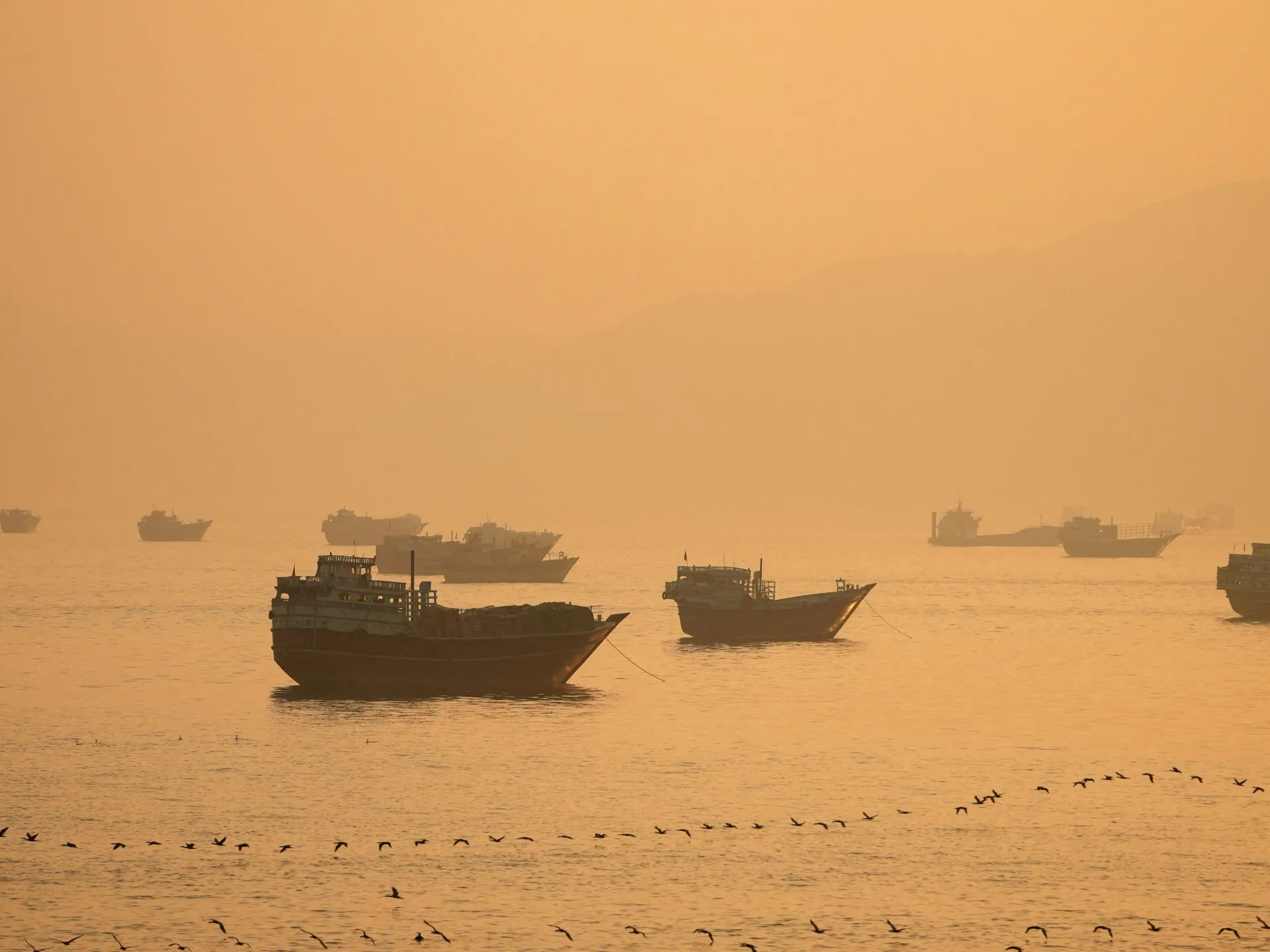
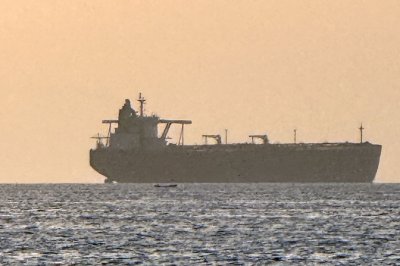
The UN’s International Maritime Organization (IMO) is set to evacuate more than 11,000 sailors who have been stranded in the Gulf because of the US-Israel war against Iran.
IMO secretary-general Arsenio Dominguez said the “large-scale operation” would be carried out in cooperation with Iran, Oman, the US, other coastal states in the region and the maritime industry.
“We have secured the necessary safety guarantees and have thoroughly verified the conditions for safe navigation to support these operations,” he added.
An interim deal was signed last week to end the conflict, but both the US and Iran continue to clash on details of the Memorandum of Understanding (MoU).
The US has said the MoU includes guarantees that Iran’s nuclear weapons programme will come under inspections by the International Atomic Energy Agency (IAEA).
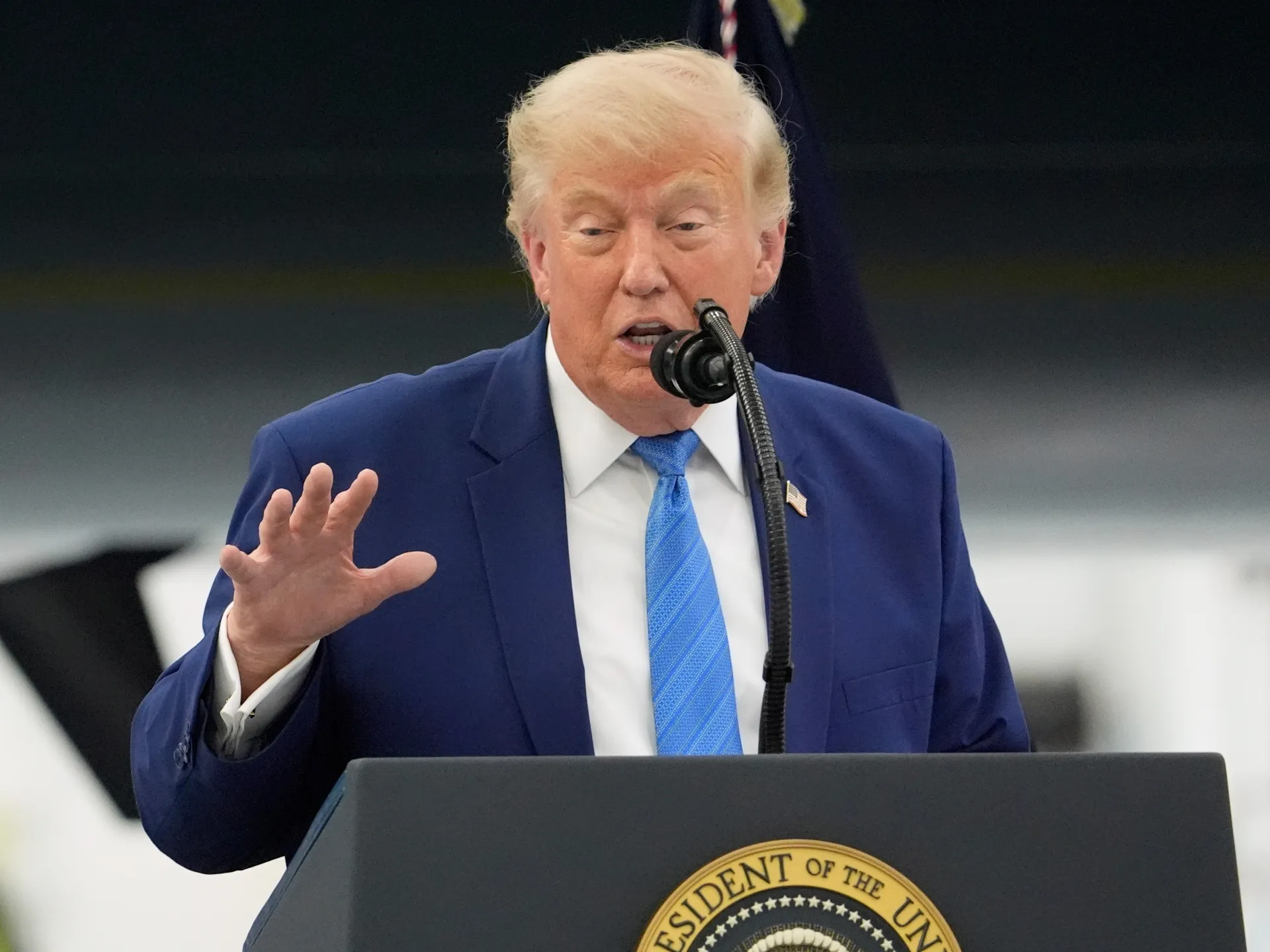
US President Donald Trump posted on social media on Tuesday: “Iran has fully and completely agreed to highest level Nuclear inspections long into the future (Infinity!!!). This will insure ‘Nuclear Honesty.'”
Shortly before Trump’s post, Iran said the UN watchdog would not be able to inspect nuclear sites bombed by the US and Israel last year.
In response, a US official said: “the Iranians have agreed to robust IAEA inspections of the remains of their nuclear weapons programme. The Iranian regime will say what they have to say for their domestic audience.”
Iran’s President Masoud Pezeshkian said during a visit to Pakistan on Tuesday that Iran “will never negotiate with anyone, under any circumstances, ever, about our defensive capabilities”.
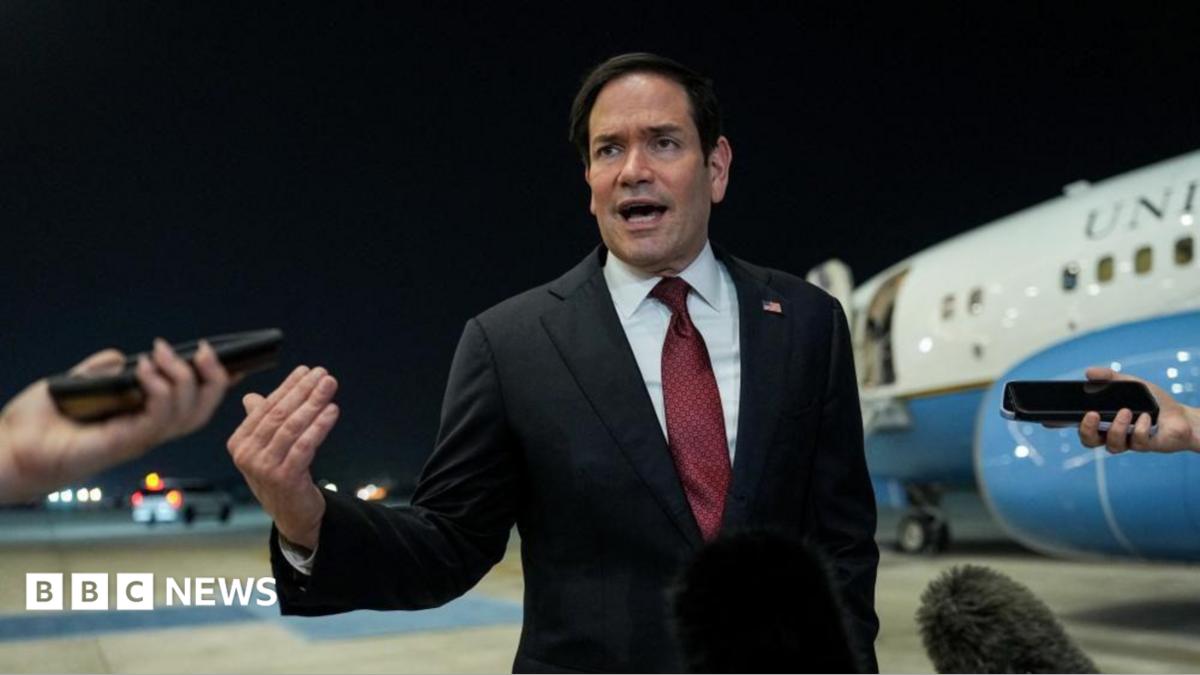
US Secretary of State Marco Rubio began a tour of the Gulf on Tuesday in the United Arab Emirates (UAE), and will also visit Kuwait and Bahrain – which both host US military bases – to discuss the deal with Tehran.
The secretary of state warned on Tuesday that no country is allowed to impose tolls on the Strait of Hormuz, where Iran has been pushing to charge ships passing through.
“It’s an international waterway. No country is allowed to charge tolls or fees on an international waterway. That’s existing international law,” he said as he arrived in the UAE.
“I don’t think we have anybody to convince around here in that regard. I think all the countries in this region would agree with us.”
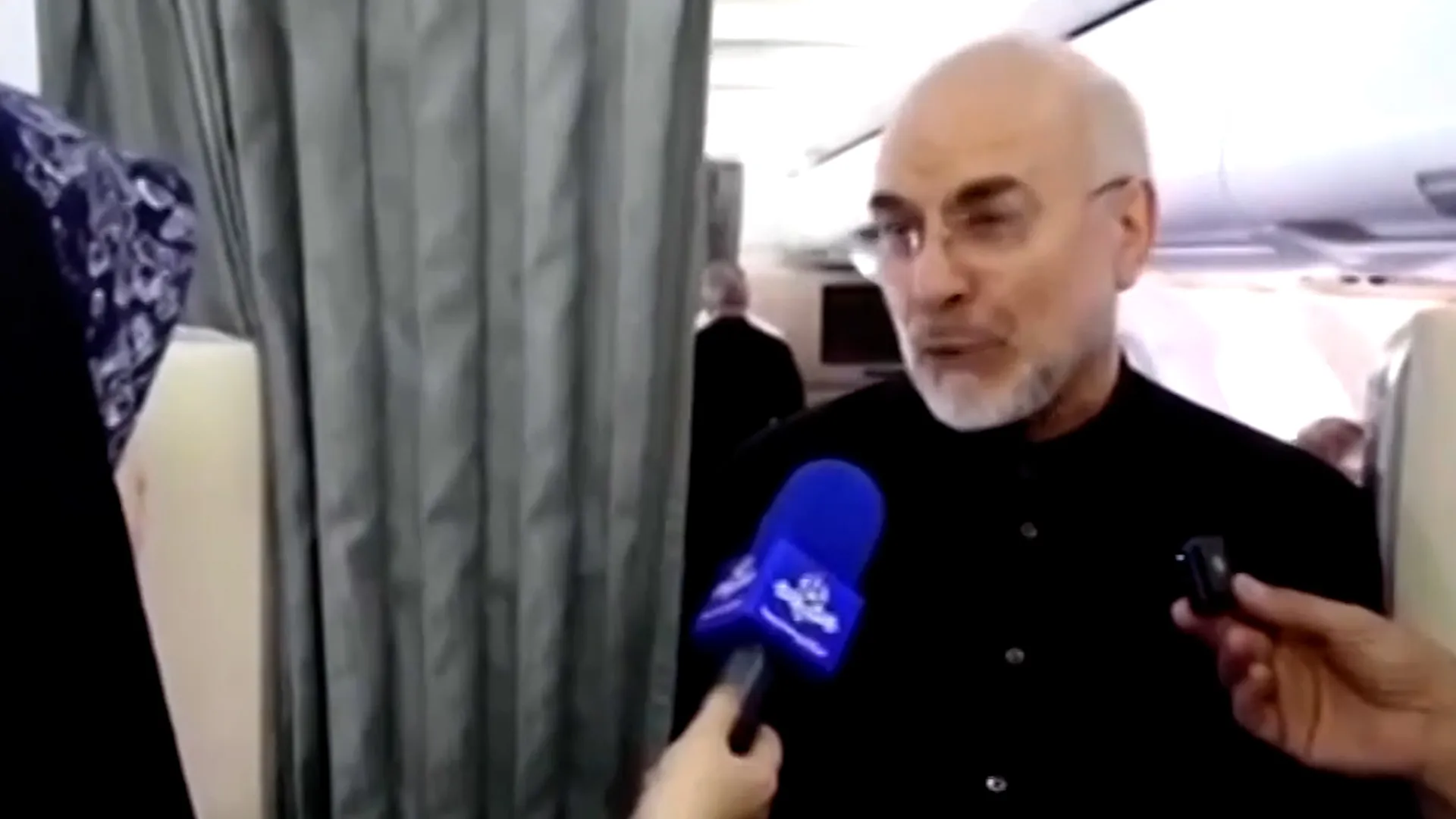
Iran’s chief negotiator said the Strait will never return to the way it was before the war, but also said Iran will fully comply with international law. He spoke while on his way back from first round talks with the US in Switzerland.
Ship tracking data shows sharp fall in transits as US and Iranian officials hold talks to save fragile peace framework.
Published On 22 Jun 202622 Jun 2026
Shipping in the Strait of Hormuz has plunged following Iran’s announcement that it has closed the waterway once again over Israel’s strikes on Lebanon, according to ship tracking data.
A total of 12 vessels crossed the strait on Sunday, down from 35 transits the previous day, an analysis by maritime intelligence company Windward showed on Sunday.
Recommended Stories
list of 4 itemsend of list
Five of eight vessels entering the strait had their Automatic Identification Systems turned off, according to Windward.
“The current traffic profile: dark, sanctioned, Iranian-linked, resembling the late-blockade baseline more than a functioning open strait,” Windward said in a post on X.
Maritime traffic in the strait had been showing signs of recovery since US President Donald Trump and Iranian President Masoud Pezeshkian on Wednesday signed a memorandum of understanding on ending the US-Israel war on Iran.
Twenty-five vessels transited the strait on Thursday, the highest number since mid-April, according to data from maritime intelligence provider Kpler.
Iran’s Islamic Revolutionary Guard Corps on Saturday declared the waterway shut, citing Israeli “crimes” in Lebanon and the failure of the US to maintain a ceasefire in the country.
US Central Command (CENTCOM) on Saturday denied that Iran had closed the strait, which normally carries about one-fifth of global oil and liquified natural gas supplies, saying that safe passage through the waterway remained “intact”, with 55 merchant ships transiting that day.
The cause of the discrepancy between the transit figures provided by CENTCOM and commercial ship tracking providers is unclear.
US and Iranian negotiators on Sunday held make-or-break talks in Switzerland as the conflict in Lebanon threatened to derail efforts to turn their 60-day ceasefire extension into a permanent peace deal.
In a briefing to Iranian media after the talks, Iranian Ministry of Foreign Affairs spokesman Esmaeil Baghaei said the sides had discussed the safe passage of ships through the strait, and “a mechanism was set up, which is important”.
Despite renewed tensions between Washington and Tehran and signs of slowing traffic in the strait, oil prices moved lower on Monday morning in Asia.
Brent crude, the primary international benchmark, was down about 0.9 percent as of 01:30 GMT, at just below $80 a barrel.
Asia’s major stock markets opened higher, with key indices in Japan, South Korea and Taiwan making substantial gains.
Tokyo’s Nikkei 225 and Seoul’s Kospi were up 1.8 percent and 1.5 percent, respectively, while the Taiex in Taipei surged 2.6 percent.
Hong Kong’s Hang Seng Index bucked the rally, dipping 0.7 percent.
Iranian armed forces say they’ve closed the Strait of Hormuz after Israeli attacks on Lebanon – just days after an agreement with the US reopen it.
Disruption to the crucial waterway has had a huge economic impact worldwide.
Recommended Stories
list of 4 itemsend of list
So, what happens next?
Presenter: Tom McRae
Guests:
Ian Ralby — Senior Fellow at the Center for Maritime Strategy and Associate Fellow with the International Law Programme at Chatham House
Mehran Kamrava — Professor of Government at Georgetown University in Qatar and Head of the Iranian Studies Unit at the Arab Center for Research and Policy Studies
Stavros Karamperidis — Associate Professor in Maritime Economics and Head of the Maritime Transport Research Group at the University of Plymouth
However, after Iran’s statement, US Central Command (Centcom) spokesperson Tim Hawkins said “traffic continues to flow”. He said US forces were “monitoring the situation to ensure this remains the case”, adding that “Iran does not control the Strait of Hormuz”.
United States President Donald Trump has pledged there will be no tolls for passage through the Strait of Hormuz, unless they are collected by his own country.
Trump’s statement, made in a Saturday afternoon post on Truth Social, is the latest sign that a recently signed memorandum of understanding (MOU) may be unravelling.
Recommended Stories
list of 3 itemsend of list
“There will be NO TOLLS in the Hormuz Strait for 60 days during the Cease Fire Period, and there will be NO TOLLS after the 60 day period has expired,” Trump wrote, “unless they are imposed by and for the United States of America.”
Since the US and Israel launched a war against Iran on February 28, Iran has successfully used the Strait of Hormuz as a pressure point, closing the strategic waterway to traffic.
But under the terms of Wednesday’s ceasefire memorandum, the strait is supposed to reopen for an interim period of 60 days. During that time, Iran is barred from charging vessels for passage.
On Saturday, however, Iran’s joint military command said it had closed the Strait of Hormuz, citing a “clear breach” of the memorandum’s commitments.
US Central Command (CENTCOM), the agency that oversees military operations in the region, denied that report and maintained that the traffic continues to flow through the waterway.
The Strait of Hormuz has long been a flashpoint in the conflict between the US and Iran. Nearly 20 percent of the world’s oil and natural gas is transported through the strait, as well as about 30 percent of the global fertiliser trade.
Closure of the strait has caused global fuel costs to soar and has tested agricultural sectors across the world.
Trump had responded to Iran’s chokehold over the strait by imposing a US naval blockade on Iran’s ports in the region.
But that naval blockade was lifted under the terms of Wednesday’s memorandum. The deal also paused fighting on all fronts in the regional conflict, including in Lebanon.
The memorandum, though, was not intended as a long-term deal. It serves as a launching point for negotiations on key issues, including the future of Iran’s nuclear programme.
Several points of divergence also went unaddressed in the memorandum. Nowhere does the memo say that future tolls cannot be collected from the strait after the 60-day period expires.
Before the war, there was no charge for passage through the strait. Trump himself said in an interview with The New York Times that the waterway should remain “permanently toll-free”.
But he appeared to reverse course in Saturday’s post, once again floating the possibility that the US could extract tolls in the strait, while barring Iran from doing so.
No fees should be levied, Trump wrote, “unless they are imposed by and for the United States of America, should the deal not be completed”.
He explained that such a charge would compensate the US “for services rendered as the Guardian Angel to the countries of the Middle East for purposes of both past, present, and future reimbursement of costs”.
Trump used similar language in his New York Times interview earlier this week, floating the US becoming “the guardian of the Middle East” in exchange for 20 percent of its revenue.
Saturday’s post is not the first time Trump has mused about the US imposing tolls in the strait, either.
In April, for instance, he discussed the idea with reporters, saying, “What about us charging tolls? I’d rather do that than let them have them. Why shouldn’t we? We’re the winner. We won.”
There has been no indication that Trump’s plans have been officially presented to countries in the region, many of whom have struck a careful balance in their dealings with both the US and Iran during the war.
Iranian officials, meanwhile, have repeatedly said they will not rule out imposing tolls in the strait, framing the issue as a matter of sovereignty and regional negotiation. The strait sits between Iran and Oman.
Further discussions are expected on the matter in the coming weeks.
But such negotiations have been thrown into jeopardy amid ongoing Israeli military operations in Lebanon, which threaten to violate Wednesday’s ceasefire memorandum.
Iran claimed that Saturday’s closure of the strait was a result of new Israeli attacks in southern Lebanon, which killed dozens of people after the ceasefire was announced.
Iranian officials have also said that any upcoming talks should focus on proper implementation of the initial memorandum, and that the 60-day negotiating period stipulated in Wednesday’s deal would begin after that was settled.
Pakistan, a top mediator between the US and Iran, has said that follow-up talks are set to begin in Switzerland on Sunday.
Switzerland’s Federal Department of Foreign Affairs has confirmed that an Iranian delegation, led by parliamentary Speaker Mohammad Bagher Ghalibaf and Foreign Minister Abbas Araghchi, has already arrived for the negotiations.
On the US side, Trump’s son-in-law Jared Kushner, special envoy Steve Witkoff and Vice President JD Vance are expected to attend.
Analyst Alexandru Hudisteanu warns that Iran’s overuse of Strait of Hormuz as leverage could transform the strategic chokepoint from a deterrence tool into an instrument of extortion, potentially turning the country into an international pariah.
WASHINGTON — Most Americans continue to disapprove of how President Trump is handling Iran, while his overall presidential approval holds steady, according to a new AP-NORC poll that was conducted as he suggested a deal with Iran had been reached.
The poll points to just how unpopular the war, which began Feb. 28, has been with Americans even as the Republican president turned abruptly from threatening Iran to reopening negotiations. Support for his handling of the war remains lopsidedly partisan. About two-thirds, 65%, of U.S. adults disapprove of how Trump is handling issues with Iran. But while the vast majority of Democrats and independents view Trump’s actions negatively, only 28% of Republicans are unhappy.
The new survey was conducted June 11-17, just after Trump called off threats to escalate the war with Iran. The poll was fielded as Trump announced a deal with Iran and authorized an end to the U.S. naval blockade in the Strait of Hormuz, concluding just before the deal was signed Wednesday.
Approval of Trump’s actions on Iran has been low over the past few months. But in interviews, some Republicans also weren’t pleased with the outcome of this week’s agreement, which gives Iran an immediate benefit, allowing it to sell its oil freely again.
The deal also reopens the strait without tolls for two months, restarts talks between the U.S. and Iran over Tehran’s nuclear program and calls for Tehran to dilute its stockpile of highly enriched uranium.
David Farrington, a 79-year-old Republican-leaning independent in Fort Worth, Texas, “doesn’t have any love lost” for Iran, but he’s frustrated the agreement focused on the strait and didn’t deliver more on the country’s nuclear weapons program.
“Any agreement regarding the strait is hardly what I would consider a recognizable concession on the part of Iran,” Farrington said. “So, I consider that some fluff that attempts to make this agreement look better when it’s not.”
Trump’s approval on Iran remains flat
Only about one-third of U.S. adults approve of how Trump is handling Iran in the new poll, in line with May.
Donald McBride, a 28-year-old independent in Plano, Texas, is frustrated that Trump has not maintained his campaign promise to keep America out of foreign wars. McBride voted for Trump but he opposed going to war with Iran.
“I would like the war to end,” he said. “The original objective of the war was to end the Iranian regime, and that’s just not possible. I don’t really know why we’d continue fighting.”
The poll suggests most Americans want action in Iran to wrap up. Even with an agreement on the horizon, 53% of U.S. adults said American military action against Iran had “gone too far,” only a slight decline from 59% in March.
About 4 in 10 Republicans, though, said in the latest poll that action has been “about right,” and 37% said it had not gone far enough.
Joan Jones, a 64-year-old independent in northwest Florida, believes the United States’ actions in Iran have been necessary to address the threat Iran posed.
“Those attacks are ultimately to protect us from nuclear attacks,” Jones said. “I think we have to go through that … and eliminate that worry so we don’t have that hovering over us.”
Few approve of Trump’s approach on Israel
About one-third, 34%, of U.S. adults approve of how Trump is handling Israel.
Tensions have been rising between Israeli Prime Minister Benjamin Netanyahu and Trump as the president criticizes recent Israeli attacks in Lebanon, which jeopardized negotiations between Washington and Tehran.
James Huffman, a 69-year-old Republican in Medway, Ohio, thinks Trump is taking the wrong strategy when it comes to Netanyahu.
“Netanyahu is not going to do everything Trump wants. He’s going to do what he wants,” Huffman said. “I just don’t think it’s effective.”
Only about one-third approve on the economy
About one-third of U.S. adults approve of Trump’s approach to the economy. That’s in line with last month, and continues a challenging stretch for Trump on the issue.
Jones, the Florida independent, is more optimistic than most. She said she can hardly leave the house some hours without getting stuck in the traffic of tourists headed to the beach on vacation. She also spots lines around the block for Starbucks, McDonalds and Chick-fil-A in her community — all signs to her that the economy is doing well overall.
“I think President Trump’s policies are contributing to a better economy,” Jones said.
Other Republicans are more skeptical, a troubling sign for a president who prides himself on his business acumen. Only 69% of Republicans approve of how he’s handling the economy, slightly lower than the 78% who approve of how he’s handling the presidency overall.
Patricia Bailey, a 42-year-old Republican in Parkersburg, West Virginia, sees an economy where prices have gotten out of control. “I just said the other night, ordering pizza is for rich people,” she said. Bailey voted for Trump but added, “He’s kind of let me down a little bit.”
Even if high prices preceded Trump, Bailey doesn’t think he’s lived up to his pledge to improve the economy.
“I think he got so distracted with the war that he forgot some old promises,” she said.
Sanders and Thomson-Deveaux write for the Associated Press.
The AP-NORC poll of 3,040 adults was conducted June 11-17 using a sample drawn from NORC’s probability-based AmeriSpeak Panel, which is designed to be representative of the U.S. population. The margin of sampling error for adults overall is plus or minus 2.8 percentage points.
WASHINGTON — The White House pushed back Thursday against growing bipartisan criticism of a negotiated settlement to the war with Iran, arguing its concessions to the Islamic Republic were contingent on its conduct and essential to securing peace.
The administration’s defensive posture came as details of the framework agreement, known as a memorandum of understanding, were finally shared with the public, revealing a raft of compromises with Tehran long opposed by Republicans.
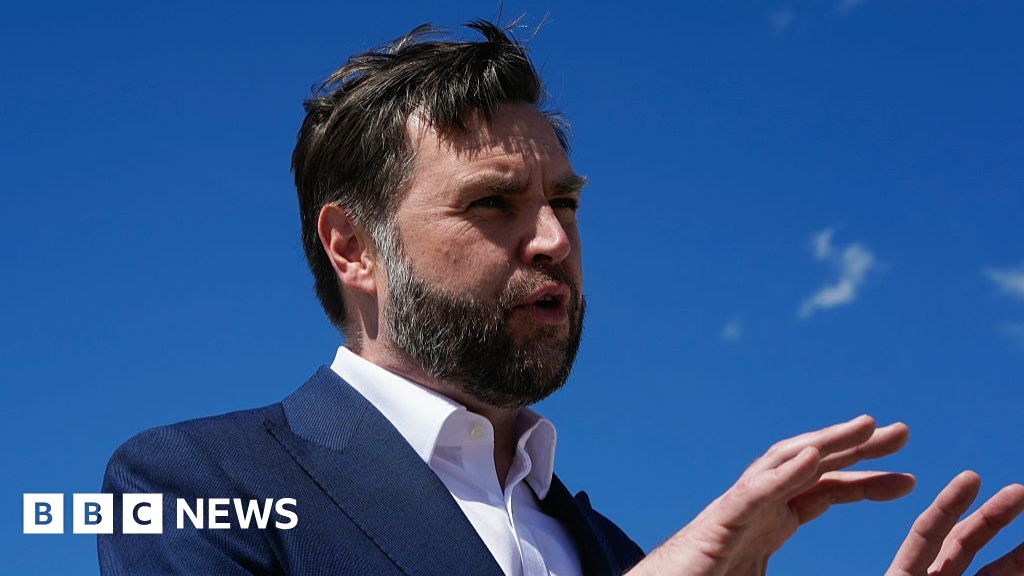
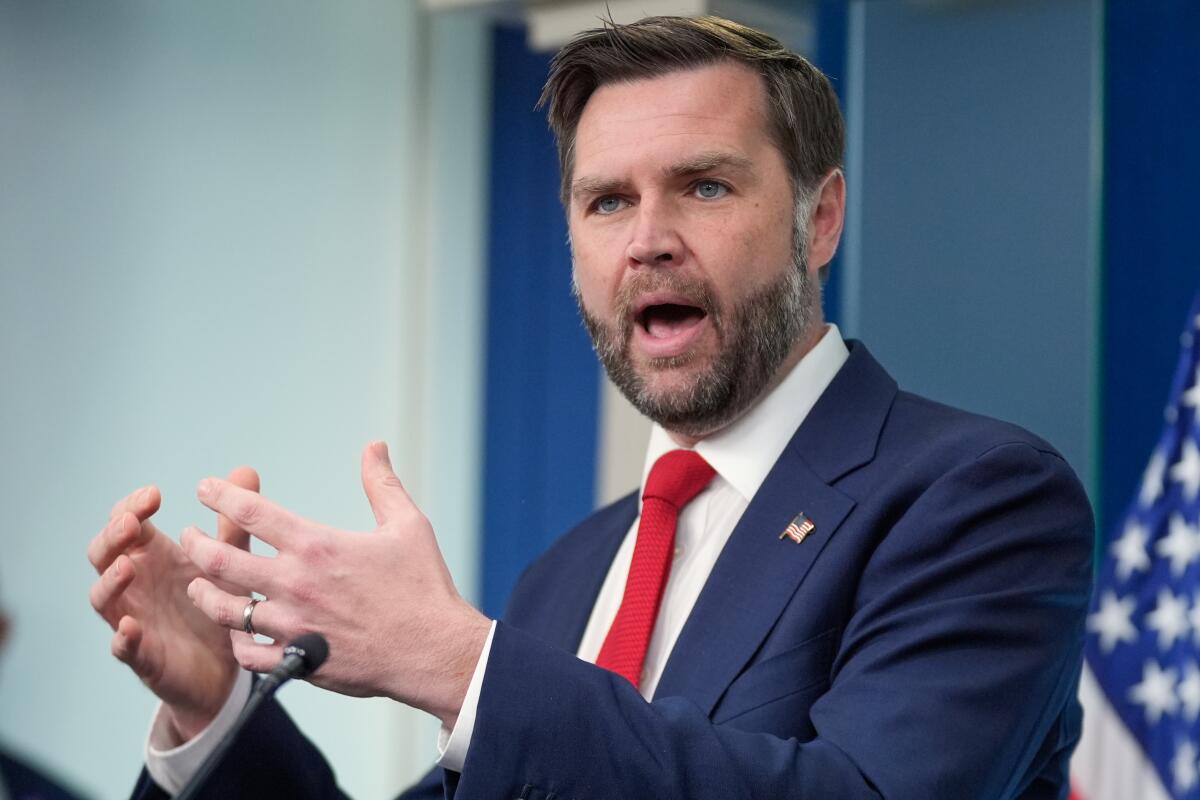
Vice President JD Vance, who helped negotiate the deal, told reporters Thursday that the deal was structured to reward Iran for good behavior. But the text of the agreement suggests otherwise.
The Trump administration agreed to release billions of dollars in Iranian assets that were frozen and restricted by the United States “upon the implementation” of the memorandum — before any further actions are taken or additional negotiations begin. The president will issue sanctions waivers on Iranian oil, allowing Tehran to resume trading its most valuable export and breaking with decades of policy. And to facilitate that trade, boosting Tehran’s revenues, Trump agreed to immediately end a U.S. naval blockade of Iranian ports.
Still more concessions were offered to the Iranians, including a commitment by the U.S. administration to establish a fund of “at least $300 billion for the reconstruction and economic development of the Islamic Republic” — in effect providing reparations for the war Trump started.
“All required licenses, waivers and permissions needed for the relevant financial transactions will be granted by the United States of America,” the memorandum reads.
Taken together, the document reads as a stunning reversal of U.S. policy toward Iran after decades of concern across administrations in Washington — including throughout Trump’s two terms — that the Islamic Republic represents the nation’s greatest security threats as the world’s largest state sponsor of terrorism.
Criticism from Republican senators, in particular, has been sharp and swift.
Sen. Roger Wicker (R-Miss.), chairman of the Senate Armed Services Committee, said the $300-billion fund “would make Iran’s payoff under President Obama’s 2015 deal look like a pittance by comparison.” And Sen. Ted Cruz (R-Texas) accused the Trump administration of giving Iran money it would use to kill Americans.
“History demonstrates that giving billions of dollars to theocratic lunatics who want to murder us is an exceptionally bad idea, and I think, unfortunately, the president is receiving some really bad advice on this deal,” Cruz said. “I don’t want to see us send a penny to the ayatollah. And I hope that we don’t.”
The Obama-era deal, known as the Joint Comprehensive Plan of Action, included structured sanctions relief for Iran in exchange for concrete and verifiable steps by Tehran to dismantle much of its nuclear program — a framework that Republicans broadly criticized at the time.
By contrast, Trump’s agreement commits the United States to pursuing economic relief for Iran while providing no clarity about the future of Iran’s nuclear program — the very issue Trump cited as the rationale for launching the war.
The memorandum includes a pledge by Iran to never purchase or construct nuclear weapons — a vow the Islamic Republic has made multiple times before, including by signing the Nuclear Non-Proliferation Treaty, in a religious edict issued by the late supreme leader and in the Obama-era nuclear accord.
Vice President JD Vance speaks to reporters at the White House on June 18, 2026.
(Manuel Balce Ceneta / Associated Press)
Detailed negotiations over Iran’s nuclear program — including whether Tehran could continue domestic uranium enrichment, at what level, and under what monitoring regime — were left for another day.
For more than a decade, the U.S. intelligence community has assessed that Iran sought a threshold nuclear capability, securing the strategic advantages of a nuclear power without incurring the costs of openly pursuing a bomb.
The agreement does include a commitment by Iran to do its “best” to bring commercial shipping traffic through the Strait of Hormuz, a vital international waterway, back to prewar levels. But critics of the president said he had to make deep, historic concessions just to secure a status quo ante upended by the war he started. And in the document, Tehran agreed to refrain from imposing a toll on ships transiting the strait for only a 60-day period.
“Unless you were homeschooled by a day drinker, no one’s confident that Iran is going to do anything,” Sen. John Kennedy, a Republican from Louisiana, told reporters this week.
Sen. Bill Cassidy, Kennedy’s Republican counterpart from Louisiana, called the deal “the worst foreign policy blunder in decades” that would have President Reagan “rolling over in his grave.”
“Iran’s nuclear ambitions were not curbed, and they have learned that threatening the Strait of Hormuz works and will undoubtedly leverage it in the future. Now, Iran gets to build brand-new infrastructure under this deal,” Cassidy said.
“Before the war, the strait was open, Iran was being crushed by sanctions, and 13 service members were still alive,” he added. “Now, 13 Americans are dead, families have paid billions at the pump, sanctions will be lifted, and the bombing has stopped.”
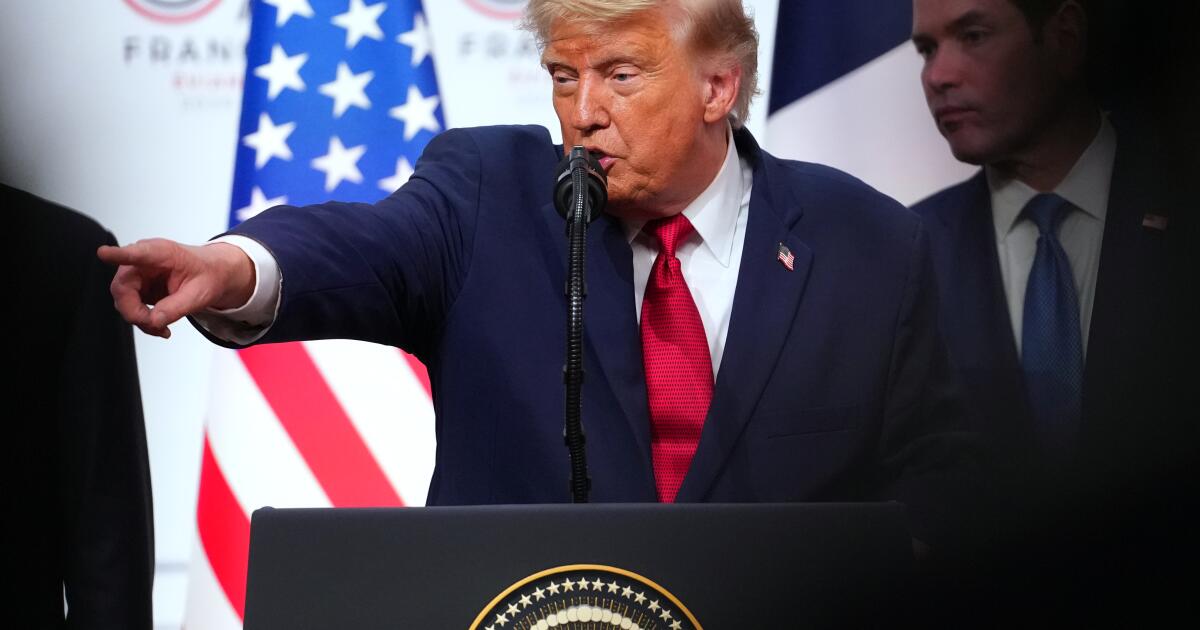
Despite mounting criticism, Trump put his signature to the memorandum on Wednesday night while attending a dinner with the French president in Versailles, a palace infamous for hosting a treaty signing that disgraced Germany at the end of the First World War.
He defended the agreement while in Europe and suggested further concessions might be forthcoming, including recognition of Iran’s claimed right to enrich uranium and a new willingness to tolerate its continued ballistic missile development — another program that Trump had vowed to eliminate as a central war aim.
“He took America to war — killing 13 soldiers, thousands of Iranian civilians and costing taxpayers $60 billion — to get rid of Iran’s missile program. And now that he’s lost the war, he pretends like it’s no big deal,” said Sen. Chris Murphy, a Democrat from Connecticut.
“Just unforgivable,” he added. “What a charlatan.”
Japanese Prime Minister Sanae Takaichi speaks to the press during her meeting with Italian Premier Meloni at Villa Pamphilij in Rome, Italy, 15 June 2026. Photo by Riccardo Antimiani / EPA
June 18 (Asia Today) — Japanese Prime Minister Sanae Takaichi has left open the possibility of deploying the Self-Defense Forces to the Strait of Hormuz following an agreement between the United States and Iran to end hostilities.
“Nothing has been decided at this point,” Takaichi said Wednesday when asked about a possible deployment during a news conference marking the end of the Group of Seven summit near Évian-les-Bains, France, Japanese media reported Thursday.
Takaichi said Japan must closely examine the U.S.-Iran agreement and conditions in the region before making a decision.
The Strait of Hormuz is a critical shipping route for crude oil from the Middle East. Instability in the waterway could directly affect shipping, energy prices and Japanese industry because the country relies heavily on imported energy.
The U.S.-Iran agreement has shifted Japan’s immediate focus from preventing further fighting to securing freedom of navigation and considering its role in post-conflict efforts.
Even after fighting ends, naval mines and other threats to commercial vessels could remain. Japan would then have to determine whether its involvement should be limited to diplomatic support or include operations by the Maritime Self-Defense Force.
Security in the Strait of Hormuz and other major shipping routes was among the issues discussed at the G7 summit.
Japan faces the challenge of coordinating with its allies and partners while keeping any military involvement within the limits imposed by its pacifist Constitution.
“We will continue every possible diplomatic effort, including those related to reconstruction,” Takaichi said of the situation in the Middle East.
She said Japan would consider necessary measures to secure freedom of navigation through the strait and “steadily carry out what we are capable of doing,” including diplomatic efforts.
Britain, France and other countries have called for the unconditional reopening of the waterway and indicated that mine-clearing operations could be required. Japan has signaled its willingness to participate in a related joint statement.
Takaichi said Japan’s participation in such a statement would remain within constitutional limits.
The central issue is how extensively the Self-Defense Forces could participate.
Article 9 of Japan’s Constitution prohibits the use of force except in circumstances involving the country’s right to self-defense. Mine-clearing operations conducted while fighting continues could therefore be viewed as the use of force against the country that placed the mines.
Clearing mines left behind after a cease-fire, however, may be permitted under Japan’s Self-Defense Forces Act.
Japan deployed Maritime Self-Defense Force minesweepers to the Persian Gulf after the 1991 Gulf War cease-fire. The mission marked the Self-Defense Forces’ first operational deployment overseas and became a turning point in Japan’s debate over its international security role.
Takaichi’s remarks did not amount to an immediate deployment decision. They indicated, however, that Japan could consider participating in maritime security operations depending on implementation of the U.S.-Iran agreement and conditions in the Strait of Hormuz.
Japan’s possible role in the post-conflict Middle East – whether limited to diplomatic and reconstruction support or expanded to include Maritime Self-Defense Force operations – is expected to remain a major foreign and security policy issue.
June 18 (UPI) — The U.S. military on Thursday lifted naval blockades in the Persian Gulf and Gulf of Oman, with reports showing that shipping vessels have departed the region through the Strait of Hormuz.
U.S. Central Command said in a series of posts on X that, following direction from President Donald Trump, blockades on maritime traffic along the coasts of Iran have ended.
Centcom noted, however, that the U.S. Navy will stay in the “general area” to be sure that “all aspects” of the peace agreement signed by the United States and Iran “are adhered to, obeyed and in full force and effect.”
Trump signed the agreement Wednesday at the Palace of Versailles in France after the G7 Summit wrapped up, which included among its 14 points reopening the Strait of Hormuz, which is a vital shipping route for the region and much of the world.
Iranian President Masoud Pezeshkian had signed the deal earlier in the day.
“American forces are not impeding the transit of vessels to or from Iranian ports,” Centcom said in one of the posts on X on Thursday.
“All U.S. military blockade efforts have ceased,” it said.
At least 12 energy tankers transited the Strait on Thursday, reopening a sailing route through which roughly 20% of the world’s oil supply is shipped around the globe, CNBC and the New York Post reported.
Among the vessels that transited the Strait were three Saudi Arabian supertankers, which together are carrying six million barrels of crude oil and are the kingdom’s first tankers to sail the shipping route since before the three-month-long U.S.-Iran war launched in February.
Vice President JD Vance also told reporters that more than 12 million barrels of oil had shipped through the Strait overnight Wednesday after the deal had been signed.
Brent crude drops to lowest price since early March before signing of framework deal to end US-Israel war on Iran.
Published On 17 Jun 202617 Jun 2026
Oil prices are continuing to drop, as hopes rise for a return to stability in global energy markets before the signing of a framework agreement on ending the United States-Israel war on Iran.
Futures for Brent crude due for delivery in August dipped nearly 1 percent on Wednesday, extending declines of about 5 percent on each of the previous two days.
Recommended Stories
list of 4 itemsend of list
The international benchmark stood at $78.24 a barrel as of 08:00 GMT, the lowest price since March 3, three days after the start of the war.
After rising more than 50 percent during the conflict, the price of crude on Wednesday afternoon in Asia was only about 7 percent higher than before the US and Israel launched attacks on Iran on February 28.
“The immediate prognosis, it seems, is optimistic and assumes no significant setbacks,” Tamas Varga, an analyst at PVM Oil Associates in London, said in a commentary.
“Over the last four trading sessions, Brent, for example, has fallen by $17 [per barrel], a discernible vote of confidence that the worst, at least as far as supply disruptions are concerned, is behind us,” Varga said.
Vandana Hari, the founder of the Singapore-based oil market analysis provider Vanda Insights, said that while the announcement of the US and Iran’s memorandum of understanding (MoU) has brought relief to markets, the “hardest part, on delivering the pledges and promises, is yet to come”.
“Crude’s slide is entirely sentiment-driven,” Hari told Al Jazeera.
“The market is front-running the prospective reopening of the Strait of Hormuz and likely pricing in the best-case scenario for the normalisation of flows, which means the potential hiccups from logistics to renewed geopolitical tensions are not being adequately factored in,” Hari said.
While many details of the MoU due to be signed on Friday remain unclear, Iran is expected to end its near-total closure of the Strait of Hormuz in exchange for the US lifting its blockade of Iranian ports, among other concessions.
The full reopening of the strait would be a crucial step towards restoring confidence in energy supply chains, after nearly four months of turmoil arising from the war.
Maritime traffic in the strait, which flows between Iran and Oman, has been reduced to a trickle due to the threat of Iranian missiles, drones and mines, reducing the global oil supply by an estimated 14 million barrels each day.
Even if the war does end, global energy flows are expected to take months to fully recover.
More than 500 vessels are estimated to be waiting to exit the Gulf through the strait, while the process of ensuring the channel is free of naval mines is likely to take weeks at a minimum.
Stephen Cotton, the general-secretary of the International Transport Workers’ Federation, said the signing ceremony scheduled to take place in Geneva, Switzerland, would be “at best the beginning” of a process of normalisation.
“The backlog of stranded vessels and the need for crew changes and rest mean a realistic return to normal shipping patterns is weeks, if not months, away,” Cotton said in a statement on Monday.
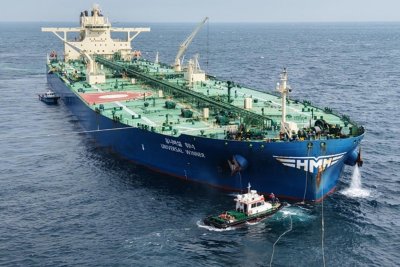
Crude carrier Universal Winner, a South Korean oil tanker operated by Korean shipping company HMM, reaches waters off the southeastern port city of Ulsan, South Korea, 10 June 2026, about three weeks after exiting the Strait of Hormuz, where it had been stranded amid tensions in the Middle East. Photo by YONHAP / EPA
June 11 (Asia Today) — A South Korean-operated liquefied natural gas carrier that had been stranded near the Strait of Hormuz because of the U.S.-Iran war has passed through the waterway, South Korea’s Foreign Ministry said Wednesday.
The vessel was headed to a third country, not South Korea, and eight South Korean crew members were aboard, officials said.
“One South Korean vessel has passed through the Strait of Hormuz and is sailing,” the Foreign Ministry said. “Consultations related to this passage were led by the foreign-chartered company.”
The ministry said it understood the ship was heading to its final destination in a third country.
A Foreign Ministry official said Seoul has repeatedly emphasized to Iran the need for the prompt and safe navigation of all vessels in the Strait of Hormuz, including South Korean ships. The official said the government is also continuing to communicate with related countries.
According to the Ministry of Oceans and Fisheries, one LNG carrier operated by a South Korean shipping company resumed operations and left the inner side of the strait as of 7 a.m. Wednesday.
As a result, the number of South Korean-operated ships waiting inside the strait fell from 25 to 24. The number of South Korean crew members in the area declined from 147 to 139.
Foreign Ministry officials said the South Korean vessels are anchored in safe areas near Qatar, the United Arab Emirates and other nearby waters, following guidance from the Oceans Ministry.
“The government’s top priority is the free and safe passage of South Korean vessels and crew members in the strait,” a Foreign Ministry official said. “We are carrying out diplomatic efforts through multiple channels regarding the remaining 24 vessels.”
The charterer of the ship that passed through the strait was identified as QatarEnergy, Qatar’s state-owned energy company, and the final destination was believed to be Pakistan.
The case differs from the earlier passage of the Universal Winner, a very large crude carrier operated by HMM, which left the strait after direct negotiations between the South Korean government and Iran. In the latest case, the charterer led the decision-making and consultations.
Diplomatic observers said the involvement of QatarEnergy as the charterer and Pakistan as the destination may have helped the vessel secure passage. Pakistan has maintained close communication with Iran over Middle East tensions, and consultations involving the Pakistani Navy and the charterer may have reduced safety concerns.
The passage was reportedly completed shortly before Iran announced a full closure of the Strait of Hormuz. Iran said Wednesday local time it would completely close the strait in response to U.S. airstrikes.
Diplomatic observers said South Korea is likely to prioritize safety for the remaining 24 vessels for the time being, rather than pushing for immediate passage, as risks in the strait have increased.
DUBAI, United Arab Emirates — President Trump threatened Thursday to launch major strikes on Iran and seize control of its oil industry as escalating attacks between the countries pushed the Middle East closer to the resumption of a full-scale war.
Trump said in a social media post that the U.S. would hit Iran “VERY HARD TONIGHT” and would “assume total control” of Iran’s oil and gas industries, including the vital Kharg Island oil terminal, in the “not too distant future.”
The American leader’s latest threats came as efforts to negotiate an end to the war appeared stuck. Trump has voiced his frustration with the stalled negotiations, warning earlier in the week that Tehran would “pay the price” for taking too long to reach a deal.
Iran’s monthslong stranglehold on the Strait of Hormuz has disrupted global energy supplies, driven up fuel prices and made food and other basics more expensive well beyond the region.
The U.S. and Iran traded strikes for a second straight day Thursday after reaching a tenuous ceasefire more than a month ago. While the strikes have increased tensions in the region, they have been more limited compared to the early weeks of the war and negotiations between the U.S. and Iran are ongoing.
Trump’s threats on Thursday, while stark, represented his latest verbal escalation in the Iran war. In April, he warned Iran that “a whole civilization will die tonight, never to be brought back again” if it didn’t agree to his terms, before extending a ceasefire.
Trump weighs trying to seize Iran’s main oil terminal
Kharg Island — located on the other side of the Persian Gulf from U.S. bases in Kuwait and Saudi Arabia — is the beating heart of Iran’s oil industry, through which 90% of its exports pass. It is important because Iran’s coastline is mostly too shallow for tanker ships to dock.
It was unclear how serious Trump was about his threat to seize it.
“My preference has always been to take Kharg Island,” Trump said in an interview Thursday on Fox News. “I don’t know that America has the stomach for it to be honest.”
American troops would be vulnerable on Kharg Island because of its close proximity — about 21 miles — to the Iranian mainland, from which missiles, drones and artillery could be fired.
Trump indicated in the interview that he remains averse to sending U.S. forces into Iran. “We could walk in there tomorrow. We could take soldiers — I don’t want to have boots on the ground. But if I wanted to we could put a small group of soldiers and take over the place.”
Trump compared his threat to take over Iran’s oil industry to how the U.S. assumed control of Venezuela’s oil sector after capturing then-president Nicolás Maduro in January.
Iran says US attacks have made ceasefire `meaningless’
American strikes on Iran that lasted into Thursday morning appeared more intense and widespread than the day before.
Tehran released little information on the extent of the damage and said it fired back at Kuwait, Bahrain and Jordan, as it had the previous day.
It was the third time this week that back-and-forth strikes have rattled the Middle East. The first involved attacks between Iran and Israel, followed by the two rounds of fire between the U.S. and Iran, which hit countries in the region that host American bases.
Iran’s Foreign Ministry said in a statement Thursday that the U.S. attacks had “effectively rendered the ceasefire … meaningless,” without saying it was abandoning it.
U.S. Treasury Secretary Scott Bessent said in a social media post that the U.S. would extract funds from frozen Iranian accounts to offset the costs of damage to American allies as well as any tolls Iran imposes on ships seeking passage through the Strait of Hormuz.
Beyond the deadlock over the strait, the two sides also remain at odds over Iran’s nuclear program, which Tehran insists is peaceful but which the U.S. and Israel fear could be used to build an atomic weapon due to its stockpile of highly enriched uranium. The U.S. and Israel said a major reason they went to war on Feb. 28 was to ensure that Iran would never be able to do that.
Iran has insisted that any deal to end the war must also end fighting in Lebanon between its ally Hezbollah and Israel. But Israeli Prime Minister Benjamin Netanyahu appears intent on pursuing his goal of destroying the militant group.
U.S. strikes Iran and Iran fires back at Gulf states
Central Command said its latest round of airstrikes came “in response to Iran’s unwarranted and continued aggression” and targeted “Iranian military surveillance capabilities, communication systems and air defense sites.” It did not elaborate on the damage done by the strikes, which it said ended just before sunrise Thursday in Iran.
Explosions from the strikes echoed around Iran’s capital, as well as the port city of Bandar Abbas and other southern areas along the Strait of Hormuz. Iran’s paramilitary Revolutionary Guard later said sites hit included a manufacturing complex, a military barracks and a local Guard base outside of Tehran.
Kuwait closed its airspace for several hours because of the attack, but did not elaborate on any damage. Jordan said it intercepted 20 Iranian missiles fired toward an area that is home to a base hosting U.S. troops, though no one was hurt.
Bahrain’s Interior Ministry said an 11-year-old girl was hurt and cars and homes were damaged by debris from interceptions responding to the Iranian attack.
Meanwhile, Israel warned residents in the country’s north to seek shelter after the detection of suspected incoming fire from Lebanon, where Israel is fighting the Iran-allied Hezbollah militant group.
U.S. fires on another merchant ship to enforce blockade
The U.S. military’s Central Command said Thursday that it struck a Guinea-Bissau-flagged tanker attempting to evade the American blockade on Iranian ports. It said the M/T Jalveer was transporting Iranian oil when it was disabled late Wednesday after its crew failed to obey U.S. orders.
It’s the ninth merchant vessel the U.S. military says it disabled to enforce the blockade.
Three Indian sailors were killed when American forces struck the Palau-flagged M/T Settebello on Tuesday, India’s minister overseeing ports and shipping said Thursday on X.
U.S. Central Command said American forces issued warnings before firing on the ship, which it accused of trying to evade the blockade.
The leader of the International Maritime Organization, a United Nations agency, condemned the attack.
Gambrell and Madhani write for the Associated Press. Madhani reported from Washington. AP writers Will Weissert, Collin Binkley, Michelle L. Price and Konstantin Toropin in Washington; Sheikh Saaliq in New Delhi; Munir Ahmed in Islamabad, Victoria Eastwood in Cairo and Russ Bynum in Savannah, Ga., contributed to this report.
Explosions hit Qeshm Island, ports along Strait of Hormuz after Trump threatens to hit Iran ‘very hard’.
Published On 10 Jun 202610 Jun 2026
The United States has launched fresh strikes against “multiple targets” in Iran at President Donald Trump’s direction, in a fresh escalation that prompted Tehran to declare the Strait of Hormuz closed to “all types of vessels”.
The US military said the strikes late on Wednesday were “in response to Iran’s unwarranted and continued aggression”, as Iranian state media reported explosions on Qeshm Island and in the cities of Bandar Abbas and Sirik along the Strait of Hormuz.
Recommended Stories
list of 4 itemsend of list
Blasts also hit the southern city of Kargan, wounding at least two people.
Iran’s Islamic Revolutionary Guard Corps accused the US of “repeated violations” of their April ceasefire, and said the Strait of Hormuz was “closed until further notice”.
It said all traffic in the vital waterway, including oil tankers and commercial vessels, would be affected, and firmly rejected the US’s previous claims that it had helped ships pass through the strait.
The IRGC subsequently added that “two oil tankers attempting to illegally pass through the strait were hit”.
The escalation comes a day after the US and Iran exchanged tit-for-tat strikes over the downing of a US Apache helicopter in the Strait of Hormuz.
Earlier, Trump said the US would hit Iran “very hard”.
“We’ll see what happens with the deal. We were really close to a deal. But they keep stringing us along. They keep playing us for suckers because you know what? They dealt with some very stupid presidents. I have to say that I’m embarrassed to say it,” he told reporters at the White House.
Iran’s President Masoud Pezeshkian slammed Trump’s threat in a post on X.
“Critical infrastructures are the lifeblood of the people. Threats to target them – from transportation networks to the electricity and water industries – are not a show of strength but a sign of desperation in the face of a nation’s will,” he wrote.
“Iran, relying on the knowledge and capabilities of its specialists, national unity, and solidarity, will stand firm against any pressure or threat,” he added.
WASHINGTON — U.S. retaliatory strikes against Iran will continue after its forces shot down an American helicopter, President Trump said Wednesday, accusing the Islamic Republic of stringing him along over months of negotiations to end the war.
The prospect of a renewed U.S. air campaign cast fresh doubt on the viability of a ceasefire between the United States and Iran that has largely held since April, when the two sides reached a tenuous truce, pausing weeks of fighting. Trump’s decision to resume attacks comes after an exchange of fire between Israel and Iran threatened to spiral into open war over the weekend.
The administration has presented Trump with options to expand U.S. targets beyond the immediate area around the Strait of Hormuz to Iranian power plants across the country, an escalation that will open the president up to accusations he is targeting civilian infrastructure, according to a defense official familiar with the matter.
Speaking with reporters in the Oval Office, Trump encouraged the Iranians to accept a framework agreement negotiated between the two sides, and suggested that additional military action might compel Tehran to accept a final truce.
“We hit them hard yesterday, and we’re gonna hit ‘em again hard today,” Trump said. “And we’ll see what happens with the deal. We were really close to a deal, but they keep tapping us along — they keep playing us for suckers.”
The president’s remarks came a few hours after Trump posted on his social media website that Iran “will have to pay the price” for taking too long in negotiating a peace deal.
When pressed by reporters to elaborate, Trump said he meant that bombing would resume but declined to say whether that would include strikes on Iranian power plants and bridges, a threat he has repeatedly issued during the war.
The ongoing conflict, which is in its fourth month, has left a mark on the global and domestic economy. The U.S. Bureau of Labor Statistics reported Wednesday that inflation accelerated in May, driven by a surge in energy prices linked to the war with Iran.
The consumer price index rose 0.5% on a seasonally adjusted basis — the largest monthly increase in three years — pushing the annual inflation rate to 4.2%.
Asked whether he was concerned about the inflation numbers, Trump told reporters that the “numbers were great.”
“You know what I really love? I love the inflation. You know why? Because as soon as this war is over…,” Trump said, without finishing the thought.
The remark prompted near instantaneous news releases from Democratic operatives, as well as the party war room, which sent out a statement accusing Trump of mishandling a reckless war that has devastated the economy in the process.
“Donald Trump’s disastrous economic agenda and deadly and costly war with Iran have made life unbearable for millions of Americans,” Kendall Witmer, the Democratic National Committee’s rapid response director, said in a statement.
“Working families are shouldering skyrocketing costs for basic goods, with their wages being eaten up by Trump’s soaring inflation,” she added. “On the campaign trail, Trump promised to ‘defeat inflation,’ and to lower costs on ‘Day One,’ but two years later, Trump can’t get a handle on his war of choice with Iran as he tanks the economy back home.”
Trump then told reporters about a secret military mission to ensure safe passage for oil tankers through the Strait of Hormuz, one of the world’s most important commercial waterways. He said the operation had secured the passage of more than 100 million barrels of oil through the strait since it began.
“We took out, the other night, 22 ships late at night with no lights because they don’t have any radar because we blasted the crap out of it,” Trump said.
A couple of hours later, Trump wrote in another post that the military operation had been “wildly successful,” and that it proved the United States — not Iran — was in control of the Strait of Hormuz.
“Their military is defeated, and their economy is lost,” he wrote. “It’s over for Iran!”
Over months of diplomacy with Iran, Trump has sought to avoid a return to conflict, often seeking de-escalation when fighting has flared — and repeatedly pressuring Israel to minimize its attacks in Lebanon, where it continues to battle the militant group Hezbollah, a proxy of Iran.
Israeli strikes continued Wednesday, according to local news reports, while Hezbollah said it carried out attacks on Israeli troops stationed in southern Lebanon.
Speaking to journalists in the Oval Office, the president implied he was losing patience with Iranian tactics at the negotiating table.
“I gave them a break, at the request of Pakistan,” he said. “They still are working on trying them to do what’s right. But we want a deal that’s meaningful. We want a deal that works.”
“It was just tap, tap, tap,” the president added. “I don’t know what they’re doing.”
DUBAI — The U.S. military said Tuesday it has begun strikes against Iran following the crash of a U.S. Army Apache helicopter off the coast of Oman that President Trump blamed on the Islamic Republic.
In a statement posted to social media, U.S. Central Command said the strikes would be “a proportional response to unjustified Iranian aggression.” It comes after Trump blamed Iran for downing the helicopter and vowed that the U.S. would respond.
Iranian state media reported that explosions were heard on an Iranian island in the Strait of Hormuz.
Trump had blamed Iran for shooting down a helicopter close to the Strait of Hormuz and said the United States must respond. Iran’s top diplomat said foreign military forces near the country’s territory “are at constant risk.”
The Apache helicopter that crashed went down after colliding with an Iranian drone, according to a U.S. official, who spoke on condition of anonymity to discuss an ongoing investigation.
It wasn’t clear whether the collision was intentional, and official statements only said the crash is under investigation. CNN, CBS News and other outlets earlier reported the Iranian drone collision.
Trump said Iran shot down the aircraft while it was on patrol over the Strait of Hormuz and declared that the U.S. “must, of necessity, respond to this attack,” in a post to social media.
The U.S. military later announced that it had begun strikes against Iran.
In the first known operation of its kind by the American military, a drone boat rescued the two aviators who were aboard the Apache attack helicopter when it went down near the critical shipping lane that Iran has effectively closed during its war with the U.S. and Israel.
Trump said in a social media post that military officials told him “the Iranians shot down one of our highly sophisticated Apache Helicopters.” Both service members “are safe and uninjured,” he added.
“Nevertheless, the United States must, of necessity, respond to this attack,” Trump wrote.
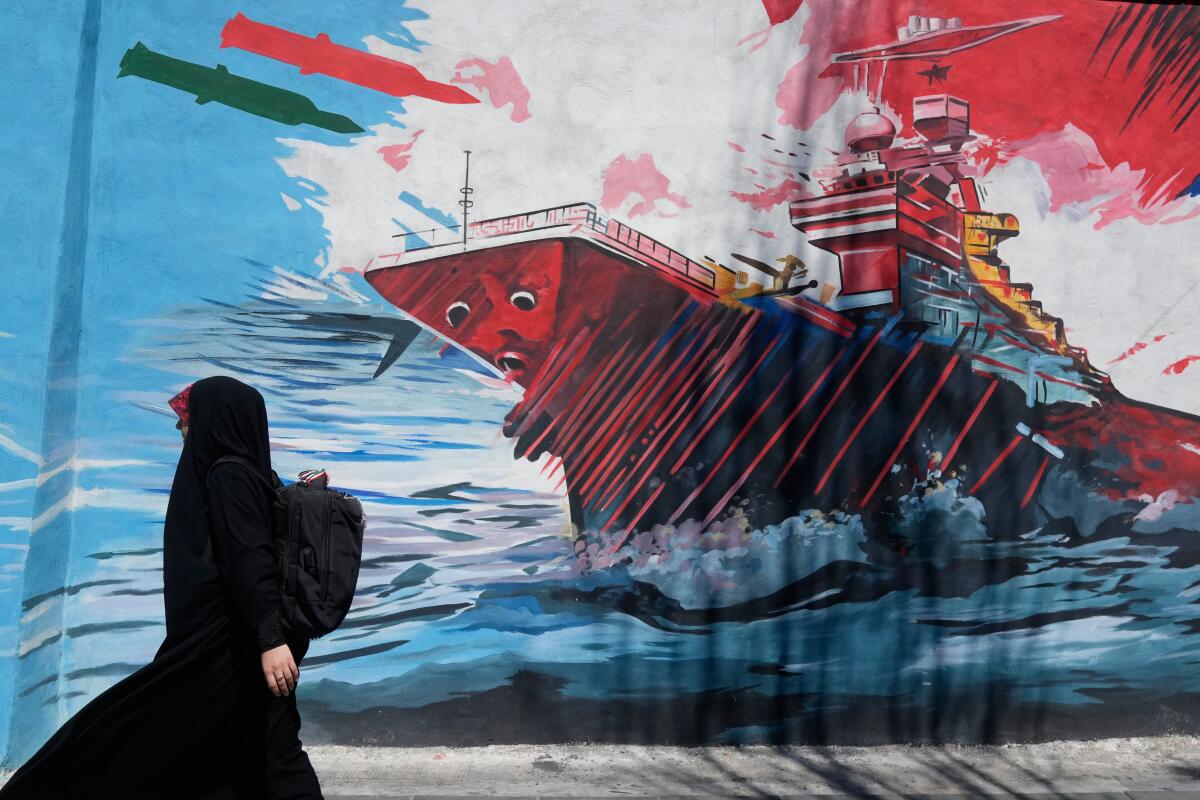
A woman walks past a mural depicting a U.S. aircraft carrier under missile attack in downtown Tehran, Iran on Monday.
(Vahid Salemi / Associated Press)
Soon after Trump made his accusation, Iranian Foreign Minister Seyed Abbas Araghchi said in a social media post that the strait is “thousands of miles away from U.S. shores.”
“Foreign forces in proximity to our territory are at constant risk on account of their own human errors, plain accidents, or potentially being caught in crossfire,” Araghchi wrote. “To reduce risk, best solution is for them to leave.”
The downing of the helicopter further strained a two-month ceasefire a day after Iran and Israel exchanged fire for the first time since the fragile truce took effect. Iranian state television said Tuesday that the Israeli attacks killed at least two members of the country’s air-defense units.
Since the U.S. and Israel began striking Iran on Feb. 28, the war has shaken the global economy, driven up energy prices around the world and made many basics, including food, more expensive.
Officials have been unable to turn the April ceasefire into a deal to permanently end the conflict, particularly as Israel intensifies and expands its military campaign in Lebanon against the Iranian-backed militia Hezbollah.
Army crew members picked up by drone boat
The Army aviators were rescued at 3:30 a.m. local time Tuesday, about two hours after their helicopter went down during a patrol off the coast of Oman, U.S. Central Command said.
The U.S. service members were spotted and picked up by a drone boat that took them to another location on the water, where they were picked up by a helicopter, said Capt. Tim Hawkins, a spokesman for U.S. Central Command. Hawkins initially said the drone took the two to shore, and he did not elaborate on the updated timeline.
It was the first known drone rescue at sea by the U.S. military, Hawkins said.
AH-64 Apache helicopters have been a key asset for the American military as it enforces a blockade on Iranian crude oil shipments and tankers, seeking to pressure Tehran into a deal. The helicopters have also been used by the United Arab Emirates to shoot down Iranian drones.
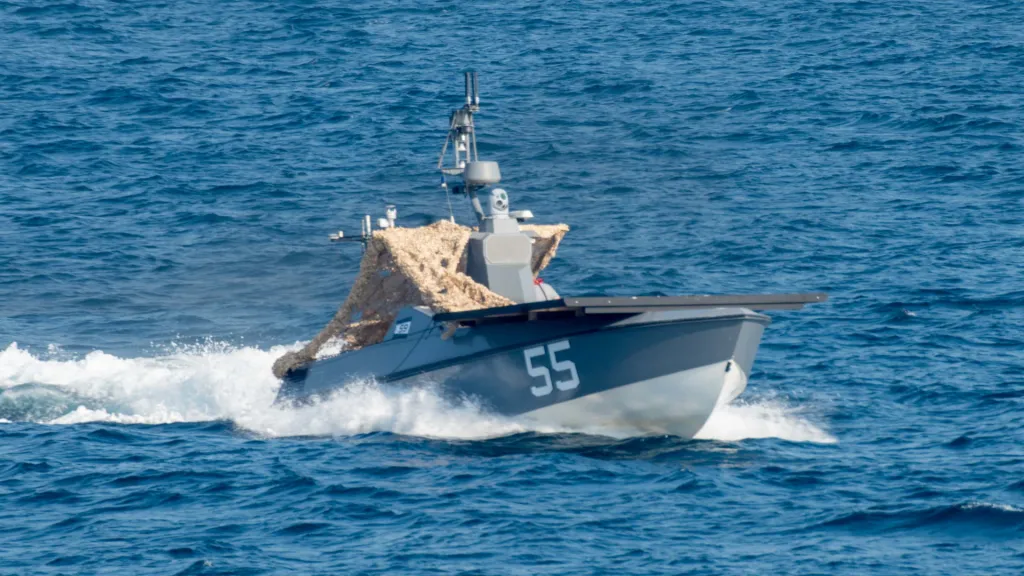
The drone used to perform the rescue was a 24-foot vessel called a Corsair, Hawkins said. It’s manufactured by Saronic Technologies.
The drone was assigned to the Navy’s Task Force 59, established in 2021 as the Navy’s first uncrewed and artificial intelligence unit that focuses on maritime security in the Middle East, including the Strait of Hormuz and the Suez Canal.
Trump insists an Iran deal is coming
Before he accused Iran of downing the U.S. helicopter, Trump had expressed renewed optimism over negotiations with Iran.
“We have a good chance” of signing a deal in “two or three days,” Trump said late Monday. But he did not provide any details on why there was reason for new optimism. In the two months since the U.S. and Iran agreed to an initial ceasefire, Trump has repeatedly predicted that a deal is near.
“We’re very close to having a very, very good, strong, powerful deal,” the president said.
Mediators, led predominantly by Pakistan, have been trying for weeks to get a deal across the line. However, both Iran and the U.S. have taken hard-line positions.
The U.S. wants to see Iran give up its stockpile of highly enriched uranium, which is believed to be entombed in the aftermath of American airstrikes that happened during the 12-day war in 2025. But Iran is refusing that and demanding relief from sanctions. It also wants the release of frozen assets even before a final agreement is in place, something rejected by Trump.
Before Trump’s comments on negotiations, Qalibaf said Monday that Trump’s remarks so far on a possible deal “contradicted the agreed-upon sections,” showing that the U.S. is “neither seeking a ceasefire nor dialogue.”
The continued fighting between Israel and Hezbollah is still a top Iranian priority as well. Lebanon’s army chief, Gen. Rodolphe Haykal, traveled to Pakistan on Tuesday. There, he met Pakistan’s army chief, Field Marshal Asim Munir, who has been a key figure in the Iran-U.S. talks.
Haykal’s visit comes as Lebanon’s government takes an increasingly hard line on Hezbollah but remains unable to disarm the powerful militia. Hezbollah thanked Iran on Tuesday for attacking Israel “in defense of our Lebanese people,” suggesting that Lebanon’s government should take this opportunity to improve relations with Tehran.
Israel issues a warning for Tyre, Lebanon
Meanwhile, the Israeli military issued an evacuation warning for Lebanon’s southern port city of Tyre, including the Christian quarter, which has so far been spared from airstrikes on the city.
Last week, Israel warned the Christian neighborhoods in Tyre that it believed Hezbollah members were among them. Many Lebanese Shiite Muslims fled to those areas as Israeli strikes hammered the Mediterranean coastal area over the past two weeks.
After last week’s warning, the Lebanese army deployed to the Christian district of Tyre in an effort to prevent Israeli attacks there and to show that Hezbollah has no armed presence in the area. But Avichay Adraee, the Israeli military’s Arabic-language spokesperson, posted on X on Monday that the Israeli military “will have to act against their terrorist activities in the neighborhood soon.”
Gambrell, Superville and Toropin write for the Associated Press. Superville and Toropin reported from Washington. AP writers Michelle L. Price in New York, Will Weissert in Washington, Bassem Mroue in Beirut, Munir Ahmed in Islamabad and Russ Bynum in Savannah, Ga., contributed to this report.
Weekly insights and analysis on the latest developments in military technology, strategy, and foreign policy.
A U.S. Navy uncrewed surface vessel (USV) found and rescued the crew of a U.S. Army Apache that went down overnight near the Strait of Hormuz, in the Gulf of Oman. This is the first known use of a drone boat executing a personnel recovery action as part of a military search and rescue operation, and it’s likely a glimpse of what’s to come. The cause of the incident is otherwise under investigation.
Navy Capt. Tim Hawkins, a U.S. Central Command (CENTCOM) spokesman, has confirmed the use of the Navy USV in the rescue effort to TWZ. This had already been hinted at by mention of Task Force 59, the Navy’s main drone force in the Middle East, in an official CENTCOM statement. What specific type of drone boat was utilized in this case is not yet known. Task Force 59 operates a variety of USVs, including speedboat-like types. The Task Force has been experimenting with all types of new uncrewed naval technologies and this rescue is clearly a major win for the forward-looking unit.
One of several types of speedboat-type USVs Task Force 59 operates, seen here during an exercise. USN
“At 7:33 p.m. ET on June 8, two crew members from a U.S. Army AH-64 Apache were rescued by American forces after their helicopter went down near the coast of Oman while patrolling regional waters,” per CENTCOM’s statement. “The Soldiers were safely rescued within approximately two hours and are in stable condition. The cause of the incident is under investigation.”
“Rescue efforts were led by U.S. Naval Forces Central Command and the 82nd Airborne Division, with support from U.S. Air Force and Navy units including U.S. 5th Fleet’s Task Force 59,” the statement added.
A flight of U.S. Army AH-64 Apache attack helicopters, armed with rockets and Hellfire missiles, taxi out to conduct a scheduled flight in the U.S. Central Command area of responsibility. In addition to rockets and missiles, the Apache is additionally armed with a 30mm chain gun. (U.S. Army photo) U.S. Army Central
The New York Times was first to report that an Apache had gone down near the Strait of Hormuz. President Donald Trump had also confirmed the crew was safe while speaking to reporters earlier this morning.
“We are going to issue a report tomorrow, but the pilots are fine,” Trump said after returning to Washington from the NBA Finals in New York.
A US Army Apache helicopter went down near the Strait of Hormuz and it wasn’t clear if the aircraft suffered mechanical troubles or had been shot down by Iran, the New York Times reported.
Asked about the episode by @jendlouhyhc, Trump said the pilots were fine and that a report…
As we have reported in the past, Army AH-64s have been part of an effort by the U.S. military to enforce the ongoing blockade of Iran and protect commercial shipping. Last month, Apaches and U.S. Navy MH-60 Seahawk helicopters destroyed six small Iranian boats that were threatening commercial ships in and around the Strait of Hormuz, according to Navy Adm. Brad Cooper, head of CENTCOM. Apaches had already been conducting missions targeting Iranian naval assets in and around the Strait of Hormuz before the announcement of the ceasefire in April. All of this has shown that armed helicopters remain important assets in maritime operations, especially for defending against swarms of small boats.
As TWZ regularly highlights, search and rescue operations present inherent complexities and risks, especially when conducted in or near hostile territory. The F-15E rescue effort in Iran put a particular spotlight on the immense risks that combat search and rescue (CSAR) forces take, with helicopters and C-130 variants sent into areas where even a high-end fighter aircraft didn’t survive.
Open-water recoveries can present distinct additional challenges. There is always the possibility of the loss of additional assets and personnel in the process, no matter where a CSAR mission occurs.
HH-60Ws refuel from an HH-130J. (USAF)
The use of Navy drone boat in the rescue overnight highlights a new dimension for maritime CSAR going forward. These uncrewed assets can be more readily pre-positioned in a distributed manner. For example, in the broad expanse of the Pacific, USVs could be forward-deployed at multiple points along certain flight paths for this exact purpose. USVs could offer other distinct advantages in certain scenarios where they might be able to get into areas where traditional assets cannot and without risking additional personnel. These realities extend well beyond the maritime domain, and we are only likely to see uncrewed platforms of all kinds increasingly taking part in rescue efforts, especially in denied areas. The U.S. military is coming to terms with just how vulnerable their CSAR assets are and the ranges that would be needed to access highly defended areas, especially during a peer fight. Using drones to execute personnel recovery is being viewed as one part of a larger set of solutions to this pressing problem.
With the Apache going down near the Strait of Hormuz, the U.S. military has now lost at least seven crewed fixed-wing aircraft and helicopters since the start of the latest operations against Iran in February. In addition, several aircraft have been damaged in the air and on the ground, including by Iranian fire. The TWZ graphic below offers a visual tally of damaged and destroyed aircraft as of April 10.
TWZ
Despite the loss of the Apache, the use of a USV in the rescue effort is a major development and a sign of things to come.
June 9 (UPI) — Two U.S. Army helicopter crew members were rescued and brought to safety within two hours after their Apache gunship crashed near the Strait of Hormuz.
U.S. President Donald Trump said early Tuesday that the two service personnel were “fine” and promised a report on the incident would be released in the next 24 hours or so.
U.S. Central Command said the pair were in a stable condition with spokesperson Capt. Tim Hawkins telling NBC News that a Task Force 59 unmanned surface vessel found and recovered the soldiers — the first time the U.S. military had carried out such an operation with a drone boat.
A source told the New York Times that it was yet to be established whether the aircraft came under Iranian fire, sustained a technical malfunction or encountered another issue.
The loss of a Hellfire missile-armed AH-64 Apache — which patrol the strait, downing Iranian drones and preventing small boats from attacking shipping — is a first for the U.S. military since the conflict started Feb. 28.
At least eight U.S. fighter jets and other military aircraft, plus more than two dozen uncrewed aerial vehicles, have been lost in both enemy and friendly-fire incidents but Monday’s crash was the first loss of a helicopter.
The Apaches play a key tactical role alongside F/A-18 and F-35s fighter aircraft in U.S. Central Command’s mission to counter the blockade of the vital international shipping route, which Iran has effectively put out of bounds to the vast majority of oil tankers and other commercial vessels.
However, the helicopters have been patrolling closer to Iran, including its islands in the Hormuz Strait and Persian Gulf, as part of Centcom’s effort to maintain the pressure on Tehran amid protracted negotiations to resolve the 100-day-long conflict.
Tehran did not immediately claim responsibility for the incident, according to Iran’s semi-official Mehr News Agency.
The confirmation from the U.S. side came hours after Iran and Israel sides paused airstrikes on each other at the request of U.S. President Donald Trump, who urged them to “stop shooting” because an agreement with Tehran to end the war was very close.
“We’re in the final throes of what will be a very, very good deal that will not allow in any way, shape, or form nuclear weapons. The strait will open up right away.
Trump said the Strait of Hormuz would reopen to international shipping immediately after the agreement was signed, which could be before the weekend, adding that there was a chance it could be far earlier, “in one hour, if you want to know the truth.”
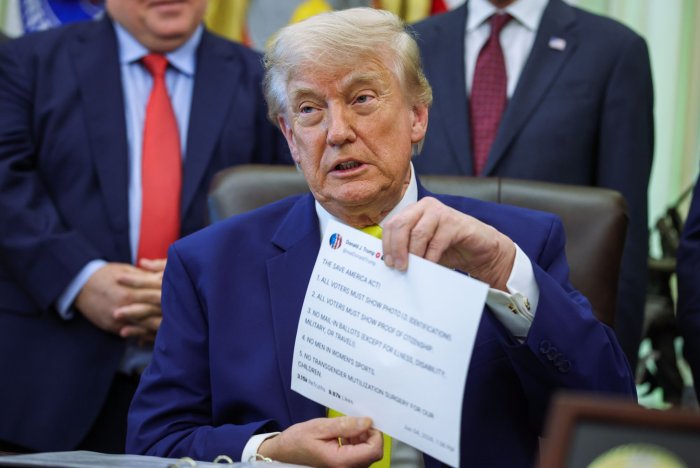
President Donald Trump discusses renovations to the Lincoln Reflecting Pool and makes an announcement on coal in the Oval Office at the White House on Thursday. Photo by Samuel Corum/UPI | License Photo
Weekly insights and analysis on the latest developments in military technology, strategy, and foreign policy.
A U.S. Navy uncrewed surface vessel (USV) found and rescued the crew of a U.S. Army Apache that went down overnight near the Strait of Hormuz, in the Gulf of Oman. This is the first known use of a drone boat executing a personnel recovery action as part of a military search and rescue operation, and it’s likely a glimpse of what’s to come. The cause of the incident is otherwise under investigation.
Navy Capt. Tim Hawkins, a U.S. Central Command (CENTCOM) spokesman, has confirmed the use of the Navy USV in the rescue effort to TWZ. This had already been hinted at by mention of Task Force 59, the Navy’s main drone force in the Middle East, in an official CENTCOM statement. What specific type of drone boat was utilized in this case is not yet known. Task Force 59 operates a variety of USVs, including speedboat-like types. The Task Force has been experimenting with all types of new uncrewed naval technologies and this rescue is clearly a major win for the forward-looking unit.
One of several types of speedboat-type USVs Task Force 59 operates, seen here during an exercise. USN
“At 7:33 p.m. ET on June 8, two crew members from a U.S. Army AH-64 Apache were rescued by American forces after their helicopter went down near the coast of Oman while patrolling regional waters,” per CENTCOM’s statement. “The Soldiers were safely rescued within approximately two hours and are in stable condition. The cause of the incident is under investigation.”
“Rescue efforts were led by U.S. Naval Forces Central Command and the 82nd Airborne Division, with support from U.S. Air Force and Navy units including U.S. 5th Fleet’s Task Force 59,” the statement added.
A flight of U.S. Army AH-64 Apache attack helicopters, armed with rockets and Hellfire missiles, taxi out to conduct a scheduled flight in the U.S. Central Command area of responsibility. In addition to rockets and missiles, the Apache is additionally armed with a 30mm chain gun. (U.S. Army photo) U.S. Army Central
The New York Times was first to report that an Apache had gone down near the Strait of Hormuz. President Donald Trump had also confirmed the crew was safe while speaking to reporters earlier this morning.
“We are going to issue a report tomorrow, but the pilots are fine,” Trump said after returning to Washington from the NBA Finals in New York.
A US Army Apache helicopter went down near the Strait of Hormuz and it wasn’t clear if the aircraft suffered mechanical troubles or had been shot down by Iran, the New York Times reported.
Asked about the episode by @jendlouhyhc, Trump said the pilots were fine and that a report…
As we have reported in the past, Army AH-64s have been part of an effort by the U.S. military to enforce the ongoing blockade of Iran and protect commercial shipping. Last month, Apaches and U.S. Navy MH-60 Seahawk helicopters destroyed six small Iranian boats that were threatening commercial ships in and around the Strait of Hormuz, according to Navy Adm. Brad Cooper, head of CENTCOM. Apaches had already been conducting missions targeting Iranian naval assets in and around the Strait of Hormuz before the announcement of the ceasefire in April. All of this has shown that armed helicopters remain important assets in maritime operations, especially for defending against swarms of small boats.
As TWZ regularly highlights, search and rescue operations present inherent complexities and risks, especially when conducted in or near hostile territory. The F-15E rescue effort in Iran put a particular spotlight on the immense risks that combat search and rescue (CSAR) forces take, with helicopters and C-130 variants sent into areas where even a high-end fighter aircraft didn’t survive.
Open-water recoveries can present distinct additional challenges. There is always the possibility of the loss of additional assets and personnel in the process, no matter where a CSAR mission occurs.
HH-60Ws refuel from an HH-130J. (USAF)
The use of Navy drone boat in the rescue overnight highlights a new dimension for maritime CSAR going forward. These uncrewed assets can be more readily pre-positioned in a distributed manner. For example, in the broad expanse of the Pacific, USVs could be forward-deployed at multiple points along certain flight paths for this exact purpose. USVs could offer other distinct advantages in certain scenarios where they might be able to get into areas where traditional assets cannot and without risking additional personnel. These realities extend well beyond the maritime domain, and we are only likely to see uncrewed platforms of all kinds increasingly taking part in rescue efforts, especially in denied areas. The U.S. military is coming to terms with just how vulnerable their CSAR assets are and the ranges that would be needed to access highly defended areas, especially during a peer fight. Using drones to execute personnel recovery is being viewed as one part of a larger set of solutions to this pressing problem.
With the Apache going down near the Strait of Hormuz, the U.S. military has now lost at least seven crewed fixed-wing aircraft and helicopters since the start of the latest operations against Iran in February. In addition, several aircraft have been damaged in the air and on the ground, including by Iranian fire. The TWZ graphic below offers a visual tally of damaged and destroyed aircraft as of April 10.
TWZ
Despite the loss of the Apache, the use of a USV in the rescue effort is a major development and a sign of things to come.
OPEC on Sunday announced that its member nations will increase oil production by nearly 200,000 barrels per day in July, despite the Strait of Hormuz remaining closed and it being very difficult to ship it anywhere out of the Middle East. Photo by Ismael Mohamad/UPI | License Photo
June 7 (UPI) — The Organization of the Petroleum Exporting Countries on Sunday agreed to increase production by nearly 200,000 barrels per day despite the Strait of Hormuz remaining closed, making it near-impossible to ship any of it.
Ordinarily, OPEC increasing oil production among the group of nations that comprise it would lower its cost, but experts have called the move largely symbolic because of the ongoing war in Iran, The New York Times and Wall Street Journal reported.
The Strait of Hormuz, which 20% of the world’s oil supply ordinarily would pass through daily, has been closed since early in the war as part of Iran’s effort to counter the war launched by the United States and Israel in February.
The OPEC members that agreed to the 188,000-barrel increase for July — the fourth month in a row that the group is increasing production — include Saudi Arabia, Russia, Iraq, Kuwait, Algeria, Kazakhstan and Oman.
The countries agreed to the increase as part of the group’s “commitment to support oil market stability” and said the latest production increase would also allow the participating nations to “accelerate their compensation,” OPEC said in a statement.
“The countries will continue to closely monitor and assess market conditions, and in their continuous efforts to support market stability, they reaffirmed the importance of a cautious approach,” the group said in the statement.
The Trump administration continues to negotiate an end to the war that would lead to the reopening of the Strait, in addition to working to limit Iran’s ability to build a nuclear weapon, amid a shaky weeks-long cease-fire.
President Donald Trump discusses renovations to the Lincoln Reflecting Pool and makes an announcement on coal in the Oval Office at the White House on Thursday. Photo by Samuel Corum/UPI | License Photo