THE historic Birnbeck Pier is currently undergoing an enormous renovation and will open next year for the first time since the 90s.
First look images have been revealed to show what it could look like when visitors can finally step foot onto the structure again.
Birnbeck Pier is currently being restored at the cost of £44millionCredit: Haverstock ArchitectsThe Pier Master’s Cottage will have a cafe and terrace with views of the pierCredit: Haverstock Architects
Birnbeck Pierconnects the mainland to a rocky island in Weston-super-Mare, but has been closed to the public since 1994.
The pier is being restored at a cost of £44million and it has been well-received by locals and visitors who are calling it “excellent news”.
Sign up for the Travel newsletter
Thank you!
In recently revealed images, it shows that along with work on the pier structure, surrounding buildings will be restored too like the Pier Master’s Cottage.
This will become a visitor centre and shop which will also be connected to a new modern cafe building and terrace, which will offer impressive views to the pier.
Nearby, the Pier View building which has previously been a café, tea room, dress shop, and even military offices during World War Two, will also be restored.
As for what it will become, that’s yet to be decided, but one option being explored is an ice cream parlour.
The Toll House that’s known locally as the ‘shell shop’, will be restored and has potential to reopen as a concession stand.
As for the island, this will also eventually reopen to the public, but it may not be finished in time for when the pier reopens.
When it is complete, visitors will be able to see the restored clock tower and pavilion.
Also on the island will be the refurbished 1888 Boathouse, which will become a cafe on the top floor and an events space below.
Birnbeck Pier has been closed since the mid-1990sCredit: Alamy
Boats will even be able to dock thanks to the restored North Jetty on the island.
The island used to be very popular thanks to its theme park which had small rides including a miniature railway and water chute.
Mike Bell, leader of North Somerset Council, told the BBC last month that work on restoring the pier is already a quarter of the way through.
He added: “When people will be able to walk on the pier for the first time, I think it will be a magical moment for the many people like me who were born in Weston and have lived here all their lives.
The Boathouse will be restored to become top floor cafe with food and drink and sea viewsCredit: Haverstock ArchitectsBelow will be a community and event spaceCredit: Haverstock Architects
He continued: “People who have seen this crumbling jewel will be delighted to see it restored.
“The North Jetty will enable us to bring in passenger and other ferry services to Weston.”
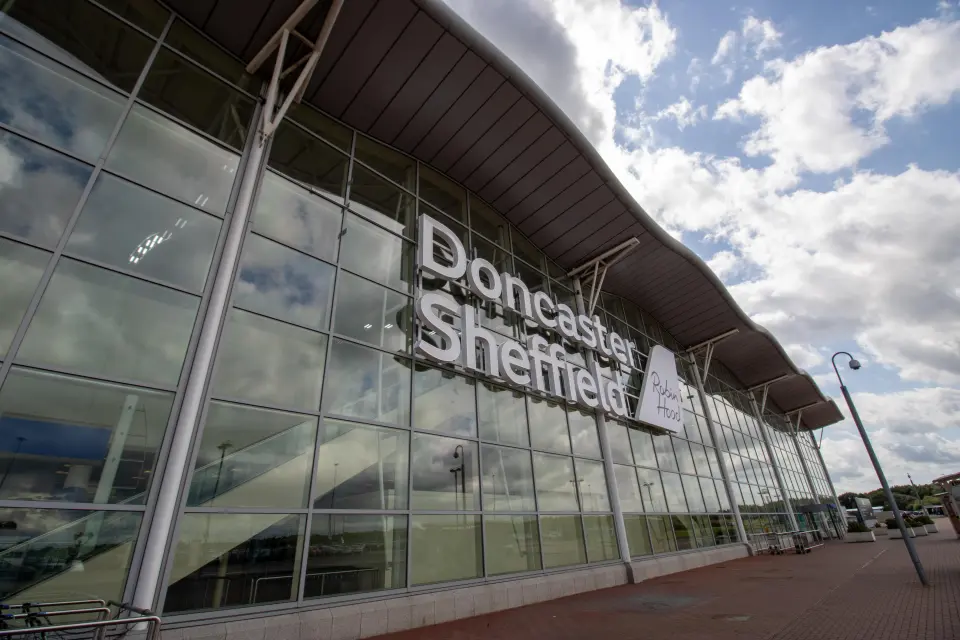
However, no airlines have been confirmed for the airport yet.
Christian Foster, Director of FlyDoncaster – the company set up to manage the airport – told Sun Travel: “It does feel like the world has changed post-Covid, whereas people were focused two weeks in Spain or Greece, nowadays we’re seeing a lot of people keen to take city breaks.
“We’d love to fly to places like Croatia, and other destinations that are a bit more quirky like Azerbaijan.
“We’re keen to look at emerging places to visit as well, like India.“
It closed back in 2022 and has been left abandoned sinceCredit: Alamy
Inside, there are plans to fill the airport terminal with local businesses instead of your usual Costa or Starbucks.
There would be a mixture of restaurants, bars and shops.
Back in July, the airport also gained approval was given by the Civil Aviation Authority (CAA) to move forward with a public consultation.
During the public consultation, locals can express their opinions on the reopening of the airport before October 4.
In the airport’s latest update, three fire appliances have also been ordered for the airport ahead of its reopening next year and before welcoming passengers in 2028.
US President Donald Trump has rejected Iran’s latest proposal to reopen the Strait of Hormuz to shipping. Speaking to reporters at the White House, Trump insisted Tehran was attempting to strike a deal because “the money isn’t coming in” under an American naval blockade.
United States President Donald Trump has rejected a roadmap submitted by Iran to open the Strait of Hormuz within a week.
“I reject their proposal,” Trump told reporters outside the White House on Saturday, before departing for Tennessee by helicopter.
Recommended Stories
list of 3 itemsend of list
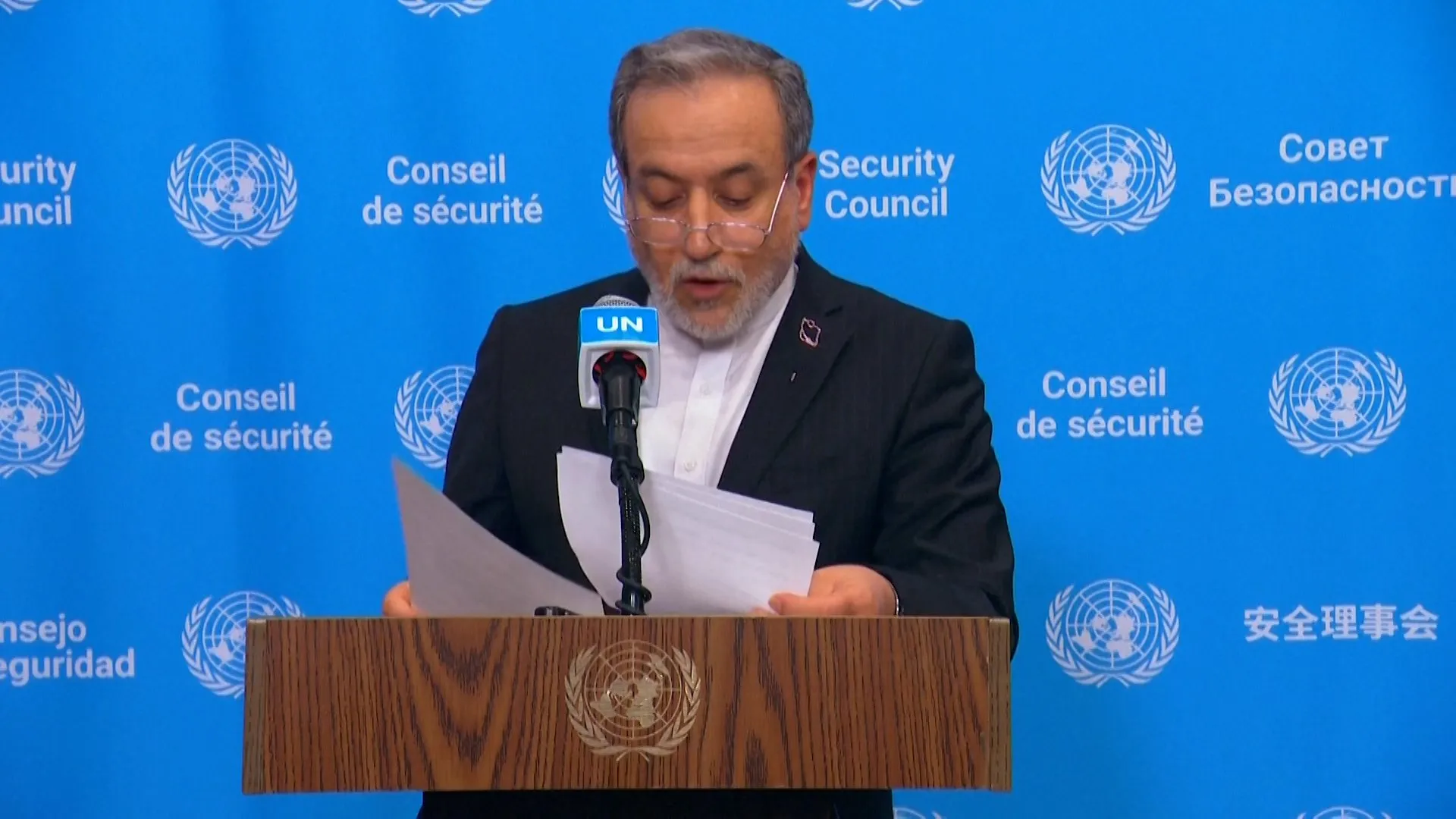
Iranian Foreign Minister Abbas Araghchi said on Friday that Tehran formally submitted a seven-day roadmap to the US via mediator Qatar, and was awaiting Washington’s response.
“It appears as though the proposal is dead in the water,” said Al Jazeera’s Mike Hanna, reporting from Washington, DC.
Trump was “privately sceptical” that Tehran would meet his demands, and reportedly told aides that he expects a renewed bombing campaign on Iran after the November US midterm elections, The Wall Street Journal reported, quoting unnamed US officials.
“President Trump has vacillated between extreme optimism, saying that ‘talks are going well’ to ‘I want to annihilate Iran’,” Hanna said about the recent diplomacy between Washington and Tehran.
“There is no consistency in terms of the [Trump] administration’s reaction,” he said.
But “the one thing that has been made clear by President Trump is that he is content to stay in the status of limbo”, Hanna added, despite concerns from much of the American public that the Iran conflict is turning into another “never-ending war”.
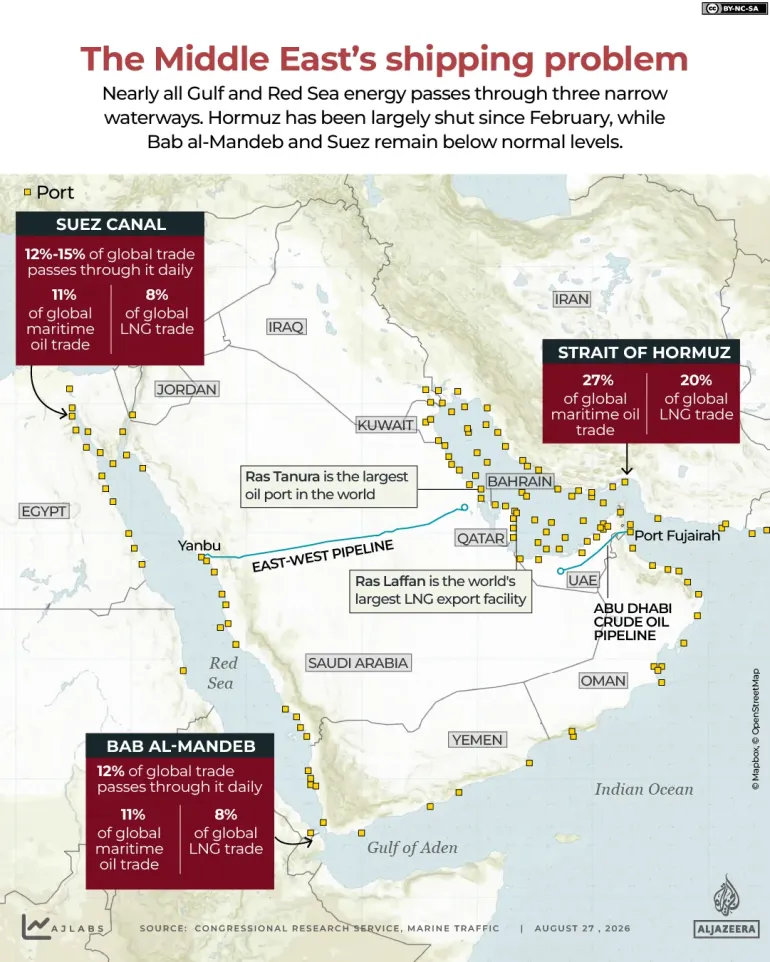
The Strait of Hormuz, a waterway key to the world’s oil supply, is central to the conflict between the US and Iran, which is at an impasse after nearly seven months, though new mediation efforts took place this week.
Earlier in the week, Araghchi held talks with Trump’s envoy Steve Witkoff, and previously set out conditions for ending the war and reopening the vital shipping channel.
On Friday, the top Iranian diplomat said: “Iran has conveyed to the United States, through Qatar, a concrete seven-day plan. If the necessary conditions are met, the strait can be reopened, and normal maritime passage restored within seven days.”
He was speaking at the United Nations in New York, where he and other senior Iranian officials were attending the General Assembly.
Under the plan, Washington would lift its naval blockade of Iranian ports, waive sanctions on Iranian oil sales, release an estimated $12bn in frozen Iranian assets and observe a ceasefire covering the region, including Lebanon and Yemen.
“The choice now rests with the United States. Iran does not accept coercion, threats or intimidation, and Iran will not surrender its sovereign rights under pressure,” Araghchi had said.
On Saturday, Iranian President Masoud Pezeshkian told Al Jazeera that Tehran no longer trusts negotiations with the US after previous rounds of talks were followed by attacks and sanctions.
“We have no trust in the American side and do not know on what basis an understanding can be reached with it,” said Pezeshkian, who was also in New York for the UNGA.
He denied that Iran was responsible for blocking the Strait of Hormuz, saying the US “closed the routes before us”. He described the closure as “a natural response when routes are cut off to Iran”.
The Iranian president said the crisis could be resolved through negotiations rather than force, and that the waterway would reopen to commercial shipping if talks ended the war.
Iran will reopen the Strait of Hormuz within seven days, but the choice now rests with the US, says Iranian Foreign Minister Abbas Araqchi who spoke from the United Nations. The plan is based on the previously-agreed-upon Memorandum of Understanding (MOU) brokered in June.
Iran says it has put forward a plan to the United States to reopen the Strait of Hormuz within seven days, as Qatar passes messages between the two countries at the United Nations General Assembly in New York.
Speaking on the sidelines on Thursday, Iran’s Foreign Minister Abbas Araghchi said the timetable could begin as soon as Washington accepted the proposal.
Recommended Stories
list of 4 itemsend of list
Both sides have described the indirect contact facilitated by Qatar in New York positively, but neither has indicated any diplomatic breakthrough as the war approaches its seven-month mark.
Analysts have told Al Jazeera a firm peace deal remains unlikely, with Iran still wanting to follow the approach set out in an earlier agreement, which would give it and Oman a main role in managing the strait before moving on to discussing terms for a broader peace deal.
For its part, the US, which has claimed to be “in total control” of the Strait of Hormuz, wants Iran’s nuclear programme to be the subject of discussions straight away.
Iran has previously made clear that it will not engage with broader peace talks, including addressing the issue of its nuclear programme, until the US naval blockade of its ports in and around the Hormuz strait is lifted, sanctions are repealed and the US provides a guarantee of an end to strikes, among other conditions.
Here’s what we know.
What has Iran proposed?
Araghchi told reporters in New York that Iran had presented its plan to the US through intermediaries. “If certain conditions are met, the Strait of Hormuz would be open on the end of the seventh day and [peace] talks would restart,” he said.
He did not give details but said the proposal resembles the June 17 memorandum of understanding (MoU) signed by Iran and the US, which briefly eased the conflict before breaking down. “The moment they accept this plan, from the next day, this timetable can start, and after seven days, the strait will be open,” he said.
Under the June agreement, Iran undertook to allow ships to pass through the strait without paying tolls for 60 days – that was the period of time given for peace talks to take place. But the MoU left open what would happen after that period.
Araghchi did not say whether the same arrangement formed part of his new proposal. Nor did he spell out what Washington would have to do before the seven-day timetable began, how either side would verify those steps, or what rules would govern shipping once the strait reopened.
It is highly unlikely Iran would be offering to cede control of the Strait of Hormuz, analysts say.
Urban Coningham, a research fellow at the Royal United Services Institute, told Al Jazeera that Tehran is unlikely to receive the sanction relief it has previously demanded and, therefore, sees the strait as its primary ticket to helping it recover from the war economically.
“Hormuz is a clear Iranian red line,” he told Al Jazeera. “The Iranians will not get reparations for the war, so control of the strait is the only way they can recover economically. I cannot see them backing down from that.”
[Al Jazeera]
Why does the June agreement matter?
The MoU signed in June set out an immediate halt to military operations on all fronts, including in Lebanon, where Israel has launched strikes and occupied part of the country, and triggered a 60-day period for negotiations on a lasting peace settlement. It included US waivers for Iranian oil exports and provisions to restore maritime traffic through the strait.
It deferred other issues, including the future of Iran’s enriched uranium stockpile, to broader peace talks.
But the agreement unravelled the following month amid renewed confrontation over shipping routes through the strait.
Coningham told Al Jazeera that Iran’s latest proposal follows this earlier model: “Open the strait within seven days, then start talks on the nuclear file.”
But “the US does not want to compartmentalise the issues, it wants them discussed as one package”, he said.
How else does this new proposal place pressure on the US?
Coningham also sees a political calculation in making the offer publicly at the UN as Americans contend with high fuel prices. “By explicitly saying this may be the only chance before the midterms, Iran is putting pressure on Trump over oil and gas prices and the strait,” he said. “It is a tactic to put more pressure on the US.”
The strait, which runs between Iran and Oman, is a vital route for oil and gas exports from the Gulf. Disruption to shipping has driven up energy prices far beyond the region, giving both governments an economic reason to reach an agreement despite their differences.
With the US midterm elections approaching, a deal to get it reopened could give Trump a chance to bring down fuel prices before voters go to the polls – potentially giving the Republican Party a much-needed electoral boost before the midterms.
Trump has presented the electoral calculation differently, however. In his address to the General Assembly on Tuesday, he accused Iran of waiting to see how his Republican Party performs in November and predicted a deal would happen after the vote. He also threatened to “annihilate the Islamic Republic” if there was no agreement.
Trump claimed the election did not affect his own decision-making on Iran: “The only thing that does is that Iran will never have a nuclear weapon.”
That leaves an open question about whether the prospect of lower energy prices is enough to persuade his administration to accept Iran’s proposed order of talks. Coningham doubts it. “Trump is prepared for this to go on through the midterms,” he said. “The same problem remains where the proposal does not answer questions about the nuclear file.”
Where do broader US-Iran peace talks stand?
Araghchi met US envoy Steve Witkoff and Trump’s son-in-law Jared Kushner on Tuesday in talks mediated by Qatar. The Iranian foreign minister described the exchange as productive and said messages continued to pass between the sides.
US Secretary of State Marco Rubio said it would be wrong to describe the meeting as a major breakthrough, however.
Burcu Ozcelik, a senior research fellow for Middle East security, told Al Jazeera that the major blockage for Washington and Tehran is that each is making different assumptions about how much pressure they can exert on the other. The Trump administration is unlikely to revive the failed MoU, she said, because it assesses its naval blockade and tighter sanctions as working.
“The US appears to believe it can wait this out until Tehran is prepared to make meaningful concessions,” Ozcelik said.
“But Iran remains defiant despite indications that it is hurting economically.”
Los Angeles County officials aim to break ground on the new Eaton Canyon Nature Center before 2028, with plans to construct a facility that can withstand the region’s changing climate and future disasters.
The previous nature center, which replaced the original Robert M. McCurdy Nature Center that burned down in 1993, was destroyed in the Eaton fire last January. The fire not only destroyed the structure but also a large library and several decades’ worth of archives, and it also killed the reptiles that lived inside the center.
It took about five years to rebuild and open the last nature center. L.A. County Parks Director Norma Edith García-Gonzalez said after the design phase is completed, which could be soon, the county and the architect firm hired for the project will plan out the construction phase.
“We modeled 100-year patterns of wind, fire and flood so that when we build back, we are building back with resistance, and that is able to guide how we plant [and] what type of plants, and how we build, [including] how we build back trails,” García-Gonzalez said.
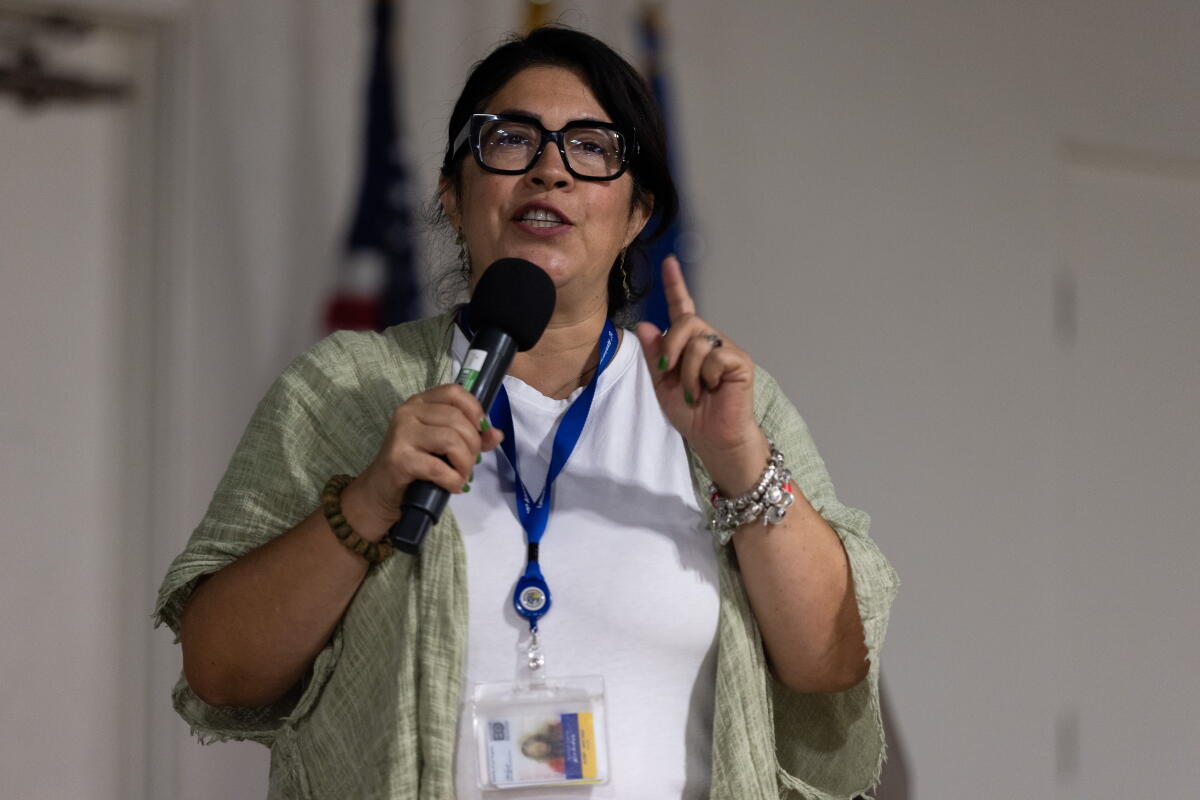
Norma Edith García-Gonzalez, director of L.A. County Department of Parks and Recreation, speaks during an Eaton Canyon design meeting in mid-September.
(Kayla Bartkowski / Los Angeles Times)
The biggest impediment to rebuilding, though, is funding. The county has about $16.2 million in state money, about half of what county officials think is needed to build a new nature center, she said. García-Gonzalez said she hopes the philanthropic community will step up to fill the gaps, but county leaders have noticed that “philanthropy goes from one hot issue to another,” and interest to donate to fire recovery is cooling.
In this week’s edition of The Wild, our weekly outdoors newsletter, I will provide an update on the design plans for the new nature center and when we can expect to hike again in Eaton Canyon — and how you can help with the canyon’s restoration too.
You are reading The Wild newsletter
Sign up to get expert tips on the best of Southern California’s beaches, trails, parks, deserts, forests and mountains in your inbox every Thursday.
By continuing, you agree to our Terms of Service, which include arbitration and a class action waiver. You agree that we and our third-party vendors may collect and use your information, including through cookies, pixels and similar technologies, for the purposes set forth in our Privacy Policy such as personalizing your experience and ads.
First, let’s discuss a little bit of the history of the area.
The Eaton Canyon Natural Area, managed by L.A. County Parks and Recreation, is a 190(ish)-acre swath of land at the foothills of the San Gabriel Mountains near Altadena.
“Originally called ‘El Precipicio’ by the Spanish settlers because of its steep gorges, it is now named after Judge Benjamin Eaton, who built the first Fair Oaks Ranch House in 1865 not far from Eaton Creek,” according to the Eaton Canyon Nature Center Associates, a volunteer-run education and stewardship group. “Judge Eaton was the first to use irrigation from the creek to grow grapes on the slopes.”
The canyon has long been a fascination of adventuresome L.A. residents.
The hike to Eaton Canyon Falls in the San Gabriel Mountains before the Eaton fire last January.
(Myung J. Chun / Los Angeles Times)
In 1921, writer Frances Mathilda Purdy wrote for The Times that few people knew of the “hidden, but very easily accessible waterfall” in Eaton Canyon. Purdy outlined a few ways to access the canyon and reach the falls, including a shorter route where visitors “after alighting from motor, or stage,” could take a small flight of stone steps near the Mt. Wilson Toll Road bridge.
I chuckled when I read Purdy’s suggestion that this particular route was “perfectly comfortable for those who have arrived on the scene in city garb.” Apparently, underprepared hikers have been coming to Eaton Canyon for more than 100 years. What do you think was the 1920s version of hiking in flip-flops?
For the more rugged adventurer, Purdy laid out a “serpentine trail” that leads to “such lovely possibilities for the pleasure-seeking jaded worker, who, from only one afternoon spent in this quietly entrancing corner of the great outdoors, will return, refreshed and invigorated to meet the daily grind with a mind stored full of the charm of Lower Eaton Canyon.”
Architect Anne Mooney of Sparano + Mooney Architecture speaks about a site plan for the next Eaton Canyon Nature Center.
(Kayla Bartkowski / Los Angeles Times)
It wasn’t until 1930 that Pasadena set aside property that the city owned for a bird and game sanctuary in Eaton Canyon and Eaton Wash, preserving the land from development, according to a historical record compiled by the nature center associates.
There was interest in doing more.
Pasadena Park Superintendent Gilbert Skutt, who served from 1923 to 1936, wanted to see a large scenic public park in Eaton Canyon similar to what the city had built along the Arroyo Seco, according to city records. “He sought to correct the imbalance in the distribution of park space in Pasadena, which favored the west side of town,” according to a historical document. “During the Depression, however, the city could not afford to purchase the land.”
Over time, the city started working with county officials on Eaton Canyon Regional Park, eventually giving the entire project to the county.
In 1931, the L.A. County Board of Supervisors considered financing a 1,000-acre “gigantic regional park system” for the area, according to The Times’ archives, but that idea apparently never fully came to fruition.
Thankfully, in 1950, landowner Mary Beatrice Fox sold the canyon portion of her property to L.A. County to use for a park, “with a provision that mammals are not to be kept in cages,” according to a park history compiled by the Eaton Canyon Nature Center Associates.
A hiker slips in a creek in Eaton Canyon after a 2023 storm.
(Wally Skalij / Los Angeles Times)
Then, in 1958, naturalist Louise A. Luckan moved her “nature appreciation operation from the Eaton Canyon Golf Course to Eaton Canyon Park,” according to the organization’s history.
Soon, L.A. County officials set aside $154,797 — about $1.7 million in today’s dollars — for the Robert M. McCurdy Nature Center. They had big plans for the facility, which was to include two classrooms, an office, museum, library, display area, gift shop, laboratory and an auditorium that could seat 200.
“This park will be an outstanding facility — the only one of its kind in magnitude this side of Chicago,” Supervisor Warren Dorn said in a 1962 Times story.
The nature center opened in 1963, and became popular among scouting and school groups, to whom naturalists taught about the local flora and fauna. By the early 1970s, more than 2,000 school children were regularly attending lectures at the nature center, according to Times archives. The students wrote thank-you notes to the park staff, including one that read, “I think it was nice of you to buy this park instead of someone buying it for houses and factories. Because if they did, it would ruin this beautiful land.”
L.A. County sustainability policy director Rebecca Ferdman talks with community stewards about how to educate and engage the public about the goldspotted oak borer, a pernicious invasive beetle that destroys oak trees, during a meeting at Eaton Canyon Nature Center in 2024.
(Brian van der Brug / Los Angeles Times)
But, in 1993, the canyon’s first nature center was destroyed by the Kinneloa fire. The next nature center didn’t reopen until 1998.
Karen Mateer, vice president of the Eaton Canyon Nature Center Associates, said for more than 25 years, that nature center served as a meeting place and an educational hub for the millions who visited the canyon over the years.
Mateer, who started volunteering in 1998, said many local schoolchildren first experienced the concept of “nature” at Eaton Canyon on field trips. Volunteers would regularly hear from adults, who pursued recreation- or nature-focused careers, that the first place they ever hiked or learned about their natural habitat was at Eaton Canyon.
“Eaton Canyon also, for the community, for those of us up here who lost so much, it is familiar and is a place you often go for recreation, for solace,” Mateer said. “It means a lot.”
At a presentation last week, architect Anne Mooney said her firm analyzed where to best place the new nature center, and not wanting to destroy any existing habitat or take down any of the area’s oaks or other trees, recommended the new building be placed east of the previous site.
It was easy for visitors to miss the previous nature center, because it was situated in a thick stand of oaks, and the new location will allow the nature center to serve as a gateway to the park, as it will be near the canyon’s trailhead.
“The nature center has always been more than just a building,” Mooney said. “It’s really been a gateway to an experience of learning about nature, experiencing a connection to the wildlands and developing stewardship of the canyon. We want to continue that tradition.”
A diagram of the wind analysis conducted by architects as they assessed where to place Eaton Canyon’s new nature center.
(Kayla Bartkowski / Los Angeles Times)
The new nature center, as shown in the current design plan, is horseshoe-shaped with a covered entryway. It will be constructed using durable, fire-resistant materials, including stone and steel. Builders would also construct curved walls to serve as windbreaks, which would not only slow gusts but also divert airborne embers during a fire.
The proposed designs also include roof and eave sprinklers that could pre-wet the building and nearby surrounding area with a specialized firefighting foam during a wildfire.
“We recognize that the fire is a recurring part of the ecology, and we will have another fire,” Mooney said. “We’re working to design something that allows us to be more prepared in the future.”
The Eaton Canyon Nature Center, a 7,600-square-foot building, was destroyed in the Eaton fire. It housed live animals, exhibits, classrooms, a gift shop and more.
(Jaclyn Cosgrove / Los Angeles Times)
The design also includes a research lab, a learning lab or classroom, a large multipurpose space that can fit an estimated 150 people when seated (or 300 people when standing), an exhibit space, a gift shop and a large courtyard in the center with shade, seating and live animal enclosures.
Officials stressed that the design is preliminary and dependent on funding. Anyone who wants to see the design for themselves and provide their feedback can attend the next public meeting, From Ashes to Action: Reimagining Eaton Canyon, from 5 to 7 p.m. Oct. 7 at the L.A. County Arboretum.
Kevin Singleton, center, points to the Eaton Canyon Nature Center design during a recent county event where officials discussed the future of Eaton Canyon.
(Kayla Bartkowski / Los Angeles Times)
In terms of when hikers will return to the canyon’s trails, García-Gonzalez said the county needs an estimated $8 million to reestablish the trail system. The county has fundraised and received only $900,000 of that.
“We already put that money to work,” García-Gonzalez said, partnering with L.A. Conservation Corps to start rebuilding trails. “But there are some [trails] that really need significant and heavy engineering.”
The county also has to plan its work around the strong winter storms forecasted as a result of El Niño, she said. “We are bracing ourselves for even more damage,” García-Gonzalez said.
A map of the proposed courtyard of the new Eaton Canyon Nature Center.
(Kayla Bartkowski / Los Angeles Times)
Since the fire, volunteers have donated hundreds of hours to work on restoring the canyon’s habitat.
You can join them. Volunteers meet from 8 to 11:30 a.m. every Friday and the second and fourth Saturday of every month. Participants remove invasive plants that zap up resources for native plants trying to reestablish themselves. Training and tools are provided. You can sign up by visiting signupgenius.com.
“The love, the care, the stewardship, the commitment, the hope, the inspiration of the volunteers is unparalleled,” García-Gonzalez said. “They’re driving us to build back because they’re so committed. They’re all in.”
3 things to do
“MASH,” a military dramedy that aired on CBS from 1972 to 1983, is one of several Hollywood productions filmed at Malibu Creek State Park.
(Courtesy of California State Parks, 2026.)
1. Celebrate 50 years of public land in Calabasas Malibu Creek State Park will celebrate its past 50 years from 4:30 p.m. to 10 p.m. Saturday at 1925 Las Virgenes Road in Calabasas. Attendees can touch fossils, explore the park‘s trees and make art, all while listening to music and eating from local food trucks. At Stories Under the Stars at 6:30 p.m., a diverse cast of storytellers will teach visitors about the park’s history, culture and science. The L.A. Astronomical Society will host a star party at 8 p.m. Guests are encouraged to carpool or use the free shuttle from Juan Bautista de Anza Park to the park. The event is free, but parking is not. Register at eventbrite.com.
2. Repair the river near Azusa Volunteers are needed from 8 a.m. to noon Saturday, which is National Public Lands Day, at the Oaks Picnic Area near the San Gabriel River for a cleanup effort. Organized by five community conservation corps groups, including San Gabriel Valley Conservation Corps, volunteers will pick up trash and help clean the river. Register at docs.google.com.
3. Cast a line under a full moon in Castaic Friends of Castaic Lake will host the organization’s final Moonlight Madness event of the year from 6 p.m. to 12:30 a.m. Saturday at Castaic Lake. Guests can fish from the shore, from a boat or not fish at all as they enjoy an evening in the outdoors. Tickets start at $23. Glow sticks required for each participant. Register at givebutter.com.
The must-read
Jim Crouch stands in a field with Englemann oaks at the Santa Ysabel Open Space Preserve.
(Sandy Huffaker / For The Times)
Jim Crouch, a retired science teacher near San Diego, noticed how the oak trees around him were disappearing, succumbing to disease, drought and development. Times contributor Jessie Schiewe wrote that Crouch, moved to action, collected acorns and gave away the resulting potted seedlings to others. Now, after planting 10,000 acorns, he dreams of the day he completes his 20,000th seedling. “I’ve never been so ambitious,” he says, “and I’ve never done a project with as much love in it and as little ego.”
Happy adventuring,
P.S.
Torrey Pines State Natural Reserve will be closed until March as construction workers upgrade gas, water, wastewater and communication lines. They also will install new accessible parking stalls and an accessible pedestrian path from the upper parking lot to the restroom and park’s lodge. Times staff writer Christopher Reynolds wrote that the park’s 1,750-acre Torrey Pines reserve attracts about 4 million visitors each year (about the same number as visit Yosemite National Park). Torrey Pines State Beach will remain open through the closure. If you’d hoped to visit this particular park in the fall, consider instead one of 13 places in California that Reynolds recently wrote are ideal to check out in autumn. Warning: As I read the piece, I felt the immediate urge to book campsites at several spots around our state! I am so ready for cozy season.
For more insider tips on Southern California’s beaches, trails and parks, check out past editions of The Wild. And to view this newsletter in your browser, click here.
SCARBOROUGH Spa Cliff Lift was closed with immediate effect last month – with fears it might never reopen.
The funicular is the oldest of its kind in the country and has been described as a ‘landmark’ for the town.
Scarborough’s funicular is the oldest of its kind in the UK first opening in the 1800sCredit: AlamyIt was closed last month due to safety concernsCredit: Alamy
Another assessment that examined the tracks and carriages said that the lift operates in a “challenging coastal environment, where salt-laden air, high winds and severe weather can accelerate wear and corrosion”.
The cliff lift is the oldest of its kind in the country, first opening in 1875.
Originally, it was used to transport passengers between the hotels on the Esplanade and the spa.
It was powered by water and gas engines until the 1950s when it was converted to run on electricity.
The funicular has been subject to coastal erosion due to its proximity to the seaCredit: Alamy
Council leader Carl Les, said: “The lift is an important part of Scarborough’s history and identity, and we recognise the affection people have for this landmark attraction.”
Last year when the attraction turned 150-years-old, live performances and exhibitions were held in the town to celebrate its anniversary.
There are roughly 12 funicular’s left in the UK with fewer that still function.
The Saltburn Tramway, which shut back in January 2026, reopened earlier this month.
And another one that’s set to open next year after a 10-year-closure is Folkestone’s Leas Lift which was forced to close in 2017.
BRITAIN’S oldest Lido has vowed to “definitely reopen” after being left to rot.
The historic swimming facility has been closed for over two years, despite receiving a £9.3million makeover.
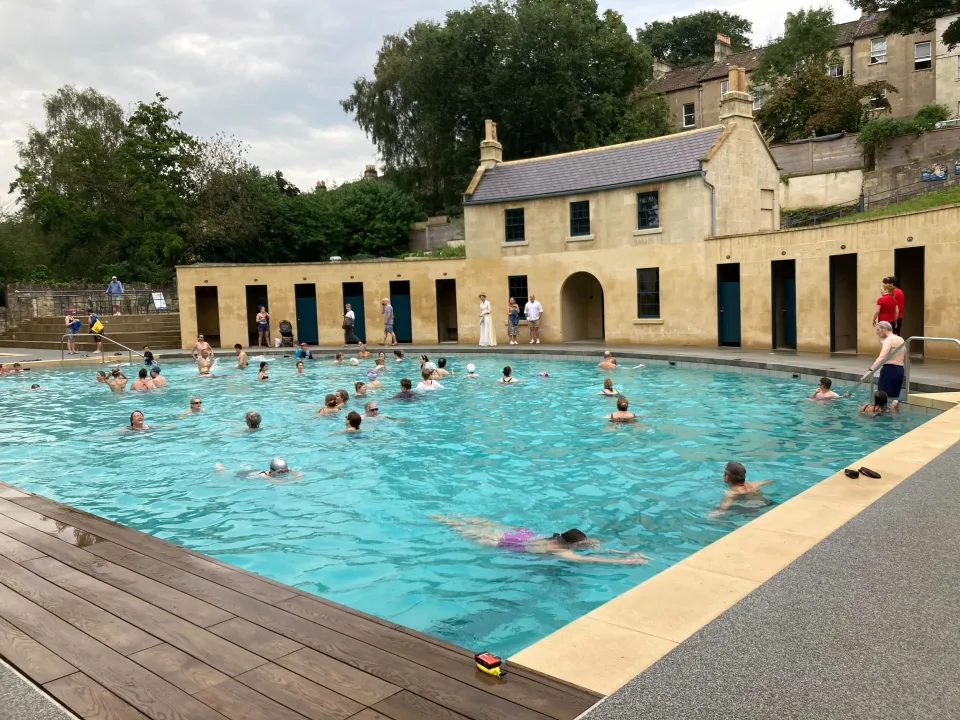
It was first built in 1815 and is the oldest of its kind to exist in the UK, but closed in 1984.Credit: Cleveland Pools
Cleveland Baths, first opened in 1815 and is the oldest of its kind to exist in the UK, but closed in 1984.
A huge campaign and a mulit-million pound refurbishment saw it reopen for just four months in 2023 before it was forced to close again due to flood damage.
Sign up for the Travel newsletter
Thank you!
But now trustees have promised to reopen the 200-year old pool, telling the BBC it is “moving as quickly and responsibly” as possible
It’s definitely going to happen,” Peter Askew, chair of Cleveland Pools Trust, told the outlet.
The trust has set out a timetable that includes a consultation and more fundraising, with repair works restarting in 2028.
In January 2024, the River Avon burst its banks and destroyed the facility.
A subsequent investigation revealed mechanical and structural damage.
“The first is that floodwater entered the door of the plant room.
“And then, secondly, in the process of emptying the pool of floodwater, the groundwater level wasn’t properly managed, and that led to further damage,” Peter explained.









![[Al Jazeera]](https://i0.wp.com/occasionaldigest.com/wp-content/uploads/2026/09/INTERACTIVE-MIDDLE-EAST-iran-hormuz-shipping-aug-27-2026-1787815800-1788488337.webp?w=640&ssl=1)