Standing in Tintern Abbey, you can feel the magic that has given this small Monmouthshire village on the banks of the Wye and its famous ruin such an outsized place in culture. JMW Turner, Gainsborough and Samuel Palmer are just some of the artists who have captured this landscape, and Wordsworth and Tennyson famously wrote poems inspired by Tintern. But it was Allen Ginsberg’s Welsh Visitation and his “clouds passing through skeleton arches” that came to mind while I sheltered from a cloudburst in the abbey’s nave. It’s a vast and fascinating site, and seeing it through sheets of rain as the sun went down was really special.
Ginsberg was here in the 1960s, following in the footsteps of the Romantics. But Tintern’s fame came thanks to its inclusion in travel writer William Gilpin’s 1782 book Observations on the River Wye. Gilpin’s writing about the “picturesque” – landscapes that inspired art through their rugged beauty – was so popular in the late 18th century that the Wye Tour was created to meet tourist demand, one of the first package trips in British travel history.
Tintern has been a destination ever since for literary travellers – though there are also many hillwalkers and canoeists who love the geography as much as the aesthetics of the area. So it’s interesting that the Royal George, the beautifully renovated coaching inn that has recently reopened in the village after a two-year refurbishment, takes local history and craft as its inspiration rather than leaning into the area’s national reputation.
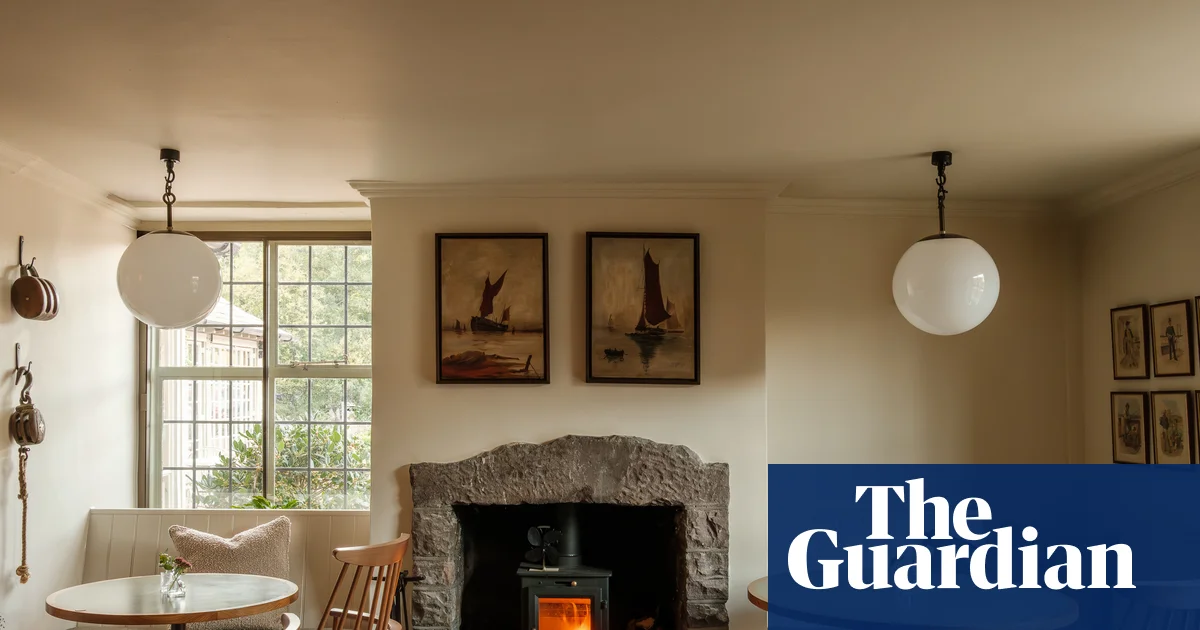
A building has stood on the hotel’s location since the 16th century – it was originally the village forge owner’s home – but the renovation has opened under the name the Royal George because that’s what local people have always called it. The name comes from the warship HMS Royal George, which sank in Portsmouth in 1782, drowning hundreds on board in one of Britain’s worst maritime disasters. Timbers salvaged from the wreck were supposedly used in the construction of the inn, which opened in 1829. Camilla Kelly, the designer behind the refurbishment, found a ship’s bell which bears the insignia of another George, this one HRH George VI, which is now used to call last orders in the hotel bar
There are exposed paving flags and beams that date back to the 1600s as well as charmingly wonky walls and low ceiling beams but, unlike many hotels that aspire to the rustic, shabby chic vibe currently popular for a country stay, the Royal George is smart and very well put together. In its 20 bedrooms and dining rooms there is some vintage furniture – Kelly grew up in nearby Abergavenny with parents who worked in antiques shops and markets – but it’s the beautiful blankets and textiles made at the celebrated Pembrokeshire Melin Tregwynt mill, the metalwork art by local blacksmith and sculptor Mark Lumley, and the ornaments from Baileys Home, a destination shop for interiors fans that’s just up the road in Bridstow, that define this place.
It’s clearly a formula that’s proving popular with local people as well as visitors. At dinner time in the nautically named Upper Deck restaurant, there were families from the surrounding area who had come for a celebration meal. The pub dining room – the Lower Deck, of course – was full of local people including young parents sharing a plate of chips with their kids, as well as out-of-towners. It’s a testament to the quality of the food, which is really, really good.
Most dishes use ingredients from local farmers, growers and foragers and there are excellent and imaginative vegetarian options. Sunday lunch during my stay included a magnificent brie parcel as a special. Apparently, a local cheesemaker had brought in a particularly nice sample and chef Gareth Hope couldn’t resist adding it to the menu. I’d also recommend trying the Welsh wines – especially the sparkling Velfrey and the White Castle pinot noir.
Hope is particularly grateful that the George has become a pub for local people. At Christmas time, one of those dreaded courier delivery photos flashed up on his phone, of a parcel dropped in an unrecognisable doorway. Unfortunately, this parcel contained £450 worth of caviar for the Christmas menu. Hope shared his misfortune with the bar’s regulars and, after seeing the photo, one of them jogged off into a storm, reappearing with the caviar 20 minutes later.
It’s probably worth noting, with all this talk of fine food and furniture, that the Royal George isn’t as expensive as it sounds, with mains in the Lower Deck starting at £14 and a night in a garden room from £135.
If you want to walk off some of this lovely food, the 5-mile Angidy trail is an interesting journey through Tintern’s often overlooked industrial history. Before the abbey ruins turned it into a tourist attraction, the village was famous for its iron wire, and in 1600 the wireworks here were the largest industrial enterprise in Wales. The remains of the furnaces, waterwheels and workers’ cottages are dotted along the Angidy valley and among the hazel trees and larches on the forested hills. The ruins of St Mary’s church – built in the 13th century by the Cistercian monks for their lay tenants, but on a religious site dating back to the 5th century – will never rival the abbey, but the tombstones of the old industrialists – including one shaped like a wine cooler – are impressive, and there is a great view from the graveyard down to the Wye.
For a different but equally pleasurable excursion, go to the previously mentioned Baileys Home. The homeware store, owned by designers Mark and Sally Bailey, is massive. The showrooms fill not just a barn but also a cowshed, stable, granary and loft with a mix of antiques, vintage pieces and handmade furniture. You can browse smithy-made coat hooks and soap made from organic sheep’s milk for under a tenner, or try the bespoke sofas for size.
Inside or out, this is a very special corner of Wales. It may have found fame as a muse for visiting artists, but if you come here, don’t forget to look for the other stories told by the landscape.
Accommodation and dinner was provided by the Royal George in Tintern, which has doubles from £135, room only