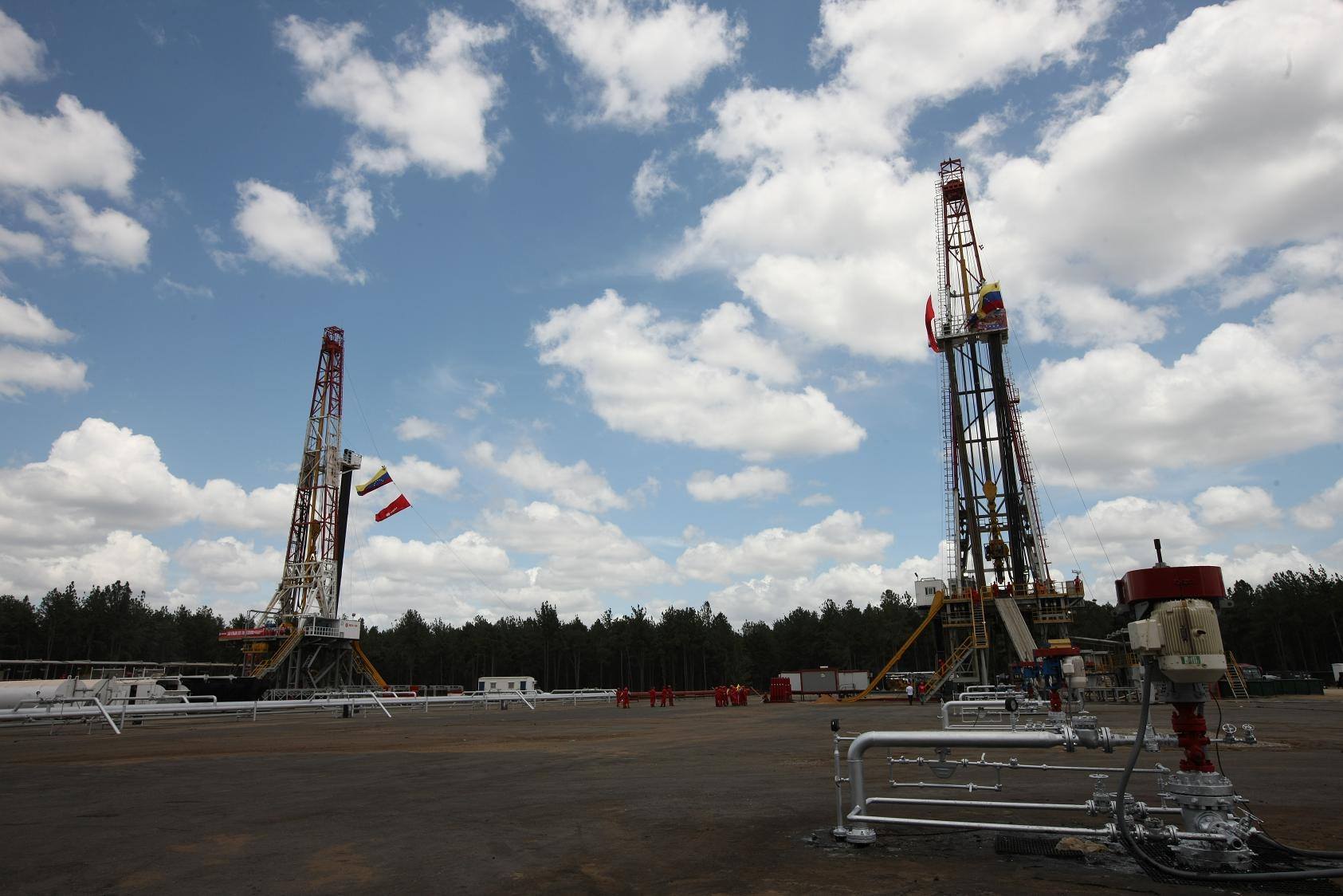
The Punta de Mata division produced over 400,000 bpd in the 2000s. (PDVSA)
Caracas, March 11, 2026 (venezuelanalysis.com) – Energy conglomerates Chevron and Shell are reportedly securing major oil deals in Venezuela following the recent pro-business reform of the country’s Hydrocarbon Law.
According to Reuters, joint venture Petropiar, where Chevron holds a minority stake, will expand its operations into the Ayacucho 8 bloc of Venezuela’s Orinoco Oil Belt.
Venezuelan state oil company PDVSA completed exploration and appraisal of the 510 square-kilometer area located south of Petropiar’s current operations, but its development has been limited. Under the agreement, Chevron looks to significantly expand its extra-heavy crude output from the Orinoco Oil Belt, which holds three-quarters of Venezuela’s oil reserves.
Chevron is reportedly looking to secure reduced royalties and taxes under the recently reformed Hydrocarbon Law in order to launch operations in the new area. Petropiar currently produces 90,000 barrels per day (bpd) of upgraded Hamaca crude. PDVSA’s joint ventures with Chevron have a total present output of around 250,000 bpd.
In January, Venezuela’s National Assembly approved a legislative overhaul that significantly improved conditions and benefits for private corporations in the oil and natural gas sector. Royalty and income tax levies, previously set at 30 and 50 percent, respectively, can now be slashed at the Venezuelan executive’s discretion.
In addition, joint venture minority partners can directly manage crude operations and sales, while legal disputes can be taken to international arbitration instances. Furthermore, PDVSA can also lease out projects to private operators in exchange for a percentage of the oil output.
Under the latter model, Shell is reportedly set to take over operations in PDVSA’s Punta de Mata division in eastern Monagas state, one of the most historically productive and profitable regions for Venezuela’s oil industry. The division produced over 400,000 bpd of light and medium crude grades in the 2000s but recent production was around 90,000 bpd.
The London-based multinational, which had a strong presence in the Venezuelan energy sector throughout the twentieth century, is likewise interested in capturing and processing natural gas that is currently flared in oil extraction processes.
Shell is additionally set to lead the Dragon offshore natural gas project alongside Trinidad and Tobago’s National Gas Corporation (NGC) in Venezuelan waters. The Nicolás Maduro government had suspended all joint initiatives with Trinidad due to its administration’s support for Washington’s Caribbean military buildup and threats against Venezuela last year.
Since the January 3 US military strikes and kidnapping of President Maduro, the acting Venezuelan authorities led by Delcy Rodríguez have fast-tracked a diplomatic rapprochement with the Trump administration while also vowing to “adapt” legislation to attract foreign investment. Following the hydrocarbon reform, a new mining law has also been preliminarily approved by the Venezuelan parliament.
US Energy Secretary Chris Wright and Interior Secretary Doug Burgum have visited Venezuela in recent weeks and hailed the investment opportunities in oil and minerals for US conglomerates.
Since January, the Trump administration has taken control of Venezuelan oil exports, with crude shipments handled by commodity traders Vitol and Trafigura and proceeds deposited in accounts run by the US Treasury. US authorities so far have only returned US $500 million, out of a reported $2 billion agreement, to the Caribbean nation.
The White House has also issued a number of licenses in an effort to boost US involvement in the Venezuelan energy sector, including limited waivers to export inputs and technology. In addition, Washington has allowed several corporations to negotiate agreements with Caracas while mandating that contracts be subject to US jurisdiction and that all royalty, tax and dividend payments be made to US Treasury-run accounts.
Alongside Chevron and Shell, the other companies with early access to the Venezuelan energy sector are BP, Eni, Maurel & Prom, and Repsol. The latter two held meetings with Rodríguez in February to discuss investment opportunities, while ExxonMobil has announced plans to send a delegation to the country in the coming weeks.
Venezuela’s oil production rebounded in February, with OPEC secondary sources registering an output of 903,000 bpd, up from 823,000 bpd in January. A US naval blockade since December had forced PDVSA to cut back production before exports began to flow again under Washington’s control. The oil sector remains under US financial sanctions.
For its part, PDVSA reported a February output of 1.02 million bpd, up from 924,000 bpd the prior month. The direct and secondary measurements have differed over time due to disagreements over the inclusion of natural gas liquids and condensates.
Edited by Lucas Koerner in Fusagasugá, Colombia.