
Month: October 2026

CAS to hear Senegal appeal over AFCON title awarded to Morocco | Football

Court of Arbitration for Sport (CAS) hearing set to begin after Senegal stripped of Africa Cup of Nations title by CAF.

The long-running saga over the winner of this year’s Africa Cup of Nations (AFCON) title will move closer to resolution on Thursday when Senegal’s appeal, ⁠after being stripped of the title, is heard by the Court of Arbitration for Sport in Lausanne.

Senegal are contesting the Confederation of African Football’s decision to declare Morocco champions, despite Senegal beating the hosts 1-0 after extra time ⁠in January’s final in Rabat.

Recommended Stories

list of 4 itemsend of list

Senegal walked off the pitch for 14 minutes after a penalty was awarded against them late in regulation time, with several players returning to the dressing room in protest before they resumed play.

Morocco failed to convert the spot kick, sending the match into extra time, where Senegal scored the winner to secure victory.

However, they were stripped ‌of the title two months later after CAF’s Appeal Board ruled that Senegal had forfeited the match by walking off the pitch, overturning the result and awarding a 3-0 victory to Morocco.

Senegal quickly followed with an appeal to CAS, which was lodged on March 25 but is only being heard on Thursday. Senegal want to be reinstated as winners, and a panel will listen to arguments from Senegal, Morocco and CAF.

“After the hearing, the panel will start its deliberations. At this stage, CAS cannot state when a final decision will ⁠be rendered but it will not be on the date of the hearing,” CAS ⁠said in a statement.

Three-man CAS panel to hear Senegal and CAF arguments

The panel will be presided over by French civil rights expert Gerald Simon, with assistance from Italian international law professor Luigi Fumagalli and Hamburg-based lawyer and professor of law at the University of Zurich, Ulrich Haas.

They are ⁠likely to hear arguments from Senegal that the Laws of the Game determine the referee’s decisions on incidents of play are final and cannot be challenged after the ⁠fact.

Also important is an interpretation of the articles of the tournament regulations on ⁠which CAF’s Appeals Board ruled in Morocco’s favour, which state that “if, for any reason whatsoever, a team refuses to play or leaves the ground before the regular end of the match without the authorisation of the referee, it shall be considered the loser and shall be eliminated for ‌good from the current competition.”

Senegal’s lawyers are expected to argue that the articles must be interpreted strictly and that a temporary departure from the field cannot be equated with abandoning the match, while Morocco are expected to ‌argue ‌for an opposing interpretation, according to which a team that leaves the field without the referee’s authorisation must be considered the loser and definitively eliminated from the competition, even if its departure was not permanent.

The hearing takes place behind closed doors.

Qualification for AFCON 2027 has already begun, with Senegal drawing the opening game of Patrick Vieira’s tenure as coach with Mozambique on September 25, before winning 1-0 in Ethiopia on September 29.

Morocco have won both of their opening games, beating Gabon and Lesotho.

Source link

Bulgaria ends search for missing crew after drone strike sinks cargo ship | Conflict News

Rescuers halt operation off the coast with no survivors found, following a Black Sea attack that also damaged a second vessel.

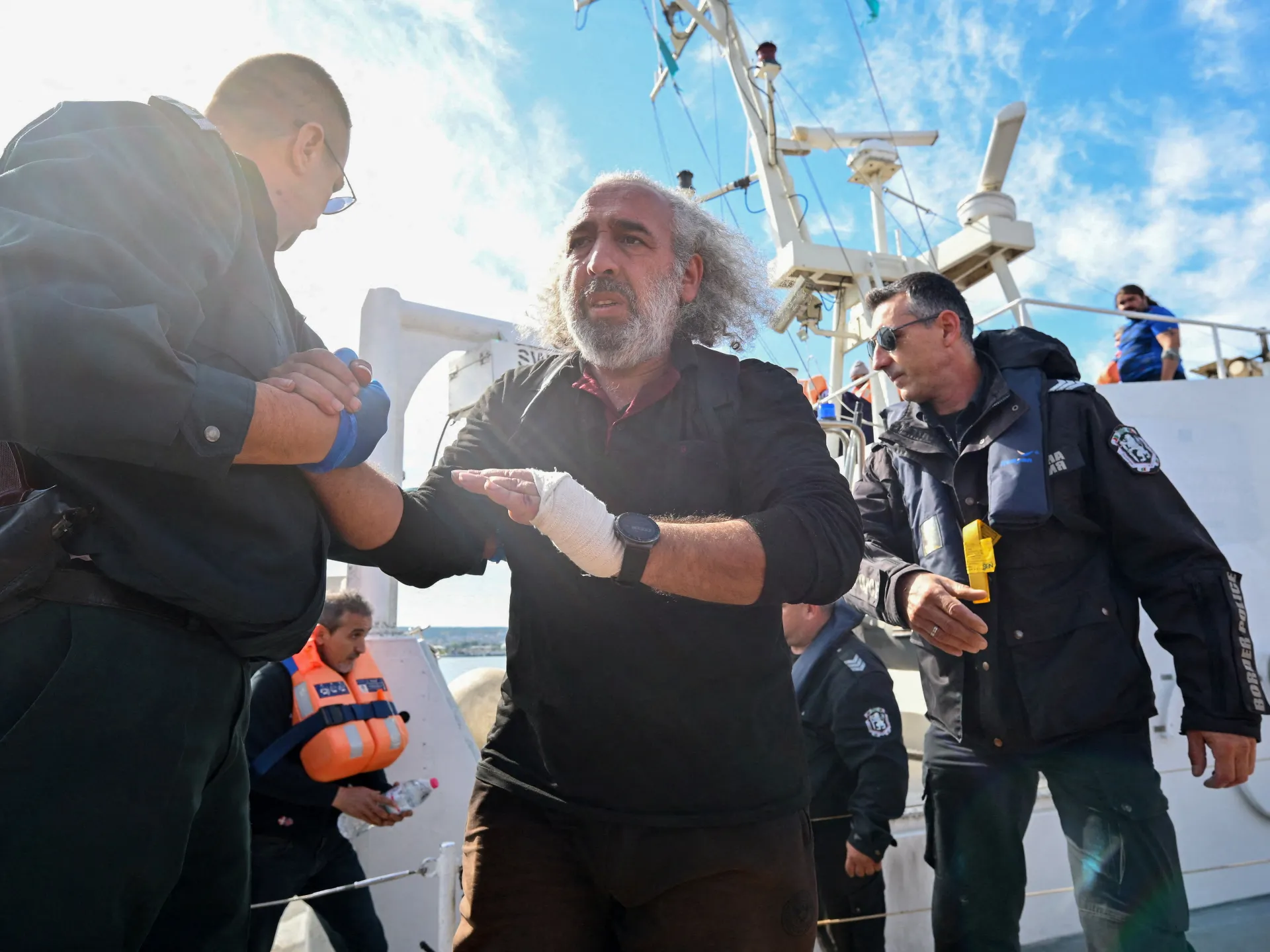
Bulgarian authorities have ended search operations after confirming no survivors were found following a drone strike that sank a ship off the country’s coast.

Drones hit two commercial vessels early on Tuesday as attacks on Black Sea shipping increase amid an intensifying Russia-Ukraine war. One caught fire, and the other sank.

Recommended Stories

list of 3 itemsend of list

“There is no trace of the sailors,” Rumen Nikolov, the head of the country’s Maritime Search and Rescue Coordination Centre, told reporters on Wednesday.

The search stopped late on Tuesday and would not continue, he added.

Eighteen Turkish and Indian crew members were rescued from the ship that caught fire, but the crew members from the vessel that sank remain missing.

Authorities have not said how many people are missing, but according to the Maritime.bg specialised website, 10 people were on board the ship.

Nikolov said the ⁠incident occurred in a so-called “responsible search and rescue zone” and not in the country’s territorial waters, which extend to 12 nautical miles off the coast.

“What was found from the sunken ship was one overturned boat, three life rafts and debris from the ship’s equipment that was floating on the surface of the sea,” he said.

Asked whether any debris from the drones had been recovered, Nikolov said: “I have no information about drone debris.”

Prime Minister Rumen Radev has described the attack as “absolutely unacceptable”.

European Union chief Ursula von der Leyen has also condemned the incident.

Bulgarian authorities have said they are not yet able to determine the origin of the drones.

A distress beacon signal from the ship that sank was received at 2:54am on Tuesday (23:54 GMT on Monday), while the distress signal from the other ship was received at 3:23am (00:23 GMT), Nikolov said.

Both commercial ships were managed by Turkiye-based companies, according to the Equasis merchant shipping database.

They were hit about 80 nautical miles (150km) east of the Bulgarian coastal town of Byala.

The strikes came a day after another ship caught fire and sank off the Romanian coast on Monday, killing two people. Ukraine blamed Russia for the drone attack.

Source link

BBC star pulled off air mid-show after struggling

A BBC Radio 4 star was pulled off air mid-show yesterday after he appeared to be struggling.

The Today programme host could barely get his words out as he read out the headlines.

Justin has been been presenting the flagship show for 17 years Credit: BBC
Listeners were worried for poor Justin as they begged someone to get him some lemsip Credit: PA

Justin Webb, who co-hosts the flagship show alongside Anna Foster, left fans very worried as he sounded strained on-air.

The sick star was heard clearing his throat on multiple occasions and Anna was forced to take the lead to give him some reprieve.

Justin managed to introduce Simon King’s weather forecast and ask a BBC News journalist questions on Open AI’s breach of Australian government websites.

But it all became a bit too much for Justin, 65, and he was later sent to the Conservative party conference to give his voice a break.

Read more on BBC Radio 4 stars

DIVERSITY RAP

Justin Webb says BBC are overlooking white, working class, older broadcasters


BBC TRAGEDY

BBC star Dame Jenni Murray died smashing into two cars when ‘dazzled by lights’

Anna Foster co-hosts the Today programme alongside Justin Credit: Neil Sherwood
The 65-year-old was sent to the Conservative conference to give his voice a break Credit: Getty

Anna said: “It is 20 to seven now. Jonny Dymond is here, good morning.

“Important to say, if you’ve heard Justin’s voice this morning, he’s at the Conservative Party conference in Birmingham.

“He’s struggling a bit with his throat, so we’re saving him. We’re saving him for that. And Johnny, you’re here with me to continue with everything.”

Jonny, the Beeb’s royal correspondent, added: “Poor man has the conference lurgi that sweeps around these places every year.”

Fans flocked to X after hearing poor Justin’s hoarse voice.

“Crikey that sounds painful – a lorry load of Lemsip please for Justin Webb,” wrote one fan.

Another listener said: “Chip in a tenner to get him a pack of Lemsip.”

A third joked: “Justin Webb bravely presenting the Today programme despite apparently having swallowed a badger.”

“Is he ok?” added a fourth listener.

Justin has been the main presenter on BBC Radio 4 for 17 years.

Before his lengthy stint on the programme he was BBC North America Editor and served as their chief radio correspondent based in Washington D.C.

Source link

New airport Wednesday alert over £5,000 fine for bringing duty free items into UK

Officials said today ‘don’t try to smuggle them across the border in your luggage’

A new warning has been issued for anyone bringing food into the UK from the EU – even if it was bought at the airport. In an update today the Department for Environment, Food and Rural Affairs issued an alert for anyone going to Eurpean hotspots like Spain, France, Greece and Italy this half term.

An outbreak of disease on the continent means that a number of foood items are banned – and there is a high chance anyone buying a sandwich, or bringing back produce will infringe the laws. Since last April, those arriving risk having goods seized at UK borders and may face penalties reaching as much as £5,000.

In a new post on X today DEFRA said: “Meat and dairy products from the EU can spread animal diseases. Stay faithful to our biosecurity and don’t try to smuggle them across the border in your luggage.” It’s against the law for travellers entering Great Britain from any EU country to carry items including sandwiches, cheese, cured meats, raw meats, or milk. Therefore, picking up a sandwich at a Spanish airport and taking it into the UK could get you into trouble.

Officials have confirmed that the new rules, which came into force last year, continue to apply as the holiday season gets underway with the start of June. The current legislation states that anyone discovered importing banned products such as sandwiches, cheese, cured meats, raw meats, or milk into Great Britain will face enforcement measures at customs.

Content cannot be displayed without consent

These measures have been put in place following a foot and mouth disease outbreak affecting Europe. In a recent development, those travelling to Greece have been alerted to a newly identified outbreak in the country. This recent information confirms that the prohibition on all food products – including duty free purchases – will continue for an extended period.

Border officers will be on the lookout for illegal food products, with offenders given the option of handing over their items or having them seized and disposed of. Officials warn that “In serious cases, those found with these items run the risk of incurring fines of up to £5,000 in England.”

As confirmed cases of foot and mouth disease (FMD) continue to increase across Europe, the UK Government has introduced bans aimed at halting its spread.

The restrictions, intended to protect domestic animal health, farmers’ livelihoods and UK food security, prohibit the personal importation of meat and dairy products from cows, sheep, goats and pigs originating from the EU, reports Wales Online.

Authorities have confirmed that Foot and Mouth Disease (FMD) presents no danger to humans, and there are currently no recorded cases within the UK. Nevertheless, it remains a highly contagious viral illness affecting cattle, sheep, pigs and other cloven-hoofed animals, including wild boar, deer, llamas and alpacas.

Labour MP Ben Goldsborough has questioned whether adequate steps are being taken to inform the public through a parliamentary written question. He asked Environment, Food and Rural Affairs Secretary Emma Reynolds: “If she will make an assessment of the potential merits of funding public awareness campaigns, including advertisements at airports and ports, on (a) foot and mouth disease and (b) African swine fever.”

DEFRA minister Dame Angela Eagle detailed the extensive actions recently taken to publicise the ban: “Biosecurity is a priority for this Government. To protect UK farmers and animals from serious diseases like Foot and Mouth Disease and African Swine Fever, we used the Christmas period as an opportunity to remind the public about the personal imports ban on travellers from the EU and EEA countries bringing dairy and meat products to GB, that came into force last year.”

She further stated: “This included promoting awareness of the rules to the travelling public and extending our reach through partnership channels across Government and with industry. Our insights survey results indicate that over 90% of respondents are aware that they should not bring back meat and dairy products from these countries.”

Dame Angela added: “Any decisions on funding paid campaigns will be made based on the current threat level, evidence of effectiveness and available resources, ensuring maximum impact in protecting UK biosecurity.”

The outbreak on the continent represents a considerable threat to farming businesses and livestock. FMD can trigger significant economic losses through reduced production in affected animals, as well as restricted access to overseas markets for livestock, meat and dairy products.

Following confirmed outbreaks of FMD in Germany, Hungary, Slovakia and Austria earlier this year, the Government has already prohibited personal imports of cattle, sheep and other ruminants, pig meat and dairy products from those nations.

The new measures apply exclusively to travellers entering Great Britain, and will not be enforced on personal imports arriving from Northern Ireland, Jersey, Guernsey or the Isle of Man. Speaking at the launch, Farming Minister Daniel Zeichner said: “This government will do whatever it takes to protect British farmers from foot and mouth. That is why we are further strengthening protections by introducing restrictions on personal meat and dairy imports to prevent the spread of the disease and protect Britain’s food security.”

Restrictions on meat, dairy and animal products for human consumption

You cannot bring in any of the following:

  • cheese, milk and dairy products like butter and yoghurt
  • pork
  • beef
  • lamb
  • mutton
  • goat
  • venison
  • other products made from these meats, for example sausages

You can bring the following into Great Britain from any country without any restrictions:

  • bread, but not sandwiches filled with meat or dairy products
  • cakes without fresh cream
  • biscuits
  • chocolate and confectionery, but not those made with a lot of unprocessed dairy ingredients
  • pasta and noodles, but not if mixed or filled with meat or meat products
  • packaged soup, stocks and flavourings
  • processed and packaged plant products, such as packaged salads and frozen plant material
  • food supplements containing small amounts of an animal product, such as fish oil capsules

Dr Jorge Martin-Almagro, UK Deputy Chief Veterinary Officer for international and trade affairs, issued a stark warning: “Following the detection of foot and mouth disease in EU countries resulting in a rising risk of introduction into Great Britain, we have extended restrictions on the personal imports of food products that pose a risk in FMD transmission.”

He went on to emphasise the Government’s preparedness, adding: “Robust contingency plans are already in place to manage the risk of this disease to protect farmers and Britain’s food security. This biosecurity measure combined with all others we have implemented are critical to limit the risk of FMD incursion. I would urge livestock keepers to continue exercising the utmost vigilance for signs of disease, ensure scrupulous biosecurity is maintained and to report any suspicion of disease immediately to the Animal and Plant Health Agency.”

Nevertheless, Dr Martin-Almagro points out that certain exceptions to these restrictions do exist, explaining: “A limited set of exemptions from these rules in place. For example, a limited amount of infant milk, medical foods and certain composite products like chocolate, confectionery, bread, cakes, biscuits and pasta continue to be allowed.”

For further details click here.

Source link

‘We’ve lived in world’s prettiest village for years but now leaving over worrying change’

Two residents of the village of Bibury, Gloucestershire, are taking matters into their own hands after becoming fed up with a change in tourists’ behaviour after the Covid-19 pandemic

A couple who live in one of the UK’s most beautiful villages, located in the Cotswolds, have announced their plans to leave after a major change in the area following the Covid-19 pandemic.

Brian and Jill Skarda have decided to leave the village of Bibury, Gloucestershire, a place named “the most beautiful village in England” by William Morris, due to the worsening behaviour of visitors.

Brian and Jill originally moved to Bibury, which was also branded the “world’s most beautiful village” by Forbes last year, that lies along the River Coln, from Barnsley. During their time in the area, they joined the parish council and became part of everyday life.

Writing in the Village Life magazine in a column known as Tales from the Riverbank, Mr Skarda admitted “we have had enough invasive tourism”.

Mr Skarda, who highlighted Arlington Row as a key point of issue, explained that he felt tourists are now getting too up close and personal with locals, so much so they had been finding it harder to go about their own lives.

He explained: “We have decided that we have had enough invasive tourism in Arlington Row…We have been here for over 14 years and noticed that since Covid, visitor behaviours have changed.

“They have become more inconsiderate and the sheer numbers of tourists …meant that, on occasions, we have virtually been unable to get out of our front door.”

In the latter part of his column, the Independent reported that Mr Skarda said he hoped that Bibury would one day “resolve its tourism issues” after complaining the area was being “ruined by the very people who come to see it”.

When it comes to Bibury, Mr Skarda isn’t the only person to have taken issue with the seasonal influx of tourists.

Speaking to the Independent, parish council chairman Craig Chapman said overtourism was having an impact on the local environment too.

He added: “Over the summer with the hot weather, people would not just sit on the river bank but would go in the water and even bring chairs in to sit on to cool down.

“The main concern is the wildlife, but also the whole area with people using it like it is a recreational area. When they go into the water they can upset the habitat.”

So great are the concerns about the impact on Bibury’s environment that last month, they announced they were going to put up fences around the river to stop people paddling in it.

Mr Skarda’s and Mr Chapman’s remarks about the village comes as debate grows about the impact of overtourism in places like Bibury and Castle Combe.

Every year, thousands of people from all over the world and the UK flock to these aesthetically pleasing places, many of which they have seen in films, to admire them.

Whilst these visits can be good for the local economy, locals are often caught in the crossfire.

Source link

Steve Hilton sexual ad, attack on Becerra break vulgar new ground

Let’s pretend for a moment you’re a Republican running for governor in the blue, blue state of California.

Your prospect of winning is small. So small, you could peer through a microscope, blink and miss it. How, then do you draw voters to your candidacy and boost your chances?

Actually, let’s not pretend. A very real flesh-and-blood Republican, Steve Hilton, is running for California governor and if your idea for grabbing attention doesn’t involve a make-believe lesbian couple, double entendre and a soft-core porn vibe, you’re very clearly lacking in imagination.

Hilton ran an ad featuring just such elements, garnering coast-to-coast notice, millions of views and ensuring the tagline — “Now lick it” — while not as resonant as, say, “The only thing we have to fear is fear itself,” will forever live in political infamy.

What the spot tries to do, convince folks in this left-leaning redoubt to be venturesome and vote for Hilton, is not the least offensive, though your friendly political columnist, hardly a prude, found the execution a bit, well, icky.

You’re reading the L.A. Times Politics newsletter

Expert columnists cover the insights, legislation, players and politics you need to know.

Being a cis white male of a certain age, however, means perhaps we shouldn’t be the one to judge. We’re certainly not the target audience. So we turned to two of the youngish, hippest people we know, Daughters No. 1 & 2, who are both well-accomplished 30-somethings and truly upstanding citizens.

What follows is their spontaneous reaction.

Daughter No. 1: “Stupid, infantilizing.”

Daughter No. 2: “Wtf is this fake woke AI ad? Ew.”

(For the record, Hilton said the ad was not AI generated. He apologized, sort of, to those who took offense.)

We also asked the Fabulous Mrs Z. — who has impeccable judgment, notwithstanding all the years she’s stayed married to your friendly political columnist — for her response. “It’s just so strange and stupid,” she said. “Why would he approve this ad? It makes me question his judgment.”

What do the pros say?

Of course, that’s just four people — one of whom doesn’t even live in California — so it’s not much of a sample.

For more insight, we turned to some political professionals.

And who better to weigh in than Fred Davis, the madcap genius behind another infamous California campaign spot, the so-called Demon Sheep ad he concocted for Carly Fiorina’s 2010 U.S. Senate campaign. The Felliniesque production included lightning bolts, a Roman column and a man covered in sheepskin crawling on all fours and leering with a glowing red eye — the point being that Fiorina’s rival, Tom Campbell, was supposedly a profligate wolf in fiscal-conservative sheep clothing.

Strange, yes, but definitely more memorable than an accountant in green eyeshade laboring over the books.

Anyway, Davis — who’s featured Paris Hilton, bad hair and a giant rat in a crown as part of his out-there oeuvre — loved the new Hilton campaign spot, calling it “super attention-getting, super interesting.” (Which is not the least surprising from a man whose chosen epitaph is, “If you don’t notice it, why bother?”)

“I think it’s a brilliantly done ad,” Davis said, “wonderfully written.” And, he added, “I can’t imagine it gaining him one vote.”

Which was sort of the point, no?

Kevin Spillane also appreciates Hilton’s effort, given his own Sisyphean struggles as a Republican strategist in California.

A screen grab of a woman with red hair and the words "Just Try It" and "Steve Hilton for Governor"

A screen grab from Steve Hilton’s “Just Try It” ad. Columnist Mark Z. Barabak found execution of the spot a bit, well, icky.

(Steve Hilton for Governor)

“They’re doing something out there and on the edge. I don’t fault them for that,” said Spillane, who supports Hilton and has contributed to his campaign. “It’s a clever concept of trying to get people to do something that they’re not used to doing.”

Which is to say vote for a Republican for statewide office in California.

But Spillane, too, questioned the execution. “I actually was fine with the ad until they got to the ‘lick it’ line,” he said, insisting he is also no prude. “That’s just a little too explicitly sexual.”

Running, not advancing

To his credit, Hilton has been running hard for governor. Much harder than his Democratic rival and the prohibitive front-runner, Xavier Becerra. Hilton has issued an abundance of policy proposals and spoken before pretty much any group or microphone-wielding reporter or podcaster who’ll have him.

None of which has garnered Hilton anywhere near the publicity captured by his racy “Just Try It, California” ad.

Even before the spot aired, Hilton broke new ground during last week’s gubernatorial debate when he noted a former member of the Biden administration had referred to Becerra as a “bitch-ass” — apparently the first time that compound adjective had been used in such a high-falutin’ setting. Hilton shortly followed with a website, “Bitch-Ass” Becerra,” that outlines the alleged failures of the Democrat as President Biden’s Health secretary and during his time as California’s attorney general.

(For the record, Susan Rice, who used the epithet and was accused of creating an “abusive and dehumanizing workplace” as head of Biden’s Domestic Policy Council, responded by stating her support for Becerra’s gubernatorial candidacy.)

It’s hard to see Hilton’s name-calling winning him a great many votes, any more than his risque campaign commercial, but maybe that’s beside the point. Maybe, as my columnizing colleague Gustavo Arellano suggested in his debate review, Hilton is merely auditioning for a return to his old commentator position on Fox News.

Hilton’s edgy attitude and pugnacious put-downs would place him right at home among the network’s collection of trolls, provocateurs and Democrat-bashing gargoyles.

But Hilton should leave the advertising to someone else.

What else you should be reading

Get smart: Meet the Fox News correspondent leading the fight for press freedom at the White House
The deep dive: Trump calls it a war, then a ‘military conflict.’ Why the Iran fighting keeps changing names
The L.A. Times Special: What’s going to happen in the midterm election? Find out here. (Maybe)

Until next time,
mzb
—
Was this newsletter forwarded to you? Sign up here to get it in your inbox.

Source link

Yoshinobu Yamamoto’s playoff dominance impresses Tarik Skubal

Who would you rather have starting an October game for the Dodgers than Yoshinobu Yamamoto?

No one, right? And you wouldn’t be the only one thinking that.

Tarik Skubal thought so too.

When Dodgers manager Dave Roberts told Skubal he would start the team’s playoff opener, Skubal responded with a question.

“Why?”

Skubal was honored with the assignment, but he also was worried.

“I was like, ‘Is Yoshi OK?’” Skubal said Tuesday.

He is, as the Atlanta Braves found out the hard way. Yamamoto pitched the Dodgers to within one game of the National League Championship Series, setting a postseason high with 10 strikeouts in a 3-1 victory.

In seven innings, Yamamoto gave up one run on four hits, all of them singles. In only one of those innings did Atlanta advance a runner beyond first base.

“I just have a lot of respect for him and for what he means here in L.A. and what he has accomplished here,” Skubal said. “I know we have a lot of good starting pitching, and I know there is a lot of thought that goes into it, but I just assumed he would be the Game 1 guy.”

You could say Yamamoto rises to the October occasion, but Mookie Betts would not say that, if only because Yamamoto rises to the occasion on just about every occasion.

“I don’t see it any different,” Betts said. “I think he does it all year, too.

“He just has so many weapons. He throws a lot of strikes with a lot of pitches. He’s hard to hit.”

Skubal, a two-time Cy Young winner, is brilliant in October.

In seven postseason appearances, he has a 1.97 earned-run average. He gave up five runs in one inning, and he has given up five runs in the other 44⅔ innings. The Dodgers’ grand prize from the trade deadline was hardly a reckless choice to start Game 1 of the division series.

Yamamoto has a 2.14 ERA in 11 playoff appearances, the fourth-lowest of any pitcher since 1903 to make at least 10 postseason starts. He drains the life out of an opposing crowd as well as anyone in major league history, with a 1.42 ERA in six road playoff outings.

“I’m a fan of this game as much as I am a player,” Skubal said. “So, when I watch guys do really impressive things and do great things, I understand what it takes because I also play the game.

“When he goes out and performs like he does, it’s almost like I expect it. And now, being a teammate of his, it’s not surprising at all why he goes and performs like he does, because the way he prepares is as good as anybody in this game. It’s just a ton of fun to be on the same side of it.”

Yamamoto admitted to feeling nervous, even if you would never sense it from watching him. That’s part of the way he prepares, too.

“During the preparation and before the game, then I do get nervous,” Yamamoto said through an interpreter, “but at that time, I personally think that’s very important.”

And then the game starts, the nerves dissipate, and the opponent is methodically slayed.

“He just has a way to just make pitches, calm his heartbeat,” Roberts said.

Highlights from the Dodgers’ 3-1 win over the Atlanta Braves in Game 3 of the NLDS.

The Dodgers have played seven postseason series with Yamamoto, and they have won them all.

We’ll always cherish last October. In 76 regular-season starts with the Dodgers, he has one complete game. In back-to-back starts last October, he threw a complete game both times.

Of the Dodgers’ four victories in the World Series, Yamamoto earned three — including Game 6 as a starter and Game 7 as a reliever, with no day of rest in between.

“I got goosebumps watching that,” Skubal said. “I didn’t know how he was doing it. That’s what I was thinking: How is this going to work?

“His stuff looked even better than it did in Game 6, which is insane to say. But it did. When I was watching on TV, I was like, ‘Holy … he looks better today than he did yesterday, and he did pretty well the day before.’ It’s incredible.

“Hopefully, we’re not having to do that again to him.”

That is one big reason why the Dodgers acquired Skubal. If Tyler Glasnow wins Wednesday — and the Dodgers won in all six of Glasnow’s postseason appearances last October — they are off to the NLCS.

The Game 1 starter could be Skubal, followed in Game 2 by Yamamoto. That’s a tall order for opposing batters and, so far, a winning order for the Dodgers.

Source link

France halts police use of stun grenades at student protests | Protests News

Prime Minister Sebastien Lecornu to make public address after hundreds of thousands rally to demand more funding for education.

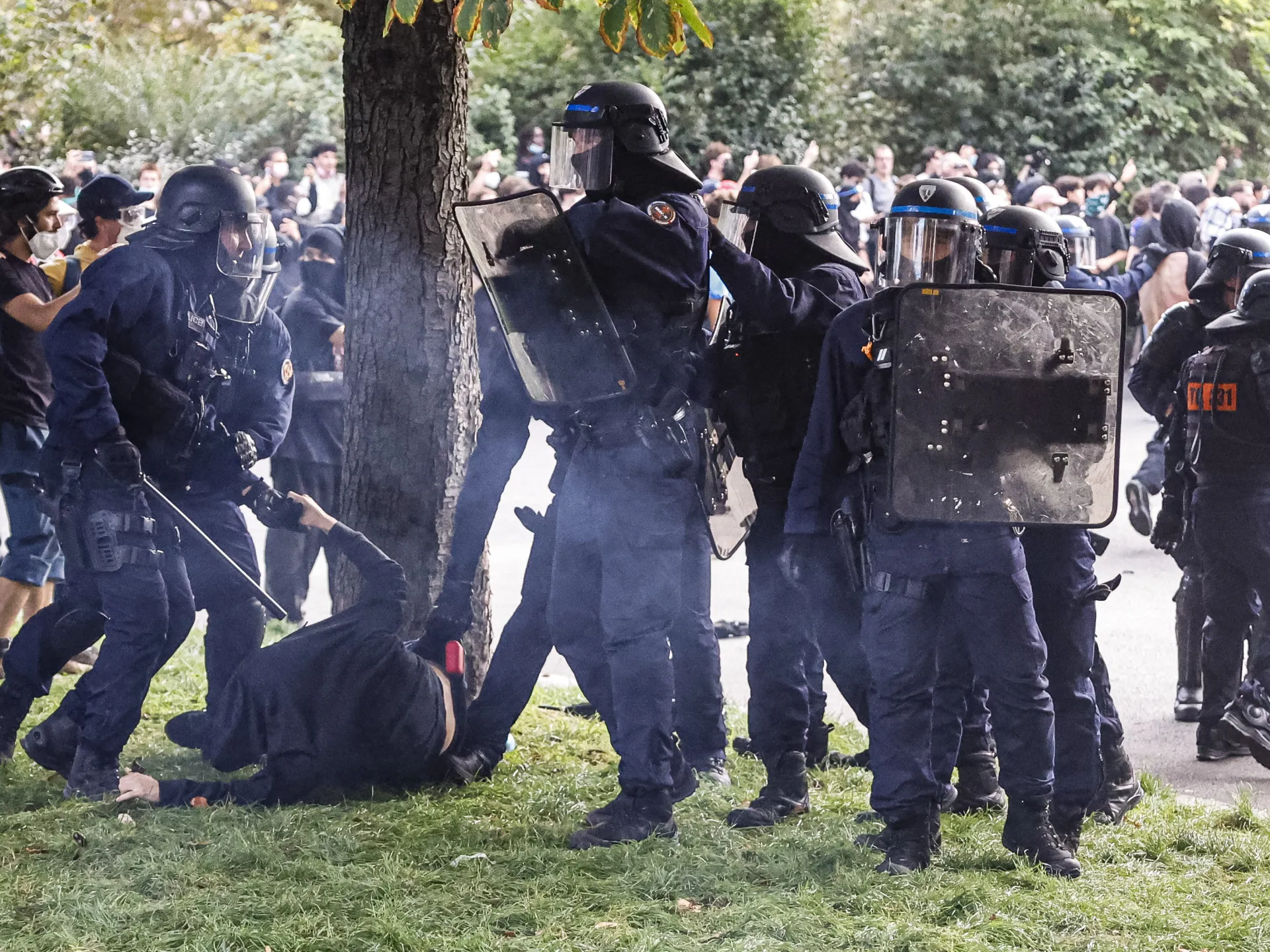
France has temporarily banned police from using stun grenades at student-led protests, the interior minister said, amid growing accusations of police brutality following several days of student demonstrations nationwide.

The announcement on Wednesday came a day after hundreds of thousands of students and supporters marched across France to demand more funding for education and better conditions in high schools, prompting President Emmanuel Macron to convene an emergency meeting with Prime Minister Sebastien Lecornu and other key ministers to try to defuse the crisis.

Recommended Stories

list of 3 itemsend of list

Lecornu will make a public address later on Wednesday on the school protests as well as the country’s finances, his office said.

Interior Minister Laurent Nunez told radio broadcaster RTL early on Wednesday that he had suspended police use of stun grenades at the protests.

A 15-year-old lost a hand in the northern city of Lens on Monday after police fired a stun grenade.

Earlier, a 14-year-old student was hit in the face by a tear gas grenade at such close range that he lost several teeth. A policeman was charged on Tuesday over the incident in the capital, Paris.

Police have opened 18 internal investigations into allegations of misconduct since the protests began, Nunez said.

Rights groups, students and parents’ groups have accused authorities of using disproportionate force against minors. The government says the protest movement has been hijacked by outsiders and morphed into urban violence.

The Ministry of the Interior said 6,100 people have been arrested since the protests began last month, the overwhelming majority of them minors.

More than 1,800 people are being prosecuted, including 1,483 minors, the Ministry of Justice said, without specifying the crimes.

At least 715 police officers and 215 teenagers have been injured in clashes, according to Lecornu’s office.

Students demand school funding

Protests started in late September with students blocking entrances to hundreds of high schools for 15- to 17-year-olds over complaints of dilapidated facilities and teacher shortages and demands for more funding for education.

Parents, teachers and union workers joined the demonstrations in Paris and other cities on Tuesday amid accusations that police were using disproportionate force.

Sporadic violent clashes have broken out between police and protesters at what otherwise have been largely peaceful demonstrations.

Lecornu on Tuesday condemned the violence and told lawmakers that it would not be tolerated, while also rejecting accusations that the government had ordered “police repression” against protesters.

Source link

Wednesday 7 October BOL Establishment Day in Lao


The provided text outlines the historical background of the Bank of Lao, which functions as the nation’s central financial institution. October 7th was officially chosen as the banking sector’s founding anniversary to commemorate the initial printing of the liberated Laotian Kip in 1968. This significant monetary event occurred under the guidance of the Lao People’s Revolutionary Party inside a hidden cave located within the Viengxai district of Hauphanh province. Later on, following the formal formation of the Lao People’s Democratic Republic in 1975, the institution consolidated with the former national bank. Through this merger, the organization successfully established its current role as the central bank for the entire country.


Source link

Energy costs: ‘Wear more clothes if it’s cold’, pupils and staff told

Rising energy costs are already affecting households across Northern Ireland.

The impact of the US-Israel war with Iran is one of the factors behind the increase.

The letter from the EA to head teachers said that “recent geopolitical events are expected to have a substantial impact on energy costs across the Education Authority (EA) during the 2026/27 financial year”.

It said that total school gas bills were expected to go up by 60% from £10.7m to £17m by March 2027.

Meanwhile, total school electricity bills are expected to rise by 5% from £23.8m to £25.1m by March 2027.

“Given the scale of the anticipated cost increases, we are asking all schools to review their energy usage and identify opportunities to reduce consumption wherever possible,” the EA said.

Among the measures the authority has suggested to schools are cutting heating use by an hour a day and switching off classroom lights to use natural daylight instead.

Staff and pupils have also been advised to “wear more clothes” rather than turn the heating thermostat up if it is cold.

But principals have told BBC News NI that it is not straightforward for schools to cut heating costs.

The principal of Tullygally Primary School in Craigavon, Kirsty Logan-Hall, said that the school was “committed to promoting responsible energy consumption and regularly reinforce good practice with staff and pupils”.

“However, our ability to achieve significant reductions in energy usage is constrained by the nature of our estate,” she said.

“The school operates from an older building which presents inherent energy efficiency challenges.

“In addition, our site is particularly spread out due to the accommodation and operational requirements associated with our specialist provision.

“This necessitates the heating, lighting and ongoing use of multiple areas across the site throughout the school day to ensure appropriate learning environments, accessibility and pupil welfare.

“It is important to recognise that there is limited scope for reducing energy consumption without adversely impacting the quality of provision, staff working conditions or the wellbeing of pupils, including those with additional needs.”

Emma Quinn from Rathcoole Primary told BBC Good Morning Ulster that the “lack of maintenance” has an impact on schools, adding that pupils have a right to come into a warm school after being outside.

“Putting this pressure onto us at the minute is ridiculous, when we are eco schools, we are doing all of these, we are turning off lights, but yet this lands in on our doorstep and we’re suddenly expected to jump and to fix a problem that is so systemic, it’s just not good enough.”

Source link

Big Brother fans ‘raging’ housemate ‘got away with it’ days before eviction

Big Brother viewers spotted an issue with this week’s nominations

Fans think they have spotted a problem with this week’s nominations.

Big Brother viewers have admitted they have been left “raging” following the most recent episode. It comes after Tuesday’s (October 6) installment of ITV’s reality series saw the housemates choose who they want to be at risk of eviction, face-to-face.

As a result, tensions boiled over, and scenes showed Rochelle and Pauline clashing in the bathroom as they prepared for bed.

Pauline received the second-most nominations, with five, after Rob. The pair now face the public vote, with one expected to be forced to leave on Friday night.

It was the latest incident during the House of Revelations theme to put contestants’ opinions of one another under the spotlight. Frankie, Lynx, Omar, Philip, Rhianna, and Yasmin all picked Rob.

Pauline received five, from Lynx, Philip, Rhianna, Rochelle, and Catrin. Their reasons included her preference to only want to eat organic foods when they are available. Rochelle, however, questioned this as she had “seen her eating a pizza”.

Several fans watching along at home were immediately upset about how the latest nominations played out. Some are even refusing to vote this time around due to the limited choices.

One fan admitted: “Not voting this week – raging Omar got away with it. It’s insane to me. I can’t believe we have to suffer through another week of him.”

Another agreed: “Craaaazy how Rob is up over Rochelle. The things Rochelle has said and done, and we have Rob up? Insane.”

Some believe they have figured out the reason why. The most popular theory was that, because the nominations were face-to-face rather than in the Diary Room, some housemates changed their choices.

As one person explained: “It’s easier to nominate Rob face-to-face than it is Rochelle, even though half of them nominated her in the diary room last week. I was really surprised at Yasmin nominating Rob.”

Meanwhile, one viewer was surprised by Twinks considering her clashes with Omar. They said: “Twinks really annoyed me not nominating him though. If she did it would be 2v1 with a split vote for Pauline and Rob. Omar would have been a goner.”

One person offered a similar view: “I believe if the nominations were behind closed doors, it would’ve turned out differently. Especially with Phillip trying to save face this time, I imagine the same goes for the other housemates too.”

After Pauline suggested she could quit the house before Friday’s eviction, one person hoped that if it happened, it would mean the next highest nominated housemates would be up. They said: “I really want Pauline to walk please cause extra drama, Omar and Rochelle will also be up.”

Big Brother continues tonight at 9pm on ITV2 and ITVX.

Source link

Dear Mr. Rubio, Don’t Forget About the Non-Oil Economy

The Venezuelan economic debate has been dominated by headlines over hydrocarbon deals and speculation around the future of the mining sector. The focus is understandable. It’s a petrostate with an abundance of natural resources, capable of propelling us out of the prolonged economic and humanitarian crisis that chavismo inflicted upon us. But as we must continue to discuss the future of the oil, gas and mining sectors, we must not forget the reforms required to allow the non-oil economy to flourish.

Although a large share of the state’s revenues and the country’s GDP is ultimately tied to hydrocarbons, the overwhelming majority of Venezuelans are not oil engineers, geologists or miners. Nor are most Venezuelan companies directly involved in extracting natural resources. The non-oil economy is there, operating under a highly restricted business environment of price controls, extortion, a minefield of a tax system and labour laws hostile to companies. All while facing a contraction in its market due to the migration crisis and severely restricted access to credit.

Venezuela is still among the hardest places to do business in the world. It is time to discuss how to give the sector, which includes formal and informal businesses of all sizes, the breathing space it needs to grow.

Let’s first put the power grid and infrastructure issues aside. The reforms required span virtually every aspect of the business environment, from the institutions that oversee the economy at the macro level, to the banking system and the nitty-gritty of tax and labour law. At the most basic level, the private sector needs confidence that contracts will be respected, property will be protected, and disputes can be resolved through institutions that are predictable and independent. Without these basic reassurances, investing in Venezuela remains a gamble that many businesses and outside investors will simply not be willing to take.

Dollarization without the institutional and financial framework to back it will fail in its mission to stabilize the economy.

As previously explained regarding the macro level, the Venezuelan Central Bank (BCV) needs to regain its independence and establish a credible monetary policy based on transparency and clear rules, supported by a board and president who are not subordinate to Miraflores. Burning through the petro-dollar cash pile to curb the Bolivar devaluation won’t cut it. The central bank is estimated to have used 65% of the oil sale proceeds to shore up the Bolivar. This has proven to be futile without a proper macro framework to support such interventions. It is the BCV’s credibility that is fundamental to correcting the distortions in the FX market and preserving confidence in the Bolivar, in order to lower the still extraordinary inflation rate hovering around 500%.

A credible BCV will also be fundamental to back whichever currency policy the State decides to embrace. Debates over dollarization have spread. However, the measure is not a magic wand, and going for it without the institutional and financial framework to back it will fail in its mission to stabilize the economy. Monetary stability with a functioning BCV will not suffice, but it’s a necessary foundation to correct the distortions that pervade the Venezuelan economy.

Surviving without credit

Reforms aimed at stimulating the non-oil private sector must not stop there. 
Venezuela needs its banks to be banks again. The country has by far the region’s lowest credit portfolio relative to GDP thanks to draconian restrictions from regulators, which limit the capacity of banks to function as credit facilitators, and reduce them to mere transactional businesses. A functioning banking system is fundamental for the private sector’s recovery. Venezuelan businesses need the capital, as much as consumers need the credit to finance purchases of the goods and services those businesses produce.

Without a functioning banking sector, the private sector costs of capital increase as businesses either accept higher rates from non-bank lenders or are forced to rely disproportionately on their own cash flow to fuel operations. Ultimately, this leads to firms forgoing investments and lower productivity. The survival-mode resource allocation and corporate planning allowed some firms to surf through the crisis, but still makes it considerably harder for a successful company to scale operations and increase productivity.

Under the right conditions, Venezuela could become fertile ground for a dynamic M&A market.

On the consumer side, there is an important advantage from which to build on. Venezuela has a relatively high degree of financial inclusion and has rapidly adopted digital technologies for payments and money transfers. This provides an infrastructure through which a consumer credit market can develop.

Time for real business-friendly laws

Labour laws and informality must also be addressed. The private sector needs to be able to absorb more workers, particularly those who will eventually transition out of an oversized public sector, without facing excessive legal and financial restrictions associated with hiring. The current system makes formal employment particularly costly for smaller businesses, contributing to informality and limiting the capacity of companies to expand their payrolls and operations.

Venezuelan businesses have performed something close to a miracle by continuing to operate under such dire conditions. But many of the businesses that remain have low productivity and have become costly to scale. The end goal of this debate should be to reduce the cost of capital and frictions that limit businesses from increasing their size and productivity, aiming to allow companies to compete at scale internationally.

We need to keep pushing for reforms across the non-oil economy so that businesses can access credit, hire more workers, invest, consolidate and attract capital.

Under the right conditions, Venezuela could become fertile ground for a dynamic M&A market. Consolidation can allow fragmented industries to achieve economies of scale, invest in technology, professionalize management, employ more people, and eventually compete internationally. Stronger and better equipped companies would become more attractive to foreign investors and better positioned to access global markets.

This is what economic reform should seek to achieve: a private sector made up of larger, more productive, inclusive, and competitive businesses.

The private sector has already demonstrated that it can survive under almost any conditions. The task now is to create the conditions for the windfall from those petro-dollars to run through a private sector that is more efficient, inclusive, and scalable. We need to continue pushing for reforms across the non-oil economy so that Venezuelan businesses can access credit, hire more workers, invest, consolidate, and attract capital. That will allow it to become one of the engines of our economic transformation.

Source link

I went on the UK’s cheapest all-inclusive break

AUTUMN and winter family holidays in the UK are a gamble – you could get glorious sunshine and plenty of fresh air, or be stuck inside playing board games on repeat thanks to nonstop rain. 

But there’s one chain of seaside resorts boasting such an array of indoor and outdoor activities, it barely matters what the weather is. 

The Sun’s Head Of Travel, Caroline McGuire, and the rest of her holiday group enjoyed a recent action-packed staycation Credit: Caroline McGuire
Butlin’s holidays are affordable yet full of plenty of indoor activities for the kids to see and do – even when the weather’s bad Credit: Butlins

Butlin’s has so many indoor activities that you could fill an entire three days without spending any time outdoors. 

A school mum and I took our families on the all inclusive break earlier this year, after one too many staycations were marred by huge downpours – and were blown away by the offering (not the wind).

Butlin’s is really hard to get your head around if you haven’t been before – for starters, it’s SO cheap. Well… it is if you go for the cheapest accommodation. 

Their base rates start from £49 for four nights for a family of four during October half term at their Minehead site, for example – that’s an astonishing £12.25pp per holiday. 

But that’s in their cheapest comfort rooms, which don’t have a kitchen – the cheapest accommodation with a kitchen is £69 in the comfort apartments, and the prices go all the way up to £502 if you’re in the fancier bayside apartments. 

At their Skegness site, where we stayed, accommodation over half term ranges from £122 in their standard rooms, up to £515 in the Maple Walk Premium Lodges and £791 in the platinum plus caravans.

We stayed in the Maple Walk lodges that first opened in 2024. The high-end, three-bedroom property featured a sleek kitchen, outdoor decking and a wood- panelled master bedroom. 

Maple Walk has its own entrance and even housekeeping, signalling a big departure from Butlin’s main, affordable offering.

Caroline’s son and a friend enjoy the fairground Credit: Caroline McGuire
The value you get out of a four-night break when factoring in the activities is astonishing Credit: Caroline McGuire
The sites have tons of paid-for activities you can sign up to, like laser quest, the fairground, bowling, go-karting, climbing and aerial adventure courses Credit: Free for editorial use

But it doesn’t matter where you book – the activities included in the price are the same. 

That includes the indoor waterparks, the West-End-style shows and entertainment like wrestling, the Skypark outdoor playparks, the soft plays and certain arts and crafts sessions. 

Then if you book during a particular holiday, the resorts often host plenty of extra themed activities for free – for example, at October half term they have free fireworks displays, silent discos and pumpkin carving. 

The sites have tons of paid-for activities you can sign up to as well, like laser quest, the fairground, bowling, go-karting, climbing and aerial adventure courses. 

The value you get out of a four-night break when factoring in the activities is astonishing. 

Let’s say for instance, you went to one of their shows every evening of your stay  – for a decent seat at a West End production of a similar standard to the Butlin’s Masked Singer Live show, you’d be looking at around £40pp minimum, while WWE live show tickets cost from £40pp to £150pp for regular arena seats. 

If we’re conservative, that’s £120pp for three nights of quality shows already. 

And these are top quality performances. The year-round pantomime is so hilarious it had me slapping my thigh, and the Animals and Mythical Beasts production brought tears to my son’s eyes.

The star of the shows for us, however, was the Maximum Pro Wrestling, which included a star turn from one of the celebrity hosts, Jeff Brazier. 

Then you have the free soft play – at between £5 and £12 per child across the UK, it’s free at Butlin’s and entry to the water park – which typically costs between £15 to £26pp at decent-sized venues in Britain.   

Book yourself into both of those twice over the course of your stay and that averages around £47pp, rising up to £167pp for the value of the free entertainment on offer when you factor in the cost of the shows.  

That’s before you add in any of the paid-for activities. During our three-night stay, we played mini golf and laser quest, spent far too many pound coins in the arcade, enjoyed arts and crafts and went to the fun fair. 

If you’re planning on going all out on the food and drink, their relatively new all inclusive bundles are great value too. 

We opted for the all-inclusive dining and drinks packages. The Premium Dining package costs £33.95 an adult and £19.50 a child (age six to 14) per day, and covers a buffet breakfast and a buffet dinner. 

These are full of choice, with Indian, Chinese, roast dinners, cheeseboards, burgers, soft serve and far more on offer for dinner.

At breakfast, there was everything from a Full English (with a fantastic veggie selection), made to order toasted sandwiches and omelettes, cereals, pastries fruit and pancakes.  

The drinks package starts from an extra £25.95 an adult per day and £10.50 a child, which includes unlimited booze, soft drinks and Costa coffee.

If you think you’ll get through more than four pints of Madri beer at £6.10 each, or five glasses of house wine at £5.60 each, over the course of the afternoon and evening then it’s well worth shelling out for.  

The resorts also have new self-serve bars for the first time too, with beers, ciders, cocktails, spirits and mixers and soft drinks.

Each Butlin’s resort has a large indoor arcade featuring hundreds of games Credit: Caroline McGuire
The ‘Splash’ swimming pool at Butlin’s holiday resort in Bognor Regis Credit: Alamy
For a decent seat at a West End production of a similar standard to the Butlin’s Masked Singer Live show, you’d be looking at around £40pp minimum Credit: Butlins

If you don’t want to gorge at the buffet like we did every night, the DineAround package includes a buffet breakfast and then you can pick from the other on-site dining options for a two-course lunch or dinner. 

This could be pub grub at The Beachcomber Inn or classic American diner-style food. Or you can simply pay as you go or cook in your accommodation. 

Prices for all inclusive get even cheaper during termtime, midweek breaks, with all-inclusive food and drink bundles on Showtime Breaks starting from £28 per person, per night for a family of four.

So if you’re paying £39 for a comfort room that sleeps up to 6 people on a midweek break, that’s a further £312.12 for the premium dining and drinks plan – working out at £351.12 in total or £22pp a night for accommodation, activities, and all inclusive food and drink.

It’s almost hard to argue against going out for food at those kinds of prices…

Source link

LA28: Why you could represent Great Britain as flag football makes Olympic debut

Flag football is now played by 20 million people in more than 100 countries and the rapid growth of the women’s game was key to it becoming one of five optional sports for LA28.

The sport has been backed heavily by the NFL, which aims to help it earn selection for Brisbane 2032 too.

The decision is due before the end of 2026 so flag football could head into its Olympic debut knowing it will feature in back-to-back Games.

Participation has boomed in Australia and scores of athletes are switching from Australian rules football, netball and rugby, while the American team has recruited basketball players.

GB’s Brittany Botterill (football/softball), Phoebe Schecter (equestrian), Marta Mathews (football), Jochebed Frimpong (athletics), Jess Allen (badminton) and Angelica Tait (athletics/snowboarding) all competed in other sports before playing flag football.

US-born Emily Kemp even became an ultimate frisbee world champion last year, in the same summer she helped GB win the flag Euros.

“We are an elite team already, we’re a potential medal threat at LA28, but we’re really aspirational so we’re looking to widen our talent pool,” said Chad Ehlertsen, chief executive of the British American Football Association (Bafa).

“If you look at the top flag players around the world, they’ve generally come from certain sports. They have good hand-eye coordination, agility, speed, decision-making under pressure. These are the qualities we’re looking for.

“In many ways we’re not looking for elite flag players, we’re looking for elite athletes that have the potential [to transfer] and then our coaches will help them understand the game.”

Source link

Head coach Scaloni’s emotional farewell to ‘irreplaceable’ Messi | Football

Argentina’s head coach Lionel Scaloni said it was an ‘emotional day’ as Lionel Messi brought his international career to an end, calling it a ‘dream’ to have coached him. Messi scored in his final game, a 3-0 friendly victory over Benin.

Source link

More than 140 flights to be cancelled at major European airport this WEEK

BRITS heading to or from one major European airport on Friday are set for travel chaos.

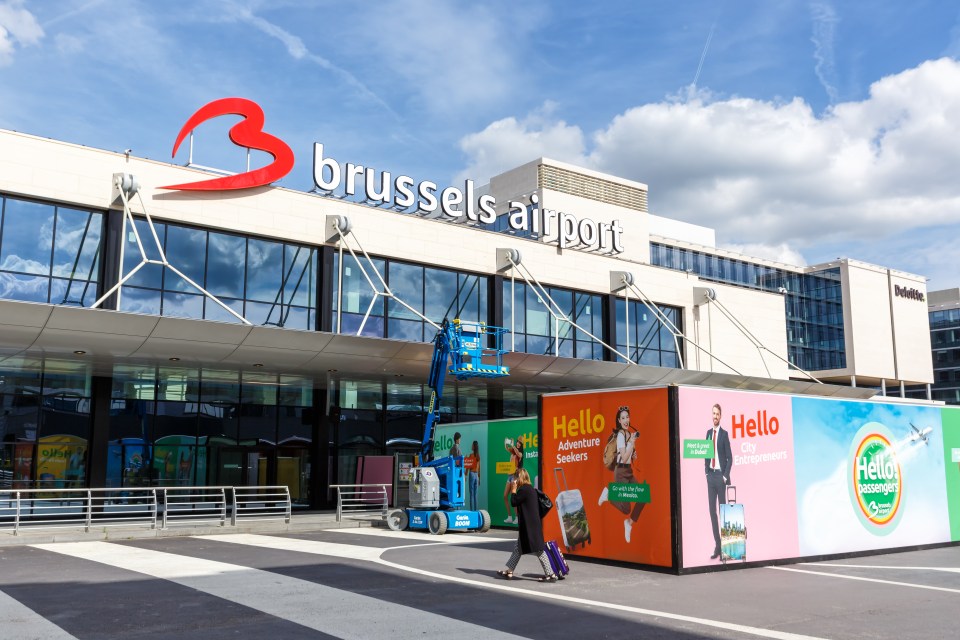
Strikes at Brussels Airport in Belgium, are set to cancel around 140 flights on October 9 as ground handling staff walk out.

Terminal building of Brussels Airport under a cloudy blue sky.
A strike will take place at Brussels Airport this Friday Credit: Getty

The strike will be nationwide with the ground handling company Alyzia joining the walkout.

Alyzia provides ground handling services including baggage processing and passenger aircraft ground support for around 20 airlines at the airport.

These include Brussels Airlines – the airport’s main carrier – as well as ITA Airways, Air Arabia and United Airlines.

For passengers flying with these airlines, delays and cancellations may occur.

Read more on travel inspo

FREE FLY

All the best travel comps to enter NOW – £60k cabin, Lapland hol & £7k cruise


DIPPING IN

Best spa days & stays from just £28pp – dinner, free prosecco & 50min treatments

However, if you are due to fly with the likes of Ryanair, easyJet, Wizz Air or British Airways – ground handling for these airlines is carried out by another provider at the airport.

The strike action comes as workers protest against governmental policies.

Public transport is also expected to be disrupted in Brussels.

Unfortunately, as this strike is outside of the airline’s control it will be deemed an ‘extraordinary circumstance’, which means if your flight is cancelled you will not be entitled to compensation.

A traveler stands in front of digital flight information display boards at Seattle-Tacoma International Airport.
Ground handling staff are set to walk out and around 140 flights are expected to be cancelled Credit: Shutterstock Editorial
Collage of travel items including a plane, sunscreen, passport, suitcase, and plane tickets, advertising The Sun's travel Instagram account.

However, airlines do still have a duty of care to passengers.

This means that they should rebook or refund your flight free of charge as well as provide you with food and drink, as well as accommodation if required.


Source link

Three years of Israel’s mass dispossession of West Bank Palestinians | Israel-Palestine conflict News

Al-Awsaj, occupied West Bank – On September 23, weeks before Israel’s parliamentary elections, ministers and lawmakers gathered on an occupied West Bank hilltop to inaugurate a new settlement, Metzoke Eretz, illegal under international law. Finance Minister Bezalel Smotrich used the ceremony to salute the settler outpost that made the eventual settlement possible.

“The first pioneering settlers who were here on the farm… we will lift them up as our greatest joy,” Smotrich said. “It shows that the method works: establish a farm, seize the land, prepare it, turn it into a community, move to the next point. There are many, many such heroes – those who prove they are not doing real estate. They are doing Zionism.”

Recommended Stories

list of 3 itemsend of list

Metzoke Eretz was previously an outpost – the name given to the Jewish settlements illegal even under Israeli law – called Netzah Harel, established in 2023 in the middle of al-Muarrajat, a Bedouin community on private Palestinian land east of Ramallah. Alia Mleihat, 29, and others from the community remember those settlers well. “Of course, this outpost played a major role in displacing the Palestinian Bedouin communities in al-Muarrajat and the areas east of Ramallah,” said Alia, now living in a tent in al-Awsaj, a few kilometres away, after her forced displacement in July 2025. “[The Netzah Harel settlers] took part in every attack the settlers carried out on families, and confiscated sheep, under the protection of the Israeli police and army.”

Dror Etkes, founder of Israeli NGO Kerem Navot, said Smotrich’s description of his “method” was spot-on – except for one omission. “The political discourse skips the [Palestinian] expulsion chapter,” said Etkes, suggesting Smotrich and other politicians avoid doing so explicitly to avoid potential scrutiny from international criminal courts. “They want it to happen, and they know that it happens, and they let it happen.”

Haaretz reported that Metzoke Eretz is one of 19 outposts legalised by the Netanyahu government after nearby Palestinians were violently expelled.

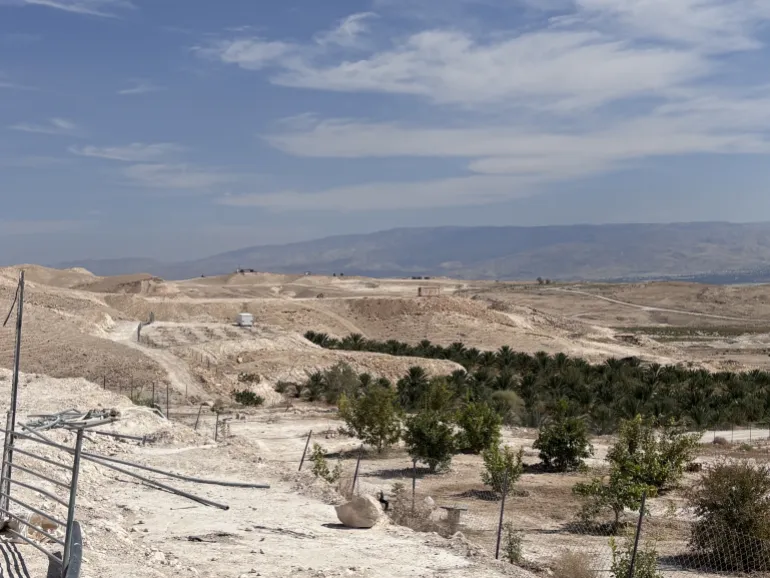
The view from Muhammad Ghawanmeh’s home in al-Awsaj, looking out towards an Israeli outpost on a hill in the background [Al Jazeera]

‘Not a single moment of joy’

Jamal Mleihat, Alia’s 45-year-old uncle, sits with eight relatives nestled inside a bare concrete-block house on the ridge in al-Awsaj, with his daughter Sewar hanging off his lap.

Below the ridge, rows of young trees climb a cultivated slope towards a factory at the foot of the hills. The ridge itself is rock and dust, now home to about 25 families from al-Muarrajat, among others forcibly displaced in the past three years.

“Before October 7 [2023 Hamas attack on Israel, and Israel’s subsequent genocidal war on Gaza], we were in the pastures – no harassment, we moved around freely,” said Jamal, a father of seven. “We had healthcare. We had a school. We had water in the same encampment. Life was a million times better than this.”

Since October 7, the Israeli government has stepped up its raids on the occupied West Bank, while settlers have largely been given free rein to pursue a pogrom against Palestinians, with little pushback from within Israel.

Just below Jamal’s shelter, alone on a slope, Muhammad Ghawanmeh lives with his wife and seven children. His toilet does not work; he relies on water tanks and has almost no electricity. The rocky track to the Mleihats’ area is too steep to drive. He built a fence around the house after recent settler attacks, and now faces constant drone surveillance from Israeli settlers.

Ghawanmeh is from Ras Ein al-Auja, which had been the largest Bedouin community in the central Jordan Valley – so robust that humanitarian coordinators told Al Jazeera in October 2023 that the village’s displacement was unlikely. Instead, its more than 600 Palestinian inhabitants experienced the largest single-community expulsion of Bedouins in the last three years, after repeated attacks by settlers from four surrounding outposts.

“From my childhood, the land was open. The water was open. We were living happily. We’d graze 10 kilometres, 15 kilometres with the sheep, and come back,” he said. “Today we can’t go 500 metres from the house.”

His flock has shrunk from about 300 to roughly 100 physically thinning sheep, which he now must buy fodder for, instead of letting them graze on the land, which he now says is largely forbidden by Israeli settlers and the army.

Jamal Mleihat with his daughter Sewar in al-Awsaj in the occupied West Bank [Al Jazeera]

‘Nothing was left except this’

A few hundred metres beyond Ghawanmeh’s fence, a white trailer and a few containers mark an Israeli outpost, established about six months ago on a hill overlooking Highway 90 and the displaced families along the ridge. Two months ago, Ghawanmeh said, soldiers came to his house and told him he could no longer pass to the highway. The settlers, he said, “are with the army”.

“You leave this place, go to another one, and it follows you – the same problem, unsolved,” Ghawanmeh said. “Every three months, there’s a displacement operation.”

Al-Awsaj barely existed as an inhabited place before, but Bedouin from different depopulated communities have now converged on this barren ridge, overlooking land largely declared – again – off-limits to grazing.

Allegra Pacheco, head of the West Bank Protection Consortium, calls al-Awsaj “basically a refugee camp, an internally displaced camp, that we see in other countries. But here, there’s no safe space. Wherever people like in al-Awsaj go, they’re chased by settlers or their tents are demolished by the Israelis.”

“It’s been very painful to get the authorities, the Palestinian authorities, the international leaders, to recognise that this is a mass displacement happening in front of us, and people have nowhere to go,” she said.

Project of forced transfer

In the West Bank, the United Nations Office for the Coordination of Humanitarian Affairs (OCHA) counts at least 130 Palestinian communities fully or partly displaced by settler attacks and related restrictions since January 2023, and more than 6,400 people uprooted. According to the Palestinian Colonization and Wall Resistance Commission, since October 7, 2023 there have been almost 15,000 attacks by settlers, with 66 Palestinians killed by settlers. OCHA says the rate of settler attacks increased from about three a day before October 7, 2023, to almost seven per day this year.

The increase in displacement after October 2023 can also be seen in the numbers for that year. Nearly 80 percent of all Palestinians displaced by settler violence in 2023 were uprooted after October 7.

A report by Peace Now and Kerem Navot found that Israeli farm outposts had seized roughly 18 percent of the West Bank by the end of 2025. “We’re talking about a land area bigger than the size of the Gaza Strip altogether,” Pacheco said.

“What we’re seeing is a continuous, sustained project of forced transfer and mass destruction,” she said. “Israeli authority demolitions and destructions by the Israeli army, and Israeli civilians – armed groups – carrying out destructions and sowing fear to push people out.”

Israeli NGO B’Tselem’s September report, “The Elimination Project”, links this to Smotrich’s 2017 “Decisive Plan”, which offers Palestinians three choices: live under Jewish supremacy, leave, or face violent repression.

“The Smotrich Plan has been implemented,” Pacheco said. “He laid out exactly what is going on now, and he’s very proud of his success. He now wants to transfer that success to [other areas of the West Bank], and also in the Galilee [an area in Israel with a large population of Palestinian citizens of Israel]. Wherever there are Palestinians living, he wants to make life so difficult that they will leave.”

With Smotrich exercising broad powers over the West Bank through the Settlement Administration within the Ministry of Defence, and leaders in the Israeli West Bank military command increasingly coming from far-right, settler backgrounds themselves, Palestinians across the West Bank describe a deepening symbiosis of military, police, administration and settlers in exacting Palestinian dispossession. “They all work together, like a cell, one completing the other,” said Jamal Mleihat. “The army, the police, the settlers – they’re the ones who displace, they’re the ones who establish the settlement, they’re the ones who take part in the thefts, in everything. And the army covers for them.”

Al Jazeera has reached out to the Israeli authorities for comment on this piece, but has yet to receive a response.

Worse future

Smotrich has withheld part or all of the tax revenues Israel collects for the Palestinian Authority – roughly 60 percent of its income – for much of the past three years. The PA now struggles to provide the most basic of services. In al-Awsaj and elsewhere, that means classrooms that do not open. “The government school is shut down today, no salaries,” Ghawanmeh said.

There is no school bus; families pay for private transport, and “one day they study, one day they don’t, depending on the mood of the driver,” Jamal said. It has left the displaced alone on an inhospitable patch of rock.

“Palestinians have no protection in the West Bank,” said Pacheco. “They are completely vulnerable to assault, attempted murder, arson, invasion of their homes. The Israeli army is supposed to protect them and doesn’t. The Palestinian Authority can’t come in, and the international community is not protecting them.”

“We started to feel there’s no safety anywhere,” Ghawanmeh said. “Fear. Terror. Persecution. Ethnic cleansing. That’s what we feel.”

Amid the dispossession, Ghawanmeh looks out at the unwelcoming land he knows will not be his family’s refuge – only another transient stop. He sees his own brother now only once every month and a half or two. “The threats to Bedouin life have almost become extinction,” he said. “We now live in enclaves, separated.”

“For three years now, the day that’s passing is better than the one that’s coming,” Ghawanmeh said. “Yesterday is better than today. Today is better than tomorrow.”

Source link

BBC Breakfast pays tribute to legend as host says ‘it’s the end of an era’

Jon Kay and Sally Nugent were back on the red sofa for the latest edition of BBC Breakfast

The hosts of BBC Breakfast shared some sad news this week.

Jon Kay and Sally Nugent were back in the studio on Wednesday (October 7) to deliver the latest headlines from across the UK and around the world. Later in the show, the presenters announced the death of an acting legend.

Eva Marie Saint, one of the last survivors of Hollywood’s golden age of the 1940s and 50s, has died at the age of 102. Her work on screen spanned six decades. She made her screen debut alongside Marlon Brando in On the Waterfront, and also starred in North by Northwest and Superman Returns.

Representatives of the star said that she died on Tuesday (October 6) of natural causes at her Los Angeles home, surrounded by her loved ones. Sharing the news on BBC Breakfast, Sally said: “Tributes have been paid to one of the last stars of Hollywood’s golden age, the American actor Eva Marie Saint, who has died at the age of 102.”

Jon added: “In a career spanning nine decades, the oldest surviving Oscar winner became best known for her roles in the 1954 hit On the Waterfront with Marlon Brando, and later with Cary Grant in the spy thriller North by Northwest.” BBC culture correspondent Charlotte Gallagher then looked back on Eva’s life.

In the pre-recorded tribute, Charlotte said: “Eva Marie Saint, the ice-cool femme fatale, who meets Cary Grant on a train in Alfred Hitchcock’s Cold War spy classic North by Northwest. She seduces him, betrays him, but ultimately falls in love, after a terrifying escape from enemy spies across Mount Rushmore.”

Eva was the daughter of a tyre salesman from New Jersey. She initially thought of becoming a teacher, but modelling led to a small part in television, alongside former silent screen legend Lillian Gish.

As her acting career took off, Eva became known for appearing in Exodus, The Sandpiper, 36 Hours, and Grand Prix. She soon won a Primetime Emmy Award and an Academy Award.

Back in the studio, Sally then said, “Eva Marie Saint, whose death has been announced. The star of so many incredible films.”

Jon went on to say, “True end of an era stuff,” before Sally agreed, “Yeah.” The hosts then continued with their bulletin.

Tributes have flooded in for Eva, following the news of her death. “Oh no… But what a magnificent life!” one person wrote on X.

Another added: “No! I was just talking about how amazing it was that she was over 100 to my father yesterday!” A third said: “This is such sad news, what a wonderful actress and beautiful lady she was, RIP Eva Marie.”

Someone else echoed the sentiment, saying: “Damn. Not many left. Enjoyed her on Turner Classic. Great actress.” A fifth fan shared: “They just don’t make them like that anymore. What a loss.”

BBC Breakfast airs daily on BBC One at 6am

Source link

New passport rules start for Brits TODAY with first UK airport rollout launch

NEW passport rules are being rolled out across the UK which will make travelling MUCH quicker.

The government recently announced its new scheme where passengers arriving into the UK will be able to pass through e-gates without scanning their passport.

A new contactless passport system is being rolled out in the UK Credit: Alamy
Brits returning into the UK will no longer have to scan their passport Credit: AFP

It has now opened up to passengers returning to the UK via East Midlands airport – the first to use the system.

The government has said that in its testing, the new contactless system is up to 25 per cent faster than current e-gates.

It will work by passengers having their photo taken at the e-gate – it’s checked by the system, verified against immigration, travel and passport information.

Essentially it takes away the need to both have a picture taken and scan the passport.

BE-LEAF IT

Perfect autumn attractions from £1.95 per kid from pumpkin patches to waterparks


DIG IN

Best UK garden centres with arcades, FREE soft play, fairgrounds… & even a beach

Once the checks are complete, the e-gates will open automatically.

If there is a need for further checks, then passengers will need to place their passport on the reader – or they could be asked to see a Border Force officer.

Passengers should still keep their passport with them at all times.

At the moment, the contactless system will be for British citizens only, but will eventually be able to be used by other nationalities.

The new passport system has opened at East Midlands Airport Credit: Alamy

It’s set to be in place at all airports across the UK by early 2027.

Phil Douglas, Director General of Border Force, said: “This is a win for travellers coming to our brilliant country.

“By using state-of-the-art technology, we are making journeys smoother and faster, all while fully maintaining the UK’s robust border security.

“Our digital transformation also builds on our work this summer to extend eGates to children aged eight and above, making life a little easier for families.”


Source link

Tom Pidcock ‘mad’ after team-mates hit by vehicle during Tre Valli Varesine

Tom Pidcock wanted to “stop racing” after saying that two of his team-mates were hit by a police vehicle travelling the wrong way down the course at the Tre Valli Varesine in Italy.

Pidcock finished second at the one-day race in Varese but was left “mad” after Pinarello-Q36.5 team-mates Marcel Camprubi and Thomas Gloag were knocked off their bikes with six laps of the finishing circuit to go.

Spain’s Camprubi was able to continue in the race but Pidcock’s fellow Briton Gloag stopped and required stitches on his knee.

“First of all, I wanted to stop the race, stop racing myself,” Pidcock told Eurosport after the race, which was won by Belgium’s Jarno Widar in a sprint finish.

“I was mad. I had guys all riding in front of me, for me, and then two of them are on the floor.

“This shouldn’t happen. But we continued and got back into the race and I’m happy that I could be on the podium.”

BBC Sport has contacted race organisers and local police for comment.

In August, two-time Olympic mountain bike champion Pidcock won his second cross-country world title at the Mountain Bike World Championships.

He dedicated that win to British cyclist Finlay Tarling, 19, who died on 14 August during the Volta a Portugal following a high-speed collision with a van that had strayed on to the closed road.

Camprubi posted a picture of a broken bike on Instagram Stories, with a caption that read: “Sad that you have to risk your life to race, one month after a tragic accident.”

Source link

Has Russia’s fuel crisis given Iranian oil an opening in Central Asia? | US-Israel war on Iran News

Countries in Central Asia have begun buying oil from Iran as the Russian fuel supplies they have long depended on run dry amid Ukraine’s mounting attacks on Russian energy infrastructure to degrade Moscow’s war effort.

In August, Tajikistan announced it was receiving oil and petroleum products from Iran as Dushanbe faces uncertainty over its fuel supply from Russia. Tehran also agreed to establish a joint refinery in Kyrgyzstan in August, and supply the country with crude oil.

Recommended Stories

list of 3 itemsend of list

Moscow has been facing fuel shortages due to Ukrainian drone strikes on its refineries as Russia’s war on its neighbour continues to rage.

Can the Russian fuel crisis give Iran a new oil opening in Central Asia?

Here’s what we know:

Which Central Asian countries have been affected by Russia’s fuel crisis?

Ukraine’s offensive against Russian energy infrastructure has caused panic across Central Asian countries like Tajikistan and Kyrgyzstan, which are dependent on Moscow for oil and petroleum products.

Tajikistan has traditionally sourced up to 80 percent of its petroleum products from Russia. Kyrgyzstan also relies on petroleum product imports, sourcing more than 90 percent of its petrol from Russia.

“They’ve been hurt the most,” Galiya Ibragimova, a Moldova-based expert on Central Asia with Carnegie Politika, which has its headquarters in Berlin, told Al Jazeera in an interview in August.

Kyrgyzstan is a member of the Eurasian Economic Union, the free trade bloc of five former Soviet nations dominated by Russia and the Kremlin’s political decisions.

Tajikistan is not a member of the group, but it bought discounted Russian fuel as “payment for political loyalty, not because [Russian President Vladimir] Putin is so kind”, Ibragimova added.

Kazakhstan, meanwhile, boasts three giant, Soviet-era oil refineries. Still, fuel prices in the country have increased by 15.6 percent this year, the UlusMedia website reported on July 10.

Uzbekistan, on the other hand, is less dependent on Russian energy, with domestic production capable of reaching 100,000 tonnes of petroleum products per month, satisfying most of the country’s needs. But due to the increase in oil demand from its regional neighbours, Uzbekistan has also been forced to diversify its imports and has begun striking deals with countries like Georgia and Iraq.

Why is there a fuel crisis in Russia?

Russia has been facing a severe fuel deficit as Kyiv’s drone strikes – launched in an effort to degrade Moscow’s ability to maintain its ongoing invasion of Ukraine – have knocked out an estimated quarter to half of its total oil refining capacity.

To tackle the problem, Russia has imposed fuel rationing. Sales are often limited to about 20-30 litres (about 5-8 US gallons) per vehicle, and drivers must pump fuel strictly into vehicle tanks. Filling jerry cans is largely prohibited.

Earlier, the government banned petrol and jet fuel exports. Officials are now weighing a ban on diesel exports, too. Authorities have loosened fuel-quality regulations, temporarily allowing lower-grade fuel for the domestic market.

A state of emergency has also been declared in Russian-occupied Crimea, which Moscow annexed from Ukraine in 2014. A Russian-owned oil firm in India, Nayara Energy, has reportedly sold petroleum to Russia.

While Russian President Putin acknowledges the crisis, he appears reluctant to end the war on Ukraine and insists the situation is under control.

“These attacks on our facilities certainly create problems – that is obvious. We are currently seeing a certain shortage, though I would say it is not critical,” he said earlier this year.

“First and foremost, we have to rapidly and significantly increase production of air defence systems that are most in demand. We must also continue to improve them… Repairs at refineries must be completed more quickly.”

So, how is Iran helping Central Asia?

Amid Russian fuel shortages, Central Asian countries like Tajikistan have begun striking deals with Iran.

In August, Tajikistan’s Energy and Water Resources Ministry told the Asia-Plus news agency that the country is receiving oil and petroleum products from Iran. The ministry has not disclosed the route used to transport the products, but Tajikistan expects to receive 2.55 million tonnes of oil and petroleum products from Iran.

Besides Tajikistan, Iranian President Masoud Pezeshkian welcomed a proposal from Kyrgyzstan in August to establish a joint refinery in the Central Asian country, according to a report by Iran’s Tasnim news agency,

Under the agreement, Pezeshkian said, “The crude oil needed by the refinery can be supplied by Iran, and the products can be divided between the two sides.”

Will exporting oil to Central Asian countries help Iran?

The United States and Israel’s war on Iran has affected Tehran’s oil revenues. Data released by the government-administered Statistical Center of Iran in September showed that gross domestic product (GDP) shrank by 10.1 percent year-on-year between March 21 and June 20, the first quarter of the Persian calendar.

Tehran’s ability to sell crude has also been dramatically curtailed by the US naval blockade of Iran’s ports, imposed for most of the war, which began in late February.

Iranian crude and condensate loadings collapsed from about two million barrels per day (bpd) in March to roughly 740,000bpd in July and just 220,000-255,000bpd in August, according to estimates from Kpler and Vortexa.

TankerTrackers.com told the Reuters news agency in September that 29 tankers, carrying 36.11 million barrels of crude, were trapped in the Strait of Hormuz. Meanwhile, Vortexa estimated that total Iranian crude afloat had fallen from 135 million barrels at the end of July to 107 million barrels by late August.

Amid these challenges, Iran has been scrambling to find new countries to trade oil with. Russian fuel shortages have opened up new opportunities for Iran in Central Asia, at least in the short term, according to analysts.

How does Iranian oil reach Tajikistan and Kyrgyzstan?

Iran does not share a border with either country.

To get to Tajikistan, Iranian “oil and refined products have to cross Turkmenistan and Uzbekistan by rail”, said Frederic Schneider, a nonresident senior fellow at the Middle East Council on Global Affairs.

To get to Kyrgyzstan, Iranian oil would also need to pass through Turkmenistan and Uzbekistan.

Is trading oil with Iran logistically sustainable for Central Asia?

It is unlikely, Schneider said.

“This opportunity [for Iran] depends on Ukraine continuing to hit Russian refineries, which seems unlikely, both given the waning of Ukraine’s strike capability and the US government’s demand to stop the attacks as they put too much strain on global oil markets,” he told Al Jazeera.

He noted that US President Donald Trump has pressed his Ukrainian counterpart, Volodymyr Zelenskyy, repeatedly in September for an “energy truce” with Russia, since diesel prices have become a political problem for Trump ahead of the November midterm elections in the US.

“Those truces have so far collapsed within hours, but the direction is clear. Once the strikes stop, or once Russia repairs its plants, Russian fuel will come back to Central Asia duty-free under Eurasian Economic Union arrangements, and Iran will struggle to compete on price,” he said.

Logistics also favour Russia with respect to importing oil to countries like Tajikistan and Kyrgyzstan, he said.

Unlike Iran, Russia shares a border with both.

“Tajikistan’s own request [for oil] would need around 51,000 rail tank cars, and its main refinery at Dangara has never operated commercially at scale. Russia, by contrast, has decades’ worth of logistics infrastructure, pipelines, rail links, and supply contracts into the region,” Schneider said.

Is Central Asia a big enough market to compensate for Iran’s Hormuz losses?

No, according to Schneider.

Tajikistan’s total demand, Schneider said, was about 50,000bpd.

That is a drop in the ocean compared with the 1.7 million bpd Iran exported by sea a year ago. China reported $9.96bn in two-way trade with Iran in 2025, a figure that does not include some $31.2bn in Iranian oil shipments, according to the US-China Economic and Security Review Commission.

“This suggests that Central Asia can be a useful outlet for Iranian diesel and gasoline, but it cannot replace the Chinese market,” Schneider said.

For Tehran, Central Asia’s importance depends on how the US-Israel war on Iran develops, he said, adding that Tehran also needs to stay on good terms with Russia, with which it has a deep strategic partnership.

“Iran cannot afford to be seen as poaching Russian customers too aggressively, so it will present itself as a stopgap supplier, which, again, limits how much it can earn there,” he said.

What other risks does Central Asia face in buying Iranian oil?

Schneider warned that Central Asian nations could be hit with Washington’s secondary sanctions on Iran.

“Legally, US secondary sanctions apply to any foreign company or bank that conducts a significant transaction in Iranian petroleum, wherever it is based, and the Treasury expanded the list of sanctionable conduct in August. A Treasury official has already warned publicly that anyone in this trade ‘incurs that risk themselves’,” he noted.

But Schneider said that, politically, the US sanctioning Central Asian governments is unlikely.

“Central Asia is the arena of a new ‘Great Game’ between Russia, China and the United States, and Washington is courting the region harder than at any point since the 1990s, chiefly for its critical minerals. Kazakhstan alone holds about half of the minerals the US classifies as critical, including uranium and tungsten,” he said.

“Sanctioning a Central Asian government for buying fuel from Iran would push them straight back into closer ties to Russia and China,” he noted.

“What I would expect instead are targeted designations of individual traders, rail and logistics operators and smaller banks, combined with quiet pressure on the region’s correspondent banks. That alone is enough to raise the cost and slow the trade, but will come at the price of these countries redoubling their efforts to decouple economically and financially from the US.”

Source link