She captioned the post: “Straight men are automatically on thin ice,” seemingly giving fans a glimpse at what the upcoming series might entail.
Fans rushed to the comments to swoon over Olivia’s stunning snaps.
“Omg this look!!!!! You get better and better each time! Unbelievable,” penned one.
“Side boob summer,” said another.
“The fittest woman to ever exist,” wrote a third.
It comes after Olivia revealed the romantic gift she’d been sent by her boyfriend Pete Wicks.
Taking to Instagram, Olivia showed off the sweet and very romantic gift that Pete sent her.
He sent her some red roses to show he was thinking of her while they are apart.
She showed off the massive bouquet of red roses sent by Pete, along with a text he sent saying they were to “make her feel better” as she battled a hangover.
This all comes after Pete publicly opened up about his relationship with Olivia for the first time.
Joking about the loved-up snaps, where Olivia and Pete were seen smooching in a pool, Sam asked: “Question, if you don’t mind, why have I never been locked in an embrace with you in a pool?
“I’ve never been in that position with you before. You looked so comfortable and relaxed.”
Deliberately dodging the question, Pete replied: “I had a very, very lovely holiday.”
He added: “It was delightful. Switched off from the world as much as I could.
“We had lots of plans, we had lots of different things going on, we had a whole itinerary.”
Pete and Olivia are believed to have been dating since the presenter split from footballer husband Bradley Dack in January.
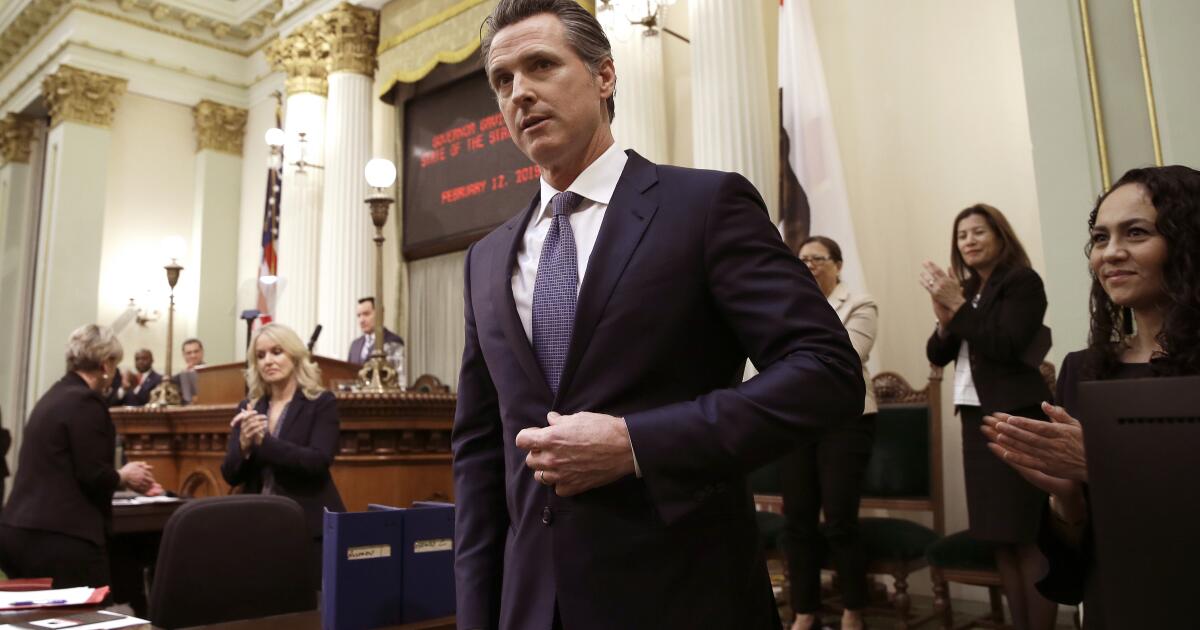
SACRAMENTO — Gov. Gavin Newsom on Monday signed his final state budget as governor, a $351.7-billion spending plan that seeks to uplift the poorest Californians through a tax system reliant on the stock market gains of the wealthy.
In a video message, Newsom extolled free school meals, universal transitional kindergarten, 130,000 subsidized childcare slots and other accomplishments in his tenure at the state Capitol, a period in state history marked by a dramatic expansion of state government and over $100 billion in increased spending.
“Over the past eight years, we built great things for the people of California — some of the boldest actions any government in this country has taken in a generation,” Newsom said. “And we did this without breaking the bank. We did this by design.”
The agreement ends weeks of lobbying by outside interests and negotiations among lawmakers and the governor at the state Capitol about how to handle a surge of income tax collected on stock market gains related to artificial intelligence.
Economists have warned that the revenue bump is potentially temporary and analysts say the growth in state spending could leave California in a challenging position if the economy declines.
Assemblymember David Tangipa (R-Fresno) agreed with Democrats that the budget is “compassionate.”
“My fear is that it’s not too much of a competent budget, and the budget continues a pattern that Californians know all too well: Spend now, justify it later, and hope somebody else pays the bill,” he said during a floor debate Monday.
Here’s what you need to know about the spending plan, which takes effect July 1.
Who decides the state budget?
The simplest answer is: Democrats. California voters have elected Democrats to represent 30 of the 40 seats in the Senate and 60 seats of the 80 seats in the Assembly. The budget was passed through a majority vote in each house of the Legislature and signed by Gov. Gavin Newsom, also a Democrat.
A more complex answer is that the budget is a product of dozens of legislative hearings, millions of dollars spent on lobbying by outside interests, talks among lawmakers and the governor and ultimately subject to the same political dynamics that rule the Democratic party.
Senate President Pro Tem Monique Limón (D-Goleta) and Assembly Speaker Robert Rivas (D-Hollister), in consultation with the chairs of the budget committees, represent their Democratic caucuses and reach a final agreement on the details of the spending plan with Newsom. In reality, staff members for the three parties handle most, if not all, of the back of forth negotiations to get there.
Union leaders seeking better pay, working conditions, benefits for workers and opportunities to expand their ranks are often brought in to consult or hammer out thorny deals as business groups try to fight off more regulations, taxes and costs, and support policies that increase their financial performance.
Democrats are spending more than ever before. How is that possible?
The Legislative Analyst’s Office, the nonpartisan fiscal advisor for lawmakers, recently examined the increase in state spending since 2019-20, Newsom’s first full year in office.
Between the budget approved that year and the spending proposal Newsom unveiled in January, spending from the state’s main operating fund had grown by over $100 billion, or 70%. That was largely by a 60% increase in revenue during that time. California typically operates with a spending deficit because Democrats spend more money than the state brings in.
The LAO found that the increase in spending stemmed from the growing cost of sustaining programs and services that were already in place when Newsom took office. About 30% of the remaining spending growth was categorized as new, either by newly created programs or the expansion of existing services.
Among the report’s conclusions: California could not afford the programs that predated Newsom and the ones he and the Legislature adopted.
To balance the budget over the last few years, Newsom and lawmakers have dipped into the state’s reserves at a time when California is experiencing strong revenue growth, which the LAO has cautioned against. Democrats have also increased taxes on businesses, paid for programs out of other funds and suspended reserve deposits among other solutions.
This year, the state budget places $6.4 billion in higher than expected revenue into a temporary holding account to knock down a deficit and balance the budget through 2027-28.
Democrats are pursuing a change to the state constitution on the November ballot that would allow them to set aside more money in years of good revenue growth to prevent cuts in future downturns.
Where is the money going?
Education and Medi-Cal are the two largest costs for the state.
Medi-Cal is the state’s version of subsidized health insurance for low-income Californians and provides medical, dental and vision care for an estimated 14.5 million people, or about one-third of the state population.
The federal government pays for more than half of the cost of the program. California is expected to spend about $50 billion from the general fund next year out of a total estimated at more than $220 billion in costs shared between the state and federal government, according to the LAO. State taxes and fees on providers also help fund Medi-Cal.
Overall, Medi-Cal costs more than any other state program and takes up about 40% of total spending, including federal funds the state receives, according to the LAO.
Spending on Medi-Cal has more than doubled over the last 10 years, which the LAO attributes to an increase in costs per enrollee, more enrollees and a greater share of seniors seeking care, among other factors.
Under Newsom, California has expanded Medi-Cal, including offering coverage to include all immigrants regardless of their immigration status, which the governor said has dropped the state’s uninsured rate down to 5.9%
The cost of Medi-Cal has grown beyond what Democrats expected and resulted in Newsom suggesting spending cuts.
The final budget agreement rejects a call by Newsom to lower the asset limit to $2,000 now and instead lowers it to $21,000 in 2027-28 to be eligible for Medi-Cal. The Legislature also delayed the governor’s proposal to reduce dental coverage and shift asylum seekers and other immigrants to restricted scope Medi-Cal, according to Jason Sisney, the lead budget advisor for the Assembly who posts about the budget on Substack.
The budget includes Newsom’s proposal to shift enrollees with unsatisfactory immigration status, a term that includes undocumented immigrants and others, from managed care to fee-for-service to save costs.
Under Proposition 98, approved by voters in 1988, California has a minimum funding guarantee for schools and community colleges and dedicates roughly 40% of general fund revenue to education.
Sisney said the budget increases the Local Control Funding Formula by $2.2 billion and provides historic general fund per pupil spending of $21,148. Support for special education also grew by $1.8 billion.
The California Community Schools Partnership Program received a $1-billion boost and Democrats directed $2.8 million in additional funding to the program that provides free meals for school children.
The budget also establishes 22,770 new slots for free or reduced childcare, which Newsom had proposed decreasing.
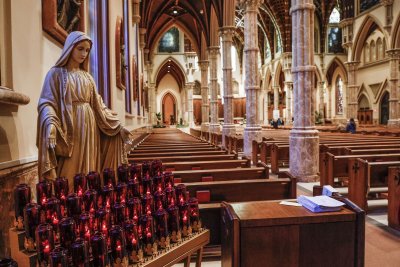
June 29 (UPI) — The Archdiocese of San Francisco has reached a $395 million settlement with hundreds of survivors of childhood sexual abuse allegedly committed by members of the clergy, lawyers for the victims and the archbishop announced Monday.
The agreement in principle, which follows three years of bankruptcy proceedings and extensive negotiations between the archdiocese and lawyers representing the victims, affects some 530 survivors, according to lawyer Jeff Anderson, who is among the claimants’ litigation team.
During a press conference streamed live online Monday afternoon, Anderson described the agreement as “a real settlement that provides for a significant measure of accountability, required transparency and an authentic reckoning by those that allowed these indelible horrors to be inflicted upon so many for so long.”
The archdiocese filed for Chapter 11 bankruptcy in August 2023, after hundreds of clergy sexual abuse civil cases were filed against it, which put a stop to all litigation and forced the survivors to reorganize into a committee that was represented by nine claimants.
Those nine claimants then negotiated the settlement on behalf of all of the survivors, according to Anderson, who said the agreement reached also includes a 14-point plan to protect future children from similar abuses and empower survivors.
“This is unprecedented, and this gives me hope and it is the courage of these survivors that has caused it to happen,” he said.
In a letter addressed to members of the Archdiocese of San Francisco, Archbishop Salvatore Cordileone said that they believe “this proposal offers a path toward fair compensation for survivors who have carried the burden of this abuse for a lifetime.”
“We accept the responsibility for the failures that allowed this harm to occur,” he said.
“I sincerely apologize to all those who have suffered because of those failures.”
The lawsuits that prompted the archdiocese to file for bankruptcy were filed after California enacted legislation that opened a three-year window from Jan. 1, 2020, to Dec. 31, 2022, lifting the statute of limitations on allegations of childhood sexual assault so victims of crimes even decades old could seek a civil, monetary resolution from their perpetrators.
Margie O’Driscoll, a survivor of clergy sexual assault and one of the nine committee members, said during the press conference that she was abused as a teenager by a priest at Marin Catholic High School nearly five decades ago.
She spoke directly to those who were similarly abused.
“I, like every survivor, have carried this pain and shame along like a ball and chain for a very, very long time — I see you and I know what you carry,” she said.
“So, while I want to say that today is a significant victory for everyone in the case … it’s really come at a significant cost to the 500 people sexually abused by priests and religious leaders.”
O’Driscoll said some of the victims had been abused more than 70 years ago, during which they carried the shame associated with the crime, while being scorned by the archdiocese and sometimes their accusations not believed by family and friends.
“And I think, today, shame is going to change sides,” she said.
Hundreds, if not thousands, of claims were filed after the passage of Assembly Bill 218, resulting in billions of dollars in settlements for survivors of childhood sexual abuse.
In October 2024, the Archdiocese of Los Angeles reached an $880 million settlement with 1,353 survivors. In April 2025, Los Angeles County reached a $4 billion settlement resolving more than 6,800 claims of sexual abuse allegedly committed at probation department facilities and MacLaren Children’s Center.
Search and rescue operations continue in Caracas, Venezuela nearly five days after the devastating double earthquakes. Al Jazeera’s Noris Soto speaks with a family member who remains hopeful their loved one is still alive beneath the rubble.
BBC viewers paid tribute to Dame Penelope Keith, following her death aged 86, as the broadcaster aired a special episode of The Good Life.
The BBC aired an episode of The Good Life in tribute to the iconic actress(Image: BBC)
BBC viewers have been left “heartbroken” as they paid tribute to an iconic actress.
In a change to scheduled programming, the broadcaster made the decision to honour Dame Penelope Keith with a classic episode of The Good Life on Monday, June 29.
They said she “died peacefully whilst living with cancer at her home in Surrey”.
As fans mourned the To the Manor Born actress and friends paid tribute, the BBC confirmed the Margo Leadbetter actress would be remembered with the episode airing on BBC Two.
From the third series of The Good Life, it followed war breaking out between the Goods and the Leadbetters, “proving there is nothing like a good fight over the fence to cement relationships”.
Jon Petrie, Director of BBC Comedy said: “All of us at BBC Comedy are deeply saddened to hear of the passing of Dame Penelope Keith. She was one of the defining figures of British television comedy.
“Her iconic performance as Margo in The Good Life remains one of the nation’s most beloved sitcom roles and continues to delight audiences today.
“We send our heartfelt condolences to her family, friends and all of those who had the privilege of working with her.”
Watching the repeat episode, one person wrote on X: “Just watched #TheGoodLife on bbc as a tribute to Penelope Keith. Still very good!”
Another said: “Lovely to watch #thegoodlife. it brings back memories of when I was a kid. RIP Penelope Keith.”
A third wrote: “Genuinely had something in my eye as soon as the theme tune came on #TheGoodLife #DamePenelopeKeith Thank you BBC2.”
Someone else said: “I’m indulging in some pre-dinner #TheGoodLife on #BBCTwo in honour of #PenelopeKeith RIP.”
Paying their respects, one person said: “I am shocked and now, heartbroken. … Absolutely love this lady. I’ve watched #TheGoodLife so many times, over the years and it just becomes even more funny each time I watch it – seeing/hearing something that I’ve missed previously… I think another “binge-watch” of “The Good Life” is now due. In honour of the beloved #DamePenelopeKeith.”
Someone else wrote: “Pleasing to see BBC 2 scheduling an episode of The Good Life at 7 this evening, by way of tribute to the wonderfully talented Penelope Keith. Hopefully there will be more in the coming weeks. A Penelope Keith night on BBC 4?”
The statement from Dame Penelope’s family read: “We are deeply saddened to announce that Dame Penelope Keith died peacefully whilst living with cancer at her home in Surrey where she had lived for more than 50 years.
“The family is grateful for the care and support she received throughout her treatments, and ask that their privacy be respected at this time.”
The Good Life is available to watch on BBC iPlayer.
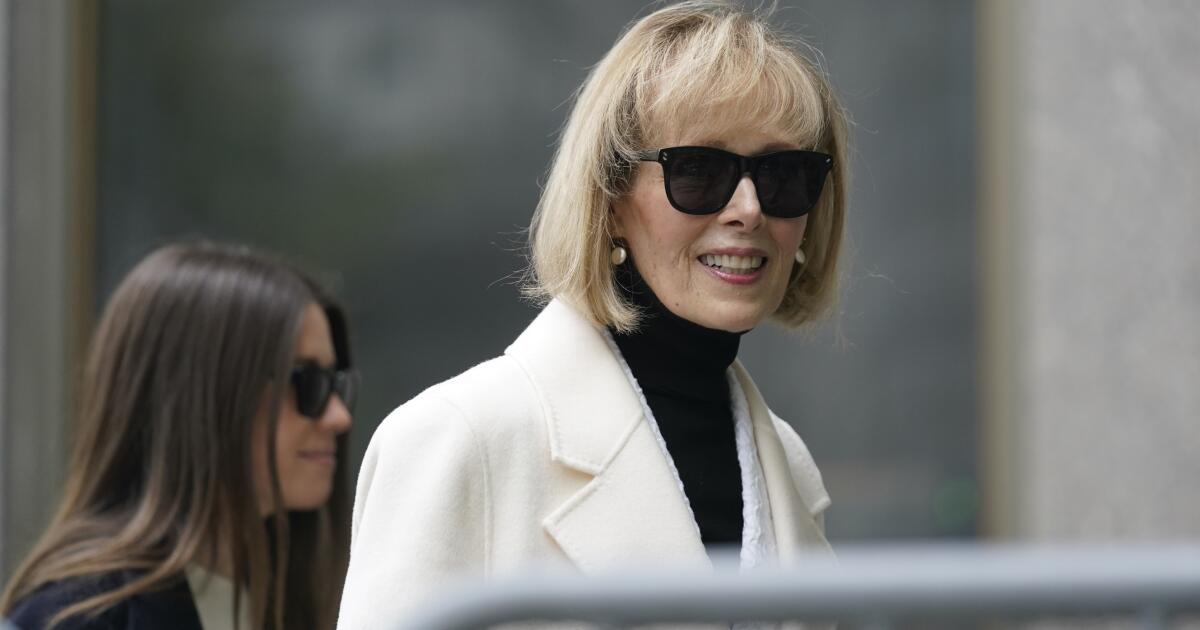
WASHINGTON — The Supreme Court on Monday turned down without comment President Trump’s appeal of a $5-million jury verdict for sexually abusing E. Jean Carroll in the dressing room of a Bergdorf Goodman store in Manhattan nearly 30 years ago.
None of the justices registered a dissent.
When Carroll reported the incident in a book, Trump called it “a hoax and a lie,” prompting her to file a second claim for defamation.
Trump and his lawyers argued he was unfairly held liable because the jurors heard from two other women who said Trump groped them. And they listened to Trump’s own words on his willingness to abuse women.
“When you’re a star … you can do anything,” Trump said on the “Access Hollywood” tape from 2005 that the jurors heard.
Trump defended those comments in a 2022 deposition that was used during the trial.
“Historically, that’s true with stars,” he said. “If you look over the last million years, I guess that’s been largely true. Unfortunately, or fortunately.”
Usually, a defendant’s prior bad acts are excluded from a jury trial.
But in 1994, Congress amended the federal rules of evidence to make an exception for civil suits involving alleged sexual abuse. Rule 415 says the judge “may admit evidence that the party committed any other sexual assault.”
In Trump’s case, the U.S. appeals court in New York said the rule “permits a jury to consider evidence of a different sexual assault precisely to show that a defendant has a pattern or propensity for committing sexual assault.”
Two women testified that Carroll had told them about the dressing room assault shortly after it happened. And two other women testified Trump had assaulted and groped them.
Carroll testified over three days at the trial. Trump did not attend and chose not to testify.
Trump posted on social media that he was surprised by the court’s refusal to act on his appeal.
“I will continue the fight against this Weaponization and Lawfare Case against me, including the ridiculous claim of Defamation, with all of my power and strength. This Case is really against the United States of America, and all it stands for, and should never be allowed to happen to another President, or Candidate to be!”
The federal rules say judges may exclude “propensity evidence” if they decide its value is “substantially outweighed by a danger of … unfair prejudice, confusing the issues or misleading the jury.”
U.S. District Judge Lewis Kaplan, who presided over the trial, permitted the use of the propensity evidence, and the 2nd Circuit Court of Appeals upheld his decision in December 2024, shortly after Trump won election to a second term.
Lawyers for a Missouri law firm founded by Solicitor Gen. D. John Sauer filed an appeal petition in November urging the court to review the case of Trump vs. Carroll and order a new trial.
They said Carroll’s claims were “facially implausible and politically motivated” and her trial “rested fundamentally on improper propensity evidence that courts ordinarily disavow.”
They devoted most of their appeal to arguing that the court should take up the case because judges are divided on when propensity evidence should be excluded.
But they also urged the court to intervene because they said Trump was being mistreated by the judges in New York.
“It is deeply damaging to the fabric of our Republic for President Trump, in the midst of a historic presidency, to have to take his focus away from his singular and unique duties as Chief Executive to continue fighting against decades-old, false allegations and the myriad wrongs throughout this baseless case,” they wrote.
Former LakersMalik Beasley and Ed Davis were charged with wire fraud conspiracy and bribery in sporting contests by federal prosecutors in a sweeping indictment that included four other co-conspirators.
Both played one season with the Lakers during long careers, Beasley in 2022-23 and Davis in 2014-15.
According to the indictment, Beasley illegally manipulated his performance to ensure gamblers won prop bets two years before he played for the Lakers and one year after.
Davis — described in the indictment as Beasley’s “gatekeeper” — allegedly collaborated to manipulate Beasley’s performance when they were Minnesota Timberwolves teammates during the 2020-21 season and did so again four times during the 2023-24 season while Beasley was with the Milwaukee Bucks.
The illegal activity allegedly began during a Jan. 26, 2024 game between the Bucks and Cleveland Cavaliers. Beasley averaged 11.3 points that season and 11.7 during his career, but scored three points in that game.
In total, the defendants and their co-conspirators allegedly placed fraudulent wagers totaling hundreds of thousands of dollars on Beasley’s fixed performances.
Also indicted were NBA player agent Paolo Zamorano, William Brown, Robert Gorodetsky and Ernesto Plascencia. They are charged with wire fraud conspiracy, bribery in sporting contests and money laundering conspiracy for allegedly bribing Beasley to manipulate his performance. Zamorano was Davis’ agent.
Several of the defendants were arrested Monday.
“As alleged, the defendants turned professional basketball into a criminal betting operation, bribing then-NBA player Malik Beasley to fix his performance in multiple games in order to place fraudulent wagers, enrich themselves and cheat legitimate sportsbooks,” said Joseph Nocella Jr., United States Attorney for the Eastern District of New York. “Bribery and insider betting schemes like this one involving former NBA players and a current NBA player agent who exploited inside NBA information for profit erode the integrity of American sports and victimize the sports-watching public.”
Beasley, 29, has been under investigation for more than a year and sat out the 2025-26 season. The Detroit Pistons offered him a three-year, $42-million contract last offseason but rescinded it when informed by authorities that the nine-year veteran was suspected of participating in the illegal gambling scheme.
At first glance, neither player seemed to be vulnerable to bribes from gamblers. Beasley has made $59.2 million during his career, including a career-high $15.6 million with the Lakers. He averaged 11.1 points in 26 games that season.
Davis, 37, played for eight teams in 12 seasons before retiring in 2022 having made $47.2 million.
However, prosecutors allege that Beasley borrowed substantial sums from Davis to pay off gambling debts and attempted to repay him through the illegal activity. A year ago Beasley was successfully sued by his former agency for $2.5 million over a contract dispute. He also was sued for $6 million by South River Capital, a company that specializes in making loans to athletes.
“These defendants allegedly operated an illegal betting ring in an attempt to unlawfully earn hundreds of thousands of dollars,” said James C. Barnacle Jr., FBI Assistant Director in Charge. “As alleged, Malik Beasley allowed himself to be bought and altered his game-time performance to line pockets of Ed Davis and his other co-conspirators.”
Prosecutors also allege Beasley rigged his performance during three games with the Bucks in 2024 — a Feb. 27 game against the Charlotte Hornets, a March 10 game against the Clippers and a March 21 game against the Brooklyn Nets.
Five current or former NBA players have been indicted as part of the FBI investigation into illegal sports gambling and insider information trading. Veteran guard Terry Rozier is facing four charges, while former Lakers assistant coach Damon Jones and former Toronto Raptors center Jontay Porter have pleaded guilty to felony conspiracy to commit wire fraud.
The expansive gambling indictment also ensnared Hall of Fame player Chauncey Billups and several organized crime figures.
The erector is lowered from the Korea Space Launch Vehicle-II (KSLV-II), also called Nuri, on the launch pad at Naro Space Center in Goheung, South Jeolla Province, southwestern South Korea. Photo by YONHAP / EPA
June 29 (Asia Today) — South Korea’s space agency released guidelines Monday for private companies seeking to use the Naro Space Center, beginning preparations for the country’s first dedicated commercial launch facilities.
The Korea AeroSpace Administration said the guidelines outline a four-stage consultation and approval process, methods for calculating fees and safety and security requirements.
They also establish procedures and fee standards for private companies seeking to use testing facilities at the space center in Goheung, South Jeolla Province.
The government plans to open the commercial launch site in two stages, beginning in the third quarter of 2027 and expanding it in the first quarter of 2031.
The first stage will include a mobile launch platform, propellant supply systems and launch control equipment.
The second stage will add an assembly and testing facility where companies can prepare launch vehicles and test payloads.
The expanded infrastructure is expected to accommodate commercial launch vehicles and eventually support reusable launch systems.
Companies seeking to conduct a launch at Naro must apply at least four months before their proposed launch date.
They will then undergo four stages: preliminary consultation, review and authorization, launch operations and post-launch procedures.
The guidelines also establish a system for calculating usage fees based on each company’s launch requirements and the facilities and services it uses.
An agency official said the guidelines were prepared to help private companies use the center systematically before the commercial launch site opens and South Korea continues launches of its domestically developed Nuri rocket.
The official said the government will seek to simplify procedures based on companies’ needs and establish reasonable usage fees.
South Korean launch companies have relied on overseas spaceports and sea-based platforms because the country has lacked a land-based commercial launch site available to private operators.
Opening the Naro facilities could allow companies to conduct more of the development process in South Korea, from ground testing to commercial launches.
“Opening the Naro Space Center to private use goes beyond simply granting access to a government facility,” said Taeseog Oh, administrator of the Korea AeroSpace Administration.
“It is meaningful because it strengthens the support system for private companies in the space industry,” Oh said. “We will continue providing support so a private-sector-led commercial space ecosystem can take root in a stable manner.”
The Naro Space Center has primarily supported government launch programs, including the Naro rocket and Nuri, South Korea’s first domestically developed space launch vehicle.
Nuri’s fourth launch took place in November 2025, with private company Hanwha Aerospace assuming a larger role in rocket production and assembly under a government technology-transfer program.
The opening of the commercial facilities is expected to further shift South Korea’s space industry from a government-led model toward one in which private companies develop and operate launch services.
The guidelines released Monday are scheduled to be submitted to the Korea Aerospace Research Institute’s board for approval on July 8 before being registered as internal operating rules.
Daughter of former President Alberto Fujimori says country is closer to ‘order and hope’ after prolonged vote count.
Published On 30 Jun 202630 Jun 2026
Right-wing candidate Keiko Fujimori is ahead in Peru’s presidential race as the country’s electoral authorities concluded their tally of the vote count after a contentious run-off, which her leftist rival has refused to recognise.
Fujimori said on Monday that she would continue to wait for an official announcement from Peru’s National Jury of Elections (JNE) after the ONPE electoral authority finished a review of contested ballots.
Recommended Stories
list of 3 itemsend of list
“We are getting closer and closer to embarking on a path of order and hope for all Peruvians,” Fujimori said in a social media post.
Fujimori, the daughter of the late former President Alberto Fujimori – who was jailed for human rights abuses – has pledged to “unite the country” after the final tally showed her beating leftist rival Roberto Sanchez by 50.13 percent to his 49.86 percent, with 100 percent of the votes counted.
The JNE is scheduled to officially announce a winner on July 3, following a drawn-out vote count that has lasted for weeks.
But the results of the June 7 run-off are unlikely to bring an end to Peru’s years of political crisis, which have seen nine presidents take office in just 10 years before being voted out or removed from their post.
Sanchez has refused to recognise the results of the election, which he has said was marred by irregularities and fraud. He has not provided evidence for those claims, but has called for protests to “defend the vote” and said he will file a legal challenge to appeal the official proclamation.
Such claims have become common in Peru, whose political system has become increasingly chaotic amid declining voter trust in elections and government institutions in recent years.
Many voters expressed frustration after the first round of voting in April, when logistical issues delayed voting in parts of the capital, Lima.
Election monitors have cautioned that there was no evidence of widespread fraud but acknowledged voter frustrations.
Al Jazeera’s Mariana Sanchez, reporting from Peru’s capital Lima, said Fujimori has reacted to the result, saying she was very happy that the vote count has finished and would wait with “humility and prudence” until the official declaration of her victory.
“Keiko Fujimori is aware that she has just won by only 49,000 votes. She is not very popular in the country. She has lost three election bids,” Sanchez said.
Members of Fujimori’s party have said they now hope that her opponent, Roberto Sanchez, will recognise the results, she added.
CARA Delevingne has confirmed she dated actress Amber Heard in the midst of her messy divorce from Johnny Depp.
Supermodel Cara was linked to Amber back in 2016, the same year the latter filed for divorce from Pirates Of The Caribbean actor Johnny.
Sign up for the Showbiz newsletter
Thank you!
Cara Delevingne has finally confirmed she dated Amber Heard a decade laterCredit: GettyThe romance was highly speculated but never confirmed by Cara nor AmberCredit: Getty
The rumours circulated amid Amber’s very public divorce from Johnny DeppCredit: GettyCara said that during their romance, Amber was also in ‘other entanglements’, including with former flame Elon Musk (pictured)Credit: Refer to CaptionAmber later went on to have a public court showdown with her ex Johnny after what was dubbed showbiz’s most toxic splitCara divulged the insight during a new episode of Louis Theroux’s podcastCredit: Spotify
As she agreed, he then expanded: “He was driven crazy by the idea that Amber might be sleeping with you.”
“Am I meant to comment?” replied Cara.
She continued: “It’s because we did a movie together, and it was called London Fields. He was also doing the movie.
“I think he was pretty driven crazy by jealousy. Nothing was happening at that point. Later, after they divorced, it had, I suppose.
“You suppose?” quizzed Louis.
Cara confirmed: “No, I don’t suppose. I know. Yeah.”
As Louis questioned whether the relationship was “an entanglement?”, Cara struggled to find the right words to describe the historic romance.
Louis expanded on the phrase entanglement as he said: “I think it means a relatively short-lived liaison or series of physical encounters.”
Cara confirmed: “We were close for a long time, and then when they were going through the divorce, yeah, we were entangled, I suppose.
“But she was also entangled with other people.”
“Well, with Elon,” interjected Louis as he referenced Amber’s on/off romance with Elon Musk, which is thought to have taken place from 2016 until 2018.
Cara confirmed: “There you go.”
Following her highly publicised legal disputes with ex-husband Johnny in 2022, Amber relocated to Spain for a more quiet life with her daughter, Oonagh Paige.
This article examines the Feast of Saint Peter and Saint Paul, a significant Christian holiday observed annually on June 29th. The text details the historical martyrdom of these two foundational figures, noting that while Peter was crucified upside down, Paul was beheaded due to his status as a Roman citizen. Modern celebrations often involve coastal communities honoring Peter’s legacy as the patron saint of fishermen through the decoration of boats and wharves. Beyond the religious rituals, the source highlights the ancient origins of the feast, which is supported by archaeological evidence found in fourth-century catacombs. Additionally, the day is classified as a solemnity, al …
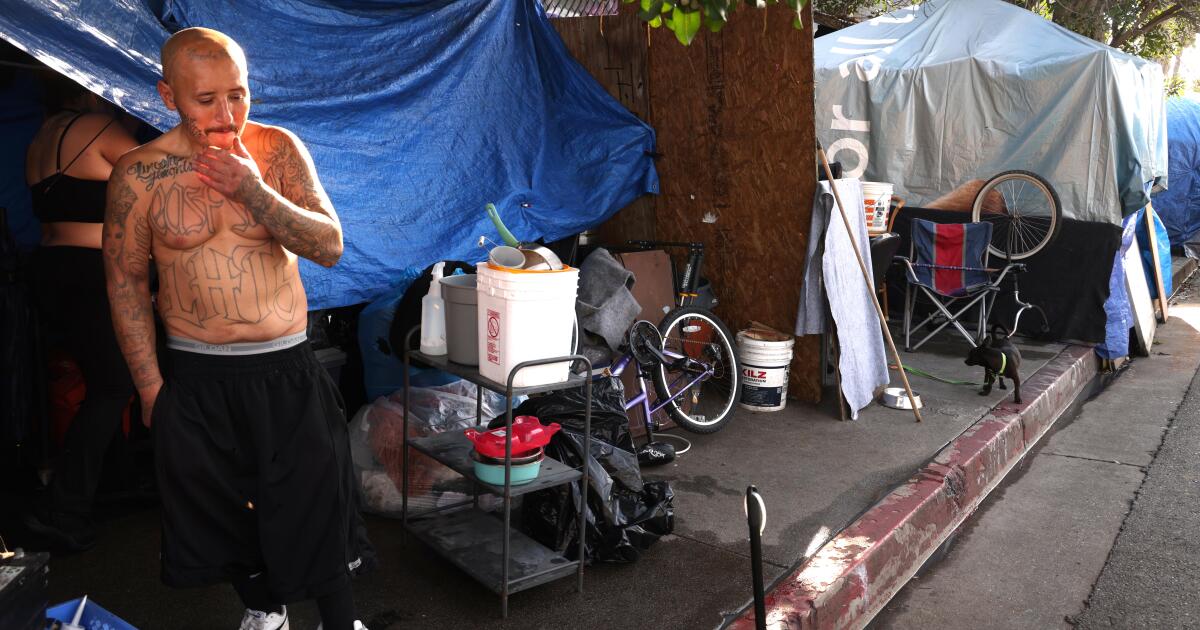
The embattled Los Angeles Homeless Services Authority sued the Trump administration on Monday to stop it from depriving the region of hundreds of millions of dollars in funding, saying the effort is unwarranted and violates federal laws.
The authority, better known as LAHSA, said in its Monday filing that cutting off the funds would put more than 11,000 people — 1,900 of them children — at risk of losing housing or other services.
LAHSA, a joint city-county agency overseen by political appointees, is seeking a temporary restraining order to bar the federal Housing and Urban Development Department from suspending the funds.
“The people who will be harmed by this decision are not bureaucrats,” said Gita O’Neill, LAHSA’s interim chief executive officer, in a statement Monday. “They are families, veterans, seniors, and formerly homeless Angelenos who rely on these resources to remain housed.”
The filing in federal court comes nearly three weeks after HUD officials said they were suspending LAHSA from applying for or receiving federal funds, citing financial mismanagement, fraud and a lack of safeguards to prevent conflicts of interest.
In its 46-page lawsuit, LAHSA pushed back on HUD’s allegations, saying they were not supported by the evidence. Lawyers for LAHSA portrayed HUD’s actions as part of a larger political agenda — elimination of the federally approved “Continuum of Care” system, which makes LAHSA the overarching applicant for most federal homelessness funding across Los Angeles County.
The Trump administration “has made clear it wants to scrap the program entirely in favor of a homelessness policy favoring criminal enforcement, drug treatment, institutionalization and civil commitment of the mentally ill,” the lawsuit states.
HUD officials have said they are barring LAHSA from applying for funds on behalf of the Continuum of Care, which covers 85 cities, including Los Angeles. LAHSA secured $220 million in federal funds for various agencies in 2024 and $944 million since 2021, according to the June 11 letter from HUD Deputy Secretary Andrew D. Hughes.
HUD did not immediately respond to a request for comment. In the letter, Hughes said his agency had received information that LAHSA “may have committed violations of federal law” while carrying out its obligations as part of its HUD grant agreements.
“HUD has evidence that LAHSA’s repeated false statements and its irresponsible actions and failures, including its lack of financial management, internal controls, and safeguards against conflicts of interest, pose a threat to HUD, the public, and those living on the streets of Los Angeles,” he wrote.
In the letter, Hughes said that HUD’s inspector general had opened an investigation. Depending on the outcome, the money could be restored or LAHSA could be permanently barred from receiving funds.
LAHSA, in its lawsuit, said HUD has not provided any investigative findings to show violations of the funding agreements. Instead, agency lawyers said, federal officials relied on “a mash-up of old news articles, comments from public officials taken out of context, and findings from routine public audits that included recommendations that were all appropriately actioned.”
Lawyers for LAHSA contend that HUD’s actions violate the U.S. Constitution and override the dictates of Congress, which established many of the processes for distributing federal homeless funds.
The vast majority of the federal funds secured by LAHSA as a grant applicant goes toward permanent housing, agency officials said.
LAHSA, created in 1993, is overseen by a 10-member commission, half from the city and half from the county. Among those commissioners is L.A. Mayor Karen Bass, who has made homelessness a central part of her agenda. Each of the five county supervisors has an appointee.
At stake in the battle between HUD and LAHSA is an array of services affecting some of the region’s most vulnerable residents.
LAHSA oversees the Homeless Management Information System, the federally-mandated software that tracks homeless people across the county. It has 8,000 individual users and is used by more than 300 agencies, according to the lawsuit.
HUD’s plan to suspend the funding would prevent LAHSA from using the system to match Angelenos — those on the street and in shelters — with housing and services, the lawsuit said.
LAHSA also oversees the annual “point in time” homelessness count across the county. Agency officials have pointed to the results from those counts as evidence that they have been making steady headway, with homelessness decreasing 4.3% countywide and 5.5% within Los Angeles between 2023 and 2025.
Unsheltered homelessness, which tallies the people living outside or in their vehicles, fell by a larger margin, declining 14% across the county and 17.5% within L.A. during that period.
Despite those numbers, LAHSA’s reputation has been battered by some highly critical assessments.
Last year, a global consulting firm retained as part of a federal lawsuit over the city of L.A.’s response to homelessness found that homeless services provided by LAHSA and the city lacked adequate financial controls, leaving the system vulnerable to waste and fraud.
Several months earlier, county auditors identified lax accounting procedures that resulted in LAHSA’s failure to pay its contractors on time. Even after that report was issued, nonprofit groups with LAHSA contracts continued to report that payments were behind schedule.
Last year, the county Board of Supervisors reached a breaking point, pulling more than $300 million — the vast majority of its funds — out of LAHSA and creating its own homelessness department. City officials have been weighing a similar move in recent months.
Trejo has played for several first and second division soccer clubs in the South American country since 2023 and signed on with the northern Venezuela-based Club Sport Marítimo de La Guaira earlier this year.
On Sunday, Trejo’s club announced the deaths of his family in an Instagram post.
“Club Sport Marítimo de La Guaira profoundly laments the irreparable loss of the wife and sons of our player Lucas Trejo,” the team wrote. “[The deaths] occurred on June 24th during the earthquake that shook the entire country.”
When the earthquakes struck, Trejo was at a training session in the capital city of Caracas while his wife Yanina and children— Aarón and Ainhoa— were at the family home in the severely affected beachfront city of La Guaira.
Trejo’s brother-in-law Ricardo Ardiles told CNN Español that the Club Sport Marítimo de La Guaira defender rushed home after the temblors and was “emotionally overwhelmed” as he dug through rubble for days in search of his family.
“What he found was a horrific scene,” Ardiles said last week. “He found absolutely nothing of what the building itself had been.”
Trejo was far from the only athlete gravely affected by the seismic activity in Venezuela.
Former Club Sport Marítimo de La Guaira player Héctor Bello also lost his wife Andrea during the earthquakes. She died while protecting their infant daughter, who was later found alive by rescue teams.
“I’m going to make sure our baby remembers how wonderful you were, how much you loved her,” Bello wrote in an Instagram post honoring his wife. “I’ll tell her the story of how you saved her, how you gave your own life for our daughter, how you were a brave woman who, even with your last breaths, never abandoned her.”
“Venezuelan football bids a heart-wrenching farewell to a young man who represented our country’s colors with pride, commitment and love,” a social media statement from the federation read. “His passing has plunged the entire Vinotinto family into mourning and leaves an indelible mark on all those who shared moments with him both on and off the pitch.”
Eighteen-year-old Razan Sijaa, who played for Caracas Fútbol Club, 14-year-old Víctor Palacios of Club Sport San Augustín’s academy and 17-year-old prospect Ricardo Veloz were also killed by the quakes.
Locally, the family of Dodgers shortstop Miguel Rojas narrowly escaped tragedy and were doing OK after the earthquakes.
“Literally two blocks away from where my family was, two buildings collapsed — the whole building,” Rojas told reporters last week. “I’m lucky, to be honest with you guys. I’m really lucky to have my family still alive and with me. I’m not taking this for granted.”
According to Rojas, his wife and kids were in Caracas, which is approximately six miles south of where the quakes struck. His wife was there to renew her passport, and the kids were going to try to get Venezuelan citizenship. He added that his sister was in Los Teques, Rojas’ hometown about 17 miles south of the coastal destruction.
“It’s really tough to see teammates of mine and players that I played with at some point in my career lose family members, to lose kids,” said Rojas, who spent years playing baseball in La Guaira. “It’s really devastating. It’s been really hard for me to go to sleep at night.”
The holiday marks the commemoration of the 250th Anniversary of Freedom at Nottingham Estate, Long Look.
The Long Look Estate in East End, Tortola, British Virgin Islands, claims to be the oldest free black community in the Western world.
In 1776 Samuel Nottingham, a Quaker, manumitted 25 slaves and gave them 50 acres (200,000 m2) of land in Long Look in Tortola, directing them to cultivate it for the common good.
Quakers were prominent in the abolition movement; Nottingham’s action pre-dates the foundation of the Society for Effecting the Abolition of the Slave Trade by more than a decade.
Two people were killed and several others were injured after an Israeli strike hit the Mawasi area of Khan Younis, a zone previously designated by Israel as a humanitarian area in the southern Gaza Strip. A total of five people were killed across Gaza on Monday.
The Inside Soap Awards are back and they have announced a major change to this years’ event to mark the 30th anniversary
The Inside Soap Awards are back!(Image: PA)
The Inside Soap Awards are back – and are making the move up North for the first time ever.
This year’s event will take place in Manchester and will be the only soap awards ceremony held this year.
Coronation Street, EastEnders, Emmerdale and Hollyoaks will all go head to head whilst Australian soap Home and Away has also been nominated as well as dramas like Casualty and Waterloo Road.
Up for nomination this year is the epic Coronation Street and Emmerdale crossover episode – Corriedale – as well as Nigel’s sad death in EastEnders, amongst other dramatic and heartbreaking scenes.
“The Inside Soap Awards are still going strong after 30 years, and we’re proud to be championing all the wonderful work the soaps produce day in, day out. Our readers are just as passionate and loyal now as they were back in 1996, with over 90,000 of them voting each year – and the Inside Soap Awards remain the only accolades of their kind to be voted for entirely by the true experts, the soap fans themselves,” Inside Soap magazine editor Sarah Ellis said.
To mark the awards’ 30th anniversary, there will be their very own Hall of Fame and the first inductee will be announced during the ceremony. She added: “The soap star who receives this prestigious accolade will be someone who’s been closely associated with the Inside Soap Awards since they began in 1996.
“In addition, fans will also be able to nominate their Soap Superstar of 2026, a person they feel has gone above and beyond the call of duty when it comes to providing entertainment.”
Voting opens midday on Tuesday 30 June, and the winners will be revealed in Manchester in September.
The full list of nominations are as follows:
Best Actress
Sue Devaney (Debbie Webster, Coronation Street )
Vicky Myers (Lisa Connor-Swain, Coronation Street )
WASHINGTON — Federal law enforcement authorities are preparing for one of Washington’s largest and most complex security operations as the nation’s capital gears up to celebrate the 250th anniversary of the nation’s freedom.
With rising political violence, including recent incidents near the White House, and a president who enjoys being at the center of public pomp yet has repeatedly faced attempts on his life, a major security challenge awaits.
“It comes as no surprise to you that D.C. on a normal day is a target-rich environment,” said Darren B. Cox assistant director in charge of the FBI’s Washington field office at a recent news conference detailing the security preparations. “We are prepared for any threats.”
Hundreds of thousands of people are expected to visit Washington in the coming weeks for the festivities.
The throngs will be joined by thousands of law enforcement officers and agents and 5,000 National Guard troops, along with military-style vehicles and other hardware they don’t often see on the streets of America.
Authorities are preparing for a major security operation
The largest crowds are expected July 4, with multiple events happening simultaneously, including the Great American State Fair, a showcase for each state and a signature attraction of the celebrations that stretches across the National Mall.
The annual fireworks display that night is designated a National Security Special Event for the first time by the Department of Homeland Security, the highest classification for federal security coordination.
For visitors, that means strict ID requirements, long lines and magnetometers, similar to air travel security. Snipers are also expected to be deployed at some events.
Flights at Ronald Reagan Washington National Airport, which is across the Potomac River from Washington, will be suspended longer than in other years because of the scope of the celebrations — from noon on July 4 until the next day. Other America 250 events that include flyovers or parachute jumps could prompt more flight disruptions.
The FBI, Secret Service, U.S. Capitol Police, U.S. Park Police and D.C. National Guard have all been involved in security coordination for the events. At the news conference earlier this month, equipment that could be deployed to guard the city was on display, including BearCat armored SWAT vehicles, Mine-Resistant Ambush Protected vehicles, known as MRAPs, as well as communication vans and FBI diving boats.
“Our protective model is meant to adjust to any type of direct or indirect threats that we come across,” said Tara McLeese, special agent in charge of the Secret Service Washington field office. “I can assure you that we have no lack of imagination as to the potential threats out there.”
Brig. Gen. Leland Blanchard II, interim commander of the D.C. National Guard, said the planning had been underway for months and included rehearsals.
Blanchard said the Guard members would continue the roles they have served the last 10 months as part of a deployment to the city President Trump says is meant to fight crime. Blanchard highlighted that guard members, including military police officers, would be helping with duties like traffic and crowd control as well as responding to emergencies around the events.
President Trump, who has already attended several events leading up to July 4, including the kickoff rally last week launching the Great American State Fair, has said on Truth Social that he would hold a rally on the National Mall.
Speaking at a news conference Monday updating the upcoming security preparations, Cox reiterated that “at this time we are not tracking any credible threats related to the July 4 event, but we always remain vigilant.”
Recent violence has shaped the threat picture
The festivities come at a fraught moment, with recent political violence creating a complex threat environment for authorities. One man, Cole Tomas Allen, has been charged with attempting to assassinate the president after he sprinted past security at the White House Correspondents’ Assn. dinner in April. Allen has pleaded not guilty.
In the following weeks, two men on two separate occasions opened fired at Secret Service officers, the service said. Each incident happened in the vicinity of the White House.
More recently, the FBI announced it had thwarted a planned attack targeting Trump’s UFC cage-fighting show at the White House. Several suspects have been arrested in that case.
Security was already enhanced on the National Mall ahead of the launch of festivities, as Trump claimed without providing evidence that vandals had damaged the Reflecting Pool that he had recently renovated.
Matt Dallek, a political scientist at George Washington University who studies extremism, said Trump posed a unique security challenge because he is “both an accelerant and a target of political violence.”
The nation’s bicentennial offers a historical parallel
Observers draw some parallels to the 1976 bicentennial. The nation was coming off Watergate and Vietnam, and 10 months before the celebration there were two assassination attempts against then-President Ford.
“There was a lot of sourness in the country in ’76, a lot of cynicism about the direction of the country,” Dallek said. But both Ford and his Democratic opponent Jimmy Carter understood the threat political divisions posed and “were looking to bring down the level of vitriol.”
Angelyn Spaulding Flowers, professor of Homeland Security & Administration of Justice at the University of the District of Columbia, said the amount of security was unparalleled for the city, citing the ongoing and open-ended National Guard presence that has flooded Washington with additional security patrols for months.
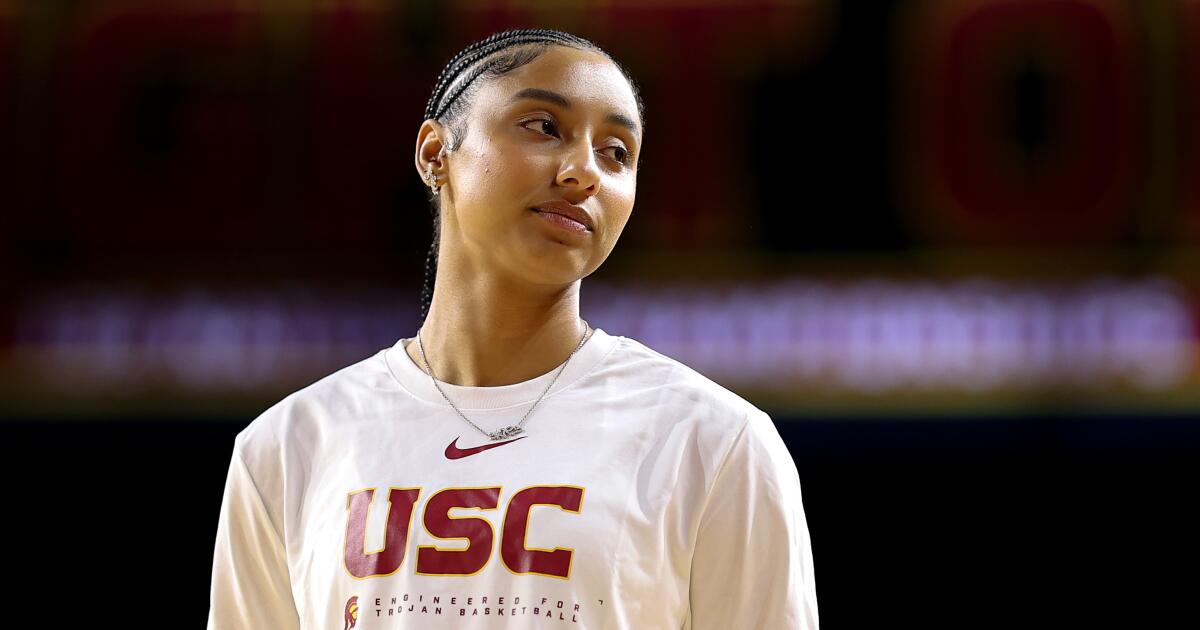
She’d been out for over a year, her long, arduous recovery from a season-ending knee injury kept almost completely under wraps. But as JuJu Watkins took her place in front of a microphone for the first time since returning to practice this summer, the USC superstar could barely contain her gratitude.
Asked Monday what the best part about being back has been so far, a big smile crept across Watkins’ face.
“Honestly everything,” Watkins said. “Like I don’t even know, the smallest stuff just gets me excited.”
Watkins’ return is a momentous mile marker for a team that has serious national title aspirations this season. Her status remains uncertain, and reporters in attendance Monday were told not to inquire further about Watkins’ specific recovery timeline. But Watkins did say that she’s already been able to scrimmage during USC’s summer practice and that she’s “feeling back like myself.”
“It’s just been a long time coming,” Watkins said. “I’ve just been working out and grinding every day so that I could be in position, so to see all of that hard work pay off right now, it’s really fulfilling.”
Watkins was a two-time consensus All-American and the Associated Press Player of the Year in 2025, when her knee buckled that March during a breakaway in the second round of the NCAA tournament. The injury, a torn ACL, wouldn’t just derail a possible title run for USC that season, but also upend the Trojans’ trajectory for the next one.
Facing one of the toughest schedules in the nation, USC missed Watkins dearly. The Trojans finished their frustrating campaign 18-14 before losing in the Round of 32.
As she sat out, Watkins said she struggled to keep still. Patience didn’t necessarily come naturally. She found herself leaning on others, she said, like Dallas Wings point guard Paige Bueckers, who went through her own ACL recovery.
“She was constantly checking up on me, sending me texts, encouraging me,” Watkins said of Bueckers. ‘I really appreciated that.”
Coaches suggested she pour that energy into her teammates. So she took solace in doing the little things, like arranging the locker room chairs during pre-game.
“Just to watch her take something that was so difficult and pour herself into everything that went into last year was something I’ll never forget,” coach Lindsay Gottlieb said. “I really do take a lot of inspiration from it.”
The silver lining, coming out of a season without their superstar, was the emergence of freshman Jazzy Davidson, who came to USC to play alongside Watkins. Instead, she ended up winning National Freshman of the Year and becoming a rising star in her own right,
This month, Watkins and Davidson were finally able to take the floor together, just as Gottlieb had once envisioned. She’d waited quite a while for that pairing, she reminded Monday. But Davidson, she thinks, will be all the better for having survived her freshman season without Watkins.
“You just come back with a different level of confidence,” Gottlieb said. “I hope she brings with her every experience she had because who had more experience than Jazzy in terms of a freshman year where she handled so much?”
Now, with Watkins back and Davidson set to take another step forward, there won’t be so much pressure on the Trojans’ newest top recruit.
Saniyah Hall marks the third straight No. 1 overall prospect to sign with Gottlieb and USC, but she steps into a decidedly different scenario than the other two did. In addition to Watkins and Davidson, the Trojans also brought in two other top freshmen in Sitaya Fagan and Sara Okeke, as well as two priority portal adds in Ryann Bennett and Pania Davis.
“With the talent that’s on the team,” Hall said, “I think it could be something that’s very special.”
That starts with Watkins, who, in spite of a year away, apparently hasn’t skipped a beat in her return.
“I feel like she’s back like she never left,” guard Kennedy Smith said.
June 29 (UPI) — As Speaker of the House Mike Johnson prepared to send a bipartisan, landmark housing affordability bill to President Donald Trump‘s desk on Monday, the president told reporters that he remains undecided on whether to sign it.
“When I look at the (housing) bill, it’s a bill,” Trump said to reporters Monday, The Hill reported. “When I look at the SAVE America Act, it’s about saving America.”
The housing bill is “a yawn,” the president said. “To me, compared to the SAVE America Act, everything is a big yawn.”
The housing bill’s provisions include measures that encourage renovating older homes, encourage communities to build more housing through funding and grant programs, cut some red-tape issues around building housing and effectively ban private equity from buying up single-family homes.
When canceling the original signing of the bill, Trump said he wouldn’t sign it until Congress passed the SAVE America Act, which would require voters to prove their citizenship before they register to vote
Critics say the controversial act could disenfranchise millions of Americans, and Republicans have said that they don’t have the votes to pass it.
Trump acknowledged this Monday, The Hill reported, saying the SAVE America Act is “probably not going to happen because we have four Republican senators, maybe five, that just won’t vote for it. It’s crazy.”
The president said that the housing bill’s bipartisan backing was part of his issue with it.
“It’s very bipartisan — that means the Democrats like it,”he said. “They’re getting things that I wouldn’t necessarily agree to.”
Speaker Johnson, a Republican, said Sunday that he believed Trump would sign the housing bill after it was sent to him, “because we’re delivering for the people, and that’s what he wants to do.”
If Trump does not sign the bill, it could still go into effect. The U.S. Constitution stipulates that a bill will become law automatically if a president does not take action for 10 days, as long as Congress is in session.
Trump could also veto the bill. If that happens, Congress has the power to override the veto by passing the act by a two-thirds vote in both the House and Senate.