Month: June 2026

Hidden gem city voted one of the best places to visit in UK 2026 – not London or York

Time Out has named this spot as one of the best places to visit in the UK highlighting its stunning beaches, world-class museums and vibrant food scene

It’s time to look beyond the obvious and consider some of Britain’s finest destinations which may not yet feature on your travel radar — but absolutely should — and one of them is tucked away in the North East.

Time Out has unveiled its list of ‘The 14 best places to visit in the UK in 2026’, and cracking the top 10 is a North East city that is frequently overlooked in favour of its more celebrated neighbour just 10 miles down the road.

Certain spots earned their place on the list for their buzzing nightlife, others for their coastlines, some for their museums, and others still for their exceptional food scenes. Claiming the number 10 spot was Sunderland, carving out a reputation that stretches well beyond its celebrated football club.

Premier League glory aside, Sunderland might not immediately spring to mind for many travellers, yet according to the publication’s experts, there’s a wealth of experiences waiting to be discovered in this seaside city. With a host of exhibitions, sporting fixtures and much more scheduled throughout 2026, there are countless reasons to visit — and even more to make you want to linger.

Beaches

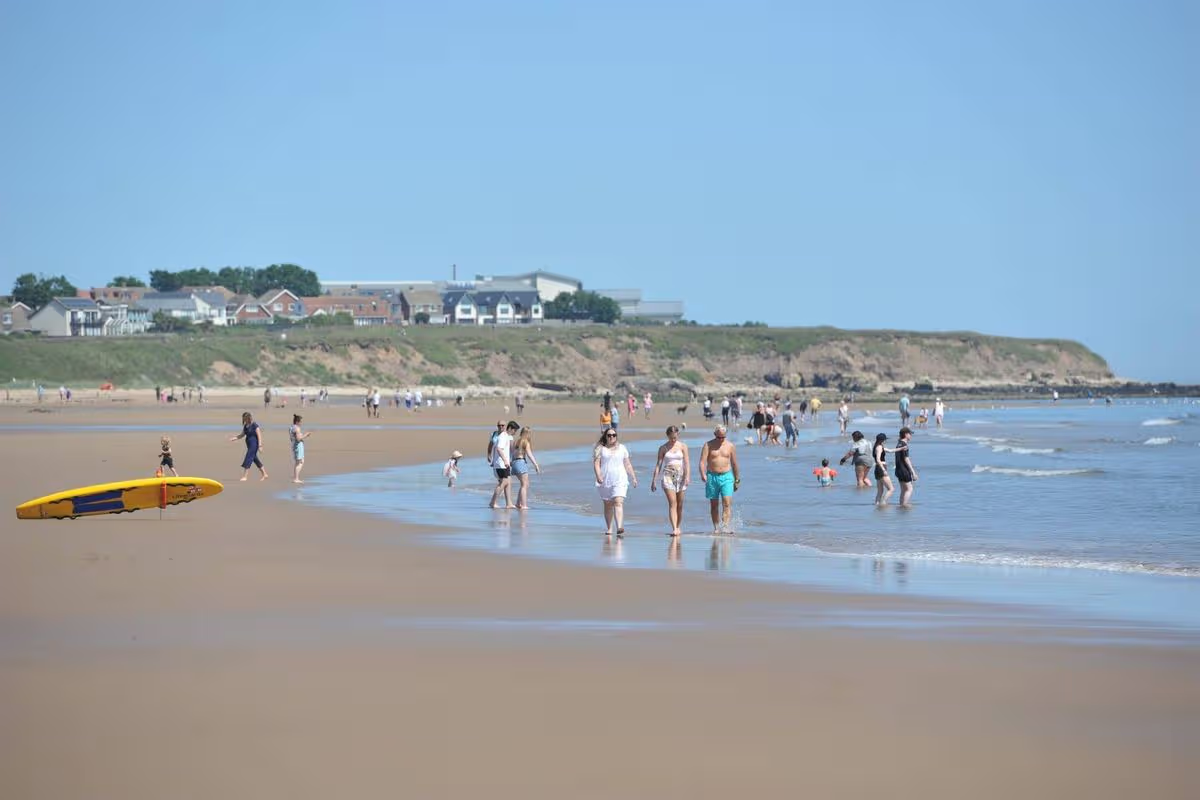
Unlike most thriving cities, Sunderland is fortunate enough to boast a handful of sweeping and stunning beaches, owing to its enviable position along the mouth of the River Wear on the North Sea coast. The twin beaches at Roker and Seaburn are the perfect spot to kick back and relax, with many visitors hailing them as “the best in the UK” — some having made the trip since childhood.

Both hold blue flag status, making them a clean and safe destination for the whole family, whether you’re soaking up the golden sands in summer or enjoying a brisk stroll along the shore during the cooler months.

A recent visitor shared on TripAdvisor: “We spent a fine sunny spring morning walking on the seafront. We got there easily by taking the E1 bus from Sunderland city centre.

“Roker and Seaburn are attractive with good beaches with nice cafes with good coffee, which we sampled, and seafront restaurants that we would like to try next time. We only spent three hours here, but it has whetted our appetites and will certainly come again when visiting Sunderland.”

Pier Point at Roker sits right on the beachfront, lined with a variety of cafés and restaurants where you can tuck into classic seaside fare and stop off for a drink or two.

Museums

As highlighted by Time Out when unveiling their rankings, museums play a central role in Sunderland’s appeal as a tourist destination and serve as a brilliant showcase of the city’s rich cultural and historical heritage. It’s worth checking ahead for any upcoming exhibits, but on any given day, these venues are well worth a visit.

Standing out among the city’s attractions is the National Glass Centre, set within a striking glass structure beside the waterfront. The venue is devoted to examining concepts and heritage through the medium of glass, while offering visitors the chance to get hands-on and engage with the educational programmes available.

It’s highly regarded as one of Sunderland’s top attractions, ranking second on TripAdvisor. One visitor remarked: “This place is amazing. The glassblowing demonstration is really good, the cafe is really nice, food delish, staff very good. Nice setting on the water.”

Additional museums include the North East Land, Sea and Air Museum, Ryhope Engines Museum and, perhaps most significantly, Sunderland Museum and Winter Gardens. Located in the city centre, Sunderland Museum chronicles the city’s story across four levels, featuring an array of captivating galleries and displays.

One visitor said: “The museum offers free entry and has plenty of exhibits. I first had to see the staple of the museum, which is Wallace the Lion who has been with the museum for over 160 years.

“There was a write-up about how Wallace came to be in the museum which was nice to read about. There were a few other areas which showed off the history of the mines and celebrated the miners’ unions, etc.”

For those seeking somewhere to while away a few hours indoors, whether escaping dreary weather or beating the heat, free entry means there’s every reason to discover what the museum has to offer.

Across the city, a diverse array of thriving independent eateries are serving up some seriously tasty grub, from street food stalls to cosy cafés and beloved seafront staples. Time Out made a point of singling out Propa Pies, a “nostalgia-fuelled pastry pop-up from Hairy Biker Si King”, which offers an impressive selection of inventively flavoured pies alongside timeless classics.

Source link

WhatsApp to let users go by usernames, not phone numbers | Technology News

WhatsApp says the feature is designed to give its three billion users a new layer of control over who can contact them.

WhatsApp will let users go by usernames instead of phone numbers, closing a longstanding privacy gap on the app used by more than three billion people.

The Meta-owned platform said on Monday that it has begun letting users reserve unique usernames before a wider rollout later this year when people will be able to choose to be found and contacted only by their handles.

Recommended Stories

list of 4 itemsend of list

WhatsApp said the change was designed as a core privacy feature with no public directory of usernames and no autocomplete suggestions, meaning users will need to know someone’s exact username to reach them for the first time.

WhatsApp offers end-to-end encrypted communication across smartphones, tablets and desktop computers. Until now, it has allowed users to be contacted by anyone who has their phone number.

The app said in a blog post that over the “coming months”, users will get the option to be found and contacted only by their username, and not their number. It wasn’t more specific about the timeline.

“We have designed this as a core privacy feature,” Alice Newton-Rex, WhatsApp’s vice president of product, told reporters.

“People will need to know your exact username to contact you for the first time,” she said.

WhatsApp’s current privacy settings are limited to blocking individual users and silencing unknown callers.

The app also allows users to add a profile name, but that’s only displayed in chat groups for other people who don’t have the user’s contact info saved.

A scramble for unique usernames

While people in the United States still prefer text messaging to WhatsApp, the app is widely used in Europe, Asia and much of the rest of the world.

Catchy online handles are highly coveted, and users will likely scramble to claim a desirable one.

“I think a lot of people will go and get usernames, and that’s why we decided to open reservations early,” Newton-Rex said.

Companies, organisations and creators with existing accounts on Meta’s social media platforms, Instagram and Facebook, will get the chance to claim their usernames on WhatsApp.

Usernames need to be three to 35 characters. To prevent impersonation, WhatsApp will hold back usernames for high-profile people or groups, such as celebrities, public figures and government entities.

Source link

Good Morning Britain’s Charlotte Hawkins inundated with support after career move 

The ITV star has been hosting another well-known programme this week away from her role on Good Morning Britain.

A Good Morning Britain star has shared a career update with her followers online.

Popular ITV presenter Charlotte Hawkins has moved channels as she’s been fronting Jeremy Vine’s show on Channel 5 – and fans have been rushing to comment following her debut.

Charlotte, who has been a regular face on Good Morning Britain since it launched in 2014, confirmed she’d be filling in for Jeremy on her social media last Friday (June 26) after she’d guest-hosted Matt Allwright’s show on the channel.

Now, the 51-year-old has been showered with support after fronting Jeremy’s show for the first time on Monday (June 29) as she shared a snap of herself in the studio alongside Joanna Jarjue and Mike Parry.

One person commented: “You looked amazing. Good job done.” Someone else added: “It went very well, very natural.”

Another fan wrote: “This works for you, good job.” While on X, one viewer shared: ” #Jeremyvine Oh Charlotte’s swapped the sofa on ITV’s Good Morning Britain to the Channel 5 desk and chair #ThisMorning #Gmb

While someone else commented: “Great seeing @CharlotteHawkns on @JeremyVineOn5 this morning #Jeremyvine .”

Opening the show on Monday, Charlotte commented: “I’m Charlotte Hawkins, sitting in for Jeremy while he enjoys a holiday!”

Charlotte confirmed that she’d be back on the programme on Tuesday (June 30). During Monday’s episode she welcomed back Mike Parry to the panel after his recent treatment for skin cancer.

When asked how he’s doing, he replied: “I feel very well, thank you. I can’t thank The Royal Marsden Hospital enough for what they did for me last week.

“It was five consecutive days, a blast of radiation, once a day, a serious blast and then other procedures.

“But, I feel good at the end of it, I feel mentally very well. I know I was in the hands of some of the best people in the world.”

He also shared a warning to viewers as he highlighted the importance of keeping out of the sun following his diagnosis.

Mike added: “can I say to everybody, please, please, take the greatest precaution against that big yellow ball in the sky, the sun. It will get you; you have a chance to stop it.”

The Jeremy Vine show airs every weekday on Channel 5 from 9:15am.

Source link

F1 Q&A: Russell’s controversial pole, Ferrari’s underwhelming Austria, Verstappen key to driver market and Williams’ regression

Mercedes’ George Russell took his second win of the season with victory from pole position at the Austrian Grand Prix.

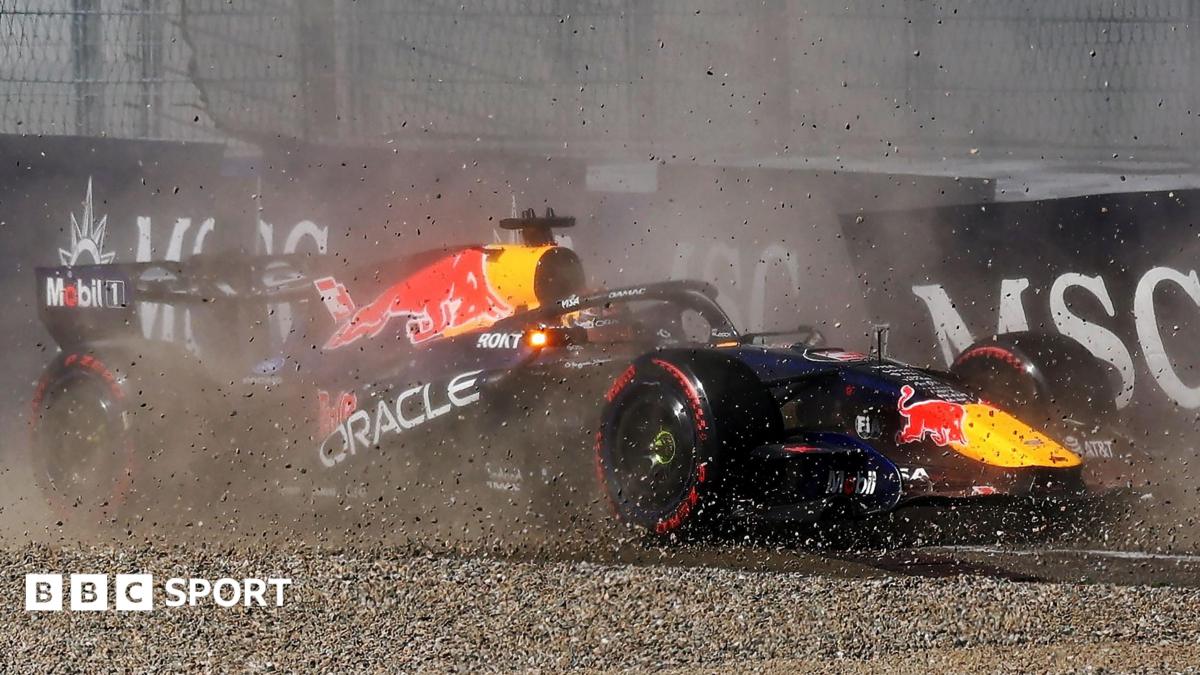
Max Verstappen recovered from a crash in the final part of qualifying to finish second at Red Bull’s home race, with championship leader Kimi Antonelli in third.

Russell’s win moves him back up to second in the drivers’ standings, 40 points behind team-mate Antonelli.

BBC F1 correspondent Andrew Benson answers your latest questions before this weekend’s British Grand Prix at Silverstone.

I think a pole position under a yellow flag sets a dangerous precedent, because it’s clear that from now on, everyone will continue to push hard after a small slow down, or else their lap will be cancelled. I’d be curious to hear your opinion – Lorenzo

George Russell’s pole position at the Austrian Grand Prix, the foundation for his victory on Sunday, came about in controversial circumstances.

According to the rules, Russell did nothing wrong.

Marshals trackside initially waved a single yellow flag when Max Verstappen crashed at Turn Nine.

Kimi Antonelli mis-read the light board as a double yellow, and backed out of his lap – the correct response for what he thought to be the case. Under a double yellow, drivers have to “slow down and be prepared to stop”.

But under a single yellow, a driver does not have to abandon their lap. They only have to not set a fastest time in the relevant section of the track.

Russell complied with this, but the rest of his lap was fast enough to put him on pole anyway.

The concern here is less the specifics of these rules, but whether the correct flag was shown in the circumstances.

The answer to that has to be no.

Verstappen crashed at the fastest corner on the track, which is taken at close to 140mph.

Turn Nine is notoriously challenging, with its downhill entry, and an exit kerb that’s easy to over-run.

Both Verstappen and Antonelli questioned the decision to show only a single yellow at the time, when Verstappen’s car was in the barrier at this corner as other drivers were seeking to set what would be their fastest laps of the weekend.

Verstappen described it as “quite crazy”.

Antonelli said: “There was a car in the wall in a fast corner. I don’t know why it didn’t go double-yellow straight away, because it’s a super-quick corner, and if you go off at the same time, it can end up very badly. That was a bit confusing.

“For sure it’s something that needs to be reviewed, especially when it happens in a high-speed corner.

“If it’s a slow-speed [corner], single yellow can be OK but fast corners should be double yellow straight away.”

To underline the point, within 20 seconds, race control upgraded the flag to a double yellow, but everyone had completed their laps by then.

Source link

Seoul shares rise nearly 1 pct on tech gains, with upcoming U.S.-Iran talks in focus

This photo, taken Tuesday, shows the trading room of Hana Bank in Seoul as South Korean stocks rose by almost one percent as investors watched for a resumption of U.S.-Iran talks. Photo by Yonhap

South Korean stocks ended nearly 1 percent higher Tuesday, led by gains in technology shares, as investors watched for a possible resumption of U.S.-Iran talks in Qatar aimed at easing tensions in the Strait of Hormuz. The Korean won weakened against the U.S. dollar.

The benchmark Korea Composite Stock Price Index (KOSPI) gained 81.83 points, or 0.97 percent, to close at 8,476.47.

Investor sentiment improved after the United States and Iran were set to resume talks in Qatar aimed at easing tensions in the Strait of Hormuz, alleviating concerns over a prolonged disruption to global oil supplies.

Overnight, Wall Street rebounded sharply as investors returned to tech stocks.

The Dow Jones Industrial Average gained 0.59 percent to close at a record high, while the Nasdaq composite jumped 2.07 percent and the S&P 500 advanced 1.18 percent.

Crude prices rose modestly as investors monitored implementation of the U.S.-Iran peace framework.

Trade volume was moderate at 444.61 million shares worth 41.08 trillion won (US$26.51 billion), with losers outnumbering losers 621 to 261

Institutions and individuals bought a net 2.93 trillion won and 833.45 billion won worth of shares, respectively, while foreigners sold a net 3.79 trillion won.

“Investors scooped up semiconductor shares following recent losses, while IT infrastructure and electricity stocks rose on hopes for major investment in semiconductor infrastructure in the southwestern region announced by the government and chipmakers,” said Lee Kyoung-min, an analyst at Daishin Securities.

Tech shares lifted the overall market.

Market bellwether Samsung Electronics rose 3.41 percent to 334,000 won, and chip giant SK hynix gained 0.84 percent to 1.65 million won. SK Square, the parent of SK hynix, advanced 3.48 percent to 1.69 million won.

Chip components maker Samsung Electro-Mechanics jumped 7.16 percent to 1.18 million won after announcing a 454 billion-won supply deal for multilayer ceramic capacitors (MLCCs) for artificial intelligence servers to a U.S.-based customer.

Battery shares retreated on profit-taking after sharp gains the previous session.

LG Energy Solution plunged 9.61 percent to 362,000 won, and its smaller rival Samsung SDI sank 4.88 percent to 487,000 won.

The Korean won was quoted at 1,549.4 won per U.S. dollar as of 3:30 p.m., down 4.2 won from the previous session.

Copyright (c) Yonhap News Agency prohibits its content from being redistributed or reprinted without consent, and forbids the content from being learned and used by artificial intelligence systems.

Source link

Air Force Discloses B-2 Can Launch Stealth Anti-Ship Missiles In Surprise Announcement

One of the U.S. Air Force’s B-2 bombers fired an AGM-158C Long Range Anti-Ship Missile (LRASM) during a recent live-fire sinking exercise (SINKEX) in the Western Pacific. The stealthy LRASM was not previously known to be in the B-2’s arsenal. Integration of the AGM-158C offers a huge boost in capability for the B-2, creating a penetrating fleet-killing platform that could be especially valuable in a future high-end fight in the Pacific against China.

“The Pacific Air Forces successfully conducted a live-fire Sinking Exercise using the B-2 Spirit north of the Mariana Islands. The B-2 deployed the Long Range Anti-Ship Missile, demonstrating enhanced ability to achieve strategic objectives within range of potential threats,” according to a press release today from Pacific Air Forces (PACAF). “With the deployment of the LRASM from the B-2 Spirit, the Pacific Air Forces takes a major step forward in countering maritime threats. This milestone showcased impressive high-end innovation reinforcing the US military’s commitment to safeguarding national interests and maintaining global security.”

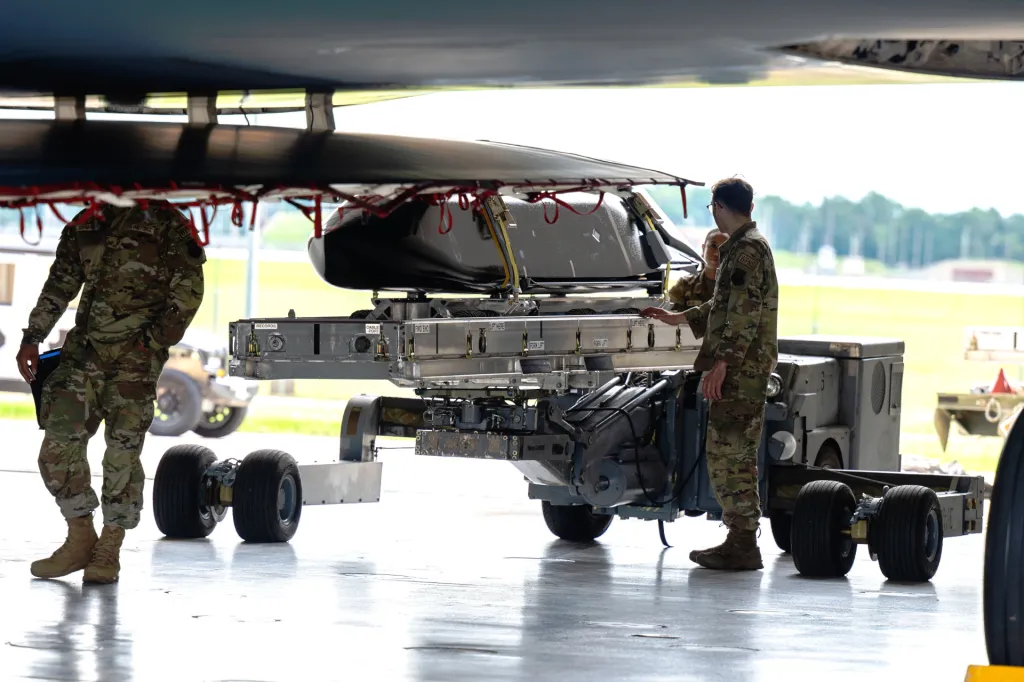
Air Force personnel prepare to load an AGM-158C onto a waiting B-2 bomber. USAF

The release does not provide any further details about the SINKEX, but PACAF confirmed to TWZ directly that the B-2 fired the LRASM at the ex-USS Juneau, a decommissioned Austin class amphibious warfare ship, as part of Exercise Valiant Shield 2026. U.S. and allied forces taking part in the exercise pummeled the Juneau with various munitions this weekend, sending it to the bottom of the Pacific, roughly 200 nautical miles off the coast of Guam. An unnamed Japan Maritime Self-Defense Force (JMSDF) submarine appears to have delivered the final blow with a heavyweight torpedo. The B-2’s involvement was not mentioned until today.

The ex-USS Juneau is hit by a torpedo from an unnamed Japanese submarine during the SINKEX during Exercise Valiant Shield on June 27, 2026. USN/Seaman Apprentice Anthony Vilardi

“Exercises like Valiant Shield allow U.S. Pacific Command the opportunity to integrate forces from all branches of service and with our allies to conduct precise, lethal, and overwhelming multi-domain effects that demonstrate the strength and versatility of the Joint Force and our commitment to a free and open Indo-Pacific,” a PACAF spokesperson told TWZ.

A B-2 bomber takes off from Andersen Air Force Base on Guam on a sortie as part of Exercise Valiant Shield 2026. USAF

As noted, the B-2’s ability to fire LRASM at all does not appear to have been previously disclosed. When reached for comment, Air Force Global Strike Command (AFGSC) told TWZ that all details about the integration of the missile onto the B-2 were classified, as was whether or not the SINKEX represented any kind of first for the bomber.

A review of the Pentagon’s 2027 Fiscal Year budget proposal does not appear to show any mention of LRASM integration on B-2, or plans to do so in the future. The only cleared launch platforms explicitly mentioned are the Navy’s F/A-18E/F Super Hornet fighters and the U.S. Air Force’s B-1 bombers. Work has already been publicly underway to integrate LRASM onto the F-15E Strike Eagle, F-15EX Eagle II, F-16C/D Viper, at least certain variants of the F-35, and the P-8A Poseidon. Budget documents also mention plans to integrate the missile on the B-52 bomber.

A LRASM is seen under the wing of an F/A-18, with another missile in the foreground. USN

The Air Force previously highlighted other efforts to expand the B-2’s anti-ship capabilities in the form of Quicksink precision-guided anti-ship bombs, which leverage the Joint Direct Attack Munition (JDAM) guidance kit. You can read more about Quicksink here.

A B-2 bomber drops a Quicksink bomb during a test in cooperation with the Royal Norwegian Air Force in 2025. A Norwegian F-35A is seen flying alongside. Royal Norwegian Air Force

The AGM-158C is derived from the AGM-158 Joint Air-to-Surface Standoff Missile (JASSM) family of land-attack cruise missiles. The baseline AGM-158A JASSM and AGM-158B JASSM-Extended Range (JASSM-ER) are already known to be integrated onto the B-2. The B-2 is also known to be able to carry up to 16 AGM-158As, and is very likely capable of carrying the same number of JASSM-ERs and LRASMs, as all of these missiles have the same general form factor.

A B-2 drops a JASSM. USAF

In terms of its general mode of operation, LRASM uses GPS-assisted Inertial Navigation System (INS) guidance to navigate first to a designated target area. The missile is highly autonomous, thanks to a built-in route planning capability that is linked to an onboard electronic support measures (ESM) package. The missile has the ability to automatically change course in response to the sudden emergence of enemy defenses based on their radio-frequency emissions, as well as use those signals to better detect potential targets.

After arriving in the target area, the missile’s imaging infrared sensor in the nose takes over for the terminal phase of flight. Using a built-in threat target library database, the seeker searches for and categorizes targets autonomously. Information in that database also helps steer the missile to hit the target ship at its most vulnerable point. As a passive sensor, the infrared seeker does not send out radio-frequency signals that an enemy could detect. It is also immune to radio-frequency jamming.

Long Range Anti-Ship Missile (LRASM) thumbnail

Long Range Anti-Ship Missile (LRASM)


LRASM also has a datalink that allows it to get threat updates while in flight. It can also work cooperatively with other LRASMs during coordinated strikes. A C-3 variant is now in development that will feature a boost in maximum range, as well as “C++ software, [an] enhanced BLOS [beyond-line-of-sight] Weapons Data Link, [and] advanced survivability” capabilities, according to previously released Navy budget documents. The range of existing versions of the LRASM is not publicly disclosed, but is reported to be between 200 and 300 miles, in line with the AGM-158A JASSM. The C-3 version is expected to have the same reach as the JASSM-ER, which is reported to be around 600 miles.

“With the deployment of the LRASM from the B-2 Spirit, the Pacific Air Forces takes a major step forward in countering maritime threats,” according to today’s release from that command. “This milestone showcased impressive high-end innovation reinforcing the US military’s commitment to safeguarding national interests and maintaining global security.”

“The B-2’s impressive performance underscores the US military’s commitment to adaptability and flexibility in the face of emerging security challenges,” Air Force Gen. Kevin B. Schneider, head of PACAF, also said in a statement. “By prioritizing counter-maritime strike operations, we can maintain a decisive edge over adversaries, protect our national interests and ensure the free and open Pacific that underpin our global security.”

Another view of an LRASM being loaded onto a B-2 ahead of the Valiant Shield 2026 SINKEX. USAF

As we noted right up front in this story, pairing the highly survivable and hard-to-spot B-2 with LRASM presents a new penetrating anti-ship capability. Each one of the bombers could engage multiple ships simultaneously and use their other attributes to get within range of even the most high-value targets, such as the People’s Liberation Army Navy’s (PLAN) growing fleet of aircraft carriers and big deck amphibious assault ships. LRASM’s range means that the bombers only need to be in hundreds of miles of their targets. As mentioned, the missiles themselves offer a high degree of survivability, as well.

The Chinese aircraft carrier Shandong, at left, and  Liaoning, at right, sail together in the Pacific together with their escorts, as aircraft fly overhead. Chinese government

We already know that the Air Force’s B-1 bomber crews have been training for years to use large LRASM barrages to decapitate major surface naval forces.

“LRASM plays a critical role in ensuring U.S. naval access to operate in both open-ocean and littoral environments due to its enhanced ability to discriminate between targets from long-range,” then-Lt. Col. Timothy Albrecht, said following B-1 training sorties over the Black Sea back in 2020. “With the increase of maritime threats and their improvement of anti-access/area-denial [A2/AD] environmental weapons, this stealthy anti-ship cruise missile provides reduced risk to strike assets by penetrating and defeating sophisticated enemy air-defense systems.”

A B-1 bomber drops an LRASM during a test. USAF

At that time, Albrecht was a member of the U.S. Air Forces in Europe’s (USAFE) 603rd Air Operations Center and the Bomber Task Force mission planner.

The adversary A2/AD threat ecosystem globally has only continued to grow in scale and scope since then, and TWZ regularly calls attention to this reality. The PLA has already established significant A2/AD bubbles in the Pacific and continues to expand on those capabilities. In this context, the public disclosure of the B-2’s LRASM capability around Valiant Shield in the Pacific can also be seen as sending a message aimed straight at Beijing, just as the U.S. military has done with previous long-range weapon tests in the region in the past.

A B-2 bomber seen along with other aircraft at Andersen Air Force Base on Guam. USAF

The fact that LRASM has been integrated onto the B-2 also points to future anti-ship capabilities on the forthcoming B-21 Raider fleet. The B-21 is notably smaller than the B-2, and will be able to carry less ordnance as a result, but the Air Force also plans to buy at least 100 of them, if not substantially more. The Raider is also expected to have extreme unrefueled range. Air Force officials talk regularly about what all this will mean for future operations compared to what is offered today by the still highly capable, but much smaller fleet of just 19 B-2s.

A pre-production B-21 Raider bomber seen from above during aerial refueling testing. USAF

What has been revealed already is that the Air Force now has a very capable, long-range, deep-penetrating delivery platform capable of delivering its most capable and hard-to-detect anti-ship missiles.

Contact the author: joe@twz.com

Joseph is TWZ’s Deputy Editor, helping to oversee the site’s highly experienced and dedicated team, while also writing informative and impactful defense and national security content. He lives right in the thick of it in the Washington, D.C. area.


Howard is a Senior Staff Writer for TWZ. He writes frequently about conflict, focusing heavily on the Middle East and Ukraine, and interviews with military and intelligence officials and industry leaders from around the globe. He lives near Tampa, Florida, home of U.S. Central Command, U.S. Special Operations Command.


Source link

Rolf Harris survivors lash out at predatory sex offender and ‘disgusting old man’

Unlike Jimmy Savile, Rolf Harris was caught before his death and was made to pay the price for his many years of criminal behaviour – but only in the UK

Survivors of Rolf Harris have spoken out for the first time about his abusive behaviour, with one branding the late entertainer and artist as a “disgusting old man”.

The Australian star, who died in 2023, was jailed in the UK for five years and nine months for indecent assault in 2014. One of those who helped to convict him was the best friend of his daughter Bindi, known as Victim A, who was just 13 years old when his attacks started.

Now a new documentary features other women revealing what they went through, with one assaulted by Harris when she was a teenager on a Mediterranean holiday, another attacked while making a TV commercial and a third while on tour with her theatre group in London.

Sunny was 15 when she was filming a TV ad alongside Harris, who was the face of a brand called British Paints. She said the assault happened soon after he arrived on set and stood very close to her, “right in my face”. “That’s when he assaulted me, then walked off. The reason I am doing this is to say to him ‘you are a disgusting old man and you can’t get away with it any more’. Just f*** right off,” she says.

Pamela was on holiday with her boyfriend and another couple in Malta in 1970. “I was 18, everything was fun,” she remembers, until they ran into Harris in a bar and he took her into another room to show her “more of his art”. “He just pushed me against the wall and he put his hands on my breast. He kissed me which was not very nice, very horrible,” she says. “And then he put his hands in my pants, up my dress. And then he said ‘I’m sorry’, and then he cuddled me.”

She believes she knows why his mood changed suddenly. “I really thought he was going to rape me – I had my period at the time. I think that’s why he stopped.”

Although the paedophile and serial sex offender had made the UK his home, he travelled regularly back to native Australia. Another victim, called Nina, said that she was 14 in 1984 when Harris came in to a motel where she was staying with her family because of her dad’s job.

“Rolf Harris started to touch me in quite an imposing way. He was rubbing himself up against me and putting his hands over my shoulders and touching my chest. I just didn’t know how to make him stop,” she recalls. “He was reciting a poem while he was groping me, rhythmically, groping my breasts in time to his little nursery rhyme. Obviously for him this was funny and this was how he was treating a child.”

Nina reported him to police at the time but the programme finds that New South Wales authorities have no record of her complaint. She now feels angry that they ignored what she told them. ‘They were looking at their watches, yawning. By disregarding it, this behaviour is escalated. He’s repeated it over and over again with children, and all those children have been damaged by him. The police could have addressed that in 1984 and they just didn’t choose to. The whole thing leaves you feeling isolated. It’s hard to describe the impact that has on your development and confidence.”

One of the most disturbing elements of the two-part documentary is how many people knew what he was up to but did nothing to stop him as he hung out with pals including Jimmy Savile. Investigative reporter Meirion Jones describes how his wife was warned about Harris while working at the BBC. He says an executive told her not to get into a lift with him on her own or walk up the stairs in front of him. “Management knew Rolf Harris was in the habit of groping, and they were trying to transfer that problem to the people around him, saying to women, ‘don’t put yourself in a position where he might attack you’.”

The first episode also features Cathy, who had come to London on a six week tour with her theatre group in 1986, when she was 15. She was told that Rolf Harris was going to come and watch their final performance to give feedback. “He said to me ‘come and sit on my lap’ and he was telling me how talented he thought I was and that I should keep going,” she remembers, growing tearful. “

He started to put his hand on my legs and going under my skirt. This is all happening while we’re all singing and talking and laughing. It was so bizarre, no one knew anything was going on. I just went really quiet and was in shock, I just thought ‘I wish my Mum was here’. I went to the bathroom and I started to cry, I wasn’t sure if it had really happened. I composed myself and walked out and when I did he was right by the door – with a big smile on his face. That’s when he assaulted me. He put his fingers inside me and assaulted me and then he just walked away.”

She said the assault has had a lasting impact on her and she never returned to the theatre group. “For that one moment of whatever he got from it – it destroys people’s lives. Not just six months or a year, your whole life. Nothing is the same.”

Ben Markham, Detective Inspector with the Metropolitan Police who worked on Operation Yewtree, said Victim A was motivated to come forward after seeing Harris appear on screen at one particular event in 2012. “The turning point came with the Queen’s jubilee,” he explains. “It was like a dam bursting, she just felt ‘this is enough’.

Rolf Harris: Primetime Predator is streaming now on Amazon Prime Video.

Source link

Trump nominates acting Labor chief Sonderling for secretary

June 30 (UPI) — President Donald Trump has nominated Keith Sonderling to be the U.S. secretary of labor, a position the attorney has held on the interim basis since Lori Chavez-DeRemer resigned in April.

Trump announced his nomination of Sonderling to the post permanently on Monday in a statement, describing Sonderling as a man who has throughout his career “proven his dedication to delivering strong results for the Hardworking People of our Country, and I know he will do an incredible job in his new role.”

Sonderling served as deputy and acting administrator of the Department of Labor’s Wage and Hour Division during Trump’s first term, and as deputy secretary — the department’s chief operating officer — during Trump’s second.

The 43-year-old was made interim head of the department on April 20, replacing Chavez-DeRemer, who had resigned as she faced a series of allegations of professional misconduct.

She stepped down as a Labor Department inspector general’s investigation was examining allegations that she kept a stash of alcohol in her office, maintained a relationship with a member of her security team and used agency resources for a variety of personal activities.

In a statement Monday, Sonderling said he was “deeply grateful to President Trump for his trust and confidence.”

“Serving in both President Trump’s administrations has been the greatest honor of my life,” he said on social media.

“If confirmed by the Senate, I look forward to continuing that service as secretary of labor and advancing the president’s agenda on behalf of America’s workers, families, unions and job creators.”

Following Trump’s announcement, a number of Republicans congratulated Sonderling on his nomination.

“Congratulations to Keith Sonderling on his nomination to be secretary of labor,” Sen. Bill Cassidy, R-La., said online.

“He is the kind of pro-worker leader that Americans deserve.”

Source link

Six of the best long-distance European trails to walk in summer | Walking holidays

Switzerland’s epic Jungfrau

Distance up to 74 miles
Duration 3-9 days

Amid stiff competition, the Bernese Oberland is probably the Swiss Alps – perhaps any Alps – at their best. Here, the Jungfrau, Mönch and Eiger loom in thrilling cohort, lakes dazzle in extraordinary shades, waterfalls tumble down elvish valleys and picturesque villages teeter at dizzying heights. And, this being Switzerland, everything is connected by efficient PostBuses, gondolas, mountain railways and, of course, walking trails.

Summer is the best trekking season – trails are snow-free, mountain huts are open, the weather is most settled. Route options are numerous. Cicerone’s new trekking guide, The Bernese Oberland, recommends a nine-stage, 74-mile tour of the Jungfrau region, a magnificent moderate-grade, hut-to-hut loop from the mountain village of Grindelwald.

Those shorter on time could spend a few days walking between cute, car-free Mürren and Wengen, Kleine Scheidegg (from where the Jungfraubahn railway grinds up to 3,454m), Grindelwald and Schynige Platte – the hike to this mountain ridge, with views up to snowy peaks and down to lakes Thun and Brienz, is arguably Europe’s finest day walk.

How to do it Accommodation is plentiful; berths in Swiss Alpine Club huts can be booked in advance at sac-cas.ch. Macs Adventure offers an eight-day Grindelwald Trail trip from £1,510pp.

The Alpe Adria, the ultimate pleasure trail, Slovenia and Italy

The Soča river in Slovenia, on the Alpe Adria trail. Photograph: Yuliia Burlachenko/Alamy

Distance up to 465 miles
Duration 7-9+ days

If you’ve got all summer, the Alpe Adria is a hiker’s dream: more than 450 miles of leisurely ambling, from the base of Grossglockner, Austria’s highest mountain, to the shores of the Adriatic.

If you don’t have time for the whole route, go for a one week chunk in Slovenia’s Julian Alps. Despite being scenically spectacular, and cheaper than, say, Switzerland or France, Slovenia’s mountains still tend to be quieter than other regions in summer.

The section from the resort of Kranjska Gora to Cividale del Friuli, over the border in Italy, packs in the high peaks and passes of Triglav national park, the emerald-hued Soča River, mountain villages and the Isonzo Front, where Italian and Austro-Hungarian forces clashed in the first world war; old bunkers can still be seen. It’s a moderate-to-challenging 80-mile, six-day hike, but well worth the effort, with one of the best views saved for last: the final ascent over the Kolovrat mountain ridge delivers a panorama taking in both Alpine peaks and the Adriatic Sea.

How to do it See alpe-adria-trail.com. The Natural Adventure offers an eight-day self-guided trip from Kranjska Gora to Cividale del Friuli from £1,095pp.

A coastal camino in Portugal and Spain

Near Porto, on the coastal route to Santiago de Compostela. Photograph: Ivoha/Alamy

Distance 170 miles
Duration 2 weeks

If you’re set on a summer pilgrimage to Santiago de Compostela, make it this coastal one. The route from Porto to the tomb of Saint James is the third most popular camino, offering plenty of peregrino camaraderie, but less human traffic than the busy Camino Francés. Plus Atlantic gusts keep things a little cooler, with lots of opportunities for refreshing dips.

Starting from Porto, the trail follows the coast, via fishing villages and swathes of blond sand, up to Caminha, where a boat across the River Minho deposits walkers in Spain. The trail continues to hug the coast to Vigo, the 100km-to-Santiago mark. Many pilgrims start here, the minimum distance required to earn a completion certificate. Soon after, the camino leaves the sea, finishing with an inland stretch, past the hot springs of Caldas de Reis and the hot peppers of Padrón.

How to do it Municipal pilgrims’ hostels can’t be pre-booked (they’re first come, first served). Private hostels and hotels should be booked in advance in summer. Exodus offers a 15-day self-guided Portuguese Coastal trip from £1,839pp

Along the Lech, an untamed Alpine river in Austria and Germany

The River Lech near Forchach, Austria, with the Lechtal Alps in the distance. Photograph: PK-Photos/Getty Images

Distance 78 miles
Duration 7-10 days

It feels cooler, walking by water. Which makes the river-tracing, shade-bathed Lechweg a good option for a summer stroll. The easy-to-moderate route was the first to be designated a Leading Quality Trail by the European Hiking Federation, an indicator of its excellent infrastructure and waymarking.

skip past newsletter promotion


It follows the River Lech from its source in the mountains (at 1,793m, so the trail can only be accessed in full from mid-June to early October) near Austria’s Formarinsee lake to the Lechfall waterfall in Füssen, in Germany’s Bavarian Alps. Soon after that, the river becomes tamer, dammed to serve hydroelectric power stations. But before Füssen, the Lech – one of Europe’s last remaining stretches of wild river – runs free, its turquoise waters braiding over gravel plains, fed by Alpine streams, roaring through gorges and frothing amid pine forest and soaring peaks.

However, while the landscape feels untouched, facilities are plentiful, with a succession of mountain towns and villages offering comfy lodging, historic churches and artisans producing everything from beer to cheese.

How to do it Lechweg.com has details of trails and accommodation. Walkers’ Britain offers an eight-day, self-guided Lechtal trip from £990pp.

The Beara Way, a quieter and wilder side of south-west Ireland

Uragh Stone Circle on the Beara peninsula, Ireland. Photograph: Vibbily/Alamy

Distance up to 128 miles
Duration 3-10 days

South-west Ireland’s remote Beara peninsula offers a respite from summer temperatures elsewhere: cooled by Atlantic breezes, it’s rarely too hot down here. And, dangling below the better-known Dingle and Iveragh peninsulas, Beara escapes some of the crowds, too.

The Beara Way makes a loop of this rugged finger of land, using tracks, bog roads and boreens (country lanes) to negotiate hills and valleys, ancient stone circles, early Christian churches, 19th-century copper mines, even a Tibetan Buddhist retreat. The full Beara Way, beginning and ending in Glengarriff, can be done in around 10 days. Or you could spend a few days tackling a selection of the route’s 15 spin-off circular walks. These include taking Ireland’s only cable car over the sea to Dursey, to make a nine-mile loop of this largely deserted isle, or catching the ferry from Castletownbere to make a circuit of Bere, an island-cum-open air museum, home to Martello tower forts, gun batteries, a lighthouse and a harbour fortified by Vikings.

How to do it See bearatourism.com/beara-way. Hillwalk Tours offers several Beara Way options, including a 10-day full loop from £935pp.

Sweden’s stunning coastal Kuststigen trail

Ramsvikslandet, on Sweden’s Kuststigen trail. Photograph: Fredrik Schenholm

Distance up to 234 miles
Duration 2-5+ days

The Kuststigen isn’t a continuous hike along West Sweden’s Bohuslän coast; it is 44 well-marked stages (some connected, some not, with most easily accessible by ferry or bus) showcasing this knockout shoreline’s sapphire seas, pink granite outcrops, bright-painted fishing villages and some of its 8,000 idyllic isles and skerries. This makes it an easy trail to dip into for a few days’ sea-breezy summer hiking.

The Swedish holiday season runs from July to mid-August, so go in late August to early September (or next June) when the weather will still be mild and the coast crowd-free.

Which sections to choose? Stage 22 (7 miles) loops Ramsvikslandet, a striking peninsula nature reserve known as the Kingdom of Rocks. Combine it with stage 24, the linear Kungshamn-Tullboden route (10 miles), then a ferry hop to complete stage 25, a circuit of Bohus-Malmön (6 miles), via ancient monuments and swimming lagoons. For city-accessible strolling, take the free ferry from Gothenburg’s Lilla Varholmen terminal to Hönö, to walk stages 1-3 (17 miles in total), an unfurling of flowery meadows, sandy beaches, swim spots and seabirds.

How to do it See kuststigen.westswedentrails.se. For camping, see campingvastkust.se; for buses, vasttrafik.se.

Source link

Venezuela: Earthquake Relief Efforts Continue, Thousands of Families Displaced

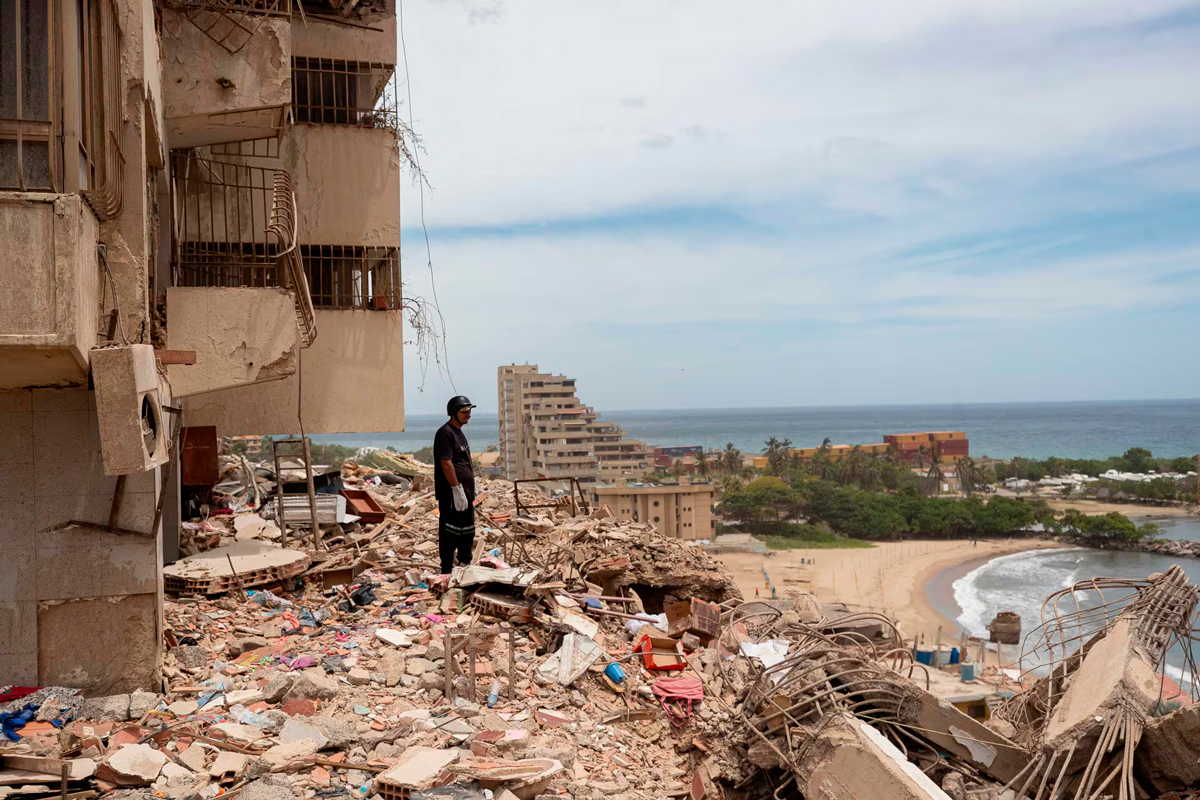
The earthquake flattened more than 100 buildings in La Guaira. (Agencia Zero)

Mérida, June 29, 2026 (venezuelanalysis.com) – Venezuelan and international rescue teams continue to search for survivors under collapsed buildings following last Wednesday’s back-to-back earthquakes.

The 7.2- and 7.5-magnitude tremors caused widespread destruction, primarily in the coastal state of La Guaira, which has been described as “ground zero.” Geological services have registered more than 500 aftershocks since the original earthquakes.

On Monday, Venezuelan officials reported that there have been 1,719 people killed, 5,034 injured, and more than 15 thousand displaced. According to the country’s authorities, 855 buildings have been damaged, including 189 totally collapsed, along with damage to 38 hospitals and 1,645 road structures.

“We are in critical and crucial hours to continue saving lives,” National Assembly President Jorge Rodríguez stated during a Monday press conference. He confirmed that over 25,000 rescue workers, including military personnel, police, firefighters, and civil protection units, are currently deployed, supported by 3,319 international rescuers from 25 nations and 137 specialized canines.

Rodríguez added that 90% of electricity service has been restored in La Guaira State, and that a special hotline remains active to provide psychological support to relatives of the victims, displaced people, and those suffering from post-traumatic stress following the earthquakes.

Earlier on Monday, Acting President Delcy Rodríguez celebrated the rescue of 21-year-old Aaron Levi Cantillo, who was pulled alive from the rubble in La Guaira after being trapped for 106 hours. The rescue was the result of 43 hours of intense, coordinated work by Venezuelan Civil Protection and brigades from Mexico, Chile, and Argentina. Emergency workers have warned that, as time passes, the probability of still finding survivors drastically decreases.

Over the weekend, the Venezuelan government has likewise ramped up efforts to tend to displaced families, with 15 temporary shelters set up in La Guaira and a further 50 in Caracas.

Other areas beyond La Guaira have also been severely impacted. Local residents reported structural damage and service failures in Morón, Carabobo state, close to the earthquakes’ epicenters. Similarly, in Tucacas, Falcón state, residents called for assistance from authorities as they face interrupted electricity or water services.

As part of its response to the crisis, the acting Rodríguez government restricted access to the state of La Guaira, the hardest-hit area. The measure aims to prevent traffic congestion and prioritize the movement of emergency vehicles and heavy machinery. Venezuelan officials have urged the public to avoid traveling to the area to ensure that rescue efforts are not impeded.

At the same time, authorities have sought to organize volunteer brigades, both for search and rescue operations and to tend to temporary shelters, via a registration center at the Poliedro complex in Caracas. 

As of June 29, 10,834 volunteers had registered, and they have been categorized according to their area of expertise: survivor rescue, medical care, logistics at temporary camps, and other essential tasks.

Following the double earthquake, the United States government has ramped up its presence in the Caribbean nation. The US Department of State has deployed a Disaster Assistance Response Team (DART) and specialized urban search and rescue units.

The Department of War has sent an expeditionary airfield management team to repair and reopen the damaged Simón Bolívar International Airport, which is now serving as the primary hub for international relief flights. The US Southern Command (SOUTHCOM) has stated that it is currently “managing tower and ground operations” at the country’s most important airport.

SOUTHCOM is also assessing conditions at the port of La Guaira and has docked the USS Fort Lauderdale warship to coordinate maritime deliveries. Various aircraft, including C-17 Globemaster, C-130 Hercules, MV-22 Ospreys, and helicopters, have conducted aerial surveys and transported rescue teams and supplies. 

Acting President Delcy Rodríguez personally thanked President Trump and Secretary of State Marco Rubio for US support following the natural disaster. In a social media message, the acting president said she was “deeply grateful for this gesture of friendship and cooperation.”

The Trump administration announced that humanitarian assistance to Venezuela has been increased to over $300 million. However, Washington has not offered any relief from widespread economic sanctions, only issuing a time-limited license allowing earthquake relief-related transactions.

The White House also retains control over Venezuelan oil export revenues, with the disbursement timings and amounts left at US officials’ discretion.

Edited by Ricardo Vaz in Caracas.

Source link

Wimbledon fans slam BBC coverage as they fume ‘it’s a joke’

BBC viewers shared the same complaint about the coverage of the tennis championship

BBC viewers have hit out at the broadcaster’s coverage of Wimbledon.

The tennis tournament got underway on Monday (June 29), with the BBC switching between BBC One and BBC Two to bring viewers all the action from SW19, as well as showing games on the iPlayer.

But several fans were left fuming during the evening coverage and claimed they missed a vital moment because of a channel change, with some calling it “a joke”.

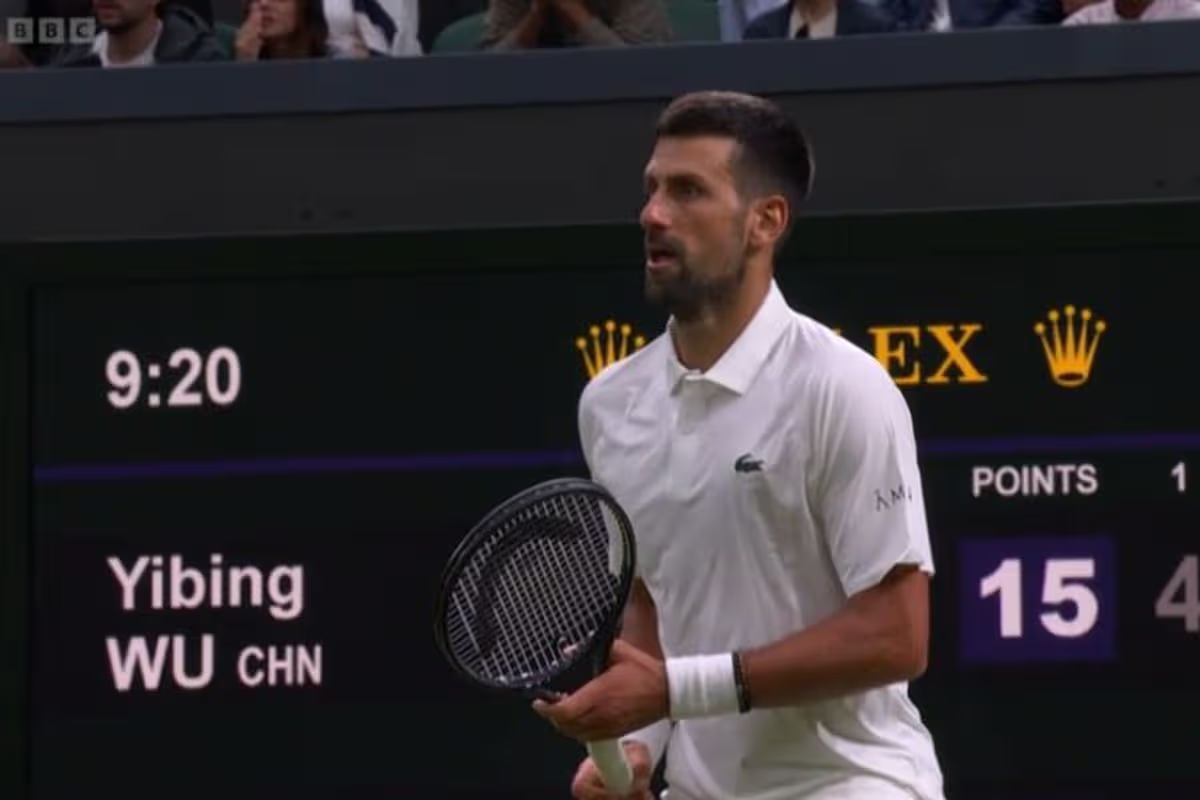
Former Wimbledon winner Novak Djokovic was playing Wu Yibing on Centre Court when the coverage swapped channels, leading many fans to post messages on X saying that it had caused disruption as Wu was about to win the second set.

One person posted on the platform, which was formerly Twitter: “They didn’t just miss that Wu set win because they were changing channel. Oh wait… they did. Shambles.”

Another viewer said it “spoiled the tension”, as someone else exclaimed: “Channel change at set point @BBCSport – really!!”

“Shocking from @BBCSport to leave the channel at such a crucial point to switch channels and it’s not even on there!!” posted somebody else.

Another person said it was “appalling”, and one remarked: “Fed up of BBC coverage of #wimbledon only just started and already there is constant channel hopping, and missing crucial stages of the match as a result is unacceptable.”

“Shocking #Wimbledon coverage from BBC there,” commented somebody else.

“Djokovic serving to stay in the set, they switch channel with both showing an advert, then come back to the game with the set over. What’s the point watching for hours then missing a key moment!”

“Would have been nice to watch that set point live @BBC but instead you switched from BBC One to BBC Two with no great hurry… missed the set point and now they’re closing the roof so there’s a delay anyway – Could you not have waited one minute?!” asked another viewer.

“The BBC coverage of Wimbledon truly is a joke,” posted somebody else. “An absolute disgrace. If you’re going to follow a match live, then don’t keep switching channels halfway through. Either dedicate yourself to the tournament, or let it go.”

Coverage of Wimbledon will air on BBC One and BBC Two, as well as being available to stream on BBC iPlayer

Source link

Teoscar Hernández returns, Dodgers beat Athletics with 17 hits

Teoscar Hernández was back from a hamstring injury, and a little bit humble. He was about to play his first game in a month for the Dodgers.

“I don’t think they really need me in the lineup,” he said, with a hint of a smile.

Hernández hit 58 home runs over his first two seasons with the Dodgers, each of which ended in a World Series championship, so of course they need him. But, in his absence, the Dodgers had more than doubled their National League West lead.

Hernández is back, but Will Smith and Kiké Hernández still are out. So are Tyler Glasnow, Blake Snell and Edwin Díaz.

No matter: The Dodgers boosted their division lead to 11 games Monday, with a 9-4 victory over the Athletics. Shohei Ohtani, Max Muncy and Andy Pages homered to highlight a 17-hit attack.

The Dodgers are on pace to win the NL West by 21 games. They boast the best record in the major leagues at 55-30, and Ohtani and the Traveling All-Stars remain baseball’s best road show.

Before the game, a guy setting up one of the merchandise stands here pointed to all the Dodgers gear for sale. He wore a Dodgers cap. He said he wished he had more Dodgers stuff to sell, because the crowd would be overwhelmingly in favor of the Dodgers.

And so it was, one day after San Diego fans complained of all the Dodgers partisans at Petco Park. In Sacramento, where the wandering home team wears a Sacramento patch on one jersey sleeve and a Las Vegas patch on the other sleeve, there were loud cheers for Ohtani and Freddie Freeman and Mookie Betts, and loud chants of “Let’s go, Dodgers!”

Every Dodger in the starting lineup had two hits except for Betts, who had one.

Eric Lauer, imported to fortify a starting rotation without Glasnow and Snell, worked six innings to record the victory. He gave up three runs and four hits in the second inning, no runs and four hits over the other five.

A left-hander pitches.

Dodgers starting pitcher Eric Lauer worked six innings to record the victory. He gave up three runs and four hits in the second inning, no runs and four hits over the other five.

(Thearon W. Henderson / Getty Images)

He is 3-0 with 2.88 earned-run average in six starts for the Dodgers, the last three of them classified as quality starts.

Glasnow and Snell are weeks away from returning, and maybe more, but Dodgers manager Dave Roberts said they would not lose their job because of injury.

“Eric coming over here knew that this was the deal, right?” said Roberts, who posted his 999th career win. “Until they get back. We just don’t know when. He’s just got to stay focused on doing his job. Then when that time comes we’ll see what happens.”

In the top of the second, the Dodgers bunched four hits, all singles — the first by Hernández, beating out an infield single in his first at-bat since the hamstring injury — to take a 2-0 lead. In the bottom of the inning, the A’s also bunched four hits, including a Colby Thomas home run, to take a 3-2 lead.

The rest of the Dodgers’ scoring: a solo homer by Muncy and a two-run homer by Pages in the fourth, a three-run homer by Ohtani in the sixth, and an RBI single by Freeman in the eighth. The A’s scored the final run on a wild pitch in the ninth.

Miguel Rojas said the Dodgers have flourished in the wake of significant injuries because the organization places a priority on developing players and giving them a fair shot at playing time, citing Pages, infielder Alex Freeland and pitchers Justin Wrobleski and Emmet Sheehan, as well as wise trades for supplementary players, including infielder-outfielder Tommy Edman and outfielder Alex Call.

Shohei Ohtani tosses his bat after hitting a three-run home run for the Dodgers.

Shohei Ohtani tosses his bat after hitting a three-run home run for the Dodgers in the sixth inning against the Athletics on Monday night.

(Sara Nevis / Associated Press)

“It’s not living with the narrative of ‘We’re buying championships and spending money,’” Rojas said. “Yeah, we’re spending money to get good players. But we’re not really basing our success just on that.

“The front office does quality work on getting the right players and putting the puzzle together. I feel that’s the reason why we can afford losing a couple guys in the middle of the year, because we have a full team that is ready to step up.”

Still, Rojas conceded none of that would matter without Ohtani, Freeman, Betts and Yoshinobu Yamamoto. And, yes, Rojas said, the Dodgers do have an irreplaceable player.

“It’s going to be really hard if we lose Shohei,” Rojas said. “It’s going to be a little bit different than losing another player. Having Shohei at the top of the lineup every single day and doing both sides of the ball has been really helpful.”

Ohtani gave the Sacramento crowd what it wanted to see: a majestic 432-foot home run, with a supercharged, 112-mph exit velocity. On Wednesday, the last day of the Dodgers’ only scheduled visit here before the A’s move to Las Vegas in 2028, he’ll take the mound to give the people more of what they want to see.

Source link

Putin Vows to Continue Russia’s Ukraine Offensive

President Vladimir Putin announced that Russia will continue its efforts to fully capture four Ukrainian regions, dismissing Ukraine’s recent proposal to ease hostilities in the ongoing war. In a televised interview, he emphasized the need to enhance Russia’s air defense to respond to increased Ukrainian drone attacks targeting its oil industry. Despite acknowledging fuel shortages due to Ukrainian strikes, he asserted that Russia is managing these challenges effectively.

Putin claimed that Ukraine’s suggestion for a mutual halt to long-range strikes was merely a tactic to relieve pressure on its forces along the extensive front line. He expressed confidence in Russia’s military success, stating that their offensive actions are significantly more impactful and destructive. He rejected the idea of saving the Ukrainian government as part of Russia’s plans.

Ukrainian President Volodymyr Zelenskiy, who had proposed a meeting with Putin, received no response from the Russian leader. Putin described Ukraine’s attacks as attempts to distract Russia from achieving its goals of fully liberating the Donbas and other strategically important regions. He reiterated that Ukraine must relinquish its remaining positions in Donetsk as a crucial condition for any peace agreement, following Russia’s annexation of the four regions seven months after its invasion.

In addressing the drone attacks, Putin called for a rapid increase in the production of necessary air defense systems, claiming that the attacks would not affect the overall combat situation. He anticipated renewed U. S.-led diplomatic efforts to end the war, following the resolution of the U. S.-Israeli conflict with Iran. Furthermore, he indicated that Belarusian President Alexander Lukashenko could play a role in peace talks, without acknowledging Ukraine’s concerns regarding Belarus’s involvement in the conflict.

With information from Reuters

Source link

EastEnders villain Gray Atkins returns – but fans spot problem with Sheila scene

Gray Atkins has made a return to EastEnders as Toby-Alexander Smith reprises his iconic villainous role. He was last seen in the Square back in 2022

Gray Atkins has made a return to EastEnders as Toby-Alexander Smith reprises his iconic villainous role.

The villain was last seen in Albert Square in 2022 when he was sent to prison for murdering Chantelle Atkins, Kush Kazemi and Tina Carter. The serial killer has not been seen since, with Toby-Alexander Smith now reprising his role for a short stint.

Speaking about his return, he said: “It’s been very surreal returning to EastEnders and stepping back into Gray’s shoes.

“He’s one of the most complex characters I’ve had the opportunity to play and revisiting him after several years has been an exciting challenge to get my teeth into. Exploring who Gray is now has been, fascinating, and I’m excited for the audience to see this version of him and watch the storyline play out.”

Gray is currently serving a life sentence in prison but needs the help of his grandmother Sheila (Sheila Ruskins) to get close to ex-wife Chelsea Fox after Jordan’s harrowing accident.

With motives still unclear, there’s trouble ahead but what does Gray want?

Ben Wadey, EastEnders Executive Producer, added: “We’re delighted to welcome Toby-Alexander Smith back to the role of Gray Atkins. Although his character remains in prison, it will soon become apparent to viewers that Gray’s physical separation from Walford is no match for his levels of manipulation.”

However, some fans have been left puzzled by his return and connection to Sheila.

“It’s weird to me how they made it seem like Sheila was still in contact with gray with the way she was stroking his photo in her wallet like she kept in contact with him even though he murdered 3 people. But then when we actually see gray he says she hasn’t visited him in the 4 years he’s been locked up,” one fan wrote.

A second added: “I was a bit confused by this. I thought they would be building toward a story where she’s a bit obsessed and thinks that he’s done nothing wrong. Maybe under his spell, doing what he wants, and maybe seeing him in Jordan. Instead, it seems more like she just wants her grandkid and is going to use him to help her along.”

A third shared: “This confused me too. The impression I got is that they were always in contact and maybe she was going to try and convince Chelsea to let Gray his child. Sheila trying to get Gray to get Chelsea to let her see the kid is strange.”

Like this s tory? F or more of the latest showbiz news and gossip, follow Mirror Celebs on TikTok , Snapchat , Instagram , Twitter , Facebook , YouTube and Threads .


Source link

To Backers, Even Friends, Gore Remains an Enigma

To much of America, he may be Mr. Environment. But at home, Al Gore was just another scofflaw. Finally one of his kids urged: “Dad, turn off the water when you’re brushing your teeth!”

He denounces violent images in entertainment. Yet one of his favorite movies is “The Matrix,” a sci-fi film filled with blood and . . . gore.

A minor contradiction in each case, to be sure. But they are emblematic of the sort of duality that defines Albert Arnold Gore Jr.

Now, in his relentlessly combative bid to become the next president of the United States, Gore remains–after 23 years in public life–a study in contrasts, an enigma to friends and supporters.

“He’s just like everybody else,”insists Tipper Gore, the vice president’s wife of 29 years. “We all struggle with our idealism and our practical daily realities.”

Known for his high-wattage intellect, Gore also is working on becoming a better listener, especially with well-meaning advisors.

Few people have had to grapple with more competing demands–and his own demons–in so public a manner as the vice president.

Now the conflicts of his biography mirror the challenges of his campaign to succeed Bill Clinton.

A decade ago, Gore resolved to no longer “put a finger to the political winds” when facing tough choices. Yet when he embarked on this campaign, Gore assembled an organization top-heavy with pricey pollsters and controversial consultants.

As vice president, he has wielded more clout than any of his 44 predecessors. He is among the nation’s most cerebral politicians–an extraordinarily disciplined and competitive man on a never-ending quest for excellence. Yet he has an inexplicable tendency to embellish his resume.

‘It’s a Tightrope He’s Had to Walk’

He clings to President Clinton’s popular economic policies but distances himself from the White House on issues such as global trade and abortion funding, saying that he would do things differently–even while urging Congress to back Clinton’s agenda.

“It’s a tightrope that he’s had to walk all his life,” says a longtime Gore confidant.

But the vice president does not see his life as a high-wire balancing act.

“A tightrope has a lot of tension–you always worry about falling off one side or the other,” Gore said.

He has worried about the inconsistencies in his life before.

In his best-selling book, “Earth in the Balance: Ecology and the Human Spirit,” Gore acknowledged his own hypocrisy by riding in an air-conditioned car while en route to deliver a speech calling for a ban on the very chemicals that were keeping him cool.

He mused that such are “distractions and distortions that interfere with the task.”

The challenge of balancing competing imperatives was thrust upon Gore virtually from Day One, nearly 52 years ago.

He was born in a Washington hospital a mere dozen blocks from the White House. But his arrival was heralded on the front page of the Nashville Tennessean.

In Washington, Gore was the exquisitely mannered progeny of an influential congressman and then senator from Tennessee.

When he was growing up, the Gores lived in a hotel suite on Embassy Row that also served as a salon to the power elite. Young Gore often sat in as politicians and statesmen held forth.

“Al was raised in a political family and he had always been fascinated by politics,” said Tipper Gore.

At one of the city’s premier prep schools, St. Alban’s, Gore excelled in academics and sports–and served as a student leader.

Just Another Unruly, Fun-Loving Kid

But he lived for the glorious summers on the 225-acre family farm, about 50 miles east of Nashville.

His father invariably had a list of back-breaking farm chores for him, but when done, Gore was just another rambunctious, fun-loving kid. As a prank, he once hypnotized a flock of chickens and left them on a neighbor’s porch. At age 14, he drove so fast down a country lane that he overturned his father’s station wagon. To this day, he keeps his motorcycle license current.

Gore kept his two worlds distinctly apart from one another. For a brief time during his senior year in high school, he even had a girlfriend in each city. But Tipper won out.

Mary Elizabeth “Tipper” Aitcheson was a fun-loving, drum-playing teenager from across the Potomac River in suburban Virginia, an only child who grew up in a broken home. The attraction was immediate and mutual.

“I’ve always had two separate lives,” Gore recalled.

But when it came to which world he preferred, there was no contest.

”. . . If you’re a boy, and you have the choice between the eighth floor of a hotel and a big farm with horses, cows, canoes and a river, it was an easy choice . . . ,” he said.

For Gore, Washington felt like a “temporary assignment.” That he returned to it as a profession–and now aspires to its pinnacle–would not surprise those who knew him earlier.

At Harvard University, Gore participated in his share of anti-war demonstrations but steered clear when students took over the administration building.

Despite his opposition to the war, Gore joined the Army within two months of graduation. At Ft. Rucker in Alabama, a gung-ho Pfc. Gore was named post soldier of the month.

After five months as an Army journalist in Vietnam, Gore returned to civilian life–”probably as disillusioned as any person you have ever met,” he said.

By then his father had been defeated in a brutal reelection campaign. The assassinations of Robert F. Kennedy and the Rev. Martin Luther King Jr. were still fresh in Gore’s mind. The Watergate scandals were unfolding.

He viewed politics as “the last thing I would do with my life.”

Instead, Gore became a government watchdog–as a reporter for the Nashville Tennessean.

In time, he started to see the good in public service–and discovered that at times he could influence the Nashville Metro Council’s debate by the degree of interest, or boredom, that he displayed. When council members saw Gore taking notes, they figured they were on to something. Conversely, some would drop an issue when the young reporter yawned or doodled in his note pad.

“I began to see things that I thought needed to be done,” Gore recalled. “And I began to think: If I got involved in that. . . .”

Gore Pounced on Father’s Old Post

That opportunity arose unexpectedly in 1976, when the local Democratic congressman announced his retirement. Gore leaped at the chance to run for the seat once held by his father.

Gore was so nervous that minutes before showing up for a news conference to declare his candidacy, he vomited. He was 28.

Twenty years later, while aboard Air Force II, the vice president self-effacingly reenacted his awkward campaign style as a political neophyte. “If you think I’m stiff now . . . !” he bellowed.

About the time he ran for Congress, Gore stopped smoking marijuana. Although he disclosed his pot use in 1988, during a short-lived bid for the Democratic presidential nomination, the issue resurfaced this year amid questions over the frequency of his pot smoking.

Gore told reporters in Iowa recently that it had been rare, adding: “When I was young, I did things young people do. When I grew up, I put away childish things.”

In the House, Gore was one of its hardest working members, returning to his district almost every weekend to hold town hall meetings–still a favored Gore setting.

On Capitol Hill, he served on an investigative subcommittee that held more public hearings than any other–from ozone depletion and genetic engineering to contaminated infant formula and toxic wastes. He quickly became among the most visible House members.

“Few there could match his ability to seize an issue, uncover a pattern of abuses, draw attention in the media and propose a solution,” said Congressional Quarterly, a journal that covers Congress.

In 1979, when the House opened its proceedings to television cameras, Gore was the first member to speak.

Five years later, he won his father’s old Senate seat, capturing more than 60% of the votes despite a Reagan landslide.

The Senate was something of a culture shock for Gore.

In the House, he had a group of basketball buddies. But even after more than seven years, Gore could claim few genuine friends in the Senate, where many had viewed him as a pedigreed upstart with aspirations for higher office.

“An automatic distance set in,” recalled Roy Neel, a top Gore aide for almost two decades in Congress and the White House.

Gore’s somewhat imperious demeanor also rubbed some the wrong way.

During a floor vote in the late 1980s, Gore was chatting with another Democrat when the colleague’s eyes strayed.

Gore snapped: “Look at me when I’m talking to you!”

Shortly after a failed bid for his party’s presidential nomination in 1988, another life-changing event occurred.

Gore’s young son nearly died after being hit by an automobile. Albert III eventually recovered, but Gore emerged from the family crisis a more patient and introspective man.

“I changed all of my priorities to ensure that I was able to spend a lot more time with each child and with the family as a whole,” Gore recalled.

Gore also decided to not run for president in 1992. Yet when Bill Clinton asked, Gore did not hesitate to join what became the nation’s first baby boomer ticket.

His fortes–arms control, the environment, foreign policy–neatly complemented Clinton’s message of economic revival.

As vice president, Gore was involved in virtually every foreign policy decision, from the bombing of Iraq to the deployment of troops in Haiti and Somalia. In the domestic arena, Gore led the fight for the North American Free Trade Agreement, the V-chip and gun control. He also directed the effort to downsize the federal bureaucracy and develop “empowerment zones” that helped revitalize cities.

Gore said he has been surprised by “the intensity . . . and the bracing challenges” of working in the White House but added: “I’ve really enjoyed it. I love it. I love it.”

It was often Gore who clashed with congressional Republicans in budget disputes when Clinton sought compromises.

Gore’s willingness to mix it up suggests that his campaign mantra–”I want to fight for you!”–is no idle boast. That same brawler’s instinct got Gore ejected from a high school football game for fighting. After the 1992 election, Gore waged one bureaucratic fight after another to enhance his power and influence in the new administration–and even bested First Lady Hillary Rodham Clinton for a prime West Wing office just 18 paces from the Oval Office.

Another little-known Gore trait, which some aides have found more troubling, is his tendency to be aloof and intellectually arrogant.

“He’s so competitive. He has to be smarter, faster and better than you,” said one former top aide. “He has a disdain for people who aren’t as prepared or as smart. If you can’t keep up with him intellectually, he gets bored.”

This ex-staffer recalled an occasion when Gore slammed the phone down on her late one night when she did not have a piece of information that she regarded as trivial.

“Gore does have an edge,” Neel conceded. “He’s a man with a mission in life, and that can be off-putting. He’s just not a hail-fellow-well-met politician. So he’s often misunderstood . . . . I don’t think he’s always the smartest guy in the room, but often he’s the person in the room who has thought the most about an issue.”

Many aides also say that it is often difficult to give Gore advice.

A stark example occurred in March of 1997. Gore had come under criticism for his prodigious fund-raising efforts in 1995 and 1996, including having made numerous telephone solicitations from his office.

After those calls came to light, Gore held a strategy session in his office. White House lawyers told him that he had done nothing wrong, that there was “no controlling legal authority.”

“He latched on to that phrase,” recalled one aide present at the meeting.

Gore wanted to hold a news conference to defend himself. But the advice to Gore was all but unanimous: Don’t.

Gore not only ignored the advice but flatly rejected the suggestion by one top White House aide that he refrain from using the legalistic phrase.

The vice president turned on the aide (who was not an attorney) and all but snarled: “You’re not a lawyer, are you?”

Asked about the perception among insiders that he is a difficult man to advise, Gore replied after a long pause and a deep sigh:

“Well, if I was ever that way, I’m not now–because learning requires an appropriate appreciation for what you don’t know. If anybody ever felt that way, then I didn’t intend to make them feel that way.”

Aides say that one way to influence Gore–who many say is slow to trust hired hands–is by going through his wife and his eldest daughter, Karenna Gore Schiff.

Gore also responds readily to facts, aides and confidants say. “You’ve got to go through his head,” said one longtime Clinton-Gore advisor.

At his core, the vice president remains a private, even shy man, someone who seems more comfortable reading a book (or writing one) than mixing with strangers. On the road, the exercise-conscious Gore uses a treadmill in his hotel suite. He relaxes by painting–a hobby he developed in second grade. Until recently, he also has been refining ideas for two novels.

In an election cycle when voters yearn for authenticity and personalities seem to trump issues, one of Gore’s major vulnerabilities may be his tendency to distort his record by exaggerating, which baffles even friends and longtime aides.

“He makes mistakes when he’s tired,” ventured one close friend.

Among the many statements that Gore has had to retract or revise: that he created the Internet; that he and Tipper were the models for “Love Story”; that he saw more action in Vietnam than he did; that his work as an investigative reporter had sent people to jail.

Gore also has been ridiculed for shaking up his staff, moving his campaign headquarters from here to Nashville and adopting an earth-tone wardrobe–in short, for reinventing himself and his message.

As one exasperated Democratic senator put it: “One day he’s in his cowboy boots. The next day, he’s Eddie Bauer. The day after he’s Brooks Brothers. Which is the real Al Gore?”

The answer may well be: all of them.

Restless Drive to Improve Himself

For Gore’s restless drive to improve himself is his very essence–whether it’s devouring a book on how to connect with people or mastering the intricacies of ballistic missiles.

And trying to become a better candidate, in fact, may be consistent with the “intensive search for truths about myself and my life,” to use Gore’s words.

That journey–for a man who has described himself during this campaign as “someone who has a lot of imperfections and shortcomings”–seems likely to continue through Campaign 2000 and beyond–thus defying the simplistic portrayals of Gore as a stiff, wooden politician.

“I don’t know how you get around the end result of taking a complex, fragile, wonderful human being–no matter who it is–it’s very difficult to convey that this is a complex person with all kinds of experiences,” said Tipper Gore. “And what comes out is a stereotype . . . something one-dimensional.”

(BEGIN TEXT OF INFOBOX / INFOGRAPHIC)

Profile:

Albert Arnold Gore Jr.

* Born: March 31, 1948, to the late U.S. Sen. Albert Gore Sr. and Pauline Gore

* Residence: Washington, D.C.

* Education: Bachelor’s degree in government, Harvard University, 1969. Attended Vanderbilt University Divinity School, 1971 to 1972. Law degree, Vanderbilt University, 1976.

* Career highlights: U.S. Army (including service in Vietnam), 1969 to 1971. Reporter for the Nashville Tennessean, 1973 to 1976. U.S. representative from Tennessee, 1977 to 1985. U.S. senator, 1985 to 1993. Vice president, 1993 to present. Wrote “Earth in the Balance: Ecology and the Human Spirit” (1992).

* Family: Married 29 years to former Mary Elizabeth “Tipper” Aitcheson. Three daughters, one son.
Source link

World Cup 2026: Paraguay shock Germany to win penalty shootout

South American football expert Tim Vickery felt a typical Paraguayan spirit shone through on the day.

“Paraguay love adversity,” he said.

“If you’re looking for someone to relate to in this World Cup, look for Paraguay. That Welsh word ‘hwyl’, that grit and drive, when it gets difficult, that’s when they come alive.

“They’ve come through adversity to knock out a giant of European football. It’s not always pretty, they play within their limitations, but what drama, what a story.

“The objective in this tournament was to make Paraguay feel represented and they’ve done that in full.”

Paraguay now play either two-time champions France or Sweden iin Philadelphia on Saturday (22:00 BST).

Paraguay’s president Santiago Pena had already declared a public holiday after they had sealed World Cup qualification with a game to spare.

Now, with a place in the last 16 secured, attention turns to what he might have in store next for the celebrations.

Head coach Alfaro said he spoken to the president yesterday.

“He might declare another national holiday,” he joked.

“I want all of Paraguay to enjoy this. We may have our defects, but we have a heart that never gives up, and that’s what keeps us alive.”

Source link

Police hunt for suspect after three wounded in Monaco blast | Crime News

Ukrainian oligarch reported to be among injured in explosion at residential building in the Mediterranean principality.

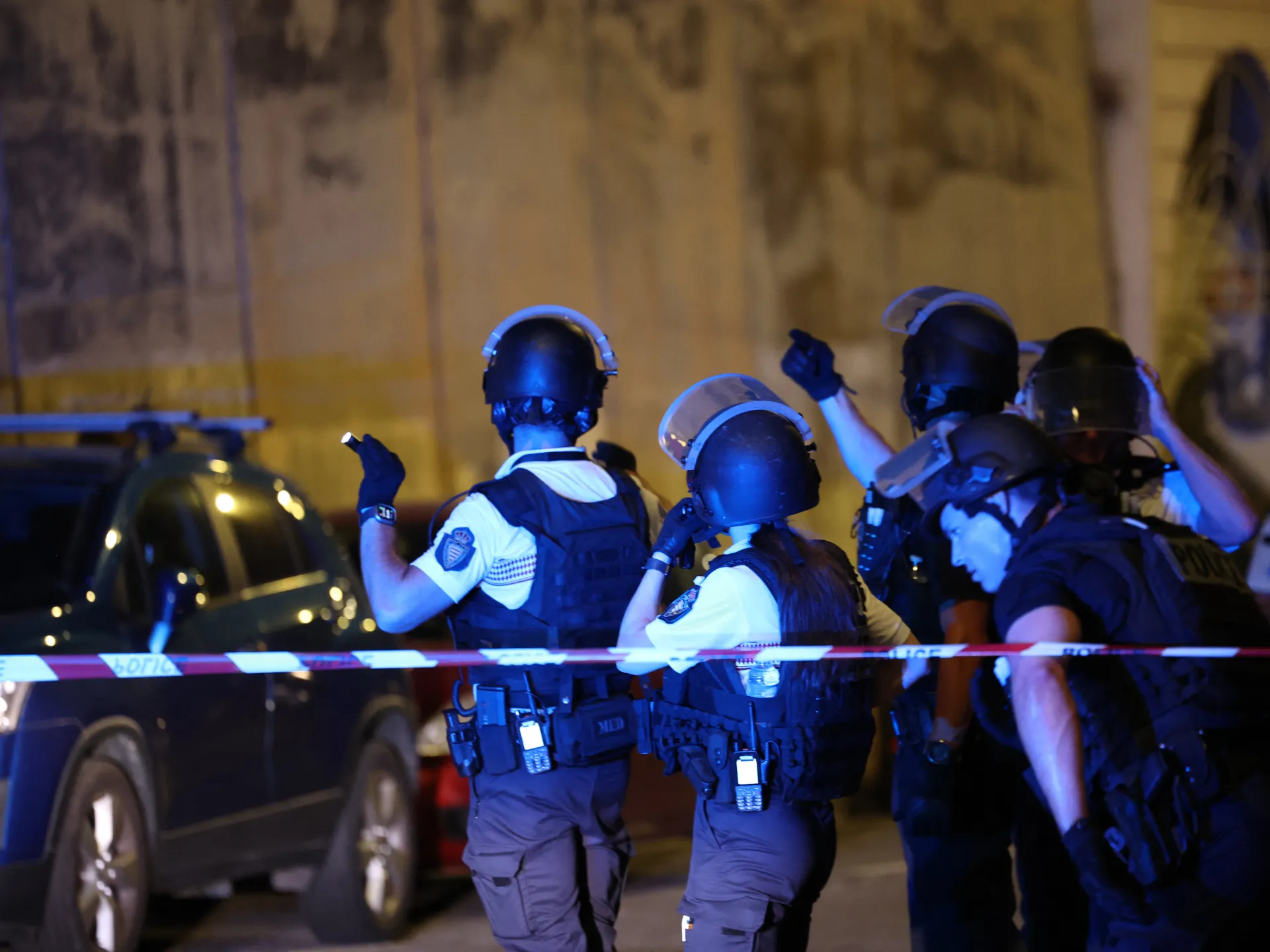
Police in Monaco and neighbouring France are hunting for a man suspected of detonating a makeshift bomb in the centre of the wealthy Mediterranean principality, which seriously injured several people, officials said.

Three people, including a teenager, were hurt in the explosion that struck at about 9pm local time (19:00 GMT) on Monday in a residential building in Monaco, according to authorities in the micro-state on the French Riviera, known as a haven for billionaires and their luxury yachts.

Recommended Stories

list of 4 itemsend of list

According to the AFP news agency, Ukrainian oligarch Vadym Yermolaiev was one of those wounded.

Monaco’s Minister of State Christophe Mirmand initially told AFP that the blast appeared to be “an attack”, but later dropped the term, describing it as a “deliberate explosion”.

A couple in their 50s or 60s suffered life-threatening conditions, while a 13-year-old who was “very likely related to the couple” suffered less serious injuries, Mirmand said, without disclosing their identities.

The explosive device apparently contained bolts and buckshot, Mirmand said.

“This is the first time in history, to my knowledge, that such an act has taken place in the principality,” he said.

A source close to the investigation who asked not to be named told AFP that one of those wounded was Yermolaiev.

Yermolaiev, a multimillionaire Monaco resident, has been subject to sanctions from Kyiv since December 2023, which Ukrainian security services reportedly said stemmed from his alcohol business activity in Russian-occupied Crimea.

Monaco’s public prosecutor, Stephane Thibault, said a suspect had left a bag or package in the building’s lobby before leaving.

French newspaper Le Figaro said video surveillance images showed a man dropping a backpack at the entrance of a residential building shortly before the explosion.
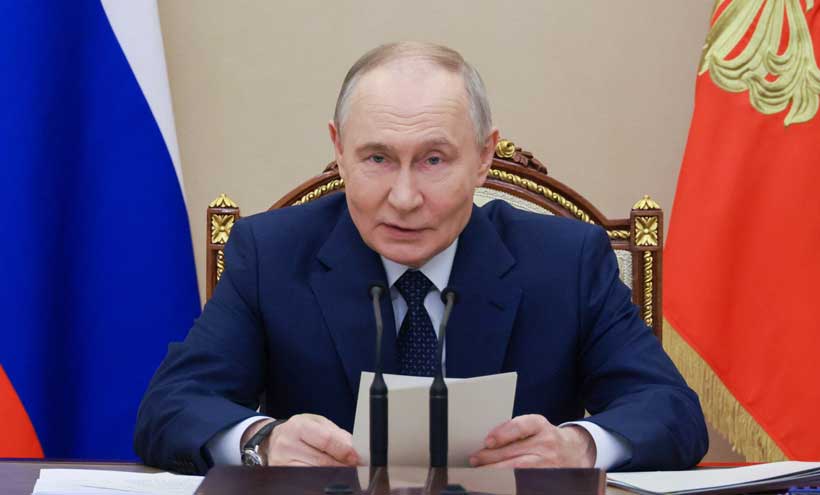
Monaco’s Prince Albert II described the incident as a “heinous crime” and “a shock to the entire Monegasque community”.

An aide to French Minister of the Interior Laurent Nunez said police were working “to find the perpetrator, who has fled”.

An AFP photographer at the scene saw a heavy police presence with access to the area cordoned off, while a helicopter circled overhead.

Source link

Teachers Dead, Students Abducted in Lassa School Attack in Northeastern Nigeria

Students at Government Day Secondary School in Lassa, Askira-Uba Local Government Area of Borno State, northeastern Nigeria, were preparing to sit for their National Examinations Council (NECO) Biology paper on the morning of Monday, June 29, when terrorists stormed the school, killing at least one teacher, abducting staff and students, and forcing another disruption to education in a community still reeling from a school abduction barely a month ago.

The attackers struck shortly before 9 a.m., according to school officials and residents, arriving on more than 40 motorcycles, many dressed in military camouflage and armed with AK-47 rifles. Witnesses said the assault lasted about 20 minutes before security personnel pursued the attackers into nearby bushland.

The exact number of abducted students remains unclear as authorities and school officials continue compiling names.

Imperiju Mamza, the school’s examinations officer, told HumAngle that the senior students had assembled for their Biology paper, scheduled to begin at 10 a.m., when the attackers arrived. “They invaded the school some minutes to 9 a.m.,” he said.

“Only one student who is sitting for the exams was abducted. She came very early and was, unfortunately, abducted alongside the other students who were from other classes. The others are safe and are currently writing their paper,” he said.

The ongoing NECO examinations began on June 23. According to Mamza, 243 candidates registered for the examination. “Apart from the one abducted, 242 are currently writing their exams,” he said. “I am trying to compile names of those abducted and cannot yet confirm how many were taken.”
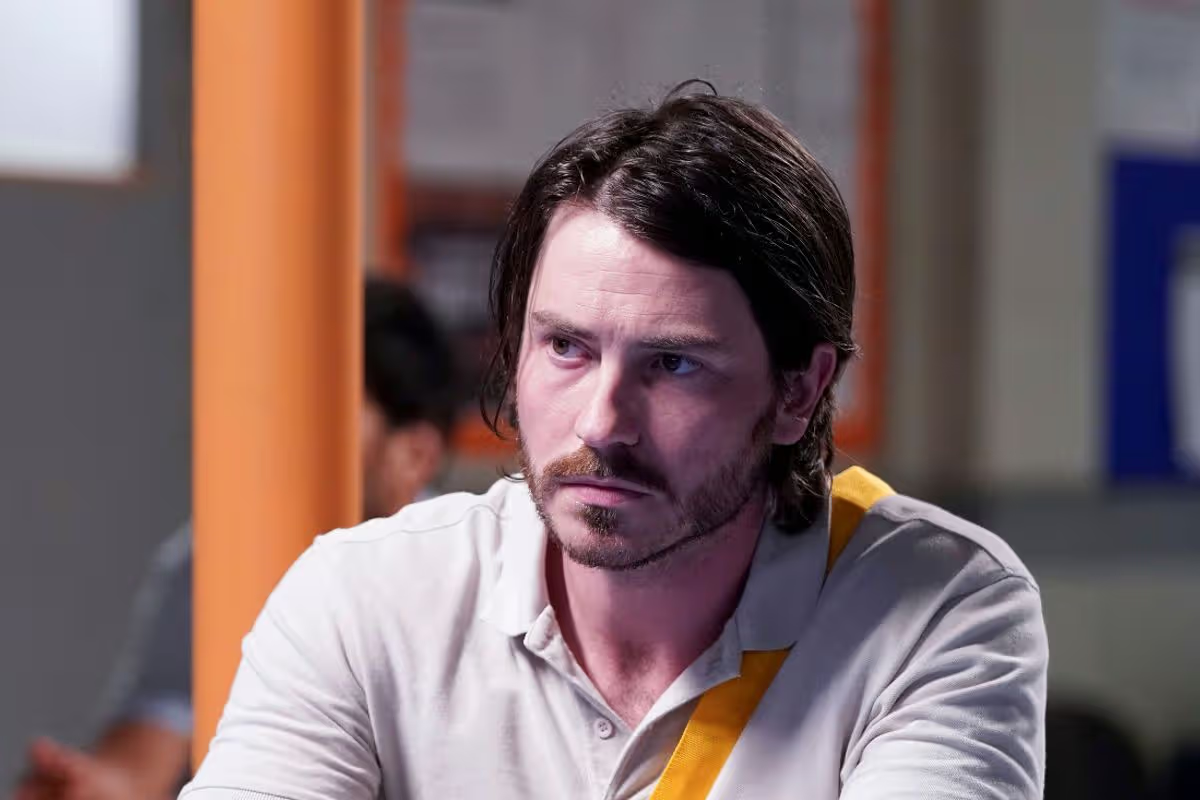
Following the attack, candidates were relocated under armed protection to Government Girls Secondary School, Lassa, where the Biology examination continued.

People and bicycles in front of a shopping plaza on a cloudy day.
The Hakimi Girema Ptil Madu Shopping Complex at the Lassa Central Market. The Government Day Secondary School, where the abduction happened, sits a few kilometres away. Photo: James Lucky.

Teachers killed, others abducted

Residents who witnessed the aftermath said the attackers appeared to target the school directly rather than the wider community.

Timothy Apagu, whose shop is located near the school, said the community had received reports as early as 7 a.m. that armed men had been sighted around Muthalavu village on the outskirts of Lassa. Community vigilantes were deployed towards the Dille axis after residents raised the alarm, believing the gunmen were approaching from that direction.

“Unfortunately, another team of terrorists followed a different route and attacked the community,” he said.

Apagu said the attackers went straight into the school. “They did not enter the community. I suspect it was a targeted attack.”

He said more than 40 motorcycles participated in the raid. “Most were wearing military camouflage. Others were wearing black trousers. Some wore boots while others wore bathroom slippers. From afar, you would know they were terrorists.”

According to Apagu, one teacher died at the scene while another, who sustained gunshot injuries, later died at the Lassa General Hospital.

He said two teachers, a male Vice Principal identified as Mr Paul and a female teacher popularly known as Madam Angelina, were initially abducted alongside students. The Vice Principal was later rescued after security personnel pursued the attackers, while the female teacher remained in captivity at the time of reporting.

A pile of green leaves on a dirt ground, with parts of people visible around the edges.
The corpse of the teacher killed at the scene is covered in leaves. Photo: James Lucky.

Another resident, Andrew Adamu, gave a similar account, saying security personnel rescued one teacher and five students during the pursuit and recovered six motorcycles abandoned by the fleeing gunmen.

He added that one female student escaped with gunshot injuries. HumAngle could not independently verify these rescue figures.

Security response

The military and local vigilantes immediately pursued the attackers into nearby bushland, residents said. Adamu said one soldier and one vigilante were killed during the pursuit.

Two people riding a motorcycle on a street, passing by a building with people and bicycles in the background.
Residents said the military and local vigilantes immediately pursued the attackers into nearby bushland, rescuing the vice principal and six students. Photo: James Lucky.

“There is a military base here, but the soldiers are few. They are not more than 50,” he said. “The school and the military base are less than a kilometre apart.”

The Borno State Police Command confirmed the attack but said the number of abducted students remained unverified. Nahum Kenneth Daso, the Police Public Relations Officer, said the Area Commander for Askira-Uba had deployed to the scene alongside other officers.

Asked what security measures had been introduced after last month’s abduction of more than 40 schoolchildren in nearby Mussa, Daso said police deployments around schools in the area had been increased.

“The challenge we had in Lassa is that the school does not have a fence,” he said. “When the invasion happened, they took advantage of that.” 

A group of people in traditional attire sit and stand outside a building in Lassa, Borno, Nigeria, alongside military personnel.
The school vice principal, Mr Paul, and six students who were rescued by security operatives.

Mamza said school authorities had repeatedly raised concerns about the absence of perimeter fencing following the Mussa attack. “The Government Day Secondary School has no fence, and we have complained to the government following the Mussa incident,” he said. He explained that the school is located about a kilometre from the town centre and shares a boundary with the Lassa Vocational Training Centre.

When contacted, Mada Saidu, the Chairperson of Askira-Uba LGA, declined to discuss the attack, saying he was channelling his time and efforts into coordinating the emergency response, which he felt was more important than speaking to journalists.

The latest attack comes barely a month after dozens of schoolchildren were abducted in neighbouring Mussa, also in Askira-Uba LGA, renewing fears over the security of schools across southern Borno despite assurances that protective measures had been strengthened.

Terrorists attacked the Government Day Secondary School in Lassa, northeastern Nigeria, killing at least one teacher and abducting others, causing a significant disruption to the students who were preparing for their NECO Biology exams.

The assault involved approximately 40 armed men on motorcycles and targeted the school specifically, leading to the abduction of students and staff, including the Vice Principal, who was later rescued.

In response, security forces, including the military and local vigilantes, pursued the attackers, with some casualties on both sides. Authorities could not confirm the exact number of abducted students, but following the attack, surviving students continued their exams under increased security at a different location. Residents and officials have raised concerns about the lack of perimeter fencing at the school, an issue highlighted in previous incidents, as local security efforts have been increased following similar abductions in the nearby area.

Source link