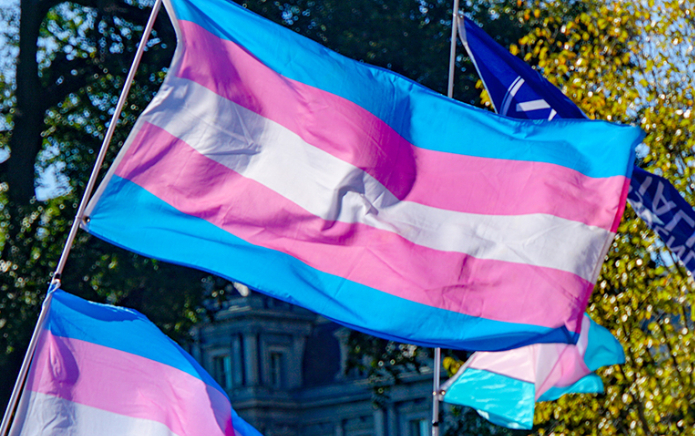

Trans women will no longer be allowed to join the Women’s Institute as members starting in 2026.
According to The Independent, the organisation’s decision stemmed from the UK Supreme Court’s April ruling that defined “woman” and “sex” in the Equality Act as referring to biological sex.
In a statement to the news outlet, the chief executive of the National Federation of Women’s Institutes, Melisa Green, said they had “no choice” in the decision.
“It is with the utmost regret and sadness that we must announce that from April 2026, we can no longer offer formal membership to transgender women,” she revealed.
“As an organisation that has proudly welcomed transgender women into our membership for more than 40 years, this is not something we would do unless we felt we had no other choice.
“To be able to continue operating as the Women’s Institute, a legally recognised women’s organisation and chairty, we must act in accordance with the Supreme Court’s judgement and restrict formal membership to biological women only.”
Towards the end of her statement, Green said that the new rule is only being made “in respect to our membership policy and does not change our firm belief that transgender women are women.”

From April 2026, only individuals who are registered female at birth will be allowed to join the Women’s Institute. New or renewing members will be required to provide proof of meeting the requirements.
In addition to confirming the new membership rules, Green told The Guardian that the Women’s Institute would introduce new “sisterhood groups” that same month, giving trans women an opportunity to remain part of the “WI family.”
Lastly, she described the groups as being “open to all” and “a place where we will recognise transgender women as women and explore what it is to be a woman in the 21st century.”
The recent news comes two weeks after leaked EHRC guidance suggested trans people could be banned from single-sex spaces based on appearance.
On 19 November, The Times reported that the Equality and Human Rights Commission (EHRC) drafted new guidance for ministers nearly three months ago, aimed at “preserv[ing] the dignity and safety of women.” The guidance has not yet been published by Bridget Phillipson, the Minister for Women and Equalities.

A copy obtained by The Times revealed that “places such as hospital wards, gyms and leisure centres” may question trans women over their use of single-sex services based on “how they look, their behaviour or concerns raised by others.”
If there is uncertainty about an individual’s gender identity, they could be prohibited from accessing these services once those in charge have taken into account “relevant factors.”
As of this writing, the UK government has not announced when the new guidance will be published.
However, on 20 November, Phillipson told reporters that she was going through it “thoroughly and carefully.”
“I have responsibilities to make sure that’s done properly, and we’re taking the time to get this right,” she added.