offer

European city to offer free attraction tickets and restaurant meals

A POPULAR European city destination is adopting a green voucher scheme that will see tourists rewarded for litter picking this summer.

The city is hoping to attract tourists who don’t mind getting their hands a bit dirty on their holiday.

The Berliner Dom and Spree River in Berlin, Germany, with people enjoying an outdoor cafe and strolling along the riverbank.
The scheme has proven successful in other European cities Credit: Getty

Germany‘s capital, Berlin, is set to introduce the ‘BerlinPay’ scheme that will see tourists rewarded for engaging in sustainable behaviour, like supporting social projects and collecting rubbish.

Those getting involved are set to receive benefits at museums, restaurants, and Berlin experiences when the scheme gets underway this summer.

This year, the scheme is going to be centred around water tourism and, partnered with the Senate Department for Economics, Energy and Public Enterprises, the model hopes to make responsible engagement around the waters visible and appreciated.

The tourism agency, Visit Berlin, has described the scheme as “an initiative that raises awareness and encourages responsible behaviour on and around Berlin’s waterways among visitors and Berliners”.

HOL NO

Popular European city brings back ‘tourist tax’ this week – ignoring risks £260 fine


SEA IT

UK seaside town undergoing a £40m revamp is home to the country’s best pier 

The agency has continued: “Those who behave responsibly on and around the water, for example by collecting trash, beautifying the neighbourhood, or supporting social projects – receive recognition from participating partners: small benefits or special Berlin experiences.”

The scheme is hoping to create a virtuous circle, where people get engaged, appreciate the city, and in turn are rewarded with a positive experience that will then drive engagement up further.

Berlin is currently looking for companies and initiatives to get involved with the reward scheme this summer and is keen on partners related to “Berlin’s water world”.

The tourism agency emphasized companies involved in water sports, leisure and tourism, gastronomy, hotel industry, culture and education, mobility, and environmental and urban initiatives should apply.

This new project appears to be following in the footsteps of Denmark, which launched ‘CopenPay’ for the country’s capital back in 2024.

So far, the scheme has proved to be effective and has had positive effects in the city, as tourists are given rewards such as boat trips and free bike rentals for their sustainable behaviour.

The head of communications and behavioural research at Wonderful Copenhagen, Rikke Holm Petersen, has reiterated the benefits to both the tourists and the city.

“When people are on holiday, they are more open to new ideas, and with CopenPay we have shown that tourists are not only happy to take part but are also inspired to…take new habits home with them,” Peterson said.

Source link

BBC poised to offer ‘heir apparent’ Sara Cox the Radio 2 Breakfast Show job after Scott Mills was sacked

BBC bosses are poised to offer Sara Cox the Radio 2 Breakfast Show job after Scott Mills’s sacking, insiders told The Sun. 

Sources said veteran broadcaster Sara, 51, was seen as the “heir apparent” for the role — which is widely regarded as the best job in radio. 

Sara Cox is being lined up by BBC bosses as the frontrunner to replace sacked Scott Mills on the Radio 2 Breakfast showCredit: Getty
A downcast Scott, who hosted the show since January 2025, until being sacked last month, was seen out for the first time todayCredit: Darren Fletcher
Insiders said they expected Sara, who joined the BBC in 1999 as a Radio 1 DJ, to be offered the job this summerCredit: Getty

Mills, who had hosted the show since January 2025, was dismissed last month. 

It came after new information about a police investigation over alleged sex offences with a boy aged under 16 in 2018 came to light at the BBC. OJ Borg and Gary Davies have filled in since Mills left the station

Insiders said they expected Sara, who joined the BBC in 1999 as a Radio 1 DJ, to be offered the job this summer

A source said: “Sara is the heir apparent for the Breakfast Show job. 

NEW SPARK

How Kate Garraway got close with new man as pals reveal ‘undisputed chemistry’


MUM’S THE WORD

Gemma Arterton secretly welcomes second child with husband Rory Keenan

“Since Scott left, she has been the name which has been discussed as the best candidate and everyone at Radio 2 is saying she will be offered it. 

“Sara has made a huge success of her drivetime slot and is hugely popular at the station, plus she’s hosted the Breakfast Show as a stand-in before. 

“The BBC won’t be rushing this through as they want the dust to settle. But Sara is the one in line and, as far as her colleagues are concerned, she is the best person for the job.” 

Sara, who began a TV career in the 90s, featured on Radio 2 as a cover host for various shows in 2012 while still working for Radio 1.

The mum-of-three landed her first permanent Radio 2 show, hosting Sounds of the 80s on Saturday nights, the following year. 

She went on to replace Simon Mayo as the drivetime presenter in 2019 and stood in on the Breakfast Show in 2025. 

That year, she was chosen to complete a Children in Need challenge and raised over £11.5million after walking and running 135 miles in five days

She said of working for Radio 2: “It’s sort of my dream job.” 

Scott was sacked after new information about a police investigation over alleged sex offences with a boy aged under 16 in 2018 came to lightCredit: PA

SCOTT SPOTTED

By Emily-Jane Heap 

SCOTT Mills is seen for the first time since being sacked by the BBC. 

The star, who was axed as Radio 2 Breakfast Show host, was out walking walked his dog with his husband Sam Vaughan. 

Mills, 53, confirmed he was quizzed by police in 2018 following an allegation of a historical sexual offence against a boy under 16. 

The case was dropped due to a lack of evidence. 

But Mills was sacked last month after new information came to light, the BBC said. 

He was allowed to keep his job for almost a decade despite the BBC being made aware in 2017 of an ongoing probe. 

Source link

As U.S. democracy is in peril, these Brazilian films offer perspective

When Brazilian journalist Tatiana Merlino watched “The Secret Agent” — one of this year’s Oscar nominees for best picture — it felt like seeing scattered scenes from her own life.

As the movie follows Marcelo (played by Wagner Moura) — a professor fleeing from a vindictive businessman during Brazil’s military dictatorship (1964-1985), the story skims through old audio tapes and newspapers, reviewed by a researcher looking into how he died. Like her, Merlino also dug into the past to piece together how her uncle, Luiz Eduardo Merlino, a communist activist, was killed by the right-wing regime in 1971. Though it was initially reported as a suicide, the family soon found his corpse with torture marks in a morgue.

“It became necessary to fight for memory, truth, and justice, because these crimes committed by dictatorship agents weren’t punished at that time, and have not been to this day,” says the 49-year-old journalist, who first saw “The Secret Agent” in São Paulo, and made a career from investigating human rights abuses.

“When a country does not come to terms with its past,” she adds, “its ghosts resurface.”

Recent dictatorship-themed movies like “The Secret Agent” and “I’m Still Here,” which won the Oscar for best international film in 2025, were instant blockbusters back home in Brazil. While both films honor those who, like Merlino, still seek justice for the regime victims, their popularity also got boosted by the country’s zeitgeist.

To many Brazilians, these movies served as reminders of what could have been had former far-right President Jair Bolsonaro, himself a retired Army captain and a dictatorship nostalgic, succeeded in his 2022 attempt at a coup d’etat.

On Jan. 8, 2023, encouraged by Bolsonaro, hundreds of vandals stormed into the Three Powers Plaza, a square in the country’s capital, Brasília, that gathers the congress, the supreme court and the presidential palace. Neither he nor the vandals accepted the 2022 election — won by the veteran leftist Luiz Inácio Lula da Silva, better known as “Lula.”

The uprising followed the same blueprint as the pro-Trump rioters behind the Jan. 6 insurrection in the United States. Although President Trump himself was federally prosecuted for election obstruction, the case was dismissed after his reelection in 2024.

Unlike the U.S., however, Brazil has charged, judged and arrested the conspirators — including Bolsonaro and members of his staff who participated in the coup plot.

“Bolsonaro doesn’t come from Mars,” said “The Secret Agent” star Wagner Moura to the L.A. Times in February. “He’s deeply grounded in the history of the country.”

In 1964, a U.S.-backed coup enacted a violent, 21-year autocracy run by the military, whose effects still resonate today, says Alessandra Gasparotto, a professor at the Federal University of Pelotas (UFPEL).

“It was a dictatorship that worked from a perspective of building certain legitimacy, keeping the congress functioning, but of course, after purging dissent,” explains the Brazilian historian.

“I’m Still Here,” for example, dramatizes the real-life quest of Eunice Paiva, a housewife whose husband Rubens Paiva, a former leftist congressman who had his tenure revoked after the coup, then disappeared in the hands of the military in 1971. To this day, his body still hasn’t been recovered.

In 2014, Bolsonaro, then just a congressman, spit on a bust of Paiva erected to honor his memory during the coup’s 50th anniversary in Congress.

“The cinema of all countries has the role of preserving memory, so if you take a look at the Holocaust, the American Civil War, or World War II movies, it has this role of almost an ally of history,” says writer Marcelo Rubens Paiva, son of Rubens Paiva and author of the book from which “I’m Still Here” is based. “There’s an old saying: History is the narrative of winners, while art is of the defeated.”

In the case of Brazil, the militaries who led the repressive apparatus of the dictatorship got away with torture and murder through a 1979 amnesty law. It was initially enacted to pardon alleged “political crimes” committed by the regime opposition and allow a transition to democracy — but it was also used to pardon the dictatorship’s human rights violations. Then, in the late 1980s, the military oversaw a slow, gradual shift to democracy, stepping down from power only in 1985.

“This new republic had more continuity than novelty, since many politicians who were central to the dictatorship moved to central roles in the democratic government,” explains Gasparotto. “That’s why they built this pact [to forgive the regime’s crimes].”

For that reason, these movies still feel contemporary. “The Secret Agent,” for example, blends past and future through the records analyzed by a researcher, while “I’m Still Here” highlights Eunice Paiva’s post-regime fight for the recognition of Rubens Paiva’s death; without any corpse to officialize his death, he was just deemed disappeared.

When Merlino watched the movie, for example, Eunice reminded her of her grandmother, Iracema Merlino.

“I’m the third generation of my family fighting for memory, truth and justice,” says Merlino. “It started with my grandmother, who passed away, then it was handed to my mother, who’s now very ill, then to me.”

Nowadays, she awaits trial for the third lawsuit attempt of the family to hold her uncle’s torturer, Col. Carlos Alberto Brilhante Ustra, accountable — the two other cases against the accused were dismissed over the years.

Since Ustra’s death in 2015, the Merlino family is now suing his estate for reparations. Yet he still remains a hero to some; in 2016, while Bolsonaro was still a congressman, he shouted a dedication to the memory of the torturer during the voting of the impeachment of Brazil’s former President Dilma Rousseff — herself one of the victims of Ustra in the 1970s, but among the few who survived.

“These films make connections with the present because understanding the past is important for understanding today’s contradictions,” says Marcelo Rubens Paiva. “What happened before interferes in the conflicts a country lives in today.”

So if authoritarians like Bolsonaro don’t come out of the blue, the same goes for other autocratic leaders, like President Trump.

Although founded on democratic principles, the U.S. itself has a long, muddled history with the concept. The authoritarian turn the country is reckoning with is part of a long legacy of inequality that stemmed from the 246-year institution of slavery. Following its abolishment in 1865 came a near-centurylong period of tension marked by racial segregation that we now refer to as “Jim Crow.”

“With some exceptions, the South was governed by a then-segregationist Democrat party — with [rampant] electoral fraud, authoritarianism, use of local police for political repression, and no chance for opposition, even [by] moderates,” says Arthur Avila, a history professor at the Federal University of Rio Grande do Sul (UFRGS) in Brazil.

Although the Civil Rights Act of 1964 and the Voting Rights Act of 1965 ended segregation and granted voting rights to people of all races — signed by then-President Lyndon B. Johnson, a Southern Democrat who broke away from the party’s history to spearhead progressive domestic policy — the decades that followed were ridden with manipulations of the electoral system. For example gerrymandering, or the practice of manipulating electoral district boundaries to favor one political party, is an ongoing, albeit controversial tactic among both Democrats and Republicans.

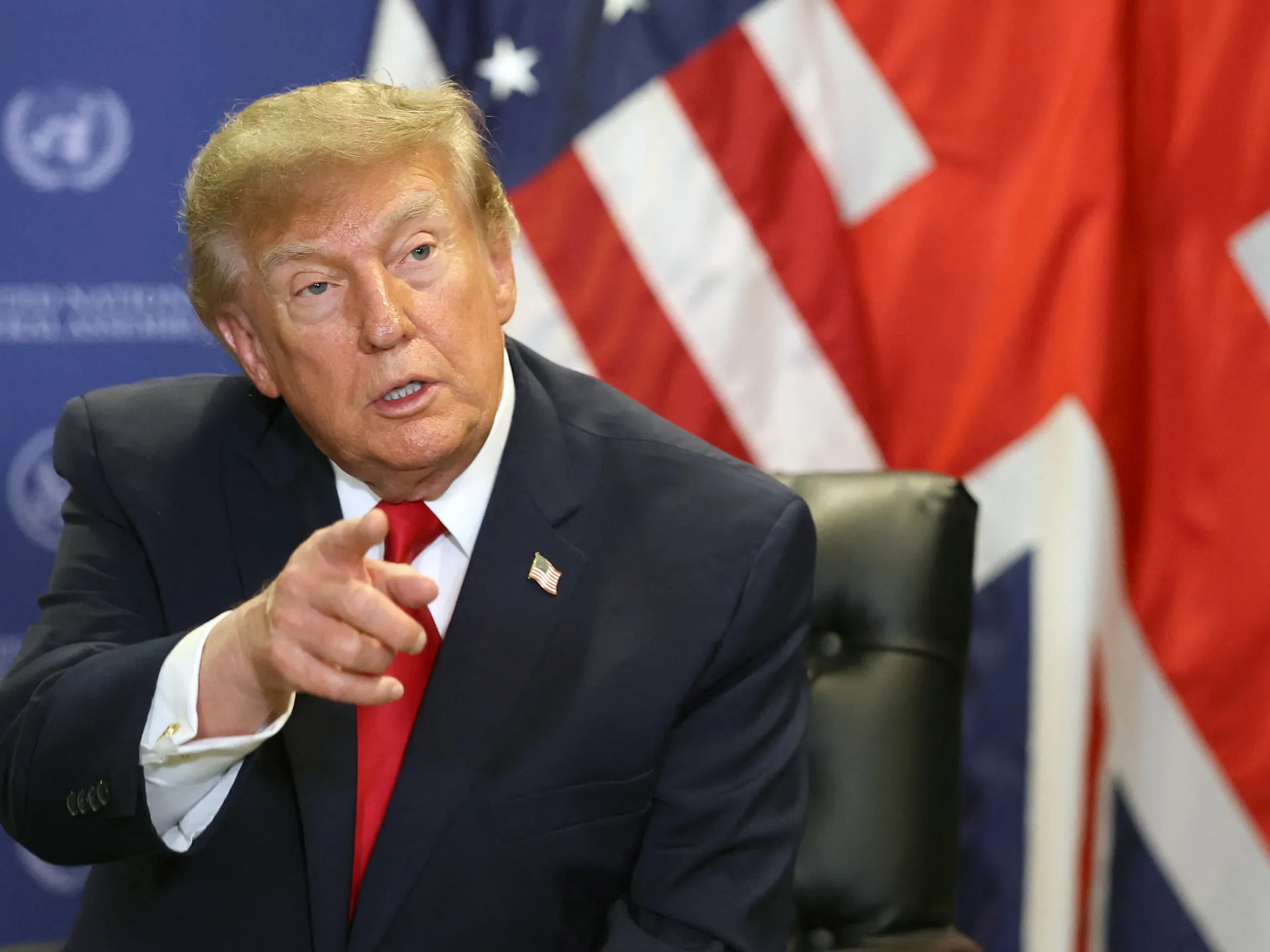
President Trump himself was federally prosecuted for election obstruction. The indictment alleged that, upon losing the 2020 election, Trump conspired to overturn the results and manipulate the public by spreading false claims of election fraud on social media. It argued that this, in turn, stoked a mob of his supporters into leading the deadly Jan. 6 attacks on the Capitol; but the case was dismissed upon his reelection in 2024.

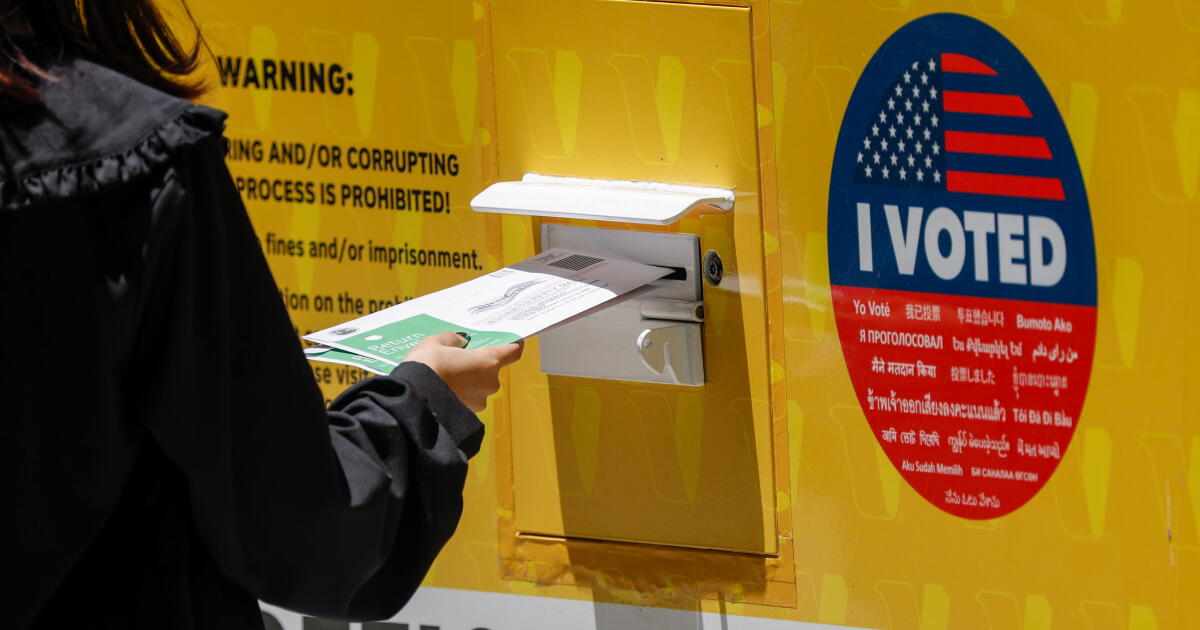
In the lead-up to the midterm elections in November, Trump has pushed for federal control over elections, restrictions on mail-in voting and the addition of citizenship documents to vote, despite an existing federal law that already prohibits noncitizens from voting in U.S. elections. (He tried implementing the latter through an executive order in 2025, but it was permanently blocked by a federal court; a voter ID bill called the “SAVE America Act” is currently stalling in the Senate.)

“There’s a strong local authoritarian tradition in the U.S. that Trump himself feeds from,” says Avila.

Besides that, according to Avila, the country faces a growing “de-democratization” process from within. This shows in the rising control and dismantling of institutions by reactionary sectors — including efforts to block professional, educational and athletic programs promoting DEI, or diversity, equity and inclusion — from what many critics and scholars have cited as lingering resentment from desegregation, he says.

“We may see it as a slow authoritarian turn in North American politics that didn’t overturn the democratic regime yet,” Arthur considers. “But if this process goes on, and that’s a conjecture, in the next decade the U.S. may become a state of exception that keeps democratic appearances but has been stripped of any democracy’s substance whatsoever.”

As movies such as “The Secret Agent and “I’m Still Here” remind us, a great deal of maintaining a democracy has to do with keeping a good memory.

Source link