womens

Women’s Six Nations: England forward trio return for France decider

Burton, who switched to number eight after Feaunati pulled out of the line-up in Parma, partners the Exeter star in the back row, with Kabeya, who won player of the match in the September’s World Cup final, at open-side flanker.

Liz Crake, who won her most recent cap in 2023 and has returned to working as a dentist alongside her rugby, has been named on the bench after Saracens team-mate Kelsey Clifford suffered a leg injury.

England have won their past 17 meetings with France in all competitions, but were pushed to within a point in a 43-42 victory in last year’s Six Nations finale.

France, who have grown into the tournament as a new-look backline have found their feet, will be roared on by a crowd that is expected to set a new record for a Women’s Six Nations match in France at the 42,000-capacity Stade Atlantique.

England: Kildunne; Breach, Jones (c), Rowland, Moloney-MacDonald; Harrison, L Packer; Carson, Cokayne, Bern, Ives Campion, Burns, Burton, Kabeya, Feaunati

Replacements: Powell, Crake, Muir, Short, M Packer, Robinson, Aitchison, Sing.

Source link

Women’s T20 World Cup: Sophie Molineux passed fit as Australia name squad

Australia captain Sophie Molineux has been passed fit and named in Australia’s squad for the T20 World Cup.

The 28-year-old all-rounder will lead a 15-strong squad for the tournament in England, with assistance from vice-captains Ash Gardner and Tahlia McGrath.

Fast bowler Lucy Hamilton has been selected for her first international tournament as the six-time champions look to regain the World Cup title after losing in the semi-finals in 2024.

All-rounders Annabel Sutherland and Grace Harris return to the squad having been rested and dropped respectively for the tour of the West Indies in March.

Molineux was appointed to the Australia captaincy in January, replacing the retired Alyssa Healy, and was considered a surprise pick following a career blighted by injury.

She injured her back prior to the tour of the Caribbean, her first away series as captain, where she played exclusively as a batter.

Australia national selector Shawn Flegler had previously confirmed, external that Molineux would not have been considered for a non-bowling role at the World Cup.

“Sophie has already made her mark as captain and built a strong connection with the group over the last couple of tours, so we’re looking forward to seeing what this side can achieve under her leadership,” Flegler said upon the squad’s announcement.

“Darcie Brown was unlucky to miss out but the decision was based on the conditions we’re expecting and the make-up of the side.

“With at least six right-arm pace options in the mix and raw pace expected to be less effective, we opted to go with Lucy Hamilton who offers something different as a left-arm quick.”

Molineux’s side will play warm-up fixtures against South Africa, England and the West Indies before opening their tournament against South Africa on 13 June at Old Trafford.

Source link

Women’s FA Cup: Why Brighton’s first final felt like it was coming

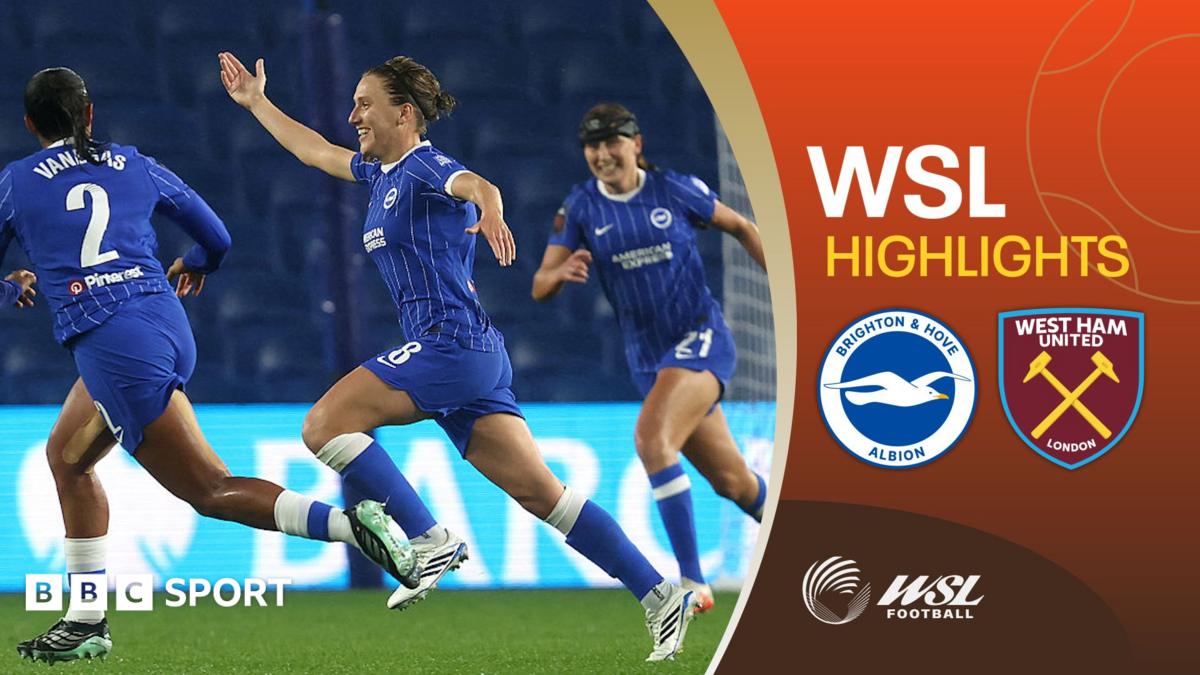
On a six-game unbeaten run and nine points further up the table than their opponents, Brighton arrived at Liverpool’s St Helens stadium as favourites – but their Wembley dream was in serious jeopardy when they fell 2-0 down after 22 minutes.

Manuela Vanegas gave Brighton hope when she halved the deficit with a determined finish 105 seconds after Beata Olsson had scored the Reds’ second.

The Seagulls looked revitalised after the break and they were rewarded when Madison Haley nodded in the leveller.

“They found it difficult in the first half but they stuck to the task with intensity and energy,” former England defender Anita Asante said on TNT Sports.

Manager Dario Vidosic said he “felt like it was coming” when Brighton were awarded a free-kick on the edge of the hosts’ box in the final seconds.

“I didn’t even think about extra time, even though it was so close to it. It just felt like the momentum, how dominant we were, that the goal was bound to come,” he told BBC Radio 5 Live.

Noordam, who had never previously scored for Brighton, had only been on the pitch for a matter of minutes when the set-piece clearance rolled to her and she calmly slotted the ball into the top-left corner.

“What a moment from Nadine Noordam,” said ex-England midfielder Fara Williams on TNT Sports.

“Brighton had a really slow start but they managed to claw their way back. It’s a credit to them. They really believe in what they’re doing.

“That’s what this competition is all about. That’s the history of this competition. Those last-minute moments that get to Wembley.”

Source link

Women’s Six Nations 2026: Ireland 33-12 Wales: ‘Ireland ‘still hungry to get better’ – Bemand

France and England will battle it out for the Six Nations title in the final match next weekend and, even though Ireland aren’t pushing those heavyweights, they now established themselves as a young, upcoming squad.

Their victory over Wales is their second of this campaign after an impressive 57-20 win over Italy, who occupy fourth spot.

“We’re starting to handle bigger occasions and bigger pressure more, and with that comes more expectation. But that’s the cool thing, that’s where we want to be,” he continued.

“Our next thing now is we’re going to start converting that belief, that confidence, that understanding and that we’re quite good into results.

“We’ll get there, the trajectory is still up and we’re still hungry to get better. So no doubt we’ll get there and as quick as we can get there, the quicker the better.

Despite their progress, Bemand also acknowledged they still have room to improve.

Ireland have never beaten France nor England with the head coach adding that this must be an aim of the side.

“We do want to be in games where we’re in a position to beat an England and a France.

“Are we getting there? Well, with this competition, we’ve proved that we haven’t as yet.

“So, we’ll take that, but unfortunately it means we have to sit on it for 12 months before we get another crack at them, a top four team.

“Our job now is to get as good as we can in the next year so that when we get them over here, we can condense that scoreline even further.”

Ireland finish their Six Nations campaign with a home match against Scotland on 17 May at the Aviva Stadium.

Source link

Women’s Six Nations: Welsh progress stalls in sluggish Ireland showing

Compared to their second-half showing against England, where they bagged two late tries for a bonus-point, Wales could muster very little after the break in Belfast.

Ireland were utterly dominant with possession and territory, with last year’s player of the championship Aoife Wafer leading the charge.

Travelling fans’ only consolation was a 78th minute Jasmine Joyce try but it was not enough to prevent Wales from leaving empty handed.

“We’re ranked 12th in the world, we played the team ranked 5th in the world and you can clearly see when you’re away from home, you’ve got to be a lot more clinical,” said Wales head coach Sean Lynn.

“We said in the huddle at the end of the game, we’ve got to be better with our composure and accuracy.

“I wouldn’t have said the girls dropped their heads. They stuck at it, stuck to their processes, but Ireland kept the ball really well.

“The girls give everything out there and when you see them upset after the game it’s because they care, they want to be winning, so it is tough.”

Source link

Women’s Six Nations 2026: Ireland 33-12 Wales: Ireland overcome Wales for hard-fought home win

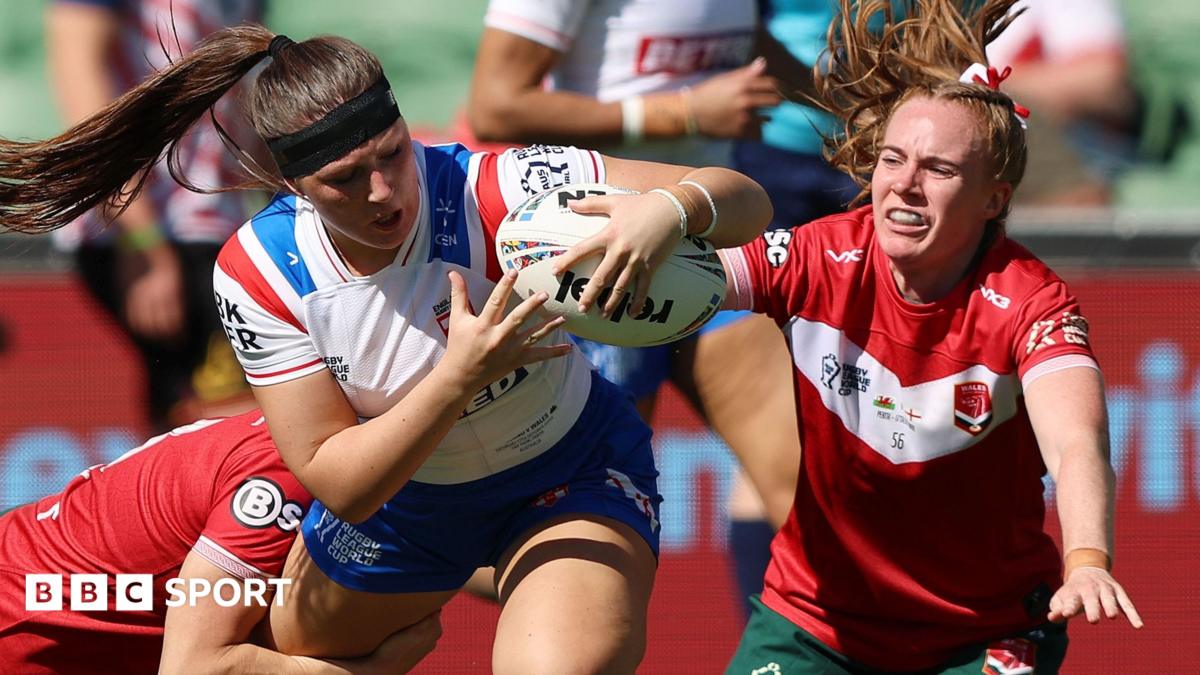
Despite losing their previous eight Six Nations matches, Wales came into the game with confidence after they registered a record four tries against world champions England in their last outing.

They started stronger in Belfast, but Wafer gave Ireland the lead against the run of play when the back row’s persistence paid off and she forced her way over the line before Dannah O’Brien added a challenging extra two.

Wales looked to respond quickly with a huge tackle from Parsons denying Hannah Dallavalle after Carys Cox had taken advantage of a mix-up and fed the ball through.

The visitors kept pushing and registered their first try when Georgia Evans dived over from close range and Keira Bevan was able to convert to level the match.

A double movement denied Cliodhna Moloney-MacDonald after she had powered her way over as the home side, buoyed by a vocal crowd, began to settle.

Wafer then turned provider, shrugging off multiple white shirts before a superb offload to Parsons, who raced down the right wing to restore Ireland’s lead.

They then struck a hammer blow just before the break as, opting to play on with clock in the red, Ireland were rewarded for their persistence as they added their third try when Hogan crossed after sustained pressure from a ruck.

After the restart, a television match official [TMO] check confirmed Moloney-MacDonald’s kick out at Evans warranted a yellow card.

Wales were unable to take advantage of having an extra player and it was soon 14-players apiece for a period as Jasmine Joyce was shown a yellow card for placing her hands on the ground when bringing Eve Higgins down.

As the hour mark approached, Aoife Dalton and Linda Djougang linked up and fed the ball to Wafer to cross to secure the bonus point.

Bemand then turned to his bench and made a flurry of changes which added energy to their play.

Replacement Jones thought she had added Ireland’s fifth shortly after her introduction, only for her effort to be ruled out after a TMO review.

Joyce added Wales’ second try in the final five minutes as she held off Parsons and stretched to ground the ball.

Ireland did land a fifth try in the final seconds as Hogan bundled over from close range, with O’Brien able to convert for a fourth time.

Source link

North Korean women’s club to play rare football match in the South | Football News

Naegohyang FC will play the South’s Suwon FC on May 20 in the semifinal of the Women’s Asian Champions League.

A North Korean women’s football club will become the first sports team from the country to play in South Korea since 2018 when they visit this month, Seoul’s Ministry of Unification has confirmed.

The neighbours remain technically at war after their 1950-53 conflict ended in an armistice rather than a peace treaty, and sporting and cultural exchanges between them are very rare.

Recommended Stories

list of 4 itemsend of list

Naegohyang Women’s FC will play the South’s Suwon FC Women on May 20 in the semifinals of the Asian Champions League.

The visiting delegation will include 27 players and 12 club staff, the ministry said on Monday. South Korea’s football association told the AFP news agency that the team would arrive on May 17.

They will fly into Incheon airport on an Air China flight from Beijing, a Unification Ministry official said.

The winner of the match at Suwon Sports Complex, south of the capital Seoul, will play the final of Asia’s top women’s club competition against either Australia’s Melbourne City or Japan’s Tokyo Verdy Beleza on May 23.

“The losing team in the semifinal will return home on Thursday, May 21, with no third-place playoff scheduled,” the ministry statement added.

The match will be the first time a North Korean sports team has played in the South since shooting, youth football and table tennis delegations travelled there in 2018.

The last time Pyongyang sent a women’s football team to the South was in 2014, when the North Korean national team took part in the Asian Games in Incheon.

Founded in 2012 and based in the North Korean capital, much of Naegohyang’s squad is “made up of national team-level players”, the ministry said.

North Korea’s national team is one of the dominant forces in Asian women’s football, winning multiple international titles in recent years, especially at the youth level.

The most recent one came in November last year, when they defeated the Netherlands 3-0 in the final of the U-17 Women’s World Cup.

Source link

Saudi Vision 2030: Gains and Gaps in Women’s Empowerment

In recent years, the evolution of women in Saudi Arabia has become one of the most scrutinized aspects of the kingdom’s reforms of recent times. These reforms have frequently served as proof of a broader transformation under Vision 2030, an ambitious pathway designed to modernize Saudi Arabia and decrease its reliance on oil revenues. However, behind these apparent advancements arises an intricate question: are these reforms a genuine move towards social emancipation or primarily a tactical element of state-led goals of economic diversification, modernization, and enhancing global reputation?

In 2016, Saudi Arabia introduced Vision 2030, launched and guided by King Salman bin Abdulaziz Al Saud and Muhammad bin Salman as a comprehensive and holistic strategy aimed to reform the country’s future. This initiative leverages the Kingdom’s strengths, including its pivotal role in the Arab and Islamic world, robust investment capabilities, and advantageous strategic position. The goal is to establish Saudi Arabia as a global leader while improving quality of life and broadening growth opportunities for citizens. At its essence, Vision 2030 seeks to reposition Saudi Arabia in the global economy by diversifying the non-oil sectors, drawing in foreign investment, and cultivating a dynamic workforce.

The women’s research compendium has gained significant attention from the government in alignment with the kingdom’s Vision 2030 and its associated programs. Consequently, relevant authorities, including the Ministry of Human Resources and Social Development, have allocated one of the visions’ goals to improve the public and private lives of Saudi women. From this perspective, the progress of Saudi women towards empowerment has condensed. This perspective of ministry is facilitated by numerous policies, legislations, and regulations that bolster the female’s status in society. In this context, women have become a pivotal component of reform. Enhancing female participation in the labor force is not just a social aspiration but also an economic imperative. By incorporating women into sectors like tourism, mass markets, and technology, the government intends to harness previously underutilized human capacity and accelerate economic growth. Hence, women’s empowerment is intricately aligned with the national development goals. It is important to acknowledge the considerable progress the country has made so far, such as the removal of the driving ban; increased employment; and enhanced public representation signify substantial changes in the everyday life of numerous women in Saudi Arabia.

Comparatively, these reforms demonstrate a prominent departure from more prudent norms of Saudi society and have formed new avenues for both personal and professional initiatives. Recognizing these developments is important for sustaining a fair and substantiated analysis. However, a deeper evaluation reveals that this empowerment is closely associated with the economic strategy and development. The consolidation of women in the workforce is consistently presented not just as a matter of rights but as a roadmap to enhance productivity and to boost the country’s GDP. This realistic perspective implies that empowerment is being pursued not just as a fundamental social objective but as a calculated countermove to fulfill economic demands. In this context, women are viewed not just as citizens, but also as economic assets that are essential to the success of Vision 2030.

In addition to the economic considerations, these reforms significantly contribute to the international image of Saudi Arabia. As the kingdom aims to enhance foreign investment and establish itself as a contemporary progressive nation, the advancement of women’s rights acts as a strong emblem of transformation. These developments are visible as a form of strategic liberalization, a deliberate opening intended to synchronize domestic policies with the international standards. Within this framework, women’s empowerment is integrated into a broader soft power strategy, boosting nations’ appealing image on the world stage. However, this transformation is still being meticulously overseen. Although new liberties have been introduced, they operate within a well-defined structure and are regulated by the state. The pace and scope of these structural initiatives are not propelled by grassroots institutions but are instead orchestrated by the governing bodies. This top-down approach limits the acceleration of the independent voices and limits the growth of a more autonomous civil society. Consequently, empowerment is allocated rather than asserted, therefore prompting the queries regarding its substantive nature and sustainability.

Therefore, this dynamic creates a striking paradox: “advancement without complete autonomy.” Currently, Saudi women experience enhanced mobility and visible participation in public life, but their capacity to independently shape the trajectory of reform is still constrained. The expansion of opportunities has not been accompanied by a similar increase in agency. This conflict highlights an important question: can empowerment truly exist in the absence of independent expression and participation in decision-making processes? However, the future prediction denotes that the sustainability of these reforms depends on their ability to progress beyond their strategic foundations. Women’s empowerment continues to be closely linked to economic and image-building objectives of the state; it risks being susceptible to shifts in governmental priorities and policies. On the other hand, lasting transformation necessitates more profound structural alterations that are way beyond mere participation to encompass genuine agency and proper representation.

In this context, the transformations unfolding under Vision 2030 are the embodiment of both advancement and limitation. They indicate a notable departure from the previous practices and traditional norms while also underscoring the constraints of government-driven modernization. Ultimately, the issue is not if change will lead to enduring empowerment, for true empowerment is not just about participation in the workforce or recognition in public spheres; it is about having the capacity to influence one’s own future. This aspect remains the most vital and a pending dimension of Saudi Arabia’s evolution.

In conclusion, the trajectory of advancing gender diversity as articulated in Vision 2030 demonstrates both meaningful advancements and fundamental structural limitations. Although reforms have undeniably broadened strategic growth indicators and transformed the social norms, they’re still closely intertwined with economic needs and strategic initiatives for international status. This top-down model of reform prompts essential inquiries regarding the depth, independence, and long-term durability of women’s empowerment. For Saudi Arabia, the operating complexities will be whether these transformations can progress beyond mere instrumental milestones to cultivate true agency and representation. Only then can women’s empowerment shift from being a facet of national strategy to a lasting anchoring principle of societal advancement.

Source link

Women’s Open announces record $10m prize fund despite being unprofitable

The AIG Women’s Open has increased its prize fund for a sixth successive year despite not being a profitable tournament to stage.

This year’s championship, which is being held from 30 July – 2 August at Royal Lytham & St Annes on the Lancashire coast, will have a record purse of $10m (£7.4m).

It is not the only one of the five annual women’s majors taking advantage of sponsorship deals to offer increasing prize money. The US Women’s Open – which last year had the largest prize fund in the women’s game at $12m – has the backing of Ally Financial.

“At the moment it’s not profitable,” said R&A chief executive Mark Darbon.

“We treat it as an investment into the game, but an absolutely critical investment.

“Our focus actually is around audience growth. We think if we’re going to be true to that notion of inspiring millions of people around the world, we need to grow the audience for this championship and the women’s game more broadly.”

Around 50,000 spectators are expected to attend across the week of what will be the 50th Women’s Open, while Darbon pointed to increased television coverage as a way of boosting the game’s profile.

The $10m prize fund lags behind the $17m shared out between the players at last year’s Open Championship and while Darbon would like to see that levelled in the future, he said the R&A had to “think sustainably”.

“There is a commercial reality. We’re investing collectively, AIG and the R&A, significant sums into the championship, and we want to do that in a responsible way.

“So we’re not in a position to have equal prize funds at the moment, but we will look to continue to elevate our prize fund over time.

“We want to reward the stars of our sport. We have to do that in a sustainable fashion.”

Darbon said it would be possible to make the championship profitable by cutting back on the spend but that was not on his agenda.

“If profitability was our number one ambition for this event, there are a number of things we could do to put us on a path to achieving that result.

“At the moment, profitability is not a principal target for us. We want to deliver brilliant venues and a wonderful experience for the players.

“We want to have a meaningful and growing prize pot, and we want to deliver a spectator experience both live and through broadcast and digital channels that inspires and excites people.”

Darbon also announced that the 2028 Women’s Open would be held at Sunningdale’s Old Course in Surrey.

Unlike the men’s Open Championship, the women’s visits inland courses as well as links courses on the coast.

“The Open and Women’s Open have their own discrete identities,” he said.

“We don’t treat them as one, and therefore we don’t treat the venue selection process as one either.

“We are very focused on taking this event to what we regard as some of the world’s very best courses.”

Source link

Women’s T20 World Cup: England name Tilly Corteen-Coleman, 19, in squad

Uncapped left-arm spinner Tilly Corteen-Coleman has been included in England’s squad for the Women’s T20 World Cup this summer.

The 18-year-old impressed in England’s intra-squad matches in South Africa this year.

She is one of three left-arm spinners in England’s squad alongside Sophie Ecclestone and Linsey Smith, while off-spinner Charlie Dean is named as vice-captain to Nat Sciver-Brunt.

There is no place for 19-year-old Davina Perrin, who scored a century in last year’s Hundred Eliminator, while veteran batter Tammy Beaumont also misses out.

Leg-spinner Sarah Glenn, a recent mainstay of England’s T20 squads, was not considered for selection as she is recovering from a broken finger and has not played this season.

England start their T20 World Cup campaign against Sri Lanka on 12 June at Edgbaston.

Source link

Sinia Plotz, Anna Reed lead USC to 7th NCAA women’s water polo title

Sinia Plotz scored to begin each half and Anna Reed finished with 10 saves to lead USC to a 10-9 victory over California on Sunday night at the Canyonview Aquatic Center, earning the Trojans a seventh national championship in women’s water polo.

It’s the first championship for Casey Moon in his second season as the Trojans’ head coach. USC last claimed the title in 2021.

Holly Dunn scored on a power play with 23 seconds left in the first quarter to pull Cal even, but Ava Stryker answered with seven seconds remaining and USC took a 3-2 lead.

Emily Ausmus scored for a two-goal lead and Stryker added her second goal to give the Trojans a 6-3 advantage with 3:15 left before halftime. Eszter Varro answered with a goal eight seconds later for the Golden Bears and another one with 2:07 left to cut it to 6-5.

Ausmus found the net with eight seconds left, but Dunn scored on a shot just before the buzzer to get Cal within 7-6 at the break.

Plotz scored to begin the second half and give USC a two-goal lead, but Varro scored for the third time and Cal trailed 8-7.

Meghan McAninch scored on a power play midway through the quarter for a 9-7 lead. Julianne Snyder cut into the deficit with 48.7 seconds left and the Golden Bears had a tying shot by Dunn hit the crossbar. Talia Fonseca had one of her 11 saves on a shot by USC’s Alma Yaacobi at the buzzer and Cal trailed 9-8 heading to the final quarter.

Rachel Gazzaniga scored two minutes in to again give USC a two-goal lead. Despoina Drakotou scored the final goal of the match on a five-meter penalty shot after an exclusion on Reed with 5:23 remaining. Reed had a save on an earlier penalty shot.

The fourth-seeded Golden Bears (16-8), looking for their first championship, knocked out defending champion and top-ranked Stanford 13-11 in the semifinals to advance to their second final in three seasons under coach Coralie Simmons — in her 10th season. UCLA beat Cal 7-4 in the 2024 final and Stanford topped Cal 9-5 for the 2011 championship.

No. 3-seed USC advanced with an 11-10 victory over second-seeded UCLA in the other semifinal.

The event was hosted by UC San Diego.

Source link

Women’s Six Nations: ‘Fine margins’ – What cost Ireland in France defeat?

After the big talk in the build-up, Ireland blew France away in the opening 40 minutes but, largely, were left unrewarded for their efforts.

Cliodhna Moloney-MacDonald crossed for Ireland but had two efforts chalked off, while Brittany Hogan and Fiona Tuite were also denied first-half scores.

France, who are tipped to meet England in a Grand Slam decider on the final day of the Six Nations, showed a clinical edge and moved clear after the restart through Carla Arbez, Anais Grando and Lea Champon, while Ireland could not back up their first-half performance and fell short.

Under head coach Scott Bemand, Ireland have moved up to fifth in the world and stunned New Zealand and Australia in 2024, but the elusive Six Nations scalp goes on.

England had too much on the opening day, when a slow start was punished, and defeat by France shows there is still work to be done.

“In these kinds of Test matches the margins become finer, so we’re after finer margins than we were,” Bemand said.

“Nail your kick to touch and nail your exit – they are the type of things that don’t let France in.

“We will keep going after the finer margins and keep trying to get better. I’ve got a group who is up for that.”

Source link

Women’s Six Nations: Why ‘muted’ England’s Six Nations dominance remains a concern

Another day, another emphatic win for England.

The Red Roses jamboree roared into Bristol, attracting a record crowd for their third consecutive match at this Six Nations and bringing with it a sea of white shirts, red cowgirl hats and rose-petal headwear galore. And, most importantly, tries.

Fresh from crossing 12 times against Scotland at Murrayfield last week, England scored another 10 tries in a 62-24 victory over Wales – a result that leaves John Mitchell’s side top of the table with maximum points from three matches.

With a fifth consecutive Triple Crown secured, they remain on course for a record eighth straight Women’s Six Nations title.

Impressive statistics. But attack coach Emily Scarratt told BBC Two the dressing room was a little “muted” after the game.

Yes, England won comfortably and without ever losing control to extend their record unbeaten run to 36 Tests, but this wasn’t the steamrollering many expected, with Wales – to use Mitchell’s word – “surprising” them.

The visitors scored four tries – including two in the final 10 minutes as England’s concentration wandered – to pick up a valuable bonus point, and twice profited after bamboozling England with their line-out routine.

England were, at times, guilty of poor discipline – giving away nine penalties – and sloppy handling. Improvements will need to be made by the time they face title rivals France in round five.

“You’re always in a Test match when you play a team like Wales,” said Scarratt. “I thought they really brought it today and posed some different challenges for us, which is pretty awesome in our development.

“We still got a pretty good job done. There’s a muted sense in the group, which is obviously a really good feeling when you put a score on like that.”

But while Wales fired a couple of warning shots, this was another routine win for England and one that does little to assuage concerns the Six Nations is too predictable and their dominance may not benefit themselves and the game.

Source link

Women’s Six Nations 2026: Coach Scott Bemand says Ireland are ‘ready’ for big-game pressure in France

Head coach Scott Bemand says Ireland are “ready” for the pressure of facing France in Clermont on Saturday after learning from a string of big-game experiences.

Ireland began their Women’s Six Nations campaign with a 33-12 loss to England in front of a record 77,120 at Twickenham’s Allianz Stadium.

Bemand’s side also faced New Zealand and France in front of near-capacity crowds at the World Cup last year – and the coach feels those days will stand to his squad as they bid for a first win on French soil.

“We’ve got the benefit now with our group having come through the World Cup piece where we had full stadiums, a lot of noise and a lot of expectation, internal expectation,” said Bemand.

“Going away to France is a class experience. We were away in England two weeks ago so we’ve had a recent opportunity of stepping into that sort of arena.

“I saw a completely different group to two years ago walking into that space, so as we continue to evolve, continue to get more confident in ourselves and our performances, I think we’re ready for this one.”

Bemand, who has made one change from last week’s nine-try win over Italy, added the team feel “excitement and anticipation rather than nerves”.

“We’re ready for this, we’ve trained well this week,” he added.

“We’re now recovering, we’ll travel, we’re going to enjoy it. The weather looks good over there and we’ll be absolutely gunning to start and get out of the blocks when the whistle goes on Saturday night.”

Source link

Defending champion UCLA women’s basketball lands top transfer

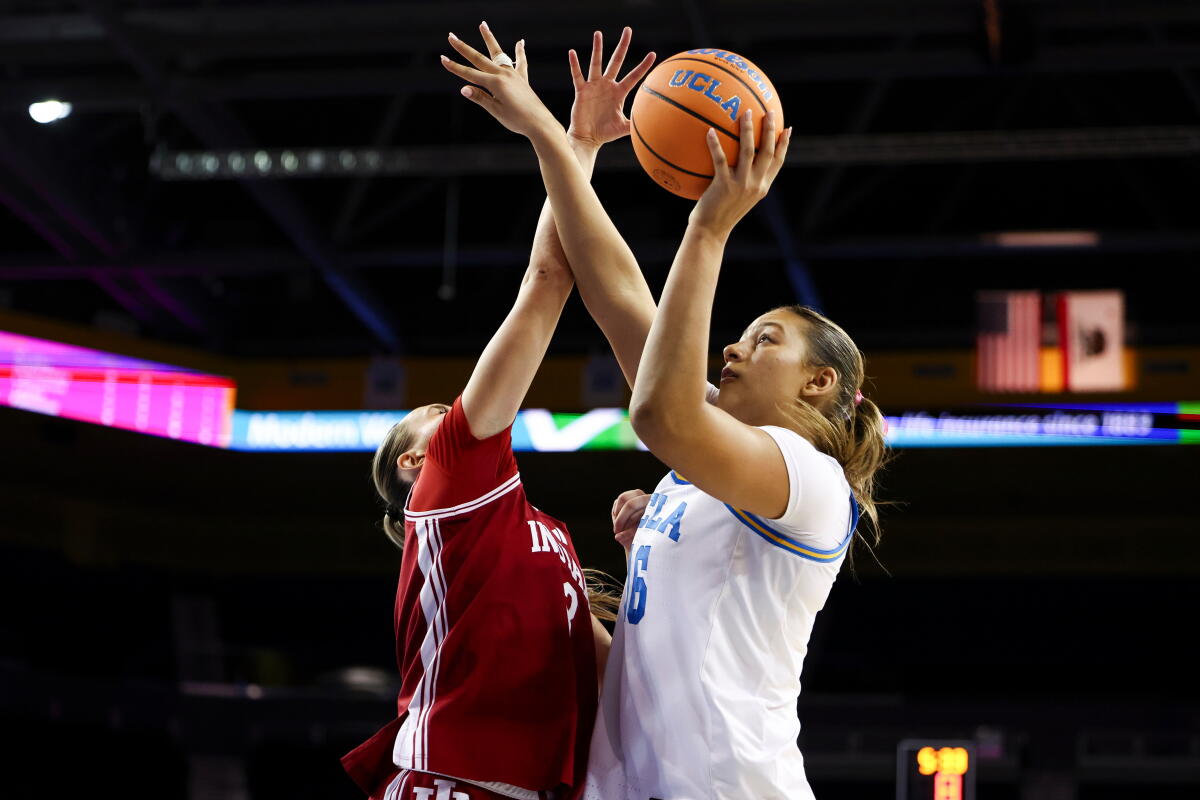
UCLA women’s basketball team has added some star power as its revamped roster begins to take shape.

Former Iowa State forward Addy Brown announced Thursday she is committing to UCLA, giving the Bruins one of the top players in the portal.

Brown averaged 11.9 points, 8.8 rebounds and 5.3 assists per game while shooting 43.1% from the floor and 33.8% from three-point distance with the Cyclones last season. She played just 21 games due to injury, but she is one of the better two-way players in the nation on the transfer market.

The 6-foot-2 forward co-starred with Audi Crooks for Iowa State the past few seasons and was a part of the mass exodus from the Cyclones’ program.

The Bruins reeled in former North Carolina junior guard Elina Aarnisalo and former Texas Christian senior guard Donovyn Hunter a few weeks ago, adding two more experienced players to the depleted starting lineup after a record six UCLA players were selected in the WNBA draft.

UCLA also signed Arkansas sophomore guard Bonnie Deas earlier this month. She is likely to start at point guard for the Bruins and is one of the best rebounding guards in the nation.

Along with returner Timea Gardiner, the Bruins are starting to form somewhat of a core to defend their national championship. Gardiner was a starter during UCLA’s 2024-25 Final Four run, but missed all of this past season with injury and has one season of eligibility left.

A lineup with Deas and Aarnisalo in the backcourt, Hunter at the three and Gardiner or Brown at the four and adding another big or Sienna Betts at the five would be a competitive lineup in the Big Ten.

Before going to TCU, Hunter played two seasons at Oregon State where she earned All-Pac-12 Defensive Team honorable mention and All-Pac-12 Freshman team honors. This past season with a Horned Frogs team that went to the Sweet 16, she was third in scoring with 10.2 points per game and averaged 3.2 rebounds per contest. She also shot 45.7% from the field and was 33.7% from beyond the arc.

Aarnisalo played her freshman year in Westwood after she originally committed to UCLA in 2025. Due to injuries from point guard Kiki Rice at the start of the 2024-25 season, she was forced into action early her freshman season and finished the year averaging 5.1 points per game.

The Helsinki, Finland, native averaged 10.2 points per game for the Tar Heels as a sophomore last season while shooting 47.3% from the field and 40.3% from the arc. The Bruins will desperately need to replace the three-point production lost with the departure of Rice, Gianna Kneepkens and Charlisse Leger-Walker.

UCLA coach Cori Close said she wanted to sign five players from the portal. She probably needs one more guard and a little more forward depth coming off the bench following the departures of Gabriela Jaquez and Angela Dugalic.

Lena Bilic and Amanda Muse are returners coming off the bench who got a little bit of playing time in the tournament and should have much larger roles, but they are still relatively unproven in late-game situations. They will get a chance to develop as backups with some more Power Four experienced starters now in the fold.

Source link

Women’s Six Nations: Bethan Lewis to captain Wales v England with Kate Williams and Carys Cox out

Bethan Lewis will lead Wales against England in the Women’s Six Nations on Saturday (14:15 BST) with fellow back rower Kate Williams ruled out through injury.

Williams came off in the second half of the 38-7 defeat by France last weekend with a leg problem and will miss Wales’ meeting with the world champions at Ashton Gate.

Alex Callender, Williams’ co-captain last year, is still recovering from an ankle injury.

Lewis led Wales against Canada at last summer’s World Cup and said: “It’s always a massive honour to put on the jersey and to be able to lead the girls out against England.”

The England game will come too soon for Wales centre Carys Cox, who was a late withdrawal from the France defeat after taking a knock in training, but head coach Sean Lynn says wing Seren Singleton is fit despite leaving the field with her arm in a sling.

He will name his side on Thursday morning.

Source link

Women’s Six Nations: England v Wales – Sarah Bern & Red Roses strive for perfection

Bern has scored two tries in each of England’s wins over Scotland and Ireland in the opening two rounds of the Six Nations.

She believes adding more try-scoring threats to England’s attack can be key to fuelling record crowds in the absence of opposition who can threaten their winning streak.

Ten of England’s 16 tries in the knockout stages of last year’s World Cup came via their forwards as they leaned on the power of their pack and set-piece en route to glory.

Lou Meadows, England’s attack coach at the time, had had some success with a more expansive gameplan,, external but left her post after the tournament.

Emily Scarratt, the Red Roses’ all-time leading points scorer, has since taken up the role.

“Where we’re trying to evolve to now is being threats from anywhere,” said Bern.

“We recognise that we won a World Cup, and it was great, but we definitely could have made improvements in our attack.

“We always talk about how even if something’s not broken, we can break it and start again. Just because it worked doesn’t mean we can’t change anything.

“We want people to come to the stadium and see something different every week.

“We want to be entertaining. We want to show that all of our Red Roses have amazing abilities to carry, fend and play an exciting style of rugby to showcase to the world.”

England face Wales, who have lost 11 of their past 12 Tests, at a sold-out Ashton Gate in Bristol on Saturday (14:15 BST kick-off).

Source link

Hannah Green wins LPGA Tour title with first women’s major starting in Houston this week

Australian Hannah Green’s strong start to 2026 continued with victory in the JM Eagle LA Championship – her fourth triumph of the year.

In March, she became the first Australian to win the Women’s Australian Open since 2014, and lifted the LPGA’s Women’s World Championship and the Australian WPGA Championship.

In Los Angeles, Green holed a curling 12-foot birdie putt on the first play-off hole to win this LPGA Tour event for the third time in four years.

It was a stunning victory for Green given she had briefly been six shots adrift of the lead after Kim Sei-young chipped in for an eagle three on the 11th.

Green responded with the first of five birdies in six holes as she reeled in Kim and Im Jin-hee and all three finished on 17 under par.

“I didn’t think I was still in the tournament,” said Green, who won her only major, the Women’s PGA Championship, in 2019.

On her tournament-winning stroke, she added: “I had that putt, similar line in regulation, so I felt somewhat comfortable.”

Kim had already missed a 35-foot birdie attempt while Im – penalised a stroke for slow play during Saturday’s third round – was also unable to get down in three after a wayward tee shot.

The tournament was played at El Caballero for the second year because of course renovations at Wilshire where Green had won this title in 2023 and 2024.

During Saturday’s round, the tournament’s prize money was increased by $1m to $4.75m (£3.5m), lifting the purse to the highest on the tour outside of the major championships and season-ending CME Group Tour Championship.

As a result of that, Green took home $712,500, up from $562,500.

The Chevron Championship, the first women’s major of the year, stars on Thursday in Houston, Texas.

Source link

Women’s Six Nations: Scotland suffer baptism of fire on emotional Murrayfield occasion

So what to make of a day which delivered history for Scottish women’s sport, as well as a 12-try demolition?

It is true, England are not the benchmark for Scotland.

Victory away to Wales last week was a solid start, and now it is all about the response in Italy next week and trying to beat Ireland in the final game, either side of a home game against France.

But all performances are crucial to building momentum and keeping the fans coming back, as Malcolm herself said.

Just ask the Scotland women’s football team, who have seen crowds shrink back at Hampden amid a struggle to qualify for major finals.

The Scotland captain, as ever, got the tone spot on when summing up a strange day.

“Today was about so much more than just the game,” Malcolm said. “For those of us that have been around 10 years plus – we’ve come from back pitches with a couple of people in stands.

“To even arrive today and get the reception we got was phenomenal. It’s a result of the work we’ve done as players on the pitch to put in performances that make people want to come back.

“Today wasn’t one of them. But that doesn’t take away from what we’ve created over the last 10 years to make this happen.

“We’re at the beginning of a new journey. We’re going to keep pushing to get back to that point to put in a performance in that stadium that fans can be proud of.”

Source link

Women’s Six Nations: Dallavalle starts as Cox withdraws with injury

Wales: Powell; Singleton, Dallavalle, Keight, Joyce; George, Lockwood; Pyrs, Jones, Tuipulotu, Aiono, Crabb, Lewis, Williams (capt), King

Replacements: Reardon, Davies, Rose, John, Metcalfe, Evans, Bevan, De Vera.

France: Barrat; Grando, Rousset, Vernier, Murie; Arbez, Bourdon Sansus; Brosseau, Lazarko, Khalfaoui, Zago, Fall Raclot, Berthoumieu, M Feleu (capt), L Champon

Replacements: Riffonneau, Mwayembe, Deshaye, Soqeta, Escudero, A Chambon, T Feleu.

Source link

Women’s World Cup qualifying: Wales great Sophie Ingle set for 150th cap

Ingle has come a long way since beginning her junior career with Vale Wanderers, a boys’ team in Barry.

She was forced to give up the sport when aged 12 because Football Association of Wales (FAW) rules meant she could no longer play with the boys.

Thankfully for Welsh football, Ingle returned to the pitch when her Vale Wanderers coach set up a girls’ team when she was 14.

She then played for Dinas Powys Ladies and Cardiff City Ladies before joining Chelsea for the first of two spells in 2012.

By that stage, Ingle was an established Wales international, having made her senior debut in a 2-1 World Cup qualifying defeat to Azerbaijan three years earlier, only a matter of weeks after her 18th birthday.

Ward scored Wales’ goal in Baku, with Ingle coming off the bench.

“It was a horrible game, horrible pitch, but this kid just made it look like she’d been doing it her whole life,” Ward remembers.

“She’s just a top player… technique is unbelievable, the way she reads a game, the way she can find a pass.

“She’s my favourite footballer in the world.”

Adrian Tucker was the manager who gave Ingle her first cap, in an era when the landscape was very different in women’s football.

“She was good technically but she was also really good on the physical side, which was a really big thing at that time,” he says.

“Did I think she would go on to win 150 caps? In 2009, I didn’t think Wales would play 150 games. We were struggling to get five games a season.

“But since then there has been a boom in women’s football and Sophie has been on the crest of that wave.”

Source link

Women’s Six Nations: Ellie Kildunne and Abi Burton start against Scotland

Scotland fly-half Helen Nelson, who ranks fourth highest for the number of kicks out of hand in the English top-flight, may well look to exploit space around Kildunne, while Rhona Lloyd, who will line up opposite Kildunne, has scored 11 league tries for Sale so far this season.

Elsewhere prop Maud Muir wins her 50th cap for England as she starts at tighthead in place of Sarah Bern, who is part of a set of replacements which includes 112-cap Marlie Packer and Gloucester-Hartpury’s Mia Venner.

England are hunting their eighth successive Women’s Six Nations title, but are attempting to maintain their streak without a host of names who helped them to the World Cup last year.

Number eight Alex Matthews will miss the meeting with Scotland with a shoulder injury, while earlier on Thursday it was announced that prop Hannah Botterman had joined those sidelined for the tournament with an ankle injury.

Head coach John Mitchell will hope that the enforced changes will prove the making of a next generation of players, while maintaining the Red Roses’ grip on the tournament.

However Scotland, who will play in front of a 25,000-plus crowd at Scottish Gas Murrayfield in the biggest stand-alone women’s sporting fixture in their country’s history, will be primed to exploit any wobbles.

England: Sing; Breach, Jones (capt), Rowland, Kildunne; Harrison, L Packer; Clifford, Cokayne, Muir, Burton, Ives Campion, Short, Kabeya, Feaunati,

Replacements: Powell, Carson, Bern, Lutui, M Packer, Robinson, Aitchison, Venner

Source link