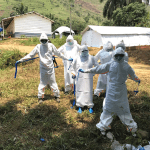

The World Health Organisation (WHO), a United Nations specialised agency, has declared the resurgence of the Ebola epidemic in the Democratic Republic of Congo (DRC) a case of international concern. Following the declaration of the 17th Ebola epidemic in Ituri province on Saturday, May 16, the WHO announced that the resurgence is attributed to the Bundibugyo strain found in both the DRC and Uganda.
Tedros Ghebreyesus, WHO’s Director General, said the declaration is based on several elements, notably the high level of positivity of the first samples of tests, the already documented propagation outside Congolese borders, as well as the absence of a vaccine or approved treatment against the specific strain. He noted that the current epidemic does not meet the criteria for a pandemic emergency at this time.
The recent Ebola virus outbreak is occurring in an area of the country plagued by violence against civilians, which is linked to the Allied Democratic Forces (ADF) rebels, who continue to inflict suffering on the local population despite ongoing joint military efforts by the Congolese armed forces and the Ugandan Peoples Defence Forces (UPDF). In addition to the joint operations, various local militia groups are also active, including the Cooperative for the Development of Congo (CODECO), the Zaire faction, the Convention pour la Revolution Populaire (CRP), and others. This situation has deteriorated the humanitarian conditions in this region of the DRC, leading to a significant displacement of people.
However, the government of Rwanda, through its Ministry of Health, has said it is closely monitoring the resurgence of the Ebola epidemic in the DRC’s Ituri province, noting that no cases of the virus have been detected in Rwanda so far. The government noted that it has taken some measures, including increased vigilance on border posts with the DRC.
“As a precautionary measure, Rwanda has reinforced the testing and vigilance at entry points situated along the border with the DR Congo. Health teams have been mobilised, and the surveillance systems have been reinforced in order to ensure early detection and a rapid intervention in case of need”, the Rwanda Ministry of Health announced in a statement dated May 17.
Sabin Nsanzimana, the country’s Minister of Public Health, who is also an epidemiologist, noted that his ministry would continue to collaborate with national, regional, and international partners to protect the health and security of the Rwandan population.
The epidemic in Ituri province arose nearly six months after the Congolese government announced the end of the 16th Ebola epidemic in Kasai province on Dec. 1, 2025. Following the recovery of the last patient on Oct. 19, 2025, no cases were recorded during the subsequent 42 days.
However, Roger Kambathe, DRC’s Minister of Public Health, Hygiene, and Social Welfare, rejected speculations in the country’s socio-political circles that the resurgence of the Ebola virus is due to negligence on the part of relevant health infrastructure and authorities. During a press conference on Saturday, May 16, the minister addressed accusations of failure in the sanitary surveillance system to manage alerts about the new Ebola epidemic in Ituri.
“You have said something that surprises me. You have said: ‘What did not work, the epidemic has been here for one month and you did not react’. I want to remind you that there was a patient, a nurse, who died in Bunia of an illness which was not reported. I gave the date: 24th April,” the minister said, clarifying that the corpse was eventually transferred to Mungwalu, where local traditional funeral rites caused the propagation of the virus.
“It was during the funeral ceremony that people were crying, thinking that the nurse died from a mysterious disease and touching the corpse, that cases of the virus started appearing,” Roger noted, adding that the first official notification of the virus was on May 5. “This first social notification was through social networks.”
“Three days afterwards, our teams made the official notification. Samples were taken”, the minister continued and stressed that the first analysis did not permit the identification of the particular Ebola strain. “We first researched the Zaire strain, but the results were negative.”
He also said samples were eventually sent to the national biomedical research institute in Kinshasa for complementary analyses, “and it was before yesterday that we received the confirmation of another strain. Thus, I do not know why you say ‘what did not work?’”.
Samuel argued that “there is a rule called ‘7-1-7’: be alerted in 7 days, intervene immediately, and post the diagnosis promptly. And that is what was done”. He assured that response measures are currently in place, particularly through logistics and aerial resources. Between May 8 and May 17, aircraft were already dispatched. This spans just under nine days, and the minister stated that the issue does not lie with the system.
One day before the official government communication on May 16, Jean Kaseya, the Director General of the Africa Centres for Disease Control and Prevention, warned of the high risk of regional spread of the epidemic. Faced with the situation, a high-level regional meeting was convened with the health authorities of the DRC, Uganda, and South Sudan, as well as several international partners, including the WHO and the United Nations International Children’s Emergency Fund (UNICEF).
According to Jean, who is in charge of the African Union’s health agency, the efforts would be centred on strengthening epidemiological surveillance, laboratory capacities, infection control, community engagement, and transborder coordination.
In a related development, measures to fight against the virus are being intensified in Ituri province. At least five tons of medical supplies were sent to Bunia on Sunday, May 17, to support teams fighting the virus. The material arrived at Murongo airport aboard a humanitarian flight, coordinated by the WHO and its partners. On arrival in Bunia, Anne Ancia, WHO representative in DRC, confirmed that the logistical support aims to urgently reinforce response capacities in the zones affected by the epidemic. According to her, the situation requires rapid mobilisation and coordination to prevent the disease from spreading further in the province, which is already weakened by insecurity and population displacement.
“We call on the population to collaborate with the health teams, to rapidly report suspected cases and to respect preventive measures. The response cannot succeed without the involvement of the community”, Anne Ancia charged. The equipment, including individual protective gear, tents, and hospital beds, would enable intensified frontline interventions, strengthened prevention, and infection control to protect communities in the affected zones.
This medical assistance comes while several suspected cases and deaths linked to Ebola have been reported in certain health zones of Ituri, notably in Rwampara and Bunia, forcing the health authorities to reinforce the surveillance and prevention measures. On the ground, medical teams continue community sensitisation, follow-up contacts, and the installation of health control mechanisms to limit the chain of transmission.