Changes in Venezuela are slow and imperfect, but they are happening. The question is not whether chavismo will attempt to produce results that benefit Venezuelans, because it has no alternative. The real question is how it will do so and who is on the playing field trying to shape those outcomes.
The reform of the Hydrocarbons Law, the enactment of the Amnesty Law, and the proposed reform of the Mining Law seem to indicate that the vehicle for implementing the institutional measures demanded by the United States is the National Assembly. A National Assembly that lacks legitimacy and does not represent the majority of the country’s political sectors.
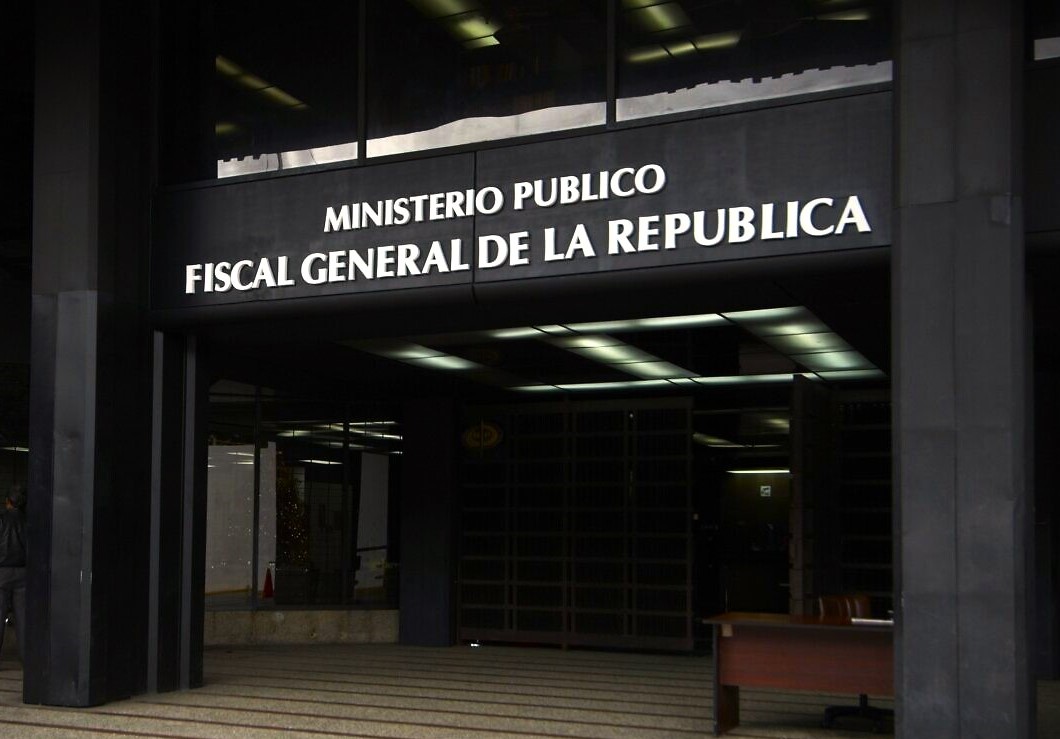
Two weeks ago, Tareck William Saab resigned from his position as chief prosecutor, and Alfredo Ruiz resigned as ombudsman. Both had held those posts since August 2017 and had used the justice system against those who think differently. Following their resignations, the National Assembly confirmed Larry Devoe as acting head of the Public Prosecutor’s Office (Ministerio Público) and appointed Saab himself as acting ombudsman. While Saab’s resignation represented a step forward, appointing Saab as acting ombudsman was a direct violation of the Constitution. These dissonant signals only confirm that the Rodríguez leadership has no political will to move toward a democratic transition.
The process to appoint the heads of the Citizen Power branch has begun with the convening of the Evaluation Committee, and once again the academic world and civil society organizations have decided to participate. The nomination of Dr. Magaly Vásquez for chief prosecutor is a clear example and reflects the same logic that led human rights organizations to participate in the discussions around the Amnesty Law: when civil society comes together, it can take advantage of even minimal conditions to make itself heard and push decision-making toward, at the very least, more “palatable” outcomes.
Will a future democratic government treat the Amnesty Law as illegitimate? Will the hydrocarbon contracts signed by the interim government of Delcy Rodríguez be recognized?
In this process, as in the legislative debates mentioned earlier, there is an absence: the representation of all the country’s political actors. This absence (which includes a large portion of the opposition) is not simply an act of selfishness. On the contrary, their position is rooted in values and principles that prevent them from recognizing any legitimacy in the National Assembly. That stance deserves respect and admiration. However, it is worth asking whether that inflexible position is preventing them from becoming involved in processes that are producing real consequences for real people, inside and outside the country.
We know that these steps are not gestures of democratization. They appear instead to be targeted concessions designed to manage external pressure and preserve power. But achieving the appointment of a credible chief prosecutor or ombudsman could, even if only gradually, begin to rebuild a degree of institutional independence.
This leads me to ask those in the opposition who still remain on the sidelines: if we do not recognize these processes from their origin, what happens to their results when an eventual political change arrives? Will a future democratic government treat the Amnesty Law as illegitimate? Will the hydrocarbon contracts signed by the interim government of Delcy Rodríguez be recognized? Will the institutional reforms that may emerge within the framework of the path outlined by the US be rejected? These questions arise when one notices the absence of the main political figures, or when their presence remains limited to criticism.
These are not rhetorical or ill-intentioned questions. Nor is this about abandoning principles. Rather, it is about recognizing that civil society organizations need backing, especially from political parties and movements. As was demonstrated on July 28, 2024, when society’s desire for change translates into participation and is channeled by political parties, it becomes an overwhelming movement with the potential to materialize that will for change.
At the same time, we must be realistic: the response of opposition leaders cannot be unconditional recognition of the National Assembly. Structurally, it remains an instrument of authoritarian control. What can materialize, however, is support for civil society in the processes in which it is already participating. These expressions of support do not seek to legitimize lawmakers elected under questionable circumstances. Rather, they seek to recognize the work and struggle of the intermediary organizations that are fighting to open spaces for institutional life.
Turning this transition into a Venezuelan process requires Venezuelan actors to claim leadership over the institutional processes now unfolding.
A clear example of support could be the one mentioned earlier. The process to appoint the heads of Poder Ciudadano should not be rejected from the outset. Instead, those who have chosen to submit their candidacies before the National Assembly’s Evaluation Committee—and who possess the necessary technical and civic credentials—should receive public support, while their names are circulated in the public arena. Put more plainly: make noise about it. Doing so would increase the cost for the regime, in the eyes of the Trump administration, of selecting individuals who are the complete opposite: people without technical qualifications or chosen solely for political loyalty.
Choosing to support participation from an external position carries implications that become clearer with every issue appearing on the legislative agenda. The reform of the Mining Law presented this week, for example, cannot follow the path taken by the Hydrocarbons Law, which was approved without consultation, transparency or the participation of those who will bear its costs.
Venezuelan scholars, environmental organizations, and Indigenous communities must be sitting at the table in the discussions on the mining law. And the opposition, if it truly aspires to represent Venezuelans and not simply oppose the regime, could present its own reform proposals to the organizations that decide to participate in the process. In this way, participation would be effectively “outsourced.” The direct actors are not recognized, but the work of leading institutions is acknowledged.
What is at stake is more than a specific law or appointment. January 3 set in motion a process of transition in Venezuela that we hope will reach a safe harbor and conclude with free elections. But we cannot forget that there is also a risk that these changes will become little more than a negotiation between the US and remnants of chavismo. Turning this transition into a Venezuelan process requires Venezuelan actors to claim leadership over the institutional processes now unfolding. On one side, civil society must act as the principal driver. On the other, the opposition must decide whether it will remain on the margins or become an active ally.
Transitions are never perfect, because in most cases the preexisting institutions are not trustworthy. Yet decisions made within those institutions tend to be more durable than the circumstances that gave rise to them. Participating in a flawed process does not mean surrendering one’s principles. Refusing to acknowledge the reality of the moment, by contrast, allows others to shape what will become the legal and institutional architecture of the transition. And possibly, the political landscape of the coming decades.