opposition

The forint verdict: How investors are reacting to a landslide Hungarian opposition victory

The Budapest Stock Exchange jumped over 3% to a record high of more than 136,000 points on Monday as markets priced in the end of 16 years of Viktor Orbán’s time in power and the potential return of Hungary to a more mainstream European path.


ADVERTISEMENT


ADVERTISEMENT

Increased investor appetite pushed the country’s largest listed companies, including OTP Bank, MOL, Richter, and Magyar Telekom to gain between 2%-5% by 1 p.m. CET.

The move contrasts with broader European markets, which are trading lower, digesting the failure of US-Iran negotiations over the weekend with no indication of further talks.

At the election on Sunday, Péter Magyar’s Tisza party secured 138 seats in the 199-seat Hungarian parliament, securing a supermajority and fuelling expectations of a seismic shift in the country’s politics.

Magyar, a former Orbán ally turned fierce critic, has promised to restore democratic checks and balances and unlock €17 billion in EU funds frozen over democratic backsliding under Orbán’s government.

This could be accompanied by access to low-cost loans for defence and infrastructure, fuelling the fragile growth of the Hungarian economy.

Speaking to Euronews, Timothy Ash, a senior emerging markets strategist at RBC Global Asset Management, explained that “the market is reacting to a combination of uncertainty dissipating, as there was a real concern of election results being contested, and renewed optimism for policy changes that should align Europe”.

“Magyar will need better relations with the EU. There are lots of structural funds that will probably get released, and the market knows the economic policy team well,” he added.

Ash also said that the likely pick of András Kármán as the new finance minister, “a very credible person,” will further stabilise the country’s near-term growth.

Kármán is currently Tisza’s economic advisor and previously served as a member of the board of directors at the European Bank for Reconstruction and Development (EBRD).

Investors appear to view the result as removing a long-standing political risk premium that had weighed on Hungarian assets.

The two-thirds parliamentary majority secured by Tisza will allow swift legislative changes, including the potential removal of sector-specific windfall taxes that had squeezed banks, energy firms and retailers.

Morgan Stanley and other analysts have noted that such a shift could lift Hungary’s GDP growth potential by 1 to 1.5% in the coming years through higher investment and restored EU transfers.

Hungarian currency strengthens on reform optimism

The Hungarian currency joined the rally, climbing to its strongest level against the euro in more than four years.

The EUR/HUF rate fell to 366.64, its lowest since April 2022, while the forint also gained sharply against the US dollar.

Market observers attribute the currency’s strength to expectations of reduced political uncertainty and renewed foreign capital inflows once EU funds resume.

However, Ash explained to Euronews that “Hungary has a very high real rate compared to, say, Poland. I think the central bank has maintained very high real rates because of political risk”.

“They were very concerned about maybe the currency weakening around elections, but are very eager to have a stable currency.”

Last month, the National Bank of Hungary held its benchmark rate at 6.25%, whereas in Poland, for example, it is currently steady at 3.75%.

“Maybe we’ll see a normalisation of real rates in Hungary towards [those closer to] Poland, and that means rate cuts, probably. Investors will likely focus on rates more than the currency as Hungary will also need economic stimulus to catalyse growth,” Ash added.

Source link

Britain pauses Chagos Islands transfer over Trump opposition

A U.S. Air Force B-2 Spirit stealth bomber is pictured in 2025 as it takes off on a combat mission from Diego Garcia, which is located in the Chagos Islands and is considered British Indian Ocean Territory. Britain has abandoned a deal to return the islands to Mauritius after the United States withdrew its support over concerns about the military base there. Photo by Tech. Sgt. Anthony Hetlage/U.S. Air Force

April 11 (UPI) — After an about-face by the Trump administration, Britain said it is pausing a plan to transfer ownership of the Chagos Islands to Mauritius because it cannot complete the deal without U.S. support.

Britain on Friday said it is abandoning a deal to return sovereignty to the islands, which would have permitted the both countries to continue using the military base in Deigo Garcia they have operated since the 1970s, because there is not enough time for the U.K.’s parliament to pass a legislation on it, The Guardian reported.

The islands have been controlled by Britain since the 1800s, though in 1968 it granted independence to Maritius — which it also had controlled — but kept possession of the Chagos Islands.

President Donald Trump had in 2024 offered support for Britain to return the islands in return for continued use of the base, which includes billions in annual payments for doing so.

Trump withdrew his support for the deal earlier this year, calling it a “great act of stupidity,” less than a year after Secretary of State Marco Rubio and the Trump administration called the deal an “historic” achievement, at least partially because it kept the Diego Garcia base in use.

The change in opinion came, however, weeks before the United States and Israel started the war in Iran at the end of February because, he said at the time, the U.S. military may need to use the Diego Garcia base, The Hill reported.

“The U.K. had two objectives, one was to comply with international law, the second was to reinforce the relationship with the United States,” Simon McDonald, a former permanent secretary in Britain’s Foreign Office.

“When the president of the United States is openly hostile, the government has to rethink, so this agreement, this treaty, will go into the deep freeze for the time being,” McDonald said.

The deal to return the islands to Maritius stems from an overall effort by Britain to reckon with its colonialist history, as well as a 2019 international court decision that said it had acted illegally by separating the Chagos from Maritius in the 1960s.

The military base on Diego Garcia, which dates to a 1966 treaty between Britain and the United States — which the two countries cleared people living in the area from in order to construct it — was to give the two nations a 99-year lease to continue operating the base.

While the Trump initially supported the deal, it has long been controversial in Britain, with Kemi Badenoch, leader of Britain’s Conservative Party, said it took too long for the current U.K. government to give up on it.

Badenoch said the government had dragged its feet on dropping the deal, calling it a “damning indictment of a prime minister, who fought to hand over British sovereign territory and pay $47 million to use a crucial military base which was already ours.”

Secretary of Defense Pete Hegseth speaks during a press briefing at the Pentagon on Wednesday. Yesterday, the United States and Iran agreed to a two-week ceasefire, with the U.S. suspending bombing in Iran for two weeks if the country reopens the Straight of Hormuz. Photo by Bonnie Cash/UPI | License Photo

Source link

UK to hold off on deal ceding Chagos Islands amid US opposition | Border Disputes News

A bill laying out plans to return the Indian Ocean archipelago, home to the US-UK Diego Garcia base, has been paused.

The United Kingdom is setting aside a bill to return the Chagos Islands to Mauritius amid a lack of support from United States President Donald Trump.

“We have always said we would only proceed with the deal if it has US support,” a UK government spokesperson said in a statement, according to the Reuters and AFP news agencies on Saturday.

Recommended Stories

list of 4 itemsend of list

This followed reports in the UK media that said a bill laying out plans to cede sovereignty of the 60-plus Indian Ocean islands had been dropped from the next parliamentary agenda.

Last May, the UK and Mauritius jointly announced a deal that would return full sovereignty of Chagos to Mauritius, which is some 2,000 kilometres (1,200 miles) away from the archipelago.

Britain would then pay to lease Diego Garcia – the largest island and a strategic location in the middle of the Indian Ocean between Asia and Africa, which is home to the military base – on a 99-year lease to preserve US operations there.

But Trump opposed the move, calling it an “act of great stupidity” in January.

“Diego Garcia is a key strategic military asset for both the UK and the US. Ensuring its long-term operational security is and will continue to be our priority – it is the entire reason for the deal,” the UK government spokesperson added in his statement.

“We are continuing to engage with the US and Mauritius.”

The statement added that the UK “continue[s] to believe ⁠the agreement is the best way to protect ⁠the long-term future of the base”.

‘Big mistake’

After Trump’s initial opposition, he appeared to momentarily back down in February after speaking with UK Prime Minister Keir Starmer, saying Starmer had made the “best deal he could make”.

But he then attacked the prime minister again on Truth Social weeks later.

“He is making a big mistake,” Trump wrote, adding that ceding the Chagos Islands would be “a blight on our Great Ally”.

Over the last six weeks, relations between Trump and Starmer have been further strained by the US-Israel war on Iran.

The UK is now leading a coalition of more than 30 countries to protect vessels in the Strait of Hormuz, without US participation in the initial talks.

Britain has controlled the Chagos since 1814, including after Mauritius gained independence in the 1960s. The Diego Garcia base has played a key role in US military operations in Vietnam, Iraq and Afghanistan.

Chagossians – thousands of whom were forcibly evicted to make way for the base – have brought compensation claims to British courts, culminating in a 2019 International Court of Justice recommendation that the archipelago be returned to Mauritius.

Source link

Taiwan opposition leader calls for ‘reconciliation’ after meeting Xi | Xi Jinping News

Taipei, Taiwan – Opposition leader Cheng Li-wun and Chinese President Xi Jinping have met in Beijing, where both leaders stated their opposition to Taiwan independence and expressed a desire for a “peaceful” resolution to the long-running dispute over the island’s future.

They posed for photos at the Great Hall of the People and exchanged public remarks, in addition to holding their closed-door meeting.

Recommended Stories

list of 4 itemsend of list

Cheng is the highest-ranking Taiwanese leader to meet Xi since President Ma Ying-jeou talked with the Chinese leader in Singapore in 2015. They met again in China two years ago when Ma was a private citizen.

Both Cheng and Ma are members of the Kuomintang, the conservative-leaning Taiwanese political party that advocates for greater engagement with China by Taiwan’s self-ruled democratic government.

During her public remarks, Cheng stressed that Chinese and Taiwanese leaders should work to “transcend political confrontation and mutual hostility”.

“Through the unremitting efforts of our two parties, we hope the Taiwan Strait will no longer become a potential flashpoint of conflict, nor a chessboard for external powers,” Cheng said, according to an English translation.

“Instead, it should become a strait that connects family ties, civilisation and hope – a symbol of peace jointly safeguarded by Chinese people on both sides,” she said.

Cheng’s remarks were sprinkled with well-known Chinese Communist Party talking points, praising its success in eradicating absolute poverty to its goal of achieving the “great rejuvenation of the Chinese nation.”

“During their open-door meeting, Xi also emphasised Taiwan and China’s shared history and culture, stating that “people of all ethnic groups, including Taiwanese compatriots,” had “jointly written the glorious history of China.”

“All sons and daughters of China share the same Chinese roots and the same Chinese spirit. This originates from blood ties and is deeply embedded in our history – it cannot be forgotten and cannot be erased,” Xi said.

He added that together with the KMT and other members of Taiwanese society, Beijing was ready to “work for peace” across the Taiwan Strait.

Both leaders said they oppose “foreign meddling” in Taiwan-China relations – a reference to US interference – while Cheng suggested that she would slow Taiwan’s military build up, according to Wen-ti Sung, a nonresident fellow with the Atlantic Council’s Global China Hub.

“She talked about the ‘institutional arrangement for war prevention,’ which was a euphemism for saying that under her leadership, the KMT would not be seeking a defence and deterrence-oriented approach to war prevention,” he told Al Jazeera.

The message, in short, was that “Taiwan ought to slow down on defence buildup and buying US arms,” Sung said.

Taiwan’s military expansion has been a hotly debated issue in the legislature, where the KMT has for months blocked a $40bn special budget to acquire US weapons. The opposition party alleges that the defence bill is too large and too vague. It offered a smaller $12bn alternative instead.

Writing on Facebook ahead of the meeting, Taiwanese President Lai Ching-te of the Democratic Progressive Party (DPP) wrote that the KMT continues to “deliberately avoid cross-party negotiations” while delaying approval of the special defence budget.

Lai said that his government also supports peace, but not “unrealistic fantasies”. Despite promises of peace from Xi, China has steadily ramped up its military presence in the waters and airspace around Taiwan in recent years. Since 2022, China’s armed forces have had six rounds of multi-day live-fire military drills in the Taiwan Strait, the 180-kilometre wide waterway dividing Taiwan from mainland Asia.

“History tells us that compromising with authoritarian regimes only sacrifices sovereignty and democracy; it will not bring freedom, nor will it bring peace,” Lai wrote on Facebook.

China accuses the ruling DPP’s leadership of pushing a “separatist” agenda. The DPP advocates for a distinct Taiwanese identity and, over the past decade, has tried to raise Taiwan’s profile on the world stage — which has provoked anger in Beijing.

The Chinese leadership cut off formal contact with Taipei shortly after the DPP came to power in 2016, although it continues to communicate through different groups, including the KMT.

That is partly why Cheng’s trip to China has been viewed with scepticism in some corners of Taiwan, particularly among the ruling DPP.

Speaking to reporters after the meeting, Cheng sidestepped questions of whether she supported Taiwanese and Chinese unification, but said her main goal was to seek “reconciliation” based on shared history and culture.

However, the KMT and the Chinese Communist Party have not always got along.

They fought a bloody civil war from the 1920s to the 1940s during China’s republican era, only pausing to fight the Japanese during the Second World War.

The KMT-led Republic of China government later retreated to Taiwan, a former Japanese colony, in the late 1940s, vowing to one day return to China. The conflict was never fully resolved. The CCP continues to claim Taiwan as a province, and remains committed to annexing it one day, peacefully or by force.

Taiwan’s Mainland Affairs Council – which sets Taiwan’s policy towards China – said this week that Cheng’s talking point that Taiwan and China are “one family” mischaracterises Taiwan’s sovereignty dispute as an internal disagreement rather than one between two governments.

While still formally known as the Republic of China, Taiwan has undergone a cultural and political sea change since democratisation in the 1990s, accompanied by a rise in Taiwanese nationalism.

In 2025, a national identity survey by the National Chengchi University in Taiwan found that 62 per cent of respondents identified as “Taiwanese”, up from 17.6 per cent in 1992, the first year of the survey.

The percentage of respondents who identify as “Taiwanese and Chinese” has fallen from 46.4 per cent to 31.7 per cent over the same period, while respondents identifying as “Chinese” fell from 25.5 to 2.5 per cent.

Source link

Opposition floor leader slams budget, calls for targeted oil relief

Song Eon-seok, floor leader of the People Power Party, speaks at a party Supreme Council meeting at the National Assembly in Seoul on Wednesday. At right is party leader Jang Dong-hyuk. Photo by Asia Today

April 3 (Asia Today) — Song Eon-seok, floor leader of the People Power Party, on Thursday criticized the government’s proposed 26.2 trillion won (about $19.6 billion) supplementary budget, calling it a “misguided plan” that relies on cash handouts instead of addressing the impact of high oil prices.

Speaking at a party strategy meeting at the National Assembly, Song said the proposal “diagnoses high oil prices but prescribes cash handouts,” arguing that it fails to support those most affected by rising fuel costs.

He said the government has become overly focused on distributing cash while neglecting vulnerable groups, adding that one-time payments of 100,000 won (about $75) would not meaningfully help people facing mounting living costs.

Song also criticized the exclusion of workers directly impacted by fuel prices, including truck drivers, delivery workers and taxi drivers, from key support measures.

“We will transform this supplementary budget from a war-related or election-driven budget into a ‘people’s survival budget,'” he said, pledging to shift from broad cash payments to targeted assistance.

He said the party would seek to cut spending items deemed unrelated to high oil prices during the review process, including renewable energy projects, independent film production support and regional development programs in Changwon. Savings from those cuts, he added, would be redirected to groups most affected by fuel price increases.

Song proposed expanding the fuel tax reduction from 15% to 30% and providing fuel subsidies of 600,000 won (about $450) to roughly 700,000 workers in transportation and delivery sectors.

He also suggested additional support measures, including subsidies for delivery and takeout packaging costs for about 670,000 self-employed business owners, as well as a 50% discount on the K-Pass public transportation program for six months.

Regarding the government’s plan to implement an odd-even license plate driving system, Song said the policy should be reconsidered. If implemented, he said, it should be accompanied by adequate compensation for affected citizens.

— Reported by Asia Today; translated by UPI

© Asia Today. Unauthorized reproduction or redistribution prohibited.

Original Korean report: https://www.asiatoday.co.kr/kn/view.php?key=20260403010000948

Source link

Opposition leader criticizes probe, economic policy, Iran response

People Power Party leader Jang Dong-hyuk, front row center, and other participants take part in a ceremony launching the party’s Central Next-Generation Women’s Committee at the National Assembly Museum in Seoul on Sunday. Photo by Asia Today

March 23 (Asia Today) — People Power Party leader Jang Dong-hyuk on Sunday criticized a parliamentary probe plan led by the ruling party, along with the government’s real estate policy and its response to the Iran crisis.

Speaking at a party leadership meeting at the National Assembly, Jang questioned the need for an investigation into alleged prosecutorial misconduct during the previous administration.

“If a fabricated indictment can be proven through a parliamentary probe, it would be much faster to obtain an acquittal in court,” he said. “The investigation will ultimately only confirm that the prosecution and trial were justified.”

Jang also invoked remarks previously made by President Lee Jae-myung, saying, “If a president commits a crime, he should go to prison,” adding that he was “returning those words as they are.”

The conservative party boycotted the National Assembly plenary session a day earlier and held a protest rally outside the chamber. A brief confrontation occurred with ruling party lawmakers after the probe plan passed.

Jang criticized the government’s real estate policy, accusing the president of centralizing decision-making while excluding public officials from the process.

“By that logic, the president, who is facing multiple trials, should step away from judicial policy,” he said.

He also warned against expanding fiscal spending in response to the Iran crisis, citing concerns over inflation, exchange rates and rising oil prices.

“With a triple shock of high exchange rates, inflation and oil prices, releasing an additional 25 trillion won, about $18.7 billion, would push prices and the currency higher,” he said. “This is not the time for cash handouts but for stabilizing the economy.”

Floor leader Song Eon-seok echoed the criticism, accusing the administration of attempting to consolidate power and warning against what he described as excessive control over parliamentary committees.

— Reported by Asia Today; translated by UPI

© Asia Today. Unauthorized reproduction or redistribution prohibited.

Original Korean report: https://www.asiatoday.co.kr/kn/view.php?key=20260323010006783

Source link

Nexstar finalizes acquisition of Tegna’s TV stations, despite opposition

KTLA-owner Nexstar Media Group said it has closed its deal to acquire rival Tegna’s TV stations, despite opposition from eight state attorneys general who filed a lawsuit to block the merger.

The acquisition was approved by the Federal Communications Commission’s Media Bureau and the Justice Department, Irving, Texas-based Nexstar said Thursday.

“This transaction is essential to sustaining strong local journalism in the communities we serve,” Nexstar founder and Chief Executive Perry Sook said in a statement. “By bringing these two outstanding companies together, Nexstar will be a stronger, more dynamic enterprise — better positioned to deliver exceptional journalism and local programming with enhanced assets, capabilities and talent.”

Sook also mentioned President Trump and FCC Chairman Brendan Carr by name in the statement, saying the company was “grateful” they recognized the “dynamic forces shaping the media landscape” and allowed the transaction to move forward. Trump had supported the deal.

The surprise announcement came only a day after eight state attorneys general, including California’s Rob Bonta, sued to stop the deal, arguing it would give Nexstar too much control of local TV stations. At the time, Bonta said the combination would cause “irreparable harm to local news and consumers who rely on their reporting as a critical source of information.”

Nexstar is the largest TV station owner in the U.S., with 164 outlets including KTLA in Los Angeles. If the merger with Tegna succeeds, Nexstar would have 265 TV stations reaching 80% of the U.S. and multiple outlets in a number of markets.

The suit also claimed it would give the combined company too much leverage in negotiating fees from pay-TV providers that carry their stations, which could raise costs for consumers.

The plaintiffs in the suit also include state attorneys general in Colorado, Connecticut, Illinois, New York, North Carolina, Oregon and Virginia.

FCC Commissioner Anna Gomez said the merger violates the existing national ownership cap of 39% under federal law and said the acquisition did not receive a vote before the entire commission. The FCC approved this deal with waivers, meaning the company can operate in violation of that ownership cap.

“A transaction of this magnitude, which includes new and novel issues before the FCC, demands open deliberation before the full Commission, not a quiet sign-off meant to avoid public scrutiny,” Gomez said in a statement. “Given the increasingly alarming pace of reckless media consolidation, the American public deserves to know how and why this decision was made.”

The FCC did not respond to an immediate request for comment.

Times staff writers Stephen Battaglio and Meg James contributed to this report.

Source link

Opposition leader says alleged charge deal could justify impeachment

Song Eon-seok, floor leader of South Korea’s People Power Party, speaks during a party strategy meeting at the National Assembly in Seoul on Friday. Photo by Asia Today

March 13 (Asia Today) — A senior opposition leader said Friday that allegations of pressure to drop criminal charges linked to aides of President Lee Jae-myung could amount to grounds for impeachment if proven true.

Song Eon-seok, floor leader of the conservative People Power Party, made the remarks during a party strategy meeting at the National Assembly.

Song cited claims made by journalist Jang In-soo during a YouTube broadcast hosted by political commentator Kim Eo-jun.

According to Song, the journalist alleged that a senior government official close to the president conveyed messages to several prosecutors asking them to drop charges in a case related to Lee.

“If such allegations are true, it would constitute grounds for impeachment of the president,” Song said.

Song also accused Justice Minister Jeong Seong-ho of acknowledging remarks that could be interpreted as pressure on prosecutors.

He argued that any attempt by a sitting minister to influence decisions about dropping charges would represent an abuse of authority and could justify impeachment proceedings against the minister.

The People Power Party is considering introducing an impeachment motion against Jeong as early as next week, according to party officials.

Opposition lawmakers also criticized recent judicial reform legislation passed by the National Assembly under the ruling party’s leadership.

Kim Eun-hye, a senior policy deputy floor leader of the People Power Party, said the justice minister should serve as a guardian of the rule of law rather than “a shield for a single individual.”

She argued that the allegations involving pressure on prosecutors and the judicial reform bills could undermine the independence of the judiciary.

Meanwhile, the ruling Democratic Party filed a defamation complaint Thursday against journalist Jang In-soo over the allegations raised during the YouTube broadcast.

— Reported by Asia Today; translated by UPI

© Asia Today. Unauthorized reproduction or redistribution prohibited.

Original Korean report: https://www.asiatoday.co.kr/kn/view.php?key=20260313010004004

Source link

Venezuela’s Opposition Cannot Stay on the Sidelines after January 3

Changes in Venezuela are slow and imperfect, but they are happening. The question is not whether chavismo will attempt to produce results that benefit Venezuelans, because it has no alternative. The real question is how it will do so and who is on the playing field trying to shape those outcomes.

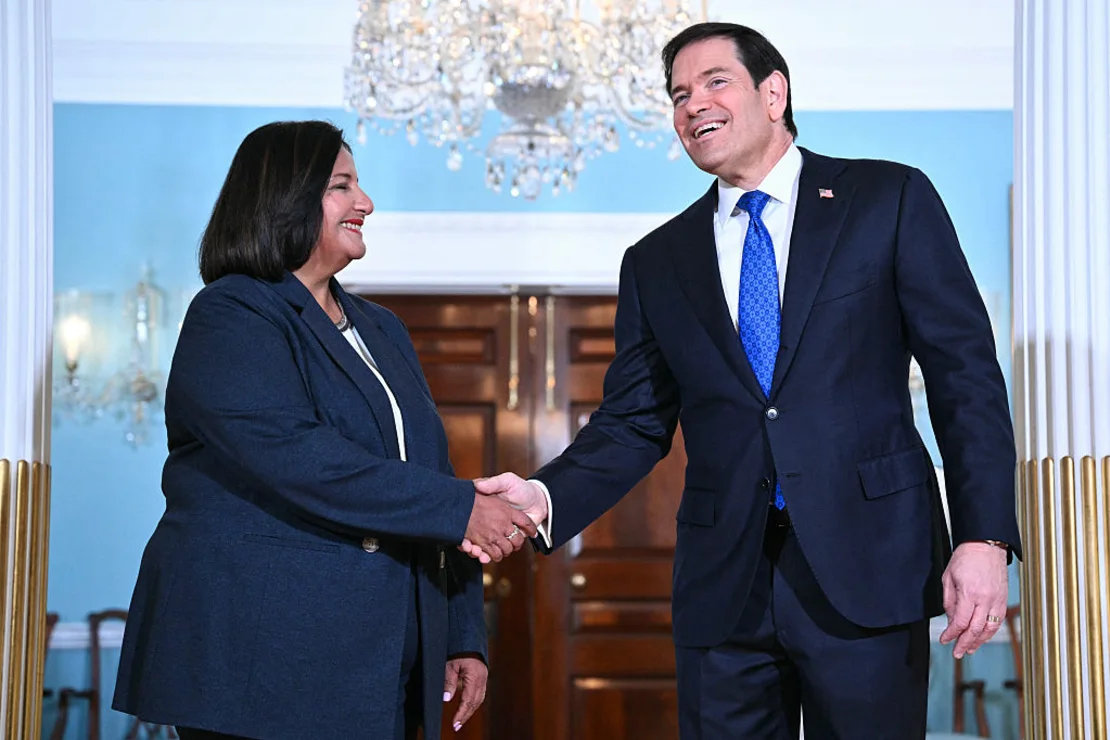
The reform of the Hydrocarbons Law, the enactment of the Amnesty Law, and the proposed reform of the Mining Law seem to indicate that the vehicle for implementing the institutional measures demanded by the United States is the National Assembly. A National Assembly that lacks legitimacy and does not represent the majority of the country’s political sectors.

Two weeks ago, Tareck William Saab resigned from his position as chief prosecutor, and Alfredo Ruiz resigned as ombudsman. Both had held those posts since August 2017 and had used the justice system against those who think differently. Following their resignations, the National Assembly confirmed Larry Devoe as acting head of the Public Prosecutor’s Office (Ministerio Público) and appointed Saab himself as acting ombudsman. While Saab’s resignation represented a step forward, appointing Saab as acting ombudsman was a direct violation of the Constitution. These dissonant signals only confirm that the Rodríguez leadership has no political will to move toward a democratic transition.

The process to appoint the heads of the Citizen Power branch has begun with the convening of the Evaluation Committee, and once again the academic world and civil society organizations have decided to participate. The nomination of Dr. Magaly Vásquez for chief prosecutor is a clear example and reflects the same logic that led human rights organizations to participate in the discussions around the Amnesty Law: when civil society comes together, it can take advantage of even minimal conditions to make itself heard and push decision-making toward, at the very least, more “palatable” outcomes.

Will a future democratic government treat the Amnesty Law as illegitimate? Will the hydrocarbon contracts signed by the interim government of Delcy Rodríguez be recognized?

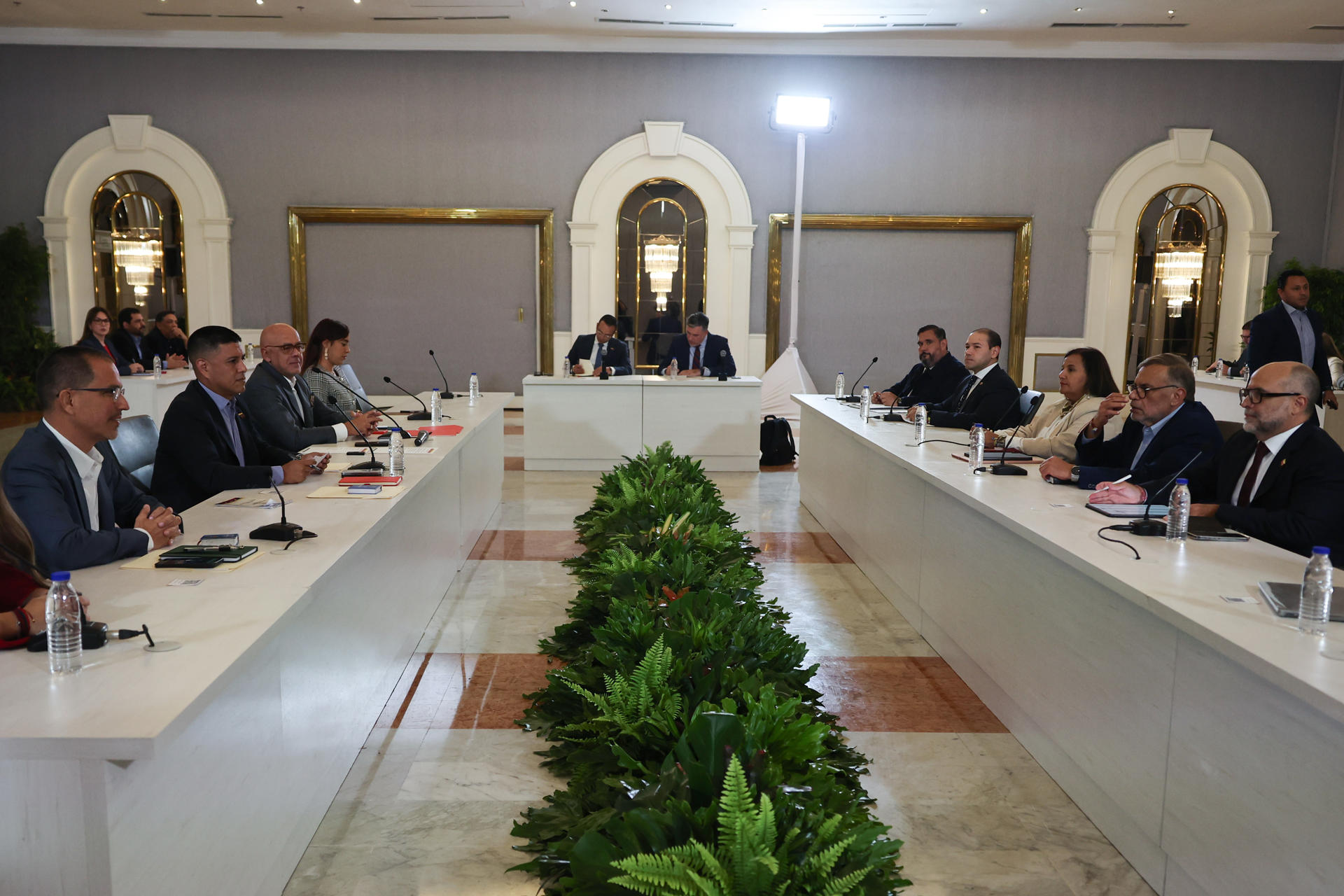
In this process, as in the legislative debates mentioned earlier, there is an absence: the representation of all the country’s political actors. This absence (which includes a large portion of the opposition) is not simply an act of selfishness. On the contrary, their position is rooted in values and principles that prevent them from recognizing any legitimacy in the National Assembly. That stance deserves respect and admiration. However, it is worth asking whether that inflexible position is preventing them from becoming involved in processes that are producing real consequences for real people, inside and outside the country.

We know that these steps are not gestures of democratization. They appear instead to be targeted concessions designed to manage external pressure and preserve power. But achieving the appointment of a credible chief prosecutor or ombudsman could, even if only gradually, begin to rebuild a degree of institutional independence.

This leads me to ask those in the opposition who still remain on the sidelines: if we do not recognize these processes from their origin, what happens to their results when an eventual political change arrives? Will a future democratic government treat the Amnesty Law as illegitimate? Will the hydrocarbon contracts signed by the interim government of Delcy Rodríguez be recognized? Will the institutional reforms that may emerge within the framework of the path outlined by the US be rejected? These questions arise when one notices the absence of the main political figures, or when their presence remains limited to criticism.

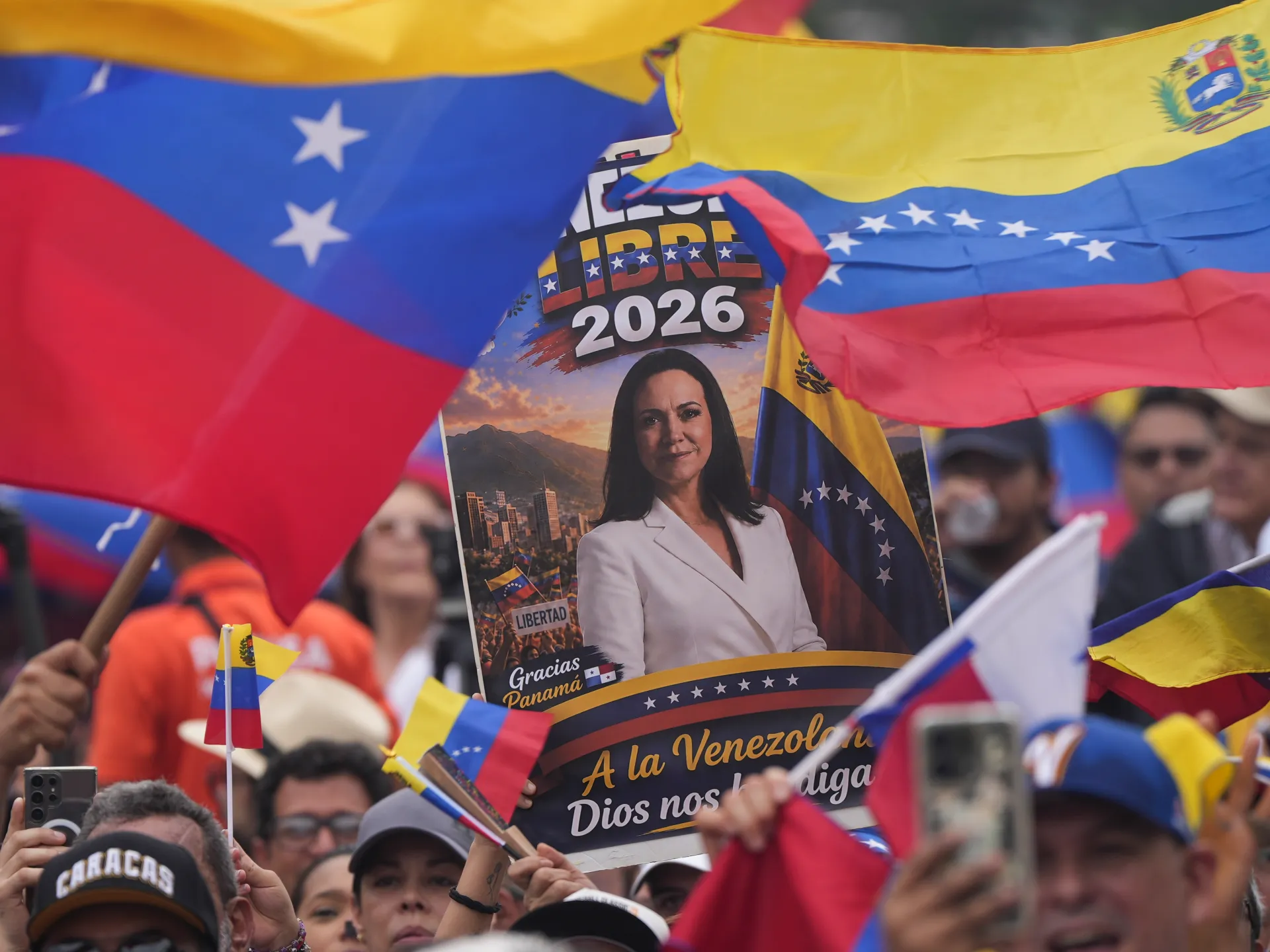
These are not rhetorical or ill-intentioned questions. Nor is this about abandoning principles. Rather, it is about recognizing that civil society organizations need backing, especially from political parties and movements. As was demonstrated on July 28, 2024, when society’s desire for change translates into participation and is channeled by political parties, it becomes an overwhelming movement with the potential to materialize that will for change.

At the same time, we must be realistic: the response of opposition leaders cannot be unconditional recognition of the National Assembly. Structurally, it remains an instrument of authoritarian control. What can materialize, however, is support for civil society in the processes in which it is already participating. These expressions of support do not seek to legitimize lawmakers elected under questionable circumstances. Rather, they seek to recognize the work and struggle of the intermediary organizations that are fighting to open spaces for institutional life.

Turning this transition into a Venezuelan process requires Venezuelan actors to claim leadership over the institutional processes now unfolding.

A clear example of support could be the one mentioned earlier. The process to appoint the heads of Poder Ciudadano should not be rejected from the outset. Instead, those who have chosen to submit their candidacies before the National Assembly’s Evaluation Committee—and who possess the necessary technical and civic credentials—should receive public support, while their names are circulated in the public arena. Put more plainly: make noise about it. Doing so would increase the cost for the regime, in the eyes of the Trump administration, of selecting individuals who are the complete opposite: people without technical qualifications or chosen solely for political loyalty.

Choosing to support participation from an external position carries implications that become clearer with every issue appearing on the legislative agenda. The reform of the Mining Law presented this week, for example, cannot follow the path taken by the Hydrocarbons Law, which was approved without consultation, transparency or the participation of those who will bear its costs.

Venezuelan scholars, environmental organizations, and Indigenous communities must be sitting at the table in the discussions on the mining law. And the opposition, if it truly aspires to represent Venezuelans and not simply oppose the regime, could present its own reform proposals to the organizations that decide to participate in the process. In this way, participation would be effectively “outsourced.” The direct actors are not recognized, but the work of leading institutions is acknowledged.

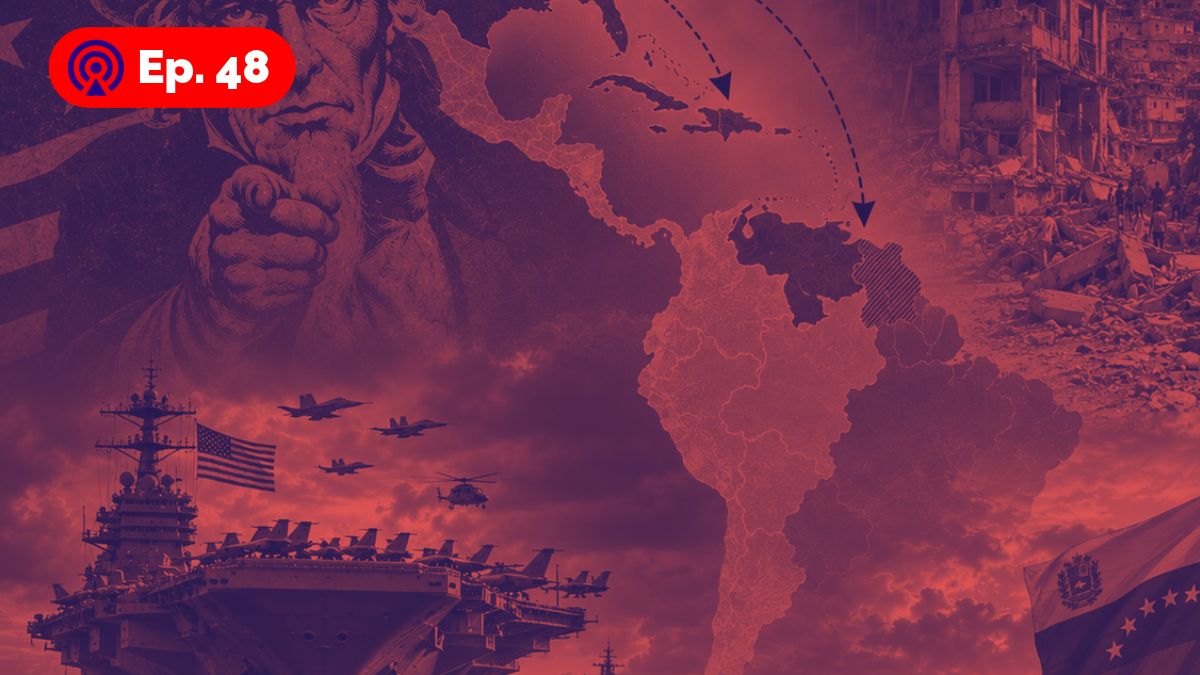
What is at stake is more than a specific law or appointment. January 3 set in motion a process of transition in Venezuela that we hope will reach a safe harbor and conclude with free elections. But we cannot forget that there is also a risk that these changes will become little more than a negotiation between the US and remnants of chavismo. Turning this transition into a Venezuelan process requires Venezuelan actors to claim leadership over the institutional processes now unfolding. On one side, civil society must act as the principal driver. On the other, the opposition must decide whether it will remain on the margins or become an active ally.

Transitions are never perfect, because in most cases the preexisting institutions are not trustworthy. Yet decisions made within those institutions tend to be more durable than the circumstances that gave rise to them. Participating in a flawed process does not mean surrendering one’s principles. Refusing to acknowledge the reality of the moment, by contrast, allows others to shape what will become the legal and institutional architecture of the transition. And possibly, the political landscape of the coming decades.

Source link