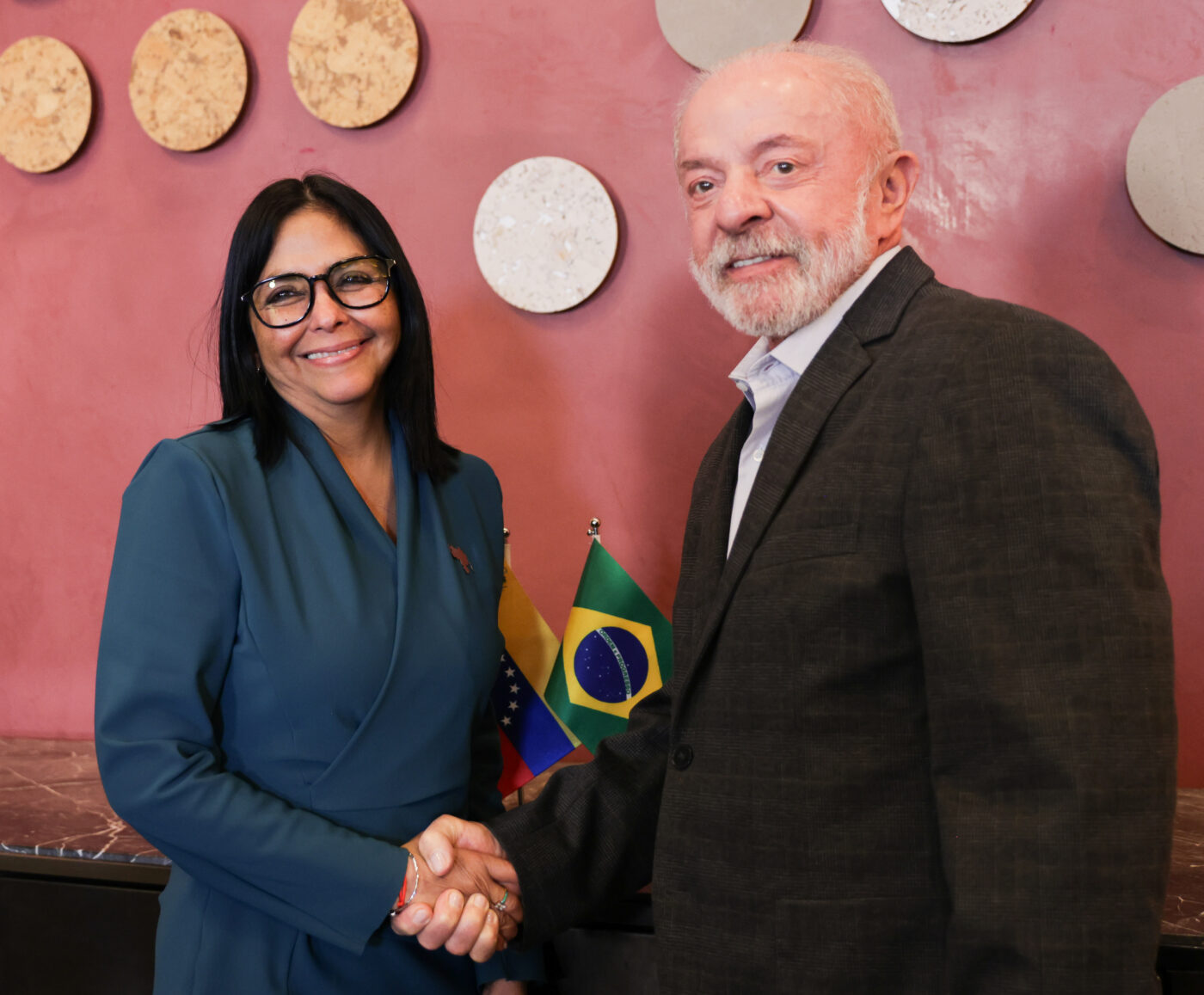
Mérida, November 13, 2026 (venezuelanalysis.com) – Venezuelan Acting President Delcy Rodríguez and Brazilian President Luiz Inácio Lula da Silva held a bilateral meeting on the sidelines of the United Nations Climate Change Conference (COP31) in Antalya, Türkiye, to “relaunch” bilateral relations between the two countries.
The two leaders vowed to restore institutional dialogue at the highest level, revise trade frameworks, and expand Brazilian energy investments in Venezuela’s oil sector.
According to an official statement from the Venezuelan Presidential Press Office, Lula and Rodríguez expressed their readiness to “reaffirm the commitment of both nations to continue strengthening their diplomatic relations and to advance an agenda of comprehensive cooperation.”
As an immediate outcome of the talks, the two heads of state agreed that Brazil’s Minister of Mines and Energy, Alexandre Silveira, will travel to Venezuela before the end of the year to evaluate potential Brazilian investments in the Venezuelan oil industry.
Following the meeting, Rodríguez described the exchange on social media as a “fruitful meeting” allowing both governments to “continue strengthening bilateral relations and advance an agenda of cooperation in various areas of common interest.”
The Venezuelan acting president highlighted the decision to review existing trade accords and explore new mechanisms to boost economic exchange, stimulate investment, and deepen cooperation.
On the trade front, Lula emphasized the importance of advancing negotiations to review Economic Complementation Agreement No. 69 (ACE-69) and address Venezuelan tariffs applied to Brazilian automobiles. In response, Rodríguez invited Brasília to dispatch a negotiating delegation to Caracas to work through the export agenda.
Bilateral trade between the neighboring nations stood at approximately US $837 million over the past year, a fraction of the $5.1 billion peak recorded in 2008.
The summit in Antalya is the first in-person meeting between Lula and Rodríguez since the latter assumed acting presidency following the January 3 US attacks and kidnapping of President Nicolás Maduro. It also came on the heels of Lula’s recent reelection to a historic fourth term in October 2026.
Relations between Caracas and Brasília had experienced friction over the past two years. Despite a history of close solidarity dating back to the presidencies of Hugo Chávez and Lula’s earlier terms, diplomatic channels were strained after Brazil cited a “breach of trust” following Venezuela’s July 2024 presidential election and subsequently blocked Venezuela’s bid to join the BRICS alliance as a partner state.
Alongside the bilateral engagements, Rodríguez addressed the COP31 High-Level Segment on Thursday, framing the climate crisis as a decisive civilizational crossroads. The acting president began her remarks by thanking Türkiye for its humanitarian solidarity following two earthquakes that struck Venezuela in June.
Turning to the international dimension of the climate emergency, Rodríguez underscored the stark asymmetry between historical polluters and the Global South.
“Our country is megadiverse; it serves as a natural shield that absorbs global impacts, contributes a mere 0.39% of greenhouse gas emissions, and its ecosystems serve as a ‘lung’ for the planet, absorbing 1.8 tons of carbon for every ton we emit,” she affirmed.
Defending Venezuela’s right to responsible energy development, Rodríguez emphasized a commitment to reducing gas flaring.
“Modernizing Venezuela means further reducing its emissions. This transformation requires international cooperation, resources, and respect for sovereignty and national circumstances,” she warned delegates.
Rodríguez urged Global North countries to fulfil their “climate financing commitments” to contribute to “climate justice.”
The Venezuelan acting leader went on to announce the “Venezuela Vive” program, aimed at protecting the Caribbean nation’s “forests, water sources, and biodiversity.”
For his part, Brazilian President Lula da Silva also delivered an intervention during the COP31 leaders’ summit, urging world powers not to let the momentum built at COP30 in Belém dissipate. Lula criticized major economies for allowing climate change to slip down the international agenda amid escalating geopolitical conflicts, surging military spending, and unilateral trade barriers.
“The planet cannot be left at the mercy of hegemonic disputes,” he declared, warning that both science and multilateralism remain under sustained attack. The Brazilian president insisted that geopolitical rivalries among great powers cannot serve as a pretext for inaction as developing nations bear the brunt of environmental breakdown.
Edited by Ricardo Vaz in Caracas.