
‘Friendship pandas’ arrive in Atlanta, marking US-China relations moment
Two giant pandas from China have landed in the United States and are heading to Zoo Atlanta.
Source link
Two giant pandas from China have landed in the United States and are heading to Zoo Atlanta.
Source link
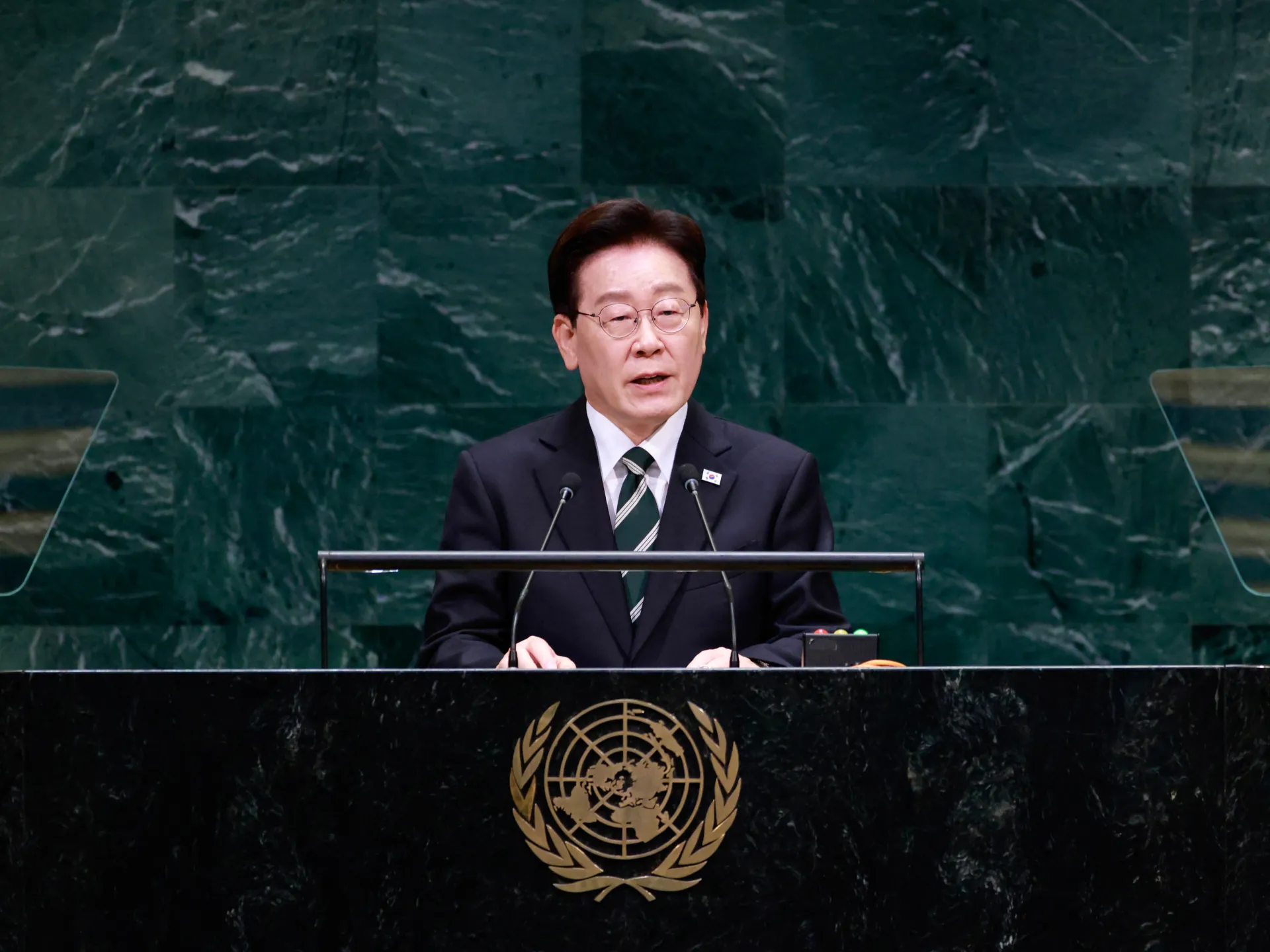
South Korea’s presidential office criticises Ukraine for denying POW nondisclosure agreement.
Published On 27 Sep 202627 Sep 2026
The South Korean president’s office has expressed “strong regret” over Ukraine’s disregard for a nondisclosure agreement with Seoul in the transfer of two North Korean prisoners of war (POWs) to Seoul, South Korean media reported.
Last week, Ukraine’s President Volodymyr Zelenskyy said in an address to the United Nations General Assembly (UNGA) that his country transferred two North Korean POWs to South Korea.
list of 3 itemsend of list
President Lee Jae Myung’s office “expresses strong regret over Ukraine’s unilateral disclosure [of the transfer] and its subsequent false announcement that there had not been a non-disclosure agreement”, the Yonhap news agency quoted Seong Ghi-hong, South Korea’s senior presidential secretary for public relations, as saying in a statement on Sunday.
The office said the nondisclosure agreement aimed to safeguard the soldiers from dangers they could face if their transfer were to be disclosed, in accordance with international law and humanitarian principles.
According to Yonhap, a South Korean media outlet, the Ukrainian presidential office said it had disclosed the transfer of the POWs without extensive details on the process, claiming that it would have been strange to keep the entire transfer a secret. Ukrainian media outlets reported a Ukrainian presidential source as denying the existence of a confidentiality agreement with Seoul, Yonhap said.
The South Korean presidential office said the Ukrainian presidential office’s “false” denial of the confidentiality agreement “seriously hampers” bilateral trust and causes serious disruptions to bilateral friendship.
Seong Ghi-hong said the government was considering additional measures over the issue, if necessary, Yonhap added.
Ukrainian forces captured the two North Korean soldiers in Russia’s Kursk region in January 2025.
Mounting evidence, including from intelligence reports and testimonies of defectors, has indicated that North Korean soldiers resorted to self-detonation or other forms of suicide rather than be captured.
In his UN address, Zelenskyy said, “These guys are not easy to capture alive.” He added, “One of them, when he realised he was going to be taken prisoner, tried to kill himself. And he was shocked that fate did not let him die.”
South Korean media reported that the two captured soldiers had expressed their desire to defect to South Korea.
The issue of North Korean prisoners of war was a key topic during the NATO summit in Ankara, Turkiye, where Lee met Zelenskyy in July.
Senior presidential spokesperson Kang Yu-jung stated afterwards that both leaders agreed to resolve the status of North Korean POWs in accordance with international law. This built on a prior agreement reached during the South Korea-Ukraine foreign ministers’ meeting in March, where both nations pledged to cooperate on the POW issue.
According to South Korean intelligence, North Korea is estimated to have deployed approximately 14,000-15,000 soldiers to support Russia’s efforts in its war with Ukraine since 2024, primarily in the Kursk border region. South Korean, Ukrainian and Western officials said they suffered heavy casualties, with more than 6,000 North Korean soldiers killed in the fighting.
The transfer comes as South Korea has backed efforts to revive dialogue with North Korea, while United States President Donald Trump has renewed his willingness to engage with Pyongyang.
Wall Street rises as focus remains on Treasuries and U.S.-Iran relations
Source link
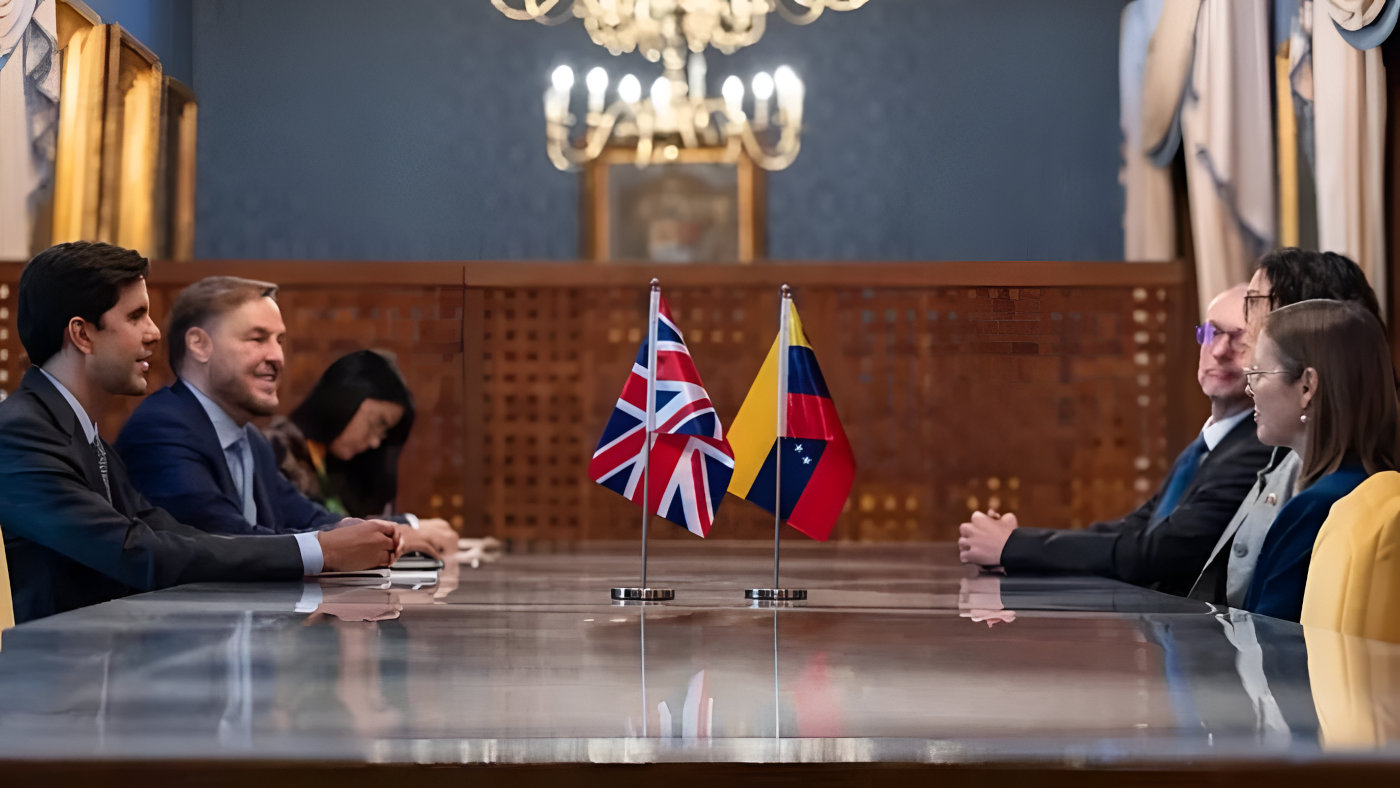
Venezuelan officials flew to London to meet with Foreign Office counterparts. (AVN)
Caracas, September 16, 2026 (venezuelanalysis.com) – Venezuela and the United Kingdom have announced a formal decision to upgrade their diplomatic relations and to re-establish full ambassadorial representation.
London formally presented its policy shift on September 15 in a missive to Parliament through coordinated statements by Minister for Latin America Chris Elmore in the House of Commons and Parliamentary Under-Secretary of State Lord Wood of Anfield in the House of Lords.
In the statements, the cabinet members framed the “diplomatic upgrade” around supporting a “democratic transition” while pursuing pragmatic bilateral engagement with the South American country.
“Developments in Venezuela since 3 January have created an important opportunity for the international community to support the restoration of democracy,” the statement read. “Working closely with the United States and with international partners, the UK considers that this moment calls for pragmatic engagement to help advance a credible transition and to encourage further reforms.”
The communiqué added that London and Caracas “have agreed our intention to upgrade our representation to Ambassador,” emphasizing that the step aims to deepen engagement with Venezuelan authorities and enhance support for British corporate and trade interests.
The Venezuelan government welcomed London’s decision. In an official communication published on Tuesday, the government led by Acting President Delcy Rodriguez celebrated the upgrade in diplomatic status as a positive step toward normalization.
Venezuelan officials stressed that the latest decision should pave the way for the full “sovereign management of the Venezuelan people’s resources,” referencing state assets frozen in British financial institutions.
National Assembly President Jorge Rodríguez and Foreign Minister Félix Plasencia flew to London and held a meeting on Tuesday with Harriet Thompson, the British Foreign Office’s Director for the Americas.
Following the discussions, Rodríguez highlighted progress in multi-sectoral talks and economic outlooks.
“We shared Venezuela’s position regarding political and social dialogue, as well as the progress made regarding oil and gas investments, and how this will translate into significant and rapid economic growth for Venezuela,” he said in a message published on social media.
Rodríguez added that the talks aimed at promoting national peace and political reconciliation, labeling them as “good news for our country and our people.”
Bilateral relations between London and Caracas had been severed for years following former UK Prime Minister Theresa May’s decision in 2019 to follow Washington in recognizing opposition figure Juan Guaidó’s self-proclaimed “interim government.”
That policy led to a protracted legal battle over 31 tons of Venezuelan gold reserves stored in the Bank of England, with successive British governments refusing to return them to Caracas. The reserves are currently valued at over US $4 billion.
During the COVID-19 pandemic, Venezuelan authorities attempted to retrieve the gold through international legal channels, offering to transfer the funds directly to the United Nations Development Programme (UNDP) to purchase emergency medical supplies and food.
However, British courts repeatedly rejected the legal challenges from the Central Bank of Venezuela (BCV), citing No. 10’s political recognition of the opposition parallel administration.
Following renewed political talks in August and September, a Venezuelan government delegation and representatives of the defunct, opposition-controlled 2015 National Assembly agreed to request the release of the UK-held gold reserves under US Treasury Department control and oversight.
According to opposition dialogue delegates, the 31 tons of gold will be transferred into a specialized US Treasury bank account and subjected to external audits by foreign accounting firms before being released.
The funds are reportedly earmarked for housing, healthcare, and infrastructure recovery in the wake of the June 24 double earthquake that left over 6,500 people dead across Venezuela.
Edited by Ricardo Vaz in Lisbon, Portugal.
WASHINGTON — A trade war between the United States and Canada entered a new phase Tuesday as Ottawa’s retaliatory tariffs on American goods took effect, escalating a dispute that has steadily strained relations between the allies.
Canada’s tariffs, which came into force just after midnight, cover roughly $20 billion in U.S. goods and impose duties of as much as 50% on products, from steel and aluminum to farm equipment, clothing and electronics. The list also reaches into the everyday commerce that binds the two economies, including cheese, seafood and cosmetics.
It was the latest sign that relations between the two neighbors have reached their lowest point in decades, after Trump dismissed Canada as the 51st American state, moved to rename Lake Ontario and mocked its armed forces.
Ottawa’s latest measures are a response to tariffs imposed by President Trump last month on Canadian exports. The two governments had appeared close to a trade deal just a month ago. But talks broke down in dramatic fashion, leaving both sides aggrieved and accusing the other of negotiating in bad faith.
In a post Tuesday, Trump said Canada “has been ripping us off for years” and threatened to respond by removing access for Canadian businesses to key American markets.
“What many do not realize is that the Canadian Government, including Canadian Provinces, have banned American Small Businesses and Companies from selling into their Government Procurement Markets,” Trump wrote. “This is the case even though Canada gets broad access into the massive American Government Procurement Market, including those of our States.
“That is not reciprocity, it is a Canadian Trade Scam. From now on, NO RECIPROCITY — NO ACCESS!” he continued. “I am hereby directing the [General Services Administration], working with the [U.S. Trade Representative], to take all necessary steps to REMOVE Canadian-origin products from GSA’s Multiple Award Schedules unless Canada restores full and fair reciprocity for American Farmers and Companies.”
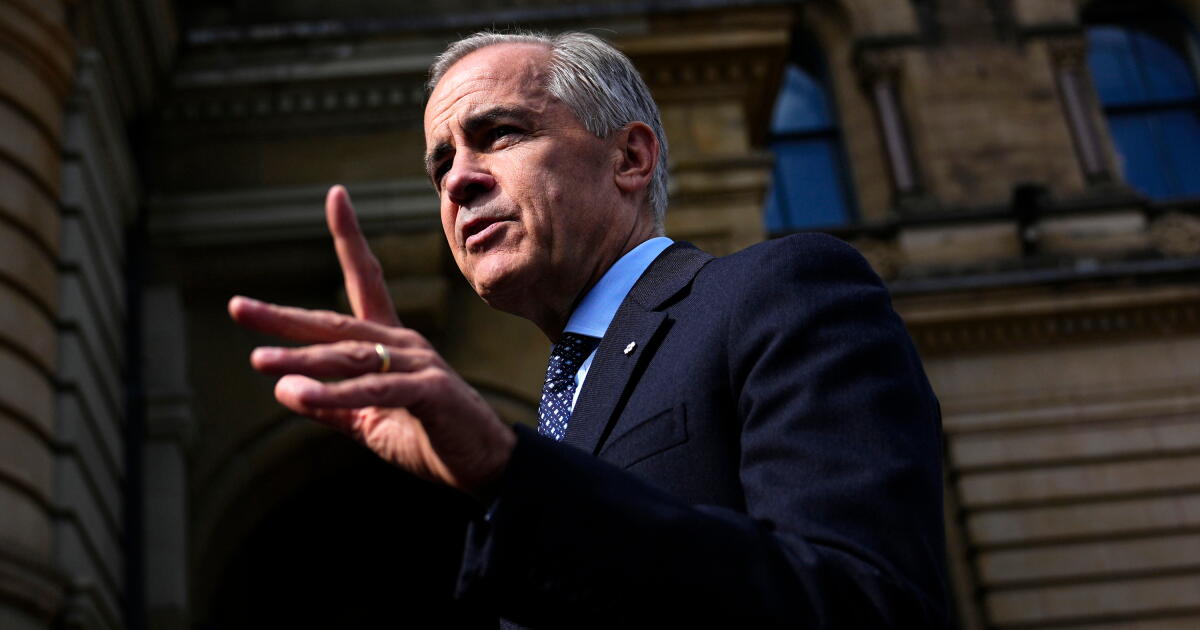
Canada’s prime minister, Mark Carney, has characterized the confrontation as more than a dispute over tariffs, arguing that demands by a bullying Trump administration threaten Canada’s economic independence.
In a video released Tuesday, Carney argued that in the past, the United States has tried to use tariffs to “break us,” only to have Canada’s economy grow stronger and more diversified. He urged Canadians to buy Canadian and break economic dependency from the United States.
“This won’t be easy, and I won’t pretend otherwise,” Carney said. “But Canadians have faced difficult stretches before, and what has carried us through has never ever been any one measure. It’s always been Canadians looking out for each other.”
Trump, meanwhile, has pressed Canada to make concessions on trade and has warned of further tariffs, including potentially higher duties on Canadian automobiles. He also threatened to ban the sale of aircraft from Canada’s Bombardier unless its products are manufactured in the United States.
“If they want our Market, they must build here, and stop treating America like a ‘piggybank,’” Trump wrote on Truth Social on Monday. “BUY AMERICAN. FLY ON AMERICAN AIRLINERS. ENJOY AMERICAN LIQUOR AND BEVERAGES. SAIL ON LAKE AMERICA. AMERICA FIRST!”
Earlier Monday, Trump posted an image showing Mexico, Canada, Central America, Greenland and Caribbean nations with the colors of the American flag. He also posted a caricature of him and Carney playing hockey in which Trump tells him: “Get up, Governor.”
Both sides stand to lose in a trade war poised to hurt businesses large and small across the world’s longest international border.
A prolonged economic conflict poses long-term risks for Canada, which faces price hikes and investment losses from the United States, by far its largest trading partner.
But Americans may also confront higher costs at a time when inflation is already a stubborn problem for the Trump administration. And the trade war may be felt most in northern border states set to hold midterm elections that could swing control of the U.S. Senate, becoming yet another political challenge for embattled Republican lawmakers.
In Maine, Republican Sen. Susan Collins, who is seeking reelection, has called Trump’s tariffs “a mistake.” In Michigan, Democratic Senate nominee Abdul El-Sayed released a video Tuesday highlighting everyday goods that have risen more than 30% over the last year, including Tide Pods, toilet paper and Tim Hortons coffee, as the trade conflict and war in Iran drive up costs.
American alcohol has also been the target of boycotts imposed by several Canadian provinces since March 2025 in response to earlier tariffs on Canadian goods by Trump.
The boycotts since then have erased roughly $360 million in revenue for the U.S. wine industry, according to a Wine Institute report, which represents California wineries. Canada makes up more than 35% of the export market for U.S. wine, more than the EU, U.K. and China markets combined.
For some California winemakers, the impact was even greater. One Sonoma winery referenced in the report said Canada made up about 85% of its international sales. Multiple wineries have had to lay off employees because of hits to their business.
“It’s had a tremendous negative impact,” said Julie Berge, vice president of communications at the Wine Institute.
Wine is not the only California business that has taken a hit — tourism has also seen a sharp decline in arrivals from Canada. In 2025, visitors from the country dropped by 20%.
Canada also targeted the agriculture, electronics and transportation equipment industries with its tariffs announced Tuesday, all of which have a presence in California.
Soon after the World Cup brought positive international attention and tourists to the United States, Trump escalated trade tensions with Canada.
“You went from this really high, exciting moment for the U.S. in terms of international attention, to the next week, it’s negative again,” Deborah Friedland, a hospitality consultant at financial services firm Eisner Advisory Group, told the Associated Press. “It’s one step forward and two steps back.”
Times staff writers Wilner and Ceballos reported from Washington and Duneja from Los Angeles.