California Deputy Atty. Gen. Marissa Roy has a lead in the race to replace Los Angeles City Atty. Hydee Feldstein Soto, who lost her seat in a historic primary rout this spring, new polling shows.
Among likely Los Angeles voters, Roy leads by 10 percentage points over her rival, Los Angeles County Deputy Dist. Atty. John McKinney, following the pair’s shocking electoral upset in June, according to a poll released last week by UC Berkeley’s Institute of Governmental Studies and co-sponsored by The Times.
The spread closely mirrors City Councilmember Nithya Raman’s breakaway lead in her bitter fight to unseat Mayor Karen Bass, who has outraised her for months.
But that’s where the similarities end.
The mayor’s contest has been called a “knife fight” for its no-holds-barred campaigning. It has also drawn sustained — and occasionally sensational — national attention since Raman’s buzzer-beating entrance in February.
By contrast, the city attorney’s race remains all but unknown: More than two-thirds of likely voters are still undecided, versus about a third who remain uncommitted in the mayor’s contest, polling showed.
L.A.’s top litigator commands a budget of nearly $200 million, plays a role in shaping city ordinances, and wages court battles on behalf of the public. The city attorney also prosecutes misdemeanors — a job most other cities keep separate. Each year, the office weighs some 120,000 violations, deciding whether to file charges and how to pursue them.
More recently, city attorneys across the country have championed activist litigation, spearheading suits against the Trump administration, among others.
Yet, few local voters know the job exists, and fewer still know the candidates by name.
Seventy percent of likely voters said they had no opinion of either McKinney or Roy — a fairly typical result for a down-ballot race, experts note.
Still, new data about voter priorities could signal how those undecideds might shake up the race in its final weeks.
Roughly a third of L.A. voters rank “moving homeless people indoors” and “crime and public safety” as top priorities, respectively; just slightly less say “fixing streets, sidewalks, streetlights and other city infrastructure” is essential.
McKinney, 58, pitches himself as a law-and-order moderate with plans to use the city attorney’s prosecutorial power to reduce disorder and move unhoused people off the streets. He manages more than 300 people at the district attorney’s office and spent decades in the courtroom securing high-profile convictions — advantages that he contends outweigh his lack of civil litigation experience.
Roy, 34, campaigns with an aura of sunny progressive pragmatism, arguing that the city can rein in ballooning liability in part by tackling its vexing infrastructure issues. She nods to the recent $17-billion settlement with Meta — a case her team at the attorney general’s office led — as evidence of the kind of ambitious, public interest litigation a large municipal attorney’s office could join.
Those disparate visions — along with crucial endorsements and influxes of cash — helped the pair define clear brands and constituencies going into the primary.
Both also got a boost from nationwide anti-incumbent fervor, staking sides across a mutual opponent whose name recognition had turned sour while rarely taking aim at each other.
But the general election is a different animal.
Although the Los Angeles electorate has been moving leftward for years, primary voters typically skew older and more conservative than those who show up for the general election, experts said.
Polls suggest that fact could create an uphill battle for McKinney, whose sway is biggest among conservatives, about 19% of the city’s electorate.
Some 21% of Republicans and nearly 30% of self-identified MAGA voters favored McKinney in the most recent poll, while Roy is favored by 25% of Democrats and by 3 in 10 voters who identify as progressive or democratic socialists.
By contrast, about a quarter of Republican voters now say they favor Bass for mayor, while Raman has a 14-point lead among Democrats. (Both are about equally underwater with MAGA voters.)
Like Raman, Roy has deep ties to the city’s insurgent democratic socialist political machine and hard-won endorsements from its progressive clubs. She has also successfully courted L.A.‘s influential unions and got an early boost from the L.A. County Democratic Party when it endorsed her this spring.
McKinney is endorsed by the city’s powerful police union and championed by L.A. County Dist. Atty. Nathan Hochman.
Joel Quenneville had one mission when he took over as coach of the Ducks last year: get them back to the playoffs.
He did much better than that. The Ducks scored a franchise-record 273 goals, spent much of the season atop the Pacific Division and knocked off the powerful Edmonton Oilers in the first round of the playoffs before falling to the Vegas Golden Knights, the eventual conference champions, in the second round.
All of which raises a question for Quenneville and the Ducks coming off a summer of upheaval and turnover: What can they do for an encore?
“Expectations are going to be higher across the board,” said Quenneville, whose team opens the season Friday in Las Vegas against the Golden Knights. “That’s healthy. But at the same time, it’s an everyday thing that that challenge is going to be out there.”
Before Quenneville arrived, the Ducks stumbled through a franchise-record seven straight losing seasons. Now many of the players in his locker room are thinking beyond just making the postseason.
“The culture change, we can really feel it,” goaltender Lukas Dostal said. “What we did last year, obviously we want to improve and move even further.
“You don’t play hockey to just think like ‘OK, we want to make the playoffs.’ You want to go as far as possible. So the sky’s the limit. I really trust this team.”
“At the end of the day, you want to win a Stanley Cup,” added new captain Mikael Granlund. “You have to have that one goal. We’re going to do everything we can to be better than last year.”
Many Ducks are certainly going to be better paid than last year. General manager Pat Verbeek had no choice but to overspend on center Leo Carlsson, signing him to a five-year, $90-million contract after the Flyers offered Carlsson the same deal. The 21-year-old, who had a career-high 29 goals and 38 assists last season, is the NHL’s highest-paid player this season.
Verbeek also re-signed restricted free agents Cutter Gauthier, (six years, $81 million) and Pavel Mintyukov (five years, $36 million) and gave center Tim Washe a $9-million contract extension. Gauthier led the team with 41 goals and 69 points last season.
“It’s a sign you’re doing something correctly,” Quenneville said of his players being rewarded. “But at the same time, I don’t think we change too much our demands. They know we work on a meritocracy and the better you do, the more you’re going to play.”
Ducks defenseman Pavel Mintyukov passes against the Utah Mammoth on March 20.
(Melissa Majchrzak / Associated Press)
All that spending left the team with nothing to offer veteran winger Chris Kreider, who was released this summer, joining an exodus that included key defensemen John Carlson, Radko Gudas, Olen Zellweger and Jacob Trouba.
The Ducks will also be without forward Troy Terry, who averaged 24 goals over the past five seasons, until well into the winter as he recovers from hip surgery.
As a result, the Ducks start with several new pieces up front and thin experience on the blue line, which isn’t a good look for a team that gave up 288 goals last season, fourth-most in the NHL.
Despite the additions of veterans A.J. Greer, a Stanley Cup winner in Florida who was acquired to add a physical presence in the attack, and Nick Jensen, 36, who was signed to stabilize the defense, the Ducks will once again have one of the youngest rosters in the NHL. But Quenneville has a history of turning young teams into champions. Nineteen years ago he took over a Chicago Blackhawks team that was the youngest in the league and led it to the conference final. A year later that team captured the Stanley Cup, the first of three Quenneville won in Chicago.
For the Ducks to match that, their summer additions will have to add up to more than the subtractions. And the investment Verbeek made in Carlsson, Gauthier and Mintyukov will have to pay off. What’s certain, however, is after last season’s breakthrough, the Ducks won’t be sneaking up on anyone.
“We made it a little harder for ourselves,” Washe said. “We’ve got a little target on our back.”
WASHINGTON — Since the 2024 election, Democratic congressional candidates have reached a consensus about how to broadly discuss the border — make it secure — but they still lack a cohesive message about ICE.
Some advocate abolishing the agency, while others offer visions for how to rein it in and reform it.
Meanwhile, for Republicans, President Trump’s immigration policies have offered a win on one issue (the border) while creating another issue that many voters find troubling (violence during raids).
Some battleground Republicans are distancing themselves from Trump and have shifted from talking about mass deportations to emphasizing deporting criminals.
Most voters don’t care more about immigration than the cost of living. But it remains an important issue, and for both Republicans and Democrats, the balance in messaging about immigration is delicate, as about half of Americans see the administration’s tactics against immigrants as too aggressive.
As the Nov. 3 midterms approach, Democratic candidates in various states including Illinois, Minnesota and New Jersey have said Immigration and Customs Enforcement should be abolished. In Michigan, progressive Senate candidate Abdul El-Sayed has said as much — and taken aim at fellow party members.
“The idea that somehow we can’t say ‘abolish ICE’ because we’re so afraid of what they’re going to say, when we’ve seen ICE terrorize people in our streets,” he said before Michigan’s Senate primary in July. “To me, it is exactly the kind of cowardice that we don’t need from Democrats.”
The Democratic dilemma was crystallized last month when Democratic National Committee members approved dueling messages — one to abolish ICE, the other to reform it.
Among those in the reform camp is Randy Villegas, the political science professor running against Rep. David Valadao (R-Hanford) in California’s Central Valley.
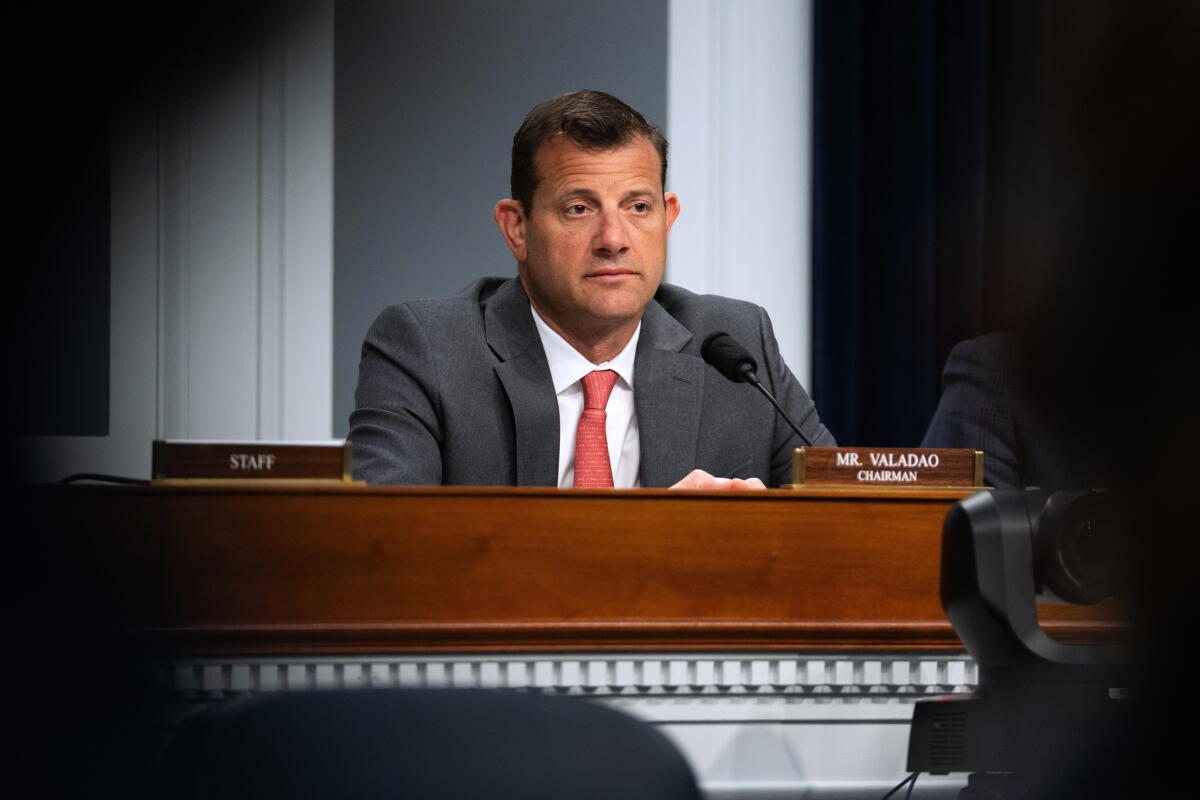
Rep. David Valadao (R-Hanford), presiding over a congressional subcommittee meeting in Washington on March 6, is seeking reelection in California’s 22nd District.
(Allison Robbert / Ap Photo/allison Robbert)
Villegas is in favor of a pathway to citizenship for longtime immigrants as well as a secure border. He’s called for ending the use of for-profit detention facilities and prosecuting ICE agents who engage in illegal conduct.
It’s a personal issue too. Villegas is the son of immigrants from Mexico, and, according to a 2021 NPR story, his brother is a DACA recipient, granted protection under the Deferred Action for Childhood Arrivals program. He said the constituents of the mostly rural 22nd District deserve a representative who understands the effects of the broken immigration system; he recalls his mother being unable to visit her sister when she was dying of cancer.
“Kern County was ground zero for these ICE raids last year. What did Valadao do or say about it? Absolutely nothing. This is somebody who likes to pretend they’re a moderate on immigration. He voted to triple ICE’s budget,” Villegas said in an interview, noting that he organized a local workshop with immigration attorneys.
After the raids, led by Customs and Border Protection agents who were reported to have gone “rogue” weeks before President Biden left office, Valadao released a statement saying he had spoken to agency officials and urged them to target “criminals rather than those responsible for producing our nation’s food supply.”
Valadao, a dairy farmer and the son of immigrants from the Azores islands of Portugal, says on his campaign website that he supports a “reasonable and responsible” pathway to citizenship, a guest worker program that could stabilize the agricultural workforce and a focus on removing immigrants who have committed serious crimes.
Last year, he sponsored the Dignity Act, a bipartisan bill that would create a new temporary legal status for immigrants who meet certain requirements and pass a criminal background check.
Valadao declined an interview request but said in a statement that “our immigration system is broken after decades of inaction, and it’s critical that we restore law and order while recognizing the contributions of people who have lived and worked peacefully in our communities for years.”
In Texas, Democratic Senate candidate James Talarico frequently has said that the southern border should be treated “like our front porch,” with a welcome mat and a lock on the door.
Talarico says immigration enforcement is necessary but that resources should be refocused to target cartels, gang members and human traffickers. As for ICE, he said the government should “tear down this secret police force and replace it with an agency that is actually going to focus on public safety.”
Texas Atty. Gen. Ken Paxton, a Republican candidate for the U.S. Senate, has embraced President Trump’s crackdown on immigration.
(Tony Gutierrez / Ap Photo/tony Gutierrez)
Centrist Democratic strategists said Talarico’s messaging strikes the right tone for swing voters.
During the Biden administration, voters lost trust with Democrats on immigration and border security, said Sarah Pierce, a former U.S. Citizenship and Immigration Services official who leads immigration work at the center-left think tank Third Way. That needs to stay top of mind for Democratic candidates, she said.
“Americans don’t trust that Democrats are even willing to enforce immigration laws, so obviously there’s a lot of pressure on the party to rectify that,” Pierce said. “At the same time, this is the most anti-immigrant administration we’ve had in history.”
Talarico’s opponent, Texas Atty. Gen. Ken Paxton, touts Trump’s hard-line immigration policies and has made border security a key part of his campaign.
Paxton also believes states should work with the federal government on immigration enforcement. This year, his office conducted raids in Houston and transferred 50 immigrants to ICE custody.
James Talarico, the Democratic Senate candidate in Texas, has called for reforming Immigration and Customs Enforcement but unlike some Democratic candidates, he has not called for abolishing the agency.
(Danielle Villasana / Getty Images)
Matt Terrill, a Republican strategist who was chief of staff for then-Sen. Marco Rubio’s 2016 presidential campaign, said Republican candidates need Trump to turn out the GOP base so they retain control of Congress.
Some Republican candidates are conveying a more nuanced message, but it might not matter to voters who already feel betrayed by Trump. That’s the assessment of Matthew Dallek, a political historian at George Washington University who studies Republican and Homeland Security politics.
“A lot of Republican candidates are struggling to figure out a message on what had been a great political strength that has turned into a major liability,” Dallek said. “Different Republicans are giving different answers to try to appeal to the Latino vote, maybe to independents, to voters who might typically vote Republican and support closed borders, but think that ICE has gone too far.”
Many Republican candidates aren’t avoiding immigration. A Third Way analysis of last month’s spending on immigration-related ads in competitive House and Senate races found that Republicans had spent more than $50 million — five times more than Democrats.
At issue, however, is the messaging. Earlier this year, White House officials and House Republican leaders reportedly told their members to avoid talking about “mass deportations” and talk up removing criminals.
Rep. Gabe Evans, who is running for reelection in Colorado, described the distinction as “gangbangers, not grandmas.”
At the Republican National Convention in 2024, Rep. Monica De La Cruz (R-Texas) denounced “open borders” before a crowd waving signs reading “mass deportation now!”
As the Trump administration’s enforcement campaign took shape, however, she signed a letter to House Speaker Mike Johnson calling on ICE to focus its resources on arresting immigrants with criminal records, and in March she intervened after local high school mariachi performers were detained.
This month, De La Cruz released a campaign ad, featuring the wife of a DACA recipient who was detained this year by ICE. The wife said that she had voted for Democrats before, “but Monica puts people over politics.”
A representative for De La Cruz did not respond to requests for comment.
Her opponent, Tejano musician Bobby Pulido, said he doesn’t like talking in absolute terms like abolishing ICE. But without the historic funding approved by Republicans this year, the agency would have been prevented from continuing what he sees as bad policy on humanitarian and economic levels.
But Pulido also says that the Biden administration waited too long to impose border restrictions.
“It feels like it went from ‘let ‘em all in’ to ‘kick ‘em all out,’” he said in an interview. “I don’t think that either one is good. We need immigrants, but everybody always says do it the legal way. We have to actually legislate pathways for that to happen.”
One Republican has directly broken with Trump in her bid for reelection. In a campaign ad released Sept. 17, Florida Rep. Maria Elvira Salazar, standing in front of the White House, speaks directly to the president. “The same Hispanics who helped you get to the White House in 2024 feel betrayed today,” she said.
Polling shows that many in that district, where Latinos make up three-quarters of registered voters and more than half were born outside the U.S., now think Trump’s immigration crackdown has gone too far. Polls also show Salazar is deadlocked with her opponent, Eliott Rodriguez, a fellow Cuban American and newscaster who fired back at her for voting in favor of Trump’s policies.
At the opening of “The Buddhist Bug” at the Vincent Price Art Museum on Saturday, guests will see a 328-foot-long orange insect. Its body will coil around the museum’s gallery, lobby and atrium, and poke through the walls. The bug’s head, covered in a hijab, will be in one room, and its feet, which some might be tempted to tickle, will be in another.
The creature is occupied and controlled by Anida Yoeu Ali, a Cambodian-born artist who lives in Tacoma, Wash. Ali’s numerous performance-based exhibits explore her Cambodian-American identity and Buddhist and Muslim religions. The bug is her “totally humorous take on hybridity.”
As the bug, Ali doesn’t speak. She mostly stands or kneels and makes facial expressions in reaction to her surroundings and passersby. But she likes to engage with visitors, who can either touch her elaborate garment, talk to her, take pictures of her or simply observe her.
Artist Anida Yoeu Ali’s exhibit, “Anida Yoeu Ali: The Buddhist Bug,” features a 328-foot-long performance installation at the Vincent Price Art Museum in Monterey Park.
(Ariana Drehsler / For The Times)
“I get a lot of people who ask for a photo or they’ll ask for a hug,” says Ali. “There’s so many stories that get whispered into my ear. A lot happens when you can hold someone’s attention with just your eyes. There’s a vulnerability that happens when you make eye-to-eye contact without any words involved.”
Ali likes to use expansive spaces and incorporate fabrics and textiles, whether it’s a red, sequin-covered chador or a tubular-looking worm made out of polyester, Lycra and spandex. Such things make the petite artist feel “taller and larger than life.”
Ali will appear in the suit for only two hours during the show’s first and last days. But for the rest of the exhibit’s run, the museum will display the bug in its entirety, in addition to sculpture, photographs and video that document how Ali has spent the last 15 years becoming her creature alter ego.
Born in Battambang, Ali, 52, is of mixed Malay, Khmer, Thai and Cham ethnicity, and was raised Muslim in a country that’s 96% Buddhist. She and her family left Cambodia in 1979 to escape the genocide committed by the brutal Khmer Rouge regime and settled in Chicago. Ali studied at the University of Illinois Urbana-Champaign and the Art Institute of Chicago. She’s currently a senior artist-in-residence at the University of Washington Bothell.
Director of the Vincent Price Art Museum Steven Wong and Executive Director Sonia Mak of Asian Arts Initiative.
(Ariana Drehsler / For The Times)
Ali conceived one of her best-known performance-based works, “The Red Chador,” in 2014 after relocating to Cambodia for a few years. She wanted to address the rise of Islamophobia in the wake of major events happening at the time, including France’s ban on facial coverings (the country had already banned the hijab years prior) and the terrorist attacks on the French satirical magazine Charlie Hebdo. Ali also wanted to confront the politicization of Muslim women’s dress and contradict the “imagery of Muslim women as joyless and depressed.”
“It was an opportunity to put on a chador, but one of my choosing and one of my designs,” Ali says. “It was to also honor the Muslim women in my background. My mother, grandmother, aunties and cousins all covered and did so joyfully. That was never an issue for them.”
Ali wore the red sequin chador in 15 cities, including at the Palais de Tokyo in Paris in 2015, where, during a 12-hour performance, she threatened to chop off 99 baguettes. The installation was meant to challenge Muslim stereotypes while making a subversive nod to the bread as a famous French symbol. “The Red Chador” also made a stop earlier this year at the W. Keith and Janet Kellogg University Art Gallery at Cal Poly Pomona.
“The Buddhist Bug” was created in 2011, a few years before “The Red Chador,” and inspired by the pervasiveness of the saffron-colored robes worn by monks in Cambodia. The piece not only drew on the color orange but was also influenced by a collapsible play tunnel she received as a gift after giving birth to her first child.
A photo titled “Into Dreamland, The Buddhist Bug, 2015,” (photographed by Masahiro Sugano), and featured at the Vincent Price Art Museum as part of the exhibit, “Anida Yoeu Ali: The Buddhist Bug.”
(Ariana Drehsler / For The Times)
Ali wears a hijab while in the suit and uses a second person, usually a model or intern, to provide the bug’s feet — though she insists that those are the “bug’s feet.” It’s a fun, childlike interpretation of the complexities of coming from two cultures and religions.
“I wanted to do something that was tapping into my diasporic identity or what I call the ‘diasporic dilemma,’” says Ali. “This notion of going back and forth and constantly feeling like you’re not enough in one country or one culture. The bug is the result of that. You look at it and it’s a big orange creature. But for me it’s more of a tunnel structure that can double as a bridge, an entity that can connect two points or two locations. That’s the poetic part of the project.”
Sonia Mak, who co-curated the exhibit at VPAM with museum director Steve Wong, invited Ali to show in L.A. after catching one of her performances at the Seattle Asian Art Museum in 2024.
Photographs in the installation — some taken by Ali’s husband, Masahiro Sugano — capture Ali dressed as the bug in cities all over the world. Some are placed on a sculpture resembling the Rub el Hizb, an Islamic star shaped like an octagram. The rest are mounted on the walls and show the bug in places like Battambang and the Cambodian capital, Phnom Penh, at a restaurant, in a classroom, on a boat and a bridge.
In one image, Ali rides in a bicycle carriage. In others she stands outside a mosque while kids play with the bug’s feet and sits in an abandoned movie theater, her tail wrapped around the seats. (Angelina Jolie, whose adopted son Maddox is from Cambodia, was recently photographed visiting these cinemas and is reportedly renovating the theaters.)
Ali envisions someday performing as the bug in the desert in the Middle East and maybe building a children’s public playground as a “fun manifestation” of the project.
“I come from a country with an awful, violent history,” she says. “I have a unique set of identities and perspectives that aren’t easily explainable, which is why I make art. I want people to think about how weird and strange the bug looks, but I want them to feel happy looking at the orange. I love it when the grotesque and the beautiful sit side by side. It makes for some magical artistic moments.”
‘Anida Yoeu Ali: The Buddhist Bug’
Where: Vincent Price Art Museum, East Los Angeles College, 1301 Avenida Cesar Chavez, Monterey Park When: Sept. 26 to May 22, see website for times Cost: free Info:vpam.org.
Good morning, and welcome to L.A. on the Record — our City Hall newsletter. It’s David Zahniser and Noah Goldberg, giving you the latest on city and county government.
It’s one of the most exacting tasks to face a left-leaning candidate running for office in L.A.: filling out the Democratic Socialists of America’s questionnaire.
During the candidate endorsement process, the DSA’s L.A. chapter issues a lengthy form that ends with a spate of yes or no questions, mainly around hot-button topics: Do you support Medicare for All? Do you favor the policies of the Green New Deal? Would you put a halt to police exchange programs with Israel?
When filling out the form, mayoral candidate Nithya Raman voiced support for all three. But unlike some DSA-endorsed candidates, the council member declined to give a yes or no answer on an assortment of other topics, opting for longer explanations.
You’re reading the L.A. on the Record newsletter
Sign up to make sense of the often unexplained world of L.A. politics.
By continuing, you agree to our Terms of Service, which include arbitration and a class action waiver. You agree that we and our third-party vendors may collect and use your information, including through cookies, pixels and similar technologies, for the purposes set forth in our Privacy Policy such as personalizing your experience and ads.
Raman, a DSA member, declined to check either box when asked if she would work as mayor to repeal a law prohibiting homeless encampments near schools. She did the same on whether to divert funds from law enforcement into other public services.
She also declined to say yes or no on removing police from K-12 schools, and on banning the use of facial recognition and other surveillance technologies.
The answers offer the latest sign that Raman has been proceeding with caution on some of the DSA’s litmus test issues. Raman, who tweeted “defund the police” six years ago, said in February that the ranks of the Los Angeles Police Department should not get any smaller.
Appearing Wednesday in Pico-Union, she said she was proud to have the DSA as part of her coalition but also described herself as politically independent.
“I’ve made sure that the decisions that I’m making, the votes that I’m taking, are ones that are based on an understanding of how these policies are actually going to improve the lives of Angelenos,” said Raman, who received the DSA endorsement earlier this month.
Mayor Karen Bass, Raman’s opponent, did not seek the endorsement, saying she was not aligned with some of the group’s positions.
Raman’s questionnaire stands in contrast with those of some of her DSA colleagues.
HugoSoto-Martínez answered nearly every yes-no question posed by the DSA during his first run for City Council in 2022. Ysabel Jurado did the same during her successful council campaign two years later.
So what were Raman’s longer answers? On homeless encampments, she wrote that she has repeatedly voted against increasing the number of locations where tents are prohibited — and doesn’t want to saddle homeless people with criminal records that could stifle their ability to find permanent housing.
Regarding cuts to the LAPD, Raman said she would expand the city’s network of unarmed crisis response teams, ensuring that “trained professionals” — not police officers — respond to mental health and substance use calls.
On campus police, Raman said schools “should never default to armed officers for discipline or student well being.” And on facial recognition software, Raman said she would prohibit surveillance technologies that lack “clear evidence of need and completely enforceable safeguards for civil rights and privacy.”
“I will also require real oversight and consent before the city deploys any of it,” she wrote.
Raman even declined to say yes or no when asked if she wants noncitizens to vote in local elections. But she explained in writing that she voted earlier this year to put a proposal from Soto-Martínez on the ballot that would give the council the ability to enact noncitizen voting for city and school board elections.
Raman and Bass weighed in recently on the deal struck by California Atty. Gen. Rob Bonta and Paramount Skydance Chief Executive David Ellison on the studio’s merger with Warner Bros. Discovery.
Both mayoral candidates said Paramount should be held accountable for the promises contained in the settlement, which requires the company to distribute 30 films per year in theaters for the first two years after the merger, then 32 films per year for the next three years.
Of the two, Raman sounded more dismayed by the deal.
“There was a better outcome than this,” Raman told reporters at a recent news conference. “But this is the outcome that we have, and now it’s incumbent upon us to fight for the best results for workers here.”
For much of this year, Bass and Raman voiced concern that the merger would trigger mass layoffs within the film and television industries. But last month, Bass began calling for the two parties to engage with each other in good faith, saying too many productions had come to a standstill, putting people out of work.
“The prolonged uncertainty around this decision has already led to job losses and left workers wondering what it would mean for their futures,” Bass said in a statement this week.
The settlement alleviated the anxiety felt by some at City Hall that Paramount might follow through on its threat to leave California.
Bass’ stance aligned her more with IATSE, the International Alliance of Theatrical Stage Employees, whose leaders voiced their own concerns about uncertainty while appearing with the mayor at City Hall last month.
Raman was more in sync with Writers Guild of America West, which denounced Bass for pressing Bonta to seek a resolution, saying “industry workers deserve a mayor who believes in upholding the law.”
Bass’ campaign is supported by IATSE Local 33 and the California IATSE Council, which said earlier this year that the mayor has “done more to bring our jobs back to Los Angeles than anyone in city government.”
On Thursday, the Writers Guild endorsed Raman, saying she is a “true pro-labor candidate who walks the walk.”
State of play
— POLLING PRESSURE: A new poll put Raman decisively in the lead in the mayor’s race, showing her with a double-digit advantage over Bass. The findings will ramp up the pressure on Bass and her allies to go sharply negative against Raman while courting the huge number of voters who say they are still undecided.
— MAKING THEIR CASE: Bass and Raman sat down with The Times for two separate, wide-ranging interviews, discussing issues like homelessness, the Palisades fire and the biggest mistakes they’ve made in office.
— PEOPLE MOVER POSTPONED: The opening date of the People Mover train being built at Los Angeles International Airport has been delayed yet again, with contractors now aiming for early January. The 2.25-mile automated train, which has been over budget for years, was originally supposed to open three years ago.
— EXECUTIVE ORDER: Bass ordered a review of the LAPD’s dealings with mentally ill people this week, saying the training that police officers are receiving is “woefully inadequate.” The mayor said she was particularly troubled by a July 29 incident in which police fatally shot a man who approached them with an aluminum bat.
— HURDLES TO HOUSING: Why has housing production been lagging in L.A.? Real estate developers pointed to a list of reasons, including high interest rates, pandemic-era policies like rent freezes and Measure ULA, the voter-approved tax on high-end property sales.
— TRUMP REBUFFED: An appeals court blocked the Trump administration from stopping the Los Angeles Homeless Services Authority from applying for millions of dollars in federal funding. The agency had applied on behalf of homeless service organizations from across the county.
QUICK HITS
Where is Inside Safe? The mayor’s signature program to address homelessness went to the area around 11th and Irolo streets, a location represented by Councilmember Heather Hutt.
On the docket next week: Bass and Raman are slated to appear Tuesday at the Skirball Cultural Center for the 2026 Jewish Los Angeles Mayoral Forum. The event is hosted by the Jewish Federation Los Angeles, the Skirball Cultural Center, ADL Los Angeles and other groups.
Stay in touch
That’s it for this week! Send your questions, comments and gossip to LAontheRecord@latimes.com. Did a friend forward you this email? Sign up here to get it in your inbox every Saturday morning.
Stalwart bookstores Vroman’s in Pasadena and Book Soup in West Hollywood announced new ownership on Thursday, after a two-year search for a buyer.
Longtime owner Joel Sheldon, whose family has helmed Vroman’s for more than a century, announced his retirement in 2024. At the time, Sheldon said he was looking for “someone who shares our core values and who is committed to preserving Vroman’s as a community treasure.”
Sheldon said he found that in the new owner, Robert Hoffman, who has worked on tech regulation and other public policy in Washington, D.C., for several decades, but who grew up in Southern California with his family living in the area for generations.
“After talking with Robert and his family, I knew we had found the right stewards. They understand what makes this store special, and they’re committed to preserving that legacy while moving Vroman’s forward for our customers and the Pasadena community,” Sheldon said in a statement posted Thursday to the bookstore’s website.
Hoffman was born in Pasadena and has been visiting Vroman’s since his mother brought him in when he was 5 years old, according to the Thursday announcement.
His mother, in turn, had been introduced to the store by her grandmother, Georgia Bullock, a decades-long Pasadena resident and the first woman to serve as a municipal and superior court judge in California.
Hoffman was born in Pasadena and attended UCLA. He currently heads government relations and regulatory affairs at semiconductor company Advanced Micro Devices, according to his LinkedIn page.
Book Soup, a Sunset Boulevard landmark, was founded in 1975 by Glenn Goldman, a UCLA graduate student who raised investments with his friends to establish the store. Goldman died in 2009 at age 58, and Sheldon acquired the store from Goldman’s estate that year.
A post to Book Soup’s Instagram page said Hoffman and his family are “genuinely invested in this community.”
“Same shelves, same staff, same WeHo icon. Same gratitude for you,” the bookstore said in the social media post.
Vroman’s was founded in 1894 by Adam Clark Vroman, an ex-railroad worker from Illinois who moved to California hoping the sunny weather would improve his wife’s health. His wife eventually died of tuberculosis, and a brokenhearted Vroman, a bibliophile, sold off a chunk of his vast book collection to collect capital to open the store. The Sheldon family stewarded the store after Vroman’s death in 1916.
Vroman’s catered to various clientele and communities, from traveling dignitaries to academics and leisure readers on vacation. When the federal government incarcerated Japanese Americans from the San Gabriel Valley and elsewhere in the 1940s, an activist lugged books from Vroman’s to the Manzanar camp in the Owens Valley. Science fiction author Octavia Butler, who grew up in the area, frequented the bookstore.
Vroman’s second location in Hastings Ranch was forced to close in 2024 after the company was unable to reach a new lease agreement with the property owner. The store was otherwise sustainable, but was forced to close “due to increasing occupancy expenses,” the company wrote in a social media post at the time.
Vroman’s flagship location on Colorado Boulevard remains open. However, the property itself changed hands, with Sheldon selling it to GD Realty Group for $15.5 million amid uncertainty about its future.
The bookstore has a long-term lease with the real estate group, whose chief executive, Arash Danialifar, said in a statement last year to news outlet Pasadena Now that the bookstore was a “staple of the community” and that he hoped it would remain there “for the foreseeable future.”
KEEN to get that winter sun break locked in? Holidaymakers on a budget should set their sights on Africa.
A new report released today by the Winter Sun Holidays Costs Barometer from The Post Office Travel Money reveals that Cape Town in South Africa, and Mombasa in Kenya, offer the best value for money for people seeking a sun-drenched winter break.
Cape Town came first making it the most affordable destination on the listPortugal’s Algarve came in sixth place overallCredit: Getty
To calculate which destination gives travellers more bang for their buck, the research considered the average costs of eight essential holiday items in 24 popular long-haul and short-haul destinations.
Items included a cup of filter coffee, a bottle of beer or lager, a can or bottle of cola, a glass of wine, a 1.5l bottle of water, suncream, insect repellent and a three-course evening meal for two with house wine.
Sign up for the Travel newsletter
Thank you!
The overall cost for all of the above came to just £58.24 in Cape Town, making it the most affordable destination on the list.
According to the Post Office, prices in the South African hotspot have fallen by 9.7 per cent in the last six months, which will have a hugely beneficial impact on tourists.
A three-course dinner with wine was shown to be cheaper here than anywhere else on the list, totalling £39.26 on average.
Despite its reputation for excellent wineries, Tokyo pipped Cape Town to the post for budget vino with a glass costing just £2.53 in Japan’s capital, on average, compared with £3.24 in Cape Town.
Tokyo came in third place overall on the affordability scale with a total barometer cost of £66.76, beaten by Mombasa, in second place, with an overall price tag of £63.66.
Prices haven’t dropped dramatically in this Kenyan city, but the rise of sterling against the Kenyan shilling does mean that you will now pay slightly less than when the country was last surveyed by the Post Office in March this year.
Coming in fourth place on the winter sun budget chart is Colombo in Sri Lanka, where a basket of all eight holiday essentials added up to £74.79, getting on for £20 more than the cheapest spot of Cape Town.
And be sure to ditch the wine and opt for beer instead, as a glass of red, white or rose will set you back £6.60 on average — over double the cost of a glass of wine in any of the previously named locations.
A bottle of beer, on the other hand, costs just £2.47.
Phuket in Thailand closely followed Colombo in fifth place with an overall barometer cost of £76.39 and cheap beer at £2.09 a bottle.
Of course, for the top five spots, the trade off for spending little while in the destination is shelling out for pricier flights to get there.
But remember that holidaymakers will be rewarded with better odds of sunshine and higher temperatures in these long-haul locations.
Those looking to stay a little closer to home still have budget-friendly options, however, including Portugal’sAlgarve which came in sixth place overall.
While the total cost of all holiday items came to a slightly steeper £82.35, coffee-drinkers won’t be complaining as this is the cheapest destination to grab yourself a cuppa (£1.27 on average).
Mombasa, in second place, with an overall price tag of £63.66Credit: Getty
The holiday location fared similarly to Spain’sCosta del Sol in seventh place and the Canary Island of Tenerife in eighth place, with overall costs of £83.58 and £87.46 respectively.
Prices for holiday items in all three short-haul destinations were on par with one another, although it was a bit pricier to eat out in Tenerife with a three-course meal for two with wine costing around £61.10.
At the opposite end of the scale, Scarborough was the priciest destination for winter sun — not the resort town on England’s North Sea, but the capital of the island of Tobago.
The Canary Island of Tenerife came in eighth place, with overall costs of £83.58 and £87.46 respectivelyCredit: Getty
Holiday item costs here rocketed to a whopping £144.15 in total — which is over double that of Cape Town.
A three-course meal here costs more than anywhere else on the list, at an eye-watering £119.26 for two people.
St. Georges in Grenada, Funchal in Madeira and Cancun in Mexico were also shown to be pricey, with total bills totting up to over £125.
Comparatively, the much-loved Sun reader resort of Orlando in the US came roughly in the middle, in 15th place overall.
Wine and beer was shown to be mean on the wallet in the Florida sunshine spot — at £6.81 and £5.30 respectively — but other items like suncream and insect repellent were more reasonable.
Harvey Weinstein’s winding legal saga took a new turn this week, one that reaffirmed that the former Hollywood kingmaker — whose alleged history of sexual assault and abuse sparked the cross-industry #MeToo reckoning — will likely spend the rest of his life in prison.
Weinstein, 74, was sentenced on Wednesday to 15 years in prison for a felony sex crime tied to allegations from former “Project Runway” production assistant Miriam “Mimi” Haley. After a retrial last year, a majority-female jury found the disgraced Hollywood mogul and co-founder of the defunct Weinstein Co. guilty of sexually assaulting Haley in 2006 at his New York apartment.
Haley described the lasting and “devastating” effects of Weinstein’s assault as she addressed the court during Wednesday’s sentencing.
“Making the decision to speak up will have me looking over my shoulder for years to come,” she said. “It’s a life sentence for me.”
Weinstein said he has “remorse for Miriam Haley’s pain,” but maintained that he’s innocent.
The New York sentencing this week was not the first time Weinstein received a lengthy prison sentence for sex crimes. Since the damning sexual assault and harassment allegations against Weinstein first entered the legal spotlight in 2017, the Oscar-winning producer has faced convictions for rape and sexual assault over the course of trials — and retrials — from 2020 to 2025.
Weinstein has already served more than six years in New York, leaving him with about nine years left on that sentence. A pending resentencing in California — he was sentenced to more than a decade for a 2013 rape — could keep the mogul behind bars for life, the Associated Press reported.
Here’s a look back on Weinstein’s previous convictions and the prison sentences that followed.
March 2020: 23-year prison sentence in New York
Weinstein was first sentenced for his sex crimes against women in New York almost three years after the #MeToo movement upended his career as a prolific movie producer.
The mogul’s 2020 sexual assault trial, the first in a handful that would follow in the coming years, ended in February 2020 with a jury delivering a mixed verdict. The jury convicted Weinstein of committing a criminal sexual act and third-degree rape based on accusations from Haley and former actor Jessica Mann, respectively. The jury acquitted him on the most serious charges, including two counts of predatory sexual assault.
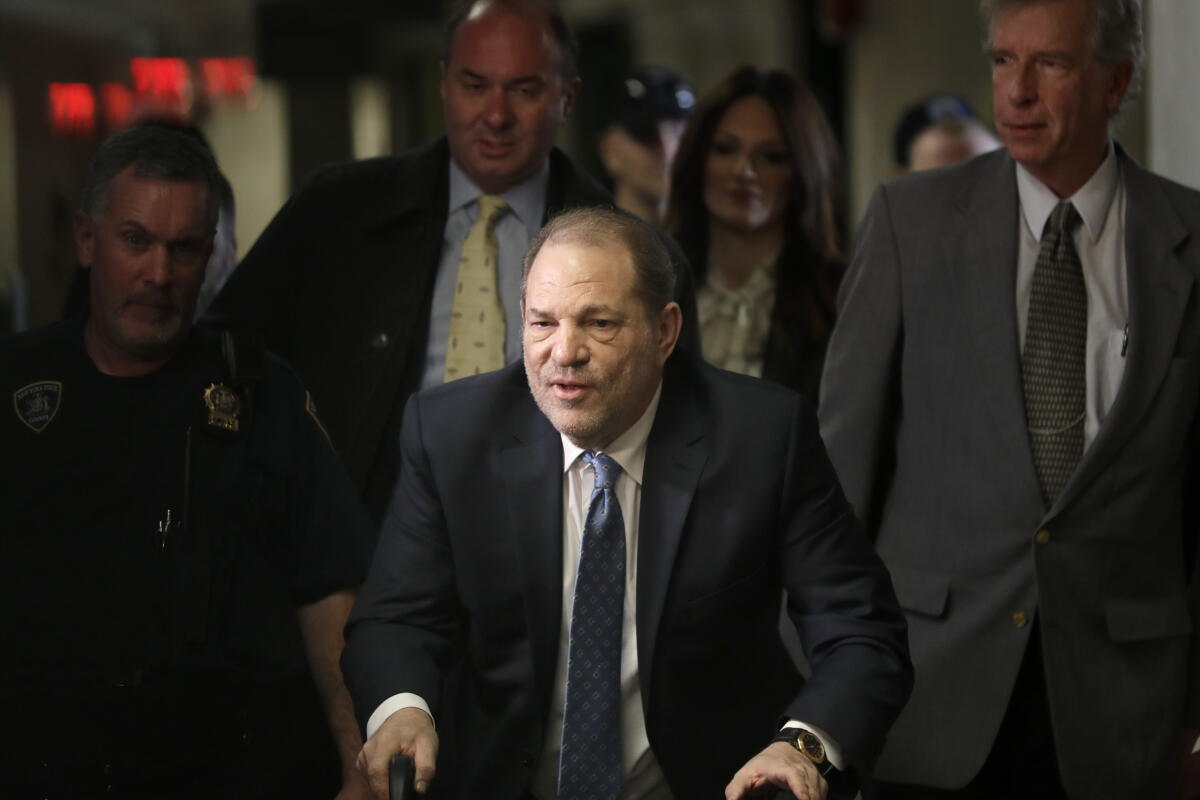
Harvey Weinstein arrives at a Manhattan courthouse for jury deliberations in his rape trial, Monday, Feb. 24, 2020, in New York.
(Seth Wenig / Associated Press)
A month later, New York Supreme Court Judge James Burke announced that Weinstein would carry out a 23-year prison sentence for his crimes. He was ordered to serve 20 years for his 2006 attack against Haley in his Manhattan apartment. The judge added three years to Weinstein’s sentence for raping Mann in a Manhattan hotel in 2013. Weinstein was to serve those sentences consecutively.
At the time, the Miramax co-founder denied all wrongdoing and planned to appeal. Those efforts come into play in 2024.
February 2023: 16 years in California
Weinstein, a movie titan who once dominated Hollywood and produced some of the modern film industry’s most defining titles, including “Pulp Fiction” and the divisive Oscar best picture winner “Shakespeare in Love,” was tried in his stamping grounds in October 2022. He was prosecuted for allegations that he raped and attacked four women in Beverly Hills hotel rooms between 2004 and 2013. Before the trial, Weinstein was indicted on 11 counts of rape, forcible oral copulation and sexual battery in Los Angeles and Beverly Hills. He denied all wrongdoing.
The acrimonious trial, which stretched more than a month, ended in December 2022 with a jury convicting Weinstein of forcible rape, forcible oral copulation and sexual penetration by a foreign object. The jury acquitted Weinstein of the sexual battery of a massage therapist and failed to reach verdicts on counts involving two other women. Los Angeles County Superior Court Judge Lisa Lench declared a mistrial on the charges that left the jury deadlocked.
Weinstein’s conviction hinged on an account from an Italian model and actor identified in court as Jane Doe 1. She said the producer barged into her hotel room in Beverly Hills, where she was staying while attending a film festival, to assault her. He was sentenced to 16 years in prison in February 2023.
Harvey Weinstein appears in court at the Clara Shortridge Foltz Criminal Justice Center on Oct. 4, 2022, in Los Angeles.
(Pool / Getty Images)
“There is no prison sentence long enough to erase the damage,” Doe said during the sentencing. “He deserves to experience the same shame, humiliation and fear as I did.”
Lench ruled at the time that Weinstein cannot serve his New York and Los Angeles sentences concurrently. His attorney said the producer would return to New York to carry out the remainder of that sentence before going to prison in California.
Earlier this year, a three-panel judge from California’s 2nd District Court of Appeal unanimously agreed to deny Weinstein’s efforts to appeal the Los Angeles conviction. The Los Angeles trial judge was also ordered to resentence the mogul.
“This is not the end of the appellate process,” Juda Engelmayer, Weinstein’s publicist, said in June. “We intend to seek review in the California Supreme Court because we continue to believe significant legal errors affected the proceedings and warrant further review.”
Weinstein is awaiting resentencing for this case.
April 2024 to now: New York retrial leads to an updated prison sentence
In a dramatic reversal of the landmark #MeToo case, a state appeals court found that the judge who presided over Weinstein’s 2020 trial prejudiced his case by allowing four women who said Weinstein had assaulted them to serve as witnesses, even though their allegations were not part of the case. The appeals court also ruled the judge made a mistake in ruling prosecutors could cross-examine Weinstein about uncharged and decades-old allegations if he decided to testify.
What ensued was a retrial in 2025 that exceeded a month and featured emotional testimony from former accusers Haley and Mann, and model Kaja Sokola, who did not testify against the mogul in the 2020 trial.
The fallen Hollywood boss was retried on the allegations that led to his original rape and criminal sex act convictions. He was also tried on a new sexual assault charge stemming from Sokola’s allegation that he forced oral sex on her in 2006 when she was 19. Weinstein pleaded not guilty and his defense maintained the alleged sexual encounters were consensual. He did not take the stand, similar to his first trial in New York and his rape trial in Los Angeles.
Before Weinstein was convicted in June 2025 of forcing oral sex on Haley, he declared “it’s just not fair.”
“My life is on the line, and you know what? It’s not fair,” he said at the time. “It’s time, it’s time, it’s time, it’s time to say this trial is over.”
Time, it appears, is of the utmost importance for Weinstein, considering his renewed prison sentences in New York and an incoming sentence in California. Weinstein spoke at length with the Hollywood Reporter in March about carrying out his sentence and the possibility of dying behind bars. The former executive was jailed at the notorious Riker’s Island jail complex in New York at the time of the interview.
“It scares the s— out of me. Cold and heartless,” he told THR. “It’s incredible to have the life that I had and the things that I did for society and not have the leniency to deal with me in a kinder way. Whatever they think I did bad in my life, I didn’t get the death penalty.
WASHINGTON — President Trump is canceling nearly $1 billion in spending approved by Congress, the White House announced Friday, using a rare and contested power to axe funding for immigrant services and diversity-focused initiatives.
Trump’s Office of Management and Budget described the funding cut as focused on “the most harmful government spending.”
Most of the cuts are focused on Health and Human Services programs that serve refugees and unaccompanied minors accused of being in the country illegally. The administration says the funds are no longer necessary because illegal border crossings have diminished considerably.
Also targeted for cuts were a Department of Education program for migrant students, a Department of Justice office focused on reducing racial tensions, a business development initiative for minority entrepreneurs, housing counseling services from the Housing and Urban Development Department and a series of grants from the Health and Human Services Department that the administration called “outright harmful and blatantly ideological.”
A White House news release announcing the funding rescission notes that some of the organizations are led by people who worked in the Obama administration.
Trump’s move was condemned by Sen. Susan Collins of Maine, a Republican in a tough reelection campaign and chair of the Senate Appropriations Committee.
Collins said in a statement that the action came without warning or consultation. She also said she would work to address with colleagues “these illegal actions.”
“Not only is the delay itself an impoundment that was not reported to Congress, but also it is a usurpation of Congress’s appropriations powers,” Collins said. “OMB is an agency of the executive branch. It does not get to decide which programs are worth funding.”
Under federal law, Congress has 45 days to review the president’s proposed spending cuts before they take effect. But Trump made that all but impossible by announcing them with just five days left in the federal fiscal year and the House out of session through the November election. The Government Accountability Office, which is an arm of Congress, says the maneuver known as a “pocket rescission” is illegal.
Collins called it the latest attempt by OMB to “undermine Congress’s Constitutional power of the purse.”
A year ago, Trump issued a pocket rescission for the first time in nearly 50 years by blocking $4.9 billion in congressionally approved foreign aid. The U.S. Supreme Court declined to block that rescission, saying that Trump’s authority over foreign affairs weighed heavily in its decision. This year, Trump is targeting domestic spending.
The use of a pocket rescission fits into a broader pattern by the Trump administration to exert greater control over the U.S. government, eroding Congress’ power.
What was essentially the last pocket rescission occurred in 1977 when President Carter rescinded it, and the Trump administration argues it’s a legally permissible tool, despite some murkiness, since Carter had initially proposed the claw-back well ahead of the 45-day deadline.
The administration has also fired federal workers, imposed a historic increase in tariffs, and started the war in Iran without going through Congress, putting the burden on the judicial branch to determine the limits of presidential power.
Sen. Patty Murray of Washington, the lead Democrat on the Senate Appropriations Committee, described the White House action as “theft from the American people, plain and simple.”
“These are funds Congress has delivered on a bipartisan basis and should be helping people — not cut off by a president more focused on building a ballroom than investing in families,” Murray said.
Murray said that in recent spending negotiations, Democrats fought to include language to prevent the administration from usurping Congress’ power on spending decisions, but Republicans have declined to go along.
“While Trump spends tax dollars on ads promoting himself” — a reference to a taxpayer-paid TV spot that has drawn bipartisan rebuke — “Congress needs to reassert its powers to help people, and it’s past time Republicans join us in that fight,” she said.
In addition to immigrant services, the White House said it was rescinding $70 million for what it called “woke” international education programs, $28 million in grant funding for Health and Human Services research programs, and $9 million in debt relief for foreign countries that fund climate change policies. An additional $10 million was being withheld from a minority business development program.
Freking and Cooper write for the Associated Press.
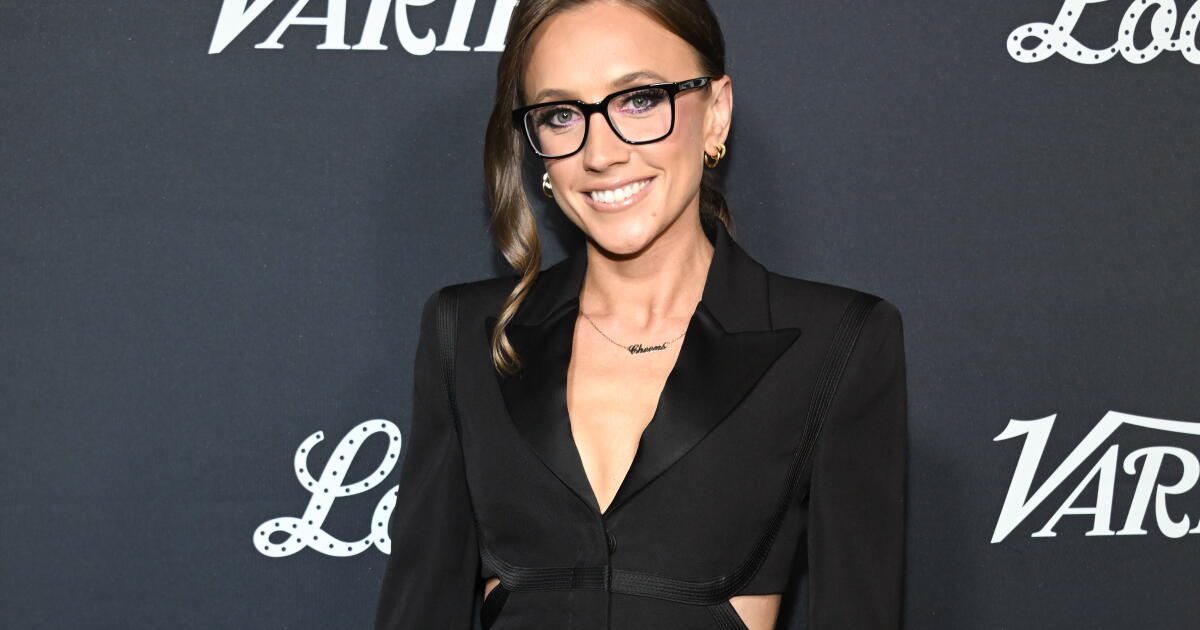
Fox News personality Kat Timpf unveiled a secret to fans at her comedy show over the weekend.
On Wednesday, the late-night “Gutfeld!” co-host shared a clip on Instagram in which she surprised the audience with a twirl and lift of her blouse, revealing a pregnant belly.
“Are you guys surprised?” she asked. “So was I.”
“I shouldn’t have been, though, because I’m married to a veteran, and the Army always does seem to take a while to pull out of something,” she joked. “What he said would be a quick little excursion is looking more like an 18-year commitment.”
The announcement follows an intense couple of years for the stand-up comedian-turned-Fox favorite. In February 2025, Timpf welcomed her first child, a baby boy. Hours before she went into labor, she was diagnosed with what she called “a little bit” of breast cancer.
The “little bit” she referred to was ductal carcinoma in situ: a “preinvasive” cancer that causes growth of cancer cells inside a milk duct in the breast, but the cancer cells haven’t yet spread to breast tissue, according to the Mayo Clinic.
In March 2025, she underwent a double mastectomy, calling the decision one of the hardest she’s ever made.
“The first six weeks of my son’s life, I wasn’t sure exactly what my prognosis was,” she later told People.
“It’s scary, but it’s empowering,” she continued. “Losing your breasts forever is devastating, especially when you just gave birth and everyone asks you about breastfeeding. It’s heartbreaking. But I keep reminding myself that I chose this over the alternative. Because the alternative would’ve been much worse for me.”
Timpf, whom the New York Times called “the most-watched woman in late-night television,” shared her breast cancer journey on social media, podcasts and through appearances on “Gutfeld!”
A year ago, she told the New York Times that she’s been through a lot, but being candid about the trauma has given her purpose.
“If one woman is less embarrassed about her own mastectomy, that’s a win,” she said.
At the time of the interview, Timpf had recently undergone reconstructive surgery, replacing tissue expanders placed during the masectomy with breast implants. In December, she shared on Instagram that her colleague Jennifer Griffin had taken her to get her first tattoo: nipples.
In her recent stand-up appearance at an Orange County-area Improv, she told the audience that she’s welcoming her second child with “such a great guy.” Her husband, Cameron Friscia, is a former Army Ranger who served in Afghanistan with the 101st Airborne Division. Now he works in finance.
“My birthday is coming up next month, and I told him, I said, ‘Babe, you don’t even have to get me anything. Better yet, get yourself something. A vasectomy. I’ve had enough surgery. It’s someone else’s f— turn.’”
The pass looked doomed the moment it left Jayden Maiava’s hands.
It was third-and-long, midway through the second quarter last November in Eugene, Ore. USC was down just a score, and Maiava, the Trojans’ big-armed quarterback, was trying to make something happen. But the receiver he’d locked in on was unavailable and an Oregon edge rusher was charging at him unchecked. So Maiava let one fly down the middle of the field, and the pass sailed into a crowd of Duck defensive backs.
That regrettable interception, one of two for Maiava that day, ended up being one of the turning points in that game — and in a 2025 season that fell one win short of the College Football Playoff. The loss to Oregon last season served as a rude awakening for USC and Maiava, a reminder of how far both still had to go before reaching their potential.
A year later, as the two Big Ten powers meet again on Saturday, Maiava and the No. 12 Trojans (4-0, 1-0 Big Ten) find themselves at another critical mile marker. A win over No. 20 Oregon (2-1, 0-0) would put USC firmly in the conversation for the College Football Playoff. A loss would have folks taking serious stock of where the Trojans stand in their fifth season under coach Lincoln Riley. And at the center of it all is a quarterback who so far seems entirely unfazed by that outside pressure.
USC quarterback Jayden Maiava looks down field to pass against San José State on Aug. 29 at the Coliseum.
(Ronaldo Bolanos/Los Angeles Times)
“He’s playing with great confidence,” running back Waymond Jordan said of Maiava. “We’re going to keep seeing him getting better and better and better.”
Ask anyone at USC about Maiava at the moment, and they will invariably say something similar.
“It’s the most confident Jayden I’ve seen in the three years I’ve been around him,” left tackle Elijah Paige said.
Through four games, the numbers certainly suggest he’s on the cusp of a big season. Maiava leads all of college football with 12 touchdown passes and ranks seventh in completion percentage (75.7%). His name is already being floated in early Heisman Trophy conversations.
But Maiava also hasn’t been tested much through four games this season. His protection has been near-perfect, with just a single sack allowed. According to Pro Football Focus, Maiava has been under pressure on a mere 16 dropbacks — or 13% of the time — and, more often than not, that’s because he held the ball too long. Maiava’s average time to throw while under pressure so far this season is nearly four seconds, which, by Big Ten standards, is an eternity.
All of that’s likely to change this week against Oregon. The Ducks are loaded with talent along the defensive line and in the defensive backfield. While they’ve tallied just five sacks through three games, they’ve forced five interceptions, most of any team in the Big Ten. That’s after finishing second in the conference in that category a year ago.
Maiava hasn’t been quite as sharp the last two games after a dynamite start in which he had as many touchdowns (6) as incomplete passes through two weeks. But he knows Oregon will make him pay for any mistakes he makes Saturday, just as it did last season.
“Definitely a lot to learn from that game coming into the next one,” Maiava said. “Definitely turning the ball over, clean that up. Being stingy with the ball, being able to get the ball in playmakers’ hands and just continue to stay on the same page and move as one.”
He’ll almost certainly be without two of his top playmakers against Oregon, with freshman Trent Mosley unlikely to play and sophomore big-play threat Corey Simms already ruled out. Though, so far this season, Maiava has had no problem overcoming the absence of his two top receivers from a year ago, Makai Lemon and Ja’Kobi Lane.
USC still has standout freshmen Kayden Dixon-Wyatt and tight end Mark Bowman to pace the passing attack. The offense has also barely made use of two receivers who were expected to be at the top of the depth chart, Tanook Hines and Terrell Anderson, both of whom should play more of a part Saturday.
USC coach Lincoln Riley talks with quarterback Jayden Maiava on the sideline during a game against San José State on Aug. 29 at the Coliseum.
(Kevin Terrell / Getty Images)
“He’s done a really nice job with all the new faces around him, which is hard to do at this position,” Riley said of Maiava.
That’s a testament to his development since 2024, when Maiava arrived at USC with a howitzer arm but little polish to his game as a passer. He’d never gotten any individual training as a quarterback. His mechanics and footwork were especially raw.
After taking over at the end of that 2024 season, though, Maiava has continued to get progressively better. Now Riley views him as “one of the best quarterbacks in the country.”
“Of all the guys I’ve been fortunate enough to coach, I don’t know that I’ve had any that have improved from Day One to this point as much as Jayden has,” said Riley, who has coached three Heisman-winning quarterbacks. “It’s been fun to see him grow as a player and leader, starting to embrace what it means to be the starting quarterback at USC. I think a guy that’s just going to get better and better in his prime to play his best football.”
USC will need him at his best Saturday if it hopes to knock off Oregon, which has its own star quarterback in need of a big moment. Dante Moore could have been one of the top picks in the NFL draft a year ago, but returned to the Ducks, only for them to suffer a stunning loss to Oklahoma State.
Oklahoma State’s coach later acknowledged that Moore was tipping whether Oregon was running or passing on a given play by his pre-snap stance.
USC quarterback Jayden Maiava looks to throw a pass against Rutgers on Sept. 19 in Piscataway, N.J.
(Adam Hunger/Associated Press)
“That was a game and that was a moment that helped mold us,” Moore has said since. “I learned from that, and I’m glad it happened.”
Moore will have the benefit Saturday of facing a struggling USC secondary. The Trojans have yielded 10 yards per pass attempt this season and now could be without starter Alex Graham, who’s listed as questionable. It has been especially difficult for USC to get off the field on third and fourth down, which Riley said has been a central focus this week.
“As a secondary, we’ve got to be a little bit tighter in those situations,” Riley said. “We’ve got to make those competitive plays. We have a good defensive line. We have a group that can rush the passer. We’ve got to make guys hold onto that ball, make our pass rush work, and make those plays when we get to the point of attack.”
Not to mention the Trojans have got a great quarterback, one that Riley expects to lean on his experience as USC faces its biggest test of the season.
“He’s just mentally in a really, really good place to go do that,” Riley said of Maiava. “He’s the guy I want taking us into this game, for sure.”
“You only need to find one person in this entire world who doesn’t find you completely insufferable.”
That’s the wisdom Taylor Swift dispenses near the end of “Cleveland!,” one of four new songs on a newly expanded edition of “The Life of a Showgirl,” and if that exclamation point doesn’t tell you she’s found that person then I don’t know what would.
Released Thursday night, almost exactly a year after the original album came out, “The Life of a Showgirl: The Encore” tacks four bonus songs onto the blockbuster 2025 LP that set a new record for the biggest opening week of all time even as it drew the harshest reviews of her career. It also follows Swift’s high-profile wedding in July — her husband, the NFL star Travis Kelce, grew up in Cleveland Heights — and comes just as Grammy voters are about to decide on nominations for February’s awards ceremony, where “The Life of a Showgirl” is eligible for Swift’s eighth album of the year nod. (In case you haven’t been keeping track, that would tie her with Frank Sinatra for the most in Recording Academy history.)
In a statement ahead of “The Encore’s” release, Swift said she’d taken a trip to Sweden to celebrate “Showgirl’s” success with Max Martin and Shellback, her two principal collaborators on the album. “Really we just wanted to reflect and take in how grateful we were for the moment we were in,” she wrote, “but there was a studio there and we did what we do when we feel anything at all: We wrote more songs.”
Here are the four “Encore” tracks, ranked from worst to best.
4. ‘Cleveland!’ The exclamation point really is hilarious. (No shots at Cleveland.) I kind of dig the airy jangle-pop production, which reminds me a bit of “Ruin the Friendship,” by far the best song on the original “Showgirl.” But writing about her and Kelce’s romance as a bulwark against all the hate she receives as a rich and powerful pop star feels pretty uninspired, at least as rendered here. “The taste of me is acquired, but it’s his favorite dish”? Alas, no.
3. ‘Patient Zero’ “Encore’s” lead single — with a splashy music video set to premiere during Sunday night’s MTV Video Music Awards — has Swift fielding a phone call from a woman who’s dating one of the singer’s exes and could use a little advice. (“I’ve gotta be honest — I’ve been expecting your call,” Swift tells her.) That’s a rich premise, and I like the way the unexpected fiddle lick scrapes against the glossy synths. Again, though, the lyrics lack the emotional sophistication with which she once would have told a story like this one. And the song’s central image — a guy with a “devil on his shoulder under his halo” — is downright awkward.
2. ‘Pink Clouding’ OK, now we’re getting somewhere. This shimmering electro-pop number takes its title, as I just learned, from a term used among people experiencing addiction to describe the temporary euphoria one might feel in the early stages of recovery. (Recall that Swift wrote “Lavender Haze” a few years ago after hearing the phrase on “Mad Men.”) Here she’s looking back with regret at a relationship that she can see now was clearly a rebound: “You met me at a cursed time / I told you I was fine / And you were so good / That’s why you haunt me like you should.”
1. ‘Babylon’ Look, I’m not crazy about “liberated libertine.” And “Love is ice upon the ladder that you need to climb”? It’s giving Airbnb wall art. But man, oh man, does Swift finally tap into something deep in “Encore’s” closer: a trembling acoustic-guitar ditty about someone who’s realized only too late what they let slip away. Listen for yourself to hear how she sings it — this is a beautifully tender vocal performance — but the verse about the all-but-abandoned young mom sneaking into the bathroom to call her mom is an absolute killer. Taylor Swift: good songwriter!
Coach DJ Gay started 120 games during his playing days at San Diego State, so when his star guard at Windward High, Davey Harris, announced he had committed to San Diego State, Gay couldn’t have been more pleased.
“That’s the least I could do for everything the school has done for me,” Gay said. “I think San Diego State is going to be a great place playing in the new Pac-12.”
Harris has grown to 6 feet 6 and is only scratching the surface of his ability because he missed his first two years of high school with an injury.
“I truly believe the sky is the limit,” Gay said.
This is a daily look at the positive happenings in high school sports. To submit any news, please email eric.sondheimer@latimes.com.
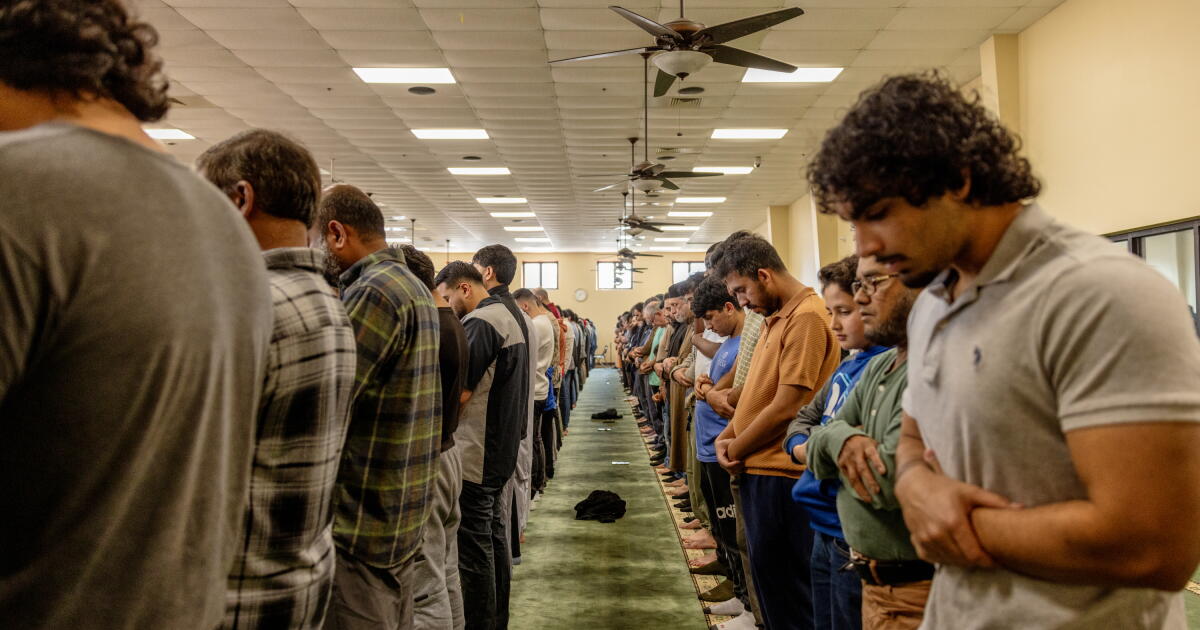
NEW YORK — Some of the loudest cheers for Sen. Ted Cruz at the Republicans’ recent midterm convention in Dallas came after the Texas politician targeted Muslim Americans and their faith’s religious code.
“Sharia law has no place in America,” said Cruz. “We need to stand together and stop it now.”
Texas Gov. Greg Abbott chimed in moments later, vowing to “fully ban Sharia law in Texas.”
Muslim American civic leaders and scholars — in Texas and other states — are responding forcefully to this latest surge in anti-Sharia rhetoric that dates back more than 15 years.
They passionately defend Sharia — the way it’s practiced in the United States — as positive guidance that has elements in common with the codes of other faiths, such as the Ten Commandments and the collective body of Jewish law derived from the Torah. They rebut the claims of GOP critics that Sharia is a coercive code that threatens the U.S. Constitution and judicial system.
Though there are multiple interpretations of Sharia, its essence is to serve as a code for how Muslims should live and worship — covering such matters as prayer, pilgrimages, fasting, charitable donations and personal virtue.
Among the most energetic of Sharia’s defenders is Illinois-based Sabeel Ahmed, director of an outreach project called GainPeace. He travels widely around the U.S., with a recent focus on Texas, speaking at mosque-sponsored workshops and open houses.
“Sharia is often misunderstood,” Ahmed posted on Instagram after a midsummer visit to Plano, Texas. “Many people think Sharia is only about punishments, but in Islam it is Allah’s guidance for living with faith, justice, mercy, and responsibility.”
Ahmed attributes the durability of anti-Sharia vitriol to politicians and social-media influencers who want to rile up their voting base or their followers.
“They gain popularity by saying it,” he told The Associated Press. “It’s the job of the Muslims to educate what is the proper meaning of the word Sharia. We cannot be angry or hateful.”
Sharia’s role varies significantly among Muslim nations
Among those appalled by the anti-Sharia surge in the U.S. is Abdullahi Ahmed An-Na’im, a Sudanese-born Islamic scholar who taught for many years at Emory University School of Law in Atlanta. He is a longtime critic of the relatively small number of governments in Muslim nations that coercively enforce Sharia, saying Muslims are better off in secular states where their religious observance is a matter of free choice.
An-Na’im says he and other Muslim Americans embrace Sharia willingly as a core part of their identity, even as they also embrace American values.
The demonization of their beliefs displays “a shocking ignorance of what Sharia means,” An-Na’im said. “It’s a total dehumanization of the other, the rejection of their right to be human.”
The rhetoric is similarly dramatic among Sharia’s opponents — epitomized by the two U.S. representatives from Texas, Republicans Keith Self and Chip Roy — who co-founded the Sharia-Free America Caucus in Congress.
“Sharia is a direct threat to our Constitution and Western values and seeks to replace our legal system and erode our basic freedoms,” Roy said earlier this year. “Our immigration system must be prepared to confront this challenge and defend our Judeo-Christian values.”
By last count, the caucus had more than 60 members. All of them are Republicans, and its members have introduced several anti-Sharia bills since the caucus was formed last December. None of those measures have been successful.
The Council on American-Islamic Relations, or CAIR, has designated the caucus as an anti-Muslim hate group.
“The bigoted rhetoric used by this caucus resembles the hatred that anti-Catholic politicians once unleashed against Irish Americans,” said CAIR research and advocacy director Corey Saylor.
“Islam is an American faith, present for over 250 years,” he added. “No one who wrote the Constitution or enforced it since has empowered these legislators to pick which religions get to exist in America.”
Texas has been a battleground for Sharia disputes
There has been substantive anti-Sharia action in Texas. In August, Attorney General Ken Paxton demanded documents from the Dallas-based Islamic Tribunal, which provides religious guidance to Muslims.
Paxton said in a news release that the investigation by his office sought to determine if the tribunal was engaged in illegal activity, such as acting as a court, applying foreign laws that conflict with Texas or federal law, or issuing rulings that imply government authority.
“This is America, and we will not be governed by sharia law,” Paxton said.
The Islamic Tribunal subsequently updated its website with a “ Clarification of Mission and Activities,” stressing that its guidance “complements, and never replaces, the legal, social, and professional services available in American society.”
“The Tribunal does not function as a court of law and does not issue legally binding judgments,” it said. “Our role is limited to mediation and religious arbitration requested by members of the Muslim community in matters related to faith, family guidance, and internal religious affairs.”
Any matters requiring legal enforcement are referred directly to the Texas judicial system, said the tribunal, which likened its work to the services provided by Jewish Beth Din courts and Catholic ecclesiastical tribunals.
Sharia defenders seek to broaden understanding of its essence
Asma Uddin, a professor at Michigan State University’s College of Law, has argued in her writings that many American politicians are depicting ordinary Muslim religious practices — such as prayer, choice of apparel, family counseling and mosque attendance — as evidence of a political danger.
In an interview with the AP, Uddin depicted the current wave of anti-Sharia rhetoric as fearmongering by politicians who view the issue as advantageous for them.
“When politicians use this, it’s giving them exactly what they’re looking for,” she said. “They’re looking for a scapegoat … and this gets people riled up.”
Sabeel Ahmed, who has made three outreach trips to Texas so far this year, plans a trip to Houston in a few weeks for another mosque open-house. He’s also working on a book to be mailed to Christian clergy across the U.S., seeking to broaden their understanding of Sharia and other Islamic practices.
“Islam is not to be feared,” Ahmed said. “People should meet a Muslim, go to the mosque, reach out to us. Let’s emphasize the commonalities we have.”
Hi, and welcome to another edition of Dodgers Dugout. My name is Houston Mitchell. I was reading my Bible, and baseball was mentioned almost immediately. “In the big inning, God created the heavens and the earth.”
Are you a true-blue fan?
Get our Dodgers Dugout newsletter for insights, news and much more.
By continuing, you agree to our Terms of Service, which include arbitration and a class action waiver. You agree that we and our third-party vendors may collect and use your information, including through cookies, pixels and similar technologies, for the purposes set forth in our Privacy Policy such as personalizing your experience and ads.
The postseason awaits
There are still three games left in the season, but let’s jump ahead and talk about the postseason a bit. We will have more in the run-up to the NLDS next week. The good news is the Dodgers have clinched a first-round bye and will open the postseason on Saturday, Oct. 3. The NLDS is best-of-five on a 2-2-1 format, so the Dodgers will host Games 1 and 2, and if necessary, Game 5.
Who will they play? The winner of the series between the No. 3 seed (Atlanta) and the No. 6 seed, which has yet to be determined. There are four teams vying for the three wild-card spots.
Should the Dodgers fear any one team more than the others this postseason? Let’s see how they have fared against all the other potential postseason teams. In fact, let’s see how all the postseason teams have fared against each other.
Dodgers vs. Arizona, 6-7 (-5 run differential) vs. Atlanta, 1-5 (-11) vs. Chicago, 2-4 (+2) vs. Milwaukee, 3-4 (+2) vs. Philadelphia. 4-2 (+11) vs. San Diego, 8-5 (+19) Total, 23-27, (+18)
Arizona vs. Dodgers, 7-5 (+5) vs. Atlanta, 4-3 (-8) vs. Chicago, 2-4 (-11) vs. Milwaukee, 2-4 (-22) vs. Philadelphia. 3-3 (-5) vs. San Diego, 5-5 (+5) Total, 18-19, (+25)
Atlanta vs. Dodgers, 5-1 (+11) vs. Arizona, 3-4 (+8) vs. Chicago, 3-3 (-1) vs. Milwaukee, 3-3 (-5) vs. Philadelphia. 9-4 (+23) vs. San Diego, 3-4 (-7) Total, 26-19 (+29)
Chicago vs. Dodgers, 4-2 (-2) vs. Arizona, 4-2 (+11) vs. Atlanta, 3-3 (+1) vs. Milwaukee, 4-9 (-9) vs. Philadelphia. 6-1 (+22) vs. San Diego, 5-1 (+27) Total, 26-18, (+50)
Milwaukee vs. Dodgers, 4-3 (-2) vs. Arizona, 4-2 (+22) vs. Atlanta, 3-3 (+5) vs. Chicago, 9-4 (+9) vs. Philadelphia, 4-2 (+14) vs. San Diego, 2-4 (-5) Total, 25-18, (+43)
Philadelphia vs. Dodgers, 2-4 (-11) vs. Arizona, 3-3 (+5) vs. Atlanta, 4-9 (-23) vs. Chicago, 1-6 (-22) vs. Milwaukee, 2-4 (-14) vs. San Diego, 6-0 (+11) Total, 18-26, (-54)
San Diego vs. Dodgers, 5-8 (-19) vs. Arizona, 5-5 (-5) vs. Atlanta, 4-3 (+7) vs. Chicago, 1-5 (-27) vs. Milwaukee, 4-2 (+5) vs. Philadelphia, 0-6 (-11) Total, 19-29, (-50)
This serves as a basic guideline for you. We would really have to dig deep to find hidden meanings here, since a lot depends on who started for each team. Philadelphia started the season poorly, fired their manager, named Don Mattingly manager and turned things around. So, when did these teams face the Phillies? I could do that for every team, but I can just hear people closing the newsletter and deleting it if I get too far into the weeds. Just as an example, San Diego is 0-6 against the Phillies, but were outscored by only 11 runs, while the Dodgers have losing records against Chicago and Milwaukee, but outscored both teams. And every Dodger fan from that era can tell you that the Mets were 10-1 against the Dodgers in the regular season in 1988, but lost to them in the playoffs.
But, stuff like this is fun. And remember when stats were sometimes just for fun, and not every stat had to look at launch angles and elevation rates?
The postseason roster?
The final position player spot on the postseason roster will be very interesting. Does it go to Josue De Paula, who hit .323/.500/.581 with three doubles, one triple, one homer and seven RBIs in 42 plate appearances. He also walked an impressive 11 times while striking out only five times.
He is back in the minors now, but the Dodgers can bring him back for the postseason, as long as he is replacing an injured player, such as Dalton Rushing. They would need to petition the Commissioner’s Office to allow it, but that kind of petition has never been denied in the past.
Of course, De Paula is blocked at DH, left field and right field now that Kyle Tucker and Teoscar Hernández are hitting better. But he did seem to bring a shot of energy to the team, as if he reminded them “Hey, this is supposed to be fun.”
Does the final spot go to Rushing? I don’t see how, because he can’t play in the field right now because of his elbow injury.
Does it go to Hyeseong Kim? His name was brought up this week by Dave Roberts, because Kim brings speed, versatility and good defense. He could be this season’s Justin Dean, appearing in almost every game and never hitting.
And the bullpen? If you have Yoshinobu Yamamoto, Tarik Skubal, Tyler Glasnow and Blake Snell in the rotation, that means Roki Sasaki goes to the bullpen. Does Justin Wrobleski get a bullpen spot? What about Emmet Sheehan, who has pitched great in his return (one earned run in 17 innings, giving up six hits and walking three while striking out 24)? Do you need all three of them in the bullpen in anticipation of the inevitable injury to Snell and Glasnow? We’ll know more about Snell when he starts Saturday.
Can Yamamoto pitch in every postseason game?
A lot of questions, no answers yet.
Forgotten Dodger: Willie Crawford
Willie Crawford, 17, who hit .444 for Fremont High, signs a $100,000 deal with the Dodgers in 1964 as Al Campanis watches.
(Associated Press)
We won’t go quite as far back in time for this one as the previous ones.
Willie Crawford is one of those guys who was good at a lot of things but not great at anything, and those types of players tend to be overlooked. But you need players like that every year in order to win.
Crawford first played for L.A. as a 17-year-old in 1964 and had his best season in 1973, when he hit .295/.396/.453 with 14 homers and 66 RBIs. He was solid defensively, playing more shallow than most right fielders to cut down on bloop singles and relying on his speed to catch any balls hit over him.
“He was big and powerful, and he could hit a ball as far as anybody. Boy, was he something,” Tommy Lasorda once said of Crawford, who the Dodgers signed out of Fremont High. Crawford was signed out of high school for $100,000, and the rules at the time said if you signed for at least that much, you had to stay on the major league roster for a season, which hampered his development. In 1965, the 19-year-old Crawford got a World Series ring for being on the Dodgers roster, but he batted only 27 times in the regular season. He had a pinch-hit single in Game 1 of that series.
In his first four seasons as a Dodger, he played in 72 games.
He was a productive player for many years and retired after the 1977 season. Crawford died of kidney disease at age 57 in 2004. You can read more about him here.
The postseason race
Here are the postseason seedings as of Thursday’s games. The three division winners get the top three seeds, followed by the three teams with the best records. The top two division winners get a first-round bye. Milwaukee and the Dodgers have clinched division titles and first-round byes.
Mikwaukee has clinched the No. 1 seed and home-field advantage throughout the postseason. The Dodgers have clinched the No. 2 seed and the Braves the No. 3 seed.
The Padres and Cubs have clinched wild-card spots. If the season ended today, Atlanta would host Philadelphia in one best-of-three wild-card round, with the winner taking on the Dodgers. The Padres would host the Cubs in the other wild-card round, with the winner playing Milwaukee.
In their final three games of the season, the Padres host the Diamondbacks, Philadelphia hosts Tampa Bay and Chicago plays at Boston.
Five of the six teams in the AL have been decided, with Tampa Bay and Cleveland clinching the top two seedings and the first-round bye. The third seed will be the AL West champion, either Texas or Houston (no relation), who are both 79-80. The Astros have the tiebreaker advantage. The three wild-card teams are the Yankees, Boston and the Chicago White Sox, in that order.
The Cat Man is back
Reports of the demise of Tony Gonsolin were greatly exaggerated. He’s back in the majors.
Gonsolin was an All-Star with the Dodgers in 2022, finishing the season 16-1 with a 2.14 ERA. He was having a mediocre 2023 before he was shut down and had Tommy John surgery. After missing the 2024 season, he came back in 2025, made seven starts and had internal brace surgery on his elbow. The Dodgers let him go. He was busy rehabbing his arm for the last year, and finally the Kansas City Royals decided to give him a chance. They sent him to the minors in August, and called him up to the majors this week.
He came in for a relief appearance on Tuesday and, after pitching two scoreless innings, gave up five runs and four hits, with two walks, ending the outing on a sour note.
“Essentially, I’m trying out for next year,” Gonsolin told reporters before the game. “It has been a while since I’ve thrown before this many fans. Just looking forward to the excitement and the adrenaline.”
These names seem familiar
This will be the final time this feature runs this season. It will be back next season. How many names will have joined it then? How notable players who were with the Dodgers the last few seasons are doing with their new teams (through Wednesday). Click on the player’s name to be taken to their full stats page:
Anthony Banda, Twins: 2-0, 4.46 ERA, 2 saves, 34.1 IP, 31 hits, 15 walks, 33 K’s, 95 ERA+, out for the season
Friday: Dodgers (*Tarik Skubal, 11-7, 2.85 ERA [4-2, 2.95 ERA with Dodgers]) at San Francisco (Yunior Marte, 0-1, 4.66 ERA), 7:15 p.m., SportsNet LA, AM 570, KTNQ 1020
Saturday: Dodgers (*Blake Snell, 4-1, 1.86 ERA) at San Francisco (*Matt Wilkinson, 1-3, 3.65 ERA), 7:15 p.m., SportsNet LA, AM 570, KTNQ 1020
Sunday: Dodgers (TBD) at San Francisco (TBD), 12:05 p.m., SportsNet LA, AM 570, KTNQ 1020
Have a comment or something you’d like to see in a future Dodgers newsletter? Email me at houston.mitchell@latimes.com. To get this newsletter in your inbox, click here.
Political polls are like weather forecasts. They’re worth passing consideration, maybe, but you’d have to be a fool to bet your house on their accuracy.
And yet there’s something that rings true about the recent poll suggesting that L.A. Mayor Karen Bass is in deep trouble among likely voters as she tries to hold on to a job that Councilmember Nithya Raman is trying to snatch away from her.
Here are the numbers, as compiled by the UC Berkeley Institute of Governmental Studies and co-sponsored by The Times:
Raman: 39%.
Bass: 28%.
Undecided: 33%.
Bass has naturally tried to debunk the poll. What else could she do, when her supporters are outnumbered by people who can’t make up their minds? Bass would need to dominate the undecided vote to have a chance, but given her high unfavorability rating, that’ll be hard to do.
On the other hand, Raman certainly hasn’t put things out of reach, despite the fact that Bass carries the baggage of the Palisades fire and has made only minimal progress on her signature issue — homelessness. Election day is less than two months away, and Raman has failed to convince anywhere near a majority that she’s the answer.
So what do Raman and Bass need to do between now and Nov. 3?
We need both candidates to be bolder, more creative, more convincing, and to tell us things we haven’t heard before.
All the recent L.A. mayors I’ve known had their faults and failures, whether the task was filling potholes, building out transit or addressing the high cost of housing. But among their best qualities, Dick Riordan was arrogantly confident, Jim Hahn had a steady hand on the tiller, Antonio Villaraigosa was tireless and passionate, Eric Garcetti was a long-range thinker on earthquakes, water and energy.
L.A. needs a mayor with all of those qualities. A cheerleader. A task master. A ball buster.
Running the second-largest city in the country is no easy task, because many of the problems at street level begin well beyond local control, related in part to an economy that leaves too many people behind.
But if you want to lead a world-class city, you need to have world-class answers on the big stuff like housing and homelessness and on the basics, too, like fractured sidewalks and neglected parks. Most voters don’t give a hoot about which candidate is more of a socialist or a moderate. City Hall is broken, and they want to know who can fix it.
On Wednesday, I checked the same sadly neglected area around City Hall that I wrote about in April and found only minimal improvements. Graffiti has been washed from the Frank Putnam Flint fountain, but it remains a broken-down monument to neglect, as it has for most of the past 60 years. And all around it, most of the little placards identifying native plants are broken or missing.
People rest on the Frank Putnam Flint fountain outside City Hall, a sadly neglected area.
(Allen J. Schaben / Los Angeles Times)
The L.A. Mall is still a largely abandoned wreck, with broken planter boxes and weeds at street level. A woman with two shopping carts told me she’s been homeless for 5½ years. The restaurant next to the nearby police department is shuttered; the restaurant across the street from it is long dead, and the once-vibrant downtown — which generated revenue that benefited every neighborhood of the city — is gasping.
I drove down Hope Street, south of 12th Street, because a reader who lives in that area and has told me about repeated fires at abandoned properties. A tractor was clearing debris from a recent blaze.
I drove west on Olympic toward Alvarado, an area I visit regularly to see a friend. Streets are strewn with trash. They’re always strewn with trash. At Olympic and South Lake, where encampments line the street and a fire once spread into a church parking lot, destroying vehicles, there’s a concrete triangle that was heaped with trash. It’s always heaped with trash, like a municipal dump on a busy thoroughfare.
Next I headed west on Wilshire to the RFK Memorial I wrote about 10 months ago, near the site of the 1968 Bobby Kennedy assassination. It remainsfenced-off, with trash and graffitiand with overgrown vines covering tributes to Kennedy. The city was going to help the school district clean things up. Then the school district took on the task.
It’s still a mess. Actually, it’s more than that. It’s an indictment. And so is the fact that in Studio City, where frustrated neighbors complained for five years that an abandoned property had been taken over by squatters, it took a recent fire to get City Hall’s attention.
The property, since cleared, is in Raman’s district, and she and Bass traded accusations about who had dropped the ball.
“As far as homelessness goes, I don’t see either candidate really showing a clear vision to solve this,” said Kayt Miranda, whose home was damaged by the fire at the abandoned property. “I mean, it’s a tall order, and I wouldn’t want to be in charge of that. But I’m not hearing anything from either of them that sounds like it will work or hasn’t been tried already.”
To be fair, Bass and Raman have each had lots of success on homelessness, with thousands of people being brought indoors. That job is not easy, especially given the number of people with mental illness and addiction issues. I know this from personal experience, having spent a year trying to steer a friend in from homelessness.
But the pace is too slow and the cost too high. As my colleague David Zahniser reported earlier this year, $300 million had been spent on the mayor’s Inside Safe program since December 2022, and as of last December, 40% of the 5,800 people who had been housed were back on the street.
And that was with an estimated annual cost per person of $82,000. Raman, who had supported the program, became a critic of it and touted a less expensive strategy that itself has been criticized for its slow pace, as Times City Hall reporter Noah Goldberg wrote in August.
Not long ago, a homelessness policy expert suggested to me that if we could figure out a way to double the nearly $1,000 Social Security Disability subsidy many homeless people get, it would open some doors in a housing market they’re now priced out of. Too expensive? It’s cheaper than what we’re doing.
I’d like to hear the candidates rethink the playbook like that, double down on what works and drop what doesn’t.
I’d like to hear from a candidate with a realistic plan to get L.A. out of the cellar in park rankings nationally, to break up the 10-year logjam for a sidewalk repair and the two-year wait to fix a street light.
All those undecided voters know exactly what they want.
A mayor who says fix the busted fountain by the end of the week, or else.
In fact, it’s believed that Tangier was created by the son of Hercules, with the god himself staying in one of the caves.
It has a vibrant café culture thanks to its French influence, tapas culture from Spain – and a mix of languages too.
Thanks to its position in the north of the country, it has long, sandy beaches too like Plage de Tanger and Achakkar Beach.
The second cheapest for return flights is Seville which has an average price of £151.
Seville is Spain’s fourth-largest city – and is one of the hottest during the autumn, winter season.
During October, Seville can still reach highs of 26C and even in January can see highs of 16C.
The Greek island of Rhodes has seen the biggest decrease in price for return flightsCredit: Alamy
Here’s the list of the best value destinations for travel from Oct 2026 – Feb 2027…
These are the destinations and the average economy return flight price, according to Skyscanner…
Rhodes, Greece: Average price £218 (-21% YoY)
Montego Bay, Jamaica: Average price £764 (-13% YoY)
Tangier Morocco: Average price £105 (-13% YoY)
Seville, Spain: Average price £151 (-12% YoY)
Valencia, Spain: Average price £122 (-11% YoY)
Valletta, Malta: Average price £164 (-11% YoY)
Perth, Australia: Average price £1,425 (-6% YoY)
Some of the top attractions include the Royal Alcázar of Seville, Seville Cathedral and Plaza de Espana.
Rhodes in Greece has seen the biggest drop in flight prices year-on-year – it’s down 21 per cent.
The average return flight price is £218 – but in October, we found return flights for less than £60 with Ryanair.
The island is the fourth-largest in Greece, the biggest in the Dodecanese – and it’s considered quieter and cheaper than the likes of Santorini and Mykonos.
Lindos is a popular spot for visitors, the coastal village sits on the eastern coast with a clifftop Acropolis, whitewashed alleys, and sandy beaches.
Greece has incredible summers, but also mild winters with highs of 15C in January and February.
Seville is the fourth-warmest city in Spain during the autumn, winter seasonCredit: AlamyA long-haul option with cheaper flights this year is Montego Bay in JamaicaCredit: Alamy
Further afield, long-haul journeys that have cheap return flight include Montego Bay in Jamaica which from the UK has an average price £764.
Montego Bay on north-west coast of Jamaica is the capital of the parish of Saint James and is one of the most popular tourist spots on the island.
Of course Brits flock there for its great weather and beautiful bays like Doctor’s Cave Beach which is considered one of the most beautiful in the country with white sand and bright turquoise waters.
Aside from sunbathing and paddling, snorkelling is popular too as swimmers are likely to spot parrotfish, turtles, and small sharks.
Looking on Skyscanner, October is the cheapest month for flights with returns from £364.
Laura Lindsay, Travel Trends and Destination Expert at Skyscanner gives her top tips for cutting travel costs…
Head north For those able to depart from north of the border, Edinburgh airport has some of the best deals for those looking for school holiday breaks as Scottish schools aren’t off the same weeks as England.
Is there a better price when departing a day earlier or later? Searching by multiple dates and airports will give you the best chance of a bargain. Because some dates are more popular than others, prices will vary. The ‘whole month’ search tool allows you to see cheap flights at a glance and pick the right deal for you. Consider traveling a day before or a day after your original departure dates, flying on less popular days of the week is always cheaper.
Is there a comparable trip to a different destination? You see a deal from one airline to popular location like Naples, but is there a better price when you consider somewhere less well known, like underrated Bari in Puglia instead?
Can you get a better deal travelling with a different airline?Changing up the airlines you choose to fly with can seriously cut costs. Also, fares don’t have to be booked as returns. Look at flying out with one airline and back with another to save money. You can easily compare prices on Skyscanner’s cheapest month tool.
Is there a cheaper deal from a nearby airport? Travelling to an airport a bit further from home or further from your destination can unlock better pricing and routes. A great example of this is when flying from London to New York. There are so many options and going just a little bit further from your point of origin or destination could mean a saving of hundreds of pounds. Make sure to check using the ‘Nearby Airport’ search on Skyscanner.
If you’re still not sure, make a note “Setting up price alerts will ensure you’re the first to know as prices drop with any additional discounts or added supply. You can mark a flight you’re interested in and Skyscanner will email you whenever the price goes up or down.
Embrace spontaneity by exploring ‘Everywhere’ Re-embrace your spontaneous side and let Skyscanner’s algorithm find the cheapest deal. Just type in ‘Everywhere’ with your travel dates and the site will show you all the destinations that can be reached from your departure point listed in order of price so you can choose the most cost effective one.”
The news conference Thursday began with Lakers president of operations Rob Pelinka saying he wanted to “express gratitude” to LeBron James for the eight years he spent playing for Los Angeles before departing to Philadelphia as a free agent over the summer.
It didn’t take long for Pelinka to pivot into Luka Doncic and Austin Reaves, and how they are now the leaders of the Lakers with James gone.
James informed the Lakers on June 30 that he had plans to play elsewhere, and thus began a new chapter for the Lakers. James, who signed with the 76ers, won an NBA championship with the Lakers in 2020. He led the Lakers to the Western Conference second round of the 2026 playoffs.
Over the course of his 23-year NBA career, James’ longest tenure had been with the Lakers.
And for that, Pelinka was thankful.
“I think before we get into the questions, it’s been a few weeks since I’ve last seen you guys. I thought it would be appropriate at the front to express gratitude for the LeBron era here,” Pelinka said. “Clearly, new team and new players, and that’s what we’re going to talk about today. But we as an organization are still grateful for the run that we had with him here. The Lakers have become — as they should — a perennial playoff team — won a championship, went to the Western Conference finals. It was a great era, and we’re grateful for it. I think it’s important to say that at the onset as we turn into a new chapter.”
Pelinka said he collaborated with Lakers coach JJ Redick to build a team around Doncic, using a three-pronged approach.
They wanted to re-sign Reaves, which the Lakers did at four years and $180 million, the largest contract ever for an undrafted player in NBA history.
They wanted to acquire a top-notch center, which the Lakers did by getting Walker Kessler from the Utah Jazz in a sign-and-trade deal. The Lakers sent two unprotected first-round picks and two first-round pick swaps to the Jazz for Kessler and then signed him to a four-year, $130-million contract.
They wanted to add quality depth, which the Lakers did by getting Quentin Grimes, Jaden Hardy, Collin Sexton, Matisse Thybulle, Ziaire Williams, Sandro Mamukelashvili and Kevon Looney.
Pelinka said this was the “thesis” on how they wanted to build the Lakers for the 2026-27 season.
“And there were three fundamental pillars of what we wanted to accomplish in the offseason: We wanted to retain Austin Reaves. That was a really big thing for us,” Pelinka said. “We wanted to find a way to acquire a franchise center and then we wanted to develop a roster of JJ Redick dribble-pass-shoot players that were younger and add depth to our roster. That was sort of our three-prong thesis basketball-wise for the offseason, and we felt like we accomplished all those things.
“Re-signing Austin, putting together a trade to acquire Walker Kessler, and then building out our team with young players that could dribble-pass-shoot, and have brought the average age of our roster to around 26 or 27, which lines up so perfectly with building a team around Luka Doncic. That’s what we’re here to talk about today, is our offseason and the excitement heading into this year.”
Lakers top executive Rob Pelinka, with reporters in the foreground, addresses the media at the team’s training facility in El Segundo on Thursday.
(Allen J. Schaben / Los Angeles Times)
Pelinka, who held the news conference with Redick by his side, was asked about the new Lakers ownership group of Bob Iger and Joshua Kushner, who purchased the franchise for a record $12.5 billion from Dodgers owner and Guggenheim Partners’ Mark Walter, who owned the Lakers for about a year. The deal hasn’t been finalized but is expected to be approved by the NBA’s Board of Governors.
“We have had introductory meetings with Bob and Josh, and those have been excellent,” Pelinka said. “With a pending transaction, we’re not at liberty to talk more about that under league rules. But we’ve had preliminary discussions with them that have been really, really positive. In terms of day-to-day, nothing’s changed. We’re operating with Lakers excellence.”
The biggest change is James not being with the Lakers.
After the Lakers were eliminated by the Oklahoma City Thunder in May, James expressed interest in re-signing with the team.
Pelinka even said the Lakers wanted James to retire with the franchise.
But that didn’t happen.
“Again, we’re grateful for the LeBron era,” Pelinka said. “I think the communications with him this offseason were held diplomatically, professionally and honestly. I’m so thankful for the partnership that we had that continued up until this summer when a decision was made for him to play for another team. It was done amicably, professionally, gracefully. We looked at the whole thing with gratitude, because it’s been an incredible era for us here.”
They mentioned “The Odyssey,” they talked about “Lord of the Rings,” they referenced “The Hobbit,” they cited the hero’s journey, they predicted a season filled with mythological tales of triumph.
What they didn’t promise was that their Lakers’ team would contend for a championship.
What they couldn’t mention was what will happen to them if they don’t.
In their annual pre-training camp news conference at their practice facility Thursday, Pelinka and Redick talked about fictional characters perhaps because the reality is too grim for words.
Their jobs are on the line with a rebuilding team that might not be good enough to save them, and no amount of cute Gandalf references can change that.
With new ownership, the Lakers’ braintrust no longer has the protection of the benevolent Buss family or the baseball-centric Mark Walter.
Here’s guessing Bob Iger and Joshua Kushner will want any excuse to put their own people in charge of their $12.5-billion investment. And if this clearly rebuilding Lakers team doesn’t quickly measure up to the brand that Iger and Kushner purchased, they’ll have that excuse.
In his nine full seasons as the Lakers’ basketball boss, Pelinka constructed the 2020 bubble championship team, but destroyed it soon thereafter and hasn’t won since.
In his two seasons as Lakers coach, Redick became the first Lakers coach to win 50-plus games in consecutive seasons since Phil Jackson. But Redick was always LeBron James’ choice, and now that James is gone — thank goodness! — Redick will have to prove himself all over again to the new guys.
He’s already off to an awkward start considering his answer to a question about who would join Luka Doncic, Austin Reaves and Walker Kessler in the starting lineup. He referenced the lame internet criticism that the Lakers couldn’t win because they were now led by too many white guys.
“I’m pretty confident in three of the spots,” he said. “The other two spots will not be two white guys.”
Um, OK.
Redick acknowledged that all those new potential starters — Quentin Grimes, Collin Sexton, Kevon Looney, Matisse Thybulle and others — can band together to turn this season into a mythological masterpiece.
“Part of the Hero’s journey is allies and gods,” he said, referring to stories about ordinary folk who are transformed by triumphant adventures. “And so I think if you look at “Lord of the Rings,” right? All the guys from “The Hobbit,” those guys had to be connected. They had to embrace the fact that they were allies, right? … You’re not gonna get through the journey without that. Or the journey’s gonna be even more tumultuous than it is because the reality is there will be ordeals and trials along the way.”
At this point Pelinka jumped in, saying, “So I’m a big Tolkien guy. Are you Samwise or Frodo?”
Answered Redick, “Uh, I’m simultaneously Samwise and Gandalf.”
Replied Pelinka: “Gandalf. That’s even better.”
Rob Pelinka (left), the Lakers general manager/president of basketball operations, speaks to the media with coach JJ Redick on Thursday at the team’s training facility in El Segundo.
(Allen J. Schaben / Los Angeles Times)
In San Antonio they’re talking about Wemby, in Oklahoma City they’re talking about SGA, and in Los Angeles they’re talking about … Frodo?
Tumultuous indeed. Welcome to life after LeBron, with Pelinka essentially starting the news conference by answering the biggest question of the summer — why did the James and Laker marriage fail?
Except he didn’t answer it.
“I’m so thankful for the partnership that we had that continued up until this summer when a decision was made for him to play for another team,” he said.
A decision was made by whom? James said it was him. It says here it was the Lakers, who needed to move him out if they were going to move ahead.
Pelinka didn’t elaborate, instead focusing on a popular reference that he sort of botched.
“We’ve talked about every season is a little bit like ‘The Odyssey,’ if anyone has seen the movie,” he said before someone corrected him. “Oh, it was actually a poem. Fair enough.”
The poem wasn’t this complicated.
“You launch a season, and there’s things that happen throughout that you can’t predict, but you have to stay together as a group and stay strong,” Pelinka said. “That’s a great theme for us.”
Pelinka will be going through his own Odyssey this season, as evidenced by his defense of his accomplishments.
“If you look at the teams that we’re wanting to go shoulder-to-shoulder with, the Thunder and the Spurs maybe in the West. … They had to lose many seasons to get high picks and we just don’t have the luxury of that here,” he said. “Again, the expectations are every year (to) win, get in the playoffs, make a run, and so we feel like we’ve been able to do that. As I’ve started, since I’ve been here in the leadership position, we’ve been a playoff team and we have to continue to do that.”
Redick was also playing defense, saying, “No one is a championship-level team on September 29. There’s not a team in the league that is a championship-level team. That is an ongoing process throughout the year. Rob talks about his job in that. Well, I have a job in that. Our players have a job in that. I’m confident we’re gonna develop as a team into a championship-level team this year. “
This season will live forever in Lakers folklore if they do.
There could be a medieval bloodbath if they don’t.