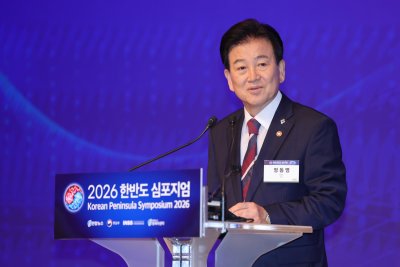
Unification Minister Chung Dong-young delivers a keynote speech during the Korean Peninsula Symposium 2026 in Seoul on Friday. Photo by Yonhap
Unification Minister Chung Dong-young called Friday for shifting away from an approach that sticks to denuclearization as the sole solution to the North Korean nuclear issue, saying such a precondition has been one of the reasons for stalled diplomacy with Pyongyang.
Chung made the remarks in a keynote speech at a forum, co-hosted by Yonhap News Agency, pointing out that the lack of progress in nuclear diplomacy has only helped the North bolster its nuclear and weapons capabilities for the past three decades.
“As the past 30 years have shown, whenever peace talks were halted by the denuclearization hurdle, North Korea used that time to further advance its nuclear capabilities,” Chung said at the Korean Peninsula Symposium.
“We must move away from the old notion that a peace regime can only be discussed after the North Korean nuclear issue is resolved … We need to pursue a phased and pragmatic solution. It is time for a paradigm shift,” he said.
Recalling major breakthroughs in nuclear diplomacy with Pyongyang in the past, Chung stressed the path toward peace opened up when relevant countries, including South Korea and the United States, sought to actively engage Pyongyang for dialogue.
Chung went on to highlight the need for a phased approach — halting and scaling down the North’s nuclear program before denuclearizing — as a solution to the nuclear issue.
“A step-by-step process toward peaceful coexistence and denuclearization should proceed in three stages — freeze, reduction and denuclearization,” he said. “China, too, has expressed support for this pragmatic approach.”
Chung said this phased approach must begin with dialogue between the U.S. and North Korea.
“As agreed in the 2018 Singapore summit between North Korea and the U.S., both sides should immediately resume talks to end mutual hostility and establish a new relationship,” he said.
“The resumption of U.S.-North Korea dialogue will serve as a powerful catalyst for opening four-party talks among the U.S., China and the two Koreas, who are the key stakeholders in achieving lasting peace on the Korean Peninsula,” Chung added.
Copyright (c) Yonhap News Agency prohibits its content from being redistributed or reprinted without consent, and forbids the content from being learned and used by artificial intelligence systems.
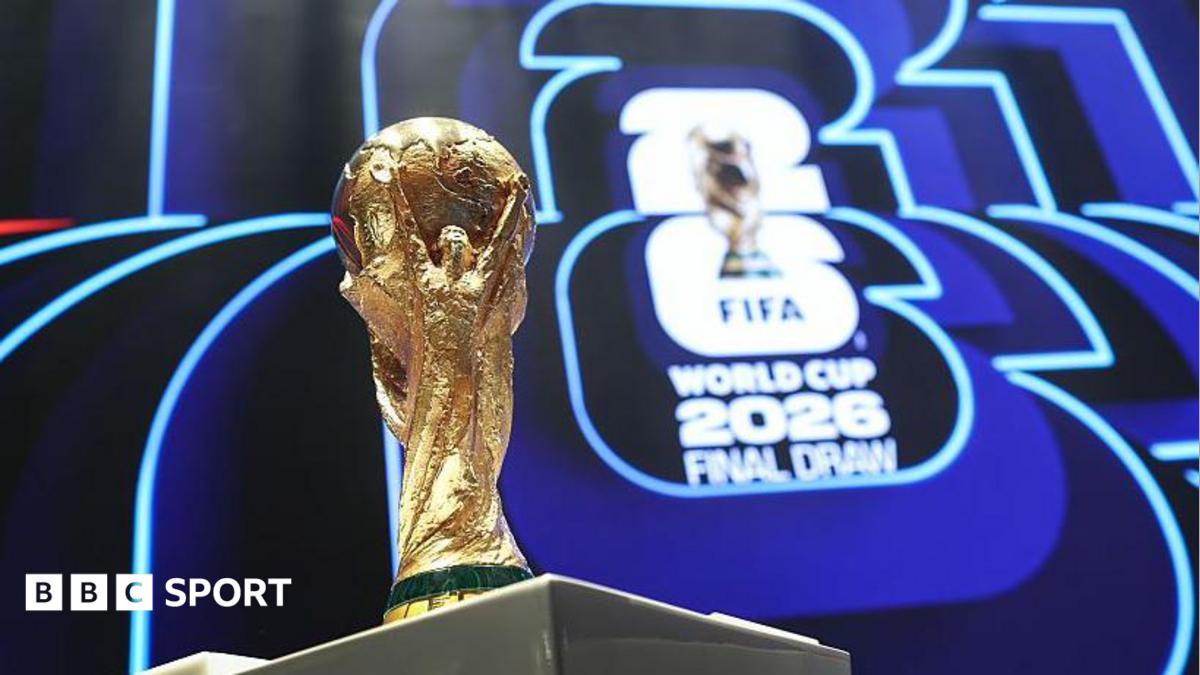
Expanding the World Cup to 48 teams always presented one obvious problem – it was an imperfect number for a tournament.
With 32 teams, the maths was simple – eight groups of four teams, with the top two going through to a last 16, then quarter-finals, semi-finals and a final.
By adding another 16 nations, Fifa had to find a way to get to a symmetrical knockout stage. There was no ideal solution – one which preserved the intensity of the previous format.
The original plan was to create 16 groups of three teams. The two top in each would go through to the last 16.
But there was an issue. Three-team groups meant individual fixtures – and those in the final match would know exactly what they needed to do to qualify. Nations could play for specific results to secure their passage to the knockout rounds.
Fifa, after all, knew all about alleged collusion from the scandal at the 1982 World Cup. Back then, with groups of four, teams did not play their final group matches at the same time.
West Germany faced Austria in the standalone last game. A slender win for the Germans would send both teams through at the expense of Algeria. The match finished 1-0 to West Germany. Algeria went out.
Fifa changed the format so all final fixtures would be played simultaneously, but that would not have been possible with three-team groups.
The climax to the group stage in Qatar was so exciting that Fifa had a rethink. It accepted there must be 12 four-team groups and two matches would be played at the same time to determine who would qualify.
Except for one crucial difference – something that removed much of the jeopardy that made the last World Cup so gripping.
Eight of the third-placed teams must go through for there to be 32 teams in the knockout rounds. It became harder to be knocked out than to progress.
And one issue becomes clear with two matches this week.
First up, Australia played Paraguay on Thursday. The teams were second and third in Group D and both on three points.
Four points is almost certain to be enough to take one of the eight third-placed qualifying slots, so it created a situation in which the teams knew that a draw was helpful to both.
Australia are definitely through in second place and celebrated with their supporters at the final whistle. Paraguay played it low key but, barring a very unlikely set of results in the remaining groups, they will go through too.
The next game of interest in this respect is Austria v Algeria in Group J (03:00 BST Sunday).
Again, the two teams are second and third on three points. A point is very likely to send both teams through, while defeat is much more likely to send one home.
Will we see another draw?
After being impacted negatively in 1982, Algeria could be the beneficiaries in 2026.
You could argue a game in Group F on Thursday fell into the same category, with Japan starting the match on four points and Sweden on three.
That match also finished 1-1 to guarantee the Scandinavians would progress, but there was no real risk involved for Japan if they have lost.
It is the same in Group L, too, with Ghana on four points and Croatia on three.
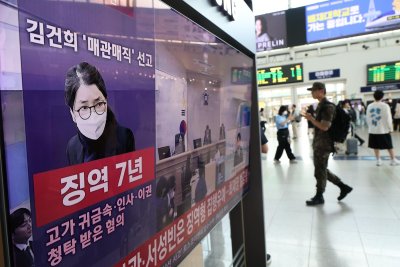
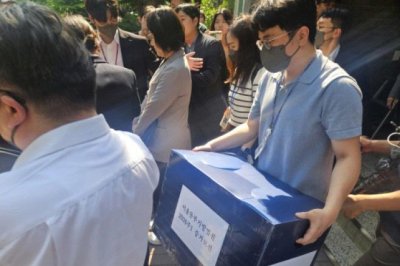
A TV screen shows a live broadcast of former first lady Kim Keon Hee’s bribery trial at Seoul Station on Friday. Kim was sentenced to seven years in prison. Photo by Yonhap
A Seoul court on Friday sentenced former first lady Kim Keon Hee to seven years in prison for taking expensive gifts in return for job appointments and business favors.
The Seoul Central District Court handed down the sentence to Kim, the wife of ousted former President Yoon Suk Yeol, after she was indicted on charges of accepting bribes for mediation, including over 100 million won (US$64,750) worth of jewelry in exchange for a government job for a son-in-law of a construction company chairman.
In total, she was charged with taking approximately 300 million won worth of gifts, and the court found her guilty on all counts.
“The defendant disregarded the social responsibilities associated with the position of first lady and used it merely as a means to pursue her private interests,” presiding judge Cho Sun-pyo said during the hearing, which was televised live.
Kim was indicted in December on charges of receiving a Van Cleef & Arpels necklace and other jewelry from the construction company chairman between March and May 2022; a golden turtle ornament in April 2022 from Lee Bae-yong, former head of the National Education Commission, in exchange for her appointment; a Dior bag worth 5.4 million won from a pastor the same year; and a Vacheron Constantin watch from another businessperson in September 2022.
In February 2023, she was accused of receiving a painting by renowned artist Lee Ufan from a former prosecutor in return for her help in securing him a nomination for an election.
The exchanges mostly took place during the period her husband was in office from May 2022 until his ouster in April 2025.
The judge said Kim sought to evade responsibility for her crimes by returning some of the gifts once an investigation got under way or arguing she had purchased them herself.
“This shows that she was fully aware of the illegality of her actions but tried to conceal it,” he said.
Special counsel Min Joong-ki’s team, which had demanded a 7 1/2-year prison term, welcomed the ruling. Kim’s lawyers said they would appeal.
The court also sentenced the construction company chairman to a one-year prison term, suspended for two years, the businessperson who gifted the watch to a 10-month prison term, suspended for two years, and the pastor to a fine of 8 million won.
The former first lady has already been sentenced by an appeals court to four years in prison in a separate corruption case.
She is also set to stand trial over her alleged involvement in a case where members of the Unification Church were reportedly forced to join the now main opposition People Power Party ahead of the 2022 presidential election in an attempt to influence the outcome of the party primary to pick its presidential candidate, which her husband Yoon won.
Copyright (c) Yonhap News Agency prohibits its content from being redistributed or reprinted without consent, and forbids the content from being learned and used by artificial intelligence systems.
A LESSER-VISITED airport is about to get a massive upgrade – its biggest in its 96-year history.
Hollywood in Los Angeles, USA, is known for being one of the most famous tourist spots in the world.
Sign up for the Travel newsletter
Thank you!
Hollywood Burbank Airport is opening a new £1billion terminalCredit: CorganThe airport is near one of the most famous tourist destinations in the world – HollywoodCredit: elevatebur.com
And most people will get there via LAX Airport – but don’t realise there is also Hollywood Burbank Airport.
The airport is not only closer to Hollywood, but also closer to Universal Studios Hollywood and Warner Bros. Studio Tour.
This October the airport will be opening its £1billion new terminal – called The Icon – which will replace the former historic terminal which opened back in 1930.
The new terminal will be bigger than the former one and have floor-to-ceiling glass windows, filling the terminal with natural light.
The airport is also close to Universal Studios Hollywood as well as Warner Bros. Studio ToursCredit: CorganThe airport will be themed like ‘old Hollywood’Credit: elevatebur.com
To get to the 14 gates, passengers will head through an eight-lane TSA security area with modern screening technology.
There will be a central food court with restaurants and shops for travellers, with plenty of seating outside each gate.
The airport is often used by celebs due to being close to Hollywood.
Recent celeb sightings include actress Jennifer Garner and actor Neal McDonough.
The airport itself has even appeared on the big screen as a filming location, including in Ocean’s Eleven and The Office.
Visitors will be able to head to a sleek bar with views of the parked planesCredit: Corgan.comThe new terminal will open in OctoberCredit: Corgan
The rules are simple. Each day there’s a new footballer and the challenge is to guess who they are in as few attempts as possible.
After each wrong guess you unlock a new clue. Guess the answer after as few clues as possible to score more points.
Three is a good score, four or five points is exceptional.
So take part and return for more tomorrow.
Missed yesterday’s quiz? Go back and try your luck here.
Today’s player and clues set by BBC Sport’s Joe Rindl.
After more quizzes? Go to our dedicated Football Quizzes and Sports Quizzes pages and sign up for notifications to get the latest quizzes sent straight to your device.
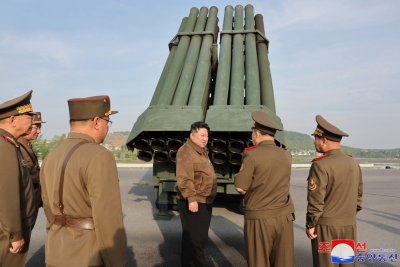
North Korean leader Kim Jong Un oversaw tests of new weapons to bolster firepower along the inter-Korean border, state-run media reported Friday. In this May 2024 photo, Kim views a 240mm multiple rocket launcher system. File Photo by KCNA/EPA-EFE
SEOUL, June 26 (UPI) — North Korean leader Kim Jong Un oversaw tests of a new rocket launcher system and other weapons as part of a plan to bolster firepower along the inter-Korean border, state-run media reported Friday, highlighting Pyongyang’s continued effort to modernize conventional weapons capable of threatening the Seoul metropolitan area.
The new weapons, tested at an undisclosed location Thursday, included an upgraded 240mm 24-tube multiple rocket launcher with an automated guidance system and an extended range of 56 miles, the official Korean Central News Agency reported.
Also tested were shells for a 155mm self-propelled howitzer with an extended range of 40 miles and a special warhead for a tactical ballistic missile. KCNA said the warhead was “aimed at inflicting fatal damage on major targets including airfields, ports and power facilities of the enemy.”
Kim described the launches as a demonstration of the “great technological progress” made in implementing the party’s policy of “bringing about a change in the fire posture on the southern border.”
He added that the policy was intended not only to strengthen defenses but also to build a “deadly and destructive offensive posture to make no enemy dare to confront.”
Seoul, home to more than 10 million people, lies roughly 30 miles from the border, while the surrounding Gyeonggi Province is one of South Korea’s most densely populated and industrialized regions.
The tests come amid an extended push by Pyongyang to harden its military posture toward South Korea. Last month, Kim called for strengthening frontline defenses along the border to create an “impregnable fortress,” and Thursday’s weapons tests appear to represent the firepower component of that broader effort.
North Korea has ramped up fortification work near the Military Demarcation Line inside the DMZ, including the installation of barbed-wire fencing and preparations for mine-laying operations. South Korea’s Defense Ministry on Monday called the activity a violation of the armistice agreement that ended fighting in the 1950-53 Korean War.
Earlier this week, Pyongyang also commissioned its first 5,000-ton destroyer, the Choe Hyon, which Kim said is armed with nuclear-capable missiles. Images released by state media appeared to show missile launchers and radar systems resembling those found on Russian warships, prompting speculation that Pyongyang has received technical assistance from Moscow.
North Korea has deployed troops, artillery and weapons to support Russia’s war in Ukraine and is widely believed to be receiving financial support and advanced military technology in return.
While South Korean President Lee Jae Myung has sought to ease tensions with North Korea since taking office last year, he has also called for strengthening Seoul’s military capabilities in response to Pyongyang’s expanding weapons programs.
On Friday, South Korea’s Defense Ministry unveiled a plan to rapidly expand the military’s drone and counter-drone capabilities, citing lessons from modern conflicts and North Korea’s growing military cooperation with Moscow.
“Since North Korea is currently receiving technology transfer from Russia, we decided that we urgently need to proactively respond to various changes in the war operation environment,” Defense Minister Ahn Gyu-back said at a press briefing.
The plan calls for acquiring 20,000 low-cost reconnaissance and loitering drones by 2030 while accelerating the deployment of homegrown K-Lucas long-range suicide drones. It also includes expanded counter-drone capabilities, including laser weapons, high-power microwave systems and interceptor drones designed to defeat low-cost aerial threats.
As part of the strategy, South Korea aims to train 500,000 “drone warriors” across the army, navy, air force and marines. Ahn said drones should become “a universal means of combat” across the armed forces, with every soldier eventually able to operate them “like a second personal weapon.”
Turkey come out on top in the last minute of an end-to-end 3-2 win over a second string USA side, in their final Group D match at SoFi Stadium in Los Angeles.
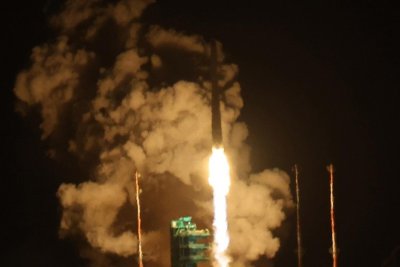
The Nuri space rocket, carrying 13 satellites, takes off from Naro Space Center in Goheung, South Korea. Photo by YONHAP/ EPA
June 25 (Asia Today) — South Korea is preparing to conduct the fifth launch of its homegrown Nuri rocket in September as the government moves to expand launch infrastructure and accommodate growing commercial demand.
Taeseog Oh, administrator of the Korea AeroSpace Administration, said Wednesday that the agency plans to convene a launch management committee in early August to set the final launch date.
“At this point, we expect the launch to take place in September,” Oh said during a news conference at the agency’s headquarters in Sacheon, about 190 miles southeast of Seoul.
Assembly of the rocket’s individual stages is expected to be completed this week. Full assembly of the three-stage launch vehicle is scheduled to begin next week.
After the fifth launch, the agency plans to begin upgrading the Naro Space Center in Goheung, South Jeolla Province, which has handled South Korea’s major space launches.
“The supplementary work required under the Naro Space Center modernization project is moving forward,” Oh said. “The project is currently undergoing a preliminary feasibility review, and work is expected to begin next year.”
The agency is also planning a second national space center to meet an expected increase in government and commercial launches and support future launch vehicles.
Oh said South Korea plans to begin the second space center project in 2028 and establish infrastructure capable of supporting reusable launch vehicles by the mid-2030s.
“A reusable launch vehicle requires not only a launch site but also a landing site,” Oh said. “By the mid-2030s, we intend to secure future-oriented launch infrastructure capable of operating reusable vehicles.”
The agency began accepting applications Monday from local governments seeking to host the center. A final candidate site is expected to be selected in October.
Oh said some South Korean companies have reported difficulty securing launch slots from U.S. companies such as SpaceX because of rising global demand.
“We will work to establish conditions in which satellites developed domestically can be launched aboard our own launch vehicles,” he said.
The agency also plans to upgrade the existing Naro Space Center while developing the second facility.
The expansion is intended to support more frequent satellite launches, newly developed launch vehicles and the reusable rocket South Korea aims to develop by 2035.
Oh also emphasized the need to increase government investment as the country seeks to shift toward NewSpace, an industry model driven more heavily by private companies.
The government is reviewing the agency’s budget proposal for next year.
“The government recognizes the importance of the aerospace budget, and we will work to expand it,” Oh said.
“In South Korea, even the government-led Old Space model was not sufficiently developed,” he said. “Government investment and private-sector participation must occur simultaneously for an aerospace industry ecosystem to take shape.”
Spain will progress as one of the top two sides if they avoid defeat against Uruguay on Saturday (01:00 BST).
Even if they lose, they will still finish inside the top two unless Cape Verde beat Uruguay. If that happens, Spain will finish third on four points, which is likely to be good enough.
Spain will top the group with a draw, unless Cape Verde win and overturn a goal difference deficit of four.
The group winners go on to play the runners-up of Group J.
Uruguay will be through if they beat Spain. If they draw, then a top-two finish is only possible if Cape Verde also draw.
Cape Verde will make the top two if they beat Saudi Arabia. They can also definitely go through with a draw if Spain beat Uruguay.
If Uruguay and Cape Verde both win they will be tied for top spot, or if they draw for second spot. As they drew with each other, placings would be determined on goal difference – which is level at zero.
If goal difference is identical, positions will be decided first by the better disciplinary record (Cape Verde -3, Uruguay -2) and then by Fifa world ranking, which Uruguay hold.
The second-placed team will face Argentina.
Neither team will qualify if they lose.
Saudi Arabia must beat Cape Verde, and will also need Spain to avoid defeat against Uruguay, to finish second. Four points would likely be enough in third anyway.
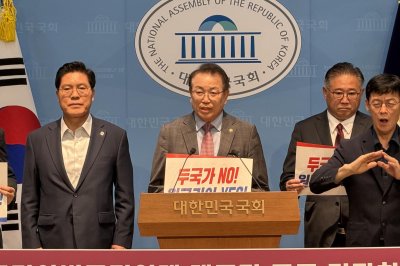
From left, People Power Party lawmaker Song Seok-jun, Committee for Ten Million Separated Families Chairman Jang Man-soon and Kenneth Bae, president of New Korea Foundation International, attend a news conference opposing the South Korean government’s two-state approach to inter-Korean relations at the National Assembly in Seoul on Thursday. A sign-language interpreter is at far right. /Citizens’ Solidarity for ONE KOREA
June 25 (Asia Today) — A South Korean civic leader proposed creating a satellite communications network modeled on SpaceX’s Starlink to provide outside information to people in North Korea.
Jang Man-soon, chairman of the Committee for Ten Million Separated Families and a co-chair of Citizens’ Solidarity for ONE KOREA, called the proposed system “Korea Link.”
“If we place a system similar to Starlink over North Korea, we could inform North Koreans who have access to approximately 8.5 million mobile phones about the realities and conditions in South Korea,” Jang said during an interview Thursday at the National Assembly in Seoul.
The figure was Jang’s estimate and could not be independently confirmed.
Jang said the network could communicate the importance of freedom to North Korean residents and correct historical accounts and information distorted by the North Korean government.
He said it could also help North Koreans develop pride in the goal of Korean unification.
Jang argued that a new means of communication is necessary because traditional methods of reaching North Koreans, including radio broadcasts and border loudspeakers, have become increasingly restricted.
He said North Korean leader Kim Jong Un’s “two hostile states” policy is partly intended to isolate residents from outside information.
“North Korea is at a disadvantage in politics, economics, culture and military power, so the government is trying to block outside information from reaching its people,” Jang said.
Jang also discussed the declining prospects for families separated by the division of the Korean Peninsula and the 1950-53 Korean War.
“The wish of separated families is no longer simply to reunite with relatives,” he said. “It is to set foot in their hometowns.”
Many first-generation separated family members are now in their 90s, and few still have living parents in North Korea, he said.
“Their greatest wish is to visit their hometowns before they die,” Jang said.
He warned that public awareness of separated families is fading with each generation.
Jang called for expanded unification education for young people, opportunities to hear testimony from first-generation separated family members and educational visits to areas near the inter-Korean border.
“The reality is that only about half of the public now believes unification is necessary,” he said. “We are preparing various activities, including youth education, testimony from first-generation separated families and visits to border regions.”
Jang urged the South Korean government to participate in practical projects intended to support North Korean residents and preserve awareness of freedom and unification.
“If we view the people of North Korea as members of the same nation, I hope the government will participate in the practical plans we are pursuing,” he said.
“We must work together to establish a foundation that will allow future generations to understand the meaning of genuine freedom in the Republic of Korea.”
Daizen Maeda’s smart finish to Japan’s team goal is cancelled out by Anthony Elanga’s long-range strike as Sweden fight back to earn a 1-1 draw, ensuring both sides progress to the World Cup knockout stages.
June 25 (UPI) — Authorities in northern Canada on Thursday confirmed that three people are dead after a plane responding to forest fires in the Northwest Territories crashed the night prior.
NWT Fire said responders were able to access the crash site on Thursday and confirmed the fatalities.
“Our organization is grieving alongside the families, friends, colleagues and the broader wildfire community as we process this unthinkable loss,” it said in a statement.
“We will honor those who lost their lives in the line of duty at the appropriate time and in accordance with the wishes of their families.”
The bird dog aircraft, with three people aboard, crashed Wednesday evening near Fort Simpson where it was deployed along with an airtanker group to fight a nearby wildfire.
Though the identities of the victims have not been made public, Yellowknife-based Buffalo Airways confirmed one was an employee.
“It is with heavy hearts that we confirm the loss of one of our aerial firefighting pilots while actioning fire west of Fort Simpson,” Buffalo Airways said in a statement.
Buffalo Airways said the involved plane was a Turbo Commander 690 aircraft operating as a bird dog during the wildfire operations.
The Transportation Safety Board of Canada announced in a statement that it is deploying investigators to the scene.
“My thoughts are with the families of the pilot and two firefighters who died in the plane crash near Fort Simpson,” Prime Minister Mark Carney of Canada said in a statement.
“Protecting Canadians from wildfires requires profound sacrifice and courage. We owe them our deepest gratitude.”
Officials were responding to 19 forest fires throughout the territory Thursday.
The aircraft involved in the Wednesday evening crash was supporting wildfire suppression efforts on FS009-26, a lightning-caused fire located in the Marten Hills area.
Officials said Thursday night that the fire was about 100 hectares and responders were working to suppress its growth. It presented no risk to communities, infrastructure or buildings, they said.
June 25 (UPI) — A cargo vessel in the Strait of Hormuz was attacked Thursday, prompting officials to halt the evacuation of sailors stranded in the chokepoint by the war.
It was unclear who attacked the cargo ship. According to the British navy’s United Kingdom Maritime Trade Operations office, the vessel was struck on its starboard side by an unknown projectile at about 5:40 p.m. local time. It was about 7 1/2 nautical miles southeast of Dahit, Oman, when it was attacked, it said.
The vessel’s bridge sustained damage, but no casualties or environmental impact were reported.
Following the attack, the United Nations’ International Maritime Organization paused its evacuation operation in the Strait of Hormuz.
“I have decided to temporarily pause its implementation in order to reconfirm that the necessary safety guarantees continue to be in place for the ships on our evacuation list and all those in the region,” IMO Secretary-General Arsenio Dominguez said in a statement.
The war, which began Feb. 28, left some 11,000 sailors stranded in and around the Strait of Hormuz, a vital energy shipping route. The IMO announced the evacuation operation Tuesday, after the United States and Iran agreed to a Memorandum of Understanding that seeks to pave a path to ending the war.
The vessel struck Thursday was not transiting the Hormuz under the IMO’s evacuation framework, the U.N. agency said.
Though it unclear who was responsible for the attack, the Iran’s U.S.-sanctioned Persian Gulf Strait Authority, newly created by Tehran to oversee and manage the strait, issued an advisory Thursday, stating it is not responsible for the protection of vessels transiting “outside designated routes.”
“Any consequences arising from unauthorized routing shall be the sole responsibility of the vessel owner, charterer and master,” it said.
Control of the strait has been a focus of ongoing U.S. efforts to end the war.
Iran effectively closed the strait after being attacked Feb. 28, causing energy prices to surge and threatened nations with worsening energy crises.
Since then, Iran has attempted to maintain control of the strait and has sought to impose fees on ships that transit it.
The United States is seeking to secure free maritime travel through the strait as part of the MOU. U.S. Secretary of State Marco Rubio is currently in the Middle East trying to sell the MOU to allied nations.
However, the Institute for the Study of War said in a report Thursday night that Iran’s alleged attacks and threats directed at vessels in the strait “advance its objective of establishing control over the waterway” as well as “undermine international efforts to guarantee safe passage through the Strait of Hormuz.”
“Iran is using military threats and economic incentives to try to convince Gulf states to support its efforts to control the strait, but the Gulf states appear to be resisting Iranian pressure at present,” it said.
Former German player’s comments that ‘African football’ is ‘a bit unorthodox sometimes, a bit wild’ sparked controversy.
Published On 26 Jun 202626 Jun 2026
Even in one of the most joyous moments in his country’s footballing history, Ivory Coast manager Emerse Fae found himself managing sadness over the remarks of a former role model that have sparked debate about potential racist connotations.
But afterwards, Fae was asked to respond to analysis given by former German midfielder Bastian Schweinsteiger on German public TV ahead of Germany’s 2-1 win over the Ivorians in both teams’ second Group E match in Toronto.
Here is how DW.com characterised what Schweinsteiger said: “Ahead of the Group E clash in Toronto, which Germany won 2-1, Schweinsteiger said in his role as a pundit for German public broadcaster ARD that the Ivorians played ‘African football’, which he characterised as ‘a bit unorthodox sometimes, a bit wild, not quite as tactical.’”
In his response, Fae noted how he once admired the former Bayern Munich man so much that he sometimes was called “Bastian” by his friends.
“I think it’s sad,” said the 42-year-old Fae, who is only several months older than the 41-year-old Schweinsteiger. “He was a very, very good player; a great player.
“I’ve always loved him, personally. As a midfielder, I’ve always liked the way he played, the way he understood football. … So when I heard his comments, I was disappointed, disappointed in the man.
“Because when you know football the way he knows it, it’s odd that you would speak that way, which we could call racist if we were calling a spade a spade, but that’s the way it is.”
Schweinsteiger played parts of 13 seasons for Bayern Munich, helping the German club giants win eight league titles and one UEFA Champions League crown. Internationally, he was a key contributor to Germany’s 2014 World Cup-winning squad.
He has not publicly commented on the remarks in the days since.
On Thursday, Fae’s side got the better of one of the game’s most famous managers, the 78-year-old Dick Advocaat, who, in guiding Curacao, was managing in his third World Cup.
Fae’s group also earned a 1-0 victory to open the tournament against Ecuador, a team that came into this World Cup unbeaten in 19 matches and hailed for its defensive solidity.
“I can’t change the way he talks,” Fae said of Schweinsteiger.
“But all I can do is show on the pitch that Africa is not just the physical game. We are very technical as well, very tactical. And all I can hope is that this was just a clumsy statement, that it wasn’t particularly reflective of what’s in his mind.”
Court personnel leave a senior citizens’ center at Woosung Apartments in Jamsil, Seoul, after completing an on-site inspection on June 10 under a partially granted evidence-preservation request filed by the Reform Party. Photo by Asia Today
June 25 (Asia Today) — A South Korean court has again rejected a request to preserve ballots, ballot boxes and other election materials kept at a counting center in Seoul’s Songpa District.
The First Civil Division of the Seoul Eastern District Court, led by Presiding Judge Joo Jin-am, dismissed an appeal Tuesday filed by the Freedom and Innovation party against the chair of the Songpa District Election Commission.
The materials were stored at a counting center inside the Olympic Park Handball Gymnasium.
The court rejected the party’s initial evidence-preservation request on June 12, prompting the party to appeal.
Freedom and Innovation claimed that ballot-paper shortages, the transportation of ballot boxes and other alleged irregularities during the June 3 nationwide local elections could have affected the voting and counting results.
The party sought court preservation of ballots, ballot boxes and related materials for possible use in future litigation.
The court, however, found that the application failed to satisfy legal requirements including relevance and necessity.
Judges said there was no sufficient connection between the ballot shortages and the requested preservation of ballots and ballot boxes from polling places where voting had been completed normally.
The court also determined that obtaining the materials would not help establish the disputed issues in an underlying lawsuit.
It said a separate preservation order was unnecessary because election law already requires the materials to be retained.
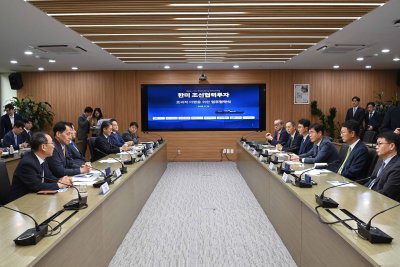
South Korean Deputy Prime Minister and Minister of Finance and Economy Koo Yun Cheol and representatives of government agencies, policy-finance institutions and major shipbuilders attend a signing ceremony for a Korea-U.S. shipbuilding cooperation investment agreement at the Export-Import Bank of Korea in Seoul on Thursday. Photo from the Ministry of Trade, Industry and Resources, used under KOGL Type 1.
June 25 (Asia Today) — South Korea launched a policy-finance framework Thursday to support $150 billion in shipbuilding cooperation with the United States, seeking to share early-stage investment risks with domestic companies expanding into the U.S. market.
The Korea-U.S. Strategic Investment Corporation, four state-backed financial institutions and three major South Korean shipbuilders signed a memorandum of understanding at the Export-Import Bank of Korea headquarters in Seoul.
The agreement is the first institutional step toward implementing the $150 billion shipbuilding cooperation package included in a bilateral strategic investment memorandum signed in November 2025.
The participating financial institutions are the Export-Import Bank of Korea, Korea Development Bank, Korea Trade Insurance Corp. and Korea Ocean Business Corp.
The three shipbuilders are HD Hyundai Heavy Industries, Samsung Heavy Industries and Hanwha Ocean.
Under the agreement, the participants will establish a Korea-U.S. Shipbuilding Cooperation Investment Council to identify U.S. investment projects, coordinate policy financing and jointly monitor their implementation.
The Export-Import Bank of Korea will serve as the council’s secretariat, coordinating communication among the institutions and overseeing the progress of individual projects.
South Korean Deputy Prime Minister and Minister of Finance and Economy Koo Yun Cheol said shipbuilding cooperation is one of the two main pillars of strategic investment between South Korea and the United States.
Koo urged the investment corporation and policy lenders to develop financing measures that can provide companies with sufficient funding when it is needed.
“The government and policy-finance institutions must actively seek ways to share the risks and uncertainty of initial investments that individual companies cannot bear alone,” Koo said.
He said the initiative should help South Korean shipbuilders support the rebuilding of the U.S. shipbuilding industry while creating new contracts and markets across South Korea’s domestic shipbuilding supply chain.
The benefits should extend beyond large shipbuilders to small and midsize shipyards and marine equipment suppliers, he said.
“We must create a path for small and midsize shipbuilders and equipment suppliers to participate together as Team Korea,” Koo said.
The government plans to use the council to develop financing for investments in U.S. shipyards, naval vessel construction, maintenance, repair and overhaul services and commercial shipbuilding.
The policy-finance structure is intended to help companies manage the large capital requirements and financial risks associated with entering the U.S. market.
Financial Services Commission Vice Chairman Kwon Dae-young described the initiative as an opportunity for South Korea’s shipbuilding industry to demonstrate its capabilities in the global market.
“We will actively support the necessary financing through close cooperation among the newly established Korea-U.S. Strategic Investment Corporation, policy-finance institutions and private financial companies,” Kwon said.
Park Dong-il, deputy minister for industrial policy at the Ministry of Trade, Industry and Resources, said the Make American Shipbuilding Great Again initiative, or MASGA, represents the first strategic overseas expansion project in the history of South Korea’s shipbuilding industry.
Park said encouraging signs were emerging in the United States, including potential orders for South Korean companies.
He called on policy lenders to coordinate closely so shipbuilders can enter the U.S. market without delays.
“The signing ceremony is expected to provide initial momentum for the MASGA project and create a new opportunity for South Korea’s shipbuilding industry to advance,” Park said.
Shipbuilding companies also pledged to identify commercially viable projects with government financial support.
HD Hyundai Heavy Industries CEO Lee Sang-kyun said producing tangible results from the bilateral cooperation was the most important objective.
“This cooperation should develop into a system that simultaneously supports the growth of South Korea’s shipbuilding industry and the rebuilding of the U.S. shipbuilding base,” Lee said.
South Korean shipbuilders will identify investment opportunities that offer profitability and can be carried out effectively using their advanced technology, he said.
Lee also urged the government to prepare a broad range of support measures to help create a turning point in bilateral shipbuilding cooperation.
The government said it will use the agreement to begin full cooperation among the investment corporation, policy-finance institutions and shipbuilders.
It also plans to expand the Team Korea framework so small and midsize shipyards and marine equipment suppliers can participate in projects entering the U.S. market.
Goals from Nilson Angulo and Gonzalo Plata help Ecuador come from behind to beat Germany 2-1 to qualify for the knockout stages of the FIFA World Cup, as one of the top eight third-placed teams.
Shafali Verma’s half-century helps the 50-over world champions reach the target inside 17 overs at Old Trafford.
Published On 25 Jun 202625 Jun 2026
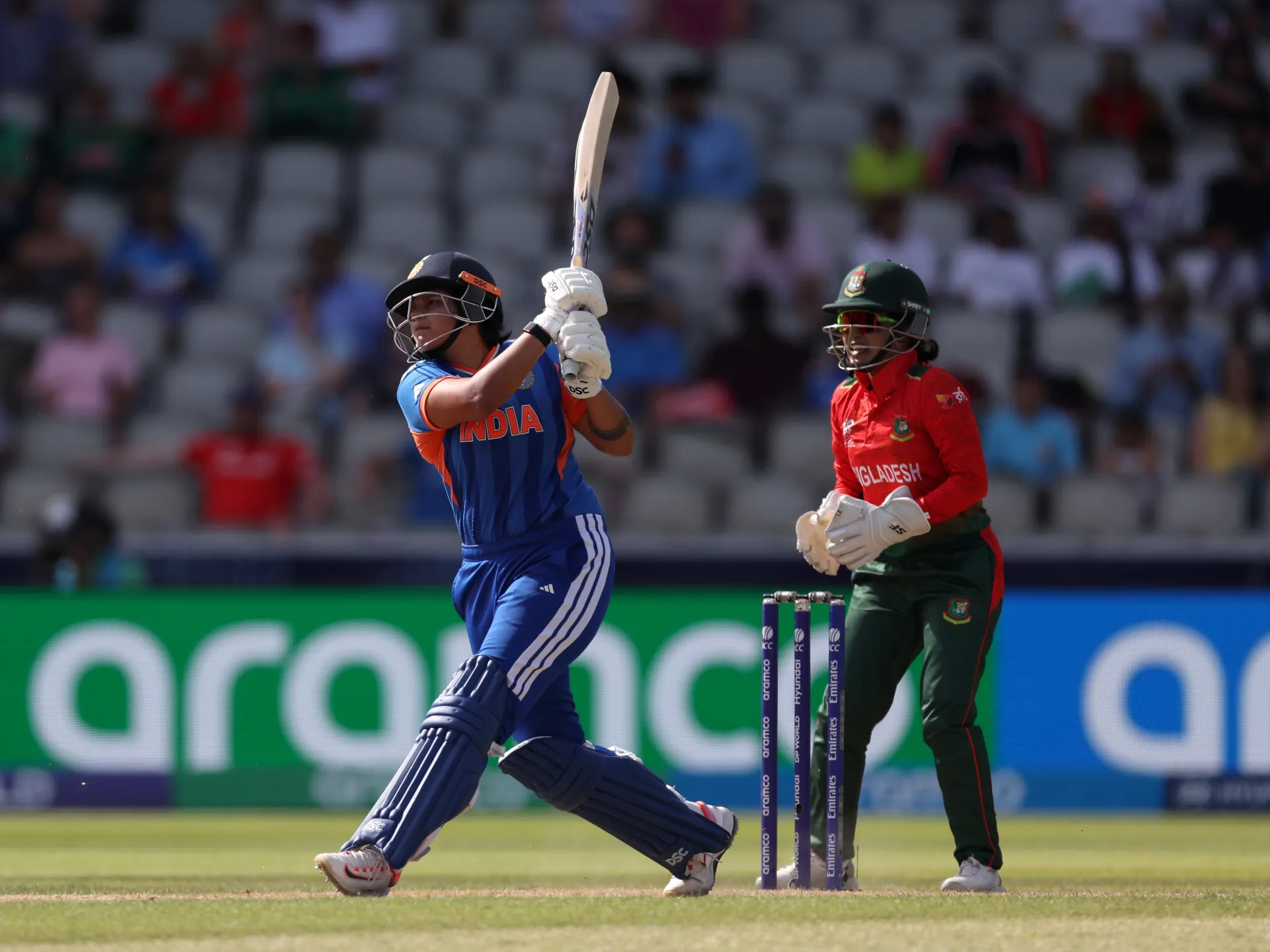
India beat Bangladesh by five wickets in Manchester to bolster their hopes of a semifinal place at the Women’s T20 World Cup.
Chasing a modest target of 137 at Old Trafford, opener Shafali Verma struck 53 from 34 balls as India reached their target inside 17 overs on Thursday.
Recommended Stories
list of 4 itemsend of list
South Africa, meanwhile, capitalised on a maiden T20 international century from Tazmin Brits to overwhelm the Netherlands by 88 runs.
That means India and South Africa are now effectively involved in a shootout for the second semifinal spot behind unbeaten Group A leaders Australia.
They both have six points, two behind the Australians and two ahead of Bangladesh, who still have a slim mathematical chance of qualifying for the knockout stages, with their last pool match against South Africa at Lord’s on Sunday.
India have the better run rate but face the daunting task of toppling Australia in their game on Sunday, which is also at Lord’s.
The Indians will likely need to improve their fielding against six-time champions Australia after dropping four catches on Thursday, although Bangladesh were too weak to capitalise as they slumped to 136-8.
Spin again provided the bulk of India’s wickets, with Radha Yadav taking 3-28 and Shree Charani 2-21.
South Africa were never in danger once Brits and Laura Wolvaardt put on 121 for the first wicket.
When Wolvaardt departed for 45, Brits continued to cane the Dutch bowlers with Annerie Dercksen, who made 37 not out off 16 balls.
Brits finished with 114 not out from 69 balls with 15 fours and three sixes as South Africa finished on 208-1.
The Dutch also made a good start with openers Phebe Molkenboer (41) and Sanya Khurana (36) adding 58 for the first wicket. Sterre Kalis kept the momentum going with a 28-ball 26, but once those three were gone, the innings folded.
Medium-pacer Ayabonga Khaka was the most successful of the bowlers with 3-19 while slow left-armer Chloe Tryon took 2-16 from her four overs.
Wins for India and South Africa at the Women’s T20 World Cup ensured the fight for semi-final qualification will go to the final day of the group stage.
India beat Bangladesh by five wickets and face Australia, who are top of Group Two, in the final fixture at Lord’s on Sunday knowing they will likely need to beat the six-time champions to qualify.
South Africa thrashed winless Netherlands by 88 runs and will need to beat Bangladesh in their final game and hope that India lose, otherwise it will go down to net run-rate. Bangladesh also retain a slim chance of progression.
In Thursday’s first game, India chased a below-par 137 at Old Trafford as opener Shafali Verma struck 53 from 34 balls, and they reached their target in 16.5 overs.
But if they are to overcome the unbeaten Australians, India’s fielding will need to improve significantly. A sloppy performance saw them drop four catches in the first five overs and the innings was littered with misfields.
Despite that, there was a glaring difference in quality between the teams as Bangladesh were unable to punish the mistakes as they scraped to 136-8.
Juairiya Ferdous top-scored with 33 while captain Nigar Sultana Joty added 32, but India’s spin-heavy approach prevailed once more as Radha Yadav took 3-28 and Sree Charani 2-21.
India lost Smriti Mandhana early before Shafali took charge and the chase slowed after her dismissal in the ninth over, but Jemimah Rodrigues’ 26 from 15 helped them over the line.
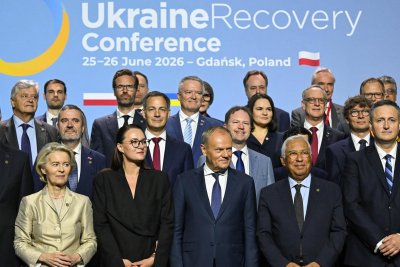
Polish Prime Minister Donald Tusk, center, European Commission President Ursula von der Leyen, left, European Council President Antonio Costa, second from right, and Ukrainian Prime Minister Yulia Svyrydenko, second from left, pose for a group photo at the opening session of the Ukraine Recovery Conference 2026 at the European Solidarity Centre in Gdansk, Poland, Thursday. Photo by Adam Warzawa/EPA
June 25 (UPI) — The European Union released $3.6 billion in funds of the Ukraine Support Loan for budget and defense needs, the bloc said Thursday.
The funds were released at the Ukraine Recovery Conference, where European Commission President Ursula Von der Leyen announced the funding, which is the first instalment of the new macro-financial assistance. The MFA is a segment of the Ukraine Support Loan, under which $102 billion will be offered to Ukraine in 2026 and 2027.
“As a country at war, Ukraine’s capaicty to defend its territory depends on the rapid availability of critical products in the required quantities and within very short timeframes,” a press release said. “The first instalment of the [$6.8] billion defense package to support drone procurement will be disbursed in the coming days.”
“This is indeed solidarity in action,” Von der Leyen said. “It shows Europe’s support for Ukraine is here to stay.”
The original plan in December was to use Russia’s frozen assets to fund the loan, but the Russian Central Bank sued a Belgian bank over the plan, so the EU had to find a new way to finance the loan.
Instead, they agreed to create the loan through joint debt. Hungary, Slovakia and the Czech Republic negotiated an exemption.
The payments are conditional on Kyiv’s reforms. If Ukraine reverses its ongoing fight against corruption, the EU could suspend the funds, Euro News reported.
The loan also requires Ukraine to buy weapons and ammunition made in Europe, with some exceptions depending on availability.
“Ukraine has the opportunity to analyze the situation on the battlefield and identify the range of products that they need, and then they have to inform us in the form of product schedules,” a Commission spokesperson told Euro News. “The priority remains to make purchases within the EU and Ukraine.”
“We continue to call on all our partners to maintain their support, because a strong and independent Ukraine is in all our interests,” Von der Leyen said Thursday. “Our ambition is not only to help Ukraine endure, it is also to help Ukraine grow and prosper as a free and European country.”
The United States is not expected to contribute funds to the loan.
I rose from my living room couch before Mexico’s World Cup match against Czechia when the Telemundo announcer stated it was time for the Mexican national anthem.
The public address system at Azteca Stadium in Mexico City played a short string intro. My back straightened. I pressed my right hand against my chest horizontally in the traditional gesture that accompanies the tune. And then I recited the opening lyrics to a song I’ve heard all my life but that I only began committing to memory this month:
Mexicanos al grito de guerra/El acero aprestad y bridón/Y retiemble en sus centros la tierra/Al sonoro rugir del cañon
Those florid 19th century words — “Mexicans, at the cry of war/Ready the steel and the bridle/and may the Earth tremble to its core/at the cannon’s resounding roar” — make “The Star-Spangled Banner” seem as anti-war as “Give Peace a Chance.” My kumbaya heart nevertheless jumped as the anthem continued.
Goosebumps blossomed on my skin as Mexico’s head coach Javier Aguirre, he of a stern face and gray haircut worthy of a drill sergeant, beamed while singing. My eyes watered as the camera panned over his arm-in-arm players as they shouted the line, “Think, o beloved homeland! That heaven/gave you a soldier in each son.”
Millions of Mexican Americans like myself have stumbled through the himno nacional during this World Cup, whereas in previous years, we might have just hummed some bars or stayed silent. It’s a boisterous way to connect with one half of our hyphenated lives and get in the right mindset to root for El Tri, but otherwise something we don’t really have to know all the way through given we’re in the U.S.
Yet seeing stadiums and bars packed with Latinos wearing the jerseys of their ancestral homes and warbling their national anthems during this World Cup has been a jolt of inspiration I wasn’t expecting. Those few minutes before each match have become a reminder of what we’re up against at this moment in the Western Hemisphere, as President Trump thirsts to smash Latin America into submission while persecuting too many of us stateside.
In downtown Santa Ana earlier this week, Alicia Rojas quietly recited Colombia’s national anthem word for word before a game against the Democratic Republic of the Congo, even though she was just one of a handful of Colombian fans at Chapter One: The Modern Bistro.
“It reconnects me to my roots, my family and the memories of home,” said Rojas, who was born in Bogotá and moved to the U.S. at age 12. The artist has helped to organize against federal immigration raids in Orange County and volunteers for local political races. “Those few minutes remind me that beyond our differences, we share a history, a culture and a love for the land that made us who we are.”
Latinos are a famously divided bunch, to the point that we don’t even like a catch-all label for “us.” A 2024 Pew Research Center survey found that 52% of Latinos prefer to refer to themselves by their family’s country of origin, while only 30% identify as Hispanic or Latino and just 17% use plain ol’ American.
One thing that can unite us all — and all lovers of liberty, for that matter — is those Latin American national anthems. Many were written in the aftermath of wars for independence. Most are bright, rousing listens, even if you don’t understand Spanish, because their chords reflect the Romantic classical music popular at the time of their composition in the 19th century. All call for their countrymen to fight against tyranny.
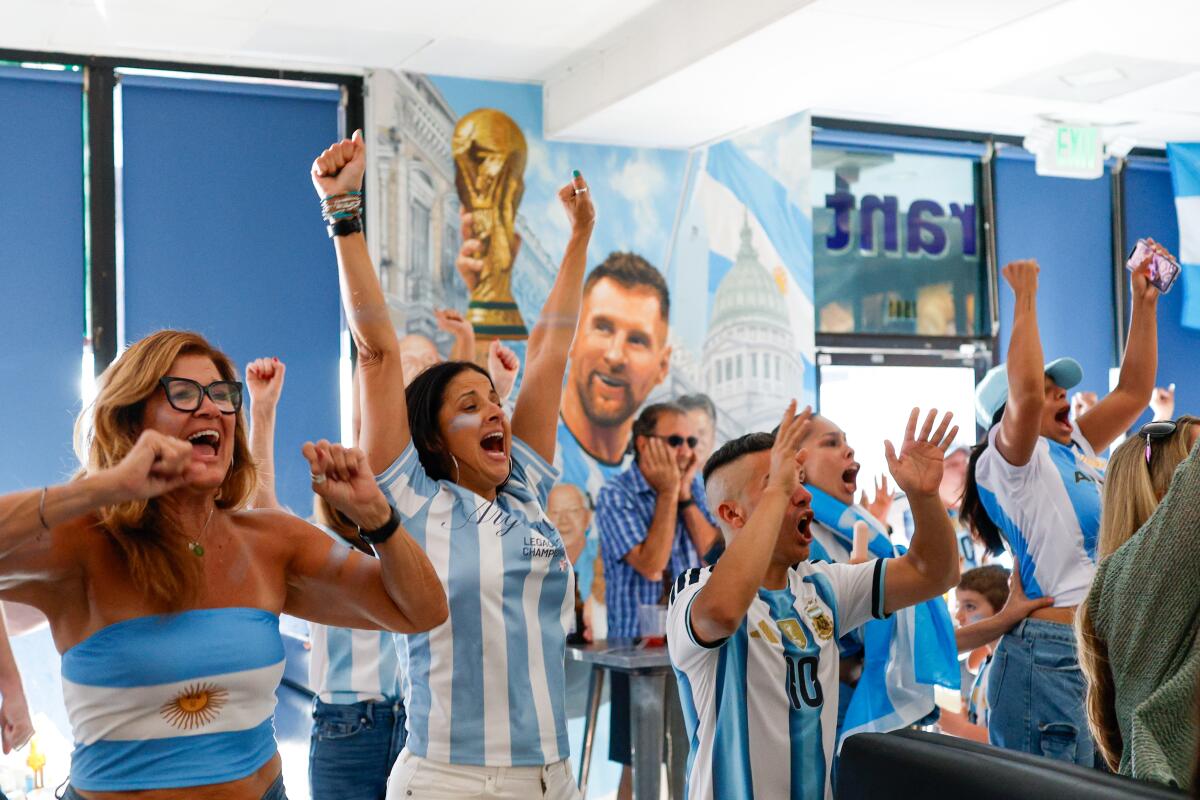
Fans cheer after Lionel Messi scores a goal against Algeria during a World Cup watch party at Mercado Buenos Aires on Tuesday, June 16 in Van Nuys.
(Ronaldo Bolaños/Los Angeles Times)
Cue up this soundtrack for your summer:
Paraguay’s national anthem starts by stating that the people of the Americas were “oppressed for three centuries” until they rebelled. Ecuador’s recalls how its founding fathers “cried out a holy voice to the heavens/that noble voice of a unbreakable pledge/to defeat that [Spanish] monster of blood.” Colombia’s similarly doesn’t shy away from how violent its fight for independence was, but takes solace that “in furrows of pain/good now germinates.”
On and on, these songs stir the soul. Argentina: “Hear the sound of broken chains/See noble equality enthroned.” Uruguay: “Tyrants: Tremble!/We shall cry out ‘Liberty’ in battle!” — a boast backed by flutes and violins that make it sound like a Rossini overture. I especially like how Panama’s national anthem concludes by urging “shovel and pick/to work without delay” — a reminder that the job of creating a better society is never done.
There’s nothing wrong with taking inspiration from the clarion calls of other countries. “O Canada” is as soaring as “God Save the King,” while revolutionaries across the world have chanted “La Marseillaise” for centuries. And yes: I sing “The Star-Spangled Banner” with all my heart as well — and I definitely know the words to it.
But the message of the U.S. national anthem isn’t enough for Latinos right now. Hailing survival against an invading force is important, but it’s a mindset too many of us have resigned ourselves to under Trump.
The theme of Latin America’s national anthems is the demand that we stand against despotism and push for a better world through sacrifice and valor. They should be a wake-up call, especially for Latinos, to lead the electoral charge against Trump this November. We helped put him in the Oval Office in 2024, and we have the power to take Congress away from his GOP vassals.
Alas, all those paeans to freedom have played out better in song than in real life. Latin America is swinging rightward again, electing presidents who promise to channel the strongmen of yore and rule the region through might, not right.
On the same night that Rojas was cheering on Colombia, she was bemoaning that her homeland had elected Abelardo de la Espriella, a millionaire criminal defense lawyer and political novice who earned Trump’s endorsement for his “tremendous accomplishments in life” — which include claiming that female voters would pick him because of the supposed size of his genitals.
We must channel the hopes and dreams of Simón Bolívar, Emiliano, Zapata, José Martí and other heroes of the Americas who fought for freedom for their countrymen, sought to cast off the long reach of colonialism and imperialism and urged pan-American alliances over forever wars.
Nothing like the World Cup’s unofficial pre-game soundtrack to reinforce this eternal, universal message.
Mexico dominated Czechia 3-0 and finished first in its group. When El Tri plays again on Tuesday in the first round of the knockout stage, I will stand at a packed Chapter One with other fans and so many more across the U.S. and sing again Mexico’s national anthem.
I will hope to have it all memorized by then instead of reading off my smartphone — the thing is hard! The Spanish is archaic, the intonations are complicated, and the words tumble over themselves like a hard charge toward the goal posts.
But I will do it — a little victory in the long battle for freedom that never ends.