FIFA’s inaugural U-15 World Cup in October has been opened to all of its member associates, paving way for Russia’s return.
Published On 25 Jun 202625 Jun 2026
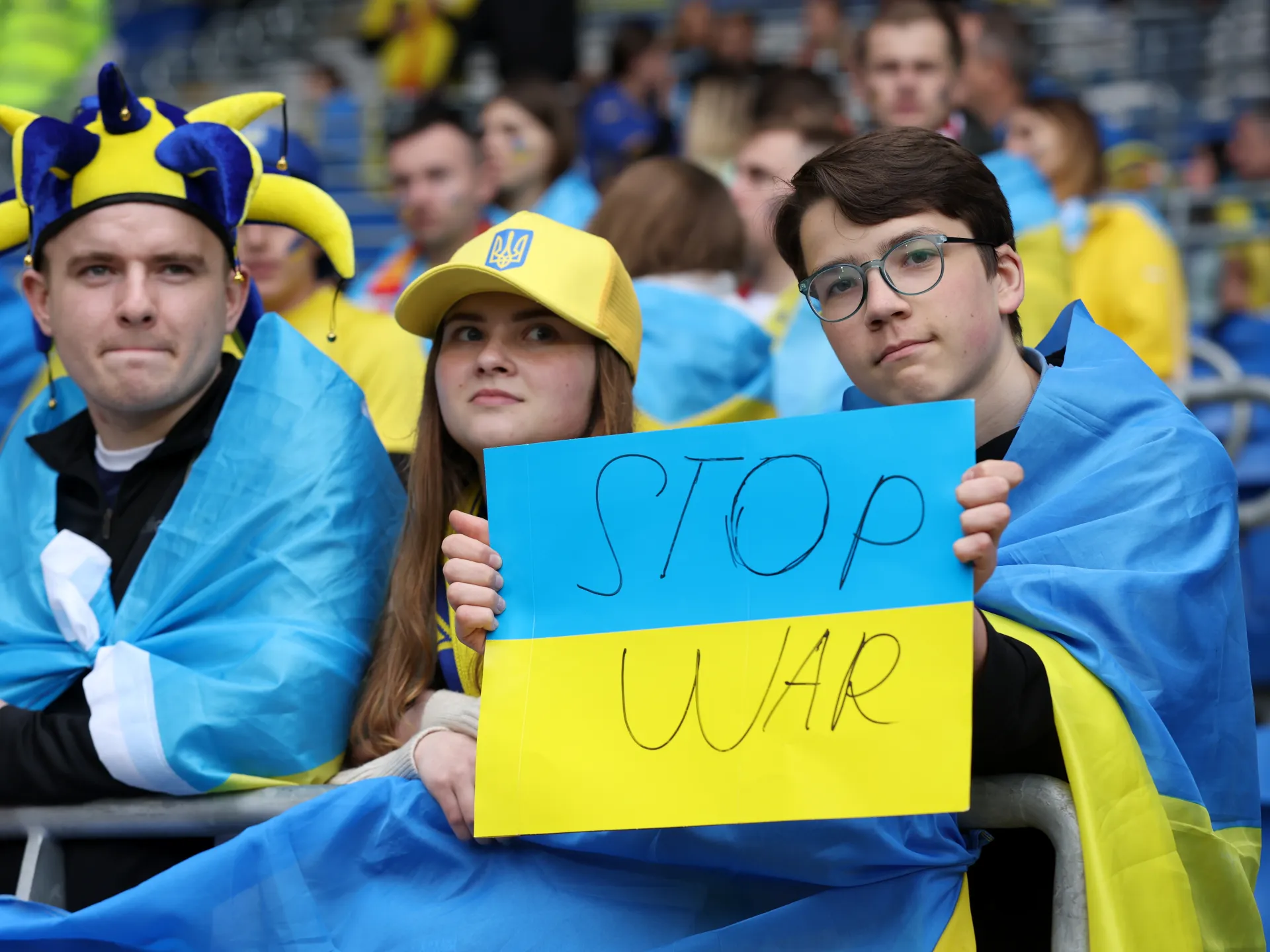
A Russian team may be allowed to participate in a FIFA event for the first time since Moscow’s 2022 invasion of Ukraine after football’s global authority said its inaugural U-15 World Cup and Festival, set to be held in Azerbaijan in October, is open to all FIFA member associations.
FIFA banned Russia from international competition in February 2022 after it invaded Ukraine, but it lifted the suspension from the country’s U-17 boys’ and girls’ teams the next year.
Recommended Stories
list of 4 itemsend of list
However, Russian teams have remained absent from U-17 tournaments organised by FIFA and UEFA as several European countries, including Ukraine and England, continue to boycott Russia over its ongoing invasion of its neighbour.
“The first edition will be open to boys’ teams from all FIFA member associations, the second instalment in 2027 will feature girls’ teams only,” FIFA said on Wednesday about the U-15 World Cup and Festival.
“From 2028 onwards, all member associations will be invited to participate with both their boys’ and girls’ U-15 teams in two separate competitions.”
The U-15 event will kick off on October 22 and conclude nine days later.
It’s crunch time at the 2026 FIFA World Cup with teams throughout the 48-strong field looking to stay in contention for the knockout stage or improve their placing in the round of 32.
The U.S., Mexico, Argentina, Germany, Brazil and Switzerland have already clinched spots in the round of 32 by winning their respective groups. France, Norway, Canada, Colombia, Morocco, Bosnia-Herzegovina and South Africa also are advancing. Haiti, Tunisia, Turkey, Jordan, Uzbekistan, Panama and Czechia, however, have been eliminated from knockout-round contention.
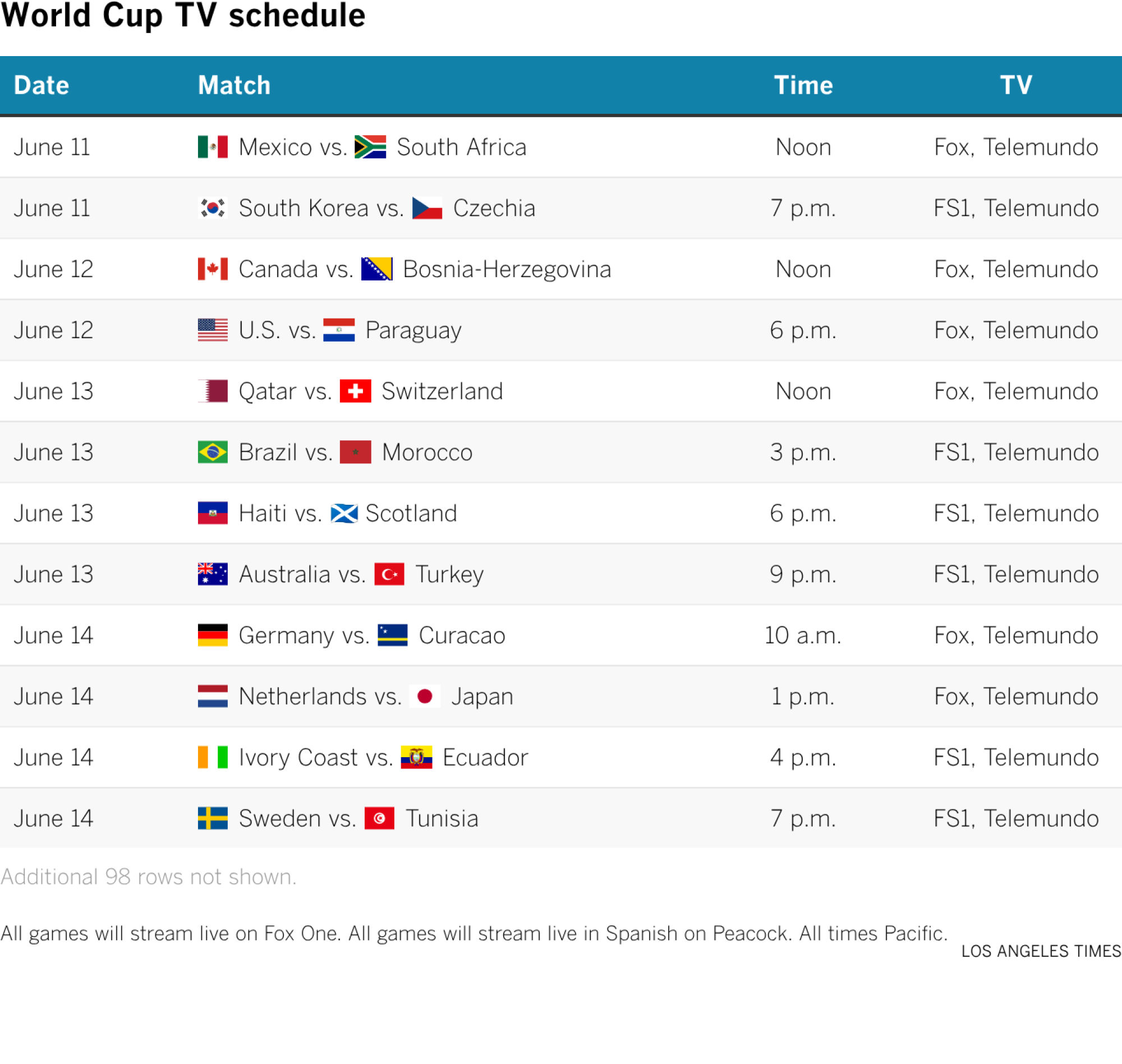
Here’s everything you need to know about World Cup matches being played Thursday and Friday across the U.S., Mexico and Canada (all times Pacific).
Thursday’s Group D matchups:
U.S. vs. Turkey
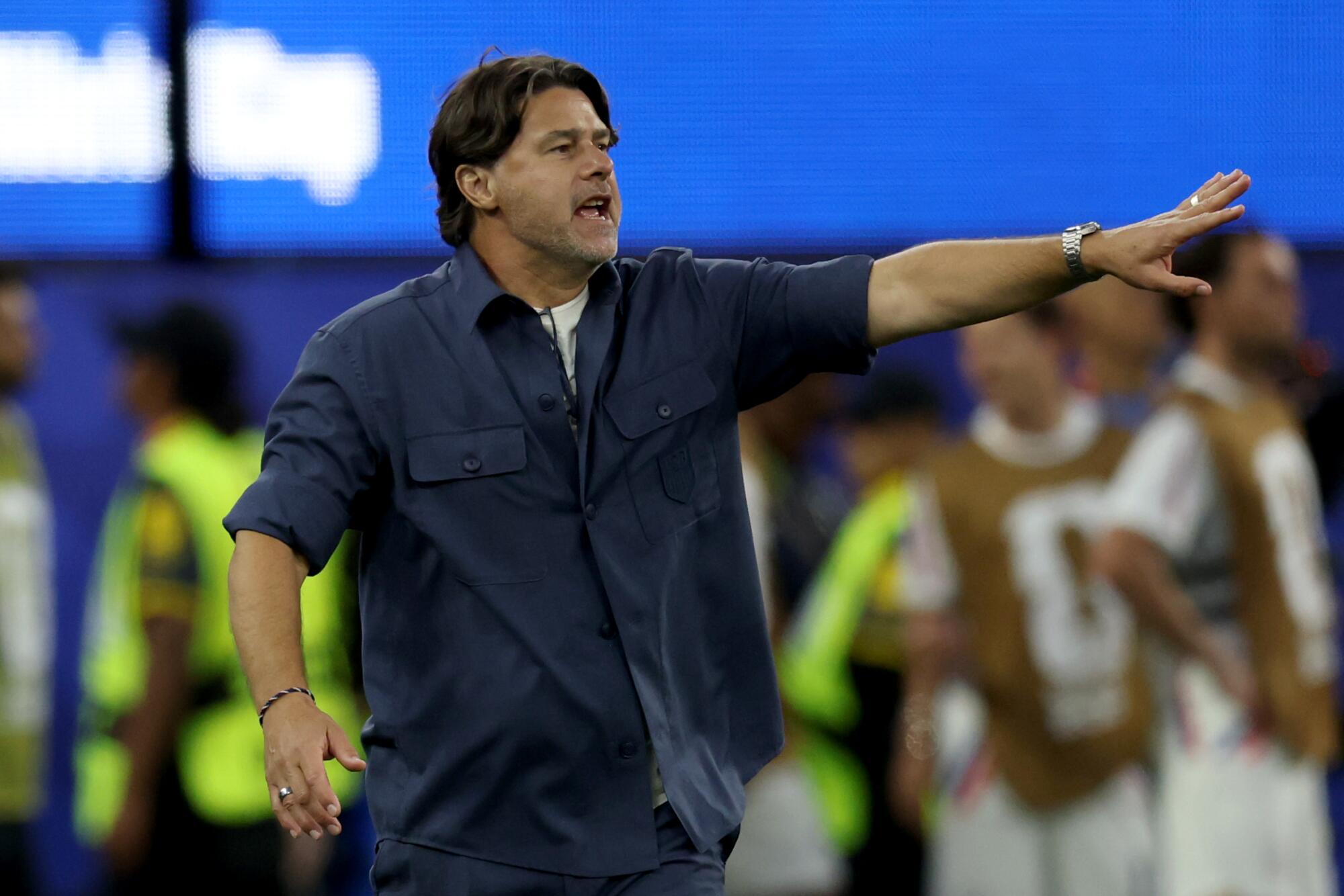
U.S. coach Mauricio Pochettino instructs his players during a 4-1 win over Paraguay at SoFi Stadium on June 12.
The buzz: There’s not much at stake since the U.S. has won the group and Turkey has been eliminated. Expect the U.S. to rest many of its regulars, especially those with yellow cards, while Turkey will be chasing its first World Cup win since 2002, when it finished third.
Paraguay vs. Australia
Paraguay midfielder Matias Galarza controls the ball against Turkey on June 19.
The buzz: The winner finishes second in the group and will go through to the elimination rounds. Australia, with an edge in goal differential, would get the second spot in the event of a draw. It’s not a do-or-die game for either team since three points could be enough to advance.
Thursday’s Group E matchups:
Ecuador vs. Germany
Germany’s Nadiem Amiri celebrates a goal against Ivory Coast on June 20.
The buzz: Germany is already through to the knockout stages while Ecuador could finish second and clinch a spot in the round of 32 with a win coupled with an Ivory Coast loss or draw. However, that would require Ivory Coast losing or drawing. A victory could send Ecuador on as a third-place team no matter what Ivory Coast does, but that path is less certain.
Curaçao vs. Ivory Coast
Curaçao’s Livano Comenencia shoots against Germany on June 14.
(Eric Gay / Associated Press)
Where: Lincoln Financial Field, Philadelphia Time: 1 p.m. TV: FS1, Universo
The buzz: Ivory Coast is all but through to the knockout round, at least as a third-place team. But a draw would give it the No. 2 spot in the group and an easier route through the knockout stages. Curaçao still has a chance of advancing despite having been outscored 7-1, and it could finish second with a win and an Ecuador loss.
Thursday’s Group F matchups:
Tunisia vs. Netherlands
Netherlands’ Crysencio Summerville celebrates after scoring against Sweden on June 20.
The buzz: Tunisia has lost two games under two coaches — getting outscored 9-1 in the process — and can’t advance. But there’s much at stake for the Dutch, who can finish anywhere from first to third depending on the results of the final group-stage games. The Netherlands and Japan are tied on points, wins and goal differential and played to a draw in their head-to-head match, so whoever does better on the final day wins the group.
Japan vs. Sweden
Japan’s Ayase Ueda celebrates after scoring against Tunisia on June 20.
The buzz: Both teams are assured of a top-three finish and a likely spot in the next round, but a win could secure first in the group. Although Japan and the Netherlands are the favorites to win the group, Sweden could overtake both with a win, provided the Dutch do no better than a draw.
Friday’s Group G matchups:
New Zealand vs. Belgium
Belgium midfielder Kevin De Bruyne (7), left, kicks the ball in front of Iran defender Hossein Kanaanizadegan on June 21 at SoFi Stadium.
(Robert Gauthier / Los Angeles Times)
Where: BC Place, Vancouver Time: 8 p.m. TV: FS1, NBC Univserso
The buzz: If New Zealand earns its first-ever World Cup win, it’s mathematically possible the Kiwis could win the group. The same scenario holds for winless Belgium, however, it is still looking for its first goal of the tournament.
Iran vs. Egypt
Iran forward Alireza Jahanbakhsh, left, battles Belgium defender Maxim De Cuyper for the ball during a World Cup match at SoFi Stadium on June 21.
The buzz: Egypt entered the final day of group play atop the group and with a firm hold on a spot in the round of 32. It would win the group with a victory, although a draw could also be enough, depending on the score of the Belgium-New Zealand match. Unbeaten Iran can also win the group with a victory; a draw probably will get it to the knockout stage.
Friday’s Group H matchups:
Cape Verde vs. Saudi Arabia
Cape Verde’s Helio Varela celebrates after scoring against Uruguay at the World Cup on June 21.
The buzz: With a win here, Cape Verde would not only go through to the knockout stage, but it could win the group depending on the result of the Spain-Uruguay game. The island nation of about 530,000 people, the third-smallest country to qualify for a World Cup, is unbeaten after draws with Spain and Uruguay. Saudi Arabia is looking for its first World Cup win since upsetting eventual champion Argentina in its 2022 opener.
Uruguay vs. Spain
Spain’s Mikel Oyarzabal celebrates after a goal against Saudi Arabia in the World Cup on June 21.
The buzz: Spain will take the group with a win or draw, provided it maintains its goal-differential advantage over Cape Verde. Uruguay, however, needs a victory to finish atop the table. A third straight draw, which would leave it unbeaten, would probably be enough to see it through to the next round, but a loss will likely send Uruguay home.
Friday’s Group I matchups:
Norway vs. France
France’s Kylian Mbappé controls the ball during a win over Iraq at the World Cup on June 22.
The buzz: This game will not only decide the group winner but it could affect who wins the Golden Boot as the tournament’s top scorer. Both teams won their first two games and are on to the round of 32, and Norway’s Erling Haaland and France’s Kylian Mbappé each have scored four goals. Mbappe, whose eight goals led the tournament four years ago, already has 16 World Cup goals for his career, tied for second all-time.
Senegal vs. Iraq
Senegal’s Sadio Mane play against France in a World Cup match on June 16.
(Steve Luciano / Associated Press)
Where: BMO Field, Toronto Time: Noon TV: FS1, Universo
The buzz: Senegal and Iraq, both losers in their first two games, have a chance of advancing as a third-place team, but they need a win to make that happen. For Iraq, a victory would be its first in World Cup competition while Senegal, a quarterfinalist in 2002, would like to get a win for Sadio Mane, one of Africa’s most iconic players, who may be playing in his final World Cup.
A bowl of lemons sits on a table in the conference room Mauricio Pochettino has turned into an office at the U.S. men’s soccer team’s beachfront resort in south Orange County. The citrus fruit, the coach believes, has the spiritual ability to absorb negative energy. On the corner of another table, the flame from a candle flickers.
“I like candles,” says Pochettino, who believes they release therapeutic fragrances and create a calming environment.
But it is the massive, blood-red mural covering the entire south side of the room that truly reveals what Pochettino believes. In the center of the wall, just behind the coach’s desk, white block letters spell out “Why Not” above a script “U.S.,” which, despite the periods, is meant to be read as “us.”
Pochettino has turned the question in a mantra for a World Cup team that has answered it with two wins in as many games and has a chance to win a third match in the tournament for the first time when it meets Turkey at SoFi Stadium on Thursday.
The idea came to him during a team meeting last November when he sensed his players had doubts about their upcoming World Cup run. So Pochettino turned those doubts into a question. If South Korea could come from nowhere and make the semifinals of the 2002 World Cup, and if Morocco could do the same four years ago in Qatar, why not the U.S.?
Why not us?
“Hey, come on, guys, are you listening to me?” Pochettino said he asked the group. “We need to believe.”
Before he could convince his players, however, he had to convince himself. And that might have been the hardest part.
The 54-year-old Pochettino is a benevolent Svengali with a whistle; Ted Lasso with an Argentine accent. Belief isn’t so much a concept for him as it is a way of life. But when he and his coaching staff took over the U.S. team in the fall of 2024, following its disastrous performance in the Copa América, he said he inherited a demoralized, dispirited group.
“We received a big bang,” Pochettino said, mimicking a punch to the face. “We were knock[ed] out for a while.”
“We were so naive,” he continued. “The situation was way worse than we really believed.”
Pochettino refused to change the system that has brought him success at European clubs Tottenham, Paris Saint-Germain and Chelsea. So he set out to change the players instead. That would take time, something he had very little of since he took over with the World Cup just 20 months away.
“It’s difficult to analyze the process, you know,” Pochettino said during an informal, 40-minute discussion at his team’s Dana Point hotel, the sun setting over the ocean through the open patio doors of his office.
“When you put the seed on the soil, [the] first seed, you don’t see nothing. Then you start to grow the tree. It was difficult to explain the plant because it’s not easy.”
The seed Pochettino planted with the national team took time to sprout. He lost five of his first 10 games, including a disastrous four-game stretch that included Nations League losses to Panama and Canada in the spring of 2025. The team’s supporters revolted, but Pochettino rejoiced.
“What happened, that was [a] good crash,” he said. “When we detect all the problems, we go for the solution. And we knew that the solution will arrive. The object is to challenge people.”
U.S. men’s soccer coach Mauricio Pochettino during the second half of his team’s World Cup match vs. Paraguay at SoFi Stadium.
(Robert Gauthier / Los Angeles Times)
So he stayed the course.
“That was the process. Now is not a coincidence,” he said of the team’s success.
Pochettino has long believed that building a roster isn’t about picking the best players, but picking the right players. Players who fit his tactical approach, players who get along with one another, players who contribute to the team chemistry.
For him, the human connection, human respect is as important — if not more important — than the ability to dribble through tight spaces. And those traits are particularly important in a World Cup since the team will spend every day together for six weeks or more.
Although Pochettino’s team includes 13 holdovers from the 2022 World Cup roster, it also includes five players who made their national team debuts in the last 18 months.
Sometimes, he concluded, it is easier to simply change the player than it is to change what the player thinks or believes. And the newbies have totally bought in.
“We’re all in total belief. We’re all totally supportive and have faith in the process that he’s been outlining,” said goalkeeper Matt Freese, who made his first appearance for the national team more than 12 months ago and now is starting in a World Cup. “Our task was to keep believing, keep working hard and keep trusting. And we did that. We fully bought into the process.”
That process has made Pochettino the first U.S. coach to win a group stage in 16 years while his two victories in as many games match Bruce Arena, the most successful World Cup coach in U.S. history, who managed eight games over two tournaments.
The lemons and candles Pochettino keeps in his office are manifestations of energia universal or universal energy, a foundational concept common to many Eastern philosophies that believe a fundamental life force connects all things. Pochettino said he has long felt this connection and it has been a foundational part of his coaching.
But it doesn’t stop with the candles and citrus fruit. Pochettino also has filled the mural behind his desk with inspirational sayings.
“The talent has brought us here, but it is heart, effort and unity that will make us unforgettable,” one reads.
“If I dream of touching the moon, maybe I can get close to it. If I only dream of getting close, I’ll stay on Earth,” another says.
Each ends with the coach’s initials, similar to the way a painter signs his portraits.
Pochettino’s faith in the power of fruit and candles and his penchant for penning aphorisms hasn’t taken away from the ferociousness of his approach to soccer. Many players say the training sessions under Pochettino — which are intricate, focused and highly physical — are frequently more intense than the games. But most also are punctuated with laughter.
“Training is still very competitive, it’s very intense,” said midfielder Max Arfsten, who made his national team debut under Pochettino last year. “That’s the culture that the coaches created. Everyone’s still trying to prove something.”
Although Pochettino has spent his life in Argentina and Europe and still splits his time between houses in Barcelona and London, flying to the U.S. for matches and training camps, he’s been a quick study in this country’s culture and quirks.
“One of the things that we really like, and we learn from you, is in the way that you approach life. It’s more casual than formal,” said the coach, whose English is still a work in progress. “People are very approachable and make you feel comfortable. That, for me, was a massive surprise. You always want to welcome people.
“Even the music, even the food. People say ‘no, Americans have crazy food.’ Yes, you have crazy food. But also you have Whole Foods. In Europe, you don’t have a Whole Foods.”
And Pochettino has adopted it all. He’s become a big fan of country artist Lainey Wilson, went to hear Teddy Swims, a uniquely American genre-blending singer, last winter in New York, and is learning the words to John Denver’s “Take Me Home, Country Roads,” the unofficial victory anthem of the World Cup team.
Perhaps more important, at times he’s taken his lemons and his candles and pushed them aside, replacing them with another distinctly American trait: the in-your-face confidence to will yourself to victory from the most hopeless situations.
It’s how Americans won at Valley Forge even before they were Americans and how they won on the beaches of Normandy when the concept of America was threatened. It’s how Americans went to the moon and invented the internet.
“We’re American. We don’t take s—,” midfielder Sebastian Berhalter said Pochettino told the team during one meeting. “Even though he’s Argentinian, he has that mindset of, ‘Look, this is what we do. This is who we are. This is what America’s about.’ Even from an outside perspective, he showed us Americans what we’re about.
“He really drills that into us.”
For decades Americans have measured World Cup success in advancing beyond the group stage. Pochettino entered this summer’s tournament predicting a run to the semifinals, runs like South Korea and Morocco made.
“When people believe in each other, impossible dreams become possible,” reads another message the coach has scratched onto the wall of his office.
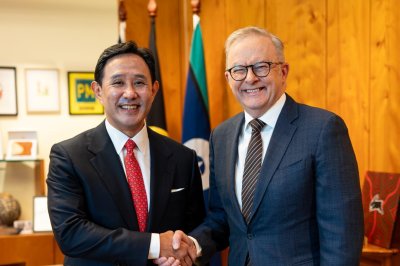
Korea Zinc Chairman Yun B. Choi (L) shakes hands with Australia’s Prime Minister Anthony Albanese at the latter’s office in Canberra on Wednesday. Photo by Korea Zinc
June 25 (UPI) — Korea Zinc said Thursday that Chairman Yun B. Choi visited Australia this week to meet with the country’s Prime Minister Anthony Albanese to discuss ways to strengthen collaboration on critical minerals.
During the bilateral meeting in Canberra on Wednesday, Albanese described U.S. Project Crucible as a valuable model, which the Australian government could benchmark, according to Korea Zinc.
The $7.4 billion initiative involves the construction of an integrated smelter in Clarksville, Tenn. Groundbreaking is scheduled for next year, with commercial production expected to begin in 2029. Toward that end, Korea Zinc cooperates with the U.S. government.
Once operational, the facility will produce base metals such as zinc and lead, along with strategic minerals including germanium and gallium, which are crucial for the semiconductor, defense, and other high-tech industries.
The prime minister also said that Korea Zinc’s business model closely aligns with the Australian government’s resource and energy policy objectives, particularly its efforts to beef up critical industries.
In response, Choi stated that Korea Zinc will keep trying to build a win-win partnership with the Australian government. The world’s largest non-ferrous metals manufacturer operates an Australian affiliate, Sun Metals Corporation.
“Over the past 30 years, we have been a partner that has contributed to Australia’s industries and local communities while expanding beyond smelting into renewable energy and green hydrogen,” he said.
“The synergy between Australia’s abundant resources and our technological prowess and diverse business portfolio will continue to bear fruit in the future,” he added.
The share price of Korea Zinc rose 1.09% on the Seoul bourse on Thursday, while the benchmark KOSPI gained 5.42%.
A Komoto official tests the company’s solar-powered smart flow control system in Kazakhstan. Photo by Komoto
SEOUL, June 25 (UPI) — South Korea’s industrial valve maker Komoto said Thursday that it is seeking to expand into the Kazakh market after wrapping up a field demonstration project in the Central Asian country.
The company said that it completed the installation and operational tests of its solar-powered smart flow control and SCADA system at a demonstration site in Kazakhstan.
Short for supervisory control and data acquisition, SCADA is an industrial automation system that enables operators to monitor, control, and collect real-time data from infrastructure remotely.
Following the successful trial, the system received final field performance certification from Kazvodkhoz, Kazakhstan’s state-owned water resources agency, according to Komoto.
The firm noted that the project confirmed the applicability of its technology to remote agricultural waterways and irrigation facilities not only in Kazakhstan but also across Central Asia.
Komoto CEO Ryan MK Ko said that the company plans to expand its presence in overseas water industry markets, particularly in Central Asia.
“Our biggest competitive edge is that our system allows for the stable operation of water management facilities even in remote areas with limited access to commercial power and communication infrastructure, while significantly reducing costs compared with conventional options,” Ko said in a statement.
“Based on the technology and operational data accumulated through pilot projects both at home and abroad, we will further advance our automated control and intelligent water management features,” he added.
Komoto is not publicly listed. It was founded in 1988 with technology and capital support from Motoyama, one of Japan’s leading manufacturers of industrial equipment, including valves.
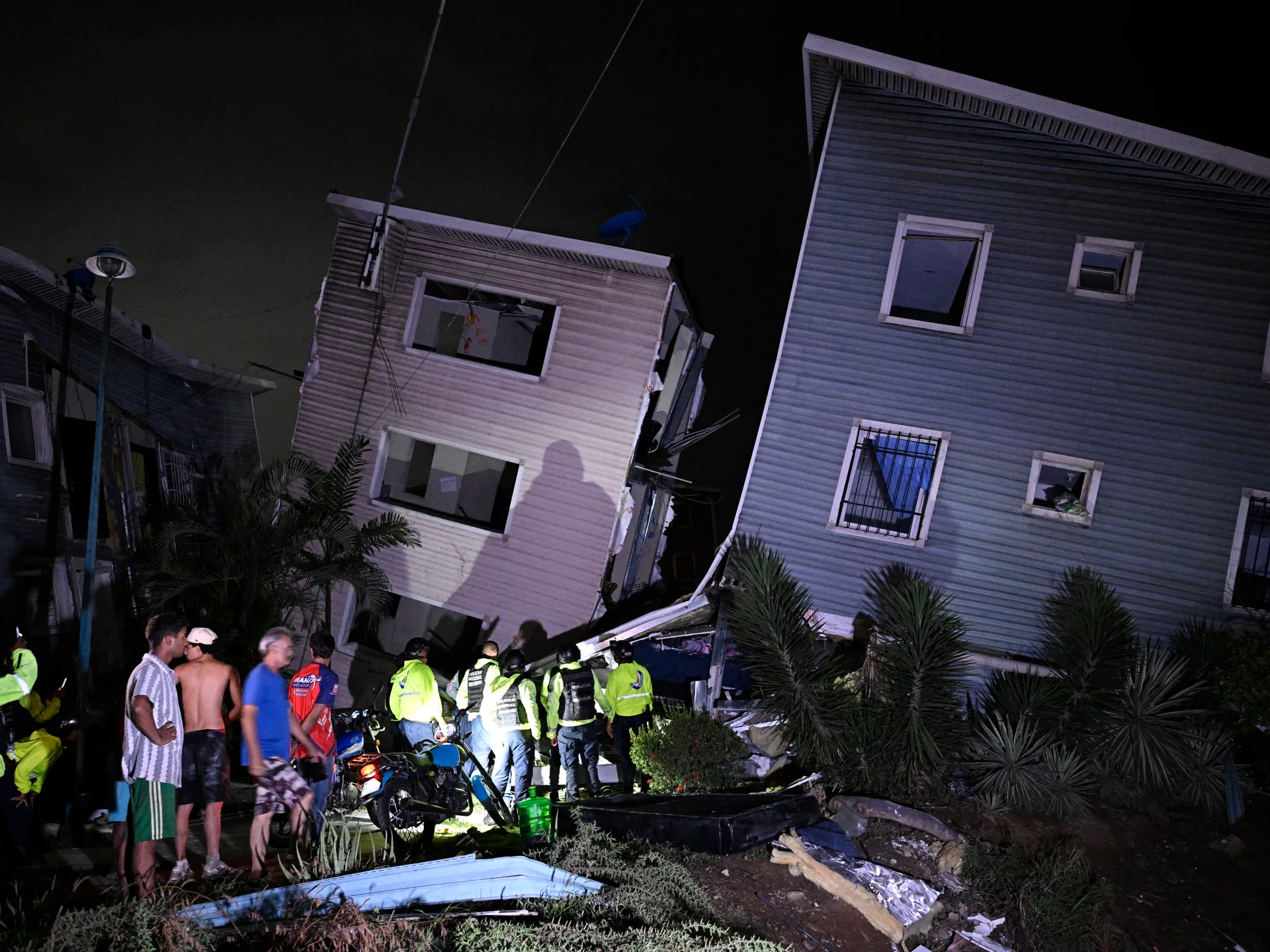
Condolences and offers of help have been pouring in from countries around the world following back-to-back powerful earthquakes in Venezuela that have killed at least 32 people.
The United States Geological Survey (USGS) said on Thursday that the first earthquake, measuring magnitude 7.2, struck west of Moron, about 168km (104 miles) west of Caracas. A second tremor of magnitude 7.5 hit near the same area just a minute later. The USGS warned that “high casualties and extensive damage are probable” and that the “disaster is likely widespread”.
Recommended Stories
list of 3 itemsend of list
Acting President Delcy Rodriguez declared a state of emergency and said the Simon Bolivar International Airport in Caracas is closed due to damage.
Here’s how countries have reacted:
Argentina
The presidency issued a statement expressing “its deepest solidarity” with the Venezuelan people. It said President Javier Milei “extends his hand in solidarity” amid the natural disaster, “despite any differences that may exist between our governments”.
Bolivia
President Rodrigo Paz said that the people’s “hearts go out to the affected families” in Venezuela, and that the country “remains vigilant and ready to provide any necessary support”.
Brazil
President Luiz Inacio Lula da Silva said he has instructed the Foreign Ministry and the embassy in Caracas to evaluate what assistance Brazil can provide.
Colombia
The country’s District Institute of Risk Management and Climate Change says it has activated its emergency response team and reached out to Venezuelan authorities to “coordinate the necessary technical and operational support”.
“The goal is to provide all necessary assistance and make our teams available to support this situation,” the disaster response agency said in a post on X.
“We also want to reassure the residents of Bogota: following the earthquake felt in the capital, no damage or structural damage has been reported. The city is operating normally.”
Cuba
Foreign Minister Bruno Rodriguez says Cuban health workers in Venezuela “are fully mobilised and providing medical services to the affected population”.
In a post on X, Rodriguez expressed his “deepest condolences and solidarity to the government and brotherly people of the Bolivarian Republic of Venezuela for the loss of life and damage caused by the earthquake”.
Ecuador
President Daniel Noboa has announced Ecuador is rapidly deploying humanitarian assistance to Caracas.
“I have arranged for the immediate sending of humanitarian aid to address this emergency,” he posted on X. “Ecuador will respond with the speed and commitment that this moment demands because, despite the enormous differences, humanity must always guide the actions of a leader.”
El Salvador
President Nayib Bukele has said his country has offered Venezuela assistance through its Foreign Ministry.
“300 rescuers and paramedics, along with 50 tonnes of equipment, medicines, and essential supplies, are ready to depart for Caracas,” Bukele said in a post on X.
Italy
Prime Minister Giorgia Meloni wrote on X that she is following the situation with “deep concern” and working to “promptly activate every channel of humanitarian aid and assistance to our compatriots”.
Mexico
The Foreign Ministry has extended its sympathies to the Venezuelan people and expressed its regret at the “damages and impacts caused”.
Panama
President Jose Raul Mulino is the latest foreign leader to respond to the crisis in Venezuela.
In a post on X, Mulino conveyed Panama’s “deepest solidarity and support” to Venezuela, while offering to send humanitarian aid.
Pakistan
Prime Minister Shehbaz Sharif said he was “deeply saddened by the devastation and loss of life caused by the earthquakes in Venezuela”.
“On behalf of the people of Pakistan, I convey our heartfelt condolences to the Government and people of Venezuela, especially the families of the victims. We pray for the injured and stand in solidarity with all those affected during this difficult and challenging time,” he said on X.
Spain
The prime minister and foreign minister expressed solidarity with Venezuela and offered help.
“All my support, and that of Spain, to the Venezuelan people following the devastating earthquakes of this evening,” Prime Minister Pedro Sanchez wrote on X.
“Our thoughts are with the victims and their families.”
Jose Manuel Albares, the foreign minister, said the Spanish Agency for International Development Cooperation “is prepared to provide all necessary emergency assistance”.
“My full solidarity with the brotherly people of Venezuela,” he wrote.
Uruguay
Uruguay’s president, Yamandu Orsi, expressed solidarity with Venezuelan authorities and citizens. He said Uruguay is ready “to collaborate in any way the Venezuelan government deems necessary”.
United States
President Donald Trump posted a message on his Truth Social account, expressing concern over the disaster in Venezuela.
Trump said the earthquakes were “massive in scale and have left a devastating number of deaths”. The US “stands ready, willing, and able to help,” and US government agencies have been instructed “to get ready to move quickly,” he said.
Secretary of State Marco Rubio wrote on X that the US was “immediately deploying” search and rescue teams, medical resources and humanitarian assistance.
This photo, taken Thursday, shows the trading room of Hana Bank in Seoul as South Korean stocks soared by more than five percent on a tech rally driven by Micron’s earnings report. Photo by Yonhap
South Korean stocks soared by more than 5 percent Thursday, briefly topping the 9,000-point level again, driven by a tech rally ignited by U.S. chip giant Micron Technology’s expectation-beating earnings report. The Korean won fell against the U.S. dollar.
The benchmark Korea Composite Stock Price Index (KOSPI) gained 459.28 points, or 5.42 percent, to close at 8,930.30, following a 3.26 percent gain the previous day.
The index briefly topped the 9,000-point threshold, rising as high as 9,044.04.
Finishing at an all-time high of 9,114.55 on Monday, the KOSPI has remained in the 8,000-point range since it dived 9.99 percent Tuesday.
The index pulled off a strong start, with a buy-side sidecar issued shortly after the market opened, as Micron, the world’s No. 3 memory chipmaker, released its stronger-than-expected quarterly earnings, brushing off lingering concerns about the sustainability of an artificial intelligence (AI) rally.
Micron is a major beneficiary of the AI infrastructure spending boom along with Samsung Electronics and SK hynix thanks to rising demand for memory chips and high-bandwidth memory (HBM).
Trade volume was heavy at 449.3 million shares worth 50.4 trillion won (US$32.7 billion), with losers beating winners 588 to 289.
Institutions purchased a net 3.3 trillion won worth of stocks, while foreigners and individuals dumped a net 819.7 billion won and 2.5 trillion won, respectively.
“Micron’s strong financial report pushed up semiconductor shares here,” Kim Seok-hwan, an analyst at Mirae Asset Securities, said. “Airline shares also rose as the Strait of Hormuz seemed to reopen and global oil prices dropped.”
Samsung Electronics, the world’s largest memory chipmaker, jumped 5.29 percent to 358,500 won, and No. 2 SK hynix surged 13.06 percent to 2.9 million won.
SK Square, the parent of SK hynix, advanced 5.56 percent to 1.9 million won, and Samsung C&T, which holds a stake in Samsung Electronics, soared 7.79 percent to 519,000 won.
Flag air carrier Korean Air vaulted 6.4 percent to 29,100 won, and Asiana Airlines mounted 6.2 percent to 7,710 won.
Brokerages were also strong as Samsung Securities rose 3.07 percent to 110,800 won, and Kiwoom Securities gained 7.48 percent to 337,500 won.
The Korean won was quoted at 1,542.7 won per U.S. dollar as of 3:30 p.m., down 0.9 won from the previous session.
Bond prices, which move inversely to yields, closed higher. The yield on three-year Treasurys fell 1.5 basis points to 3.757 percent, and the return on the benchmark five-year government bonds declined 2.2 basis points to 3.992 percent.
Copyright (c) Yonhap News Agency prohibits its content from being redistributed or reprinted without consent, and forbids the content from being learned and used by artificial intelligence systems.
South Africa’s team has celebrated reaching the World Cup knockout stage for the first time after defeating South Korea 1-0 at Monterrey Stadium in Mexico. A video showed players dancing and chanting in the dressing room.
The rules are simple. Each day there’s a new footballer and the challenge is to guess who they are in as few attempts as possible.
After each wrong guess you unlock a new clue. Guess the answer after as few clues as possible to score more points.
Three is a good score; four or five is exceptional.
So take part and return for more tomorrow.
Today’s player and clues set by BBC Sport’s Adam Millington.
After more quizzes? Go to our dedicated Football Quizzes and Sports Quizzes pages and sign up for notifications to get the latest quizzes sent straight to your device.
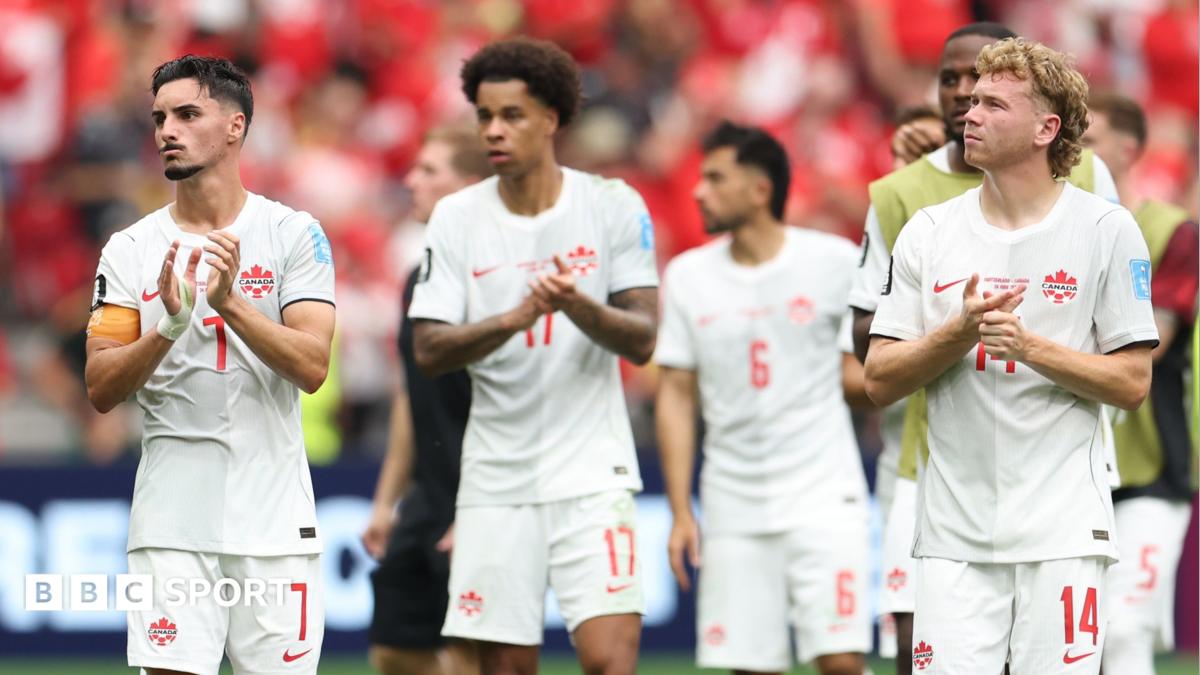
Losing their final group game to Switzerland on Wednesday means co-hosts Canada will play no further matches in their home country at this year’s World Cup.
Had Canada avoided defeat to finish top of Group B, they would have stayed in Vancouver for their last-32 tie and potentially a last-16 fixture.
However, a 2-1 loss at BC Place meant Canada finished second behind Switzerland and so Jesse Marsch’s side will travel to Los Angeles to play South Africa on Sunday (20:00 BST).
The former Leeds boss, who has guided Canada out of the group stage at a World Cup for the first time, said: “We wanted to be here in Vancouver, but we still have a massive opportunity ahead of us to find a way to push for the next match and find a way to still electrify the nation, even though it’ll be from Los Angeles.
“We came up a little short and that’s unfortunate. But we’re in the knockout round and we’re going to make sure that we’re up for it better.”
After drawing their opening game against Bosnia-Herzegovina in Toronto, Canada thrashed Qatar 6-0 in Vancouver, where they ended the group stage with a first loss of the tournament.
Striker Jonathan David told Sports Illustrated:, external “It was nice to have a pro-Canada crowd that pushed us on every game.
“We’re a bit disappointed and it’s mixed emotions. Obviously, we wanted to stay in Vancouver, so not getting that is a blow for everyone, but we’ll talk about it and get ready for the next one.”
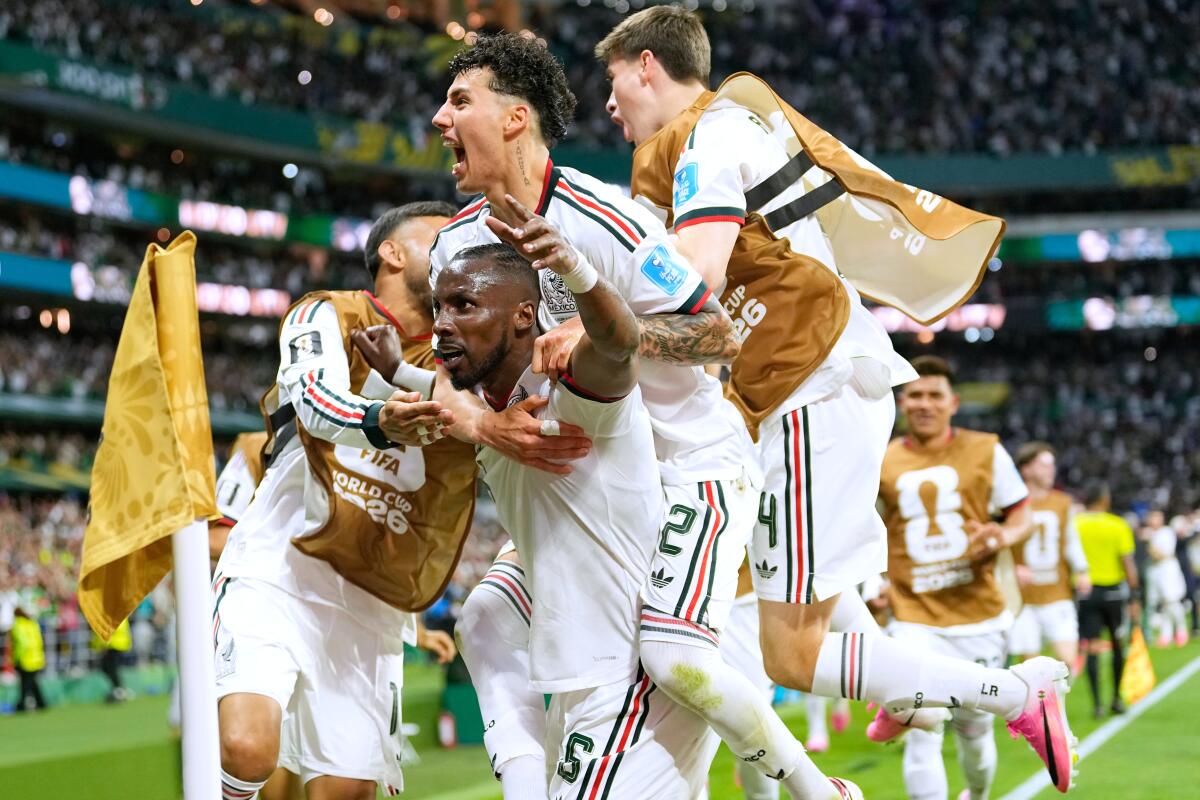
MEXICO CITY — The Mexican national team overcame a lackluster first half to rout the Czechia thanks to a dream second half that allowed it to finish the group stage undefeated on a night that will be remembered as one of the greatest in Mexican World Cup history.
The celebration of Mexico’s 3-0 win Wednesday at Azteca Stadium turned into a tribute to legendary goalkeeper Guillermo Ochoa, who entered the game in the final minutes to receive a standing ovation unlike any other Mexican player has ever received in the history of the tournament.
With the loss, the Czechia was eliminated after failing to earn more than one point in the tournament. In the other group match, South Africa defeated South Korea 1-0 in Monterrey and advanced in second place. South Korea will have to wait to find out if it advances as one of the eight best third-place teams or it was eliminated.
Czechia put up a strong performance during the first 45 minutes, during which Mexico showed little offensive clarity, mainly due to a lack of control in midfield.
Everything changed in a matter of six minutes during the second half, when El Tri figured out Czechia and secured its best victory in the group stage.
Mateo Chávez, 22, opened the scoring in the 55th minute with the help of Mexico’s lethal counterattack. Luis Romo set up the goal by shaking off three Czechia players at midfield and pushing forward, passing to Chávez, who beat Czechia’s Michal Sadilek and buried a shot to the left side of goal.
Forward Julián Quiñones extended the lead in the 61st minute, exploiting Czechia’s defensive confusion in the penalty area.
Álvaro Fidalgo, who was a second-half substitute, capped the win with a stoppage time goal. The run on the final goal was set up by a booming Ochoa kick and triggered a raucous celebration by the goalkeeper and his teammates.
The match encapsulated both the present and the future of the Mexican national team.
Gilberto Mora, a 17-year-old midfielder from Tijuana and the team’s youngest player at the World Cup, was instrumental in the second half, setting up several of the plays that decided the outcome. With a 2-0 lead, one of the greatest moments for a goalkeeper in World Cup history unfolded. Ochoa replaced starting goalkeeper Raúl Rangel and was greeted with a standing ovation from a large portion of the 80,824 fans at Azteca Stadium.
Mexico’s Julian Quinones celebrates scoring his side’s second goal against Czechia during a World Cup match in Mexico City on Wednesday.
(Silvia Izquierdo / Associated Press)
The fans chanted Ochoa’s name every time the goalkeeper touched the ball, honoring a player who has competed in six World Cups for Mexico.
Coach Javier Aguirre said that finishing first in the group was a “primary objective” for Mexico, which had already qualified for the next round. The team achieved a first for a Mexican national team by securing three consecutive wins without conceding a goal in the group stage of a World Cup. Mexico defeated South Africa 2-0 in the opening match and South Korea 1-0 in the second game.
The national team, which is co-hosting the tournament alongside Canada and the United States, will face its next opponent — one of the best third-place finishers — on Tuesday at Azteca Stadium.
The only sour note for Mexico came in the scoreless first half when the restless crowd unleashed a popular homophobic chant at least twice. FIFA has previously sanctioned the Mexican soccer federation in an effort to stop fans from saying the chant.
Mateo Chavez opened the scoring in the 55th minute, and Julian Quinones scored his second goal of the tournament in the 61st.
Published On 25 Jun 202625 Jun 2026
Mateo Chavez and Julian Quinones scored goals in the span of six minutes early in the second half, and Mexico beat Czechia 3-0 to win all three of its World Cup group-stage matches for the first time.
The 22-year-old Chavez, in his first World Cup, opened the scoring in the 55th minute, and Quinones scored his second goal of the tournament in the 61st. Alvaro Fidalgo added a goal in second-half stoppage time on Wednesday night.
Recommended Stories
list of 4 itemsend of list
Mexico’s previous best group-stage performance was two wins and one draw, achieved in 1986 and 2002, both featuring Javier Aguirre, the first as a midfielder and the second as El Tri’s coach.
Already the winner of Group A, Mexico will play again at Azteca Stadium on Tuesday in a round-of-32 match against an opponent to be determined.
Czechia were eliminated, finishing with one point in three games.
The match included nods to Mexico’s past and future. Gilberto Mora became the youngest Mexico player to start in a World Cup at age 17.
Mexico goalkeeper Guillermo Ochoa is celebrated by his team after the World Cup Group A match between Czechia and Mexico in Mexico City, June 24, 2026 [Natacha Pisarenko/AP]
Homophobic chant returns in Azteca Stadium
Fans at the game chanted a slur that has previously led to fines and other sanctions against Mexico’s Football Federation.
The slur, which literally means “male prostitute” in Spanish, could be heard at the Azteca Stadium towards the end of the first half when Czech goalkeeper Matej Kovar took a goal kick, according to The Associated Press news agency.
The chant has cost Mexico hundreds of thousands of dollars in fines levied by FIFA. It rose to popularity roughly 25 years ago and is used to intimidate goalkeepers when they take goal kicks.
It went viral in the 2014 World Cup in Brazil, and was heard again in Russia during the 2018 World Cup, and then again four years later in Qatar. It has persisted despite attempts by the Mexican Football Federation to stop it.
Back-to-back major earthquakes of magnitudes 7.2 and 7.5 rocked Venezuela on Wednesday evening. The quakes are likely to cause widespread damage and mass casualties, the U.S. Geological Survey said. Image courtesy of UPI
June 24 (UPI) — Two major earthquakes — magnitudes 7.2 and 7.5 — hit near the Venezuela capital of Caracas on Wednesday evening, collapsing buildings and bringing people flooding into the streets.
The first quake hit at 6:04 p.m. local time, BBC News reported, with the second less than a minute later. June 24 is a holiday in Venezuela, and more people than usual were at home instead of on an evening commute.
The U.S. Geological Survey has reported that high casualties and widespread damage are likely, saying that there is a 44% chance that fatalities will exceed 10,000 and a 30% chance that they will exceed 100,000. The USGS said aftershocks may still occur.
Venezuela’s interior minister has asked people to leave their homes, citing damaged buildings and concerns about gas leaks. Companies cut gas lines to some areas as a precaution, Minister Diosdado Cabello said, BBC News reported.
The Ministry of Communication and Information in Venezuela said security forces have been deployed around the country because of the risk of building collapses.
From early on, we were looking at the game, yes, but also working out the mad significance of it all. We turned elsewhere to see what all of this meant in the grand scheme of things.
Before the games began on Wednesday, Scotland were sitting relatively pretty as second of the best third-placed teams in the tournament.
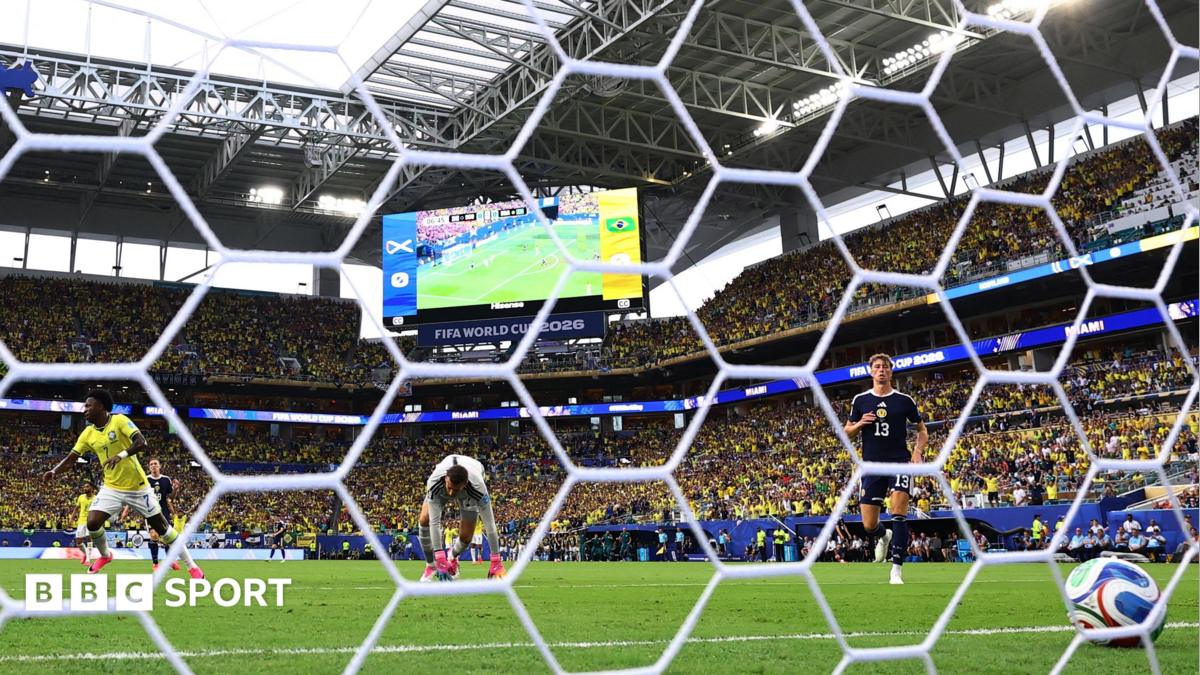
Bosnia-Herzegovina’s win over Qatar dropped Scotland to third. Brazil’s dominance dropped them further. Down and down they went, their buffer all but removed, their obsession about results elsewhere in the coming days multiplying as they went.
Back to Charlotte, North Carolina they’ll go on Thursday; battered and dazed, uncertain of their future in this tournament, if they have one.
As it stands, the predictor has them playing Mexico on Tuesday – a shot at redemption or another trip to a torture chamber?
That might turn on its head, of course. Other teams in the coming days will have plenty to say about this yet.
Scotland are sweating on a place in the last 32. That’s the no-man’s land they’re living in now, frantically looking at the respective fates of Senegal and Ecuador, Curacao and Cape Verde, Saudi Arabia and others.
There was a certain inevitably about it. Until Bolivia earlier this month, Scotland have never beaten South American opposition, never beaten Brazil in 10 attempts going back 50 years. They rallied and created moments but it was too little, too late.
First, Scott McKenna was caught on the ball by Bournemouth forward Rayan and Vinicius Jr skipped past Angus Gunn to score.
Gunn and full-back Nathan Patterson were then caught under a Bruno Guimaraes cross as Vinicius Jr nodded in his and Brazil’s second before half-time.
And Manchester United’s Mateus Cunha made it three after the break on a night where Scotland huffed and puffed, but were ultimately outclassed.
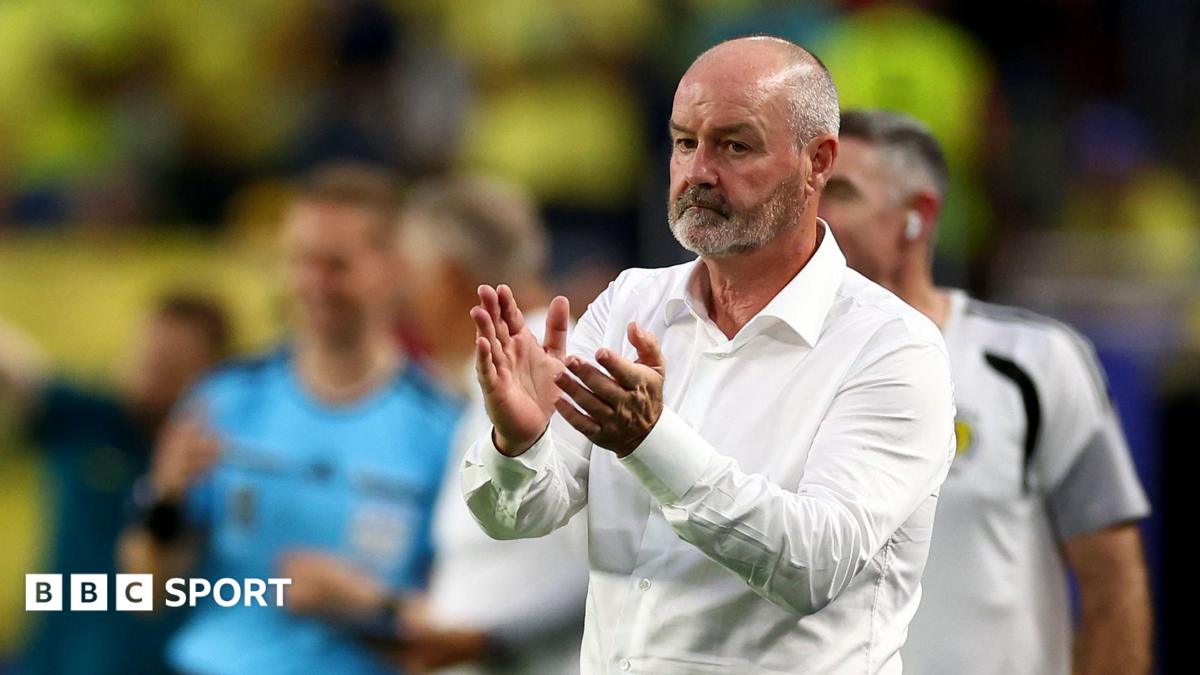
“We lose poor goals at poor times against a team that can punish you with quality,” McGinn told BBC Sport. “We had a few chances but we’ve got to wait now.
“The lads are gutted, we fell short on quality but we gave it absolutely everything. The lads are empty now. It’s unlikely [that we qualify] but we’ll wait and see.
“It’s a bit raw at the minute but we appreciate the support of the fans, we know it’s difficult to be there. Hopefully the journey is not over and if we have to go again, we will go again.”
Despite bowing out without a point in their first World Cup since 1974, Haiti twice led against 2022 semifinalists Morocco.
Published On 25 Jun 202625 Jun 2026
Morocco twice overcame the shock of conceding to Haiti to win a World Cup thriller 4-2 in Atlanta, but missed out on the top spot in Group C to Brazil.
Haiti bowed out with their first World Cup goals in 52 years, as a Yassine Bounou own goal and Wilson Isidor’s stunning strike twice gave them the lead on Wednesday.
Recommended Stories
list of 4 itemsend of list
Achraf Hakimi and Ismael Saibari, with his third goal in as many games at the World Cup, levelled before half-time.
Soufiane Rahimi was nearly brought to tears when the 30-year-old’s deflected effort found the top corner to give Morocco the lead, before Gessime Yassine rounded off the scoring.
Soufiane Rahimi of Morocco celebrates scoring his team’s third goal [Kevin C. Cox/Getty Images/AFP]
But Morocco missed out on the top spot in the group to Brazil on goal difference, meaning they will head to Monterrey for a likely meeting against the Netherlands or Japan on Monday.
Despite bowing out without a point, Haiti’s performances at their first World Cup since 1974 have done a nation gripped by poverty proud.
Les Grenadiers were already eliminated after losing to Scotland and Brazil, but the thousands of Haitian expats in the stands in Atlanta were undeterred as every attack was met with deafening cheers.
Morocco boss Mohamed Ouahbi made four changes to the side that had impressed in holding Brazil and beating Scotland in their opening two games, and the Atlas Lions started sloppily.
Haiti’s long wait for a goal on the global stage was ended after just 10 minutes, when Jean-Kevin Duverne got to the byline, and Lenny Joseph flicked the resulting cross into the net via a deflection off Bounou.
Hakimi has continued to captain Morocco despite learning mid-tournament that he is to face a trial on rape charges in France.
The reigning African footballer of the year stormed forward from right-back at every opportunity and was in the right place to equalise on 39 minutes.
In his final game for Haiti, 38-year-old goalkeeper Johny Placide could only parry Bilal El Khannouss’s strike, and Hakimi had a simple task to force the ball over the line.
Within four minutes, though, Haiti had restored their lead in far more spectacular fashion.
Sunderland striker Isidor pounced on a loose ball and let fly from outside the area with a shot that arrowed into the top corner.
Hakimi and Ouahbi were visibly angered by conceding for a second time, but the 2022 World Cup semifinalists responded before half-time.
Saibari stroked home his third goal of the tournament with a cool finish from Hakimi’s low cross.
Brahim Diaz nearly gave Morocco a half-time lead when his curling effort shaved the post to end a thrilling first half.
Ouahbi began turning his attention to the last 32, as Bayern Munich-bound Saibari and Real Madrid’s Diaz were replaced with more than 20 minutes remaining.
But two of his substitutes came on to win the game for Morocco.
Rahimi’s powerful strike from a corner flew into the top corner via a deflection off a desperate Haiti defender.
He then turned provider by robbing possession on the Haiti byline and crossing for Yassine to roll into an empty net.
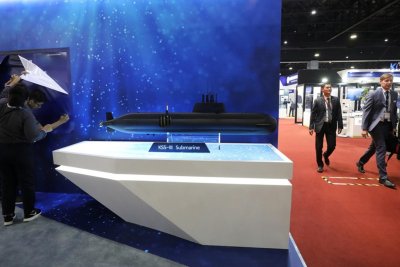
A model of the KSS-III Submarine from South Korean company Hanwha Ocean is on display at the Defense and Security 2023 exhibition, a Tri-Service defense and internal security showcase, at IMPACT Muang Thong Thani in Nonthaburi province, Thailand. Photo by NARONG SANGNAK / EPA
June 24 (Asia Today) — Economic benefits are emerging as a potential deciding factor in Canada’s competition to acquire a new submarine fleet, with South Korea promoting a broad industrial cooperation package to counter a larger economic-impact proposal from Germany.
Canada is preparing to select a preferred bidder for the Canadian Patrol Submarine Project, a program worth as much as 60 trillion won ($39.2 billion).
German shipbuilder TKMS and South Korea’s Hanwha Ocean are the two qualified suppliers remaining in the competition.
Canadian Secretary of State for Defense Procurement Stephen Fuhr said this week that both proposals meet the Royal Canadian Navy’s requirements, according to industry officials.
With the technical assessment effectively completed, the economic and industrial benefits offered by each bidder could become increasingly important in the final evaluation.
Based on publicly disclosed projections, TKMS appears to have proposed the larger economic contribution.
The German company said its proposal could generate 160 billion Canadian dollars in economic activity and add 86 billion Canadian dollars to Canada’s gross domestic product over the life of the program.
It also projected employment totaling more than 650,000 job-years.
Hanwha Ocean said South Korea’s proposal could support more than 22,500 Canadian jobs annually, equivalent to more than 400,000 job-years, and generate approximately 94.1 billion Canadian dollars in cumulative GDP contributions.
Industry officials said the scale and feasibility of the proposed partnerships may be more important than a direct comparison of headline figures.
Hanwha Ocean has established partnerships with more than 100 Canadian companies, universities and other organizations.
HD Hyundai Group has proposed several billion dollars in cooperation across the energy, commercial shipbuilding and naval sectors.
Hyundai Motor Group is also supporting the broader South Korean proposal through Project Beaver, an initiative intended to establish a hydrogen mobility ecosystem in Canada.
The effort is part of a government-backed package that seeks to position South Korea as a long-term industrial and security partner rather than simply a submarine supplier.
Germany is also offering substantial government and industrial support.
TKMS has emphasized its cooperation with Norway, which is jointly developing and acquiring Type 212CD submarines with Germany.
Norway has offered to share experience involving submarine design and maintenance, repair and overhaul systems.
The German proposal also highlights the benefits of integrating Canada into an existing supply and support network among North Atlantic Treaty Organization allies.
Sustainment carries greatest weight
Canada’s evaluation structure places the greatest emphasis on the ability to support the submarines throughout their operational lives.
Sustainment accounts for 50% of the assessment, while the submarine platform itself represents 20%.
Financial considerations account for 15%, with strategic and economic partnerships making up the remaining 15%.
The weighting indicates that Canada’s primary concern is not simply acquiring advanced submarines but ensuring that it can operate and maintain them reliably for several decades.
Some industry observers have cautioned that excessive attention to economic projections could distract from the program’s core defense objectives.
Both South Korea and Germany have proposed major investments, local partnerships and job-creation plans.
Critics say an escalating competition over economic promises could transform a military procurement decision into a broader contest for foreign investment.
The figures presented by the bidders are also based on different assumptions, industries and time periods, making direct comparisons difficult.
The projected employment numbers may include jobs supported for multiple years rather than distinct permanent positions.
“The technological capabilities, delivery competitiveness and industrial cooperation package offered by South Korean shipbuilders are clear strengths,” a South Korean shipbuilding industry official said.
“Both countries are making an all-out effort, so it remains difficult to predict the outcome before the final decision.”
South Korea stresses delivery and industrial ties
Hanwha Ocean is offering a Canadian version of its KSS-III submarine, a platform developed for and operated by the South Korean Navy.
South Korea has emphasized its shipbuilding capacity and ability to deliver vessels within Canada’s accelerated timetable.
The proposal also includes Canadian participation in construction, maintenance, technology development and supply chains extending beyond the submarine program.
South Korean companies have pursued cooperation with Canadian businesses in steel, automotive manufacturing, artificial intelligence, aerospace, energy and critical minerals.
The package is intended to demonstrate that selecting Hanwha Ocean would produce economic benefits across multiple regions and industries in Canada.
TKMS, meanwhile, is offering a submarine supported by the German and Norwegian governments and an established European defense network.
Its proposal stresses operational compatibility with NATO allies, shared training and access to a multinational submarine supply chain.
Canada is expected to announce its preferred approach between late June and early July. Industry officials said a decision could come as early as this week.
Bosnia and Herzegovina are on the verge of reaching the knockout stages of the World Cup for the first time after beating Qatar 3-1 in their final Group B match.
Bosnia move on to four points and are in a strong position to be one of the best eight third-placed teams to progress to the last 32.
Recommended Stories
list of 4 itemsend of list
Qatar, meanwhile, exit at the group stage, just as they did four years ago when they hosted the World Cup.
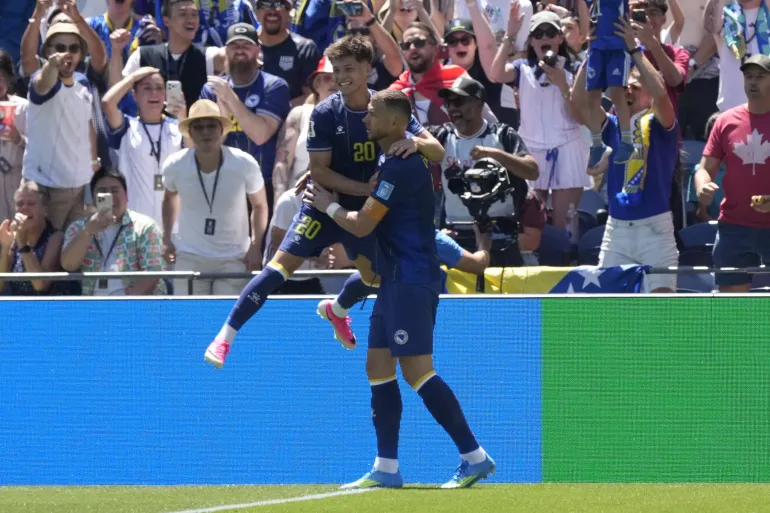
Goals from Bosnia’s youngest-ever World Cup player, 18-year-old Kerim Alajbegovic, and an own goal by Qatar goalkeeper Mahmoud Abunada looked to have put the European side in the box seat.
However, Qatar made a game of it when 35-year-old Hassan Alhaydos, their most capped player, pulled one back late in the first half.
Ermin Mahmic then put the game beyond the Qataris when he scored for the second successive match in the 80th minute.
Bosnia flew out of the blocks as soon as the whistle went, testing Abunada twice inside the first four minutes.
First, Abunada denied Ermedin Demirovic’s fierce drive, and then he tipped away Ivan Sunjic’s shot.
Bosnia’s dominance finally paid off, but it was not the 40-year-old talisman Edin Dzeko who broke the deadlock, but the sublimely talented teenage left-wing.
Edin Dzeko of Bosnia and Herzegovina and his teammates celebrate the second goal [Stephen Buddhist/EPA]
Abunada was unable to do anything about Alajbegovic’s screamer from outside the area, after he had beaten two players.
The youngster was mobbed by his teammates, and once they had trotted back to the halfway line, he stood and milked the moment, putting a finger to his lips.
Dzeko, winning his 150th cap, came more and more into the game, and not wishing to have his thunder stolen by the new kid on the block, he played an integral role in their second five minutes later.
His shot took a wicked deflection off Sultan Albrake and then Abunada on its way into the net.
Dzeko was well into his stride now, and he broke clear a few minutes later, his shot beating Abunada but rebounding off the post.
Bosnia’s earlier sprightliness dipped in the heat, and it was the doyen of Qatari football, Alhaydos, who repaid coach Julen Lopetegui’s faith by slotting home in the 42nd minute.
The Bosnian defence failed to learn from that, and in time added on, they had the far post to thank for keeping their noses in front as Pedro Miguel’s shot came back off it.
Alhaydos’s World Cup, and perhaps his distinguished international career, ended in tears as he trudged disconsolately off the pitch, injured in the 55th minute.
Chances were few and far between until Esmir Bajraktarevic stole in from the right wing and came close to emulating Alajbegovic’s effort, but Abunada turned it away for a corner.
Bosnian frustration gave way to ecstasy when Mahmic prodded the ball home – the scorer ripping his shirt off in celebration, and the 21-year-old paid little notice to being booked for it.
The Repair Shop expert Amanda Middleditch felt the pressure during the latest episode
Amanda Middleditch was nervous while restoring an item(Image: BBC)
A significant World Cup item was brought to The Repair Shop barn on Wednesday.
During the latest instalment (June 24) of the popular BBC programme, experts Julie Tatchell and Amanda Middleditch met Steph Taylor and her daughter Alison. The life-long football fans sought help in restoring a soft toy of the 1966 England World Cup mascot, World Cup Willie, who was in a “rather sorry state”.
Steph explained that she bought the toy at the first match she went to that year. After getting tickets to all the matches at Wembley Stadium, including the final, Steph brought Willie along in her pocket.
The guest explained that she also went to the matches with her future husband, Chris, with their romance blossoming during the tournament. The couple got married that same year, before welcoming their daughter eight months later.
Sadly, tragedy struck when Chris died of an asthma attack just nine months after Alison was born.
“That makes Willie much more significant,” Julie noted, before Alison said: “Because they weren’t together very long, he’s the only thing that I have that connects mum and dad. So, it’s quite special to me as well.”
Julie and Amanda quickly got to work to try and restore the “very important” toy to its former glory. However, Amanda was noticeably nervous.
“He looks extremely fragile, doesn’t he? I’m quite concerned about his face,” she said.
Amanda added: “This little guy’s face is absolutely terrifying. The damp has left him with these two ugly holes. I’ve got to make him look good again.”
The expert tried to feed a new piece of fabric underneath the toy’s damaged face, but she worked with caution. She said: “I’m holding my breath here because the worst thing that could happen is his face disintegrates on me, and then I would have to replace the whole face.
“Oh, it’s a scary one! I think this is actually scarier than taking a penalty in the World Cup final. [I’m] absolutely terrified. But we can do this.”
Julie and Amanda successfully managed to restore World Cup Willie, leaving both Steph and Alison speechless as they were reunited with their possession.
“Oh my goodness, that’s amazing!” said Alison, while her mum noted: “I don’t know if he’s ever looked that good!”
A visibly emotional Steph added: “[I’m] quite filled up about it all, really. Yeah.”
Alison continued: “He’s quite special because he’s a link to my mum and my dad. He’s the only thing that really connects them,” before Steph said: “He’s a very important lion.”
The Repair Shop is available to stream on BBC iPlayer
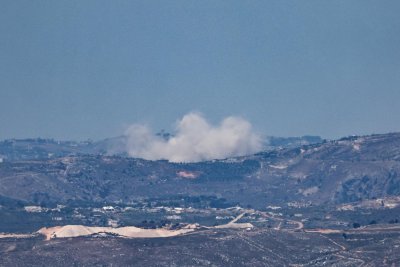
Smoke rises in late May as a result of an Israeli strike in the south of Lebanon as seen from the Israeli side of the border in the Upper Galilee, Israel. The Israeli military says it has trapped dozens of Hezbollah fighters in an underground complex in southern Lebanon. Photo by Atef Safadi/EPA
June 24 (UPI) — The Israeli military has surrounded an underground base in southern Lebanon in which dozens of Hezbollah militants are trapped, Israeli officials said.
The base is located under the village of Tebnit, in an area where fighting taken place despite an Israel-Hezbollah cease-fire, The New York Times reported. The standoff, if it escalates, could disrupt ongoing peace negotiations between the United States, which backs Israel, and Iran, which backs Hezbollah.
Israeli officials said the trapped militants were running out of supplies. On Tuesday, Israeli troops killed at least two people in the area. Israel said those targeted were Hezbollah operatives, while Hezbollah said they were civilians.
The underground base is beneath the Ali al-Taher ridge, not far from the border with Israel and a strategic point. Israeli officials said Hezbollah built the complex of tunnels over 20 years with Iran’s help.
“From this place, you can launch missiles and munitions at Israel,” Sarit Zehavi, president of the Alma Research and Education Center, said to The New York Times.
The Jerusalem Post reported that Israeli leaders are concerned that operatives in the area could carry out a kidnapping attack against Israel’s forces to help their negotiations for those trapped. Soldiers have been told to stay in pairs or groups at all times.
Israel once occupied the ridge after its 1982 invasion of Lebanon. It was once outside the “buffer zone” that Israel established in Lebanon near the border, but Israeli redrew the line last week to include the ridge, The New York Times reported. Israel considers any armed fighter south of the line a threat and a target.
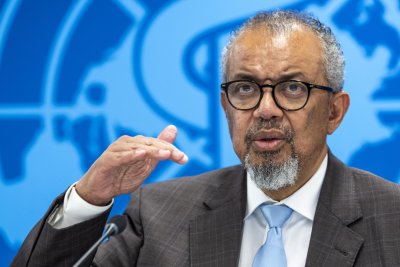
Tedros Adhanom Ghebreyesus, director general of the World Health Organization, speaks to the media about Ebola and global health issues during a press conference in Geneva, Switzerland, Wednesday. France reported its first ebola case Wednesday. Photo by Martial Trezzini/EPA
June 24 (UPI) — A doctor who traveled to the Democratic Republic of Congo was being treated for Ebola at a hospital in France, French officials said Wednesday.
The doctor was admitted to a special health facility and is in stable condition, the country’s health ministry said in a statement. Health workers are tracing anyone who may have come into contact with the doctor. Any contacts will be isolated for 21 days and closely monitored.
The DRC has had an outbreak of Ebola in recent months that has rocked the region. Fighting in the area, which has caused displacement, has made the outbreak worse, and the disease has spread into neighboring Uganda.
More than 1,000 cases have been confirmed and more than 260 people have died from the disease.
It’s the first confirmed European case, though an American doctor was treated at a German hospital in May. Dr. Peter Stafford has recovered and been released from the hospital.
The doctor in France works for the Alliance of International Medical Action, which has been working on the Ebola response in Congo, Dr. Tedros Adhanom Ghebreyesus, director general of the World Health Organization, said in a news conference.
“This case is a reminder of the risks faced by frontline responders,” Tedros said. He added that 82 health care workers have become ill during the outbreak.
Last week the WHO said 17 health workers who had caught Ebola in Congo had died.
ALIMA said the ill doctor is a man who had been working in an area where the virus is.
“Contamination prevention measures have been in place since the beginning of our intervention to protect our teams,” ALIMA said in a statement.
June 24 (UPI) — A U.S. airstrike launched last week in northwest Syria killed a senior Islamic State leader, U.S. military officials announced Wednesday.
U.S. Central Command said the Friday attack killed Ali Husayn al-Ulaywi as “part of ongoing U.S. efforts to disrupt and eliminate terrorists seeking to attack Americans abroad or the U.S. homeland.”
The announcement comes a little more than a month after U.S. and Nigerian forces killed Abu-Bilal al-Minuki, believed at the time to be second-in-command for USUS.
U.S. forces have been battling ISIS and its predecessors for more than a decade in Iraq, Syria, Nigeria and other locations throughout the Middle East and Northern Africa. This fight was entwined with both the Iraq war and the Syrian civil war.
“CENTCOM and our partners remain committed to rooting out remaining remnants of ISIS to ensure its enduring defeat,” said Adm. Brad Cooper, CENTCOM commander.