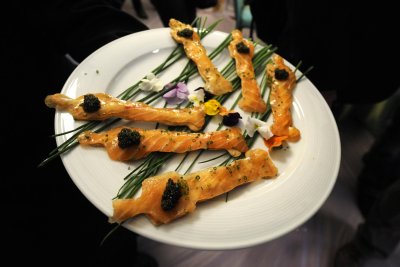
June 24 (UPI) — Global aquaculture production reached a record high, while Chile maintained its position as the leading supplier of salmon to the United States and one of the sector’s top exporting powers, according to a report by the Food and Agriculture Organization of the United Nations.
According to the report The State of World Fisheries and Aquaculture, global fisheries and aquaculture production reached 235 million tons in 2024. For the first time, aquaculture production surpassed 100 million tons of aquatic animals, 89% of which is destined for human consumption and provides at least one-fifth of the animal protein consumed by 3.1 billion people.
The Food and Agriculture Organization of the United Nations said Latin America and the Caribbean account for 15% of global aquatic product exports despite representing 9% of worldwide production, with a total of 13 million tons.
The region exported $27 billion worth of aquatic products, driven mainly by Chilean salmon, anchoveta from Peru and Chile, and Ecuadorian shrimp.
In this context, Chile ranks first in aquaculture production in Latin America, is the largest supplier of salmon to the United States and the world’s fifth-largest exporter of aquatic animal products.
Together with Norway, Chile accounts for nearly half of the value of global salmon and trout exports.
“The growth aquaculture has experienced in recent decades has not been accidental. Behind this progress lies significant work in research, innovation and technological development,” Valeska San Martín, an academic at the Coastal Research Center of the University of Atacama and a researcher at the Millennium Institute in Coastal Socio-Ecology, told UPI.
She said these advances have enabled the development of better feed for farmed species, more efficient genetic selection programs, increasingly precise environmental monitoring systems and automated tools that optimize feeding and health management.
“All of this has helped increase productivity and improve the efficient use of resources while at the same time reducing part of the costs associated with production,” she said.
San Martín added that Chile has been one of the most important players in global aquaculture development and is recognized by the Food and Agriculture Organization of the United Nations as one of the world’s 10 leading aquaculture producers.
“In 2024, it led global exports of frozen salmon and trout fillets, processed mussels, fishmeal and various algae-derived products, reaching more than 100 international markets, particularly the United States, Japan, Brazil, China and Europe,” she said.
Growth prospects remain positive, according to SalmonChile, the industry association representing salmon producers.
“Chilean salmon exports maintained a positive trend in 2026. During the first quarter, they reached $1.991 billion, representing growth of 8% in value and 19% in volume compared with the same period a year earlier,” the organization told UPI.
SalmonChile added that the record achieved by global aquaculture in 2024 confirms the growing prominence of aquaculture products in international trade and consolidates Chile’s position as one of the world’s leading salmon-producing powers.
June 24 (UPI) — Investment from the United States in Latin America and the Caribbean fell 11% in 2025, although the country remained the region’s leading source of foreign direct investment, the Economic Commission for Latin America and the Caribbean, or ECLAC, reported.
The organization presented its annual report, Foreign Direct Investment in Latin America and the Caribbean 2026: Navigating the New Global Context, in Santiago, Chile, on Tuesday. The report showed that the region received $194.233 billion in foreign direct investment in 2025, up 1.7% from the previous year.
ECLAC attributed the modest growth to an international environment marked by geopolitical tensions, technological rivalry among major powers and changes in U.S. trade policy.
The United States accounted for 35% of foreign investment with an identifiable origin entering the region, while Europe represented 32%.
ECLAC said the decline in U.S. investment flows and the increase in European investment significantly narrowed the gap between the two players.
The organization warned that recent changes in U.S. tariff policy could affect Latin American countries unevenly depending on their productive structures and their level of integration into regional value chains.
“In the current global context of weaponized interdependence, it is essential to understand the relationship between trade and foreign direct investment in order to design policies that allow us to advance toward more productive, inclusive and sustainable development,” ECLAC Executive Secretary José Manuel Salazar-Xirinachs said.
During the presentation of the report, Salazar-Xirinachs also said the world had moved from a period in which economic interdependence was viewed as a source of efficiency and even a guarantee of peace to one in which it is increasingly perceived as a source of vulnerability, according to statements reported by Xinhua.
Brazil remained the region’s leading destination for foreign investment, attracting $77.676 billion, equivalent to 40% of the regional total. Mexico received $43.221 billion, or 22% of the total, although it recorded a year-over-year decline. Together, the two countries accounted for 62% of all foreign investment received by Latin America and the Caribbean in 2025, according to ECLAC.
They were followed by Chile with 7% of regional flows, Peru and Colombia with 6% each, Guyana with 5%, and Costa Rica and Dominican Republic with 3%.
The sectoral composition also showed changes. Services attracted 53% of foreign investment received by the region and increased 19.5% from the previous year. Natural resources rose 7% and accounted for 16% of the total, while manufacturing declined 17.2% and represented 31% of investment flows.
The report also showed signs of caution among investors. During 2025, 1,326 new investment projects were announced with a combined value of $114.1 billion, a decline of 10.2% in the number of projects and 34.3% in value compared with 2024.
In response to this scenario, ECLAC recommended diversifying export markets and sources of investment, strengthening coordination between trade and investment policies, and expanding regional cooperation to reduce dependence on individual markets and increase economic resilience.
Remaining group schedule, teams, as well as the best third-round group fixtures at the tournament in North America.
After 48 matches in North America, it’s time for the final round of games in the group stage at World Cup 2026.
Sixteen teams will be eliminated after these fixtures, with 32 nations heading through to the knockout stages.
Recommended Stories
list of 4 itemsend of list
The top two teams from each of the 12 groups – along with the eight best third-placed teams – will proceed to the next phase.
Here are the top five “must-watch” matches in the second round of fixtures from June 24 until June 27.
Neymar could return for Brazil against Scotland [Reuters]
⚽️ Scotland vs Brazil
Miami Stadium – Wednesday, 6pm (22:00 GMT)
These two sides will meet at the World Cup for the fifth time and there’s plenty to play for in an intriguing encounter in Miami.
Brazil are looking to secure their place in the knockout stages as group winners and are currently tied with Morocco on four points at the top of Group C.
Scotland are aiming to escape the group for the first time at a major international tournament and know that a point will almost certainly guarantee a spot in the round of 32.
Expect Group C to change a lot during these final fixtures, with Morocco taking on Haiti at the same time.
If that isn’t enough, Brazil’s Neymar is also set to make his first appearance at this World Cup.
Sweden have been unpredictable at this tournament [Raquel Cunha/Reuters]
⚽️ Japan vs Sweden
Dallas Stadium – Thursday, 6pm (23:00 GMT)
It’s difficult to predict which Sweden will turn up in Dallas on Thursday.
Graham Potter’s side beat Tunisia 5-1 in their opening match of the World Cup, before losing by the same score to the Netherlands.
Japan have been entertaining to watch at this tournament and were in fine form during their 4-0 win over Tunisia at the weekend.
Expect plenty of goals in this match and plenty of drama. The winner will secure a top-two finish in Group F, so there is a lot to play for.
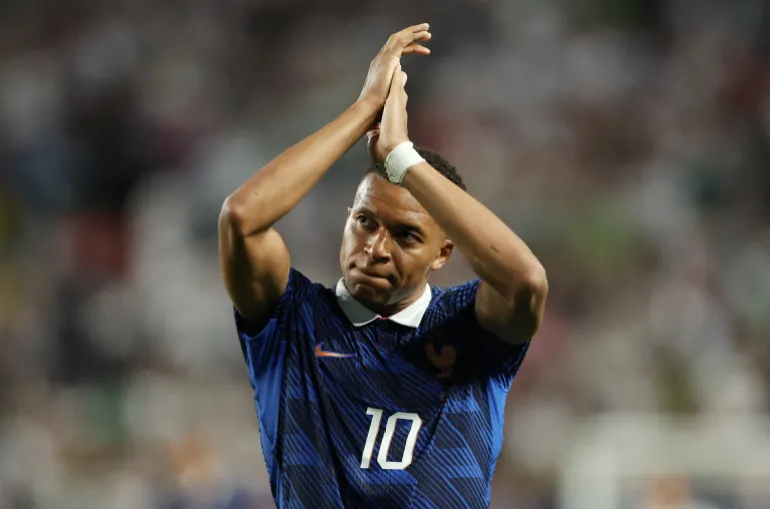
France’s Kylian Mbappe has scored four goals so far [Kyle Ross/Reuters]
⚽️ Norway vs France
Boston Stadium – Friday, 3pm (19:00 GMT)
Norway and France are already through to the knockout stages, but this game looks set to be a blockbuster affair with both sides looking to top Group I.
Erling Haaland and Kylian Mbappe have both scored four goals so far and they’ll be desperate to add to their tally as they chase down Lionel Messi.
France are one of the favourites to lift the World Cup next month and are looking to end the group stage with three wins from three.
But Norway have the opportunity to prove that they truly are dark horses in this tournament and can compete with elite international sides.
Buckle in for a big one in Boston.
Spain’s Lamine Yamal, Nico Williams and Victor Munoz celebrate after the match against Saudi Arabia [Claudia Greco/Reuters]
⚽️ Uruguay vs Spain
Seattle Stadium – Friday, 6pm (00:00 GMT on Saturday)
Group H has been a tight affair following some surprise results in the opening round of fixtures.
Uruguay drew with Saudi Arabia, while Cape Verde shocked the world with a goalless draw against Spain.
La Roja bounced back by thrashing Saudi Arabia and they go into their final game as group leaders, with Uruguay two points behind in second.
Spain will secure top spot with a win in Seattle, ensuring that they avoid Argentina in the round of 32.
Egypt are looking to reach the knockout stages at the World Cup for the first time [Anne-Marie Sorvin/Reuters]
⚽️ Egypt vs Iran
Seattle Stadium – Friday, 8pm (04:00 GMT on Saturday)
Neither of these sides have ever made it out of the group at a World Cup, but on Friday, at least one of them will achieve that feat.
Group G is closely bunched after a number of drawn matches and it sets things up nicely for an intriguing final round of fixtures.
Victory for either Egypt or Iran will guarantee them a spot in the knockout phase, so expect both sides to be up for this one.
Iran have faced numerous challenges at this World Cup, with restrictions on travel and visa issues before the tournament even began.
If Iran progress, there’s also still a chance that they will face the US in the knockout stages.
World Cup 2026: Remaining group-stage full schedule
Wednesday, June 24
Switzerland vs Canada at 12pm PT (19:00 GMT) – BC Place, Vancouver, Canada
Bosnia vs Qatar at 12pm PT (19:00 GMT) – Seattle Stadium, Seattle, US
Scotland vs Brazil at 6pm ET (22:00 GMT) – Miami Stadium, Miami, US
Morocco vs Haiti at 6pm ET (22:00 GMT) – Atlanta Stadium, Atlanta, US
Czechia vs Mexico at 7pm CST (01:00 GMT on Thursday) – Mexico City Stadium, Mexico City, Mexico
South Africa vs South Korea at 7pm CST (01:00 GMT on Thursday) – Estadio Monterrey, Guadalupe, Mexico
Thursday, June 25
Ecuador vs Germany at 4pm ET (20:00 GMT) – New York New Jersey Stadium, New Jersey, US
Curacao vs Ivory Coast at 4pm ET (20:00 GMT) – Philadelphia Stadium, Philadelphia, US
Japan vs Sweden at 6pm CDT (23:00 GMT) – Dallas Stadium, Dallas, US
Tunisia vs Netherlands at 6pm CDT (23:00 GMT) – Kansas City Stadium, Kansas City, US,
Turkiye vs USA at 7pm PT (02:00 GMT on Friday) – Los Angeles Stadium, Los Angeles, US
Paraguay vs Australia at 7pm PT (02:00 GMT on Friday) – San Francisco Bay Area Stadium, San Francisco, US
Friday, June 26
Norway vs France at 3pm ET (19:00 GMT) – Boston Stadium, Boston, US
Senegal vs Iraq at 3pm ET (19:00 GMT) – Toronto Stadium, Toronto, Canada
Cape Verde vs Saudi Arabia at 7pm CDT (00:00 GMT on Saturday) – Houston Stadium, Houston, US
Uruguay vs Spain at 6pm CST (00:00 GMT on Saturday) – Estadio Guadalajara, Zapopan, Mexico
Egypt vs Iran at 8pm PT (03:00 GMT on Saturday) – Seattle Stadium, Seattle, US
New Zealand vs Belgium at 8pm PT (03:00 GMT on Saturday) – BC Place, Vancouver, Canada
Saturday, June 27
Panama vs England at 5pm ET (21:00 GMT) – New York New Jersey Stadium, New Jersey, US
Croatia vs Ghana at 5pm ET (21:00 GMT) – Philadelphia Stadium, Philadelphia, US
Colombia vs Portugal at 7:30pm ET (23:30 GMT) – Miami Stadium, Miami, US
DRC vs Uzbekistan at 7:30pm ET (23:30 GMT) – Atlanta Stadium, Atlanta, US
Algeria vs Austria at 9pm CDT (02:00 GMT on Sunday) – Kansas City Stadium, Kansas City, US
Jordan vs Argentina at 9pm CDT (02:00 GMT on Sunday) – Dallas Stadium, Dallas, US
The race for the Golden Boot at World Cup 2026 is shaping up to be one for the history books.
After just two games, Argentina talisman Lionel Messi leads the way with five goals, followed by France’s Kylian Mbappe and Erling Haaland of Norway with four goals each.
Recommended Stories
list of 4 itemsend of list
Germany’s Deniz Undav has three with Jonathan David of Canada on the same mark after a hat-trick against Qatar.
A further 20 players have scored twice in their opening two games, including 2018 Golden Boot winner Harry Kane of England, Cristiano Ronaldo of Portugal, Vinicius Jr of Brazil and Mikel Oyarzabal of Spain.
The stars are all shining and, given the rate of scoring so far, it seems possible double figures might be needed to win the Golden Boot, something done only three times in history – by Hungary’s Sandor Kocsis in 1954, Just Fontaine of France four years later and Gerd Muller of Germany in 1970.
Fontaine holds the record of 13 goals in one World Cup in just six matches in Sweden, but the expanded 48-team format in 2026 means the nations qualifying for the semifinals in July will play an unprecedented eight games in this edition.
At the 2006 World Cup in Germany and in South Africa four years later, only five goals were needed to claim the Golden Boot while nobody has scored more than eight in the past 13 editions, a feat achieved only by Brazil’s Ronaldo in 2002 and Mbappe four years ago in Qatar.
Kylian Mbappe followed his double against Senegal with another against Iraq in this year’s World Cup [Siphiwe Sibeko/Reuters]
Why have so many goals been scored at World Cup 2026?
It took just 33 matches for a century of goals to be racked up in this edition, second only to 1954 in terms of pace.
After Portugal’s 5-0 win over Uzbekistan on Tuesday, 139 goals had been scored across the first 45 games – the most in the group stages of a single edition of the finals, overtaking the 136 scored in 2014 in three fewer matches.
The record number of goals in one edition came in Qatar 2022 with 172 from 64 games. With an extra 40 matches in the new expanded format that went into effect this year, it was always likely to be broken, but the rate of scoring suggests the old mark will be obliterated.
The Adidas Trionda ball used in World Cup 2026 [Simon Fearn/Imagn Images]
One reason for the increase in goals might be the Adidas Trionda ball, which FIFA commissioned for this World Cup.
Before the tournament, FIFA said it boasts several key performance innovations, including intentionally deep seams designed to produce optimal in-flight stability by ensuring sufficient and evenly distributed drag as the ball travels through the air – in short, it flies through the air – while the surface of the ball is designed to increase grip when striking or dribbling in wet or humid conditions, which we have seen plenty of in the opening matches.
Austria head coach Ralf Rangnick said: “This ball is as fast as a cannonball. If you kick the ball in the right position, it’s extremely difficult to save.”
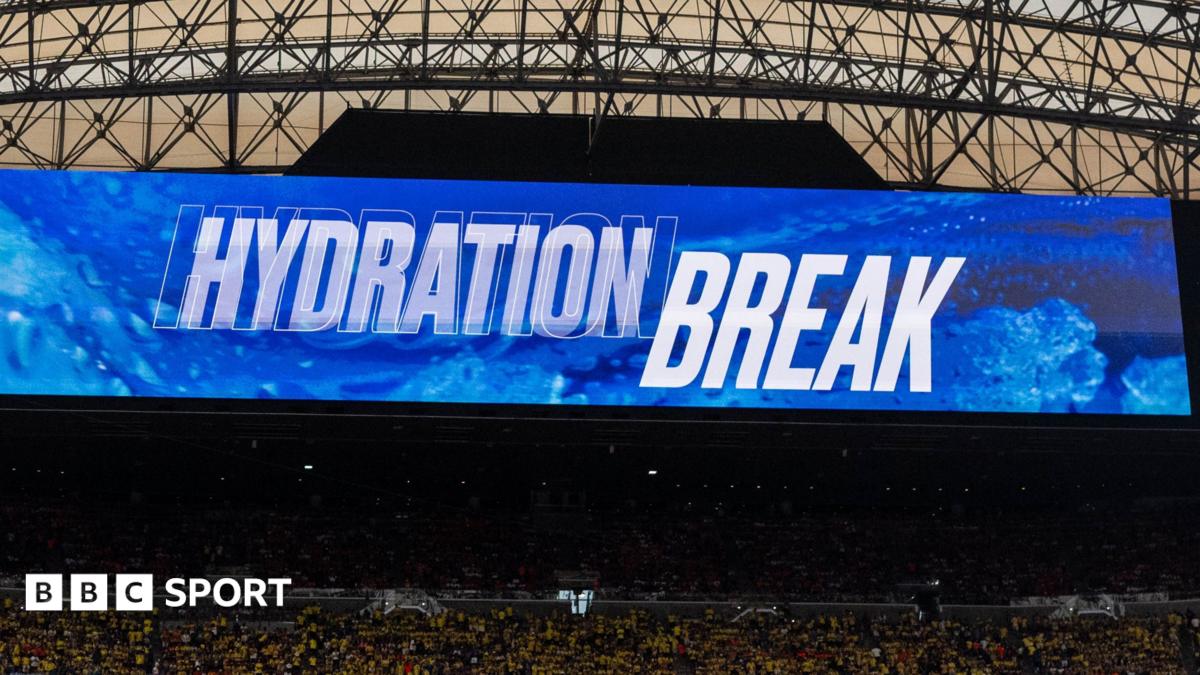
The controversial addition of hydration breaks to each half may also mean players are performing at their peak for longer, leading to the glut of late goals so far. Of course, the fact that 48 teams are taking part, drawn from the world’s leading 85 teams in the rankings, means there are some mismatches in the first phase.
Colombia coach Nestor Lorenzo also said attackers are more protected by officials than they used to be, which may contribute to the increased scoring, adding: “They didn’t have this protection some 20, 30 years ago when they were hit a lot more, when rough play was a lot more common.
“Today, any team that defends well and uses counterattacks and tries to play can manage to do well.”
Erling Haaland has scored two goals in each of his first two World Cup appearances. [John Sibley/Reuters]
Who is likely to win the Golden Boot?
Much will depend on fitness and, of course, how deep a country goes in the tournament, but Messi has to be considered the favourite to win his first accolade.
The 38-year-old scored seven goals at the last World Cup and has now scored in six straight tournament matches, having netted in every knockout round in Qatar and the first two games of this edition. He even missed a penalty against Austria, which would have made it back-to-back hat-tricks.
Argentina’s final group game on Sunday is against already eliminated Jordan although Messi’s inclusion from the start in that one is by no means a given as his side have already secured the top spot in Group J.
They look set for favourable knockout fixtures, though, with the potential for Uruguay or Cape Verde in the last 32, potentially Australia or Iran in the round of 16 and the possibility of Croatia or Colombia in the quarterfinals, should they make it.
Only in the semifinal might they come up against a powerhouse nation, likely in the form of England or Brazil or dark horses Japan, Norway or Mexico.
Mbappe also looks likely to have a favourable run and is likely to feature against Norway on Friday in the group finale, which will decide the top spot in Group I.
Winning the group could mean a round of 32 meeting with Sweden, Germany the potential opponents in the last 16 and the Netherlands or Morocco awaiting in the last eight.
Whoever finishes second out of France and Norway could face a tricky task against the Ivory Coast in the last 32 with Brazil or Japan awaiting the winners and the possibility of England lurking in the quarterfinals, which might put a ceiling on Haaland’s prospects, despite having scored 59 goals in 52 international games for Norway.
Kane will seek to enter the conversation with England facing a must-win Group L finale on Sunday against Panama with the prospect of a last-32 meeting with Cape Verde to follow and Mexico likely lying in wait in the Azteca (known during the World Cup as Mexico City Stadium) in the round of 16.
Cristiano Ronaldo may have left it too late to begin a real quest, given Portugal face Colombia on Sunday in their final Group K game and could face resolute Ghana in the last 32 with Spain potential opponents in the last 16.
But Vinicius Jr could add to his two goals when Brazil face Scotland on Thursday in their final Group C game although the knockout rounds would appear a stiffer test.
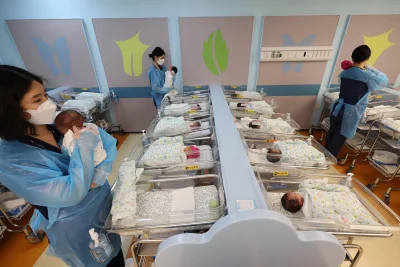
The number of babies born in South Korea shot up 18 percent in April, reaching a seven-year high, government data showed Wednesday. This file photo, taken April 22, shows newborns at a hospital in Goyang. File Photo by Yonhap
The number of babies born in South Korea shot up 18 percent in April from a year earlier, reaching the highest level in seven years, government data showed Wednesday.
A total of 24,521 babies were born in April, up from 20,787 a year earlier, according to data from the Ministry of Data and Statistics. It marked the highest figure for any April since 26,104 babies were recorded in 2019.
Over the January-April period, the total number of births came to 99,534, also the highest in seven years, up a sharp 15.5 percent from a year earlier.
The number of births grew at a record rate for both April and the January-April period.
The country’s total fertility rate, the average number of children a woman is expected to have in her lifetime, rose by 0.13 from a year earlier to 0.93 in April.
The number of newborns has been on an upward trend since July 2024.
Experts attribute the recent growth to an increase in the number of marriages, along with a more positive perception of childbirth.
The rate still remains well below the 2.1 births per woman needed to maintain a stable population without immigration.
The number of marriages in April rose 9 percent from a year earlier to 20,622. It was also the highest figure since 22,844 was recorded in April 2016.
The number of divorces, meanwhile, rose 7.3 percent from a year earlier to 7,829.
The data showed the number of deaths fell 1.3 percent from a year earlier to 28,405, resulting in a natural population decline of 3,884.
Copyright (c) Yonhap News Agency prohibits its content from being redistributed or reprinted without consent, and forbids the content from being learned and used by artificial intelligence systems.
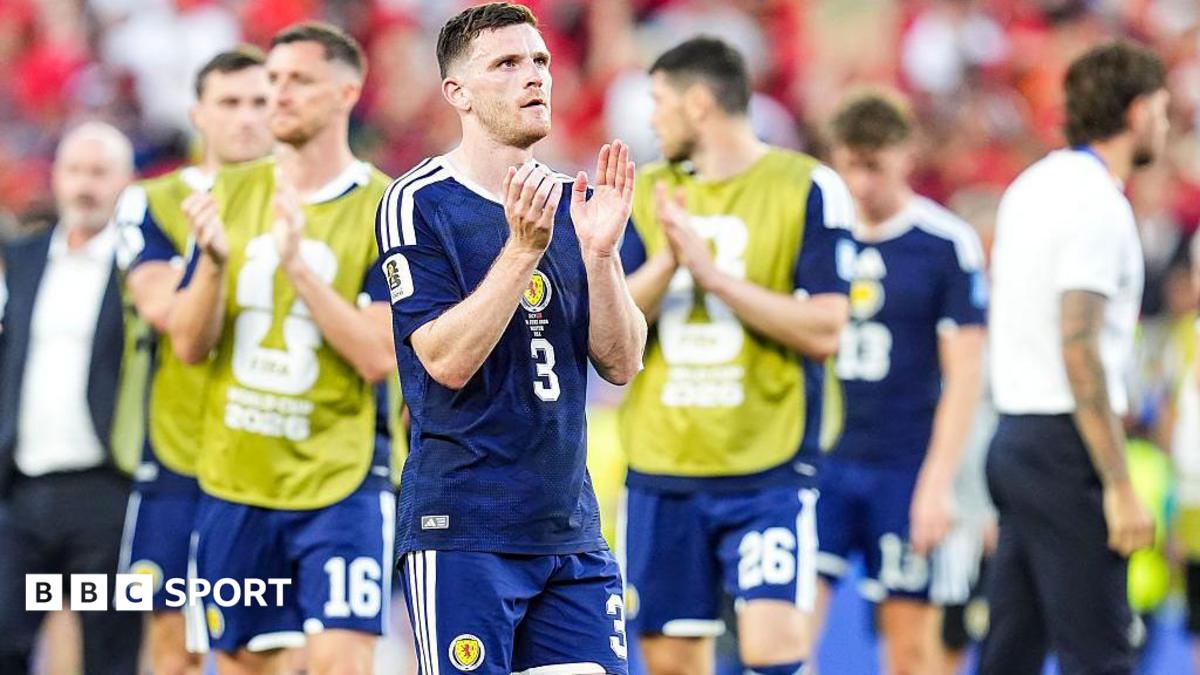
If Scotland lose and finish with three points, there are a number of results they will need to look out for – they will want as many groups as possible with two teams finishing on fewer than three points.
In Group A, if Mexico beat the Czech Republic and South Korea beat South Africa, that would leave the team in third on one point.
The next best scenario would be a big South Africa win to leave South Korea in third with three points and a poor goal difference.
Wins for South Africa and the Czech Republic would spell bad news for Scotland, leaving the third-place finisher on four points.
One of the few games that take place before Scotland face Brazil that has a bearing on where Scotland could finish comes in Group B.
Bosnia-Herzegovina and Qatar meet three hours before Scotland play and, if they draw, both sides will have two points.
In Group D, Australia and Paraguay are second and third respectively and meet in their final game. The losers would end the group with three points, while a draw would leave both sides on four.
On we go to Group E. Ecuador and Curacao have one point apiece and play Germany and Ivory Coast respectively. Failure to win would mean whoever finishes third cannot better Scotland’s tally of three points.
In Group F, Scotland will be hoping second-placed Japan beat third-placed Sweden convincingly. A point for Sweden, though, would leave the third-placed finishers on at least four points.
The key fixture in Group G as far as Scotland are concerned is Egypt v Iran. A win for Egypt will ensure the team finishing third will have fewer than three points.
It is the same situation in Group H where Scotland fans will be rooting for Spain to beat Uruguay so the third-placed team can only finish on two points, while in Group I, a draw between Senegal and Iraq would mean the team in third will have just one point.
In Group J, Austria and Algeria – second and third respectively on three points – meet in their final group game, so Scotland would not want that to end in a draw.
DR Congo and Uzbekistan are vying for third place in Group K.
A win for Uzbekistan would give them three points but, with a goal difference of -7, they would need a big win against DR Congo and for Scotland to lose badly to move above them in the standings.
In Group L, a point or more for Croatia against Ghana could be bad news for Scotland as it would again leave the third-place finishers with four points.
A big win for Ghana, and Panama not beating England, would be Scotland’s ideal scenario from a mathematical point of view.
The giveaway that Lima should be on every food lover’s wish list is not just that it is home to the reigning No. 1 restaurant in the world according to the most recent World’s 50 Best Restaurants ranking. Maido in Lima’s famed Miraflores neighborhood, a longtime magnet for fine dining, is where chef Mitsuharu “Micha” Tsumura is transforming Peru’s traditional Nikkei cuisine, integrating the flavors of the Amazon in his own blockbuster style.
But it’s what’s happening one neighborhood over, just about three miles away in Lima’s Barranco district that make Peru’s capital more than a stopover for a single splurge meal on your way to Machu Picchu. The epicenter of the food lover’s Barranco is the garden-lush culinary complex, Casa Túpac, home to Virgilio Martinez’s Central, named to the World’s 50 Best Restaurants’ “Best of the Best” list after its No. 1 ranking in 2023, and to Pía León’s Kjolle, the current 50 Best’s No. 9 restaurant in the world.
Use these handy dining guides for all of your summer travel, near and far.
Beyond those walls, several other food hubs have emerged. There is the growing constellation of Barranco restaurants that chef Juan Luis Martínez runs with his wife, designer Michelle Sikic. Their Mérito is currently No. 26. on the World’s 50 Best list; Demo is a morning-to-night cafe with beautiful breakfast dishes; and more recently they opened Clon, with accessibly priced a la carte expressions of Martínez’s Venuezulan-Peruvian cuisine.
A few short blocks away are Ricardo Martins’ pair of restaurants, Siete, a romantic spot with beautiful food and cocktails, and La Perlita, devoted to the chef’s nostalgic take on criolla cuisine. Then there is the venerable Canta Rana, run by an Argentine devoted to soccer and ceviche, and, more recently, the Chilean and American partners who created a mecca for coffee and chocolate lovers.
This is just a hint of the culinary activity happening in one of the world’s great food cities.
It’s puzzling, then, why the Michelin guide doesn’t waive its requirement that tourist boards or local governments pay a fee to have its inspectors visit the city. On the other hand, Lima is doing just fine without Michelin stars.
See for yourself with your own visit to Lima. The suggestions that follow are a delicious way to begin your adventure.
A fine place to stop for a milk tea-centered breakfast or lunch after exploring the labyrinth of African, Indian and other international shops and food stalls inside Chungking Mansions — one of the last remaining film locations in Wong Kar-wai’s iconic “Chungking Express,” where Brigitte Lin’s drug-dealing retired actor is seen conducting her business in a blond wig, trenchcoat and sunglasses. Lan Fong Yuen, in the basement of Heath Mall (which is technically part of Chungking Mansions but has a separate street entrance), has its own historic pedigree. Late founder Lam Muk-ho is credited with originating silk-stocking milk tea (it’s strained through a long cloth filter), and possibly yuenyeung (milk tea mixed with coffee), at the still-operating Gage Street stall he opened in Central in 1952. He’s also said to have popularized the thick-cut Hong Kong-style French toast and pork-chop buns so familiar in our own San Gabriel Valley cafes, as well as “lo-ding” instant noodle dishes, especially the chicken-chop version. The Tsim Sha Tsui location opened in 2009 but has an older diner aesthetic that attracts tourists and locals who line up for the scene and affordable Hong Kong comfort food.
Heath Mall basement, Shop No. S09, Chungking Mansions, 44 Nathan Road, Tsim Sha Tsui, Kowloon, Hong Kong
When you live in Los Angeles, there are far worse fates than being stuck in the city all summer. Our thriving food capital draws diners out with sunlit farmers markets, midnight taco stands, multigenerational kebab shops and serene sushi dens. Community-oriented breweries, stylish wine bars and glimmering rooftop destinations round out the scene.
Whether you’re a lifelong Angeleno, new transplant or just passing through, you’ll want to get to know the 50 essential dining experiences that define eating in L.A. right now, from a pastrami sandwich at an iconic deli near MacArthur Park to a char-spotted tlayuda at a burgeoning food bazaar in West Adams and an L.A.-shaped churro from a rising Highland Park panadería.
Don’t miss our guide with nearly two-dozen new bar openings across the city. Finally, a handful of sparkling rooftops recently debuted across the city, offering vistas into neighborhoods we rarely spy from up above.
Thoughtfully compiled by our Food staff over the course of several months, we invite you to return to these lists whenever you’re seeking an answer to that perennial question: Where should I go next? — Danielle Dorsey
If You Go
(Giacomo Bagnara / For The Times)
There’s no easier way to get to know a new place than through its food. Wandering markets, eating at food stalls, sitting among locals and fellow travelers at the restaurants that embody a city. Its flavors and customs and ways of living are revealed to us over dinner or even a simple morning coffee.
And for those of us who are lucky enough to write about food for a living, traveling with an eater’s mindset gives us a deeper understanding of places we’ve read about in cookbooks and novels or seen in movies.
Each of us at L.A. Times Food keeps a running list of our favorite restaurants in some of the world’s great cities — and we want to share what we know with you. The recommendations that follow are not meant to be definitive for any given place. These are personal guides by dedicated eaters to some of the places we’ve loved during our wanderings around the globe.
If you’d like to share your own personal favorites with us, we’d love to hear from you in the comments below. — Laurie Ochoa
Here’s a look at the viral moments and on-field controversies as well as the biggest players, best performances, goals and more.
Published On 24 Jun 202624 Jun 2026
Cristiano Ronaldo joined the party, Lionel Messi set a new record, Iran once again displayed their fighting spirit and Turkiye were shown the door.
The second round of the 2026 World Cup group stage had a fair amount of drama.
Recommended Stories
list of 4 itemsend of list
Al Jazeera breaks down the key moments:
Better late than never: Ronaldo strikes for Portugal
Unlike other high-profile strikers at the tournament who came out all guns blazing from the get-go, Ronaldo needed some time to open his account. But his two goals in Portugal’s 5-0 thrashing of Uzbekistan on Tuesday were enough to silence the critics as the 41-year-old became the first player in history to score in six World Cups.
Messi is saving his best for last
Age is just a number for Messi, who is celebrating his 39th birthday on Wednesday. His apparent last dance is bringing out the best in him as the Argentinian has set a new record for the most World Cup goals at 18 – a figure that is sure to increase with La Albiceleste now the number one favourites to add back-to-back World Cups to their trophy cabinet.
Is Messi “Mr Argentina”? It’s hard to argue otherwise with all five of the team’s goals scored by him. That also makes him the leading Golden Boot contender with one goal more than France’s Kylian Mbappe.
At this point in the tournament, Messi is the 2026 World Cup’s Golden Boot leader [Kai Pfaffenbach/Reuters]
Triple treat: Messi, Mbappe, Haaland score on same day, again
FIFA has come under criticism for a series of issues this tournament, but one thing it’s got spot on is the scheduling of Argentina, France and Norway games on the same day. For the second time in a row, fans were treated to back-to-back goals galore on Monday as Messi started the party with a brace before Mbappe did the same, and Erling Haaland topped it off with another double.
Norway’s ‘Viking row’ goes viral
Back at the World Cup after 28 years, Norway celebrated their round of 32 qualification in typical fashion: bringing out the famous “Viking row”. With the squad sitting in rows resembling those of a Viking longboat, captain Martin Odegaard began beating the drum to a joyous climax as thousands of Norwegians in the stadium also joined the fun.
Salah, Egypt celebrate on streets of Vancouver
It took Egypt an incredible 92 years to register their first World Cup win, so it wasn’t a surprise that they celebrated in style. Shortly after beating New Zealand 3-1 on Sunday, the Egypt squad was pictured on the streets of Vancouver with fans, singing and dancing to music blaring from a huge speaker. Mohamed Salah, nicknamed the “Egyptian King”, was the centre of attention yet again, held up on the shoulders of a teammate, as he grooved to the tunes.
Japan are Asia’s best hope at the tournament
While Asian teams enjoyed a great run during the first round of the group games, only one team – Japan – built on the momentum. After a 2-2 draw with the Netherlands in the first match, Japan thrashed Tunisia 4-0 in the next fixture on Saturday, collecting four points – the highest by an Asian team so far. According to Opta’s supercomputer, Japan have a 20.8 percent chance of reaching the quarterfinals and 9.41 percent probability of making the semifinals.
Persistent Iran fight hard to stay in contention
Despite travel restrictions imposed on them by the United States for their first two World Cup games, Iran have remained unbeaten with two draws. That keeps them alive in the knockout race, and with the squad now allowed to fly into the US from Mexico two days before their next match instead of one as was the case earlier, Iran can better prepare for their final group game on Saturday against Egypt in Seattle. A win would see them through while a draw might also suffice, depending on other results.
Turkiye’s talented team disappoints
From Arda Guler and Kenan Yildiz to Hakan Calhanoglu and Merih Demiral, Turkiye is filled with talent across all departments. But none of them could turn around Turkiye’s fortunes as they crashed out of the tournament after losing to Paraguay on Saturday. The early exit crushed the hopes of millions of Turkish fans, who waited 24 years to see their team return to the World Cup.
Turkiye’s Can Uzun and Kenan Yildiz look dejected after they were knocked out of the World Cup [Luisa Gonzalez/Reuters]
No Pulisic, no problem for USA
For years, Christian Pulisic has been the poster boy of the USA team, but the cohost nation proved that they can get the job done even in the influential winger’s absence. With Pulisic ruled out with a calf injury, Alex Freeman scored one, and the USA benefitted from a Cameron Burgess own goal as they sailed into the knockouts with a 2-0 victory on Friday against Australia.
Red-carded Almiron to go down in history
Paraguay midfielder Miguel Almiron made history, albeit for the wrong reasons, when he became the first player to be sent off at the 2026 World Cup for covering his mouth. Almiron – also handed a one-match ban – covered his mouth during a confrontation with Turkiye’s Mert Muldur. The straight red handed to him follows a new rule under which players are not allowed to cover their mouths to disguise what they are saying during confrontations with infringements leading to instant dismissals.
The FIFA World Cup has yet to provide a meaningful boost to U.S. economic activity, with business surveys, card spending data, and airline passenger traffic showing little evidence that the tournament is supporting demand, according to Pantheon Macroeconomics.
Another list topped by the Argentina maestro. Collecting the ball 30 yards out, Messi advanced to the top of the D before whipping a beautiful left-footed shot into the top corner.
2: Mbappe second v Senegal
One touch to set himself, a quick glance up and then a thumping effort from 30 yards out past Edouard Mendy – some strike.
3: Balogun second v Paraguay
Folarin Balogun showed pace, power and then composure to take a touch inside the covering defender before bending the ball into the top corner with his left foot.
4: Reyna’s fourth v Paraguay
Late in the game, the Paraguay defence backed off and USA midfielder Gio Reyna took full advantage, moving into the penalty box before nonchalantly curling the ball into the far corner with the outside of his right boot.
With Brazil labouring, a moment of brilliance brought them level. Vinicius Jr collected the ball on the left side of the box, cut back on to his right foot and bent an unstoppable shot into the far corner.
7: Mahmic’s volley against Switzerland for Bosnia
A moment to remember for Ermin Mahmic as he lashed a volley into the Switzerland net after a corner was only punched out to the edge of the box. Not a bad way to score your first international goal.
8: Olwan’s goal for Jordan v Austria
With the defence backing off, Ali Olwan ran from the halfway line to the penalty area before expertly curling the ball in off the post to give Jordan their first World Cup goal.
9: Munoz’s flicked volley against Uzbekistan
Colombia got up and running with this brilliant Daniel Munoz effort. Having timed his run to perfection, the Crystal Palace wing-back stretched to meet Luis Diaz’s deep cross and lift a volley past the goalkeeper.
10: Nmecha’s combination with Wirtz for goal v Curacao
Felix Nmecha fired Germany in front after playing a lovely one-two with Florian Wirtz. The pass meant Nmecha didn’t have to break stride before curling the ball around a Curacao defender into the bottom corner.
Managers and coaching staff are allowed to discuss tactics with their players while the breaks are taking place.
Infantino said: “The main reason [for the breaks] is the heat, but we also have to understand that in a competition like the World Cup, played over 39 days, with teams potentially playing eight matches in those 39 days, having a moment to rest is extremely important.
“What matters even more to us is ensuring that all teams, in every match, are playing under the same conditions.
“And it’s very difficult to accept that a coach might have the opportunity to influence a match by making adjustments simply because it is hotter, while in another match, where the temperature is slightly lower, the same coach does not have the same opportunity.
“We want to ensure equal conditions for everyone and that’s why these breaks are implemented in every match.”
Experts have told BBC Sport an average 30-second World Cup advertising slot on Fox Sports costs between $200,000 (£152,000) and $300,000 (£227,000), rising to $750,000 (£567,000) during USA matches and the final stages.
That means advertising during hydration breaks is likely to generate more than $250m (£189m) in the USA alone.
Croatia are third in Group L, with England and Ghana on four points each, heading into the last round of matches.
Published On 24 Jun 202624 Jun 2026
Half-time substitute Ante Budimir scored in the 54th minute as Croatia eliminated Panama from World Cup contention with a tightly fought 1-0 victory at Toronto Stadium.
The Group L clash on Tuesday saw 34-year-old Budimir score his first World Cup goal and fifth in a competitive fixture for his country.
Recommended Stories
list of 4 itemsend of list
Croatia remain third in the group with three points heading into the final match day, but they can guarantee a top-two finish with a victory over Ghana in their final match on Saturday in Philadelphia.
Panama are still seeking their first point, five matches into their World Cup history, having also lost 1-0 to Ghana in their 2026 opener in Toronto last week.
However, despite playing the first two matches without injured talisman Adalberto Carrasquilla, Los Canaleros have a goal difference six better than at this stage in their first World Cup appearance in 2018.
Budimir put Croatia in front on what was easily their best attack of the match to that point on Tuesday.
Croatia’s Ante Budimir celebrates scoring their first goal [Kevin Sousa/Reuters]
Josip Stanisic combined with Marco Pasalic to get down the right, and then struck a well-weighted cross to the top of the 6-yard box.
Panama goalkeeper Orlando Mosquera dived to try and intercept the service but couldn’t reach it, and Budimir showed up at the back post to guide in a composed finish into an open goal.
With that, the match erupted for about 15 minutes.
Three minutes after the goal, Croatia captain Luka Modric played Pasalic in alone on goal from his own half. Mosquera sized up Pasalic and charged from his line at the right time to smother the initial attempt, and Pasalic fired wide from a poor angle on the rebound.
Panama responded to force Dominik Livakovic into three stops inside of a minute. The third was probably the best, as Livakovic leapt to deny Carlos Harvey’s header from a corner lofted to the back post.
The second-half hydration break followed that sequence, and perhaps disrupted Panama’s momentum, with Livakovic unthreatened in the final stages.
The Central Americans will now look to play spoilers against England in their finale on Saturday in East Rutherford, New Jersey.
Earlier on Tuesday, England and Ghana settled for a 0-0 draw, with both having four points.
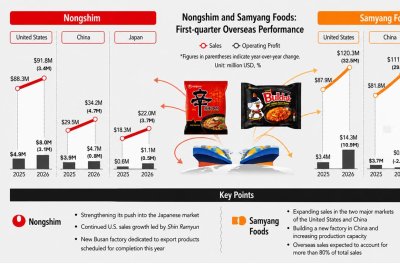
An infographic compares Nongshim and Samyang Foods’ first-quarter sales and operating profits in the United States, China and Japan, highlighting the companies’ differing overseas growth strategies. Data from Financial Supervisory Service and the companies. Infographic by Asia Today and translated by UPI
June 23 (Asia Today) — South Korea’s two leading instant-noodle makers posted sharply different results across major overseas markets during the first quarter, with Samyang Foods growing rapidly in the United States and Nongshim generating steadier profits in China and Japan.
Samyang Foods recorded U.S. sales of 185.3 billion won ($120.3 million) during the first three months of the year, up 37% from the same period in 2025, according to industry data released Tuesday.
Its U.S. operating profit jumped 325% to 22 billion won ($14.3 million).
Nongshim posted U.S. sales of 141.3 billion won ($91.8 million) and an operating profit of 12.3 billion won ($8 million) during the same period.
Samyang’s growth was driven primarily by the continued popularity of its spicy Buldak brand and the expansion of its distribution network.
The company has increased the number of its products sold through Walmart, Costco and other major U.S. retailers. Sales of products tailored to local preferences, including Buldak Mac and Cheese and Buldak Ramen Habanero Lime, have also increased.
“The distinctive flavor and concept of the Buldak brand are giving us a competitive advantage in the U.S. market,” a Samyang Foods representative said.
The company plans to expand its presence in North America by strengthening the brand and increasing distribution through large retailers, the representative said.
Nongshim is also seeking a larger share of the North American market through Shin Ramyun and its expanding line of stir-fried noodles.
The company has improved its production and logistics efficiency by raising operating rates at its factories near Los Angeles. Its products also continue to generate steady sales through Walmart, Costco and other major retailers.
The competitive picture was different in China, where Nongshim recorded more stable profitability despite generating considerably less revenue than Samyang.
Nongshim’s Chinese operations reported first-quarter sales of 52.7 billion won ($34.2 million), up 16% from a year earlier. Operating profit rose 20% to 7.2 billion won ($4.7 million).
The results were supported by continued demand for Shin Ramyun, Chapagetti and Neoguri.
Samyang generated much higher sales in China but experienced a steep decline in profit.
Its first-quarter Chinese sales rose 36% to 171.3 billion won ($111.2 million), while operating profit fell 77% to 1.3 billion won ($844,000).
Industry analysts attributed the decline to Samyang’s reorganization of its distribution partners and inventory remaining after weaker-than-expected sales during China’s Singles’ Day shopping festival last year.
Samyang said it remains committed to long-term growth in China.
The company plans to strengthen Buldak’s brand position while expanding beyond instant noodles into products such as sauces and air-dried noodles.
Samyang is also constructing a factory in Jiaxing, Zhejiang province. It recently expanded the planned number of production lines at the plant from six to eight.
The Jiaxing factory is scheduled to begin operating in 2027. Samyang expects local production to improve manufacturing and distribution efficiency in China.
Nongshim also delivered stronger profitability in Japan.
Its Japanese subsidiary recorded first-quarter sales of 33.9 billion won ($22 million), up 20% from a year earlier. Operating profit increased 75% to 1.66 billion won ($1.1 million).
The company’s performance was supported by growing recognition of Shin Ramyun and improved bargaining power in price negotiations with retailers.
Samyang’s Japanese business recorded sales of 9.9 billion won ($6.4 million), an increase of 34%, but operating profit fell 31% to 240 million won ($156,000).
Marketing expenses and initial investments associated with expansion into convenience stores, Don Quijote and Costco weighed on profitability, according to industry analysts.
The results suggest that the rivalry between the two companies is developing differently in each region.
Samyang is using the global recognition of Buldak to drive rapid growth in North America, while Nongshim is building a more stable earnings base in China and Japan through established products led by Shin Ramyun.
Both companies are expanding production capacity as global demand for Korean instant noodles continues to grow.
In addition to Samyang’s Jiaxing factory, Nongshim is constructing an export-only plant at the Noksan National Industrial Complex in Busan.
Nongshim plans to complete the factory and begin production during the second half of the year. The facility is expected to become a major base for expanding the company’s global supply capacity.
“Success in overseas food markets depends not only on brand strength but also on production capacity, distribution networks and a stable supply system,” a retail industry official said.
“Samyang is currently showing strong growth in North America, but Nongshim is also expanding production and strengthening its localization strategy,” the official said. “Competition in the global market will become more intense.”
Gabby Logan hosted the BBC’s live coverage of England’s second World Cup group match
22:28, 23 Jun 2026Updated 22:31, 23 Jun 2026
Gabby Logan led the BBC’s coverage(Image: BBC)
BBC viewers weren’t impressed as they tuned in to watch England play.
Gabby Logan returned to screens on Tuesday (June 23) to present coverage of England’s Group L match against Ghana at Boston Stadium in the USA, as both teams played their second game of the group stage.
This is just the second time that these sides have ever met and the first time they’ve faced each other in a competitive fixture. The last time was back in March 2011, when former Sunderland striker Asamoah Gyan scored an injury-time equaliser to salvage a 1-1 draw at Wembley Stadium.
Gabby was joined in the Salford studio by Joe Hart, Wayne Rooney and Micah Richards, with match commentary coming from Guy Mowbray and Alan Shearer.
However, BBC viewers were quick to issue the same complaints about the broadcaster’s coverage. Many fans weren’t impressed with the “buffering” coverage on iPlayer, as well as a live interview with British rapper Stormzy.
“England v Ghana on BBC iPlayer is buffering like crazy. It’s not just iPlayer, games buffer on ITVX too. Happens on the big fixtures, obvs,” one person wrote on X (formerly Twitter), with another adding: “@BBCiPlayer not fit for purpose. Give me @itvx every time.”
A third wrote: “@BBC what’s going on,” alongside a screenshot of the app not loading.
Referring to Stormzy’s interview ahead of the match, a fourth viewer said: “Dear BBC Sport. Football. Fans. Don’t. Care. About. Celebrities. At. The. World. Cup. Stop it,” with another adding: “@BBCSport wasting licence payers cash yet again with a pointless interview with #Stormzy! Pathetic & nothing to do with football!”
More complaints were issued, with someone else writing: “BBC World Cup coverage is poor. S***,” while another shared: “Their coverage of this #worldcup has been beyond woeful.”
Another commented: “Congrats to ITV and the BBC for making the World Cup unwatchable.”
Meanwhile, other viewers praised the BBC’s World Cup coverage, particularly lead hosts Gabby and Kelly Cates.
“BBC coverage soo much better. Great female presenters with Gabby and Kelly. Miles better than ITV,” one person wrote, with another agreeing: “Yeah the female presenters are excellent.”
The Three Lions will be hoping to make it through to the knockout stages for the third consecutive World Cup. They have only been knocked out at the group stage once in their last seven appearances in the finals.
Tonight’s viewer complaints come after several disruptions to the BBC’s coverage of the football tournament.
Gabby Logan notably made a politics announcement during Monday’s (June 22) live broadcast, just hours before coverage was pulled off air due to France and Iraq’s match being delayed.
FIFA issued a statement after warnings of a “severe thunderstorm approaching” the Philadelphia stadium.
Coverage of the FIFA World Cup 2026 is available to stream on BBC iPlayer and ITVX
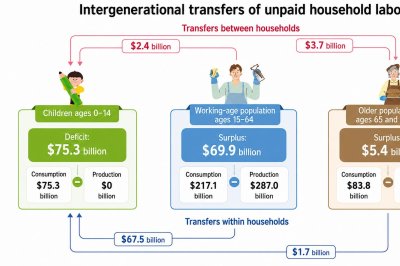
A chart illustrates how the estimated value of unpaid household labor is transferred among children, working-age adults and older people in South Korea. Information from Ministry of Data and Statistics. Infographic by Asia Today and translated by UPI
June 23 (Asia Today) — The estimated value of unpaid household services consumed by South Korean children totaled 116.6 trillion won ($75.3 billion) in 2024, with parents and grandparents providing much of the work, government data showed Tuesday.
The Ministry of Data and Statistics published the findings in South Korea’s 2024 National Time Transfer Accounts, which measure how unpaid household work is produced, consumed and transferred among age groups.
The account covers services that are generally excluded from gross domestic product, including cooking, cleaning, household management, caregiving and volunteer work.
The figure does not represent money that families paid for child care. It estimates the market value of unpaid services by using the time spent on household work, population figures and the wages that would be required to hire someone to perform similar tasks.
Children ages 14 and younger recorded a household-work lifecycle deficit of 116.6 trillion won because they consumed unpaid services but did not produce them.
A lifecycle deficit occurs when the value of household services consumed by an age group exceeds the value it produces.
About 107.3 trillion won ($69.3 billion), or 92% of the children’s deficit, was covered through transfers within the same household. This category largely represents time and labor provided by parents and other family members living with the children.
An additional 9.4 trillion won ($6.1 billion) came through transfers between households, which can include care provided by relatives living separately.
Working-age people between 15 and 64 produced unpaid household services valued at 444.4 trillion won ($287 billion) and consumed services worth 336.1 trillion won ($217 billion).
That left the group with a surplus of 108.3 trillion won ($69.9 billion).
The working-age population transferred a net 104.6 trillion won ($67.5 billion) in unpaid services to other members of the same households, primarily children.
The data show that people in their 30s and 40s, who are often raising young or school-age children, were at the center of the transfer system.
On a per-person basis, the household-work surplus reached its highest level at age 39, at 10.35 million won ($6,700).
Older South Koreans also made a net contribution.
People ages 65 and older produced household services valued at 138 trillion won ($89.1 billion) while consuming 129.7 trillion won ($83.8 billion), leaving a surplus of 8.3 trillion won ($5.4 billion).
They transferred a net 5.7 trillion won ($3.7 billion) in services between households. The ministry said the pattern reflects contributions such as grandparents caring for grandchildren who live in separate households.
Per-person household production peaked at age 40, declined and then increased again after retirement, producing what the ministry described as an M-shaped pattern.
Unpaid housework and care for grandchildren contributed to the later increase.
The lifecycle deficit was highest at birth, reaching 37 million won ($23,900) per person.
The balance shifted into a surplus at age 28, reached its peak at age 39 and returned to a deficit at age 82.
Those ages do not indicate when income begins to exceed personal spending. They show when the estimated value of unpaid household services a person produces becomes greater or smaller than the value of services the person consumes.
Household-service consumption was highest at birth and lowest at age 19, forming an L-shaped pattern.
Compared with 2019, the total deficit for children declined by 7.5 trillion won ($4.8 billion). Surpluses among working-age and older people also decreased.
The results provide a broader measure of the economic contributions made inside families, including work performed by parents and grandparents that does not appear in conventional income or production statistics.
England fans were left frustrated as their side were held to a goalless draw against Ghana, but were Thomas Tuchel’s side fortunate not to have a penalty given against them?
The incident in question happened late in Tuesday’s game as Prince Adu charged into the box before Ezri Konsa came across and appeared to bring down the midfielder.
No spot-kick was given – to the relief of England supporters, with replays showing Konsa had caught Adu on the knee and made no contact with the ball.
The BBC pundits watching the game were largely in agreement that Konsa and England were fortunate not to have been punished.
“I think that’s a penalty,” former Three Lions and Manchester United striker Wayne Rooney said on BBC One.
“Konsa takes a huge risk. His feet are off the floor when he comes flying in and he gets the man, not the ball.
“That could easily have been given in my view.”
Fellow former England international and ex-Manchester City defender Micah Richards added: “England were chasing the game, they were trying to score the goal but you still need that protection behind you.
South Korean soldiers escort a group of Korean War veterans from Commonwealth nations during a ceremony marking the 73rd anniversary of the Battle of Kapyong, in Gapyeong County, northeast of Seoul, South Korea. The Battle of Kapyong, from 22 to 27 April 1951, was fought between United Nations Command forces composed mainly of Canadian, Australian, and New Zealand troops, and invading Chinese forces along the Gapyeong (Kapyong) River valley. Photo by YONHAP / EPA
June 23 (Asia Today) — South Korean power equipment maker LS Electric is strengthening its ties with communities in Utah by honoring Korean War veterans and investing in local education as it expands in the fast-growing North American power market.
Demand for power equipment has surged as artificial intelligence companies build more data centers across North America. Against that backdrop, LS Electric Chairman and Chief Executive Officer Ja-Kyun Koo has emphasized what the company describes as a management strategy based on long-term trust with local communities.
LS Electric said Koo has pursued the strategy through LS Electric Utah, formerly MCM Engineering II, in Cedar City. The South Korean company acquired the operation in 2022 and has since directed an expansion of its production facilities.
Koo has highlighted a Korean War engagement involving soldiers from southern Utah as a historical link between the state and South Korea.
On May 26, 1951, 240 members of the Utah National Guard’s 213th Armored Field Artillery Battalion encountered a Chinese force of more than 4,000 troops near Gapyeong in Gyeonggi Province.
The engagement became known in Utah as the “Miracle at Kapyong.” Accounts maintained by the Utah National Guard say the soldiers fought off the advancing force without losing a member of the unit in the battle.
Families and descendants of the veterans remain part of the community around Cedar City, where LS Electric Utah is based.
Koo said the soldiers’ service in an unfamiliar country demonstrated the kind of courage and commitment that a Korean company operating in Utah should recognize.
LS Electric this year sponsored a Southern Utah University program supporting Korean War veterans. The company also paid the travel expenses of surviving veterans who visited South Korea in May for a ceremony marking the 75th anniversary of the Utah unit’s action near Gapyeong.
The company has also supported the development of science, technology, engineering and mathematics education facilities at Southern Utah University as part of its efforts to train workers for the region’s future industries.
LS Electric joined a separate initiative led by the Korea Chamber of Commerce and Industry to connect Korean companies operating in the United States with veterans who previously served with U.S. Forces Korea.
The company said the program could help Korean businesses recruit workers who already have experience with South Korea and its culture.
LS Electric’s community engagement has accompanied a sharp increase in orders for equipment used in North American data centers.
Korea Investment & Securities said LS Electric secured two North American data center equipment projects during the second quarter with a combined value of 489.3 billion won, or about $318 million.
The brokerage expects the company’s North American data center orders to increase by more than 50% from a year earlier and surpass 1.5 trillion won, or about $974 million, in 2026.
“Today, our firm footing in the U.S. market rests on the noble sacrifice of Utah veterans who fought for freedom and peace,” Koo said.
“Remembering and honoring the heroes who created the Miracle at Kapyong is a responsibility that companies should fulfill,” he said.
Koo said businesses built on strong relationships with their communities would be better positioned to achieve stable, long-term growth.
June 23 (UPI) — Federal air marshals have seized more than 300 drones during World Cup events in the United States, the Transportation Security Administration said Tuesday.
The TSA said the air marshals, working with state and federal officials, confiscated the devices, though the agency didn’t specify how many from each of the 11 U.S. World Cup venue cities.
“Flying a drone in a restricted zone is a federal crime and can result in fines up to $100,000, prison time and drone confiscation,” the TSA said in a post on X.
World Cup events are being held in 16 North American cities — two in Canada, three in Mexico and 11 in the United States. Among the U.S. cities hosting events are Atlanta, Boston, Dallas, Houston, Kansas City, Los Angeles, Miami, New York City, New Jersey, Philadelphia, San Francisco and Seattle.
Fans of Team USA shows their support before the start of the FIFA World Cup match between USA and Paraguay at SoFi Stadium in Los Angeles on June 12, 2026. Photo by Christian Brunskill/UPI | License Photo
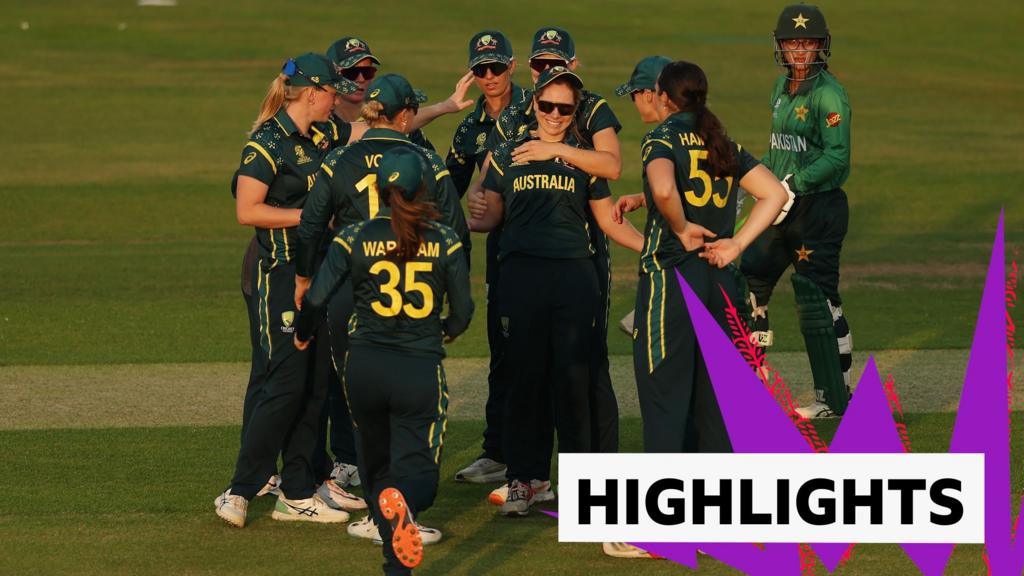
Australia made it four wins from four at the ICC Women’s T20 World Cup after easing to a 113-run victory against Pakistan at Headingley, with the six-time winners on the verge of the semi-finals with one group match remaining.
FIFA president Gianni Infantino will be ‘enjoying the final’ with Trump and present the trophy together on July 19.
Published On 23 Jun 202623 Jun 2026
FIFA president Gianni Infantino has confirmed plans to include United States President Donald Trump in the trophy presentation ceremony at the World Cup final.
“We will be together with the president, enjoying the final, and handing the trophy to the winner – of course, together,” Infantino said during an interview with Fox News on Tuesday morning.
Recommended Stories
list of 4 itemsend of list
Asked to clarify that he and Trump would present the trophy together at the match on July 19 in East Rutherford, New Jersey, Infantino added: “Of course. We are together all the time.”
Trump notably participated in the ceremony at last year’s Club World Cup final, when Chelsea defeated Paris Saint-Germain 3-0 at the same venue.
Chelsea’s Reece James lifts the trophy as he celebrates with teammates after winning the FIFA Club World Cup, with US President Donald Trump and FIFA president Gianni Infantino also on stage [Jeenah Moon/Reuters]
He remained on stage as Chelsea lifted the trophy. Later, the trophy was spotted in the Oval Office, with Chelsea reportedly having received a replica version.
According to The Athletic, citing FIFA sources, Infantino has been aiming to attend as many matches as possible at the tournament.
So far, that has been up to two a day. Trump has yet to attend any matches in this year’s World Cup.