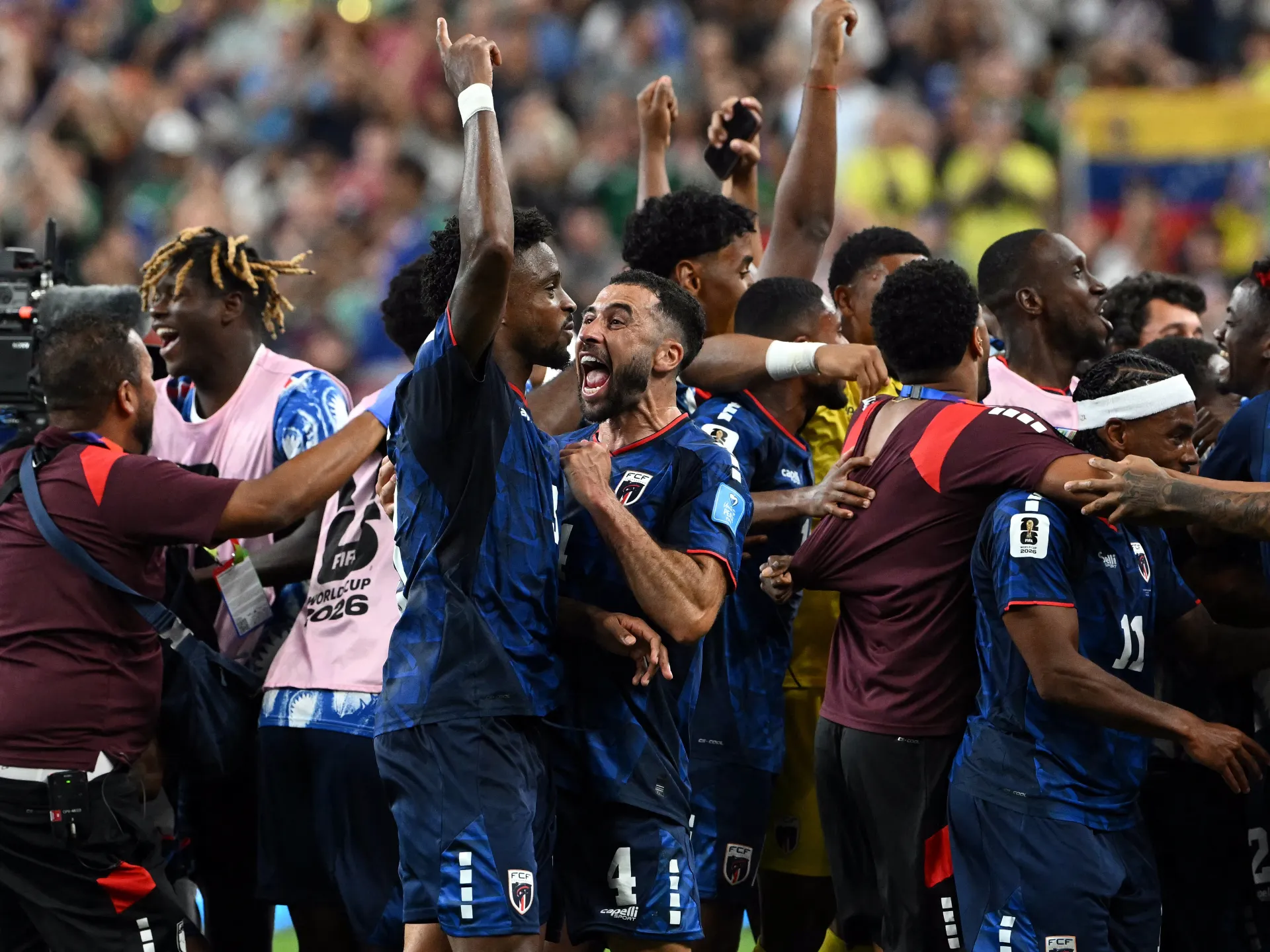
Watch World Cup Day 16: Spain, Egypt, Cape Verde advance to Round of 32
Latest match highlights, reaction and previews from the FIFA World Cup 2026 in North America.
Source link
Latest match highlights, reaction and previews from the FIFA World Cup 2026 in North America.
Source link


A double strike from Arsenal’s Leandro Trossard against New Zealand carried Belgium to top of Group G, ahead of Egypt on goal difference.

Published On 27 Jun 202627 Jun 2026
Belgium defeated New Zealand 5-1 to book their place in the knockout rounds of the 2026 World Cup on Friday, eliminating the All Whites from the tournament. The result secured the European nation’s first win of the World Cup, as they finished on top of Group G in Vancouver.
A double strike from Arsenal’s Leandro Trossard and goals from Kevin De Bruyne, Romelu Lukaku and Alexis Saelemaekers carried Belgium into the last 32 in first place ahead of Egypt on goal difference.
list of 4 itemsend of list
Egypt claimed the runners-up spot after a 1-1 draw with Iran in Seattle. The Iranians finished third in the group and face an anxious wait to know about their knockout fate.
Belgium dominated a lopsided first half and had alarm bells ringing in the New Zealand defence early on when Trossard’s angled shot cannoned off the inside of the upright only to be cleared off the line by Tyler Bindon.
Belgium looked poised to take the lead moments later when Jordanian referee Adham Makhadmeh pointed to the penalty spot after Trossard’s shot hit the arm of covering defender Finn Surman.
But VAR sent Makhadmeh to the monitor to take another look at the decision, which was subsequently overturned and New Zealand breathed again.
Yet Belgium did not have long to wait before the breakthrough and again it was Trossard who proved to be in the right place at the right time, bundling home from close range after De Bruyne’s corner sowed panic in the six-yard box.
Trossard effectively made the game safe five minutes into the second half, controlling a rebound in a crowded area to volley home past New Zealand goalkeeper Max Crocombe at the near post.

De Bruyne then stroked home an elegant low finish in the 66th minute to make it 3-0, a crucial goal which saw the Belgians leapfrog over Egypt into first place on goal difference.
Yet there was to be a dramatic end when New Zealand’s Elijah Just volleyed home a consolation strike from the edge of the area to make it 3-1.
That could have been potentially costly, with the goal suddenly bumping Belgium down into second place.
But Lukaku nodded home his team’s fourth in the 86th minute with his first touch just a minute after coming on as a substitute to return Belgium to the top of the table.
Saelemaekers completed the scoring with a shot from the edge of the area.

The Palantir logo is displayed on a mobile phone alongside a stock market graph displayed on a laptop screen in Liverpool, Britain, 09 June 2026. Photo by ADAM VAUGHAN / EPA
June 26 (Asia Today) — Japan’s Defense Ministry plans to expand the use of artificial intelligence in the Self-Defense Forces’ command-and-control operations, potentially bringing AI into the process through which commanders assess battlefield conditions and direct military units.
The move would mark a new stage in Japan’s defense transformation, shifting its focus beyond acquiring more weapons and equipment toward digitally supported battlefield decision-making.
The Asahi Shimbun reported Friday, citing multiple government officials, that Prime Minister Sanae Takaichi’s government plans to include the expanded use of command-and-control AI in three revised national security documents expected by the end of the year.
The documents are the National Security Strategy, National Defense Strategy and Defense Buildup Program.
The Defense Ministry is also considering including some related expenses in its fiscal 2027 budget request, according to the report.
Japan has used AI for some defense-related functions, but it has not placed the technology at the center of the Self-Defense Forces’ operational command structure.
A command-and-control system allows commanders to assess enemy threats, friendly forces, unit locations and intelligence assets before planning operations and issuing orders.
AI could rapidly organize and analyze large volumes of surveillance, reconnaissance, communications and sensor data before presenting commanders with possible courses of action.
One system reportedly under consideration is the Maven Smart System developed by U.S. data analytics company Palantir Technologies.
Maven analyzes information from satellites, drones, radar systems, battlefield sensors and intelligence reports. It can identify potential threats and targets and help commanders compare possible operational responses.
The U.S. Defense Department has expanded its use of the system and is moving to establish it as a formal long-term military program.
Adopting Maven could improve interoperability between the Self-Defense Forces and the U.S. military, allowing them to process and share operational information more quickly during joint missions.
The proposal, however, has also raised questions about data control, technological dependence and Japan’s authority over its own military command systems.
Command and control is not an ordinary administrative function. It is the highest-level structure through which a government decides how and when to use military force.
Reliance on software and algorithms supplied by a foreign private company could require Japan to establish clear rules covering military data management, access to source technology, system control, wartime operating authority and alternatives in the event of a malfunction or service disruption.
The introduction of foreign software would not formally transfer command authority to the company or the United States. Japanese commanders would retain responsibility for operational decisions.
The debate instead centers on how much of the information-processing infrastructure behind those decisions should depend on technology that Japan does not fully own or control.
Calls for domestically developed defense AI have consequently grown within Japan’s government and ruling-party circles.
One proposal would allow Japan to use a U.S. system initially while developing an independent platform through Japanese technology companies and the country’s defense industrial base.
Japan could eventually replace the foreign system or operate domestic and U.S. technologies together.
Developing a military-grade AI command system capable of immediate operational deployment would be difficult, however. A combined approach using both American and Japanese technology is therefore considered more likely in the near term.
The Defense Ministry identified seven priority areas for military AI in a policy issued in 2024: target detection and identification, intelligence collection and analysis, command and control, logistics, unmanned systems, cybersecurity and administrative efficiency.
The policy states that AI should assist rather than replace human judgment and that meaningful human involvement must be maintained.
The ministry has since established a team to accelerate AI adoption and has called for greater cooperation with Japanese defense companies and technology startups.
Japan’s consideration of command-and-control AI also carries implications for South Korea.
During a conflict or regional emergency, information sharing and operational coordination among the U.S. military, the Self-Defense Forces and South Korea’s military could become increasingly rapid and automated.
AI-assisted command systems could improve coordination in responding to North Korean missile launches, Chinese military activity or a crisis in the Taiwan Strait.
The same technology could also accelerate errors.
Incorrect intelligence, incomplete data or biased algorithms could cause an AI system to present commanders with misleading threat assessments or inappropriate operational choices.
Human commanders would remain responsible for final decisions, but the speed and complexity of AI-supported operations could make errors more difficult to identify before action is taken.
Japan’s plan therefore represents more than a military technology upgrade. It raises broader questions about who controls defense data, how allied systems should be connected and who bears responsibility when AI influences a military decision.
— Reported by Asia Today; translated by UPI
© Asia Today. Unauthorized reproduction or redistribution prohibited.
Original Korean report: https://www.asiatoday.co.kr/kn/view.php?key=20260626010009431
Cape Verde’s stunning debut headlines the team list for the World Cup knockouts, which begin on Sunday in Los Angeles.
Published On 27 Jun 202627 Jun 2026
The 48-team FIFA World Cup is nearing the end of the group stage matches and moving towards the knockout stages, beginning on Sunday.
Only 32 teams will advance to the next round of football’s most prestigious tournament. The 2026 iteration in North America is the first time 48 teams have featured, and some debutants have already left their mark.
Here’s what you need to know about the round of 32:

The top two teams in each of the 12 groups, along with the eight best third-place finishers, advance to the knockouts.
The knockout phase begins with the round of 32, introduced at the World Cup following the tournament’s expansion from 32 to 48 teams.
Then comes the round of 16, followed by the quarterfinals, semifinals and a playoff for third place. The final is on July 19.
The stage-wise breakdown of the tournament’s knockout schedule is:
Round of 32: June 28 to July 3
Round of 16: July 4–7
Quarterfinals: July 9–11
Semifinals: July 14–15
Bronze medal match: July 18
Final: July 19

So far, 26 teams have punched their ticket to the knockouts. They include:
⚽️ Colombia
⚽️ Argentina
⚽️ France
⚽️ Norway
⚽️ Germany
⚽️ USA
⚽️ Mexico
⚽️ Switzerland
⚽️ Canada
⚽️ Brazil
⚽️ Morocco
⚽️ South Africa
⚽️ Ivory Coast
⚽️ Bosnia and Herzegovina
⚽️ Ecuador
⚽️ Netherlands
⚽️ Japan
⚽️ Sweden
⚽️ Australia
⚽️ Spain
⚽️ Cape Verde
⚽️ Paraguay
⚽️ Egypt
⚽️ England
⚽️ Ghana
⚽️ Portugal
Sunday, June 28
Monday, June 29
Tuesday, June 30
Wednesday, July 1
Thursday, July 2
Friday, July 3
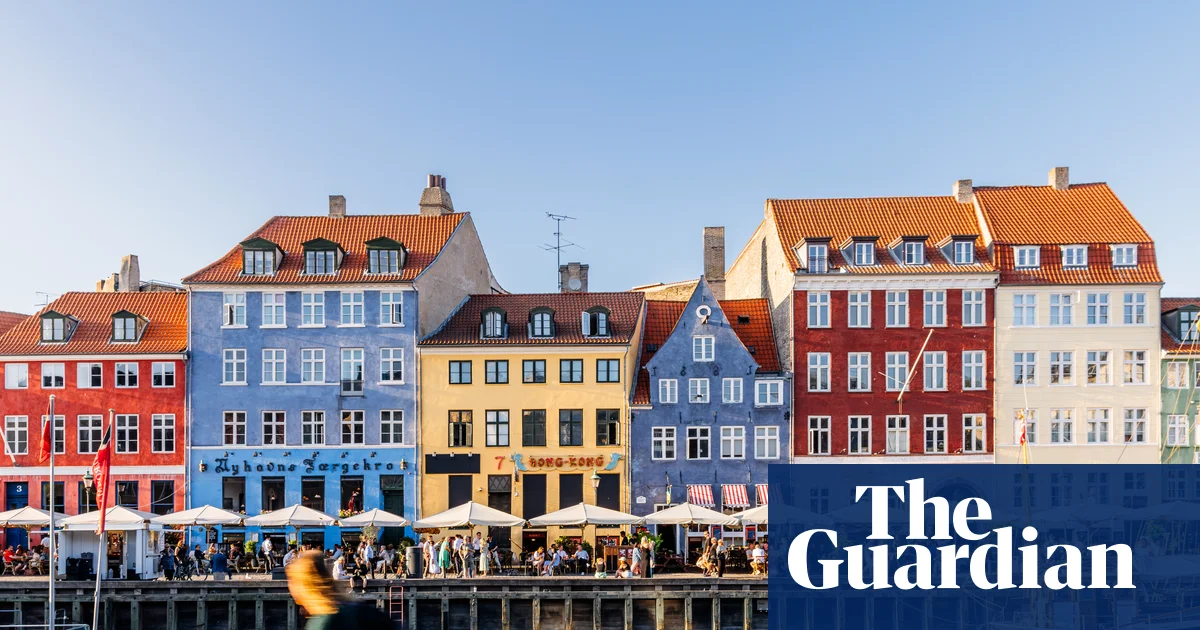
I didn’t realise I was a fussy eater until I left Denmark. During 12 years of living Danishly, with regular trips to the capital, I just … liked most things. Danes specialise in high-quality, organic produce, eaten as close to its natural state as possible. Denmark has very specific, diverse climatic conditions, making seasonal eating a science. Forget root vegetables in autumn and strawberries in summer – we’re talking micro seasons, week to week, with cabbage, kale, apples, potatoes, berries and rye a speciality. None are around for long, but when they are, they’re fabulous – and the seasonal Nordic diet has been proven to be as healthy as the renowned Mediterranean diet and better for the planet. No wonder Copenhageners look so smug.
But the city’s food scene hasn’t always been so good. Many who grew up in the 1970s and 1980s report being reared on canned food and frozen vegetables, with pork and potatoes, smørrebrød (open sandwiches) or junk food making up much of the offerings. (You’re never far from a pølservogn, or “hot dog wagon”, in Copenhagen – doling out bright red wieners baked in their own bready prophylactic.)
The capital’s culinary offerings finally got a facelift when Copenhagen was made European capital of culture in 1996. Then came Noma. Chefs René Redzepi and Claus Meyer turned a former warehouse in Christianshavn into a restaurant in 2003, named after a combination of the Danish words nordisk (Nordic) and mad (food). Noma eschewed the Mediterranean bias in fine dining at the time in favour of homegrown Danish produce. The following year, they brought together fellow chefs to develop a set of principles to help Nordic food move forward. Just as Dogme ’95 took things back to basics in film, the New Nordic Kitchen Symposium vowed to focus on the raw materials of cooking – using local, often foraged, seasonal produce.
After an 18-hour-long workshop, chefs formulated the New Nordic Kitchen manifesto. It’s outline: to express “purity, freshness, simplicity and ethics” by prioritising “ingredients and produce whose characteristics are particularly excellent in our climates”, and helping to “promote Nordic products and producers”. And it worked – encouraging everyone to up their game and influencing chefs globally. Copenhagen began hoarding Michelin stars (30 at last count), but in the kitchen, pressure built. Redzepi acknowledged as far back as 2015 that he had been a bully who “yelled and pushed people”, then in March this year he resigned from Noma amid allegations of physical and verbal abuse.
What made Redzepi’s fall so spectacular was that it collided with Noma’s image as a progressive, sustainably driven, Danish restaurant. There’s no doubt that Noma helped normalise ideas of seasonality, foraging and ingredient-led storytelling in fine dining (sometimes it was more of a Ted Talk than a meal), but innovation can’t come at the cost of accountability. There’s hope that Redzepi will act as a cautionary tale for other chefs contemplating how to run their kitchens – with Noma alumni now heading up dozens of restaurants in the city, from Propaganda (run by Youra Kim, former chef), to Kødbyens Fiskebare (Anders Selmer, former restaurant manager) and the ubiquitous Bæst (Christian Puglisi, former sous chef).
Today, there’s still an emphasis on quality and attention to detail – from ingredients to cutlery, crockery and even candlesticks. Service culture has improved (you might get a smile now) and restaurants book weeks in advance, so it pays to plan ahead. Eating out in Copenhagen isn’t cheap, mind, but every bakery allowed to thrive in the city will have affordable options. And there’s nothing like biting into some dense, buttered rye topped with whatever’s in season as the sun bounces off the water that slices the city (hard recommend: Aamanns). .
Copenhagen is more relaxed than other capitals and more human in scale, dominated by four- to six-storey buildings, and biking Vikings outnumbering cars in the city. With hyper-local menus, climate-conscious cooking and a devotion to detail, it is still, in the words of Danny Kaye, “wonderful”.
Compiled by Laura Hall
Steps from food market Torvehallerne, stylish Kong Arthur Hotel prides itself on offering a local feel with morning saunas and a social running club for guests. Double rooms start at £202 per night, two-night minimum stay. In Nordhavn, the newly opened Hotel Frihaven has 28 rooms and is well located for a morning swim. Double rooms start at £170. For a budget option, Next House, close to the foodie-orientated Meatpacking District in Vesterbro, has compact double rooms from £138.
If you don’t fancy going on a packed tourist-boat trip to see the city, take a bike ride or walk around the Harbour Circle Route instead, via some of the best Danish architecture and numerous swimming spots.
Speaking of swimming, the city’s floating pools are free for everyone – and something of a local obsession. Islands Brygge Harbour Bath has the largest and most central pool.
If you needed more incentive, the CopenPay initiative rewards visitors who participate in climate-friendly activities. Arrive by bike or metro, help with some gardening or bring a water bottle: all earn rewards such as drinks, free tours or a coffee.
If you want to bump into a Danish chef in the wild, try foraging in the Amager Strand area. The app VildeMad introduces the edible Danish landscape and has foraging guides to follow.
Copenhagen has a vibrant vintage shopping scene. Elmegade in Nørrebro is a great place to start. If you’re in the city on a Sunday, look out for flea markets. It’s a tradition to set up impromptu markets across the city, selling anything from vintage furniture to clothes.
Stop by Alma in Frederiksberg for a spot of supermarket tourism. The independent grocer is on a par with Waitrose and stocks specially produced chocolate from Michelin-starred restaurant Alchemist on its shelves.
Have you even been to Copenhagen if you don’t return with a biscuit tin? For the best iteration of the souvenir, head to Juno the Bakery, where they sell buttery cookies in chic containers. And yes, you can repurpose the tin for a sewing kit afterwards.
Amusement park Tivoli Gardens dates back to 1843 and is a classic day out with family-friendly attractions, thrill rides, arcades and parading peacocks in its lush gardens. Restaurants are – surprisingly – outstanding, including a pop-up that hosts some of the country’s most acclaimed chefs.
Copenhagen’s art scene is particularly exciting this year. At Arken, scrapwood artist Thomas Dambo’s first major exhibition Garbage Man displays his enormous and charming trolls, while at Cisternerne, Marina Abramović’s Seven Deaths offers a haunting experience.
The Coastal Route train line is a lovely trip once you’ve had your fill of wandering historic streets and hygge in the city. Take it to the Louisiana Museum of Modern Art or continue to Helsingør, home to the castle where Shakespeare set Hamlet

Sciver-Brunt first injured her calf on 29 April, suffering what was then described by England as a “minor” tear when playing in domestic cricket.
She subsequently sat out series against New Zealand and India at the start of the international summer before returning for England’s World Cup warm-up matches.
The England captain came through warm-ups against Australia and India and the first match of the World Cup against Sri Lanka but reported ‘tightness’ in a win over Ireland 10 days ago.
She has not played since and England will either play their semi-final on Tuesday or Thursday next week, depending on other results.
“The one thing you need is time,” Worth said.
“You need time to allow the muscle to repair and then strengthen in the right way. Those timelines are tight, particularly given a history of previous injuries in the same area, but not impossible.”
Calf injuries are a regular issue for cricketers. England’s leading wicket-taker James Anderson had calf problems in the latter part of his career.
Worth said this is because of issues specific to cricket, like batters having to sprint from a standing start or bowlers slamming their front foot into the crease in their delivery stride, and the make-up of the muscle.
“You have two different types of tissue that come together,” he said. “You have your calf which is the upper bit and then the Achilles tendon.
“Wherever there are two types of tissue in terms of composition, that is often where there is a weak point.
“Things like taking a run, going from 0 to 100mph, are really difficult to replicate in rehabilitation.
“You have the immediate calming down on inflammation but tendons like load and need to strengthen.
“It is very difficult to get the balance between working the muscle enough and not pushing it too far.
“Quite often calf injuries are tricky because you feel like you have done the work and you put them back onto the field in a match situation and something goes again.”


A view of the Bank of Korea headquarter building in Seoul, South Korea, 15 June 2026. Photo by JEON HEON-KYUN / EPA
June 26 (Asia Today) — South Korean banks are restricting mortgages and personal loans months earlier than usual as rapid household debt growth threatens to exhaust their annual lending quotas.
The country’s five largest commercial banks – KB Kookmin, Shinhan, Hana, Woori and NH NongHyup – recorded household loan growth through May that exceeded targets agreed upon with financial regulators, according to banking industry data released Friday.
Their combined household loan balance increased from 767.296 trillion won ($496.4 billion) at the end of April to 770.823 trillion won ($498.7 billion) at the end of May.
The one-month increase was 3.527 trillion won ($2.3 billion).
Mortgage growth slowed, but personal credit borrowing rose rapidly as a strengthening stock market encouraged more investors to borrow money to buy shares.
Outstanding personal credit loans at the five banks increased by 2.174 trillion won ($1.4 billion), from 104.341 trillion won ($67.5 billion) in April to 106.515 trillion won ($68.9 billion) in May.
Banks have responded by reducing loan limits, restricting online applications and suspending products that allow borrowers to receive larger mortgages.
Hana Bank will suspend enrollment Wednesday in mortgage insurance and guarantee programs that allow banks to lend without deducting an amount reserved to protect tenants’ small security deposits.
Without the programs, the maximum mortgage available for an apartment may fall by about 55 million won ($35,600) in Seoul and 48 million won ($31,100) in Gyeonggi Province.
KB Kookmin Bank suspended the programs Friday, while NH NongHyup Bank had already stopped offering them.
Industrial Bank of Korea also stopped accepting some individual loan applications submitted through outside loan consultants.
Banks have also reduced unsecured credit limits.
Hana Bank and Woori Bank lowered their personal credit loan limits to 100 million won ($64,700).
Shinhan Bank is reducing the limits on revolving credit lines by as much as 20% when customers renew them.
Online lenders KakaoBank, Kbank and Toss Bank have also reduced limits on personal loans and revolving credit accounts and restricted some new lending.
Banking officials said the restrictions began unusually early this year.
Banks ordinarily introduce stronger lending controls around October or November as they approach their annual household loan limits.
This year, however, regulators set substantially lower growth targets and banks are attempting to prevent a rush of applications late in the year.
One banking official said loan applications and inquiries increased after the government signaled that it would continue tightening household debt controls.
Some borrowers are seeking loans earlier because they fear financing will become more difficult later in the year, the official said.
Annual lending restrictions are not new in South Korea.
Banks sometimes receive permission to issue additional loans if their annual limits are exhausted earlier than expected. In other cases, borrowers must delay loans until the following year.
Lee Eun-hyung, a researcher at the Korea Research Institute for Construction Policy, said banks have repeatedly adjusted lending levels to comply with annual debt-management targets.
“Whether additional lending capacity is provided at the end of the year depends on the government’s policy direction and market conditions at that time,” Lee said.
Banking officials said additional lending allocations appear unlikely this year because the government remains focused on controlling household debt and stabilizing the real estate market.
Easing restrictions while housing prices remain elevated could further stimulate demand, they said.
The possibility that banks could exhaust their quotas early has prompted some prospective borrowers to accelerate home purchases or seek loan approval before further restrictions are introduced.
— Reported by Asia Today; translated by UPI
© Asia Today. Unauthorized reproduction or redistribution prohibited.
Original Korean report: https://www.asiatoday.co.kr/kn/view.php?key=20260626010009438
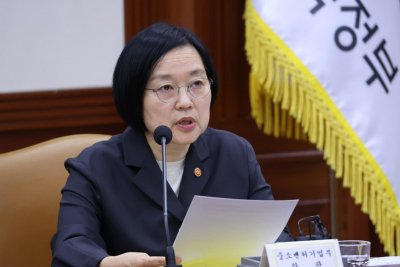

SMEs and Startups Minister Han Seong-sook attends a meeting of the emergency economic headquarters at the government complex in Seoul, South Korea, 22 May 2026. Photo by YONHAP / EPA
June 26 (Asia Today) — South Korea plans to create an investment and procurement system aimed at producing homegrown security technology companies comparable to U.S. data analytics company Palantir Technologies, the government said Friday.
The Ministry of SMEs and Startups announced the strategy with the Defense Ministry and Korea AeroSpace Administration during a meeting on future security innovation companies at the Blue House.
The plan seeks to accelerate the transfer of advanced civilian technology into national defense and security.
The government aims to develop five security technology companies valued at more than 1 trillion won ($651 million) and 50 companies with annual sales exceeding 100 billion won ($65.1 million) by 2030.
It will designate five strategic sectors covering drones and robotics, defense artificial intelligence and semiconductors, advanced sensors and materials, aerospace technology and cybersecurity and quantum communications.
Officials described the initiative as an effort to cultivate a “Korean Palantir,” referring to the U.S. company known for software that integrates and analyzes large volumes of defense and intelligence data.
The phrase is a policy description rather than the name of a company the government plans to establish.
Investment vehicle modeled on In-Q-Tel
The ministry plans to establish a government-backed investment organization modeled on In-Q-Tel, the nonprofit strategic investor created to support technologies relevant to U.S. intelligence agencies.
The proposed organization would make direct investments in early-stage security technology companies to address funding shortages.
The government also plans to support the establishment of a technology-focused asset management company tentatively called Korea Strategic Technology Partners.
Through government and private investment vehicles, officials aim to create as much as 10 trillion won ($6.5 billion) in strategic technology financing over the next five years.
The money would provide growth capital to startups and smaller companies developing technologies with potential defense, intelligence, aerospace or cybersecurity applications.
Faster research and procurement
South Korea also plans to introduce a special research and development program modeled on the U.S. Other Transaction Authority system.
The system would connect research, testing and government purchasing under a faster contracting process intended for rapidly changing technologies.
Selected companies could receive as much as 10 billion won ($6.5 million) each over five years.
The Defense Ministry and Korea AeroSpace Administration plan to create procurement systems capable of placing some advanced weapons or technologies into initial service within one year.
The government also plans to expand access to defense data through a catalog showing what information may be available to approved companies.
Aerospace authorities will support the development of core technology for a national space data center and platforms that allow businesses to use satellite information.
The strategy reflects the government’s view that traditional defense procurement moves too slowly for technologies such as artificial intelligence, drones, robotics and cybersecurity software.
Support for smaller technology companies
Minister of SMEs and Startups Han Seongsook said the global security industry is shifting rapidly from traditional hardware toward software, data and artificial intelligence.
“The government will provide bold and rapid support so startups and small venture companies with flexible and creative technologies can become leaders in security innovation,” Han said.
The government also plans to protect companies’ intellectual property rights and allow technologies developed through public programs to be adapted for civilian markets.
Officials said the strategy would help smaller companies enter a defense industry that has traditionally been dominated by large manufacturers and hardware-centered weapons programs.
The ministries plan to form an interagency committee, pursue special legislation and revise contracting rules to support the initiative.
— Reported by Asia Today; translated by UPI
© Asia Today. Unauthorized reproduction or redistribution prohibited.
Original Korean report: https://www.asiatoday.co.kr/kn/view.php?key=20260626010009467
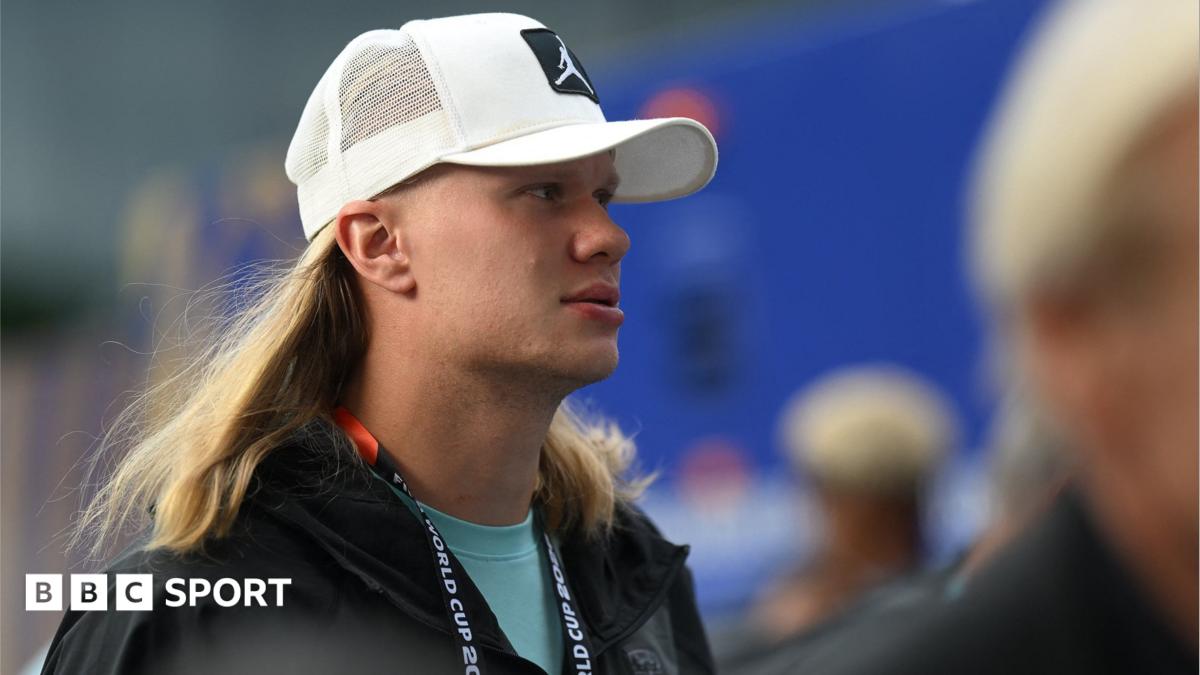
It was billed as a World Cup Golden Boot showdown between France superstar Kylian Mbappe and Norway goal machine Erling Haaland.
In the end Haaland started on the bench and it quickly turned into the Ousmane Dembele show after the Ballon d’Or winner hit a stunning 25-minute first-half hat-trick as Les Bleus coasted to a 4-1 win at Boston Stadium.
While France went with an array of attacking talent they hope will fire them to World Cup glory in New Jersey on 19 July, Norway decided this final group game was the right time to exclude Manchester City forward Haaland from the starting XI for the first time since 2024.
It wasn’t just Haaland though as Norway boss Stale Solbakken, with his side already through to the knockout stages, opted to make a whopping 10 changes.
“A no-brainer,” he said when asked why he decided to rest so many.
“Both my part and from the physio, health and medical department, and from some of the players themselves.
“The only consideration was for the Norway fans. They would have wanted to see Erling and Martin [Odegaard] play.
“We did a summary after the Senegal game and five or six players [were] very affected after 80 minutes. The entire defensive line and one or two midfielders.”
As a result of the changes, Dembele filled his boots after Mbappe struck the underside of the crossbar inside the opening minute.
“If Erling Haaland needs a rest for the latter stages of the tournament he will take that,” former England striker Ian Wright told ITV Sport before the game.
With Haaland, who had scored four goals in the previous two group games, sat on the bench, his deputy Jorgen Strand Larsen missed a penalty that would have made it 3-2 after half-time.
Haaland had already made his feelings clear about facing France after scoring two in a 3-2 win over Senegal on Tuesday.
“I couldn’t care too much about that game now,” he said after Norway qualified for the knockout stages.
“They’re probably going to win against us. They’re probably going to win the whole tournament.”
So was it a shrewd move by Norway to make so many changes – or the wrong decision?
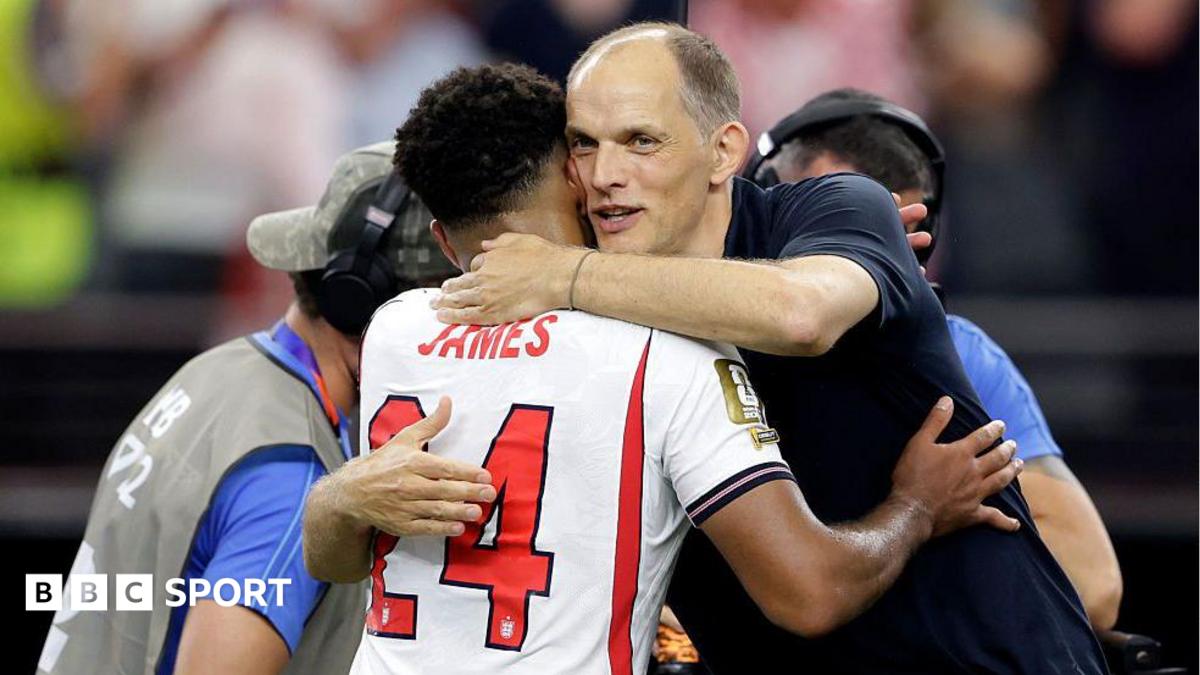
England manager Thomas Tuchel has defended his full-back selection policy after confirming Reece James will miss Saturday’s World Cup match against Panama.
As revealed by BBC Sport this week, James was assessed by England medics following Tuesday’s goalless draw against Ghana after complaining of a hamstring issue.
Tuchel has since confirmed that the Chelsea right-back has not travelled to New Jersey from their Kansas City base for their final Group L game against Panama on Saturday (22:00 BST). But he insists James has a chance of playing in England’s possible last-32 match next week.
However, BBC Sport understands that James is a significant doubt for the start of the knockout stages, should England qualify.
James’ injury – and the calf issue that caused Tino Livramento to return home from the United States – has thrown into question Tuchel’s decision to bring just three recognised full-backs to the World Cup.
Djed Spence, James and Livramento were the only genuine full-backs selected.
Nico O’Reilly, who played at left-back for Manchester City last season, is also in the squad – but he came through the ranks at Etihad Stadium as a midfielder. Dan Burn has also played at left-back but is recognised as a centre-back.
Spence and central defenders Jarell Quansah and Ezri Konsa are Tuchel’s alternative options at right-back.
Nevertheless, Tuchel said: “Yes, I am [happy with my options at right-back]. I selected the team, so I’m very happy with everything with the characteristic of the players and strengths that they give us.
“We would love to have every single key player, we would love to have them available, it’s not available – we find solutions, it’s what we do. It’s a tournament, we move on.”
James and Livramento, in particular, have a chequered injury history and Tuchel’s decision to take both to the World Cup is likely to be called into question.
Tuchel, though, is confident James will play again in the World Cup should England progress.
“It’s a minor hamstring issue, he’s not been able to train the last two days,” confirmed Tuchel.
“He’s now on an accelerated rehabilitation program and we take it game by game, but we strongly believe that he will be available [during the tournament].”
There was better news with regards to the availability of Bukayo Saka, Declan Rice and Elliot Anderson, who Tuchel said would all be available to face Panama.
Rice (calf) and Anderson (glute) missed training on Thursday – but returned on Friday.
Tuchel confirmed Saka is ready to start after coming off the bench in the opening two matches because of a long-term Achilles tendinitis complaint.

A record 10 African teams are competing at the 2026 World Cup. But 60 years ago, not one African nation played in the 1966 World Cup. Al Jazeera’s Samantha Johnson looks at the 1966 boycott that helped reshape the tournament for generations to come.
Published On 26 Jun 202626 Jun 2026
Share

Every member of France’s starting XI gets involved as a 17-pass move is put away by Ousmane Dembele to seal his hat-trick in France’s 4-1 win over Norway in their final FIFA World Cup Group I match at Boston Stadium.
MATCH REPORT: Norway 1-4 France – Group I
Available to UK users only.
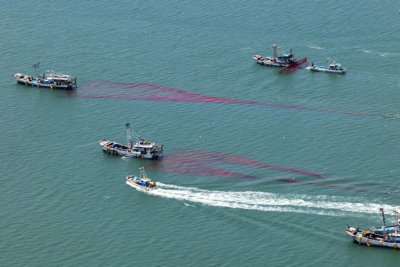

Fishing boats drag their nets in the Yellow Sea off Incheon, South Korea, 18 May 2026. Photo by YONHAP / EPA
June 26 (Asia Today) — China said Friday that it remains in close communication with South Korea over fisheries issues after President Lee Jae Myung called for stronger action against Chinese fishing boats accused of operating illegally in the Yellow Sea.
Chinese Foreign Ministry spokesman Guo Jiakun said maintaining stable waters and an orderly fishing environment between the two countries serves their common interests.
China consistently instructs its fishermen to operate in accordance with laws and regulations while also protecting their lawful rights, Guo said at a regular news briefing in Beijing.
“China and South Korea have a relatively mature dialogue mechanism on fisheries issues and maintain close communication on related matters,” Guo said.
He did not directly address whether the Chinese vessels cited by Lee had engaged in illegal fishing.
Lee raised the issue Wednesday during a visit to the Yeonpyeong Peace Observatory, where he received a briefing on waters near the Northern Limit Line, the de facto maritime boundary between South and North Korea in the Yellow Sea.
After being told that Chinese fishing boats had moved south of the maritime line, Lee questioned why they remained there despite being observed by South Korean forces.
He also asked whether South Korea should station enforcement vessels in the area.
“We have officially confirmed that they crossed the NLL,” Lee said. “I do not think we should simply leave this unattended.”
Lee ordered officials to take firm action, saying the visible presence of the boats during daylight hours showed the seriousness of the problem.
The Chinese government’s response largely repeated its previous position, emphasizing lawful fishing, the protection of Chinese fishermen’s rights and continued consultations with South Korea.
— Reported by Asia Today; translated by UPI
© Asia Today. Unauthorized reproduction or redistribution prohibited.
Original Korean report: https://www.asiatoday.co.kr/kn/view.php?key=20260626010009476
Hello! I’m Mark Olsen. Welcome to another edition of your regular field guide to a world of Only Good Movies.
Two of my favorite movies of the year so far are opening in Los Angeles today and they both benefit from being seen with a proper audience. You will find yourself surprised by what you are laughing at, curious about what other people are laughing at and then feel the air in the room collectively shift as both films take unexpected turns toward more genuine emotional moments.
The third feature directed by Olivia Wilde, “The Invite” is a biting look at modern relationships. Wilde stars as one half of a struggling couple, unhappily married to a character played by Seth Rogen. She invites over a couple from the apartment upstairs, played by Penélope Cruz and Edward Norton, and soon all sorts of feelings start flying around.
I reviewed for the paper, noting, “It feels daring for how it wants to actually examine the emotional costs of contemporary grown-up life, bringing wincing laughs of recognition.”
Wilde will be making appearances around L.A. over the weekend, including at the Vista, where the movie is playing in 35mm.
Also opening this weekend is “Maddie’s Secret,” the debut feature as writer-director from comedian and actor John Early, who also stars as the title character, an aspiring L.A. food influencer battling bulimia. It is a truly astonishing performance, one that walks a difficult tightrope between sincerity and parody. Early will appear for Q&As around town this weekend.
I spoke to Early about the film when it played as part of the Los Angeles Festival of Movies about its unusual tone — somehow earnest, tender and very funny all at once. Joshua Rothkopf reviewed the film, which he calls the indie arrival of the year, comparing it to movies by John Waters, Todd Haynes and Douglas Sirk.

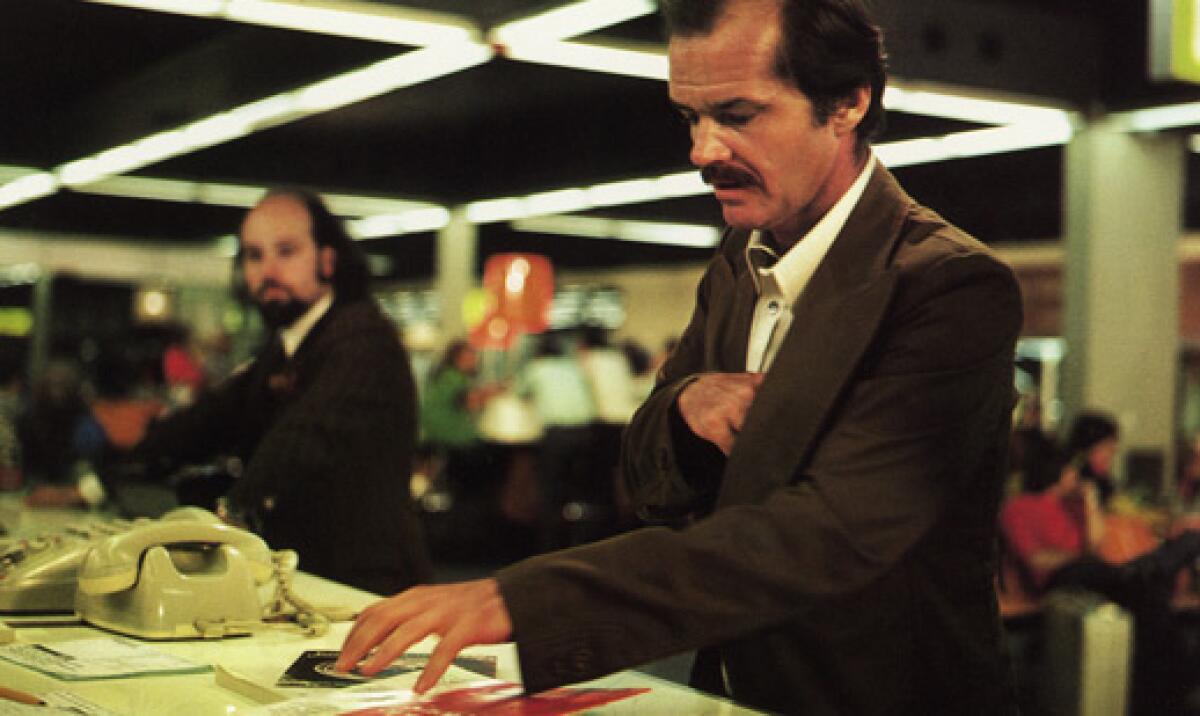
Jack Nicholson in the 1975 movie “The Passenger.”
(Sony Pictures Classics)
One movie I feel obligated to note whenever it plays it Michelangelo Antonioni’s “The Passenger.” Jack Nicholson stars as a disaffected journalist who assumes the identity of a dead man in an attempt to start over, only to find that his new life is even more complicated than his own. It is a powerful examination of middle-aged malaise that has Antonioni’s trademark mystery but, thanks to Nicholson, also has a directness that makes it accessible to wider audiences.
Nicholson made the film in between “Chinatown” and “One Flew Over the Cuckoo’s Nest,” at the height of his fame in the 1970s, a time when going to Europe and Africa to shoot a movie with an esoteric art-house filmmaker was a huge risk. He would personally purchase the rights to the film in the early 1980s and essentially treated it like owning an art object, very rarely allowing it to be shown publicly. It reentered circulation in 2005 with a rerelease but still has a certain air of rarity around it. The film will be showing at the New Beverly in 35mm on Saturday and Sunday.
Nicholson sat for an extended interview with The Times’ Patrick Goldstein around that 2005 reissue of the film, calling the production “the most vivid filmmaking adventure I’ve ever had.” He described his relationship to Antonioni by saying, “He’s been like a father figure to me. I worked with him because I wanted to be a film director and I thought I could learn from a master. He’s one of the few people I know that I ever really listened to.”
When the Italian filmmaker died in 2007, Nicholson got on the phone with us to say, “I don’t know how to put this: He’s just a maestro, and everybody loved him. … He was a man of joy and impeccable taste. His whole life was dedicated to modestly being a brilliant artist.”

Delphine Seyrig and Jean-Pierre Léaud in the movie “Stolen Kisses.”
(Janus Films)
Richard Linklater’s “Nouvelle Vague” last year didn’t exactly start a renewed wave of interest in the French New Wave of the 1960s, but then again, those movies never really went away. They’ve been inspirational to generations of film fans for more than 60 years now.
But one French director who has perhaps fallen out of favor slightly is François Truffaut. Long seen as one of the quintessential New Wave filmmakers, he has become taken for granted a little of late. Which is why it is exciting to see Brain Dead Studios showing his 1968 film “Stolen Kisses” in 35mm on Sunday.
The third in the series of films Truffaut returned to throughout his career, including his 1959 breakthrough “The 400 Blows,” the film again stars Jean-Pierre Léaud as Antoine Doinel, Truffaut’s alter ego through the stages of his life. Discharged from the army, Antoine drifts through a series of jobs. His real concern is juggling his busy love life, making the film something of a male-centered rom-com while capturing Truffaut’s warm, humanist worldview.

Jean-Claude Brialy in the 1970 movie “Claire’s Knee.”
(Janus Films)
Conversely, a filmmaker of the French New Wave who has seen his stock rise during the last few years is Eric Rohmer, championed by Noah Baumbach among others. His more caustic view of the world may resonate better with more cynical modern audiences.
The American Cinematheque will begin showing Rohmer’s cycle of “Six Moral Tales” at the Los Feliz Theatre this weekend with a 35mm screening of “My Night at Maud’s” and continuing with other screenings through the end of July. Other films in the series include the sultry, summertime tale “La Collectionneuse,” the ethical dilemma of “Claire’s Knee” and the tale of infidelity “Love in the Afternoon.”
Writing about “Claire’s Knee” in 1971, Charles Champlin noted, “What redeems Rohmer’s films from a defeating sameness is the quite extraordinary charm, believability and complexity of his characters and his meticulous attention to detail and his refusal to go for gross events at the expense of the subtle shadings of human relationships.”
Honestly, if a trip to France isn’t happening for you this summer, this series makes for a not-bad substitute.

An image from the 2025 documentary “We Are Pat.”
(The Film Collaborative)
Fresh off its world premiere at the recent Tribeca Film Festival, Ro Haber’s documentary “We Are Pat” will screen at Vidiots on Sunday. Haber will be there along with comedians Julia Sweeney and Harper Steele and, for good measure, Alan Cumming.
“We Are Pat” examines the afterlife of Sweeney’s character from “Saturday Night Live,” a confusingly genderless person who no one can ever quite figure out how to engage with. The way Pat has been picked up by a new generation of genderfluid comedians shows how influence and inspiration can come from the unlikeliest of places, and also how comedic ideas can transform over time.

Muhammad Ali fights George Foreman in the 1996 documentary “When We Were Kings.”
(Gramercy Pictures)
Released in 1996, “When We Were Kings” depicts the 1974 boxing match in Zaire between Muhammad Ali and George Foreman known as “The Rumble in the Jungle.” Director Leon Gast was unable to complete the film at the time, so the footage languished for years until he got an assist from filmmaker Taylor Hackford in shooting contemporary interviews with the likes of Norman Mailer, George Plimpton and Spike Lee. “When We Were Kings” would go on to win the Academy Award for documentary feature. It will be screening at Vidiots on Saturday.
The core of the movie is watching the thrilling, inspiring footage of Ali training and interacting with the locals. As Kenneth Turan wrote in his original review, “Because a classic heavyweight championship fight, especially with these protagonists, epitomizes the drama inherent in sport, ‘When We Were Kings’ always compels our interest.”
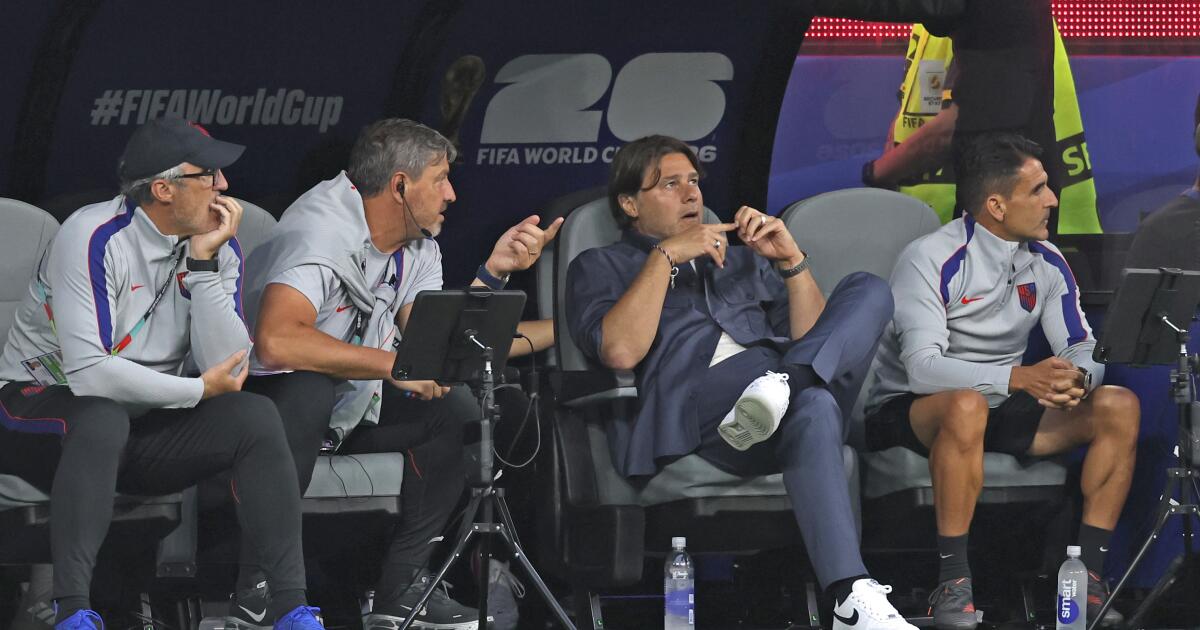
Through the first two games of this summer’s World Cup, the U.S. was about as perfect as a team could be. It won both games, never trailed, gave up just a goal and won its group handily, playing with a verve and confidence that erased all the doubts that had shadowed it coming in.
Then came Thursday.
With Mauricio Pochettino making a record nine changes to a lineup that had given the U.S. its most successful start to a World Cup in 96 years, the B team that closed the group stage at SoFi Stadium with a 3-2 loss to Turkey served to remind everyone how flawed this group can be.
The backline was porous, goalie Matt Turner gave up goals on the first two shots he faced and with the exception of midfielder Sebastian Berhalter, who had a goal and an assist, none of the starters really distinguished themselves. Whether any of that matters won’t be known until the U.S. next takes the field in the knockout rounds, facing Bosnia and Herzegovina on Wednesday in Santa Clara, Calif.
For Pochettino, whose contempt for convention has been a hallmark of his team’s World Cup run, clearing his bench and getting a U.S.-record 23 players on the field in the group stage was more more important than the result.
“The objective was to finish first and we are first,” he said. “Now it is the next stage and it is going to be a final. And we are ready. We are much better than before that game because we had players now with 90 minutes in their legs and performing and ready to help if we need from the beginning or from the bench. It’s all positive.”
Maybe. Sure, Christian Pulisic, who hadn’t played since the first half of the first game, got back on the field and looked good in a 32-minute cameo. But other than that the game was meaningless since the Americans had already won the group and qualified for the next round while Turkey was going home no matter the result.
The U.S. came in riding a huge wave of momentum, though, and that’s gone now, erased on Kaan Ayhan’s goal on the last touch of the game.
Does that matter?
“No,” captain Tim Ream said with conviction. “You just turn the page.”
The experience the role players got, he said, is more important than the final score.
“When we say it didn’t mean anything, it’s still a meaningful game, right? It’s a World Cup game,” he said. “So it gives everybody a taste of what life will be like if they are called upon and have to contribute.”
Midfielder Tyler Adams wasn’t so sure.
“I don’t know what it’s going to do,” he said. “I can’t predict the future. I don’t have an eight ball in front of me. We’ll see what happens.”
What Adams can say with certainty, however, is that in the future the U.S. will have no room for error. The games are all elimination matches now and 13 players on the U.S. roster, including Adams, have experienced that first hand, having lost in the round of 16 four years ago in Qatar.
Turner said it’s up to those veterans to impart that wisdom on the 13 who are playing in their first World Cup.
“You need to really take care of the boxes when it comes to knockout round. That’s the biggest lesson that we learned,” said Turner, who started all four games in the last World Cup. “It’s not necessarily how beautiful a style you play. The chances you create is important, [but] the way you defend your box is more important.
“Those games are going to be decided by one goal, they’re going to be narrow, and we’re going to have to be compact and be together, defensively, offensively, and take the chances when they come.”
The U.S. did little of that Thursday.
After a Berhalter corner set up Trusty for the first goal in the third minute, Turkey’s Arda Guler, a Real Madrid midfielder, tied the score seven minutes later, splitting a pair of U.S. defenders and running onto a pass from Kenan Yildiz in the center of the box, then lifting a shot over Turner.
Orkun Kokcu handed the U.S. its first deficit of the tournament when he found another big hole in the U.S. defense, redirecting a cross from Eren Elmali in from the center of the box to give Turkey a 2-1 lead.
Berhalter tied the score again four minutes into the second half, latching onto a loose ball at the top of the penalty area and one-hopping a right-footed shot just inside the near post. The game stayed that way until Ayhan, who came on with two minutes left in regulation, slid between two U.S. defenders to knock in the game-winner eight minutes into stoppage time.
For Berhalter, one of a record 21 Americans to get a start in this World Cup, Pochettino’s decision to clear his bench was not only a reward, it was preparation for what’s to come.
“It’s every little kid’s dream, across the United States of America, to play in a home World Cup. Just in a World Cup in general,” he said. “People made their debuts today, so congratulations everyone. This is what everybody looks forward to.”
More important, he added, “we know everyone’s ready to step up at any moment.”
Which is good because history suggests the road ahead is about the get a lot more challenging. The loss to Turkey was the Americans’ 10th straight to a UEFA team, running their winless streak against European opponents to 13 in a row.
Guess which continent Bosnia and Herzegovina, who the U.S. faces next, is from?
Sports editor Iliana Limón Romero contributed to this story.

A viral World Cup campaign tapped into a familiar conversation among Egyptian football fans, prompting debate over hope, expectation and decades of World Cup disappointment. Al Jazeera’s Yasmeen ElTahan explains.
Published On 26 Jun 202626 Jun 2026
Share
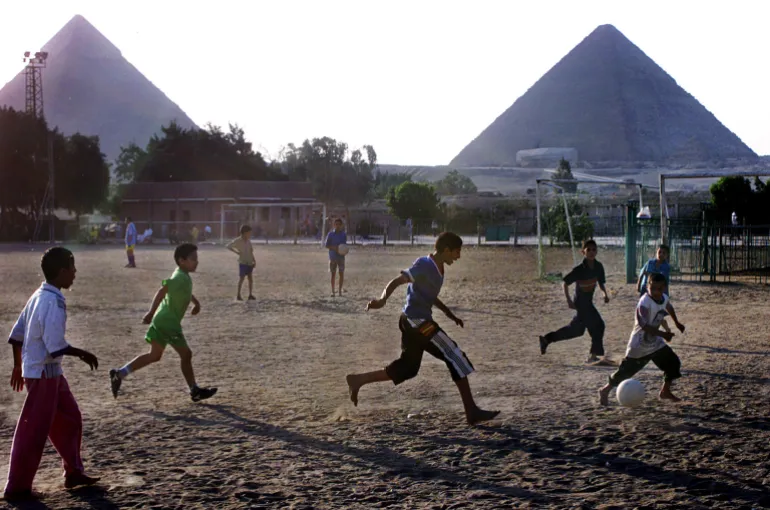
The advertisements all start the same way. It could be a barber, an aunt or a family member in discussion with others about the FIFA World Cup, but in each case, they assume Egypt will be heading home after the group stage.
Then an Egyptian footballer pushes back: “To all the doubters, this time we’re staying longer.”
It’s a line that’s resonating like never before in the nation of 120 million people, as Egyptian football fans wait with bated breath for the final round of group stage matches that could send The Pharaohs, as the national team are known, into uncharted territory: the knockout stages.
Here’s why these commercials have captured the zeitgeist in Egypt:
Egypt was the first African and Arab nation ever to play in a World Cup, back in 1934. It has won the Africa Cup of Nations a record seven times. Football in Egypt isn’t just a sport, it’s a national identity, and The Pharaohs have long been a source of genuine pride and belief.
But the World Cup has always told a different story. Before this tournament, Egypt had qualified just three times — in 1934, 1990 and 2018.
It had never won a single match. Fans still carry the painful memories of a penalty shootout loss to Senegal that kept Egypt out of the Qatar World Cup 2022 entirely.

Everything — at least, so it seems.
After two games at the World Cup, Egypt sits at the top of Group G, above Iran, Belgium and New Zealand.
The 26th ranked Egypt drew 1-1 with Belgium — ranked 10 in the world — in its first match. Then, it beat lower-ranked New Zealand 3-1.
Its four points are the most Egypt has ever earned at a World Cup. Its four goals are the most Egypt has ever scored at a World Cup.
Now, on Friday night in Seattle — early Saturday morning in Egypt — the team faces Iran in their final group game. A win or a draw would guarantee that Egypt’s national team goes into the knockout stages for the first time.
If Egypt loses to Iran, they might still make it to the round of 32, but their fate will depend on what happens in the Belgium-New Zealand match that will be held at the same time, and potentially, on the outcomes of matches in other groups. Eight of the 12 teams places third in their groups will also move into the next round.
So in a nutshell, Egypt is on the cusp of going where it never has before — and only a rare set of permutations can deny it that chance.

But it isn’t just the performances. Part of what makes this year feel different, to many fans, is the identity of the main man standing outside the pitch, next to the Egyptian dugout.
Hossam Hassan is Egypt’s all-time top scorer and one of the most iconic figures in the country’s football history. In 1990, he scored the goal that ended a 56-year wait and sent Egypt to the World Cup in Italy. Now, more than three decades later, he is the national team’s coach, making him the first Egyptian ever to reach the World Cup as both player and manager.
For older fans, his presence carries the memory of a time when Egypt genuinely believed it could make its mark on the world stage.

They aren’t really making fun of the team. They’re making fun of the deeply ingrained expectation that Egypt won’t go very far. And that expectation, many argue, goes beyond football. Years of economic hardship and political uncertainty have made expecting the worst feel like common sense for many Egyptians. They protect themselves from disappointment. They assume it won’t work out before it doesn’t.
That’s what has also made the campaigns somewhat divisive. For some viewers, the humour felt honest — a reflection of a habit fans know they have. It prompted real questions about why low expectations have become so normal. Others argued the advertisements risked making those same low expectations feel permanent, even acceptable.
Either way, they underscore how the 2026 World Cup has reignited faith among Egyptian fans, as they wait for the Iran match. An advertisement campaign challenging doubters has come to reflect the broader hopes, doubts and debates surrounding The Pharaohs.
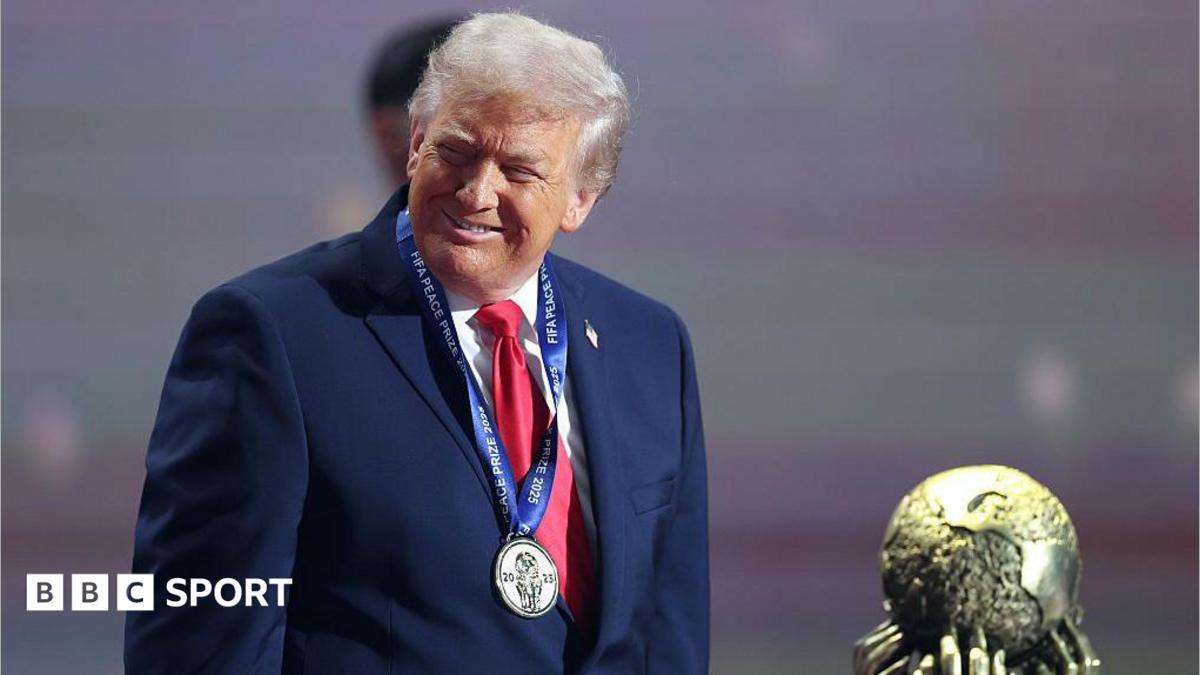
United States president Donald Trump was expected by many to regularly feature at the World Cup.
But he is yet to attend a single match, despite the United States team winning two of their three group games, and qualifying for the knockout stages.
So is it a surprise? Why may he have stayed away? And will he appear before the final? BBC Sport takes a closer look.
“My fellow Americans, citizens of the world, the United States is honoured to play host to this magnificent celebration. The World Cup has captured the imagination of our country, as has the game itself in the last few years…So I welcome all who have come from all countries and all continents and all who will watch these games in the United States for the next 30 days.”
The words of president Bill Clinton on 17 June, 1994 at Soldier Field in Chicago when attending the opening match of the first World Cup to be held in the United States.
The day is remembered more for Diana Ross’ missed ‘penalty-kick’ during the pre-match festivities than Clinton’s address, but his presence now seems more notable.
Because 32 years on, the country is once again staging the event, and yet, with the halfway point of the tournament passed, the current president has stayed away.
Earlier this month, Trump hailed the number of tickets sold by Fifa, labelling it “the most successful World Cup they’ve ever had”, and reinforcing the widely-held view that he would be a highly visible and enthusiastic presence.
After all, in the build-up, the tournament had seemed very important to him. He even referenced it, external in an address at a rally staged on the eve of his presidential inauguration early last year.
And Trump then played a central role at the draw in Washington DC in December, where he was awarded Fifa’s inaugural ‘Peace Prize’ by the governing body’s president Gianni Infantino.
The two men have forged a close relationship in recent years, with Infantino welcomed to both the Oval Office and Trump’s Florida residence Mar-a-Lago.
Trump has also been a regular presence at several other major sports events in the US during his second term, from the Super Bowl, and last summer’s Club World Cup final, to the opening day of golf’s Ryder Cup at Bethpage.
However, when co-hosts the US played their opening match v Paraguay on 12 June in Los Angeles, following on from an opening ceremony, the president was notable by his absence, with secretary of state Mark Rubio travelling from Washington instead.
It appeared that Trump had prioritised an Ultimate Fighting Championship (UFC) event on the White House lawn two days later, celebrating his 80th and America’s 250th birthday.
A young man dives from a bridge over the Saint-Martin Canal in Paris on Thursday amid a searing heat wave that prompted authorites in the capital to impose restrictions on drinking alcohol in public and takeout sales for the second time in five days. Photo by Yoan Valet/EPA
June 26 (UPI) — Authorities in Paris implemented restrictions on drinking in public and takeout alcohol sales on Friday for the second time in five days, amid one of the most severe June heat waves on record.
In an effort to reduce stress on the capital’s hospitals, public consumption of alcohol will be banned from noon through 7 a.m. Saturday, local time, and from noon on Saturday through 7 a.m. on Sunday, and can only be sold in bars and restaurants between 6 p.m. and 7 a.m on both days.
Prime Minister Sebastien Lecornu said the health alert level was being raised to its highest, to boost hospital staffing and protect the vulnerable while Paris police chief Patrice Faure said the the capacity of hospitals to cope was “reaching a saturation point.”
“As you know, drinking alcohol with the sun beating down can have a devastating effect,” said Faure.
The bans coincided with a France-Norway game at the FIFA World Cup in Boston, due to kick off in the early hours of Saturday, local time.
Paris Pride, which was due to run Thursday through Sunday, was moved to September, and the Solidays music festival, scheduled to be held over the same period, was canceled because police felt going ahead with either amid the searing temperatures posed a major public health risk.
On Thursday, a three-year-old child died in a hot car in Saint-Gratien in the northern Paris suburbs.
As Paris baked in record temperatures that peaked at 40.9 degrees Celsius earlier in the week, Health Minister Stephanie Rist warned the health impacts of the heat were not restricted to the elderly, infants and other vulnerable groups.
“Even if you are young and in good health with no underlying medical issues, this heat will affect you too. Young people are also suffering from cardiac arrests,” she said, explaining that the Paris ambulance responded to a four-fold jump in cardiac arrests, compared with normal, during a 24-hour period.
Paris mayor Emmanuel Gregoire said the mortality rate was on the increase and urged people, especially the young, to suspend normal physical activity such as jogging.
“We must not believe we are invulnerable. It’s fine to take a couple of days off from exercising,” he said.


LESS than two hours from the UK is a fairytale-like city that is getting easyJet flights for the first time.
EasyJet is launching a new route between the UK and Nuremberg in Germany from three UK airports this year.

Flights to Nuremberg will head off from Manchester, London Luton and London Gatwick.
Manchester flights will start on November 2, flying on Mondays and Fridays.
Then in London, Gatwick flights will start on November 19 flying on Thursdays and Sundays and Luton flights will start on November 23 flying on Mondays, Wednesdays, and Fridays.
Flights will cost from £31.99 per person.
Read more on travel inspo
You may have heard of or even watched Nuremberg the film, but how much do you actually know about the city?
When in the medieval city make sure to head to the Imperial Castle (Kaiserburg), which looks over the city and Old Town.
Between 1050 and 1571, every Holy Roman Emperor lived at the castle and today visitors can see the main imperial palace, with different floors for different groups of nobility.
Visitors can head around the grounds for free, but if they want to go inside any of the buildings they’ll need to get a ticket.
There’s also Weißgerbergasse, which is one of the city’s only streets to survive the Second World War and is lined with colourful timber-framed houses.
The street is home to a number of independent cafes as well as galleries.
For some more souvenir shopping, drop by the Craftsman’s Courtyard where you can watch live sessions of artists making pottery, glass ornaments and keepsakes.
For history fans, you can learn more about the Nuremberg Trials at the East Wing of the Palace of Justice.
Here you can tour Courtroom 600, which is where the international war crimes trials were held and above the courtroom you will find an exhibition about the trials.
When exploring the city, make sure to also drop by Zum Gulden Stern, which is an 800-year-old bratwurst kitchen.
Inside, the restaurant has an old-world feel – ideal for enjoying with one of the kitchen’s famous hand- grilled, smokey pork sausages.
And for something sweeter, try Lebkuchen, which is Nuremberg’s version of gingerbread.
And with flights launching in time for the festive season, it is ideal for a winter break to one of Europe’s oldest Christmas markets.
The Christkindlesmarkt dates back to the 16th century and visitors can explore around 180 wooden stalls, with red and white striped roofs.
Mass produced, plastic items are banned from being sold at the market, so instead you’ll find traditional handmade gifts including collectible figurines.
The new flight route comes as easyJet has also announced it will be launching other new routes,including to Morocco, France and Egypt.
Flights from London Luton to Rabat in Morocco will launch on November 5.
Over at London Southend Airport, flights to Lyon in France will start on December 3, with flights on Thursdays and Sundays.
A route between London Southend to Sharm El Sheikh in Egypt will start in the new year on January 4, with flights each Monday and Friday.
The airline is also expanding flights to Budapest in Hungary, from Bristol, Belfast and Liverpool airports.
Scotland will get a new service as well, between Edinburgh to Tromsø, Norway from November 30.
And over in Manchester, there will be flights to Vienna, Austria, launching on November 19.
Isle of Man will get its first international route with the airline, to Geneva, starting on December 19.

June 26 (UPI) — Britain’s King Charles III paid $17.2 million in taxes in 2024-25 and almost $40 million since he ascended the throne in 2022, according to the first ever tax statement published by the crown.
The British monarch has no tax liability in law, but both the then-Prince Charles and the late Queen Elizabeth II began paying voluntarily in 1993.
The palace said in a news release Thursday that the move to release the sovereign’s personal tax bill — but not his tax return — together with a statement detailing income sources was “part of the Royal Household’s commitment to transparency.”
The Royal Household’s annual financial statement shows Prince William paid a little over $10.3 million in taxes in 2024-25, bringing the total father and son paid to His Majesty’s Revenue & Customs to more than $66 million since September 2022.
Charles’ effective rate of tax remains unknown because the only source of income provided is $33.7 million revenue from his Duchy of Lancaster, a private estate that has provided the reigning monarch’s personal income since 1399, out of which other working members of the royal family are paid.
Same for William, who earned $28.5 million in revenue from his Duchy of Cornwall, out of which he pays his own way for himself and his family.
William’s duchy, which he inherited from his father, was worth $1.59 billion, while the King’s had assets of $911 million. Neither can benefit from sales of assets belonging to their respective estates.
Taxation experts said the releases did little to increase the transparency they were billed as providing.
Dan Neidle of Tax Policy Associates told the BBC that the King’s affairs remained “highly opaque”.
“We don’t know how much of that is capital gains tax, how much is income tax. Very importantly, we don’t know what expenses he’s deducted to come up with the figure on which he pays the tax,” he explained.
At the same time, the Sovereign Grant for the financial year ended March 31, money the government pays each year to fund the monarch’s official duties, the travel of working members of the royal family, and running and maintaining the main five royal palaces and castles, rose to $174.6 million after remaining flat for the past four years.
More than half, $88.2 million, went on maintaining and “reservicing” the royal real estate, according to the Sovereign Grant Statement.
The grant will rise to $182.4 million in the current financial year, which started April 1, but the rise is a one-off to cover the final year of a 10-year, $489.4 million modernization program for Buckingham Palace, and will thereafter be pegged at $132.2 million a year through 2032.
The grant is a fixed share — 12% — of the profit generated over the two previous financial years by the Crown Estate, a sprawling $16 billion business, real estate and land portfolio that technically belongs to the monarch but was surrendered to parliament in 1760.
Keeper of the Privy Purse, James Chalmers, pointed to the stability afforded by previous reigns during periods of historic transition, saying today’s monarchy was continuing to adapt to meet the challenges of the modern world where the Royal Family’s “soft” diplomacy was ever more valuable.
“So, while much changes, our central principles remain: to deliver value for money and to support the Royal Family as they seek to help shape a better world, here in the United Kingdom, across the Commonwealth and beyond,” he said.
“While Royal finances can sometimes appear complex, the underlying system is clear in principle, structured in law and refined over time to ensure the Monarch can serve with independence, accountability and in the long-term interests of the nation,” added Chalmers.
The king also used the news release to announce that, despite the costly refurbishment, he and Queen Camilla will never live at Buckingham Palace — the iconic official royal residence since Queen Victoria made it her home in 1837 — although it will continue to be used for official events and engagements and will be opened to the public.
King Charles’ preferred royal residence is the nearby Clarence House.


At a fan zone, we met Egyptian fans cheering on Mexico days before their team takes on Iran. For them gay pride was irrelevant.
“Right now it’s about two teams trying to get to the next round,” Makarius Demian told us, adding that he supports gay rights. “Pride match or no Pride match, that’s not what matters.”
Not far from the big screen, an Egyptian restaurant pop-up is getting ready for the match – and for fans craving a taste of home. ‘Koshari’ is a staple Egyptian dish; a mix of lentils, chickpeas, pasta, fried onions and garlic tomato sauce.
Owners Ayman Almasri and Amani Abouammo shut their restaurant Koshari for the duration of the World Cup to open a pop-up version at the fan zone where they were serving up the vegan Egyptian street food.
They say having Egypt and Iran play in a Pride match is awkward and rooted in cultural misunderstanding.
“Here it is the culture. People are used to that,” Abouammo said. “Back home, people are not used to it. It’s this piece of confusion that each party cannot understand the other party.”
On the pitch, there is plenty at stake. Egypt come into this match with momentum after beating New Zealand, and with a real chance of winning Group G.
Iran, meanwhile, arrive in a very different mood – their tournament already shaped by politics, travel restrictions and complaints about preparation time, even if they have been allowed to get to the host city earlier than in previous matches.
As Egypt and Iran try to edge closer to the knockout stages, this match is about more than what happens on the pitch.
It is also a glimpse of what happens when a World Cup lands in a city celebrating one set of values, while two of the teams taking part arrive carrying very different ones of their own.

