The surge in soccer fans this summer was bad for some businesses in Los Angeles.
World Cup host cities had lofty economic expectations for the summer tournament. But the city’s hotels only got a 1% bump in occupancy, according to a report published this week by Hospitality Education and Research Organization, a project of the Hotel Assn. of Los Angeles.
Seventy-two percent of surveyed hotels said the tournament hurt their 2026 finances, and 48% called the impact “extremely negative.” Just 2% said it met projections.
Downtown occupancy reached 66% in June, down from 71% a year earlier, the report says. Room nights fell between 10% and 12%.
Hotel guests at the Metropole restaurant just opposite the main lobby at the Hotel Indigo in downtown Los Angeles in May.
(Genaro Molina / Los Angeles Times)
Ahead of World Cup tournaments, FIFA holds large blocks of rooms. But FIFA canceled or released up to 70% of the hotel room blocks it had reserved in host cities, including Los Angeles.
“We understood that we were maybe going to be disappointed with attendance going into the World Cup simply by the volume of cancellations that came out of the room block agreement,” said Jackie Filla, president and CEO of the Hotel Assn. of Los Angeles.
The disappointing turnout led to staff reductions. Of the hotels surveyed 82% reduced seasonal staff and more than six in 10 reported reducing employee shifts, scheduled hours, or permanent staff.
Hotels did raise prices, with the average daily rate hitting $228, the highest of any comparable L.A. event in three years. But occupancy was 71%, well below the 83% recorded during Taylor Swift’s Eras Tour.
A visitor walks in the lobby of the Hotel Indigo in downtown Los Angeles.
(Genaro Molina / Los Angeles Times)
The survey drew 58 responses from 210 hotels, and the analysis was done by travel-data firm Rove using CoStar and AirDNA data. International visitors were also scarce, with Los Angeles welcoming 700,000 international arrivals in June and July — roughly 80,000 visitors below 2024 levels for the same period, the report says.
“We particularly didn’t see a lot of foreign visitors and that’s something that was disappointing,” Filla said. “Foreign visitors do spend three times the amount of money as the average domestic traveler.”
Short-term rentals, meanwhile, gained. Their demand rose 23% and revenue 21% versus July 2024, while hotel revenue fell 3.3%. Airbnb, the tournament’s official fan accommodation, offered new hosts $750 incentives.
The city is currently weighing a temporary proposal to ease its short-term rental rules through the end of 2028 to accommodate tourists. “That will really, truly undercut the business of hotels,” Filla added. “We saw some of that with the World Cup.”
The worry is carrying over to the Olympic Games, set to be hosted in Los Angeles in 2028. Six in 10 surveyed hoteliers expect an Olympic rental surge to hurt their bookings and rates, the report says.
The World Cup “gave us false hope to recover from a negative year,” one Los Angeles hotelier said, according to the report. “I also feel [the] same thing will probably happen for [the] Super Bowl and Olympics.”
Wales have reached the play-off stages of qualification for a major tournament for only the third time in the history of the women’s national side.
Their first attempt, in qualifying for the 2023 World Cup, ended in agony.
Gemma Grainger’s team beat Bosnia-Herzgovina at the semi-final stage before – despite taking an early lead – losing out to a goal late in extra time of the final in Switzerland.
Two years later, it was an entirely different story as Wales overcame Slovakia and the Republic of Ireland to reach Euro 2025, the first women’s major tournament in the nation’s history.
Thanks in part to a lengthy injury list, James is one of only five players who began the decisive game in Dublin 22 months ago who are in contention to start against Albania.
The 146-cap Seattle Reign midfielder was also part of the side left heartbroken by that late defeat in Zurich in October 2022.
“[They were] two very different feelings after both games,” James said.
“The feeling that we had out in Switzerland, going so close in extra time and narrowly missing out, it fuelled us for Dublin.
“There’s a big group of us that experienced that and at the start of this camp we made sure the whole group was aware of how it feels to be on both ends of that.”
Alexander Zverev is guaranteed to finish the 2026 season as the world number one after Carlos Alcaraz’s surprise defeat in the Shanghai Masters.
German Zverev was on course to climb above current world number one Jannik Sinner, who has been ruled out for the rest of the year with a knee injury.
Alcaraz still had a mathematical chance of stopping Zverev until he was beaten 7-5 7-6 (7-4) by Belgium’s Zizou Bergs in the third round on Monday.
“It’s been a fantastic season for me. Knowing that I will finish the year on top of the rankings is just a dream come true,” said Zverev.
After losing three major finals, Zverev landed the first Grand Slam title of his career by winning the French Open in June, and followed that with victory at the US Open last month.
The 29-year-old has taken advantage of the injury problems suffered by Spaniard Alcaraz and Italian Sinner – the dominant pair on the ATP Tour in the previous two seasons – to become the world’s leading player.
Zverev cannot overtake Sinner until 2 November at the earliest.
He will become the first German to end the year as number one, and the oldest player to achieve the feat for the first time.
After suffering a serious ankle injury in the 2022 French Open semi-finals which kept him out for seven months, Zverev regained his place in the upper echelons of the sport and been ranked inside the top four continuously since March 2024.
“So much work and effort have been put into achieving this goal, especially after coming back from the ankle injury. I look forward to finishing the season in style,” he said.
While the DP World Tour agreed to grant conditional releases with nine players this season, it is understood the change for 2027 is predominantly down to LIV offering players equity in future and a feeling this is incompatible with the European tour being a members organisation.
However, it also comes at a time when the DP World Tour’s strategic alliance with the PGA Tour is being negotiated, so the move likely reflects a desire to put itself in the best position possible in those discussions.
Players will have until 16 November to sign up to the DP World Tour for next year.
Under the terms of its court-supervised restructuring process, LIV Golf needs to sign players up by 25 October.
Ted Goldthorpe, head of BC Partners Credit, told BBC Sport last week he was “confident” LIV would have a “critical mass” of players.
But since then two-time major winner Rahm has said he will not continue playing on the LIV tour.
Lawyers representing a number of other players, including fellow major winners Bryson DeChambeau and Cameron Smith, sought clarification from the court that rejection of contracts would equate to “termination”, enabling players to hold discussions with third parties about their futures.
Richard Bland is currently the only player to have stated publicly a desire to play on LIV 2.0.
However, Perez indicated last month he hoped there would be a future for the league.
Olympic and defending world champions will be competing at the Shanghai Velodrome for the 2026 Track World Championships this week, and you can watch it on the BBC.
There are 22 titles at stake and this is the first track cycling qualifying event for the Los Angeles 2028 Olympics.
The championships, taking place between 14 and 18 October, will see riders compete for the coveted rainbow jerseys in a range of disciplines, with events split between endurance and sprint.
Great Britain finished second in 2025 with the Netherlands taking top spot with nine gold medals. Harrie Lavreysen was once again the dominant force for the Dutch team, winning an incredible four gold medals in the Keirin, Sprint, 1km Time Trial and the Team Sprint.
As we head into fall television season, you might notice some familiar titles, not just because a few shows are returning for new seasons, but because they’re prequels, continuations or adaptations of well-known books or films — sometimes both.
The only guide you need for fall entertainment.
Hollywood has leaned into established IP this season, but if you’re seeking an original story, don’t fret, several of those are coming too. Viewers will have plenty to cozy up to, with a slew of series dropping around holidays — a perfect time to binge your new favorite watch.
‘Monster: The Lizzie Borden Story,’ Sept. 17 (Netflix)
Ella Beatty as Lizzie Borden in Netflix’s “Monster: The Lizzie Borden Story.”
(Netflix)
Described as a “darkly comic spin on a Victorian-era murder,” the fourth installment of Ryan Murphy and Ian Brennan’s true-crime anthology chronicles the story of Sunday school teacher Lizzie Borden, who in 1893 was the prime suspect in the still unsolved ax murders of her father and stepmother inside their Fall River, Mass., home. The 32-year-old “spinster” was tried by an all-male jury who found her innocent of the gruesome crime. Their quaint view of women as meek, docile and powerless clearly worked in her favor. Ella Beatty plays the rage-filled, blood-spattered Borden in this eight-episode series. Charlie Hunnam, who appeared in the third installment of “Monster,” portrays her wealthy but ultimately unfortunate father Andrew Borden, and Rebecca Hall plays his second wife, Abby Borden. The drama reportedly includes the music of modern artists such as Kate Bush, while the trailer simply leans into the haunting Victorian-era nursery rhyme “Lizzie Borden took an axe …” — Lorraine Ali
‘Brothers,’ Sept. 23 (Apple TV)
Woody Harrelson and Matthew McConaughey in Apple TV’s “Brothers.”
(Ryan Green / Apple TV)
Twelve years ago, after their chemistry lit up Season 1 of “True Detective,” stars Woody Harrelson and Matthew McConaughey became Hollywood’s most beloved bromance. When Harrelson later told a tale in which McConaughey’s mother revealed she had known Harrelson’s father around the time McConaughey was conceived, it made a lot of hot-rumor sense. Also, apparently, a fine pitch for a series, with the two men playing fictionalized versions of themselves. After a family crisis, Harrelson flees with his wife and daughters to McConaughey’s Texas ranch where he hears a similar “I knew your father” story from Ma Mac (Holland Taylor). As he decides what to do, McConaughey decides to run for governor of Texas. The personal eccentricities of the two leads, along with their odd-couple vibe, provide most of the show’s humor, but the best reason to watch is Taylor, who shows both stars how it’s done, by stealing the show from under their feet. — Mary McNamara
‘American Hostage,’ Sept. 20 (MGM+)
Jon Hamm as Fred Heckman in MGM+’s “American Hostage.”
(Steve Ackerman / MGM+ / Sony Pictures Television)
Set in the 1970s, this anthology series based on a scripted podcast of the same name tells the true story of Fred Heckman, a respected radio journalist played by Jon Hamm, who also executive produces. Heckman, the news director of WIBC-AM in Indianapolis, is placed at the center of a story when hostage-taker Tony Kiritsis (Giovanni Ribisi) requests to be interviewed by the newsman as police attempt to negotiate the release of his hostage, mortgage broker Dick Hall (Kristoffer Polaha). The series contemplates topics like shady lending practices by financial institutions — something that will resonate deeply with today’s economy — and the ethics of placing oneself in a news story. Shawn Ryan (“The Shield,” “The Night Agent”) and Eileen Myers (“Big Love”) serve as co-showrunners and executive producers. — Maira Garcia
‘East of Eden,’ Oct. 1 (Netflix)
Mike Faist as Charles Trask, Christopher Abbott as Adam Trask and Florence Pugh as Cathy Ames in Netflix’s “East of Eden.”
(Netflix)
Zoe Kazan has established herself in the past several years as a versatile artist who impressed critics and audiences with her lead role in “Ruby Sparks” and her Emmy-nominated performance in HBO’s “Olive Kitteridge.” The spotlight is likely to get brighter with Netflix’s “East of Eden,” the latest adaptation of John Steinbeck’s classic novel. A previous version of the novel was directed by Kazan’s grandfather Elia Kazan, and is best known as one of three films starring James Dean. Zoe Kazan is the writer and co-showrunner of the Netflix project, which stars Florence Pugh as anti-heroine Cathy Ames — a character sidelined in the 1955 film. Christopher Abbott (“Girls”) and Mike Faist (“Challengers”) co-star. — Greg Braxton
‘Below,’ Oct. 8 (Netflix)
Josh Hartnett as Calvin and Mackenzie Davis as Fonda in Netflix’s “Below.”
(Netflix)
Summer is over, but that doesn’t mean there can’t still be stories about killer creatures under the sea. Netflix’s “Below” joins the watery spectrum already inhabited by “Jaws,” “The Meg,” “47 Meters Down” and numerous other entries as it unveils its premise about a seaside town targeted by a mysterious monster. Josh Hartnett (“Trap”) stars as a fisherman and single father living in a small Newfoundland town who must find a way to protect his family and the community when an unidentified creature starts wreaking havoc. He joins forces with a marine researcher (Mackenzie Davis of “Station Eleven”) who informs him of the town’s mysterious history and buried secrets. — G.B.
‘Cupertino,’ Oct. 8 (CBS)
Rachel Keller as Olivia Siffre, Ella Stiller as Christy Palladino and Mike Colter as Michael Price in CBS’ “Cupertino.”
(Elizabeth Fisher / CBS)
Robert and Michelle King return to the network and territory of their acclaimed series “The Good Wife” with this Silicon Valley-based legal dramedy, replicating that show’s mix of quirk, current events and courtroom nail-biters. To continue the David vs. Goliath comparison the network has put out, it launches its stones at the brow of the tech industry, with Mike Colter and Rachel Keller as lawyers fired with bad cause who team up to defend the little guys from the big jerks. Ella Stiller is their ingenuous aide-de-camp, Busy Philipps a flamboyant investor and Renée Elise Goldsberry as an opposing counsel who has history with Colter. — Robert Lloyd
‘Avatar: Seven Havens,’ Oct. 9 (Paramount+)
Saheli Khan as Pavi, Dee Bradley Baker as Geet/Ruhi and Aishwarya “Aishu” Devan as Nisha in “Avatar: Seven Havens” on Paramount+.
(Paramount+)
When “Avatar: The Last Airbender” premiered over 20 years ago, it introduced audiences to a world inspired by Asian and Indigenous cultures, where certain people can manipulate elements through a martial arts-infused ability known as bending. It also helped show that an animated kids series can tackle weighty themes such as war, genocide, imperialism, sexism, propaganda and political corruption in a serialized story and be a hit. In the world of “Avatar,” there is one special bender who is the master of all four elements — water, earth, fire and air — and is tasked with maintaining balance in the world. Set after the events of “The Last Airbender” and “The Legend of Korra,” “Avatar: Seven Havens” follows the current incarnation of the Avatar, Pavi. Young Pavi and her twin sister, Nisha, live in a world that no longer sees the Avatar as humanity’s savior after it was devastated by a calamity. Pavi and her allies still have to figure out a way to save the world, though. Every Avatar seems to have to deal with problems caused or left unresolved by their predecessors. As a Korra fan, I’m curious to see what sort of legacy she ended up leaving behind. — Tracy Brown
‘VisionQuest,’ Oct. 14 (Disney+)
Paul Bettany in Marvel’s “VisionQuest” on Disney+.
(Marvel)
When we last saw Vision (Paul Bettany), the reconstructed synthezoid and former Avenger had just regained his memories — thanks to an assist from his magically created double — before flying off into the unknown at the end of “WandaVision.” Much has changed in the Marvel Cinematic Universe since then, but I’m ready to dive back into this corner of the multiverse occupied by “WandaVision,” “Agatha All Along” and the upcoming “VisionQuest.” Capping off the TV trilogy, the new series will see Vision navigating life after “WandaVision” along with existential questions about his personhood and identity with the help of some friends in the form of other Marvel AI and robots, including Ultron (James Spader). Both “WandaVision” and “Agatha” were meditations on grief, trauma and motherhood, by way of sitcoms and magical escape rooms, respectively. I’m interested to see how this final installment will explore the patrilineal connection between Ultron, Vision and Tommy (Ruaridh Mollica), one of Wanda and Vision’s long lost twins who were magically created in “WandaVision.” Could the series tee up a full Maximoff family reunion? I hope so. — T.B.
‘Crystal Lake,’ Oct. 15 (Peacock)
Linda Cardellini as Pamela Voorhees in Peacock’s “Crystal Lake.”
(Peacock)
Drew Barrymore made a fatal mistake in the opening scene of the 1996 horror film “Scream” when the creepy murderer on the telephone quizzed her about the name of the killer in the original “Friday the 13th.” When Barrymore answered “Jason Voorhees,” she was reminded that the original killer was actually Pamela Voorhees, Jason’s mother. Pamela is center stage in “Crystal Lake,” Peacock’s prequel to the bloody franchise launched in 1980. Linda Cardellini (“DTF St. Louis”) plays the grief-stricken mother who seeks revenge after her son drowns at a summer camp. There will be blood. — G.B.
‘The Diplomat’ Season 4, Oct. 15 (Netflix)
Keri Russell as Kate Wyler, Rufus Sewell as Hal Wyler and Allison Janney as Grace Penn in Season 4 of “The Diplomat.”
(Netflix)
For those of us who stay ready for the Kate Wyler 2028 campaign, it’s time to lock in. The highly competent, intensely impulsive, deeply flawed and incredibly relatable political power player with unapologetically messy hair is back to clean up more backroom deals and betrayals, volatile international crises and unstable government leadership — all while managing a topsy-turvy marriage tangled up in it. The fourth season picks up directly after the Season 3 finale cliffhanger, where Kate (Keri Russell) learned that her husband, Vice President Hal Wyler (Rufus Sewell), and President Grace Penn (Allison Janney) secretly conspired to steal a Russian nuclear weapon. The new season will explore the fallout and tension in domestic and international relationships, and the marital strife in between. Somehow, political chaos feels good in a show like this. — Yvonne Villarreal
‘Nocturne,’ Oct. 30 (Apple TV)
Stephen Graham and Liev Schreiber in Apple TV’s “Nocturne.”
(Dennis P. Mong Jr / Apple TV)
Stephen Graham plays the diabolically cunning serial killer Jurek Walter in “Nocturne,” a chilling psychological thriller that promises “Hannibal”-level creepiness (as in the film). The 10-episode drama stars Liev Schreiber as Jonah Lynn, a former soldier turned homicide detective who moves to a small town in western Pennsylvania after working the tough streets of Philadelphia. But the peace and quiet he hoped for is shattered when his family is targeted by Jurek. Lynn’s surrogate daughter, FBI Agent Saga Bauer (Zazie Beetz), steps in the fray, upping the stakes. Based on Lars Kepler’s crime novels “Lazarus” and “The Sandman,” the series also stars Bill Camp, Rory Culkin, Poorna Jagannathan, Chrissy Metz and Gary Carr. The cast alone should make “Nocturne” a killer thriller, but we’ll have to wait until October to see if it slays. — L.A.
‘Yellowjackets’ Season 4, Nov. 20 (Paramount+)
Sophie Thatcher as teen Natalie in the finale of Season 3 of “Yellowjackets.”
(Paramount+ with Showtime)
At the end of Season 3, “Yellowjackets” gave us an on-the-nose cliffhanger: We see young Natalie (Sophie Thatcher) reach a cliff, satellite phone in hand, as Aerosmith’s “Livin’ on the Edge” plays. She screams into the receiver, “Can anyone hear me?” Response: “I can hear you.” Over the past three seasons, the Yellowjackets, the New Jersey girls soccer team lost in the Canadian wilderness after a plane crash, have been trying to survive harsh weather, a lack of food and medical care — and one another. It appears we’ll finally get to see them rescued, based on the recent trailer for the new season, as well as the aftermath. The series, created by Ashley Lyle and Bart Nickerson, was originally pitched as a five-season arc, but they announced last year that Season 4 would be the last. The dual timelines in the show, where we see the survivors as teenagers and adults, have felt disconnected at times, but let’s hope this season finally offers clarity. — M.G.
‘Dig,’ Nov. 23 (Peacock)
Hugh Laurie as Neville and Amy Poehler as Elise in Peacock’s “Dig.”
(Colleen Hayes / Peacock)
A new comedy series starring Amy Poehler that she co-created with “Parks & Recreation” executive producer Michael Schur? Sign me up! The workplace at the center of “Dig” is an excavation site in Greece, where Poehler’s Elise is among a team of archaeologists that unearths a rare artifact. According to the logline, this discovery kicks off an “adventure of a lifetime” — and I’m curious what that might mean for people whose careers presumably involve carefully sifting through old dirt all day. The show also stars Hugh Laurie as Neville, a British archaeology professor, as well as Geraldine Viswanathan, Antonia Thomas and Fina Strazza. The series is based on Kate Myers’ novel “Excavations,” and in the book, the four central women have their own issues and hang-ups and don’t really get along, at least initially. If there’s anyone I trust to mine comedy gold with that setup, it’s Poehler and Schur, who is co-showrunning with J.J. Philbin. — T.B.
‘Blade Runner 2099,’ Nov. 25 (Prime Video)
Hunter Schafer as Cora in Prime Video’s “Blade Runner 2099.”
(Clay Enos / Prime)
Having slept on the franchise’s previous sequel, “Blade Runner 2049,” I find myself quite excited by the prospect of this tale of biological and synthetic life forms in a smoggy, next-millennium Los Angeles, not least (and likely most) because Michelle Yeoh stars in it. Yeoh plays an aging replicant detective in search of rogue replicants — here, in a “Planet of the Apes” style twist, the world has turned upside down, with the artificial life forms in power and the people powerless. Hunter Schafer plays Yeoh’s partner, a human masquerading as a replicant. (As to L.A., you will not recognize the old place, which in any case was created in Prague and Barcelona.) — R.L.
‘The Hunting Wives’ Season 2, Nov. 26 (Netflix)
Malin Akerman as Margo, left, and Brittany Snow as Sophie in Season 2 of “The Hunting Wives.”
(Netflix)
For those who are watching the show for the plot, get ready to yeehaw about all the melodrama that’s about to hit your screen. Following its massive breakout success on Netflix, the series about East Texas socialites is back for a twisty and steamy eight-episode second season that will no doubt launch a heavy helping of memes, GIFs and explicit fanfics. For the uninitiated, the series based on May Cobb’s bestselling novel follows Sophie (Brittany Snow), a married East Coast liberal who moves to a wealthy Texas town and immediately becomes infatuated with Margo (Malin Akerman), the local queen bee of a clique of conservative women who have a knack for behaving badly. Their toxic, lusty friendship and the show’s crime mystery subplots had viewers hooked. After the chaotic events of the Season 1 finale, the new episodes pick up with Sophie and Margo on the outs but pulled back into another dangerous game of cat and mouse that will make their situationship all the more complicated and angsty. But fear not, Margo’s wig remains a comforting presence through it all. — Y.V.
‘Harry Potter and the Philosopher’s Stone,’ Dec. 25 (HBO)
Ron (Alastair Stout), Harry (Dominic McLaughlin) and Hermione (Arabella Stanton) in HBO’s “Harry Potter and the Philosopher’s Stone.”
(Aidan Monaghan / HBO)
In the U.K., Christmas Day telly is a much bigger deal than it is in the U.S., which may be why HBO decided to launch its new “Harry Potter” series, beginning with the U.K.-titled eight-episode “Harry Potter and the Philosopher’s Stone,” on Dec. 25. “Highly anticipated” doesn’t even begin to cover it; a quarter century since the film versions began lighting up the box office, the story of “the boy who lived” continues to entrance fans old and new. Starring newcomers Dominic McLaughlin as Harry Potter, Alastair Stout as Ronald Weasley and Arabella Stanton as Hermione Granger, the series promises a richer, more detailed adaptation of the books, along with a more contemporary feel. With John Lithgow as Albus Dumbledore, Janet McTeer as Minerva McGonagall, Nick Frost as Hagrid and Paapa Essiedu as Severus Snape, the cast is just as formidable and star-studded as the films. And with a reported $58-million price tag, the production values should burn just as brightly, especially at Christmas. — M.M.
‘North of North’ Season 2, Fall 2026 (Netflix)
Anna Lambe as Siaja in Season 2 of “North of North” on Netflix.
(Netflix)
No news regarding the coming fall season has made me happier than the return of this sunny, aspirational Indigenous comedy, set in a small town among the Inuit people in Nunavut, Canada’s northernmost territory. A luminous Anna Lambe plays Siaja, who in the first season went a long way toward finding herself in a life bounded by a narcissist husband (estranged, but always around), a once-difficult mother, a rambunctious child, a new love interest, a surprising father, a capricious yet not uncaring boss (Mary Lynn Rajskub) and a mythological sea spirit — in other words, lots to go on in a second season. (For even more Canadian content: “Kids in the Hall” alum Bruce McCulloch joins the cast as a first-aid instructor.) — R.L.
‘Pride and Prejudice,’ fall 2026 (Netflix)
Lizzie (Emma Corrin), Jane (Freya Mavor), Mrs. Bennet (Olivia Colman), Lydia (Rhea Norwood), Mary (Hopey Parish) and Kitty (Hollie Avery) in Netflix’s “Pride and Prejudice.”
(Ludovic Robert / Netflix)
Every generation gets its own Mr. Darcy. Experiencing Jane Austen’s most famous work — whether on the page or on the screen — is a cultural rite of passage for many young women. The 1995 BBC miniseries starring Jennifer Ehle and Colin Firth, and the 2005 film starring Keira Knightley and Matthew MacFadyen, are the two definitive, most popular screen adaptations of the classic novel, often drawing fierce debate from enthusiasts about which is better. (Sorry, but that misty sunrise walk by MacFadyen’s Mr. Darcy changed lives — namely, mine — and will always give the 2005 version a slight edge in my eyes.) Now, the classic novel is getting its streaming-era adaptation. Written by bestselling author Dolly Alderton (“Good Material”), the six-part limited series promises to be a faithful adaptation. Emma Corrin (“The Crown”) and Jack Lowden (“Slow Horses”) take the mantel as the original and ultimate enemies-to-lovers couple, Elizabeth Bennet and Mr. Darcy. Will it live up to its predecessors? Will it capture Austen’s witty text and unforgettable scenes of yearning? I don’t know. But I’m going to watch it anyway because — I mean, come on — it’s “Pride and Prejudice” and I’m just a girl who’s always on the lookout for slow-burn tension and hand-flex close-ups. I’m preparing myself now for the hours of sleep I’ll lose getting sucked into the TikTok discourse about it. — Y.V.
Physicians accuse Israeli Medical Association of remaining silent as Palestinian healthcare is systematically destroyed.
Hundreds of doctors have gathered outside the World Medical Association (WMA) summit in the Netherlands, calling for the suspension of the Israeli Medical Association (IMA) from the grouping of physicians.
On Saturday, 81 healthcare workers removed their scrubs and hung them in a line facing the WMA assembly in Rotterdam, each bearing the name of a Palestinian healthcare worker currently held in illegal Israeli detention.
Recommended Stories
list of 3 itemsend of list
It was part of a protest against the continued membership of the Israeli association in the WMA, “despite them breaching almost every ethical principle in the WMA’s Code of Medical Ethics”, the IMA Out! coalition that organised the demonstration said in a statement.
“These scrubs should not be empty. Our colleagues belong with their patients, not in Israeli prisons. Today, we literally placed their names at the WMA’s doorstep,” said Mejrem Ahmetaj, a general practitioner and member of IMA Out!.
Since October 2023, Israel’s genocidal war on Gaza has killed more than 1,700 Palestinian healthcare workers and destroyed nearly all the hospitals and healthcare facilities in the enclave.
The campaign accused the Israeli medical association of remaining silent as Palestinian healthcare has been systematically destroyed.
“The IMA is not a bystander. It defends these attacks and blocks international condemnation while Palestinian healthcare is being destroyed. That is not medical neutrality. That is complicity,” added Ahmetaj.
Empty scrubs containing names of detained Palestinian healthcare workers hang outside the WMA summit [Courtesy of IMA OUT! campaign]
At a meeting of international doctors, medical leaders and human rights activists during the WMA summit on Thursday, the destruction of Palestinian healthcare and the responsibility of the international medical community were discussed, the campaign said.
“Our Palestinian colleagues are being killed and imprisoned, where they are starved and tortured. Their hospitals have been destroyed and patients driven out or murdered. The IMA has said and done nothing about these war crimes against health workers, patients and hospitals,” said a statement by Jonathan Fluxman on behalf of IMA OUT!.
“Thirty years of WMA dialogue with the IMA has done nothing but give the IMA a sense of impunity … It is time for national medical associations and the WMA to speak out and take action. Break your ties with the IMA and suspend the IMA from the WMA now,” he added.
The IMA OUT! campaign said it delivered a petition calling for the IMA’s suspension, signed by more than 6,500 health workers from around the world.
They also demanded accountability for the complicity of Israeli doctors in the starvation, torture and medical neglect of Palestinian prisoners.
Among those held by Israel is Dr Hussam Abu Safia, head of Gaza’s Kamal Adwan Hospital, whose unlawful detention has prompted an international outcry.
He was briefly held at the notorious Sde Teiman detention camp and has been subject to torture and medical neglect. Doctors protesting in Rotterdam held up placards demanding his release.
Abu Safia’s son Elyas, addressing a meeting organised by the campaign, said, “My father and all Palestinian detainees must be treated in accordance with medical ethics, and doctors must abide by the Hippocratic oath they have taken. Care cannot be given based on whose life is deemed worthy.”
Is there anything more worrisome about today’s tech titans than the fact that they present as abundance-minded optimists but in actuality are gluttonous, scorched-earth pessimists? Documentarian Alex Gibney is no stranger to dissections of corrupting power — from his feature dives into Enron, Elizabeth Holmes and Scientology. He frames his deeply researched four-hour psych eval “Musk” as the reality check we all need when the world’s richest, most cult-powerful human keeps pushing migration to Mars. Musk might need Earth to become uninhabitable to justify the trip.
Musk’s Tesla cars, SpaceX rockets and Starlink satellites have inspired awe while his “dark MAGA” politics, limited knowledge and petty ego have made him plutocrat Enemy No. 1. Other behavior-coded prisms through which to view Musk — an immigrant whom American fascists love — include his oft-stated belief that we’re living in a simulation. He also loves video games. Gibney sporadically complements his archival materials and many interviews with the metaphoric imagery of player-one gaming: toggling between identities, first-person shooter modes. He also shrewdly compares Musk to the protagonist of a 1930s film adapted from an H.G. Wells story, “The Man Who Could Work Miracles,” about an ordinary guy bestowed with world-altering powers by the gods. (It doesn’t go well.)
There’s even a computer-generated Elon, a by-product of Gibney not securing a face-to-face interview with the tycoon himself. Avatar Musk, meant to appear like AI slop and spouting commentary culled from the totality of his recorded interviews, is pretty gimmicky. But its strangeness also seems appropriate, considering the epic oddity of the South African’s ascension from mistrusted Silicon Valley wannabe to ever-confident cheerleader for space dreams and electric vehicles. Musk is savvy at securing investment, whether his shiny pronouncements about the future prove real or not. It’s why Gibney’s surest, most clear-eyed take is that Musk is less a visionary than a self-promoter — selling Autopilot in Teslas when it led to deaths, being recklessly bullish about AI — and the greatest artificial stock-pumper of all time.
Musk’s forthright, crusty dad Errol sounds almost proud that something was bullied out of his son, but the movie avoids filling out that traumatic childhood. More heartbreaking is ex-wife Justine Musk’s well-articulated experience of Musk’s cruel domestic side — especially where trans daughter Jenna was involved. Ashley St. Clair, the right-wing influencer and one of Musk’s many baby mamas, chillingly completes the portrait of someone who sees fatherhood as an NDA arrangement to help facilitate a genetic army. She watched him up close as he cozied up to Donald Trump, grew his online fandom after taking over Twitter and consolidated his data power. St. Clair simply calls him a “nuke,” one that might readily self-detonate at the slightest bruising of his self-image.
With a built-in intermission dividing his rise (SpaceX, Tesla) from his rightward shift (Twitter, Trump), it’s wild how much the documentary’s second half makes you long for the garden variety tech-bro obnoxiousness of the first. The running time seems a lot for one’s tolerance of a supervillain story and not enough, since the story of DOGE, a venal propaganda folly with a human cost, really needs its own separate feature.
Even a four-hour “Musk” can’t keep up with the unelected trillionaire’s financially self-serving governmental meddling, considering the recent news of his involvement in a Department of Defense AI warfare study. Maybe his conning can be curtailed someday, but the thought there’d ever be enough distracting chaos for a similarly lengthy follow-up is almost too much to bear.
Riders at the Giro di Lombardia staged a protest which delayed the start of the race for five minutes as they sought to draw attention to safety concerns following a series of incidents.
Organisers completed the countdown and a starting flag was waved but the peloton remained stationary, creating confusion among spectators in Bergamo, Italy.
Belgium’s Remco Evenepoel then addressed the crowd, saying “there’s too many incidents happening with vehicles in the race” and highlighting the death of British cyclist Fin Tarling, who died in a collision with a vehicle at the Volta a Portugal in August.
“Unfortunately we lost the life of a brother and of a colleague of us, so we want to make this statement to show to the world that we cannot keep accepting the fact that guys are getting injured or literally dying in what we like the most to do,” added double Olympic champion Evenepoel.
After five minutes had elapsed, a second starting flag was waved and the riders set off for Como.
“This week alone, there were multiple incidents of vehicles on race courses,” said the CPA union, which represents professional cyclists, in a statement which was re-posted on Instagram by riders including Evenepoel and Great Britain’s Tom Pidcock, external.
“This summer, a life was tragically lost to exactly this kind of failure. We will not stand for this any longer.”
The CPA has called for cycling’s governing body, the UCI, to help ensure race organisers “take responsibility” and “act” to improve safety standards.
Earlier this week, Thomas Gloag and Marcel Camprubi were struck by a police motorcycle travelling in the opposite direction during the Tre Valli Varesine race.
“Riders race at high speed with little protection, and we depend on the UCI and race organisers to secure the roads. That responsibility is not being met,” the CPA statement added.
“We did not want to affect the race, only to show what riders can do when we stand as one.
“We love this sport. We respect the race organisers. We want to race hard and put on a show for our fans. However most importantly we want to come home safe to our loved ones.”
The Giro di Lombardia is the last of the season’s five Monuments, a set of long-standing, prestigious one-day races.
It has been won by Tadej Pogacar for the past five years but the Slovenian is not present at the race, which is also the penultimate event on this year’s UCI World Tour calendar, after sustaining a season-ending injury at the Vuelta a Espana.
Missing a number of experienced players, including captain Simone Magill, Laura Rafferty and Nadene Caldwell, McArdle handed a debut to defender Jane McMaster and first caps to Kess Elmore and Charlotte Havern off the bench.
McMaster responded well after giving away the early penalty for Encarnacao’s opener, while Kelmore was lively in the second half and, at 16, it was a big moment for Cliftonville’s Havern to be introduced with 10 minutes remaining.
“It’s fundamental, especially for our younger players, to get this exposure,” McArdle added.
“It’s a risk and it’s brave, but it’s one that will definitely 100% stand strong with us in the long term.
“It will give us that sustainable opportunity to qualify for tournaments in the longer run because we need our younger players to get this exposure, but also for a lot of our senior players as well.”
After impressing in the second half before Pinto’s goal took the wind out of their sails, McArdle said his players will “hurt for the next 24 hours or so” but regroup for the second leg.
Northern Ireland will be without Chambers, who was sent off in the closing stages for grabbing the hair of Carolina Correia.
“There’s the travel over to Portugal thrown in to allow us to relax a wee bit afterwards.
“But once we get there, we’ll look forward to Tuesday again.
“We’re trying to qualify, but there is a longer process as well that we’ll use Tuesday night for.”
In confirming his plans to live-stream Fort Hood mass shooter Nidal Malik Hasan’s military execution by firing squad on Dec. 3, Defense Secretary Pete Hegseth called it a “no brainer” punishment for a “radical Islamist terror attack” on U.S. service members.
“We’ll make sure that people are able to watch it, that it’s public, because people need to understand [that] there are serious consequences for these types of things,” Hegseth said in an interview with the Real America’s Voice network.
Others across the country and around the world — Democrats and Republicans, human rights experts, legal scholars and military and religious leaders — condemned it as a barbaric throwback to an era when executions were cast as entertainment, and as the world’s leading democracy adopting a form of punishment carried out in modern times only by authoritarian regimes and terrorist organizations.
Nidal Malik Hasan is shown in a courtroom sketch in 2013.
(Brigitte Woosley / Associated Press)
“Hasan should face the death penalty, but making his execution public and streaming it? Beyond disgusting,” Sen. Thom Tillis (R-N.C.) wrote on X. “Public executions are what oppressive dictatorships like Iran and Afghanistan do. It should not be happening in America.”
“I absolutely support the sentence of death, but live-streaming executions is what jihadists do. America is better than that,” Rep. Austin Scott (R-Ga.) wrote.
The United Nations’ High Commissioner for Human Rights said that “the livestreaming of an execution is tantamount to a public execution and would breach the absolute prohibition of torture.” The head of the U.S. Conference of Catholic Bishops said it would “further undermine the moral fabric of our nation and be a blight on the conscience of its people.”
Matthew Robinson, a criminal justice professor at Appalachian State University and author of a book on U.S. capital punishment titled “Death Nation,” said he was “appalled” by the plans. “It strikes me as meant to be entertaining.” He said the last military execution was in 1961, and the last by firing squad was in 1945.
Soldiers hold a candlelight vigil at Fort Hood, Texas, in 2009, one day after Nidal Malik Hasan shot and killed 13 people.
(LM Otero / Associated Press)
Hasan was an Army psychiatrist and major who in 2009 entered a medical building on the Texas military base with a laser-sighted handgun, shouted “Allahu akbar” — Arabic for “God is great!” — and opened fire, killing 13 people and injuring 32 others. He has since spoken of being a “martyr” if executed.
President Trump, an outspoken proponent of the death penalty for years but also a past critic of public executions in places like Iran, has signed off on Hasan’s execution but not addressed Hegseth’s plans. The White House did not respond to a request for comment.
Vice President JD Vance, who is Catholic, said Friday that people should remember that Hasan “brutally murdered a lot of innocent people.” But he also said he would not watch a live-stream of the execution, and expressed doubt that is “actually going to happen.”
On his first day in office this term, Trump issued an executive order requiring federal agencies to restore the death penalty to prominence. In April, the U.S. Department of Justice announced it had taken steps to do so, including by “expanding the protocol” to include firing squads.
Five states currently allow firing squads to carry out executions: Idaho, Mississippi, Oklahoma, South Carolina and Utah. The U.S. Supreme Court has repeatedly turned down appeals contending such executions amount to “cruel and unusual punishment,” which is barred under U.S. law. South Carolina executed three men by firing squad last year.
When the Supreme Court last year rejected an Alabama inmate’s request to be killed by firing squad rather than with nitrogen hypoxia, liberal Justice Sonia Sotomayor — joined by fellow liberal Justices Elena Kagan and Ketanji Brown Jackson — dissented, writing, “Boyd asks for the barest form of mercy: to die by firing squad, which would kill him in seconds, rather than by a torturous suffocation lasting up to four minutes. The Constitution would grant him that grace.”
Kathleen Walter prays outside the Nashville, Tenn., prison where Christa Pike was set to be executed.
(George Walker IV / Associated Press)
Last week, a Tennessee inmate named Christa Pike survived what was meant to be a lethal injection of the barbiturate pentobarbital. Other states have also struggled with executions by lethal injection in recent years.
Much of the criticism of Hegseth’s plan for Hasan has centered not on the method of killing, but on the live-streaming of it.
Robin M. Maher, executive director of the Death Penalty Information Center, said the center has “no record of any execution being live streamed,” and is “not aware of any regulation or precedent for a military execution to be live streamed on the internet or otherwise made widely available to the public.”
Fox News commentator Howard Kurtz wrote: “I’m sensing revulsion on the left and right, not so much for killing a death row prisoner — although firing squad seems extreme in the modern age — but for the Pentagon to live-stream it, turning this into a horrifying TV show to entertain the masses. Is this America?”
Daniel LaChance, an associate history professor at Emory University and author of the book “Executing Freedom: The Cultural Life of Capital Punishment in the United States,” said the last public execution in the U.S. occurred in 1936, when a Black man convicted of rape was hanged in Kentucky — which still allowed public executions after most states had abandoned the practice.
That execution was “by all accounts a grotesque carnival” and “sort of like a gladiatorial contest brought to life in the 20th Century, where the crowd was surly, shouting,” LaChance said. “It was a debacle.”
That the Trump administration is seeking to turn capital punishment into a public spectacle once more, LaChance said, is out of line with decades of thinking on the issue, but in line with Trump’s own ethos about crime and punishment.
“His whole brand is this kind of populist, anti-elitism. And when executions moved into the bowels of prisons in the early 20th century, they were really becoming bureaucratic affairs, run by experts, carried out in front of a small group of professionals and clergy,” LaChance said. “It was a denial of the public’s right to see a punishment that was carried out in their name, in part because there were elites who thought that the public couldn’t handle this kind of spectacle, that they were misbehaving, that it would generate more disorder when an execution is designed to do the exact opposite: to generate order.”
President Trump points to fans to as he walks to the stage at a political rally Wednesday in San Antonio.
(San Antonio Express-News via Getty Images)
Trump clearly thinks he is pushing back against elitism and expertise and giving people what they want, LaChance said, though the question many scholars have is whether doing so will “increase people’s bloodthirst” or force them to recoil — and ultimate decrease support for such punishments.
Eugene Fidell, who teaches military justice at Yale Law School, said Trump has publicly mused about killing people by firing squad for years, so Hegseth’s plans to use a firing squad should not be surprising. However, the decision to live-stream the killing is clearly a source of “dismay” for many. “Even people who are resigned to the death penalty, who don’t have religious or other scruples about the death penalty, have real heartburn over this,” he said.
Fidell said “brutality” has become an “operating principle” for the Trump administration broadly, from its decision to host an Ultimate Fighting tournament at the White House to its immigration tactics across the country to, now, it’s plans to live-stream an execution — which Fidell said has “nothing to do” with deterring future crime.
“There’s a pathology going on here that is so out of keeping with the dignity that ought to characterize the taking of a life as a result of a legal process,” he said.
Robinson, of Appalachian State, said a student of his Friday morning asked what would happen when children tune in to watch the execution, which Robinson said he believes they will do, as if it’s a video game. He said the idea was appalling — and not just to him.
“I imagine the rest of the world, the civilized world, will see this and have the same response that I did,” he said. “They’ll respond with shock.”
Times staff writer David G. Savage contributed to this report.
If I ever need to humble myself — if my head inflates with grand visions of becoming the next Steve Lopez or Bill Plaschke — I pull up the transcript of the secret recording that upended Los Angeles politics after The Times broke the story exactly four years ago.
It’s like a modern-day version of “Ozymandias,” except far more vulgar, nowhere near as poetic and a better warning against hubris than anything Shelley could have penned.
“The thing for us is to exercise our power,” said then-City Councilmember Gil Cedillo, about halfway through an hourlong conversation he was having with three of the city’s most powerful political figures.
Oh, did they ever — and nowhere near the way they intended.
Nury Martinez and Ron Herrera, the president of the City Council and head of the Los Angeles County Federation of Labor, respectively, quickly resigned for their roles in the racist, homophobic drivel on the recording. Cedillo — who was finishing out his term — and Councilmember Kevin de León refused to step down, besmirching their well-earned reputations as progressive lions.
The L.A. they sought to create — where Latinos ascend at the expense of the Black community, and anyone who gets in the way is crushed — never came to be. And the recording that exposed their machinations ultimately destroyed the type of ethnic politicking that made the careers of too many self-serving power grabbers, including this quartet.
The transcript of their back-and-forth now reads as prophecy — and we’re far better for it.
Much of the discussion, which happened in October 2021 at the headquarters of the L.A. County Federation of Labor, was devoted to whining that L.A.’s Latino-majority council districts, and some cities elsewhere in the county, were represented by Black leaders instead of Latinos, even as Latino residents far outnumbered Black ones.
“F—, the way I see it, all of the seats are Latino,” said Herrera, who hailed the rise of a “little Latino caucus of our … own” that he felt should reign permanently.
He and the others predicted a future in which vengeful Black politicians would try to sabotage future Latino leaders on their way out of office, creating “poor Latino districts with nothing,” as Martinez put it.
She was referring to redistricting proposals that would chop off assets like the Coliseum and Exposition Park from South L.A.’s District 9 — the most Latino district in the city, represented by a Black council member, Curren Price.
“So they f— a future Latino for CD 9,” De León whined. “That’s how arrogant, just how arrogant it is.”
That’s not what ended up happening.
Los Angeles City Councilmember Kevin de León at a council meeting in December 2022 after a two-month absence following his role in that year’s audio leak scandal.
(Myung J. Chun / Los Angeles Times)
District 9 didn’t lose any assets. Black leaders saw the writing on the wall and didn’t run a serious Black candidate to replace the termed-out Price this year. That created space for two Latinos — Estuardo Mazariegos and Jose Ugarte — to make it to the general election. No matter which candidate wins in November, the City Council will have fewer than three Black members for the first time in 63 years.
Both Mazariegos and Ugarte say that the anti-Black scheming of the audio leak villains inspired them to run campaigns focusing on Black and Latino residents as one constituency, reflecting how life is actually lived in South L.A., not how Latinos from elsewhere in the city imagine it to be.
Mazariegos attended the first City Council meeting after The Times dropped the audio leak bombshell in October 2022. He remembers Cedillo peeking at the angry audience and temporarily returning to the council’s back room.
“No community should have to lose power for another to gain it,” said Mazariegos, who would become the first Central American immigrant to serve on the council if he were to win. “Our power grows when we build it together.”
Ugarte, formerly one of Price’s top aides, agreed. He argued that the best way to lead in South L.A. as a Latino council member is “with respect for those who came before us, the humility to listen to those doing the work today, and the understanding that District 9 is strongest when [Black and Latino residents] move forward together.”
Born in Oaxaca, Ugarte would become L.A.’s first Indigenous council member if he wins. That would be a rich coda to the audio leak, considering that Oaxacans received some of the nastiest insults. Martinez described them as “ little short dark people” who were feos — ugly. Cedillo joked that they were “little ones,” while Herrera cracked that they were “indios.”
Who’s laughing now?
The Feos Four also spent time kvetching about Nithya Raman, who was finishing her first year on the council. In 2020, she had upset an incumbent to become the first democratic socialist council member.
At the time of the recording, rivals were trying to diminish Raman’s power by drawing boundaries that would put her district “in the blender and chop [it] up, left and right,” as De León described it.
“She’s not our ally,” Cedillo said. “She’s not going to help us. Her district is not a district we can count on.”
Give credit to Cedillo and his pendejo pals: They were already seeing Raman and other democratic socialists as an emerging force, even while downplaying the DSA’s chances. De León said that Raman’s politics were “about just her as an individual.” Herrera dismissed Hugo Soto-Martínez, then a no-name union organizer aiming to unseat Councilmember Mitch O’Farrell, as a “kid.” Nury Martinez blithely mispronounced Eunisses Hernandez’s name while cackling about the first-time candidate’s challenge to Cedillo.
If Cedillo and De León weren’t so convinced of their own political immortality, they could have helped check the DSA’s rise that has so vexed L.A.’s liberal leaders. Instead, Hernandez beat Cedillo in a shocking upset in 2022, while Soto-Martínez won in the fall. And fellow democratic socialist Ysabel Jurado took out De León in 2024. Those triumphs paved the path for DSA-LA-backed candidate Marissa Roy to make a strong run for city attorney this year. Mazariegos is also endorsed by DSA-LA, which is backing Raman for mayor against incumbent Karen Bass.
Then-Councilmember Gil Cedillo at the Los Angeles City Council meeting on Oct. 11, 2022, two days after the release of explosive audio involving him led to protesters demanding his resignation.
(Gary Coronado / Los Angeles Times)
The group should send Cedillo and De León bouquets of red roses as gracias for assisting their ascendancy. All of us owe the foursome a thanks for hastening the demise of the old Latino political machines that birthed them and kept the city stuck in tribalism for too long.
Now, Latino politicians must run on their bona fides for all Angelenos, instead of just their latinidad. Soto-Martínez and Hernandez won reelection outright in the June primary because their constituents appreciated their sewer socialism approach, focusing on quality of life issues instead of ideological revolution. Meanwhile, Chicanosauruses are wheezing with diminished power as they urge Latinos to back Bass. The message doesn’t seem to be landing: A recent Berkeley IGS/Times poll found that 45% of Latino voters favored Raman to Bass’ 21%, with 34% undecided.
Gone are the days when Latino voters blindly believed Latino leaders. Why bother, after Martinez and her crew proved the folly of ethnic politics?
Near the start of the recording, Martinez complained that voters and the media always seemed to forgive Black politicians caught up in scandal, while Latinos didn’t get the same treatment.
“They’re never done,” she complained. “They never close a chapter on us.”
L.A. did close the chapter. Now, the Feos Four’s only legacy is “that colossal wreck” of their conversation, to quote the finale of “Ozymandias,” left to rot forever.
Midcentury pop culture expert Charles Phoenix thinks Long Beach gets a bad rap.
“It is very underrated in the grand scheme of all of Southern California, but there is a lot to see and do there,” says the Ontario native, who uses the word “time-honored” repeatedly when describing his favorite attractions in the seaside community. “I often refer to it — under my breath — as the New Jersey of Los Angeles. It doesn’t get much respect, yet it’s loaded with attractions.”
In Sunday Funday, L.A. people give us a play-by-play of their ideal Sunday around town. Find ideas and inspiration on where to go, what to eat and how to enjoy life on the weekends.
When he isn’t gushing over Long Beach, the humorist and author hosts nostalgic slideshows and double-decker open-air bus tours of Midcentury architecture during Modernism Week in Palm Springs. His next event, “LosAngelesland,” is a lively retro slideshow featuring vintage Kodachrome slides taken by Los Angeles locals and tourists in the 1950s and ’60s. The show is scheduled for Oct. 17 during Modernism Week’s October festival in Palm Springs and a Halloween-themed version on Oct. 24 at the Anaheim Fall Festival. Phoenix will also present “Disneyland: Live Retro Slide Show Celebrating the Original Magic Kingdom in the 1950s & ’60s!” at the Hilbert Museum in Orange on Oct. 18.
Phoenix lives in a Midcentury Modern home in Claremont, but he’s always happy to spend a day in Long Beach. His ideal Sunday includes eating clam chowder-topped biscuits at a floating restaurant, shopping for vintage treasures along 4th Street Retro Row, cruising around Naples in an electric Duffy boat and ending the day at a classic diner from 1939.
“There’s more to do in Long Beach,” he says. “I could keep going, but there’s only so much space in this column.”
This interview has been lightly edited and condensed for length and clarity.
8 a.m.: Wake up early and say thanks
When I wake up, I usually have nonfat yogurt, chopped walnuts and one or two types of fresh fruit. Then I walk through my house, and whatever room I walk in first — either the living room or the den and say, “I love you, house.” Those are the first words I speak out loud.
10 a.m.: Drive to the coast for lunch on a floating restaurant
We’re going to start at the only floating restaurant I know of in the Western United States, the Chowder Barge. It stands out on its own, although it’s a bit tricky to find, so it’s a good thing we have GPS or we might never get there. It’s a little bit tiki, a little bit pirate and a little bit seafarer. There’s always an old wizard-like man sitting in the corner with a long beard that reaches the floor. When you’re on the barge and a boat passes by, you can feel it. The best thing there is their fried clams and clam chowder, which you can eat in a bowl or use the chowder as gravy. For breakfast, you could have biscuits topped with clam chowder instead of gravy. It’s the best clam chowder ever. If you want fried clams on top of the biscuits, that’s incredibly delicious. They also have an open-faced hamburger covered with clam chowder and fried clams or just clam chowder.
The place has a deep soul, and everything there is unique and time-honored.
1 p.m.: Go vintage shopping on Retro Row
Next I would go shopping on 4th Street, a.k.a. Retro Row, which is absolutely, in no uncertain terms, the best vintage shopping street in the Western United States — probably the Eastern and Midwestern as well. There are three stores there that I concentrate heavily on. The first is Sneaky Tiki Boutique, which is the destination of all destinations for what I wear all spring and summer and fall — vintage Hawaiian shirts from the ’50s and ’60s. They’re not Hawaiian shirts unless they’re made in Hawaii. Nobody has a better supply than Sneaky Tiki. I mean nobody.
A couple of doors down is another world-class vintage store, Meow. Meow is an institution in the world of vintage clothing, shoes and accessories. And it’s absolutely a spectacular themed environmental extravaganza, as is Sneaky Tiki. There are all kinds of vintage in there. So it is a feast for the senses and your wardrobe and accessory needs.
And then for your Midcentury home decor needs, there’s Xcape Modern. They’ve been there for probably 30 years, and it’s a little mumbo jumbo as far as the way it’s all laid out. It’s a little messy, but they have incredible Midcentury furniture and home decor, including patio items. It’s a spectacular, well-curated collection.
3 p.m.: Explore Rancho Los Alamitos
After that, I’d take a quick late-afternoon scamper around Rancho Los Alamitos. It’s really special, and it’s free, F-R-E-E, free. It’s this gorgeous, time-honored place; basically, you’re walking back into time. The family started building it in 1790 and finished in 1834. I love to look around and walk through the layers of time. The house is beautiful. The barn is beautiful. There are animals there too. It reminds me a little bit of old-timey Knott’s Berry Berry Farm. Chickens walk around, and it just has, again, this deep soul, layers of time, mature garden. And it’s impeccably kept, impeccably groomed. You can spend 20 minutes walking around there or you could spend four hours. And of course, the garden is absolutely out of this world.
It’s its own little world. It doesn’t know the rest of the world exists, which is the kind of place that I really, really love — a place that’s true to itself, time-honored and lost in its own wonderland. You know, it’s just so special to be able to escape to such a rarefied environment.
5 p.m.: Go for a ride on a Duffy Boat in Naples
From there, get ready for my favorite thing to do in Southern California: taking a Duffy Boat ride around Naples. I always rent from Anchors Away. The boats remind me of the Jungle Cruise at Disneyland. Most are white and blue, but a couple of years ago, around the time of the Barbie movie, they added some bright pink ones. You can pay a little extra for the pink boats, but the blue and white ones are just as fun. The boats seat about eight to 10 people, and you rent them for two hours and just cruise around. The canals are much bigger than those in Venice. They give you a map and two hours to enjoy the water. I usually drive the boat while my friends bring drinks, cookies, snacks and whatever they want to drink. I had no experience before my first time, but it’s easy and relaxing. It’s never crowded, the homes are beautiful, and of course, I always wear a captain’s hat.
8 p.m.: Late–night snack at a 1939 diner
After that, even if we’ve already had plenty to eat and drink, we usually end up at one of my favorite diners, Harbor House Cafe, on Pacific Coast Highway in Sunset Beach. It’s been open since 1939. So we drive a couple of miles down PCH, pile into the Harbor House and finish the day with whatever we want — dessert, more dessert, onion rings or a milkshake. It’s our spot to unwind. The onion rings are especially good. It’s an easy, time-honored place, just like everywhere I love to go. I like to soak in the history. After we leave, everyone heads home, and I drive back up the 605 Freeway to Claremont.
A short flight from the UK, the Channel Islands offer wild coastal walks, peaceful beaches and a new style of upscale autumn stays
This article contains affiliate links, we will receive a commission on any sales we generate from it. Learn more
Long beach walks, windswept skies and cosy pub fires – autumn doesn’t get much more magical (Image: Getty Images)
If you’re craving an autumn escape but don’t fancy spending hours travelling, the Channel Islands could offer the perfect change of scenery. Just a short flight from the UK, Jersey, Guernsey and Alderney can feel a world away from everyday life, particularly once summer crowds have disappeared and autumn arrives.
There’s something particularly appealing about spending the day outdoors with the autumn air on your face before retreating somewhere warm and cosy as the sun begins to set. The islands offer plenty of reasons to embrace the season, from dramatic coastal walks and windswept beaches to cold-water swims and changing woodland.
That’s the idea behind Hand Picked Hotels’ new Amber Hours – Autumn by Hand Picked campaign. Designed to celebrate the Channel Islands, the short breaks are a perfect way to breathe in the landscapes as they take on a wilder, more atmospheric character.
READ MORE:
Think bracing walks along the coast followed by Champagne Afternoon Tea, a dip in the sea before warming up in a sauna, or settling beside a window with a glass of wine one of the five Hand Picked Hotels in the Channel Islands that are offering their own take on an autumn break.
Jersey, the largest of the Channel Islands, is a brilliant island escape, with golden beaches, rugged coastal paths and pretty villages offering plenty to discover beyond its sunny summer months. From windswept seaside walks to cosy cafés and historic spots, it’s an easy place to embrace the changing seasons and enjoy a relaxing autumn break.
There are a selection of hotels across Jersey and Guernsey offering autumn breaks with room and food upgrades.
If you fancy a little island adventure of your own, L’Horizon Beach Hotel & Spa makes a rather lovely base for an Amber Hours escape in Jersey. Sitting right beside the golden sands of St Brelade’s Bay, it’s just a 10-minute drive or around 20 minutes by bus from Jersey Airport – so you can be on the beach before you’ve had time to properly switch off your out-of-office.
Dating back to 1850, the hotel has plenty of character, while its terrace comes with uninterrupted views across the bay. After a bracing coastal walk or perhaps a chilly dip in the sea, you can retreat to the spa for some well-earned relaxation and a choice of treatments.
This five-star hotel puts you within easy reach of Jersey’s attractions, while its rooms make the most of the seaside setting, with some offering ocean views. There’s also an indoor heated pool, sauna and steam room – ideal for warming up after a day spent exploring the island.
Guernsey is the kind of island escape where dramatic cliff paths, hidden coves and sandy beaches make it easy to forget you’re only a short flight from the UK. With wild coastal walks, pretty scenery and plenty of cosy spots to retreat to afterwards, it’s a particularly tempting choice for an autumn getaway.
An Amber Hours autumn break with Hand Picked Hotels is available at the Fermain Valley Hotel. Located a 15-minute drive or 20-minute bus away from Guernsey Airport, this hotel is perched on a clifftop above Guernsey’s southeast coast for spectacular views and offers a variety of dining options between its steakhouse, Mexican restaurant and tea rooms.
Also in Guernsey is St Pierre Park Hotel, which is 10 minutes by car or 50 minutes by public transport from Guernsey Airport. Home to an award-winning spa and nine-hole golf course, the grounds of this hotel are home to a picturesque lake and gardens, with master suites offering guests their own private garden and hot tub.
Another accommodation option in Guernsey is Hotel Jerbourg, which is the number one choice on Booking.com based on guest reviews. Set on the clifftop at Jerbourg Point with views stretching as far as France on a clear day, this hotel is home to two restaurants as well as a coffee shop with a sun terrace and an outdoor swimming pool open from May to September.
Over on the island of Alderney, Braye Beach Hotel sits right beside a stretch of pristine white sand, with turquoise waters just steps from the door. It’s the sort of place where you can slow right down, taking in beautiful bay views from the sun terrace, spotting local wildlife or simply settling into a peaceful island escape.
Renowned for offering one of the most luxurious stays on the Alderney island thanks to its 4-star status, the hotel boasts beautiful sea views, while the Terrace and Beach Bar is a relaxed space to unwind. For something a little different, The Vaults is a popular spot for sampling some of the finest wines and steaks, or mingle with the locals in our popular Divers Inn pub.
“An absolute Gem”
Meanwhile, the selection of Hand Picked Hotels across Jersey and Guernsey have all earned a rating of 4.3 out of five stars or higher on Tripadvisor, having earned thousands of reviews from visitors. The top favourite is L’Horizon Beach Hotel & Spa, with one guest writing of a recent stay: “The location is fantastic. A sea view room gives a panoramic view of the wonderful St Brelade’s Bay. Direct access to the beach from the hotel.”
They added: “Comfortable accommodation. Well equipped room. Food excellent. Breakfast selection very good and quality high. Dinner in the terrace restaurant was very enjoyable, again with a matchless view.”
Another visitor fed back: “Stunning location, excellent service and customer care. Lovely open air terrace, wonderful glass-fronted dining terrace, good menu choices with different options for dining, outstanding selection of breakfast choices. Nice pool and spa with good treatment options. Good parking. Convenient for airport and access to all other parts of the island. All in all a wonderful experience and will definitely return.”
Although, they went on to note: “The music on the terrace only happened a couple of times but is it really necessary to bring in loud music to ‘entertain’ people in such a stunning location in a place that oozes tranquillity?”
Another delighted guest added: “An absolute Gem found right beside a lovely wide beach which will give you great childhood Vibes and an enchanting memory. Honestly we can’t wait to go back -to walk on the perfect soft white sand , enjoy the beautiful sea view & savour the calm & peaceful oasis that this wonderful hotel serves up. An absolutely fantastic find.”
Meanwhile, someone else wrote of their stay: “Rooms were of a high quality and always attended to by housekeeping every day and night to turn down your bed. Food in hotel was fantastic. From breakfast to evening meals. Can say it is some of the best food we have had on holiday. Location and staff really made this an unforgettable holiday for us.”
The BBC’s natural history unit appear to have done it again with Blue Planet III and David Attenborough once again telling incredible stories from our oceans
Blue Planet III follows on from Blue Planet II in 2017 and has taken four years to make.
The new natural history series Blue Planet III with David Attenborough has taken four years to create – but it looks worth the wait.
It will build on the groundbreaking legacy of the previous two BBC series, redefining underwater wildlife film-making and telling untold stories and allowing us to see our oceans like never before.
The series will launch in the coming weeks, and follows on from Blue Planet II in 2017 which galvanised a global movement to rid our oceans of single use plastic. After invited guests were given a first glimpse of some scenes, the BBC released a trailer for the TV show.
Sir David, who turned 100 earlier this year, sent a recorded message to the launch event and said: “Twenty-five years ago, when I narrated the first Blue Planet series it didn’t occur to me that I would be narrating a third series in my centennial year. The ocean is an endlessly fascinating place.
To see more of the stories you love from The Mirror and to find them easily in Google then make us your preferred source. Free and easy-to-do, just click on the link here to find more from The Mirror at the top of your feed.
“In these new programmes we uncover a further wonderful array of under-water life, which is more surprising, more sophisticated and even more important than we ever realised. I am proud and delighted to be associated with Blue Planet III.”
The six part series will show remarkable marine wildlife alongside Sir David’s astonishing storytelling. The highly anticipated series was a project Sir David said he was “proud and delighted” to be associated with.
The new series is accompanied by an original score from Hans Zimmer and Bleeding Fingers Music along with an original song, Into The Deep (Seas Cry) co-written by Jade, which features in the trailer.
Zimmer, who also scored Blue Planet II, said the series was the “most important work” he has ever done.
He said: “I’ve worked on a lot of films throughout my career, but nothing affects humanity, our world and our planet as much as the work being done by the Natural History Unit in Bristol.
“I think everybody who comes to Blue Planet comes to it with the knowledge that it is something that changes the world by making you fall in love with the world.
“It’s not something where you’re being lectured or cajoled about things but it’s something that just shows you how spectacular and beautiful our world truly is and how we need to preserve it and how we need to love it and how whatever we love we need to treat with great kindness and great respect.”
Jade, born Jade Thirlwall and best known for being a member of the pop group Little Mix, said she was a “huge fan” of the franchise and praised Sir David as being “a true hero” of hers.
* The six-part series Blue Planet III will air on the BBC later this autumn.
Fred Claire was an unorthodox choice for general manager, a former sportswriter and public relations man who didn’t play baseball beyond the junior varsity level in high school, and his 1987 promotion to head the Dodgers’ front office was met with skepticism around the game.
A year and a half later, after his shrewd moves helped turn the Dodgers into World Series champions in 1988, Claire was named Major League Baseball’s executive of the year by the Sporting News.
Claire, who spent 30 years in the Dodgers’ front office, died Monday on his 91st birthday. The news was shared on social media by former Dodger broadcaster Ross Porter.
An avid runner and golfer fit and trim enough to pass for a man a decade younger, the silver-haired Claire was diagnosed with squamous cell carcinoma in 2015 when what looked like a harmless spot on his lip turned out to be cancerous.
The growth was surgically removed, but the cancer returned in August 2016, and spread into the left side of his face. Claire underwent radiation and chemotherapy treatments to kill the malignant cells in his body, but the cancer returned again in 2017.
An immunotherapy clinical trial saved his life, according to a story in Pasadenanow.com, but then an infection forced him to undergo even more extensive facial reconstruction surgery at City of Hope in Duarte, replacing his jawbone with a bone from his leg.
Claire was so impressed with his treatment at City of Hope that he teamed with author Tim Madigan in 2021 to publish a book chronicling his career and capturing the hospital’s history as well the stories of patients and doctors. The book, “Extra Innings,” can be purchased at Amazon, with all net proceeds donated to City of Hope.
“The main thing that I liked and appreciated about the book was people buying it because of their interest in baseball,” Claire told the Desert Sun in 2021, “then to discover what a great place [City of Hope] is after reading it.”
Claire was also active in helping fund research — he and his wife, Sheryl, set up a scholarship fund with the USC Keck School of Medicine for research in head and neck cancer.
Claire was born Oct. 5, 1935, in Jamestown, Ohio. His parents moved the family — Claire had a brother and a sister — to Torrance when Claire was a teenager. After graduating from Torrance High, Claire earned a degree in journalism from San José State in 1957 before taking his first newspaper job.
“I graduated on a Sunday afternoon,” Claire told The Times in 1997, “and by Monday morning, I had a job at the Whittier Daily News.”
For 30 years, Dodger Stadium was Fred Claire’s home. “Honestly, in my heart and soul, it was a thrill and honor to have the opportunity to walk into Dodger Stadium every day and go to work,” Claire told the Times in 2017.
(Jack Harris / Los Angeles Times)
Claire spent 11 years as a sportswriter and was covering the Dodgers for the Long Beach Press-Telegram in the spring of 1969 when a position opened in the team’s public relations department.
Claire, who always longed to be involved in baseball, expressed interest in the job and was hired as a public relations assistant, remaining in the position until 1975, when he was promoted to vice president of public relations.
He was instrumental in creating the branding that came to be known as “Dodger Blue” and was directing the team’s marketing efforts when the Dodgers passed the 3-million mark in attendance for the first time. He also hired Ross Porter, a Dodgers broadcaster from 1977 to 2004.
In April 1987, then-Dodgers general manager Al Campanis was fired after making controversial and what many said were racist remarks about Black Americans on “Nightline,” during which he told the show’s host, Ted Koppel, that Black people may lack “some of the necessities” to be the field manager or GM of a major league baseball team.
Claire was then-Dodgers President Peter O’Malley’s surprise choice to replace Campanis, and his hiring raised the eyebrows of his new peers, who saw Claire as an outsider with no background as a player, coach, manager or scout.
“I knew some people might say, what does this guy know about baseball, he covered it from behind a typewriter?” O’Malley said in 2017. “But I knew Fred could do it. And he did it. He deserves a lot of credit for stepping in quickly, without advance notice, and doing a great job.”
The Dodgers suffered their second straight losing season in 1987, but Claire made several off-season moves — acquiring outfielders Kirk Gibson and Mike Davis, shortstop Alfredo Griffin and pitchers Jay Howell and Jesse Orosco — that fortified the club.
The Dodgers, led by National League Cy Young Award-winning pitcher Orel Hershiser and most valuable player Gibson, won the National League West in 1988 and upset the 100-win New York Mets in the NL championship series.
The gimpy Gibson hit his memorable pinch-hit, walk-off homer off Oakland closer Dennis Eckersley in Game 1 of the World Series to push the Dodgers toward their fifth championship since moving from Brooklyn to Los Angeles in 1958.
Kirk Gibson reacts to his game-winning two-run homer in Game 1 of the 1988 World Series.
(John Swart / Associated Press)
Claire dealt a smallish and seemingly fragile pitcher named Pedro Martínez to Montreal for second baseman Delino DeShields in what turned out to be one of the game’s most-lopsided trades. DeShields hit .241 in three years in Los Angeles, while Martinez went on to have a dominant 17-year career that earned him a 2015 Hall of Fame induction.
But during Claire’s 11-year tenure as GM, the Dodgers won a World Series, two division titles, a wild-card berth and a first-place finish in the strike-shortened 1994 season.
Claire also changed the culture in the front office, hiring an analytics expert, holding regular conference calls with coaches and scouts and canvassing the clubhouse to talk with players about everything from their families to their on-field performance.
“Fred gave us that first edge of being progressive and aggressive,” Hershiser told the Times in 2017. Added former Dodgers utility man Mickey Hatcher: “Fred Claire was amazing. For a guy who was suddenly put into the limelight, he asked all the right questions, listened to everyone and believed in all of us.”
Claire was fired along with then-Manager Bill Russell on June 21, 1998, five weeks after executives from Fox News Corp., which purchased the Dodgers earlier that year, engineered a blockbuster trade — deflating to many fans — of All-Star catcher Mike Piazza to the Florida Marlins without Claire’s involvement.
Claire, a man of “integrity and dignity,” as former Times baseball columnist Ross Newhan wrote, walked away with no harsh words or public regrets.
“Honestly, in my heart and soul, it was a thrill and honor to have the opportunity to walk into Dodger Stadium every day and go to work,” Claire told the Times in 2017. “This is truly enough for me.”
After his departure from the Dodgers, Claire worked as a columnist and analyst for MLB.com, a radio show host, an instructor at USC and a consultant to companies involved with sports. He co-authored an autobiography, released in 2004, titled “Fred Claire: My 30 Years in Dodger Blue.”
His response during an interview with Business Renaissance Quarterly in 2007 shed some light on Claire’s philosophy. The question: What do you want to be remembered for?
“I was once in the presence of the late Dodgers owner Walter O’Malley when he was asked this question by a reporter from United Press International,” Claire said. “Mr. O’Malley spun his ever-present cigar, paused for just a second and replied, ‘I want to be remembered for planting a tree.’
“Walter O’Malley’s answer, in my mind, overshadowed the great question. He wanted to be remembered for helping things grow, and in my mind, that meant his family, his friendships, the good causes he was involved in.
“I have seldom planted a tree, but I would proudly borrow Mr. O’Malley’s answer to this question.”
Claire is survived by his wife, Sheryl, and their three children, Jen, Jeff and Kim.
A TRAIN station is set to return to the centre of a tiny UK village after more than 100 years.
Work has started on bringing the station back following a “major breakthrough” on issues that delayed the scheme.
An artist’s impression of how the new station in the village of Cheadle will lookCredit: PELL FRISCHMANNAn aerial view of the new station, which will serve Manchester city centreCredit: PELL FRISCHMANN
Villagers in Cheadle, Stockport, last had the use of a train station in 1917, when it was located near to the high street.
Since then, residents have been forced to use public transport and cars when travelling to nearby areas, including Manchester city centre.
Sign up for the Travel newsletter
Thank you!
Stockport Metropolitan Borough Council said concerns that other trains on the rail network might be delayed had stalled progress of the scheme.
However, in what has been described as a “hugely significant” move, council officials said work had now started on bringing back the station, which will be built near The Alexandra Hospital.
Funding for the station was approved in 2022, with planning permission granted in 2023, but concerns over timetabling led to delays.
In a statement, Cllr Mark Roberts, leader of Stockport Council, said: “This is a hugely significant moment for Cheadle and for Stockport.
“For years we’ve fought for this station because we know the difference it will make to residents, businesses and the future prosperity of the area.
“Cheadle Station has always been about improving connections, creating opportunities and making it easier for people to travel for work, education and leisure and I am delighted that the highways work can now start on site later this month thanks to the persistence and partnership of all involved.”
Services are expected to run from Cheadle into Stockport town, Manchester Piccadilly and Chester.
It remains unclear when the station will open to the public.
Luke Littler missed out on the chance to hold the senior and youth world titles simultaneously after suffering a surprise semi-final defeat at the World Youth Championship.
The 19-year-old world number one was beaten 6-5 by world number 68 Cam Crabtree, who will face German Jan Schmidt in the final on 29 November.
That match will take place on finals day at the Players Championship Finals in Minehead – an event Littler has also yet to qualify for having skipped the majority of Pro Tour events this season.
He is currently ranked 126th in the Players Championship order of merit and only the top 64 qualify.
Littler has won successive full World Championships and won the youth title as a 16-year-old in 2023, but the semi-final loss to 23-year-old Crabtree was his second successive exit at that stage having lost to Beau Greaves in 2025. He could though enter four more times, with the tournament open to players aged 23 or under at the start of the season.
The loss is the latest in a series of surprise exits for Littler, who was knocked out of the World Grand Prix in the first round by Luke Woodhouse and lost to Jonny Clayton in the quarter-finals of the World Series of Darts finals.
Major executive moves and leadership changes across the finance industry.
This article appears in the September 2026 issue of Global Finance Magazine.
Michael Kremer, World Bank
The World Bank Group appointedMichael Kremer to be the organization’s chief economist and senior vice president for development economics.
Most recently, he served as director of the University of Chicago’s Development Innovation Lab, where he researched economic growth, technological change, and development economics. Kermer, Abhijit Banerjee, and Esther Duflo jointly won the Nobel Prize in Economics in 2019 for their “experimental approach to alleviating global poverty.
Kremer “has spent his career not just identifying what works in development but proving it at scale,” said Ajay Banga, President of the World Bank Group. “That is exactly the kind of thinking we need.” —Rob Daly
Pam Kaur, HSBC
After more than a decade at HSBC, Pam Kaur will step down as Group CFO, a position she has held since January 2025, before the bank’s 2027 annual meeting.
She will assume an advisory role to support Group CEO Georges Elherdy and ensure a smooth transition for her successor.
Kaur began her career in 2013 as group head of internal audit before advancing to the head of wholesale market and credit risk, group chief risk officer, group chief risk and compliance officer, and eventually group CFO.
Brendan Nelson, HSBC Group Holding plc chairman, praised Kaur for her “strong judgment and integrity.” She will leave the Group CFO role with the firm’s “deepest thanks and best wishes,” he added. —Rob Daly
Nelle Miller, J.P. Morgan
J.P. Morgan namedNelle Miller and William Sinclair as co-CEOs of its U.S. Private Bank in September.
The pair leads the firm’s $2.4 trillion U.S. private banking business, overseeing more than 5,500 professionals across 57 offices who serve the wealthiest individuals, family offices, and institutions nationwide.
The appointments follow the July 2025 naming of David Frame as global CEO of J.P. Morgan Private Bank. Miller and Sinclair joined in 2002 and 2007, respectively. Miller currently heads the firm’s New York market, while Sinclair leads the Financial Leaders Group.
“We have a fantastic franchise, with exceptional people and an unparalleled breadth of capabilities,” Sinclair said. —Anthony Noto
Jules Wurlod, IA Global
IA Global Capital, a technology-focused investment bank with offices in New York and London, announced that Jules Wurlod has joined the firm as managing director.
Wurlod has served as M&A director for circular businesses at Houlihan Lokey since 2020, focusing on circular technology services such as device-as-a-service, IT asset management, IT asset disposition, recommerce, and trade-in. He previously worked as a project leader at Boston Consulting Group, advising Fortune 500 companies and government officials across Europe and the Middle East on corporate strategy and sustainability. —Anthony Noto
Sixty-nine years ago this day, the Soviet Union launched Sputnik 1, the first satellite to orbit Earth, opening the Space Age and setting off a race with the United States.
Ten years later, on October 10, 1967, the Outer Space Treaty came into force.
Recommended Stories
list of 3 itemsend of list
In 1999, the United Nations started observing World Space Week – from October 4 to 10 – to celebrate the contribution of space technology for the benefit of humanity. Schools, space agencies, museums and astronomy clubs around the world hold stargazing nights, science classes, exhibitions and talks by astronauts and scientists.
Today, more than 80 countries have put satellites into orbit, and people from over 50 of those have travelled to space.
In this visual explainer, Al Jazeera looks at which countries have done so, how many space travellers have been women, and what comes next for human spaceflight.
The first man in space – Yuri Gagarin
On April 12, 1961, Soviet astronaut Yuri Gagarin became the first human in space.
On board the Vostok 1 spacecraft, he completed one orbit of Earth at about 27,400km/h (17,025mph) during a 108-minute flight. He later ejected from the spacecraft and landed by parachute.
The mission demonstrated that humans could survive launch, weightlessness and re-entry, giving the Soviet Union a major early victory in the Cold War Space Race.
Yuri Gagarin, the world’s first spaceman [File: Getty Images]
Six years later, on October 10, 1967, the Outer Space Treaty entered into force. Signed by the US, the United Kingdom and the Soviet Union, it established that space should be explored and used peacefully and that no country could claim it as territory.
Less than two years later, NASA’s Apollo 11 mission landed the first humans on the moon. On July 20, 1969, Neil Armstrong became the first person to walk on its surface.
Astronaut Neil Armstrong, in training for the projected Apollo 11 lunar landing mission, is being suited up for the first full dress rehearsal of activities he is to perform during the projected moon landing [File: Getty Images]
Where does space begin?
There is no single agreed boundary for where space begins: most international bodies use the Karman line, 100km (62 miles) above Earth, while the US military, NASA and the Federal Aviation Administration count anyone who flies above 80km (50 miles).
Either way, it is closer than it sounds: if Earth were the size of an apple, space would begin about as far from the surface as the thickness of its skin.
Which countries have sent people to space?
By the Karman line measure, at least 746 people from 52 countries have travelled to space, including professional astronauts and paying tourists.
Some hold dual nationality, and some flew for countries that no longer exist, such as the Soviet Union.
The graphic below breaks down space travellers by country.
Two countries still dominate the list. The US has sent 369 people to space, and the Soviet Union and Russia have sent 138 combined. China, the third country to launch people on its own rockets, has sent 29.
American astronaut Alan Bartlett Shepard Jr, commander of NASA’s Apollo 14 lunar landing mission at the Kennedy Space Center in Florida, on November 14, 1970 [Space Frontiers/Getty Images]
One in seven space travellers is a woman
Space remains a male-dominated frontier. Science fiction may be full of women commanding starships, but of the 746 people who have travelled to space, only 112, or 15 percent, have been women, about one in seven.
Soviet astronaut Valentina Tereshkova became the first woman to travel to space in June 1963. The US did not follow for another 20 years, until Sally Ride flew in June 1983.
The share of women is rising, though, largely because of commercial flights. More than half of the women who have flown since 2020 went up as paying passengers or guests on Blue Origin’s suborbital rocket.
Valentina Tereshkova, who became the first woman in space in 1963, at the Science Museum in London, March 15, 2017 [Leon Neal/Getty Images]
The typical space traveller is 40
Most people who have flown to space were in their 30s or 40s on their first flight, which together account for 85 percent. The median age is 40. Commercial flights have widened that range.
The youngest traveller, Oliver Daemen, was 18 when he flew in 2021. The oldest, Ed Dwight, was 90 years and eight months old when he flew in 2024, about two months older than William Shatner had been on his flight three years earlier.
What comes next for human spaceflight?
In April 2026, the Artemis II crew flew around the moon and reached about 406,771km (252,756 miles) from Earth, breaking the distance record set by Apollo 13 in 1970.
Next is Artemis III in 2027, a rehearsal in Earth orbit to test docking with lunar landers built by SpaceX and Blue Origin. NASA is targeting 2028 for Artemis IV, which aims to land astronauts near the moon’s south pole, the first crewed landing since 1972.
India plans its first crewed Gaganyaan flight in 2027, making it the fourth country to launch people on its own rocket. China aims to land astronauts on the moon around 2030.
Price, who was playing in a fourth Grand Prix final, claimed the first set with a stunning 132 three-dart average.
He raced into a 3-0 lead and Humphries admitted afterwards that avoiding a 6-0 clean sweep was on his mind such was the brutality that Price was producing.
The fourth set saw the momentum swing however. With Price waiting on tops to move to within two sets of victory, Humphries nicked it by taking out a brilliant 105, with what he said “felt like the biggest shot of my career”.
From there his levels started to rise and he claimed the following three sets to lead.
Price rallied in set eight and won three successive legs to force a best-of-three finale, but, after a short break, Humphries found another gear.
Set nine went to a deciding leg, but unlike the previous four sets in the match where that had happened, there was a break of throw, with Humphries finishing in 10 darts.
That left Price dejected and Humphries won three unanswered legs to claim a ninth major PDC title.
“The sport is in such a special place that when you pick these trophies up they mean a lot more,” said Humphries.
“When I was winning, I don’t think there were so many good players. I’m happy to win a couple a year – one a year is great.
“To go on and win like I did is going to be tough. I don’t think I can’t do it, I’m just trying to pick up as many titles as I can.
“I worked incredibly hard, showed a lot of grit and determination. I think these are a lot sweeter than the ones you win with ease.”




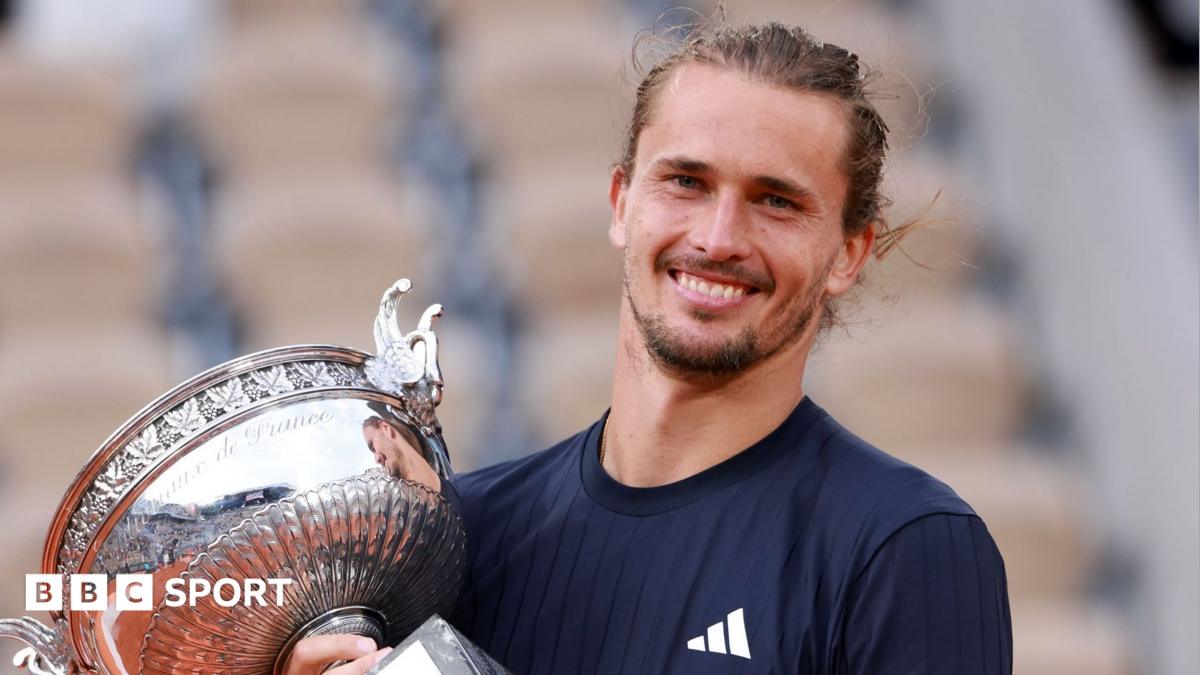
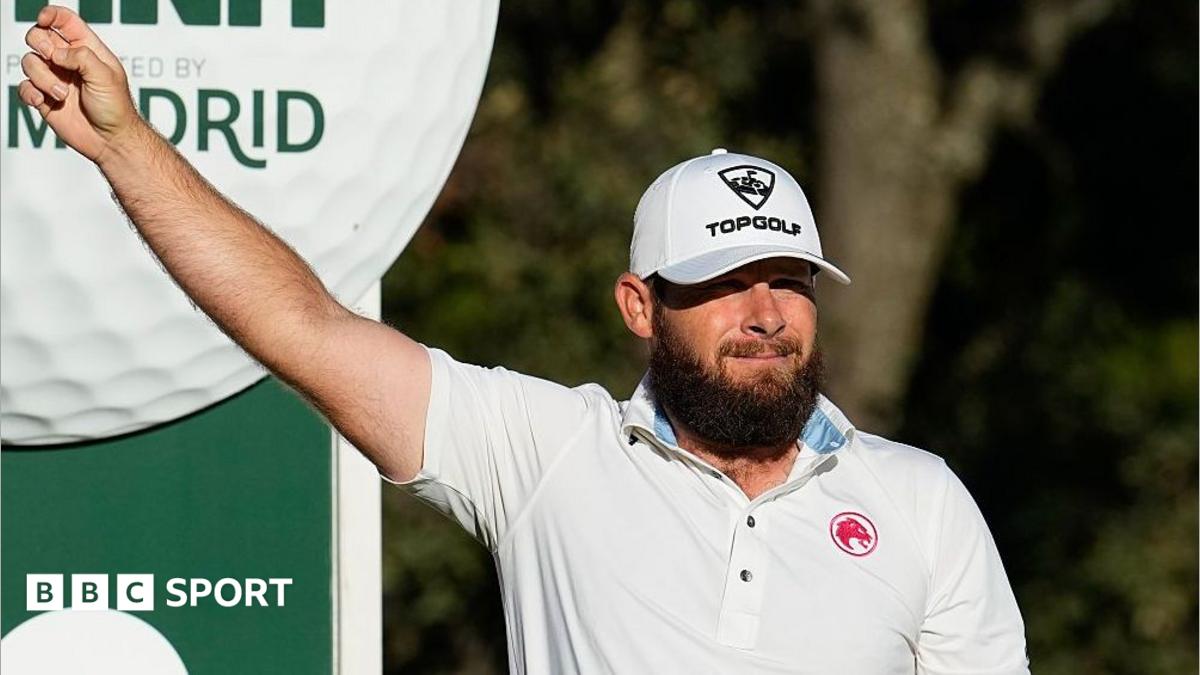





![Empty scrubs containing names of detained Palestinian healthcare workers hang outside the WMA summit [Courtesy of IMA OUT! campaign]](https://i0.wp.com/occasionaldigest.com/wp-content/uploads/2026/10/3c28041b-ba64-4a61-a62b-bb02868f9e39-1-1791663288.jpg?w=640&ssl=1)






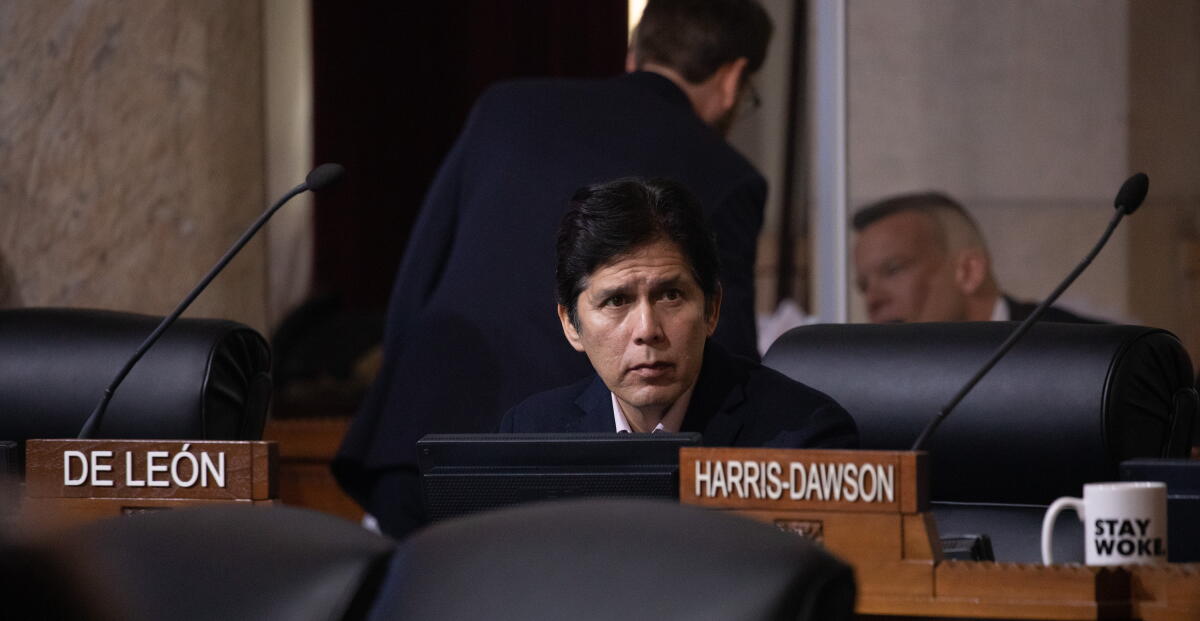





















![Yuri Gagarin, the world's first spaceman. [Getty Images]](https://i0.wp.com/occasionaldigest.com/wp-content/uploads/2026/10/GettyImages-514885012-1791125806.jpg?w=640&ssl=1)
![Astronaut Neil A. Armstrong, in training for the projected Apollo 11 lunar landing mission, is being suited up for the first full dress rehearsal of activities he is to perform during the projected moon landing. [Getty Images]](https://i0.wp.com/occasionaldigest.com/wp-content/uploads/2026/10/GettyImages-515287304-1791126174.jpg?w=640&ssl=1)

![American astronaut Alan Bartlett Shepard Jr (1923 - 1998), Commander of NASA's Apollo 14 lunar landing mission at the Kennedy Space Center in Florida, 14th November 1970. [Space Frontiers/Getty Images]](https://i0.wp.com/occasionaldigest.com/wp-content/uploads/2026/10/GettyImages-1141685928-1791125972.jpg?w=640&ssl=1)