This tunnel is famous for its beautiful lighting and top air quality.
13:13, 07 Jul 2026Updated 08:05, 12 Jul 2026
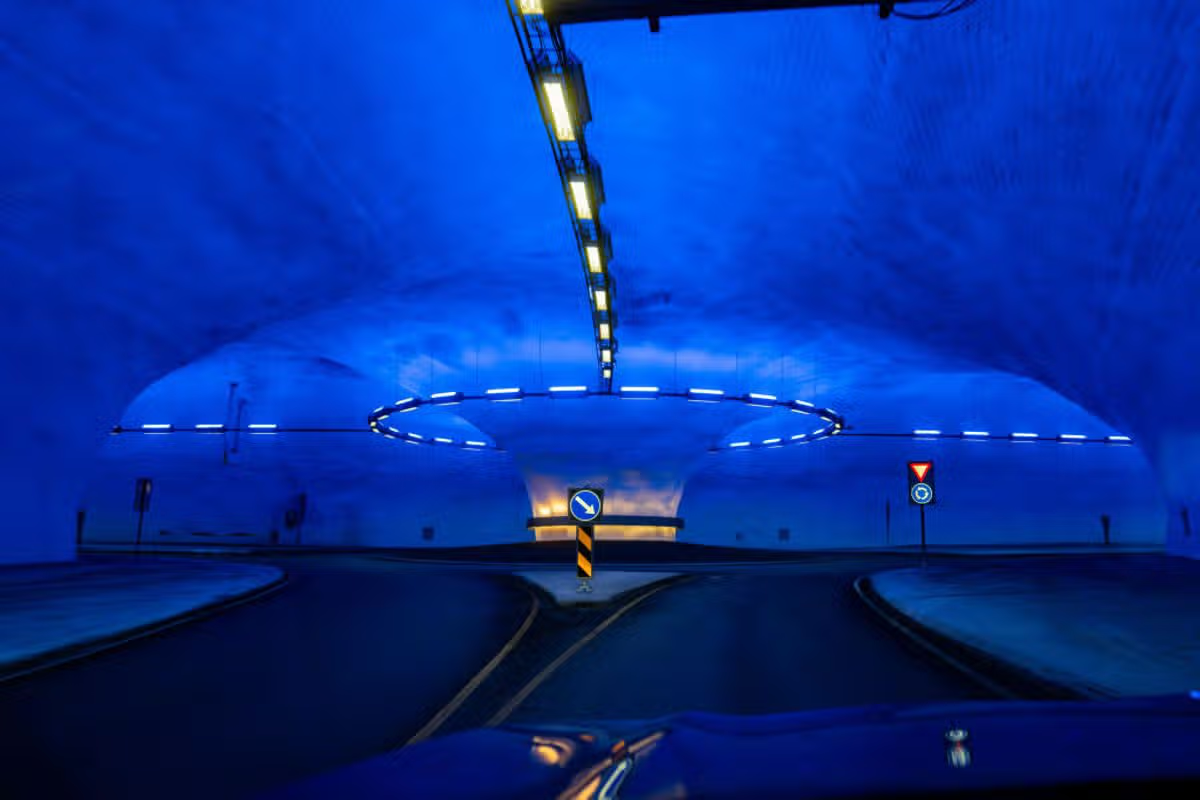
The blue-lit roundabout inside the 7.5 km Laerdal Tunnel(Image: Getty)
Norway has no shortage of beautiful roads. From snow capped mountains to glacial passes, a road trip through this gorgeous country means you will never be bored. It’s not just open road though – Norway is also home to one of the most beautiful tunnels in the world.
The Lærdal tunnel in West Norway is the longest road tunnel in the world, stretching 24.5 kilometres (15 miles) beneath a mountain range. It connects Aurland and Lærdal, in the heart of Sogn, and provides a ferry-free connection between Oslo and Bergen.
Construction of the tunnel began in 1995 and finished in 2000 and during construction an incredible 2,500,000 cubic meters of rock were extracted from the tunnel.
It cost a whopping £75million to construct. The tunnel is divided into four sections separated by three large caves.
The tunnel is known as one of the most beautiful in the world due to the way it has been designed to prevent driver fatigue and claustrophobia.
The main section of the tunnel is brightly lit with white lights, but each cave is lit with blue and yellow lighting around the edges to create the illusion of a sunrise.
These caves were lit with the idea of breaking up the monotony of the tunnel and allow drivers a short break.
The caves also work as turnaround points during the 20-minute journey.
There is also a rumble strip in each lane which stops drivers becoming inattentive and drifting.
At every kilometre, a sign lets you know how far you have travelled through the cave and how much further you have to go.
One of the other impressive things about the Lærdal Tunnel is that it is the first in the world to be equipped with an air treatment plant.
This plant can be found in a cavern 100 metres wide and it removes both dust and nitrogen dioxide from the tunnel air.
PITBULL proved to the world what a smooth operator he is by getting together the biggest crowd of baldies.
He set a Guinness World Record at his Hyde Park gig when 22,141 fans put on bald caps — and then described the moment as “priceless”.
Pitbull proved to the world what a smooth operator he is by getting together the biggest crowd of baldiesCredit: The Mega AgencyThousands of revellers in bald caps and sunniesCredit: AFP
The London audience also turned out in white shirts and aviator sunglasses to emulate Mr Worldwide’s trademark look — and our Emily was one of them.
With the phenomenal demand for tickets, Pitbull also broke the record for the highest- recorded attendance for a BST Hyde Park show, with 69,999 fans.
Sign up for the Showbiz newsletter
Thank you!
Walking out on to the Great Oak Stage on Friday, he said: “It is hard for me to say I am speechless, but all I can think of right now is knowing what my family went through in order to be someone free.
“As an immigrant family out of Cuba, to be able to pursue my dream and be on a stage like this and represent with all the baldies around the world, this is priceless.
“There is no way I could say thank you, there are no words to say what I feel right now.”
Pitbull, real name Armando Christian Perez, was handed his certificate by Radio 1’s Greg James and presenter Jack Remmington backstage before the show.
He said: “To all the baldies — like I said before, without you all, there is no Pitbull, no movement, no revolution.”
Of setting the records, he said: “It is not a surprise because hard work pays off and the harder I work, the luckier I get. What a blessing it is to be here in Hyde Park.”
Pitbull with the world record certificateCredit: AFPBizarre’s Emily Webber with Greg and Jack in the caps given out by AldiCredit: Supplied
In true style, Pitbull swigged from a bottle of his $24 Voli 305 vodka made in his home city Miami, to get into the party mood.
He was joined on stage by Kesha who rose to fame after featuring on Pitbull’s 2013 track Timber.
She said: “This record changed both of our lives, Pit.”
He said: “I thought, ‘What was the best way to represent you all?’. A good friend of mine said, ‘I think you should do this record’.”
During a two- hour set, Pitbull was also joined on stage by rapper Lil Jon for tracks Gasolina and Damn I Love Miami.
He ended the show with Time Of Our Lives featuring Ne-Yo, in which he raps: “Every day above ground is a great day.”
For his legion of fans, Friday July 10 in Hyde Park will be a night to remember.
Top dog Pitbull joins fans by wearing his own bald capCredit: AFP
PITBULL’S TEN COMMANDMENTS
Ask for money, get advice. Ask for advice, get money twice
Every day above ground is a great day
Take the word impossible and add an apostrophe, it becomes I’m possible
Live life, don’t let life live you
If you’ve got someone hating on you, that means you’re doing something right
Humble don’t stumble
In the word impossible is possible
We are called the baldies because we soar like bald eagles
Why dream it when you can live it?
The biggest room in the world is room for improvement
JAMES’ RETURN TO UK
American great James Taylor is returning to the UK for the first time in four yearsCredit: Getty
AMERICAN great James Taylor is returning to the UK for the first time in four years.
The You’ve Got a Friend singer, who has sold more than 100million records worldwide, will play London’s O2 with his All-Star band on Thursday, July 23.
The former world boxing champ went out of his way to put Pete at ease before he performed at daughter Venezuala’s recent wedding.
The Mysterious Girl singer said: “I chatted to Tyson for about an hour and he made me feel very welcome. I wasn’t just the performer.”
However, Peter enjoyed the gig so much that he is open to singing at more weddings.
He added: “It was such a happy occasion, I love weddings.”
Meanwhile, Peter is needed back on stage as he performs at Mamma Mia! The Party at The O2 in London. He will be playing Nikos until later this month.
Pete said: “It’s been amazing to vibe off the audience every night, and the set is incredible. It really feels like I’m in Greece. My kids have come to see me. I’m hoping they are getting more into Abba.”
Hendrik added: “They kept it short and sweet saying, ‘Good luck boys, enjoy it’.”
Niall Horan also offered support to the boys, who released their debut EP On Your Side on Friday.
Sean said: “He said he still gets nervous. To know someone like Niall is also bricking it is a good thing.”
Victoria Beckham lives has now trademarked a range of cookware in the StatesCredit: Getty
IT is said Victoria Beckham lives off a diet of grilled fish and steamed vegetables, but the Spice Girl-turned-businesswoman has now trademarked a range of cookware in the States.
Could the fashionista be out to give Jamie Oliver a run for his money?
Posh has filed paperwork for a name against a range of food and drink items including shot glasses, cake tins, cookie jars and sandwich boxes.
I have heard she likes a tequila.
But don’t go binning your Le Creuset pans just yet, as a source close to her tells me: “Victoria is protecting her categories. Nothing imminent is in the works.”
The beauty of Zen
Zendaya is heading on an exciting journey of her own by going into the beauty businessCredit: Getty
ODYSSEY goddess Zendaya is heading on an exciting journey of her own by going into the beauty business.
The actress – who plays Athena in Christopher Nolan’s new epic fantasy film – might even rival Gwyneth Paltrow’s wellness brand Goop one day.
She has filed Zendaya trademarks in the UK and the States for beauty and hair products, as well as social media and website services. A source said:
“Zendaya is an incredible actress and now she is set to make waves in the beauty industry.”
The new venture comes as her husband, Spider-Man actor Tom Holland, has launched premium booze-free beer brand Bero.
Zendaya was ruffling feathers when she stepped out in this revealing Louis Vuitton frilly gown for the Odyssey movie premiere held in Paris this week.
And as power couples go, it certainly looks like Tom and Zendaya are the ones to watch.
Olivia Attwood has her perfectly manicured fingers in so many pies, I’m struggling to keep upCredit: Sofi Adams.
OLIVIA ATTWOOD has her perfectly manicured fingers in so many pies, I’m struggling to keep up.
As well as her TV shows, podcast and various brand deals, the former Love Islander is now launching her own cocktail in a tin.
She hinted at the project earlier this year when she had the name of the drink tattooed on to her arm. Savano comes in three mixes – Hot Honey Margarita, Caipirinha and Moscow Mule – and is distributed by drinks firm Babco.
Olivia said the tipple is “a really exciting new chapter”, adding: “I’ve been teasing it for a little while so I can’t wait for everyone to finally try it.”
The rules are simple. Each day there’s a new footballer and the challenge is to guess who they are in as few attempts as possible.
After each wrong guess you unlock a new clue. Guess the answer after as few clues as possible to score more points.
Three is a good score, four or five points is exceptional.
So take part and return for more tomorrow.
Today’s player and clues set by BBC Sport’s Huzaifah Khan.
After more quizzes? Go to our dedicated Football Quizzes and Sports Quizzes pages and sign up for notifications to get the latest quizzes sent straight to your device.
Fifa later said there was “no evidence” the ball had touched a wire.
Fifa Media posted on X, external: “Before England’s goal in minute 45+2 against Norway, the sensor in the connected ball showed no peak in the ‘heartbeat of the ball’ when in the air, and therefore no evidence that the ball touched the overhead wire and changed the movement of the ball.”
Solbakken added: “I cant say anything about that because if there was no sound from the chip, what can I say?
“The ball dropped down straight from heaven, says everyone – including the goalie, including the guy who was going to receive the ball. I think it was pretty clear that it did. It was a strange thing.”
The Snickometer-style technology, usually associated with cricket had already been at the centre of controversy at this tournament during Portugal’s dramatic 2-1 victory over Croatia in the last 32.
Croatia thought they had equalised deep into stoppage time through Josko Gvardiol but their celebrations were cut short after the technology deemed Igor Matanovic had made a slight touch in attempting to flick the ball on in the build-up while in an offside position.
England head coach Thomas Tuchel said: “There is a chip in the ball who can tell you if a hair touches it as we know since the Croatia v Portugal game, so they should be able to tell you if it [a touch] happened [here].
“I didn’t see [the incident].”
Tuchel did however admit that his side had been fortuitous overall at key times.
“I’m not saying we are lucky to win, but we are lucky in decisive moments,” he said.
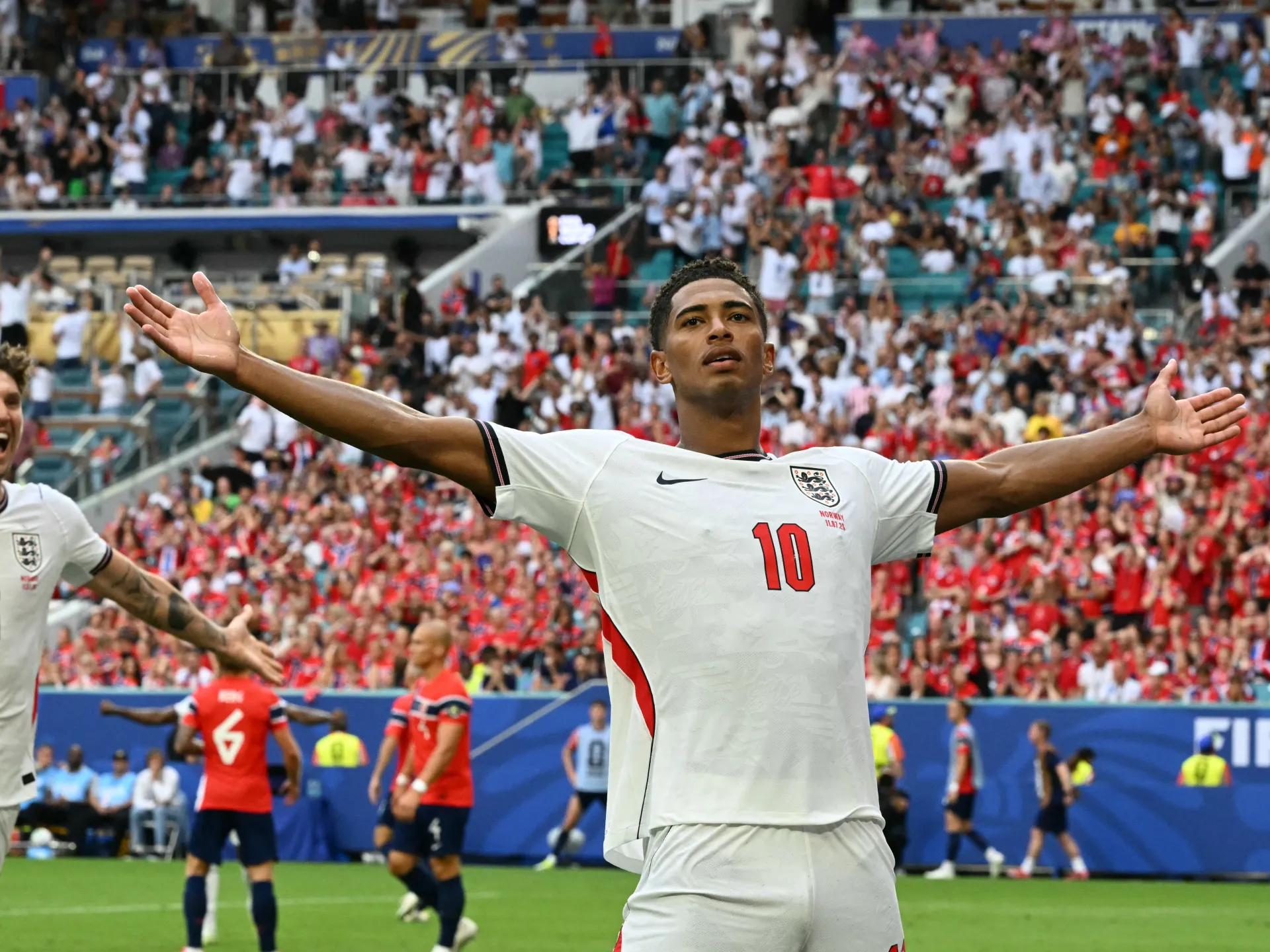
Jude Bellingham was England’s hero once more by scoring twice as the Three Lions came from behind to end Norway’s historic run and reach the World Cup semifinals with a 2-1 win after extra-time.
In their first ever quarterfinal, Andreas Schjelderup fired Norway into a shock lead in the searing Miami heat on Saturday.
Recommended Stories
list of 4 itemsend of list
But Bellingham, who also netted a double in a memorable 3-2 over Mexico in the last 16, produced a moment of magic to equalise just before half-time.
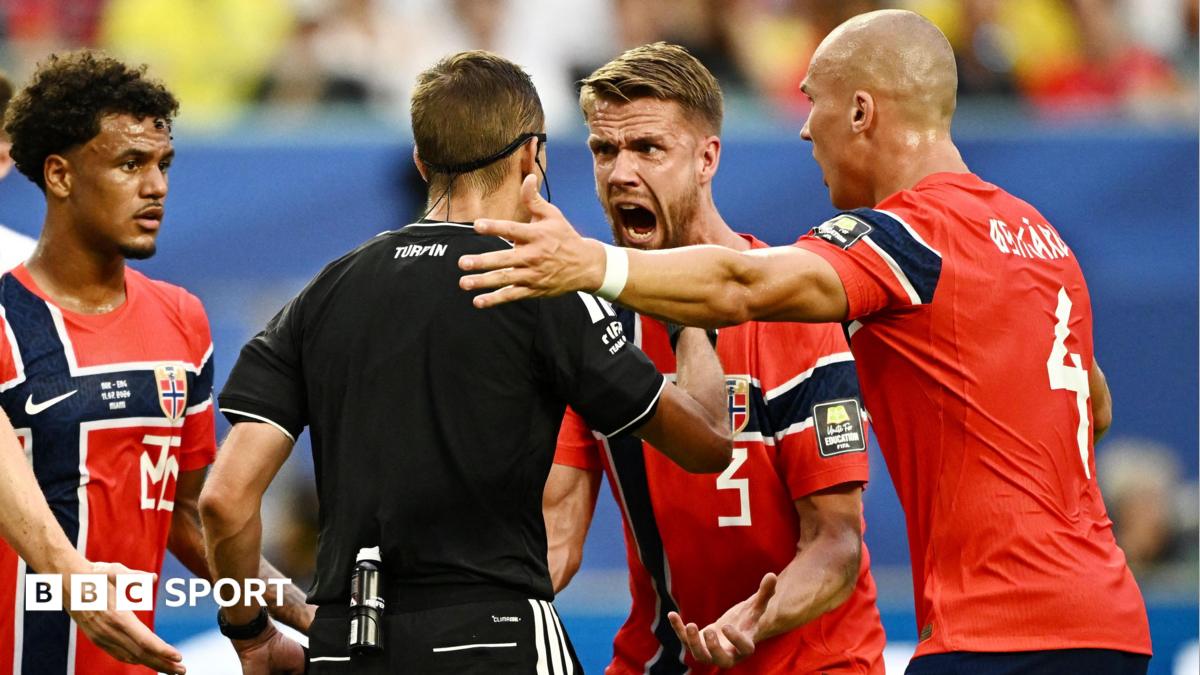
Norway had a second goal controversially disallowed after a VAR review in the second half for a foul by Erling Haaland as both sets of players were pushed to their physical limits by going to extra-time.
Bellingham came up with another big moment for the winner as he pounced on an error by Orjan Nyland to sweep in his sixth goal of the tournament.
England will face Argentina or Switzerland on Wednesday for the chance to reach a first World Cup final in 60 years.
Haaland’s spectacular run of scoring in his last 14 competitive matches for Norway came to an end against the land of his birth with Norway’s exhausted talisman replaced at half-time of extra-time.
Having failed to win a World Cup knockout game after conceding first since the final of 1966 before this tournament, England have now done so twice in three matches.
Energy-sapping heat
Harry Kane’s heroics prevented an embarrassing early exit to the Democratic Republic of the Congo in the last 32.
But it is Bellingham who has stood up in the past two matches to keep England in the hunt to end their long wait for major tournament glory despite far from flawless performances.
The 5pm local time (21:00 GMT) kickoff in Florida meant that temperatures remained above 30 degrees Celsius (86 Fahrenheit) throughout, with intense humidity making for draining conditions for the players.
The heat looked as if it would spoil the spectacle in the first half.
Thomas Tuchel’s men were rattled as England goalkeeper Jordan Pickford saved low from Martin Odegaard before Alexander Sorloth wasted a glorious chance when he failed to feed Haaland and instead went for goal himself.
Almost immediately Bellingham pulled his team out of the mire once more.
Bellingham had been well marshalled until he collected Anthony Gordon’s pass, burst into the box at speed and then slotted home on his weaker left foot.
Momentum was suddenly in England’s favour and they nearly went into the break ahead.
Bellingham was this time the creator for Kane, who dinked the ball coolly over Nyland, but had just drifted offside.
Tuchel introduced Bukayo Saka and Eberechi Eze at the break for the ineffective Noni Madueke and Declan Rice – the Arsenal midfielder had been suffering with illness earlier in the week.
But those changes left England light in midfield and they were left hanging on at spells in the second half.
Torbjorn Heggem made the most of some sloppy defending to turn in at the back post, but Haaland was penalised for a push on new Manchester City teammate Elliott Anderson before the corner had been taken, and the goal was disallowed.
Norway were inches away from a winner again when Kristoffer Ajer hit the bar after England fail to deal with another dangerous corner.
Both sides visibly wilted in the energy-sapping conditions late on but were forced to endure an extra 30 minutes.
Nyland had been Norway’s supporting act in the last 16 win over Brazil with a series of saves before Haaland struck twice late on for a landmark victory.
This time the Sevilla goalkeeper was the villain as he spilled substitute Morgan Rogers’ shot from distance and Bellingham pounced and scored.
England were awarded a penalty moments later, but this time VAR intervened in Norway’s favour to deem Djed Spence had initiated contact inside the box.
Yet, Norway’s spirit was already crushed, epitomised by a slouched Haaland watching on from the bench with nothing more to give.
Tuchel said his side was “lucky” to emerge with the win.
“We made life very, very difficult for ourselves today. The result is fantastic. We are in the last four. It’s amazing but not happy with the performance,” he told ITV.
“The commitment is there but we made life difficult for ourselves in the way we played – sloppy, a lot of technical mistakes, not fast enough, not repetitive enough. We were lucky today.
“It’s about the quality – we need to play better. We will get better [in the semifinal]. We need to.”
Pieces from the turf used at the stadium will go on sale as memorabilia and will be priced from $450 to $1,200.
By Reuters and The Associated Press
Published On 11 Jul 202611 Jul 2026
FIFA is hoping to make money off the World Cup final even after the match is finished and the tournament is wrapped up.
Segments of the pitch for the World Cup final will be up for sale starting at $450 per piece, football’s governing body announced on Saturday.
Players and coaches have criticised the quality of the field at New Jersey’s MetLife, which usually uses an artificial surface for NFL games of the New York Giants and Jets. FIFA renamed the venue to New Jersey New York Stadium for the World Cup.
FIFA, accused of charging high prices for this year’s tournament in the United States, will earn more than $11m from the sale, according to a report in The Athletic.
“Own a genuine piece of football history with an authentic 2026 FIFA World Cup Piece of the pitch, permanently preserved in a premium acrylic with a USB keepsake,” the website says. “Each piece contains an original fragment of the iconic Final playing surface, making it a unique collectable that celebrates one of the world’s greatest sporting events.”
The official store says each segment of turf is 17.5 by 17.5 by 17.5, although it doesn’t specify whether that figure is inches, centimetres or millimetres.
FIFA said “the acrylic USB features an authenticity film, while offering a sleek, contemporary display piece. Presented in a premium hinged shoulder box with striking spot UV detailing, this exclusive item is designed for collectors, fans, and football enthusiasts alike”.
FIFA is making the turf available to send only to addresses in the United States and Europe.
“Orders will not be shipped until after the FIFA World Cup 2026 Final,” the governing body said.
In addition to the high-priced tickets and memorabilia for the tournament, it will cost $3,000 for the highest-priced tier of souvenir turf. The three-by-three-inch (7.6-by-7.6-centimetre) piece of grass comes with a gold-etched replica ticket, a miniature replica World Cup ball and a crystal-cut World Cup trophy.
The three other tiers of souvenir turf will sell for $450, $900 and $1,200.
There will be no more than 2,026 pieces available in any one tier.
FIFA is selling regular tickets for the final at up to $32,970 for the final and is asking $34,500 and $32,500 for hospitality tickets that include food and drinks.
The report indicated that the turf which will be used for the World Cup final was grown at a turf farm in North Carolina.
For consistency, new turf fields were installed at all World Cup venues, including those that typically have artificial surfaces like the stadiums in Seattle, Washington; Atlanta, Georgia; East Rutherford, New Jersey; Vancouver, Canada; Arlington, Texas; and Inglewood, California.
There is no indication of what will happen to the turf fields that are not being used for the final.
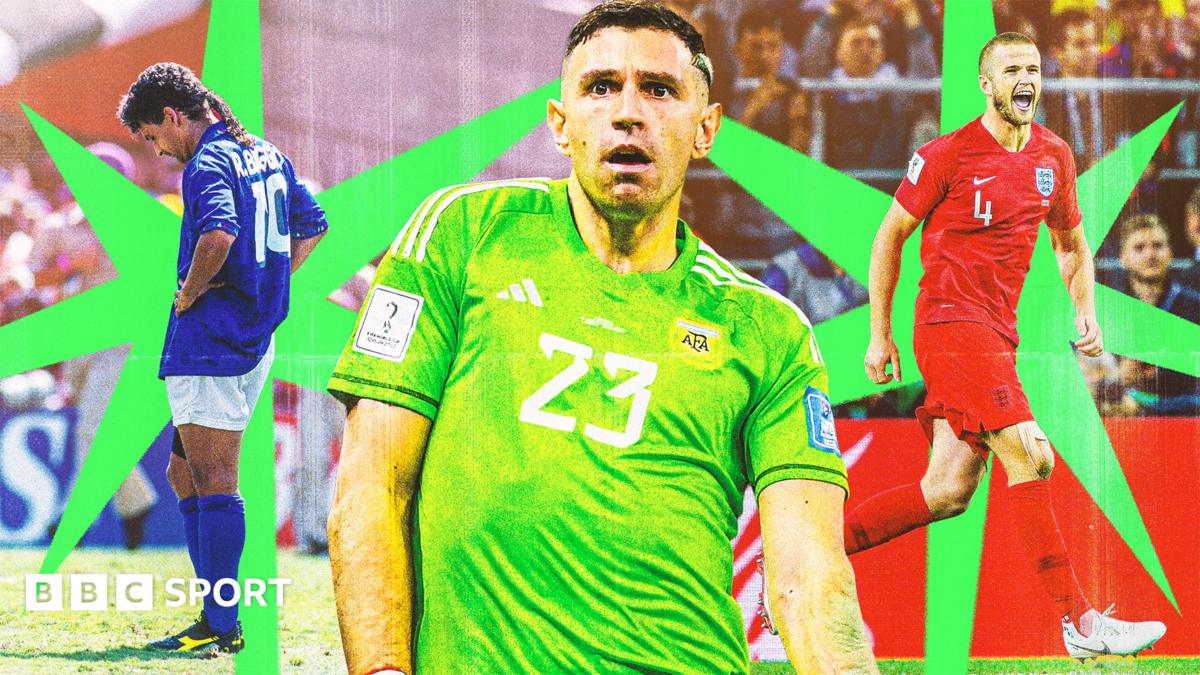
It is impossible to gauge exactly who has only come on for a penalty shootout.
But if we take outfield players who come on for the final five minutes of stoppage time, there are only seven (five of which came since 2022) – and only three of those scored.
This summer two penalty takers have come on in stoppage time at the end of extra time and not had a touch before the final whistle.
Fabian Balbuena saw his penalty saved by Germany’s Manuel Neuer, although his Paraguay won the last-32 shootout.
Mahmoud Saber scored Egypt’s first penalty in the last-32 win over Australia – against a keeper who also had not touched the ball (more on him shortly).
Paulo Dybala came on past the 120-minute mark at the end of the 2022 final and scored in Argentina’s shootout win over France.
In Morocco’s last-16 win over Spain that year, both sides brought on players in the final two minutes – Badr Benoun and Pablo Sarabia – and both missed.
England’s Jamie Carragher came on with two minutes to go against Portugal in the 2006 quarter-final and had his kick saved by Ricardo, having initially netted but been ordered to retake because the whistle had not been blown.
The first player to come on in the final five minutes of extra time and score in a shootout was West Germany’s Pierre Littbarski, who netted in a quarter-final win over Mexico in 1986.
Two keepers have come on in the closing stages of a World Cup game with penalties in mind.
The Netherlands’ Tim Krul came on in the 121st minute against Costa Rica in the 2014 quarter-finals – and saved two penalties in their win.
He remained an unused substitute in the next round – when it again went to penalties – and the Netherlands went out, with Jasper Cillessen not saving any.
This summer it was Mat Ryan’s turn for Australia – but it did not work as Egypt scored all four penalties.
While Krul knew about the plan in advance, Ryan was told with a few minutes remaining that he would be coming on if the game went to a shootout.
Deforestation in parts of the Amazon rainforest in Brazil declined to its lowest levels in more than a decade, a good sign for what scientists call one of the world’s most important climate regulators. File Photo by Antonio Lacerda/EPA
July 11 (UPI) — Deforestation of Brazil’s Amazon rainforest has fallen to its lowest levels in more than a decade, officials said this week.
Satellite surveys show a 37% decrease in the number of trees felled in the world’s largest rainforest in the past year compared to the previous one, according to the National Space Research Institute (INPE).
This is the lowest level of Amazon deforestation since 2014, data published on Friday shows.
“It’s a solid result, stemming from government actions to protect the forest and combat environmental crime,” said executive secretary Márcio Astrini, of the Brazilian environmental collective Observatório do Clima.
“The figures are excellent and deserve to be celebrated,” Astrini told G1.
Deforestation of the Amazon in Brazil reached a 15-year high in 2021 under former President Jair Bolsonaro, whose government cut environmental protections and enforcement of conservation laws.
Brazil’s current president, Luiz Inácio Lula da Silva, has vowed to eradicate illegal deforestation by 2030.
“It is a commitment — otherwise, I will have failed,” Lula told reporters during an event in Belém do Pará, a city known as the metropolis of the Amazon.
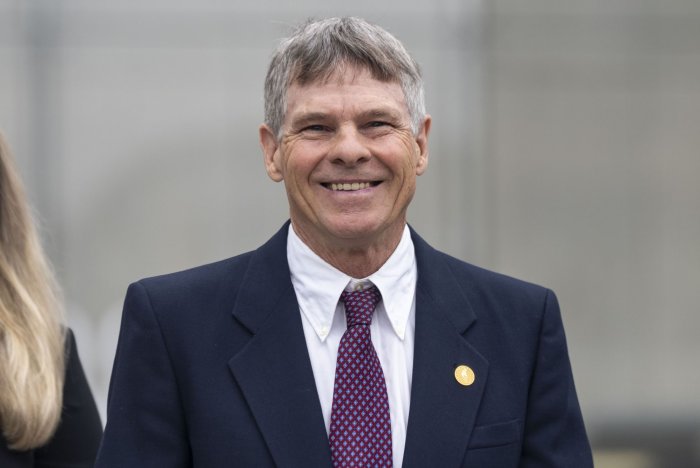
Olympic canoeist David Hearn departs the Moultrie Courthouse after pleading not guilty to damaging the Lincoln Memorial Reflecting Pool on Thursday. Hearn was indicted on July 2 on one count of destruction of property of more than $1,000 for allegedly damaging the Reflecting Pool, carrying a maximum penalty of 10 years in prison if convicted. Photo by Bonnie Cash/UPI | License Photo
Hello! I’m Mark Olsen. Welcome to another edition of your regular field guide to a world of Only Good Movies.
One of the big discoveries for me at this year’s Sundance Film Festival was the erotic thriller “Night Nurse,” which opens in theaters this week. A remarkably confident feature debut from writer-director Georgia Bernstein, the film is hypnotic and entrancing, with a powerfully sustained sense of mood and menace. Brought to life by two assured lead performances, the story is about a young woman (Cemre Paksoy) who takes a job as an attendant at a senior living community and is assigned to help a man (Bruce McKenzie) who quickly ensnares her into an ongoing phone scam in which he swindles other residents.
Taking cues from the likes of Catherine Breillat and David Cronenberg, there are moments where you start to feel turned on and then feel weird about feeling turned on. It’s delightful stuff, full of the unexpected and unnerving, with shifting power dynamics that destabilize everything. See it with someone you maybe aren’t so sure about.
‘Hudson Hawk’ will have its day
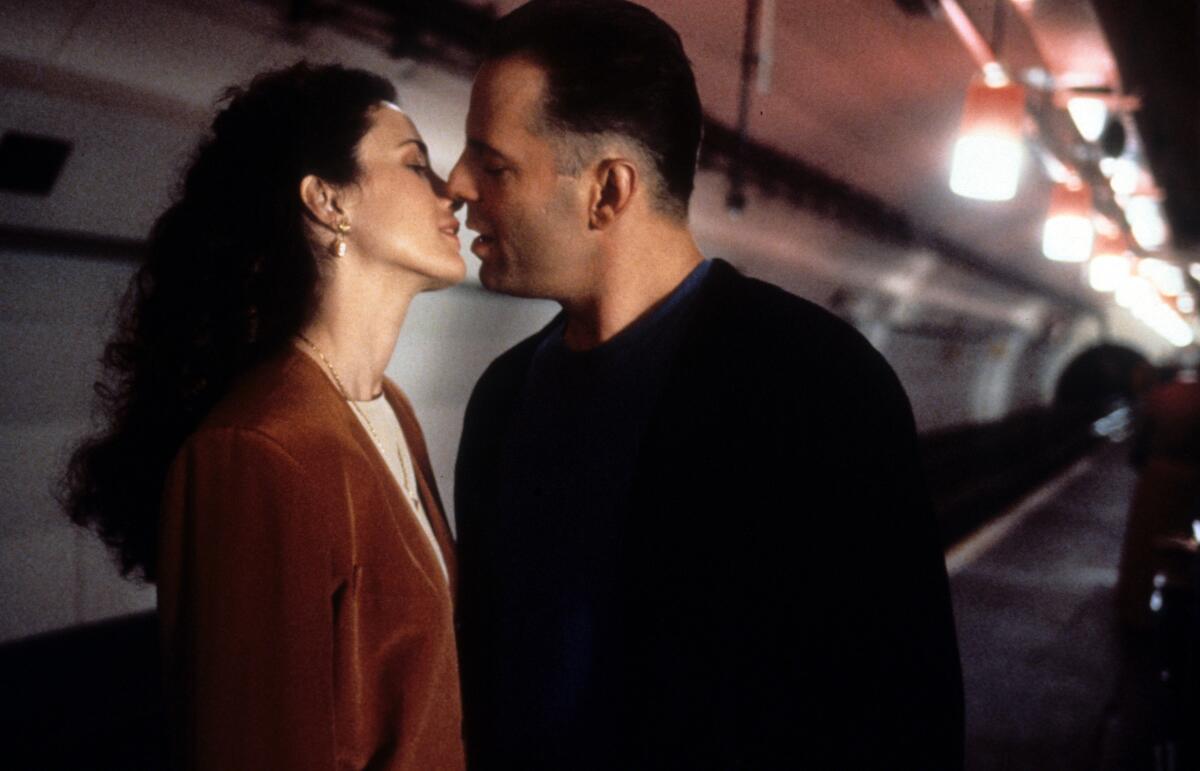
Andie MacDowell and Bruce Willis in the 1991 movie “Hudson Hawk.”
(Columbia TriStar / Getty Images)
Its name has become synonymous with box office bomb, with tales of an out-of-control production leading to terrible reviews and rejection by audiences. Yet 1991’s “Hudson Hawk” is one of those movies that over the years has seen its reputation slowly turn around and is now en route to becoming a cult classic in the vein of “Ishtar” or “Showgirls.”
On Monday at Brain Dead Studios there will be a 35th anniversary screening of the film in 35mm with director Michael Lehmann and co-writer Daniel Waters in-person. Presented by Hollywood Entertainment, the evening could be ground zero for the next stage of the misbegotten movie’s revival.
The movie is a playful buddy-comedy / caper-heist hybrid, starring Bruce Willis as the title character, a master thief newly released from prison who reteams with his old partner (Danny Aiello) as they are drawn into a convoluted conspiracy involving the CIA, a villainous ultra-rich couple (played with maniacal, scene-stealing glee by Richard E. Grant and Sandra Bernhard) and ancient designs by Leonardo da Vinci. Upending action movie conventions, “Hudson Hawk” is simply a fun hang.
On a recent video call together, there is a certain gallows humor shared by Lehmann and Waters over the film, which at the time threatened to derail both of their careers. Waters was already working on the script for Tim Burton’s “Batman Returns” by the time the movie came out, while Lehmann admits he spent some time in director jail — “I was in director federal penitentiary and death row for a while,” he says — before going on to direct films such as “Airheads” and “The Truth About Cats and Dogs.”
“You can’t escape a big failure in Hollywood,” he adds. “You have to be good-natured about the fact that you’ve made something that so many people hated when it came out, but that you feel still has some value — quite a bit of value, I think. And that eventually people would start noticing that.”
The project began as an idea between Willis and his friend Robert Kraft that snowballed into having action super-producer Joel Silver attached and a screenplay draft by “Die Hard” writer Steven E. De Souza. Eventually Lehmann became involved to direct and he helped bring on Waters, the two having worked together on the hit black comedy “Heathers.” (Waters had also worked with Silver on “The Adventures of Ford Fairlane.”) The reunited writer-director team set about subverting what began as a more conventional action movie.
“My intention was to turn that kind of movie on its head,” says Lehmann. “I thought people have seen these things so many times, they must be ready to see the truly odd version of it.”
“In the Olympics you can’t just go up and make any dive,” says Waters. “You tell the judges what dive you’re going to do and then they grade you. And ‘Hudson Hawk,’ we never told the judges what dive we were doing. I think people got angry: Wait a minute, you didn’t give us a Bruce Willis action movie.”
Leading up to the film’s release, there were reports of a shoot hijacked by a star whose ego was getting the better of him as he rode the wave of the success of the first two “Die Hard” movies. Lehmann admits the clash of personalities made for a complicated shoot.
“Of course, when you’re hired by Bruce Willis and Joel Silver to do what is essentially a vanity project of Bruce’s, you’re not going to have the kind of control that you have when you make a piece of personal filmmaking,” says Lehmann. “But it was really difficult to deal with somebody who, in theory, was one of my bosses as producer on the film and a big star, which is always a thousand-pound gorilla.”
Author David Hughes recently published “The Unmaking of Hudson Hawk,” a book on the film’s production, reception and afterlife. Calling from England, Hughes thinks the critical reappraisal and resuscitation of the movie has gained a bit of momentum — and is in danger of slipping.
“I feel like any day there’s going to be a headline that says, ‘Nope, despite what you’ve heard, “Hudson Hawk” is still s—.’ The pendulum is about to swing back the other way and people are going to start saying that it’s bad again. And when that happens, I think that will be the most perfect life cycle of the film.”
But for now two of the key people behind making the film in the first place want to enjoy a moment they have rarely been allowed.
“People are finally laughing with the movie, not at the movie,” says Waters.
Celebrating a fallen friend
Harry Dean Stanton, photographed in Los Angeles in 2013.
(Jordan Strauss / Invision / AP)
To celebrate the centennial of the birth of the beloved character actor Harry Dean Stanton, Vidiots will screen the 2013 documentary “Harry Dean Stanton: Partly Fiction” on Tuesday. Director Sophie Huber will be joined in conversation by actor Logan Sparks for an evening hosted by Cherry Jones.
The film is a tender portrait of Stanton, who found relative fame later in life with roles in films such as “Alien,” “Paris, Texas,” “Repo Man” and “Pretty in Pink.”
“He makes it look really easy,” said Stanton’s friend and frequent collaborator David Lynch around the time of Stanton’s death in 2017. “But it’s not that easy to be looking like it’s easy.”
A flaky love story
Gena Rowlands and Seymour Cassel in the 1971 movie “Minnie and Moskowitz.”
(Michael Ochs Archives / Getty Images)
One of my most memorable moviegoing experiences of the last few years was seeing John Cassavetes’ 1971 “Minnie and Moskowitz” for the first time. The movie has a joyful, unpredictable energy thanks to the openhearted, dynamic performances of its two leads, Gena Rowlands and Seymour Cassel, as two mismatched strangers who find temporary solace in each other. Romantic, funny and with lots of great L.A. locations and moments — I often think of a perilous U-turn across La Brea by Cassel — this is a singular gem.
It was just announced that a new restoration of the film will premiere later this year at the Venice Film Festival, but there is no reason to wait. The movie is showing tonight at the Philosophical Research Society as part of its “YesterdayLA” series celebrating the city. On Saturday there will also be a rare theatrical screening of 1972’s “Columbo: Étude In Black,” starring Cassavetes as an L.A. symphony conductor who may have committed the perfect crime until he catches the attention of Peter Falk’s rumpled detective.
On the road again
Maribel Verdú, left, Diego Luna and Gael García Bernal in the movie “Y Tu Mamá También.”
(Criterion Collection)
Playing as part of the American Cinematheque’s “Summer Breakdown” series, which, true to its name, features movies about car trouble, Alfonso Cuarón’s 2001 “Y Tu Mamá También” is showing tonight and tomorrow at the Los Feliz Theater in 35mm.
It stars Gael García Bernal and Diego Luna as two teenage best friends who set off on a road trip with an alluring older woman (Maribel Verdú) they don’t know particularly well. Emotions fly fast and furious among all three of them, as the film seems at times like a horndog teen comedy and at others like a subtle exploration of class and sexual dynamics. Of course, it is all of those things, made with a fresh sense of style.
As Kenneth Turan put it in his 2002 review, “Nominally a simple road movie about two Mexican teenagers taking off to look for a mythical beach in the company of a suddenly available woman of 28, ‘Y Tu Mamá’ manages to be comic, dramatic, erotic, sociological and even political, all without breaking a sweat.”
Less positively, Amy reviewed the live-action adaptation of “Moana,” noting “Every one of Disney’s remakes and spinoffs of its animated hits has been a naked cash grab.”
The new “Evil Dead Burn” is brutal and not much else, per our reviewer Joshua Rothkopf: “The gore comes like a tide, shockingly for a mainstream studio wide release.”
Marc Guehi has won his fitness race and is expected to start England’s World Cup quarter-final against Norway alongside a recalled John Stones in central defence.
Manchester City defender Guehi suffered a minor hamstring strain in the win over Mexico and has missed training sessions this week.
But he is set to be cleared to continue in the heart of England’s defence.
He is expected to be playing alongside Stones in defence, who is set to be recalled into the starting XI for the first time since the opening game against Croatia.
Ezri Konsa is set to be moved from centre-back to right-back.
Declan Rice is fit to start despite a sickness bug that has hampered his involvement in the preparations for the game while Noni Madueke is expected to play ahead of Bukayo Saka in another change to the XI.
Stones, 32, has been a substitute in all the subsequent matches since Croatia. However, he played a key role against Mexico, coming on for Saka on 57 minutes following Jarell Quansah’s red card.
Han Hak-ja, leader of the Family Federation for World Peace and Unification, arrives Thursday at the Seoul Central District Court for the final hearing in her trial over alleged improper ties between religion and politics under the Yoon Suk Yeol government. Photo by Yonhap News Agency
July 10 (Asia Today) — A special counsel team on Thursday sought a 13-year prison term for Han Hak-ja, leader of the Family Federation for World Peace and Unification, commonly known as the Unification Church, over allegations involving improper ties between religion and politics.
The team led by special counsel Min Joong-ki made the request during the final hearing in Han’s trial at the Seoul Central District Court. Han has been charged with violating the Political Funds Act and other offenses.
The special counsel asked the court to sentence Han to five years in prison on the political funds charge and eight years on the remaining charges.
“Han and others used vast financial resources to unlawfully and improperly use public authority in an effort to expand religious interests and influence and realize the integration of religion and politics,” the special counsel team said.
The team said the alleged crimes “directly violated the spirit of the Constitution and damaged representative democracy.”
“Han and others, as top leaders of a religious organization, privately used donations voluntarily made by believers and improperly colluded with political forces in an attempt to influence South Korea,” the team said.
The special counsel also sought prison terms for other defendants being tried with Han.
For a former chief of staff identified only by the surname Chung, the team requested four years in prison on the political funds charge and six years on the remaining charges.
For Yun Young-ho, former head of the church’s world headquarters, the team sought one year and six months in prison on the political funds charge and two years on the remaining charges. The team requested three years in prison for Yun’s wife, identified only by the surname Lee.
Han is accused of conspiring with Yun and others to deliver 100 million won, about $66,000, in political funds to People Power Party lawmaker Kweon Seong-dong in January 2022.
She is also accused of involvement in delivering gifts to former first lady Kim Keon Hee through Jeon Seong-bae, a religious figure known as Geonjin, while seeking favors related to church affairs in 2022.
Han also faces allegations that she embezzled church funds and ordered Yun to destroy evidence in October 2022 in preparation for a police investigation into allegations that she gambled overseas.
Han arrived at the court at about 9:29 a.m. wearing a black jacket and white pants and using a wheelchair. She did not answer reporters’ questions, including whether she had given gifts to Kim.
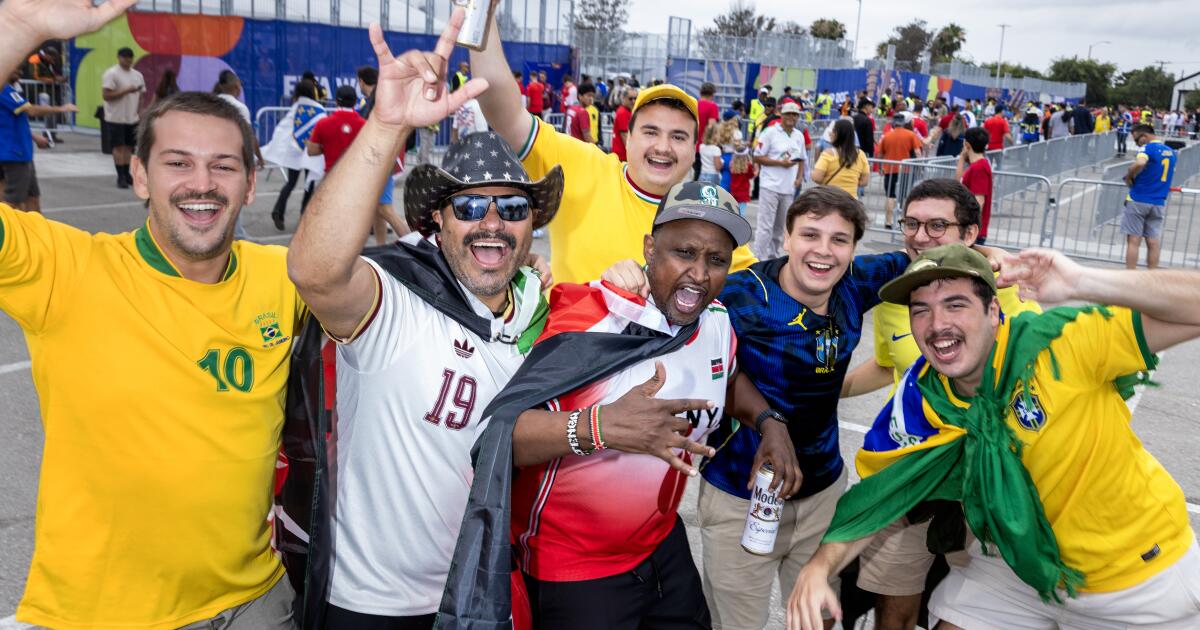
World Cup tourists are coming to L.A. for the soccer, but they’re staying for the $21 smoothies and Double-Doubles.
As the last Los Angeles FIFA World Cup event ended Friday, soccer fans were eating like locals and famous chains from the region were cashing in.
In the weeks that L.A. has hosted the World Cup, international soccer enthusiasts have flocked to big brands from the area, often in large groups wearing their countries’ jerseys.
It is a phenomenon seen at many of the host cities. In Dallas, giant gas station Buc-ee’s is the main attraction. For people visiting New Jersey, deli shops have been a hot ticket. In L.A., the place to be between matches was Erewhon.
Thirsty international sports fans gathered for pictures outside different Erewhons, wandered their aisles smiling, and, of course, picked up pricey smoothies.
While Erewhon would not comment on its business, mobility data company Arity, which uses phone data to track consumers, said Erewhon visits at the outlets around SoFi Stadium were quadruple what they were a week earlier on June 12, the day of the U.S. national soccer team’s opening match there.
Arity looked at what stores people visited within a 10-mile radius of SoFi that day and also found surges in visitors to nearby El Pollo Loco and Trader Joe’s.
Locals have spotted groups of people in Korea jerseys huddled together, trying to decide what to order at In-N-Out.
Some complained on social media that international tourists at Trader Joe’s were buying up all the mini canvas tote bags.
Soon after the Belgium vs. Spain quarterfinal ended Friday, the In-N-Out near SoFi had a long line of soccer fans stretching out the door in bright red and yellow and black jerseys and matching striped hats and scarves.
One of the workers said he had to explain “spread” and “animal style” to foreign football fans.
“I didn’t know this place existed,” a fan from Romania said while waiting in line.
Los Angeles and other cities and states that have hosted the event need the soccer fans to spend money to make the event worth all the time, effort and money it requires.
A rosy 2024 report projected the World Cup could bring more than $800 million to the L.A. region as 180,000 people converge on the area to sleep, eat and spend.
There were early concerns people weren’t turning up for the event because of the high ticket prices and the difficulty of obtaining visas for citizens of some countries.
However, at least for some L.A. hotels, there was a surge of last-minute visitors which pushed up occupancy and room rates.
While sports fans are not in the region to shop, they do make time for it.
World Cup customer spending is also apparent in beer sales. Andrew Heritage, the chief economist at the Beer Institute said beer purchases at entertainment and attractions in L.A. – outside of World Cup spaces – were up around 10% from normal.
“That tells me that fans in the L.A. area have decided to extend their stay and take in all the other things that the area has to offer, rather than just the match itself,” he said.
On social media, the purpose of these shoppers is clear: grab a quick souvenir or local specialty and take a selfie.
The data from Arity suggests that fans are very efficient when they spend at local spots, diving in, getting what they want and getting out as soon as possible, said Jeff Schlitt, a director at the company.
“Normally you’re there for an hour. They’re going to be there for 15, 18 minutes,” he said. “Why is that? Because they were purpose-driven shoppers.”
For some travelers, the more popular American chains aren’t unfamiliar. But some of the native L.A. fare still comes as a surprise.
As one Belgium-Spain matchgoer from the Netherlands stood taking a picture of the In-N-Out sign after the game, he said he’d never had a burger like the one he’d just tried.
“We only have McDonald’s and Burger King,” he said. “It’s way better.”
HD Hyundai Marine Solution CEO Kim Sung-joon (R) and Weathernews CEO Tomohiro Ishibashi sign an agreement to introduce an AI-powered voyage optimization solution at the head office of Weathernews in Chiba, Japan, on Friday. Photo by HD Hyundai Marine Solution
July 10 (UPI) — South Korea’s HD Hyundai Marine Solution said Friday that the company has teamed up with Japan’s Weathernews to commercialize an AI-powered shipping route optimization solution.
The former is the marine after-sales and digital solutions unit of shipbuilding giant HD Hyundai Group, while the latter is a leading provider of specialized weather intelligence to businesses and other consumers.
Recent pilot projects in South Korea showed that the integrated AI solution incorporating Weathernews’ meteorological data can reduce fuel consumption by at least 3%, according to HD Hyundai Marine.
The corporation noted that the new solution can be immediately deployed on vessels already using either company’s existing services without requiring additional hardware or software.
The two partners plan to gradually roll out the AI-based solution to about 8,000 vessels currently using their services. In addition, they agreed to pursue a range of collaborative initiatives, including jointly marketing the solution to global clients.
“This agreement is significant because it transforms our collaboration into a viable commercial business model,” HD Hyundai Marine CEO Kim Sung-joon said in a statement.
“We will deliver the best solution available to help shipowners achieve two key objectives of reducing fuel costs and complying with increasingly stringent environmental regulations,” he added.
The share price of HD Hyundai Marine jumped 4.17% on the Seoul bourse on Friday while the benchmark KOSPI rose 2.52%. That of Weathernews fell 4.26% on the Japanese stock market.
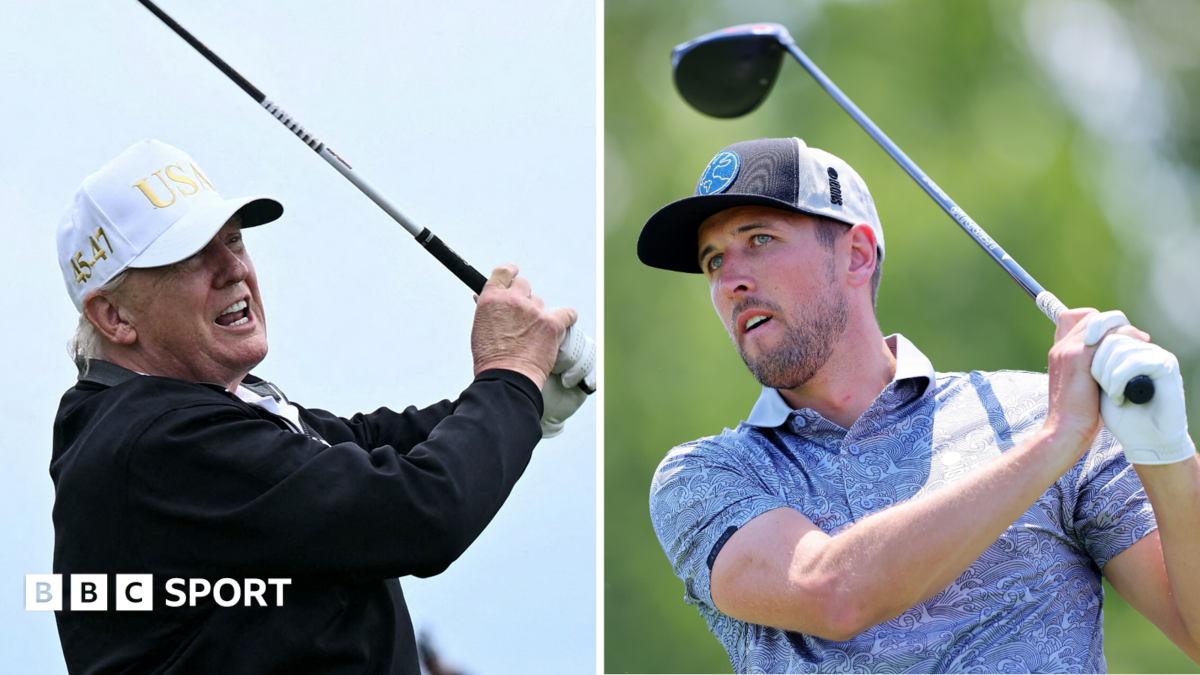
England captain Harry Kane says he once played golf with United States President Donald Trump, describing the experience as “surreal”.
The striker will lead England for their World Cup quarter-final against Norway in Miami on Saturday (22:00 BST) and, in the build-up to that game, revealed he had played golf with Trump in Florida 18 months ago.
“I played alright to be honest,” said Bayern Munich striker Kane.
“He invited me to play when I was down in Palm Beach. So yeah, when the president invites you somewhere…
“It was a pretty surreal experience just to meet him and obviously play golf with him.
“His golf is pretty good, to be honest with you. I hope I can play golf as good as him when I’m his age, that’s for sure. A unique experience, but I was just grateful that he invited me to play.”
The US is co-hosting the 2026 World Cup along with Canada and Mexico, and Kane’s comments followed Trump, 80, saying the pair had played together.
“I think Kane is a great player,” said Trump after Kane, who has six goals and one assist for England at the World Cup, helped the Three Lions beat Mexico 3-2 in the last 16.
“I played golf with him and I like him a lot. He’s a good golfer too. He’s really great.”
On Saturday (July 11), presenters Charlie Stayt and Naga Munchetty were back at the helm, discussing a range of topics. But according to viewers, football appeared to take precedence.
During the show, the news anchors discussed England playing against Norway in the World Cup later on in the day a number of times.
Not only this, but later on in the show a BBC sports journalist reported outdoors amongst children playing football; this was then followed by a discussion on football stickers.
With all the footie content on show, viewers had enough and demanded a change. Taking to X, formerly known as Twitter, those who were tuned in shared their frustrations.
One viewer said: “Give the football a frigging rest now.” Another fumed: “I’m going to watch the match later but ffs no more of these football fans fillers, I’m not interested in their input.”
A third chimed in and wrote: “I wish that British tennis bloke had won yesterday so they could concentrate on something rather than the football.”
A fourth added: “Four people sitting around a table pointlessly yakking rubbish about football just to fill 30 minutes of #bbcbreakfast.”
Another penned: “Just imagine how football would dominate #BBCBreakfast if England was in the final.”
One more groaned: “Right thats enough now. What a boring lot of old farts.”
For those who are interested in the upcoming England match, England’s quarter-final against Erling Haaland’s Norway will be played at Miami’s Hard Rock Stadium, with a far more fan-friendly kick-off time of 10pm BST.
It’s a welcome change from the last-16 clash with Mexico, which didn’t get underway until 2am in the UK and left plenty of supporters battling through work the following morning after a sleepless night.
The quarter-final gets underway at 5pm local time in Florida on Saturday, July 11, which means a 10pm BST kick-off for fans watching in the UK. If England can get the job done inside 90 minutes, the match should wrap up by around midnight.
If the match can’t be settled in 90 minutes, extra time and a penalty shootout could keep fans watching for another 45 minutes or more. In that scenario, the final whistle may not come until around 1am on Sunday.
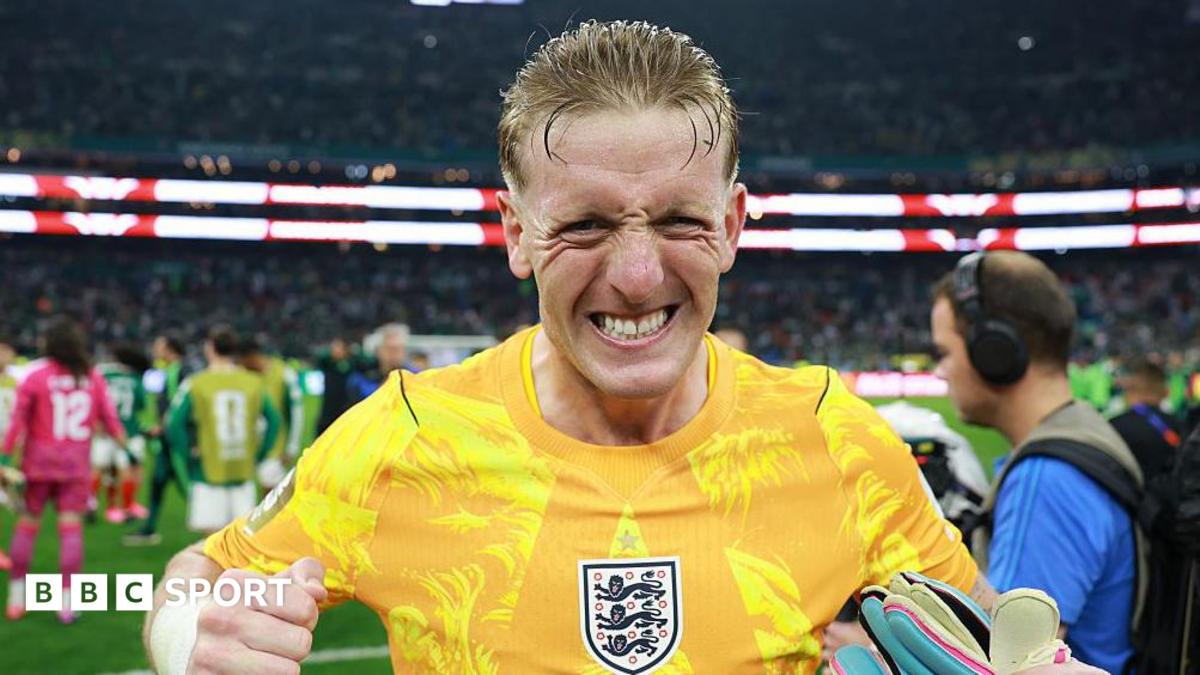
Pickford made an uncertain start to the World Cup, at fault when he was beaten at his near post when DR Congo took the lead against England in Atlanta before captain Harry Kane’s two late goals saw them through.
In the pressure cooker of the Azteca, however, Pickford had his finest game for England, with two brilliant first-half saves from Mexico striker Raul Jimenez, followed by an outstanding display of penalty-area command in a frantic second period.
“It was a very brave display of goalkeeping,” said Robinson. “I really admired what he did out there in that second half and his two saves in the first half kept England in the game. They could have been out of it by half-time if it wasn’t for him.”
Pickford won widespread praise for the way he took charge of his penalty area, taking the initiative by coming for crosses and corners on a regular basis as England, down to 10 men after Jarell Quansah was sent off early in the second half, came under siege.
“He decided that he was going to stand up. He came for crosses, made decisions to go for balls, making life easier for his defenders because of how good he was.
“The easiest thing as a goalkeeper is to stay on your line because you don’t get criticised. If you stay on your line you can’t make a mistake, but he showed maturity and bravery.
“He showed the way his game has developed by coming off his line, making those decisions, making big bold calls. That’s where you see how much he has evolved.
“Jordan took it upon himself, punched the ball, caught the ball, made life easier for his defenders.
“He doesn’t mind what players are in front of him. It doesn’t faze him. He’s played with a different back four for most games, with the full-backs alternating and a change in central defence.
“The players know him and trust him. I think there is a good relationship there.”
And Pickford’s Mexico masterclass can bolster England’s confidence as they try to overcome the dangerous Norwegians and master striker Erling Haaland, who demonstrated their threat by beating Brazil 2-0 in the last 16.
“I think Jordan Pickford’s confidence will be at an all-time high and the team’s will be as well after their win against Mexico,” added Robinson.
“I questioned them on air when Thomas Tuchel went to a back five after 71 minutes. I was thinking I wasn’t sure they would hang on, and that would have been a stick he would have been beaten with.
“It did go right and Jordan Pickford was a big part of it going right.”
Three wins to go. How can your team reach the final and win the World Cup 2026? Click here to find out.
Who: Argentina vs Switzerland What: FIFA World Cup 2026 – Quarterfinal Where: Kansas City Stadium in Kansas City, Missouri, the United States When: Saturday at 8pm (01:00 GMT on Sunday) How to follow: We will have all the build-up on Al Jazeera Sport from 22:00 GMT before our live text commentary stream.
Recommended Stories
list of 3 itemsend of list
After two gruelling knockout contests, defined by controversies more than goals, Argentina enter the business end of the World Cup.
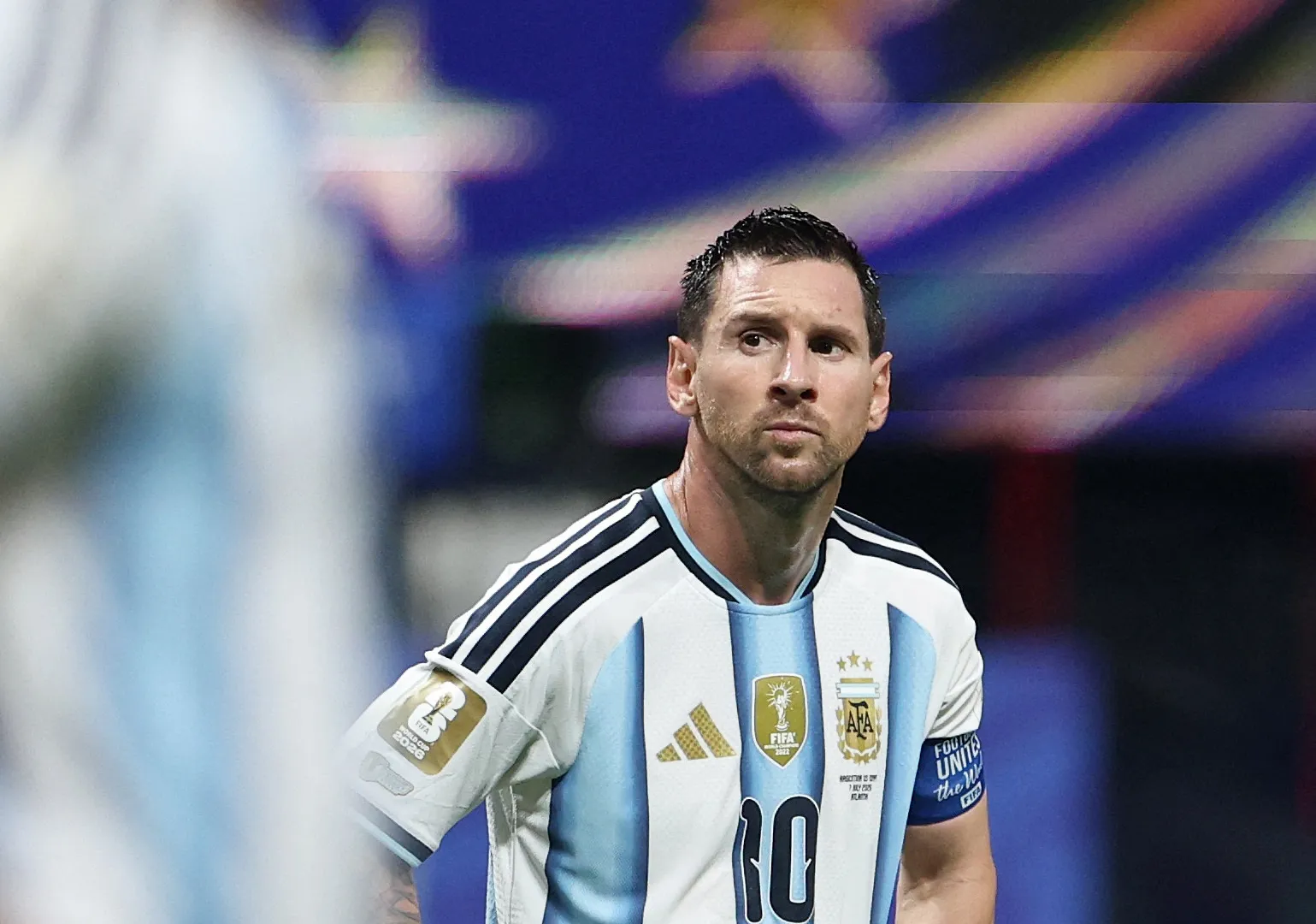
The reigning champions outclassed most title contenders in the group stage, thanks to the unstoppable striking force of Lionel Messi.
But their unconvincing, stuttering run in the knockout phase – where they were pitted against far inferior opponents – has raised a question: Can Argentina really retain their title?
Up next for the two-time world champions is Switzerland, who have quietly made a remarkable return to the quarterfinals for the first time in 72 years.
The impressive duo of Breel Embolo and Johan Manzambi has won Swiss hearts, and Saturday’s clash offers them a chance to seek revenge for a World Cup defeat by Argentina in 2014.
How did Argentina and Switzerland reach the quarterfinals?
Argentina had a strong showing in the first round, topping Group J by beating Austria, Jordan and Algeria. In the round of 32, they were pushed to their limits by Cape Verde before squeezing past 3-2 in extra time, and came from two goals down to beat Egypt 3-2 in a controversial last-16 contest which drew allegations of officiating bias.
Switzerland topped Group B with an unbeaten record, winning against Canada and Bosnia and Herzegovina, and drawing with Qatar. They beat Algeria 2-0 in the round of 32 and beat Colombia 4-3 on penalties to reach the quarterfinals for the first time in 72 years.
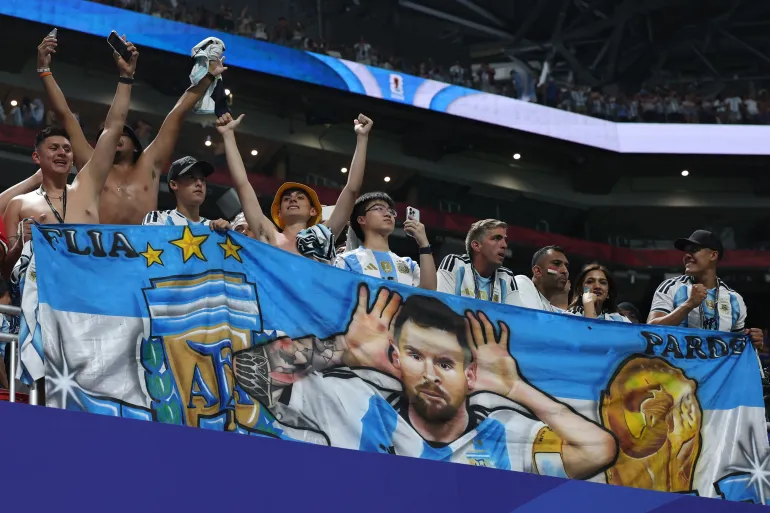
Argentina’s fans celebrate after their team reached the quarterfinals [Thomas Coex/AFP]
‘Argentina are not invincible’: Swiss coach
What started out as a confident campaign has slowly turned into a shaky title defence for Argentina.
Tournament debutants Cape Verde – the smallest nation to play in the World Cup knockouts – gave Argentina a wake-up call, forcing the reigning champions to dig deep for victory.
The Argentinian suffering continued in the next game, where they trailed 2-0 against Egypt before turning it around in stoppage time – in a contest where the opposition accused the referee of favouring the title holders.
These performances have pushed Argentina down to fourth in the pecking order of the favourites, while they’ve also slipped from the top spot to number two in the FIFA rankings.
It has instilled the belief in the Swiss camp that beating Argentina is not out of reach.
“We’re up against the defending champions, which is a unique opportunity. At the same time, we’ve realised that Argentina are not invincible,” Switzerland coach Murat Yakin said.
“It should be an interesting match from a tactical point of view.”
Can ageing Messi keep up with the demands of the World Cup?
At 39, when most players’ careers are long behind them, Messi is proving that age is just a number.
In his sixth and possibly last World Cup, Messi has maintained a perfect record, scoring in each of Argentina’s five matches so far. His eight goals keep him second in the Golden Boot race, only behind France’s Kylian Mbappe, who has also scored eight goals but has played a game more, on account of assists.
Although no longer at his athletic peak, Messi is still very much carrying the burden of the goal-scoring duties for his national team – and rescued them from early elimination in the round of 16 with a goal and assist.
In a rare show of emotion, he even broke down after that game, saying he was desperate for his World Cup journey to continue.
But after his own admission of fatigue after playing 120 minutes against Cape Verde and pushing hard against a resilient Egypt, Messi’s ageing body is fighting to keep up with the gruelling demands of tournament football.
As the stakes get higher and the margins for error reduce, it begs the question: Will age finally catch up with him?
Argentina’s forward #10 Lionel Messi is lifted by teammates as they celebrate a come-from-behind victory against Egypt in the round of 16 [Odd Andersen/AFP]
Argentina vs Switzerland predictions
The Opta supercomputer gives Argentina a 57.1 percent likelihood of winning in regulation time, while Switzerland’s chances of winning are 18.7 percent.
The model estimated a 24.2 percent probability of the game going to extra time.
Argentina vs Switzerland: TV schedule, kickoff
Argentina: TyC Sports, TyC Sports Play (10pm, Argentina Time)
Switzerland: SRF, RSI, RTS (3am on Sunday, Central European Summer Time)
United Kingdom: ITV1, ITVX, STV (2am on Sunday, British Summer Time)
To check the TV listings for your country, head to FIFA’s TV listing schedule here.
Who will the winner face in the semifinals?
The winner of the Argentina vs Switzerland match will face either Norway or England in the semifinals in Atlanta on Wednesday.
Argentina vs Switzerland: Head-to-head
The two countries have met seven times, with Argentina winning five of those matches, while two ended in a draw.
Argentina have also won both of their World Cup games against Switzerland: 2-0 in a group game in 1966 and 1-0 in the round of 16 in 2014, which was also the last meeting between the sides in any competition.
Only three players remain from the 2014 meeting: Messi, Swiss captain Granit Xhaka, and defender Ricardo Rodriguez.
Argentina vs Switzerland: Team news
While no injuries are reported in the Argentina camp, Switzerland’s Manzambi and Jaquez are out with knee and muscle injuries, respectively, while Aebischer is doubtful.
Manzambi, Switzerland’s 20-year-old breakout star, also missed the last game.
Argentina’s predicted lineup
(4-1-3-2): Martinez (goalkeeper); Molina, Romero, Lisandro, Tagliafico; Paredes; De Paul, Enzo, Mac Allister; Messi, Lautaro
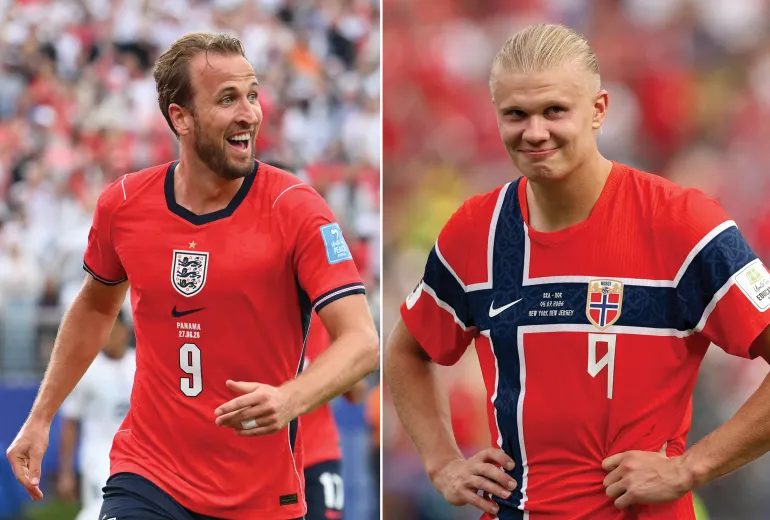
England captain Harry Kane has labelled Erling Haaland “a machine” but said he and Norway’s “beast” of a number nine are completely different players as they prepare to face off in the World Cup quarterfinal.
“I think we’re completely different players. I know we’re both strikers, but we’re in almost two different positions,” Kane told his pre-match news conference on Friday.
Haaland has struck seven times in his first four matches ever at a major tournament, including a devastating double to eliminate Brazil, and his goals have carried Norway into the last eight for the first time.
Kane is only one goal behind the Manchester City striker for the tournament and has taken his overall World Cup record to 14 goals.
“Erling is incredible. His goalscoring record, physically, he’s a machine, he’s a beast. His finishing is at the highest level, and his goalscoring record speaks for itself.
“I see myself as a different player, although I score the same goals. I like to maybe touch the ball a little bit more, be involved with the play a little bit more, but also can play as maybe the out-and-out number nine.
“I don’t think it’s one to compare ourselves. I respect him a lot as a player and as a professional. Obviously, I’m hoping he has a quiet day tomorrow, but I think his overall performance is very good. He’s a fantastic player.”
Kane and Haaland will face off in Miami on Saturday [AFP]
‘Amazing World Cup for strikers’
Despite their phenomenal goalscoring record, Haaland and Kane trail Lionel Messi and Kylian Mbappe, who have both netted eight times in the 2026 tournament, in the battle for the Golden Boot.
Kane won the prize for the World Cup’s top goalscorer in 2018, but England fell short of glory as they exited in the semifinals to Croatia.
Ending a 60-year wait for England to win a major tournament remains Kane’s primary aim, but he is hoping to score the goals to carry the Three Lions to glory.
“I think it’s been an amazing World Cup on that front in terms of all the top strikers, all the top goalscorers scoring goals and affecting games. It’s not always the case at these major tournaments,” added the Bayern Munich striker.
“It’s a great competition. It puts me in a mindset to be at my very best level as much as possible.
“My main goal is to win the World Cup more than another Golden Boot, but I also know I’m a goalscorer, I’m the number nine, so if I’m scoring goals, it’s obviously going to help the team.”
Kane issued a rallying cry for a huge final effort to get over the line in what could be three games in eight days to make history.
“Ultimately, until we win that trophy, there’s always going to be that talk around England and the team, but we’re in a good position. We’re in a place that we wanted to be six weeks ago when we met up for prep camp,” he added.
“Now we’re in the final eight days of the final push. We’re going to need everyone to be at the highest level to achieve our dreams.”
Vikings ready for one more historic game
Meanwhile, Norway coach Stale Solbakken said the showdown between Haaland and Kane will go a long way in deciding the match.
“I think it’s Norway versus England, but I don’t think it is a secret that Kane is the match winner number one for England and Haaland is the match winner number one for us,” Solbakken said at his pre-match news conference in Miami.
Norway are in their first major tournament of any kind for 26 years and have exceeded expectations, most notably in their stunning 2-1 win against Brazil thanks to Haaland’s late double in the last 16.
“Every game has been the most important [in history] for Norwegian football, especially in the knockout rounds, so this is the third time it is the most important game,” added Solbakken.
“I think England has more pressure than us, but we also put pressure on our performance. When the game has started, I don’t think the players think so much about the pressure when it’s 11 versus 11.”
Norway’s progress has caught the imagination at home and across the Atlantic in the United States.
Their fans’ Viking row celebration has become one of the iconic images of the tournament, while Haaland’s status as a global star has soared thanks to his goalscoring prowess on the pitch and jovial personality off it.
“I think the whole of Norway is looking forward to tomorrow. We’ve had some great nights in this World Cup before, and it brings the country together,” said Solbakken.
“Maybe this will never come back to Norway because I think we will qualify more. Every time 1783744646 we have a possibility to go through to a European Championship or a World Cup. But now it’s 26 years since we had it last time.”
Spanish star has scored just one goal in the World Cup, where he’s been sharing celebrations with his little brother.
Published On 11 Jul 202611 Jul 2026
Despite not scoring a goal in Spain’s quarterfinal win over Belgium, Lamine Yamal was named the player of the match for his contributions and capped off the win by sharing a touching moment with his little brother during the post-match celebrations in Los Angeles.
Yamal, who has not scored since Spain’s group-stage win over Saudi Arabia on June 21, said after the match on Friday that nobody will care about his lack of goals if Spain win the World Cup.
Recommended Stories
list of 4 itemsend of list
At a tournament where stars like Lionel Messi, Kylian Mbappe, Erling Haaland and Harry Kane have been prolific, 18-year-old Yamal has just one goal to date, in a routine 4-0 group drubbing of Saudi Arabia. He failed to find the net once again as Spain booked their place in the World Cup semifinals for the second time.
“Obviously I want to score, but I don’t go onto the pitch thinking about that. I do it thinking about helping the team,” said Yamal.
“If we win the World Cup, no one will remember whether I scored goals … The important thing is winning,” said the Barcelona star, after the victory in Los Angeles set up a semifinal clash with France.
“I know I can contribute even if I don’t score. I know my movements draw in many opponents, so I do everything I can to help the team,” he said.
Despite the lack of goals, Yamal has performed consistently for La Roja and has also broken records along the way.
On Friday, he made his sixth FIFA World Cup appearance, the outright most by a player aged 18 or younger in the competition.
Breakout star
Two years ago, then aged 16, Yamal was the breakout star of the Spanish team that won the European Championships in Germany.
“There’s an idea that I should be scoring more, like at the Euros, but we won the Euros with me scoring just one goal. And I have one goal here too, so I’m relaxed about it,” he said, with a smile.
But Spain will be hoping Yamal, who turns 19 the day before the semifinal, can bag further goals if his side is to see off the free-scoring tournament favourites France.
“There are two possibilities – either they reach three consecutive World Cup finals, or we beat them three times in a row. We’ll see what happens,” said Yamal.
“We aren’t afraid at all.”
Yamal shares endearing moment with brother Keyne
Amid Spain’s post-match celebrations, Yamal and his half-brother Keyne were caught in a sweet moment when the younger sibling was shown on the big screen.
The three-year-old was screaming and stuck his tongue out when the camera panned on him. Keyne then blew a kiss at his brother, making the teen Spanish star laugh and wave at him.
Keyne, who often accompanies Yamal to award shows and other public events, has been a fan favourite for the crowds at the World Cup.
He has been picked up by the cameras on multiple occasions, drawing a chuckle from his older brother and cheers from the crowd around him.
Kenye, younger brother of Yamal, is seen on the screen at the quarterfinal in Los Angeles [David Ramos/Getty Images via AFP]
The Belgian side that beat Algeria 2-1 in their opening group stage game of the 2014 World Cup read like an all-star fantasy team of players in their prime.
Courtois, De Bruyne, Witsel and Lukaku all started, as did Eden Hazard, Mousa Dembele and Vincent Kompany, with Dries Mertens and Marouane Fellaini coming off the bench.
Belgium topped their group in their first World Cup since 2002 and reached the quarter-finals, before going one better and reaching the final four in 2018 and winning the third-place play-off.
The same group of players reached the quarter-finals of both Euro 2016 and 2020, before crashing out of the group stages of the 2022 World Cup in Qatar.
Critics say such a talented group should have achieved more, but for a nation of less than 12 million people, was international success ever a realistic aim?
“To be a golden generation you have to win some gold and then you can be called that,” said Spanish football journalist Guillem Balague.
“It’s put the expectations very high in Belgium and it’s interesting that people look back at that group of players because with Lukaku, De Bruyne, Tielemans, Trossard they have actually had a good run.
“They were third in the last World Cup and that seems to have been forgotten with Roberto Martinez as their manager. I’m not sure how much more you could ask for.
“In the context of other teams like an England side that had the golden age, with an Italy that have had such experience and managed to get a wonderful Euros, with Spain on the up as well, to demand Belgium to win is a maybe a little bit too much.”
Along with those celebrated names, Leandro Trossard (31), Brandon Mechele (33), Timothy Castagne (33), Hans Vanaken (33), and Thomas Meunier (34) have likely played their last World Cup minutes.
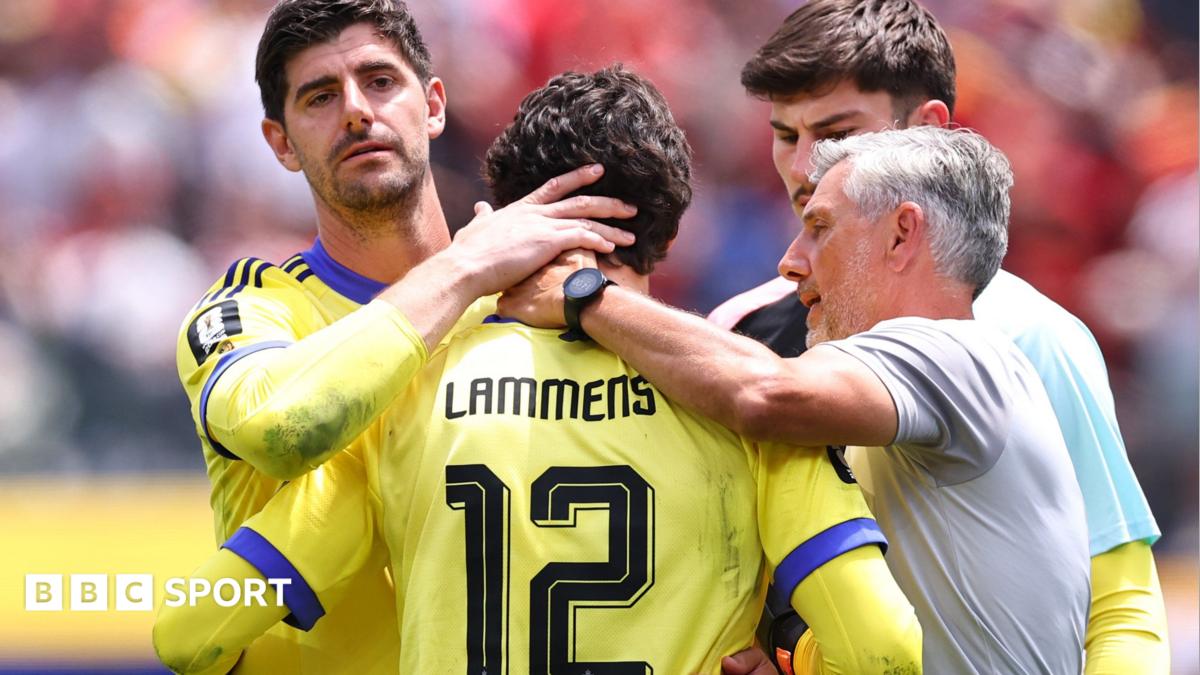
“I’m disappointed for those that maybe might not come back with the national team,” manager Rudi Garcia said after the match.
“I took a team that I wanted to take as far as possible. My veteran players, who are maybe on their way out, that they could have one last hurrah.
“It is a shame because I think everyone deserves to go far in this World Cup.”