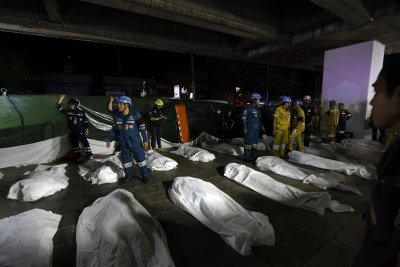
Rescue workers recover the bodies of fire victims outside the burned pub following a fire in Bangkok, Thailand, on Monday. At least 27 people were killed after a fire engulfed the pub, according to Thai Prime Minister Anutin Charnvirakul. Photo by Rungroj Yongrit/EPA
July 12 (UPI) — An intense fire that ripped through a Bangkok pub early Monday killed at least 27 people and injured nearly 20 others, officials said as an investigation was launched into the cause of the blaze.
Authorities received a report of the fire at the Rong Beer Na Lat Phrao pub in Bangkok’s densely populated Chatuchak district at 12:02 a.m. local time, Thailand’s Department of Disaster Prevention and Mitigation said in a statement.
“The fire was burning intensely,” according to the department, which said responders from various agencies worked to extinguish the blaze and rescue the injured and people trapped inside.
Videos of the bar’s entrance posted online show people screaming and running out of the establishment followed by flames erupting from the door.
Officials said the fire was brought under control by 12:32 a.m.
Images of the aftermath posted online by the Department of Disaster Prevention and Mitigation show the charred remains of the bar’s interior.
A preliminary inspection of the scene found that 27 people had been killed, the department said. The identities have not been released, but the department said 18 were women and nine were men.
Of the 18 people injured, eight were listed as red cases, meaning they were either in critical or life-threatening condition, seven were labeled yellow for serious but stable condition and three were considered green cases with minor injuries, the department said in an update.
“Forensic investigators are examining the scene to determine the cause of the fire,” the Department of Disaster Prevention and Mitigation said.
Prime Minister Anutin Charnvirakul arrived at the scene at about 1:30 a.m. and was joined by Disaster Prevention and Mitigation Director-General Teerapat Katchamat and Bangkok Gov. Chadchart Sittipunt.
Anutin told reporters at the scene that most fatalities were the result of smoke inhalation. He said that he was told by witnesses that the fire appeared to have started near a circuit breaker on the restaurant’s stage before the facility was plunged into darkness, the Bangkok Post reported.
Exceptionally hot weather in May and June was responsible for the heat-related deaths of at least 2,700 people in England and Wales, according to British research out Monday. File photo by Facundo Arrizabalaga/EPA-EFE
July 13 (UPI) — Exceptionally hot weather in May and June was responsible for the heat-related deaths of at least 2,700 people in England and Wales, according to British research out Monday that found that human-caused climate change was a significant factor.
Temperature records for both months fell during heat waves May 21-29 and June 18-28, with the bulk of the fatalities — 2,200 — in June when the temperature rose to as high as 99.9 degrees Fahrenheit compared with average daytime highs of 68 degrees Fahrenheit, the Met Office said in a news release.
Researchers from Imperial College London, the London School of Hygiene & Tropical Medicine and the Met Office modeled excess deaths — those over and above normal levels — during both heat waves using historical mortality records and established peer-reviewed methods.
Notably, almost 6 in 10 of fatalities during the May heat wave were attributed to additional heat contributed by human-caused climate change, compared with a little less than 4 in 10 during the heat wave in June, which was hotter and lasted longer.
The scientists said daytime maximum temperatures approximately 7 degrees Fahrenheit higher than they would have been without human-induced climate change had fueled temperatures that would have otherwise been far less likely to occur — making the heat waves far more hazardous to human health.
“We all love the sun, but people need to be aware that we are now seeing dangerous climate-change-fueled heat that is claiming lives, disrupting schools and hospitals and shutting down transport and infrastructure,” said Dr. Clair Barnes, Research Associate in Extreme Weather and Climate Change at Imperial College London.
“It’s time we woke up to the fact that we now live in a country with dangerously hot summers. To protect people during future extremes, we must urgently adapt to the reality of the climate we now have, and double down on global efforts to reach net zero emissions to stop this from getting worse,” she said.
Dr. Malcolm Mistry, Assistant Professor in Climate and Geo-spatial Modelling at the London School of Hygiene & Tropical Medicine, expressed concern that only a few weeks into summer England and Wales had already experienced two record-breaking heat waves.
He warned that with spikes of extreme hot weather more frequent and more intense due to human activity, summer heat waves were “rapidly evolving into a major health risk for people in the United Kingdom.”
Mistry said it was critical that changes to homes, workplaces and critical infrastructure to cope with extreme heat kept ahead of rising health risks in order to protect the elderly, children, babies and other vulnerable groups.
The Met Office said 2026 has been exceptional with the two heat waves topping records that had stood since May 1944 and June 1976.
“For the time of year these events were extreme, even in our warmer climate,” said Climate Attribution Manager, Dr. Mark McCarthy.
The climate division of the U.K. Health Security Agency said that with periods of heat likely to become more intense, longer and more frequent as the world continued to warm, the study showed the “scale of risk associated with extreme heat and the growing threat climate change poses to our wellbeing.”
Continental Europe has also been in the grip of a more or less continuous heat wave since May that has placed health systems under huge pressure, triggered deadly wildfires that have burned through tens of thousands of hectares of woodland and scrubland, crippled power grids and forced schools to close.
The World Health Organization said Sunday that 1,300 excess deaths reported across Europe since June 21 were linked to the high temperatures.
Director-General Tedros Adhanom Ghebreyesus said Europe was warming twice as fast as the rest of the world with 150 million people suffering the negative impacts of the extreme heat.
France’s Health Ministry said Sunday that there were 1,000 extra deaths between Wednesday and Saturday alone, compared with previous months.
The buzz: This game would be far better suited as a final than a semifinal. Both are unbeaten — in fact, Spain is unbeaten in its last 36 games, one shy of the all-time record. For France, a win would put it in the final for a third straight World Cup while Spain is hoping to get back for the first time since 2010, when it won its only title. The teams got here in different ways. Spain has walked a razor’s edge, giving up just a single goal in the tournament and winning its last two games on late goals from substitute Mikel Merino. France has bludgeoned the opposition, scoring 16 goals while conceding just two. Kylian Mbappé has scored eight times and has 20 goals in 20 World Cup games, leaving him one back of Lionel Messi’s all-time record. It seems unjust that one of these teams will finish its World Cup in the third-place game.
Wednesday’s semifinal
England vs. Argentina
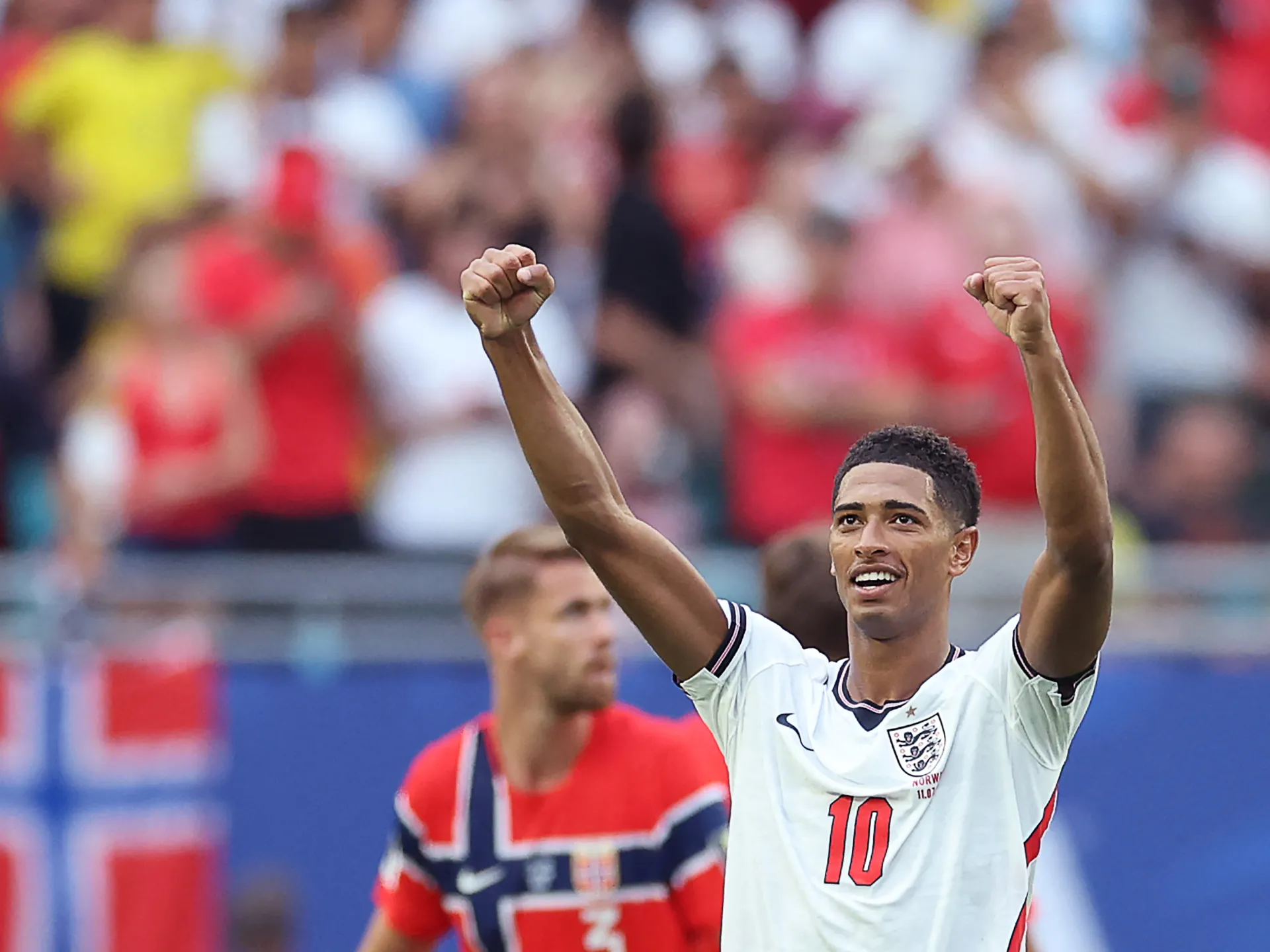
England’s (from left to right) Harry Kane, Jude Bellingham, and Morgan Rogers celebrate after defeating Norway in the World Cup quarterfinals on Saturday.
The buzz: Both teams are unbeaten and each survived scares in the quarterfinals, with England outlasting Norway in extra time in brutal weather in Miami and Argentina beating Switzerland in extra time in Kansas City. Jude Bellingham had a brace in each of England’s last two games to match teammate Harry Kane’s six goals in the tournament. Bellingham is the first player to score at least two goals in consecutive World Cup knockout matches since Diego Maradona in 1986. Argentina, the reigning champion, is unbeaten in its last 12 World Cup games, but four of its last six knockout-stage games have gone to extra time or penalties. Argentina has gotten eight goals and two assists from Messi in this World Cup.
This photo, taken Monday, shows the trading room of Hana Bank in Seoul as South Korean stocks plunged by nine percent on tech stock losses amid Middle East tensions. Photo by Yonhap
Seoul shares plunged 9 percent Monday as investors dumped technology stocks for profit-taking amid renewed tensions in the Middle East. The Korean won fell against the U.S. dollar.
The benchmark Korea Composite Stock Price Index (KOSPI) fell 669.01 points, or 8.95 percent, to close at 6,806.93 after falling as low as 6,783.43.
Trade volume was moderate at 469.86 million shares worth 39.8 trillion won (US$26.5 billion), with decliners far outnumbering gainers 713 to 179.
Institutions and foreigners sold a net 2.22 trillion won and 1.7 trillion won worth of shares, respectively, while individuals bought a net 3.9 trillion won.
After opening 0.85 percent lower, the KOSPI extended its losses, triggering a circuit breaker that temporarily halted trading of KOSPI-listed stocks for 20 minutes. It marked the seventh activation of the measure this year.
On Friday, U.S. stocks advanced, buoyed by South Korean chipmaker SK hynix’s multibillion-dollar U.S. share offering. The Dow Jones Industrial Average gained 0.29 percent, while the tech-heavy Nasdaq Composite also rose 0.29 percent.
SK hynix’s American depositary receipts (ADRs) on the Nasdaq closed at US$168 each, well above the offering price of $149.
Despite the successful U.S. market debut, SK hynix shares tumbled as investors took profits and shifted to the company’s ADRs, analysts said.
Investor sentiment was also dampened by heightened uncertainty in the Middle East after the United States and Iran exchanged fresh strikes over the status of the Strait of Hormuz.
“The country’s newly introduced single-stock leveraged exchange-traded funds linked to Samsung Electronics and SK hynix continued to fuel volatility in the stock market,” Samsung Securities said in a research note.
Tech stocks led the decline.
Market bellwether Samsung Electronics plunged 10.7 percent to 254,500 won, while its chipmaking rival SK hynix plummeted 15.37 percent to 1,845,000 won.
Top carmaker Hyundai Motor fell 2.95 percent to 444,000 won, and defense giant Hanwha Aerospace declined 3.21 percent to 936,000 won.
Among gainers, leading battery maker LG Energy Solution rose 0.77 percent, and leading refiner SK Innovation climbed 7.09 percent to 110,200 won.
The Korean won was quoted at 1,503.4 won against the U.S. dollar at 3:30 p.m., down 2 won from the previous session.
Bond prices, which move inversely to yields, closed lower. The yield on three-year Treasurys rose 4.1 basis points to 3.809 percent, and the return on the benchmark five-year government bonds climbed 3.3 basis points at 4.041 percent.
Copyright (c) Yonhap News Agency prohibits its content from being redistributed or reprinted without consent, and forbids the content from being learned and used by artificial intelligence systems.
I’d definitely rather be playing Argentina than the Swiss and I reckon Thomas Tuchel and the England players will be absolutely delighted too – they will think they can get at Argentina.
In wide areas, Argentina looked vulnerable. Nahuel Molina, who started at right-back, was given a torrid time by Dan Ndoye, who ended up scoring.
Molina got hooked in the end but, whether it is him or Gonzalo Montiel who starts against England, they will have their hands full with Anthony Gordon.
Similarly, whether it is Noni Madueke or Bukayo Saka on the right, I think they will have the better of Argentina left-back Nicolas Tagliafico in one-on-one duels too.
And, in the centre of their defence, Lisandro Martinez has made mistake after mistake in this tournament. He has got another rick in him, I’m sure of that.
The way Argentina set-up, they overload the middle of the pitch and play really narrow, then try to get Messi on the ball and hope he can produce something.
I know it is easy to say ‘you stop Messi, you stop Argentina’ but watching them, that was literally the case. Apart from Messi they are hoping Julian Alvarez bends one in from 25 yards rather than playing through teams.
Alvarez is usually in midfield but he played slightly differently against Switzerland, and was the one trying to stretch their backline. If he wasn’t doing it, no-one else was.
Messi certainly isn’t going to be making those runs and he was really quiet for long periods against the Swiss, but once they were down to 10 men he was probing and looking more of a threat.
If Declan Rice is fit, then it will be his job to deal with him. The Swiss realised you could not give Messi an inch and Granit Xhaka was brilliant at that.
Messi will still be dangerous but he is 39 now and, as long as Tuchel has a plan to stop him drifting into space, I think England will have enough quality everywhere else to win.
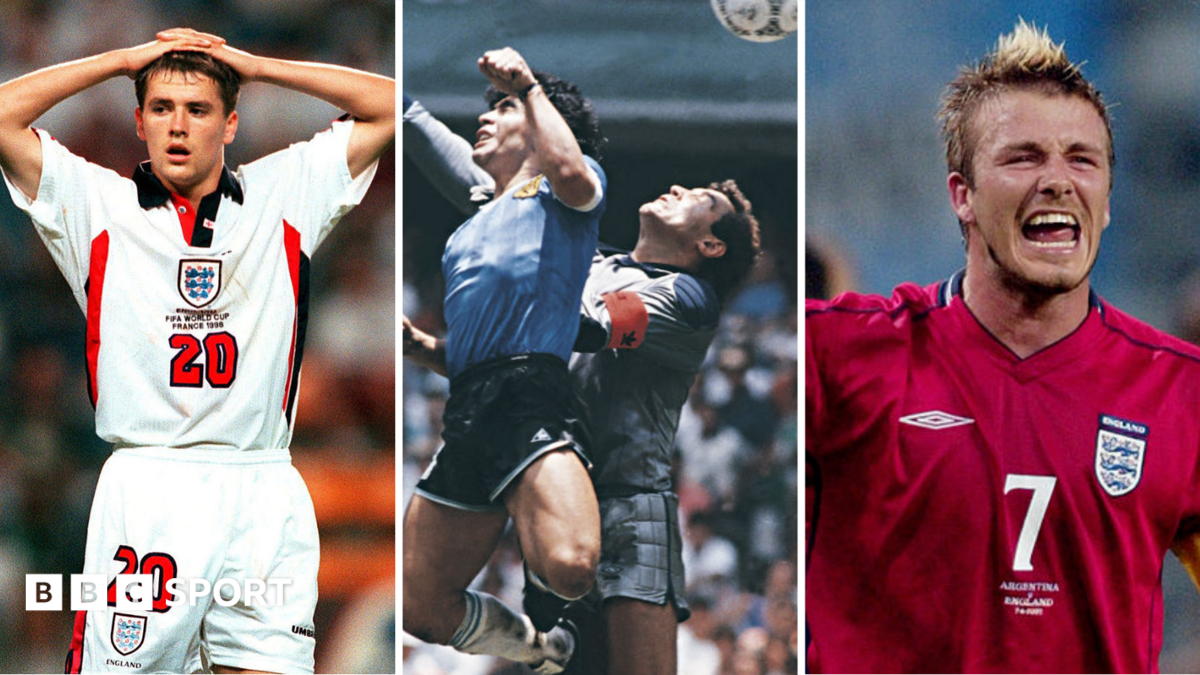
Look, it will be a brilliant tie because of all the history between the two countries at World Cups, with the Diego Maradona handball and the David Beckham red card.
The previous meetings have been pretty feisty, and I am expecting more of the same here.
I would not be surprised to see some antics from the Argentina players because they love that side of it. They will be happy if it turns into that kind of game, where things get a bit wild and England players might lose their heads.
But, if they can keep their cool, I am expecting England to win comfortably – and my other prediction is for Argentina to finish the game with nine men.
Messi has never played against England, and maybe he will make his mark, but England have got their own superstar now in Jude Bellingham.
His first goal against Norway was sensational, with his power, poise and the finish. He is absolutely flying at the moment and if it comes down to one player deciding this game, it is likely to be him.
A vehicle believed to be carrying former South Korean President Yoon Suk Yeol enters the Seoul court complex in southern Seoul on Monday. Photo by Yonhap
A Seoul district court on Monday sentenced former President Yoon Suk Yeol to two years in prison after finding him partially guilty of accepting illegal political funds in the form of free opinion polls from a self-proclaimed power broker.
The Seoul Central District Court convicted the jailed former president on charges of violating the Political Funds Act in a ruling that marked a departure from a separate trial where his wife was acquitted on the same charges.
Special counsel Min Joong-ki’s team earlier indicted Yoon on charges of colluding with his wife, former first lady Kim Keon Hee, and receiving 58 opinion polls worth about 270 million won (US$180,100) in total for free from the power broker, Myung Tae-kyun, between April 2021 and March 2022.
In its ruling, the court recognized that Yoon had received 14 opinion polls from Myung for free over the period, sentencing him to prison and ordering a forfeiture of 13.96 million won.
It recognized the special counsel team’s argument that Yoon had promised to support former Rep. Kim Young-sun’s nomination as a candidate for the conservative People Power Party in the parliamentary by-elections in June 2022 in exchange for the opinion polls.
“The defendant’s actions sowed distrust in politics and undermined the public trust in the development of democracy,” the court said. “A punishment commensurate with the wrongdoing is inevitable.”
The court also sentenced Myung to 18 months in prison on the charges.
The special counsel team had sought a four-year prison sentence for Yoon and a three-year term for Myung.
The ruling diverged from an appellate court’s acquittal of Yoon’s wife on charges of accepting free opinion polls from Myung in a separate trial.
In Kim’s acquittal in April, the Seoul High Court ruled the couple could not be seen as profiting off the opinion polls as Myung had provided them to other people as well. Min’s team has appealed that ruling.
After the ruling, Yoon’s lawyers vowed to appeal, saying the verdict was “difficult to understand” given the former first lady’s acquittal in her trial.
The special counsel team called the latest ruling “very meaningful,” noting the bench appeared to have closely considered the various evidence and arguments presented in its judgment.
It marked the latest conviction for Yoon, who has been standing multiple trials following his failed 2024 martial law bid. In February, Yoon was sentenced to life imprisonment for leading an insurrection through his short-lived imposition of martial law.
Copyright (c) Yonhap News Agency prohibits its content from being redistributed or reprinted without consent, and forbids the content from being learned and used by artificial intelligence systems.
Spain have logged more than 12,000 miles, while Switzerland exceeded 10,000 thanks to what the Swiss Football Association described as “venue hopping” across North America.
Morocco repeatedly returned to their New Jersey base despite fixtures taking them to Boston, Atlanta, Monterrey and Houston before eventually bowing out to France in the quarter-finals.
Belgium’s decision to base themselves in Renton, Washington, kept travel to about 4,000 miles before their exit against Spain.
France’s tally is one of the lowest of any nation at the tournament – with a total below even several teams eliminated after only three group matches.
Long-distance travel is nothing new at the World Cup. Brazil in 2014, Russia in 2018 and even South Africa in 2010 all required teams to cover significant distances.
The first 48-team World Cup, however, has presented a different challenge. With matches staged across three host nations and 16 cities, some teams have spent weeks shuttling back and forth across North America, while others have remained largely within the same region.
England’s route illustrates that contrast better than most. Their journey has already exceeded the total distance of countries at other tournaments.
The football teams of forty-eight countries set out with a chance of winning the World Cup on June 11, and the hopes of just four nations remain alive.
The top four teams in the FIFA rankings, with eight previous titles between them, will lock horns on Tuesday and Wednesday to try to secure a place in what is set to be the grandest of showpiece occasions in sport: the World Cup Final at New York New Jersey Stadium on Sunday, July 19.
Recommended Stories
list of 4 itemsend of list
Al Jazeera ranks the contenders for the title:
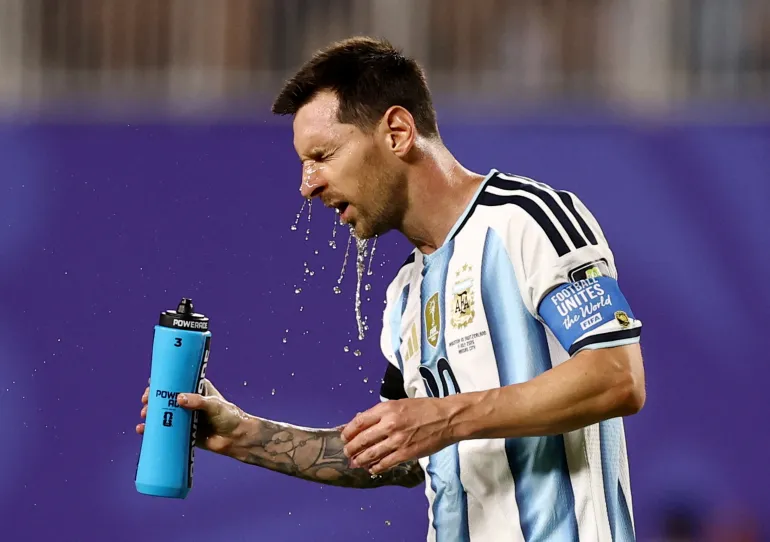
Argentina’s Lionel Messi takes a break during the quarterfinal [Lee Smith/Reuters]
4. Argentina
What’s this? The defending champions as the outsiders?
Well, Algeria, Austria, Jordan, Cape Verde, Egypt and Switzerland must be one of the kindest ever paths to the business end of a World Cup, and La Albiceleste have not exactly been convincing along it.
They were made to sweat by Cape Verde and Egypt in the knockout stages before finding a way to prevail in dramatic circumstances, and the pattern was repeated against Switzerland in Kansas City on Saturday night, when they went almost 90 minutes without a shot on target following Alexis Mac Allister’s early opening goal.
Their ageing side eventually prevailed after 120 minutes in sweltering conditions. Had Switzerland kept 11 men on the field, things might have been very different, but, once again, in the end, the defending champions found a way to win when they were well below their best.
Surely they cannot get away with another performance like that against England? Well, England fans might well be saying the same about the Three Lions. Both Harry Kane and Lionel Messi fell well short of their best in the last-eight matchups too.
The outpouring of emotion from Messi at full-time in the comeback win over Egypt showed just how close the three-time winners came to being eliminated. In an already emotionally charged matchup with England, expect tempers to rise and tears to flow on either side come full-time.
If Argentina, and – in his first-ever appearance against the Three Lions – Messi, are able to rediscover their swagger and win, ousting their old foes from the tournament in the knockout stages for a third straight time, then the confidence and momentum they would take into the final would be huge.
However, nothing they have shown in the US this summer would suggest that is likely to happen.
And even if it did, whether it would be enough to give them the edge against European champions Spain, or a vengeful France side they vanquished on penalties in the epic final of Qatar 2022, is another matter entirely.
England’s Jude Bellingham and Harry Kane celebrate after beating Norway [Paul Childs/Reuters]
3. England
Have we seen the best of England in this tournament? Probably not. And yet, here they are, in the semifinals for just the fourth time ever.
The win over Norway was neither pretty nor convincing, and manager Thomas Tuchel admitted they were lucky to get through, thanks largely to Jude Bellingham putting the team on his shoulders at a couple of key moments once again. Could a midfielder really win the Golden Boot? He is only two behind Messi and Kylian Mbappe with six goals already.
Much to Tuchel’s frustration, bar a 20-minute purple patch in the second half of the 4-2 opening game win against Croatia, England have yet to dominate a team, and relied on counterattacking bursts to give them a 3-2 lead to defend in the epic round-of-16 victory over Mexico in the cauldron of the Azteca.
What they have shown is character, in abundance, and they will likely need plenty more of that if they are to end 60 years of longing for a second World Cup title.
The game against Argentina will be far more than 11 vs 11; the ghosts of football history will line up alongside both teams, and the hype and pressure are sure to be enormous.
A few possible positives for England will be that they have already made par for this tournament: Ranked fourth in the world, they have reached the last four. Anything else would be a bonus. Nobody really considers them a top-two team in the world, which might help to alleviate some of the burden of expectation.
After a trip to the altitude of Mexico City, and the oppressive heat and humidity of Miami, a return to the 22-Celsius (71.6F) climate-controlled confines of Atlanta, where England overcame DR Congo in the round of 32, will be welcome.
They also have no new suspensions to deal with, with Jarell Quansah left with one game of his two-match ban to serve; and there were minutes for Reece James against Norway. England will meanwhile be hoping Declan Rice recovers fully after a 45-minute cameo in which he was patently not fit following illness.
An ageing Argentina side have struggled against the pace, movement and trickery of Cape Verde, Egypt and Switzerland in the past three rounds, and Bukayo Saka, Anthony Gordon, and even Marcus Rashford will be even better placed to exploit that.
Beyond Messi, Argentina have not posed too many attacking questions themselves, though Julian Alvarez’s stunning strike against Switzerland might just be the start of his own World Cup.
All things considered, expect England to make it through to the final, but France would likely be a step too far, and even Spain would be a big ask, despite the additional motivation of revenge for their Euro 2024 final defeat.
Spain’s Mikel Merino celebrates the victory against Belgium [Jessie Alcheh/Reuters]
2. Spain
They are the third semifinalists yet to find top gear at this tournament, bar a one-sided display against Austria in the round of 32.
La Roja’s stoic defence might have been punctured for the first time this summer by Belgium in the last eight, but the 649 minutes that preceded that goal were the longest streak in World Cup history without conceding, and they have still allowed just seven shots on target in their six matches so far.
Though the goal contribution stats might not reflect it, Lamine Yamal has shown flashes of a return to top form after that season-ending hamstring injury in April, while La Roja’s carousel of tricky attackers has posed problems for defences in all six matches so far, and Mikel Merino has written himself into folklore with last-gasp winners against Portugal and Belgium.
Four-goal leading scorer Mikel Oyarzabal has gone off the boil in the past couple of games, however, and is unlikely to strike too much fear into the French backline.
While teenage defender Pau Cubarsi looks at home on the biggest stage of all, he is yet to face the kind of test that Kylian Mbappe, Michael Olise and Ousmane Dembele will pose.
If they make the final, Spain will be favourites to win it, and they have won the World Cup the only time they previously reached the last four, but despite having beaten France in their past two encounters, a third should be beyond them.
France’s forward line of Kylian Mbappe (bottom), Ousmane Dembele (top), Bradley Barcola (right), and Michael Olise (left) is considered the strongest at the tournament [Mauro Pimentel/AFP]
1. France
Before their last-eight matchup with Morocco, we asserted that France were the class of the field with a fearsome foursome in attack and a defence that, although it had not really been tested yet, had only allowed two goals in five matches.
Well, make that two in six, even if they still have not really been tested, such was the Atlas Lions’ toothless attack on the night in their 2-0 defeat.
Mbappe further enhanced his credentials for the Golden Boot and all-time World Cup scoring record with another quality goal against Morocco, and Olise, Dembele, Desire Doue and Bradley Barcola continue to threaten across the field in a way no other team on earth can.
Spain, and in particular their defence, will pose a different challenge, and the underworked French defence will likely get their own test this time, too, with the likes of Dani Olmo, Alex Baena, Ferran Torres and Fabian Ruiz getting into promising positions around Oyarzabal, and that’s not to mention super-sub Merino.
Whoever beats France will surely lift the World Cup, but none of the remaining teams can match the dynamism of Les Bleus’ forwards. Although Spain will likely be their hardest challenge, it is one you can expect Didier Deschamps’s men to overcome, not least fuelled by the additional motivation of having lost to La Roja in the Euro 2024 and Nations League semifinals over the past two years.
The rules are simple. Each day there’s a new footballer and the challenge is to guess who they are in as few attempts as possible.
After each wrong guess you unlock a new clue. Guess the answer after as few clues as possible to score more points.
Three is a good score, four or five points is exceptional.
So take part and return for more tomorrow.
Today’s player and clues set by BBC Sport’s Adam Millington.
After more quizzes? Go to our dedicated Football Quizzes and Sports Quizzes pages and sign up for notifications to get the latest quizzes sent straight to your device.
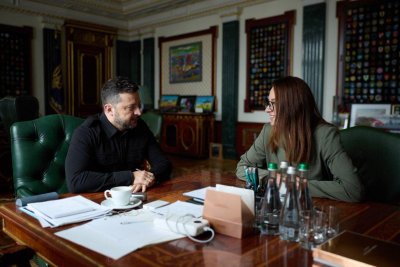
Yulia Svyrydenko resigned Sunday as Ukraine’s prime minister. File Photo by Teresa Suarez/EPA
July 13 (UPI) — Yulia Svyrydenko has resigned as prime minister of Ukraine, as President Volodymyr Zelensky announced that she would be assuming a new position amid a shift in the war-torn country’s political strategy.
Svyrydenko stepped down on Sunday, five days short of serving a full year as prime minister. No reason was given.
Her resignation came as Zelensky said in a statement that “Ukraine is changing its political strategy.”
Though he did not detail specifically how or why the change was necessary, he indicated the new strategy would prioritize implementing the agreement with the United States for Ukraine to manufacture Patriot missile systems, advancing Europe’s anti-ballistic missile defense project, progressing Kyiv’s European Union membership, improving relations with Poland and Hungary and creating ties with the Middle East for security and economic cooperation and with China to help Russia’s War.
“Accordingly, personnel changes will begin in Ukraine to ensure the implementation of the updated political strategy,” Zelensky said in a statement.
He said he discussed the details with Svyrydenko and together, “we determined that these changes require a renewal of the Cabinet of Ministers.”
“I am grateful to Yulia for her clear, steady and effective work as prime minister, for her years of productive service on Ukraine’s team, and I have offered her the opportunity to lead a new and important area of relations with a key partner,” he said.
“I expect that, together with MPs, we will make the corresponding changes in the government of Ukraine. There will also be changes among the heads of law enforcement agencies.”
Svyrydenko said in a separate statement that she was grateful to Zelensky and was proud to have led the government as the country defended itself against Russia’s invasion.
“At this moment, it is critically important to unite all our strength and resources to make Ukraine stronger,” she said.
“I remain ready to serve the Ukrainian state and carry out every task aimed at strengthening Ukraine’s position, defending our national interests and bringing a just peace closer.”
The announcement also came about seven months after Zelensky’s administration underwent a major reshuffle after 11 officials quit following a mass corruption scandal that rocked the government.
Zelensky separately said Sunday that he met with Interior Minister Ihor Klymenko, Defense Minister Mykhailo Fedorov, Energy Minister Denys Shmyhal and Kharkiv Mayor Ihor Terekhov, among other officials.
I discussed with the President the challenges facing our country, the changes needed to strengthen the Government’s work, and our relations with international partners.
At this moment, it is critically important to unite all our strength and resources to make Ukraine stronger…. pic.twitter.com/lRIgk5yqh0— Yulia Svyrydenko (@Svyrydenko_Y) July 12, 2026
The two finalists from Qatar 2022 could well be on course for a rerun as the FIFA World Cup 2026 draws to a close.
Lionel Messi led Argentina to glory four years ago against a France side that were defending the title they won at Russia 2018.
Recommended Stories
list of 4 itemsend of list
Argentina and France overcame Croatia and Morocco, respectively, in the semifinals, both surpassing expectations to reach that stage.
This time, however, both teams will face sides considered serious contenders for the title.
Al Jazeera takes a look at whether we are witnessing the best last-four lineup in World Cup history, and with it, potentially, the beautiful game’s greatest finale.
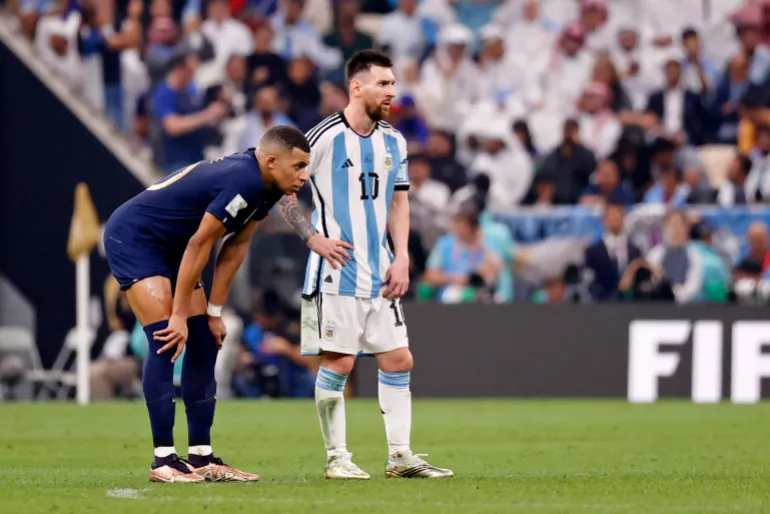
France forward Kylian Mbappe (left) stands next to Argentina forward Lionel Messi during the 2022 World Cup final [Yukihito Taguchi/Reuters]
The class of 2026 – France, Spain, England, Argentina
The lineup for the 2026 semifinals marks the first time since FIFA rankings began – in 1992 – that the current top four sides in the world have made it to this stage.
France currently hold the number one spot, and are led by one of the most feared strikers in the world, Kylian Mbappe, while also boasting the reigning Ballon d’Or winner, Ousmane Dembele.
Argentina are ranked second and led by a player in Lionel Messi who, after having helped his side become only the third to defend a World Cup, may well be acknowledged as the greatest of all time.
Spain are ranked third and boast La Liga starlet Lamine Yamal of Barcelona. The Spanish have reached the semis with a miserly defence, but the stage may now be set for Yamal to fully shake off the memory of the calf injury that forced him to miss the end of the domestic season and shine much as he did in helping the Spanish to the Euro 2024 title.
England are the lowest-ranked of the remaining teams but considered the second favourites to lift the title behind France. This is mainly based on the incredible talents of not only Harry Kane, but also Jude Bellingham, who some suggest may be regarded as the greatest player to emerge from England, should he continue to drag the side all the way.
There is also a feeling, though, that England’s wide players may now be allowed to come to the fore with the game set to open up against more attack-minded opponents.
France’s Hugo Lloris lifts the trophy as they celebrate winning the 2018 World Cup [Kai Pfaffenbach/Reuters]
Russia 2018 – France, Croatia, Belgium and England
France lifted their second World Cup when they beat final debutants Croatia to seal the crown. Croatia were the heavy underdogs, and they themselves beat an England side seen as surprise semifinalists.
Belgium enjoyed a long run as the number one side in the world through the period, although their star-studded squad failed to fulfil their potential at major tournaments.
Brazil 2014 – Germany, Argentina, Brazil and Netherlands
The Germans claimed their fourth title in South America after stunning the tournament hosts, Brazil, with a 7-1 demolition in their last-four clash.
Lionel Messi was named player of the tournament, but could do little to inspire insipid matches against the Netherlands and Germany. Both matches went to extra time: Argentina sealed a 1-0 win in the semifinal before losing on penalties after a 0-0 draw against the Germans in the final.
Germany’s Manuel Neuer was named the goalkeeper of the tournament, which perhaps said it all about the German efficiency that year, which saw the semifinal mauling regarded as more of a blip than the result of free-flowing football. Much of the headline-grabbing scoreline was down to Brazil’s underwhelming squad.
Referee Horacio Elizondo, right, of Argentina shows France’s Zinedine Zidane a red card during their World Cup 2006 final [Jerry Lampen/Reuters]
Germany 2006 – Italy, France, Netherlands and Portugal
The final was marred by Zinedine Zidane’s head-butt that resulted in the red card that would end his playing career, but overall, it was two sides in decline following golden generations, and ended with Italy claiming their fourth title after penalties.
A young Ronaldo was to be spotted for the first time at the global showpiece, but better days were to come for Portugal, while Germany were heavily reliant on Bastian Schweinsteiger and Miroslav Klose in an otherwise average side.
England’s Paul Gascoigne is tackled during a match against Egypt at the 1990 World Cup [Reuters]
Italy 1990 – West Germany, Argentina, Italy and England
The football was bleak, but the names were legendary. Regarded as one of the poorest World Cups of modern times, the football was conservative, and the day-and-age of lumping anyone with any skill still reigned over the game.
Germany were led and marshalled by Lothar Matthaus, while Jurgen Klinsmann and Rudi Voller were the dead-eye duo in attack that seemed to find a way to the end of every cross and through ball. The pair were enough to see off one of England’s finest generations – with Paul Gascoigne and Gary Lineker the standouts – in the semifinals, and Diego Maradona and the defending champions Argentina in the final.
Italy’s Salvatore Schillaci etched his name into World Cup folklore as an iconic player when he stole the show from some of the bigger and more glamorous players to seal the Golden Boot with six goals.
The football was brutal throughout, and the most romantic part of the tournament was the wonder of the Italian cities and their history, as well as the tournament’s theme tune: Nessun Dorma, sung by Luciano Pavarotti. If only the football had hit the same notes.
Diego Maradona scores for Argentina against England in the 1986 quarterfinals [Juha Tamminen/Reuters]
Mexico 1986 – Argentina, West Germany, France and Belgium
Argentina and, in particular, Diego Maradona lit up the finals. Mainly due to Maradona’s brilliant second goal in his side’s 3-2 win against England in the quarterfinals, which also saw him net the infamous “Hand of God” goal as the diminutive forward challenged English keeper Peter Shilton for a ball in the air.
It was otherwise mostly blood and thunder at the tournament, and neither West Germany, France, nor Belgium particularly illuminated, but it was a worthy mention for Maradona’s emergence. His five goals were only pipped for the Golden Boot by Lineker’s six strikes.
German captain Franz Beckenbauer, third from left; and behind him, Dutch captain Johan Cruyff, the team’s out for the 1974 final [Peter Hillebrecht/AP]
West Germany 1974 – West Germany, Netherlands, Brazil and Poland
The world was introduced to “Total Football” at the 1974 edition, with Johan Cruyff setting the tone for the sharp passing and movement of the Dutch. It was not enough to topple the hosts, however, who claimed their second crown.
Brazil, meanwhile, were beginning their decline, which would last nearly 20 years, following the retirement of Pele at the previous edition.
Brazil’s Pele is hoisted on the shoulders of his teammates after Brazil won the 1970 World Cup final against Italy [AP]
Mexico 1970 – Brazil, Italy, West Germany and Uruguay
The world got its first glimpse at a new way of playing football: the Brazilian way. Pele debuted at the 1958 edition and was the solitary target of the boot boys – the players that spent the whole match kicking opponents as high as they could – until the 1970 edition, when he was joined by the first great international side of superstars.
England had the timeless talent of Bobby Charlton when they won it in 1966, but it was overwhelmingly a tournament of bullies. Indeed, Pele was given the full treatment by England in the quarterfinals, where the Brazilians’ attempt at a third straight title ended.
In 1970, however, it was nearly impossible to get near the pace and play of the Brazilians, as well as the power.
They were well ahead of their time and remain one of the greatest to grace the game. They were also furlongs ahead of any opposition.
The verdict: Is the class of 2026 the best semifinal lineup in World Cup history?
It is very hard to see past the array of talent on display across all four of the sides; so much so that Messi and the defending champions are now seen as the outsiders in this stage.
The answer will truly lie in the football, and the teams that have had to endure not only the rise of the professional and tactical standard across the globe, but also the emergence of so many new nations that will hope to hold their own for years to come.
DR Congo and Cape Verde delighted, and have given the world a taste of things to come, especially with a 64-team tournament mooted for the 2030 edition.
For now, however, all eyes are on four nations, who could produce the global game’s most beautiful moment.
The United States on Sunday carried out a second night of airstrikes against Iranian targets as their dispute over transit rights in the Strait of Hormuz threatened to escalate beyond the region. U.S. Navy file photo by Mass Communication Specialist Seaman Zoe Simpson
July 12 (UPI) — The U.S. military said late Sunday ithad completed a new wave of attacks against Iran, as world leaders raised fears that a fragile cease-fire would collapse and the conflict could widen beyond the region.
The Sunday attack was the second consecutive night that the United States had attacked Iran and was the fourth round in a week, prompting retaliatory strikes from Tehran against regional U.S. military assets following each operation, as the two sides battle over the vital Strait of Hormuz shipping route.
U.S. Central Command said its forces had completed the wave of strikes, claiming to have hit dozens of targets with precision munitions with the intent to “degrade Iran’s ability to continue attacking international shipping flowing through the Strait of Hormuz.”
Iranian air-defense systems, coastal radar sites, missile and drone capabilities and small boats were among the targets attacked by U.S. fighter jets, naval assets and aerial and sea drones on Sunday, CENTCOM said.
“The Strait of Hormuz is a vital maritime corridor for global trade,” CENTCOM said in a statement.
“Iran does not control it.”
The announcement of the operation’s conclusion came hours after CENTCOM said it had begun and after the U.S. military refuted Iran’s claims that it had closed the vital waterway in response to what it characterized as violations of the 25-day-old U.S.-Iran memorandum of understanding that established the shaky cease-fire.
“The Strait of Hormuz is open to all vessels seeking to lawfully transit the international waterway,” CENTCOM declared. “U.S. forces are positioned and prepared to ensure that freedom of navigation remains available despite unwarranted Iranian aggression, harassment, threats, and arbitrary declarations. Iran does not control the strait.
“Traffic is flowing.”
Late Sunday, Iranian media reported explosions near Sirik and west of Bandar Abbas in the country’s south during the second night of U.S. strikes, which came shortly after Iran’s Islamic Revolutionary Guard Corps targeted what it called American military assets in Qatar, Oman, Bahrain, Kuwait, Jordan and the United Arab Emirates.
As CENTCOM announced the completion of its strikes, state-run Islamic Republic of Iran Broadcasting reported that Iran’s Islamic Revolutionary Guard Corps was targeting U.S. bases in Jordan.
Those attacks drew condemnation from the Gulf states and warnings from world leaders that events were spiraling quickly.
Pakistan’s foreign ministry said it is “following with deep concern the recent incidents that are further escalating the regional tensions.”
Islamabad, which mediated the memorandum of understanding, “reiterates its strong support for the sovereignty and territorial integrity of all brotherly countries in the region, and urges all sides to exercise restraint, take immediate steps towards de-escalation, and uphold respective commitments under the [MOU].”
U.N. Secretary-General António Guterres on Sunday similarly expressed “deep concerns” over what he called a “serious escalation & renewed military confrontations in the Gulf, including the Iranian attacks on ships in the Strait of Hormuz, the attacks by the U.S. on Iran, and the attacks by Iran on targets in the neighboring countries.
“These attacks must all stop,” he said, warning that “a return to full-scale hostilities would have catastrophic consequences — for the peoples of the region, for international peace & security & for the global economy.
“I urge Iran & the U.S. to urgently resume negotiations & to address outstanding issues through diplomacy,” Guterres said.
The fighting comes as the two sides were negotiating the implementation of the MOU, with the Strait of Hormuz appearing to be a sticking point.
The United States resumed striking Iran on Wednesday after Iran attacked three commercial ships in the vital chokepoint. The Trump administration is seeking to regain freedom of navigation through the strait, while Iran seeks to maintain control over ships transiting it.
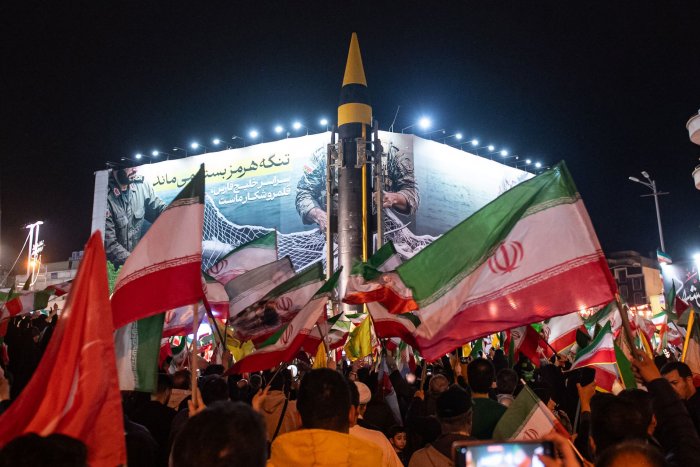
A missile identified as “Khorramshahr-4” was on display during a public rally in Tehran’s Enghelab Square on April 21, 2026. Photo by Behnam Tofighi/UPI | License Photo
MEXICO CITY — After what may have been the most important game in the Mexican national team’s World Cup history, coach Javier Aguirre hugged each of his 26 players.
The embraces weren’t to celebrate a victory. They were hugs of gratitude, encouragement and, above all, resignation.
Minutes earlier, the players paraded around Azteca Stadium — traditionally an impenetrable fortress — to applaud El Tri fans with tears in their eyes. Mexico had just lost 3-2 to England, extinguishing the hope that it could parlay its World Cup co-host role into the deepest tournament run in the country’s history.
The goal was to advance to the quarterfinals for the first time since 1986 and, above all, to show the world that Mexican soccer finally had taken the leap that had been demanded for so long — defeating a past world champion, England, that hadn’t looked particularly dominant. But reality, once again, hit hard as the loss became Mexico’s eighth defeat in the round of 16 since 1994.
This time, Mexico had the support of its fans, playing on home soil. And it wasn’t enough.
“I’m satisfied with the work we’ve done, but when you lose — and I’ve lost a lot in my career — you never quite get over it,” Aguirre said. “It’s very painful because dreaming gives us hope; losing this way hurts a lot.”
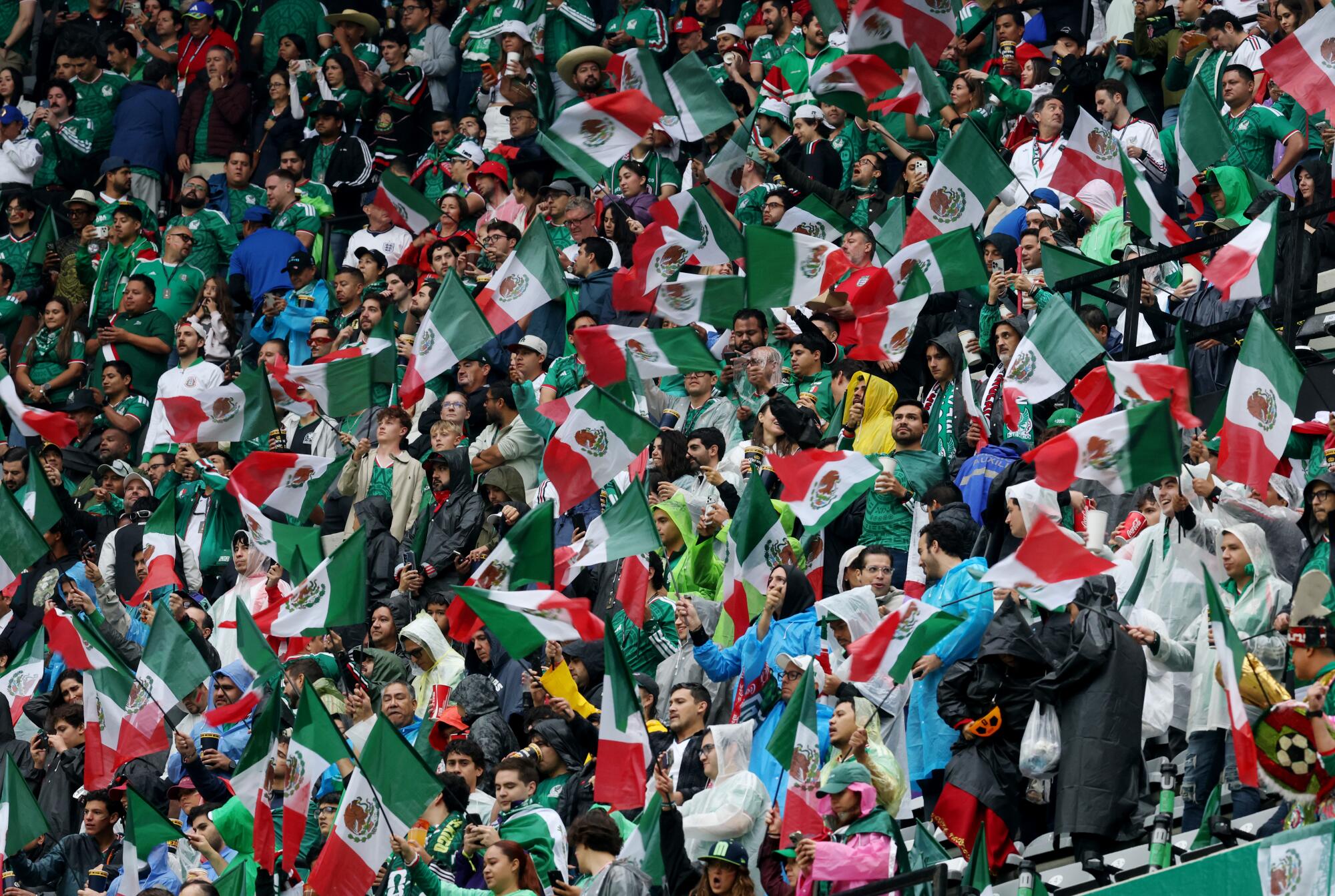
Mexico fans show their support before their team faced England in a Round of 16 World Cup match at Azteca Stadium on July 5.
(Richard Pelham / Getty Images)
After weeks of celebrations following wins over South Africa, South Korea, Czechia and Ecuador, Mexico failed the test against England, ranked fourth in the world. El Tri dominated possession but could not convert it into goals, while the English were clinical, led by Jude Bellingham, Harry Kane, Anthony Gordon, Bukayo Saka and goalkeeper Jordan Pickford.
For Aguirre, the loss reopened a familiar wound. In the 2002, Mexico lost 2-0 to a U.S. squad led by Landon Donovan in what many consider the most painful defeat in the country’s World Cup history. This defeat to England very well could rival it.
“I would have liked to win five games, to leave home with five victories. That hurts — it hurts a lot,” Aguirre said. “A loss is a loss. Our opponent didn’t make the same mistakes we did.”
Judging Aguirre solely on the end of this World Cup run would be simplistic given what he inherited. Two years ago, he was asked to lead the struggling team for the third time. When he arrived, Mexico was ranked 17th in the world and had not won the Nations League. He leaves with Mexico ranked in the top 10 and as Nations League champion and two-time defending Gold Cup champion.
This World Cup wasn’t the disaster that Qatar was four years ago, when Mexico was eliminated in the group stage. This summer, Mexico secured its first knockout-round victory since 1986, advanced to a fifth World Cup match for the second time and swept three games during the group stage without conceding a goal — something no other Mexican team achieved.
In 22 months at the helm — having taken over in 2024 following Jaime Lozano’s failure at the Copa América, where Mexico failed to advance past the group stage — Aguirre achieved something that went beyond the scoreboard by uniting players previously accused of having too much ego and preferring not to sacrifice to help the team.
At this World Cup, that squad gave its all — body and soul — and rebuilt a relationship with the fans that had seemed broken since the 2024 Copa América. Thousands of fans filled the Ángel de la Independencia, the Zócalo and other squares across the country, as well as watch parties in cities like Los Angeles.
“We managed to restore the pride of being part of the national team — for the national anthem and for its people. It’s a privilege to be here, and they know it,” Aguirre said of his players. “I think we’ve returned to a Mexican identity.”
Green jerseys were seen all over Mexico as people set aside their differences to cheer on El Tri.
“Mexico was the best host of the three. It had the best atmosphere — it’s a country that truly loves soccer,” Mexico City native Santiago Mondragón said before the England match.
Mexico had standout and inspired performances from Erik Lira, Gilberto Mora and Roberto Alvarado, but its lineup struggled to keep pace with English players trained at elite European clubs.
Mora, just 17 years old and with tremendous potential, made a mistake on the play leading to England’s second goal. Alvarado, who provided strong passes to Raúl Jiménez and was solid in defense throughout the tournament, lost track of Bellingham on the first goal. Raúl Rangel, who was outstanding against South Korea and who three years ago was playing for Tapatío in the Mexican expansion league, stepped too far forward on the penalty kick that sealed the match, minutes after an English player was sent off in the second half. Edson Álvarez, who did not have a good season with Turkey’s Fenerbahce because of an injury, received little playing time and made a serious mistake marking Kane, which led to Gordon’s breakaway on the play that resulted in the penalty kick.
Mexico’s Raúl Jiménez gets tangled with England’s Ezri Konsa while going for the ball during a World Cup Round of 16 match at Azteca Stadium on July 5.
(Francois Nel / Getty Images)
Following the loss, many in Mexico still are wondering why, despite having a one-man advantage for 36 minutes —plus 11 minutes of stoppage time — the team was unable to tie England. Aguirre replaced Mora and goal-scorer Julián Quiñones, bringing on an attacking lineup that focused on sending in crosses, which the English defense easily cleared.
While it’s possible a few changes could have shifted the match in Mexico’s favor, there were limits to how much the technical staff could get out of the roster.
El Tri lacks sufficient depth to assemble a truly competitive 26-man roster, as players such as Álvarez and Santiago Giménez didn’t arrive at their best form, and players such as Brian Gutiérrez weren’t ready for the pressure of a tournament of this magnitude, in need of more time to develop.
Mexico lacked game-changing players capable of breaking down tight defenses — the role Hirving Lozano played in 2018 or Giovani Dos Santos in 2014. The lack of creativity that showed against Saudi Arabia in 2022 flared up late against England.
Thanks to Jiménez and Quiñones, the team did show firepower, scoring 10 goals in five matches, but it lacked depth to break down a well-organized English defense.
The talent pool has been hindered by the Mexico club system.
Mexico’s Julián Quiñones is tossed in the air by teammates as they celebrate a Round of 32 World Cup win over Ecuador at Azteca Stadium on June 30.
(Kevin C. Cox / Getty Images)
Liga MX owners maintain a narrow view of domestic soccer, prioritizing foreign signings over the development of local players and promotion and relegation remain abolished — removing competitive pressure that is the backbone of English leagues.
Top Mexican players continue to be overvalued by their home clubs, which makes it difficult for European clubs to sign them when there are cheaper options with more impressive résumés.
“This was the opportunity; that’s why it’s frustrating, that’s why it’s sad,” Mexican journalist Javier Alarcón said of El Tri’s World Cup exit. “With the Mexican federation and its owners, there isn’t much hope.”
Rafael Márquez, a former FC Barcelona star and one of the greatest players in Mexican national team history, is succeeding Aguirre after serving as one of his assistant coaches. Márquez has formed a close bond with players, who tossed the 47-year-old former defender in the air after one of their World Cup wins, and is familiar with all the reasons Mexico continues to hit the same World Cup wall.
“Rafa is a great guy, a great coach,” said Aguirre, who noted that the team’s average age has dropped and that more and more players are playing in Europe. “Hopefully he can do better than we were able to.”
Atlas Energy Park, a solar and energy storage complex Qcells is building in Arizona. Photo courtesy of Qcells
July 10 (Asia Today) — Qcells is accelerating its push into the North American renewable energy market as investment in power infrastructure grows rapidly amid the expansion of artificial intelligence data centers in the United States.
The Hanwha unit said Friday it will handle engineering, procurement and construction for Atlas Energy Park, one of the largest solar and energy storage complexes in the United States. The project will be built in La Paz County, Ariz.
Atlas Energy Park will include 2.8 gigawatts of solar generation capacity and 5.7 gigawatt-hours of energy storage capacity by 2028. The complex will consist of 14 solar and energy storage projects and cover an area about 22 times the size of Yeouido, Seoul’s main financial district.
Qcells will handle engineering, procurement and construction for all projects in the complex and supply all solar modules.
The company completed the sale in May of two solar power plants with a combined capacity of 357 megawatts after carrying out their early-stage development and construction. The deal is seen as evidence that Qcells has expanded beyond equipment supply into project development, construction and asset sales.
The company’s competitiveness is backed by its U.S. supply chain. Qcells operates Solar Hub, a solar manufacturing complex in Georgia, giving it module supply capacity. It has also built a supply chain for energy storage equipment.
Industry analysts say companies with U.S. production bases are gaining a stronger advantage as Washington expands policies favoring domestically made equipment.
Analysts also expect Qcells’ expansion in North America to help improve earnings. Hana Securities projected Hanwha Solutions’ second-quarter operating profit this year at 230.7 billion won, about $153 million, roughly 29% above market consensus.
“The oversupply of solar modules in the United States is easing, and prices are continuing to rise, while the expansion of local production capacity in the United States will drive earnings improvement,” said Yoon Jae-sung, an analyst at Hana Securities.
Analysts say AI will further accelerate growth in renewable energy demand.
“Power demand is structurally increasing because of AI data centers, electrification and manufacturing reshoring, making solar power and energy storage key pillars of global power infrastructure,” said Han Byung-hwa, an analyst at Eugene Investment & Securities. “In particular, rising power consumption by AI data centers will continue to increase demand for large-scale projects combining solar power and energy storage.”
Qcells has completed or is pursuing more than 11 gigawatts of solar and more than 6 gigawatt-hours of energy storage projects in North America, expanding its local business base.
“Atlas Energy Park is a symbolic project that once again demonstrates Qcells’ EPC capability, U.S. supply chain and comprehensive business capacity from development to construction and asset sales,” said Chris Hodrick, head of Qcells’ EPC business division.
“We will lead the growth of the North American renewable energy market by increasing customer value and business competitiveness through integrated solutions that combine solar power and energy storage,” Hodrick said.
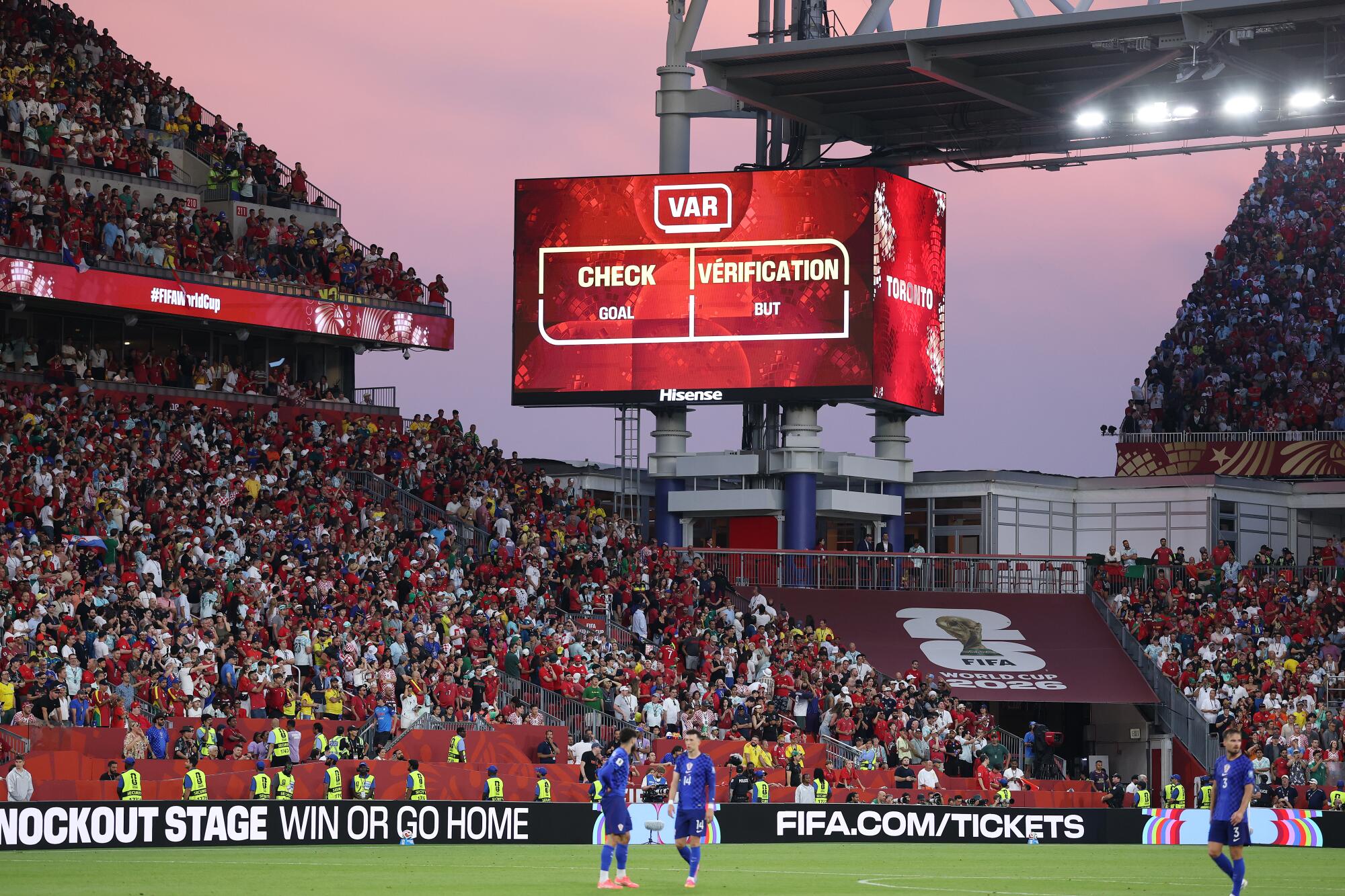
Croatia’s World Cup was seconds away from being over and Portugal was seconds away from the round of 16 when Ivan Perisic sent a long, desperate cross into the penalty area. The ball bounced off bodies like a pinball before magically, unbelievably, caroming into the net.
Gooooooallllllll!!!!
Fate had given Croatia a reprieve.
But as pandemonium broke out in the stands and on the pitch, Norwegian referee Espen Eskas stood in the middle of the celebration in Toronto, hand to his ear, listening to a voice half a continent away in Dallas.
So Eskas trotted over to a TV monitor, watched a video replay over and over again, and more than 2½ minutes after the goal was recorded, he took it off the board. Perisic’s cross had brushed the hair of teammate Igor Matanovic, leaving Mario Pasalic in an offside position when the ball reached him near the far post. The contact was imperceptible to the naked eye, but a space-age sensor in the ball had confirmed it.
A VAR review led a referee to overturn a Croatia goal during its 2-1 World Cup loss to Portugal in Toronto, eliminating Croatia from the tournament.
(Dan Mullan / Getty Images)
Croatia’s World Cup was over, another victim of VAR, which has had an outsized influence on this summer’s tournament.
It wasn’t supposed to be this way. When VAR was introduced to soccer nine years ago, its mission was clear: to alert the head referee to potential clear and obvious errors or serious missed incidents. At least that’s what Major League Soccer, one of the first leagues to use the system, wrote in the news release introducing it.
“It was really to stop the headlines,” said Mark Geiger, who helped implement VAR as an MLS referee. “These super-egregious errors in a game that impact the outcome. The mantra for VAR was always minimum interference but maximum benefit.”
Under the VAR system, officials sitting before a bank of monitors in a centralized control room review match footage in real time and advise the on-field referee of potential errors. If the video assistant referees believe a mistake has been made, they communicate that through an earpiece the match referee is wearing. If the match official agrees, they will stop play, signal a review by motioning their hands in the shape of a rectangular TV screen, then watch the play themselves on a pitch-side monitor before either confirming or reversing the original decision.
It is comparable to the Automated Ball-Strike review added this year in Major League Baseball, tennis’ Hawk-Eye line-calling system and long-standing centralized instant replay review in the National Football League and National Basketball Assn., systems that have both corrected errors and stoked debate.
But VAR has morphed into something far greater. In this World Cup, there have been more than 100 VAR interventions, encompassing both confirmed on-field calls and overturned decisions, through the end of the round of 16, according to Antonio Vuksanovic, a publication relations and communications professional at Sofascore, a Croatian technology company and sports statistics website.
“When it comes to actual overturned decisions, we’re looking at roughly 0.5 per match, which is higher than the last World Cup and higher than what we saw across the most recently completed club season,” Vuksanovic said.
Even though the officials have gotten most of those calls right, many of the infractions reviewed have been so imperceptible yet so consequential, it has raised a question: if human error on the part of players and coaches is part of the sport, is allowing a game to be decided by electronic evidence of a touch detectable only through NASA-level technology violating the spirit of the game?
Iran’s Shoja Khalilzadeh shoots past Egypt’s Mostafa Shobeir, but the goal was overturned after VAR review during a World Cup match in Seattle on June 26.
(Maddy Grassy / Associated Press)
Christina Unkel, a former FIFA referee, state referee administrator in Florida and a rules of the game analyst for multiple TV networks, believes it does.
“Football is an art. And that’s why we love it,” she said. “It truly isn’t the referee’s fault. We’re not the ones seeking more advanced technology. We don’t want to look like robots out there. But the stakeholders are like ‘more, more, more.’
“When you do pursue black and white — objectivity is what they’re trying to get to, and I get it; they want to eliminate as much subjectivity as possible — what everyone is hating is this perfection thing.”
FIFA, the major stakeholder in the World Cup, declined multiple requests to answer questions about the officiating, but it has clearly doubled down on the technology for this tournament, introducing the semi-automated offside system which uses player-tracking cameras, computer-generated offside lines and, in some cases, data from a measuring instrument inside the match ball, to identify everyone’s position on the pitch when the ball is played.
“The whole genesis of VAR was not to fix every mistake or to make the referees perfect,” said Geiger, the first American to officiate a World Cup knockout game and now general manager of the Professional Referees Organization (PRO), which oversees referees for MLS and the NWSL. “Is the referee correct? That’s not the right question. They should be asking themselves, ‘is the referee clearly and obviously wrong?’”
Geiger, however, remains a huge proponent of the system and was careful not to criticize how it’s been used in this World Cup.
Belgium’s Youri Tielemans on a penalty kick that sails by Senegal goalkeeper Mory Diaw during a World Cup round of 32 match in Seattle on July 1. The game-deciding penalty kick was awarded after VAR review.
(Manu Fernandez / Associated Press)
Still, the frequent use of VAR and other technologies has clearly robbed the World Cup of much as its drama, with spontaneous celebrations of game-winning goals turning to grief moments later when the referee steps away from the monitor and takes away a score.
Reviews not only ended Croatia’s tournament, but they showed Shoja Khalilzadeh was a toe offside when he scored the goal that would have sent Iran to the knockout stages, one of three goals Iran had disallowed by VAR in the tournament; it gave Belgium a late penalty, based on light contact, that Youri Tielemans converted to end Senegal’s World Cup; and it cost Egypt a goal for a perceived foul that took place nearly 100 yards away from the ball in its 3-2 loss to Argentina.
“What happened to us wasn’t fair,” Egypt coach Hossam Hassan said.
Unkel agreed with that sentiment too.
“Everyone hates it,” she said. “According to VAR, that’s correct to take that goal away. That’s not the spirit of the game. But it’s the correct decision by law.”
What Unkel would prefer — and she believes a majority of officials are on her side — is for referees to have discretion to ignore or even overrule VAR if common sense and their understanding of the game suggest they should, just as judges have discretion to use common sense in applying the law.
“A lot of our game, the majority of it, is very subjective,” she said. “When we’re all sitting there saying, ‘No, that doesn’t gain an unfair advantage,’ then that’s when we have to start reconsidering things back to the spirit of the law. That’s the catchall loophole for saying, ‘Do we want this to be part of our game?’
“And I think everyone’s universally saying there a lot of different kinds of decisions we do not want part of our game. Toenail offsides, hair follicle arguments.”
Without the use of video replays, its unlikely any of those calls would have been made and the World Cup quarterfinals would probably look quite different.
England players react as referee Alireza Faghani shows a red card to England’s Jarell Quansah during a World Cup match against Mexico on July 5.
(Natacha Pisarenko / Ap Photo/natacha Pisarenko)
England coach Thomas Tuchel, upset about a penalty call on captain Harry Kane and a red card given to defender Jarell Quansah, both following video reviews in his team’s round-of-16 win over Mexico, said rulings were being overturned in the tournament “in a very questionable way.”
“The referees can send any team out in any moment,” he added. “It’s just not good enough. It’s just erratic. It’s just unreliable.”
An apparent misuse of the technology also led to the most controversial incident in the tournament. In the second half of an elimination game between the U.S. and Bosnia-Herzegovina, American Folarin Balogun stomped on the ankle of Bosnia’s Tarik Muharemovic, something Brazilian referee Raphael Claus initially decided did not merit even a caution. But after VAR official Juan Soto of Venezuela urged him to watch a replay, Claus flashed a red card at Balogun, expelling him from the game and banning him from the next match in the round of 16.
Claus had watched the replay in slow motion, allowing him to see what wasn’t apparent at game speed. FIFA later intervened by lifting Balogun’s one-game suspension, igniting ever greater controversy because it was just the second time that has happened in a World Cup.
U.S. forward Folarin Balogun steps on Bosnia-Herzegovina defender Tarik Muharemovic’s foot and received a red card after VAR review during the World Cup.
(Robert Gauthier/Los Angeles Times)
The heavy use of VAR has also interrupted the flow of games by halting matches that weren’t meant to be halted, leaving everyone standing on the field while the referee goes off to watch TV, sometimes for minutes at a time.
“When calls are reviewed and when goals are reviewed, sometimes it could take away from the momentum,” U.S. defender Chris Richards said. “Look under anything with a microscope, you could probably find something. But ultimately it was meant to be helpful for the game.”
And it has been. Because if officials have become over-reliant on VAR to review decisions that were not, or could not, be seen in real time, at least they’re getting those decisions right.
“I wish we had it in the 2002 World Cup,” said Bruce Arena, who coached the U.S. in that tournament. “We might have made it to the semifinals.”
In the quarterfinals of that tournament, with Germany leading 1-0 in the 40th minute, an obvious handball by Germany’s Torsten Frings kept out a shot from American Gregg Berhalter. If VAR had been available, Scottish referee Hugh Dallas could have corrected the missed call, awarding a penalty and giving Frings a red card, expelling him for the final 40 minutes.
“Look at every sport now in the world,” said Arena, coach of the San José Earthquakes. “They have some version of VAR. Why not make decisions correct?”
“There are still plenty of opportunities for the referees to control the game and make mistakes and not make mistakes,” he continued in reference to the human element. “It’s not like every moment is evaluated. But key moments are.”
As for interrupting the flow of play, Arena says the three-minute hydration breaks FIFA has introduced each half — ostensibly for player welfare, but in practice to give the TV networks additional commercial breaks — have been more disruptive.
“You don’t want VAR to officiate the game completely,” Arena said. “You have to pick your spots. For the most part, I think VAR is good.”
Four former champions have qualified for the FIFA World Cup semifinals for the first time since 1990. Argentina, England, France and Spain capitalised on the inexperience of lesser-pedigreed foes to reach the final four.
For the Albiceleste, it was an unwise Swiss dive.
For the Three Lions and La Roja, opposing goalkeepers spilled rebounds.
And Les Bleus benefited from an inexplicable, forward-less, Morocco lineup.
Here are the key takeaways from the quarterfinals:
France too good for Morocco in 2-0 route in Boston
What we learned:Nothing works against France, so far.
Morocco tried a unique approach to unsettling the French. Mohamed Ouahbi went with a striker-less lineup, which, predictably failed to threaten.
Post-match, France’s coach Didier Deschamps said what everyone else in the room was thinking: “I was quite surprised by the starting 11. I tried to understand why [Ouahbi] made these choices, no real forwards.”
Part of the reason would have been the absence of injured forward Ismael Saibari, who had a breakout tournament, though the Morocco roster included three other forwards, including Soufiane Rahimi, who entered in the 60th minute. That was just after Kylian Mbappe’s dipping right-footer inside the far post the opened the scoring for Les Bleus.
Ouahbi’s reasoning remains a mystery.
He might have been hoping for a France own goal, which was narrowly avoided as a Dayot Upamecano shank landed on top of the net. Or perhaps the game strategy was that goalkeeper Yassine Bounou would continue to bail out Morocco, as he did earlier in the quarterfinal tie when he saved Mbappe’s first-half penalty kick, following a two-minute-plus VAR review.
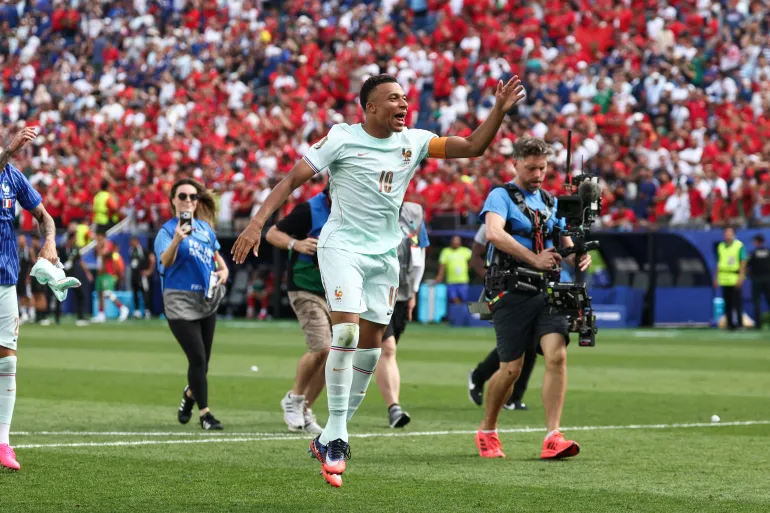
France’s Kylian Mbappe celebrates after winning the 2026 World Cup quarterfinal against Morocco at Boston Stadium on July 9, 2026 [Franck Fife/AFP]
Spain snatch late winner to see off Belgium 2-1 in Los Angeles
What we learned:Pau Cubarsi is not in over his head.
A Barcelona teenager’s shot led to the deciding goal for Spain against Belgium – but no, it wasn’t wonderkid Lamine Yamal, who was held to a single score in the tournament.
With the score even, and superb Belgium goalkeeper Thibaut Courtois on the bench injured, Cubarsi advanced and unexpectedly fired from close to 30 metres out.
Reserve keeper Senne Lammens could have been taken by surprise – this was Cubarsi’s first attempt since the first half of Spain’s opening 0-0 draw with Cape Verde on June 15.
In any case, the shot handcuffed Lammens (actually, Lammens handcuffed himself), leaving the rebound for Mikel Merino, who converted from close range to score the game winner in the 88th minute.
So, no, Cubarsi is not there to generate offense. But the fact a 19-year-old is starting on the Spain back line is significant. Few successful World Cup teams have gone with youthful centre backs, an exception being Italy’s Giuseppe Bergomi, who was 18 when he played in 1982, as a substitute for injured Fulvio Collovati.
Cubarsi struggled at times against the Belgians, but was not troubled by imposing substitute forward Romelo Lukaku. Belgium became the first team to score against La Roja in the tournament but the key to Spain’s defending is much less battening it down, but rather Barcelona-style keep-away, and that’s where Cubarsi is most comfortable.
Meanwhile, substitute forward Merino is providing close to instant offense, scoring two minutes after entering against Belgium, and five minutes in against Portugal in their 1-0 last-16 victory.
What we, and France, also learned is that Jeremy Doku’s double-teaming easily shut down 18-year-old Yamal, which means expect more of the same from Desire Doue in the semifinals.
Spain’s Mikel Merino, second from right, scores the match winner against Belgium keeper Senne Lammens in the quarterfinal in Inglewood on July 10, 2026 [Paul Ellis/AFP]
England defeats Norway 2-1 in Miami
What we learned:First off, Norway still has a lot to learn. Also, don’t believe your eyes when it comes to the World Cup “connected” ball, whose “heartbeat” insisted a Orjan Nyland goal kick did not strike a TV camera cable.
During the first round, Norway coach Stale Solbakken let everyone know that his nation was not some “naive country, playing for fun,” when he rested everyone before a 4-1 loss to France.
The idea was to keep stars Erling Haaland and Martin Odegaard in the tournament into the elimination stages. Solbakken’s strategy worked well, until the quarterfinals, when the Norwegians were exposed.
Sure, England’s Elliot Anderson went down as if he had taken a Zinedine Zidane circa 2006 head-butt. But, no, it was only a Haaland shove, leading to a Norway goal being disallowed, following a VAR replay. That would not be the only moment of Norwegian naivety.
Late in the first half, a 2-on-1 ended with Alexander Sorloth failing to square for Haaland, and unable to get past John Stones.
Then, instead of milking stoppage time to protect a 1-0 lead, Nyland sent a long goal kick that appeared to suddenly change trajectory and land at the feet of Anderson, triggering the TV cable-gate accusation from Solbakken to the match officials. Nothing to see here – that’s the FIFA version, anyway. Anderson quickly found Anthony Gordon, on to Jude Bellingham, and an England equaliser ensued before halftime.
It didn’t help Norway’s defending on the wings when Julian Ryerson went out injured. But it took until the third minute of extra time before Bukayo Saka earned a corner against Marcus Holmgren Pedersen. Nyland tipped away Harry Kane’s chip for another corner – and there was Bellingham, again, this time to convert the rebound of a Morgan Rogers shot.
Then, with Haaland on the bench, Norway had a final chance. At least, that is what lanky Norway defender Kristoffer Ajer thought, after England goalkeeper Jordan Pickford and a defender collided, leaving an open goal. Not so, French referee Clement Turpin, who stopped play, and cautioned Ajer for dissent.
Thomas Tuchel said his team got “lucky.” But evidence, and experience, points to the Three Lions making their own luck.
England’s Harry Kane, left, Jude Bellingham, centre, and Morgan Rogers celebrate after winning their quarterfinal match against Norway at Miami Stadium on July 11, 2026 [Patricia de Melo Moreira/AFP]
Defending champions Argentina eliminate Switzerland 3-1 in Kansas City
What we learned:Don’t dive.
Switzerland appeared to have momentum against Argentina when Bree Embolo went down near the halfway line just before a drinks break.
Joao Pinheiro cautioned Leandro Paredes, then switched the call to an Embolo yellow card for simulation, following a VAR review. The official call was “mistaken identity,” for the first time VAR invoking a directive to intervene in case of a “potential” red card.
Whatever the justification, the result was Embolo – earlier cautioned for taking down Paredes – was ejected. Embolo’s flop seemed out of character – this was his first red card with the national team, second at the senior level, and first since a 2015-16 Europa League match with FC Basel.
We also learned Argentina doesn’t need Lionel Messi to score.
But it helps when Messi is taking corners – he pinpointed one for Alexis Mac Allister to head in for the opening goal on 10 minutes. The Albiceleste coaching staff celebrated by congratulating assistant Walter Samuel, who, possibly, figured out Mac Allister could find space in the midst of a Swiss team whose shortest player is four centimetres (an inch and a half) taller than him.
Argentina’s Lautaro Martinez, right, scores the match winner against Switzerland in their quarterfinal at the Kansas City Stadium on July 11, 2026 [Odd Andersen/AFP]
U.S. forward Christian Pulisic heads to the locker room at halftime during the loss to Belgium.
(Allen J. Schaben / Los Angeles Times)
More Americans are playing for bigger clubs and having more success in Europe than ever before, but that pipeline has yet to produce a true superstar. Many of the teams that have had success in this tournament have at least one player — Mbappé, Haaland, Lionel Messi, Harry Kane — who can change the game on their own.
The U.S. doesn’t have anyone who would be sure to start on any of the World Cup semifinalists and until it does, closing the gap will be difficult.
“We are USA and [we’re] competing against Belgium, Portugal,” Pochettino said last March. “I think for sure Belgium and Portugal have [players] in the top 100. We don’t.”
He is right. When the Guardian published its annual list of the world’s top players last winter, Christian Pulisic, the top American, didn’t make the top 100. And he didn’t play a full game in this tournament, missing one to injury, leaving three early and entering another as a late second-half substitute. He played just 223 minutes — 19 more than Ricardo Pepi — and finished with one assist.
Landon Donovan was arguably the closest thing to a game-changing player the U.S. had, so it’s no surprise he scored key goals in the team’s most important World Cup games in the last 32 years: one against Algeria in stoppage time in 2010 that allowed the Americans to finish atop their group for the first time since 1930, and another against Mexico in the round of 16 in 2002, sending the team to the quarterfinals for the only time.
If those are structural things that have long held U.S. Soccer back, there also were issues specific to this team, a supposed Golden Generation whose core was formed in the wake of the failure to qualify for the 2018 World Cup.
The talent was undeniable, which led to great expectations. But what has this generation accomplished? Two round-of-16 exits in the World Cup, one Gold Cup title in the last four tournaments — the team’s worst stretch this century — a fourth-place finish in the last Nations League and a group-stage departure in the last Copa América.
Impressive wins over Paraguay and Australia to start the World Cup gave the Golden Generation a bit of a shine and suggested progress. But when the Americans met a top-10 team in Belgium, the matchup proved a mismatch.
“We want to have higher hopes,” Pulisic said. “We want to be able to go and compete with some of the best in the world. We just still have that next step to climb.”
Against Belgium, that step looked as steep as Mt. Everest.
Was this the moment the footballing rivalry between the two sides really developed? Possibly. Probably.
The two teams met in the quarter-finals in a match Argentina, to this day, insist they were robbed in, claiming Geoff Hurst’s winning goal was offside.
That was just the tip of the iceberg when it came to controversy though, with Argentina captain Antonio Rattin sent off after just 33 minutes for two offences in the space of three minutes.
The first was for a trip on Bobby Charlton, the second was for continuing to argue with German referee Rudolf Kreitlein.
The match was delayed for almost eight minutes as Rattin refused to leave the pitch.
England held on, in an incredibly ill-tempered affair, with Three Lions boss Alf Ramsey describing the Argentine side as ‘animals’ and insisting that his players did not swap shirts.
England’s 1966 World Cup-winning defender George Cohen reflected on the match in the Guardian in 2009.
“Tackling is fine,” he said. “But it was some of the snidey things, the spitting and pulling the short hairs on your neck, pulling your ear. They were trying to intimidate us. The trouble was when they found out they weren’t going to get their way they fell into some of the worst excesses I’ve ever seen.
“I just consider it the greatest shame that they didn’t play the game they were capable of. We might even have got beaten but they just should have got on and shown what they could do.
“There was a lot of commotion in the tunnel after the game. Nobody was allowed out so we didn’t see it.”
The match is also believed to have led to the introduction of red and yellow cards, which were first used in the 1970 World Cup in Mexico. Previously, referees had to rely on verbal warnings.
Justice Roh Kyung-pil delivers his inaugural remarks at the Supreme Court in Seoul on Aug. 2, 2024. Photo by Asia Today / Joint Press Corps
July 10 (Asia Today) — South Korean Chief Justice Cho Hee-dae appointed Justice Roh Kyung-pil as the new head of the National Court Administration, filling a vacancy that had lasted about four months.
The Supreme Court announced Friday that Roh, 62, will begin his term Tuesday.
The head of the National Court Administration oversees personnel and budgets for courts nationwide. The chief justice appoints the official from among sitting Supreme Court justices, and the justice does not handle trials while serving in the post.
Roh, a native of Haenam, South Jeolla Province, began his judicial career as a judge at the Seoul District Court in 1997. He later served as a Supreme Court research judge, Seoul High Court judge, presiding judge at the Gwangju High Court, and presiding judge and senior presiding judge at the Suwon High Court. He was appointed to the Supreme Court on Aug. 2, 2024.
The Supreme Court said Roh is qualified for the post because of his “leadership of listening and inclusion,” saying he is suited to strengthen public trust in the judiciary by communicating with court members and broader society and working to build a swift and fair judicial system for the public.
The post had been vacant since Justice Park Young-jae tendered his resignation as head of the National Court Administration on Feb. 27. Ki Woo-jong, deputy head of the administration, had served as acting chief.
With the vacancy resolved, attention is turning to whether stalled Supreme Court justice nominations will gain momentum.
The Supreme Court justice candidate recommendation committee in January recommended four candidates to succeed former Justice Roh Tae-ak: Seoul High Court judges Kim Min-ki and Park Soon-young, Daegu District Court Presiding Judge Son Bong-gi and Seoul High Court Presiding Judge Yoon Seong-sik. No final recommendation has been made.
The selection process is also underway for a successor to Justice Lee Heung-gu, who is scheduled to retire in September.
The Supreme Court on July 3 completed its review of public comments on 28 recommended candidates who agreed to be screened by the recommendation committee. If the committee recommends at least three candidates this month, Cho will select a final nominee and recommend the candidate to President Lee Jae Myung for appointment. The nominee would then go through a National Assembly confirmation hearing before final appointment.
The National Court Administration is also tied to one of the ruling party’s major judicial reform agendas. After legislation on three judicial reform measures, including criminalizing distorted application of the law, allowing constitutional complaints against court rulings and expanding the number of Supreme Court justices, a separate bill has been introduced to revise the Court Organization Act and abolish the National Court Administration.
Howard Lutnick, US commerce secretary, during an executive order signing in the Oval Office of the White House in Washington, DC, US, on Monday, June 22, 2026. President Trump signed executive orders Monday aimed at accelerating quantum research, laying the groundwork for federal agencies to adopt the technology and strengthen US defenses against cyberattacks. Photo by Bonnie Cash/UPI | License Photo
July 10 (Asia Today) — U.S. Commerce Secretary Howard Lutnick called for Samsung Electronics and SK Hynix to expand production in the United States as Micron accelerates a major domestic investment plan, raising questions over whether Washington is signaling continued shortages in artificial intelligence memory chips.
Lutnick referred directly to Samsung and SK Hynix at Micron’s large-scale investment site in the United States. Micron is building a production plant in Clay, N.Y.
Lutnick said he wanted to bring Micron competitors Samsung Electronics and SK Hynix to the United States and have them build production facilities there.
The remarks drew attention in South Korea because Samsung and SK Hynix recently announced plans to invest 800 trillion won, about $530 billion, in the Honam region in southwestern South Korea. Industry officials had already expected Washington to push the Korean chipmakers to increase U.S. investment.
Because Lutnick directly named the two companies and urged investment, attention is now focused on how the remarks could affect Samsung and SK Hynix.
Some analysts also said the call for production investment in the United States, the central market for artificial intelligence, may indicate that memory semiconductors remain in short supply despite debate over whether the chip market is nearing a peak.
Micron said Wednesday it will expand investment in U.S. fabrication plants and technology to more than $250 billion by 2035. The company has set a goal of producing 40% of its DRAM in the United States and will move up part of its New York fabrication plant construction schedule.
Lutnick’s message that he also wants Samsung and SK Hynix to invest locally is fueling expectations that the surge in semiconductor demand could continue for some time.
Some stock market analysts have recently raised concerns that large artificial intelligence data center operators, known as hyperscalers, could slow the pace of investment. But industry officials still expect supply and demand to begin moving toward balance no earlier than 2028.
Others see Lutnick’s remarks as a sign that the U.S. government is reviving pressure for local investment after a quieter period. The comments came one day before SK Hynix’s Nasdaq listing of American depositary receipts, prompting speculation that Washington may want funds raised through the listing to be invested in the United States rather than South Korea.
Since 2025, the United States has imposed reciprocal tariffs and temporary import surcharges. Semiconductors are currently excluded, but the U.S. government has suggested it could impose tariffs of up to 100% on all semiconductor imports. Earlier this year, President Donald Trump pressured memory chipmakers to invest in the United States, saying companies that do not build plants domestically could face 100% tariffs.
With Samsung and SK Hynix recently announcing a combined 800 trillion won investment plan in South Korea, industry observers said pressure for additional U.S. investment could grow. Lutnick’s latest comments were seen as moving in that direction.
Similar views have emerged overseas. Japan’s Nikkei recently said that because Samsung Electronics and SK Hynix together account for about 60% of the global memory market, the U.S. administration could raise monopoly concerns and demand relocation or investment in the United States.
Following the exit, midfielder Pape Gueye said he would be “taking a break” from playing for Senegal while the current management remained in charge.
The Senegal Football Federation (FSF) said, external that “after a thorough evaluation of the sporting results and prospects of the national team” it had dismissed Thiaw “in the best interests of Senegalese football”.