Andy Burnham (L) was set to get the keys to No. 10 Downing Street just 28 days after being sworn in as a Member of Parliament after winning the Makerfield by-election, a seat the sitting lawmaker vacated specifically to enable Burnham to make a run for the prime ministership.File photo by House of Commons/EPA
July 14 (UPI) — Newly elected Labour Member of Parliament Andy Burnham was set to become British prime minister uncontested at the beginning of next week after securing unassailable backing from fellow lawmakers.
On Tuesday, with two days of the nomination period for the leadership of the party still to run, the former Mayor of Greater Manchester had the support of 349 Labour MPs, making it a mathematical impossibility for another candidate to overtake him.
Candidates need the backing of 81 Labour MPs minimum to be nominated — equivalent to 20% of the party’s 403 lawmakers — but the level of support Burnham has means insufficient numbers of uncommitted MPs remain to nominate another candidate.
Endorsements he needs from three other affiliated groups, including two trade unions, were expected to be rubber-stamped.
As the lone candidate to replace Keir Starmer, who resigned on June 22 after six years at the helm and two years as prime minister, Burnham, 56, will formally take over as party leader on Friday and become prime minister on Monday.
Burnham increased his support tally from 322 MPs to beyond the threshold at which he could still be challenged after hustings to answer questions from Labour MPs on Monday night with the proceedings held in private.
The former MP and government minister, who quit Westminster politics in 2017 after two failed bids for the leadership of the party while it was in opposition, succeeded at his third attempt, staged via a parliamentary by-election in Manchester just three-and-a-half weeks ago, which he won easily.
Burnham has promised a drastic transfer of power to the regions and to build an efficient state with a “laser-like focus on growth and regeneration,” but has said little else, in part because, with no mandate from the electorate, he is hemmed in by the manifesto that brought Starmer to power in a landslide general election in July 2024.
Starmer was forced out amid falling approval ratings and losses at the ballot box in successive local and by-elections, as well as rebellions by his own MPs forcing policy U-turns, and the debacle over his appointment of Peter Mandelson as ambassador to the United States.
The final straw was a disastrous defeat to Reform UK in “mid-term” local elections in May, prompting defections from his cabinet and growing numbers of MPs calling on him to give way to Burnham, said to be one of the country’s most popular political figures.
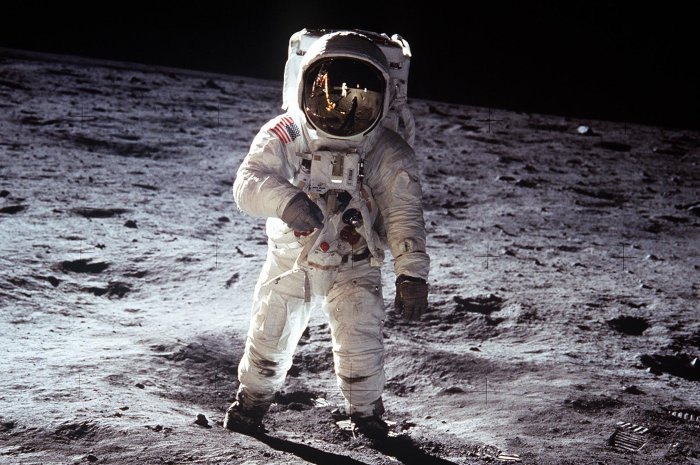
Astronaut Buzz Aldrin walks on the surface of the Moon during the Apollo 11 mission on July 20, 1969. Photo by NASA/UPI | License Photo
When Kylian Mbappé and Lamine Yamal lead their sides out at AT&T Stadium in Arlington, Texas, on Tuesday evening, they will be doing more than chasing a place in Sunday’s final, they will be fronting the priciest collection of talent ever assembled for a men’s World Cup semi-final.
ADVERTISEMENT
ADVERTISEMENT
Transfermarkt’s latest figures value France’s squad at roughly $1.78 billion (€1.56bn) and Spain’s at $1.43 billion (€1.25bn), a combined total of around $3.2 billion (€2.8bn), which outstrips any previous last-four meeting in the tournament’s history.
Much of that financial weight is concentrated in a handful of individuals.
Barcelona’s Yamal, who turned 19 the day before kick-off, is the most expensive player left in the competition at around $234 million (€205m), with Mbappé close behind at roughly $211 million (€185m).
Michael Olise and Pedri follow, both valued at around $176 million (€154m).
Between them, the quartet accounts for four of the five costliest footballers in the world, with the fifth being Norway’s Erling Haaland, whose side did not reach this stage after losing to England.
France’s edge is starkest in attack, where forwards including Ousmane Dembélé and Désiré Doué push the unit’s combined worth to roughly $878 million (€770m), well ahead of Spain’s $489 million (€428m) attacking line, even with Yamal in its ranks.
France also lead in defence, valued at $473 million (€414m) to Spain’s $337 million (€295m), while Spain have the edge in goal, their goalkeepers are worth a combined $113 million (€99m), against France’s $67 million (€58m).
Market value has not dictated ticket demand
Market value has seemingly has not dictated demand for tickets at World Cup matches.
Resale prices for Wednesday’s second semi-final between England and Argentina in Atlanta have been running around $1,000 higher on average than for Tuesday’s tie, even though that fixture’s combined squad value, at roughly $2.5 billion (€2.2bn), trails France and Spain’s total.
Demand there is being driven largely by Lionel Messi’s possible farewell World Cup appearance.
As for the match itself, recent history offers Spain some reassurance against what the figures suggest.
La Roja have won six of the last 10 meetings between the sides, including victories at Euro 2024 and in last year’s Nations League, both by narrow margins.
Kick-off is at 2pm local time, 8pm in the UK and 9pm in Paris and Madrid, with the match falling, fittingly for the French camp, on Bastille Day.
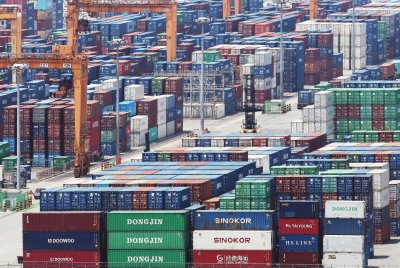
South Korea revised its 2026 growth projection to 3 percent based on strong exports and a semiconductor boom, officials said Tuesday. This July 1 photo shows containers stacked at a port in Pyeongtaek. File Photo by Yonhap
The South Korean government on Tuesday revised up its economic growth projection for 2026 to 3 percent, up 1 percentage point from its previous outlook, citing a semiconductor supercycle and easing uncertainties surrounding the Middle East.
The Ministry of Finance and Economy released its economic policy plan for the second half of 2026, presenting a forecast above the 2.6 percent estimates issued by the International Monetary Fund (IMF), the Organization for Economic Cooperation and Development (OECD) and the Asian Development Bank (ADB).
“This is the first year in which the Lee Jae Myung administration is taking full responsibility for the country’s economic management,” First Vice Finance Minister Lee Hyoung-il said during a press conference held in the central city of Sejong.
“On the back of the government’s prompt response to the Middle East war and robust export performance, the economy is maintaining a stable growth trend,” the first vice finance minister said, adding that the revised 3 percent growth forecast reflects those developments.
Lee said the revised growth forecast, which is significantly higher than those presented by major international institutions, remains achievable because it reflects the latest data.
“I think the outlooks from other organizations were based on data from March and April,” Lee said. “We made our assessment based on the latest data, with the major changes including stronger exports driven by the semiconductor boom. Tensions in the Middle East have eased further since then.”
“We believe such developments will exert downward pressure on consumer prices and inflation, positively affecting both exports and consumption,” he added.
In the report, the finance ministry said the policy vision for the remainder of 2026 is to mark the first year of a major economic leap toward establishing an “irreplaceable Republic of Korea,” referring to South Korea’s official name.
Seoul also unveiled the so-called 3-4-5 vision, under which the country will seek to achieve a potential growth rate of 3 percent, become one of the world’s top four exporters, and raise gross national income (GNI) per capita to US$50,000. The GNI per capita came to US$36,850 in 2025.
The finance ministry said the growth momentum, which began to expand in the second half of 2025, is expected to further accelerate this year on the back of the continuing semiconductor boom, along with policy measures, including an extra budget aimed at shielding the country from the impact of the Middle East war.
The country will also seek to successfully implement three mega projects aimed at fostering the semiconductor, AI data center and physical AI industries, the report said.
South Korea will additionally focus on maintaining an unwavering supply chain based on lessons learned from the Middle East war, including offering tax benefits for the domestic production of strategically important items.
On exports, the finance ministry said South Korea’s outbound shipments are expected to jump a whopping 40 percent on-year in 2026 on the back of the global artificial intelligence (AI) boom.
Non-IT products, such as ships, biohealth and secondary batteries, are also expected to remain robust, it added.
South Korea’s monthly exports reached a record $102.25 billion in June, surpassing the $100 billion mark for the first time after jumping 70.9 percent on-year.
The current account for 2026 was expected to reach a $290 billion surplus, marking a record high, buoyed by the surge in overseas demand and an increase in the number of foreign tourists.
In 2027, however, the current account surplus was expected to narrow to $245 billion following a rise in imports on the back of increasing domestic consumption.
Facility investment for 2026 could expand 5 percent on-year due to the robust performance of semiconductor manufacturing equipment, although growth will be limited by sluggish machinery and petrochemical sectors.
The policy report also projected inflation of 2.6 percent in 2026, up from the previous 2.1 percent estimate, citing the lingering impact of the Middle East war, which led to higher petroleum prices.
Core inflation, which excludes volatile food and energy prices, is expected to remain at around 2 percent.
“In the second half of 2026, as tensions surrounding the Middle East war ease and global crude oil prices decline, consumer price growth is expected to slow,” the ministry said.
“However, uncertainties also linger amid the progress of Middle East war negotiations and weather conditions, which could lead to volatility in energy and agricultural product prices,” it added.
Looking ahead to 2027, the ministry projected annual inflation to reach 2.2 percent despite lower global crude oil prices due to demand-led inflationary pressure.
The government said it will continue to focus on rolling out a post-Middle East war strategy by pursuing stable macroeconomic policies while maintaining a stable supply chain.
“In response to the changing economic environment, we plan to establish a comprehensive response system to maintain market stability across the macroeconomy, financial markets, the foreign exchange market and the real estate market,” the first vice finance minister said. “Based on favorable tax revenue conditions, we will continue active fiscal management.”
Copyright (c) Yonhap News Agency prohibits its content from being redistributed or reprinted without consent, and forbids the content from being learned and used by artificial intelligence systems.
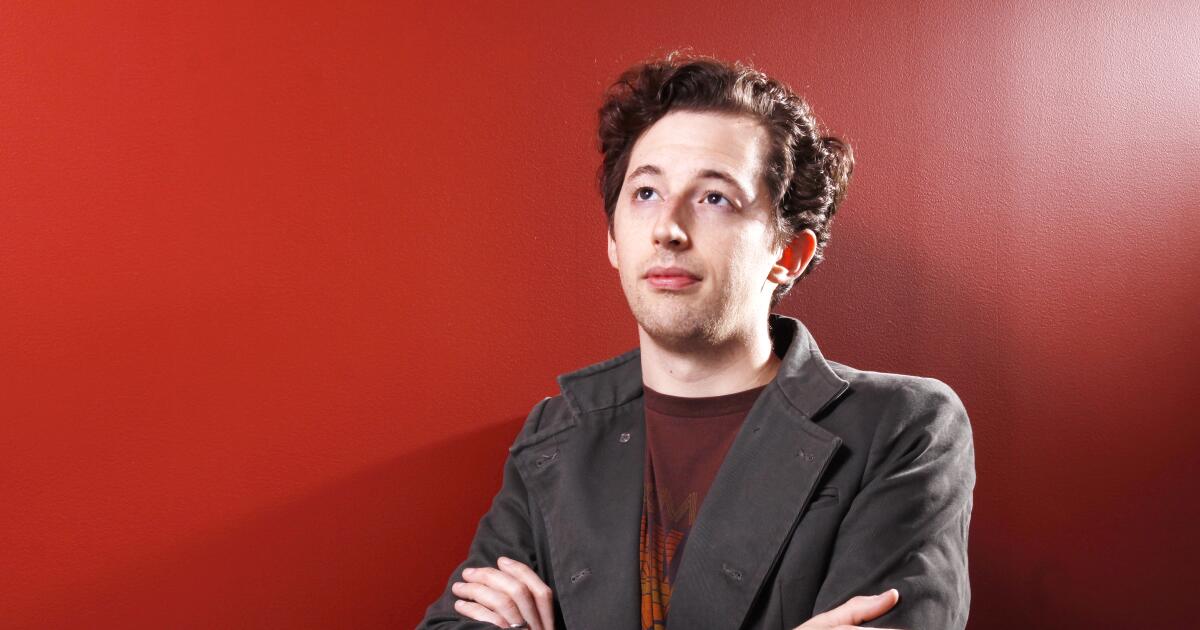
Josh Grisetti, the Broadway actor who charmed audiences with roles in “Something Rotten!” and TV’s “The Marvelous Mrs. Maisel,” has died, a family member confirmed to The Times on Monday. He was 44.
Grisetti died by suicide Friday, his “Something Rotten!” co-star Rob McClure first announced Sunday on Instagram, adding he is heartbroken and “not ready to even attempt to understand.” McClure also expressed his condolences to Grisetti’s wife and family. The Instagram post included photos of Grisetti and McClure over the years, including at Grisetti’s wedding. The actor married Mackenzie Perpich in 2020.
“Communities around the world will never be the same without him. We love you Josh,” McClure wrote in his caption. “Just a cataclysmic loss.”
On Broadway, Grisetti was best known for starring as Bottom brother Nigel alongside McClure’s Nick. The play follows the pair of brothers as they strive for success in the theatrical world amid William Shakespeare’s unstoppable rise. Grisetti portrayed Nigel Bottom from 2017 to 2018 for the show’s national tour. Grisetti also starred in musical comedies “It Shoulda Been You” and “Broadway Bound.” He appeared in award-winning off-Broadway productions including “Rent,” “Peter and the Starcatcher” and “Enter Laughing,” among others.
Grisetti’s regional credits also include “Spamalot” in Las Vegas, “How to Succeed in Business Without Really Trying” at the Reprise Theatre, “Beauty & the Beast” and “Peter Pan Goes Wrong” in La Mirada.
“Thank you, Josh, for sharing your beautiful energy and immense talent with us,” the La Mirada Theatre said on Instagram.
The actor, in what would be his final Instagram post, announced he departed a production of “Legally Blonde” at the Trentino Music Festival for “personal reasons” before the show’s opening.
The festival also mourned Grisetti in an Instagram post Monday: “Josh was a loving and caring person who was deeply dedicated to his friends, his students, and his colleagues. He was beloved by all who knew him, and he will be deeply missed by our students, faculty, and staff.”
Grisetti, born in December 1981 in Roanoke, Va., acted throughout childhood and performed in a variety of productions, including a kindergarten production of “Peter Rabbit” and high school productions of “Anything Goes” and “Flowers for Algernon.” He officially earned his Actors’ Equity card in 2004 for a production of “Where’s Charley?” at the Goodspeed Opera House, he told Playbill in 2009.
He also pursued a career in TV and film, most notably appearing in the Emmy-winning series “The Marvelous Mrs. Maisel.” He appeared as comedy writer Ralph Emerson in the series’ fifth season. He also had roles in shows “The Knights of Prosperity,” “Nurse Jackie” and “The Good Fight.”
He appeared in the film adaptation of Jhumpa Lahiri’s “The Namesake,” “The Immigrant,” “The Revolutionary Road” and “Men in Black 3,” among other movies, according to IMDb.
Grisetti, who also directed various musical productions, notably brought his talent and experience to Cal State Fullerton and Loyola Marymount University, teaching acting, musical theater and business. He also authored “God in My Head” in 2016, an “irreverent spiritual memoir” that details his accidental meeting with God through a “hallucinogenic journey.”
During his time on “Price of Broadway” in 2015, Grisetti reflected on luck and breaking into the industry. “Luck is required to kind of spark some things in this business a lot of the time, but then talent is what keeps you there,” he told Playbill.
“You start making your own luck, you start forging your own connections and making it happen.”
Al Jazeera put nine leading AI models to the test to predict the 2026 FIFA Men’s World Cup champion.
Published On 14 Jul 202614 Jul 2026
As the 2026 FIFA Men’s World Cup enters its final stages, AJLabs asked nine leading AI models to predict the tournament’s final podium based on all available data for each team, including:
Team strength
Squad quality
Coaching
Historical performance
Team’s performance during the current tournament
France emerged as the favourite to lift the trophy, receiving five (Gemini, Grock, DeepSeek, Le Chat and Qwen) of the nine champion votes.
Argentina, the defending world champions, received the remaining four votes (ChatGPT, Claude, Copilot and Meta AI).
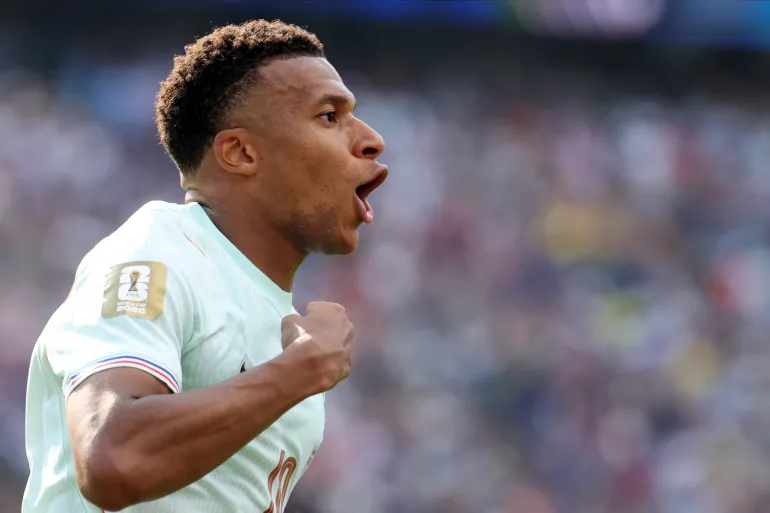
France’s forward #10 Kylian Mbappe celebrates scoring his team’s first goal during the 2026 World Cup football tournament quarterfinal match between France and Morocco at Boston Stadium in Foxborough on July 9, 2026 [Odd Andersen/AFP]
Predictions for the runner-up were more divided: France and Argentina each received three votes, followed by England with two and Spain with one.
Spain was the clear favourite to finish third, receiving six of the nine third-place predictions, while England and France each received fewer votes.
Lamine Yamal celebrates after the match as Spain qualify for the semifinal stage of the World Cup [Gary Vasquez/Reuters]
The predictions reflect a broad AI consensus around the four remaining contenders, France, Argentina, Spain and England, but also highlight differences in how leading language models weigh recent performances, squad depth and tournament momentum.
The AI predictions come as the tournament reaches the semifinals. France will face Spain on July 14 at AT&T Stadium in Arlington, Texas, while England will meet Argentina on July 15 at Mercedes-Benz Stadium in Atlanta, Georgia.
The third-place playoff will be played on July 18, before the World Cup final on July 19 at MetLife Stadium in East Rutherford, New Jersey.
ARLINGTON, Texas — Before it could rise in the World Cup, France first had to fall.
And the fall was spectacular.
In 2010, four years after reaching the final for the second time in three World Cups, the players revolted against coach Raymond Domenech during the tournament. In response, the managing director of the country’s soccer federation resigned in disgust, and the team left South Africa winless after scoring just once in three games.
That matched France’s worst World Cup performance in 76 years. The team, outsiders agreed, had become impossible to coach.
Four years later France made the quarterfinals, beginning a streak in which it has reached the final eight in four consecutive World Cups for the first time. If France, ranked No. 1 in the world, beats Spain in the semifinals Tuesday — Bastille Day in France, a patriotic holiday that is the equivalent of the Fourth of July in the U.S. — it will advance to the final for a third straight time.
Only Brazil and Germany have done that.
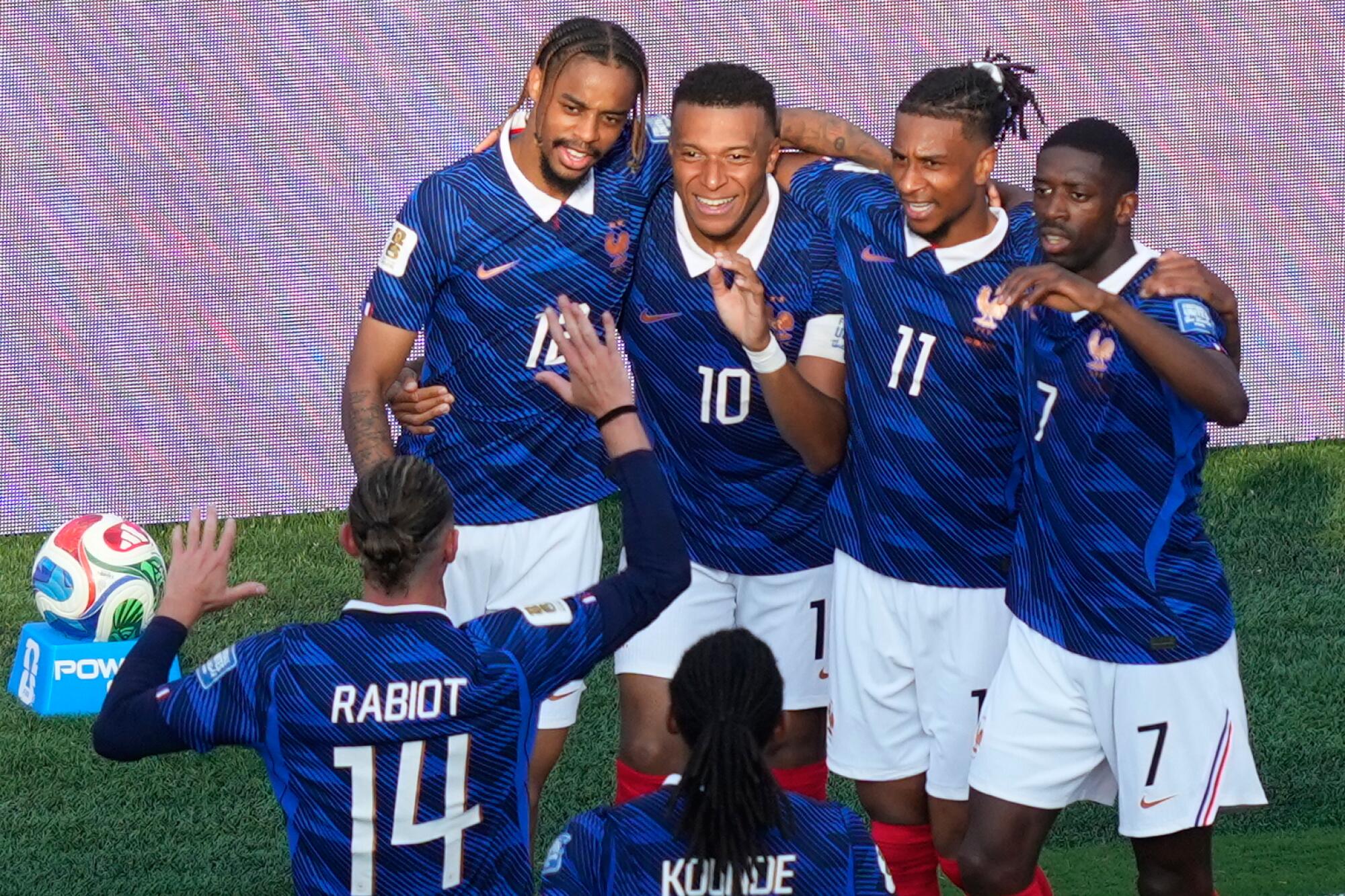
France’s Kylian Mbappé (10) celebrates with teammates after scoring against Sweden.
(Yuki Iwamura / Associated Press)
The base for that success was laid a generation before the collapse in South Africa, when a series of poor performances led the French Football Federation to create a series of 16 government-subsidized academies known as Centres de Formation. The main training center opened in 1988 in Clairefontaine, about 30 miles southwest of Paris, and many players from the 1998 championship team — including Zinedine Zidane, Thierry Henry and Robert Pires — passed through its doors.
“What is true about French football is that they started building academies very early and structuring them very early,” said Rudi Garcia, who played 10 seasons in France before becoming a coach of the Belgium national team. “A lot of the good work that’s being done by French football in general is due to the academies.”
But if Clairefontaine set the foundation, Didier Deschamps, the coach who took over the “uncoachable” team in 2012, built much of what went on top.
“It’s not luck,” Henry said on Fox. “This guy is a serial winner. I can also tell you how hard it is to have a lot of alphas and make sure that only one will be the alpha.”
Deschamps was a lunch-bucket player, a hard-working defensive midfielder who excelled at winning back possession in a 16-year career that included captaining France to both a World Cup and European Championship before he retired to become a coach, guiding Monaco to the Champions League final in his first stop. If he has a super power, both as a captain and coach, it’s his ability to manage big egos and get them to buy into the team concept. He did that first as captain of the star-studded 1998 squad and has been even better at it as the coach.
“The collective spirit,” Deschamps said, “is our strength.”
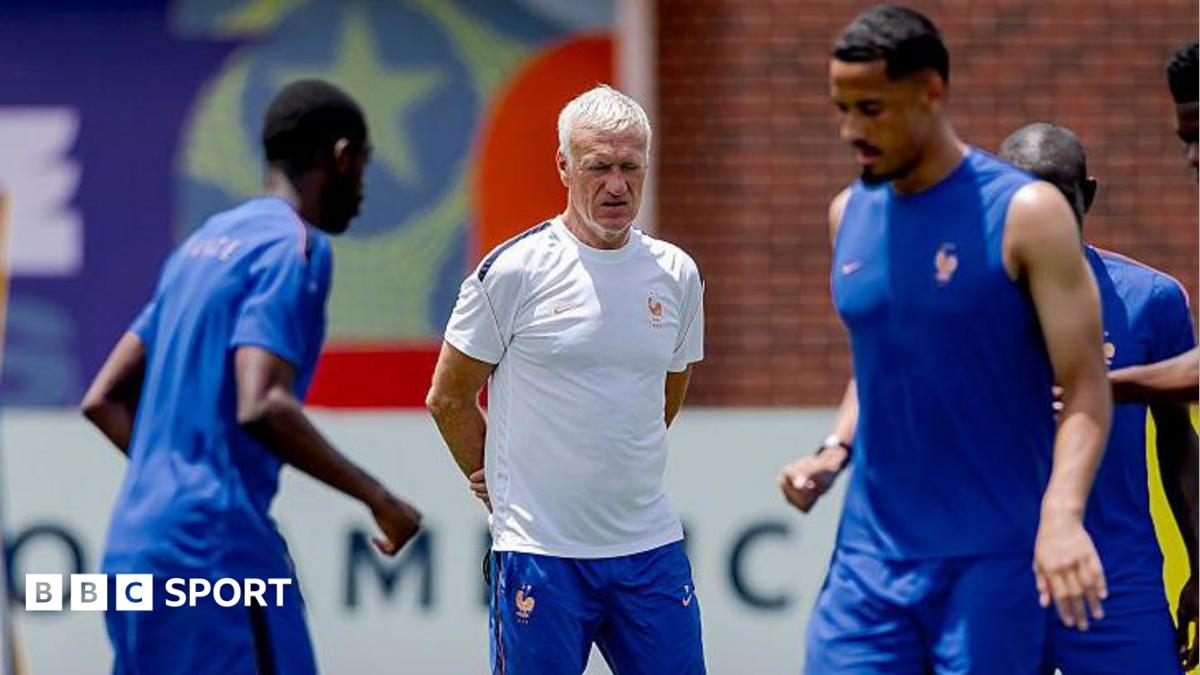
France coach Didier Deschamps celebrates with William Saliba after a World Cup quarterfinal win over Morocco.
(Lars Baron / Getty Images)
“He’s got credit in the bank,” added former World Cup goalkeeper Kasper Schmeichel, another Fox analyst. “Who can question him? His record speaks for itself as a player and as a coach.”
About that record: Deschamps heads into Tuesday’s semifinal with 20 wins and just two losses in 25 matches as a World Cup coach. He has won more World Cup games and more knockout-stage games, 11, than any other manager. And he was unbeaten in the tournament as a player, going 6-0-1.
Add those wins together and Deschamps, 57, has been on the field or in the technical area for 26 of France’s 48 World Cup victories. Before him, France never had won a World Cup.
By Sunday, the French could be lifting the trophy for the third time in 28 years. Only Brazil has won that many titles in a shorter span. And this team could be France’s best.
All that is thanks in large part to the FFF and government investment in the Centres de Formation. France is now the greatest developer of elite soccer talent in the world. Of the 1,248 players chosen to play for the 48 teams in this World Cup, 99 — nearly 8% — were developed in France, according to Opta. At least 13 teams in this tournament had at least one French-born player, among them Spain and Cape Verde. No other country comes close.
There are several reasons for that. The Ile-de-France region, which includes Paris, is home to large communities of working-class immigrants from the country’s former colonies. Eleven of the 26 players on this French team came from these banlieues, as they are called, among them captain Kylian Mbappé, who has the most goals in the last two World Cups.
The talent pool there is so deep, France probably could have fielded a B team in this World Cup and made it to the quarterfinals. And because the competition to make the national team is great, it raises the level of play for everyone.
For those who fall short, their immigrant backgrounds allow them to play for other countries. For example Riyad Mahrez, a former African player of the year, was born in Clichy, France, but plays for Algeria, while Senegal’s Ibrahim Mbaye is from Trappes.
“It’s quite an incredible pool of talent in a relatively small area,” Hubert Fournier, technical director of the French Football Federation, told the New York Times. “There’s a high concentration of players with very well-structured clubs. And then everyone draws from this Ile-de-France pool because afterwards they go to other clubs; they don’t all stay in Ile-de-France.”
The energy and diversity of the banlieues also fuels the national team. Nine of the 11 starters in France’s win over Morocco either immigrated to France or are the children of immigrants from Madagascar, Lebanon, French Guiana and Cameroon, Guinea-Bissau and elsewhere.
And Deschamps, who grew up in modest circumstances in Basque country, is the one who has made all those disparate parts work together. If France wins its next two games, he’ll become the second man to coach two World Cup champions.
But when asked for the secret to his success after France’s quarterfinal win over Morocco, a team with six French natives, Deschamps praised the French team, one thought to be uncoachable when he took over.
“Having great, great players, excellent players. My credit goes to the players,” said Deschamps, whose team hasn’t given up a goal in its three knockout-stage wins. “But maybe I do my job well.
“The human aspect is of paramount importance. I am extremely happy on a personal level as well as seeing my players enjoy themselves.”
Lamine Yamal insists he would take no fear into Spain’s World Cup semifinal against France when both sides meet after he celebrated his 19th birthday.
The Barcelona prodigy raised eyebrows following Spain’s 2-1 quarterfinal defeat of Belgium last week after being quoted as saying that France rather than Spain ought to be “afraid” given recent defeats against La Roja.
A relaxed-looking Yamal addressed those comments as he spoke to reporters on Monday at a press conference.
“I was asked if I was afraid of France, and I said no,” Yamal explained. “We are European champions. It’s simply football,” the teenager explained.
Yamal said he had marked his 19th birthday by buying a chunky jewel-encrusted necklace he wore to his press conference. The real birthday present, though, would be a place in Sunday’s World Cup final.
“I haven’t received many gifts yet. The best gift would be a win on Tuesday and a trip to New York,” he said.
While other stars at this World Cup have been in blistering goal-scoring form, Yamal so far has only found the net once during the tournament – but is ready to add to his tally against France.
“I don’t focus on goals, but it’s always special to score in a match like this. I accept the challenge. That’s why I came here,” Yamal said, promising a “beautiful match for the spectators”.
“It’s the game everyone was waiting for,” he added.
While acknowledging the momentous nature of Tuesday’s game, Yamal remained laid-back in his approach.
“There are far more difficult situations in life than a football match, so I’m calm,” he said. “I don’t feel any extra pressure; I’ll go out and play like always and give my all for the team.”
Spain’s players formed a guard of honour for Yamal to celebrate his birthday [Maurio Pimentel/AFP]
‘We’ve known each other for a while’
Spain coach Luis de la Fuente says his team plan to go on the “front foot” against tournament favourites France when they face off in a heavyweight semifinal showdown.
De la Fuente’s Spain will attempt to impose their possession-based game on France in what is shaping up as a gripping clash of styles.
While France coach Didier Deschamps insists Spain remain favourites for the World Cup, betting markets overwhelmingly back France to clinch a second title in three attempts.
Les Bleus have powered into the last four with a scintillating brand of attacking football based around such talents as Kylian Mbappe, Michael Olise and Ousmane Dembele.
But De la Fuente, whose team have beaten France in their last two meetings, is quietly plotting another ambush at the AT&T Stadium in Arlington, Texas on Tuesday.
“We’ve already analysed France in great detail; we’ve known each other for a while now,” De la Fuente said.
“We faced each other for a few years now, and they have great players, but so do we. We have to put all of our virtues on the table and try to counteract the strengths of the opponent.
“And that’s what football is about – the team that strikes a better balance is usually closer to getting the victory.
“We’ll have to think about their players. We’ll try to win those duels and will try to be on the front foot during the game, imposing our style.”
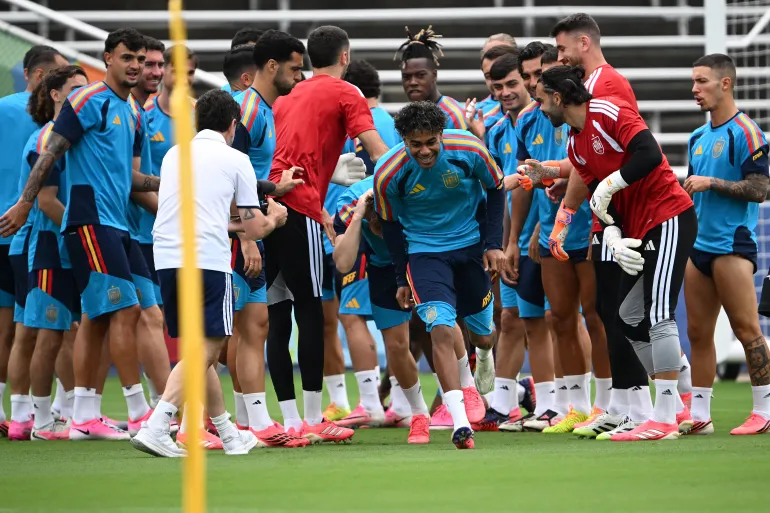
Spain’s players train at Cotton Bowl Stadium, in Dallas, Texas, US on July 13, 2026 [Albert Gea/Reuters]
France ‘far better’
De la Fuente, though, is under no illusions about the difficulty of the task facing his side.
France, he said, have improved significantly since Spain defeated them 5-4 in a hectic UEFA Nations League semifinal in Stuttgart last year, when the Spaniards led 5-1 before a late French rally. That encounter would bear no resemblance to Tuesday’s game, De la Fuente said.
“We’re talking about two very different matches,” he admitted.
“Tomorrow is another semifinal. I will just try to repeat the positive scenarios, but there were other details where things weren’t that positive.
“We were winning 5-1, and in a few minutes they managed to make it 5-4. So we’re trying to repeat what we did well and the opposite of what we didn’t do well.
“We need to try and impose our game. We have completely antagonistic playing styles, so we’ll try to be on the front foot and take the initiative.”
De la Fuente also believes a maturing France squad will be a tougher proposition.
“I think they are a better team, far better, because those players have grown, and what they are doing now is better than what they were doing then,” he said.
“So they’ve improved their skills in the past two years, and that’s the reality.”
While controlling possession and tempo will be key, De la Fuente will also tell his players to savour the challenge. Asked what his final message to his team would be, he replied: “Let’s get out there and enjoy it.
“We are in a unique setting. Who knows whether we will come back? We must be the team that we know that we can be. We must be strong and try to counter the strength of the opponent.”
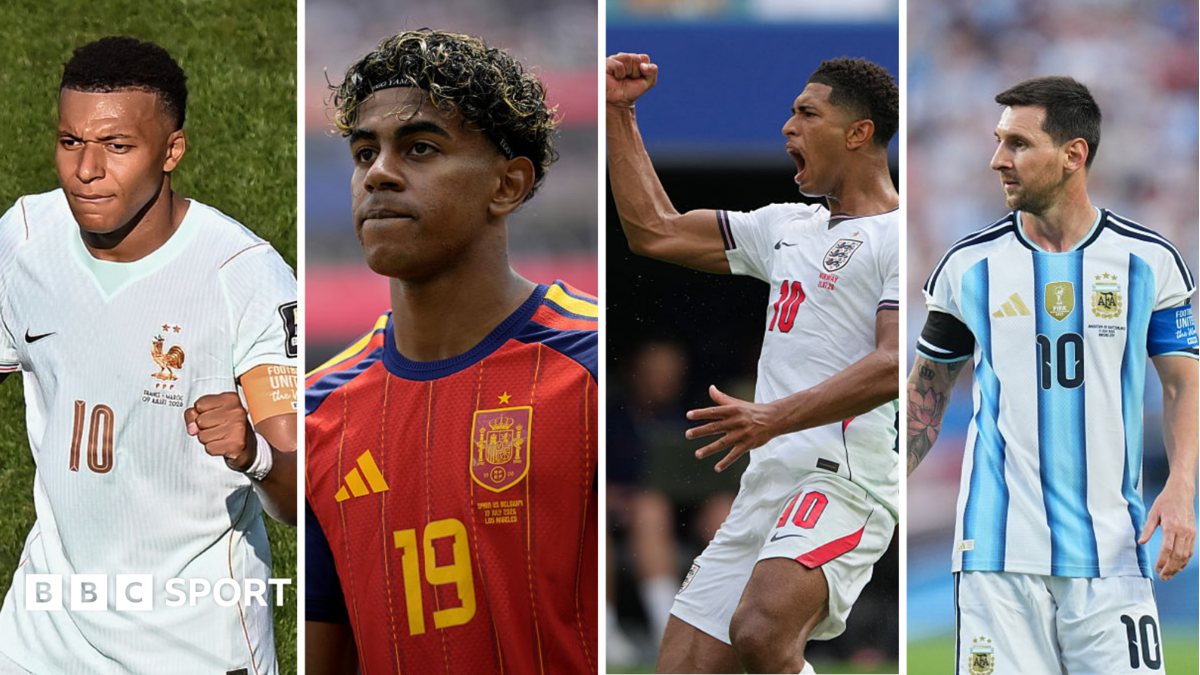
France – the best player and the most frightening attack.
Argentina – the best idea: doing more with less than anyone else.
England – two world-class players on form.
All four semi-finalists have what is needed to win the tournament.
If Spain take the ball off France and stop their counters – plus if they are more efficient than they have been – they have a very good chance of making it to the final.
But they have to play the perfect game, with the perfect (or a very good) Lamine Yamal.
Argentina will try to make the game against England uneventful, and then wait for a moment of brilliance from Lionel Messi or Julian Alvarez. But they have been playing with fire.
England are still trying to find their identity but they have a huge amount of personality and two world-class stars.
A final of Spain v England would be incredible. And in a way a win-win for me, but I would like England to win a World Cup soon. This could be the summer.
Spanish fans in the United States:
Lionel: France will be tough but I think we can beat them and, if we do, we have a strong chance. We are strong in attack and strong in defence. The only downside is Pedri hasn’t played at this top level yet.
Jack: Argentina are looking strong but England can’t be ruled out. They have Harry Kane, who is one of the most difficult strikers in the world.
Michel: Spain will win the tournament, I have no doubt. No one is giving us a chance against France but we will control the match and beat them. The winners of that game will win the tournament.
The rules are simple. Each day there’s a new footballer and the challenge is to guess who they are in as few attempts as possible.
After each wrong guess you unlock a new clue. Guess the answer after as few clues as possible to score more points.
Three is a good score, four or five points is exceptional.
So take part and return for more tomorrow.
Today’s player and clues set by BBC Sport’s Joe Rindl.
After more quizzes? Go to our dedicated Football Quizzes and Sports Quizzes pages and sign up for notifications to get the latest quizzes sent straight to your device.
France will not willingly surrender possession to Spain in their World Cup semifinal, coach Didier Deschamps said while confirming Kylian Mbappe’s full availability for the crucial fixture.
“Spain can apply a lot of pressure, but we are also a team who need the ball,” Deschamps told reporters on Monday. “There will be a battle for control.”
Spain have built their run to the last four around their ability to dominate the ball, press opponents deep into their own half and control the rhythm of matches.
France possess the pace to hurt them on the break, but Deschamps rejected the idea that his side would be content merely to defend and wait for transitions.
Midfielder Warren Zaire-Emery said France’s range of qualities gave them several ways to approach the contest.
“Spain have great quality on the ball,” he said. “We have the qualities to attack quickly on the counter, to keep possession ourselves and to defend well.
“The course of the game will dictate things. I cannot say now exactly how the match will unfold.”
Tchouameni available to play
France’s prospects of competing in the central areas have been strengthened by the return of Aurelien Tchouameni, who last played in the 3-0 round of 32 victory over Sweden on June 30.
Deschamps said the 26-year-old Real Madrid midfielder had not yet fully recovered but was available for selection after being left out of the previous game as a precaution.
“For the last match, the risk was too high,” he said. “He is better today, although we cannot say he is 100% recovered.
“His last game was two weeks ago, but that is not prohibitive. The important thing is that he is available.”
Tchouameni’s presence would give France a natural holding midfielder capable of protecting the defence, competing physically and helping the team play through Spain’s pressure.
Mbappe skips part of France training, set to play against Spain
France captain Kylian Mbappe did not complete Monday’s final training session after suffering a minor ankle injury during Les Bleus’ quarterfinal win over Morocco.
Mbappe, who was substituted late in France’s 2-0 victory last Thursday, was partly rested during Monday’s session.
The injury is not expected to prevent him from playing on Tuesday.
“Kylian is fine,” Deschamps said.
Asked if Mbappe had trained, he added: “Yes, he trained. He is allowed to do 10 minutes in one drill instead of 15.”
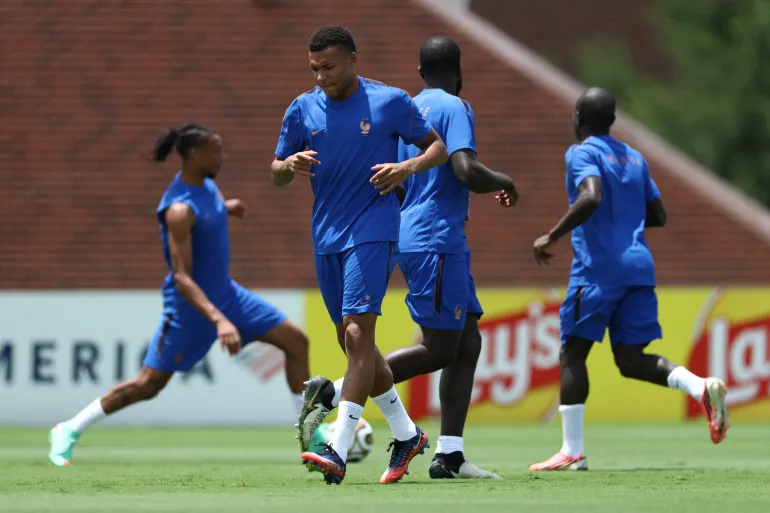
France forward Kylian Mbappe takes part in an MD-1 training session at the Southern Methodist University (SMU) in University Park, Texas on July 13, 2026, on the eve of the 2026 World Cup football tournament semifinal match between France and Spain [Franck Fife/AFP]
Midfield configuration
Deschamps could also retain the midfield configuration that carried France past Morocco, with Manu Kone alongside Adrien Rabiot. Zaire-Emery provides another option in an area likely to determine whether Spain can impose their familiar rhythm.
Spain’s possession game is designed not only to create openings but also to exhaust opponents by shifting the ball repeatedly from one side to the other.
Full-back Jules Kounde said on Monday that France would need possession of their own to disrupt that pattern rather than allow Spain to settle into prolonged spells of control.
Deschamps believes France’s experience of recent major tournaments will help them manage those different phases, although he insisted past meetings with Spain offered no guarantee of how Tuesday’s match would develop.
Spain eliminated France in the Euro 2024 semifinals before beating them again in the Nations League last four in 2025.
“There are no particular lessons,” Deschamps said. “There was one truth in those matches, with the players who were present on both sides at that time.
“The players are different now, and they are not necessarily at the same level of form.
“Spain won those two matches, so congratulations to them, but what interests me is tomorrow’s game.”
Adaptation central to France consistency
The France coach said adaptation had been central to his side’s consistency, with Les Bleus now seeking to reach a third successive World Cup final.
“When you are a coach, the key word is adaptation,” explained Deschamps.
“Football is not an exact science, but preparation and planning are always important, right down to the smallest detail.”
France’s attacking threat has been led by Mbappe, the tournament’s top scorer.
However, the semifinal may hinge on whether Deschamps’ midfield can prevent Spain from monopolising the ball and still provide the forwards with enough service.
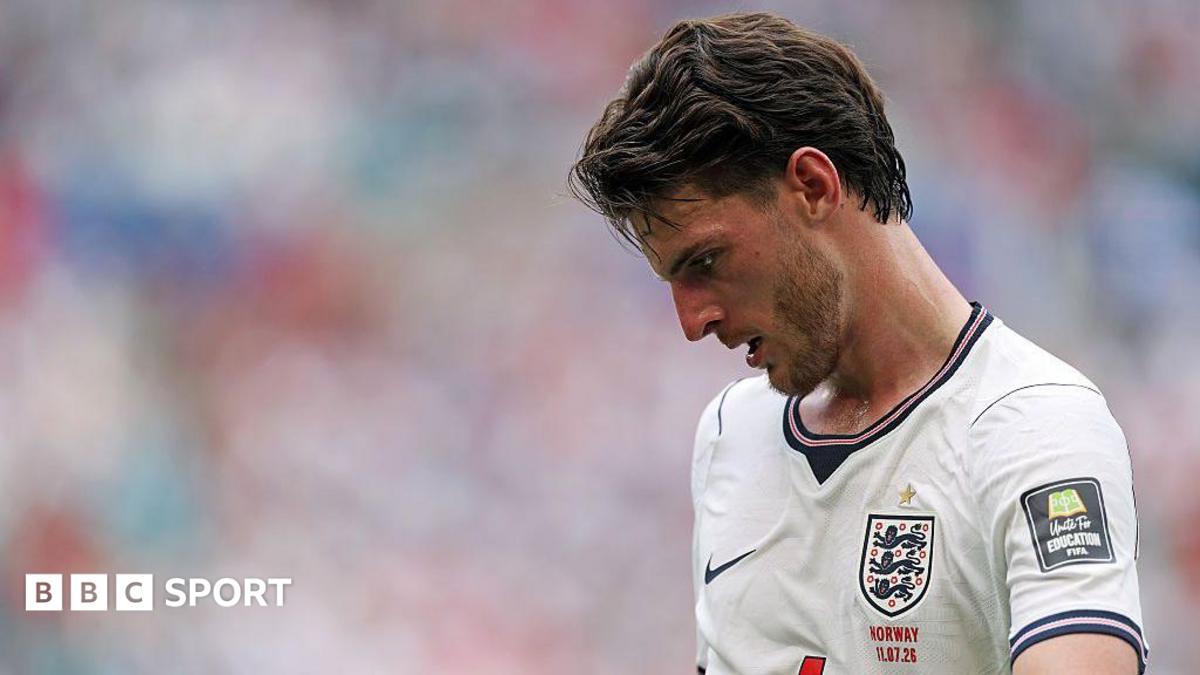
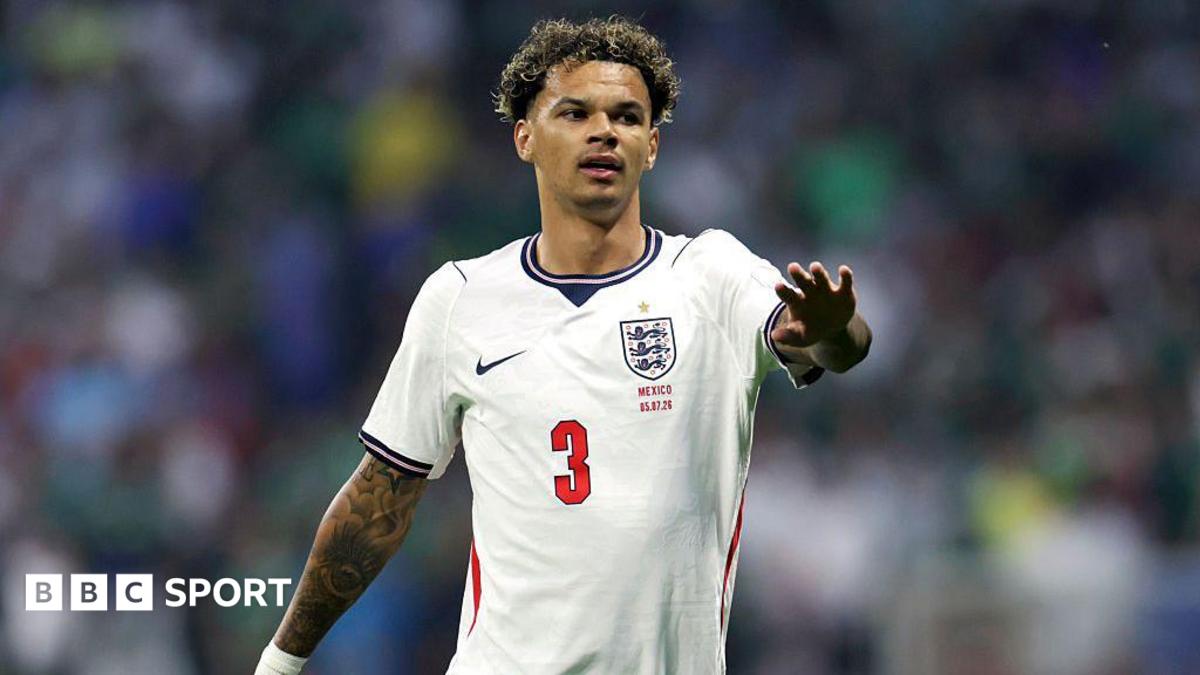
England will make a late decision on whether Declan Rice is fit to start the World Cup semi-final against Argentina.
But there remains optimism the Arsenal midfielder can shake off the effects of an illness to play on Wednesday.
Rice, who suffered with a sickness bug in the lead-up to Saturday’s quarter-final victory over Norway in Miami, was substituted at half-time.
Head coach Thomas Tuchel admitted afterwards that Rice had spent three days in bed before the match, which England won 2-1 after extra time.
It is understood Rice still has not recovered fully from the illness – picked up in Mexico, where England beat the co-hosts 3-2 in the last 16 – but his condition has improved markedly over the past 48 hours.
As things stand, there is growing hope he will be well enough to start in Atlanta.
Rice is almost certain to rule himself fit for the semi-final given the enormity of the occasion.
But given the severity of the illness, England medics are set to make a late call on his availability.
And Tuchel will wait to see how rapidly his condition improves before making a final decision on whether to pick him.
In addition to his recovery from the sickness bug, Rice has also been carrying a neural problem for several months, affecting his lower back and hamstring.
The midfielder, who has 78 caps, has started all but one of England’s World Cup games so far, missing the 2-0 group-stage win over Panama because of an injury flare-up.
France boss Didier Deschamps is predicting a “spectacular” semi-final when his exciting side take on Spain in a heavyweight World Cup showdown in Dallas on Tuesday.
Spain beat France in the semi-finals of Euro 2024 on their way to being crowned European champions before defeating Les Bleus in a nine-goal last-four thriller in the Nations League last year.
“The past is in the past,” said Deschamps, who is stepping down at the end of the tournament after 14 years in charge.
“They [Spain] did win in the past but I am looking forward to tomorrow.
“We are now at another level. We want to be in the final.”
Two-time world champions France will become only the third country to reach three straight World Cup finals if they defeat Spain on Tuesday (kick-off 20:00 BST).
West Germany in 1982, 1986 and 1990, and Brazil in 1994, 1998 and 2002 are the only countries to manage the feat so far.
Deschamps, who captained France to the world title in 1998, managed them to World Cup glory in 2018 before they were beaten on penalties by Argentina in the 2022 final in Qatar.
He said Spain will start the semi-final as favourites.
“They have only conceded only one goal in six games,” added Deschamps.
“We know this could be a most spectacular game. [Spain boss] Luis [de la Fuente] and myself we know how to defend and with the quality of two teams offensively, we can think it’s going to be a spectacular game.”
Later, De la Fuente played down Deschamps’ claim that Spain are favourites.
“It doesn’t mean anything,” he said. “We are two great national teams facing one another.
“Whether we are favourites or not doesn’t mean further pressure for us. We have that pressure anyway because we want to do well for our country.”
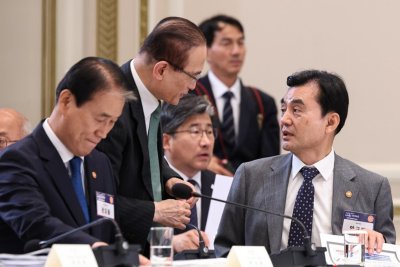
South Korean Defense Minister Ahn Gyu-back (R) talks with National Security Adviser Wi Sung-lac (C) during the National Fiscal Strategy Meeting, chaired by South Korean President Lee Jae Myung, at the presidential office Cheong Wa Dae in Seoul, South Korea, 13 July 2026. Photo by YONHAP / EPA
July 13 (Asia Today) — South Korean Defense Minister Ahn Gyu-back is facing mounting pressure from an allegation that he deserted his military post four decades ago and growing opposition to his plan to consolidate the country’s three service academies.
The two controversies have converged, raising questions about whether the Lee Jae Myung administration can maintain momentum behind its broader military reform agenda.
Complaint filed over parliamentary testimony
Kim Young-soo, head of the Korea Institute for Military Rights and a former Navy major, filed a police complaint against Ahn on June 27. The complaint alleges Ahn violated a law governing testimony and evidence before the National Assembly.
At a news conference at the National Assembly on Monday, Kim claimed Ahn left his post without authorization for about seven months while serving as a supplementary-duty soldier with an Army unit in Gochang County in 1984.
Kim also alleged that military police arrested Ahn and detained him for 30 days.
The complaint argues that Ahn gave false testimony during his confirmation hearing in July 2025 when he denied that such incidents had occurred.
The case is being investigated by Yongsan Police Station in Seoul. Police are scheduled to question Kim as the complainant Thursday.
The allegations have not been substantiated and remain under investigation.
Ministry calls allegation “clearly false”
The Defense Ministry rejected the desertion allegation Friday, calling it “clearly false.”
According to Ahn and the ministry, he completed his required service and was discharged from supplementary duty in January 1985. He returned to Sungkyunkwan University in March but was told in June that he was required to perform additional service.
The ministry said the issue arose after Ahn’s mother served lunch to active-duty soldiers at the request of his company commander. The period during which the incident was internally reviewed was mistakenly omitted from the administrative process when Ahn was initially released from duty, leading to his recall in August.
The ministry said Ahn was never detained or subjected to disciplinary action.
It has declined to publicly release his military service record, however, arguing that disclosing an incorrect 40-year-old document could create further misunderstanding regardless of the underlying facts.
Ahn has said he will seek to have the record corrected after leaving office.
SBS reported Sunday that a small number of ruling-party officials had examined the military records and said they contained no entries related to desertion or detention.
Military academy announcement abruptly postponed
Amid the dispute, the ministry abruptly postponed the scheduled release of its basic plan for establishing a unified armed forces academy. The announcement was canceled about 100 minutes before a briefing Monday.
The proposal calls for jointly selecting cadets for the Army, Navy and Air Force academies. Cadets would receive common instruction during their first two years and service-specific education during their third and fourth years.
The government has also reportedly considered relocating the Korea Military Academy from its current campus in northeastern Seoul to South Jeolla Province.
The ministry attributed the postponement to Ahn’s attendance at a presidential meeting and his schedule accompanying President Lee to a NATO summit.
The decision was widely interpreted, however, as a response to strong opposition from retired military organizations and alumni associations.
Academy alumni stage first joint protest
The alumni associations of the Army, Navy and Air Force academies held a rally outside the National Assembly on Wednesday opposing the consolidation plan and the proposed relocation of the Army academy.
It was the first time the three associations had jointly mobilized over the issue.
People Power Party Reps. Han Ki-ho and Lim Jong-deuk, both graduates of the Korea Military Academy, attended the demonstration. They described the proposal as a deterioration of national defense rather than genuine reform and called for it to be reconsidered from the beginning.
Twelve former commanders of the Army Training and Doctrine Command also issued a statement calling for a review of the plan.
The opposition People Power Party has linked the military service allegation with the academy consolidation proposal and called for Ahn’s resignation.
Independent lawmaker Han Dong-hoon has also demanded that Ahn release his military service record.
A public petition seeking Ahn’s impeachment had received more than 310,000 signatures as of Sunday.
Thursday’s police questioning of the complainant is expected to become the first major turning point in the dispute over Ahn’s service history.
The policy battle, however, is unlikely to disappear regardless of the investigation’s outcome.
Opposition to consolidating the academies and dismantling the Defense Counterintelligence Command has already developed independently of the allegation against Ahn. The unprecedented joint protest by the three academy alumni associations demonstrates the extent of that resistance.
The ministry’s continued refusal to release Ahn’s service record is also prolonging the controversy. Its decision to postpone correction procedures until after Ahn leaves office risks allowing the dispute to remain a source of political conflict.
At the same time, treating the military service allegation and the academy reform proposal as a single political issue could undermine a substantive national security debate.
Defense experts familiar with the controversy say the allegation should be investigated according to the law, while the merits of military reform should be debated separately according to the national interest.
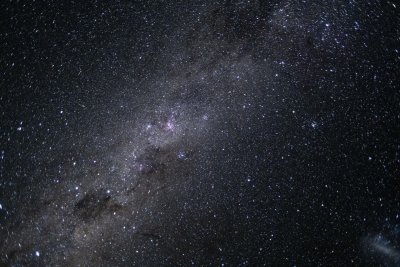
The Artemis II crew captured this photo of the Milky Way. Scientists said Monday that they’ve discovered erythrulose, a sugar also found in raspberries, in a gas cloud near the center of the galaxy. Photo by NASA/UPI | License Photo
July 13 (UPI) — Scientists have discovered erythrulose, a type of sugar also found in raspberries, in a gas cloud near the center of the Milky Way, the galaxy that also includes our solar system.
This is the first time that researchers have discovered this sugar outside our solar system, although they have found other sugars, including ribose and glucose, in meteorites and asteroids. The study was published Monday in the journal Nature Astronomy.
Along with water and carbon, sugars are a key ingredient in life as we know it. They help to provide energy and serve other important purposes, researchers said.
“We were able to achieve this detection thanks to the combination of exceptionally sensitive observations, extensive frequency coverage and highly accurate laboratory spectroscopic data,” said Dr. Izaskun Jiménez-Serra, study co-author and staff researcher at the Spanish National Research Council. “In addition, our astronomical target is one of the richest chemical inventories in the galaxy, which enhances the probabilities of detection.”
Jiménez-Serra said erythrulose is “particularly relevant for the field of origins of life.”
Erythrulose is made up of four carbon atoms. It was confirmed by use of the Yebes 40-meter telescope and IRAM 30-meter telescopes in Spain, the study said.
The discovery is notable in part because it shows researchers that erythrulose could be found in the interstellar medium before finding its way into rocky planets such as Earth when they first formed, rather than later developing on the young planet. Lab experiments had shown that not enough of the sugar could have formed on pre-life Earth.
“The findings suggest that erythrulose can be made from simpler molecules on dust grains in space, and may then become part of more complex chemical systems,” researchers said.
Erythrulose is important because it changes the makeup of threose, another sugar, which in turn may be part of the origin of the nucleic acids that became RNA and DNA.
A crowd of more than 100,000, an open-top bus parade and a royal reception welcomed back the Norwegian World Cup squad.
Published On 13 Jul 202613 Jul 2026
More than 100,000 fans flooded the streets of the Norwegian capital, Oslo, to give their football team a heroes’ welcome, turning the heartbreak of their FIFA World Cup exit into a huge national celebration.
A 2-1 extra-time defeat by England on Saturday brought Norway’s historic run to an end in the quarterfinals, shattering the Nordics’ dreams of a semifinal berth. However, it did not stop the country from celebrating its heroes.
Massive crowds under the Norwegian summer sun filled the grounds of the Royal Palace early on Monday afternoon, with an unofficial turnout estimated at more than 100,000 people.
The Norway squad touched down to a traditional water cannon salute before commencing their homecoming parade in the capital.
The line of supporters quickly packed the palace square before stretching far down the main street, Karl Johans gate, as the squad first attended an audience with King Harald.
The team then stepped out to greet the fans, with the Royal Guard standing at attention behind them.
Striker Erling Haaland was noticeably absent from the final stage of the celebrations, having left early.
His departure meant he missed joining his teammates on the palace steps for one last “Viking row” with the tens of thousands of fans gathered below, which was led by Crown Prince Haakon on the drums.
“Erling and Sander [Berge] had to catch their plane as our trip from the US was delayed four hours,” coach Stale Solbakken said, as the squad prepared to continue the celebrations in an open bus parade around Oslo.
England left-back Nico O’Reilly is relishing the “once-in-a-lifetime opportunity” to face Lionel Messi in Wednesday’s World Cup semi-final against Argentina.
Thomas Tuchel’s secured a place in the final four with a draining 2-1 win against Norway in the Miami heat on Saturday, and now face a match in Atlanta against the defending world champions, who saw off Switzerland 3-1.
It will be the first time Messi has faced England, and at 39, it could be the last. Manchester City defender O’Reilly has never faced him at club level either.
“I can’t wait,” O’Reilly, who will probably have to defend against Messi one-on-one if he starts at left-back, told BBC Radio 5 Live.
“It’s a once-in-a-lifetime opportunity. He’s coming towards the end of his career. For me personally, he’s the best player to ever touch a football pitch. And yeah, I can’t wait for the challenge.”
Messi began the tournament with a hat-trick in a 3-0 win against Algeria as he became the all-time leading goalscorer in World Cup history, equalling Miroslav Klose’s record of 16, which had stood since 2014.
The Argentina captain has since scored five more to take that record – his total of eight goals putting him joint-first with France’s Kylian Mbappe in the Golden Boot race, and taking his career World Cup tally to 21.
While the eight-time Ballon d’Or winner is Argentina’s main threat, England goalkeeper Jordan Pickford warned against ignoring the other talents in Lionel Scaloni’s side.
“He has scored so many goals and contributed to so many over his career. It’s great to finally come up against him after so long, and watching him as a kid,” Pickford told media at England’s training base in Kansas on Monday.
“We all know how good Messi is but we also know how good Argentina are. We can’t solely rely on [stopping] Messi. We’ve got to focus on their other strengths and the weaknesses we can take advantage of.”
The winner of the semi-final will face either France or Spain – who play each other on Tuesday (20:00 BST) – in the World Cup final at the New York New Jersey Stadium on Sunday, 19 July (20:00 BST).
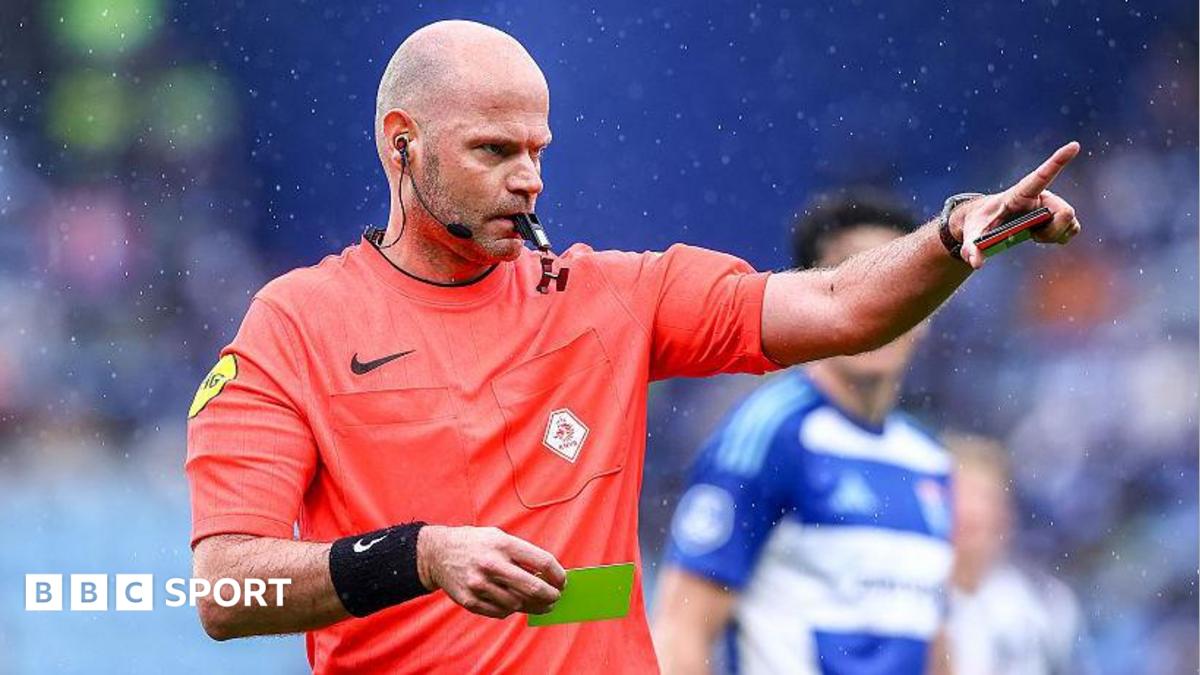
Dutch football referee Rob Dieperink has died weeks after he was dropped from officiating at the World Cup following a police investigation in the UK.
Dieperink had been selected to be a video assistant referee (VAR) official at this summer’s tournament, but was removed from Fifa’s list of World Cup officials in May.
The 38-year-old was arrested by the Metropolitan Police in April following a report of a sexual assault against a teenage boy, but the case was dropped because of a lack of evidence.
The Netherlands’ football association, the KNVB, said they were “shocked and deeply saddened” by Dieperink’s death.
His cause of death has not been disclosed.
“With Rob, we lose a highly valued referee, but above all a kind and dedicated colleague,” the KNVB said in a statement.
“Our thoughts go out to his family, friends, and everyone who held him dear. We wish them much strength and support in processing this great loss.”
Fifa, football’s global governing body, said it learned of the news with “great sadness”.
“On behalf of the entire football community, we extend our sincerest condolences to his family and friends and the Dutch Football Association. May he rest in peace,” it said.
Dieperink had refereed in the Eredivisie since 2017 and was a VAR official at Euro 2024.
After he was dropped from the World Cup, Dieperink said he had been “wrongly accused” in an interview with Dutch newspaper De Telegraaf, external.
“It saddens me greatly that I have been wrongly accused,” he said.
“From the beginning, I have fully cooperated in the police investigation and also immediately gave full openness to Fifa, Uefa and the KNVB.
“I am grateful for the support I have received from the KNVB and the way in which they have dealt with this case. It is a pity that Fifa has decided not to appoint me for the World Cup any more, of course I am disappointed about that.”
Dieperink was the VAR for Crystal Palace’s 3-0 Europa Conference League quarter-final first-leg win over Fiorentina on 9 April.
A Metropolitan Police statement said: “On Thursday, 9 April, officers responded to a report of a sexual assault against a teenage boy, which occurred at an address on Wellesley Road, Croydon.
“A man in his 30s was subsequently arrested on suspicion of sexual assault.
“Officers completed a thorough investigation and reviewed all available evidence, including gathering CCTV and examining digital devices.
“Following these enquiries, they concluded that the evidential threshold had not been met. No further action will be taken.”
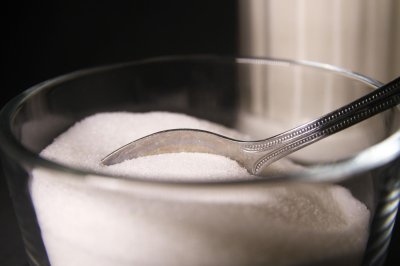
July 13 (UPI) — Mexico announced the United States will begin to restore Mexican sugar’s access to its market, a measure that could significantly increase exports during the 2026-2027 season and boost income for about 170,000 sugarcane producers.
Mexico’s presidency said in a statement released Friday that the measure is the result of talks with U.S. authorities led by President Claudia Sheinbaum since November 2025.
The U.S. Department of Agriculture estimated the country will need to import up to 1,152,000 tons of Mexican sugar during the 2026-2027 marketing year, an amount 512% higher than the estimate for the current marketing year, according to the statement.
The estimate appears in the World Agricultural Supply and Demand Estimates report published by the U.S. Department of Agriculture on July 10, the Mexican government said.
The presidency said the new conditions could generate a potential increase of up to 4.76 billion pesos, about $272 million, in the price paid by the sugar industry to about 170,000 Mexican sugarcane producers.
The talks that led to the announcement began in November 2025 during a visit by U.S. Agriculture Secretary Brooke Rollins to Sheinbaum, the statement said.
The Mexican government said the outcome demonstrates that “through dialogue it is possible to build important agreements” benefiting agricultural producers and food consumers in both countries.
Sugar trade between Mexico and the United States has been regulated since late 2014 under the so-called suspension agreements, according to background information published by the Latin American and Caribbean Economic System.
In June 2017, the governments of both countries reached an agreement in principle that reduced the share of refined Mexican sugar to 30% of total imports from the previous 53% limit, while increasing the share of raw sugar, the regional organization reported.
The U.S. sugar industry initially refused to support that agreement. Then-Commerce Secretary Wilbur Ross said Mexico had accepted nearly all of the requests made by the industry, but U.S. producers still did not support the proposed terms.
U.S. refiners argued that high-quality Mexican raw sugar was reaching consumers directly instead of passing through their plants, according to the Latin American and Caribbean Economic System.
The dispute involved a coalition of U.S. sugarcane and sugar beet producers, as well as ASR Group, maker of Domino Sugar, and Imperial Sugar.
ASR Group and Imperial Sugar said at the time that the 2014 agreement did not provide sufficient supplies for their refining operations and had asked the U.S. government to end the pact, the regional organization reported.
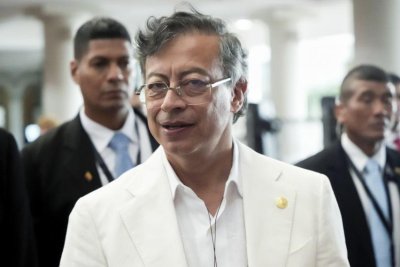
Outgoing Colombian President Gustavo Petro (shown) has barred President-elect Abelardo De la Espriella from holding his inauguration at a military base. Photo by Aris Mariota/EPA
July 13 (UPI) — Outgoing Colombian President Gustavo Petro has barred President-elect Abelardo De la Espriella from holding his inauguration at a military base, triggering an unprecedented institutional dispute that has clouded the transfer of power and underscored the country’s deep political polarization.
Citing his authority as commander-in-chief of the armed forces until Aug. 7, the leftist president blocked De la Espriella’s plan to take the oath of office before military personnel.
The incoming government had sought to use the ceremony to signal a sharp break with the outgoing administration’s security policies.
“Military and police barracks are under my command until the new president is sworn in and, therefore, until that moment I am the supreme commander of the military forces,” Petro wrote on X.
Cómo dije, en medio de las lentejuelas del nuevo gobierno no votado por la mayoría del pueblo, la ley dice cuál es la sede del Congreso, y es en una sesión del Congreso donde el nuevo presidente debe posesionarse, tal como lo hice yo y todos los demás.
In the post, Petro reiterated his claim that the incoming government “was not elected by a majority of the people,” adding that Colombia’s next president must take office during a full session of Congress “under the laws of the republic and the Constitution.”
Petro’s decision comes amid an institutional crisis and a fractured transition following the June 21 runoff election. After De la Espriella’s victory, Petro alleged electoral fraud and refused to openly recognize the legitimacy of the president-elect.
In response, De la Espriella unilaterally suspended the administrative transition process, accusing Petro of planning a coup to remain in power. International organizations and electoral authorities have validated the election, but the official transfer of information remains frozen.
De la Espriella campaigned on a “tough-on-crime” platform and promised to restore “honor and dignity” to the armed forces, arguing that they had been mistreated and demoralized by the outgoing leftist government’s policies. His request to take the oath of office at a military installation was intended as a symbolic tribute to the troops.
The confrontation highlights Colombia’s sharp political shift after four years under the first leftist government in the country’s history.
According to local media, De la Espriella’s push to hold the congressional session outside the National Capitol also tests his strength against the legislative branch.
Because his party will not hold an absolute majority in the new Congress, which takes office July 20, Petro’s veto highlights the early institutional challenges and opposition the incoming government is likely to face.
Spain-France clash is filled with superstars like Kylian Mbappe, Ousmane Dembele and Lamine Yamal, among others.
European giants France and Spain will compete for a place in the World Cup final on Tuesday, as the first semifinal kicks off in Dallas.
Both sides have some star names among their ranks, with the likes of Kylian Mbappe, Michael Olise and Lamine Yamal set to play a key role in securing their country’s place in Sunday’s final.
Recommended Stories
list of 4 itemsend of list
Here’s a closer look at some of the key players who will decide Tuesday’s first semifinal.
Kylian Mbappe in action against Paraguay during their round of 16 match [Bill Streicher/Reuters]
Kylian Mbappe
World Cup 2026 statistics:
Goals: 8
Assists: 3
Minutes played: 563
The French captain has been in remarkable form at this World Cup, breaking numerous records along the way.
After bagging four goals in the group stages, Mbappe has now scored in every knockout round so far, and he has also provided a number of assists.
The Real Madrid forward is in the form of his life and is the biggest threat in a star-studded Les Bleus XI.
After scoring a hat-trick in a World Cup final loss to Argentina in Qatar, Mbappe will be determined to go one step further this year.
Michael Olise in action against Paraguay [Bill Streicher/Reuters]
Michael Olise
World Cup 2026 statistics:
Goals: 0
Assists: 5
Minutes played: 488
Michael Olise may not have got himself on the scoresheet at this World Cup so far, but he is the player that has provided the most assists.
He has set up five goals for France, and his partnership with Mbappe has been a highlight of the tournament.
The Bayern Munich midfielder has the technical ability to unlock defences, and he will be a key attacking threat in the semifinal with Spain.
France’s Ousmane Dembele celebrates scoring their second goal against Morocco [Mike Segar/Reuters]
Ousmane Dembele
World Cup 2026 statistics:
Goals: 5
Assists: 2
Minutes played: 492
The dynamic Paris-Saint Germain (PSG) forward came into this tournament looking for his first-ever World Cup goal. He now has five of them.
He scored a first-half hat-trick in a group game with Norway and also bagged the second in France’s 2-0 win over Morocco in the quarterfinals.
Les Bleus have been having their own Golden Boot competition, with Dembele pushing Mbappe all the way.
The pair have now scored 13 goals between them at this World Cup, a feat that has not been achieved by two players from the same country since Brazil’s Ronaldo and Rivaldo in 2002.
Spain’s Lamine Yamal celebrates after the match as Spain qualify for the semifinals [Gary Vasquez/Reuters]
Lamine Yamal
World Cup 2026 statistics:
Goals: 1
Assists: 0
Minutes played: 405
At a tournament where stars like Lionel Messi, Kylian Mbappe and Harry Kane have been prolific, 18-year-old Lamine Yamal has just one goal to date, in a routine 4-0 group drubbing of Saudi Arabia.
Despite this, the Barcelona teenage sensation remains a key attacking threat for La Roja and scored against France in the semifinals of Euro 2024.
He was awarded player of the match for his performance in Spain’s quarterfinal win over Belgium, and he has also recorded the most successful dribbles at the tournament so far.
“I know I can contribute even if I don’t score. I know my movements draw in many opponents, so I do everything I can to help the team,” Yamal said after Spain’s victory over Belgium.
Mikel Oyarzabal, left, celebrates scoring his team’s first goal during the round of 32 match between Spain and Austria [Etienne Laurent/AFP]
Mikel Oyarzabal
World Cup 2026 statistics:
Goals: 4
Assists: 1
Minutes played: 519
The Real Sociedad forward is Spain’s top scorer at this World Cup, and he will be La Roja’s biggest hope for goals in Tuesday’s semifinal.
He scored six goals in six games during World Cup qualification and has followed that up with four goals at the tournament proper.
Oyarzabal also has experience of scoring crucial goals at the business end of tournaments. He bagged an 86th-minute winner against England in the Euro 2024 final, proving he can perform under pressure on the biggest stage.
La Roja will hope for more of the same this week.
Mikel Merino celebrates scoring his team’s second goal against Belgium in the quarterfinals [Paul Ellis/AFP]
Mikel Merino
World Cup 2026 statistics:
Goals: 2
Assists: 0
Minutes played: 180
If Spain need a goal against France in the closing stages of the semifinal, then Luis de la Fuente will be turning to one man on his bench.
Mikel Merino has twice played the role of super-sub at this World Cup, coming off the bench to score late winners against Portugal and Belgium.
The Arsenal midfielder is unlikely to start against Les Bleus on Tuesday, but he remains a key part of Spain’s squad and will pose a real threat against tired legs towards the end of the match.
The European Union plans to implement a social media ban on users younger than 13-years-old, Commission President Ursula von der Leyen said Monday. File Photo by Ida Marie Odgaard/EPA
July 13 (UPI) — The European Union plans to implement a social media ban on users younger than 13-years-old, Commission President Ursula von der Leyen said Monday.
The ban would still allow users younger than 13 to use social media with parental supervision. Von der Leyen presented an expert report on the harms of social media use on children that recommended the ban to limit time spent on the platforms.
“It is very clear that we need age-appropriate restrictions to platforms,” von der Leyen said. “This is not about whether children can access social media. It is about whether and when social media can access our children.”
The report, written by child psychiatrist Jorg Fegert and epidemiologist Dr. Maria Melchior, also recommends that social media use be limited to platforms that have certain features such as limits to infinite scrolling. They also recommend that children under the age of 3 have no screen time.
Von der Leyen is expected to announce a law outright banning children and teens from using some social media sites in the coming months. Monday’s report is the first step toward that law.
The European Union is just one body that has considered banning children and teens from accessing social media in recent years. Australia was the first country to implement a ban, barring children under 16-years-old from using social media last year.
Denmark, France, Germany, Spain, India, Indonesia and Malaysia are either considering similar restrictions or have adopted them.
Along with efforts to restrict access to social media, governments and coalitions across the globe have been encouraging major social media companies to change their policies to make their sites safer for children. Among the features they are pushing for are greater control of the data of children, the elimination of features that encourage compulsory use like infinite scrolling and control over age-inappropriate content.
Astronaut Buzz Aldrin walks on the surface of the Moon during the Apollo 11 mission on July 20, 1969. Photo by NASA/UPI | License Photo